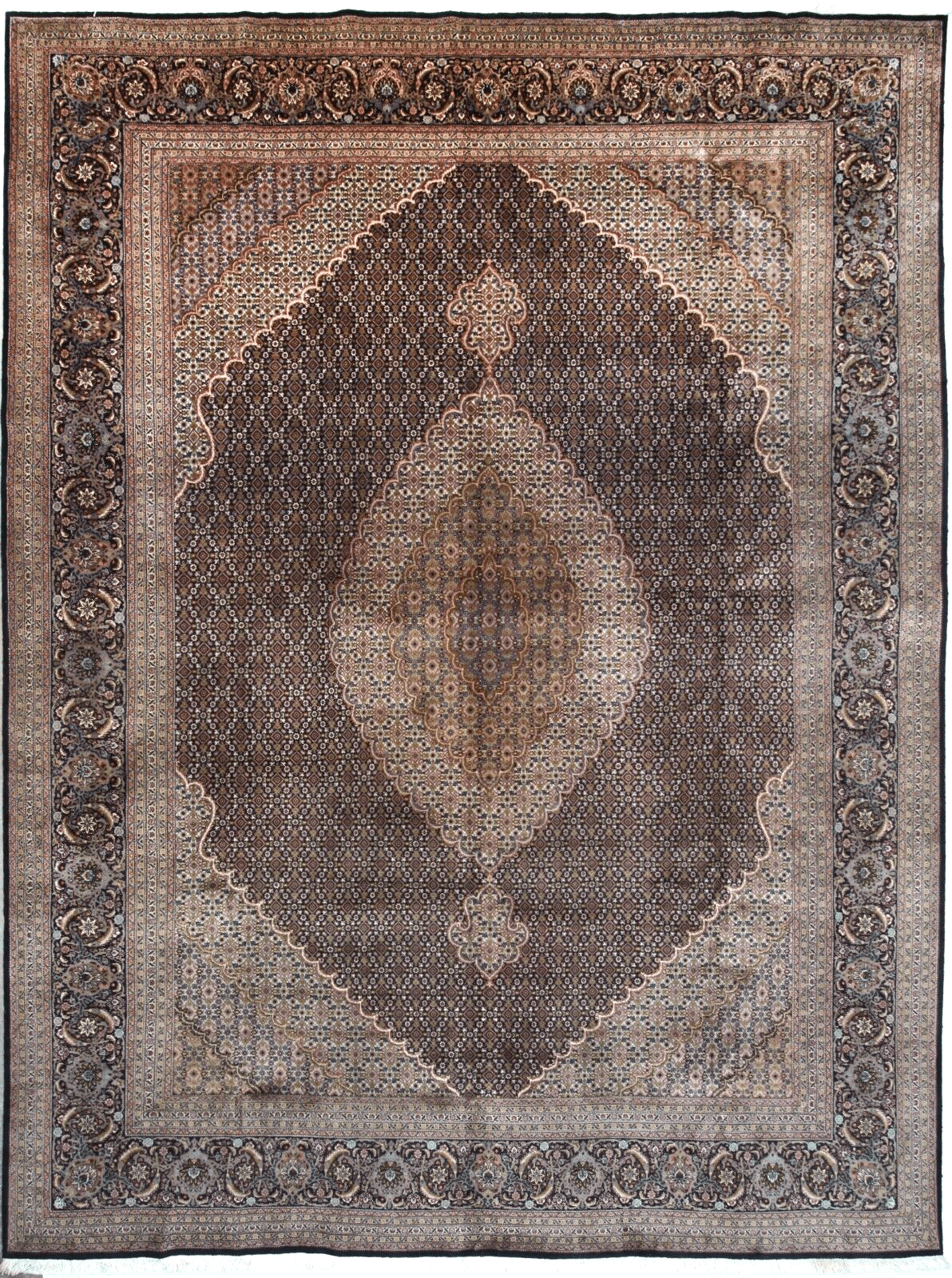
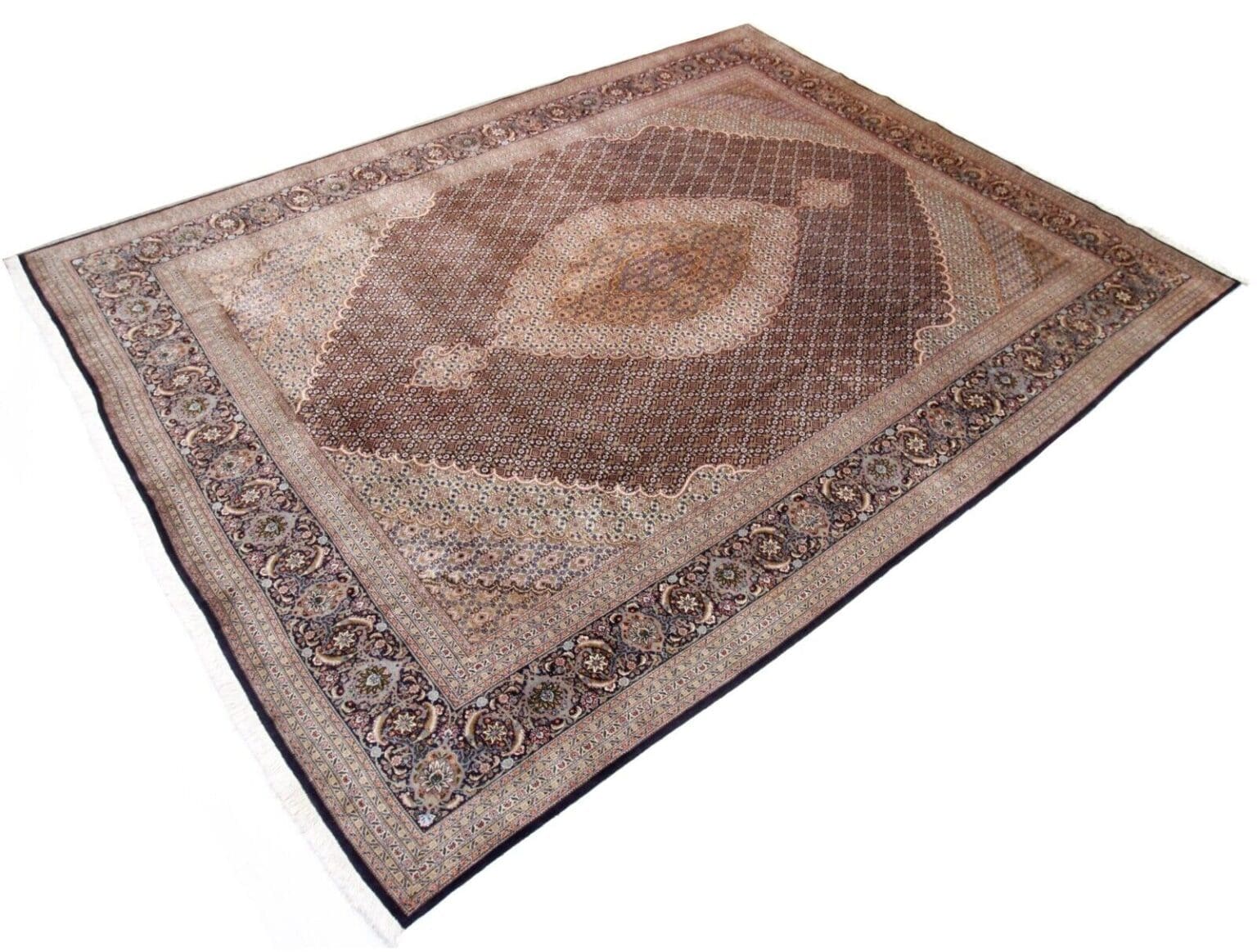
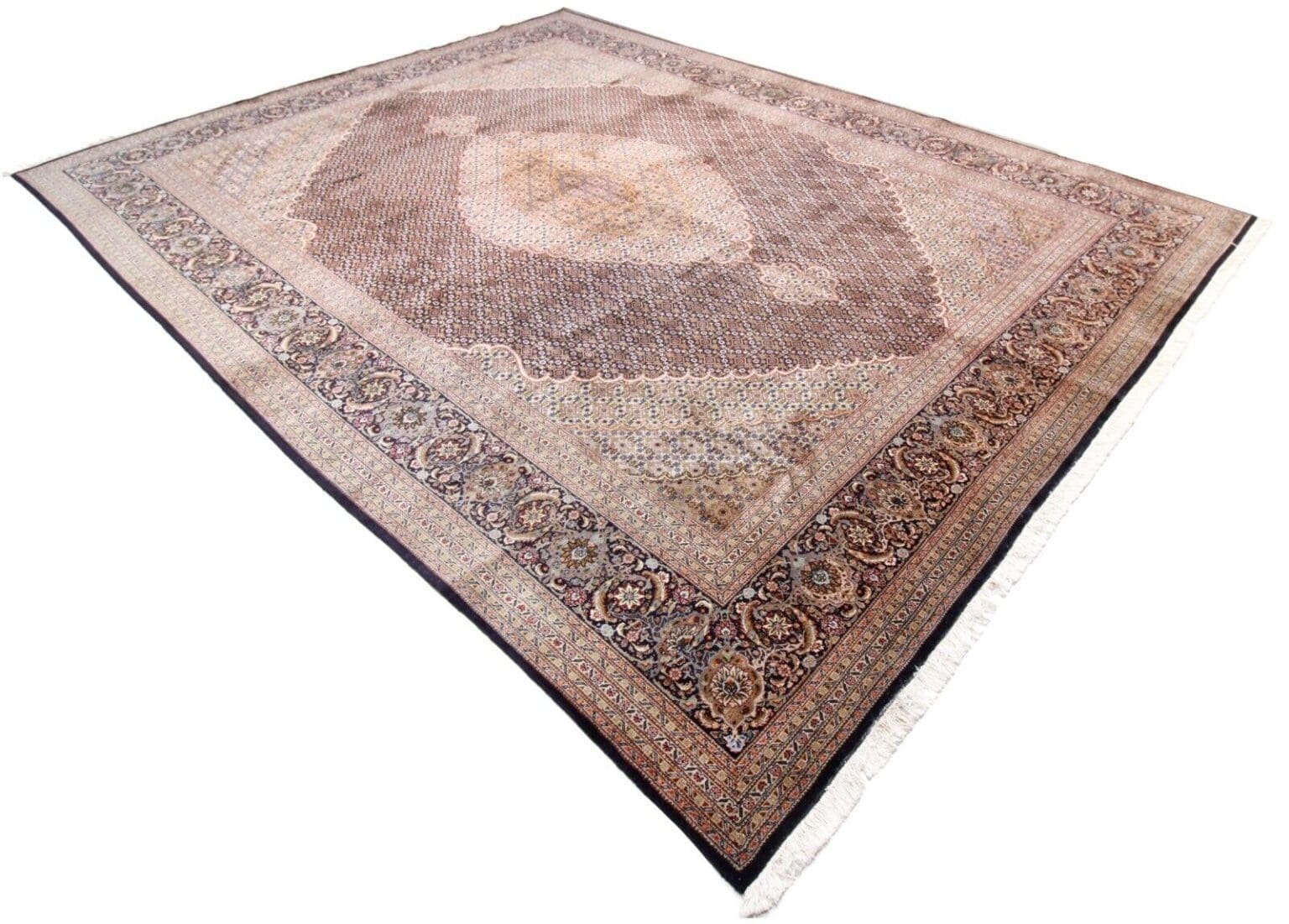
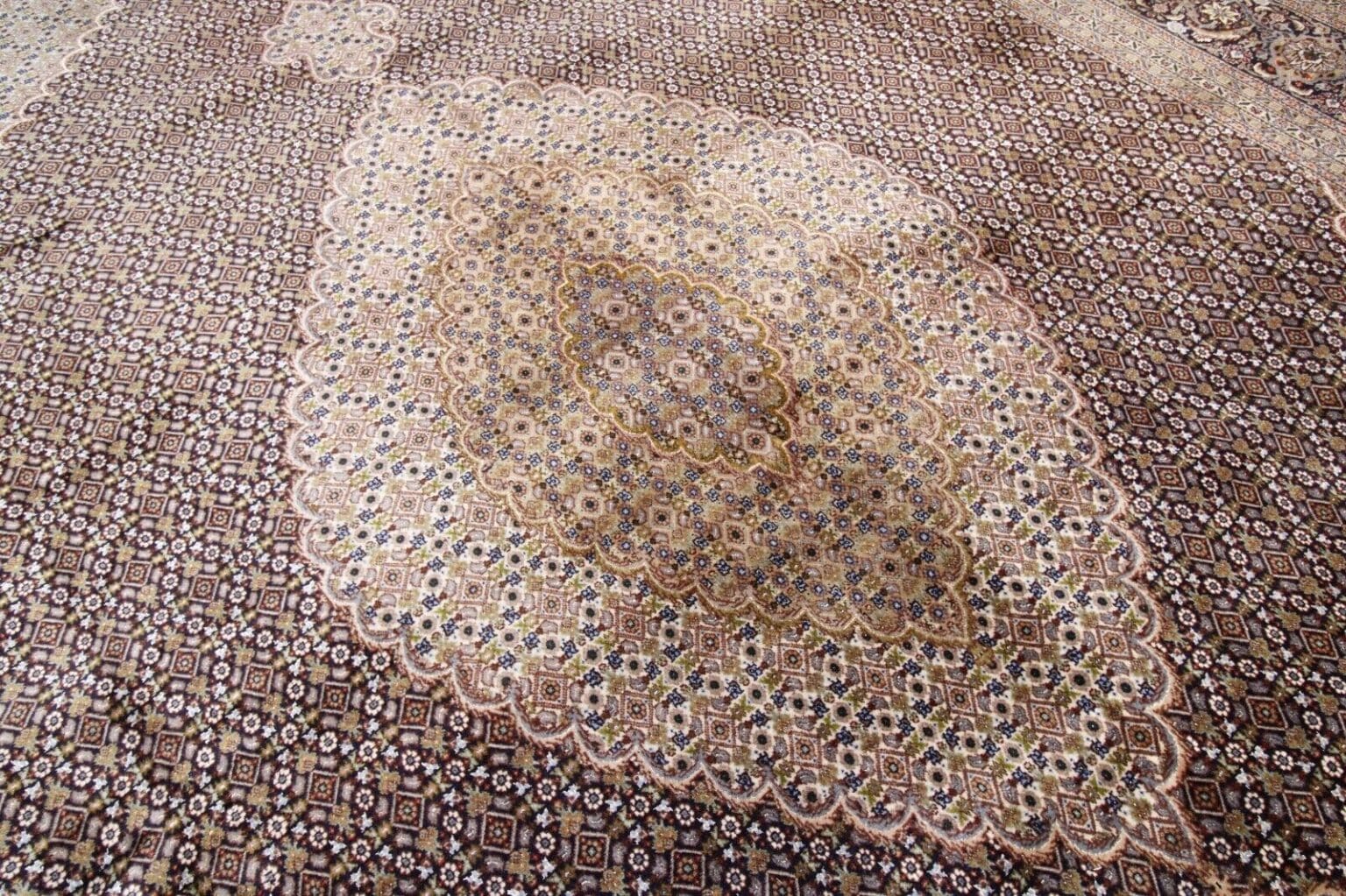
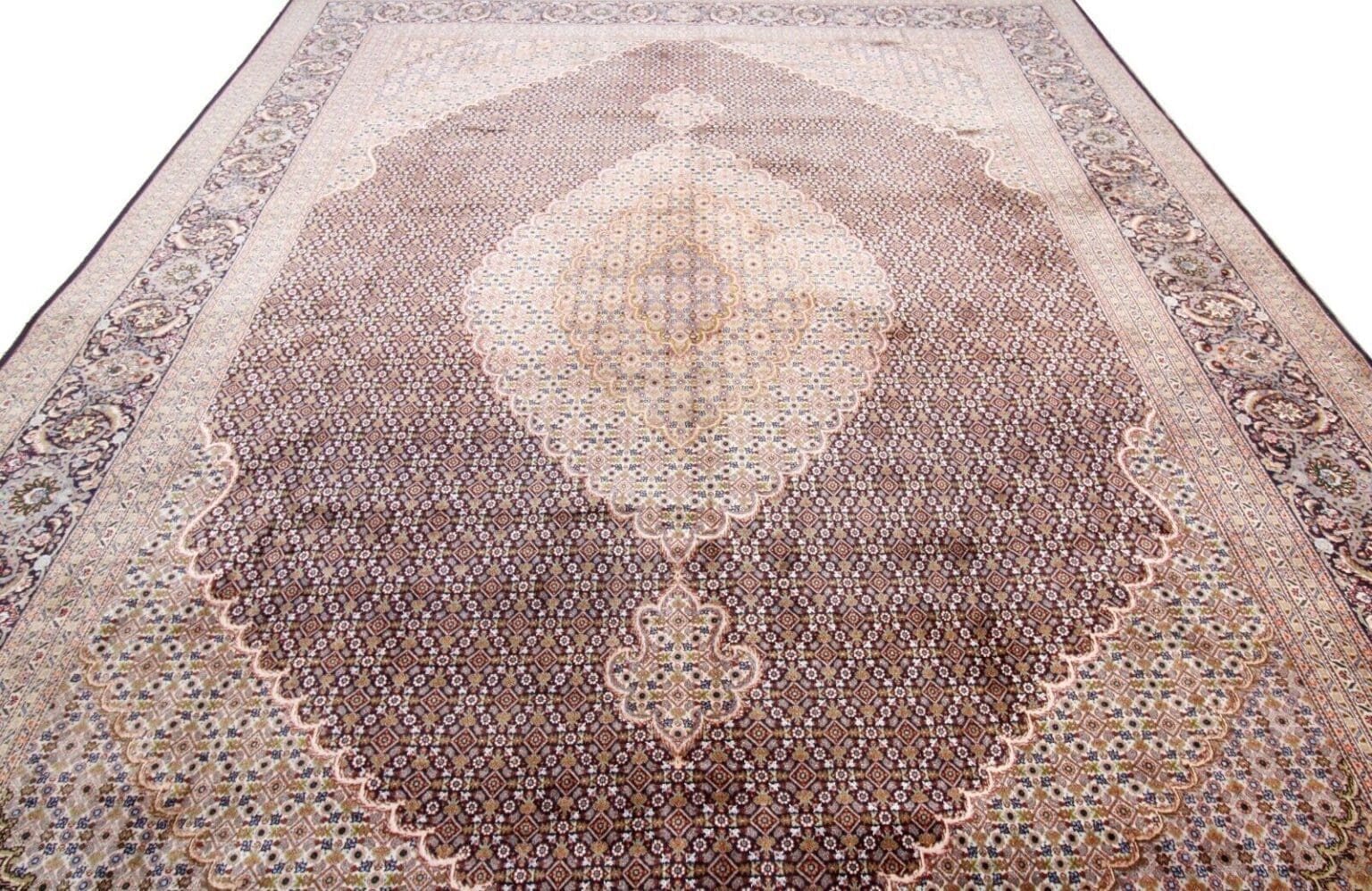
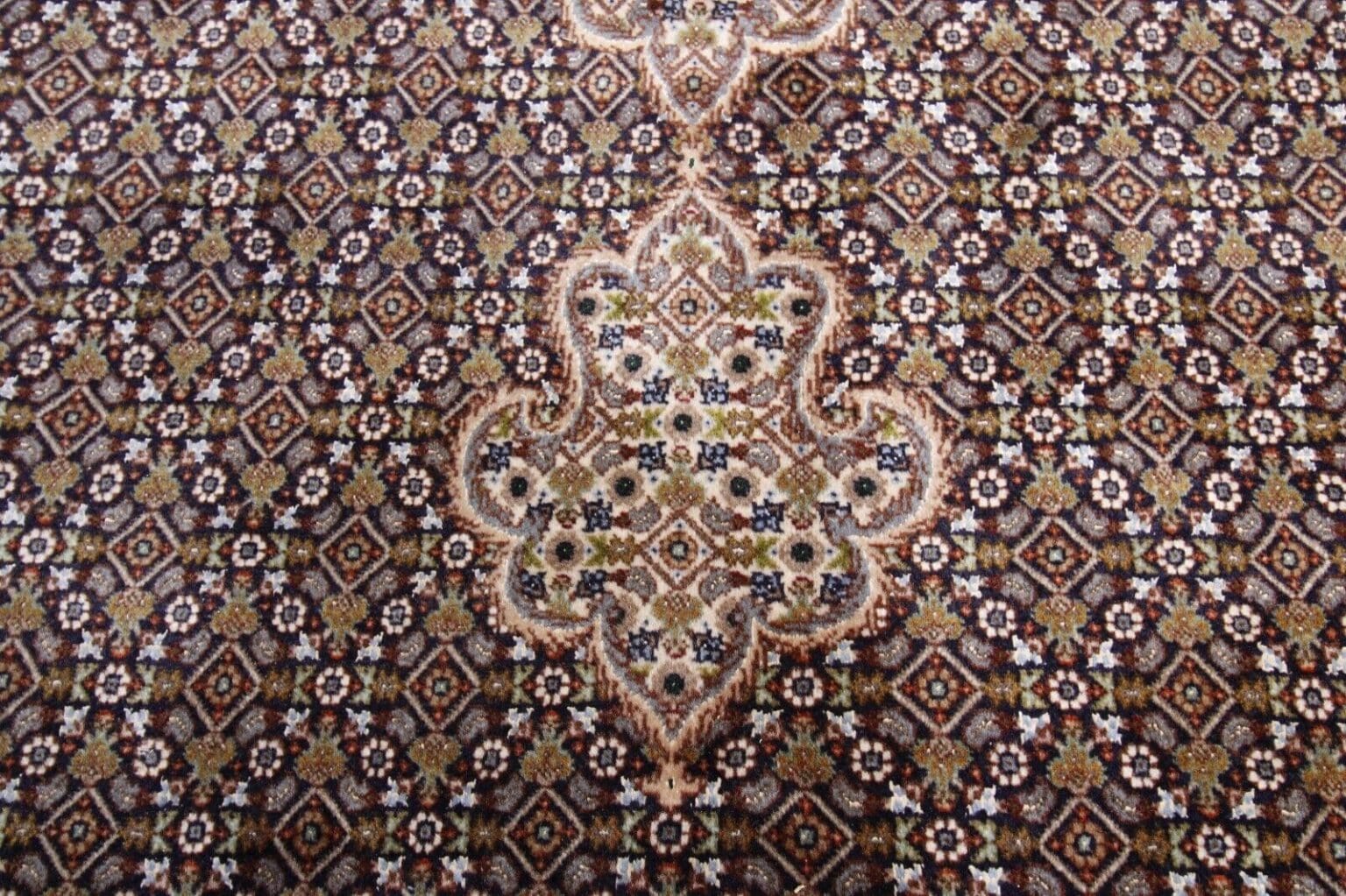
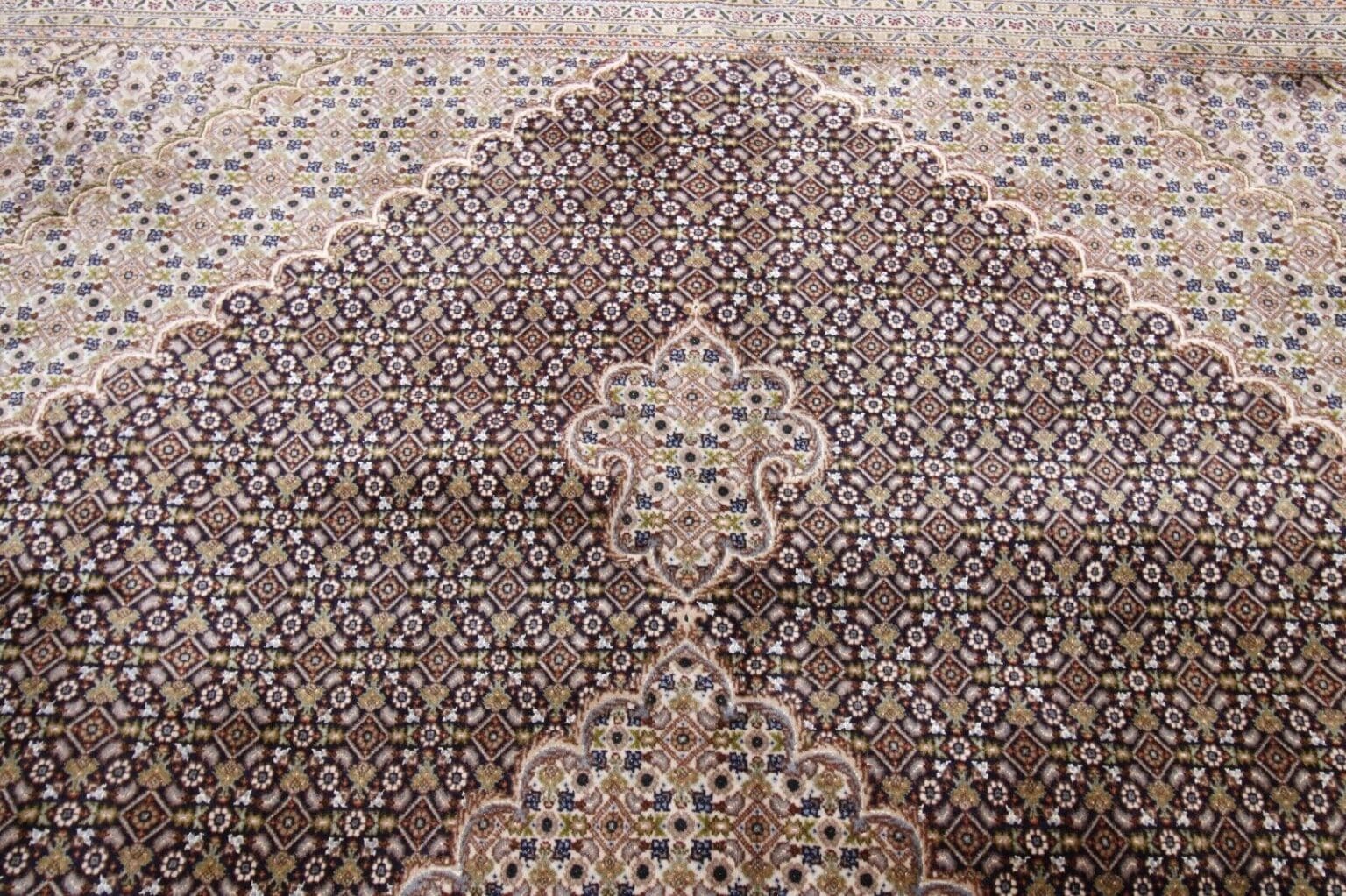
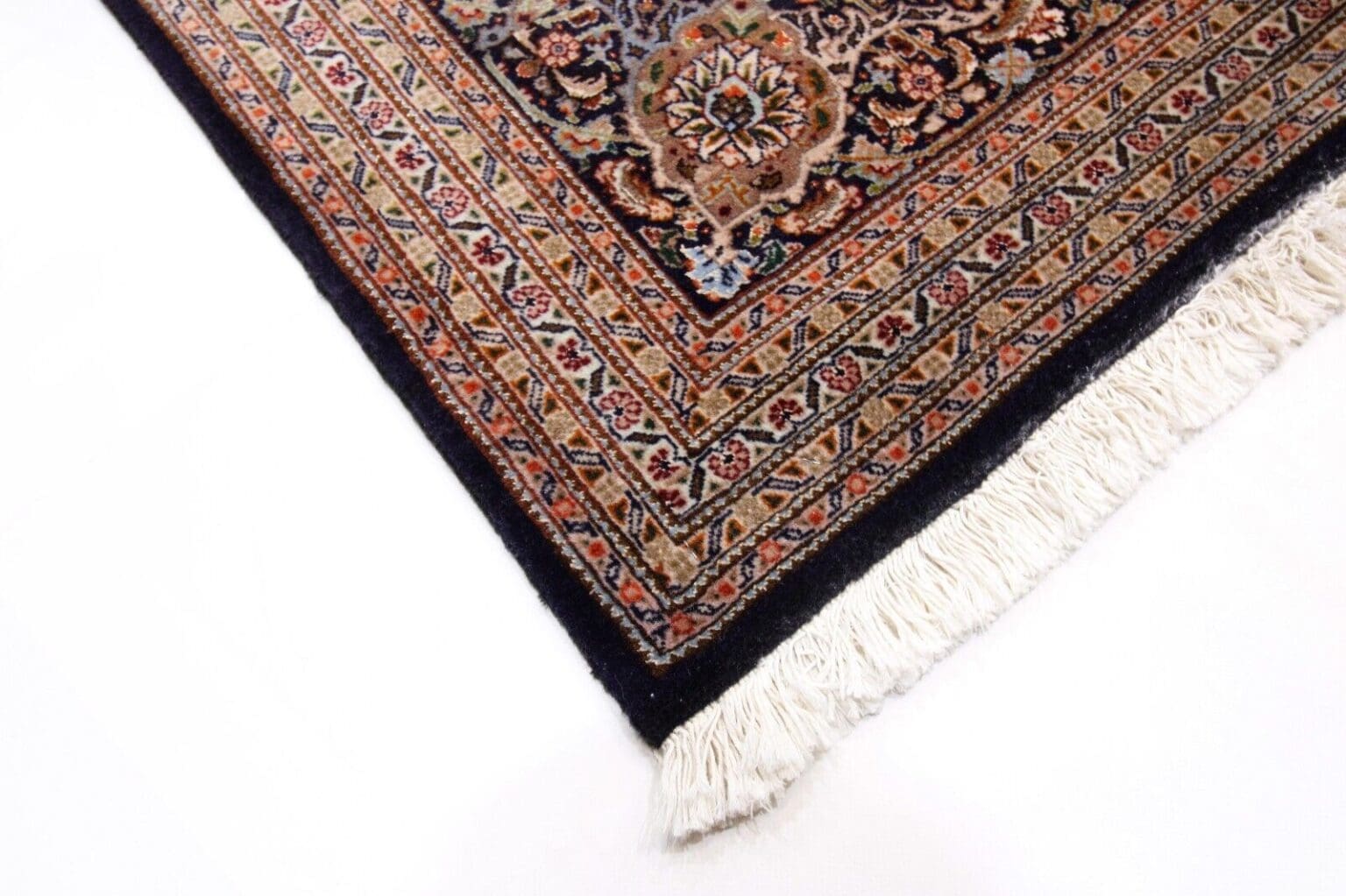
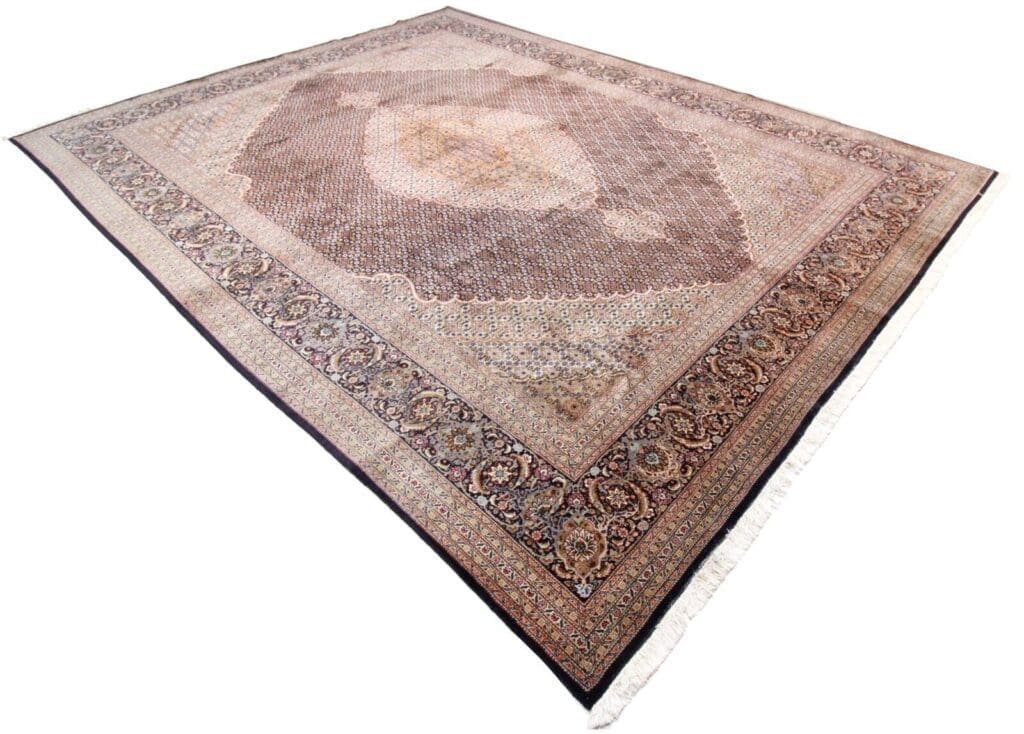
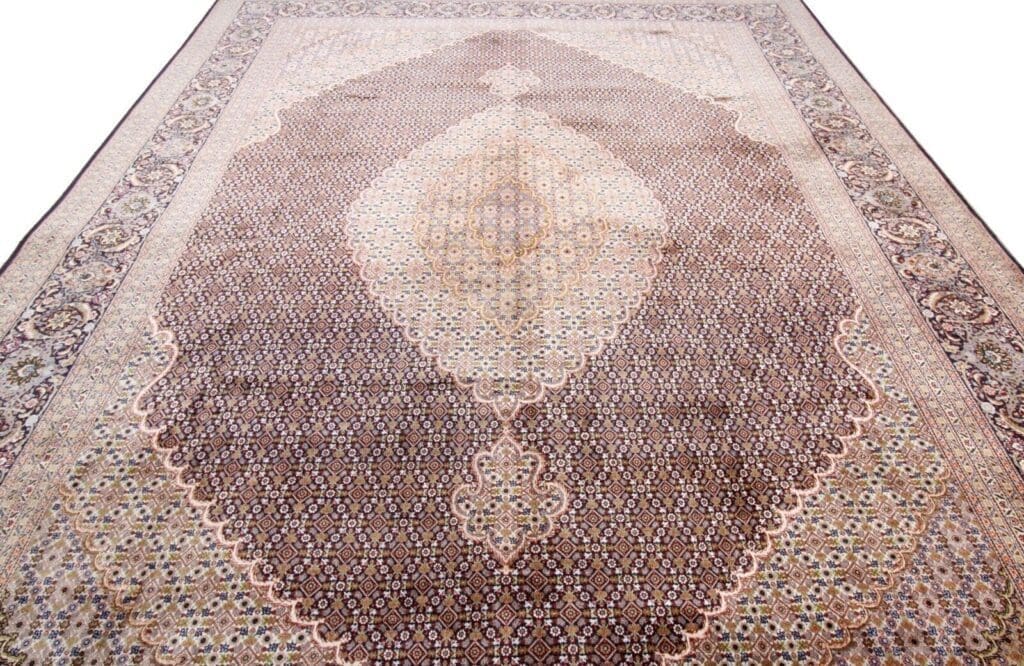
This Persian rug is hand-knotted and identified in the listing as a Tabriz Mahi rug. Hand-knotting combines the placement of individual knots with the insertion of weft threads and the later treatment of the pile surface. Every knot is made by hand, creating a textile structure that is not produced by a printed or mechanically woven process. The listed knot density is 50 Raj.
Wool, silk and cotton are specified as the materials, each with a stated proportion of 100 percent. The product information names these materials together and does not assign them to pile, warp or weft. Wool has traditionally been used in oriental rugs for its resilient character and its firm yet agreeable surface. Silk can provide smooth, fine areas and a clear rendering in rug work. Cotton is also a traditional textile component in handmade carpets. No further division of the materials within this particular rug is given.
The rug is described as washed and in top condition. It is also listed as suitable for underfloor heating, non-slip and environmentally friendly. These are stated features of the offering. The term hand-knotted refers to the specified method of manufacture; it describes how the rug was made and does not add an unstated claim about a particular workshop or construction.
Origin and Tradition
Tabriz is a city in Iran and one of the established centres of Persian rug production. Rugs associated with the city belong to a long urban tradition of drawing, weaving and knotting. In a workshop, a design is generally prepared in advance while the knotters build the rug row by row. The process requires control because the outline of a motif, the sequence of colours and the repetition of small forms must remain coordinated throughout the work.
The history of rug making in Tabriz is connected with the cultural exchange of north-western Iran. The city was an important commercial and cultural centre for a long period. This allowed several artistic influences to meet. Persian garden concepts, floral ornament, geometric order and the accurate execution of a design all recur in the region’s carpet culture. A Tabriz rug is therefore not limited to one compulsory pattern. The designation points to a workshop and regional tradition in which the design and the quality of handwork are closely related.
Persian rug names are often linked to a city, a region or a workshop tradition. Tabriz, Isfahan, Kashan and Nain each have their own historical profiles. Isfahan rugs are often associated with finely organised floral compositions, while Tabriz rugs are known for a broad range of designs and careful execution. Kashan has a long association with richly ornamented carpets, and Nain is often connected with light colour palettes and detailed drawing. These general distinctions help explain rug traditions; they do not change the stated origin of this piece, which is Tabriz.
The Persian rug is part of a culture of use and transmission. Rugs can organise a room, define walking areas and function as textile images. Their production traditionally depended on time, practice and the passing of knowledge through families and workshops. Care and washing have also been part of the life of many rugs. The present rug is expressly described as washed. Its production period is identified as the 1970s.
The statement that it is original and made in the 1970s places this rug in a specific period and identifies it as an original piece from that era. It does not name an additional provenance or a particular workshop. As a Persian rug, it is from Iran. This distinguishes it from oriental rugs made in other countries, even though similar designs may have been adopted and developed in more than one weaving region.
Design and Pattern
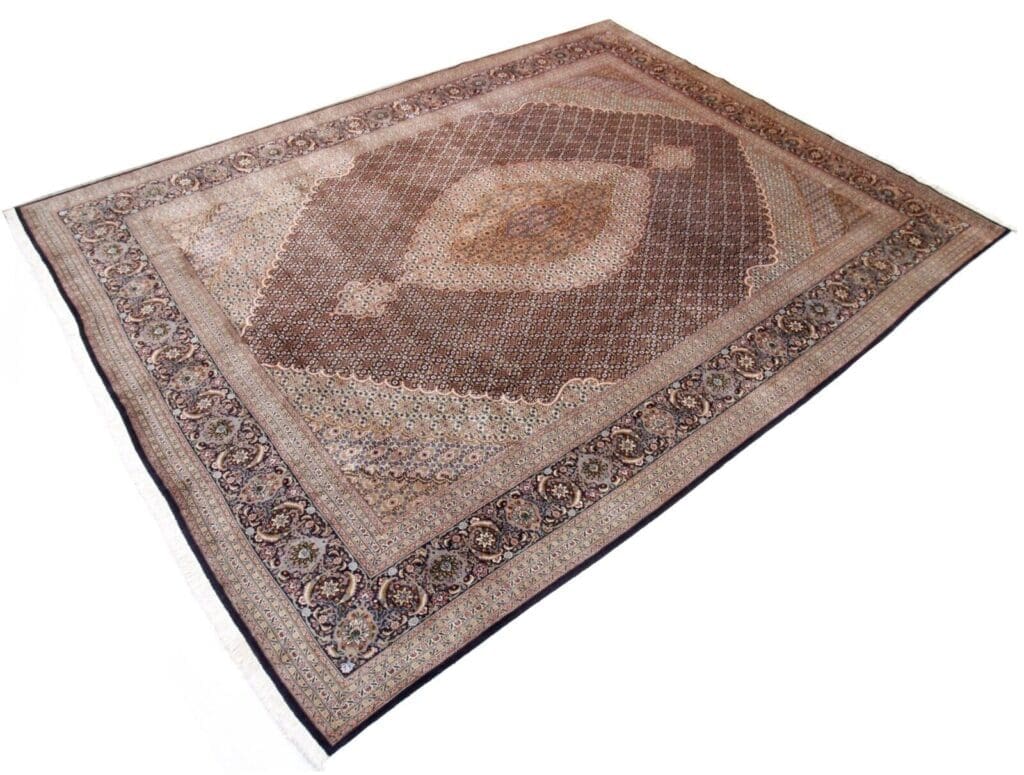
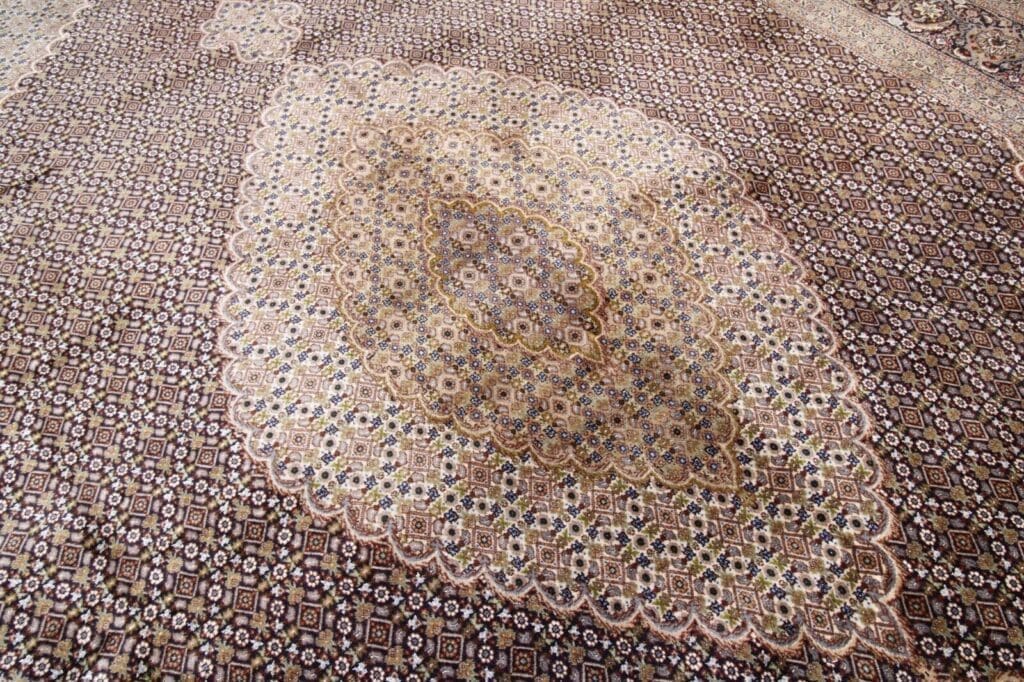
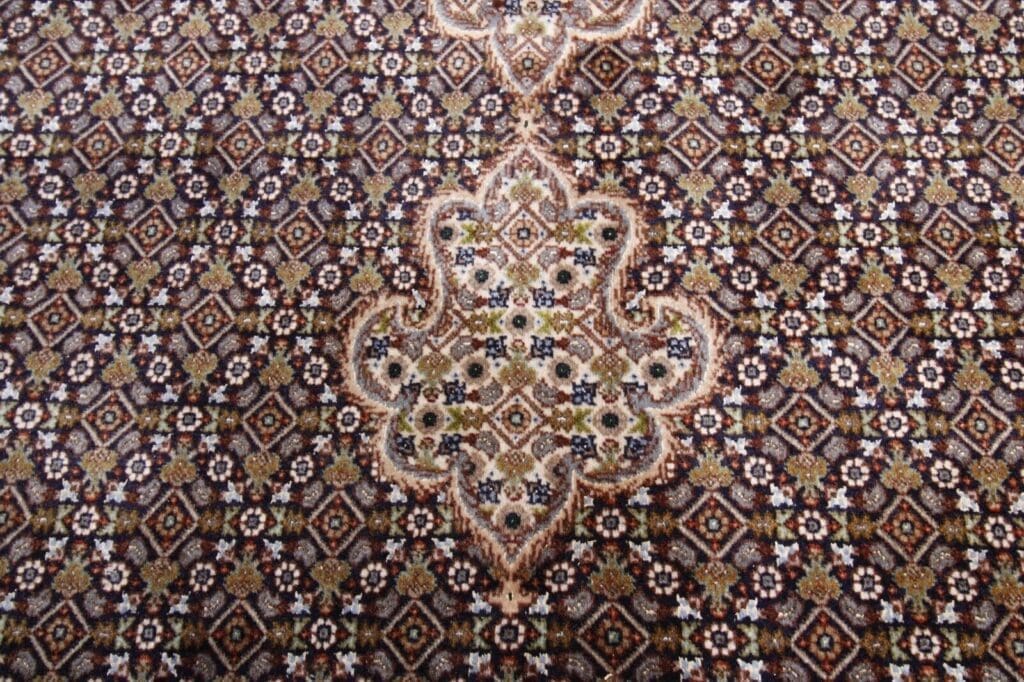
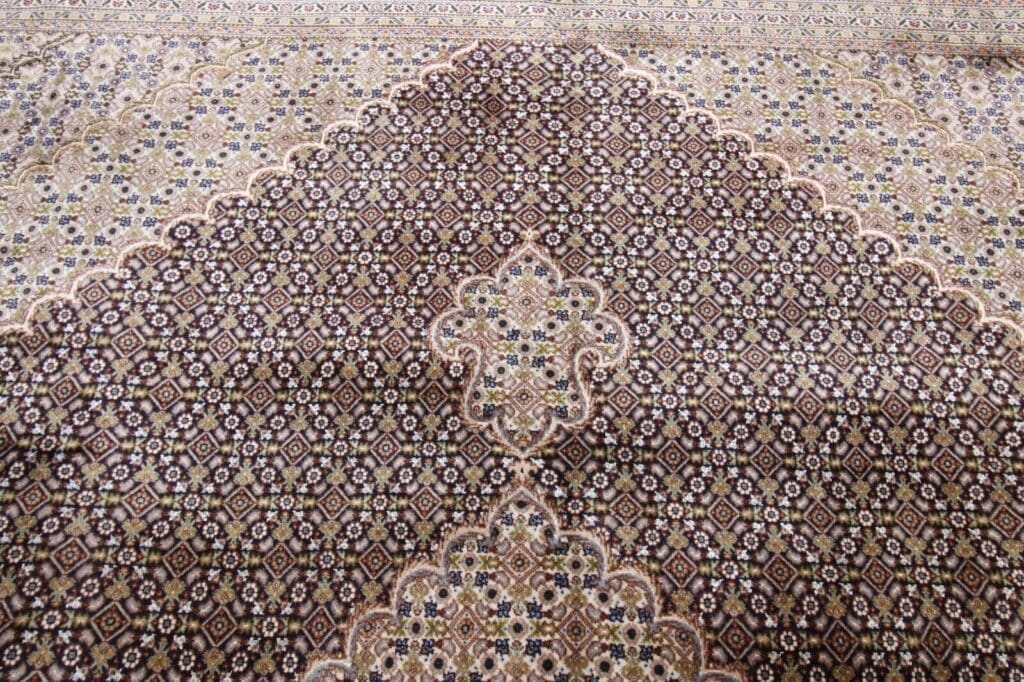
The title identifies the rug as Mahi. In the vocabulary of Persian rug design, Mahi refers to a fish form and usually indicates a repeated, relatively small-scale ornament known within the tradition by that name. Such designs can be arranged in a regular repeat, allowing recurring forms to structure the field. The term explains the established pattern family; it does not provide an additional detailed description of every visual element in this individual rug.
The description records the pattern of this rug as plain. This information appears alongside the name Mahi and describes the stated overall colour effect. A plain rug places greater emphasis on field, texture and the character of the material than on many sharply separated colour areas. In a hand-knotted piece, the direction of the pile, the knot structure and the treatment of the surface may nevertheless remain part of its textile appearance.
Persian rug designs are often organised through a relationship between a field, borders and either a central or continuously repeated ornament. A drawing may be mirrored, repeated or built as a running design. In Mahi compositions, the recurrence of small forms is traditionally important. Depending on the workshop, period and execution, the motifs may be closely arranged or distributed more openly. General characteristics of a design family should not be presented as a detailed inspection of the surface of this particular rug.
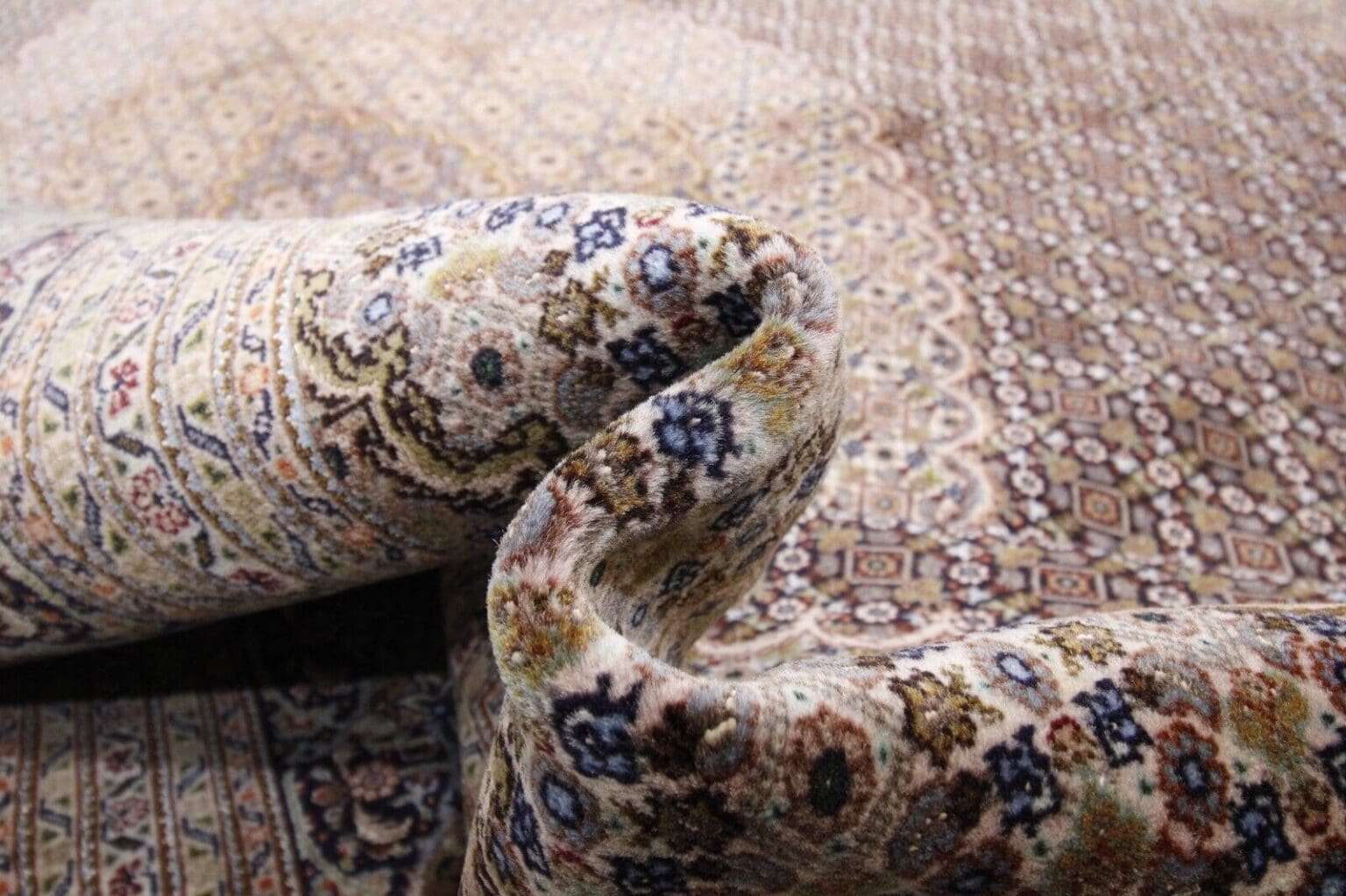
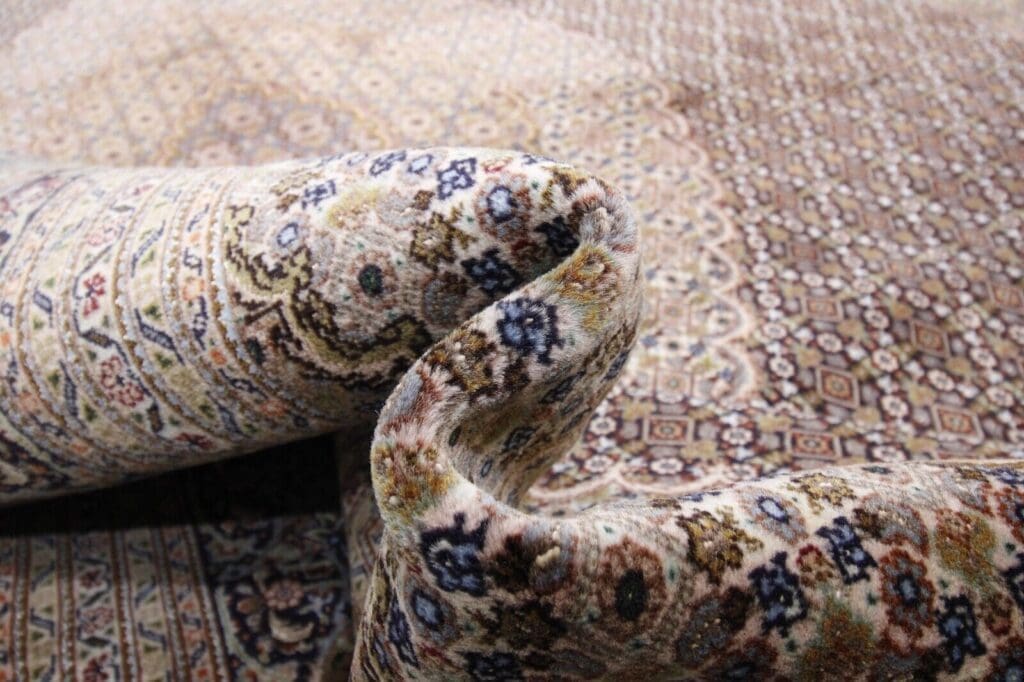
Persian design depends on the interaction between drawing and knotting. A contour is not painted onto the finished textile; it is formed by the sequence of knots and the selected colours. The pile is later trimmed so that the lines of the composition can be read. Wool, silk and cotton may contribute different textile qualities. Wool is traditionally more substantial to the touch, silk smoother and more reflective, while cotton provides another textile element. The source does not specify how these materials are distributed within this rug.
The short description also places the piece within an oriental style. The more precise origin is Tabriz in Iran, and the item is identified as a Persian rug. Mahi names a pattern tradition, while plain records the stated appearance. These two details should therefore be read separately: one describes the design vocabulary and the other summarises the listed colour effect of this offering.
Special Features
The explicitly listed features include top condition and washing. The rug is also described as suitable for use with underfloor heating. This indicates the intended compatibility with rooms that use that type of heating. In addition, the product information calls it non-slip and environmentally friendly. These characteristics are included as product statements; no further technical values or testing results are added.
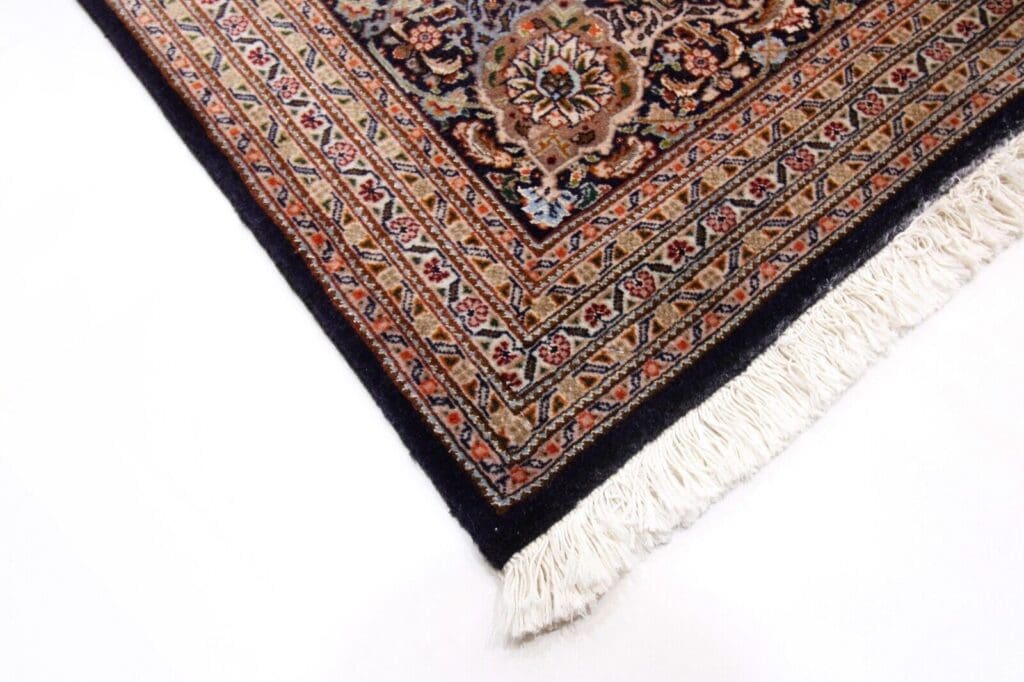
The piece is original and was made in the 1970s. Its identity is defined by the combination of Tabriz origin, the Mahi designation, hand-knotted manufacture and the listed knot density. No signature, named workshop or extended provenance is supplied. The source likewise gives no information about repairs, fringes or a particular restoration. Those details are therefore not treated as features of the rug.
FAQ
How can I recognise an authentic Persian rug?
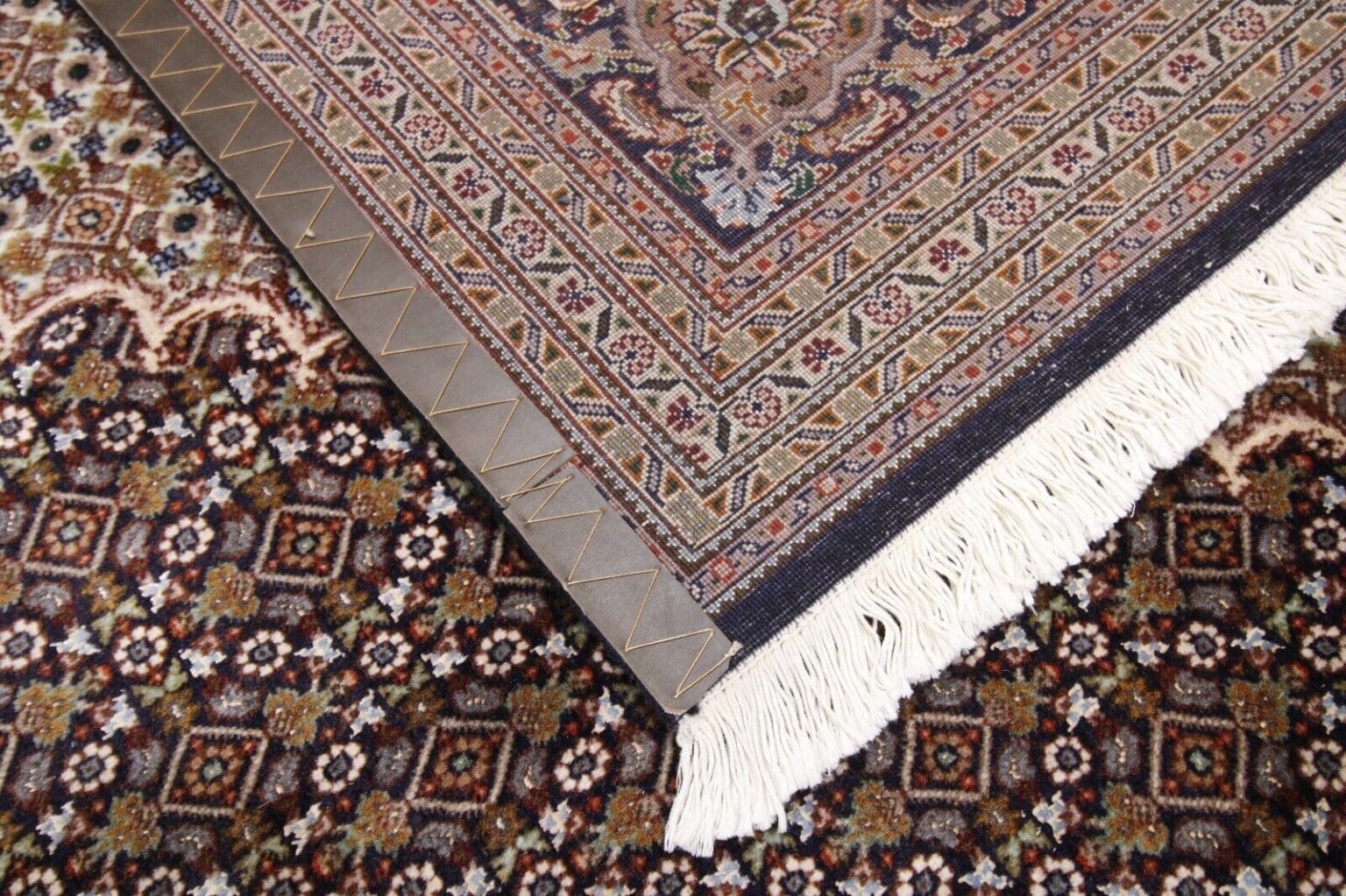
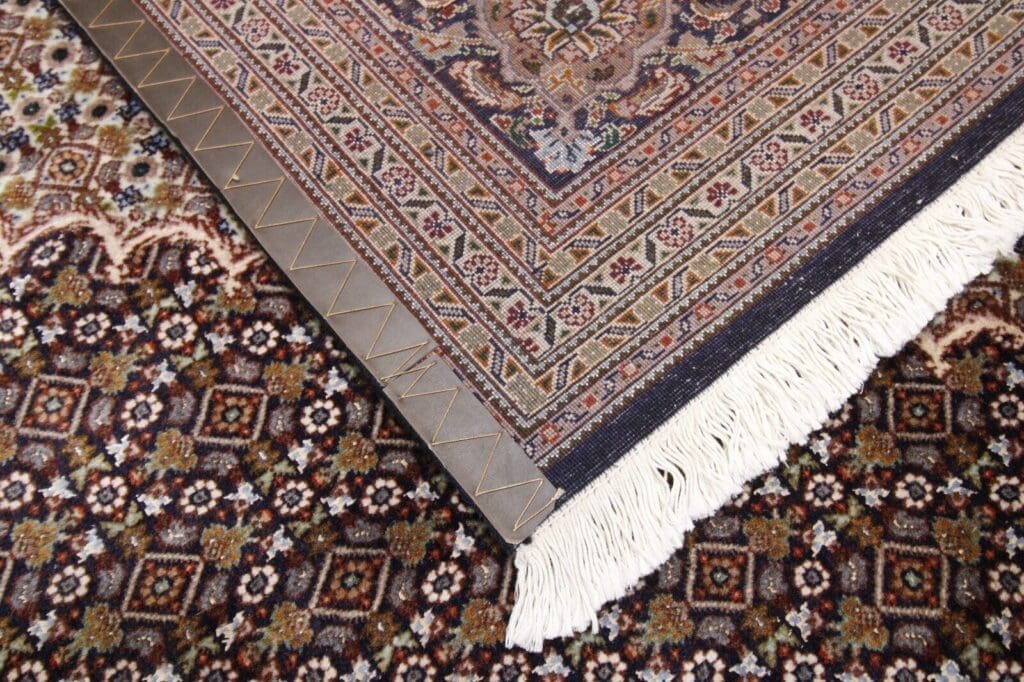
An authentic Persian rug is hand-knotted and often has a fine knot density. Looking at the back can help: it should show a clear pattern corresponding to the design on the front. High-quality materials such as wool or silk are also commonly regarded as indications of traditional rug making. For this item, the hand-knotted technique, a knot density of 50 Raj, and the use of wool, silk and cotton are specified. These details accompany the origin stated as Tabriz in Iran.
How should I care for my Persian rug?
A Persian rug should be vacuumed carefully on a regular basis so that dust and dirt do not remain in the surface. Direct sunlight should be avoided because it can alter colours over time. Professional cleaning once a year is recommended as a way of maintaining the rug. This piece is already described as washed and is offered in top condition. Further care should be gentle and should use cleaning methods appropriate for a hand-knotted textile.
Can Persian rugs be used in modern interiors?
Yes. Persian rugs can also be used in modern interiors. Their traditional designs and textile surface can complement a restrained, minimalist setting. A plain design often appears quieter than a strongly contrasting composition and can be combined with different types of furniture. This rug is described as suitable for underfloor heating and as non-slip. It is therefore intended for a range of contemporary living situations while retaining its Persian origin and handmade character.
To provide the best experiences, we use technologies like cookies to store and/or access device information. Consenting to these technologies will allow us to process data such as browsing behavior or unique IDs on this site. Not consenting or withdrawing consent, may adversely affect certain features and functions.
Functional Always active
The technical storage or access is strictly necessary for the legitimate purpose of enabling the use of a specific service explicitly requested by the subscriber or user, or for the sole purpose of carrying out the transmission of a communication over an electronic communications network.
Preferences
The technical storage or access is necessary for the legitimate purpose of storing preferences that are not requested by the subscriber or user.
Statistics
The technical storage or access that is used exclusively for statistical purposes.The technical storage or access that is used exclusively for anonymous statistical purposes. Without a subpoena, voluntary compliance on the part of your Internet Service Provider, or additional records from a third party, information stored or retrieved for this purpose alone cannot usually be used to identify you.
Marketing
The technical storage or access is required to create user profiles to send advertising, or to track the user on a website or across several websites for similar marketing purposes.
 SECURE PAYMENT
 SHIPPING PARTNERS