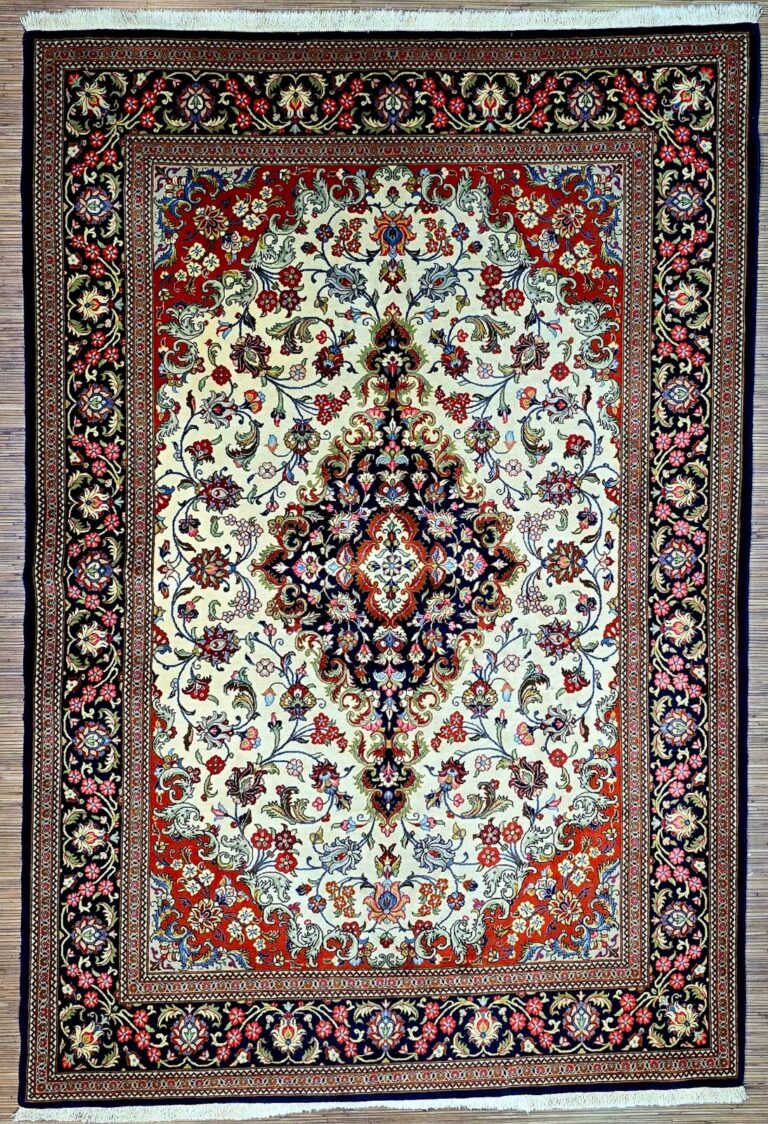
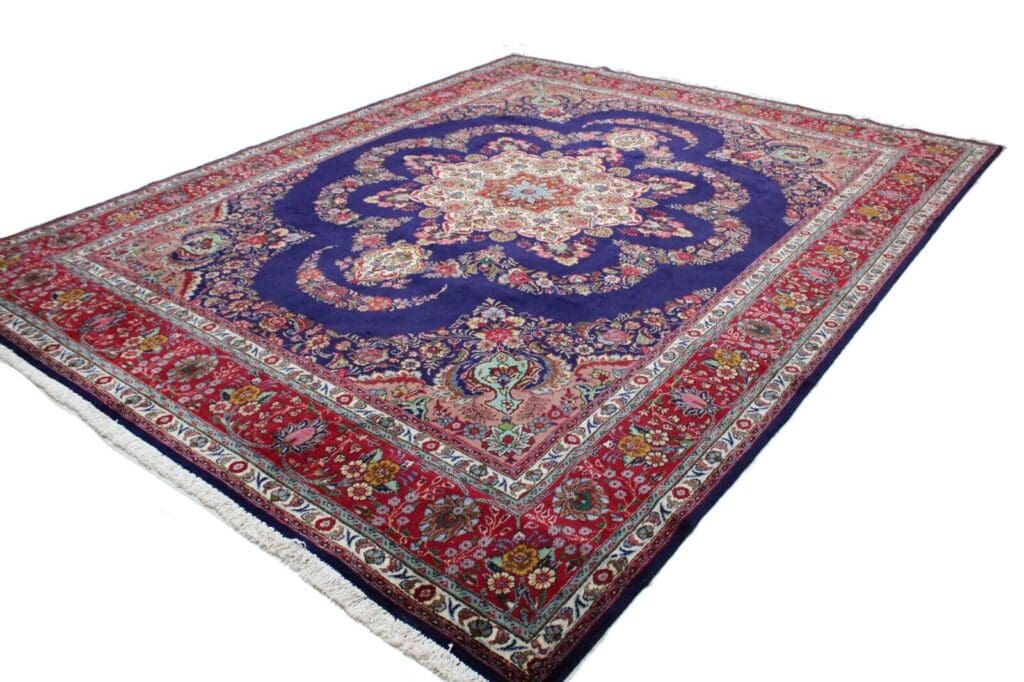
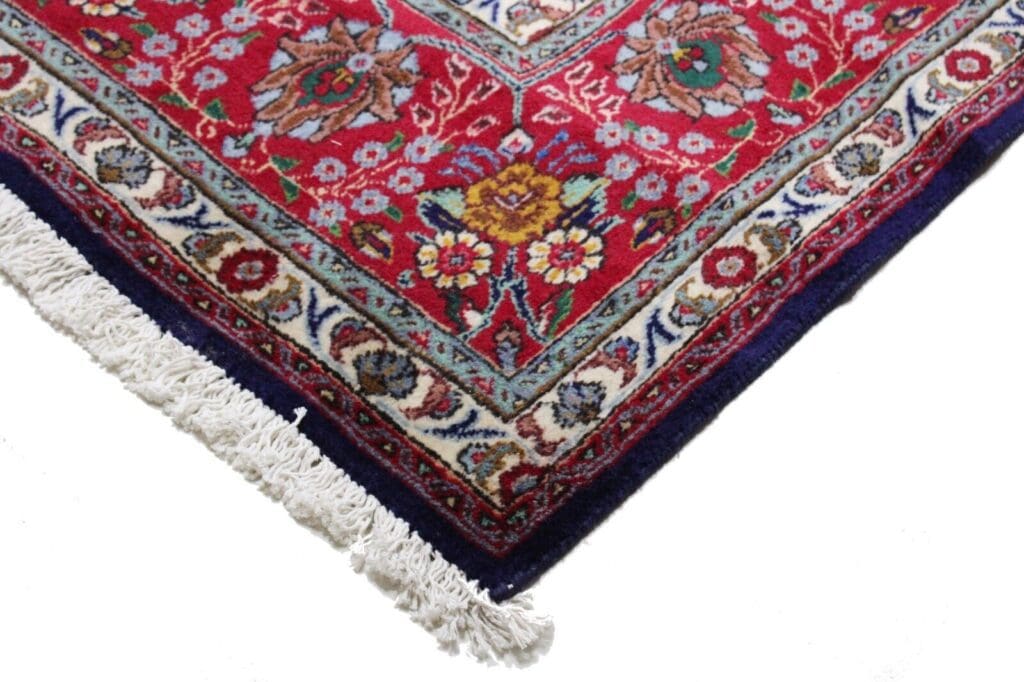
This Tabriz Persian rug is hand-knotted and has a wool pile. Cotton is also listed as a material. The combination of handwork and natural textile fibres is characteristic of traditional Persian rugs. In hand-knotting, each knot is inserted individually into the foundation. The visible surface is therefore built gradually from many separate working steps rather than printed or produced as a single machine-made pattern.
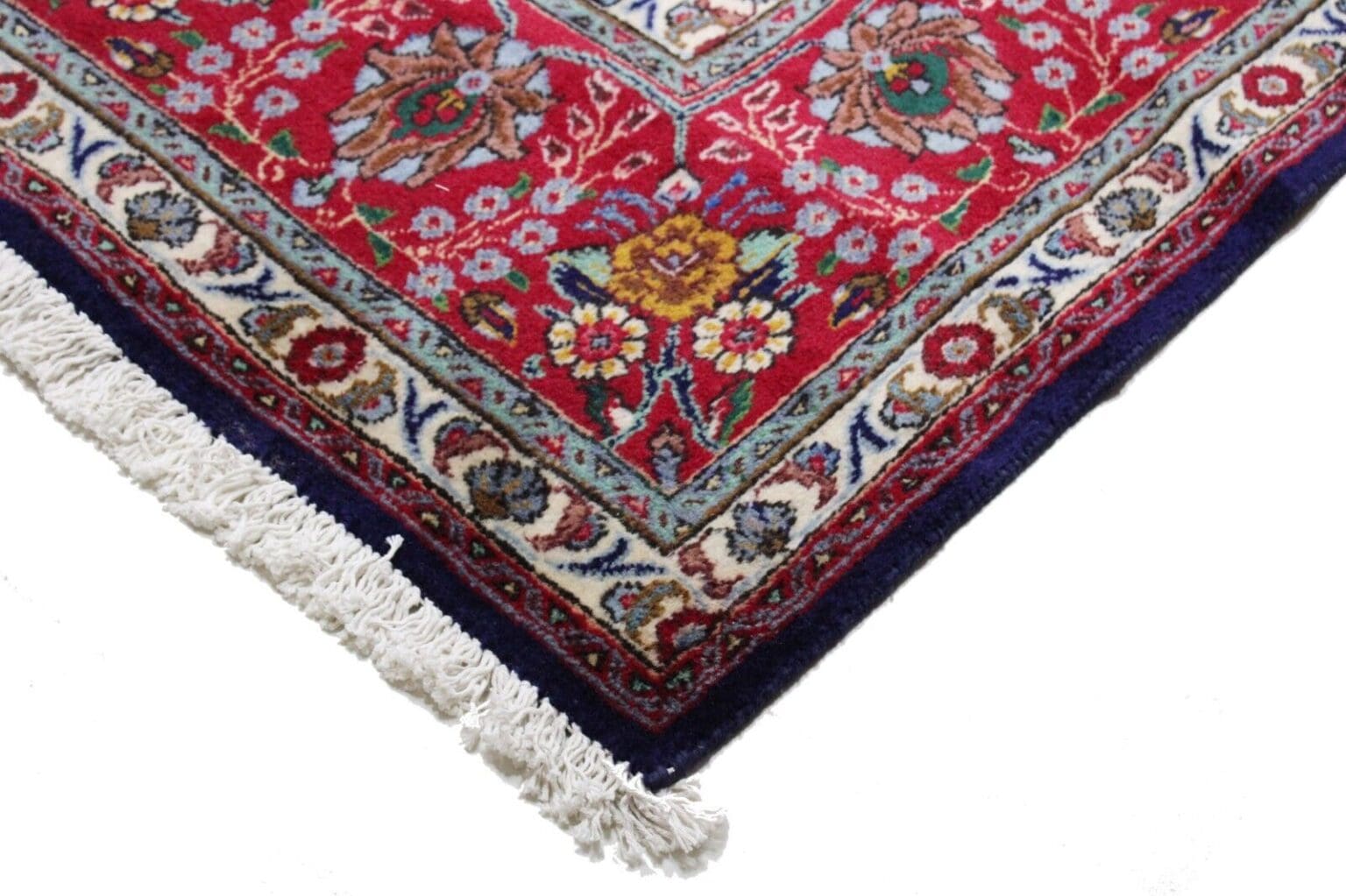
The knot density is described as high-quality hand-knotting. Careful knotting allows floral details, outlines and smaller ornamental elements to be arranged with control. It also affects how closely the design appears across the surface and how compact the pile feels underfoot. The term describes the workmanship recorded for this rug; it does not replace the material information, which identifies wool and cotton.
Wool is used in rug making because its fibres combine resilience with a soft, workable handle. It can form a comfortable pile while providing a durable textile surface for everyday interiors. The listed cotton adds to the material description of this particular rug. Its pile height is stated as normal. This gives the rug an ordinary, balanced profile between the visibility of the design and practical use in a room.
The rug is used and is described as very clean. That condition is part of the specific description of the piece. Its colour is blue and its style is classic. These details, together with the hand-knotted construction, wool pile, normal pile height and listed cotton, define the material and workmanship profile without adding undocumented technical specifications.
Origin and Tradition
Tabriz is located in north-western Iran and is the capital of the province of the same name. The city is one of the established centres of Persian rug production. Its position also made it an important trading place for Oriental rugs. Over generations, weavers and workshops developed, preserved and adapted designs, drawing methods and technical knowledge within a living textile tradition.
The rug-making tradition of Tabriz reaches back to the fifteenth century. Across that long history, the city developed a recognizable relationship between precise drawing, ordered field composition and controlled craftsmanship. Tabriz rugs are associated with carefully worked designs and technically disciplined knotting. The city is also a cultural centre where trade, art and the history of Persian textiles meet.
Persian rugs function as both useful textiles and woven compositions. Their designs are usually planned rather than assembled at random. A field, a central arrangement and borders may work together, while floral or geometric signs divide the surface into related areas. Such an arrangement helps a weaver transfer a complex design into a repeatable knotting plan. In Tabriz, traditional vocabulary is commonly combined with a precise approach to drawing.
Hand-knotting requires concentration, experience and a sense of proportion. The weaver translates a design into colour and form one knot at a time. Minor variations can belong to the nature of manual production, while the overall composition remains connected through repeated reference to the pattern. The name Tabriz therefore points to a regional craft tradition and not merely to a decorative label applied to a design.
Iranian rug culture includes many regional schools, each with its own balance of ornament, colour and construction. Tabriz occupies an important place within that wider tradition. The city is associated with orderly compositions, differentiated drawing and a technically controlled surface. Historical exchange through trade routes and the transmission of knowledge supported this development. The tradition could change over time while retaining its connection to manual production.
The regional name also provides cultural context for the concrete features recorded here. This rug is identified as a Tabriz Persian rug, with Iran given as its origin and the twenty-first century as its period. Those facts distinguish its provenance from the general history of similar designs. Background about Tabriz explains the craft setting, while the rug itself remains defined by the stated material, construction, pattern, colour, condition and period.
Design and Pattern
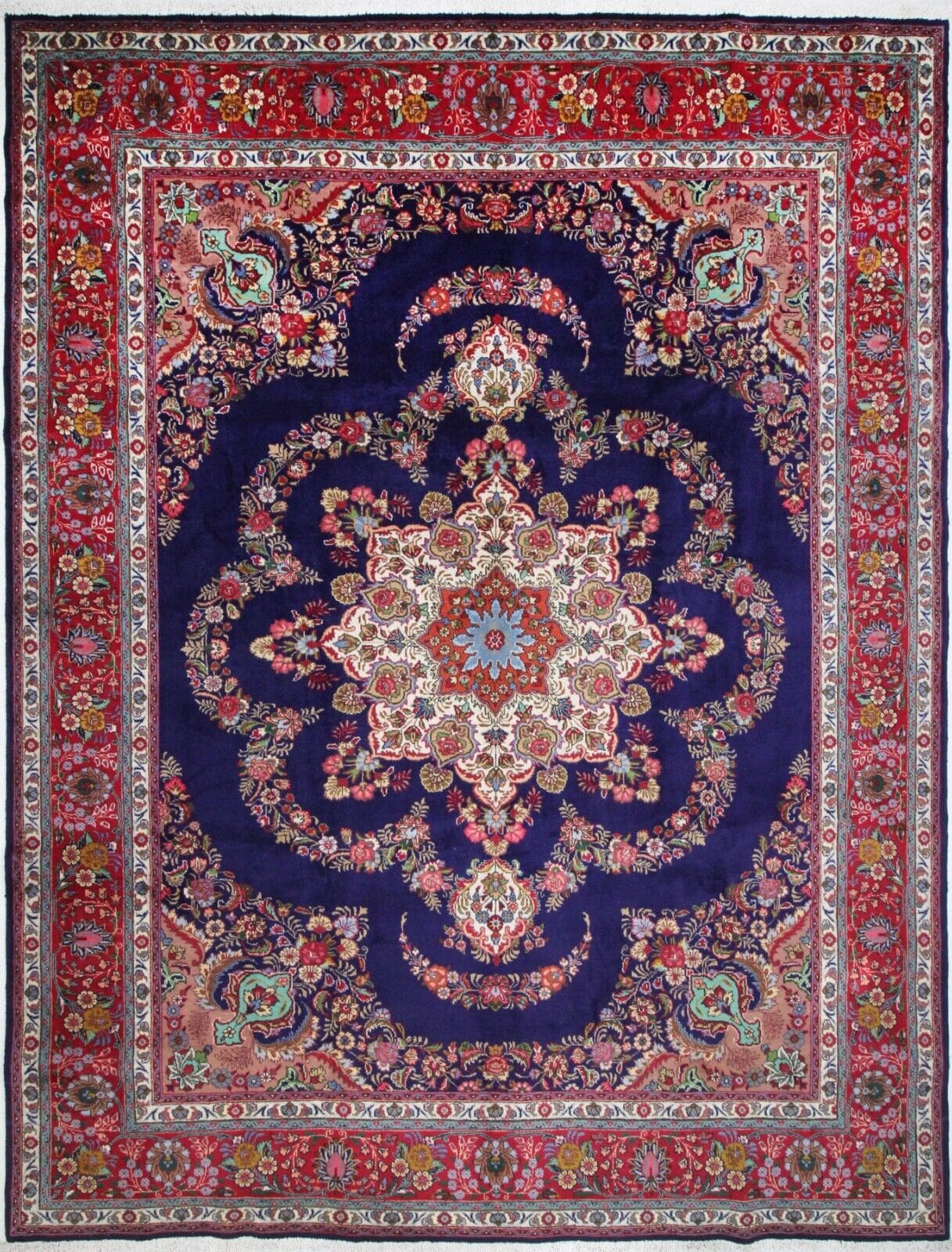
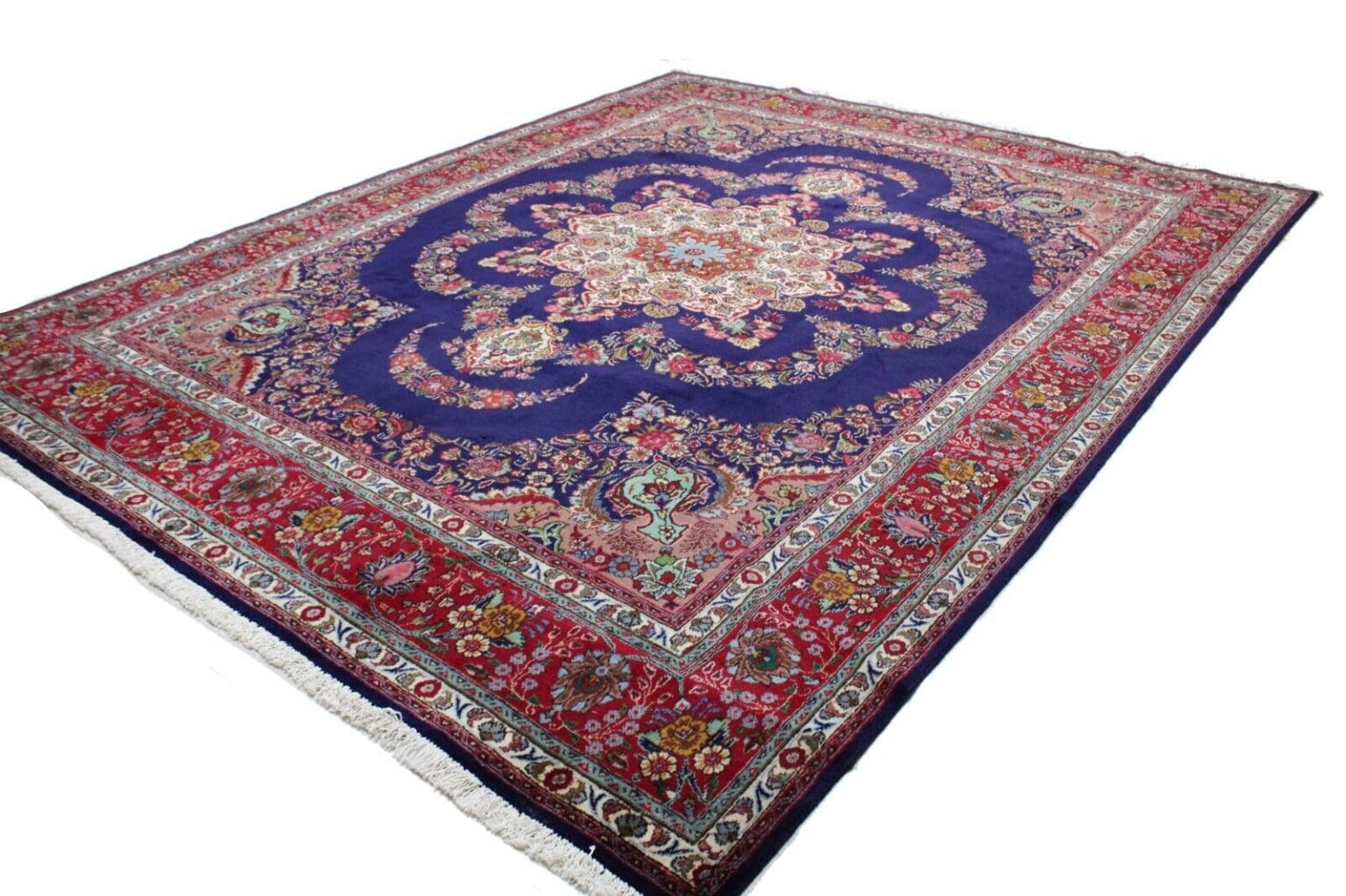
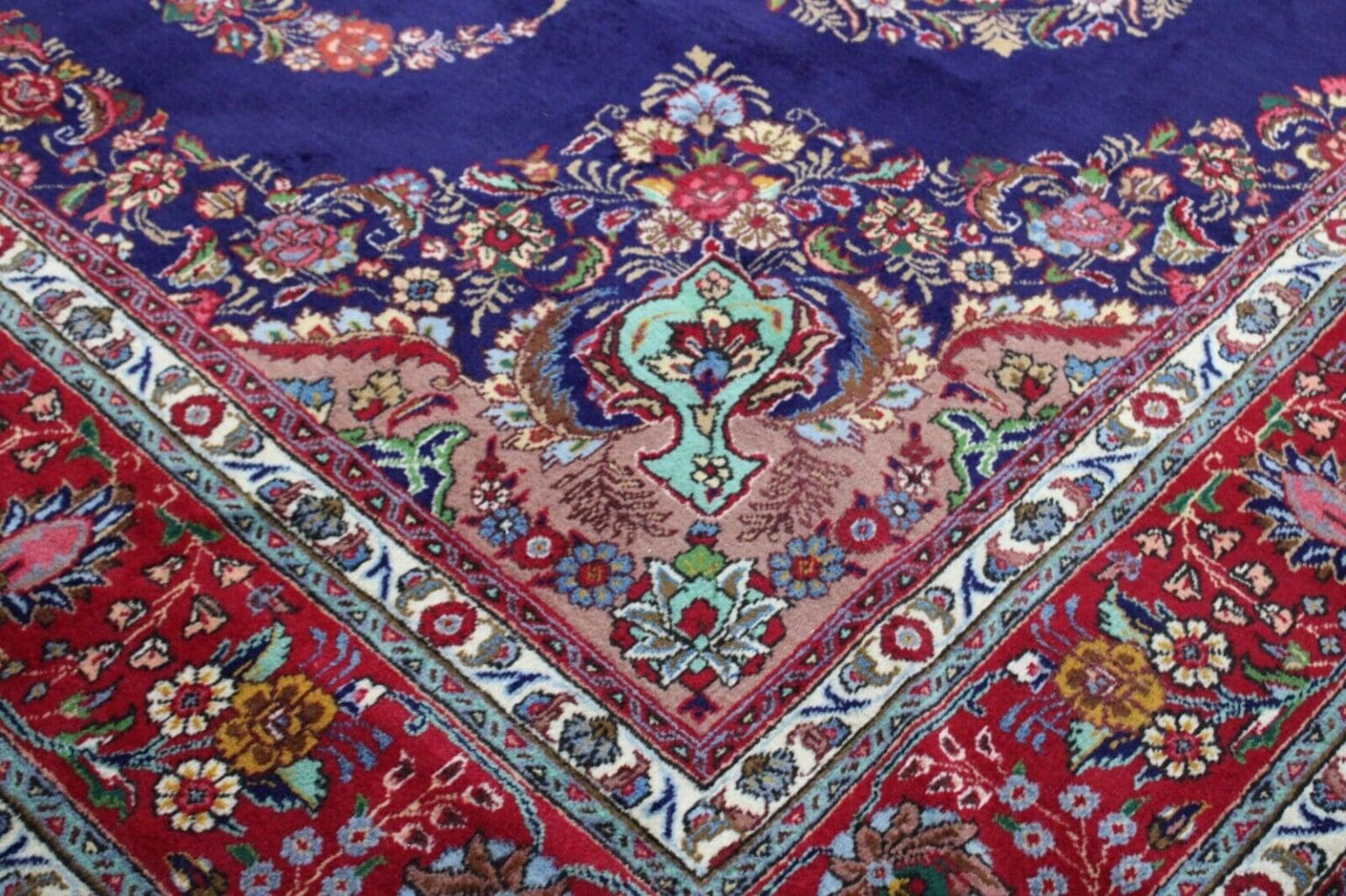
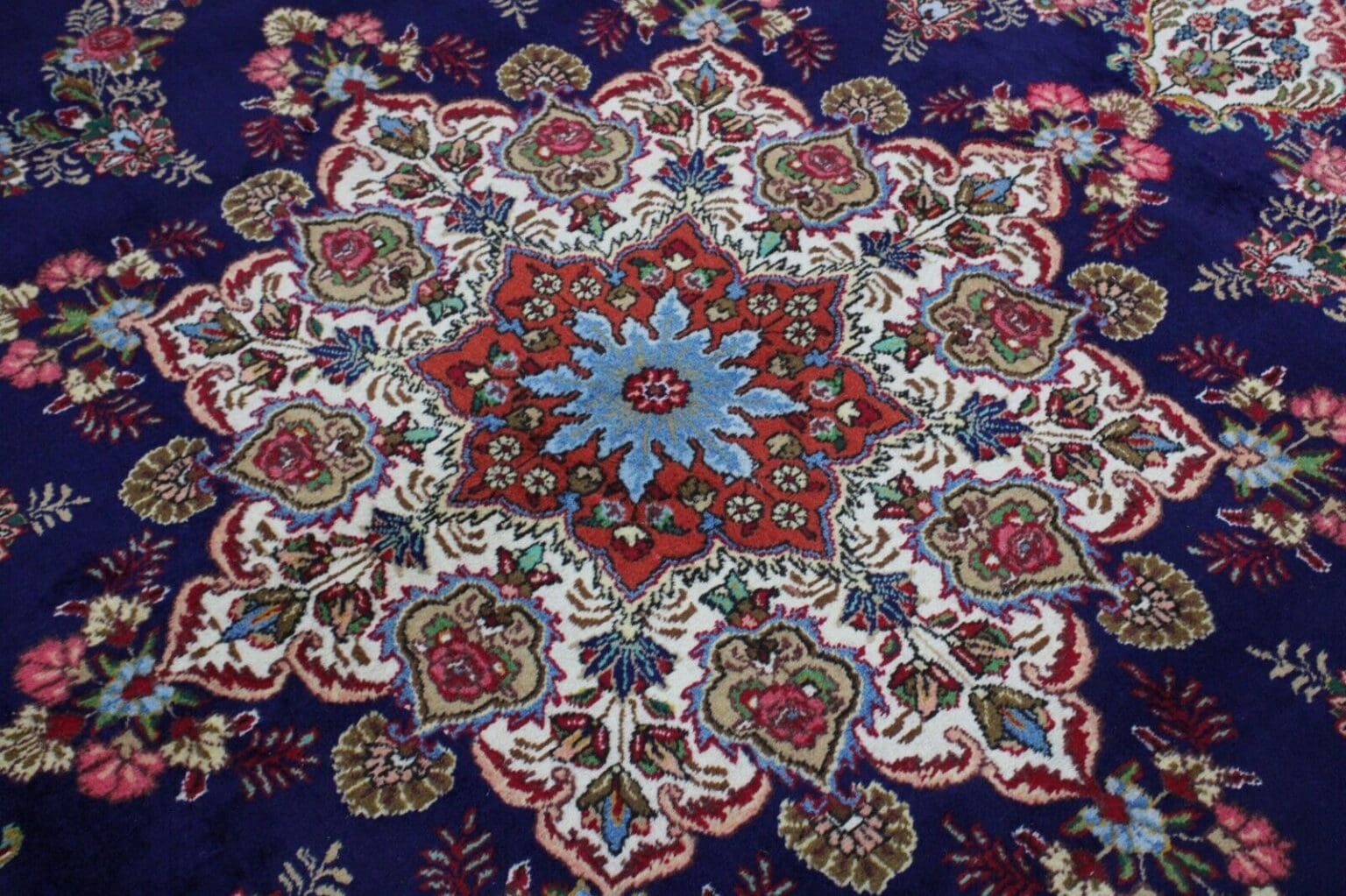
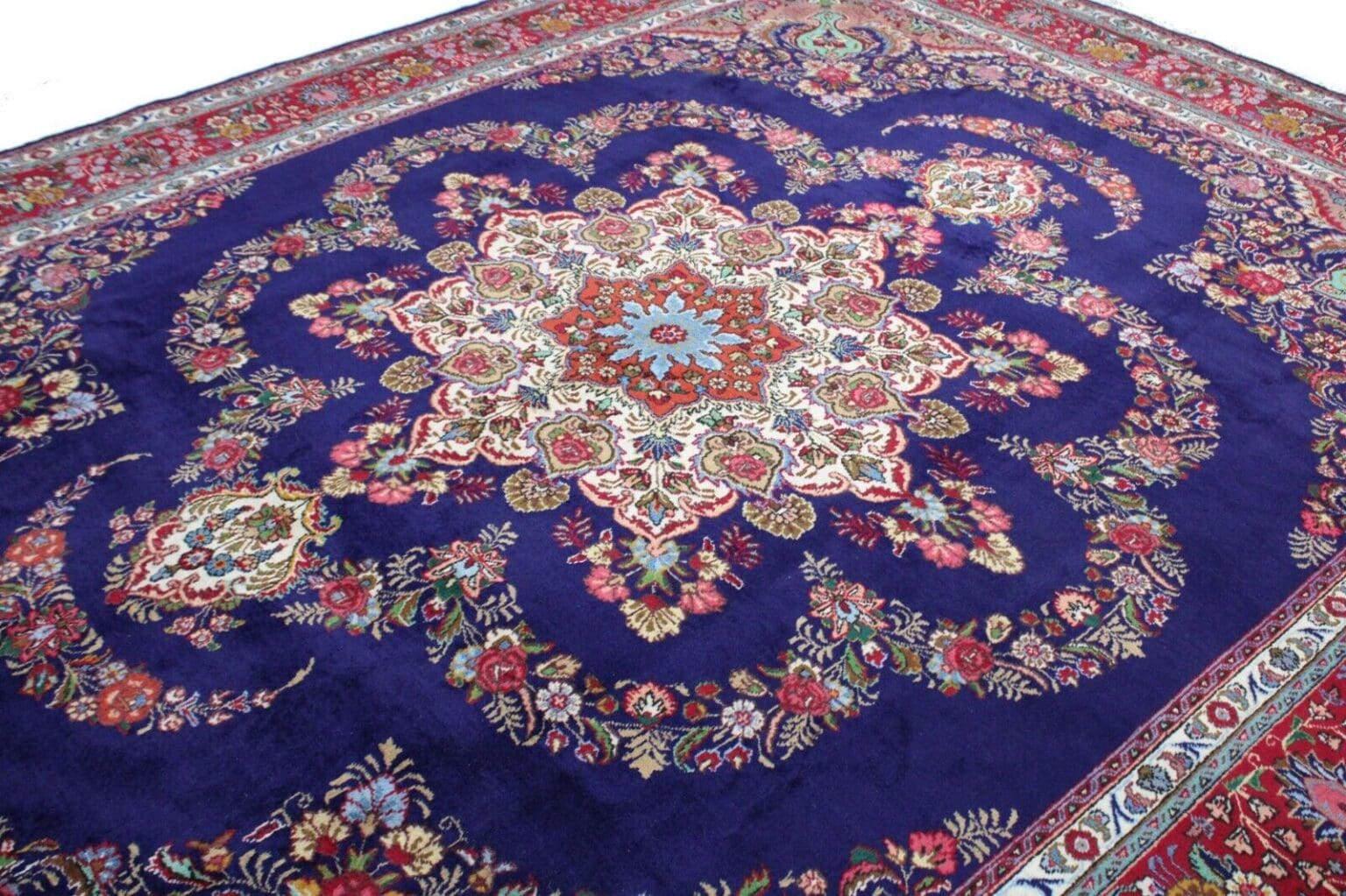
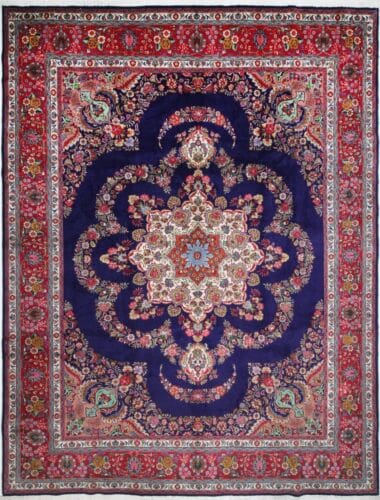
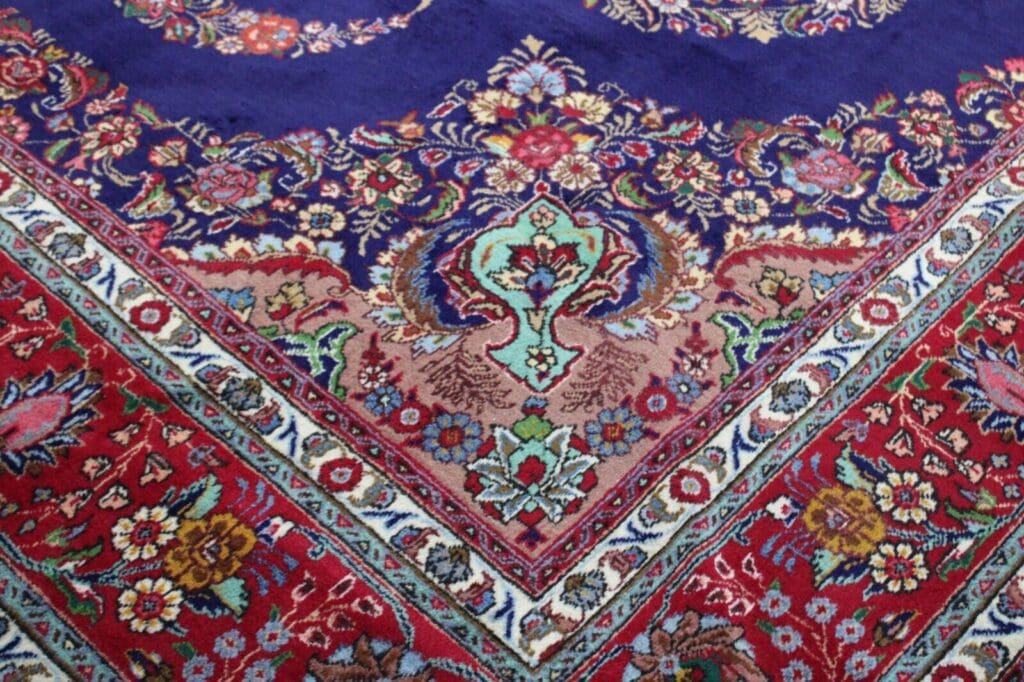
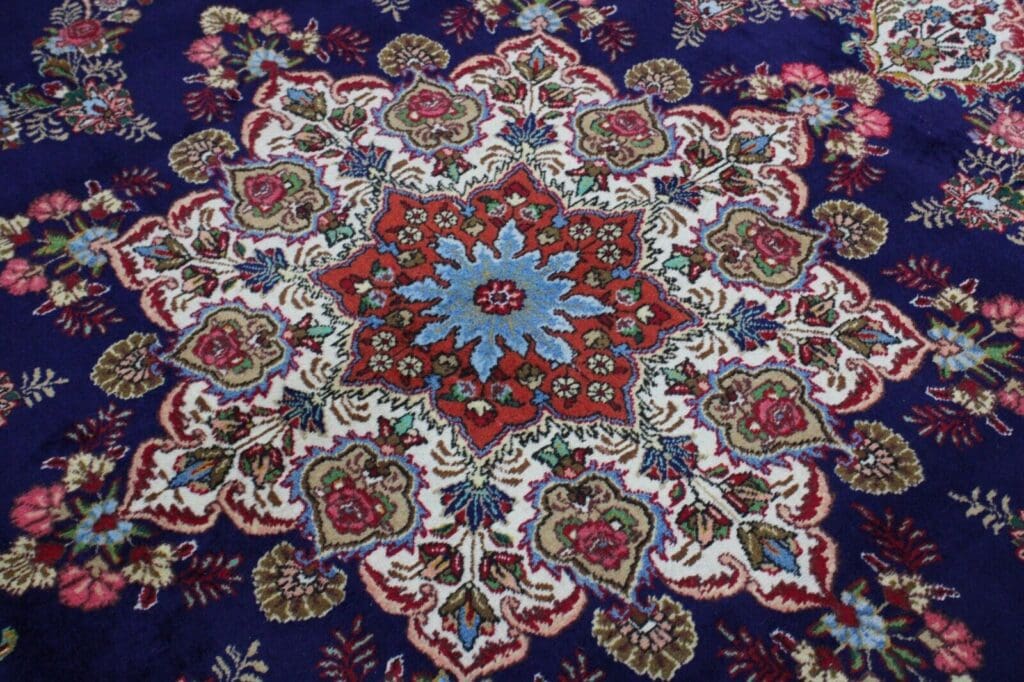
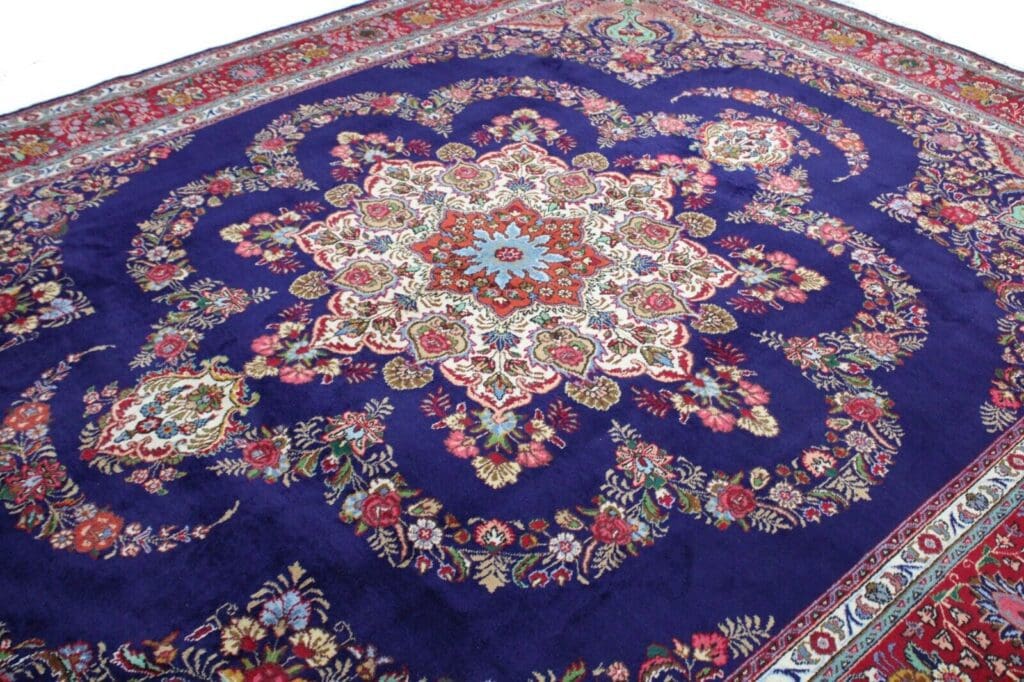
The pattern of this rug is described as Oriental with floral motifs. Blue is given as its colour and forms the central colour statement in the description. Floral motifs bring flowers, leaves and scrolling forms into the woven field. They may be arranged as individual ornaments, repeated units or connected elements. In Oriental rug design, this type of arrangement often creates a rhythm between decorated areas and the spaces that separate them.
The classic style refers to a design language rooted in established forms and balanced composition. A classic rug pattern is generally not intended as a random collection of isolated images. Repeated motifs, axes and borders can make the surface read as one coherent whole. A floral subject may include small drawn details as well as larger ornamental relationships, depending on the design plan used by the weaver.
Flowers have a long place in Persian pattern traditions. Blossoms and vines have been used across different periods to express order, movement and a connection with the natural world. They do not have to be botanical copies. They can be stylised, mirrored, repeated in rhythm or transformed into more abstract ornament. The important point is how the forms relate to one another and how they support the composition of the field.
Blue can perform several visual roles within a floral design. It may provide a calm ground, separate motifs from one another or connect different parts of a colour arrangement. The source identifies blue but does not specify a complete palette for this rug. The responsible description therefore keeps the focus on the recorded blue colour together with the Oriental floral pattern and classic style, without assigning additional colours that are not stated.
The quality of the hand-knotting supports controlled rendering of outlines and ornaments. Knotting and pattern are closely related in a hand-made rug: careful placement makes it possible to work curved lines, transitions and small details with greater precision. This explains why craftsmanship matters to the appearance of a floral composition, while avoiding claims about particular medallions, borders or secondary colours that are not documented for this piece.
A classic Tabriz design can sit within different interior settings because floral ornament is not limited to either a purely contemporary or a strictly historical room. The rug is described as suitable for all rooms, and it is also stated to be suitable for underfloor heating. Its use is therefore presented broadly, while the visual identity remains specific: blue, Oriental floral motifs and a classic style on a hand-knotted Persian rug.
Special Features
The specific features named for this rug are its high-quality hand-knotting, wool material, additional cotton material, normal pile, blue colour and classic style. It is used but very clean. Together, these details describe a single hand-crafted rug with Oriental floral ornament and a traditional visual direction. No signature, exact knot count or additional provenance detail is stated.
The rug is suitable for all rooms and for interiors with underfloor heating. Its use is therefore not limited to one named living area. A sitting room, hallway or bedroom may be considered when the room layout and furnishing suit the rug. This recommendation belongs to the product description and complements the recorded information about its materials, pile and condition.
Iran is given as the country of origin and the rug is dated to the twenty-first century. Along with the Tabriz designation, this identifies an Iranian Persian rug connected with a regional tradition that reaches back to the fifteenth century. The classic style and Oriental floral pattern provide a clear link between the individual description and its cultural setting, without adding undocumented claims about a workshop, signature or exact age.
FAQ
How can you identify a genuine Persian rug?
A Persian rug is identified through its stated origin, materials and construction. For this piece, Iran is named as the origin, Tabriz is the regional designation, wool and cotton are listed as materials, and the rug is hand-knotted. Knotting quality and the treatment of the pattern also help explain the workmanship. A clear origin statement should be available; Iran is part of the product description for this rug.
How should this Persian rug be cared for?
A used wool rug described as very clean benefits from regular, gentle care. Vacuuming can remove dust and loose dirt, but the pile should not be treated more harshly than necessary. If deeper cleaning is needed, professional rug cleaning is appropriate. Strong, prolonged direct sunlight should be avoided so that the blue appearance remains as even as possible. Moisture should not be allowed to remain in the rug for an extended period, and spills are best addressed promptly.
Where can I buy a Tabriz Persian rug?
Tabriz Persian rugs are offered by specialist rug dealers, galleries dealing in Oriental art and online retailers. When buying, clear information about origin, materials, construction and condition provides useful guidance. For this one-off rug, the listed details are Iran, the twenty-first century, hand-knotting, wool and cotton, together with a used but very clean condition. A reputable seller should present such information clearly and distinguish the individual rug from general statements about the Tabriz tradition.
To provide the best experiences, we use technologies like cookies to store and/or access device information. Consenting to these technologies will allow us to process data such as browsing behavior or unique IDs on this site. Not consenting or withdrawing consent, may adversely affect certain features and functions.
Functional Always active
The technical storage or access is strictly necessary for the legitimate purpose of enabling the use of a specific service explicitly requested by the subscriber or user, or for the sole purpose of carrying out the transmission of a communication over an electronic communications network.
Preferences
The technical storage or access is necessary for the legitimate purpose of storing preferences that are not requested by the subscriber or user.
Statistics
The technical storage or access that is used exclusively for statistical purposes.The technical storage or access that is used exclusively for anonymous statistical purposes. Without a subpoena, voluntary compliance on the part of your Internet Service Provider, or additional records from a third party, information stored or retrieved for this purpose alone cannot usually be used to identify you.
Marketing
The technical storage or access is required to create user profiles to send advertising, or to track the user on a website or across several websites for similar marketing purposes.

 SECURE PAYMENT
 SHIPPING PARTNERS