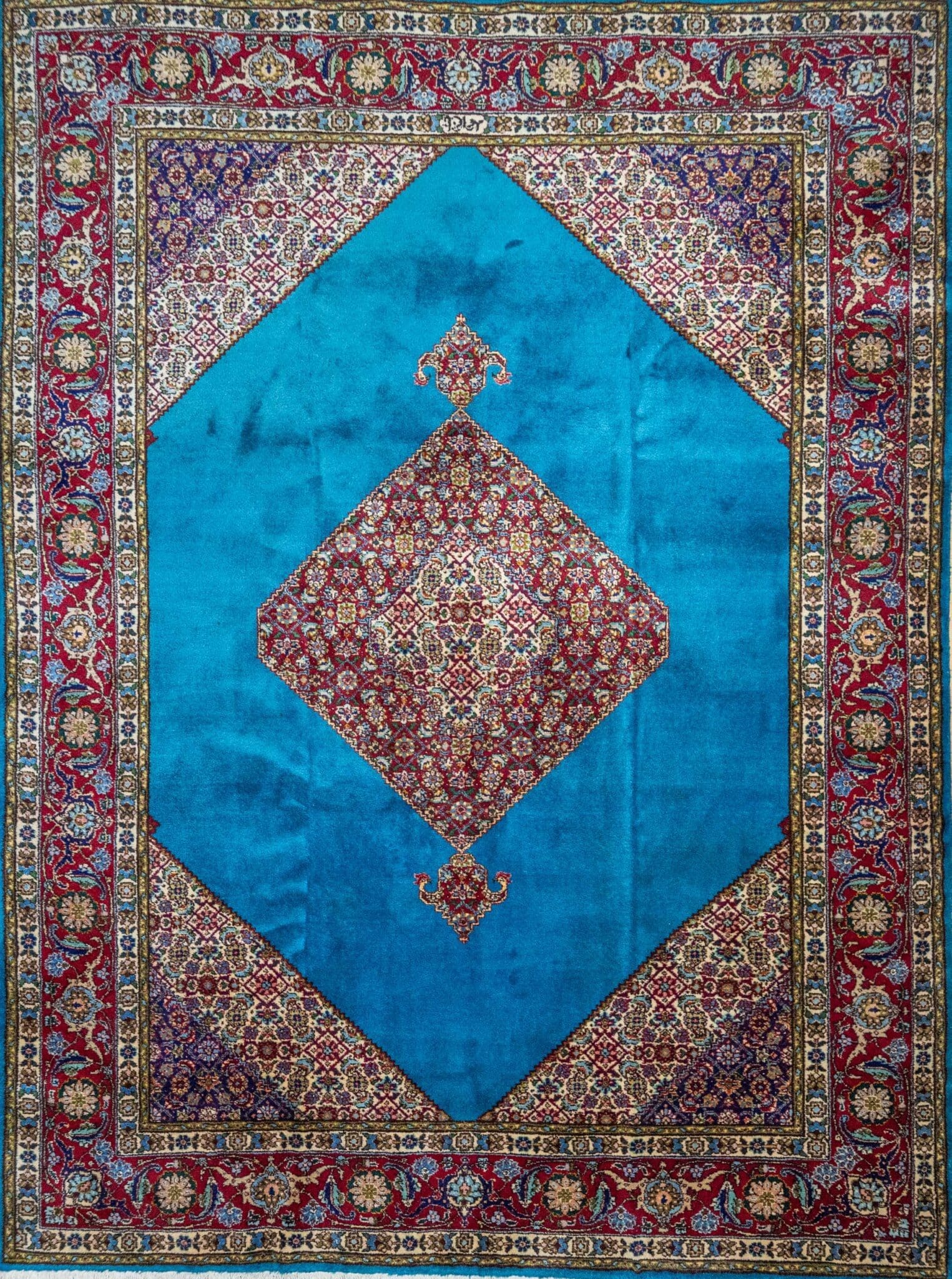
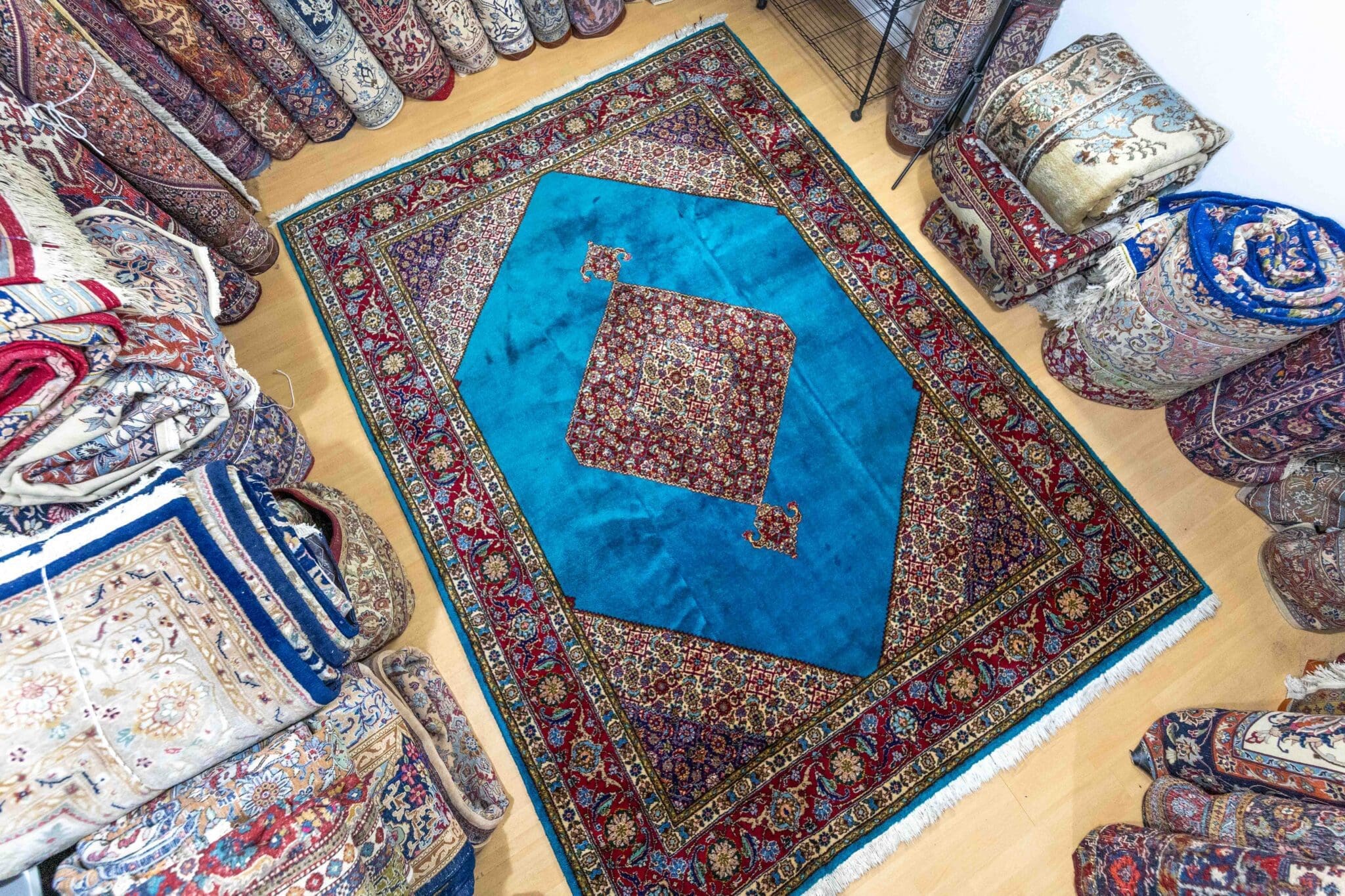
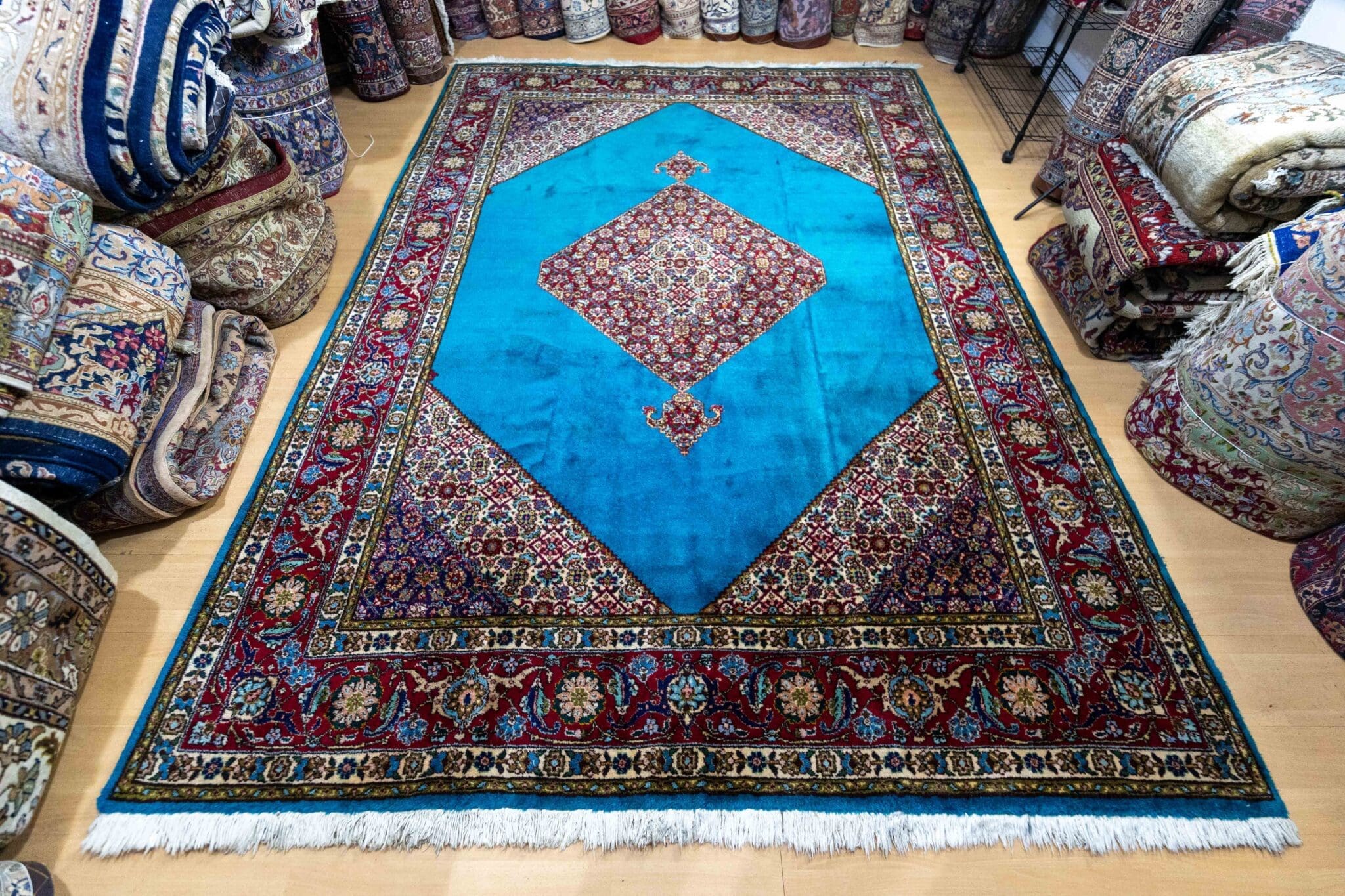
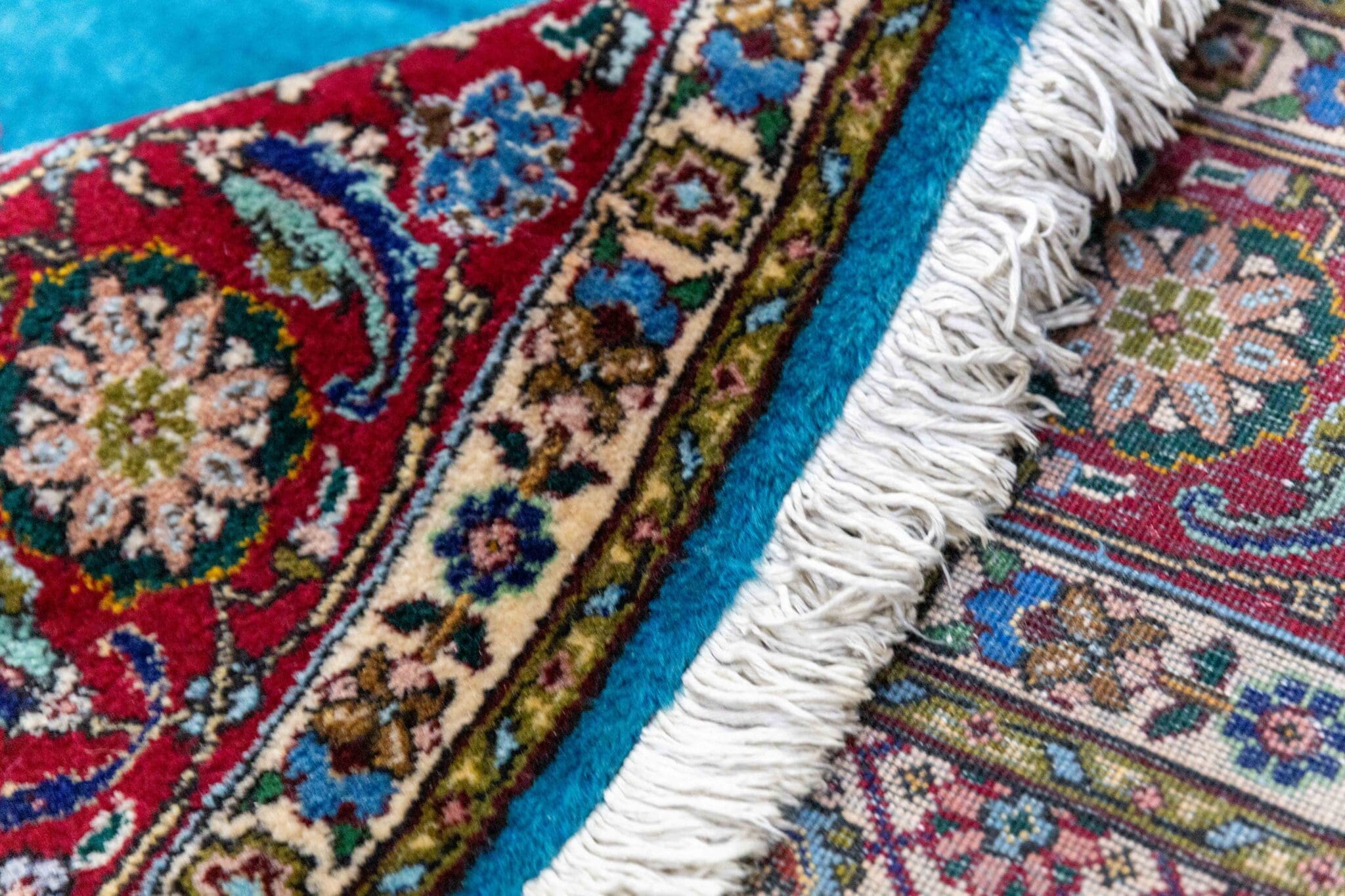
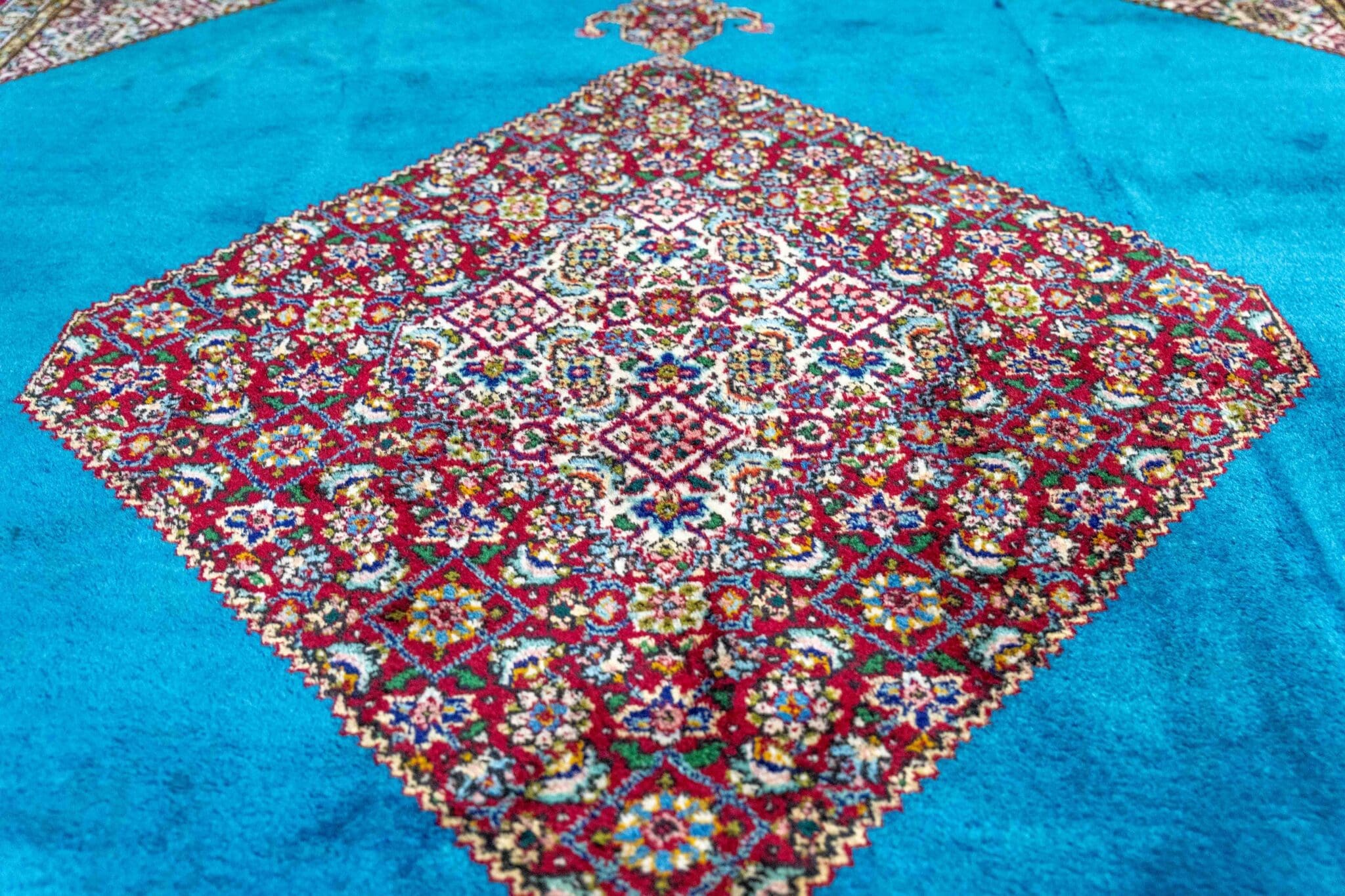
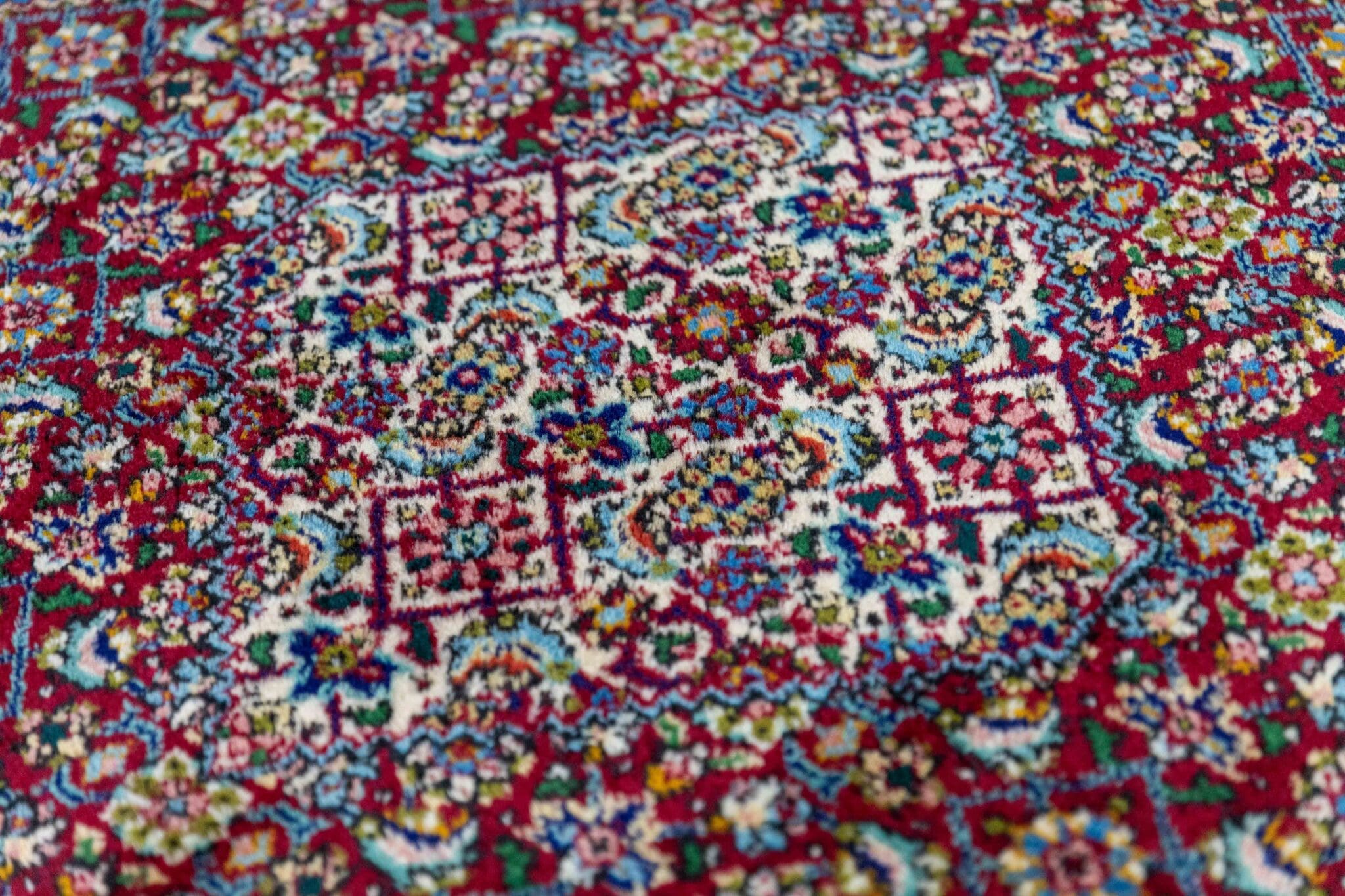
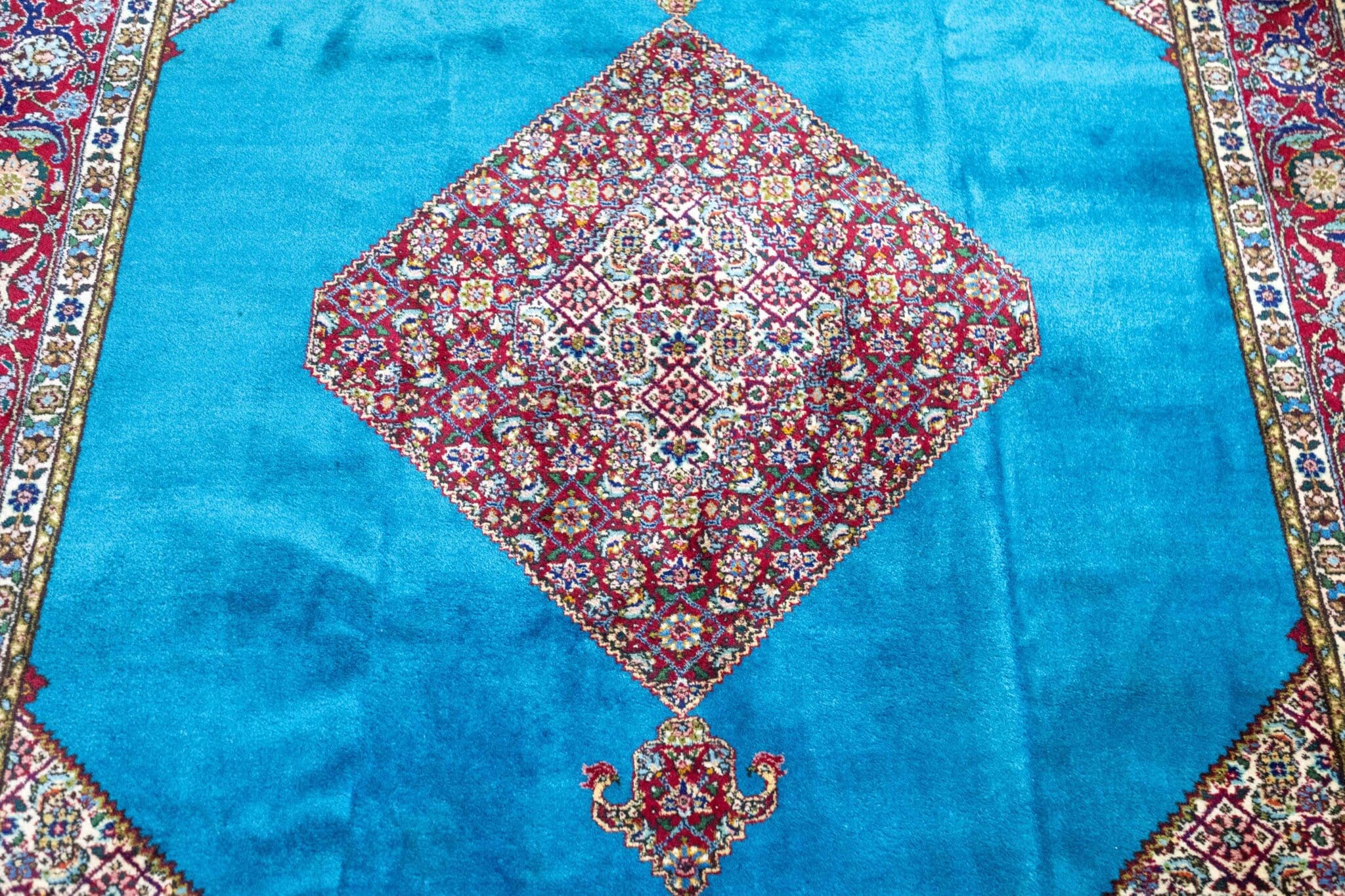
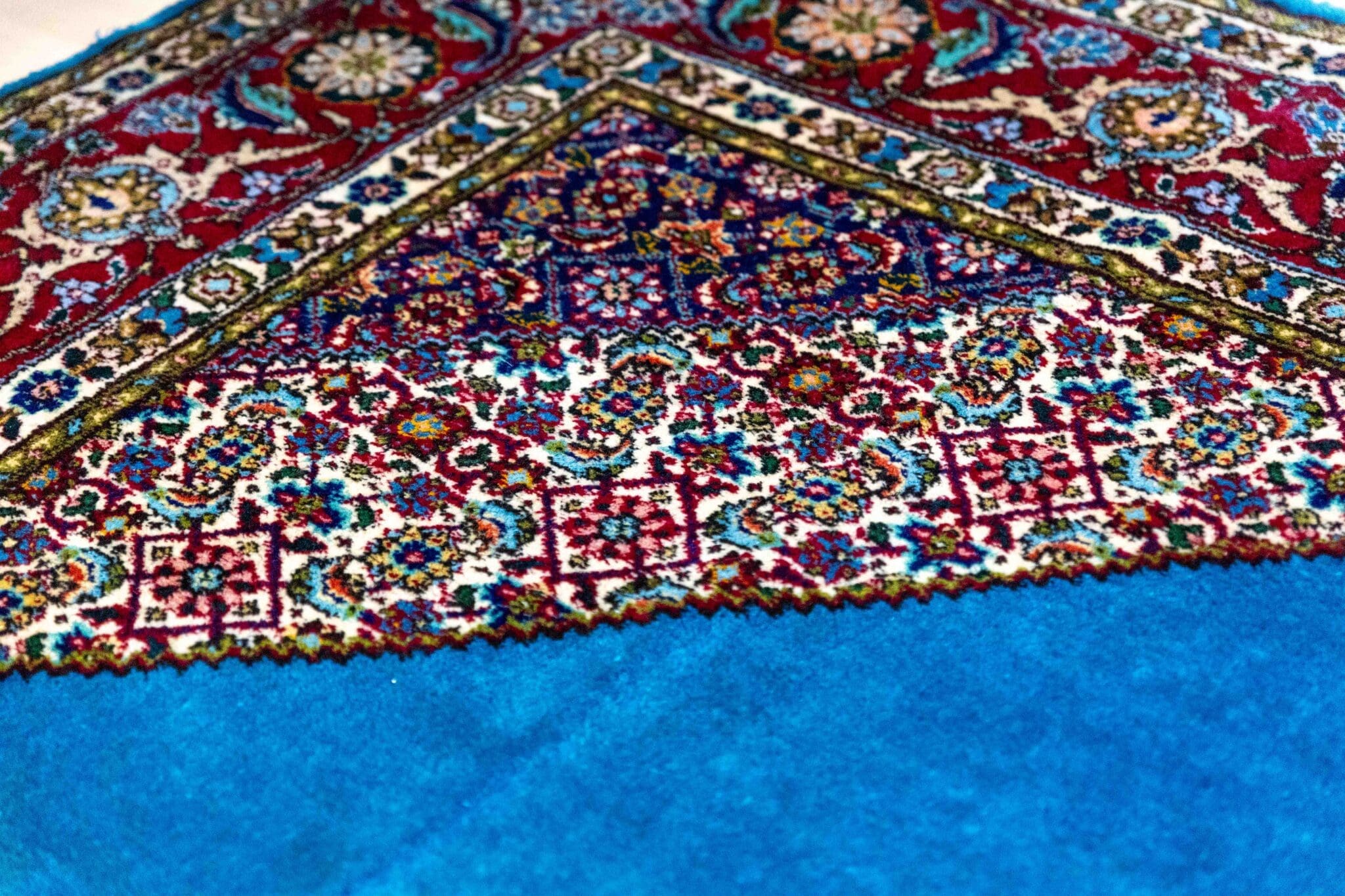
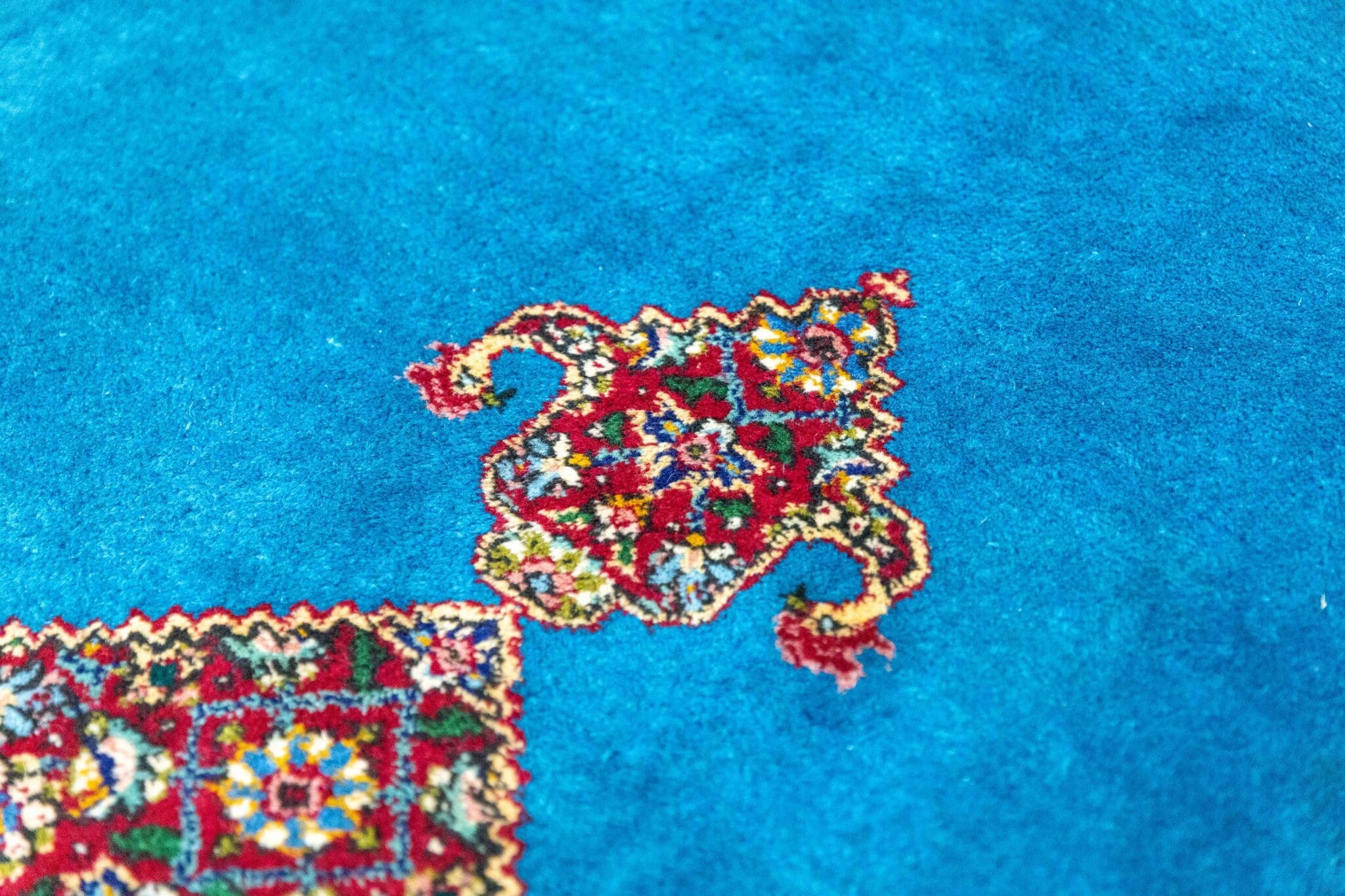
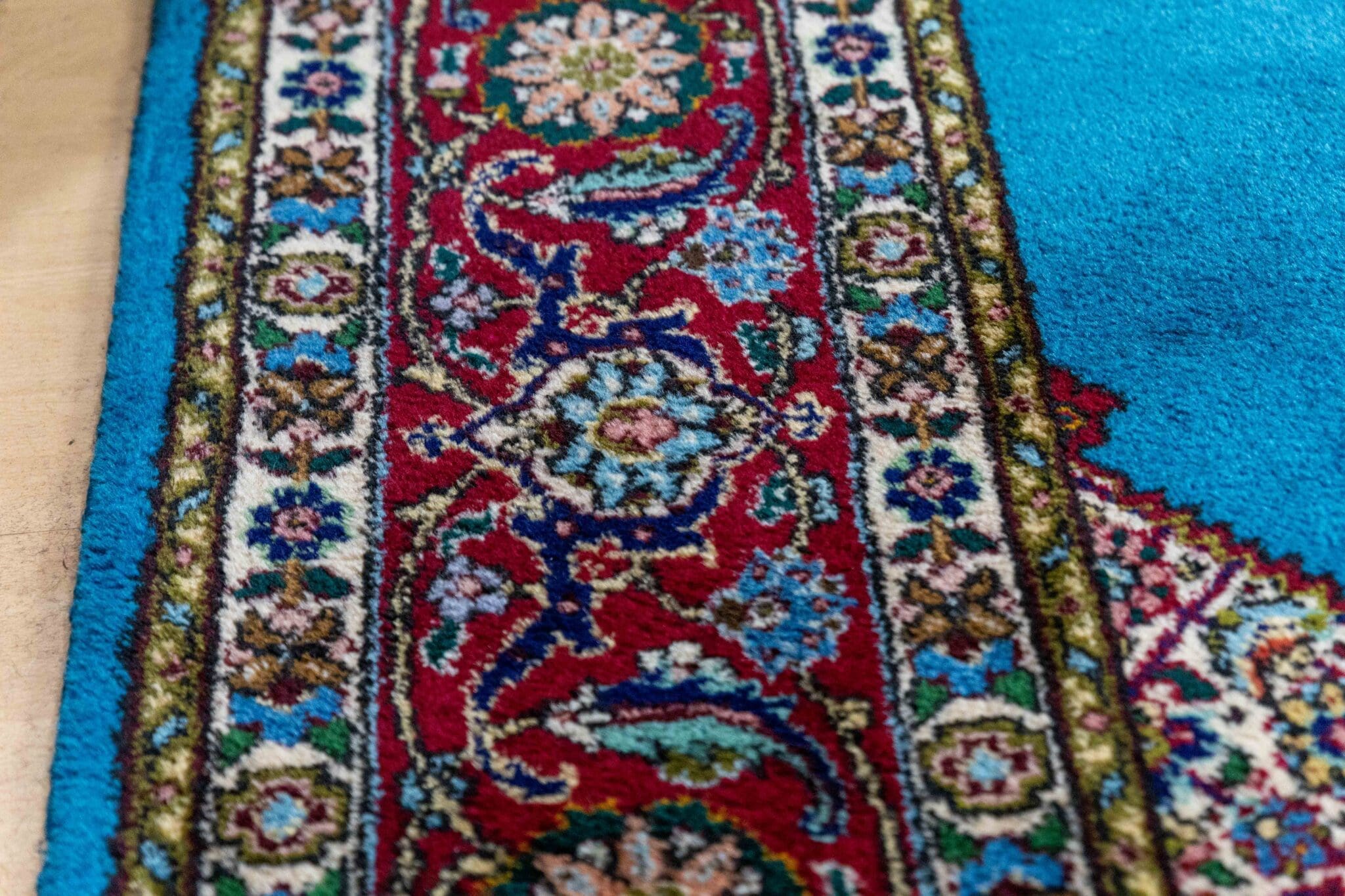
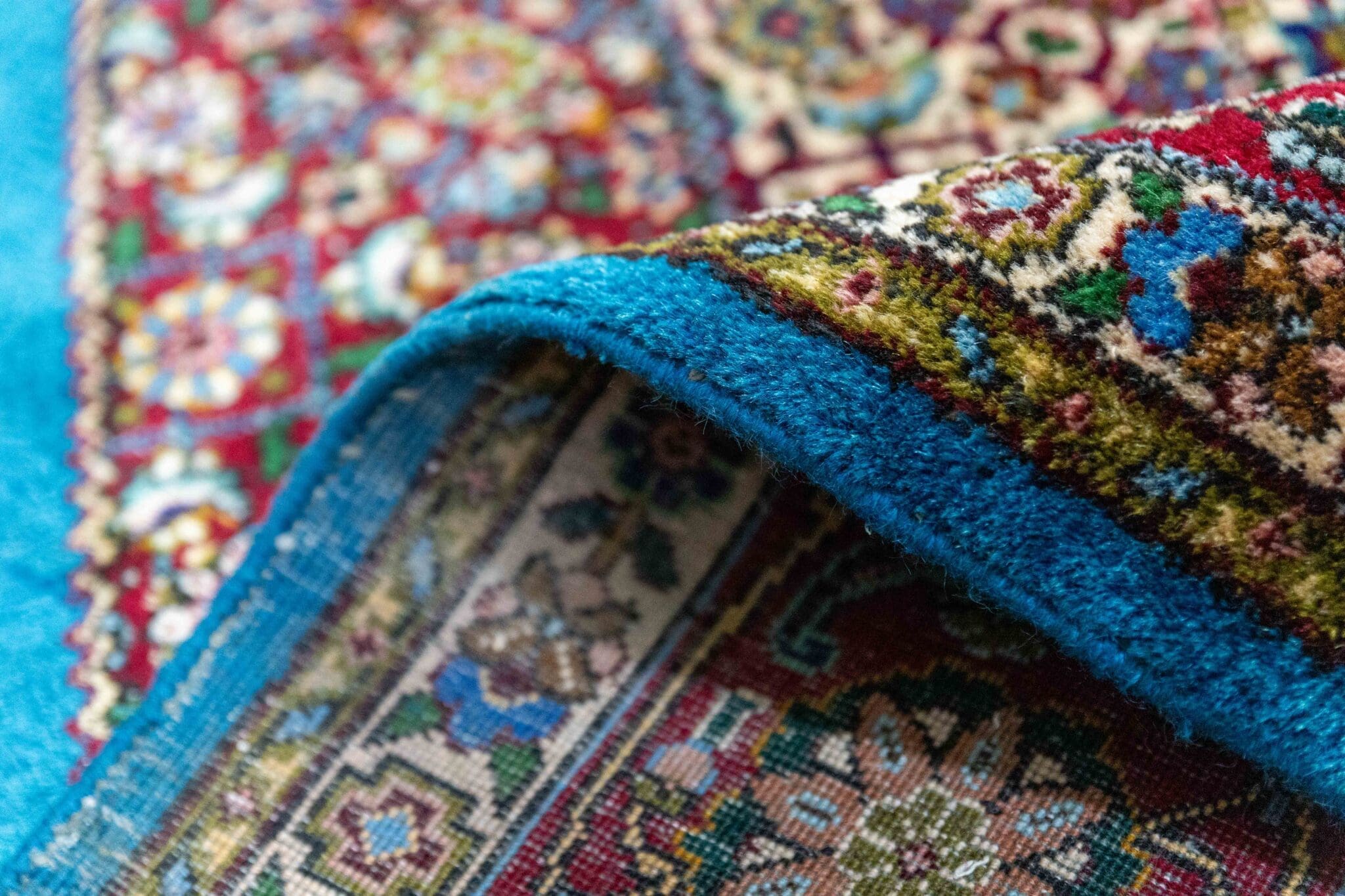
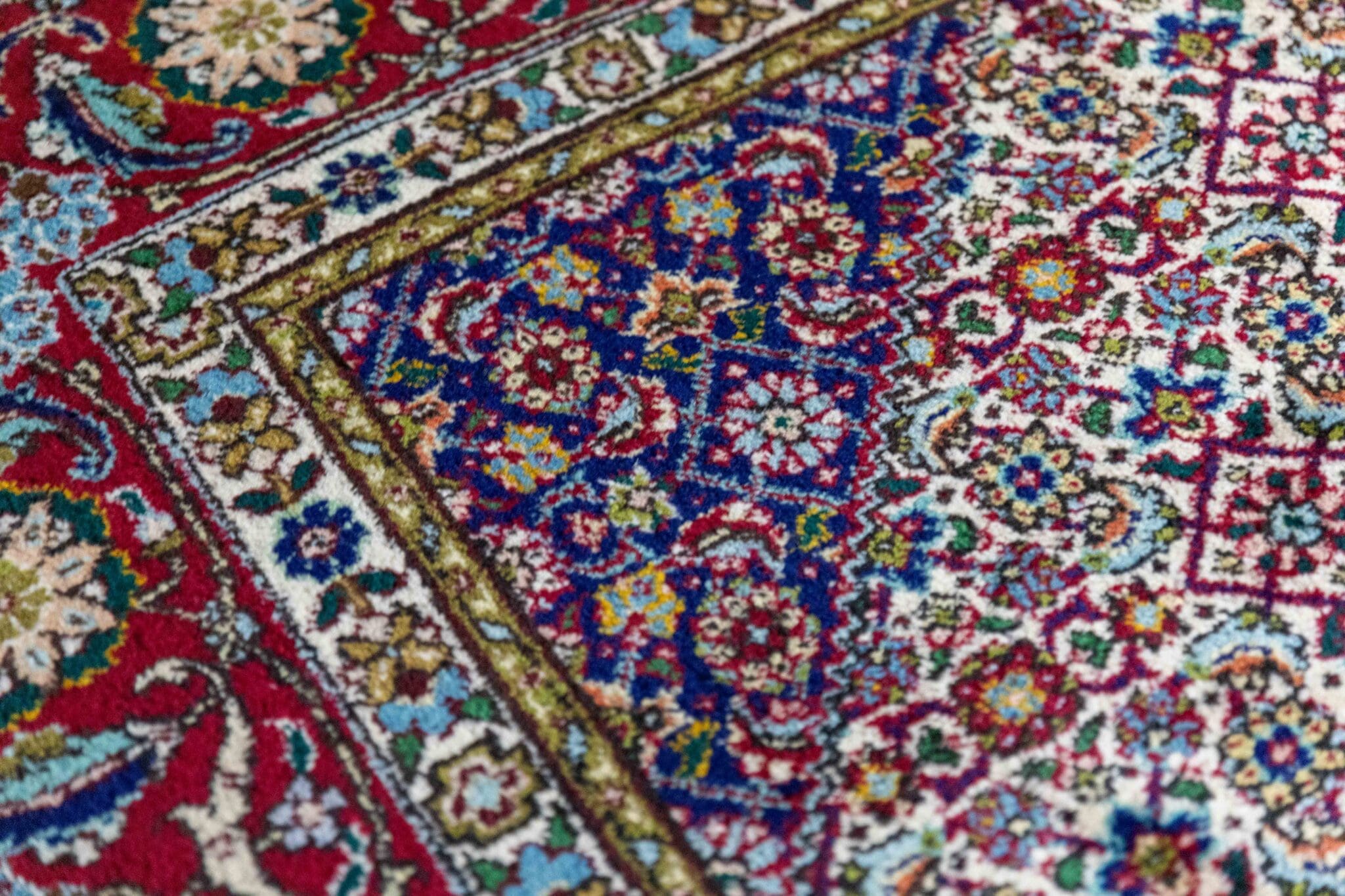
Persian Rug Tabriz 330x238cm Wool Hand-knotted
Original price was: € 3579€ 1420Current price is: € 1420
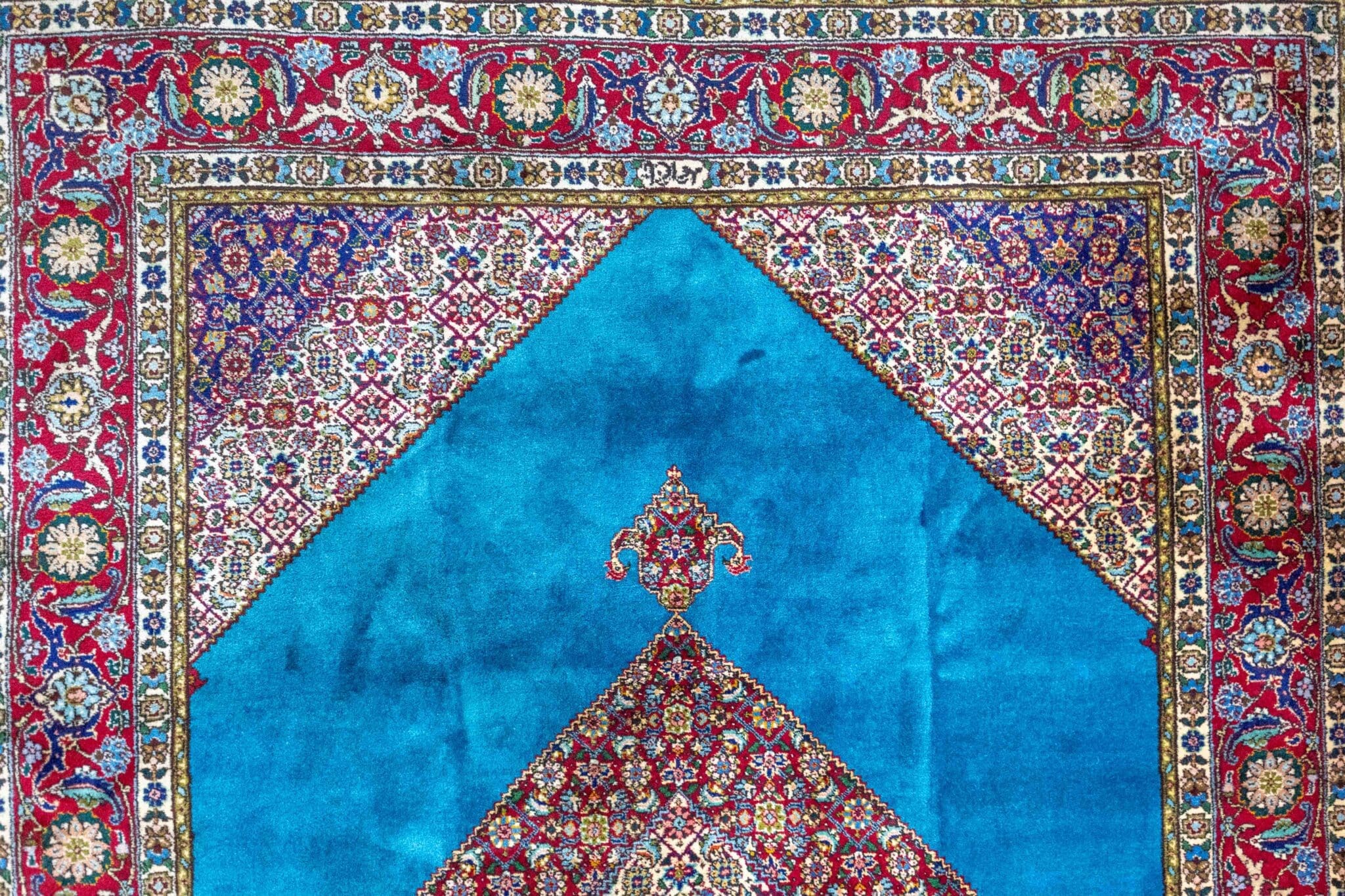
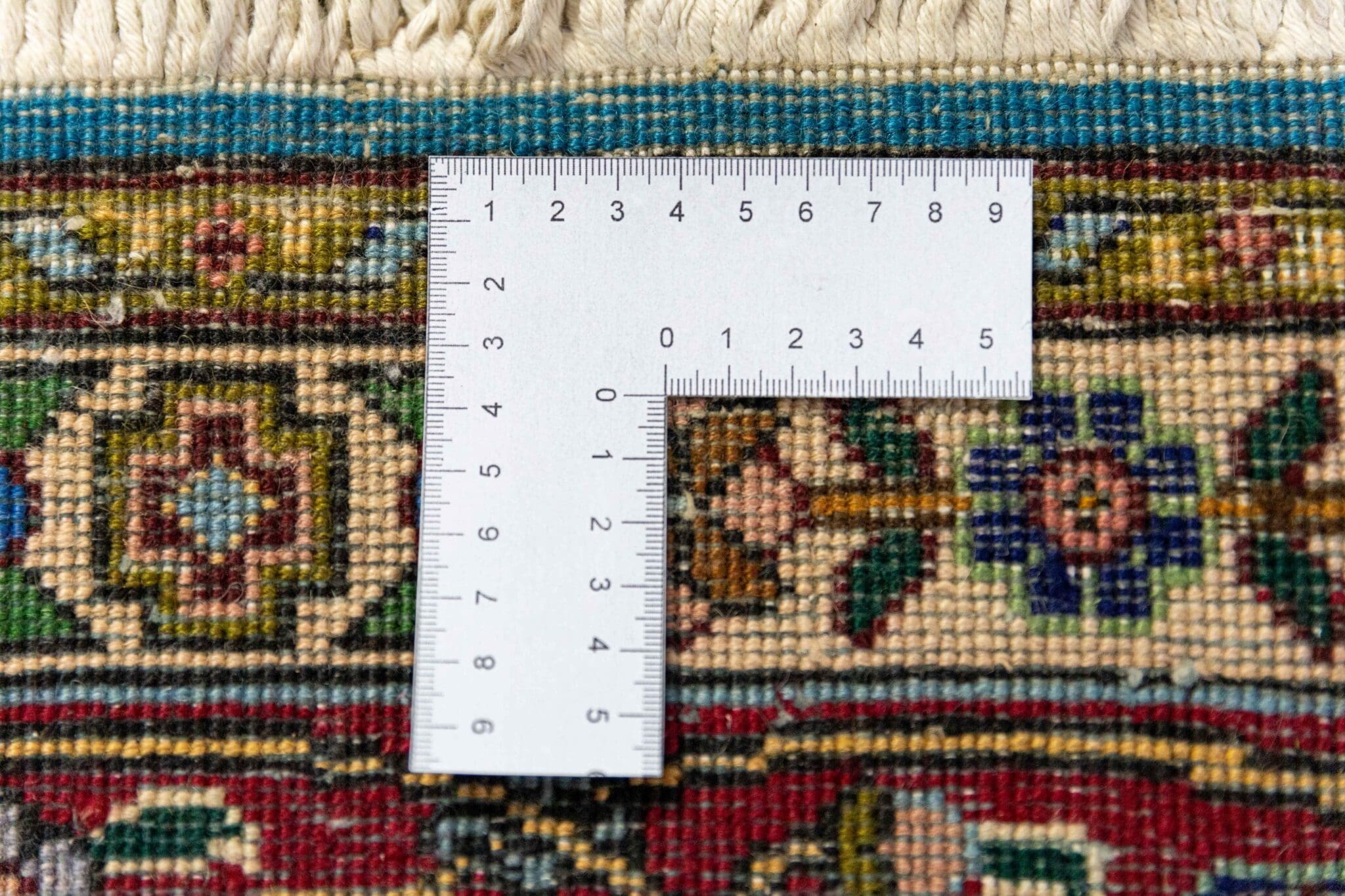
Hand-knotted Tabriz Persian rug | Knot density: approx. 160,000 knots/sq m | Material: pile 100% virgin wool, warp 100% cotton | Size: 330x238cm | Pattern: Antique Mahi Lachak-Toranj Tabriz Medallion, semi-antique, rare colour combination | Condition: Very good condition, freshly washed
1 available
- ✓Free Shipping in EU
- ✓2-5 Business Days Delivery
- ✓14-Day Return Policy
- ✓Worldwide Shipping on request
 SECURE PAYMENT
 SHIPPING PARTNERS
Inventory number: 10012000036321
Description
Tabriz Persian Rug
Material and Craftsmanship
This Persian rug is hand-knotted. The pile is made from 100% virgin wool and the warp from 100% cotton. The two materials therefore have different functions within the construction: wool forms the visible surface underfoot, while cotton provides the foundation into which the knots are tied. Virgin wool is known for its durability and long service life. Used as pile, it also gives a rug a comfortable feel underfoot and an insulating quality.
Hand-knotting does not create a design by printing an image onto a finished textile. The composition is built from individual knots tied into the stretched warp and secured by the succeeding rows. With each row, the structure becomes a continuous textile surface. After knotting, the pile is finished so that the outlines and colour areas can be read clearly. The listed density of approximately 160,000 knots per square metre describes a finely worked knot structure.
The quality of a hand-knotted rug depends on more than knot count alone. The preparation and tension of the warp, the regularity of the rows, the accuracy of the outlines and the finishing of the pile also matter. A relatively fine knot structure can support small motifs and precise lines, while wool gives the surface body and a tactile character. The cotton warp supplies the textile framework on which the detailed composition is formed.
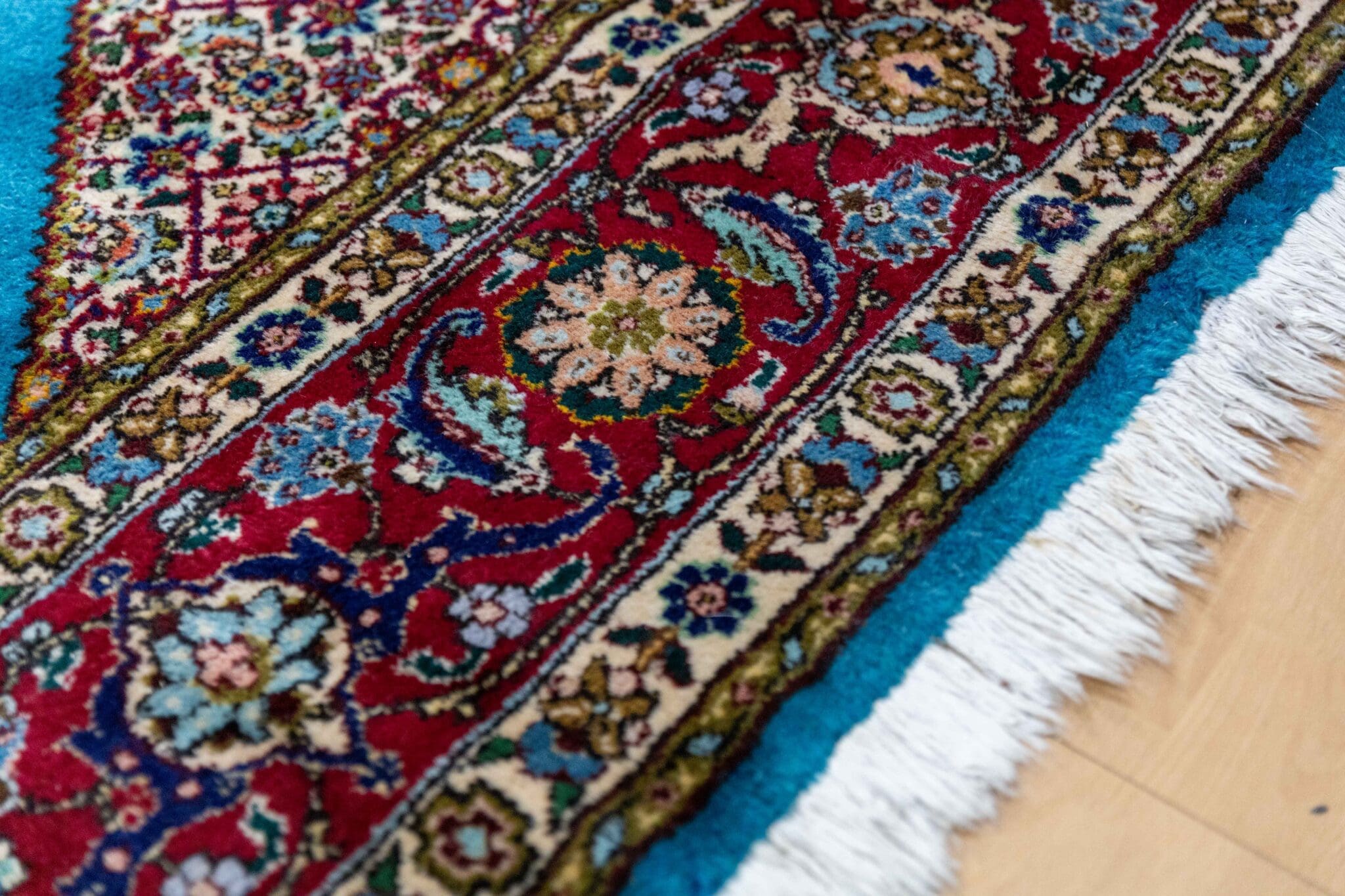
Wool accepts dye closely and can carry both calm fields of colour and subtle tonal changes. In floral and medallion designs, precise knotting helps separate borders, scrolling vines and smaller ornaments. Each row becomes part of the overall drawing. Material, construction and design are consequently connected: wool defines the pile, cotton supports the foundation, and handwork makes the detailed pattern possible.
Origin and Tradition
Tabriz lies in north-western Iran and is one of the oldest and most important centres of Persian carpet production. For a long period, the city was a significant place for weaving, design and trade. Its position encouraged the exchange of goods, pattern ideas and technical knowledge. Tabriz therefore denotes not only a geographic origin, but also an established approach to carpet design and manufacture.
Persian rugs from Tabriz are associated with clearly organised compositions, varied floral ornament and careful execution. Regional designs include medallion layouts, all-over fields, prayer designs and densely scrolling foliage. Some are governed by strong symmetry, while leaves, flowers and fine connecting lines provide a wealth of smaller details. The result can be orderly without being bare, and richly ornamented without losing the structure of the main design.
The weaving tradition of Tabriz is based on knowledge passed on through skilled practice. Preparing the materials, setting and tensioning the warp, reading a design, inserting the knots and securing each row are all part of the technical process. Finishing and shearing the pile also require experience. Technical decisions are closely linked to the drawing, because a complex pattern must be translated into many small and accurately executed actions.
Historically, Tabriz workshops have taken up, arranged and developed different Persian design traditions. Medallions could be combined with floral vines, corner spandrels and enclosing borders. Other compositions use a fully ornamented field or a prayer niche as their principal structure. This variety explains why Tabriz rugs can belong to several related design groups rather than to one single pattern. Their shared identity lies in the clarity of the drawing, the careful workmanship and the importance of the textile construction.
Colour relationships are another important part of the regional design tradition. Ground, medallion, secondary motifs and borders are balanced so that the hierarchy of the composition remains visible. Contrasting tones can clarify an outline, while related tones can create a transition between adjoining areas. Colour is therefore not separate from the pattern. It affects how the viewer reads the centre, the field and the surrounding ornament.
The name Tabriz identifies this piece as Iranian in origin. It is a Persian rug, rather than a rug whose origin is inferred only from a similar motif. The Tabriz medallion form named in the description links the regional classification with the stated composition. The term semi-antique belongs to the classification used for this example. It does not, by itself, establish a specific year of manufacture.
Tabriz has played a central role in the history of Persian carpet making by connecting workshop production, design and wider exchange. Traditional ornamental ideas could appear in refined and varied forms while retaining their relationship to regional weaving practice. Every hand-knotted rug is both part of this longer development and an individual textile execution. The regional tradition is visible in the way structure, drawing and ornament are brought together.
Design and Pattern
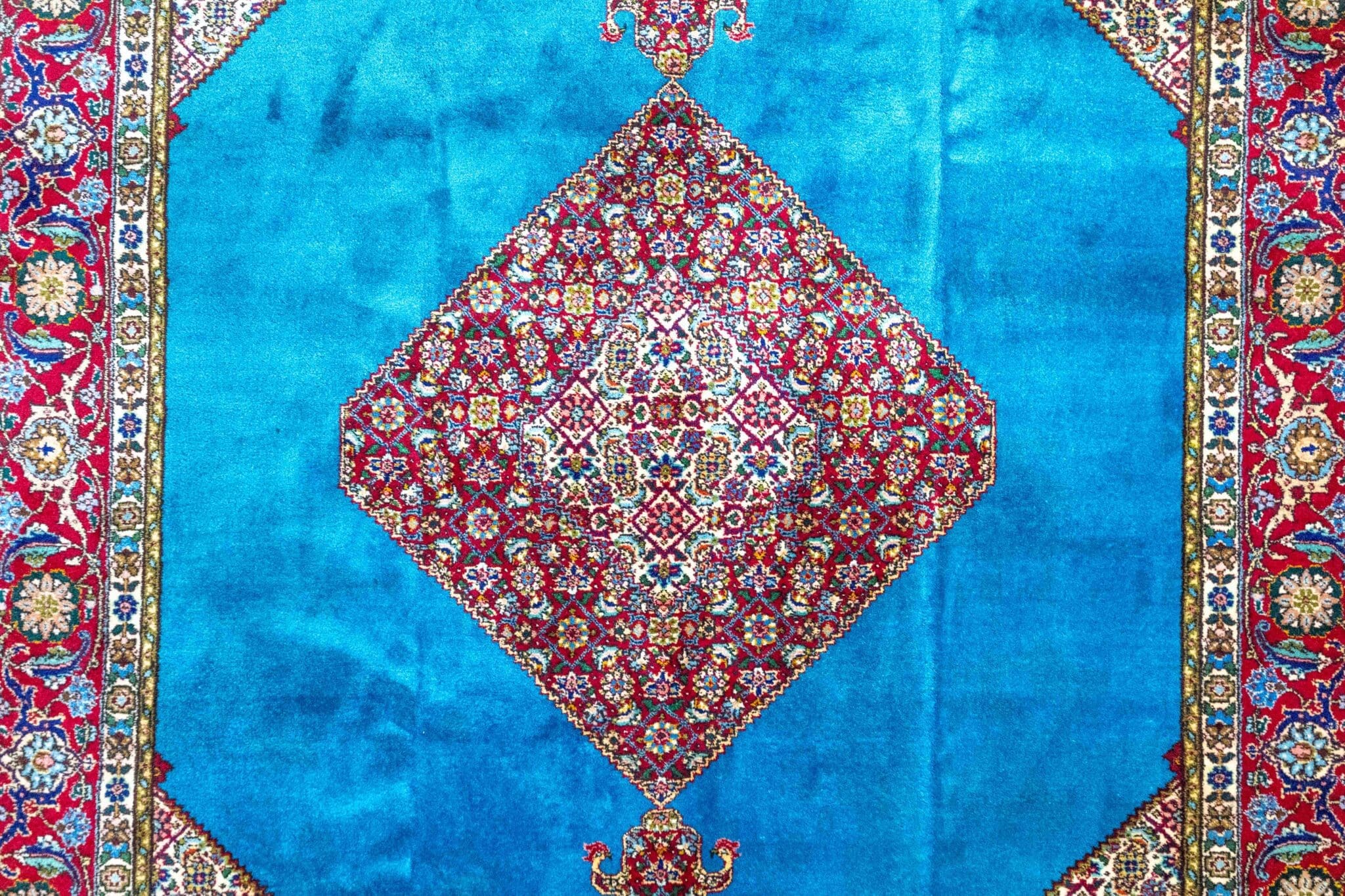
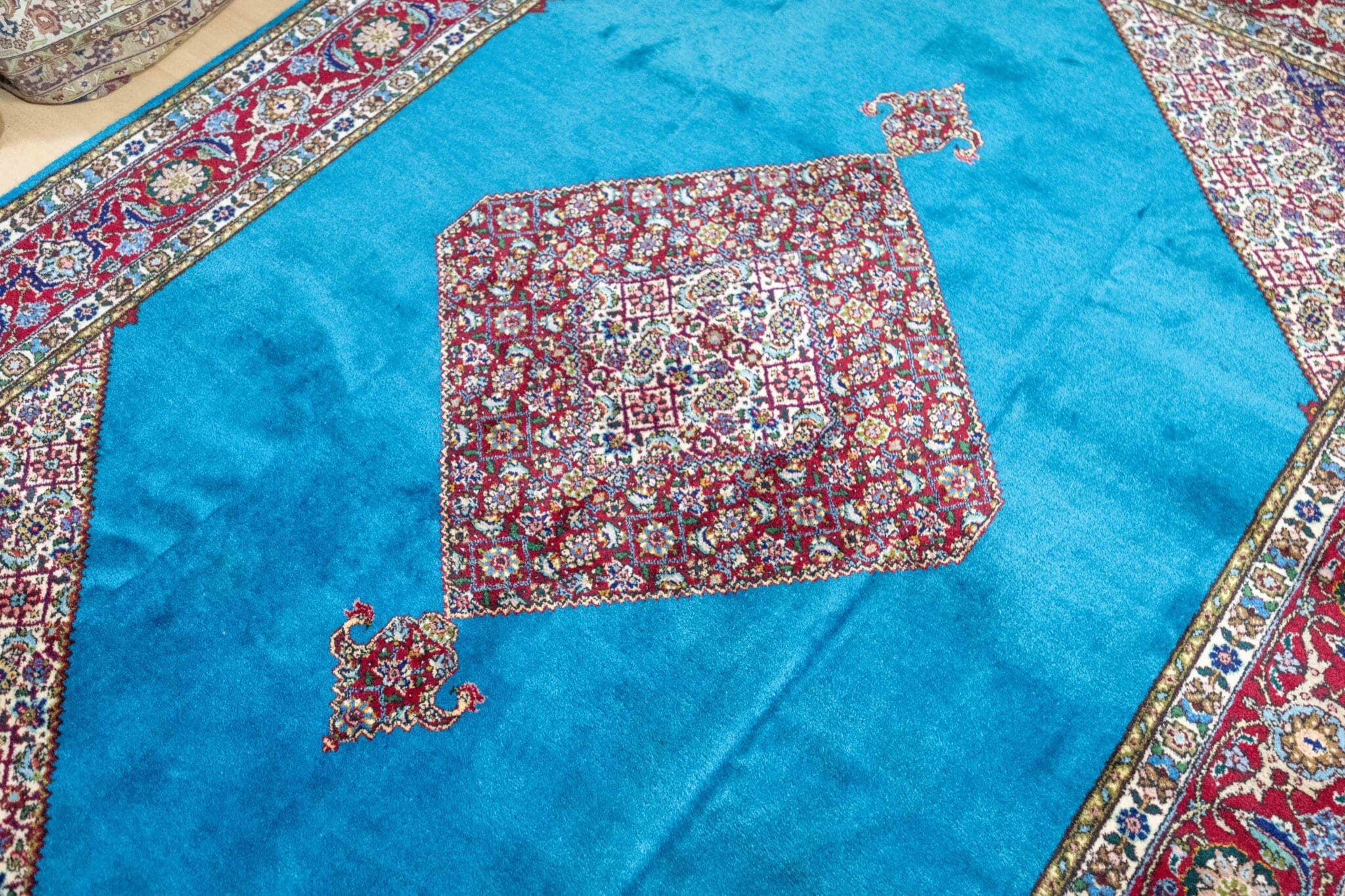
The pattern of this rug is described as Antique Mahi Lachak-Toranj Tabriz Medallion. A central medallion organises the field and gives the composition a clear focus. In Persian design terminology, Lachak-Toranj describes the relationship between corner spandrels and a central toranj, usually an elongated or diamond-like principal medallion. The design therefore establishes a dialogue between the centre and the four corners.
Mahi refers to a fish motif that is often incorporated into closely scrolling vines. In this design language, the fish do not have to be naturalistic depictions. They may appear as stylised forms among leaves, small flowers and curved lines. Repetition creates a continuous rhythm across the field. Changes in direction, spacing and density keep the ornament active rather than mechanically uniform.
In a Lachak-Toranj layout, the corner motifs relate to the central medallion. The corner areas can direct the eye inward, while vines and borders manage the transition towards the outer edge. The medallion is made prominent without being isolated from the surrounding field. Floral elements connect the centre, corners and borders, allowing the composition to function as one organised design.
Mahi belongs to a broad group of Persian ornamental ideas. The motif can be more or less abstract depending on the drawing. In some designs the stylised fish are easy to distinguish; in others they merge more closely with the scrolling vine. The essential effect comes from the repeated and flowing structure that carries the pattern through the field. In a hand-knotted rug, that structure is built knot by knot, giving the lines and small forms textile depth.
The rare colour combination is one of the expressly stated characteristics of this rug. It is described as an unusual combination rather than by naming individual colours. In Tabriz weaving, colour is commonly balanced so that the medallion, field, border and secondary ornaments remain distinguishable. A rare combination can therefore present a familiar design structure through a less frequently encountered tonal relationship.
The wording Antique Mahi Lachak-Toranj Tabriz Medallion, semi-antique, describes the pattern terminology and classification used for this piece. It points to older Persian ornamental traditions, but the wording alone does not determine a particular production year. The design combines Mahi ornament, the Lachak-Toranj framework and a central medallion. These elements provide a formal and regional way of understanding the composition.
The visual effect of this type of design comes from the relationship between centre, corners, field and enclosing borders. Larger shapes give the composition stability, while smaller motifs enliven the intervening spaces. Careful drawing keeps even densely ornamented areas readable. In a hand-knotted rug, this drawing is transferred into a lasting textile structure rather than applied as a flat graphic image.
Special Features
The features specifically named for this example are its rare colour combination, its semi-antique designation and its Tabriz medallion with Mahi Lachak-Toranj pattern. The rug is in very good condition and has been freshly washed. This condition statement describes the state in which the offered piece is presented.
The rug is also described as robustly made. Hand-knotted Persian rugs are known for resistance and lasting use, and robust workmanship is expressly highlighted for this piece. It is described as easy to care for and suitable for machine cleaning when required. Its design is stated to work with both traditional and modern interiors. The medallion provides a familiar classical structure, while the colour combination is described as rare.
The combination of a virgin-wool pile, cotton warp, hand-knotted construction and Mahi Lachak-Toranj design defines the character of this one-off rug. Since every hand-knotted rug is made by hand, the particular rendering of the ornaments belongs to this individual piece.
FAQ
How should I care for my hand-knotted Persian rug?
Vacuum the rug regularly and gently to remove dust and loose dirt from the pile. Spills should be treated as soon as possible with a damp cloth so that they do not penetrate further into the fibres. Vigorous rubbing can affect the surface and the appearance of the colours, so treatment should be careful. Professional cleaning every few years may help preserve the colours and the quality of the materials. The description also states that this rug can be machine cleaned when necessary. Before using that option, check the precise suitability of the cleaning process and choose a gentle method.
Can the rug be used in a room with underfloor heating?
Yes. The description states that hand-knotted Persian rugs are suitable for rooms with underfloor heating. Their breathable materials allow heat to pass through effectively, helping the heating system continue to work while the rug remains comfortable. As with any rug placed over a heated floor, a dry and clean underside and proper installation are sensible precautions. The suitability of this piece refers to the stated use in rooms with underfloor heating.
How can I check whether a Persian rug is authentic?
Look at the knotting technique, the quality of the materials and the colouring. Original Persian rugs often show small, unspoken irregularities in the pattern, reflecting their handmade production. The treatment of the pile, warp and ornaments can provide additional indications of how a rug was made. Certificates may further support an authenticity assessment for important makers or particular pieces. A reliable evaluation should be carried out by a qualified specialist and should not depend on one feature alone.
Additional information
| Design Style | |
|---|---|
| Color | |
| Size | |
| Shape | |
| Origin | |
| Knot Density | |
| Material |
Related products
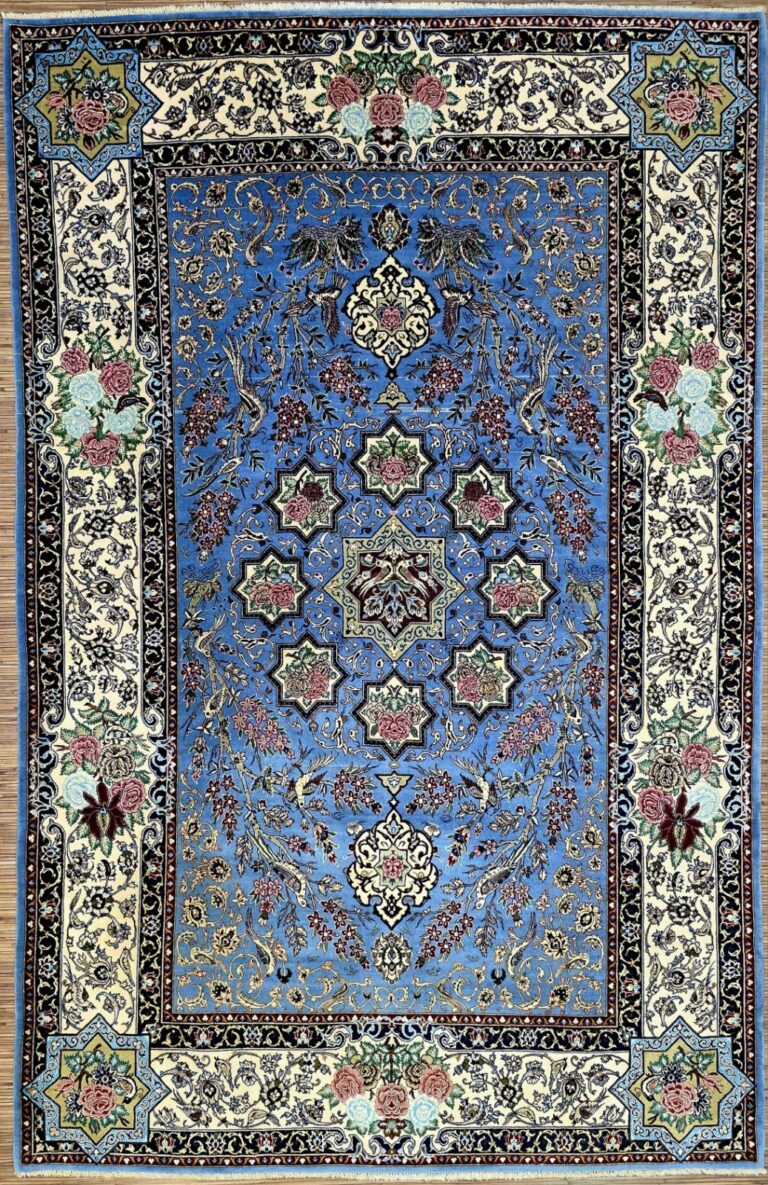
Persian Rug Isfahan 222 x 146 cm Silk Hand-knotted
€ 3905
Persian Rug Farahan 235 x 154 cm Wool Hand-knotted
€ 990
Persian Rug Tabriz 355 x 252 cm Wool Hand-knotted
€ 4890
Persian Rug Kashan 345 x 253 cm Wool Hand-knotted
€ 2910
Persian Rug Tabriz 353 x 253 cm Wool & Silk Hand-knotted
€ 4200
Persian Rug Nain 200 x 129 cm Wool Hand-knotted
€ 2100
Persian Rug Kashan 198 x 128 cm Silk Hand-knotted Antique
€ 7249
Persian Rug Tabriz 290 x 205 cm Wool Hand-knotted
€ 5850