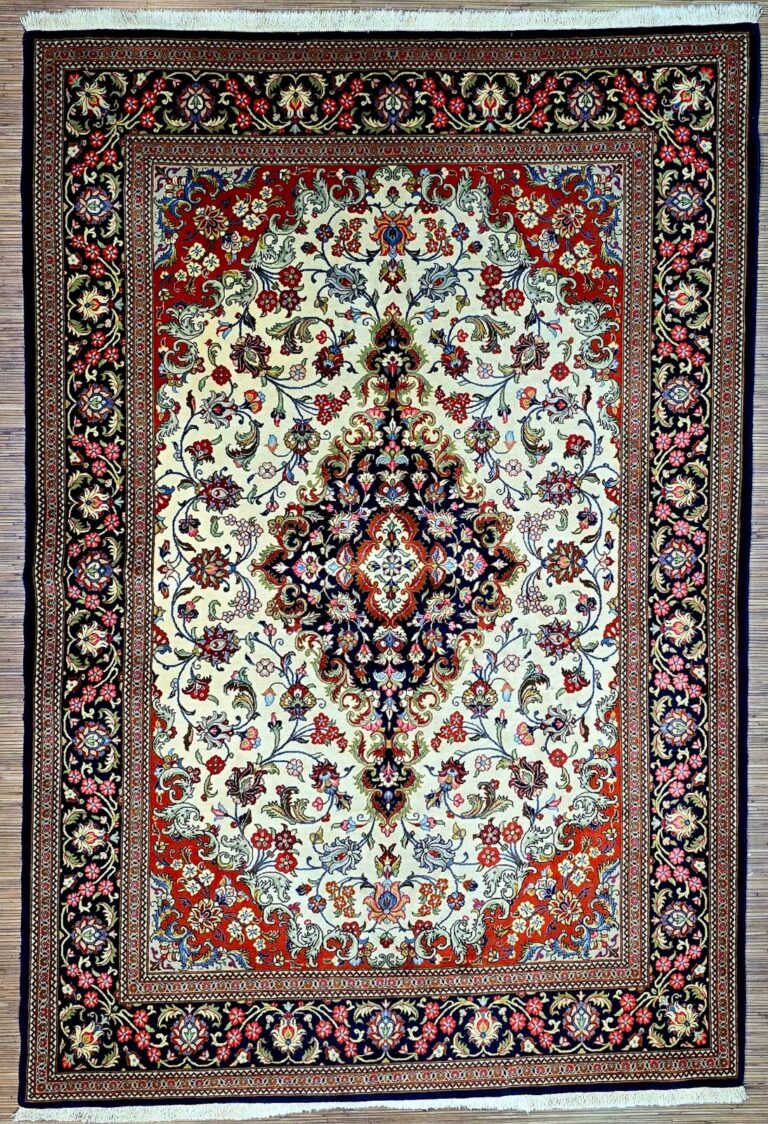
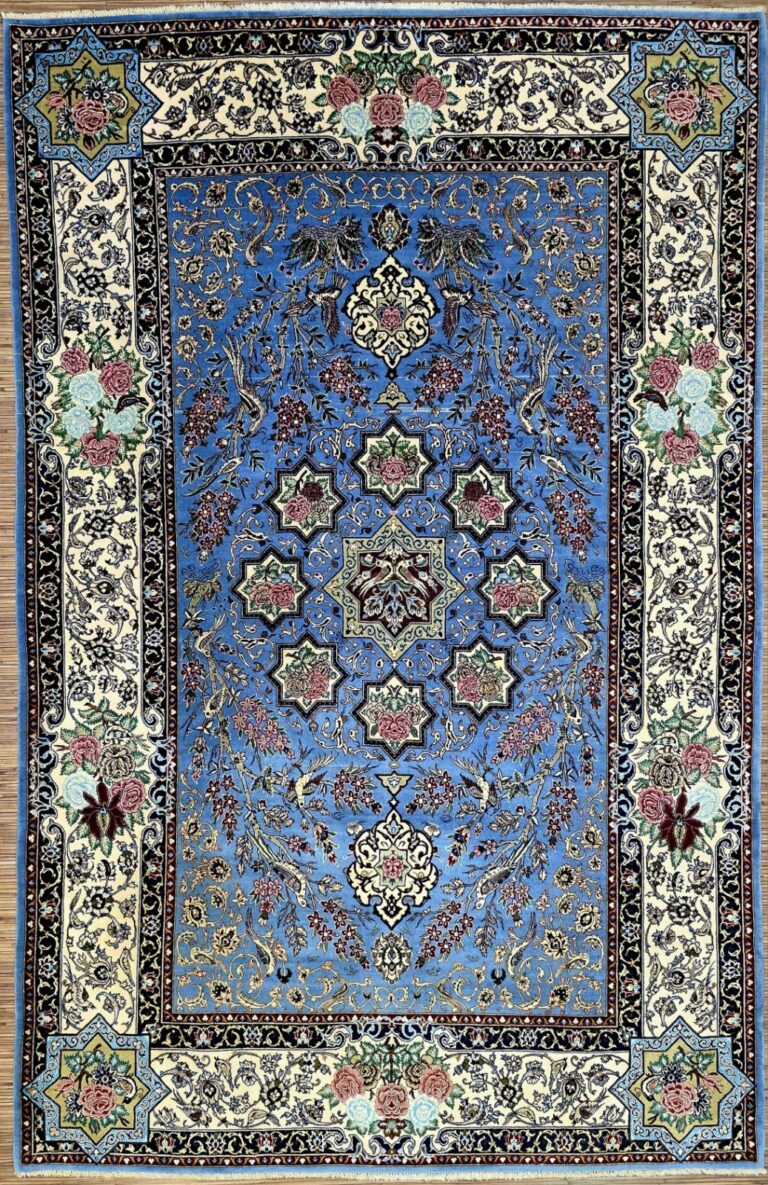
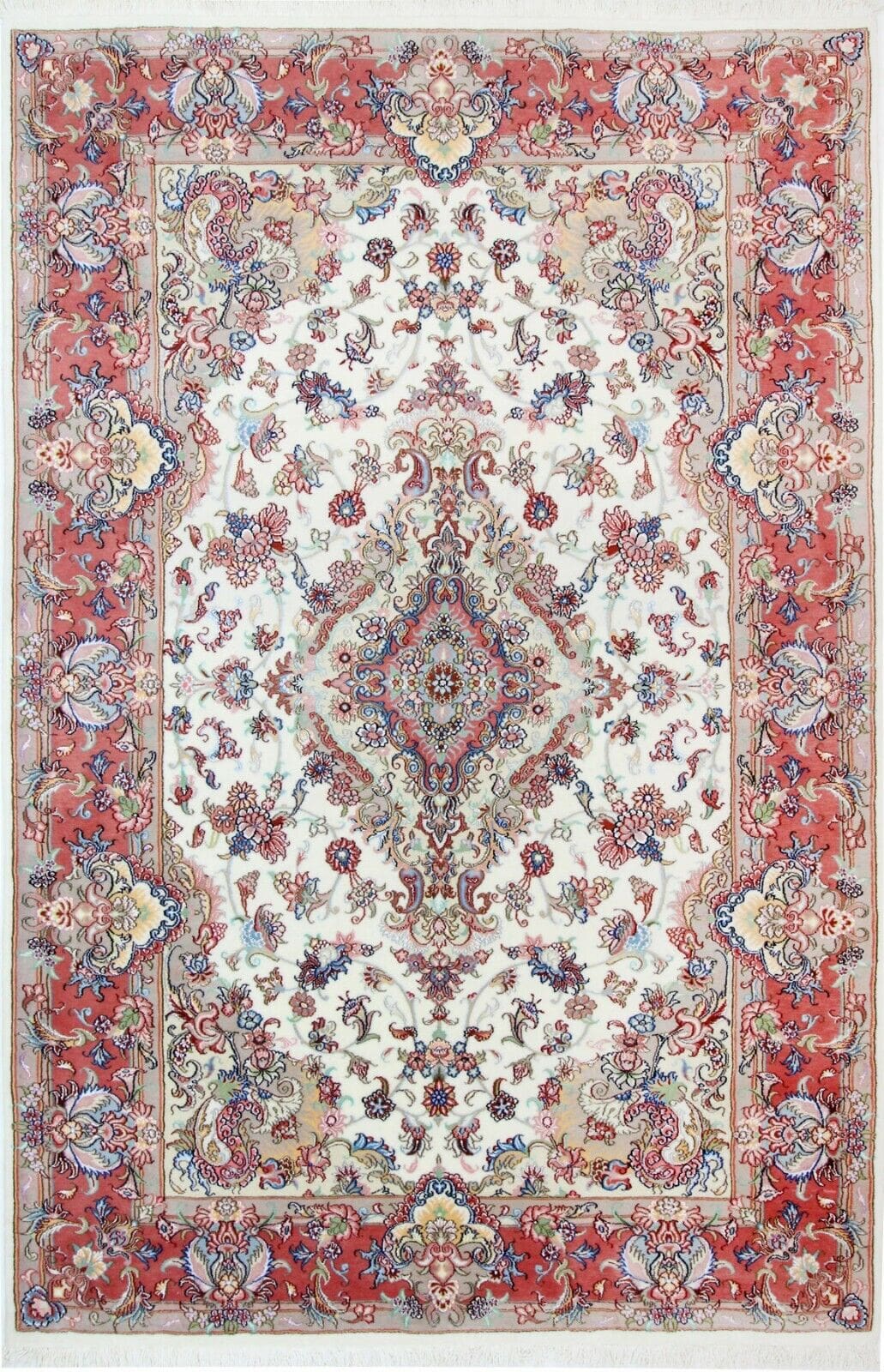
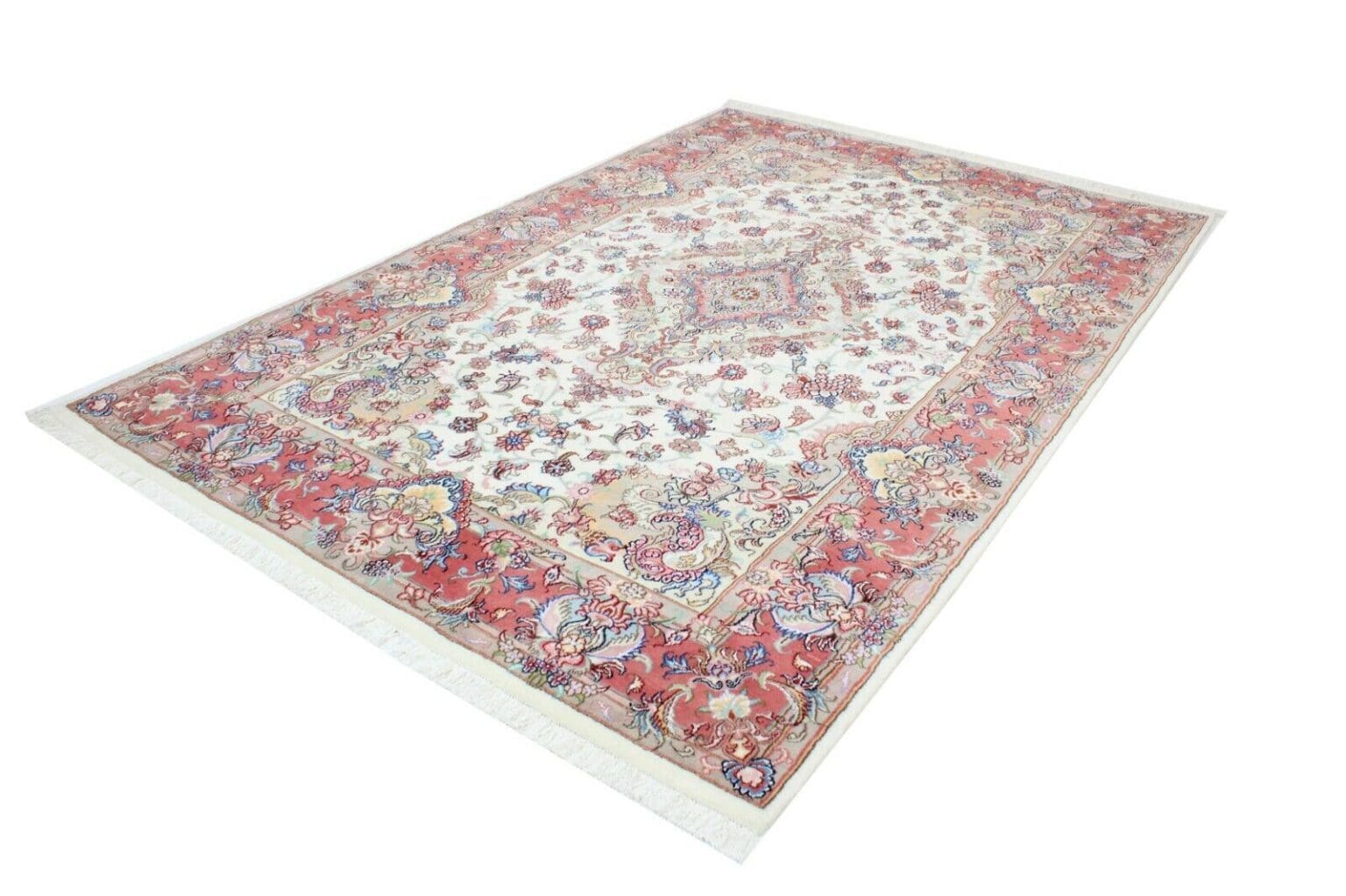
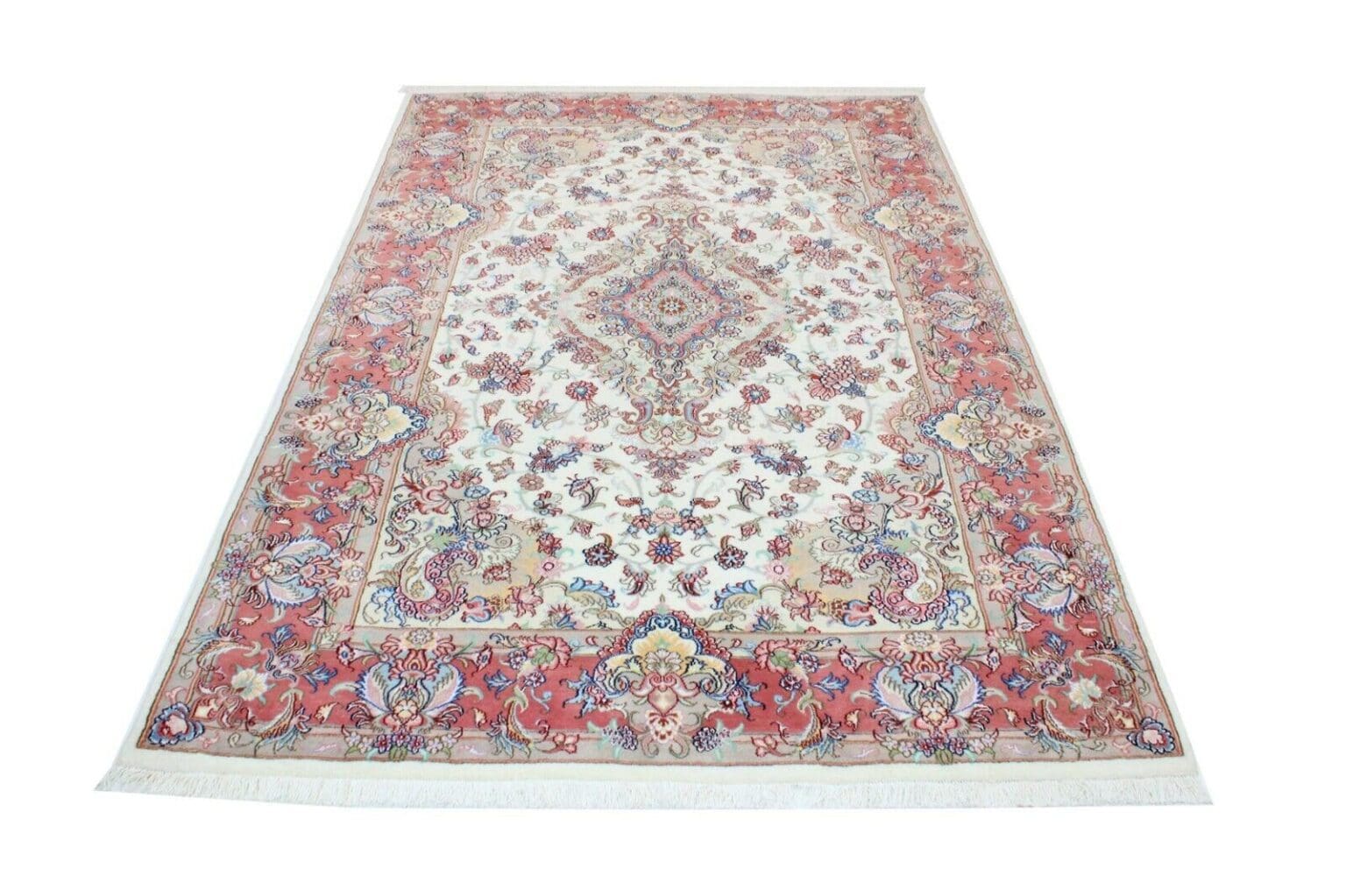
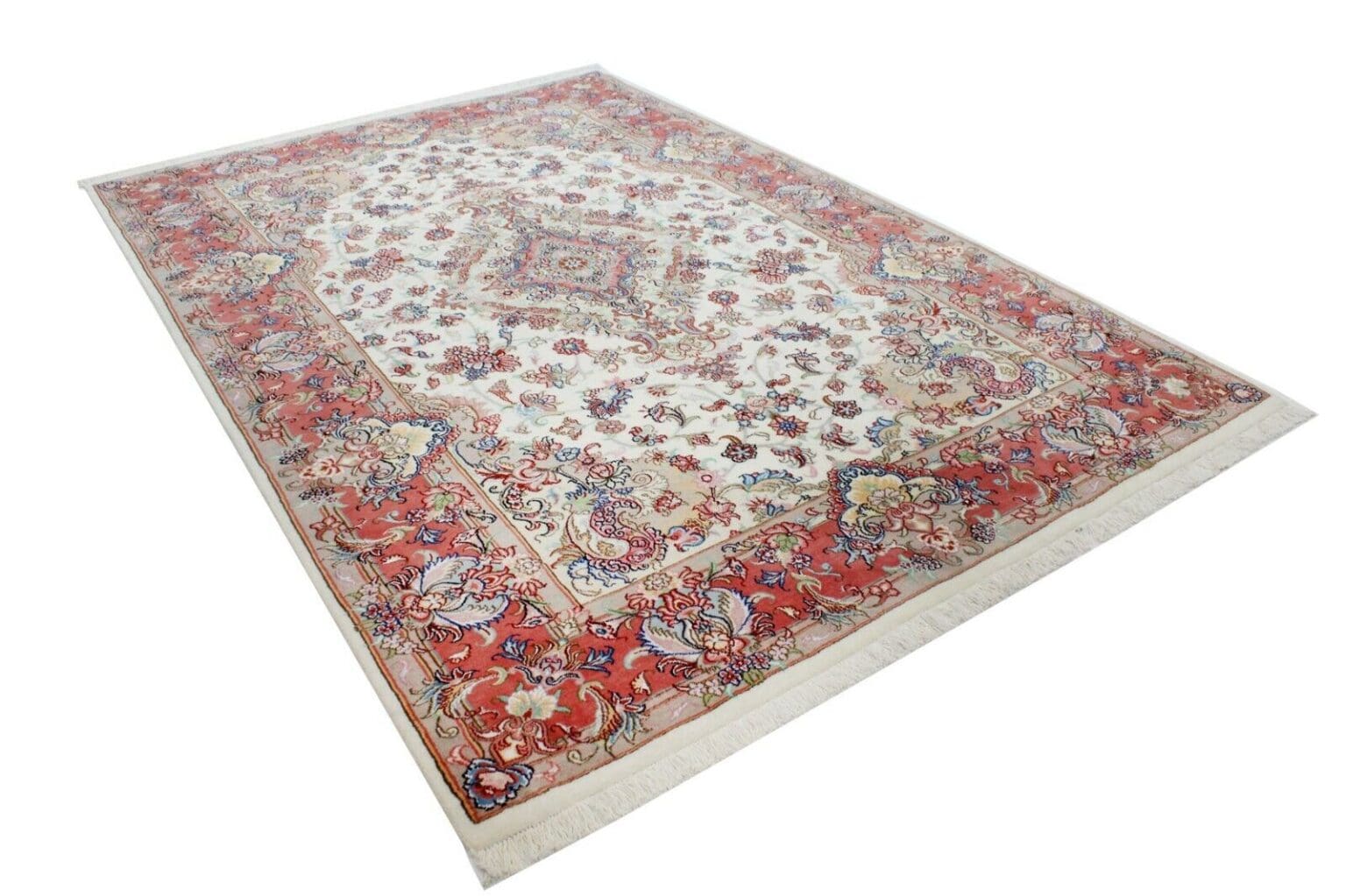
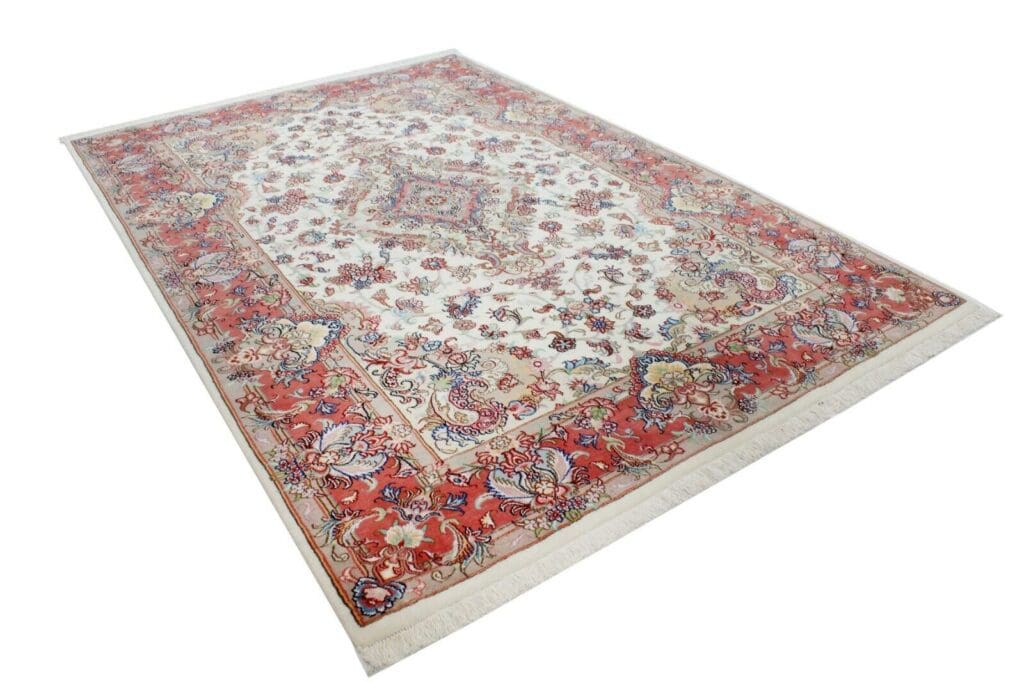
Hand-knotted Tabriz Persian Rug | Material: Wool and cotton | Size: 200 x 300 cm | Pattern: Oriental with floral motifs | Condition: New without label, top condition
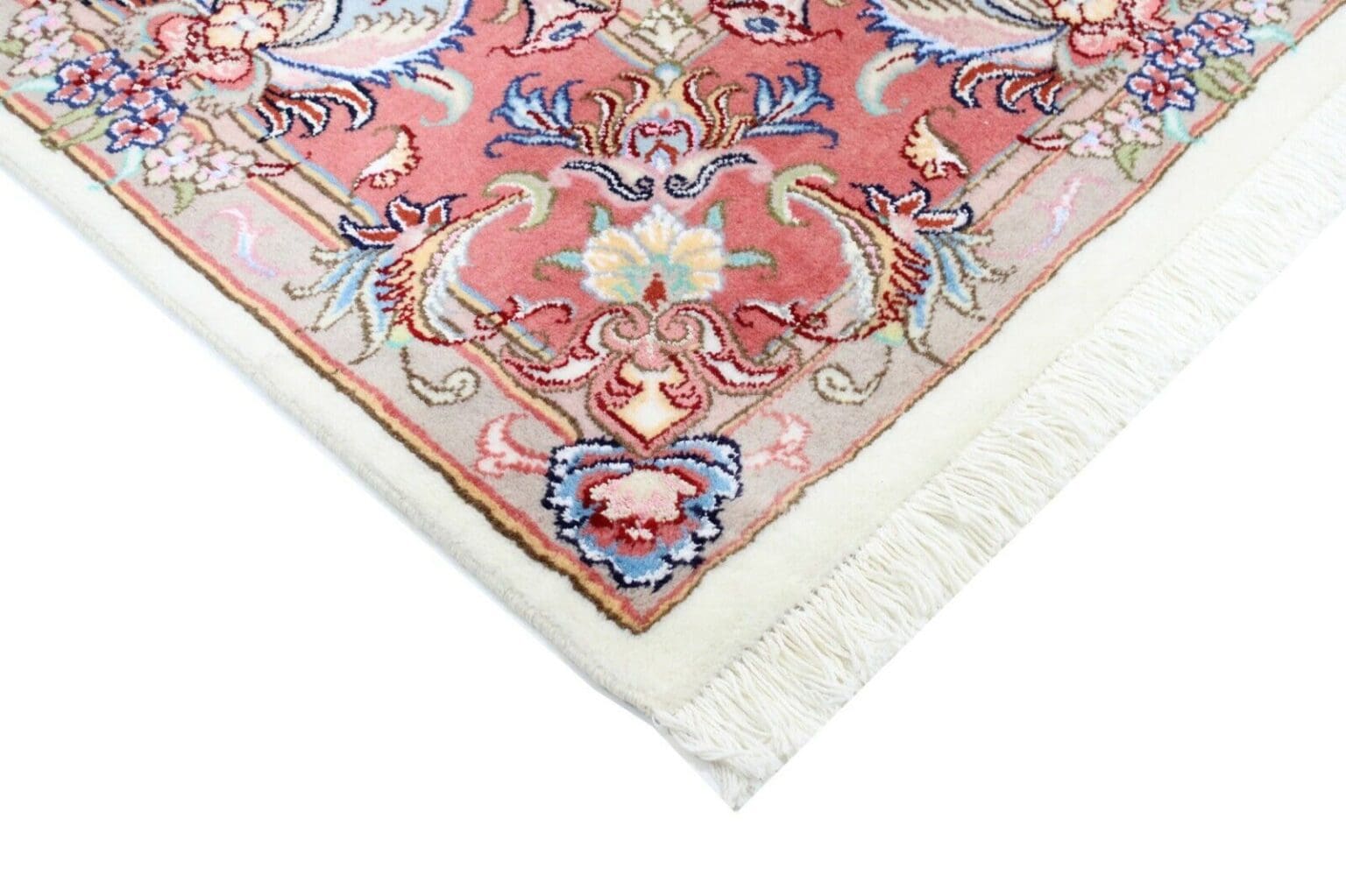
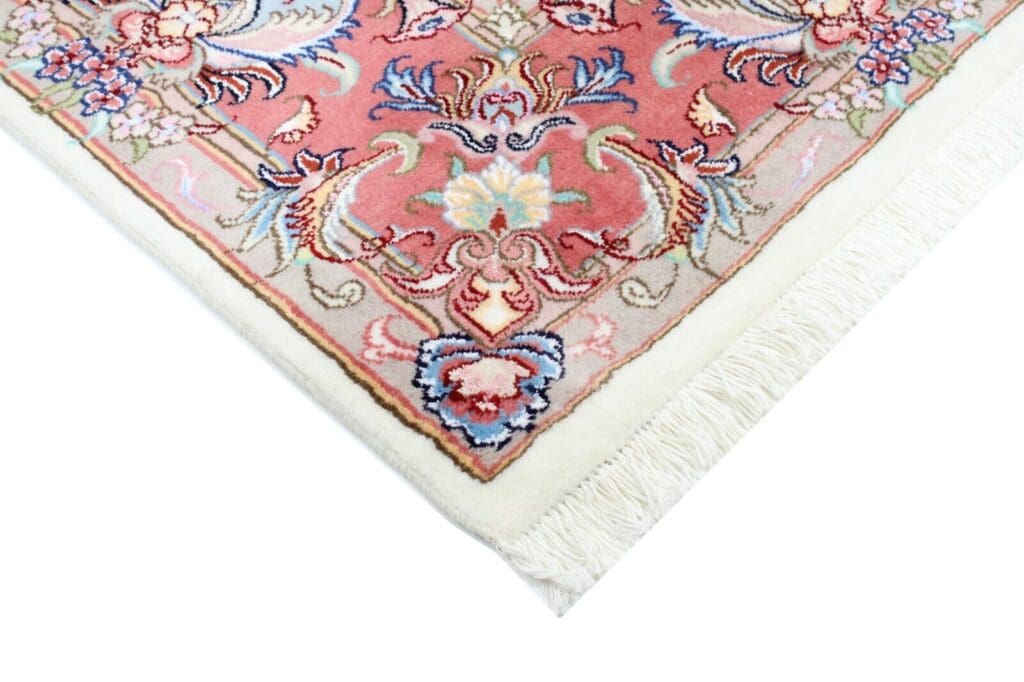
This Tabriz Persian rug is hand-knotted. Its construction combines high-quality wool and cotton, as stated in the product information. In hand-knotting, the rug is built one knot at a time on a loom. The knotter passes the yarn around the warp threads by hand and secures each row before continuing. The pile is then worked and finished so that the surface develops its textile structure. This process is fundamentally different from machine production, since every knotting stage is carried out directly by hand.
Wool is a traditional pile material in rug making. It can be spun into yarn, accepts dye well and gives the surface a natural textile character. Cotton has also been used in rug construction for generations and can provide a stable foundation for the weave. The product information does not specify the precise function of each material in this particular rug; it identifies high-quality wool and cotton. The hand-knotted technique is therefore the key stated feature of its construction.
A hand-knotted rug passes through numerous individual stages. The warp must be prepared and tensioned, the rows must be built up, the knots must be placed and compacted, and the pile must ultimately be trimmed and finished. These operations require practical experience and continuous attention to the relationship between the design and the developing surface. Small variations in yarn movement are part of handmade production. The result is one individually made piece rather than an identical industrial series product.
Origin and Tradition
This rug comes from Iran and is associated with the city of Tabriz. Tabriz is also written Täbriz and is one of the recognised centres of Iranian rug weaving. Located in north-western Iran, the city was for a long period an important place of trade and cultural exchange. Different influences from the Persian world and neighbouring regions could meet there. The Tabriz tradition developed within this setting, where design, commerce and workshop skill were closely connected.
Iranian rugs do not follow one universal pattern language. Cities and weaving regions developed their own preferences in structure, ornament, colour arrangement and execution. Tabriz is particularly associated with a sophisticated design tradition in which floral scrolls, medallions, leaves and carefully organised fields often appear. In this case, Tabriz identifies the rug’s origin; it is not merely a label for an oriental-looking decoration.
Persian rug weaving has been passed down through many generations. Knowledge of preparing yarn, setting up the warp, placing knots, inserting wefts and finishing the pile was traditionally learned in workshops and families. Designs could be based on established drawings or pattern guides, while the actual work still depended on the hands and judgement of the knotter. Persian rugs therefore combine recognisable regional traditions with the individual character created during production.
Tabriz also served as a meeting point for different rug markets. Designs travelled through merchants, workshops and pattern sources, and they could be adapted to changing preferences. Tabriz rugs may consequently include highly ordered compositions as well as layouts filled with flowing vines and floral details. A regional attribution does not mean that every Tabriz rug looks the same. It places the piece within a particular cultural and technical history.
The Persian rug tradition connects practical use with deliberate design. A rug was made for the floor and at the same time treated as a composed textile surface. Producing one required time, material knowledge and command of the knotting technique. This combination explains why an Iranian origin is useful when placing a rug in its wider historical context. It helps distinguish the weaving tradition from the design vocabulary alone.
Design and Pattern
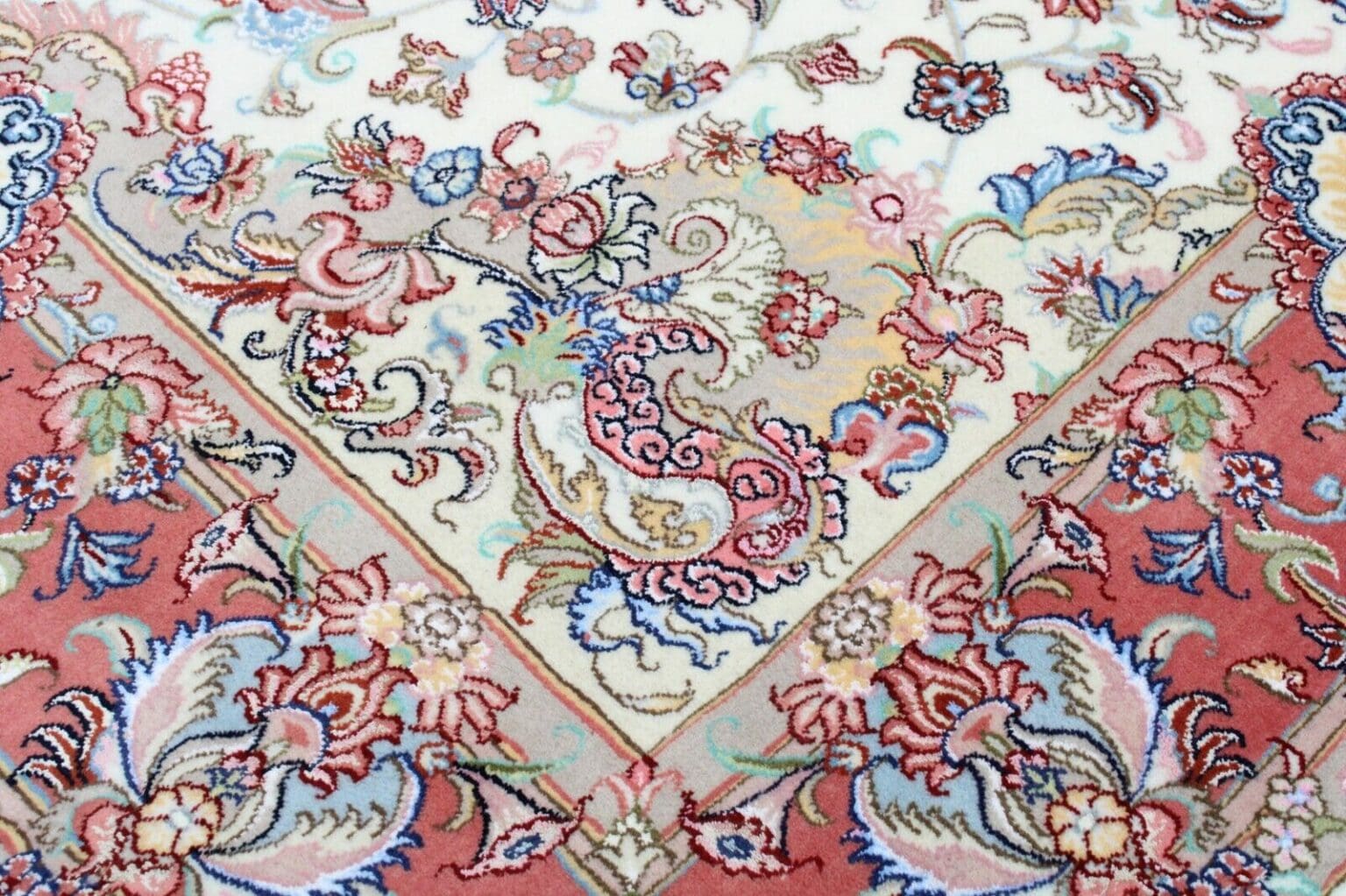
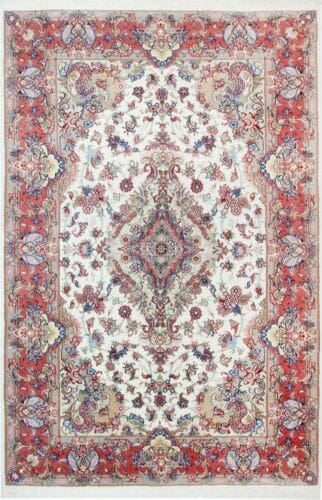
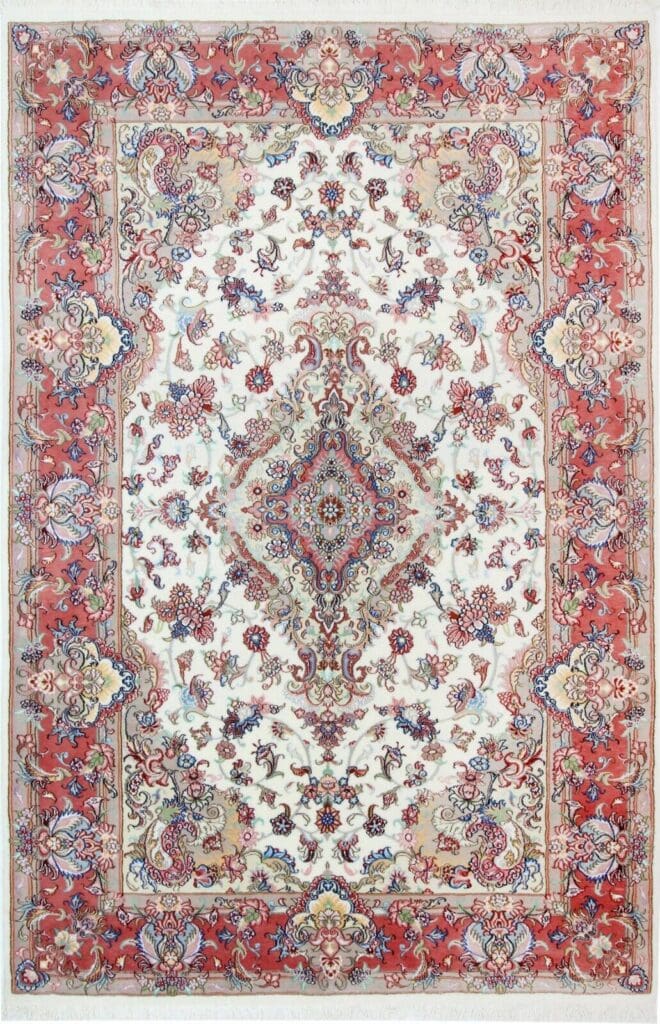
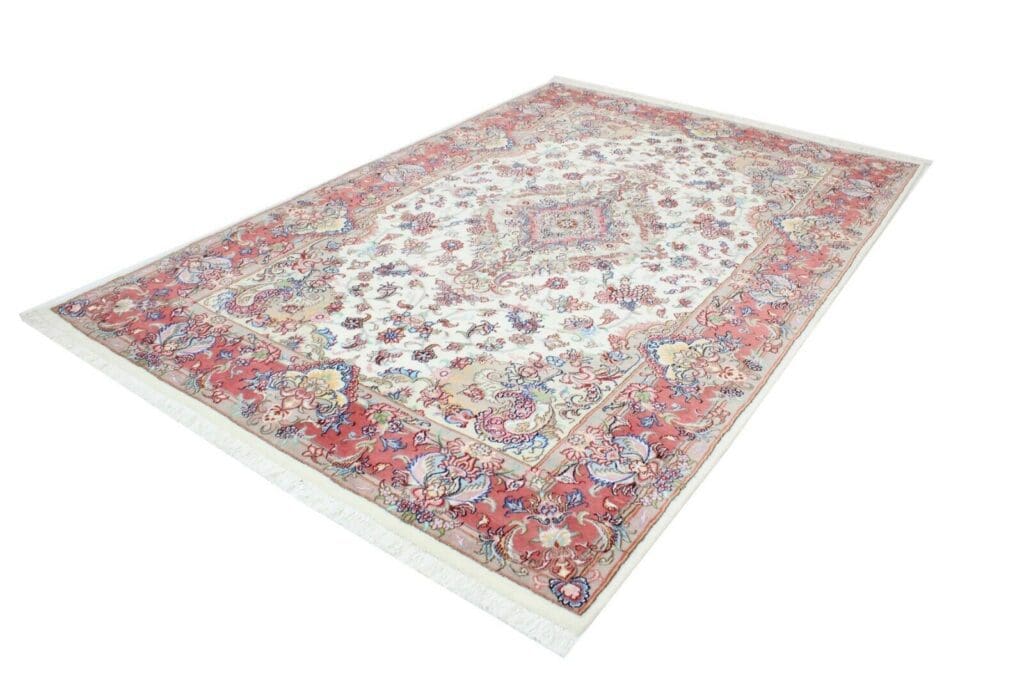
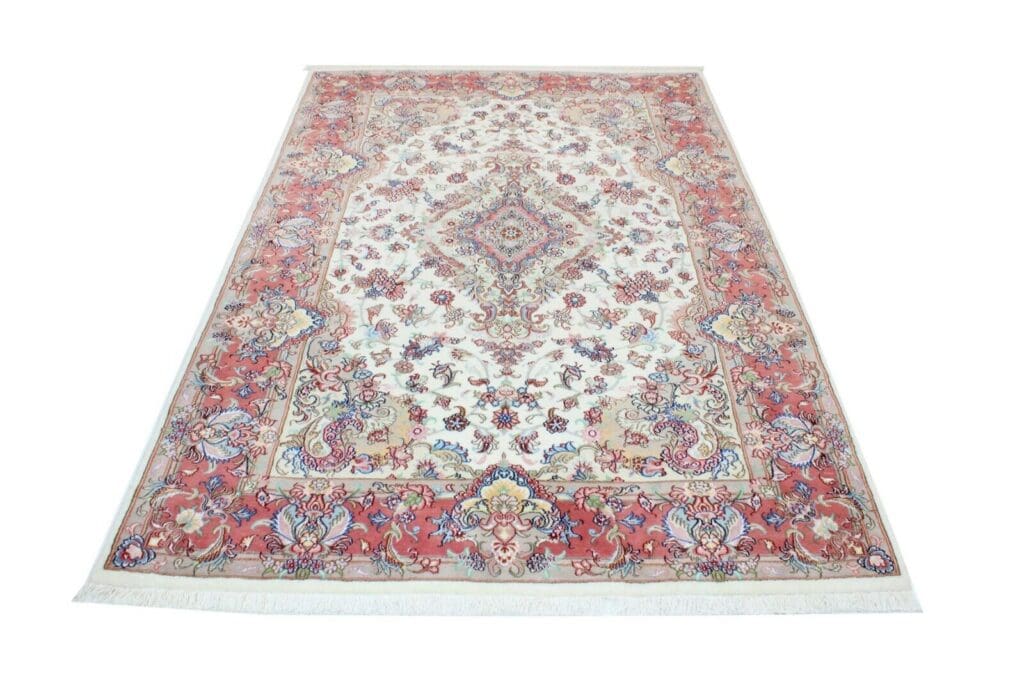
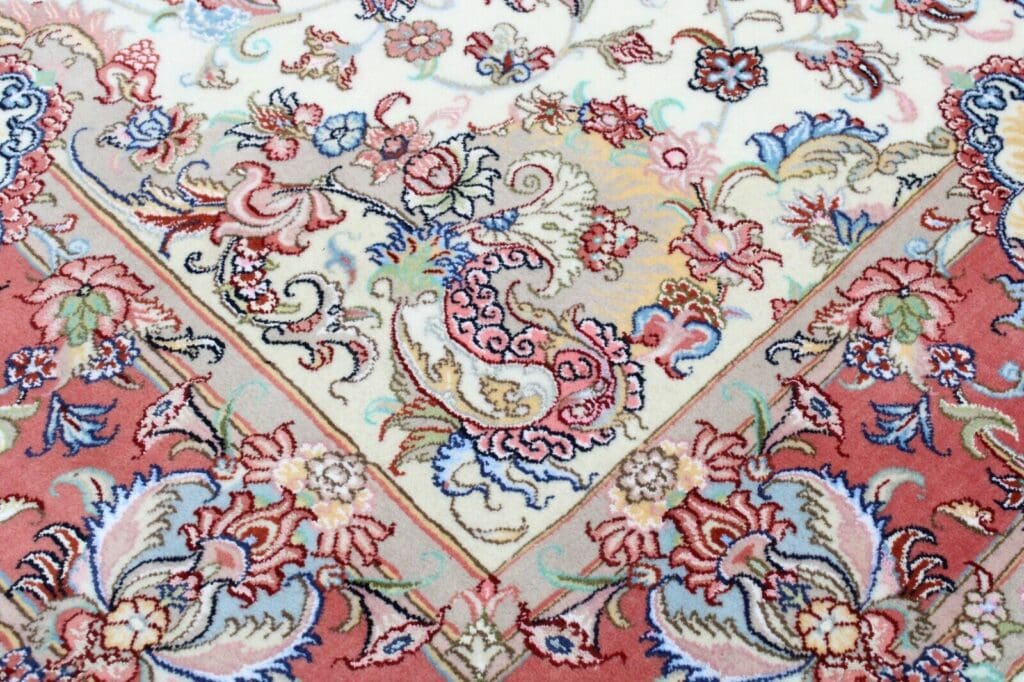
The pattern of this rug is described as oriental with floral motifs. Floral ornament is one of the recurring elements in Persian rug design. Flowers may appear as separate motifs, be connected by scrolling vines or form part of a carefully divided composition. In Tabriz design traditions, such plant forms are often drawn with clear contours and arranged rhythmically across the field and borders. The product description does not divide the pattern into further components; the stated information is an oriental floral design.
In Persian rug composition, the central field generally provides the main area of the design. One or more borders may frame it and establish a transition toward the outer edge. Depending on the design, flowers, rosettes, leaves or medallions can be given prominence. Other compositions distribute the ornament across the entire field rather than concentrating it around one centre. These principles explain the organisation found in many Tabriz rugs without assigning an unspecified detail to this individual example.
Floral patterns are more than repeated decoration. The size, direction and spacing of the motifs create visual rhythm. Curving vines can guide the eye through the field, while smaller flowers connect larger forms and soften transitions. Hand-knotting allows these outlines to be rendered in a differentiated way, depending on the fineness of the execution. No knot density is provided for this rug, so no particular level of detail is claimed here.
The word oriental describes the decorative classification of the pattern. It does not replace the origin Tabriz; it describes the visual character of the design. Persian floral motifs may be naturalistic, stylised or positioned between the two. They are commonly arranged so that the surface reads as a balanced whole. Field, transitional elements and borders must work together, and the arrangement of the motifs gives the rug its internal order.
The available product information does not describe the colours in detail. No particular shades or dyeing methods are therefore assigned to this rug. In Persian design generally, colours are coordinated so that floral motifs remain legible and borders maintain a clear relationship to the field. The character of a floral pattern depends not only on colour, but also on line, repetition and the balance between densely ornamented areas and quieter spaces.
Special Features
The rug is described as new without a label and in top condition. It is also suitable for use with underfloor heating. This gives it a practical place in contemporary interiors without prescribing one particular room or arrangement. As a hand-knotted Persian rug from Tabriz, it combines the stated Iranian origin with a traditional production method and an oriental floral design.
The information does not mention restoration, a historical date or a signature. It also does not provide a knot density. These details are therefore not added. The stated characteristics are the hand-knotted construction, high-quality wool and cotton, Tabriz origin and the new condition without a label.
FAQ
How should I care for my Persian rug?
Regular, careful cleaning helps preserve the surface. The rug should be vacuumed gently to remove dust and loose particles without placing unnecessary strain on the pile. Spills should be treated as soon as possible with a method suitable for rugs. More substantial soiling is best handled by a professional cleaner. Prolonged, strong direct sunlight should be avoided because textile colours can change over time. Since this is a hand-knotted rug, care should also respect the pile structure and avoid harsh cleaning agents that could affect the fibres or the appearance of the surface.
Where does my Persian rug come from?
This Persian rug comes from Iran and is associated with Tabriz. Tabriz is a long-established centre of Iranian rug weaving. The origin identifies the regional craft context, not simply the floral appearance of the pattern. In Persian rugs, design, colour arrangement and technical features can provide clues about different weaving areas. For this piece, the origin is explicitly given as Iran and Tabriz. Other Iranian centres such as Isfahan or Kashan also belong to the broader Persian tradition, but they are not named as the origin of this rug.
Why are Persian rugs so expensive?
The price of a Persian rug can reflect the amount of handwork, the materials used and the weaving tradition behind it. In hand-knotting, each knot is placed individually, followed by further work on the pile and the finishing of the rug. Depending on the design, execution and size, production may take many months or even years. The knowledge required is also part of a craft tradition passed on through generations. For this rug, the stated characteristics are its hand-knotted construction, high-quality wool and cotton, and its Tabriz origin.
To provide the best experiences, we use technologies like cookies to store and/or access device information. Consenting to these technologies will allow us to process data such as browsing behavior or unique IDs on this site. Not consenting or withdrawing consent, may adversely affect certain features and functions.
Functional Always active
The technical storage or access is strictly necessary for the legitimate purpose of enabling the use of a specific service explicitly requested by the subscriber or user, or for the sole purpose of carrying out the transmission of a communication over an electronic communications network.
Preferences
The technical storage or access is necessary for the legitimate purpose of storing preferences that are not requested by the subscriber or user.
Statistics
The technical storage or access that is used exclusively for statistical purposes.The technical storage or access that is used exclusively for anonymous statistical purposes. Without a subpoena, voluntary compliance on the part of your Internet Service Provider, or additional records from a third party, information stored or retrieved for this purpose alone cannot usually be used to identify you.
Marketing
The technical storage or access is required to create user profiles to send advertising, or to track the user on a website or across several websites for similar marketing purposes.
 SECURE PAYMENT
 SHIPPING PARTNERS