Persian Rug Tabriz 165 x 112 cm Cork Wool Hand-knotted
€ 2833
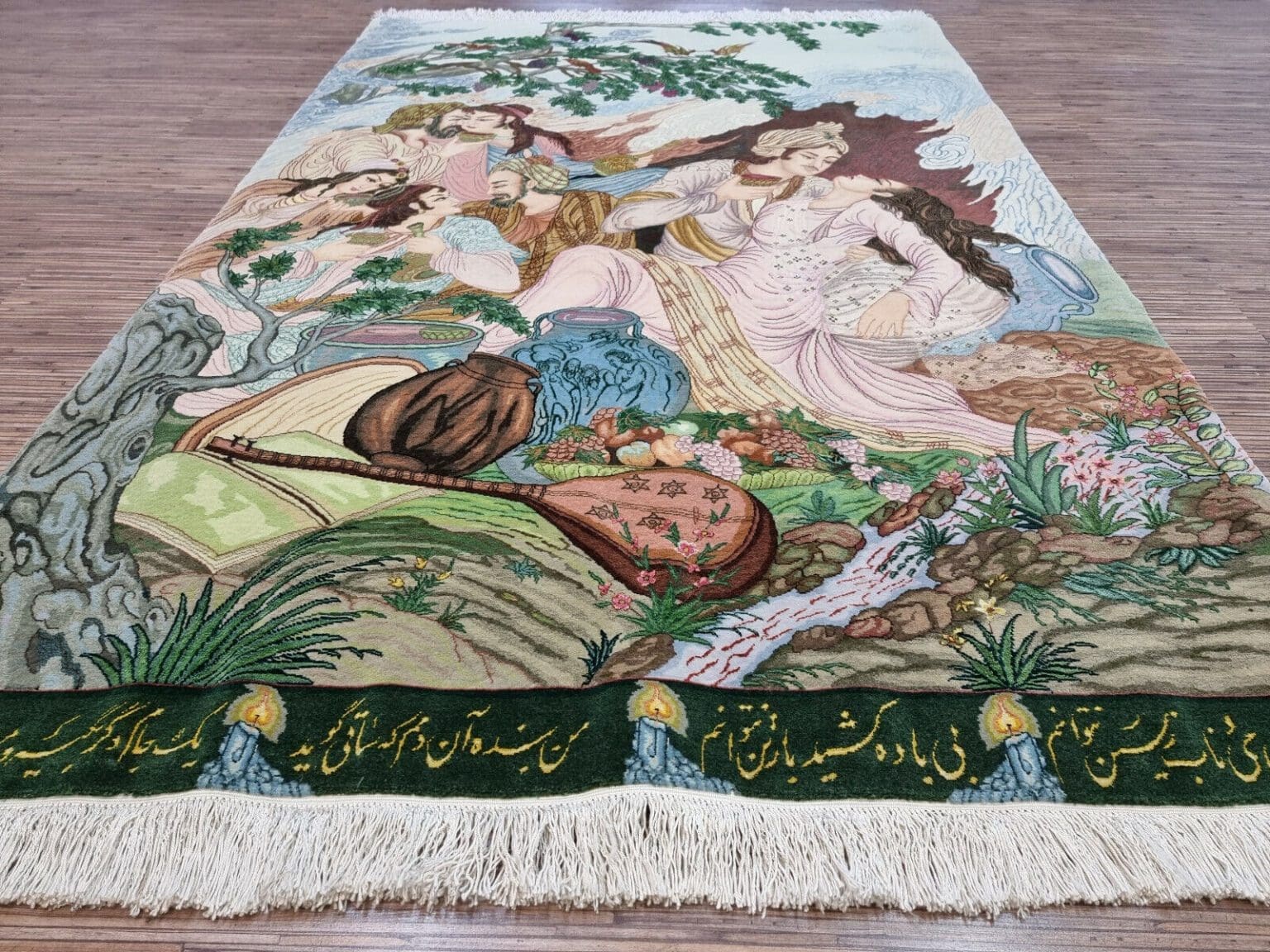
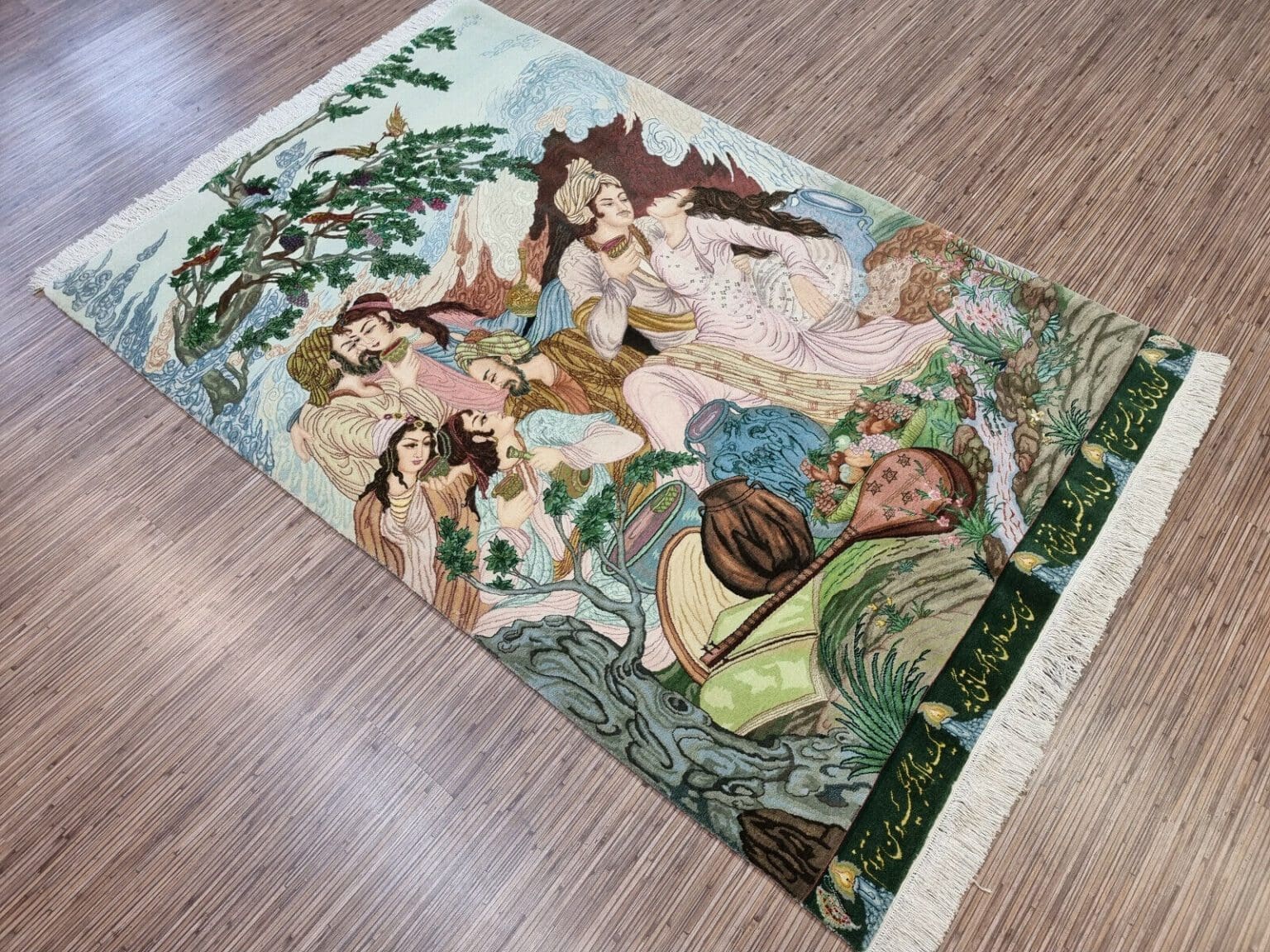
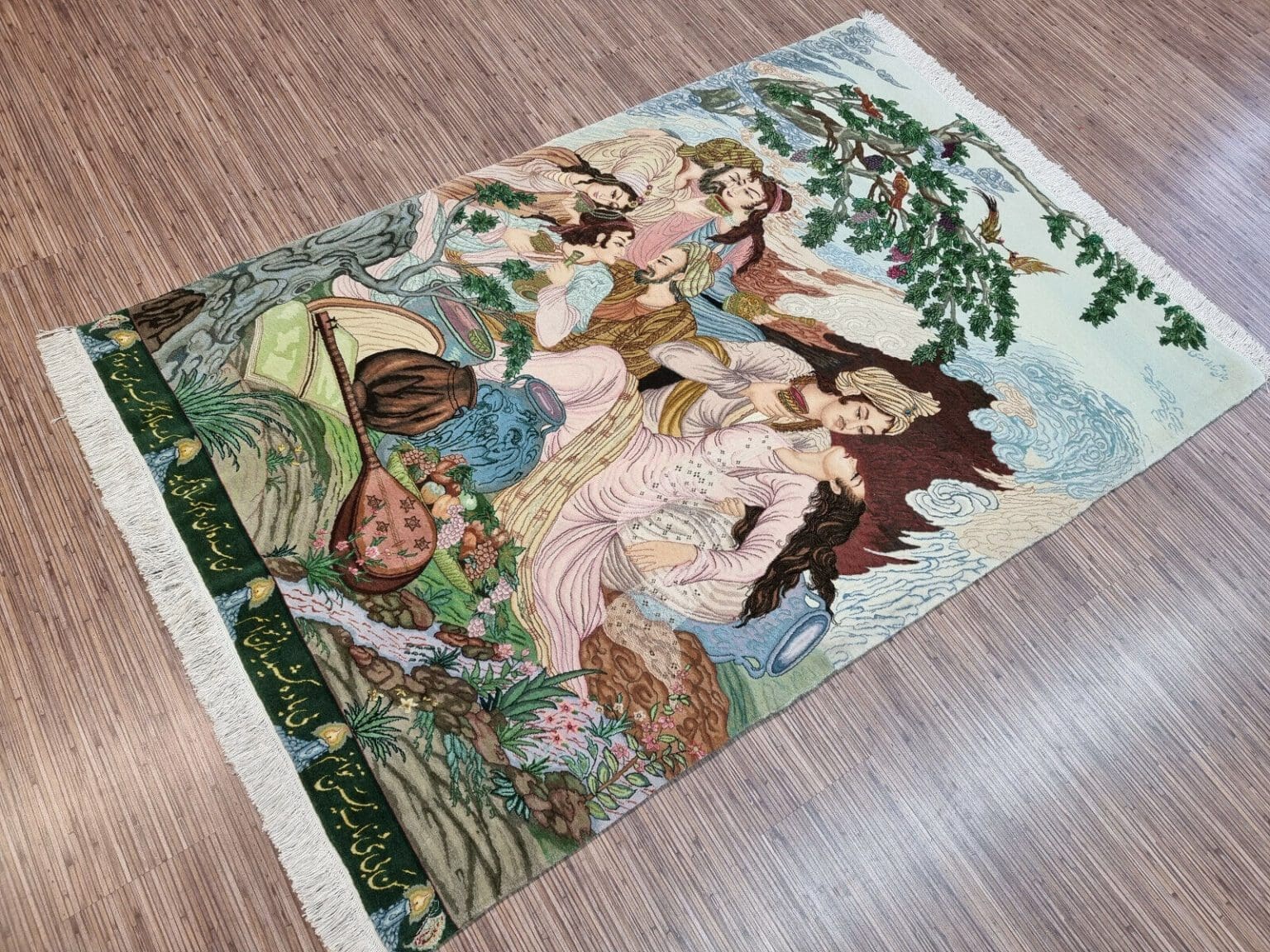
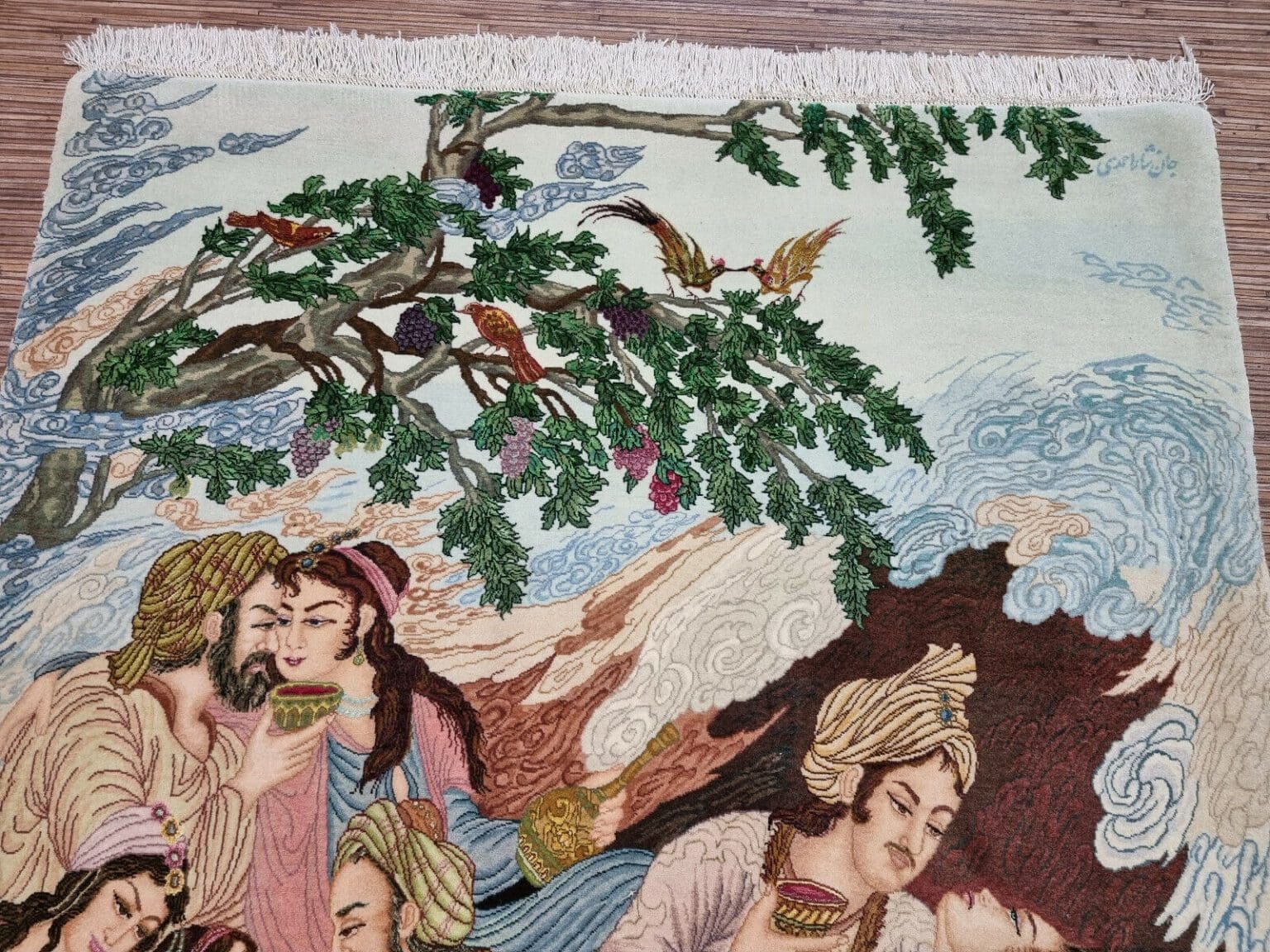
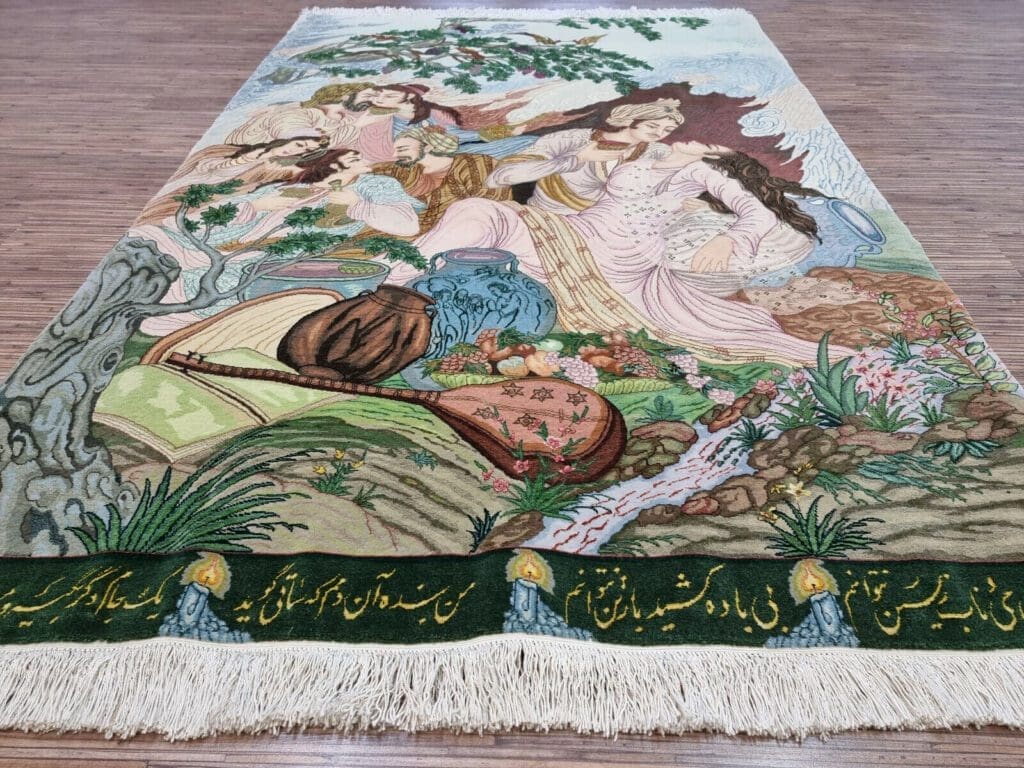
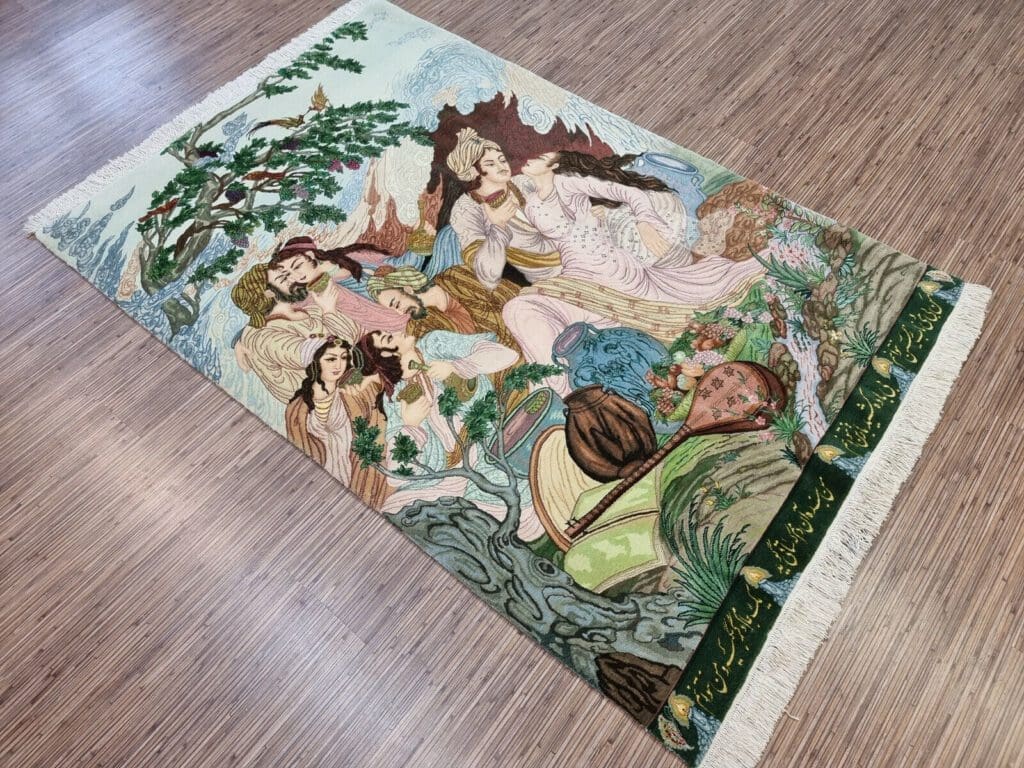
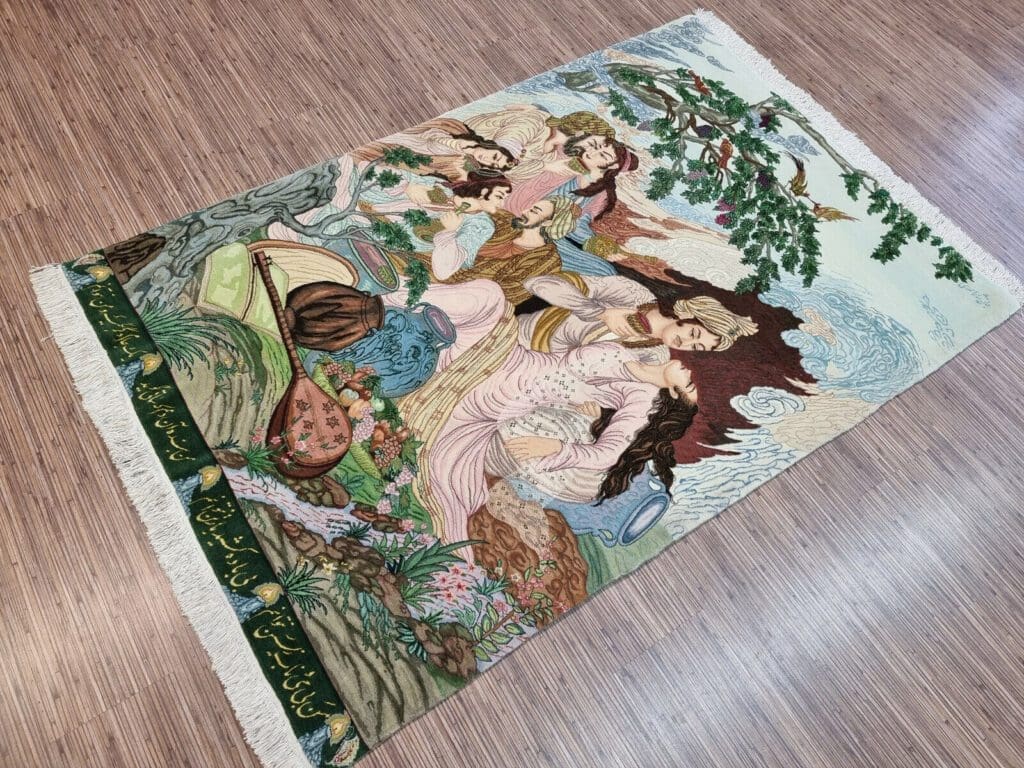
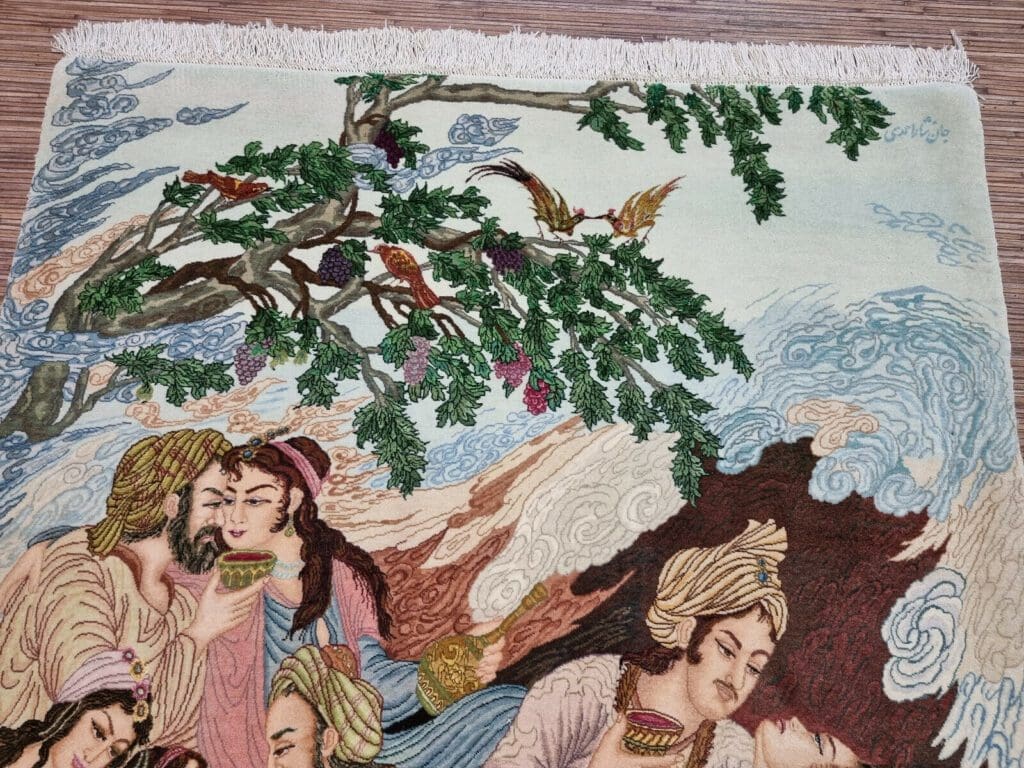
Hand-knotted Tabriz Persian Rug | Knot density: approx. 600,000 knots/m² | Material: pile Kork wool, warp silk | Size: 165 x 112 cm | Pattern: Picture | Condition: Very good, used only as a wall hanging
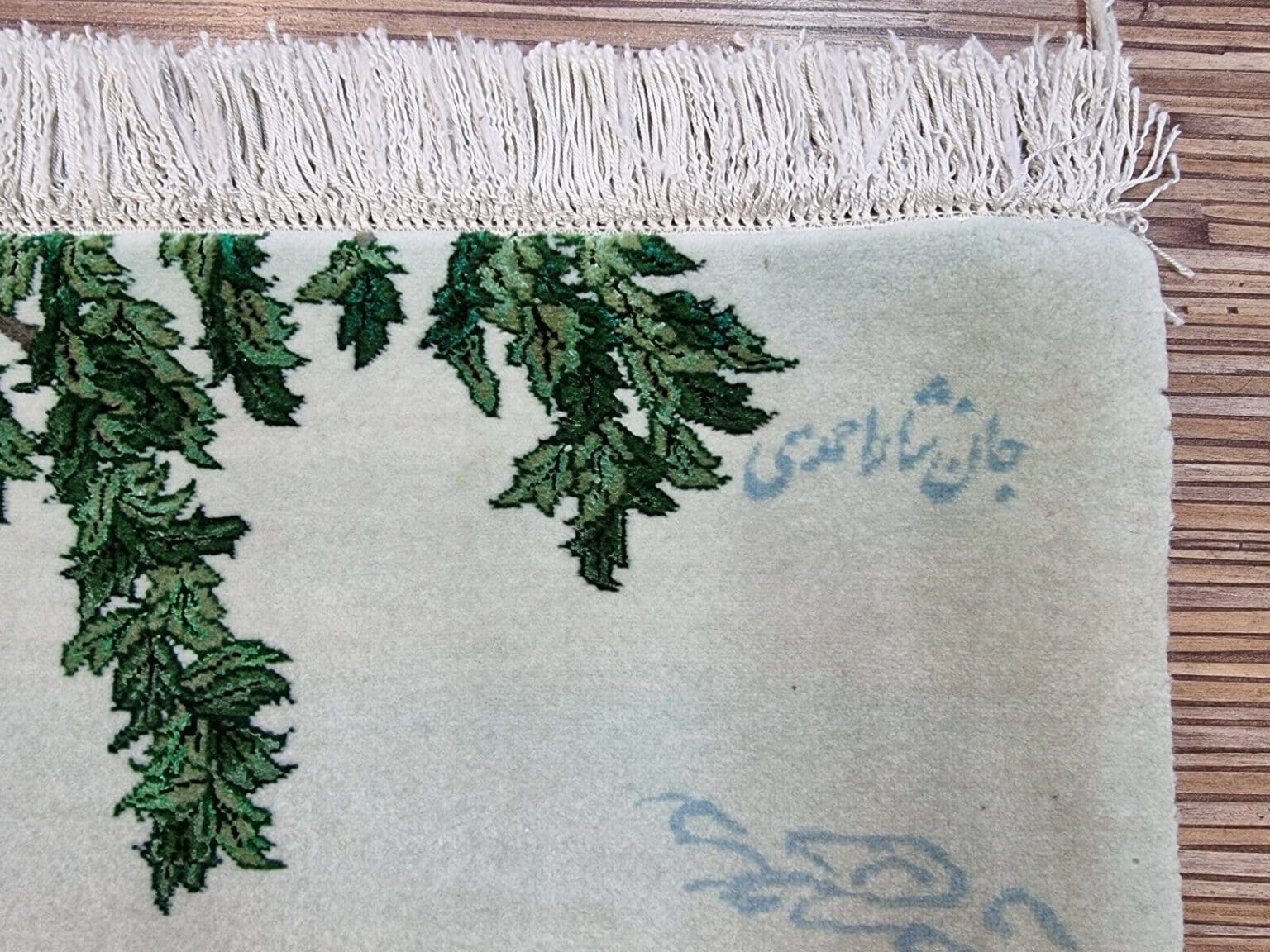
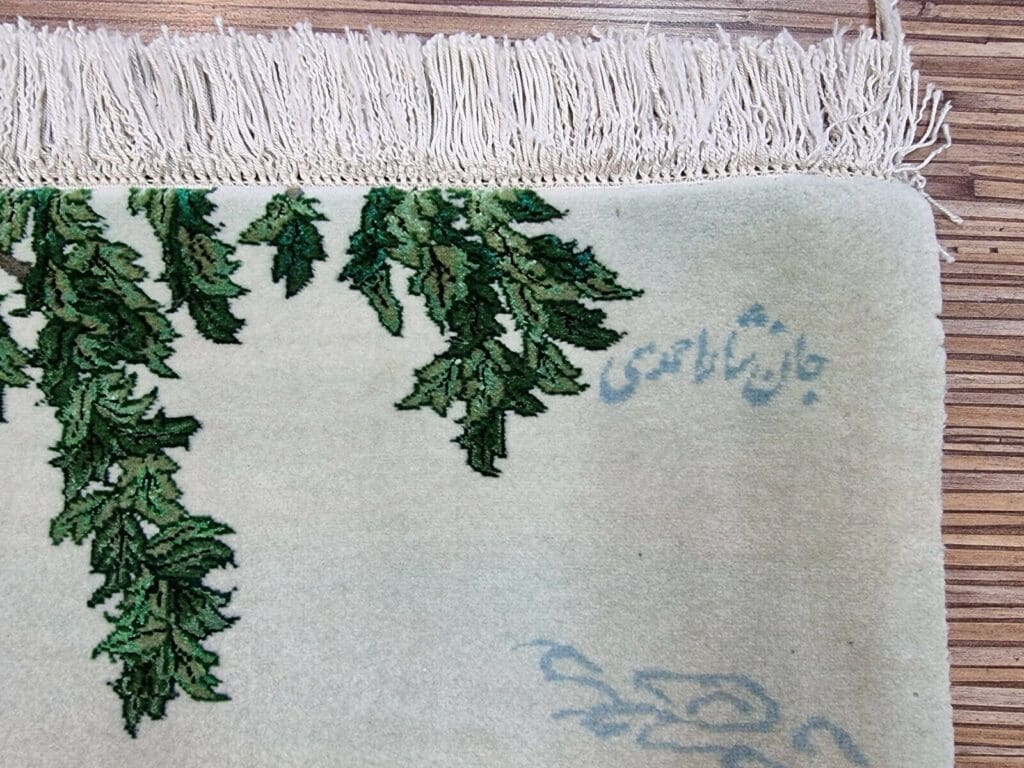
This Persian rug is hand-knotted and was made in Iran. Its listed materials are Kork wool for the pile and silk for the warp. The two materials serve different purposes within the construction: Kork wool forms the visible surface, while silk provides the foundation into which the knots are tied. This combination is part of the rug’s stated material specification and defines its textile structure.
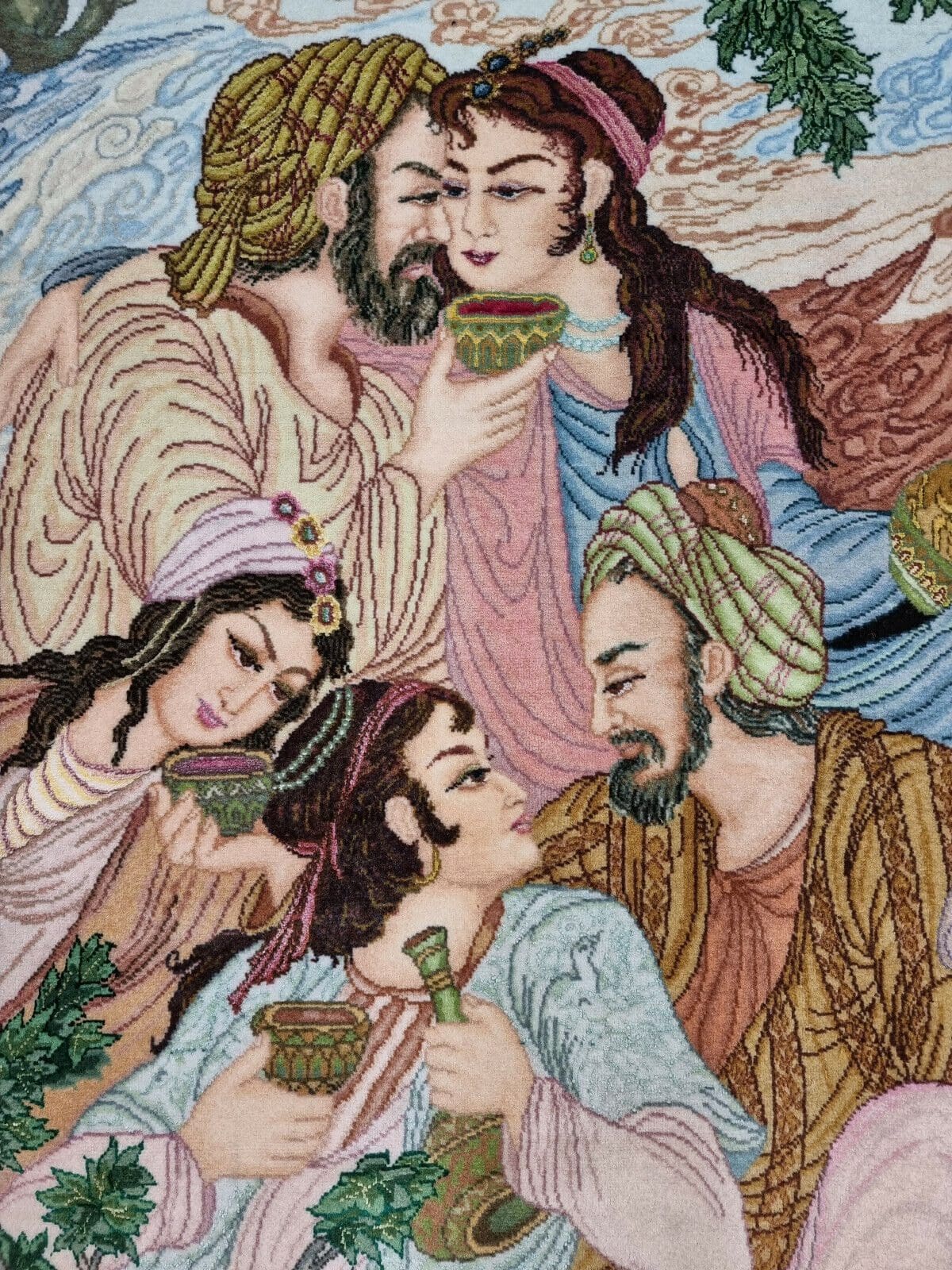
The rug has an approximate density of 600,000 knots per square metre. A dense knot structure allows small forms and fine pictorial details to be rendered with greater definition. In a hand-knotted rug, the design is not printed onto a finished surface. It is built knot by knot, so the material, the structure and the image are created together during the making process.
Hand-knotting places the work at the loom and connects every part of the composition with a manual process. The design is translated into rows of individual knots, with colour changes and contours formed as the work progresses. This gives the rug its place within the tradition of Iranian weaving. Its stated use solely as a wall hanging also places emphasis on the textile’s decorative and pictorial character.
Origin and Tradition
The rug comes from Iran and is identified as Tabriz. Tabriz is a city in north-western Iran and one of the established centres of Persian rug production. The city became a centre of the Persian carpet industry as early as the sixteenth century. Its weaving tradition is associated with carefully organised designs, refined drawing and the use of selected materials.
Tabriz weaving developed through a long regional history in which designs were passed on, adapted and refined in workshops. This history did not produce one single fixed pattern. Instead, it created a broad family of compositions that can include floral arrangements, geometric structures, medallion formats and pictorial scenes. Across these variations, controlled lines, balanced areas and a deliberate relationship between detail and overall order are recurring features of the tradition.
North-western Iran has long been a setting for trade, cultural exchange and artistic development. These conditions helped Tabriz weavers work with influences from different parts of Persian art while maintaining a recognisable regional identity. Tabriz rugs are therefore often discussed in connection with precise drawing and carefully planned compositions. Their tradition includes both ornamental and representational approaches, allowing a rug to function as a patterned furnishing textile or as a woven image.
The name Tabriz identifies this rug’s Iranian origin and its place within that Persian weaving tradition. It is not merely a decorative label: it refers to a city with a documented history of rug making. The hand-knotted technique connects this individual piece with that history. At the same time, the tradition contains many different designs, so the regional name does not imply that every Tabriz rug has the same appearance.
Persian rugs have traditionally served practical, decorative and artistic purposes. A woven piece may define an area, introduce an ordered pattern or present an image through textile means. Here, the stated picture pattern is especially important because it points to a design intended to be read as a representation rather than only as a repeated ornament. The origin, the craft method and the pictorial character together describe the cultural setting of this rug.
Design and Pattern
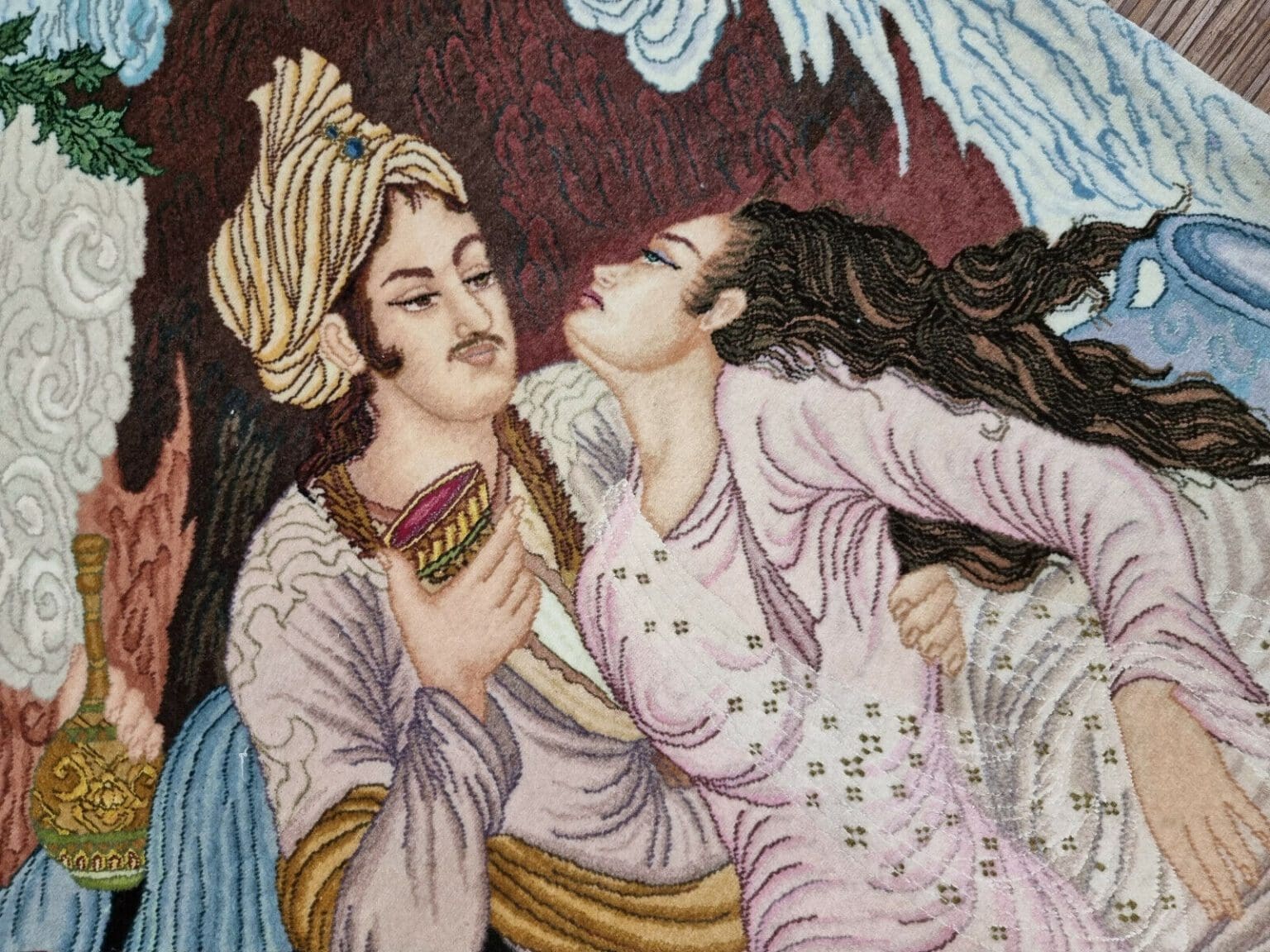
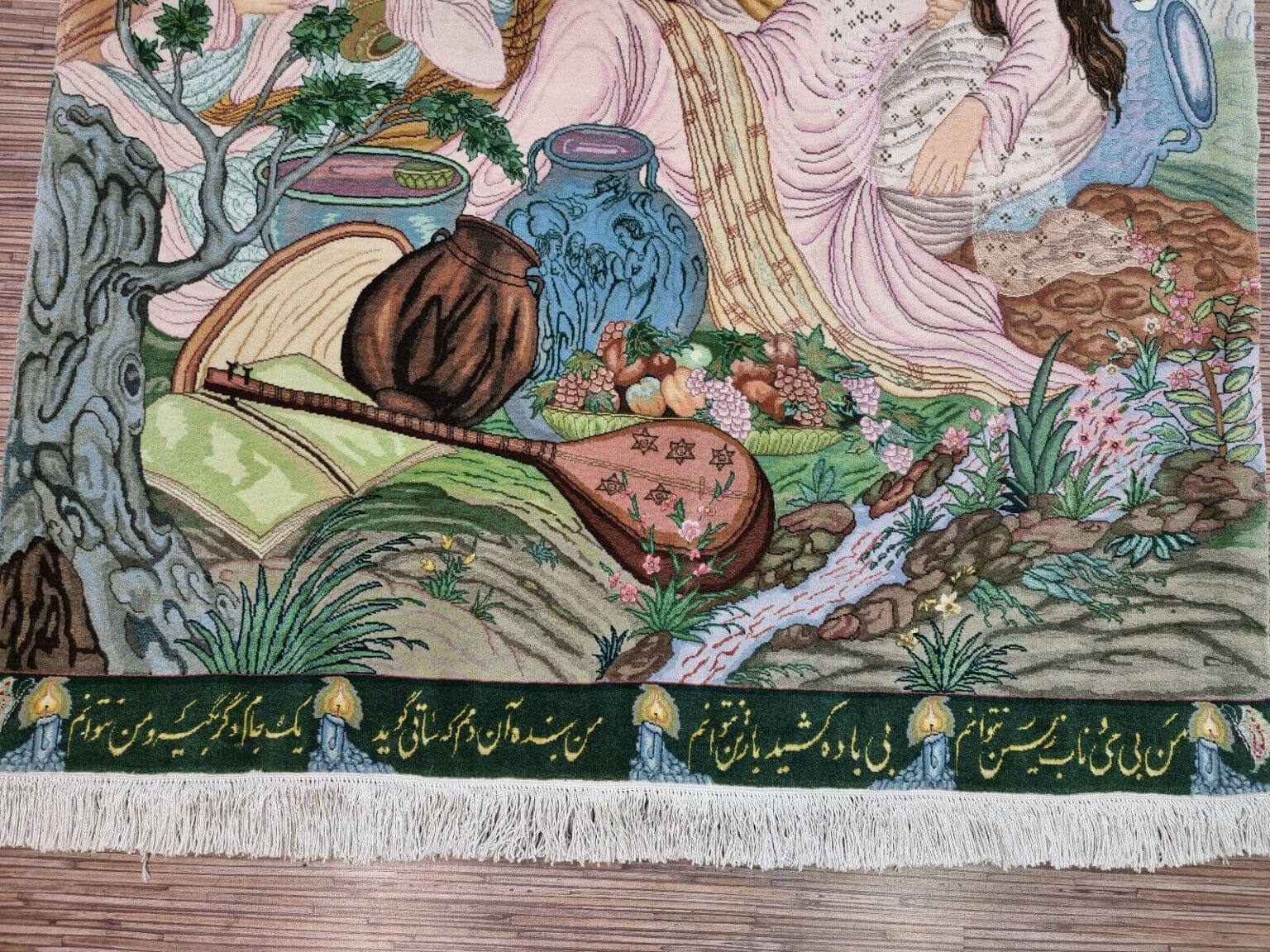
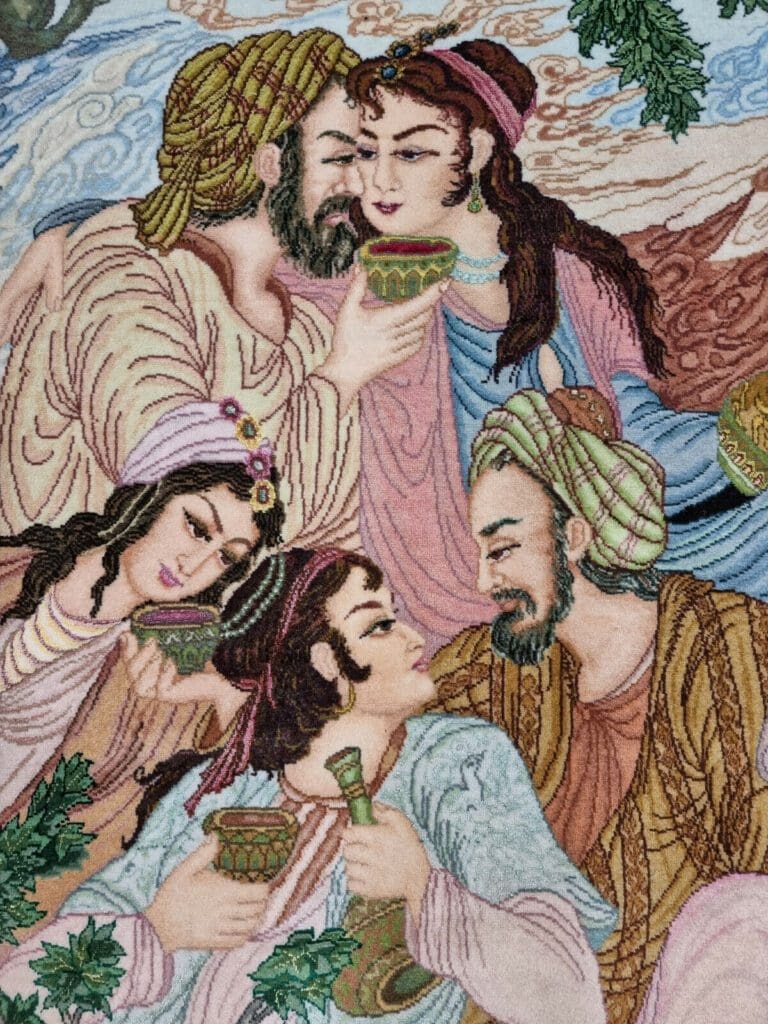
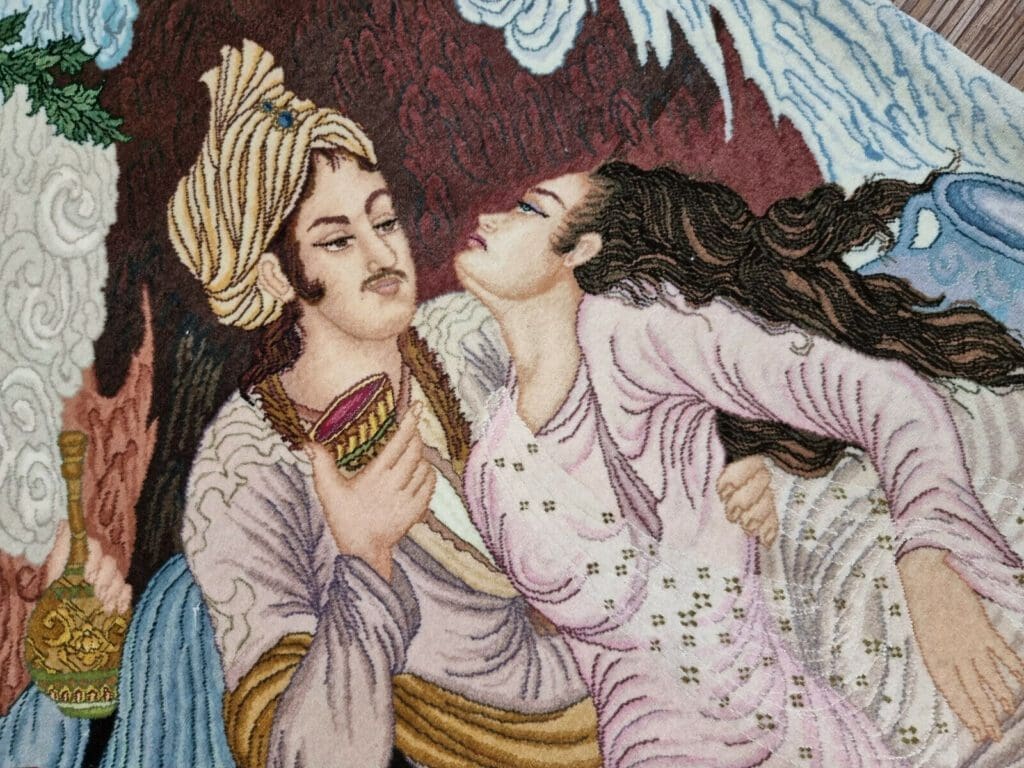
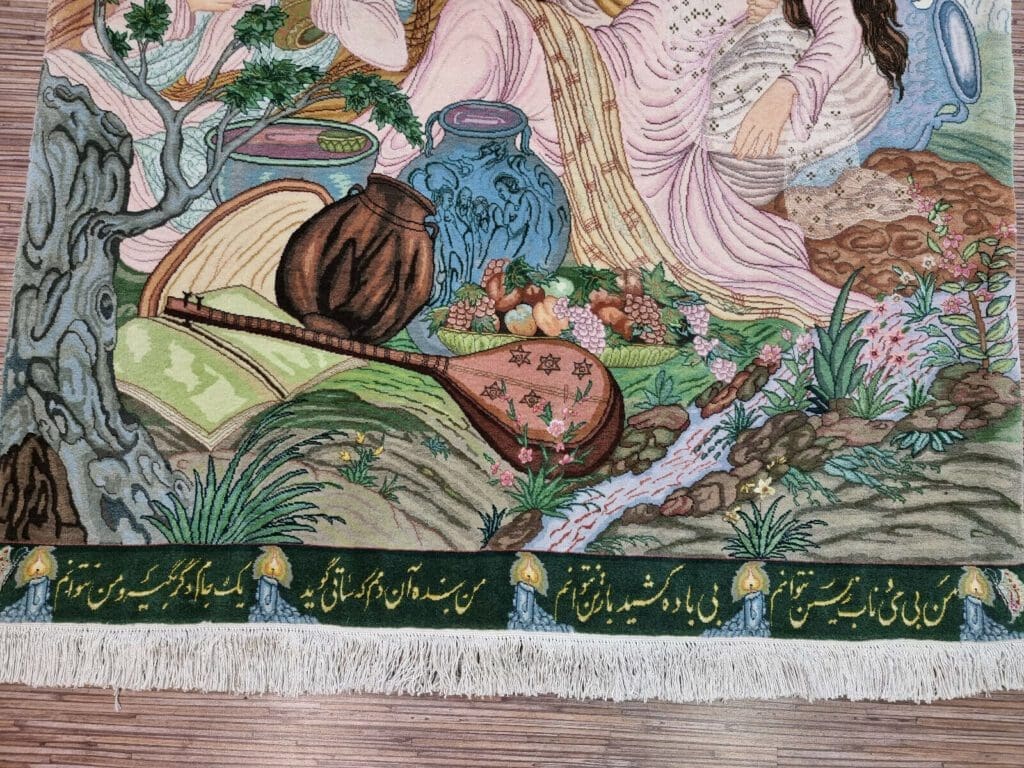
The pattern is described as a picture. The design therefore has a pictorial focus rather than being identified only by an abstract repeat or a formal medallion. In a picture rug, coloured areas, outlines and changes in tone are arranged to create a woven representation. Those elements are transferred to the surface through the placement of individual knots. The high knot density supports the rendering of fine lines and small details.
The Tabriz tradition includes floral and geometric forms. Floral vocabulary may involve blossoms, leaves, vines and stylised plant arrangements. Geometric elements can establish axes, borders, divisions or repeated structures through lines and angles. In pictorial compositions, such devices may frame the image or organise the surrounding field. The specific pattern listed for this rug is a picture; the broader Tabriz background explains the design language without assigning an additional scene that is not expressly specified.
Designing a Persian picture rug requires a drawn concept to be converted into a knotting plan. The image has to be divided into areas that can be represented by rows of coloured knots. A change in the sequence can alter a contour, a boundary or the visual weight of a detail. The final image is therefore the result of both artistic planning and technical translation. It is not painted onto the textile; it is constructed from wool and silk at the loom.
Many Tabriz compositions are associated with a clear sense of balance, whether that balance comes from a central arrangement, an organised border or a measured relationship between field and surrounding forms. A pictorial rug can use this order differently from a purely ornamental one, guiding the eye through represented shapes while borders and open spaces hold the composition together. The design remains subject to the possibilities of the woven medium, where lines are formed by the succession of knots.
The visual effect also depends on the relationship between knot density and colour arrangement. A fine structure can keep neighbouring contours distinct and make transitions more gradual. In Persian design traditions, colours are commonly considered in relation to one another, including the relationship between a field, foreground forms and borders. For this rug, the stated design characteristic is its picture pattern. General references to floral and geometric Tabriz vocabulary describe the regional context rather than adding an unlisted motif to this individual piece.
Special Features
The condition is described as very good. The rug was used only as a wall hanging, not as a floor rug in the stated period of use. That distinction places its pictorial character at the centre of its presentation and describes a different use context from a textile exposed to regular foot traffic.
Its combination of hand-knotting, Kork wool pile and silk warp is a defining feature. The listed high knot density is another characteristic connected with the detailed picture pattern. For care, the description recommends regular vacuuming without a brush. Spills or marks should be treated promptly with a damp cloth. Direct sunlight should be avoided to help prevent fading, and professional rug cleaning is recommended for heavier soiling.
FAQ
How should I care for this Tabriz rug?
Vacuum the rug regularly without using a brush, so dust and dirt can be removed without subjecting the surface to a rotating brush. Treat marks immediately with a damp cloth. Direct sunlight should be avoided because it can cause colours to fade. If the rug has heavier soiling, professional rug cleaning is recommended rather than attempting an intensive treatment at home.
Is the rug suitable for allergy sufferers?
The original description states that rugs made from pure wool are naturally hypoallergenic and may be a suitable choice for allergy sufferers because they can attract less dust and fewer allergens than synthetic materials. This rug is specifically described as having a Kork wool pile on a silk warp. Individual allergies differ, so anyone with a particular medical concern should obtain advice from an appropriate health professional.
Where can this rug be used?
The rug is described as suitable for both traditional and modern interiors. Suggested settings include a living room, dining area or stylish hallway. Since it has been used only as a wall hanging, it can also be displayed as a textile picture on a wall. The best position depends on the room plan and on whether the pictorial design is intended to function as wall decoration or as part of a wider interior arrangement.
To provide the best experiences, we use technologies like cookies to store and/or access device information. Consenting to these technologies will allow us to process data such as browsing behavior or unique IDs on this site. Not consenting or withdrawing consent, may adversely affect certain features and functions.
Functional Always active
The technical storage or access is strictly necessary for the legitimate purpose of enabling the use of a specific service explicitly requested by the subscriber or user, or for the sole purpose of carrying out the transmission of a communication over an electronic communications network.
Preferences
The technical storage or access is necessary for the legitimate purpose of storing preferences that are not requested by the subscriber or user.
Statistics
The technical storage or access that is used exclusively for statistical purposes.The technical storage or access that is used exclusively for anonymous statistical purposes. Without a subpoena, voluntary compliance on the part of your Internet Service Provider, or additional records from a third party, information stored or retrieved for this purpose alone cannot usually be used to identify you.
Marketing
The technical storage or access is required to create user profiles to send advertising, or to track the user on a website or across several websites for similar marketing purposes.

 SECURE PAYMENT
 SHIPPING PARTNERS


