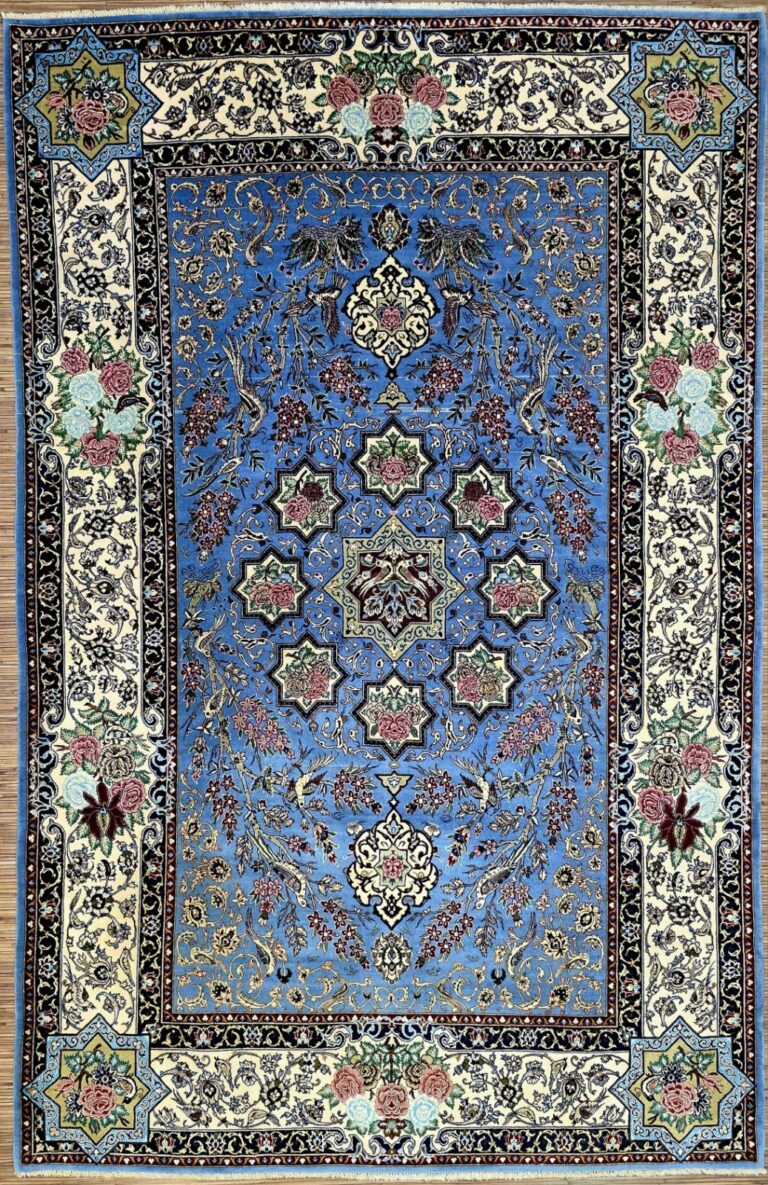
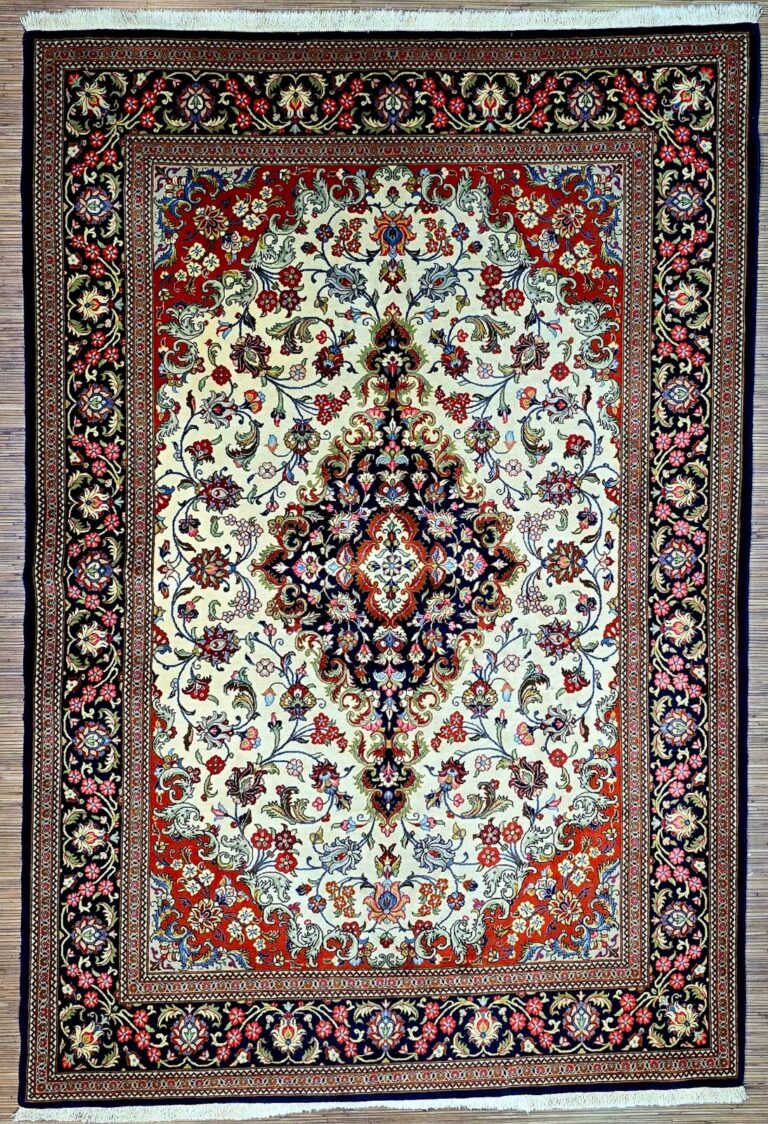
Persian Rug Super Nain 198 x 130 cm Wool Hand-knotted
€ 1592
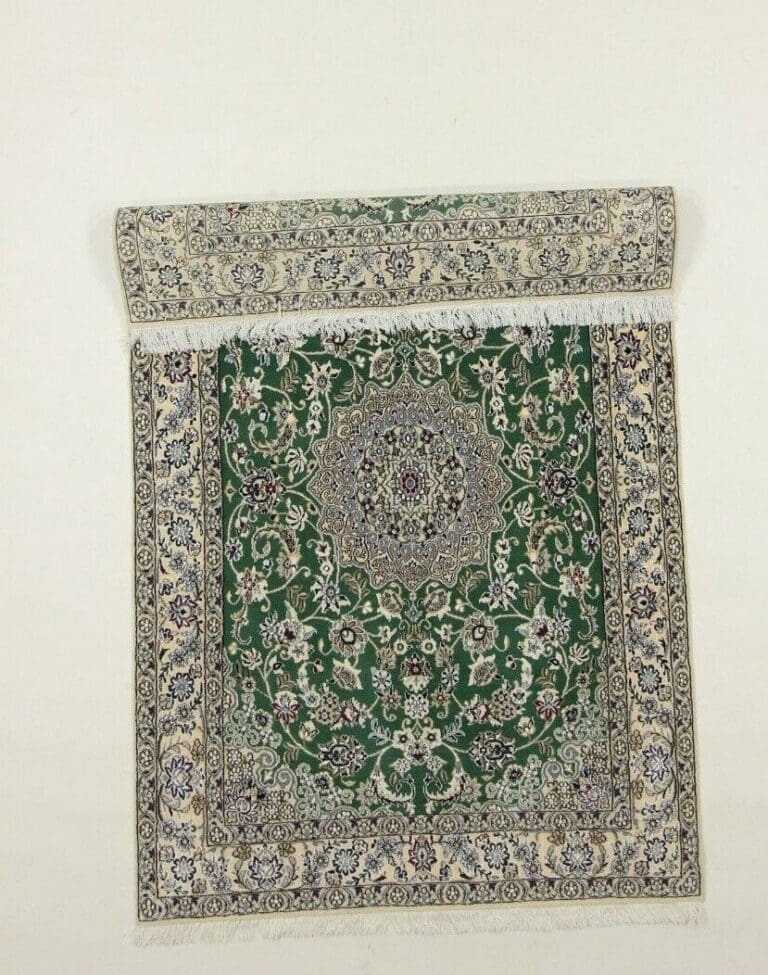
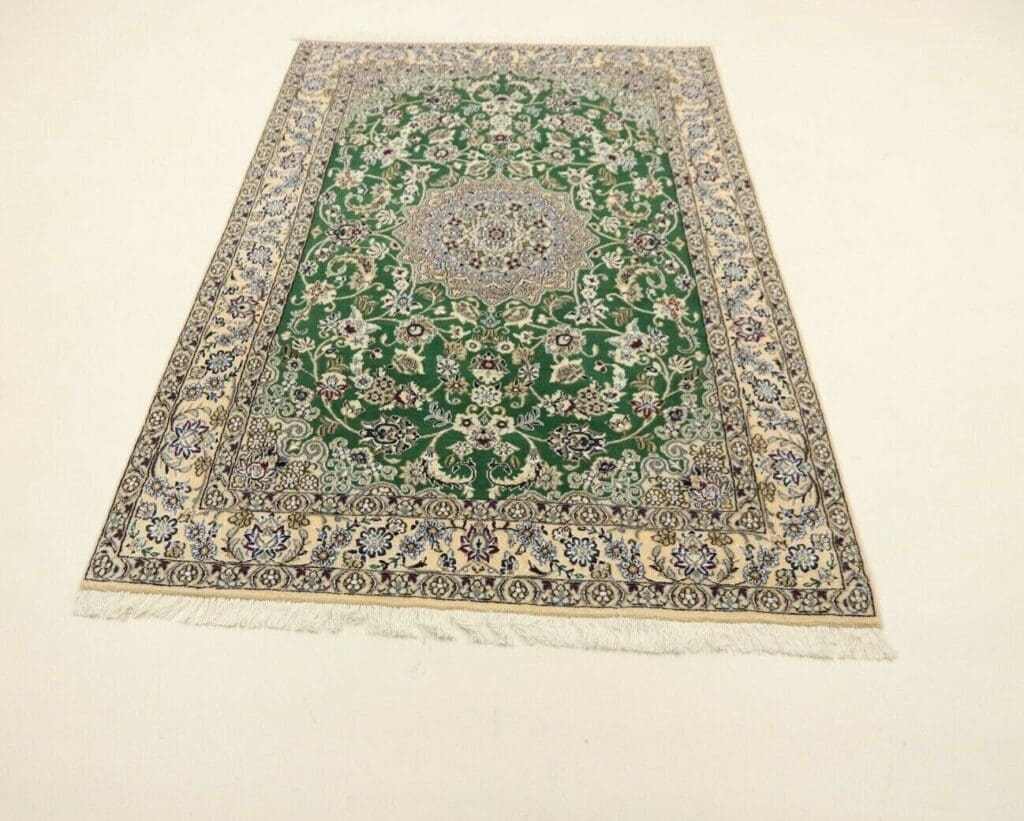
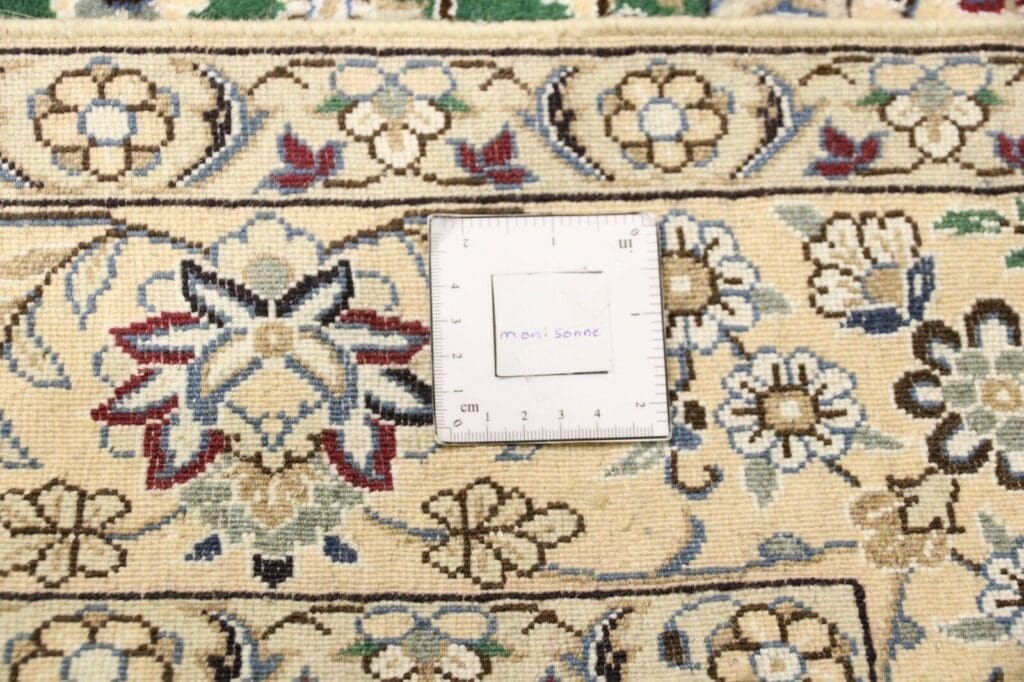
Hand-knotted Super Nain Persian Rug | Knot density: approx. 500,000 knots/m² | Material: pile 90% virgin wool, warp 100% cotton | Size: 198 x 130 cm | Pattern: traditional Oriental and Persian | Condition: new, very good
This Super Nain Persian rug is hand-knotted, with a pile made from virgin wool and silk and a cotton warp. Virgin wool is used in hand-knotted rugs for its resilient and flexible fibres. It gives the pile a pleasantly tactile surface and a composed natural appearance. Silk adds a finer fibre and a restrained sheen. Together, the two pile materials create a surface in which softly matte areas meet subtly lustrous details.
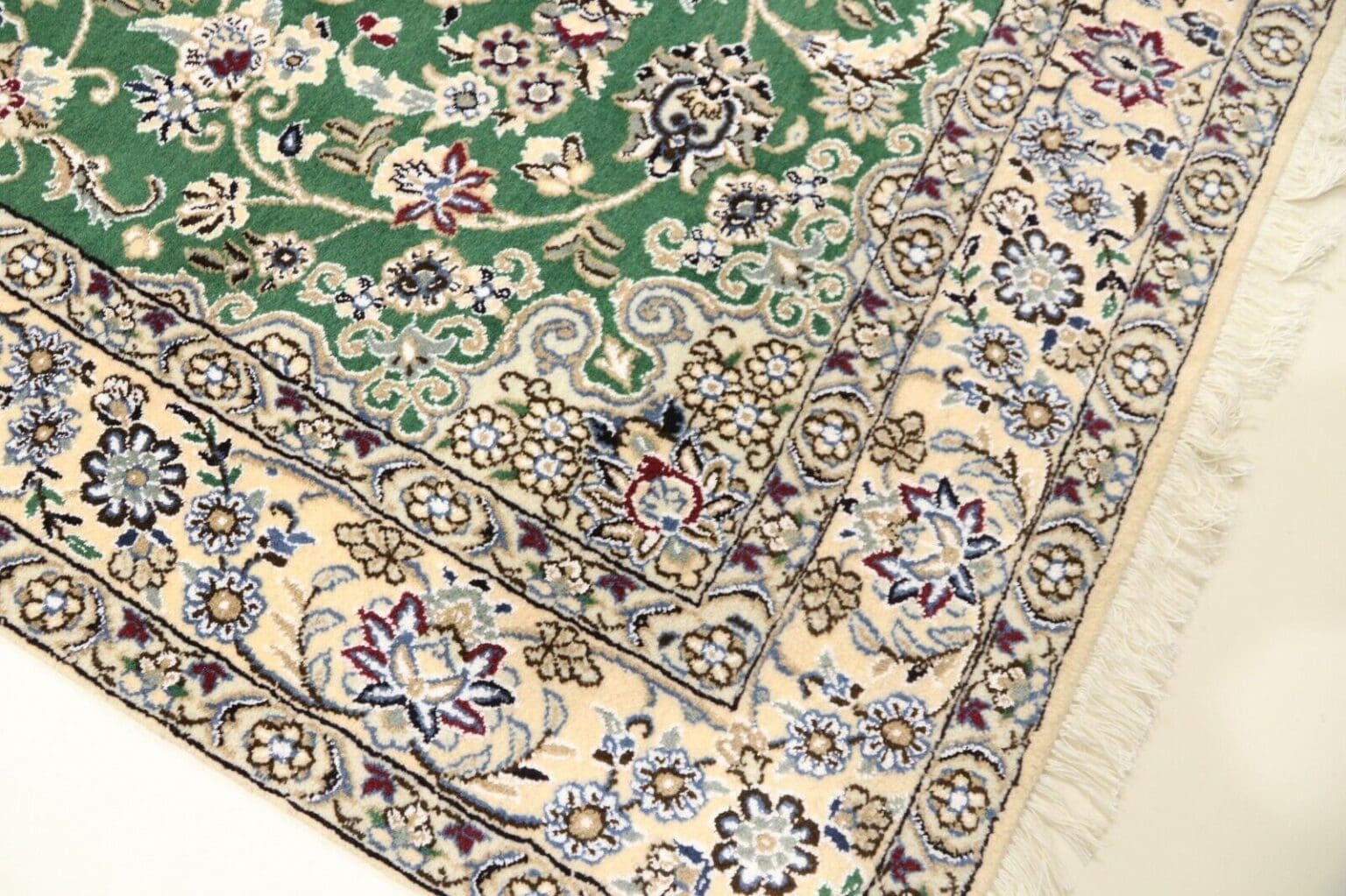
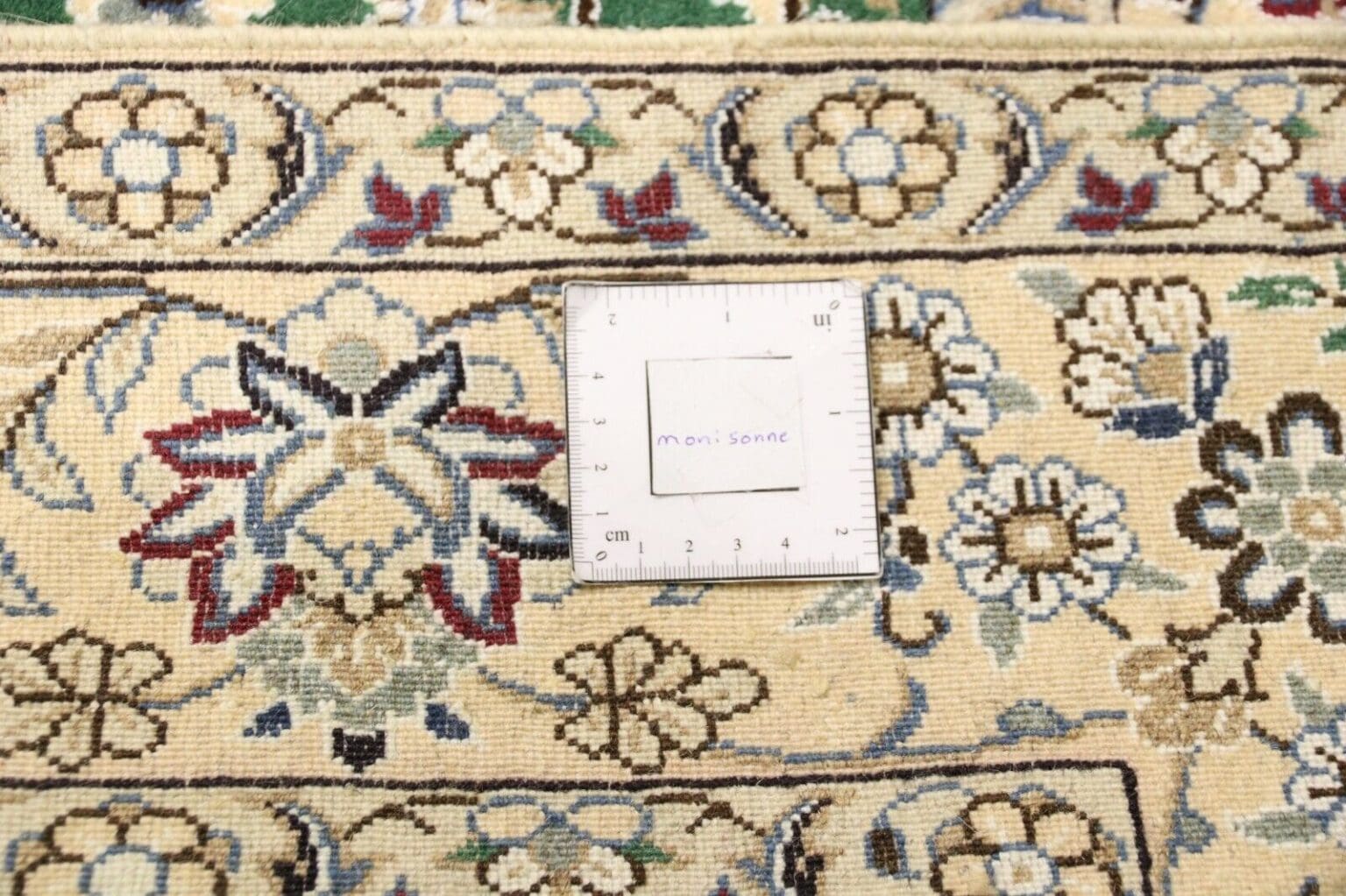
In hand knotting, each knot is tied individually around the warp threads and secured by the weft. The rug is built row by row, so the design develops directly from the arrangement of the knots rather than from a printed or industrially reproduced surface. This process demands close attention when outlines, floral forms and colour fields are being formed. The cotton warp provides the structural foundation, while the wool and silk pile forms the visible face of the rug.
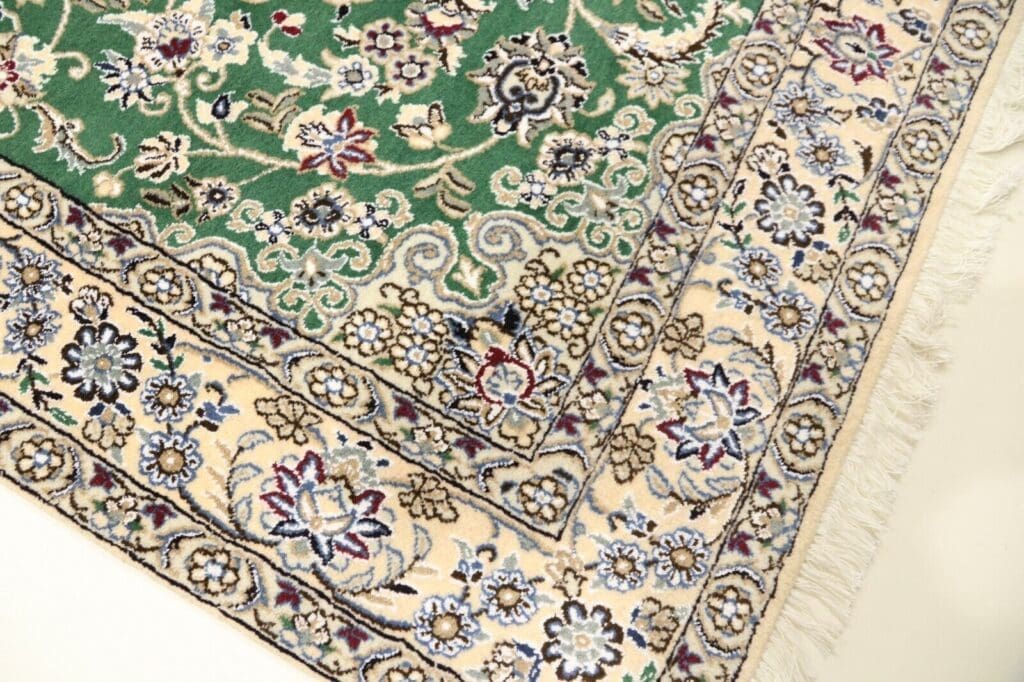
The rug’s fine knot density allows the pattern to be rendered with considerable differentiation. Small transitions, curved lines and individual floral details can be arranged in a clearly articulated way. Handwork also makes each piece unique, since the result does not come from a uniform mechanical production process. This rug is new and in very good condition. Its pile height is approximately eight millimetres.
Origin and Tradition
The rug comes from Persia, present-day Iran, and is identified as a Super Nain. Nain is located near Isfahan and is known as an important centre of Persian rug weaving. The local tradition combines careful craftsmanship with finely organised designs. Nain rugs are often associated with precise drawing, balanced proportions and a controlled use of colour. The name therefore refers not only to a decorative look but also to an established regional weaving tradition.
Rug making in Nain belongs to a cultural setting in which knowledge of knots, warp construction, colour placement and pattern design has been passed through generations. A design begins with its principal lines and structure. The weaver then builds the individual shapes out of many small areas of colour. In finer rugs, the spacing between motifs, the balance of the composition and the transitions between shades all require consistent control. Craftsmanship is consequently visible not only in the knot density but also in the organisation of the complete design.
Persian rugs have traditionally served as useful textiles as well as forms of artistic expression. They can define an area, organise a room and carry visual ideas from one generation to another. Persian weaving has long used floral forms, medallions and framing borders as recurring design elements. Their interpretation may vary with the region, the design and the viewer. Plant motifs are often associated with growth and vitality, while ordered compositions can suggest harmony and balance.
Nain rugs are valued for their fine drawing and considered choice of materials. Their proximity to Isfahan is culturally significant because Isfahan was for a long period a major centre of Persian art and design. Regional workshops influenced one another, although individual rugs do not all follow one identical pattern. The Nain tradition developed its own visual language from these connections, with controlled lines, floral detail and an even overall arrangement.
The term Super Nain points to a finely executed expression of this design tradition. It is associated with precise knotting and a detailed pattern structure. For this piece, its Persian or Iranian origin, its Super Nain designation and its hand-knotted construction are the defining points of classification. The rug thus combines the regional tradition of Nain with a method of production intended to reproduce delicate patterns clearly.
Design and Pattern
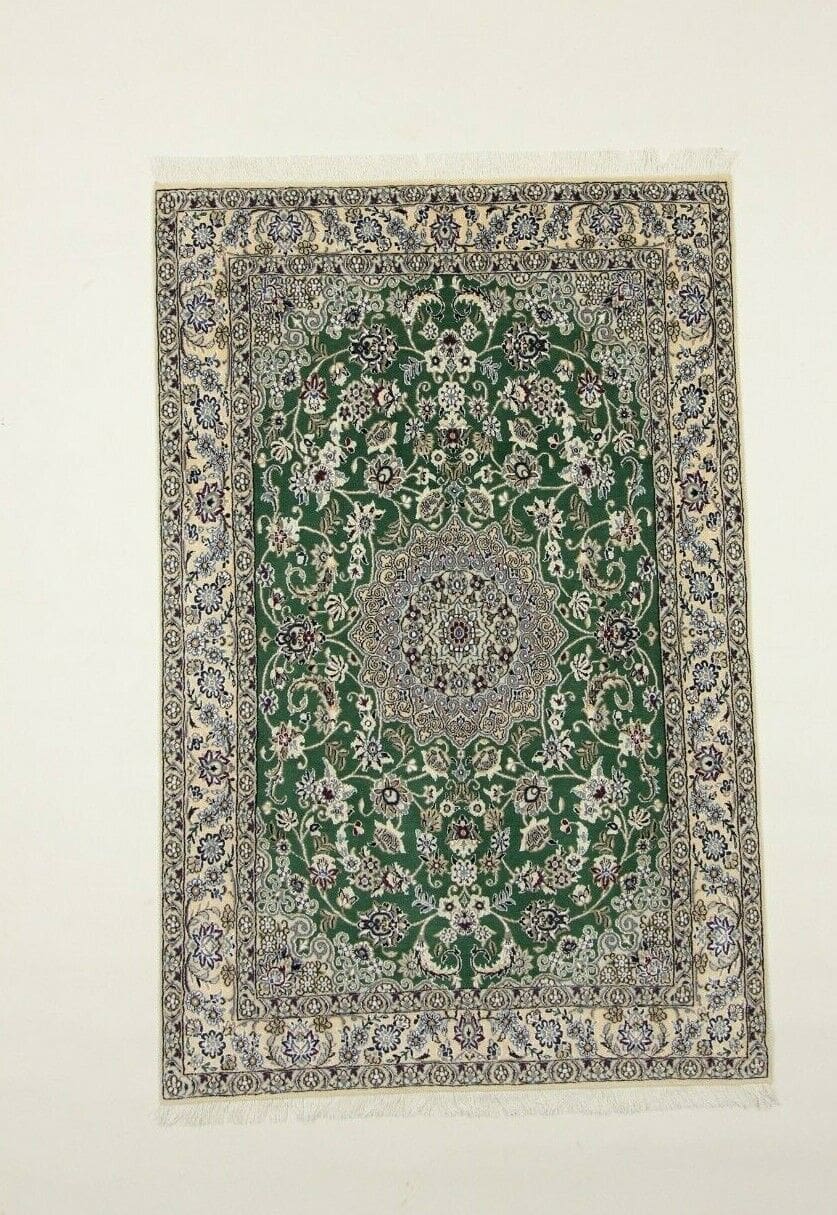
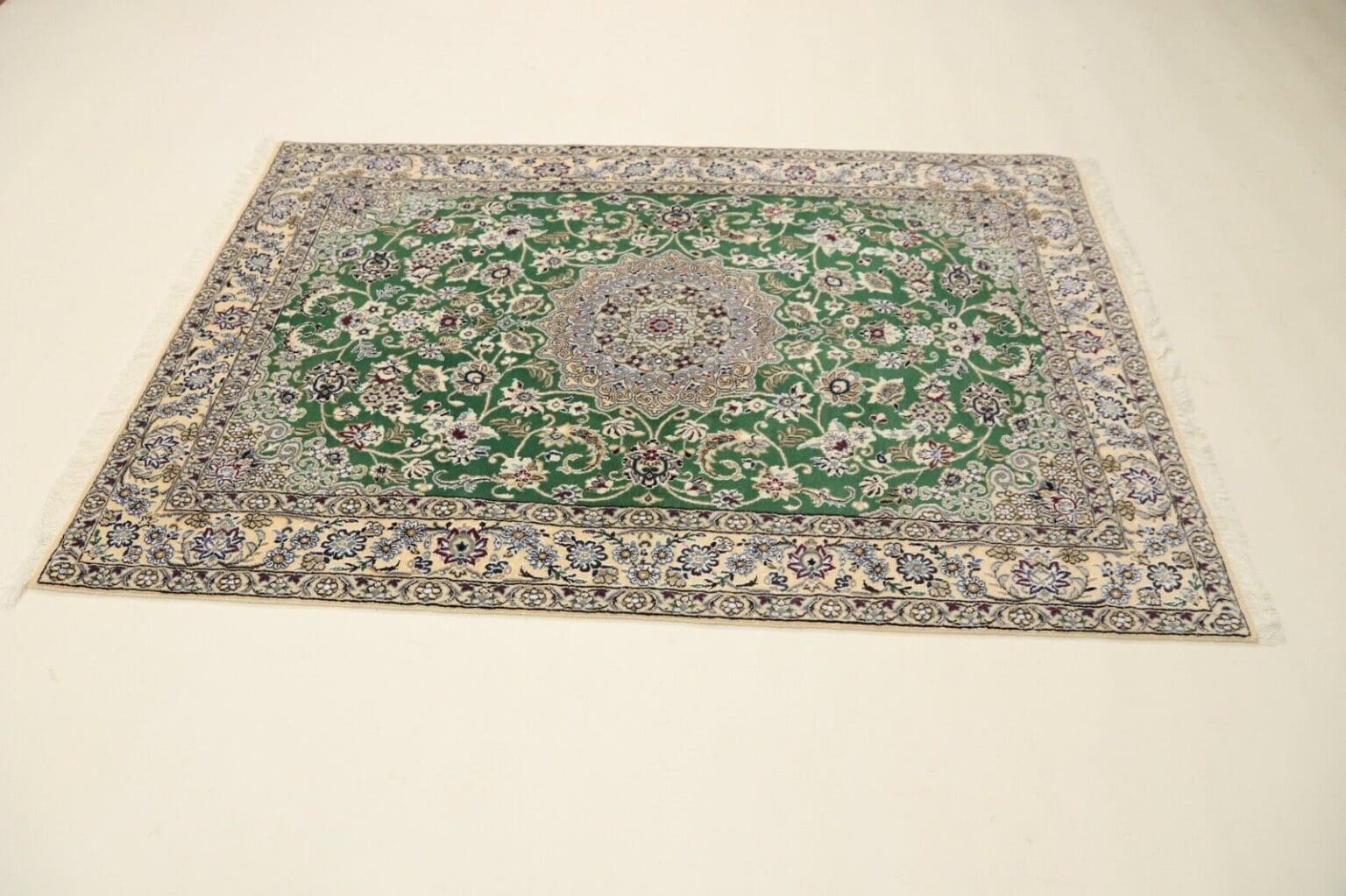
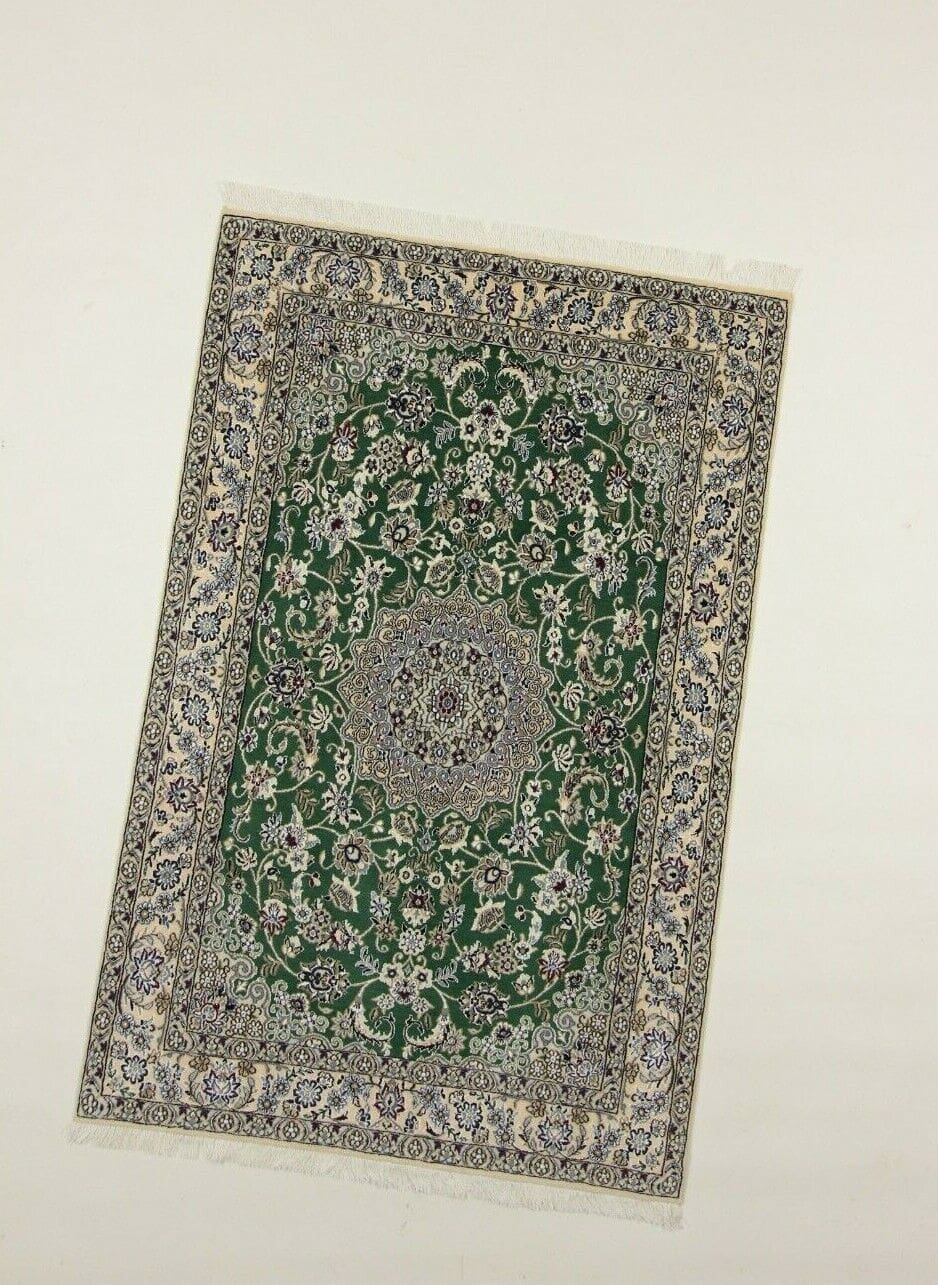
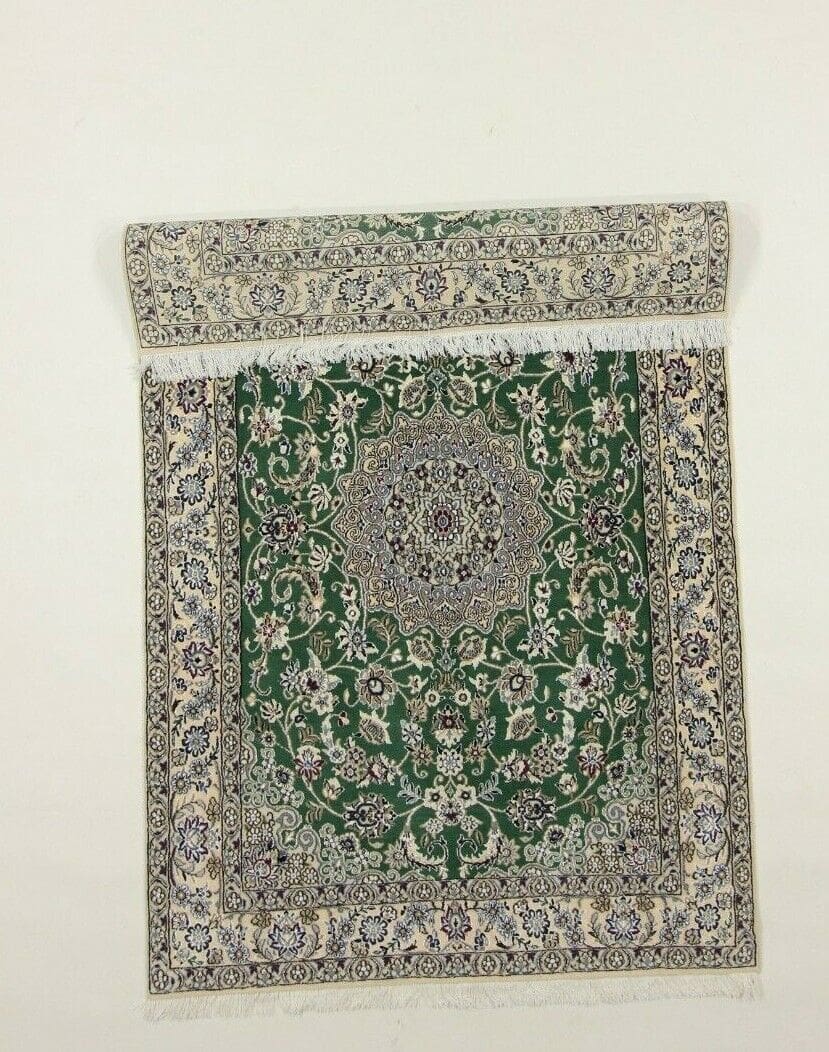
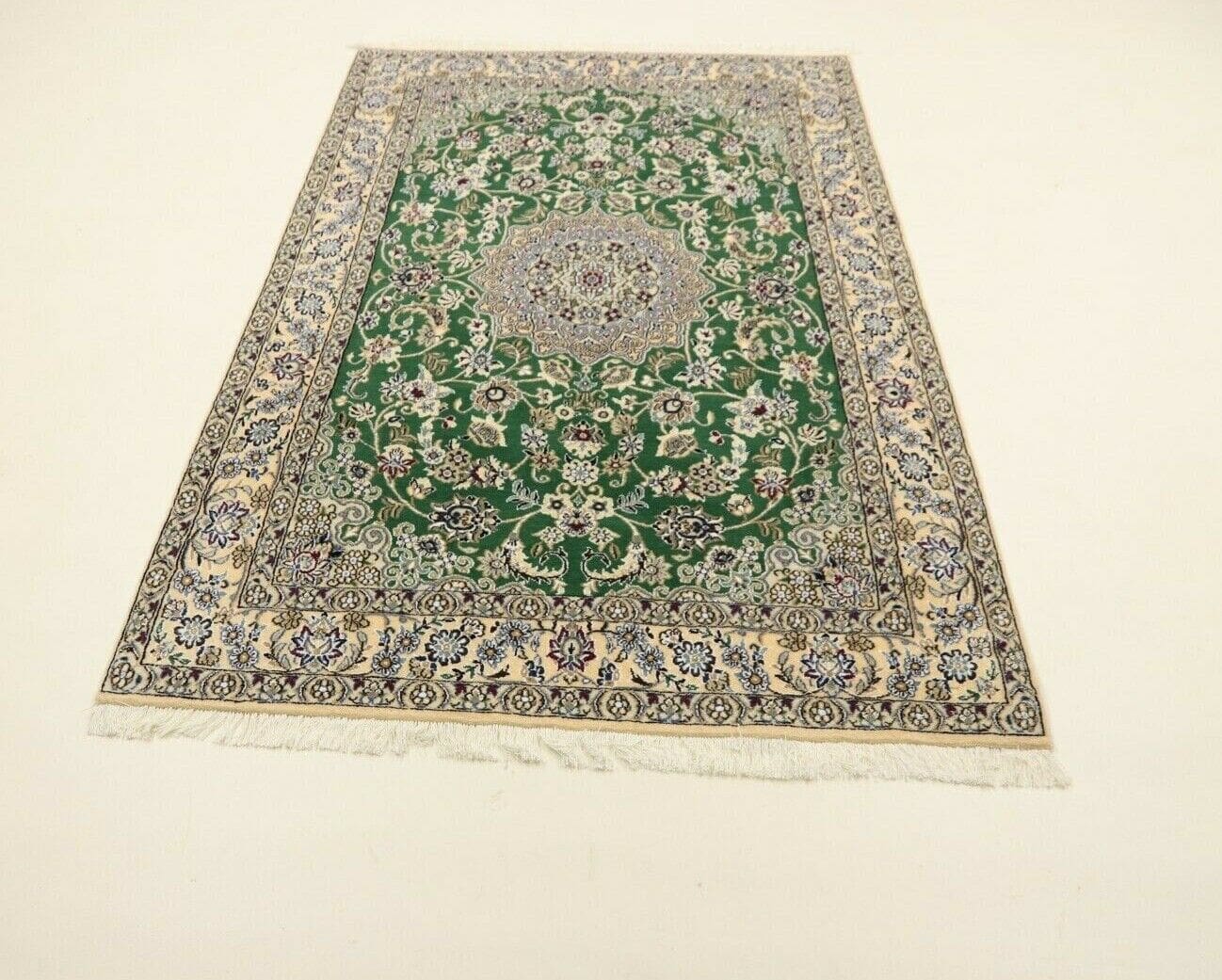
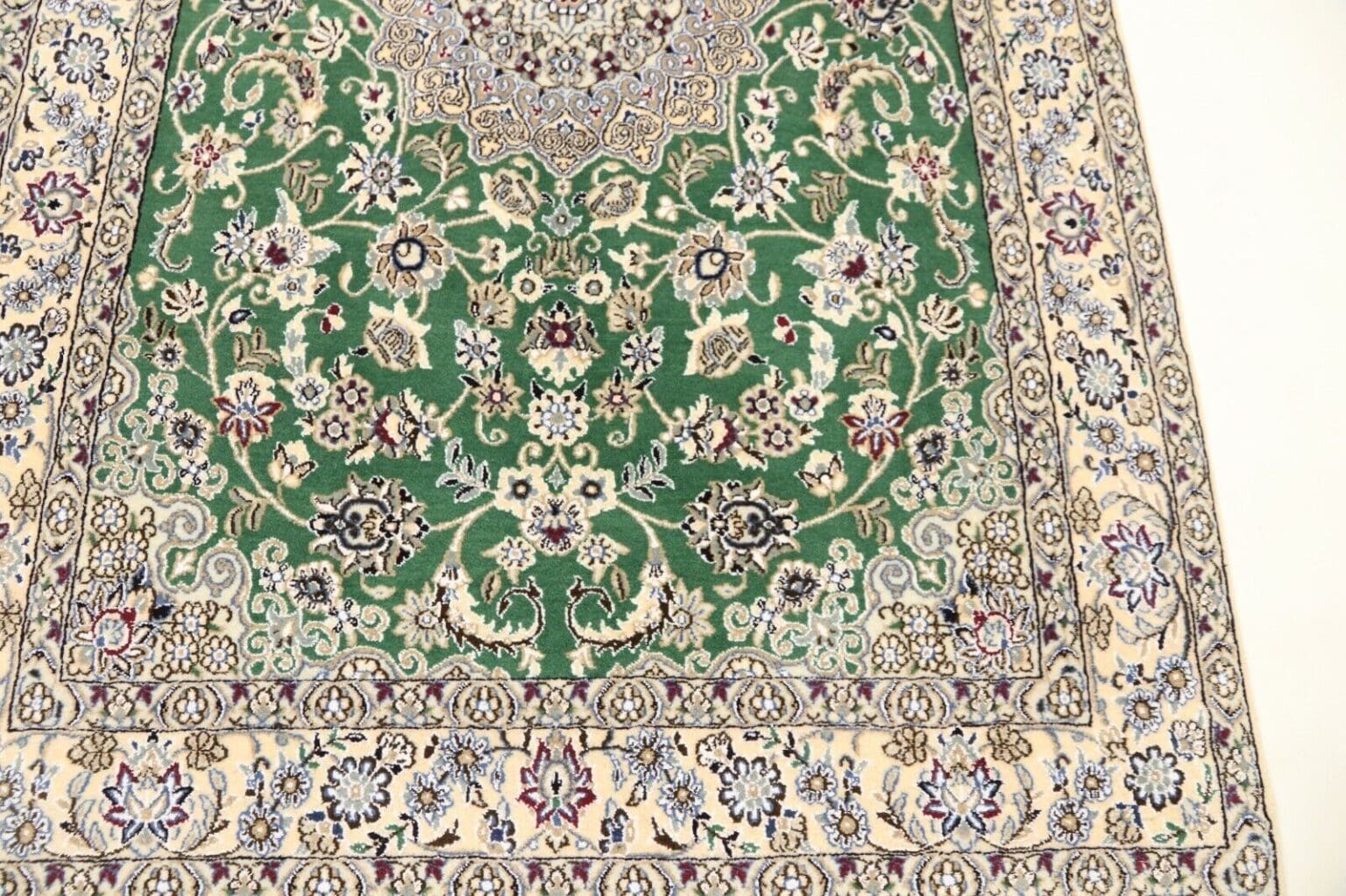
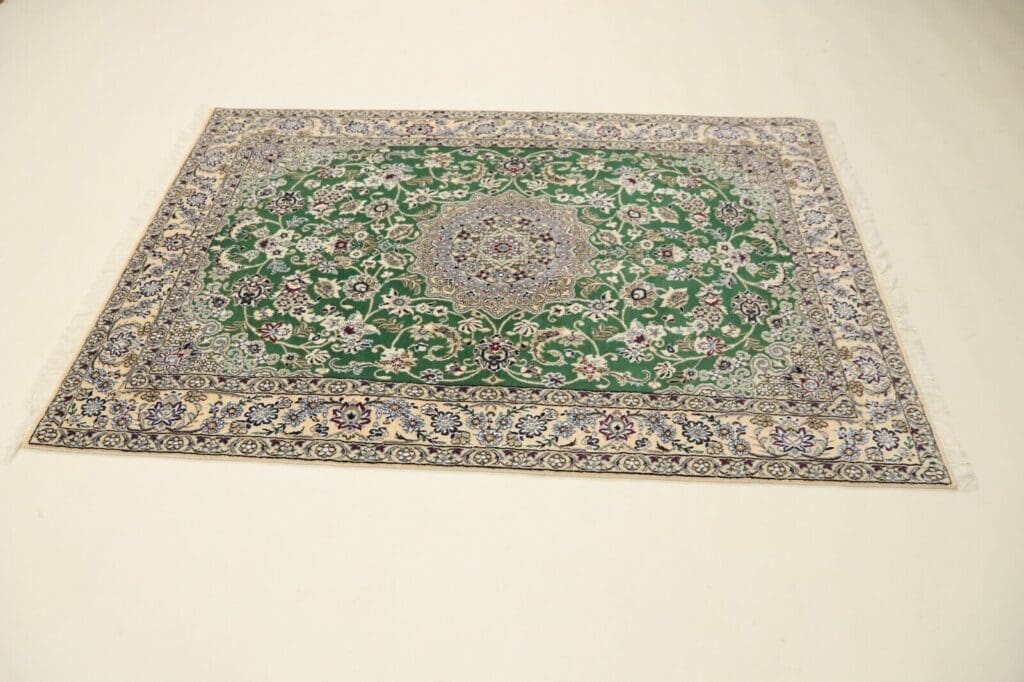
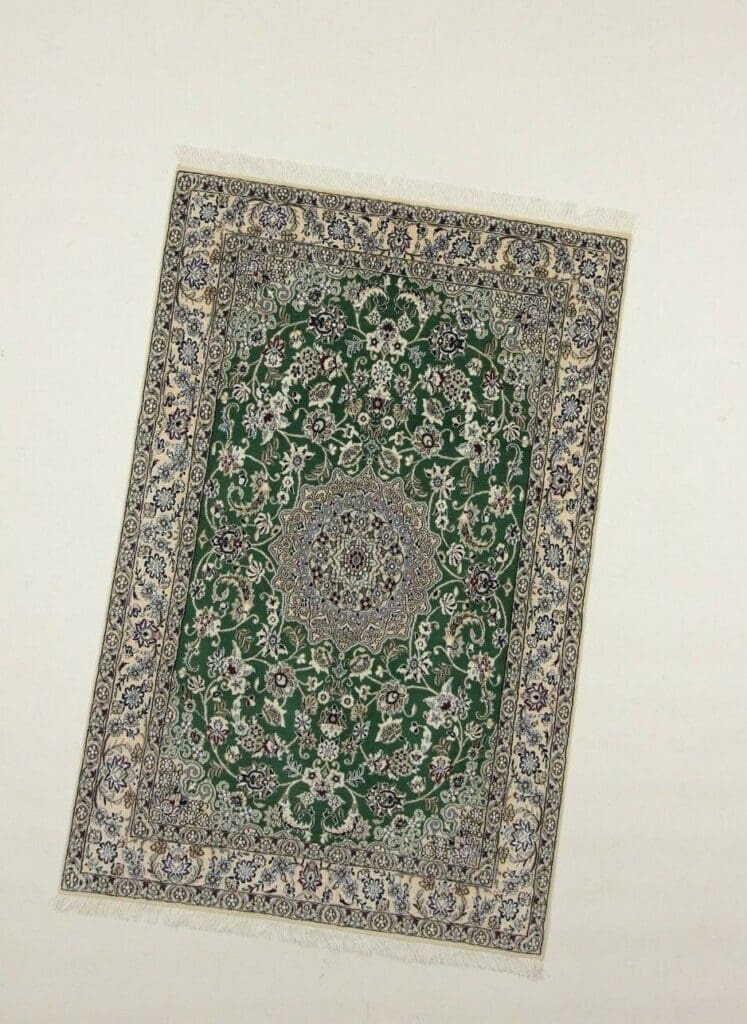
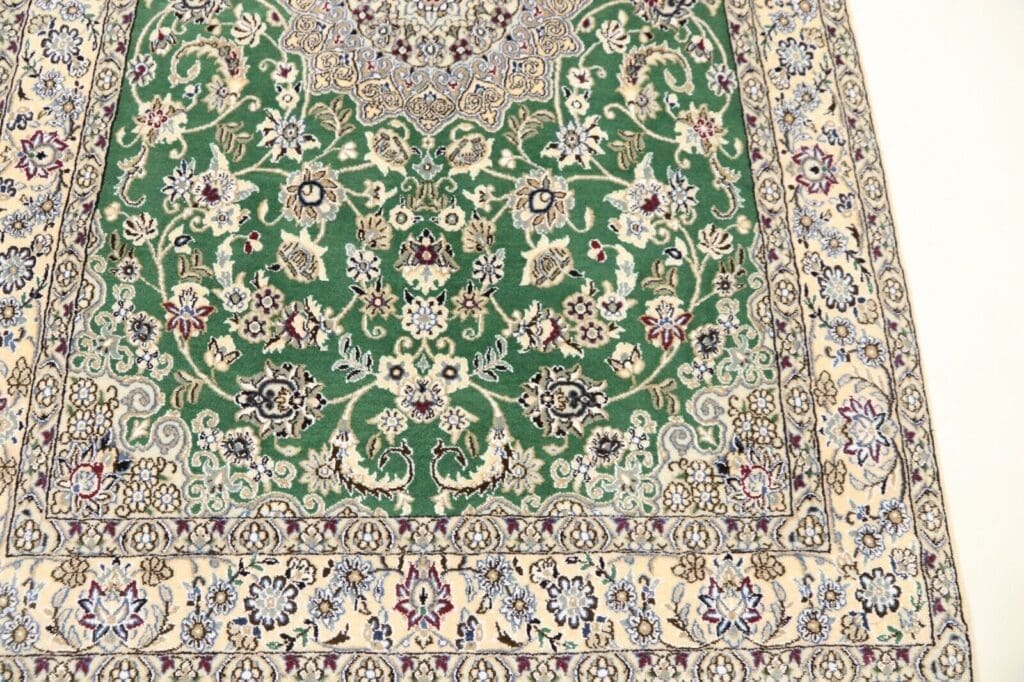
The design of this Super Nain Persian rug is delicate while remaining clearly defined. It draws on characteristic elements of the Nain tradition: floral designs, medallion-like motifs and a harmonious composition. Floral ornaments introduce curved lines and organic shapes across the field. Medallion-like elements can establish a visual centre, while the surrounding motifs retain their own structure. The result is a design in which central and accompanying forms are related without becoming indistinguishable.
In Persian pattern design, the effect comes from the relationship between many details rather than from a single symbol. A flower may be accompanied by leaves, scrolling vines or smaller filling motifs. Repeated forms create rhythm, while variations in scale give the field a sense of order and depth. In a finely knotted construction, these differences can be rendered with particular precision. The lines remain legible, and the transitions between pattern areas can appear measured and subtle.
The colour composition brings soft tones together with vivid red. The quieter shades provide an even foundation, while the red highlights selected areas and gives the design additional contrast. This creates a balance between restraint and emphasis. The palette can work with a traditionally furnished room as well as with a more contemporary interior, while retaining the character of a traditional Persian design.
Oriental rug design often combines natural forms with carefully ordered surfaces. Flowers and vines refer to the plant world, but in weaving they are stylised and placed within a symmetrical or rhythmic system. The result is not a literal image of nature but a textile interpretation of it. In Nain designs, this controlled combination of fine drawing and order is an important part of the regional tradition.
Medallion-like forms and floral details can also be read as expressions of balance and organisation. Historically, motifs in Persian rugs have sometimes been associated with ideas of luck, prosperity and protection. These interpretations belong to the cultural history of the designs, but they do not impose only one meaning on every rug. The present design can primarily be understood as a finely structured, harmonious and traditionally Oriental composition.
The pattern gives this rug the character of an Oriental rug with a clear Persian origin and a connection to Nain. It is not an arbitrary decorative arrangement; it brings together recognised regional design elements with a balanced colour scheme. The fine execution supports close viewing of the motifs, while the composition can also be perceived as a coherent surface from farther away.
Special Features
This one-off rug is new and in very good condition. It has no defects. Its listed special features include suitability for underfloor heating and pet-friendly use. The combination of virgin wool and silk joins a durable pile fibre with a finer, subtly lustrous component. The rug can therefore be used in a range of residential settings, including living rooms and bedrooms, as well as in business premises and offices.
For routine care, gentle vacuuming is sufficient to remove loose dust and everyday dirt. Aggressive chemicals should not be used. For a deeper clean, professional rug cleaning is recommended because natural fibres and hand-knotted structures require an appropriate treatment. A non-slip underlay can help keep the rug in place and provide additional protection for the floor. A rug brush may occasionally be used to loosen the fibres and preserve their sheen.
FAQ
How should I clean my Nain Persian rug?
Vacuum the rug regularly and gently to remove dust and dirt. Do not use aggressive chemicals. For a deeper clean, use a professional rug-cleaning service. A specialist can adapt the treatment to the hand-knotted construction and to the wool and silk fibres.
Is a Persian rug easy to care for?
Yes, high-quality Persian rugs are comparatively easy to maintain. Regular gentle vacuuming and occasional professional cleaning are generally sufficient to preserve their appearance and service life. Dirt should not be left in the pile unnecessarily, and strong chemical products should be avoided.
What accessories do I need for my rug?
A non-slip underlay helps protect the floor and prevents the rug from moving. A rug brush can occasionally be used to loosen the fibres and maintain their sheen. For everyday care, the key items are therefore a suitable underlay, a gentle vacuum cleaner and, when needed, an appropriate rug brush.
To provide the best experiences, we use technologies like cookies to store and/or access device information. Consenting to these technologies will allow us to process data such as browsing behavior or unique IDs on this site. Not consenting or withdrawing consent, may adversely affect certain features and functions.
Functional Always active
The technical storage or access is strictly necessary for the legitimate purpose of enabling the use of a specific service explicitly requested by the subscriber or user, or for the sole purpose of carrying out the transmission of a communication over an electronic communications network.
Preferences
The technical storage or access is necessary for the legitimate purpose of storing preferences that are not requested by the subscriber or user.
Statistics
The technical storage or access that is used exclusively for statistical purposes.The technical storage or access that is used exclusively for anonymous statistical purposes. Without a subpoena, voluntary compliance on the part of your Internet Service Provider, or additional records from a third party, information stored or retrieved for this purpose alone cannot usually be used to identify you.
Marketing
The technical storage or access is required to create user profiles to send advertising, or to track the user on a website or across several websites for similar marketing purposes.
 SECURE PAYMENT
 SHIPPING PARTNERS