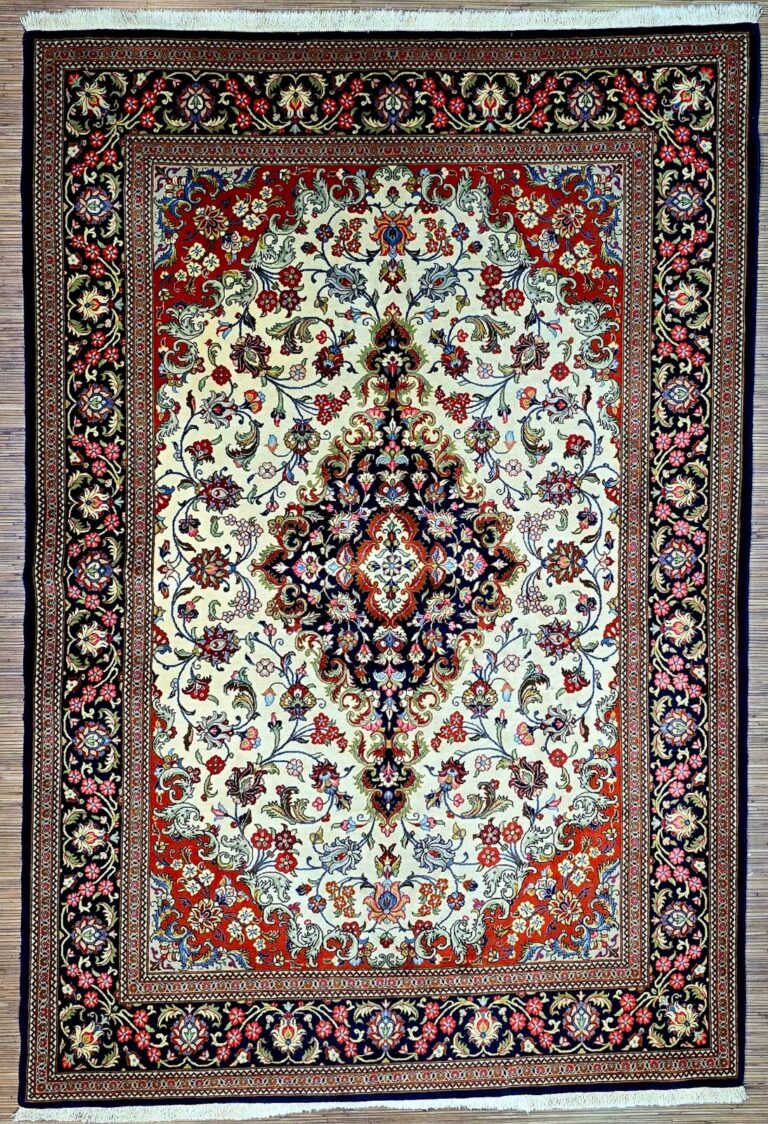
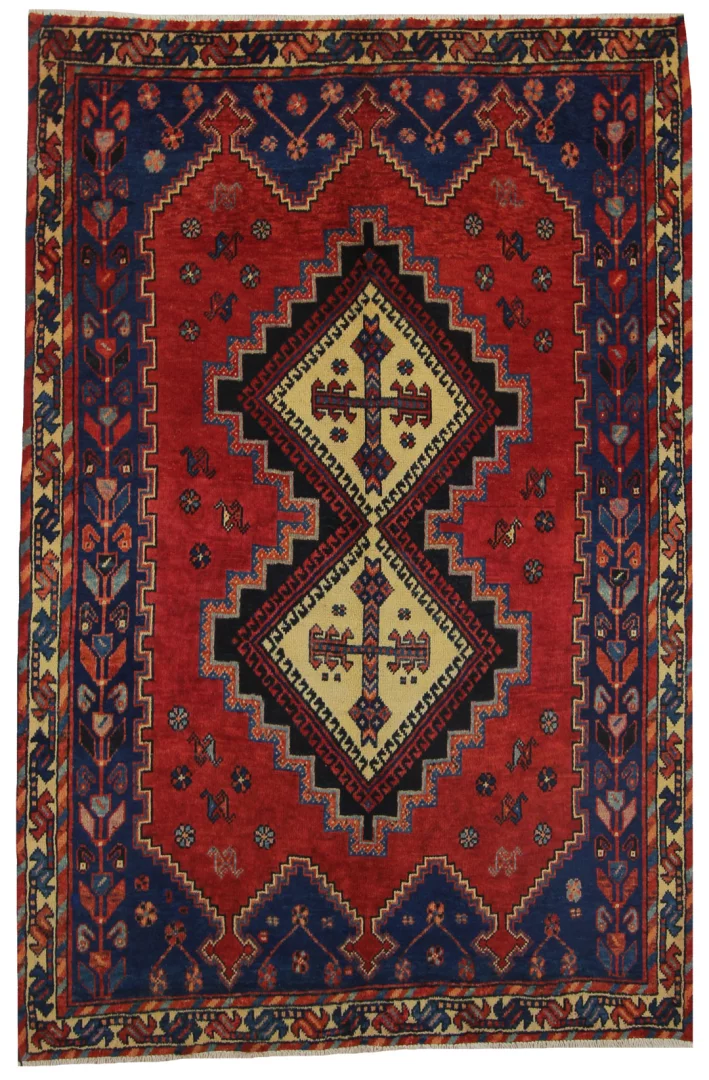
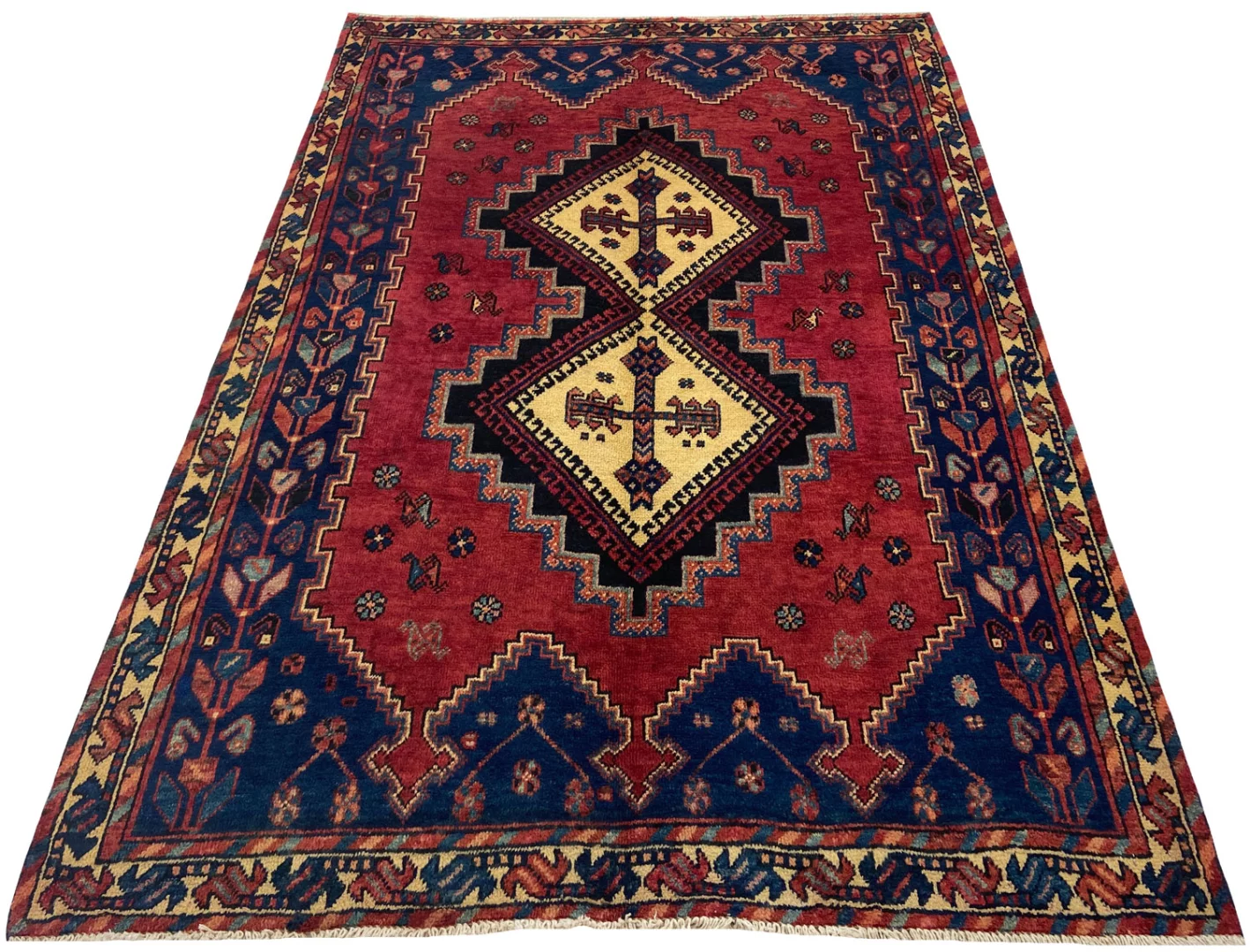
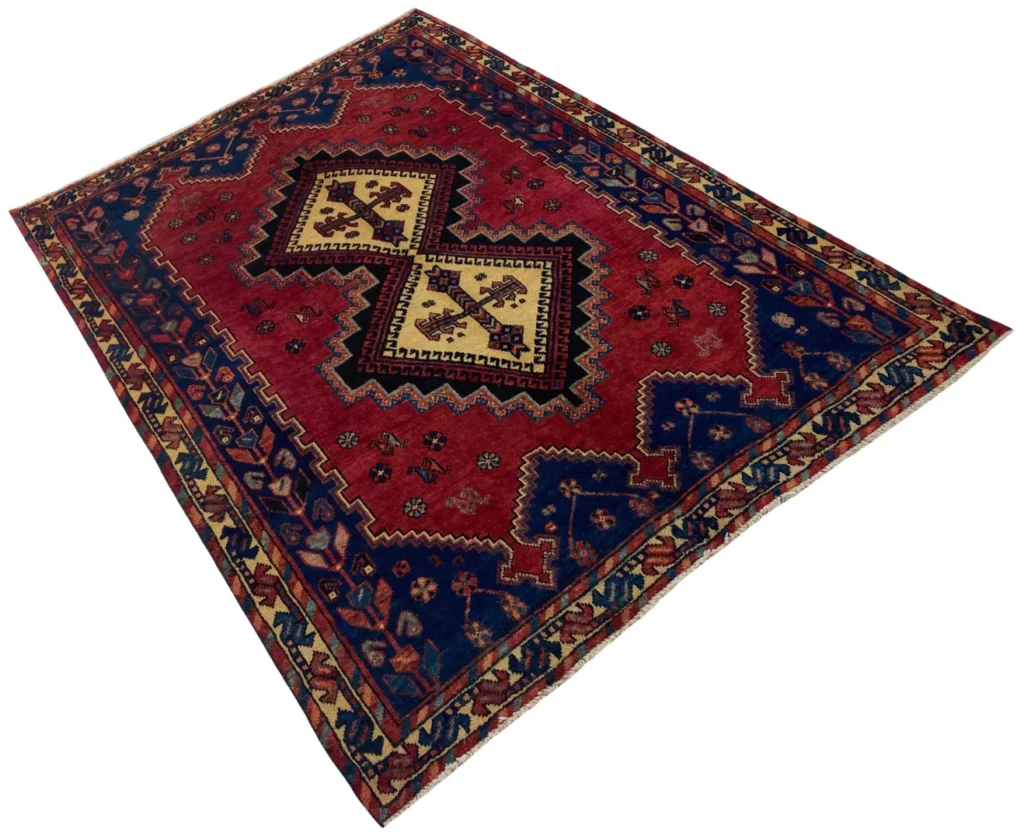
Hand-knotted Sirjan Persian rug from southern Persia, Fars region | Material: Wool and cotton | Size: 215 x 142 cm | Pattern: Combination of high pile and Kilim | Condition: Very good
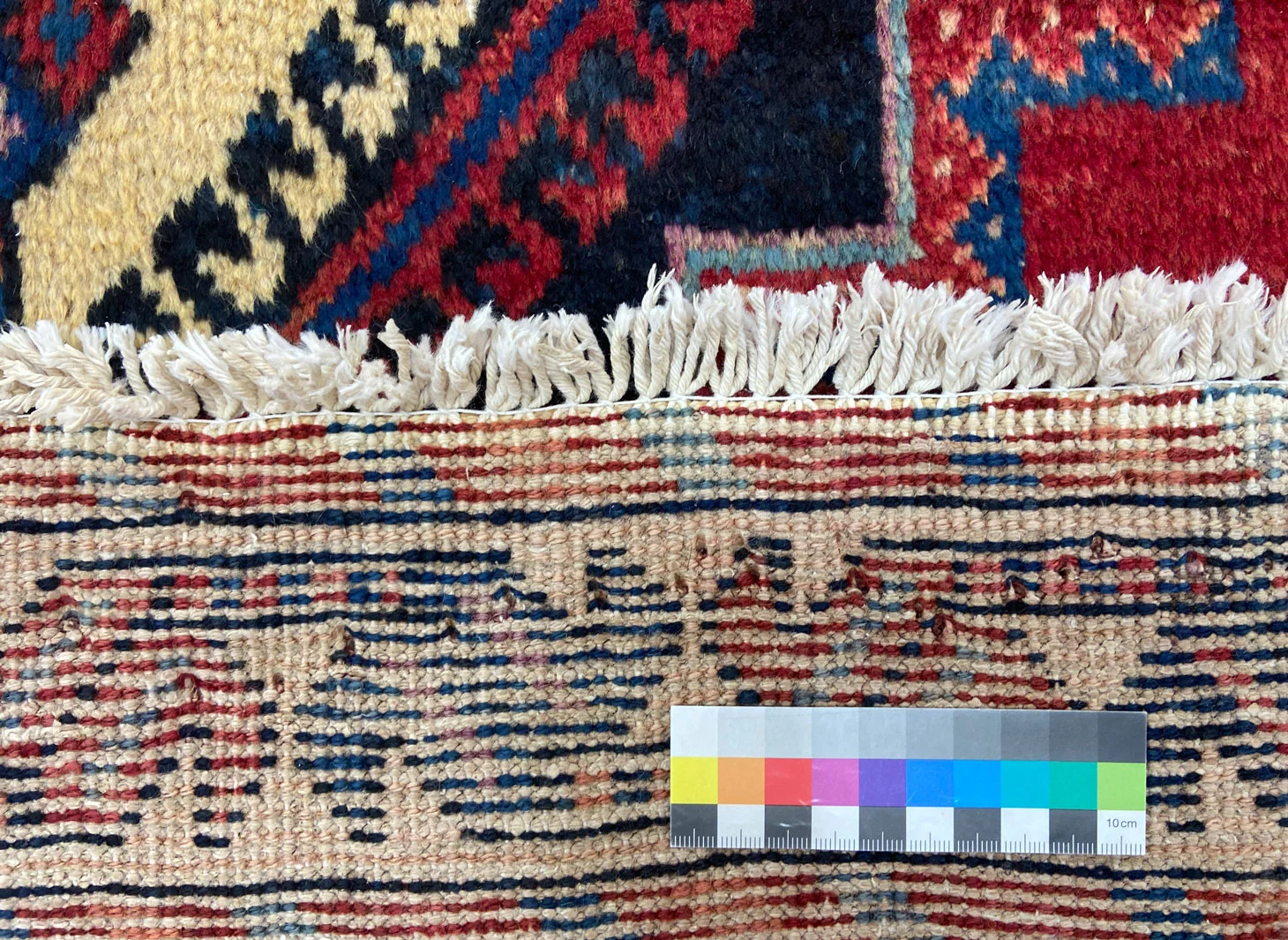
This Sirjan Persian rug is made from high-quality wool and cotton and is hand-knotted. Wool provides the principal textile character of the rug and is traditionally valued in rug making for its soft handle and durability. Cotton completes the stated material composition and is widely used in oriental rug production for its dependable structure and consistent handling.
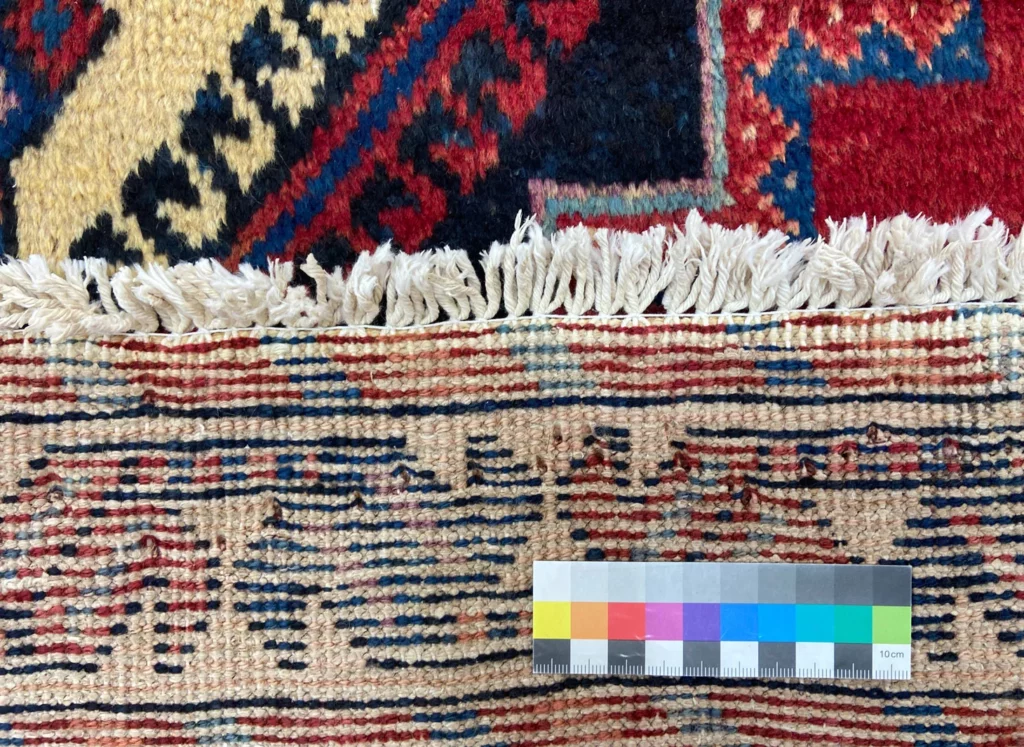
The construction combines high pile with Kilim sections. High pile creates a raised, tactile surface, while a Kilim is flat-woven and lacks the upright pile associated with knotted areas. The contrast is therefore present both visually and under the hand. In a hand-knotted rug, individual knots and carefully arranged weft and pile areas are built up by hand, making the production a sequence of precise textile operations rather than an uninterrupted machine-made surface.
For a Nimbaf rug from Sirjan, the meeting of knotting and flat weaving is an important part of the design language. Wool can develop a soft, dimensional presence in the high-pile areas, while the Kilim sections provide a flatter and more clearly defined counterpoint. The materials are consequently not merely listed as components; they are expressed through the different structures across the rug.
Origin and Tradition
Sirjan is located in southern Persia, in the Fars region, and is associated with a long tradition of rug making. Fars is one of the important cultural landscapes of Iran. The region is known not only for its rugs, but also for its scenery and rich cultural heritage. Within this setting, textile traditions developed that served practical purposes while also preserving local forms, working methods and decorative knowledge.
The rug-making tradition of Sirjan reaches back to the sixteenth century. This historical depth reflects knowledge passed from one generation to another: the selection and handling of wool, the preparation of a foundation, the building of motifs and the joining of different surface structures. Rugs from such a tradition are textile objects in which use, craft and regional identity are closely connected.
The name Nimbaf is used for a distinctive Sirjan form in which contrasting surfaces are brought together. Here it refers to the combination of high pile and Kilim. The term therefore points to a construction that is neither exclusively knotted across the whole field nor exclusively flat-woven. Its appearance depends on the relationship between the raised areas and the sections woven without pile.
Hand-knotted rugs from the Iranian cultural sphere are made through many successive steps. A textile foundation is prepared, knots are inserted, and weft threads secure the developing structure. Where the design includes Kilim areas, flat-woven passages are made as part of the same overall composition. Maintaining an even tension and following the intended pattern require close attention throughout the work. This method gives hand-knotted rugs the individual character of a piece made through direct manual decisions.
Sirjan forms part of a wider Persian rug landscape that includes several neighboring and related traditions. Kerman rugs are known for fine patterns, intricate designs and lively colors. Shiraz rugs often combine traditional motifs with a more rustic character. These comparisons place Sirjan within a broader regional context, but they do not change the origin of this rug. This particular piece is from Sirjan in southern Persia, in the Fars region.
The preservation of hand-knotting traditions depends on specialist workshops and makers who maintain knowledge of materials, structures and pattern arrangement. In connection with Sirjan rugs, the names Mehrdad and Khosravi are also cited for quality and for their commitment to preserving traditional knotting techniques. Such expertise includes the handling of wool and cotton, the development of the pattern and the controlled transition between high-pile and flat-woven sections.
Regional rug traditions are not defined by a single design alone. They encompass different approaches to composition, color and surface. A Nimbaf construction gives this wider tradition a particular technical direction because the relief of the pile and the plane of the Kilim become part of the visual vocabulary. The result remains rooted in the textile culture of Fars while retaining the individuality of a hand-made object.
Design and Pattern
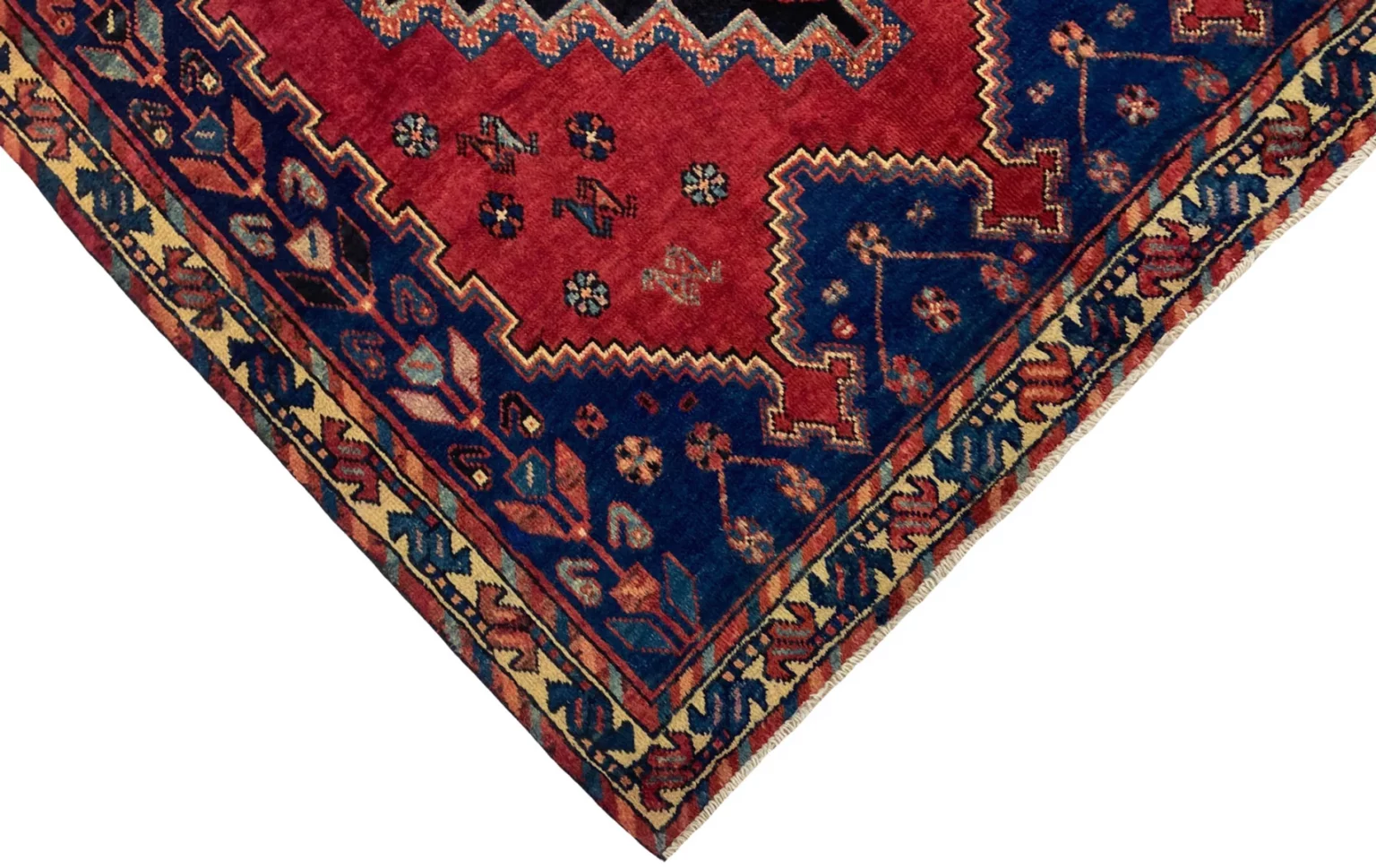
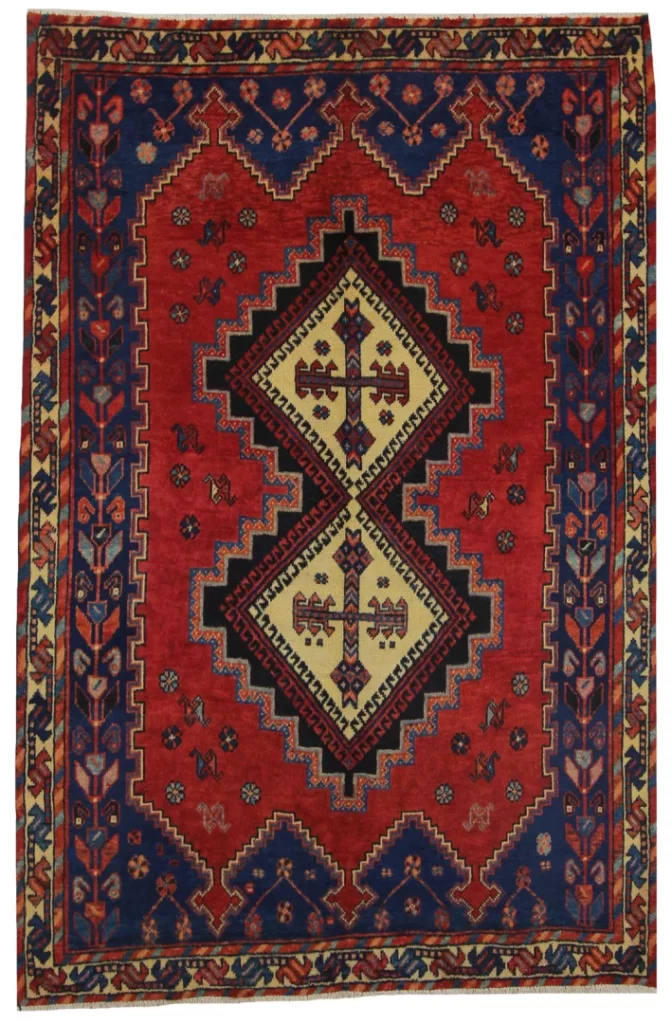
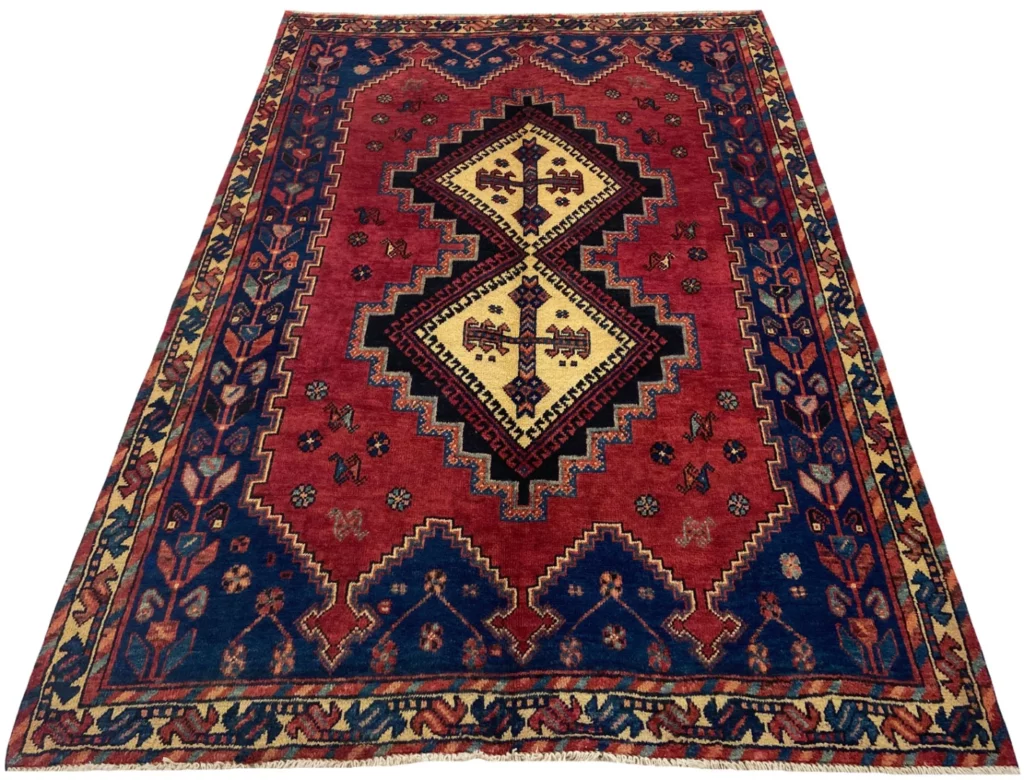
The design of this Sirjan rug is based on a combination of high pile and Kilim. That combination changes how the composition is read. Raised areas stand forward from the flat-woven sections, creating a visible difference in level and texture. The description of this rug identifies the result as a unique three-dimensional design. Its dimensional effect is therefore created by the construction itself, not by a purely printed or drawn illusion.
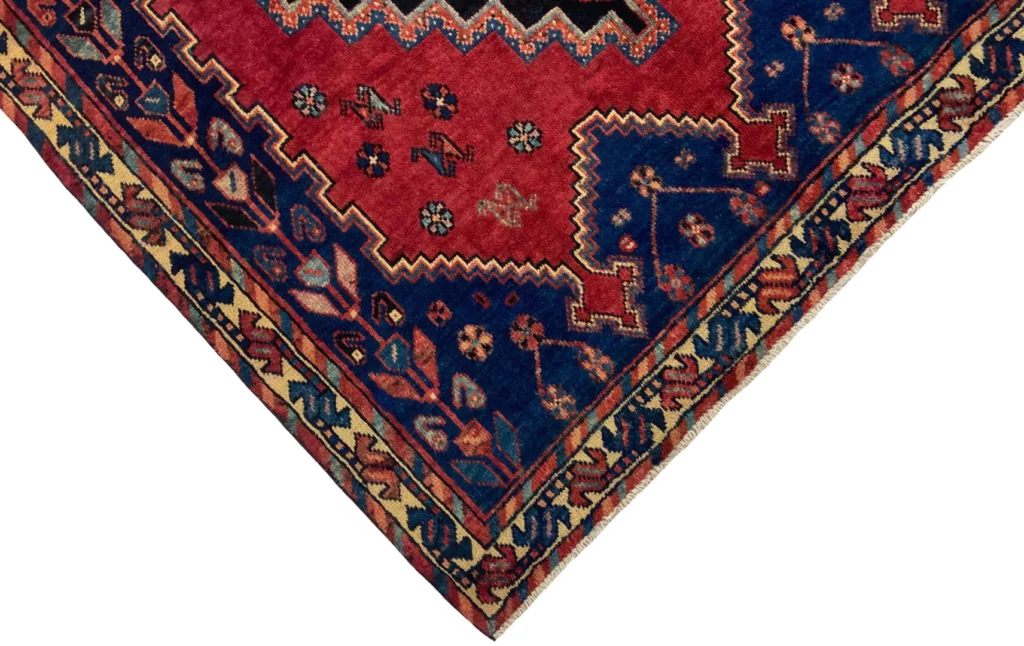
Sirjan rugs are known for patterns that combine geometric forms with floral motifs. Geometry brings order, rhythm and clearly recognizable boundaries to a composition. Floral elements introduce organic lines and ornamental movement. The two vocabularies may be placed beside one another or integrated into a single arrangement. Together they allow a pattern to appear structured without becoming visually rigid.
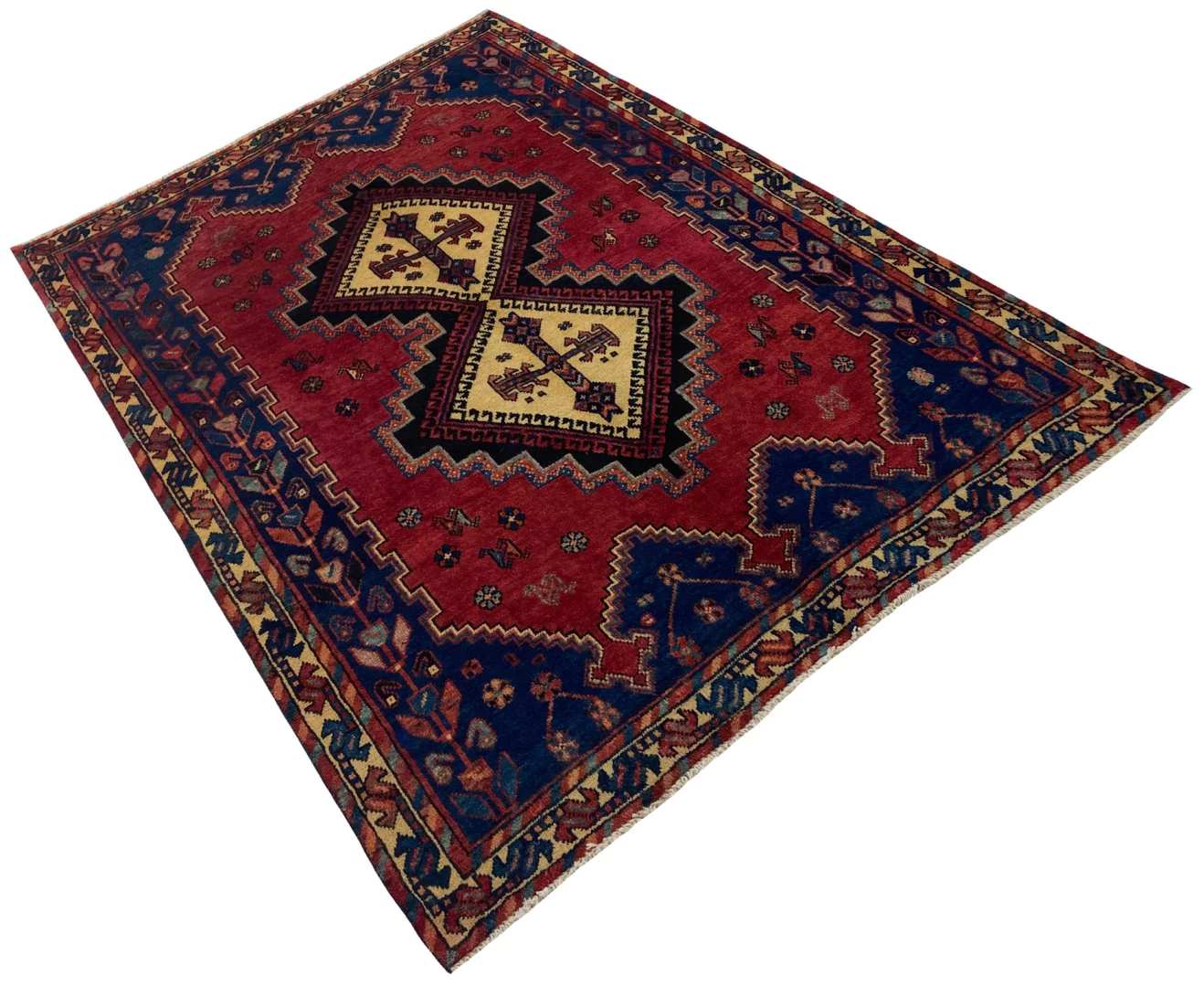
In a design with high-pile and Kilim areas, the surface contributes directly to the pattern. A motif is perceived through color and line, but also through the change from relief to flat weave. Light reaches raised pile differently from a compact Kilim passage. As the viewing angle changes, small differences in contour, depth and shadow can become more apparent. This gives the design a tactile dimension in addition to its decorative one.
The color range associated with Sirjan rugs extends from gentle earth tones to vivid accents. Earth tones provide a restrained foundation and connect the palette with the natural character often associated with traditional Persian textiles. Brighter accents can mark individual motifs and establish a clearer contrast within the composition. Together with geometric and floral forms, this range can relate to different furnishing styles without requiring a single fixed decorative setting.
The pattern traditions of Fars are varied and have developed through the interaction of regional symbols, inherited ornament and individual workshop practice. A rug pattern is consequently more than a repeated decoration. It is also shaped by the chosen knotting method, the response of the material and the way outlines are built during production. With a Nimbaf rug, the surface structure adds another level of distinction because pile and flat weave participate in the organization of the design.
Kilim refers to a flat-woven textile structure. Unlike knotted pile, it does not produce upright tufts, but a compact woven surface. This technical difference explains why a Kilim section looks and feels different from a high-pile passage within the same rug. The change between the two methods makes the three-dimensional character legible and gives the pattern a varied surface rhythm.
Related Persian traditions offer useful points of comparison. Kerman is associated with detailed patterns, complex compositions and lively color, while Shiraz often brings traditional motifs together with a rustic note. These examples help explain the broader setting in which Sirjan rugs are understood. They are not alternative origins for this piece: its stated origin is Sirjan, southern Persia, in the Fars region.
Hand production also preserves the character of an individual working process. Even where a motif belongs to a recognized regional vocabulary, its placement and surface treatment are influenced by the making of the individual rug. In this piece, the visual identity comes from the relationship between the pattern, the high-pile relief and the flat-woven Kilim areas.
Special Features
This Sirjan Nimbaf rug combines high-pile and Kilim sections in a three-dimensional design. The changing surfaces are its defining structural feature. They make the composition perceptible not only through sight but also through touch. The stated use of high-quality wool and cotton and the hand-knotted production are further characteristics of the piece.
The rug is a one-off because it was made by hand. Its individual character results from the interaction of the material, the pattern and the different surface levels. Its condition is described as very good. The result is a hand-crafted piece that brings together an origin in Fars, a Nimbaf construction and a distinct relief effect.
FAQ
How should I care for my Sirjan rug?
Regular vacuuming helps remove loose dirt from the rug. Care should take the special high-pile and Kilim construction into account, since the two surfaces respond differently to handling. Occasional professional cleaning supports long-term care. Direct sunlight should be avoided to reduce the risk of fading. During cleaning, the raised pile and the flat-woven areas should be treated as parts of one hand-crafted textile with different surface properties.
Where do the materials for the Sirjan rug come from?
Wool and cotton are listed as the materials for this rug. In Sirjan rug making, the wool often comes from the region where the rugs are knotted. High-quality wool is associated with a soft handle and long service life. Cotton completes the material composition. The final textile character also depends on how these materials are incorporated into the hand-knotted high pile and the Kilim sections.
What makes Sirjan rugs unique?
The combination of high-pile and pileless, flat-woven Kilim areas is a central characteristic. It creates a three-dimensional surface that looks and feels different from a rug made with one uniform structure. Authentic patterns and colors reflect the cultural heritage of Fars. In this hand-made one-off, that regional design context is joined to an individual surface treatment created by the alternation of pile and Kilim.
To provide the best experiences, we use technologies like cookies to store and/or access device information. Consenting to these technologies will allow us to process data such as browsing behavior or unique IDs on this site. Not consenting or withdrawing consent, may adversely affect certain features and functions.
Functional Always active
The technical storage or access is strictly necessary for the legitimate purpose of enabling the use of a specific service explicitly requested by the subscriber or user, or for the sole purpose of carrying out the transmission of a communication over an electronic communications network.
Preferences
The technical storage or access is necessary for the legitimate purpose of storing preferences that are not requested by the subscriber or user.
Statistics
The technical storage or access that is used exclusively for statistical purposes.The technical storage or access that is used exclusively for anonymous statistical purposes. Without a subpoena, voluntary compliance on the part of your Internet Service Provider, or additional records from a third party, information stored or retrieved for this purpose alone cannot usually be used to identify you.
Marketing
The technical storage or access is required to create user profiles to send advertising, or to track the user on a website or across several websites for similar marketing purposes.
 SECURE PAYMENT
 SHIPPING PARTNERS