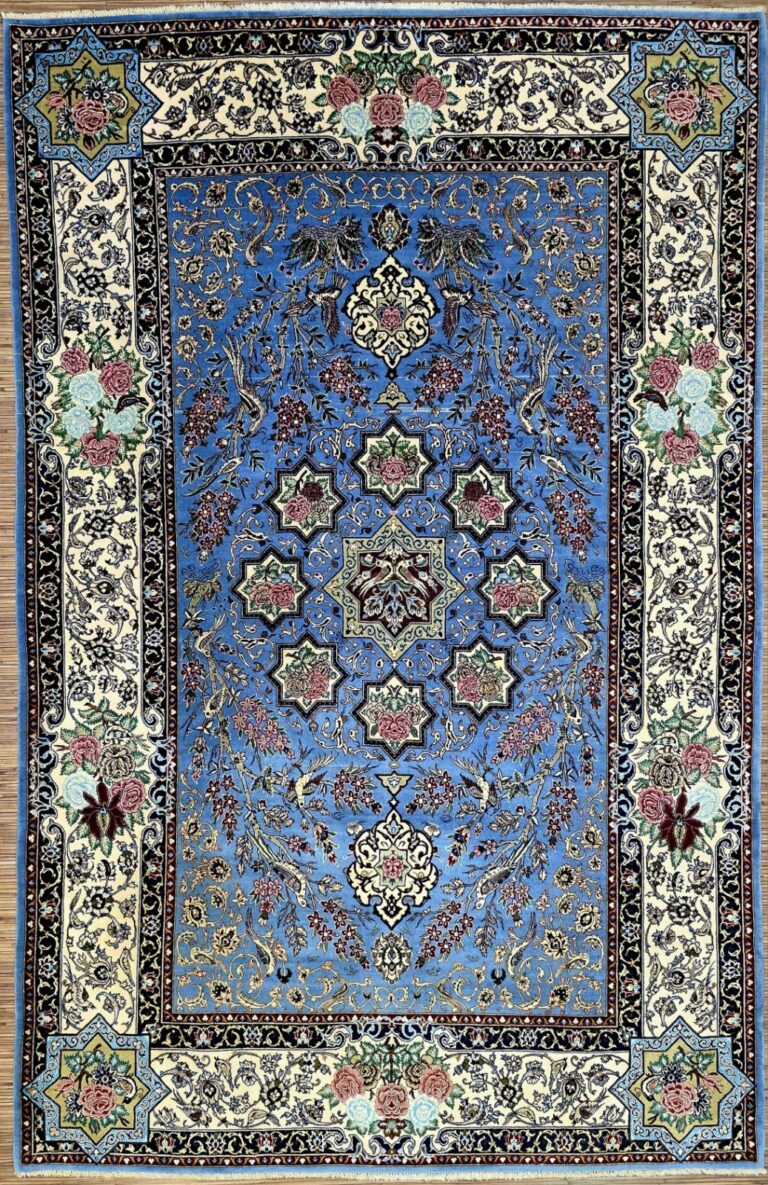
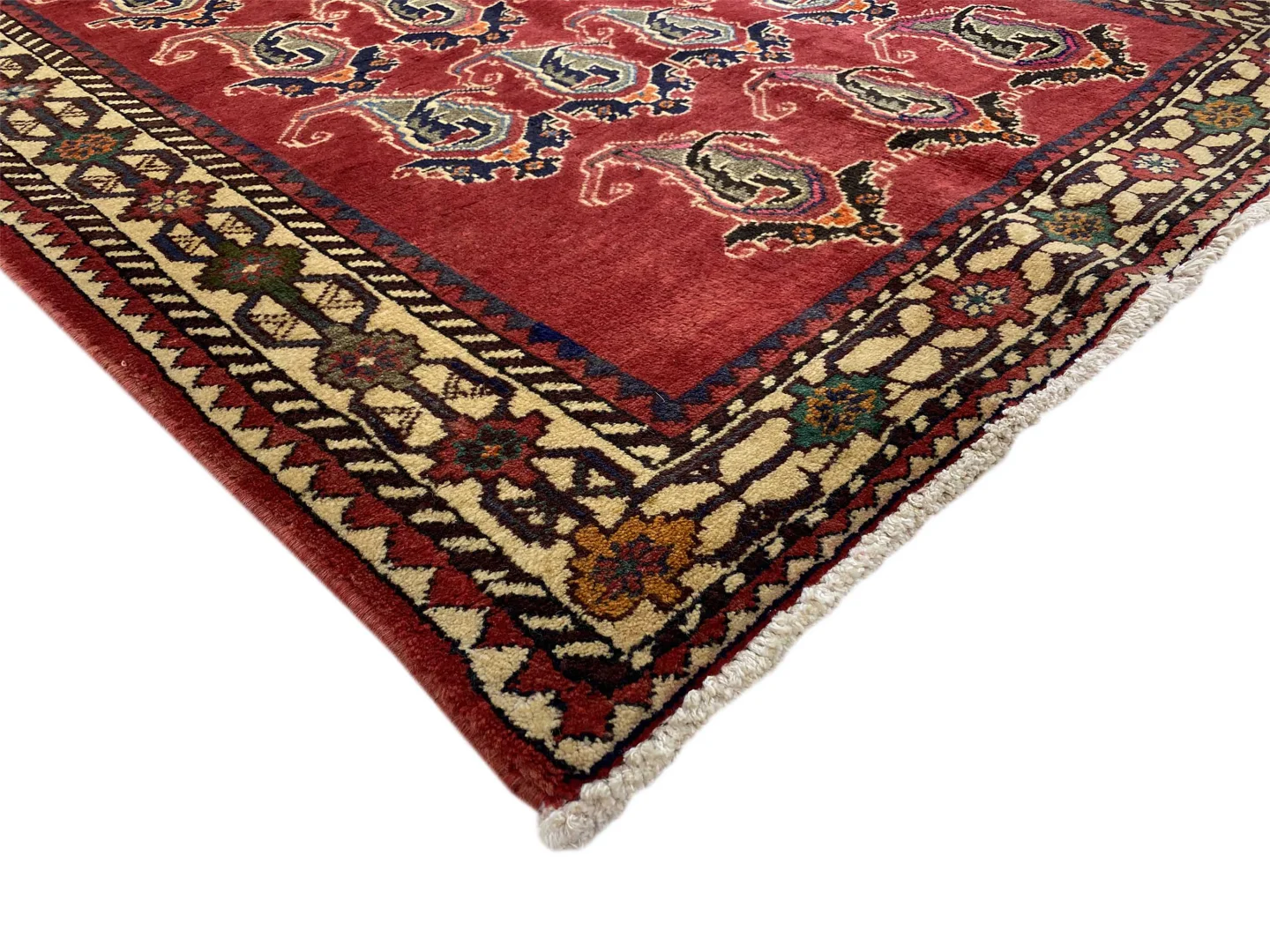
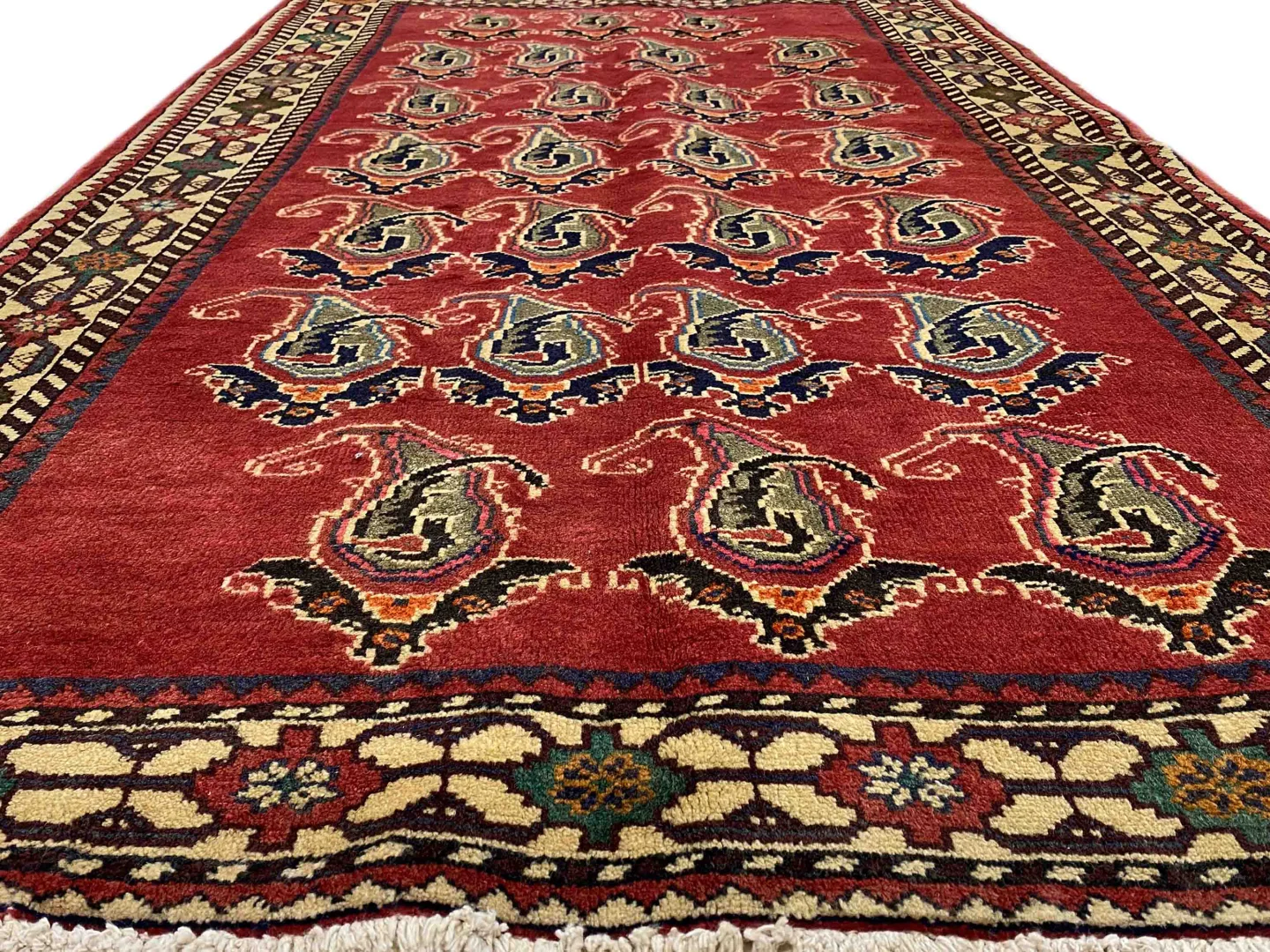
This Shiraz Persian rug is hand-knotted and made with high-quality virgin wool. Wool is valued in Shiraz rug making for its durability and natural sheen. The wool is carefully selected and is often obtained from sheep raised in the region. It is described as soft and pleasant to the touch, making it suitable for the traditional production of woven floor coverings.
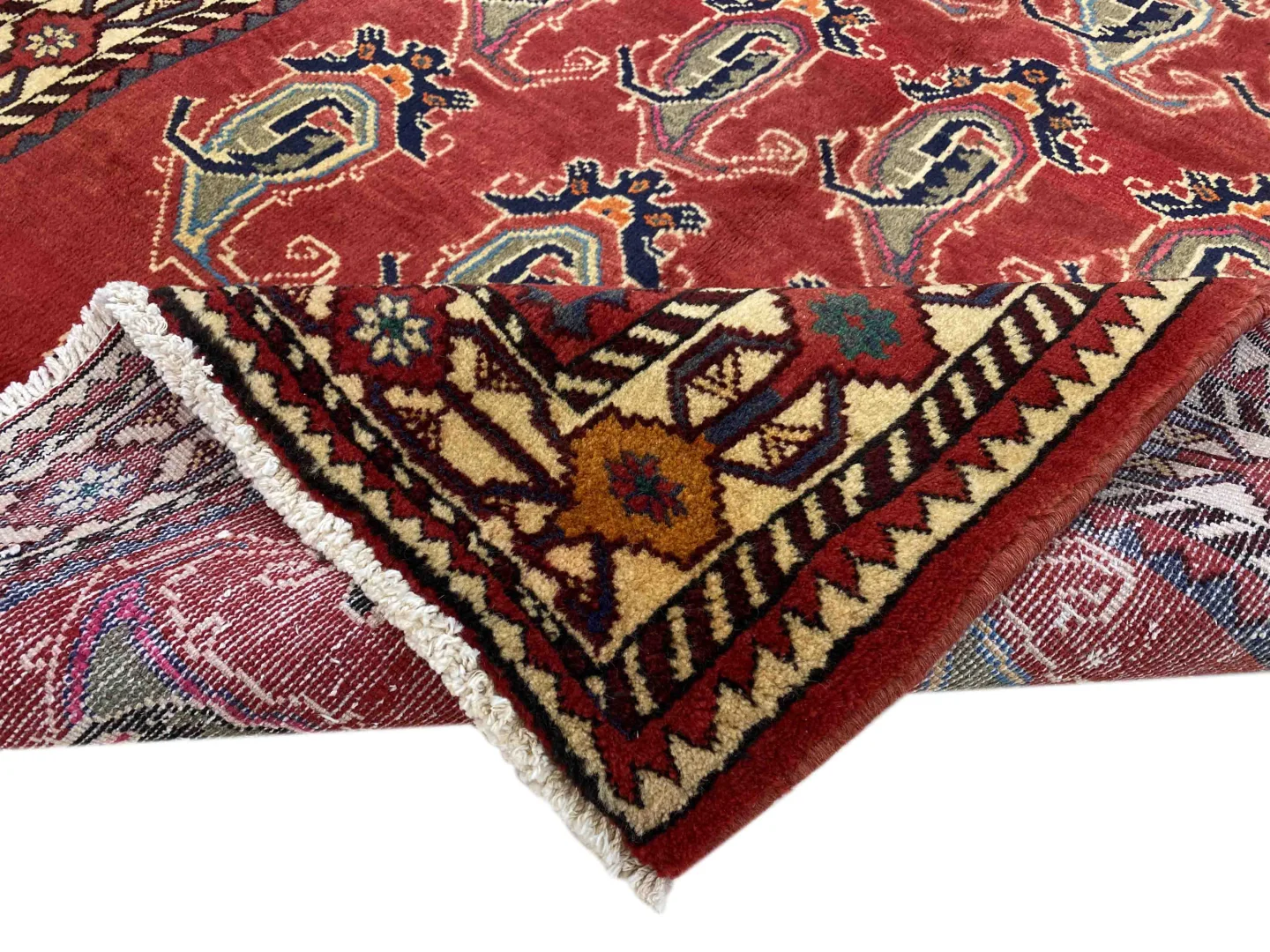
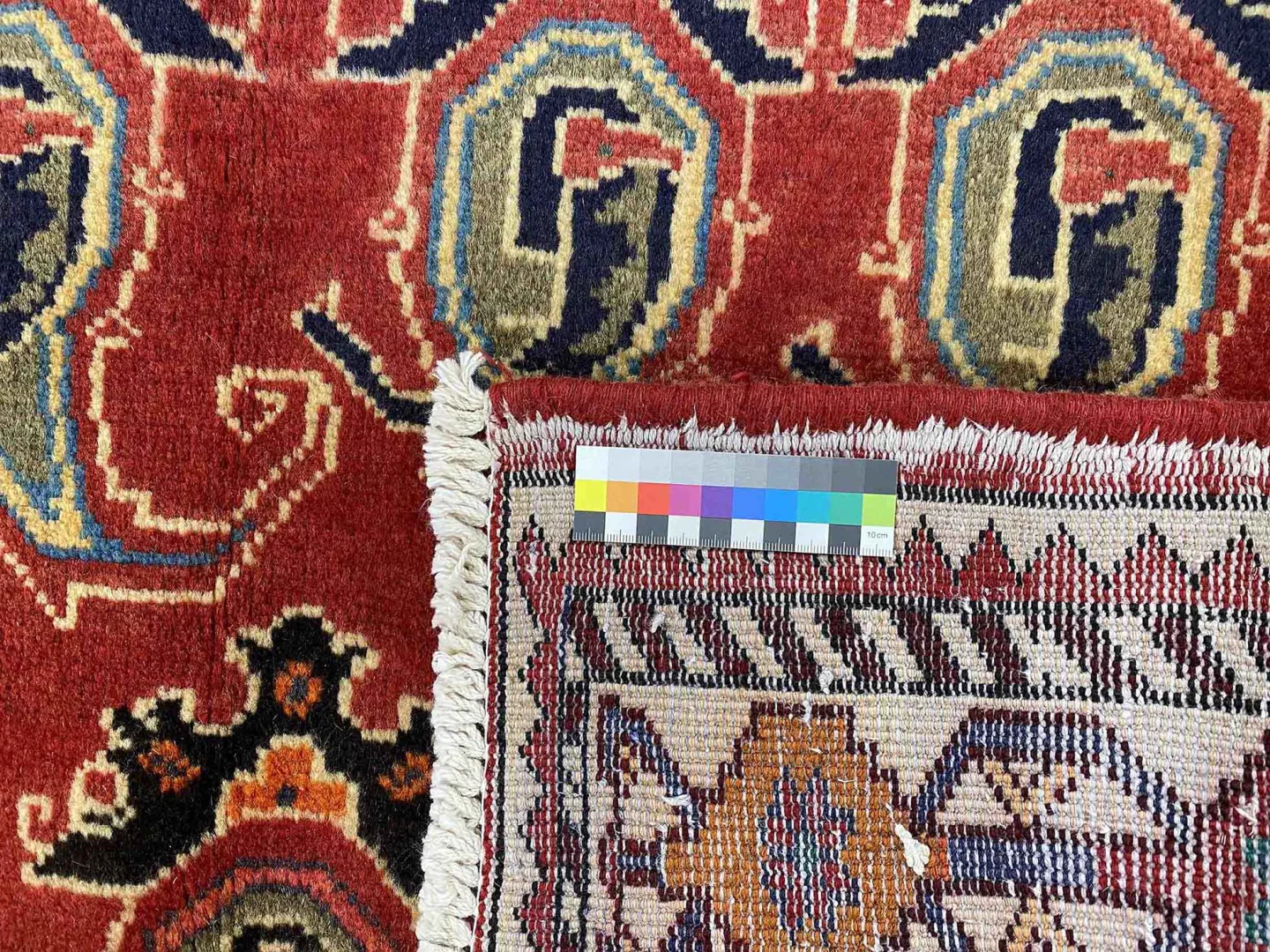
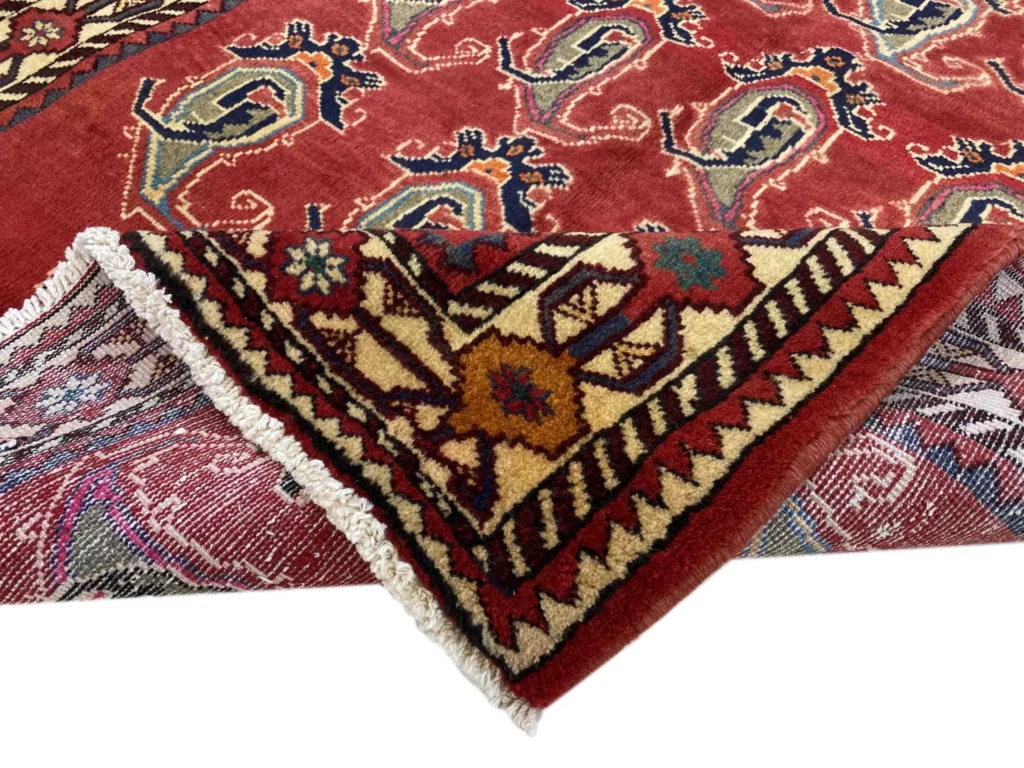
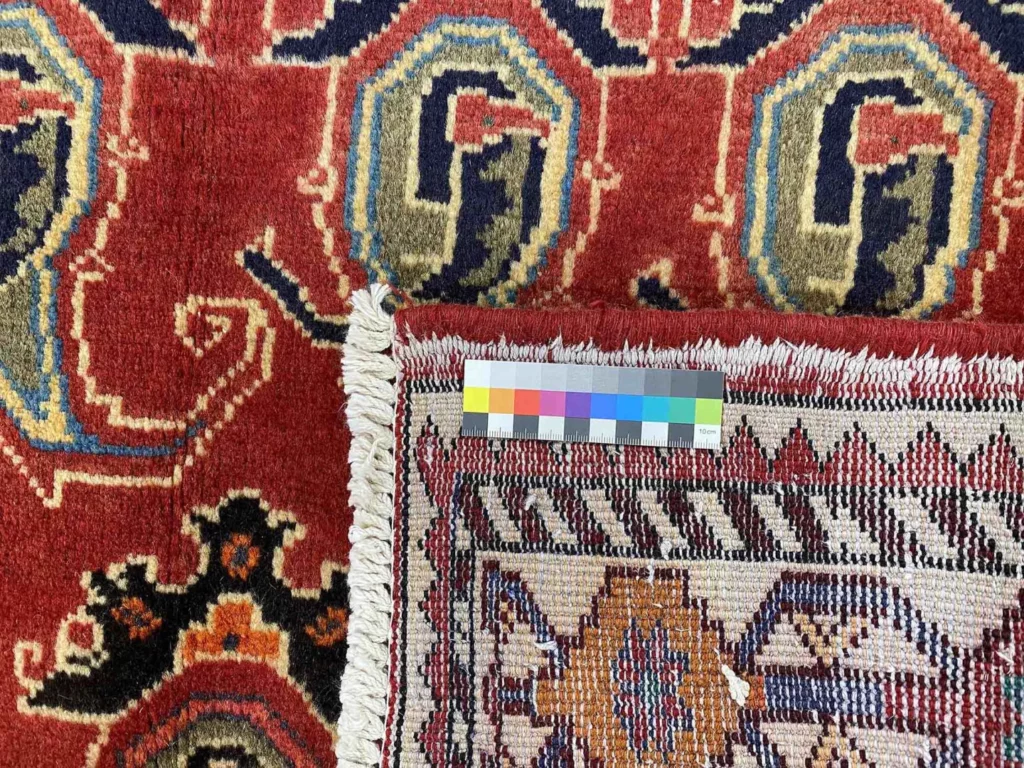
Shiraz rugs generally have a knot density between 100,000 and 250,000 knots per square metre. This density supports a clearly defined surface and allows smaller ornamental details to be represented. In hand-knotting, individual knots are tied by hand into the underlying structure. The visible field is therefore built through a sequence of separate manual actions rather than through a uniform industrial process.
The combination of virgin wool and hand-knotting belongs to the established craft tradition associated with this rug group. Wool contributes to the character of the pile and is also valued for its resilience in traditional rug production. The condition of this particular rug is described as excellent. No additional fibre or backing material is specified for this piece.
Origin and Tradition
The rug originates in Shiraz, Iran. Shiraz lies in the historic region of Fars and is closely associated with the cultural history of south-western Iran. The area is known for important historic sites, including Persepolis, the ancient ruined city. This setting provides the wider cultural context for understanding the weaving traditions connected with Shiraz.
Shiraz rugs are associated with nomadic tribes in the region. Their skills have been passed down through generations and include practical knowledge of wool, colour, knotting and geometric design. Weaving in this context is more than a production method: it is part of a textile culture in which forms, techniques and visual conventions are preserved within communities.
Fars contains several distinct rug traditions. Nomadic pieces from the region can have an individual character while retaining recurring elements of local ornament. Shiraz rugs bring together handcraft, the use of familiar regional wool qualities and a design language in which geometric organisation plays an important role. The name Shiraz identifies the stated origin of this rug; it should not be replaced by the name of another regional group.
Qashqai rugs are another recognised tradition from Fars and are also associated with nomadic culture, geometric patterns and lively colour. Gabbeh rugs form another part of the regional landscape and are known for simpler designs and thick, soft wool. Rugs associated with Bijan and Kerman represent further Iranian styles with their own approaches to pattern and workmanship. These comparisons describe the surrounding tradition, but they do not change this rug’s stated origin as Shiraz.
Iranian rug culture joins everyday use with inherited visual language. A hand-knotted rug can serve a practical function while also preserving regional knowledge through its material, construction and ornament. For Shiraz rugs, the connection between wool, manual knotting and geometric design is central to the traditional identity of the group. The result is understood through its place within Fars and through the continuity of skills transmitted across generations.
Design and Pattern
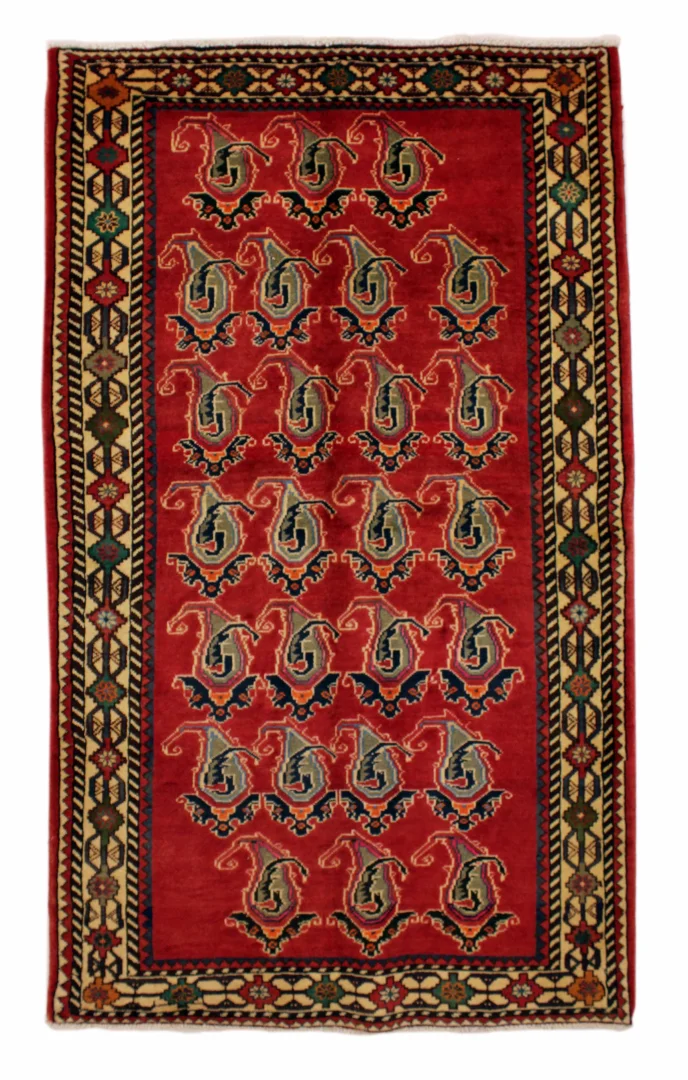
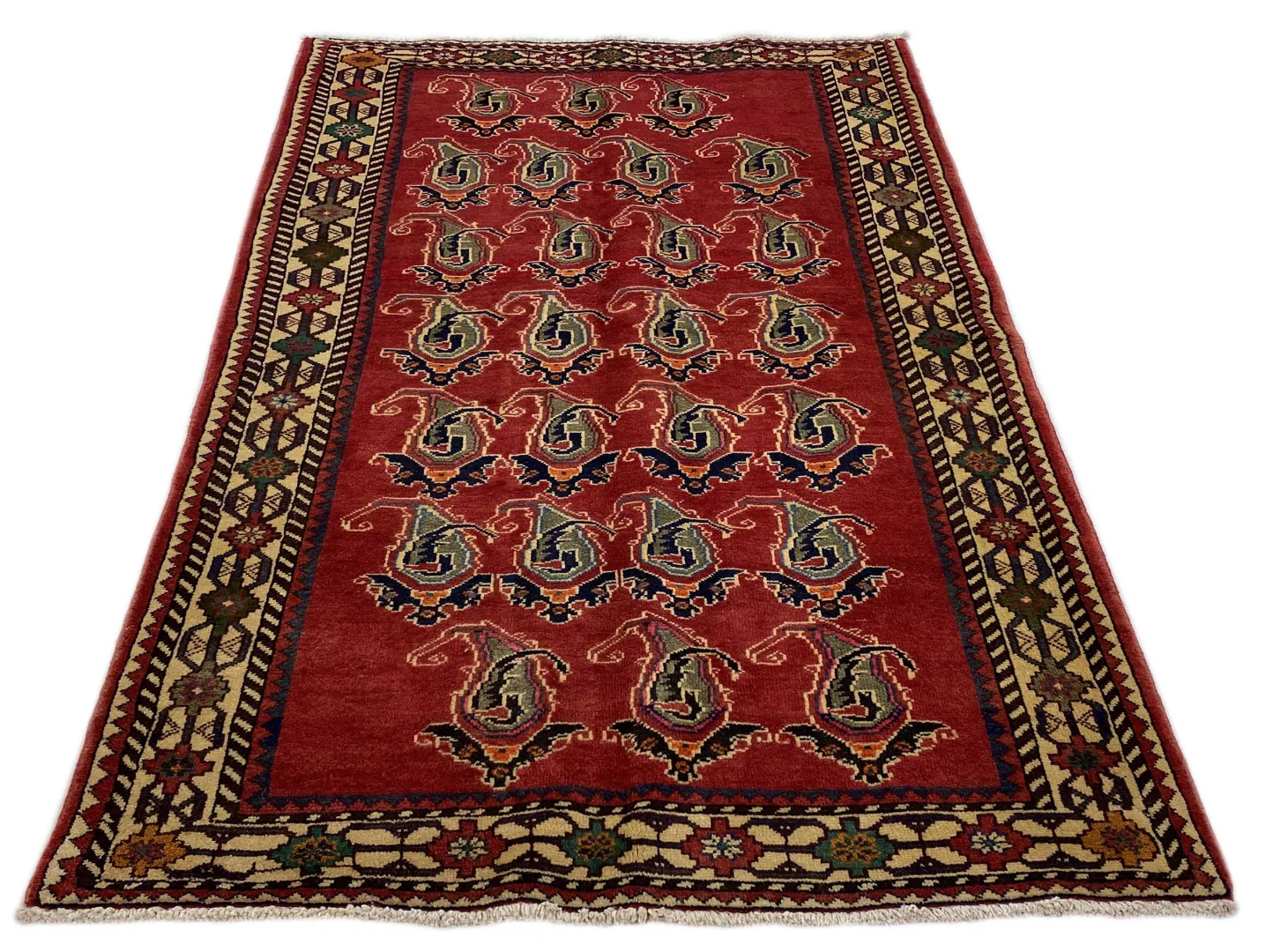
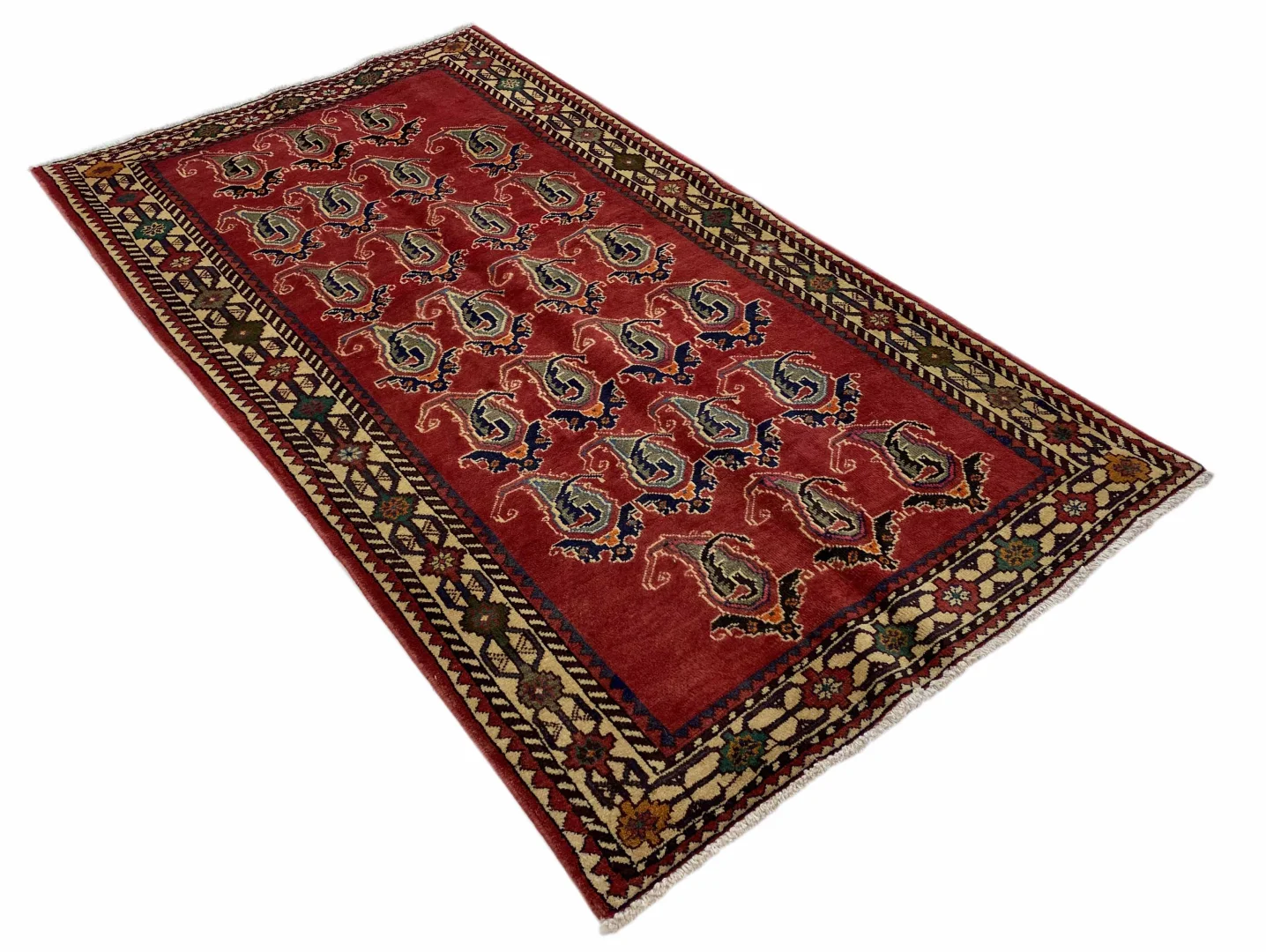
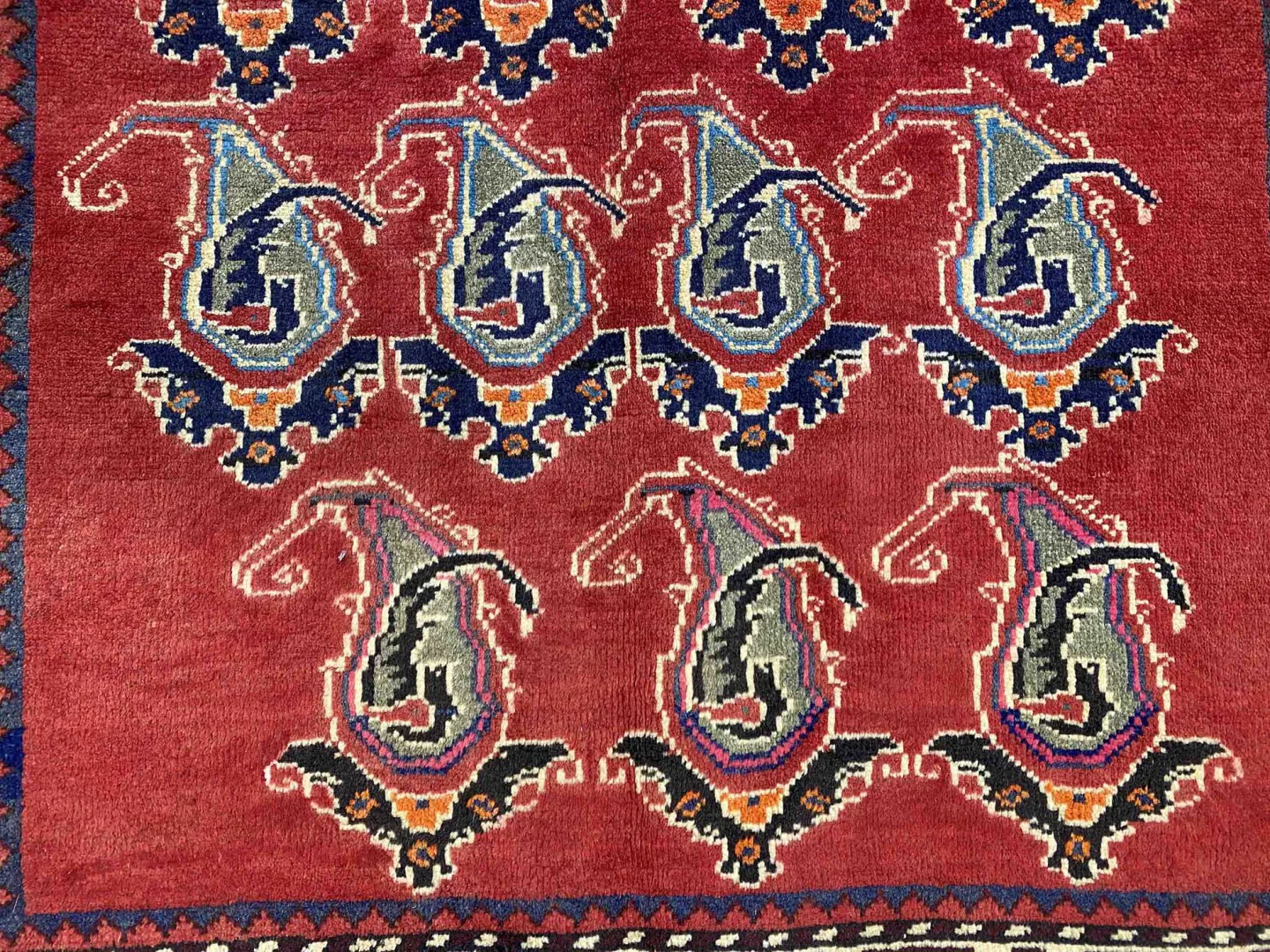
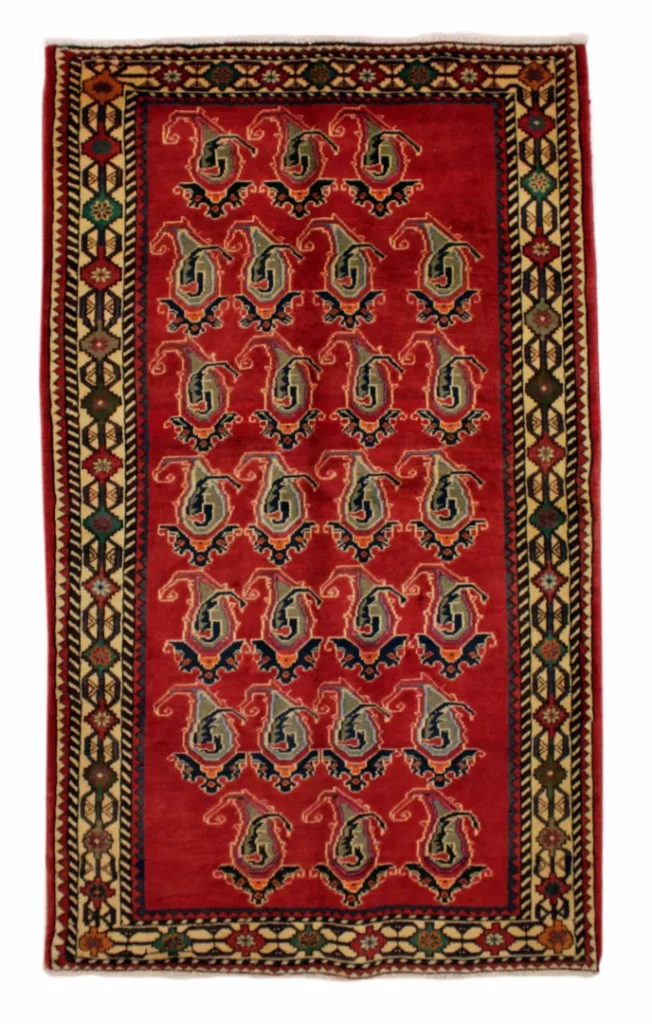
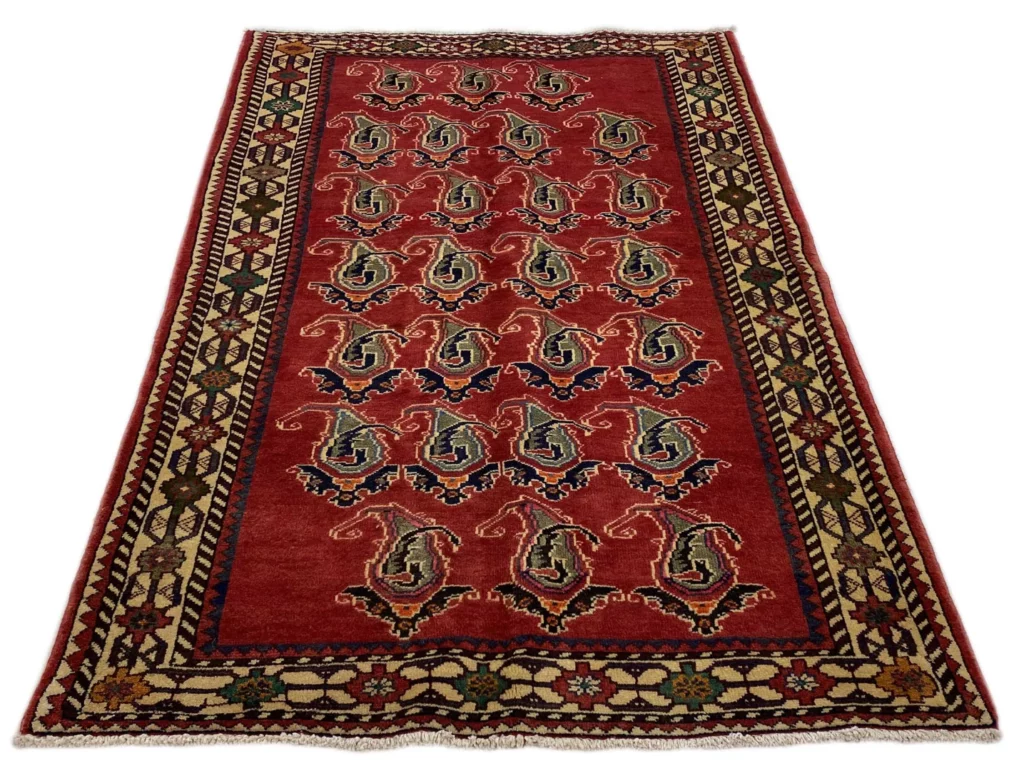
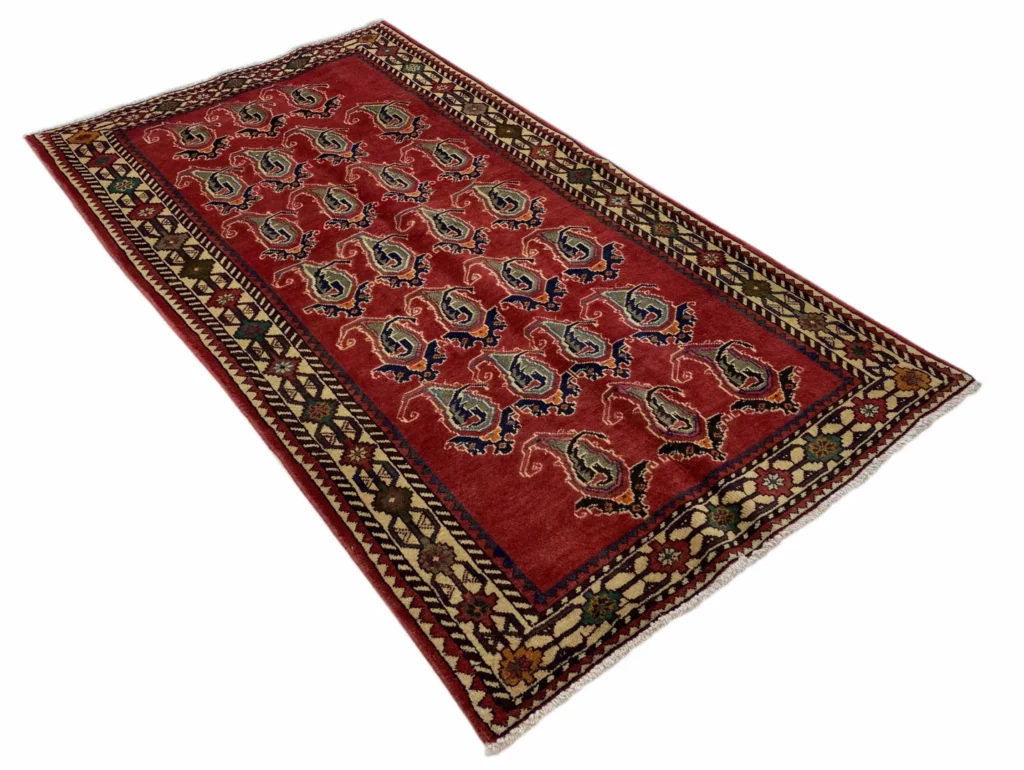
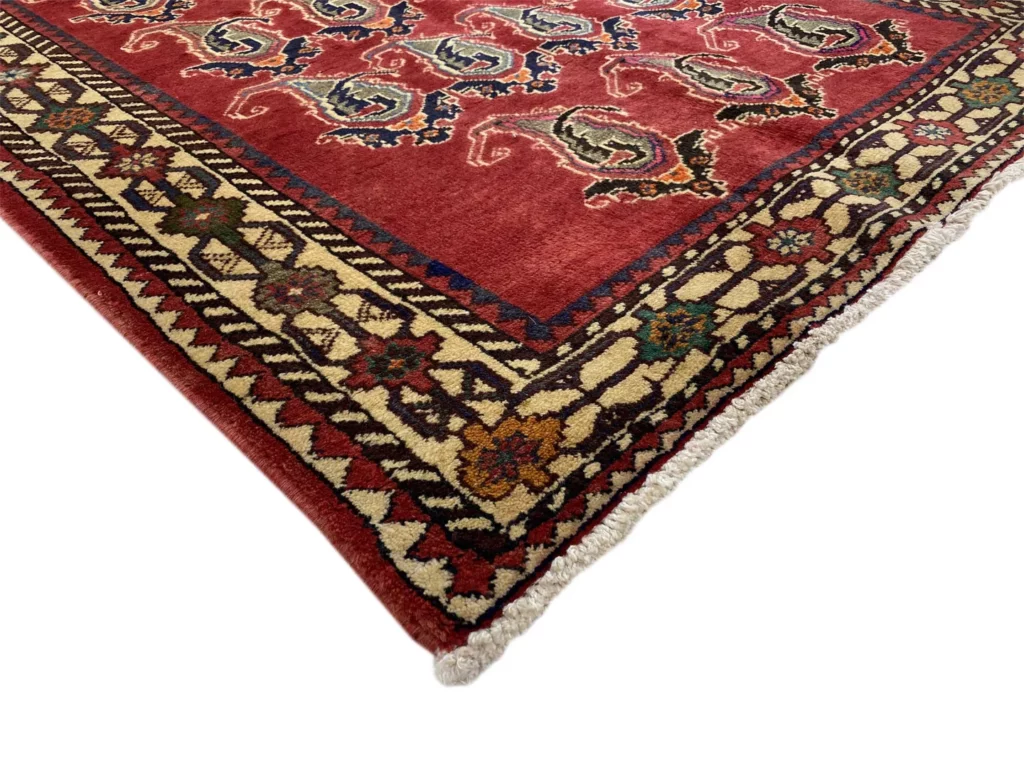
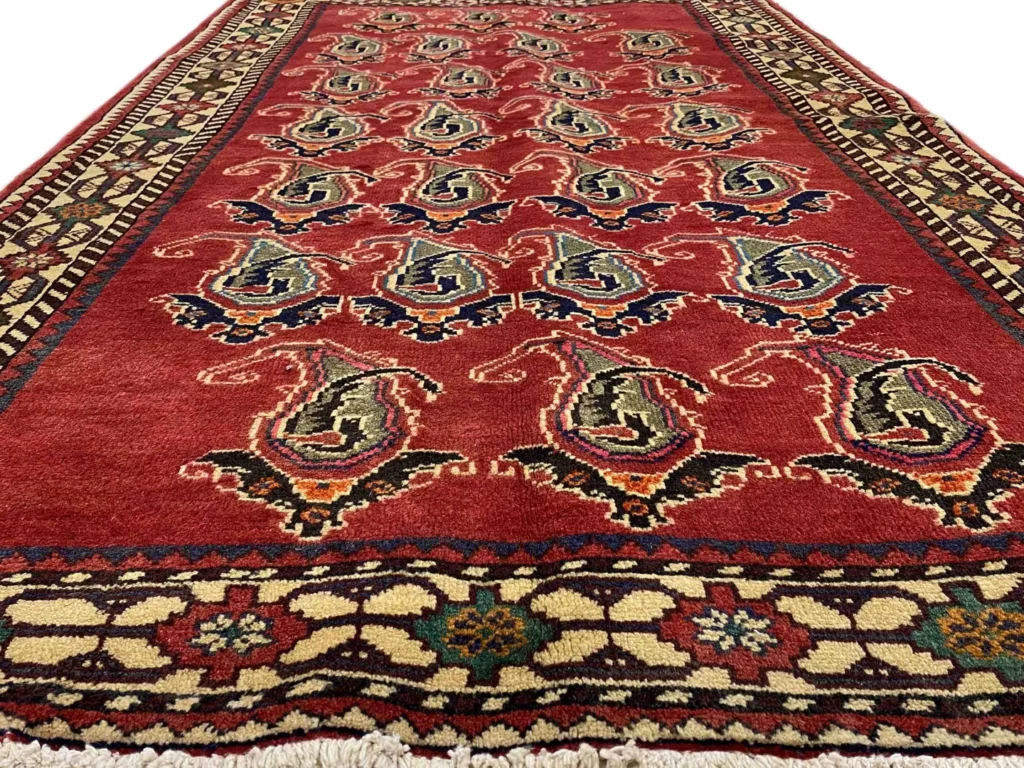
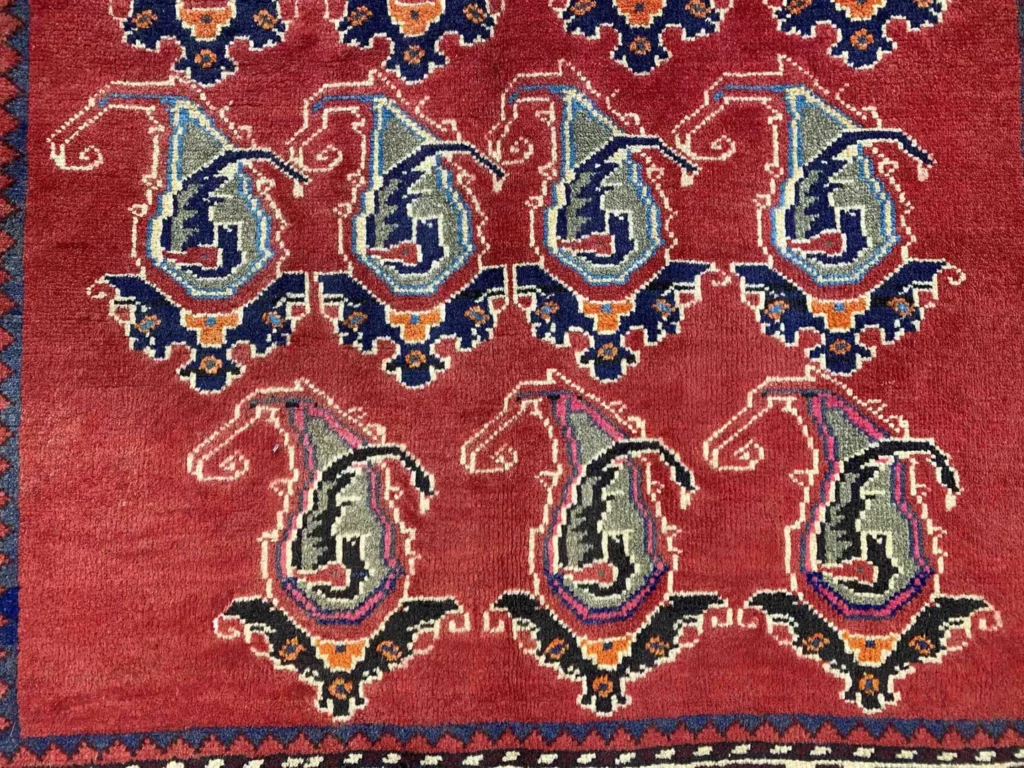
The pattern of this rug is described as geometric ornaments. Geometric design is an important feature in many rugs from Shiraz and the wider Fars region. Lines, angles, diamonds, panels and repeated contours can organise a field into recognisable sections. In this particular piece, geometric ornament is the stated pattern characteristic and forms the basis for describing its visual structure.
Traditional Shiraz rugs often use lively colours, with reds and browns frequently appearing in the regional palette. These hues are associated with the broader design tradition and can give geometric forms a warm visual presence. The product description identifies the pattern as geometric ornaments; it does not provide a more specific colour record for this individual rug. General colour associations with Shiraz designs should therefore be understood as background to the rug type.
Many designs from the region draw on nature. Flowers, plants and traditional symbols of nomadic culture may be simplified and incorporated into geometric arrangements. Natural references can thus appear as stylised shapes rather than literal illustrations. Repetition, symmetry and framing allow these elements to be combined into an ordered textile composition while retaining the character of hand-drawn and hand-knotted ornament.
Geometric ornament is particularly effective in nomadic weaving traditions because a limited set of forms can be repeated, reflected, joined or placed within borders. A design can develop from a central element, a sequence of smaller units or a field of related shapes. Hand-knotting gives these arrangements a textile quality: the pattern is created knot by knot, and the result belongs to a handmade process rather than to a mechanically reproduced surface.
The comparison with Qashqai rugs helps place Shiraz patterns within the Fars region, where geometric ornament and lively colours are also common. Gabbeh designs generally follow a simpler visual language and are linked with thicker, softer wool. Bijan and Kerman rugs show other directions within Iranian rug design. These related examples provide context for the regional pattern vocabulary without making any additional claim about the specific pattern of this Shiraz rug.
Special Features
The specifically stated features of this piece are its origin in Shiraz, Iran, its hand-knotted construction, its pile of high-quality virgin wool, its knot density of 100,000 to 250,000 knots per square metre and its pattern of geometric ornaments. Its condition is described as excellent. Together, these details identify the rug within the Shiraz tradition while keeping the description limited to the information given for this individual piece.
The wool is valued for durability and sheen, while the hand-knotting records the manual construction of the surface. The geometric ornaments provide the named design direction. No signature, production date or further individual provenance is provided, so no such details are added. The rug remains identifiable through its stated Iranian origin, material, technique, pattern and condition.
FAQ
How should I care for my Shiraz Persian rug?
Regular cleaning can be carried out with a vacuum cleaner without a brush attachment. This removes surface dust while avoiding unnecessary mechanical action on the pile. If a spill or mark occurs, it should be blotted promptly with a damp cloth rather than rubbed across the fibres. Special rug cleaners may also be used. Professional cleaning every few years can supplement routine care. With a hand-knotted wool rug, it is sensible to test any cleaning product in an inconspicuous area first and to avoid leaving the rug saturated with moisture.
Where do the materials for a Shiraz Persian rug come from?
The materials used for Shiraz rugs mainly come from the Fars region. The wool is obtained from sheep belonging to the nomadic tribes living in that area. This natural wool is known for softness and durability. For this rug, the pile is specified as high-quality virgin wool. The regional source of the wool is part of the traditional production context; no additional material component is stated for this particular piece.
What sizes are Shiraz Persian rugs available in?
Shiraz Persian rugs are made in a range of sizes. Smaller pieces can be used in entrance areas, while larger formats can be made for living rooms or dining rooms. This range allows the rug type to serve different spaces and functions. The rug described here has one specifically stated format, but Shiraz rugs as a group vary in their dimensions. The general availability of different sizes should therefore not be read as an additional measurement for this individual rug.
To provide the best experiences, we use technologies like cookies to store and/or access device information. Consenting to these technologies will allow us to process data such as browsing behavior or unique IDs on this site. Not consenting or withdrawing consent, may adversely affect certain features and functions.
Functional Always active
The technical storage or access is strictly necessary for the legitimate purpose of enabling the use of a specific service explicitly requested by the subscriber or user, or for the sole purpose of carrying out the transmission of a communication over an electronic communications network.
Preferences
The technical storage or access is necessary for the legitimate purpose of storing preferences that are not requested by the subscriber or user.
Statistics
The technical storage or access that is used exclusively for statistical purposes.The technical storage or access that is used exclusively for anonymous statistical purposes. Without a subpoena, voluntary compliance on the part of your Internet Service Provider, or additional records from a third party, information stored or retrieved for this purpose alone cannot usually be used to identify you.
Marketing
The technical storage or access is required to create user profiles to send advertising, or to track the user on a website or across several websites for similar marketing purposes.
 SECURE PAYMENT
 SHIPPING PARTNERS