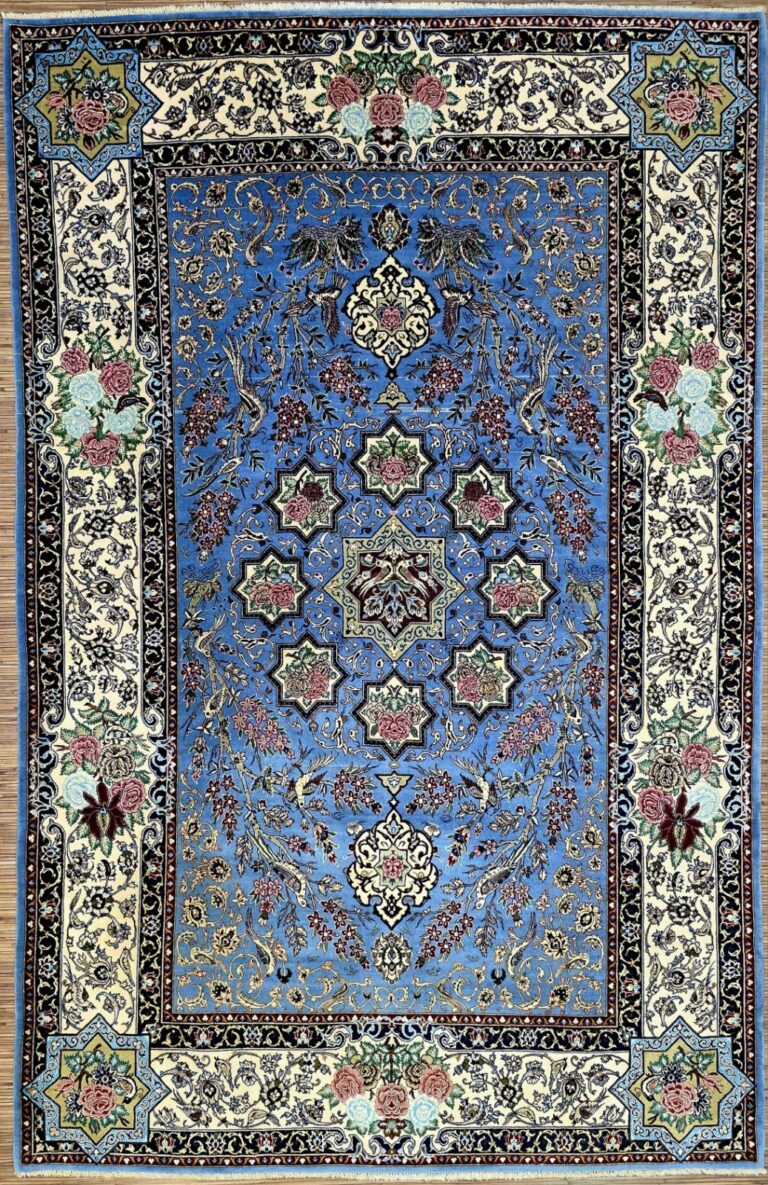
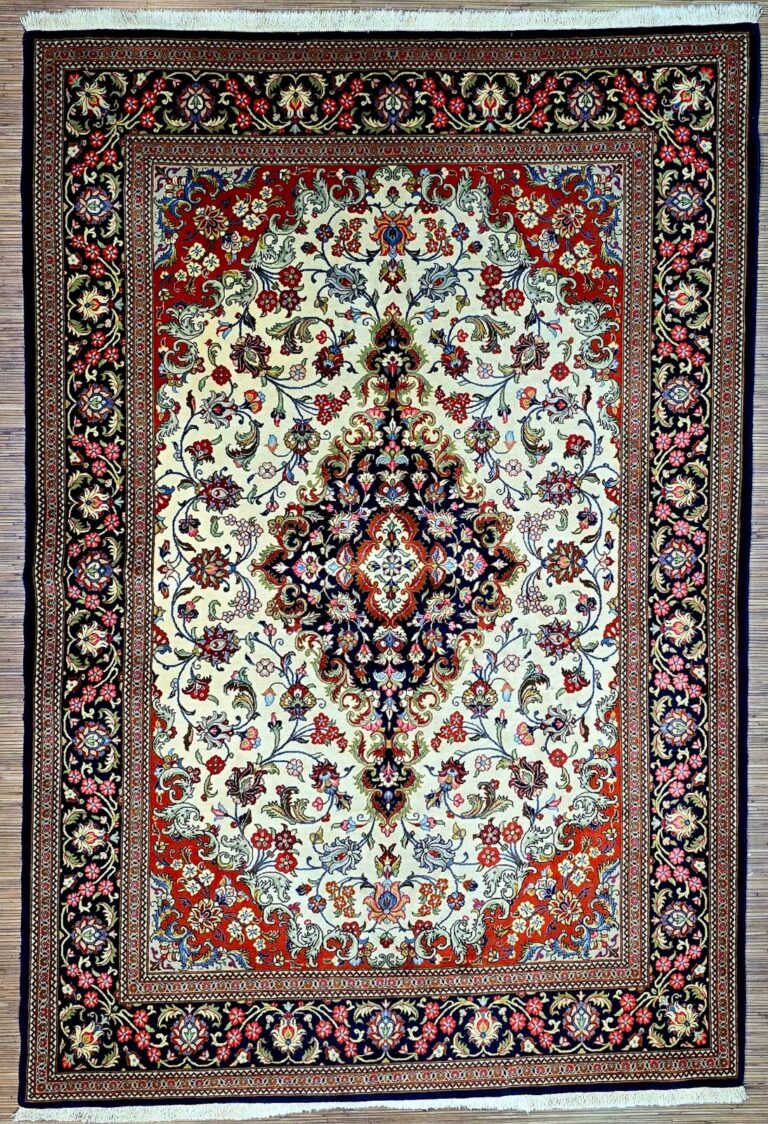
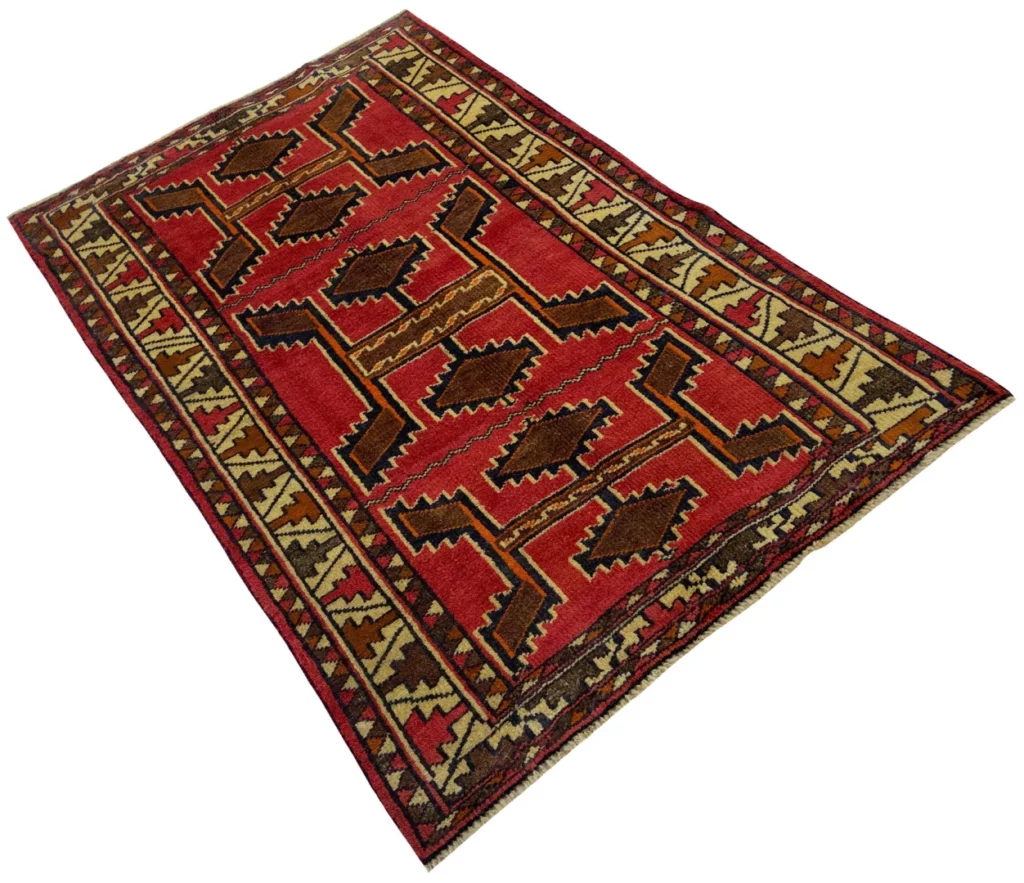
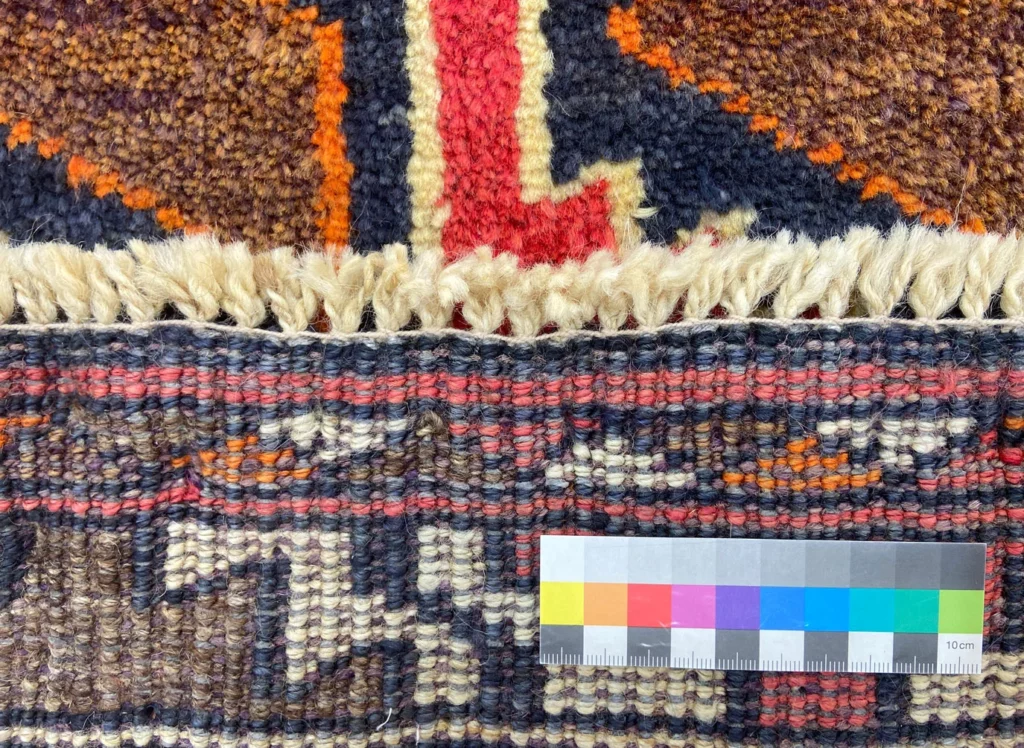
This hand-knotted Persian rug comes from Shiraz and has a pile made of high-quality pure new wool. In hand knotting, each knot is tied individually into the prepared foundation. The surface is built gradually from these separate knots rather than being printed onto a completed textile. The technique places the rug within the established craft tradition of Iranian oriental rugs.
Pure new wool is obtained from sheep fleece. Rug makers use it for its resilient fibres, comfortable handle and ability to absorb colour effectively. The pile determines how the surface feels and how the colours and ornaments appear. The natural character of the wool is therefore one of the central material features of this piece.
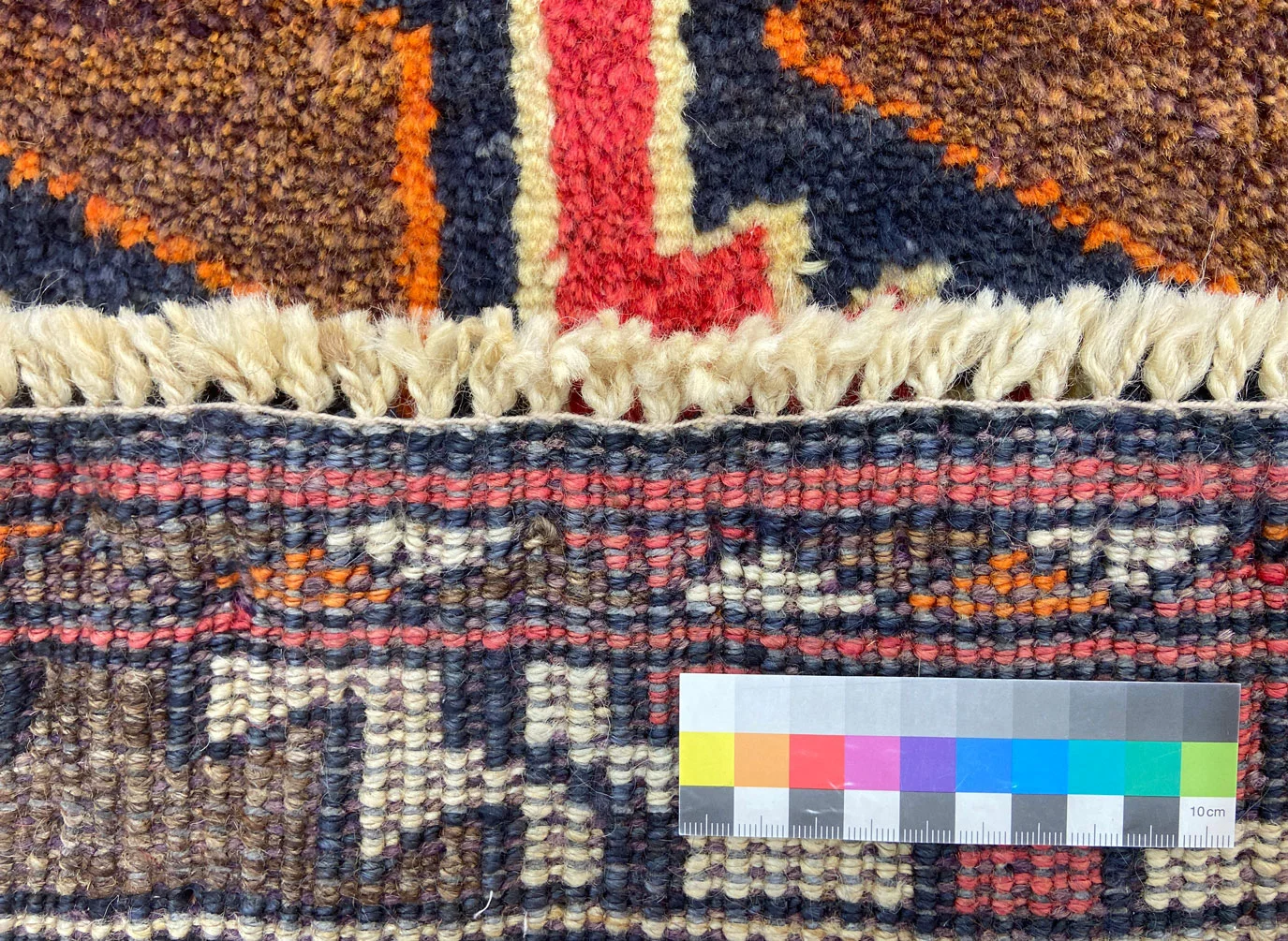
Knot density describes the number of individual knots worked into a defined area of a hand-knotted rug. A denser knotting can allow contours and small ornaments to be rendered with greater precision. Density should always be considered together with the material, the knotting method and the design. In this rug, hand knotting, a pure new wool pile and geometric ornaments form the documented technical combination.
Making a hand-knotted rug involves several stages. The foundation is prepared first. Knots are then inserted row by row, while the pile is trimmed and controlled so that the design gradually becomes visible. Tension, knot sequence and colour placement must remain coordinated throughout the process. This work distinguishes a hand-knotted rug from a machine-made floor covering and requires practical knowledge passed on through training and experience.
The condition of this particular rug is described as excellent. This refers to its state of preservation. The recorded information about materials and construction is limited to the high-quality pure new wool pile and the hand-knotted technique. No additional structural details are specified.
Origin and Tradition
The rug comes from Shiraz in Iran. Shiraz is the capital of Fars Province in the south of the country and an important cultural centre of the region. Fars has a long history shaped by different landscapes, communities and ways of life. Its textile culture has been influenced by both settled workshops and nomadic groups, creating a broad regional context for carpet production.
Rugs from Shiraz are associated with the work of nomadic tribes. Nomadic weavers traditionally used portable equipment and worked with patterns preserved within families and communities. Motifs could be remembered from earlier examples, adapted to the available space or changed during the process of making. This background helps explain why rugs connected with the region can combine practical construction with distinctive arrangements of colour and ornament.
The name Shiraz provides the regional attribution for this rug. It does not mean that every rug from the area follows one fixed pattern. Rugs from the wider Shiraz region can differ in construction, ornament, colour effect and individual execution. This particular piece is identified as a hand-knotted Persian rug from Shiraz and is described as having a geometric design.
Fars is an important region in Iranian cultural history. Its carpet tradition brings together influences from rural areas, nomadic life and urban centres. This variety is one reason why Shiraz rugs are not limited to one unchanging format. Regional traditions provide a visual and technical framework while leaving room for the weaver’s interpretation of colours, borders and repeated forms.
Iranian rugs are made in many different regions. Kerman rugs, for example, are widely associated with floral designs, while Isfahan is often connected with carefully organised compositions and medallions. Qom is known in the general history of Iranian rug making for fine patterns and artistic materials. Nain and Bijar also have distinct traditions. These names describe other regional contexts and do not alter the fact that this particular rug comes from Shiraz.
The craft tradition includes more than the act of tying knots. Wool must be selected and prepared, the foundation must be arranged, colours must be planned and the pile must be worked carefully. Knowledge of these stages is often transmitted through practical instruction. The weaver must keep the rows stable and translate the intended design into a coherent textile surface. Such knowledge forms part of the broader technical background of Iranian carpet making.
The designation Persian rug refers here to the rug’s origin in Iran. It does not suggest that all Iranian rugs share one construction or decorative system. Iran contains numerous regional traditions whose patterns and technical features vary considerably. This Shiraz Persian rug combines its Iranian origin with the recorded hand-knotted technique, pure new wool pile and geometric ornamentation.
Nomadic and workshop production can differ in working conditions, but both belong to the wider history of handmade Iranian textiles. Portable production allowed nomadic weavers to work within changing surroundings, while established workshops could maintain more formal working arrangements. These general distinctions explain some of the variety found in Iranian carpets. They do not establish an additional workshop or tribal attribution for this individual rug.
Design and Pattern
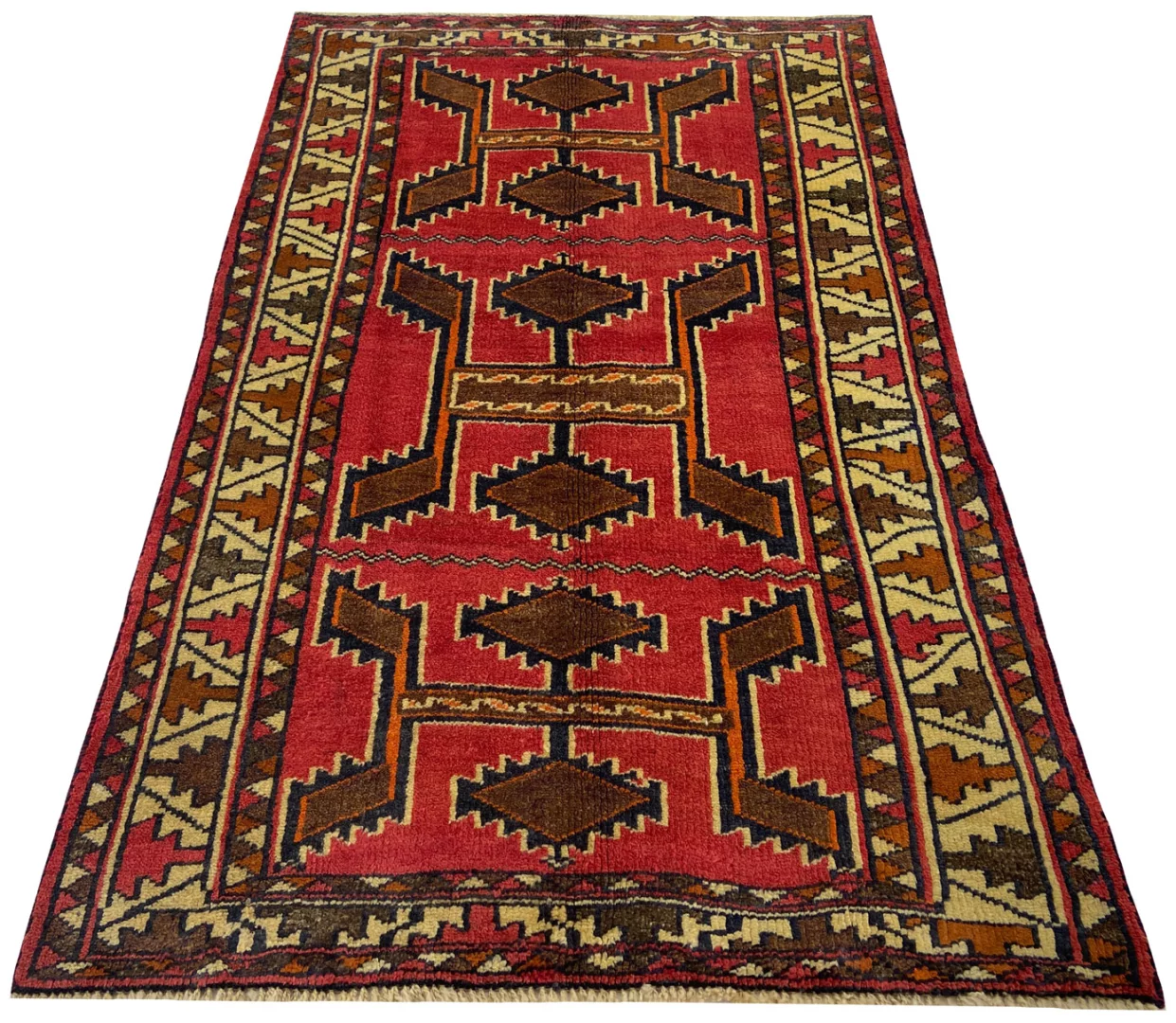
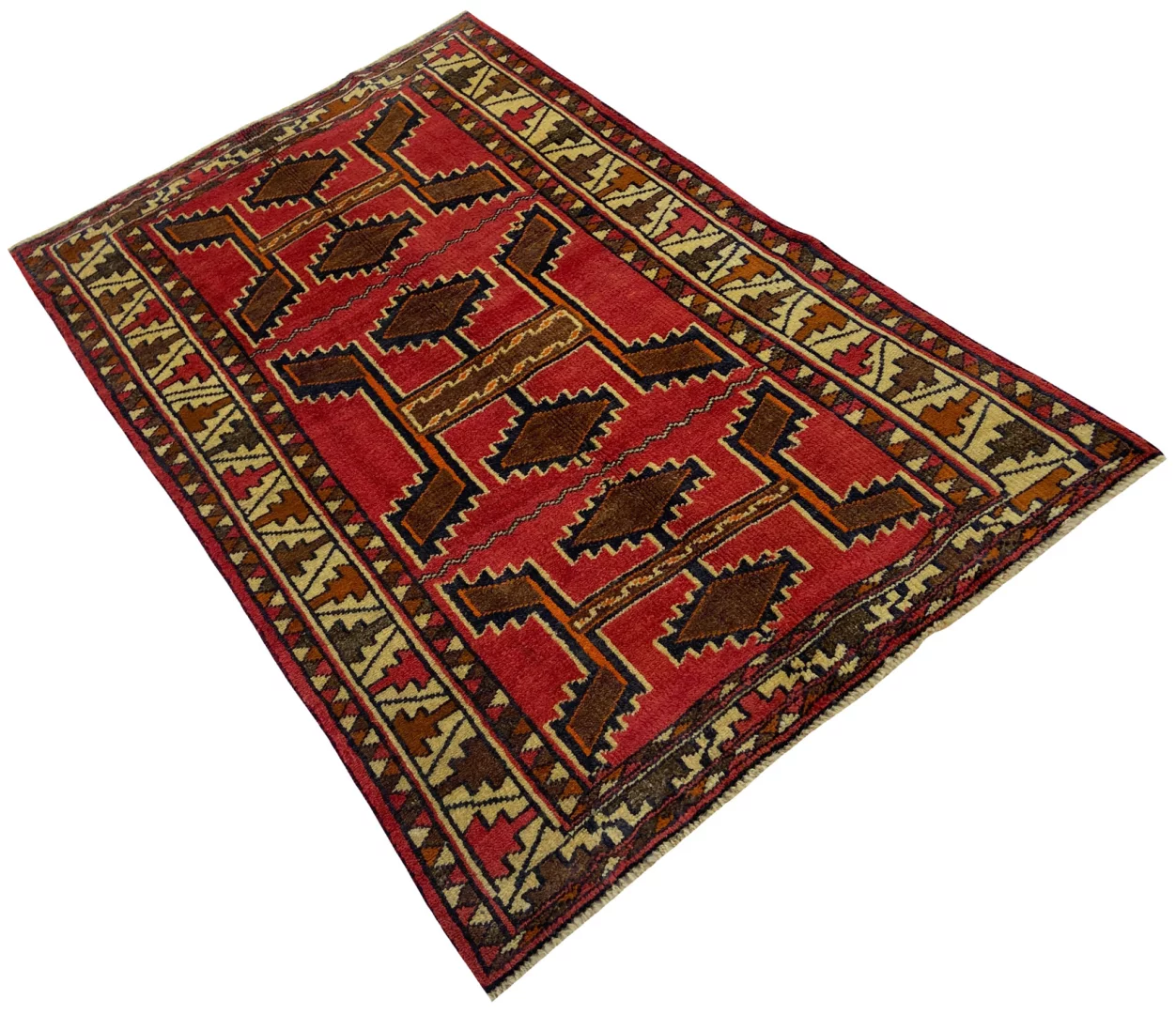
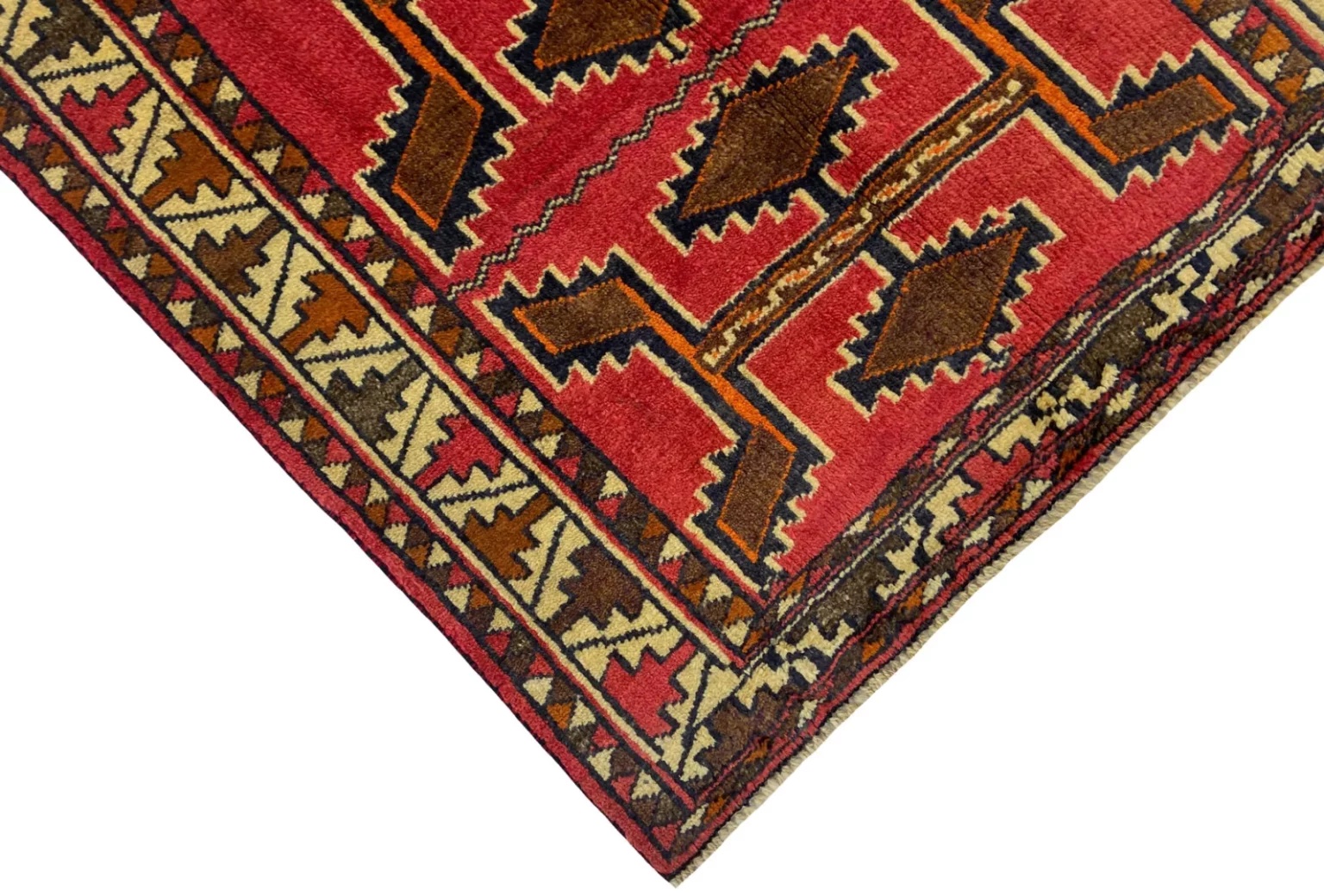
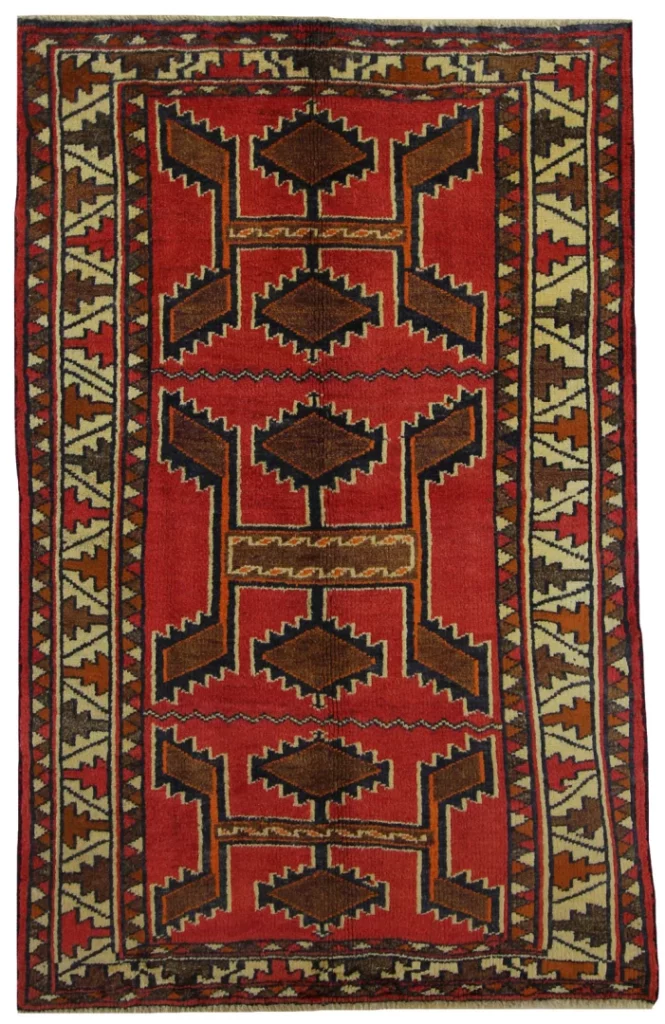
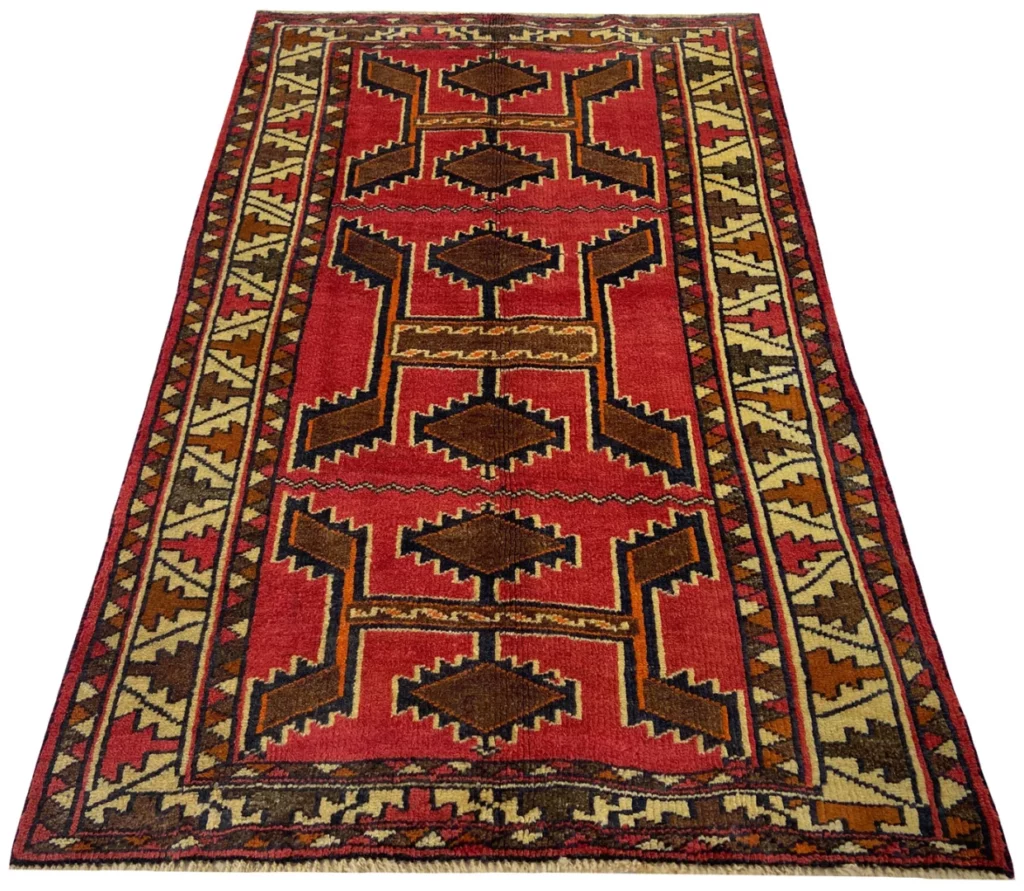
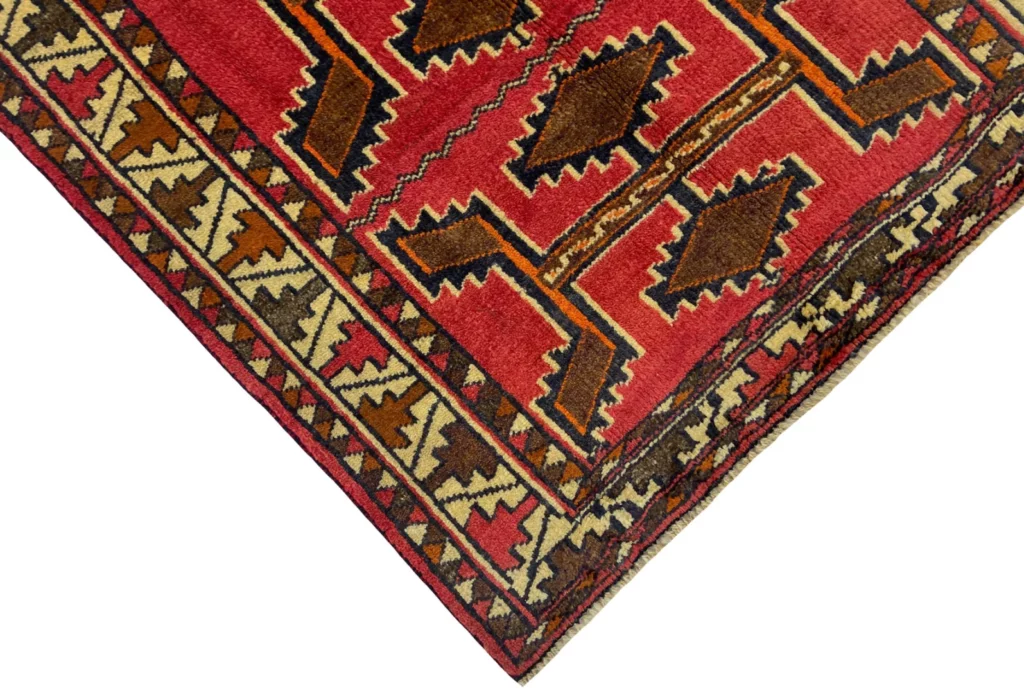
The pattern of this rug consists of geometric ornaments. Geometric design uses lines, angles, diamonds, repeated shapes and clearly defined areas. Such elements may be arranged as borders, fields or rhythmic sequences of ornament. The documented design of this rug is geometric. No more specific medallion structure or named pattern type is given.
The colour impression is defined by lively reds and browns. Red can function as a ground colour or an accent in Iranian rug design. Brown adds an earthy tone and can help connect ornaments with larger areas of the composition. Together, these colours create a warm visual palette. The precise impression also depends on how the colours are distributed, how the wool has taken the dye and how the rug is viewed in different light.
Geometric ornament has a long history in carpet design. It is formed from simplified basic shapes that can be repeated, mirrored, aligned or combined. Unlike a naturalistic representation, it does not need to reproduce flowers, animals or landscapes in detail. Instead, recognisable order is created through outlines, surfaces and repetition. This order may extend through a central field, a border or the full composition.
The geometric language is particularly suitable for translation into a knotted structure. Each coloured area is built from individual knots, allowing lines, angles and recurring signs to be inserted gradually into the pile. Handmade production can produce small variations while preserving the overall structure of the design. The visible result depends on the relationship between knots, colour areas, contours and the wool surface.
Rugs associated with Shiraz may reflect both urban and nomadic influences. Urban traditions often favour more carefully divided fields and established ornamental arrangements. Nomadic designs may place greater emphasis on individual signs, repeated symbols and freer interpretations of inherited forms. This is general regional background and does not assign an additional motif or style to this particular rug. Its documented pattern remains geometric.
A geometric rug can be incorporated into a variety of interior settings. Red and brown tones can be combined with wood, natural materials and restrained colours. Linear ornament can provide visual structure without relying on a floral composition. These observations describe the general effect of the recorded colours and forms. They do not specify a particular room or make an unrecorded claim about the intended use of this rug.
Every hand-knotted rug develops its appearance through the relationship between design, material and technique. In this Shiraz rug, geometric ornaments provide the decorative framework, while red and brown form the stated colour focus. The pure new wool pile receives the colours and makes the ornaments visible as a textile surface. The result is a regionally attributed Iranian rug with a clearly geometric visual language.
Pattern terminology in the Iranian rug tradition often identifies a visual principle rather than one identical layout. The term geometric can include repeated forms, angular contours and ordered ornament without claiming a detail that has not been documented. This distinction matters because rugs from the same region may vary considerably. The individual piece is identified by its Shiraz origin, geometric ornaments and red and brown colour range.
Special Features
The specific features of this piece are its origin in Shiraz, Iran, its hand-knotted construction, its high-quality pure new wool pile, the stated knot density, and its geometric ornaments in lively red and brown tones. Its condition is described as excellent. These details identify the rug offered here and distinguish it from other rugs associated with Shiraz.
The combination of Iranian origin, traditional hand knotting and pure new wool describes the material basis of this oriental rug. The geometric pattern gives the surface its decorative order. The source description also characterises the rug as hypoallergenic and therefore particularly suitable for allergy sufferers. Direct sunlight should be avoided in order to help preserve the colours.
Care includes regular vacuuming and professional cleaning when needed. The surface should be treated gently during cleaning. The recorded special features concern this rug itself; no additional statement about age, signature, foundation or further materials is provided.
FAQ
How should I care for my Shiraz Persian rug?
Vacuum the rug regularly and use a gentle setting so that loose dust is removed without unnecessary stress on the pure new wool pile. Avoid harsh brushing or rough treatment of the surface. If a more thorough cleaning is needed, professional rug cleaning is recommended. Direct sunlight should also be avoided, since prolonged exposure can cause colours to fade over time. Consistent, material-appropriate care helps preserve the geometric design and the red and brown colour impression.
Where does the wool for the rug come from?
The pile is made of high-quality pure new wool. Pure new wool comes from sheep fleece and is used for rugs because its fibres are durable while remaining pleasant to the touch. The description associates the wool with sheep from the Fars region. Fars is the Iranian province whose capital is Shiraz. The recorded material and regional origin therefore connect the wool pile with the Shiraz and Fars context. No further information about the breed of sheep or the precise sourcing process is provided.
How can I assess the quality of a Persian rug?
Important points of reference include knot density, the materials used and the fineness of the pattern. A higher knot density can support more detailed work. Natural materials such as pure new wool are also commonly regarded as significant in assessing a rug’s material quality. This piece is described as having a knot density between 100.000 and 250.000 knots per square metre, a high-quality pure new wool pile and geometric ornaments. Its condition is additionally recorded as excellent. These characteristics should be considered together, since no single feature determines the quality of an entire rug.
To provide the best experiences, we use technologies like cookies to store and/or access device information. Consenting to these technologies will allow us to process data such as browsing behavior or unique IDs on this site. Not consenting or withdrawing consent, may adversely affect certain features and functions.
Functional Always active
The technical storage or access is strictly necessary for the legitimate purpose of enabling the use of a specific service explicitly requested by the subscriber or user, or for the sole purpose of carrying out the transmission of a communication over an electronic communications network.
Preferences
The technical storage or access is necessary for the legitimate purpose of storing preferences that are not requested by the subscriber or user.
Statistics
The technical storage or access that is used exclusively for statistical purposes.The technical storage or access that is used exclusively for anonymous statistical purposes. Without a subpoena, voluntary compliance on the part of your Internet Service Provider, or additional records from a third party, information stored or retrieved for this purpose alone cannot usually be used to identify you.
Marketing
The technical storage or access is required to create user profiles to send advertising, or to track the user on a website or across several websites for similar marketing purposes.

 SECURE PAYMENT
 SHIPPING PARTNERS