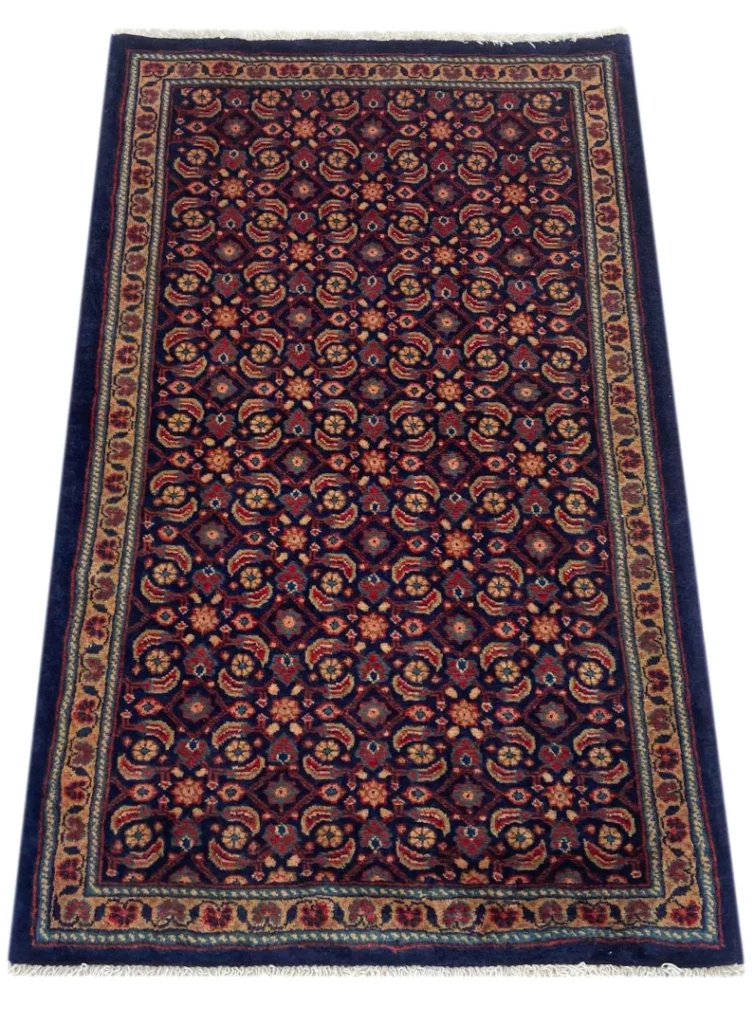
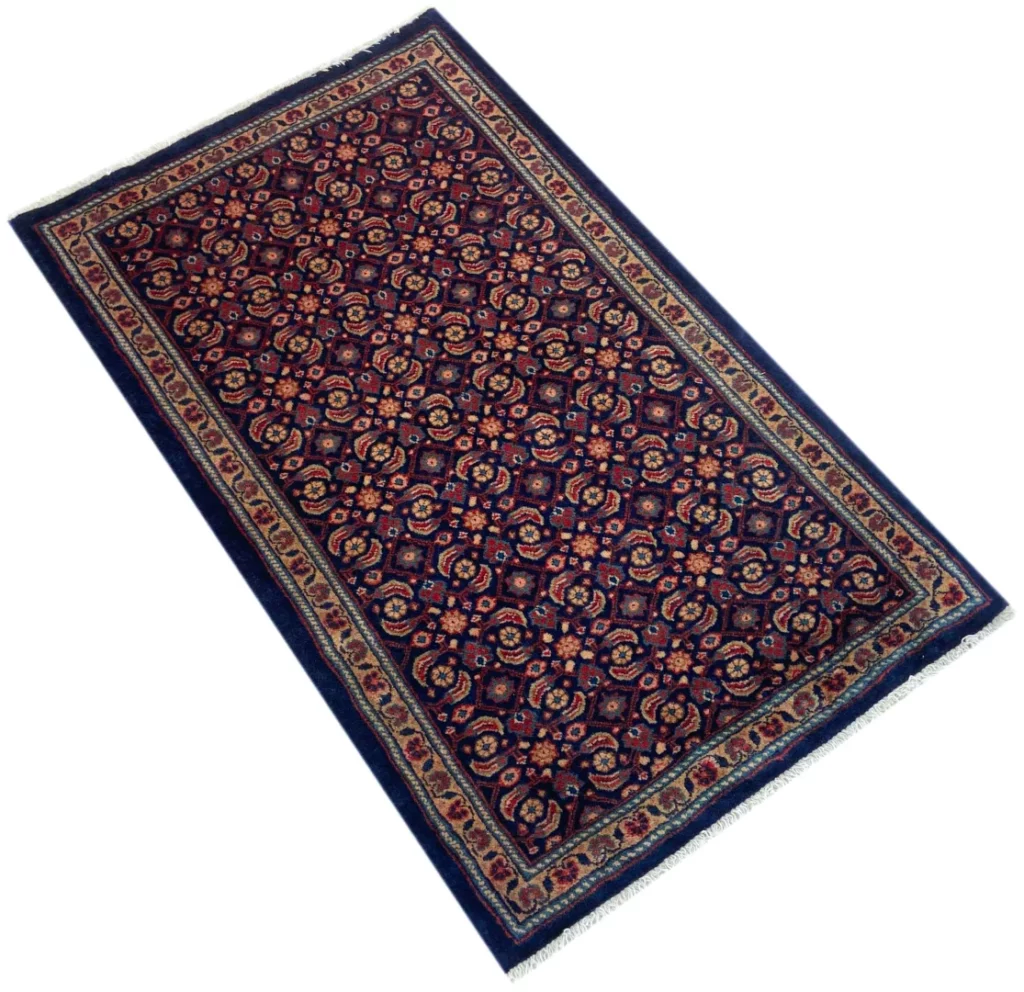
Persian Rug Sarouk Farahan 125 x 75 cm Wool Hand-knotted
€ 417
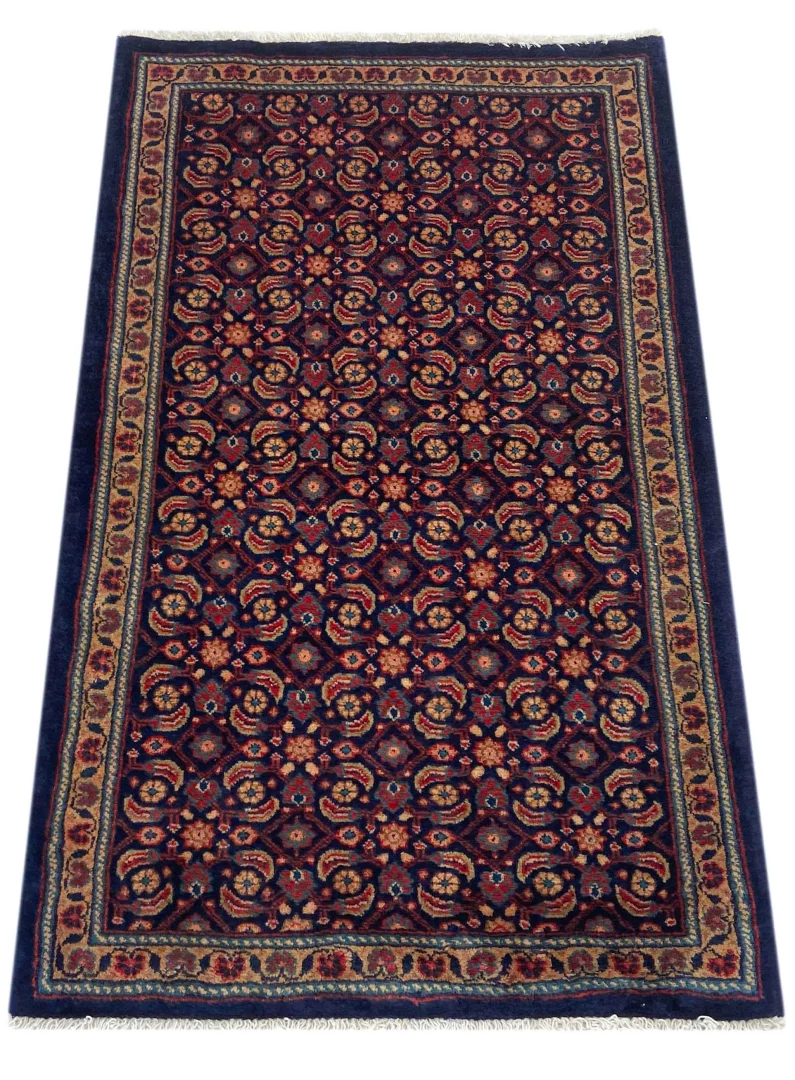
Hand-knotted Sarough Farahan Persian rug | Knot density: 200,000 – 400,000 knots/m² | Material: pile high-quality wool | Size: 125 x 75 cm | Pattern: floral design on a red and brown ground | Condition: very well preserved
This Sarough Farahan Persian rug is hand-knotted and has a pile made of high-quality wool. Handwork gives the rug its individual textile structure and makes each piece a distinct object. In hand-knotting, every knot is inserted separately into the prepared foundation. The pile is then worked and finished so that the surface presents the design as a coherent whole. This process differs from machine production, where the repetition of a pattern is controlled by an industrial method rather than by the individual work of a knotter.
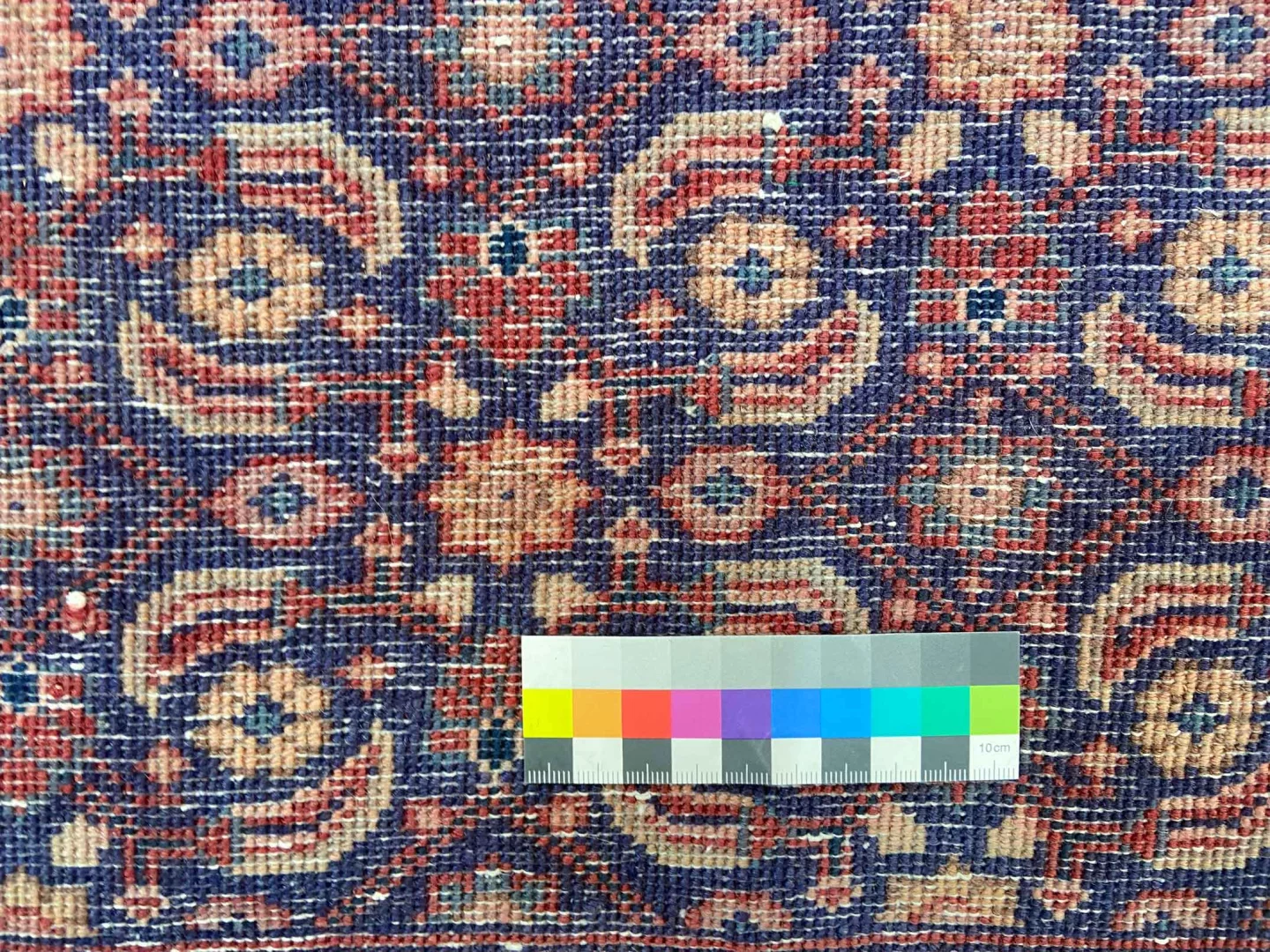
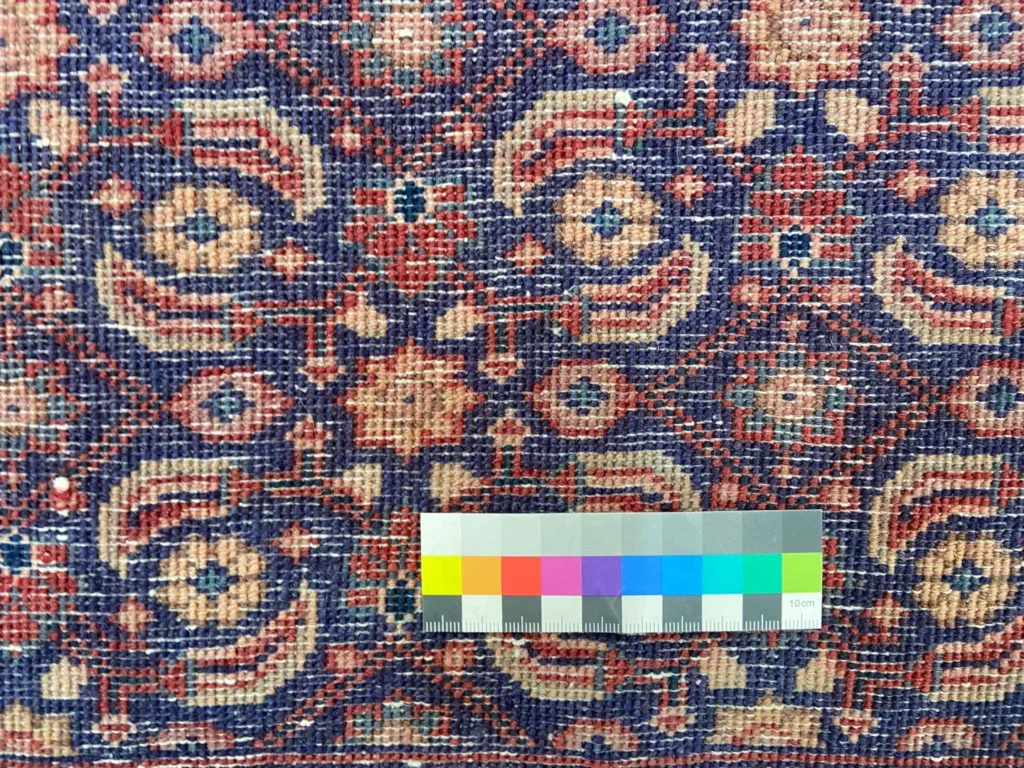
The rug has a knot density of 200,000 to 400,000 knots per square metre. Such density permits a differentiated treatment of outlines and floral details. It is also an important point of reference when assessing the workmanship of a hand-knotted rug. The wool pile combines a soft tactile surface with the practical qualities of a durable natural fibre. It therefore supports both the precise rendering of the design and the characteristic feel of a wool rug.
In the making of a hand-knotted rug, knots are built up row by row. The structure is compacted during the process, and the pile is brought to an even finish so that the drawing remains legible. The work demands careful attention to the design, since small variations can affect the course of a floral line. High-quality wool is suitable for this kind of construction and contributes to the pile’s texture as well as to the way the colours are perceived.
This rug is very well preserved. That condition is part of the description of this one-off piece alongside its material, technique and pattern. No additional silk content or cotton component is stated for this rug, so neither is added here.
Origin and Tradition
Sarough is located in northern Persia and is associated with a distinct carpet-making tradition. Rugs from Sarough are particularly connected with floral designs and strong, warm colours. Warm reds and earthy browns are among the tones commonly associated with this tradition. They create a composed and grounded colour effect while allowing the ornament to remain the central feature of the design.
Carpet making in northern Persia developed through the interaction of design, knotting skill and regional experience. A rug is defined not only by individual flowers, but also by the organisation of its field, the movement of its lines and the distribution of its colours. Sarough represents an approach in which floral elements remain clearly visible while being integrated into a balanced overall composition. The tradition is expressed through the controlled repetition of motifs and through the ability to keep a design readable across the entire surface.
Persian rugs from northern regions are often identified by the place or area in which their design and production traditions are rooted. Such a designation refers to a textile and cultural context, not merely to a particular colour or isolated ornament. Sarough rugs are valued for their floral drawing, their strong palette and their hand-crafted construction. The northern Persian origin places this piece within a region where carpet knotting has long been maintained as a precise craft.
Heriz and Tabriz are also important names within the wider northern Persian carpet landscape. Heriz is commonly associated with geometric compositions and powerful colours, whereas Tabriz is often known for elaborate floral designs and high knot densities. These comparisons illustrate the variety of regional traditions without making their origins interchangeable. Sarough has its own identity within this setting, marked especially by floral design and warm red and brown tones.
Kashan and Nain are likewise named as notable manufacturing centres from the broader region. Their rugs belong to different design traditions and should not simply be treated as Sarough rugs. What they share is the importance of the carpet as a meeting point of design, material knowledge and manual work. A Sarough from northern Persia therefore represents a specific regional tradition within the wider history of Persian weaving.
The expression “American Sarough” refers to Sarough rugs originally produced for the American market. These rugs are now also sought after in Europe. The term describes a historical market connection and does not change the regional identity of the rug. Sarough remains the relevant designation for the tradition represented by this piece.
Design and Pattern
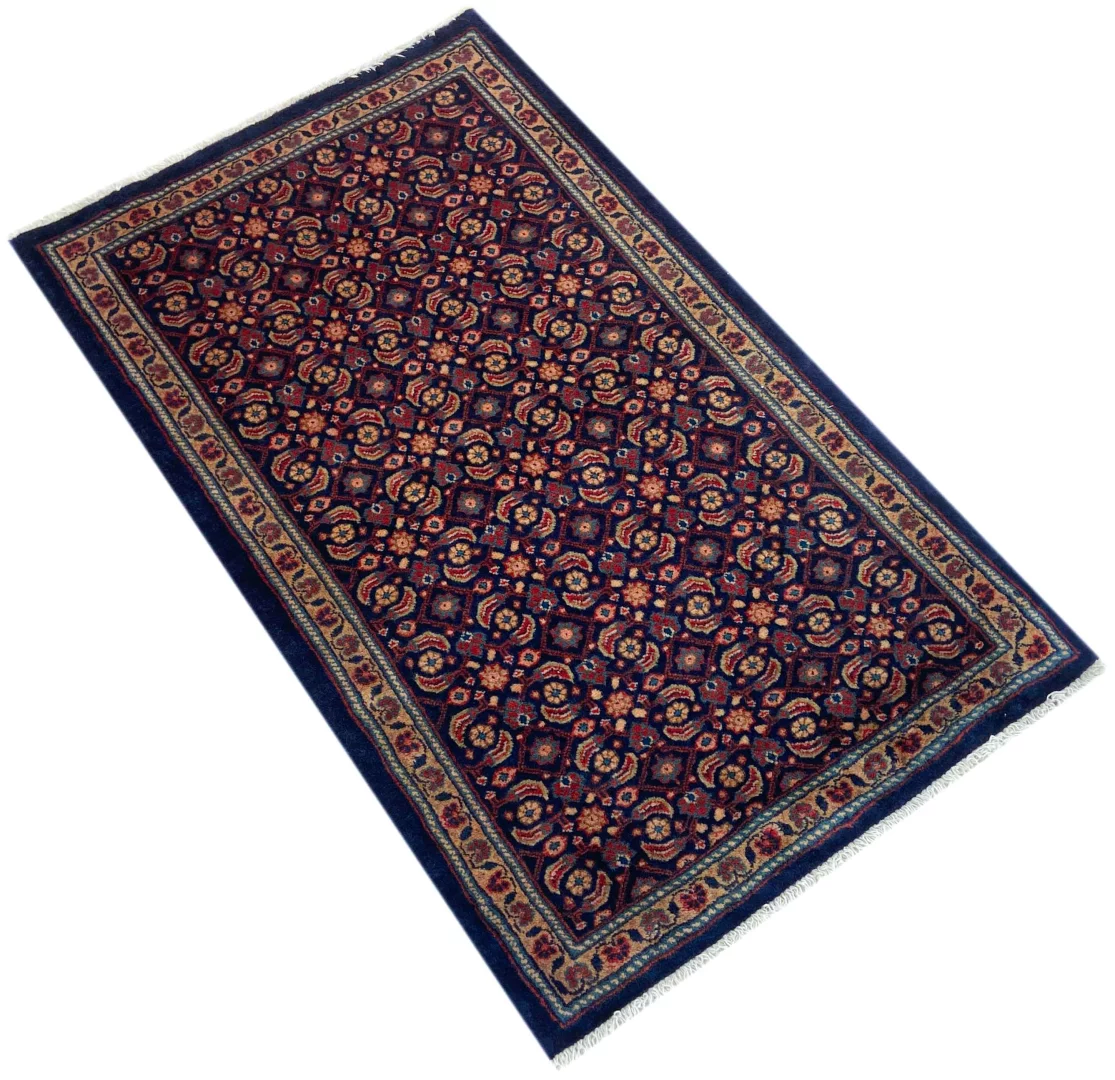
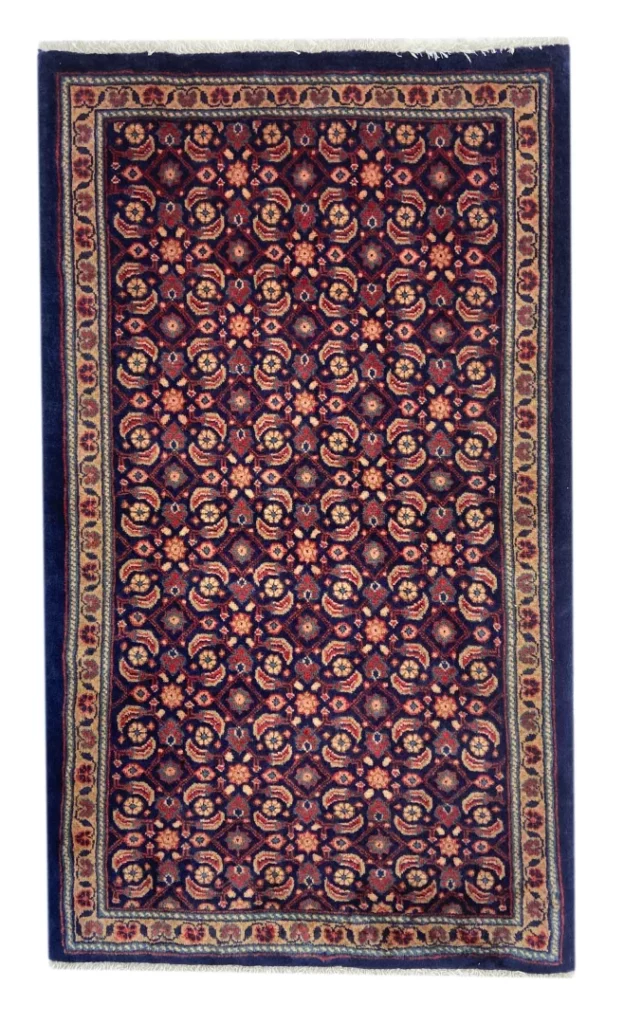
The pattern of this rug is floral, set against a red and brown ground. Red provides a warm and substantial background, while brown adds an earthy counterpoint to the composition. The floral design is the principal decorative element. It defines the rug’s visual character without allowing a specific flower, medallion or individual ornament to be claimed where none has been identified.
Floral Persian carpet designs generally bring together flowers, leaves, scrolling branches and repeated ornamental forms. These elements may fill a field, accompany a border or connect through fine lines. The visual result depends not only on the individual motif but also on the balance between open ground and concentrated ornament. In Sarough design, the floral language is traditionally combined with strong colours, allowing the pattern to stand out while retaining the unity of the overall composition.
A red ground can serve as the dominant background in Persian carpet design. Brown areas or brown accents create a more subdued contrast and lead the palette towards earthy tones. The combination has a traditional appearance without prescribing one particular interior style. Light and surroundings may affect how the shades are perceived, but the fundamental description of this piece remains a floral design on a red and brown ground.
The high knot density supports the rendering of a detailed pattern. A dense construction can allow outlines and transitions to be graded more finely, so that floral forms do not appear as coarse symbols. The quality of a Sarough is therefore considered in relation to knot density, materials and the accuracy of the design. Precise, clearly legible lines are commonly regarded as signs of attentive workmanship in the traditional assessment of a rug.
The floral concept also distinguishes Sarough from other recognised regional pattern traditions. Heriz is more frequently associated with geometric forms and strong colours, while Tabriz is known for detailed floral compositions and high knot densities. These references provide context for the carpet landscape and do not alter this rug’s origin. This piece is described as a Sarough Farahan from northern Persia with a floral design.
The warm colours and floral drawing can work in a range of room settings. Such patterns are used in both traditional and more restrained interiors because they combine a clearly identifiable ornamental structure with a cohesive colour effect. The actual impression in a room depends on the furnishings, the surrounding colours and the available light. The design of this one-off rug remains defined by its red and brown ground and its floral pattern.
Special Features
This rug’s defining features are its Sarough Farahan origin, hand-knotted construction, high-quality wool pile and floral design. The knot density of 200,000 to 400,000 knots per square metre completes this material and technical description. Together, these details provide a factual overview of the individual piece without assigning it characteristics that have not been stated.
The rug is very well preserved. Sarough rugs are appreciated by collectors, and the source description also refers to so-called American Sarough rugs as a particularly noticed group. Their original production for the American market forms part of the trading history associated with this category. It does not make this rug an American rug; its stated identity remains Sarough Farahan from northern Persia.
Regular cleaning and protection from direct sunlight are recommended to help preserve the colours. Professional rug cleaning can also support the maintenance of the rug’s condition. Wool is a natural fibre and should be treated with a cleaning method appropriate to its structure. Careful maintenance helps retain the appearance of the well-preserved one-off piece.
FAQ
How can I assess the quality of a Sarough Persian rug?
Knot density, material and the precision of the pattern are useful points of reference when assessing a Sarough. A high knot density can support a finer rendering of outlines and floral details. The quality of the wool and the evenness of the pile are also relevant to the way the rug is made. Clear lines, legible ornaments and consistent handwork are traditionally regarded as indications of careful production. This piece combines hand-knotting, high-quality wool and the stated knot density as part of its description.
Where is a suitable place for my Sarough Persian rug?
A Sarough with a floral design and warm red and brown tones can be used in a living room, dining room or bedroom. Its palette creates a welcoming, traditional impression and can be combined with both classic and modern furnishing styles. The best position depends on the room, the furniture and the available light. It is also useful to place the rug on a suitable, level surface and to ensure that its floral design remains visible rather than being covered by too much furniture.
Are Sarough Persian rugs easy to care for?
Sarough rugs are relatively easy to maintain when they are cleaned regularly and treated appropriately. Routine cleaning helps prevent dust and dirt from settling permanently into the pile. Direct sunlight should be avoided where possible so that the colours remain stable. If deeper cleaning is needed, professional rug cleaning can be helpful. The very well-preserved condition of this one-off piece should be supported through gentle care suited to its wool pile.
To provide the best experiences, we use technologies like cookies to store and/or access device information. Consenting to these technologies will allow us to process data such as browsing behavior or unique IDs on this site. Not consenting or withdrawing consent, may adversely affect certain features and functions.
Functional Always active
The technical storage or access is strictly necessary for the legitimate purpose of enabling the use of a specific service explicitly requested by the subscriber or user, or for the sole purpose of carrying out the transmission of a communication over an electronic communications network.
Preferences
The technical storage or access is necessary for the legitimate purpose of storing preferences that are not requested by the subscriber or user.
Statistics
The technical storage or access that is used exclusively for statistical purposes.The technical storage or access that is used exclusively for anonymous statistical purposes. Without a subpoena, voluntary compliance on the part of your Internet Service Provider, or additional records from a third party, information stored or retrieved for this purpose alone cannot usually be used to identify you.
Marketing
The technical storage or access is required to create user profiles to send advertising, or to track the user on a website or across several websites for similar marketing purposes.

 SECURE PAYMENT
 SHIPPING PARTNERS


