
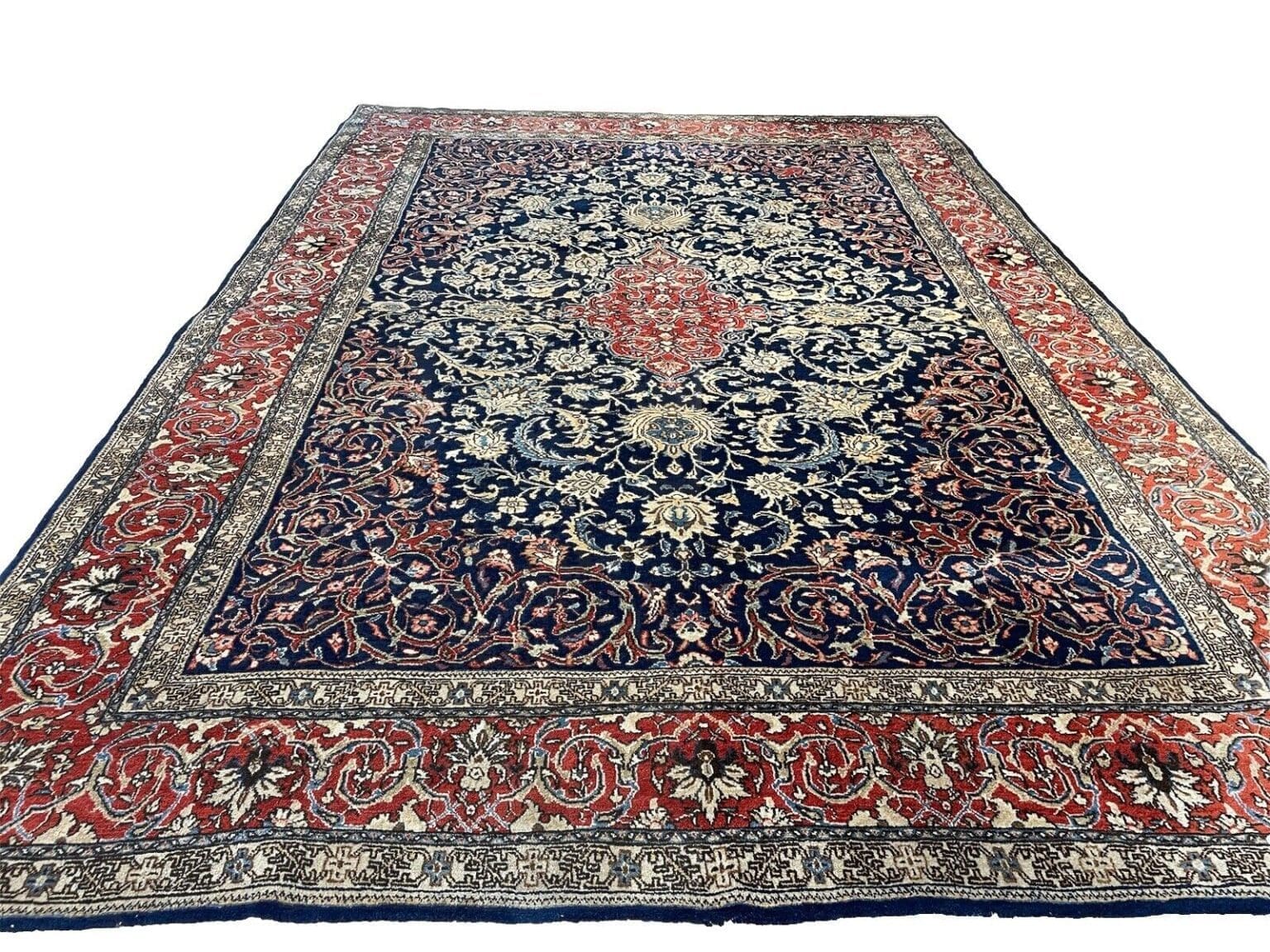
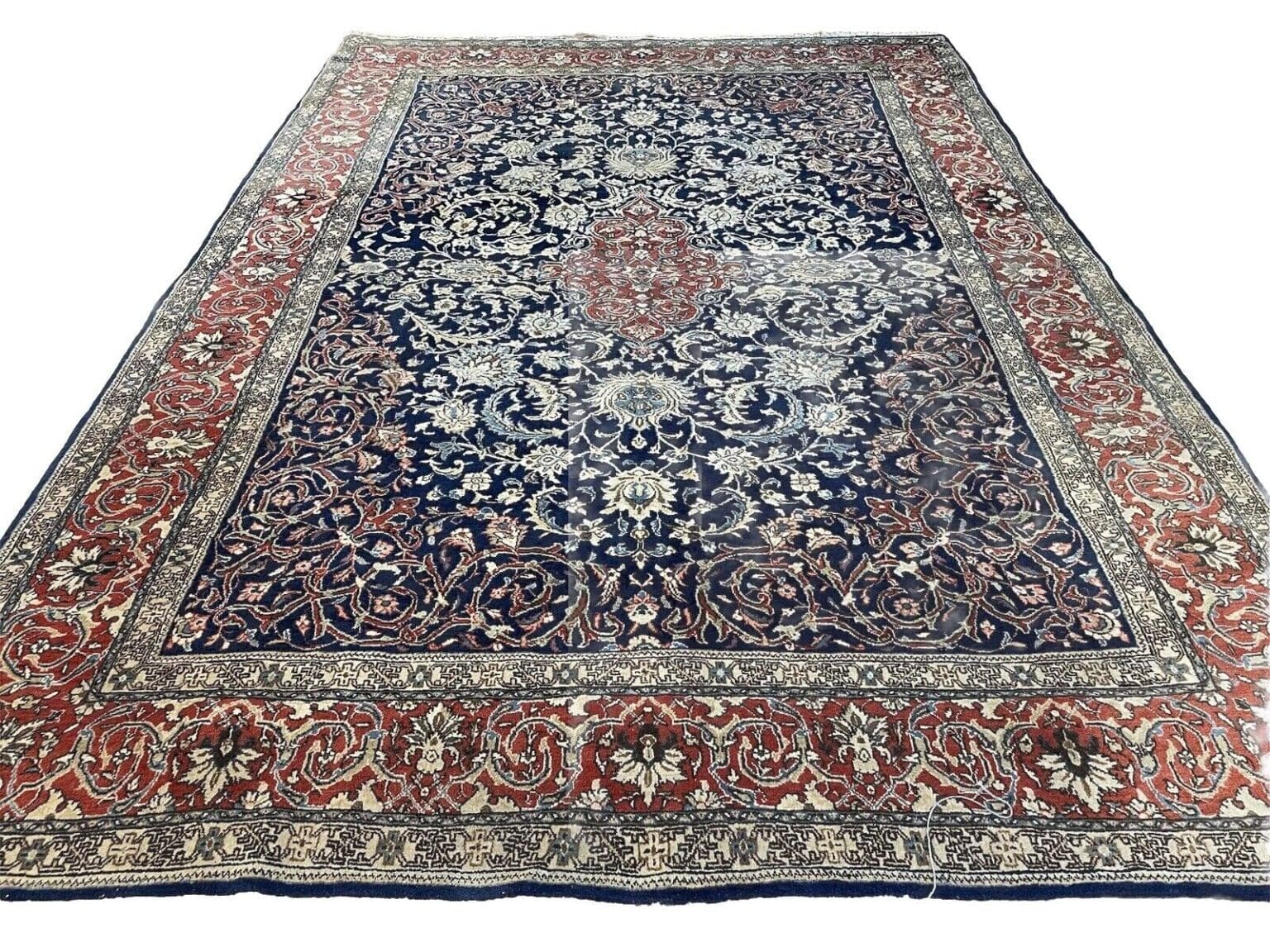
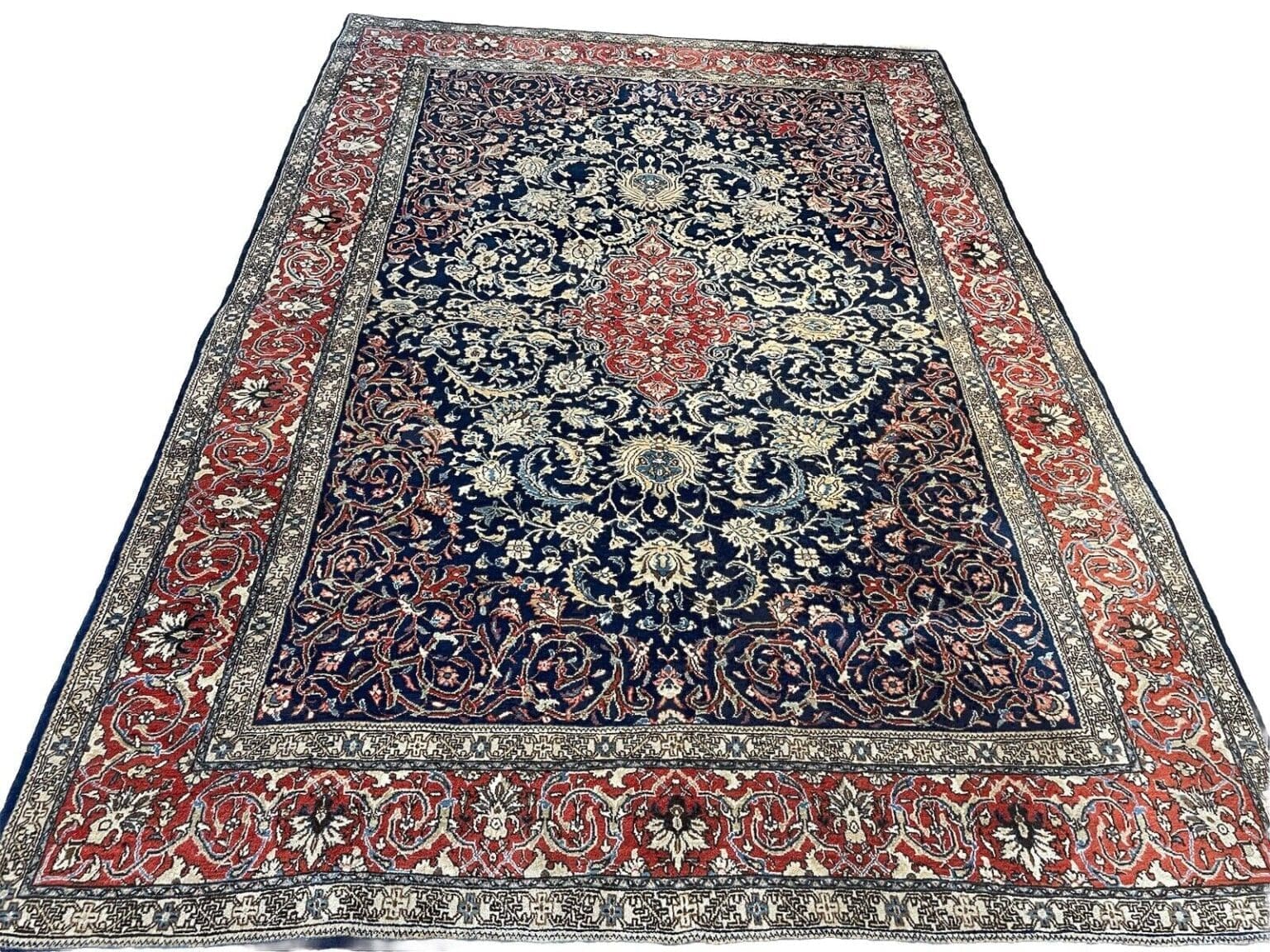
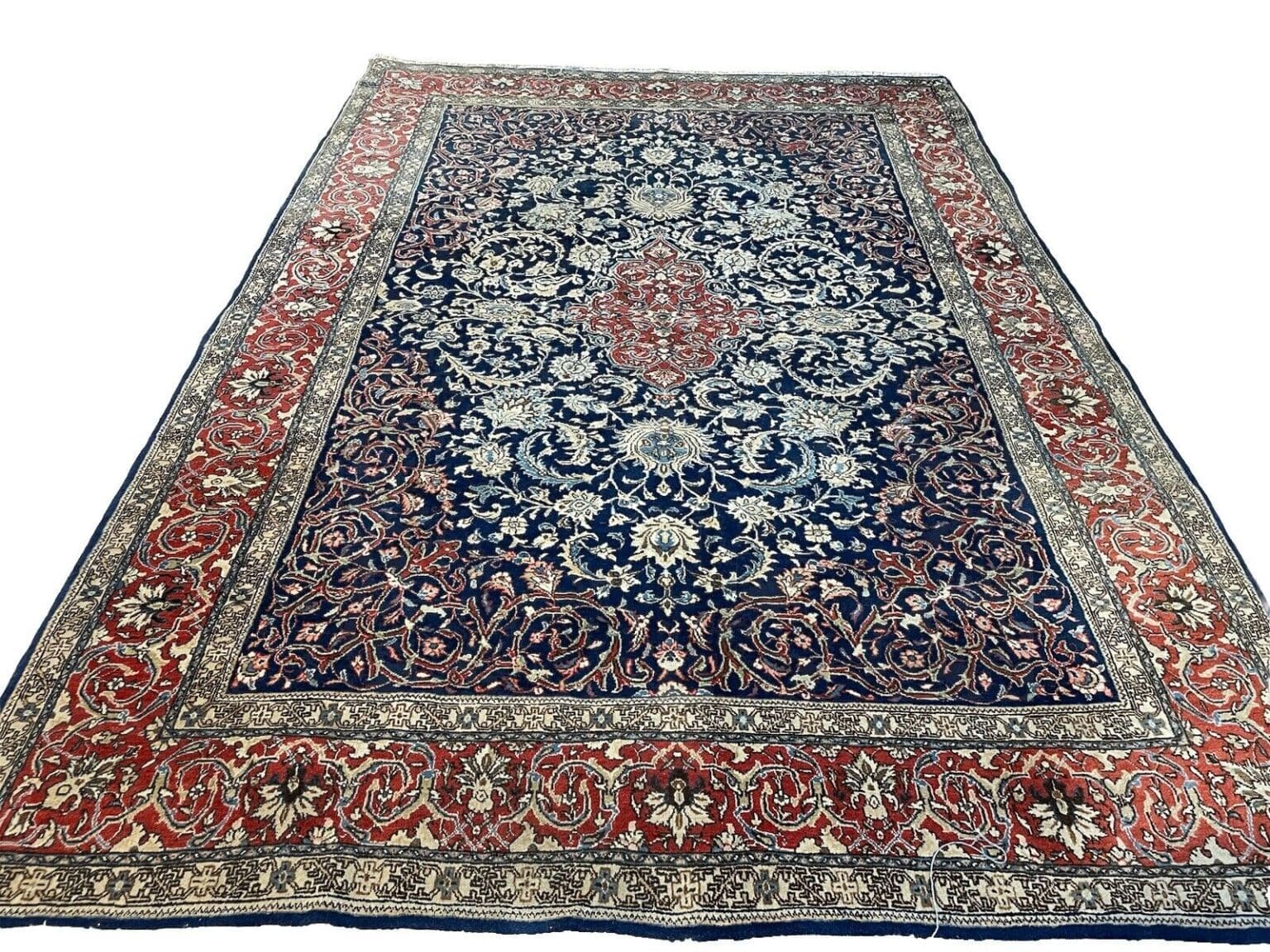
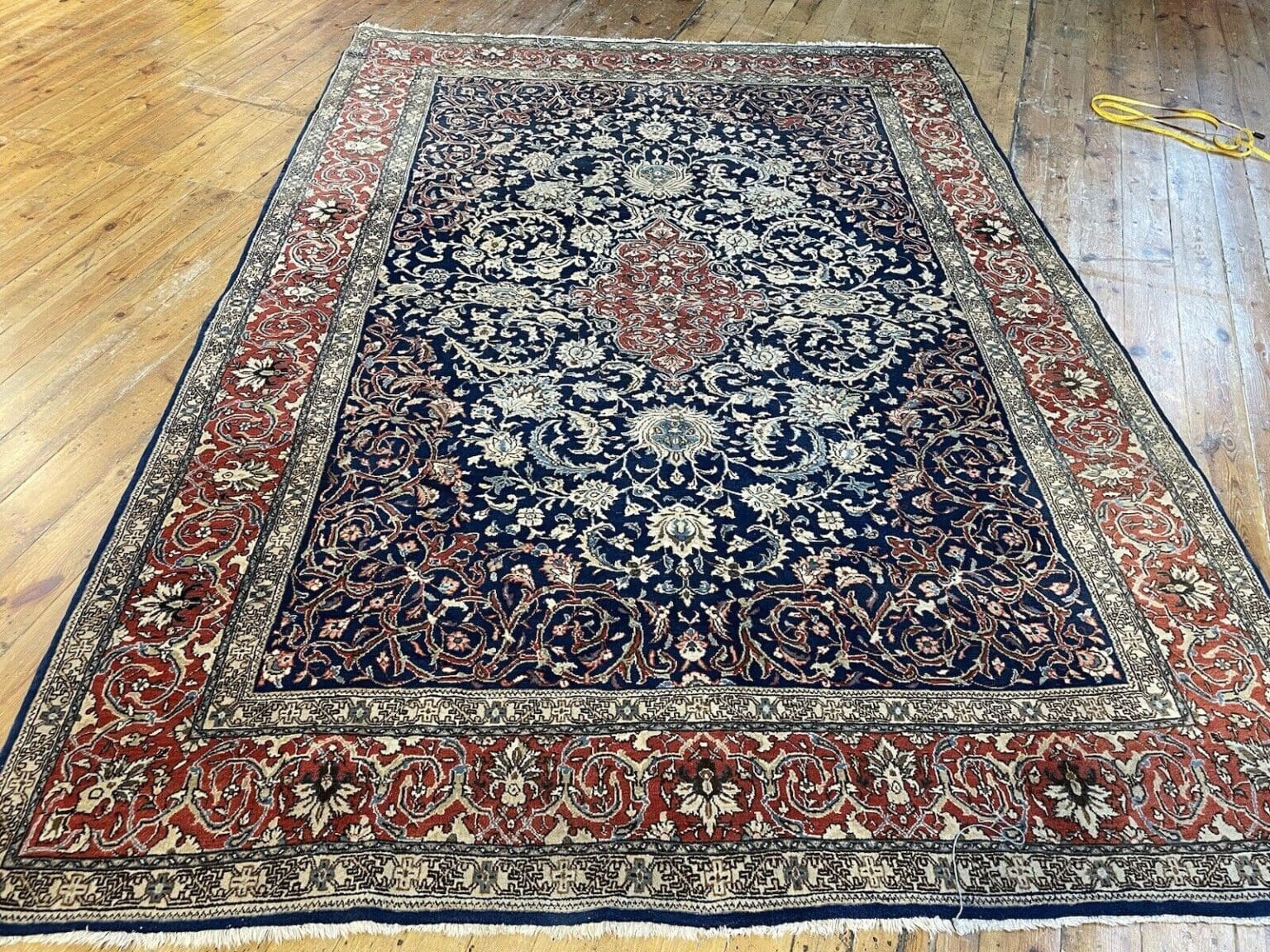
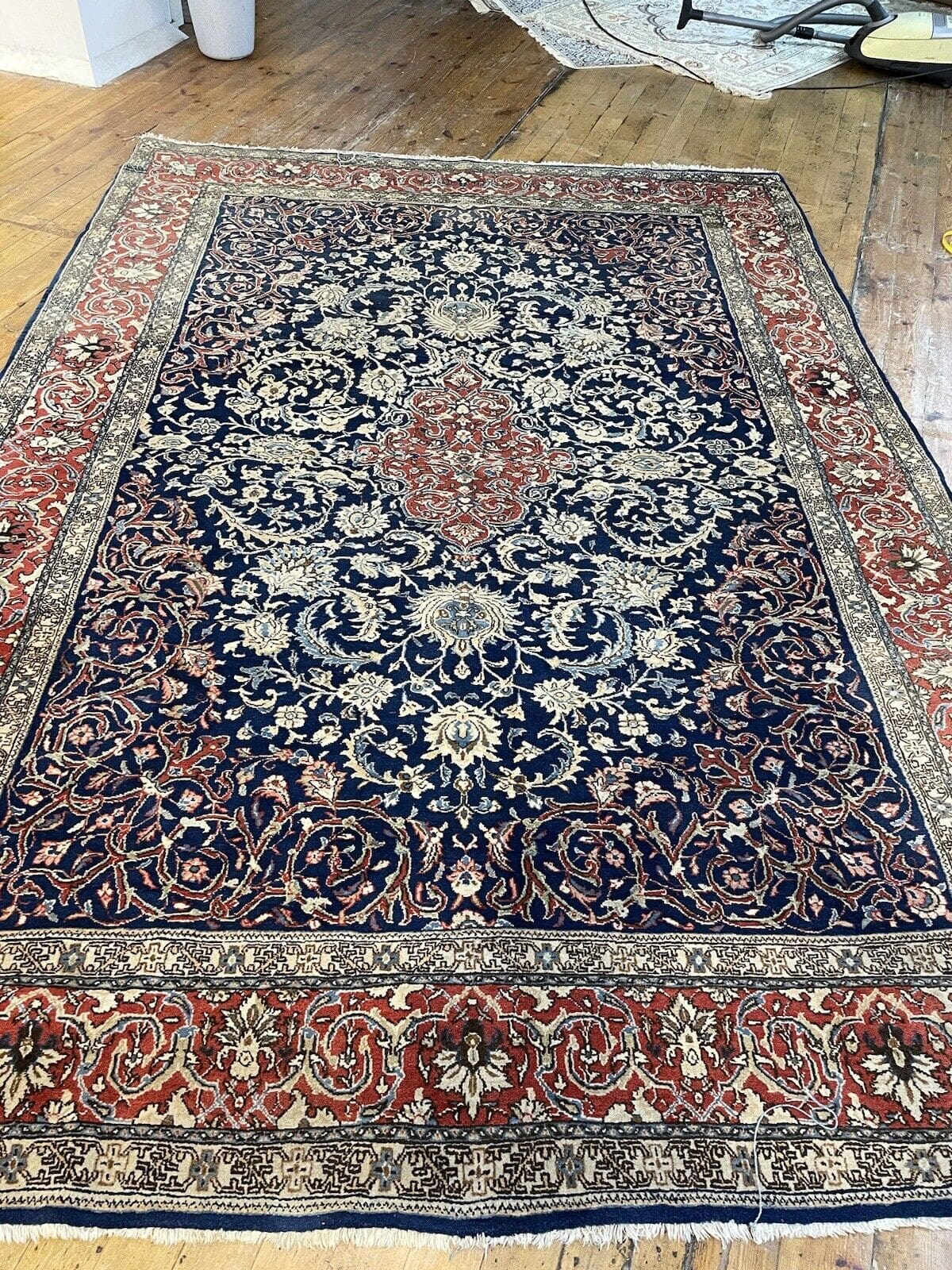
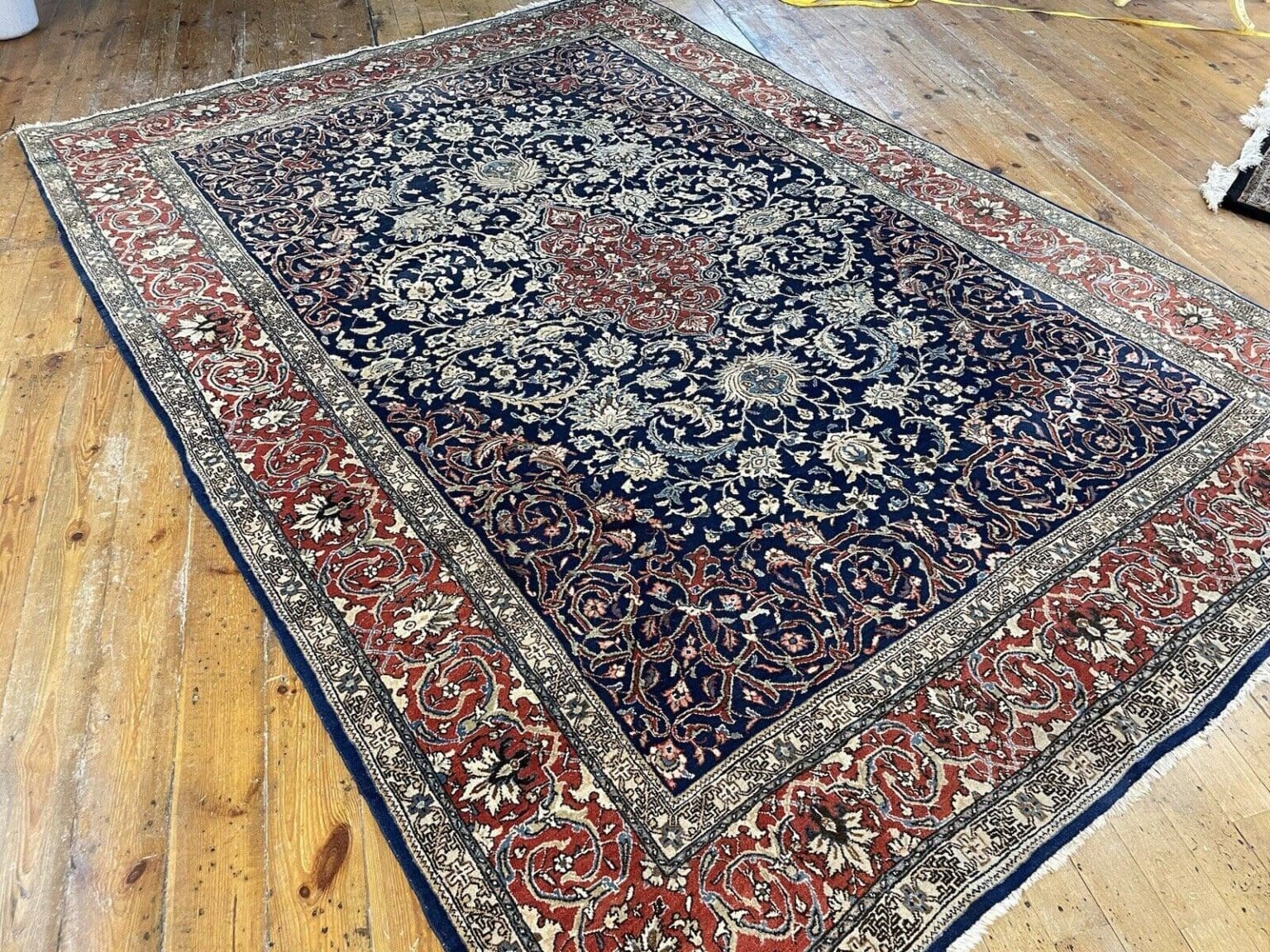
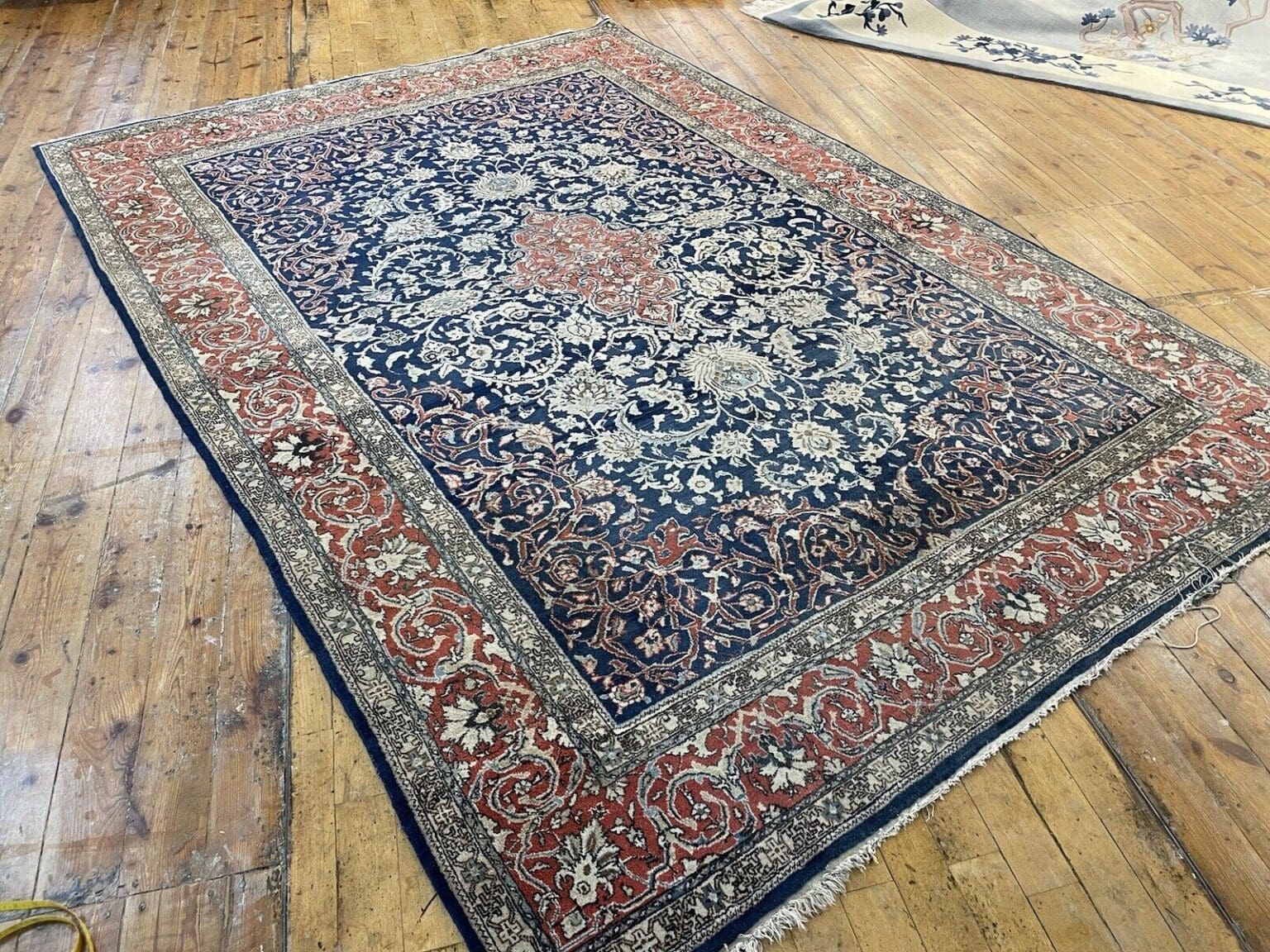
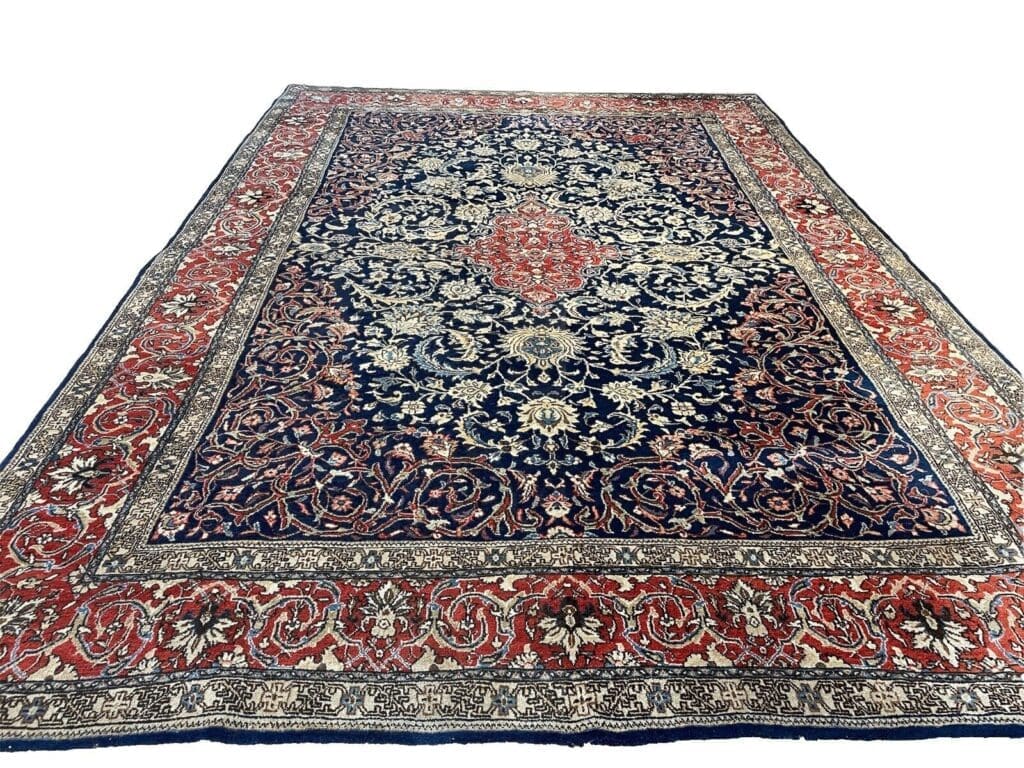
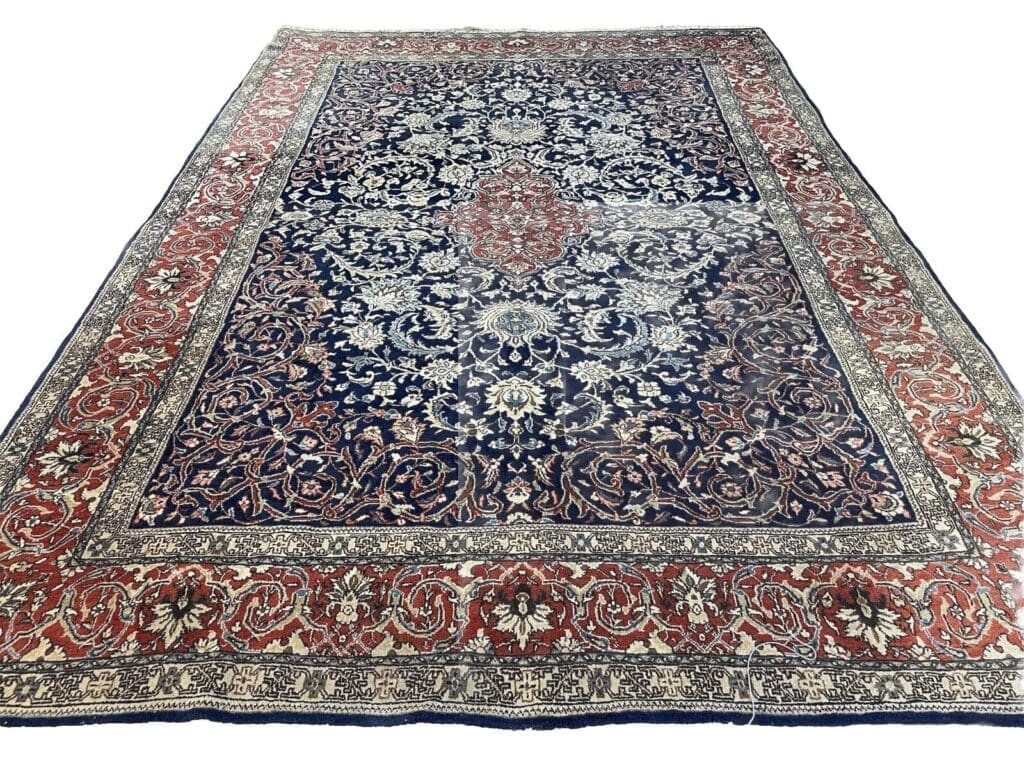
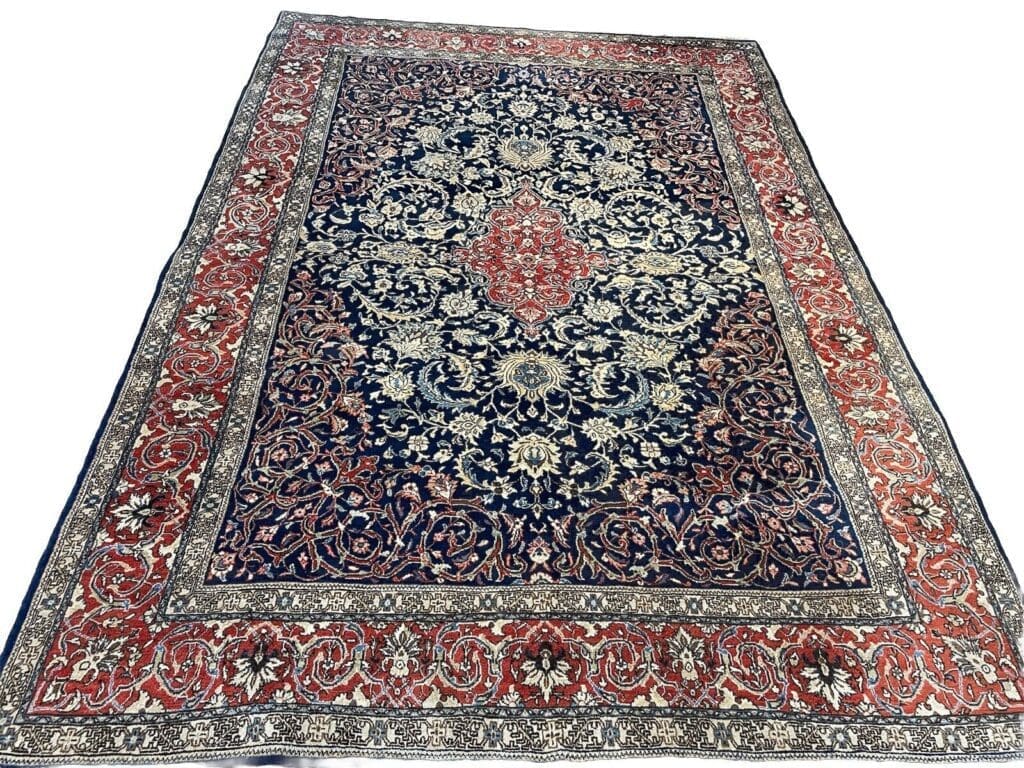
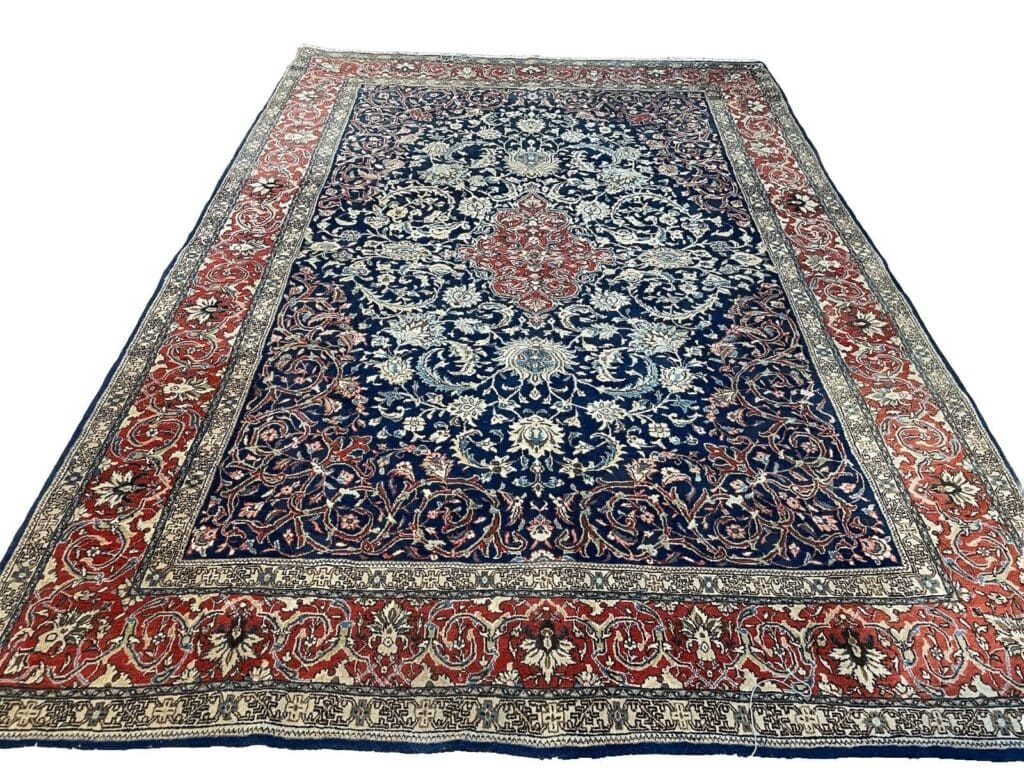
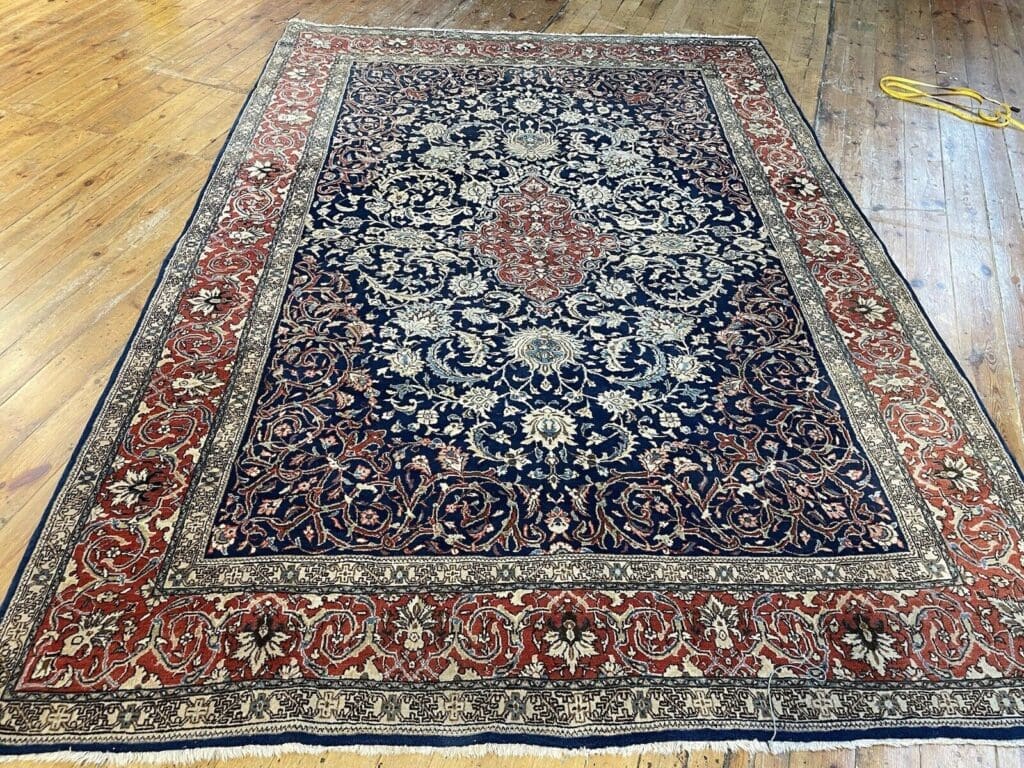
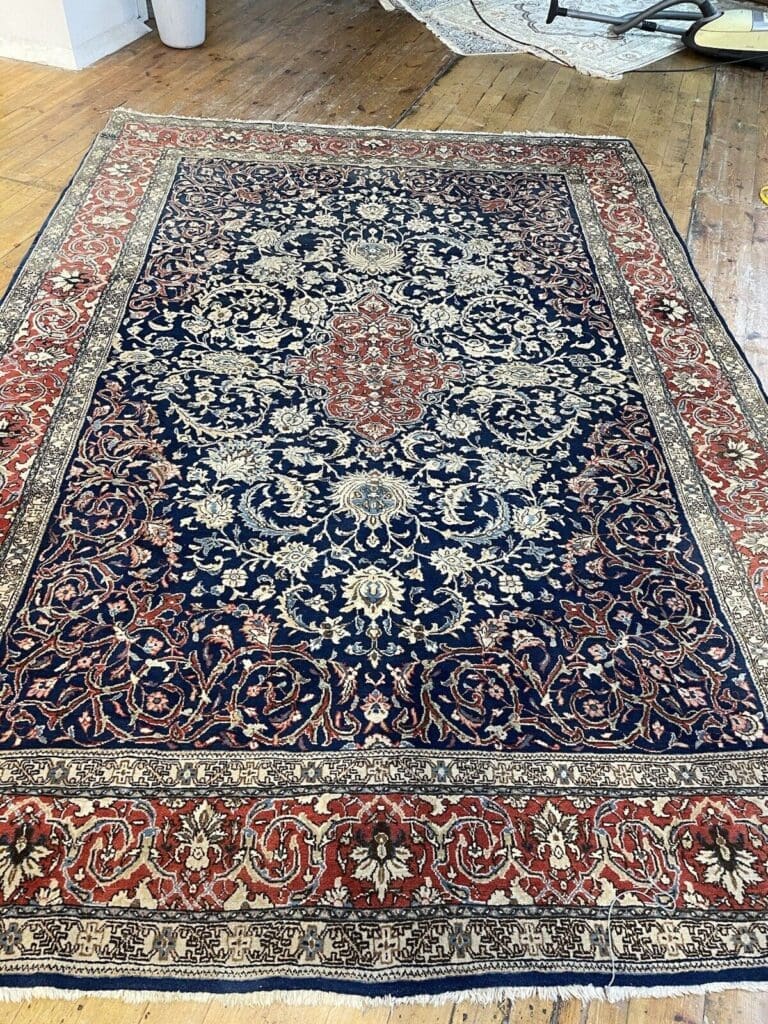
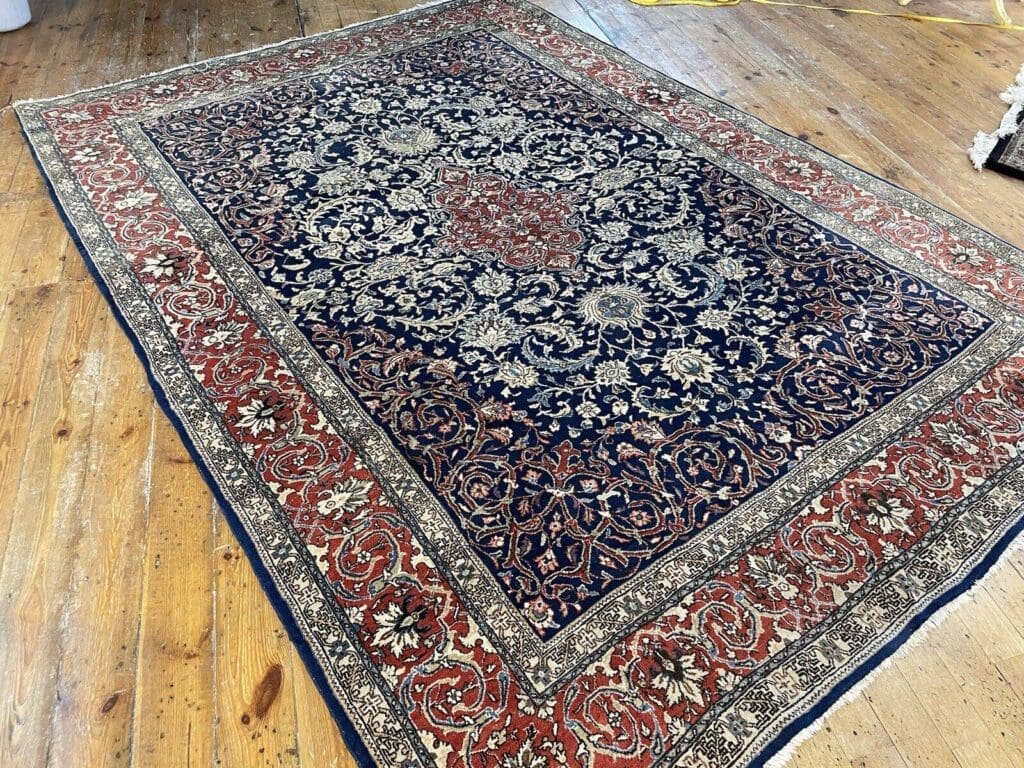
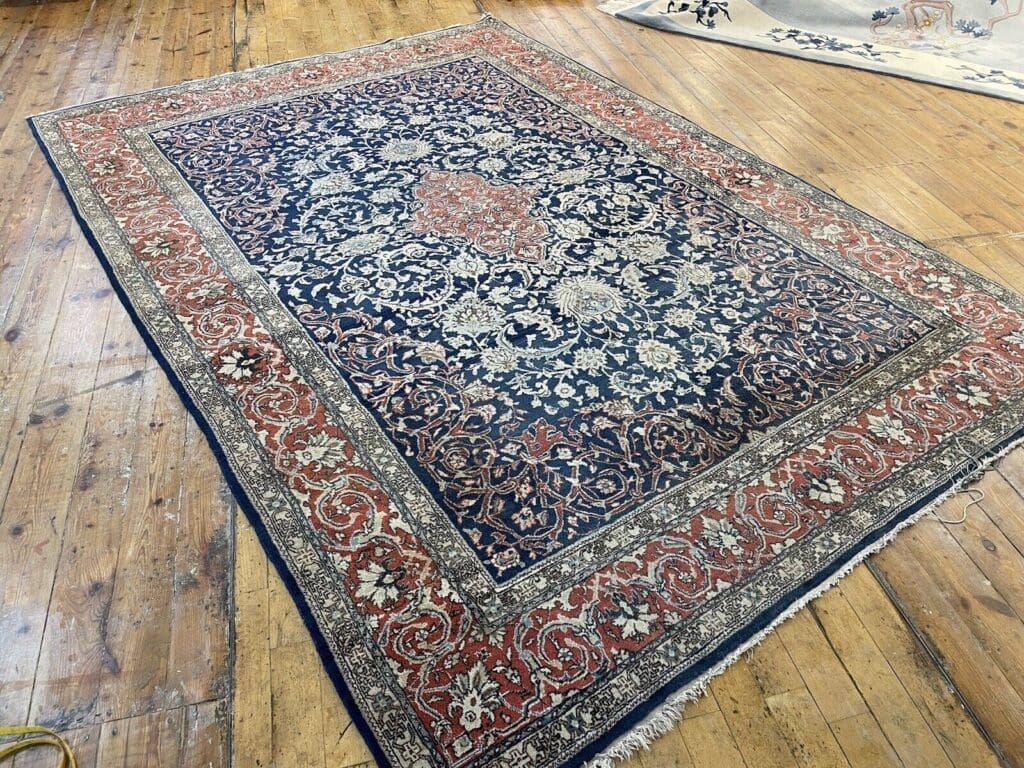
Persian Rug Sarouk 310×220 cm Wool Hand-knotted
€ 2166
Hand-knotted Sarough Persian Rug | Knot density: high knot density | Material: wool pile | Size: 310×220 cm | Pattern: classic blue floral pattern | Condition: top condition
1 available
- ✓Free Shipping in EU
- ✓2-5 Business Days Delivery
- ✓14-Day Return Policy
- ✓Worldwide Shipping on request
 SECURE PAYMENT
 SHIPPING PARTNERS
Inventory number: 2BC73344
Description
Sarough Persian Rug
Material and Craftsmanship
This Sarough Persian Rug is hand-knotted and made from 100% wool. The wool forms the pile and is valued for its durability and natural warmth. A hand-knotted rug is built by placing individual knots in a planned sequence rather than by applying a pattern to an already finished surface. Each piece therefore develops its own character during production, and this rug is described as a one-off. Its workmanship is identified as high quality, with a high knot density.
The pile height is 7 mm and gives the surface a clearly defined textile feel. It provides the kind of comfortable underfoot surface associated with a wool rug while retaining a relatively clear profile for the floral design. Wool contributes warmth to the touch and gives the rug a substantial material presence. These qualities belong to the material and construction described for this individual Sarough rug.
Hand-knotting also explains why no two rugs are exactly alike. The weaver follows a pattern while forming the surface knot by knot, so the final result remains tied to the particular work process. Here, that individual character is explicitly part of the rug’s status as a one-off. The product description also identifies the colours as being made with environmentally friendly pigments and refers to the use of natural dyes in the Sarough tradition.
Origin and Tradition
Sarough is a region in Iran with a recognised tradition of Persian carpet making. Its carpet-weaving heritage extends back several centuries and reflects the cultural history of the area. In this tradition, the practical purpose of a floor covering is combined with a carefully organised visual language. Materials, knotting, colour and pattern work together rather than functioning as separate decorative additions.
The knowledge behind Sarough carpets is connected with the people who make them. Skills in preparing a rug, following a drawing, placing knots and building a balanced composition are passed from one generation to the next. This continuity gives Sarough meaning as a regional designation. It points to a place and to a body of craft knowledge, not merely to a floral ornament that could be used elsewhere.
Sarough carpets are associated with harmonious colours and clearly articulated patterns. Their visual order depends on the relationship between the main field, repeated motifs and the colours that distinguish them. This rug belongs to that tradition through its classic floral design in blue. The blue colour concept gives the floral forms a coherent appearance and keeps the ornament recognisable across the woven surface.
The use of natural dyes is also mentioned as part of regional Sarough production. Colour in a hand-knotted rug is not simply a final coating; it is part of the design system established before and during weaving. The product description refers to environmentally friendly pigments for this rug’s colours. Together with natural wool, that information defines the material and colour approach presented for this piece. It does not add an unsupported certification or an additional claim about production beyond the stated description.
Sarough’s tradition shows how regional identity can be carried through an everyday textile object. A carpet can provide a durable surface while also preserving patterns, techniques and colour preferences associated with its place of making. Designs may vary from one rug to another, but the broader principles of orderly drawing, balanced colour and skilled handwork remain legible. This combination of use and inherited knowledge is central to the history of Persian carpet weaving.
This rug is assigned to the early twentieth century, specifically the period from 1911 to 1940. That dating places it within a historical phase of Sarough production and is part of its described identity. The term antique in the product description refers to this historical design and period. It does not create an additional claim about provenance, restoration or any other detail that is not stated. The origin remains Sarough in Iran, making it a Persian rug rather than an Indian-made oriental rug.
Design and Pattern
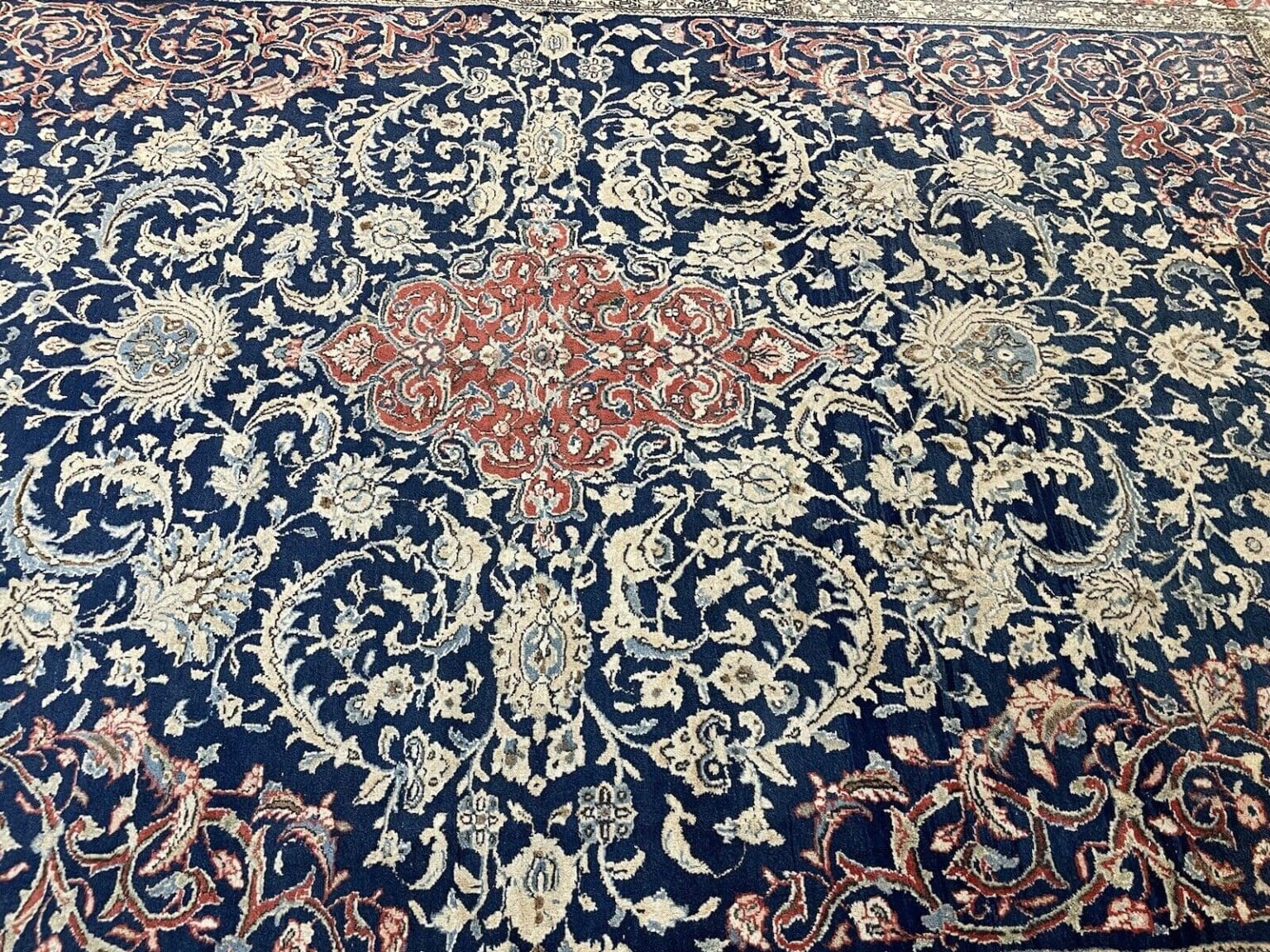
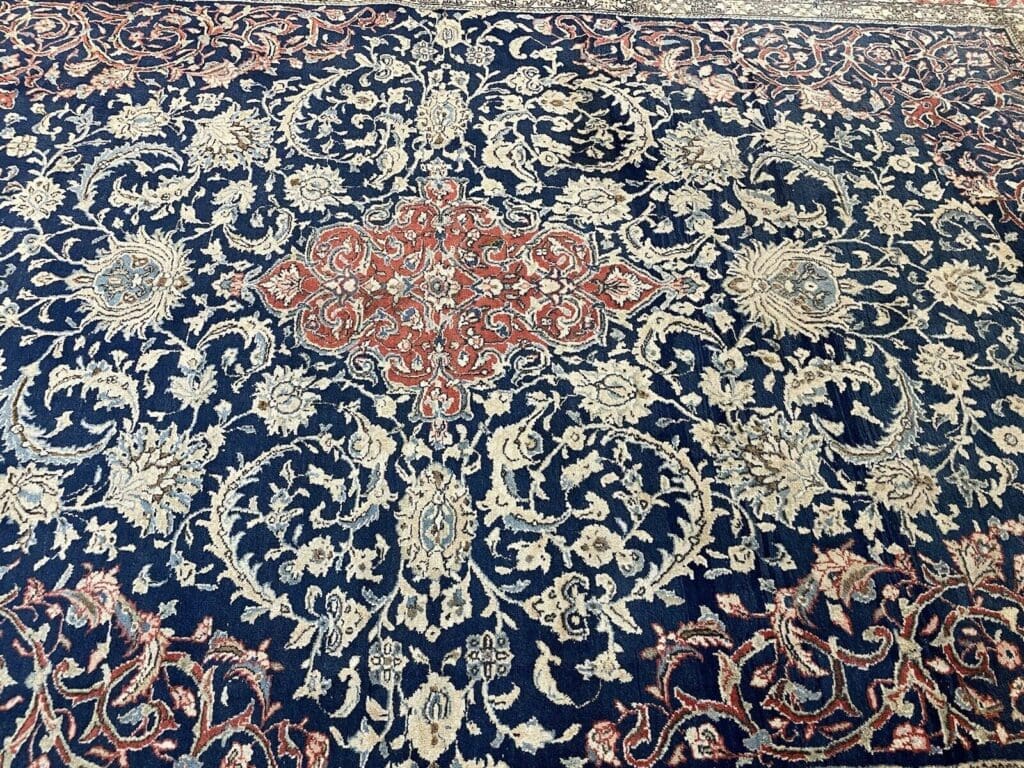
The rug carries a classic floral pattern in blue. Floral designs are among the established subjects of oriental carpet art, where forms from the natural world are organised into a textile composition. Flowers, leaves and scrolling botanical elements can be repeated, balanced and connected so that separate motifs read as one decorative field. On this piece, the classic flower design is the defining visual feature; it is not described as a geometric or purely abstract pattern.
Blue is the central colour statement named for the rug. In carpet design, blue can create distinct areas while maintaining a calm and coherent relationship between them. Within a floral pattern, it helps the outlines and botanical forms remain readable. The resulting colour impression can work with both traditional and modern interiors because the underlying ornament is classical rather than tied to a short-lived fashion. The source specifically presents the blue tones as harmonious and suitable for different furnishing styles.
Floral motifs in oriental carpet art are often associated with fertility, beauty and a connection with nature. This symbolism does not mean that the design is intended as a literal botanical illustration. Instead, natural forms are selected, stylised and arranged according to the requirements of a woven surface. Repetition gives the pattern rhythm, while variations in scale and placement create relationships between the flowers and the surrounding elements.
The detailed effect of a floral composition comes from the interaction of contours, filled areas and repeated shapes. In a hand-knotted rug, those details are built knot by knot. The motif is therefore part of the construction process itself rather than a print placed over a completed textile. Each floral element relates to its neighbours, and the overall visual depth comes from the organisation of the drawing together with the distribution of the blue colour.
The antique design and early twentieth-century dating influence how the pattern is read. They place the classic floral language within the period identified for this rug. The description gives the pattern, colours and historical period clearly, but it does not name a specific individual designer or a particular named motif. The relevant design facts are the blue floral composition, its classical character and its execution in a traditional hand-knotted Persian rug.
The rectangular rug is described as suitable for a living room, bedroom or dining room. In each of these settings, a floral textile can connect furniture and other interior surfaces without dictating a single decorating style. In a living room it can define a furnishing area; in a bedroom it can add a warm wool surface; in a dining room it can complement the arrangement around the table. These are the stated applications for the piece, while its blue floral design allows it to be considered in both classic and modern interiors.
Special Features
The specifically described features are the hand-knotted construction, one-off character, natural wool material, high knot density and 7 mm pile height. The rug is listed in top condition. Its wool is associated with durability and warmth, while the handwork accounts for its individual appearance. The product description also calls it easy to care for and clean, with regular vacuuming given as part of its maintenance.
For stains, the supplied care advice is to treat them immediately with a damp cloth and mild soap. More thorough cleaning should be handled professionally. These measures are intended to help preserve the rug’s described appearance and its wool pile. The rectangular form and the recommended use in a living room, bedroom or dining room complete the practical information given for the piece. Its distinction lies in the combination of historical dating, blue classical florals and individual hand craftsmanship.
FAQ
How should the Sarough Persian Rug be cleaned?
Regular vacuuming is recommended for everyday care. It removes loose dust and surface dirt from the wool pile without requiring a full wet wash. Any stain should be treated promptly with a damp cloth and mild soap. For a more thorough cleaning, the product information recommends professional rug cleaning. This approach is appropriate to the hand-knotted construction and helps maintain the described appearance over time. Intensive treatment should not be substituted for professional cleaning when a larger or more difficult area needs attention.
Which rooms are suitable for the Sarough Persian Rug?
The rug is described as suitable for the living room, bedroom and dining room. Its rectangular form can be arranged clearly within each of these settings. The classic blue floral pattern provides a traditional accent, while the description also states that it can work with modern as well as classic interiors. In a living room it can structure a seating area, in a bedroom it can provide a warm wool surface, and in a dining room it can complement the surrounding furnishings. These are the uses named for this particular piece.
Is the Sarough Persian Rug environmentally friendly?
The product description presents it as an environmentally conscious choice because it is made from natural wool and its colours are produced with environmentally friendly pigments. The extended description also refers to natural dyes as part of the Sarough weaving tradition. These statements concern the material and the described colour production. They identify natural wool, hand-knotting and an environmentally considerate approach to the pigments used. No separate ecological certificate or additional environmental property is provided, so the statement remains limited to the features named in the product information.
Additional information
| Design Style | |
|---|---|
| Color | |
| Size | |
| Shape | |
| Origin | |
| Material |
Related products

Oriental Rug Kashan 352 x 271 cm Wool Hand-knotted
€ 2820
Oriental Rug Kashmir 405 x 299 cm Silk Hand-knotted
€ 3300
Persian Rug Tabriz 355 x 252 cm Wool Hand-knotted
€ 4890
Persian Rug Tabriz 290 x 205 cm Wool Hand-knotted
€ 5850
Persian Rug Kashan 345 x 253 cm Wool Hand-knotted
€ 2910
Persian Rug Tabriz 206 x 150 cm Wool Hand-knotted
€ 1830
Oriental Rug Kashmir 285 x 185 cm Silk Hand-knotted
€ 1230
Persian Rug Nain 355 x 252 cm Wool Hand-knotted
€ 4200