This Sarough Persian Rug is hand-knotted with a pile made of high-quality wool. The combination of wool and manual workmanship defines its material and construction. In hand-knotting, each knot is placed individually by hand. The result is not an industrially uniform product, but a distinct one-off piece. Its method of manufacture makes the craft behind the rug part of its character rather than treating it as quickly produced standard merchandise.
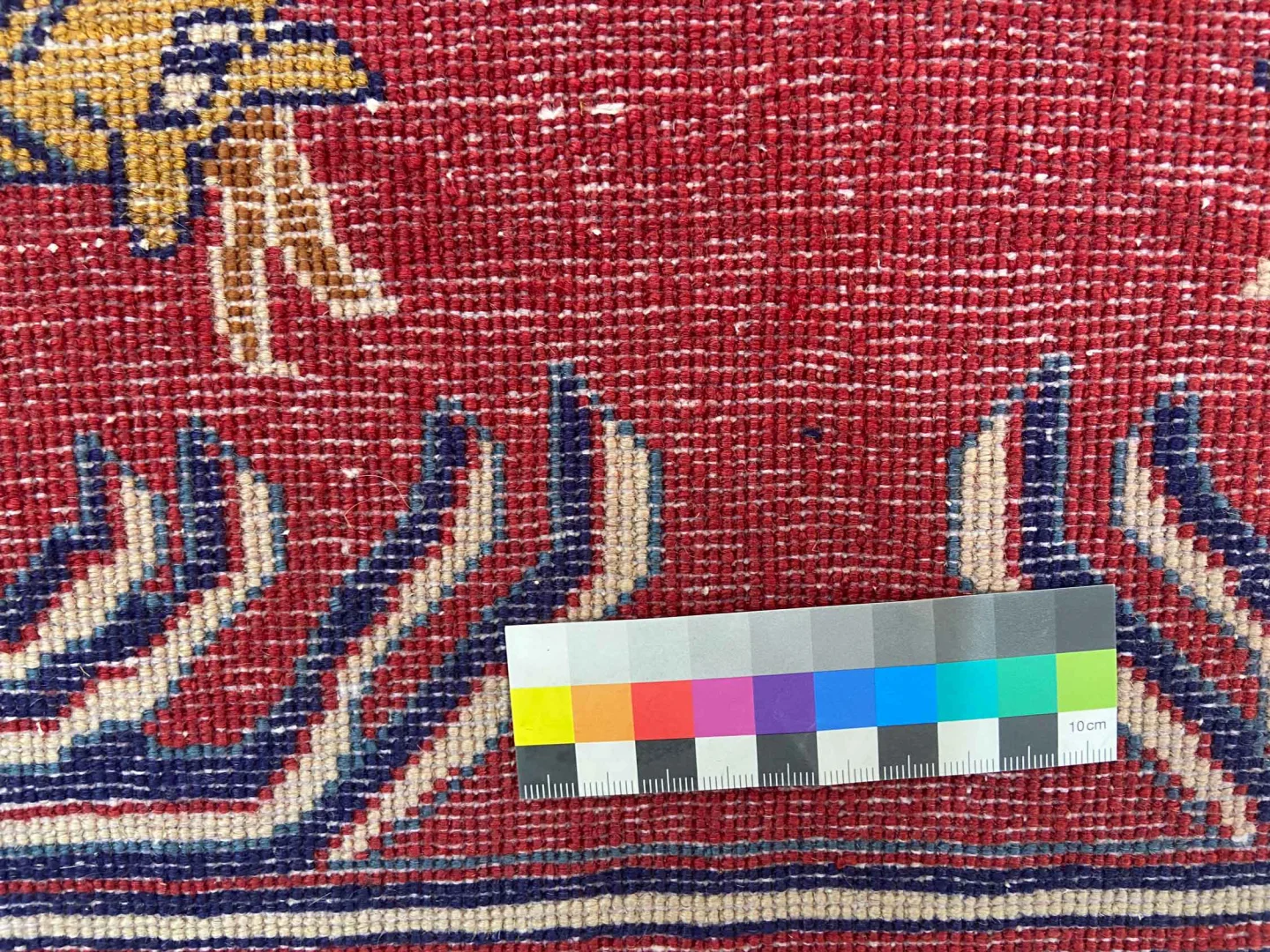
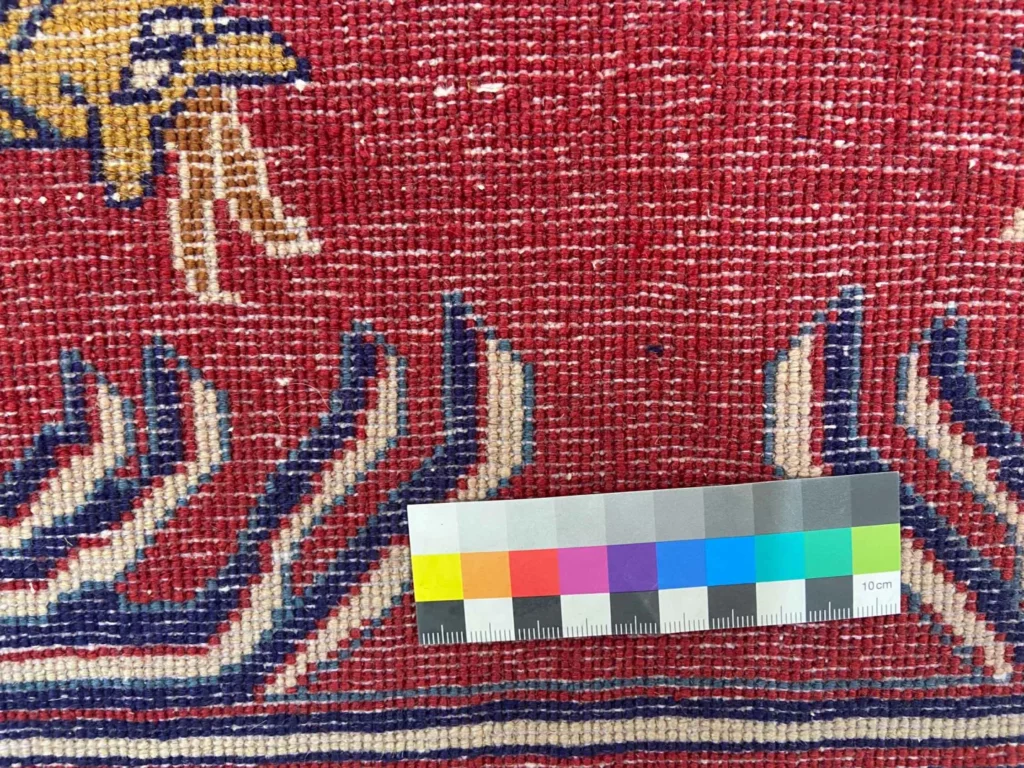
The rug has a knot density of 200,000 to 400,000 knots per square metre. In Sarough rugs, this level of density supports a differentiated rendering of outlines, curves and small floral details. It also creates a closely structured surface. Wool forms the pile and gives the rug the textile surface associated with a wool rug. The stated material, technique and knot density therefore describe both its tactile basis and its hand-made construction.
Hand-knotted rugs are built gradually. The weaver follows an established structure and works knot by knot, row by row. Minor individual features are part of this process and reinforce the character of a unique piece. In this rug, hand-knotting, high-quality wool and the specified knot density come together as clearly identifiable elements of the workmanship. No industrial production step replaces the individual knotting process.
Origin and Tradition
This rug comes from Sarough in northern Persia. Sarough is described as a village in the north of Persia and is associated with its own rug-making tradition. Persian rugs are produced in many regions, each with distinct approaches to construction, ornament and colour. Sarough is particularly connected with hand-made production and with designs that often have floral qualities.
The name Sarough here indicates Persian origin, not simply a decorative motif. In Persian rug culture, a place designation is often linked to practical knowledge about structure, pattern arrangement and the handling of materials. Skills in planning a design, selecting the material and maintaining an even knotting rhythm belong to a developed craft tradition. Regional identity and working technique are therefore closely related.
Many Sarough rugs were originally produced for the American market. Reimported examples are also known as American Sarough. This commercial history helps explain why Sarough rugs appear in different furnishing contexts and collections. It is part of the history of this rug type and does not change its origin in northern Persia.
Persian rug making includes a wide range of recognised centres. Kerman is associated with complex designs and strong colours; Kerman rugs often use geometric patterns and are also hand-knotted. Tabriz and Isfahan likewise have long traditions of rug weaving. Nain and Kashan are known for detailed and artistic creations. These are separate rug regions, not the origin of this Sarough rug. Their relevance here is comparative: all belong to a wider Persian tradition in which material quality, inherited design knowledge and handwork play important roles.
A Persian rug tradition is defined not only by age, but also by the transmission of techniques and design principles. Setting many knots accurately requires patience and close attention to the intended composition. In Sarough, this working method is combined with floral design ideas. The result belongs to a regional tradition in which technical precision and decorative order are developed together.
Design and Pattern
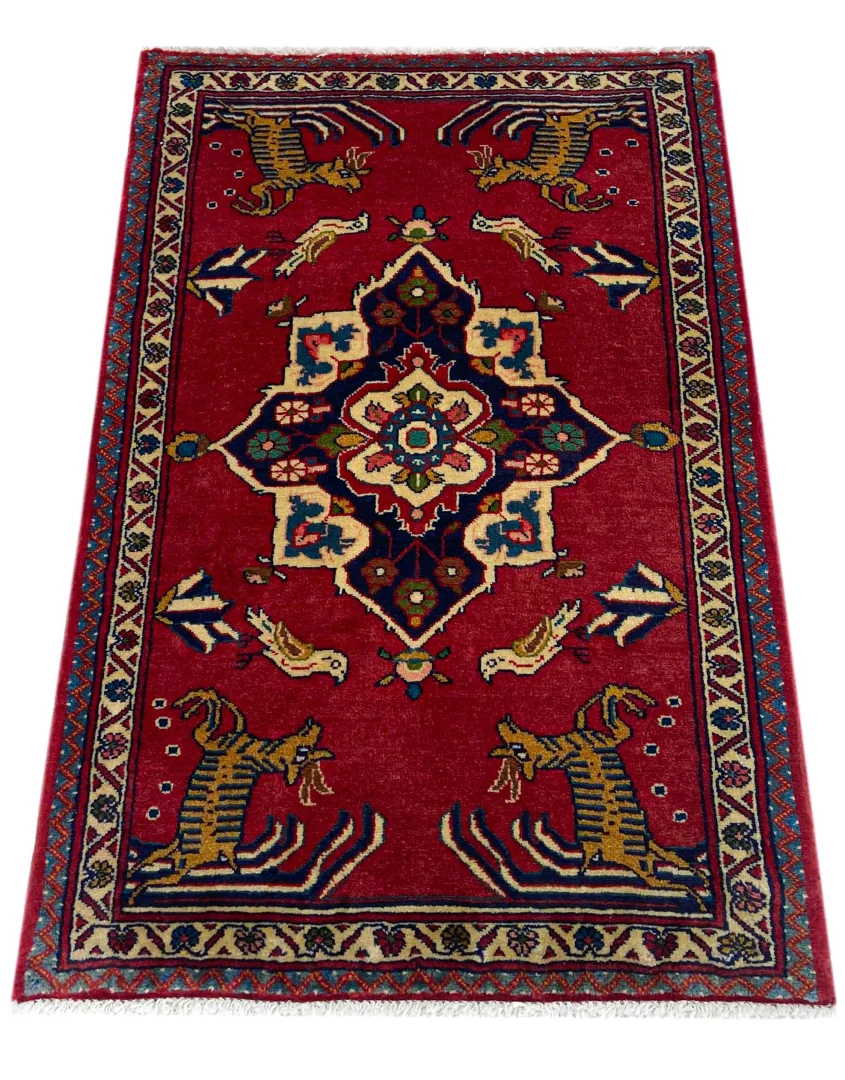
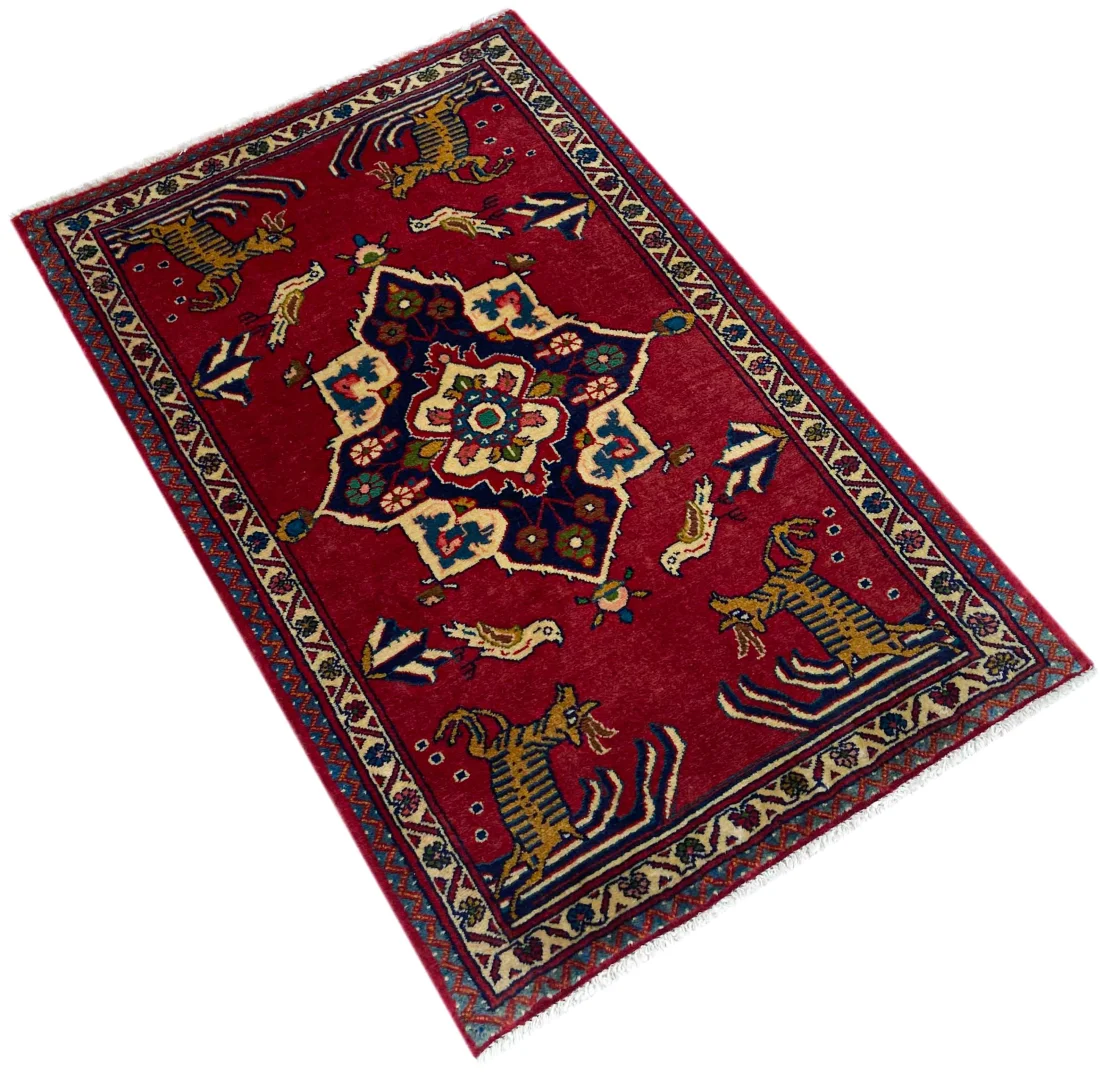
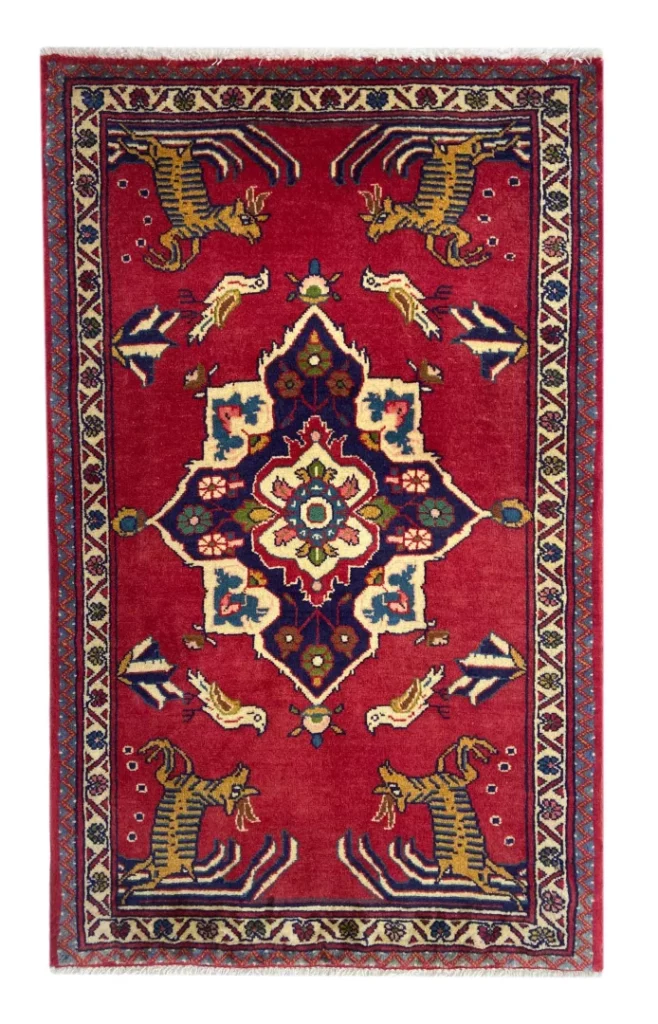
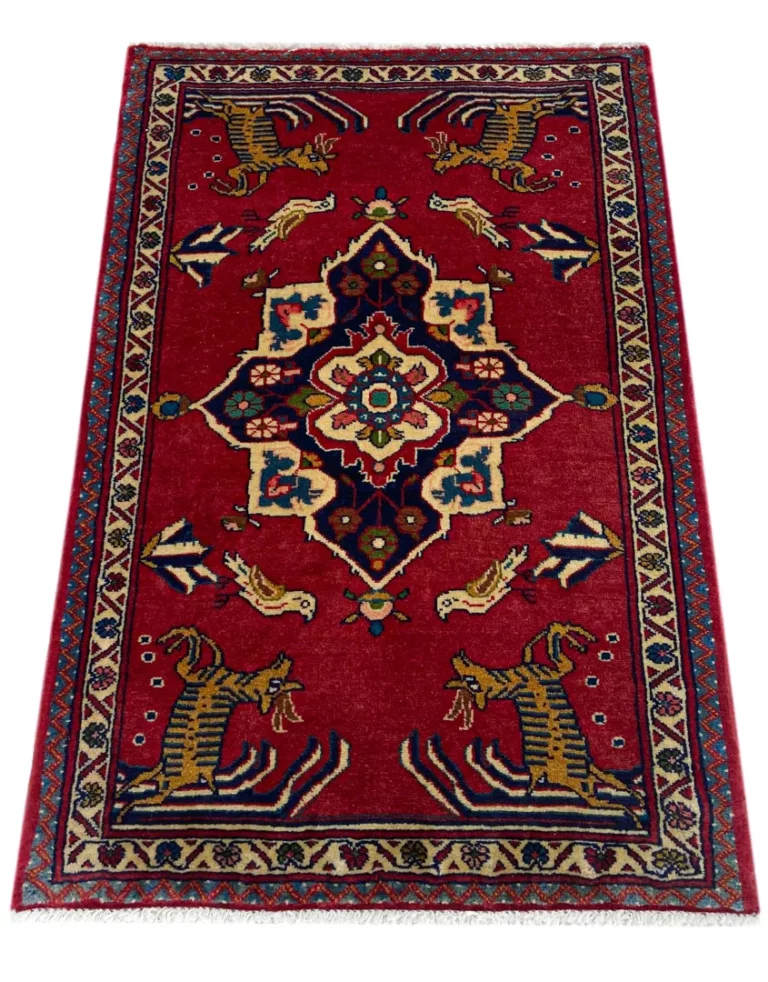
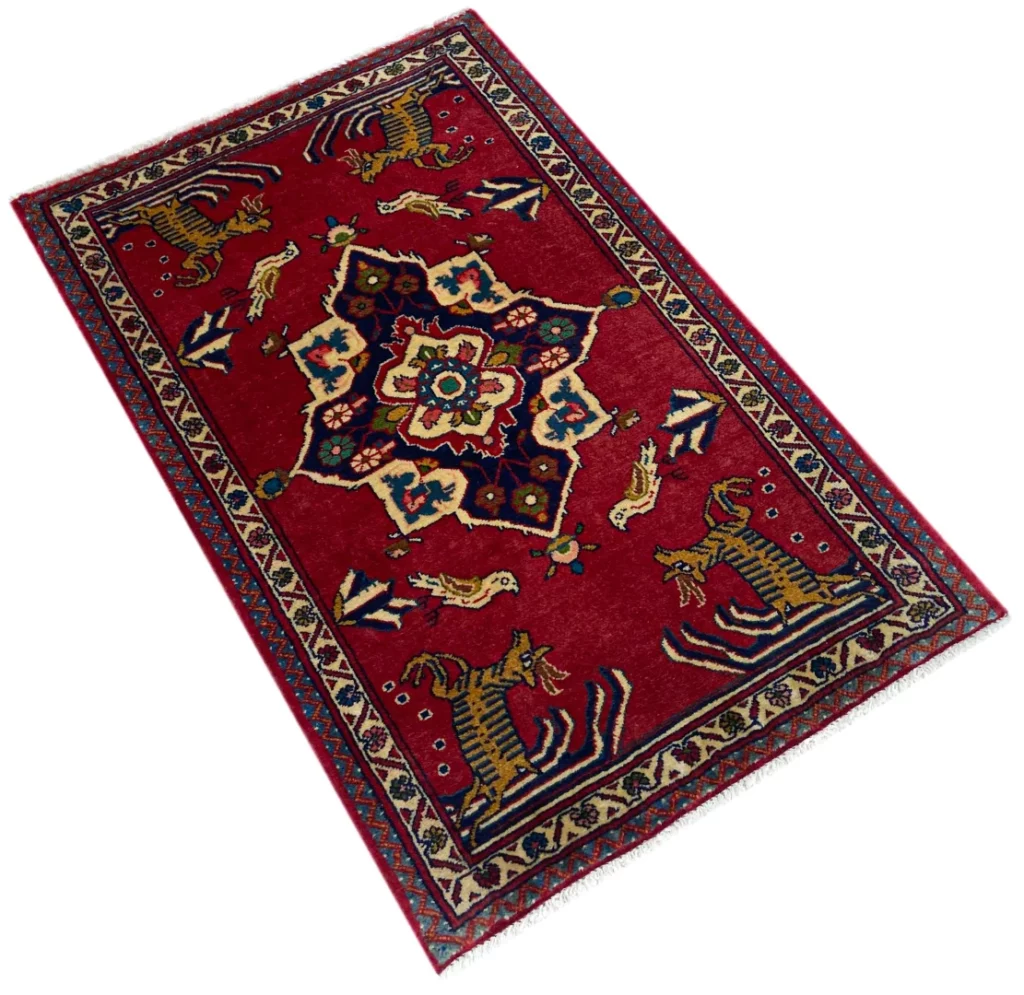
The pattern of this rug is described as a floral design. Floral Persian designs use stylised flowers, leaves, vines and connected plant forms. They do not have to reproduce botanical forms literally. In rug design, such elements are arranged, repeated and adapted to the available field. This creates a coherent ornamental effect while allowing individual shapes to vary within the overall composition.
Floral compositions are among the characteristic design options associated with Sarough rugs. Plant motifs may be arranged symmetrically or in a measured rhythm. Vines can join separate blossoms, while leaf forms provide transitions between larger ornaments. A high knot density helps reproduce fine contours and small motif details. This is background to the Sarough design tradition; the specific statement about this rug remains that it has a floral design.
Strong red and soft brown are described as frequent ground tones in Sarough rugs. Within the regional design vocabulary, these colours can create a warm and unified impression. This is a description of the colour world commonly associated with Sarough, not an additional claim about the particular colours of this individual rug. Its concrete design classification is the floral pattern together with its Sarough origin and Persian hand-knotting tradition.
Floral patterns can be developed in many ways within Persian rug weaving. A composition may focus on a central ornament or present a continuing sequence of vines and blossoms. The balance between larger and smaller forms also changes the visual structure of a design. Through knotting, contours are built in many small stages. The pattern thus retains the texture of the textile and remains directly connected to the technique used to make it.
The comparison regions illustrate the breadth of Persian pattern traditions. Kerman is linked with complex designs and strong colours, while Tabriz and Isfahan are associated with long weaving traditions and fine detail. Nain and Kashan are also known for elaborate, artistic designs. These references place the floral pattern in a broader context. They do not make this Sarough rug a Kerman, Tabriz, Isfahan, Nain or Kashan rug.
Special Features
The specific features of this one-off piece are its origin in Sarough in northern Persia, its hand-knotted construction, its pile of high-quality wool, its knot density of 200,000 to 400,000 knots per square metre and its floral design. Its condition is described as very good. Together, these details provide a precise description of the rug offered here.
The combination of a high knot density and floral decoration reflects a construction in which many small manual steps form an ordered composition. Hand production makes each piece unique. The rug is therefore defined not by its place name alone, but by the combination of origin, material, technique, pattern and condition.
The term American Sarough is used for reimported Sarough rugs that were originally produced for the American market. It describes part of the market history associated with this rug type. It does not replace the origin stated as Sarough in northern Persia, nor does it indicate a different country of manufacture.
FAQ
How should I care for my Sarough Persian Rug?
For routine care, vacuum the rug regularly at a low setting. This removes loose dirt while limiting unnecessary stress on the pile. Occasional beating is also included among the recommended measures. If a stain occurs, respond immediately with a damp cloth and mild soapy water. The cloth should be damp rather than wet, and the affected area should be treated carefully instead of rubbed aggressively. A restrained, regular approach helps preserve the wool pile and the appearance of the floral surface.
What makes Sarough rugs distinctive?
Sarough rugs are known for high knot density, fine floral patterns and the use of high-quality wool. Dense knotting supports precise rendering of the motifs and gives the rug a clearly structured surface. The hand-made process is another defining feature: every rug is hand-knotted and is therefore a one-off piece. Northern Persian origin, traditional technique, wool pile and floral design together provide the characteristic profile of this rug type.
How can I recognise a high-quality Sarough rug?
Knot density, the quality of the wool and the execution of the pattern are important points of assessment. A high-quality Sarough rug has a dense, even knotting technique. Its floral forms should also be clearly and carefully worked. Living colours that do not fade are mentioned as another feature to consider. Along with hand-knotted construction and condition, these points provide a practical basis for evaluating a Sarough rug.
To provide the best experiences, we use technologies like cookies to store and/or access device information. Consenting to these technologies will allow us to process data such as browsing behavior or unique IDs on this site. Not consenting or withdrawing consent, may adversely affect certain features and functions.
Functional Always active
The technical storage or access is strictly necessary for the legitimate purpose of enabling the use of a specific service explicitly requested by the subscriber or user, or for the sole purpose of carrying out the transmission of a communication over an electronic communications network.
Preferences
The technical storage or access is necessary for the legitimate purpose of storing preferences that are not requested by the subscriber or user.
Statistics
The technical storage or access that is used exclusively for statistical purposes.The technical storage or access that is used exclusively for anonymous statistical purposes. Without a subpoena, voluntary compliance on the part of your Internet Service Provider, or additional records from a third party, information stored or retrieved for this purpose alone cannot usually be used to identify you.
Marketing
The technical storage or access is required to create user profiles to send advertising, or to track the user on a website or across several websites for similar marketing purposes.

 SECURE PAYMENT
 SHIPPING PARTNERS


