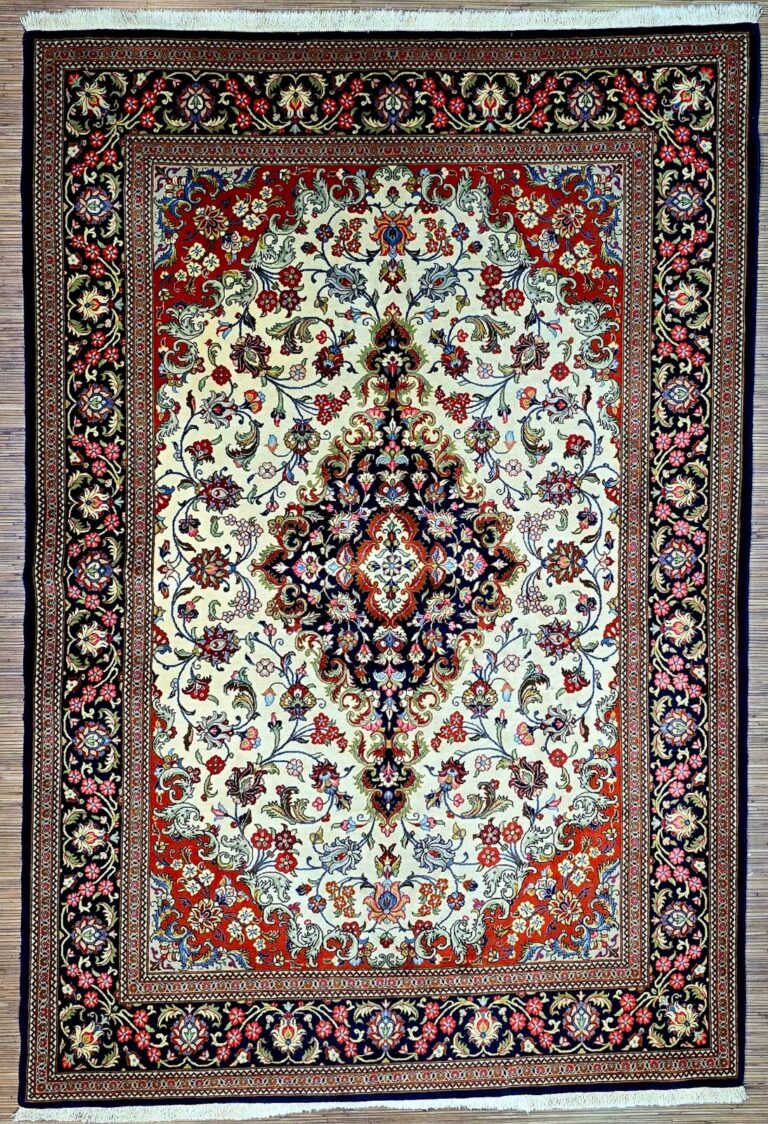
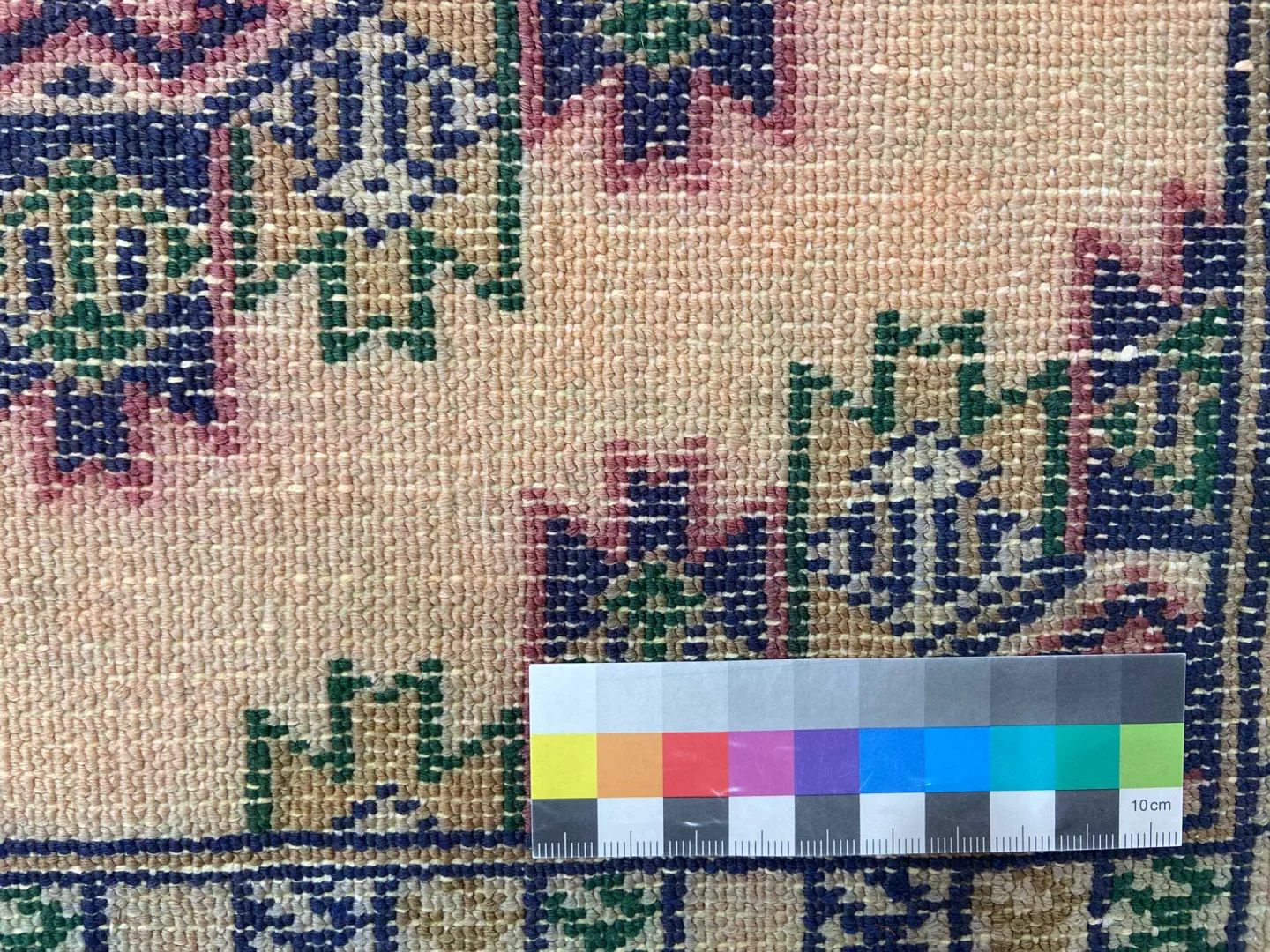
This Persian rug is hand-knotted from high-quality wool. Wool is known for its durability and pleasant feel, giving the rug a naturally tactile surface as well as a resilient material base. Its hand-knotted construction places it within the established craft tradition of Persian rug making, where the structure is built knot by knot rather than produced as a printed or mechanically formed design.
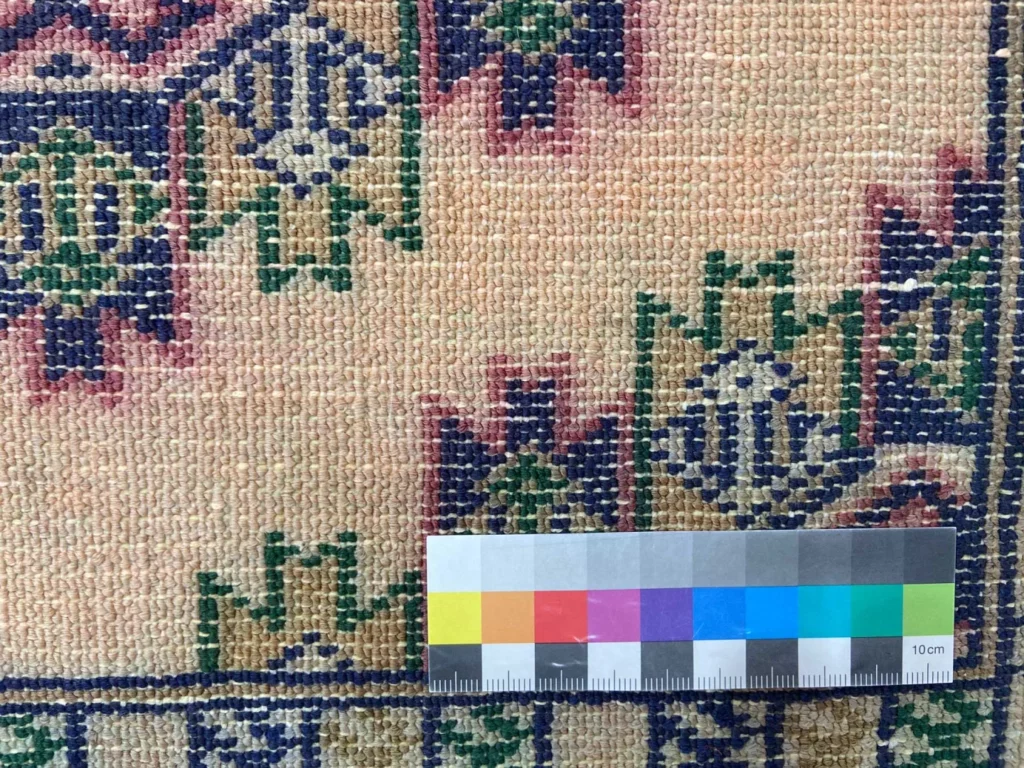
The rug has a knot density of approximately 200,000 knots per square metre. A dense knot structure supports the rendering of fine and complex motifs. In Turkman rugs, this technical characteristic is associated with the careful workmanship of North Persia. The combination of wool, handwork and a closely worked surface provides the foundation for the rug’s texture and pattern definition.
Regular vacuuming is suitable for the routine care of a Persian rug. Occasional professional cleaning helps preserve the colours and supports the wool in retaining its shape. Direct sunlight should be avoided in order to reduce the risk of fading. These recommendations reflect the needs of a wool rug with hand-knotted construction and coloured ornamentation.
Origin and Tradition
This rug comes from North Persia, from an area near the border with Turkmenistan. The term Turkman rug refers to a tradition shaped by the cultural connections of this northern region. North Persia has long been a meeting place for different cultural and craft influences. Its rugs therefore express both local weaving knowledge and the wider heritage of the northern Iranian area.
Rug making in the region depends on the transmission of practical skills from one generation to the next. These skills include preparing and handling wool, forming the knots, maintaining an ordered field of motifs and coordinating a distinctive colour range. Turkman rugs are associated with fine knots, a high knot density and a clearly developed pattern language. Together, these features make them an example of the craftsmanship and cultural heritage of Persian rug making.
The regional tradition is also connected with nomadic ways of life. Designs and techniques were passed on over time and adapted to the circumstances in which the rugs were made and used. A hand-knotted rug is consequently more than a household object: it also carries knowledge of material, structure and ornament. Repeated forms create visual continuity, while the hand-made process gives each individual rug its own execution.
North Persia is part of a wider and varied Iranian rug landscape. Heriz rugs are known for geometric designs and strong colours. Kerman rugs from southern Iran are associated with floral compositions and delicate colour nuances. Shiraz rugs, made by nomadic tribes, often feature colourful folkloric patterns. These examples show the diversity of Iranian rug traditions and should be understood as distinct regional expressions rather than as interchangeable names for the same origin.
Design and Pattern
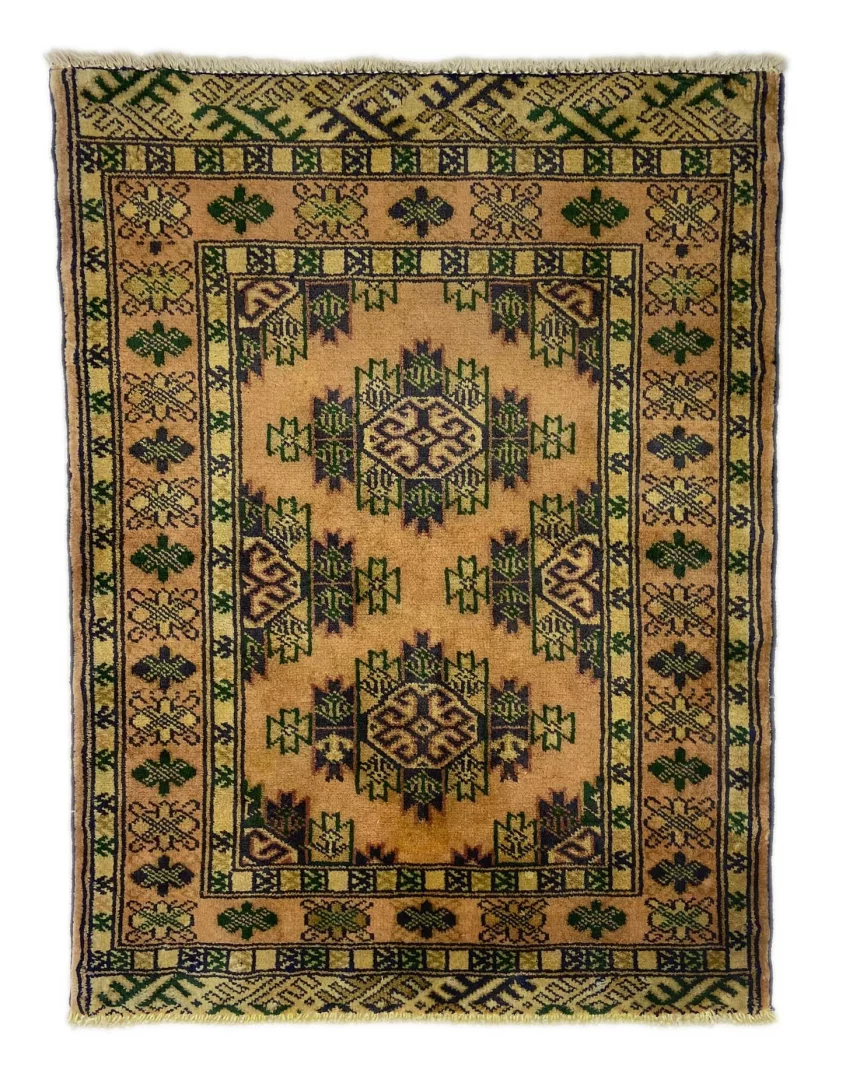
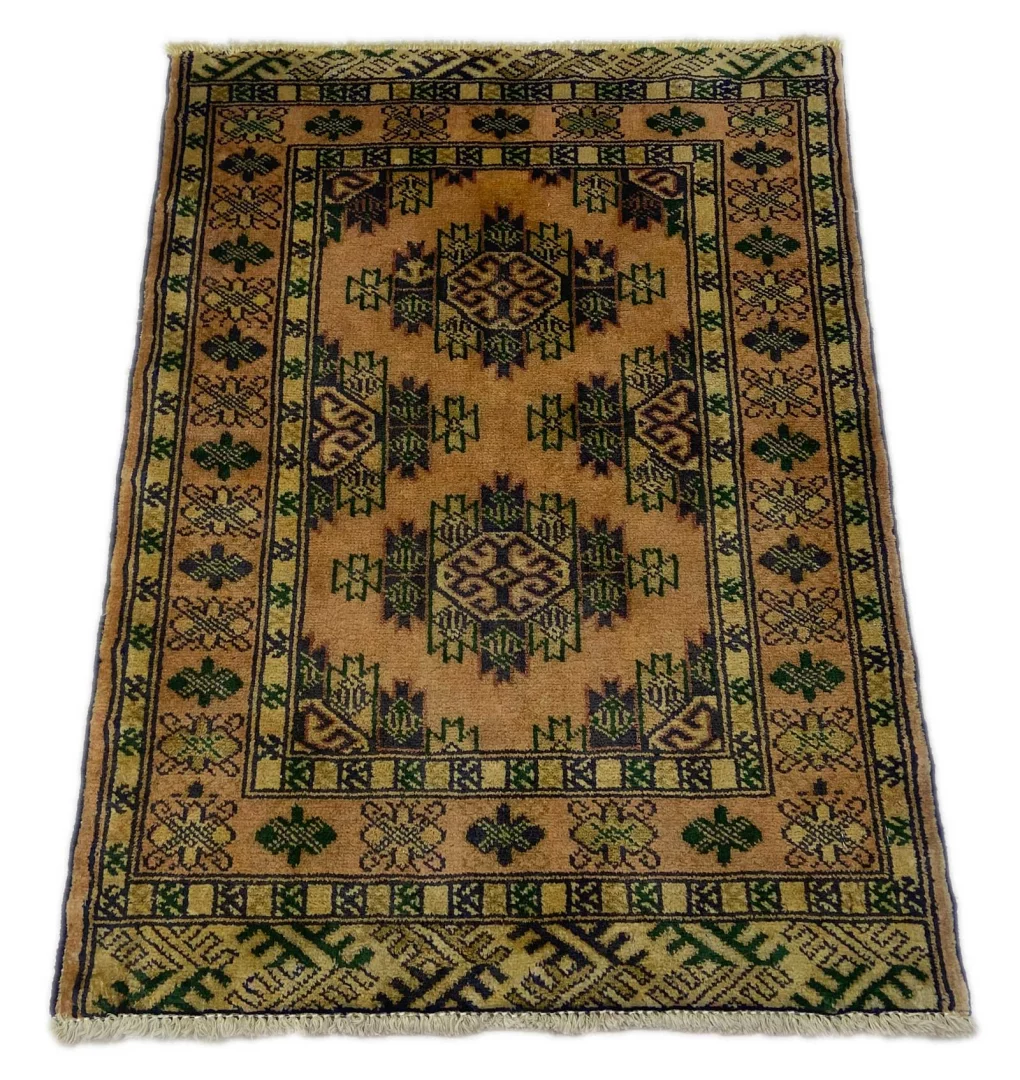
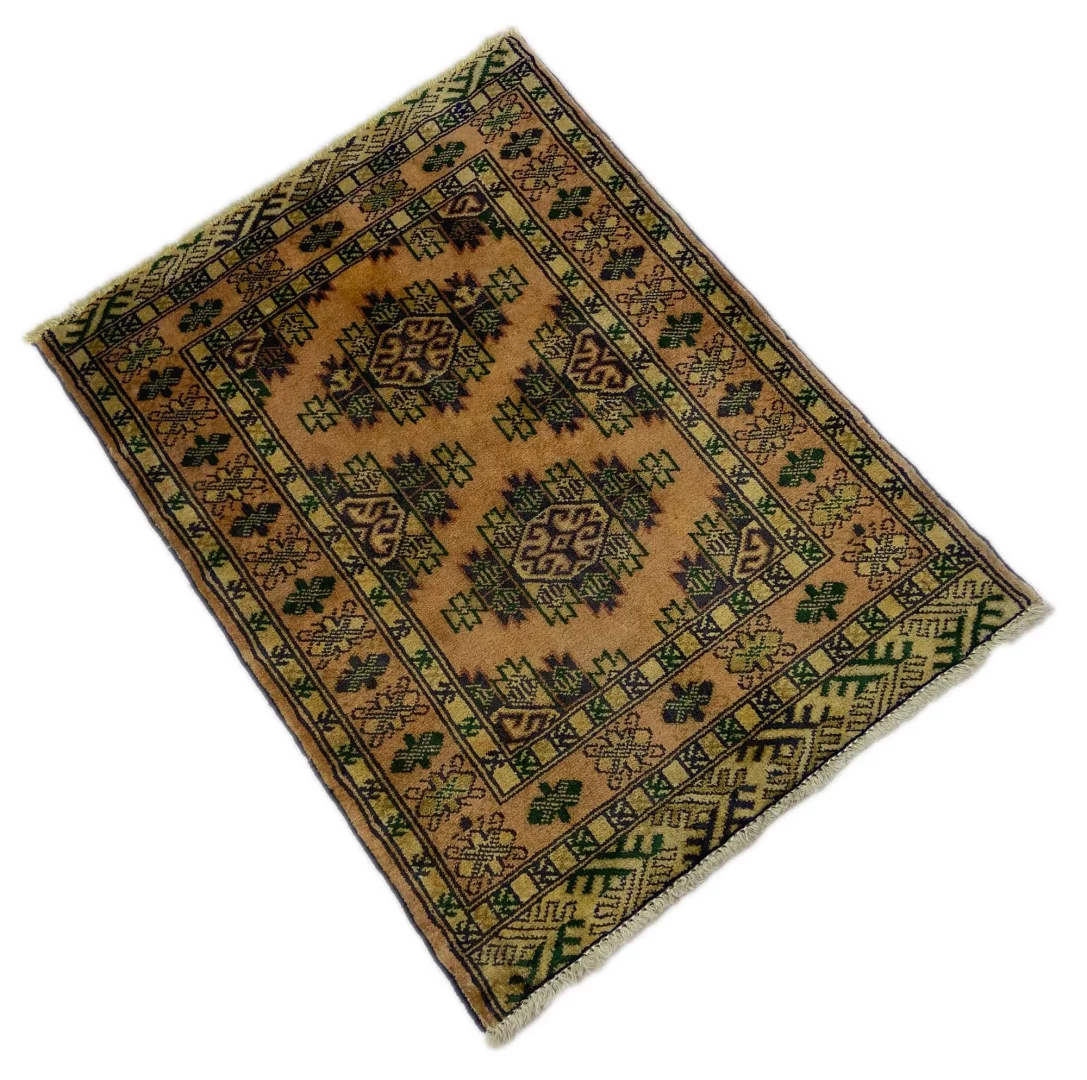
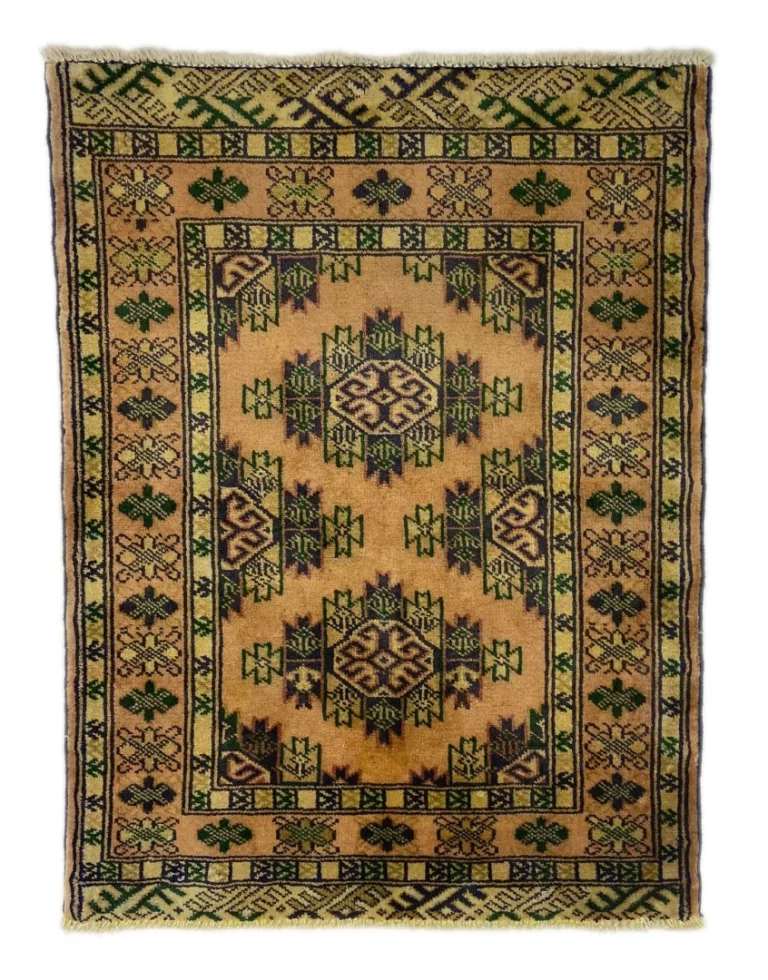
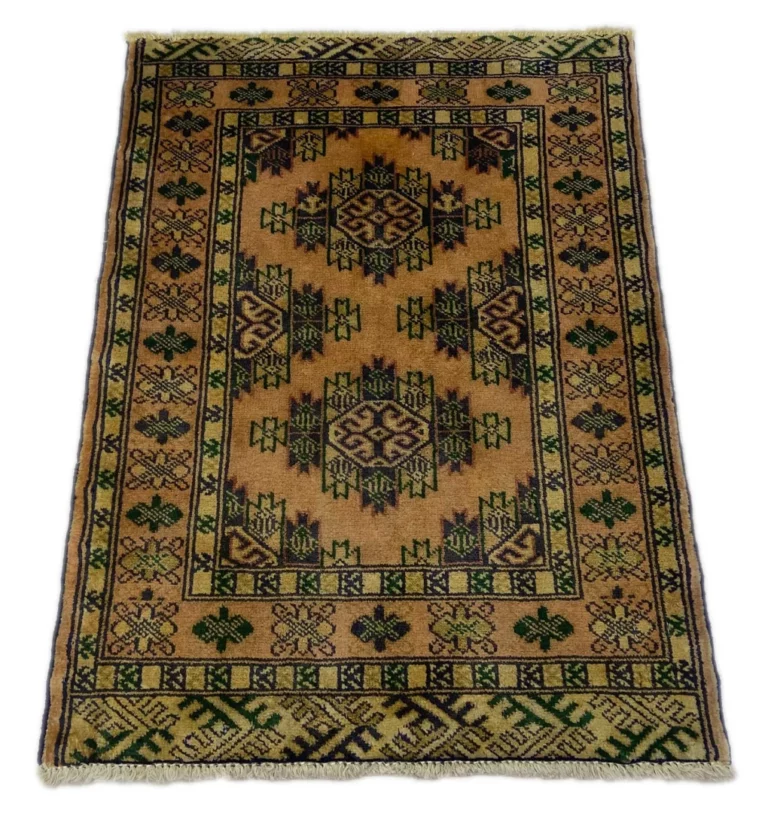
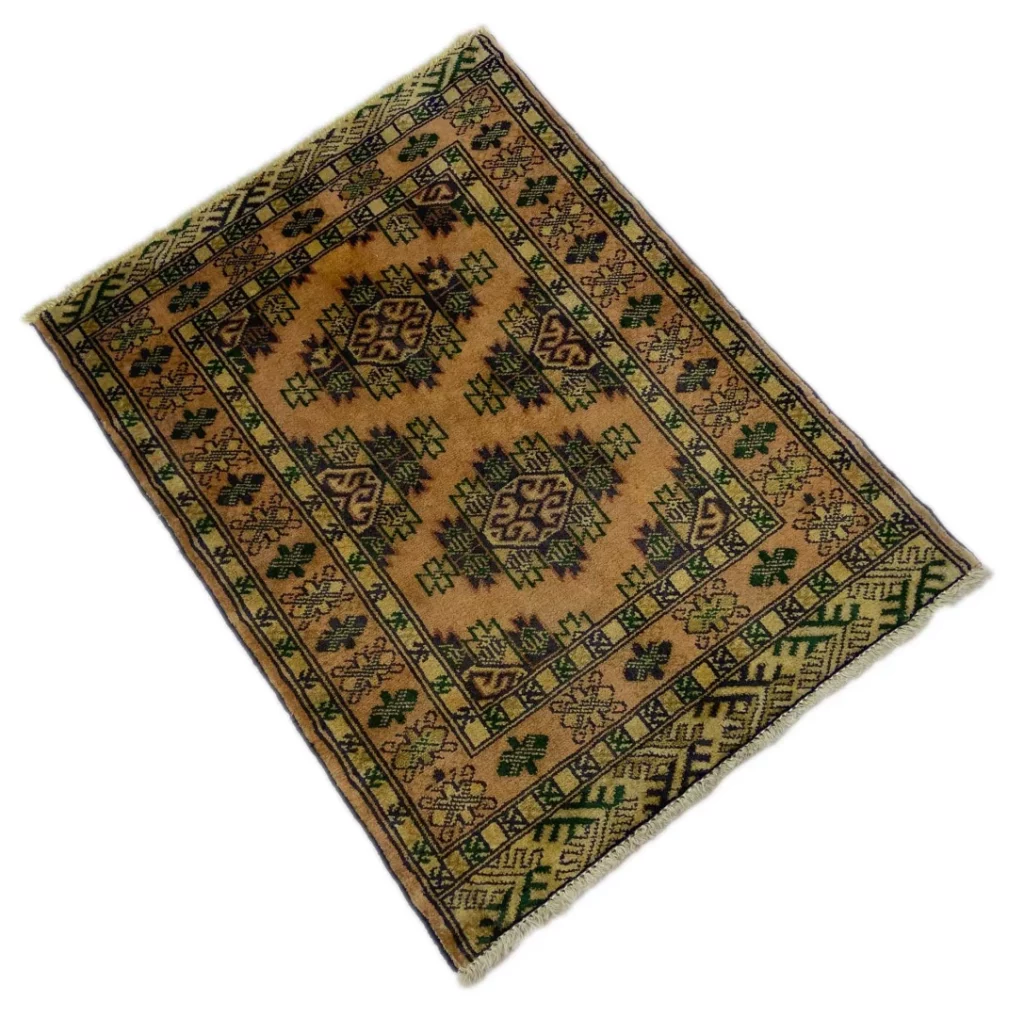
The design of this Turkman rug is defined by varied Göl motifs. A Göl is a recurring, clearly shaped ornament used as a central element in many rug designs. In Turkman weaving, such forms are arranged across the field in an ordered yet varied composition. The result is a pattern that has a recognisable rhythm without losing the complexity of its individual details.
The repeated Göl elements structure the surface through sequence, spacing and variation. Each ornament can be viewed separately, but it also relates to the motifs around it and to the areas between the larger forms. This relationship between repetition and difference is important to the visual language of Turkman rugs. The fine knotting supports the precise expression of the complex pattern details.
The stated colour palette consists of red, violet and brown. Red provides a warm and assertive foundation, while violet adds a distinctive and intense note. Brown contributes an earthy tone that connects the colours within the overall composition. Together, these shades form the characteristic combination described for this rug and give the Göl pattern a warm, richly contrasted setting.
The motifs and colours are closely tied to the cultural tradition of the region. Ornament in a rug is not merely surface decoration; it also reflects a recognisable vocabulary developed through local weaving practices. Here, the distributed Göl elements, the dense knotting and the selected colours work together to form the visual identity of a Turkman rug from North Persia. The pattern remains connected to that tradition even when placed in a contemporary interior.
The design can be used in modern, classic or oriental interiors. This versatility follows from the balance between repeated geometry, detailed workmanship and a warm colour range. In a restrained room, the ornament can provide a clearly defined focal pattern; in a more traditional setting, it can sit naturally alongside other regional forms. Its design language nevertheless remains specific to the Turkman tradition rather than becoming a generic oriental pattern.
Special Features
The rug combines hand-knotted construction, high-quality wool and varied Göl motifs. Its other stated characteristics include the red, violet and brown colour range and its origin in North Persia near the Turkmenistan border. The high knot density is another defining feature of its workmanship and contributes to the fine, complex appearance associated with Turkman rugs.
Turkman rugs are connected with the cultural diversity of their region and with the heritage of nomadic rug making. Each hand-knotted rug is an individual piece of craft. Care is straightforward: regular vacuuming, occasional professional cleaning and protection from direct sunlight help maintain the colours and the shape of the wool.
FAQ
How should I care for my Persian rug?
Vacuum the rug regularly as part of its routine care. Occasional professional cleaning is also recommended. Keep it out of direct sunlight to help prevent the colours from fading. Appropriate care supports the wool in retaining its shape and helps the rug remain usable over a long period.
What sizes are available for Persian rugs?
Persian rugs are available in a range of sizes, from small runners to large room rugs. The suitable format depends on the intended position, the available space and individual requirements. The dimensions of this one-off rug are provided in the product information.
What makes Turkman rugs distinctive?
Turkman rugs are recognised for fine knots, high knot density and distinctive patterns shaped by the cultural tradition of the region. Varied Göl motifs are a central feature of their design. High-quality wool, hand-knotted workmanship and the red, violet and brown palette further define this North Persian example.
To provide the best experiences, we use technologies like cookies to store and/or access device information. Consenting to these technologies will allow us to process data such as browsing behavior or unique IDs on this site. Not consenting or withdrawing consent, may adversely affect certain features and functions.
Functional Always active
The technical storage or access is strictly necessary for the legitimate purpose of enabling the use of a specific service explicitly requested by the subscriber or user, or for the sole purpose of carrying out the transmission of a communication over an electronic communications network.
Preferences
The technical storage or access is necessary for the legitimate purpose of storing preferences that are not requested by the subscriber or user.
Statistics
The technical storage or access that is used exclusively for statistical purposes.The technical storage or access that is used exclusively for anonymous statistical purposes. Without a subpoena, voluntary compliance on the part of your Internet Service Provider, or additional records from a third party, information stored or retrieved for this purpose alone cannot usually be used to identify you.
Marketing
The technical storage or access is required to create user profiles to send advertising, or to track the user on a website or across several websites for similar marketing purposes.
 SECURE PAYMENT
 SHIPPING PARTNERS