Persian Rug Nain Kashmir 90 x 60 cm Wool Hand-knotted
€ 160
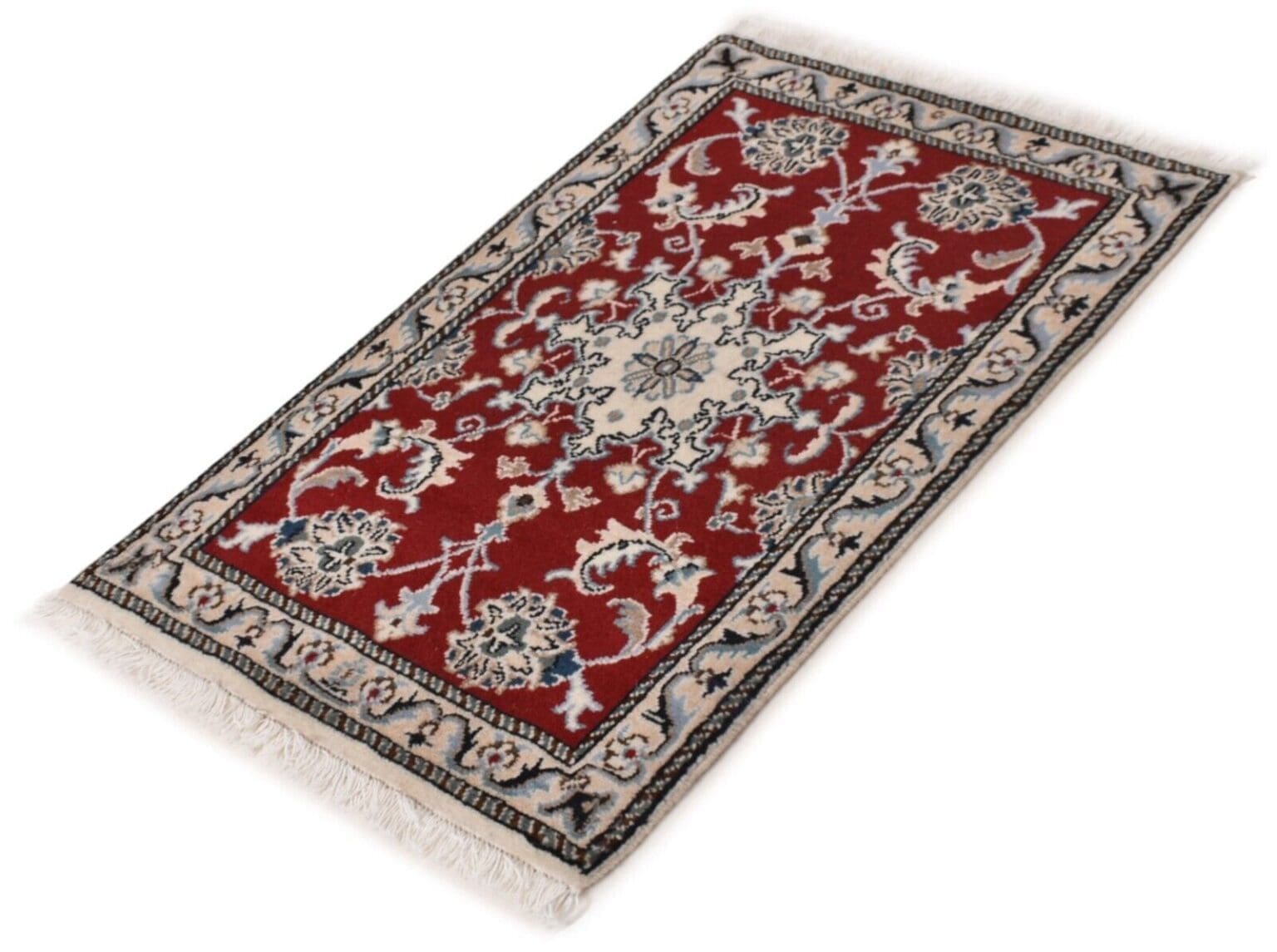
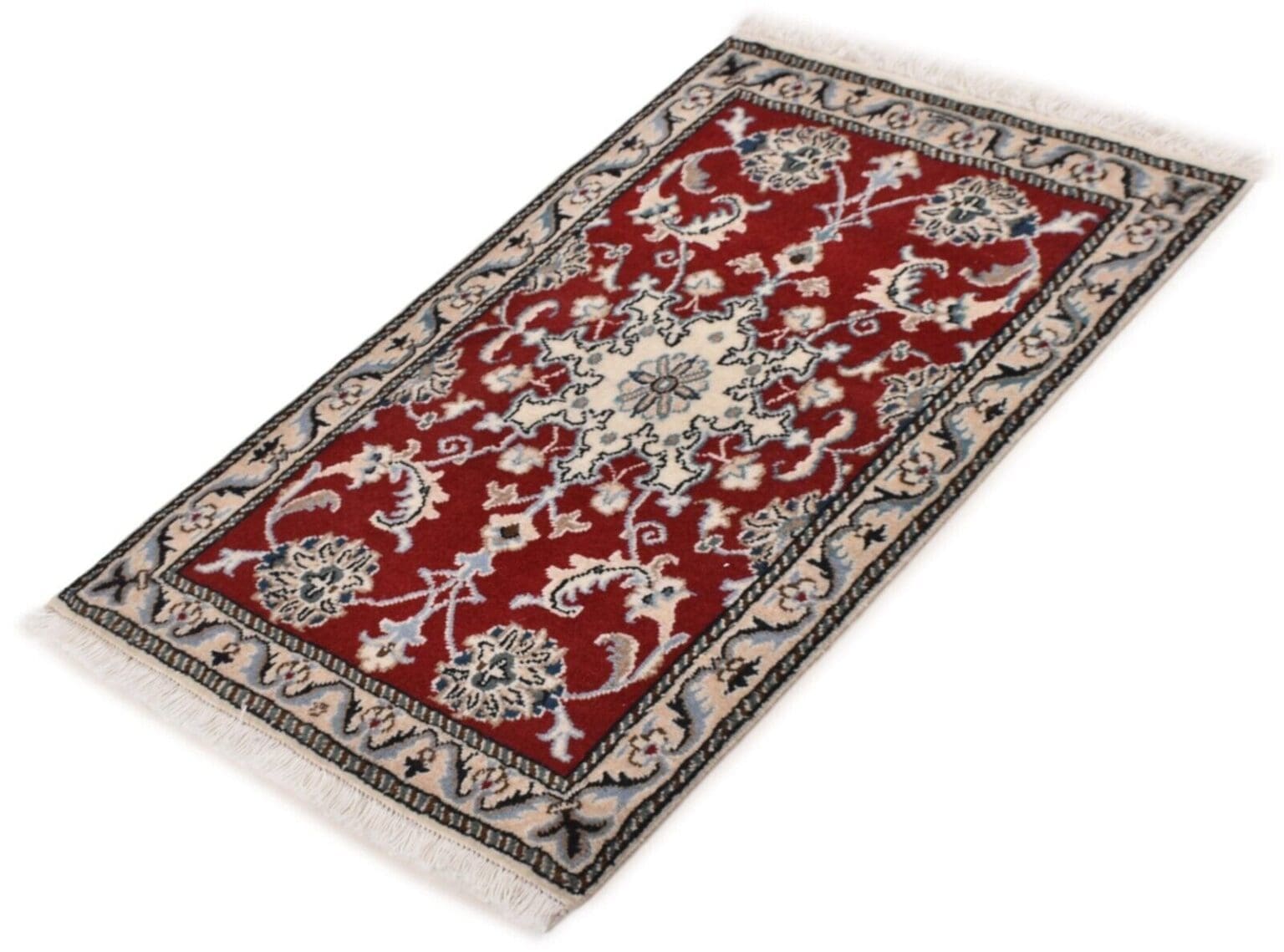
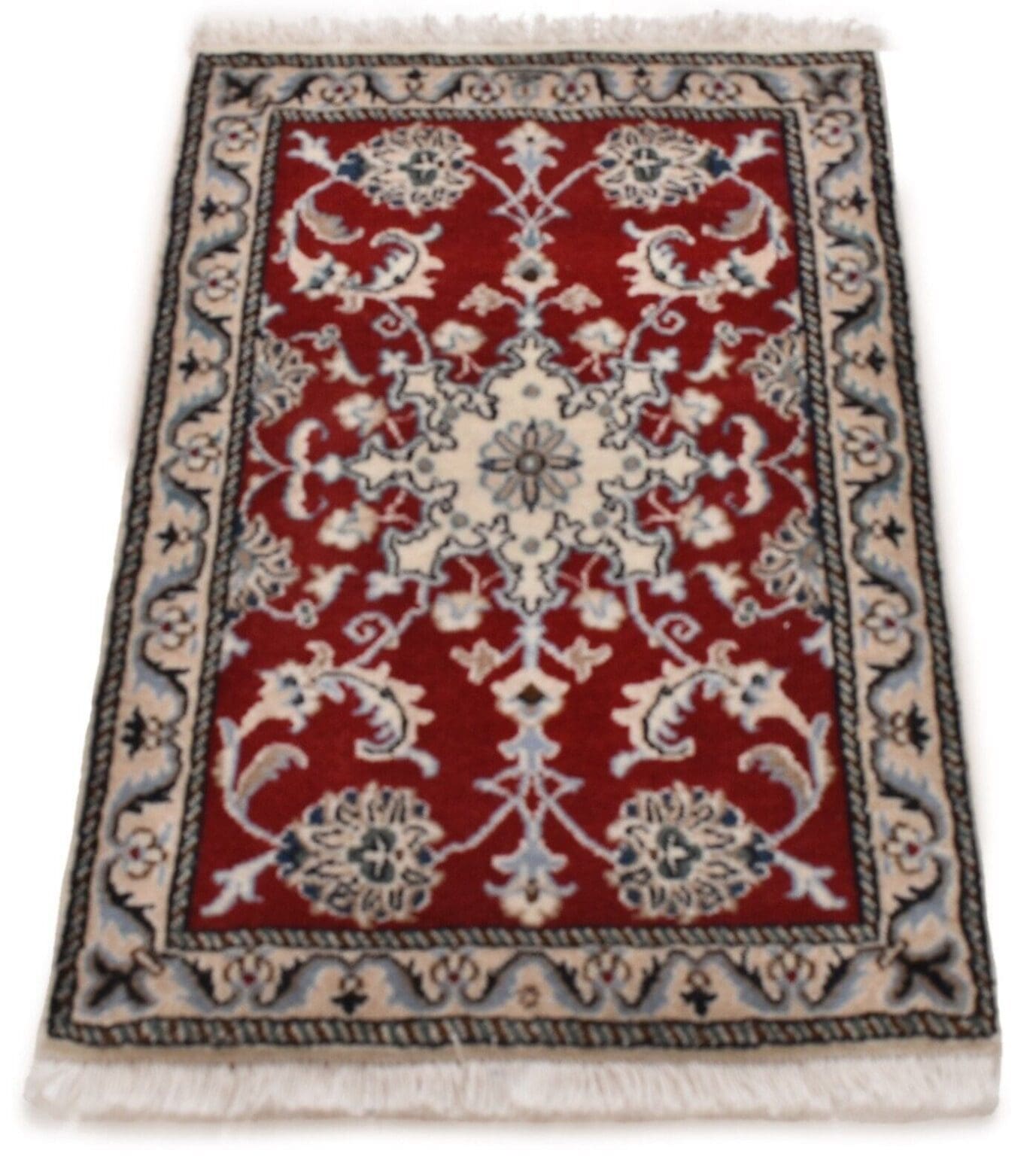
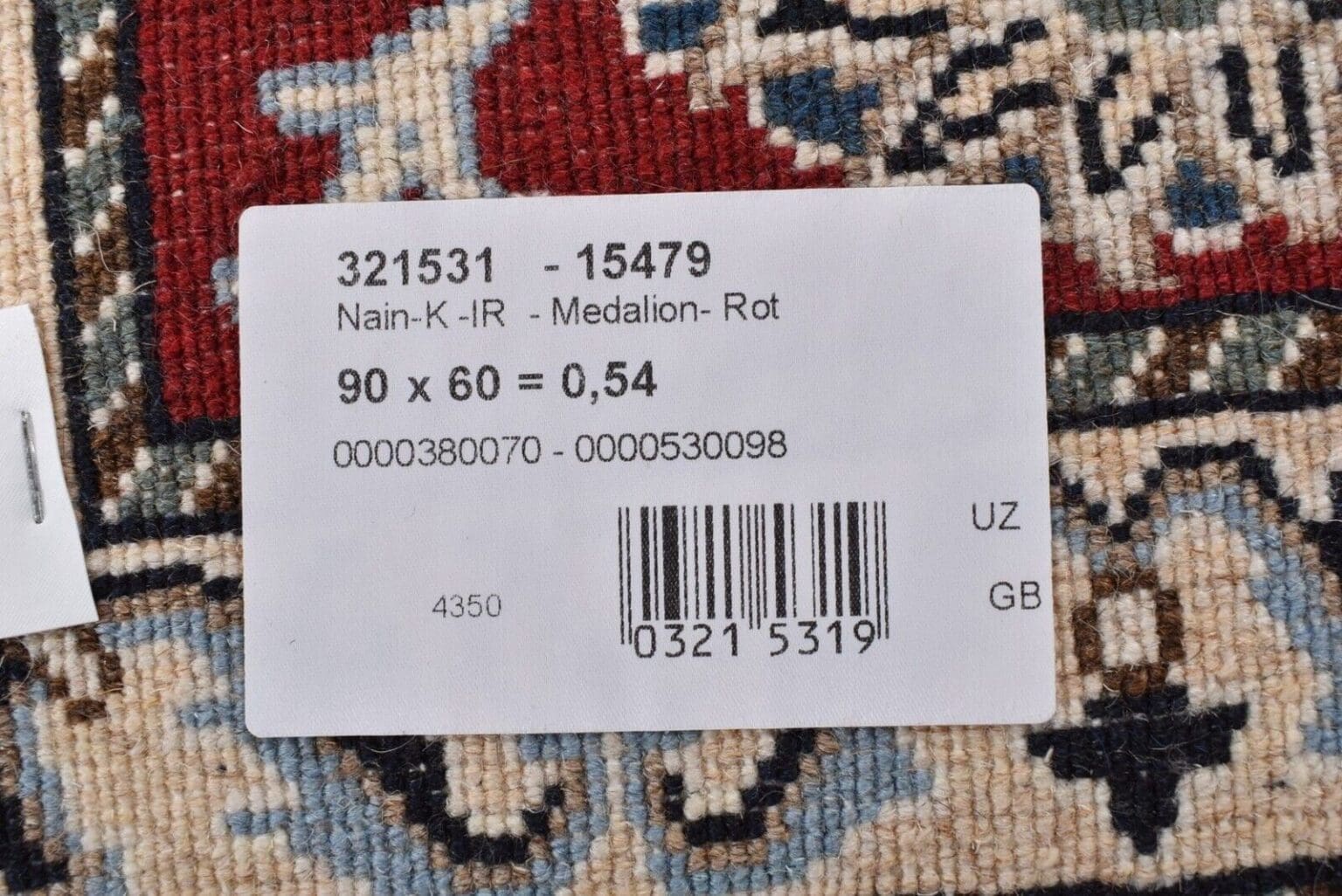
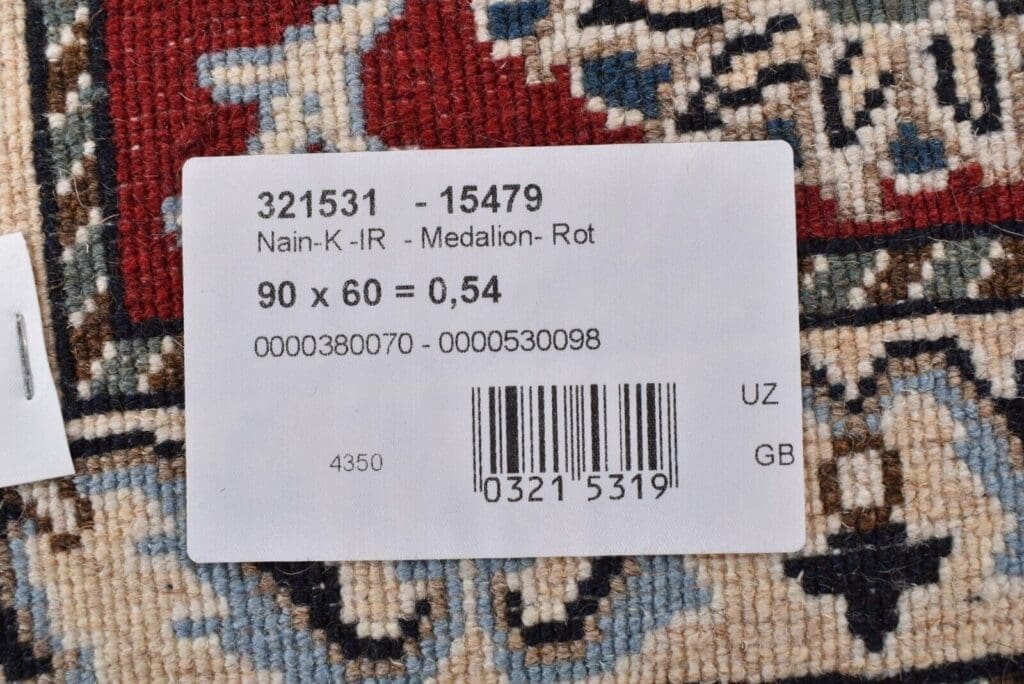
Hand-knotted Nain Persian rug | Knot density: Hand-knotted | Material: wool and cotton | Size: 90 x 60 cm | Pattern: Oriental with floral motifs | Condition: new, without label
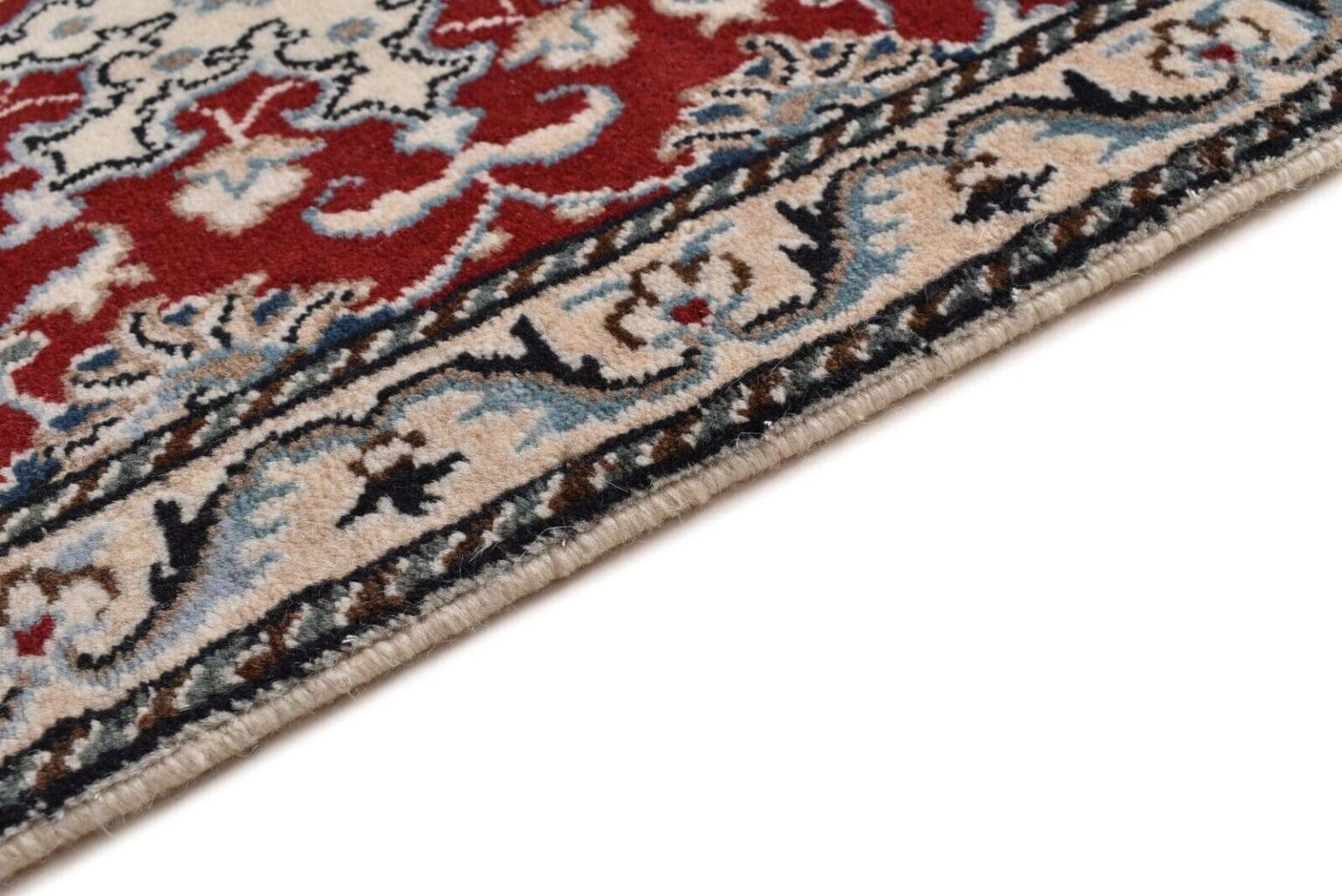
This Nain Persian rug is hand-knotted and made from wool and cotton. These materials belong to the established vocabulary of Iranian rug making. Wool is traditionally used for the pile of Persian rugs, while cotton is also an important material in rug construction. The fibres influence the handle, fall and appearance of a rug in the room. This piece is described as having a high pile, giving its surface a clearly raised and tactile structure.
Hand-knotting means that the rug is not produced as a standard industrial floor covering. Individual knots are worked into the prepared structure, building the surface and the design together. This method is central to Persian rug making and requires practiced manual work. The drawing of the pattern is linked directly to the construction process, so the finished textile is the result of both a design plan and repeated handwork. The hand-knotted technique is an expressly stated feature of this one-off piece.
The rug is described as new and without a label. This identifies the condition offered for sale without adding an age claim. Its suitability for underfloor heating is also stated. That suitability relates to its intended use in a living environment. As with any high-pile textile, sensible operation of the heating, a dry setting and regular material-appropriate care remain useful. The pile should be treated gently during everyday cleaning and when furniture is moved across the room.
Origin and Tradition
The rug comes from Iran and is identified as a Persian rug. Iran has a long and varied rug-making culture in which different regions developed their own approaches to drawing, colour and construction. Nain is one of the recognised names within that tradition. The name is associated with a Persian style often shaped by ordered compositions and detailed floral ornament. A hand-knotted rug is also an individual textile object because the manual sequence of knots cannot be reproduced in exactly the same way each time.
Persian rugs have historically been made in many regions and for both practical and representative interiors. Their craft combines a useful floor covering with a carefully organised image. A rug protects and defines the floor, while its pattern establishes a visual relationship between the centre, the surrounding field and the room. The tradition therefore preserves not only techniques but also established ways of arranging ornament. Nain belongs to this wider Iranian culture of regional weaving and design.
The stated origin Iran should be kept separate from names used for styles or motifs. A regional name can refer to a design language or a rug type, while the origin of this offered piece is explicitly given as Iran. The title includes Nain Kashmari, and the product information identifies the rug as Nain with an Oriental floral pattern. The precise, factual classification is therefore an Iranian Persian rug with a traditional Persian and Oriental appearance and floral decoration.
Iranian rug culture includes many centres and distinct traditions. Kerman rugs are associated with detailed and often colourful designs, while Tabriz rugs are known for complex patterns and the use of quality materials. Kashmiri rugs are often connected with exceptionally soft fibres. These names describe other rug traditions and are not the origin stated for this Nain rug. The range of Iranian weaving regions helps explain why Persian rugs can differ greatly while remaining part of a connected historical craft.
Design and Pattern
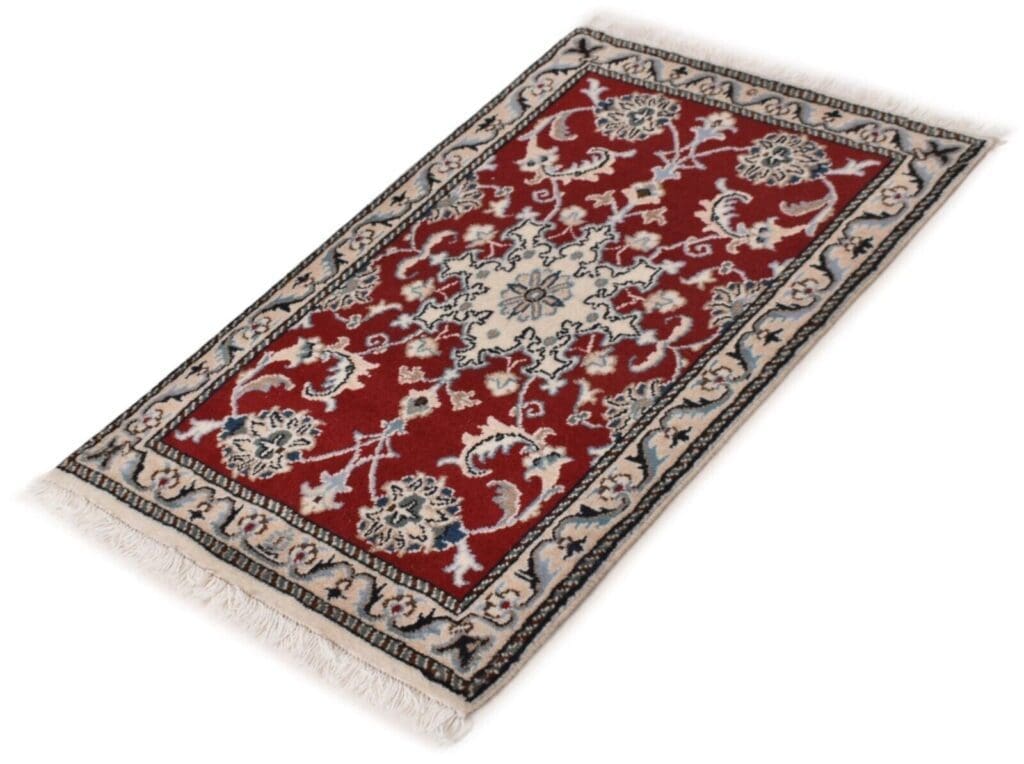
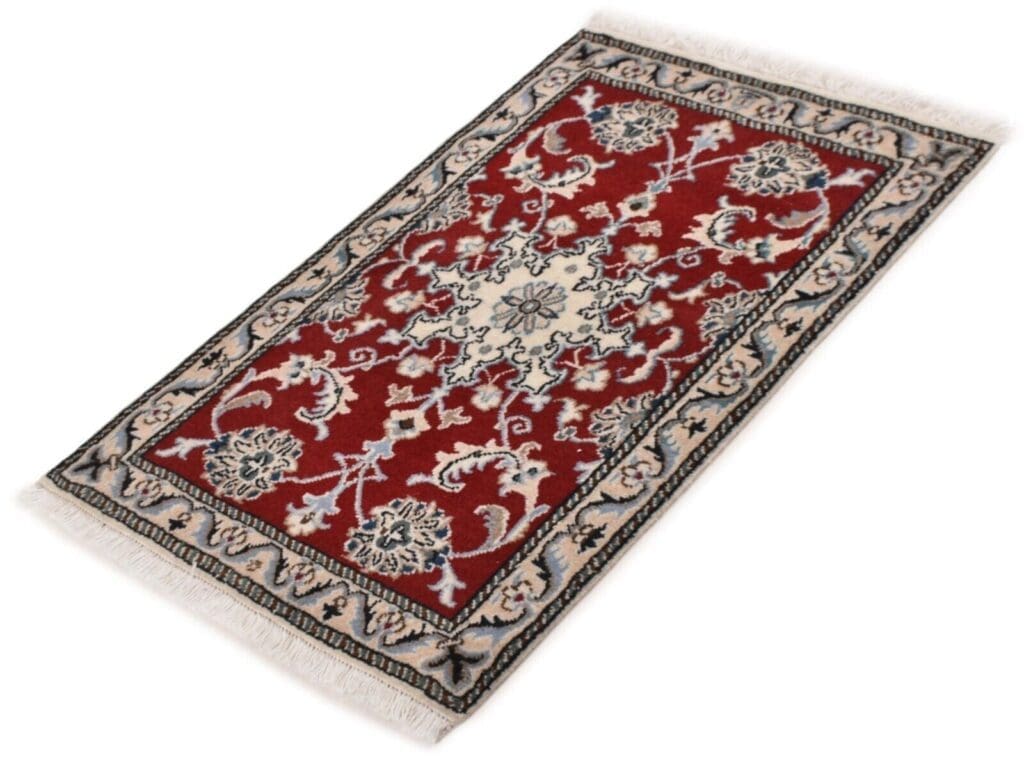
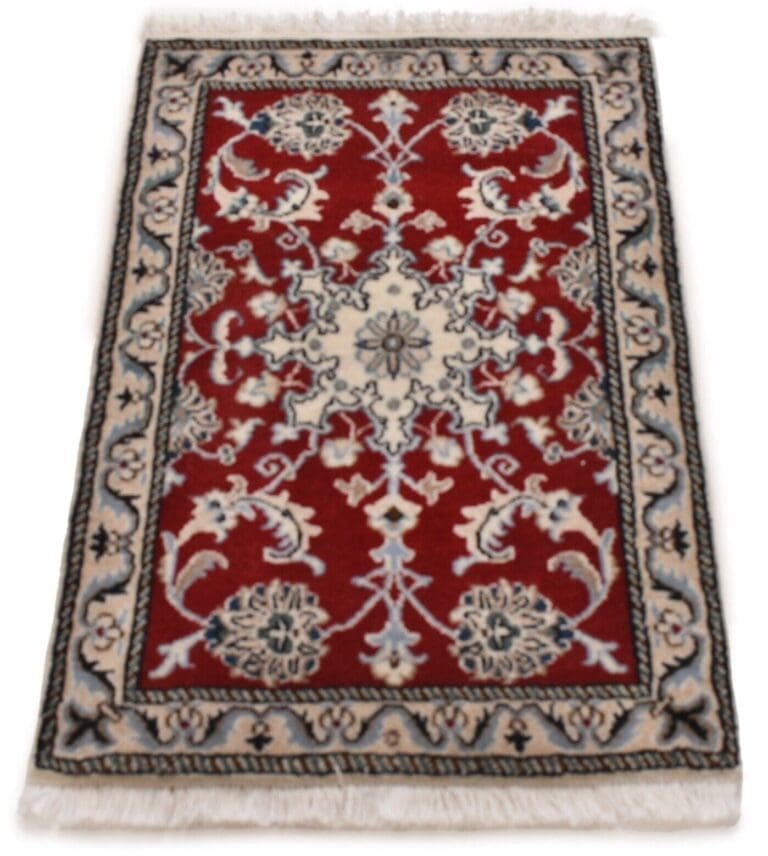
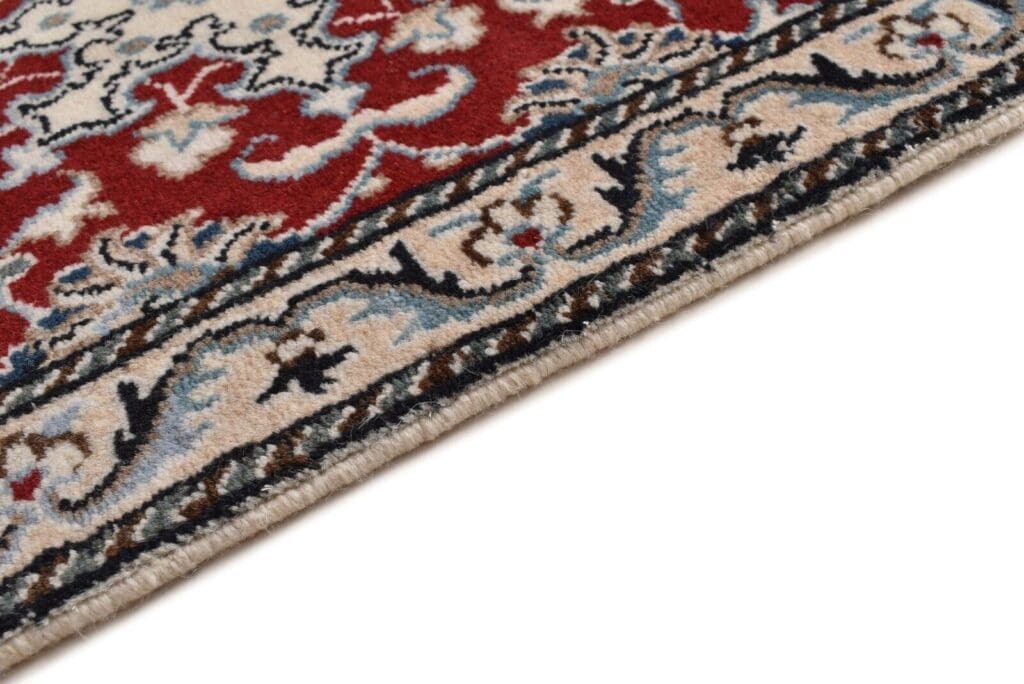
The pattern of this rug is described as Oriental with floral motifs. Floral ornament has a long place in Persian design. Flowers, leaves and curling stems can link separate parts of a composition, create rhythm and guide the eye across the field. In traditional arrangements, such elements may be repeated, reflected or varied in scale. Repetition gives the design continuity, while small changes in the individual forms keep the ornament from appearing mechanical.
Persian compositions often use a relationship between a central field, a border and an interior arrangement. A central medallion is common in some rug designs, but no medallion is stated for this piece. It is therefore not assigned one. In general, floral Nain designs can combine carefully drawn blossoms, winding foliage and a structured border. Their visual effect comes from the balance of lines and recurring elements rather than from one isolated image.
Flowers in Persian art are connected with a long tradition of stylising nature. Garden imagery, plant forms and observations of the natural world may be transformed into ornamental patterns. On a rug, the result is not a literal botanical illustration. Leaves may be rhythmically simplified, blossoms may be repeated in a measured sequence, and stems may create pathways through the design. This makes floral ornament both recognisable and abstract, with a decorative order that works across the entire textile.
The style is listed as traditional Persian and Oriental. Here, traditional refers to the use of established Persian design principles, while Oriental describes the decorative classification of the pattern rather than an additional country of origin. Such a design can sit naturally among classic furnishings or provide a patterned counterpoint to simpler interiors. The specific information for this rug is the combination of an Oriental floral pattern and a traditional Persian or Oriental style; no further colour scheme or individual motif is added.
With a hand-knotted rug, the pattern is built knot by knot across the prepared foundation. The planned drawing must be translated into the construction as the work progresses. This close link between design and manual production is one reason Persian rugs are regarded as textile art as well as floor coverings. Line, ornament and spacing work together to form the visual character of the piece. For this rug, the documented design language is traditional Persian and Oriental, with flowers as the named decorative subject.
Special Features
The stated special features are the hand-knotted construction, the high pile, the use of wool and cotton, and the new condition without a label. The rug is also described as suitable for underfloor heating. These points concern the specific item and its intended use. No age, signature, numerical knot count or separate colour description is provided, so none is added here.
The high pile gives the surface a noticeable depth and a soft textile presence. Regular, gentle vacuuming helps remove dust and loose particles before they settle into the pile. Occasional professional cleaning can support long-term care. Strong direct sunlight should be avoided because it can fade colours over time. The rug should also be positioned so that unsuitable objects or sharp furniture edges do not place unnecessary strain on the pile. These care practices respect the characteristics that are actually recorded for this piece.
FAQ
What makes a Nain Persian rug distinctive?
Its distinction lies in the combination of Iranian rug tradition, hand craftsmanship and an Oriental design with floral motifs. A Nain Persian rug belongs to a regional Persian design tradition in which floral ornament is arranged as a coherent field rather than treated as a single isolated image. This example also has a hand-knotted construction, wool and cotton materials and a high pile. The description traditional Persian and Oriental identifies its decorative language, while Iran is the stated origin. Because it is hand-knotted, the finished textile is an individual piece of work. Its new condition without a label and its suitability for underfloor heating are further specific details of this offering.
How should I care for the Persian rug?
Regular vacuuming helps remove dust and loose particles from the high pile. The surface should be cleaned gently so that the fibres are not subjected to unnecessary stress. Occasional professional cleaning is useful when a more thorough treatment is needed. Direct sunlight should be limited because prolonged exposure can fade colours. If liquid is spilled, it should be absorbed carefully rather than rubbed into the pile. Persistent marks are best handled by a professional rug cleaner. When the rug is used over underfloor heating, sensible heating settings and a dry, well-ventilated environment remain advisable. Moving heavy furniture should be done carefully to avoid pulling or compressing the pile.
Where do the materials come from?
Materials for Persian rugs come mainly from Iran, and wool and silk are often obtained and processed locally. For this particular rug, the listed materials are wool and cotton. The general statement about Iranian rug materials describes the wider craft context and does not establish an additional supply-chain detail for this individual piece. In traditional rug making, wool is typically associated with the pile and provides a tactile textile surface, while cotton is also an established material used in rug construction. The relevant facts for this offering are its stated materials, its Iranian origin and its hand-knotted technique. No silk content or more precise fibre provenance is specified for this rug.
To provide the best experiences, we use technologies like cookies to store and/or access device information. Consenting to these technologies will allow us to process data such as browsing behavior or unique IDs on this site. Not consenting or withdrawing consent, may adversely affect certain features and functions.
Functional Always active
The technical storage or access is strictly necessary for the legitimate purpose of enabling the use of a specific service explicitly requested by the subscriber or user, or for the sole purpose of carrying out the transmission of a communication over an electronic communications network.
Preferences
The technical storage or access is necessary for the legitimate purpose of storing preferences that are not requested by the subscriber or user.
Statistics
The technical storage or access that is used exclusively for statistical purposes.The technical storage or access that is used exclusively for anonymous statistical purposes. Without a subpoena, voluntary compliance on the part of your Internet Service Provider, or additional records from a third party, information stored or retrieved for this purpose alone cannot usually be used to identify you.
Marketing
The technical storage or access is required to create user profiles to send advertising, or to track the user on a website or across several websites for similar marketing purposes.

 SECURE PAYMENT
 SHIPPING PARTNERS


