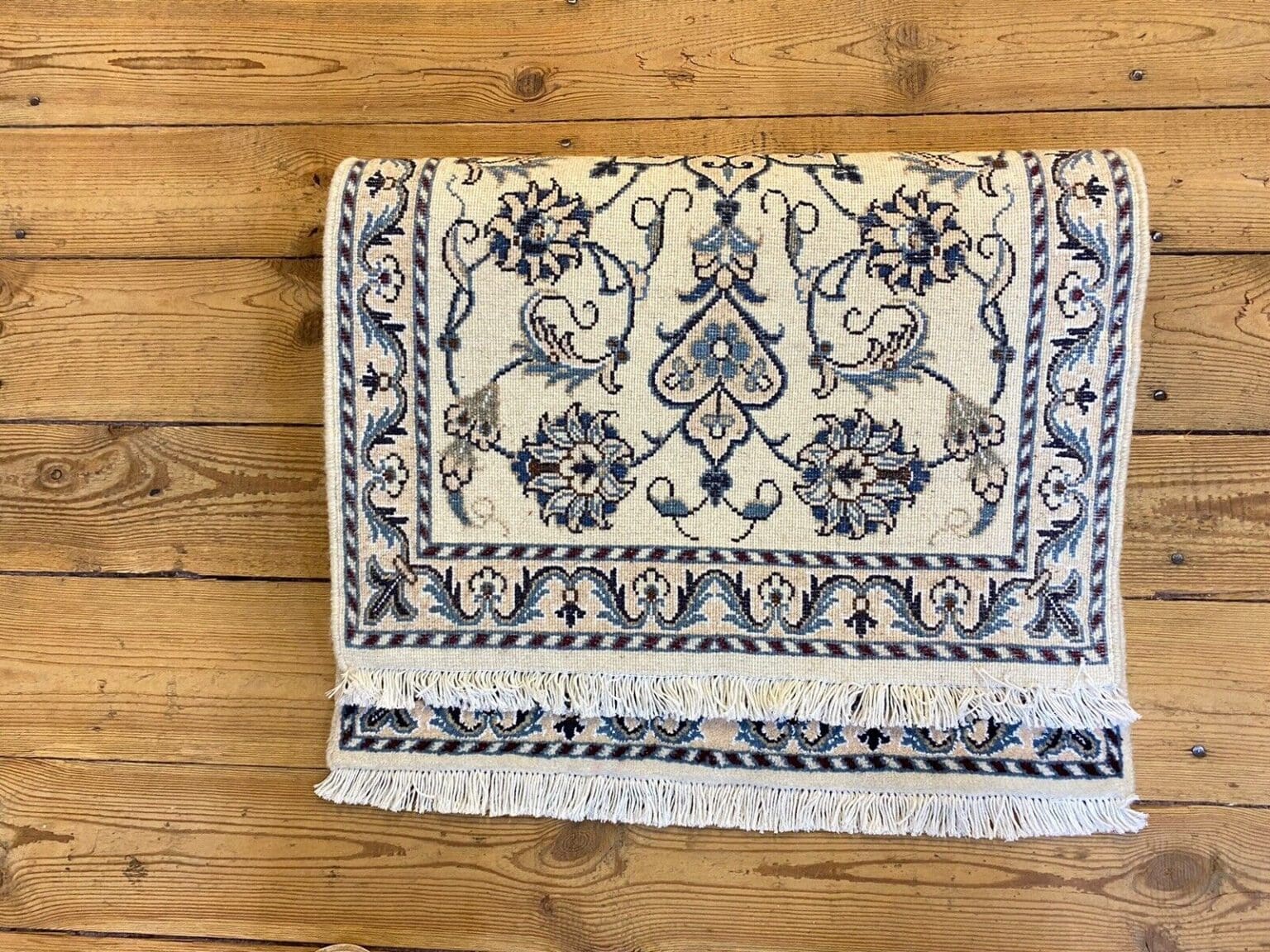
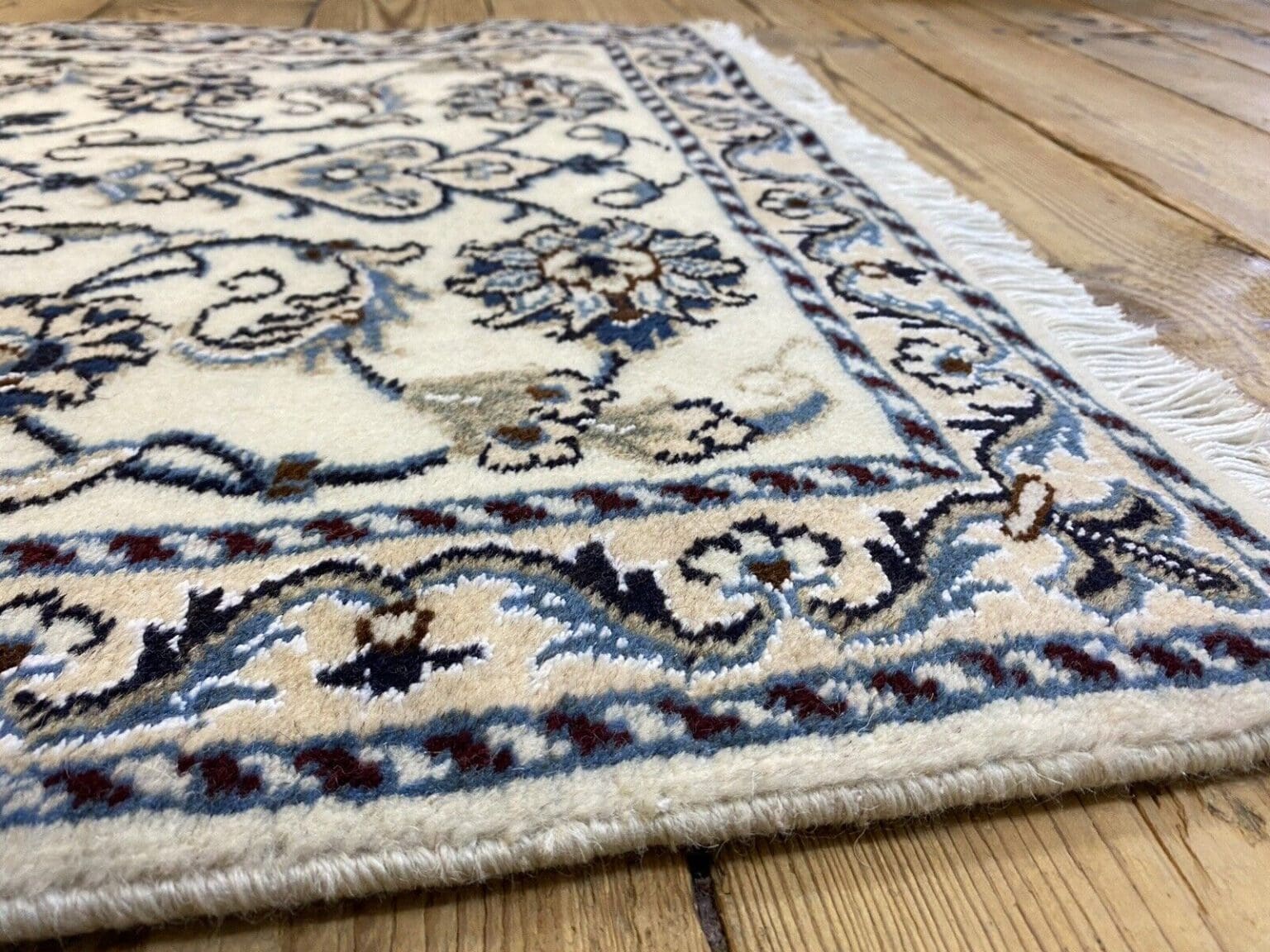
This Persian rug is hand-knotted with a pile made from 90% virgin wool and 10% silk, supported by a warp made from 100% cotton. The product information clearly separates the materials by function: wool and silk are used in the visible pile, while cotton forms the warp. The pile creates the surface that can be seen and touched, whereas the warp provides the underlying structure to which the knots are secured. This construction is characteristic of a rug made through a hand-knotting process rather than through printing or a purely industrial surface treatment.
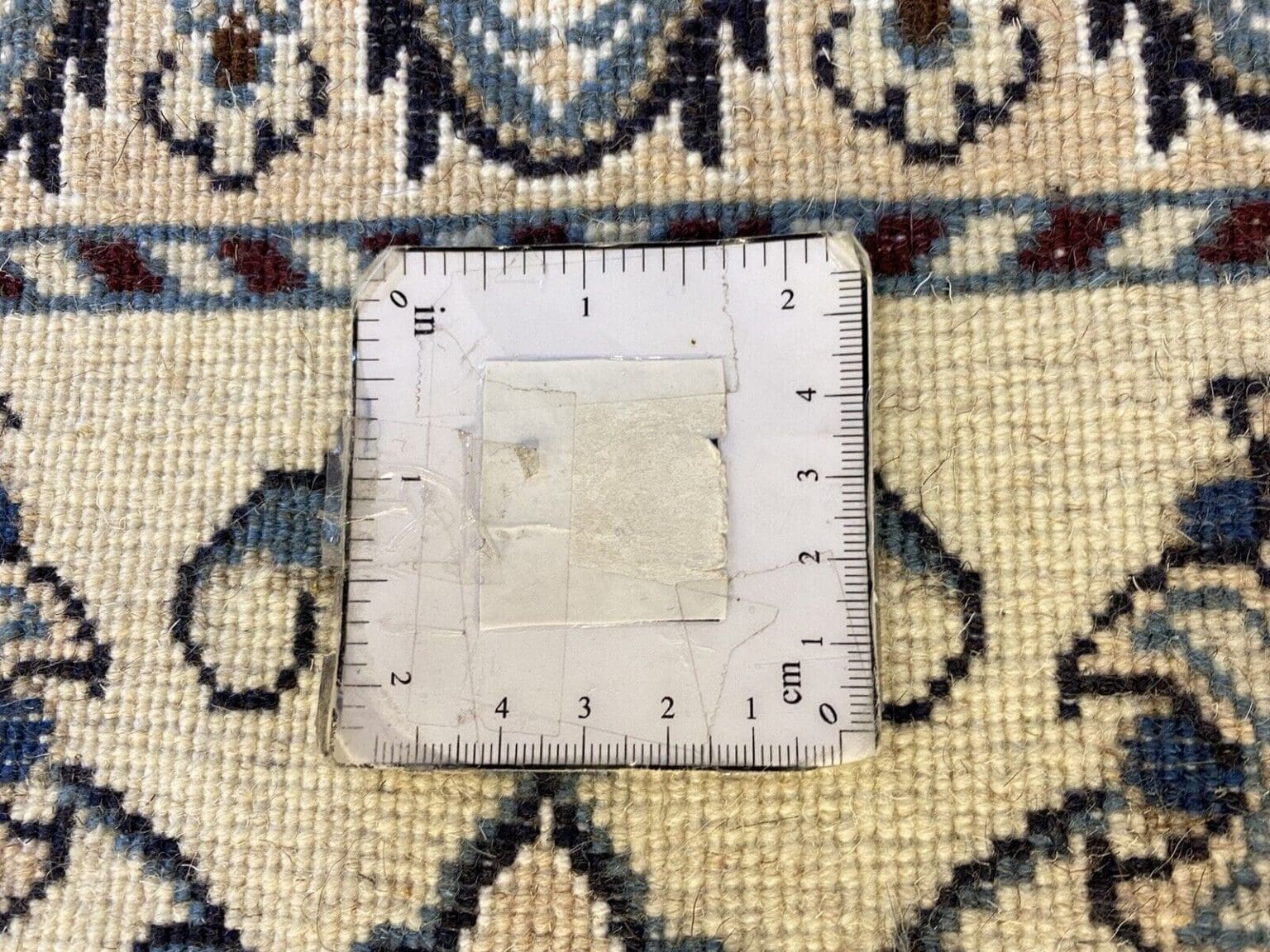
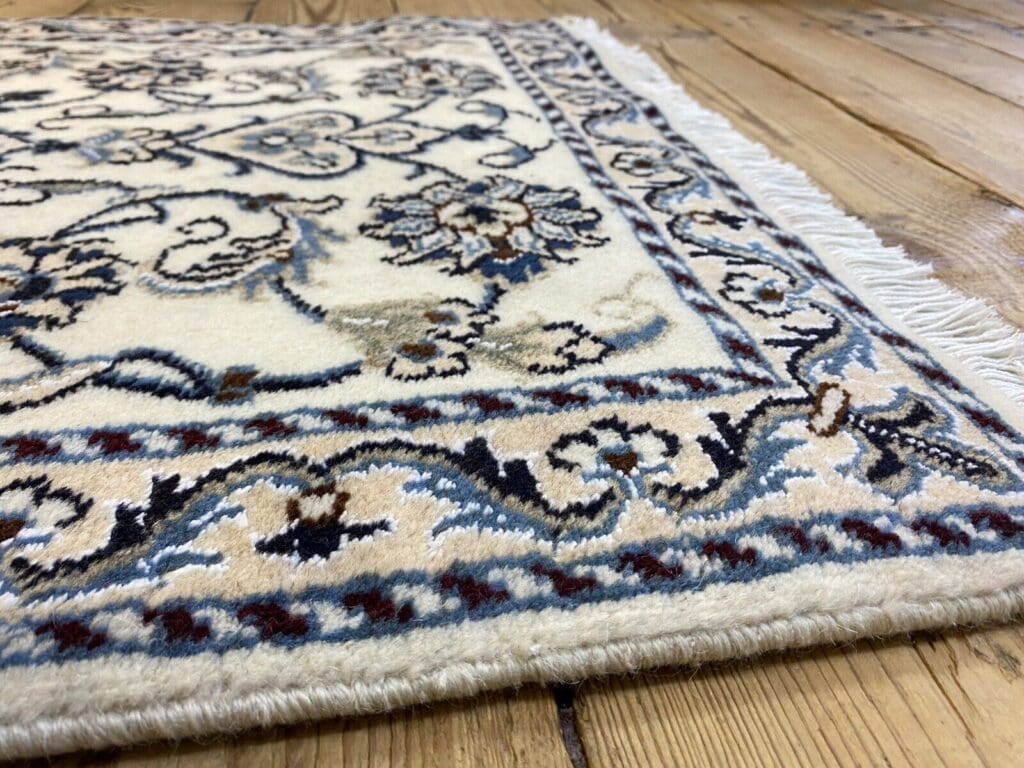
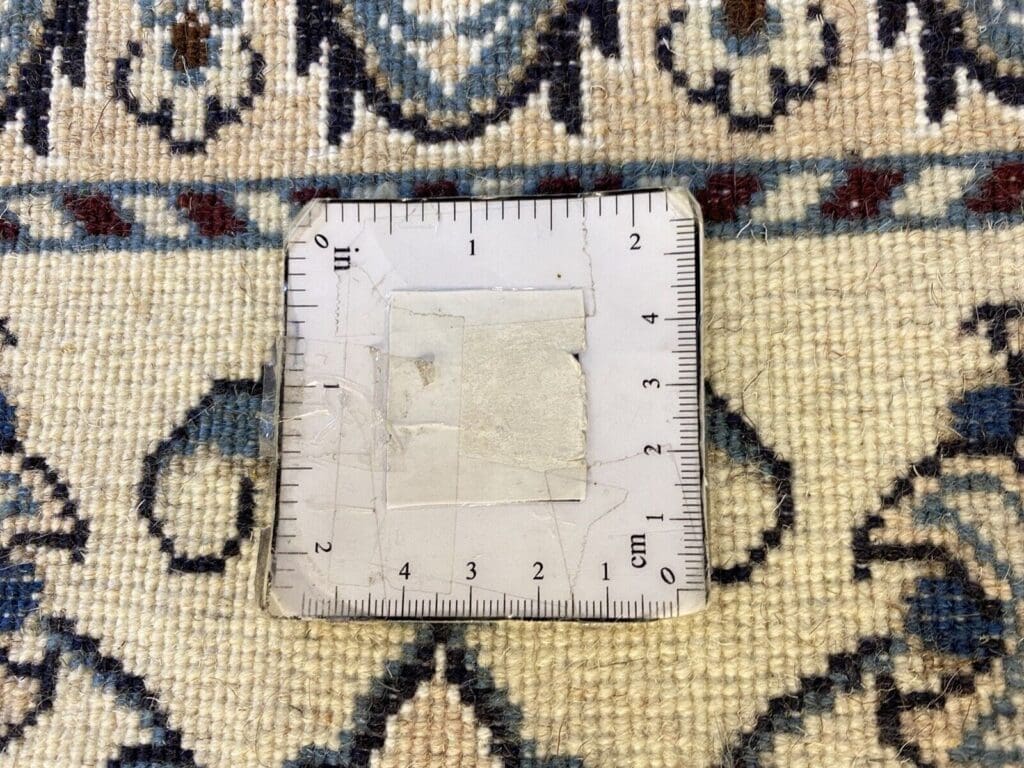
Hand-knotting builds the design one knot at a time. The knots are placed along the prepared foundation and arranged in successive rows, allowing the pattern to develop gradually across the rug. A knot density of approximately 300,000 knots per square metre identifies a finely executed construction. Knot density is a technical description of how closely the knots are set within an area; it indicates the level of detail the weaving process can support, without serving as a substitute for a separate description of the rug’s named pattern.
Virgin wool is traditionally used in hand-knotted rugs for its resilient fibre structure and practical surface qualities. Silk can add a finer handle and a different response to light within a pile. Cotton is commonly used as a warp fibre because it provides a regular foundation for the rows of knots. These general material characteristics explain the roles of the fibres named for this rug. They do not alter the stated composition, which remains a pile of 90% virgin wool and 10% silk with a 100% cotton warp.
Origin and Tradition
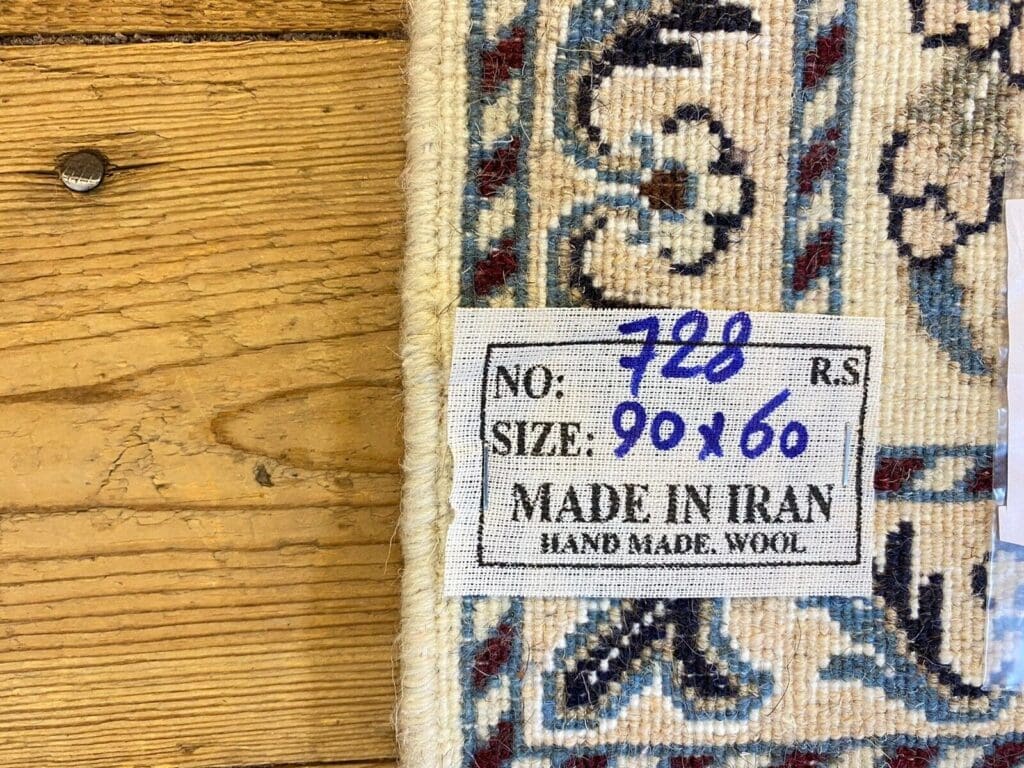
The rug comes from Persia and is assigned to the Nain region. Nain is recognised for hand-knotted Persian rugs and forms one of the established regional traditions within Persian carpet making. Nain rugs are associated with controlled drawing, carefully organised compositions and detailed workmanship. The name Nain therefore identifies a regional origin and tradition, rather than being a generic label for every Oriental rug.
Persian carpet making is based on knowledge passed through workshops and families over many generations. Preparing the foundation, placing the knots, maintaining an even surface and following a drawn design all require coordinated manual work. In a hand-knotted rug, the pattern is not applied after completion. It is formed as the knots and pile are built into the structure. The quoted knot density is therefore relevant to the way fine lines and small ornamental transitions can be rendered during production.
Nain belongs to a wider culture of Persian weaving in which proportion, balance and disciplined ornament play important roles. Regional designs may combine a central organisation with borders, floral forms and carefully repeated details. The tradition is often discussed alongside the refined drawing associated with Persian urban weaving. Such background describes the visual language and history of Nain rugs in general. For this particular rug, the stated pattern information remains the broader designation Oriental.
Persian carpet history includes several important regional centres. Tabriz, Isfahan and Kashan are also associated with elaborate craftsmanship, developed pattern traditions and the use of fine materials. Sarough and Heriz represent further distinctive approaches, including designs that may use floral or geometric motifs. These names provide useful cultural comparisons, but they do not change this rug’s stated origin. The rug offered here is identified as a Nain Persian rug from Persia.
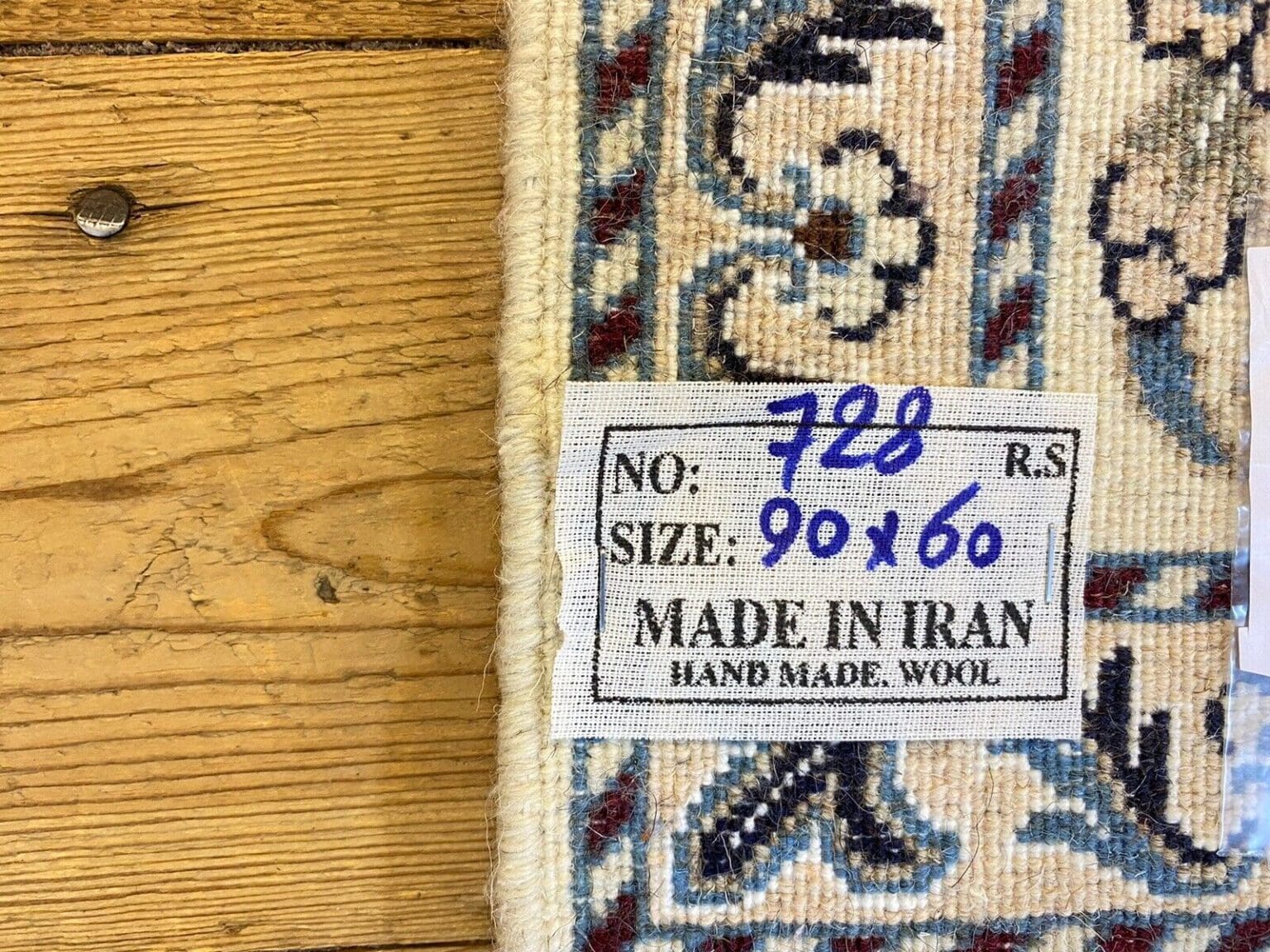
The terms Oriental rug and Persian rug can be understood at different levels. Oriental rug is the broader category, while Persian rug refers specifically to a rug from Persia. The Nain designation adds the regional level within that Persian origin. Taken together, the source describes a hand-knotted Oriental rug from the Persian tradition, more precisely associated with Nain. No other place named in the surrounding discussion replaces that origin.
Design and Pattern
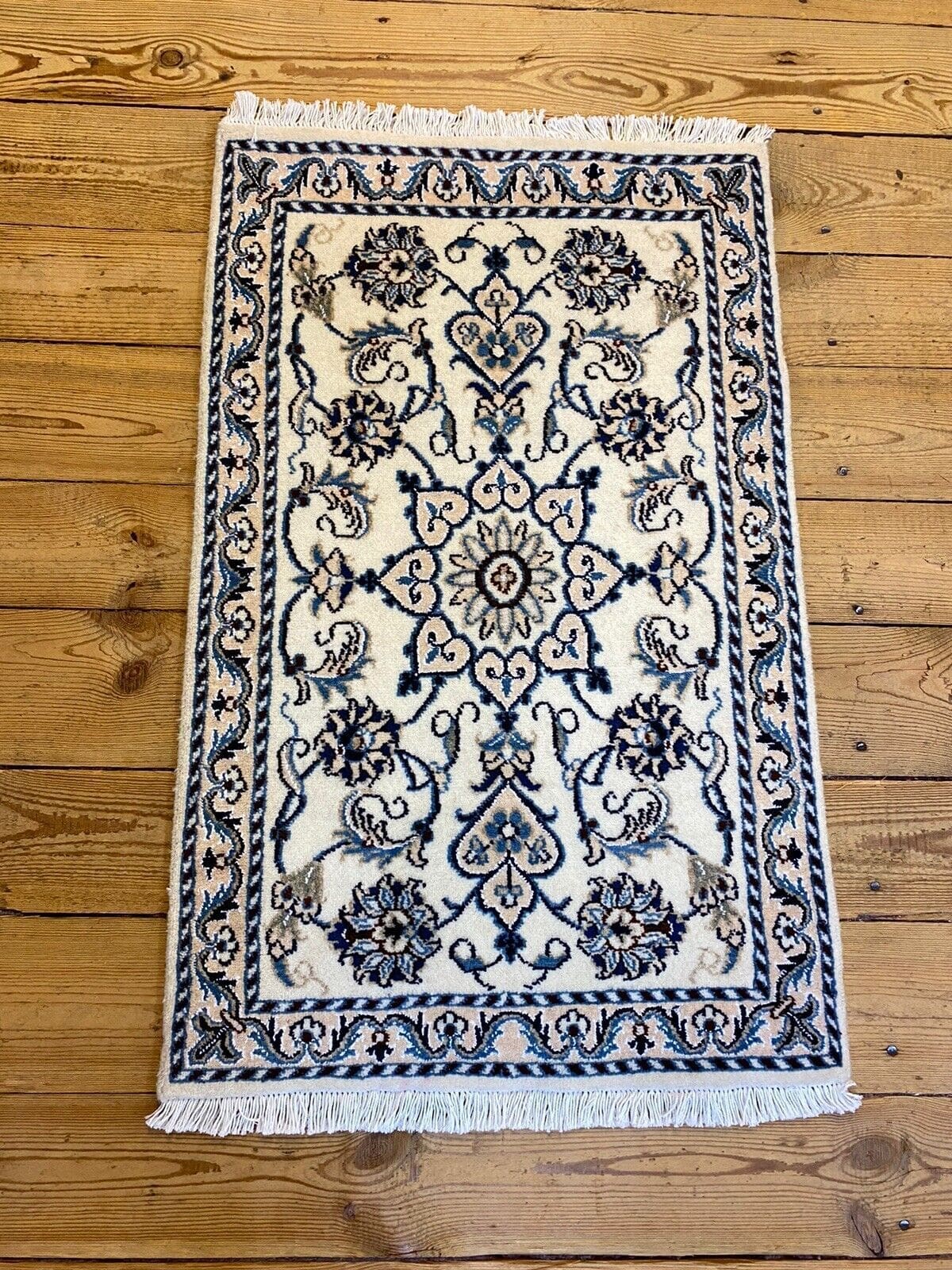
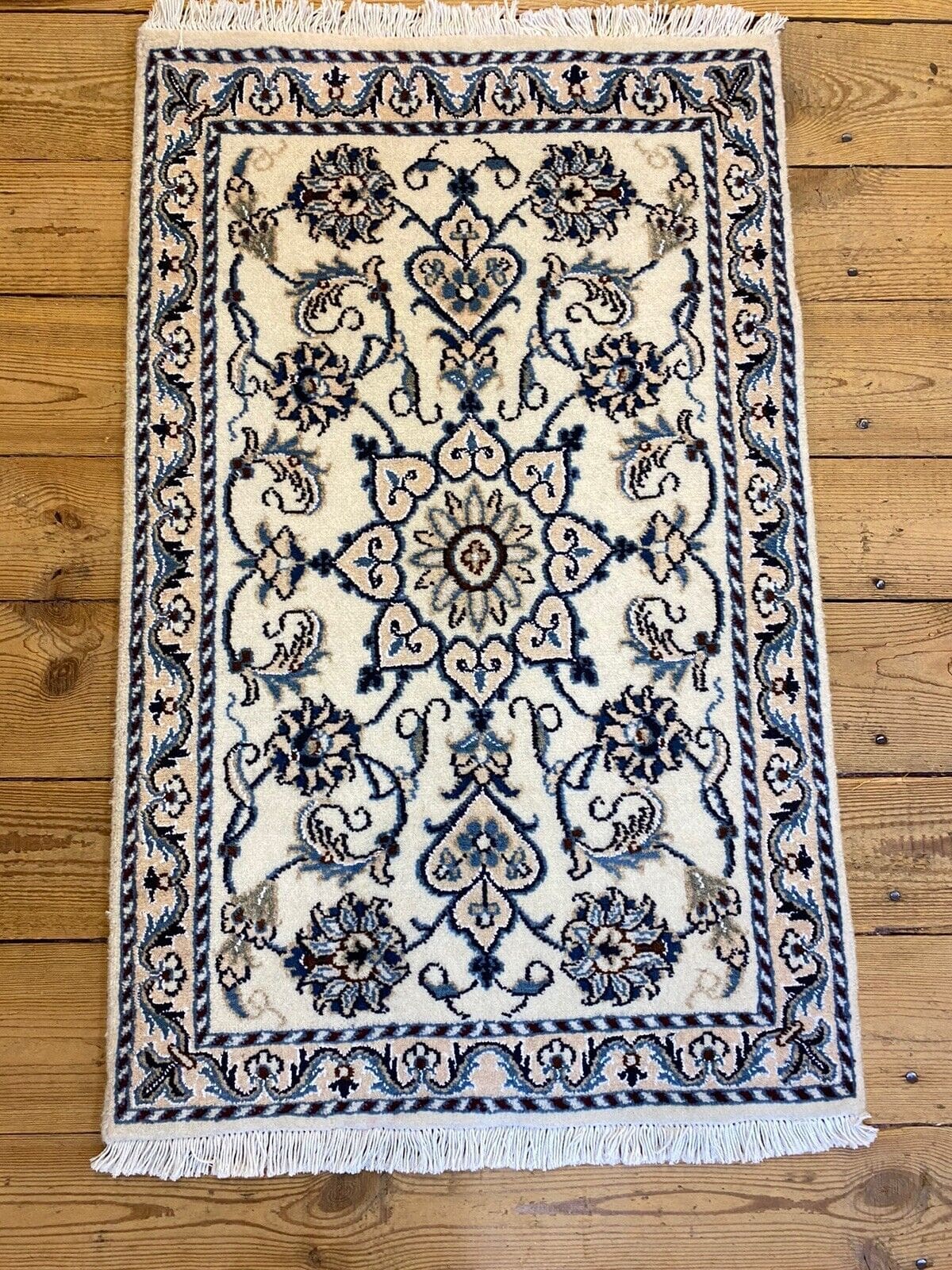
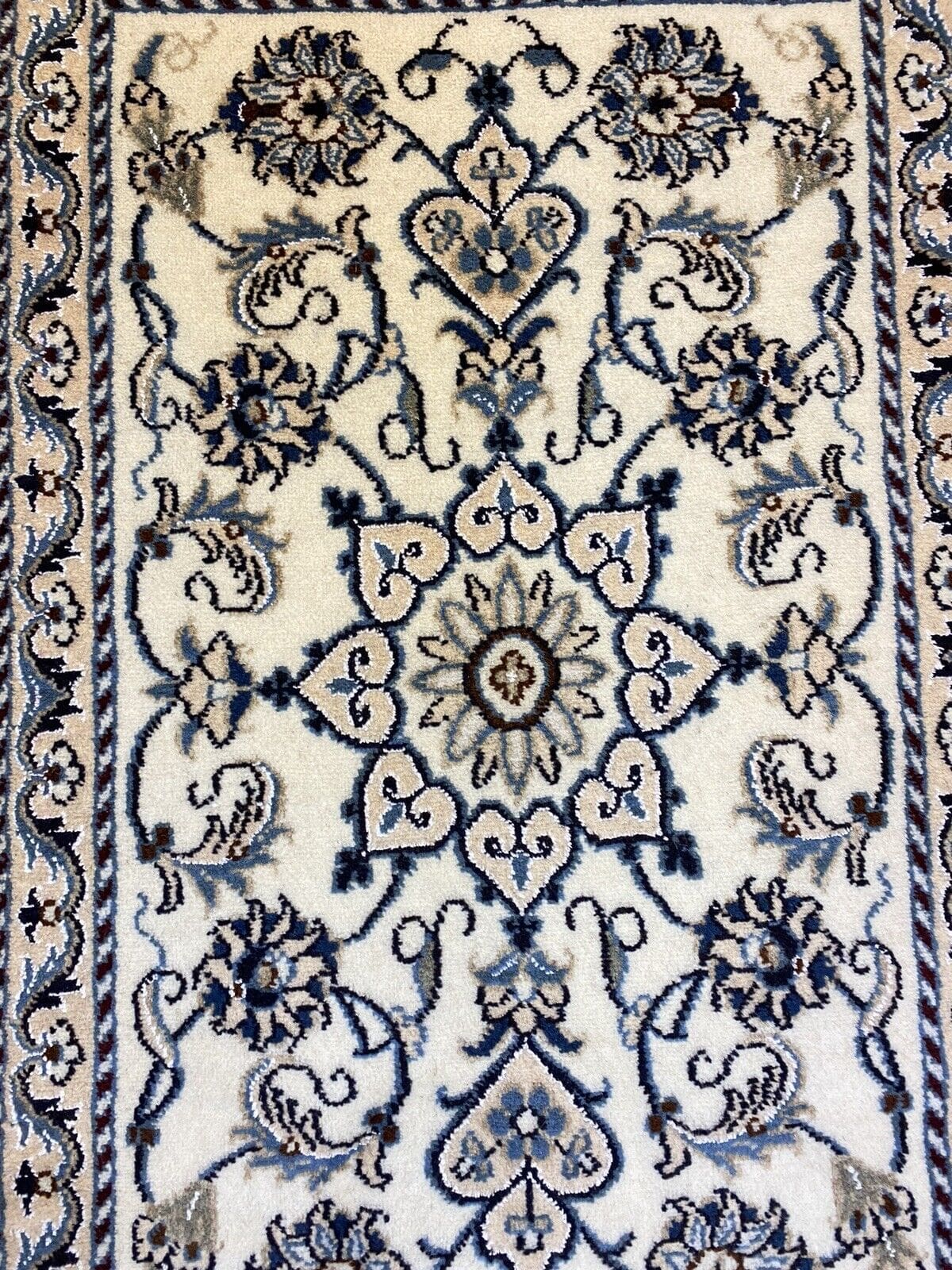
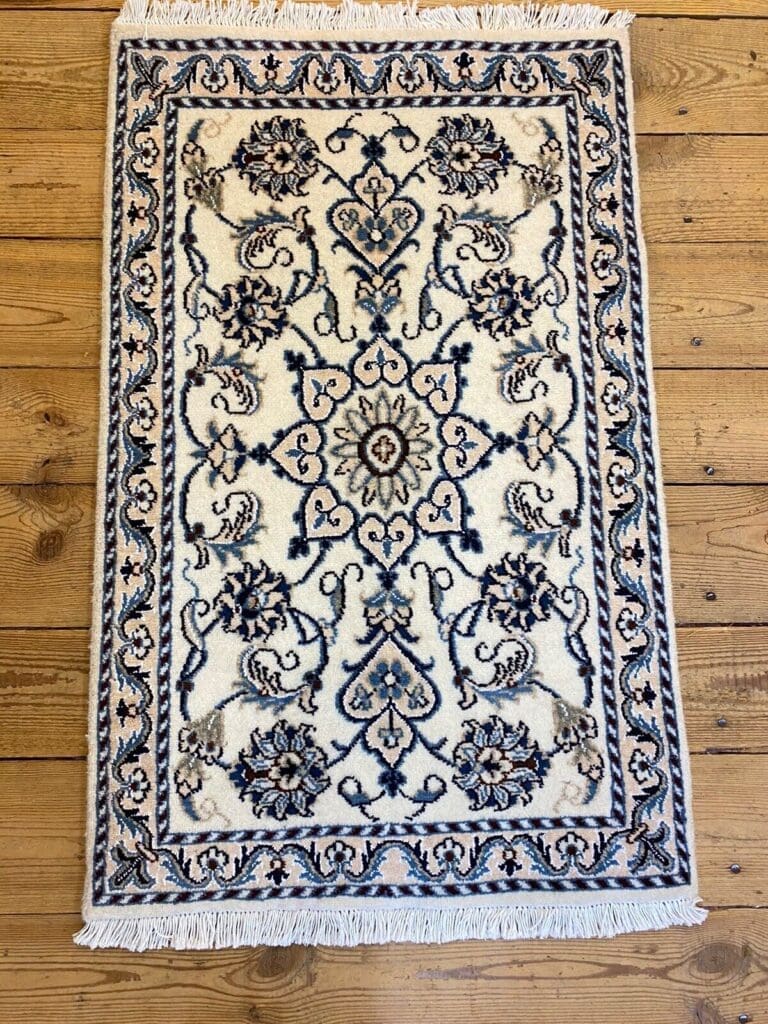
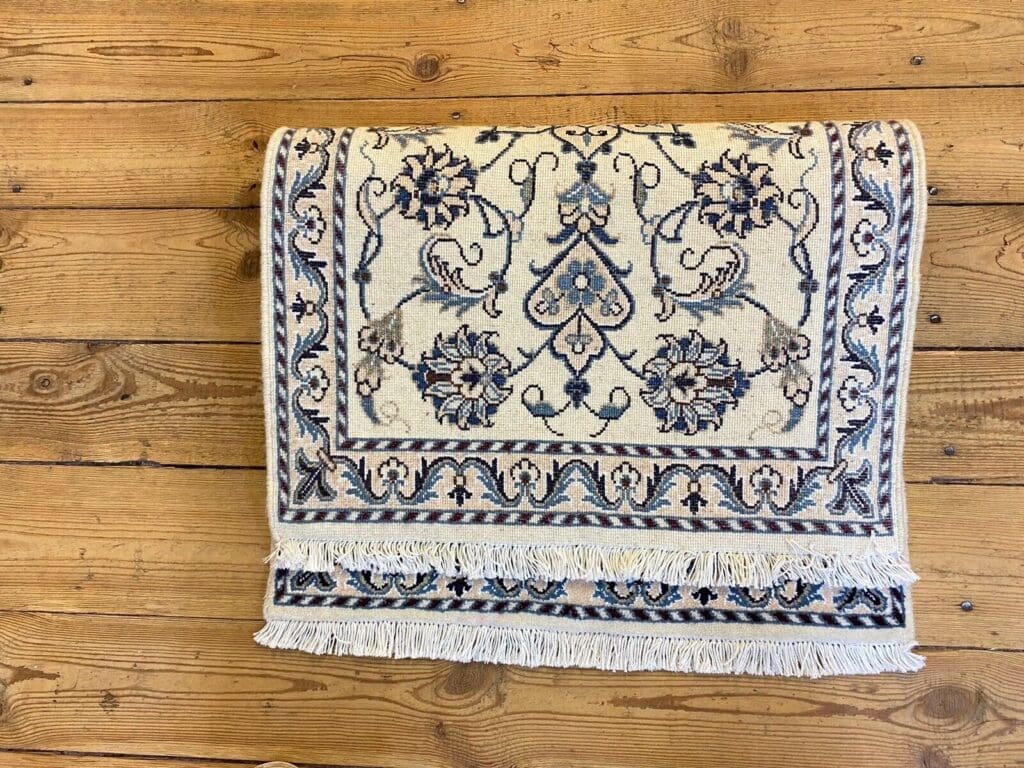
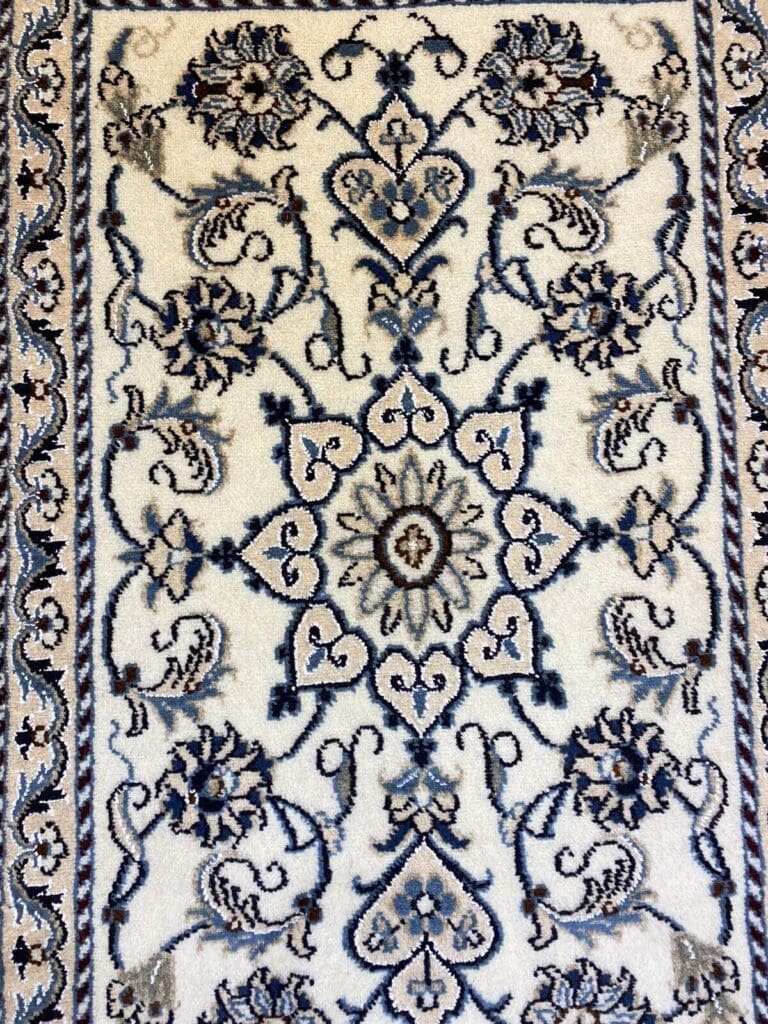
The pattern is described as Oriental. The listed colour is white, and the style is given as traditional Oriental and Persian. These are the confirmed design details for this individual rug. No additional colour palette, border arrangement or named central motif is specified, so the design is presented through the information that is actually provided. The white colour forms the stated chromatic basis of the rug.
Oriental rug design generally depends on the relationship between a ground, ornamental forms and the areas that frame them. Depending on the regional tradition, these forms may be floral, geometric, scrolling or stylised. Nain designs are often discussed in connection with precise outlines and a measured arrangement of details. This explains the wider design context without assigning an unlisted medallion, flower, border or colour to this particular piece.
Traditional Persian patterning is more than a collection of isolated images. Repetition can establish rhythm, while variations in scale and line weight organise the field. In a hand-knotted rug, a drawn composition is translated into rows of knots and areas of pile. The fineness of the construction can support careful transitions and delicate contours where the design calls for them. The technique and the regional tradition therefore belong together, even when the product description uses the concise label Oriental.
Nain is commonly placed within the Persian tradition of ordered, finely drawn compositions. Tabriz, Isfahan and Kashan have their own histories of pattern development, while Sarough and Heriz are known for distinctive floral or geometric approaches. Comparing these centres helps explain the variety of Persian design without confusing one regional identity with another. The present rug remains a Nain piece, with an Oriental pattern and white colour as its stated design information.
The traditional Oriental and Persian style can be used in several residential settings named in the product description, including a living room, bedroom or hallway. Its suitability in a particular room depends on the surrounding interior and the intended use. The pattern itself is not expanded into a more specific motif description. This preserves the factual distinction between the general Nain design tradition and the details expressly recorded for this one-of-a-kind rug.
Special Features
The rug is new and is described as being in perfect condition. This condition statement applies to the individual piece offered here. It is also listed as suitable for underfloor heating and as pet- and child-friendly. These points are specific product features and are separate from the rug’s Persian origin, Oriental pattern description and fibre composition.
The listed colour is white, and the style is traditional Oriental and Persian. Together with the hand-knotted construction, the wool-and-silk pile and the cotton warp, these details form the stated profile of the rug. No additional condition history, signature or provenance detail is added beyond the information supplied for this piece.
FAQ
How should I care for this Persian rug?
Regular vacuuming is recommended for everyday care. The cleaning method should take account of the hand-knotted construction and the pile made from virgin wool and silk. If more intensive treatment is needed, professional cleaning is the appropriate option. Direct sunlight should be avoided to help prevent the colours from fading. These measures support the preservation of the pile and its visual appearance. Spilled liquids should not be left in the rug for an extended period; for specialised treatment, a professional rug cleaner can assess the material and construction. The fact that the rug is suitable for underfloor heating does not remove the need for careful, regular maintenance.
Where does this Persian rug come from?
This Persian rug comes from the Nain region of Persia. Nain is known for its tradition of high-quality hand-knotted Persian rugs and has a recognised place in Persian carpet culture. The regional name explains the rug’s classification as Nain and distinguishes it from other Persian traditions. Tabriz, Isfahan and Kashan are mentioned as related examples, while Sarough and Heriz are known for their own designs. Those places provide context only; they are not the origin of this rug. Its stated origin is Nain in Persia.
What makes this Persian rug special?
Its defining features are the hand-knotted construction, a pile of 90% virgin wool and 10% silk, and a warp made from 100% cotton. The listed knot density is approximately 300,000 knots per square metre. The pattern is Oriental, the style is traditional Oriental and Persian, and the colour is white. The rug is new and in perfect condition. It is also described as suitable for underfloor heating and as pet- and child-friendly. Together, these confirmed details describe the particular Nain Persian rug without adding an unlisted motif, signature or provenance claim.
To provide the best experiences, we use technologies like cookies to store and/or access device information. Consenting to these technologies will allow us to process data such as browsing behavior or unique IDs on this site. Not consenting or withdrawing consent, may adversely affect certain features and functions.
Functional Always active
The technical storage or access is strictly necessary for the legitimate purpose of enabling the use of a specific service explicitly requested by the subscriber or user, or for the sole purpose of carrying out the transmission of a communication over an electronic communications network.
Preferences
The technical storage or access is necessary for the legitimate purpose of storing preferences that are not requested by the subscriber or user.
Statistics
The technical storage or access that is used exclusively for statistical purposes.The technical storage or access that is used exclusively for anonymous statistical purposes. Without a subpoena, voluntary compliance on the part of your Internet Service Provider, or additional records from a third party, information stored or retrieved for this purpose alone cannot usually be used to identify you.
Marketing
The technical storage or access is required to create user profiles to send advertising, or to track the user on a website or across several websites for similar marketing purposes.
 SECURE PAYMENT
 SHIPPING PARTNERS


