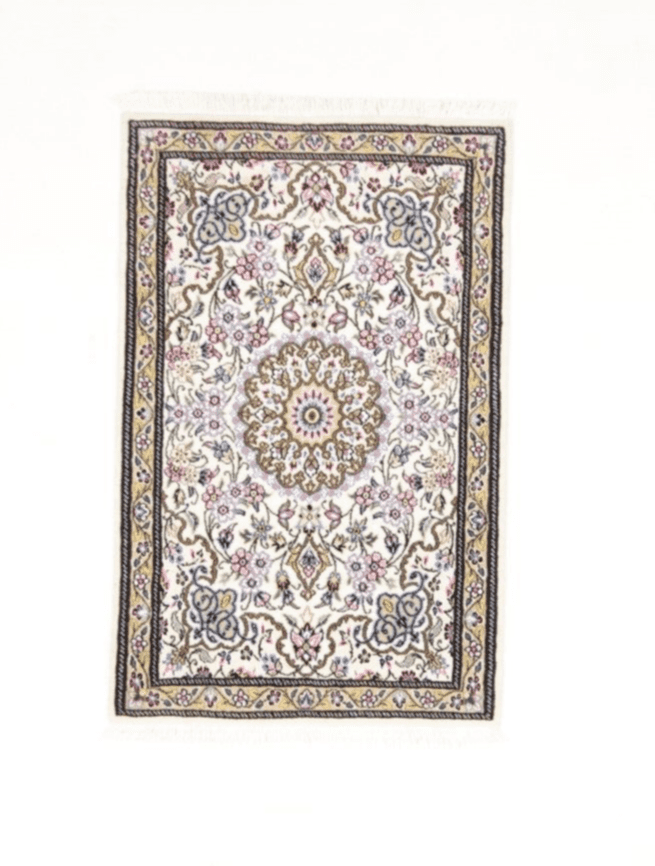
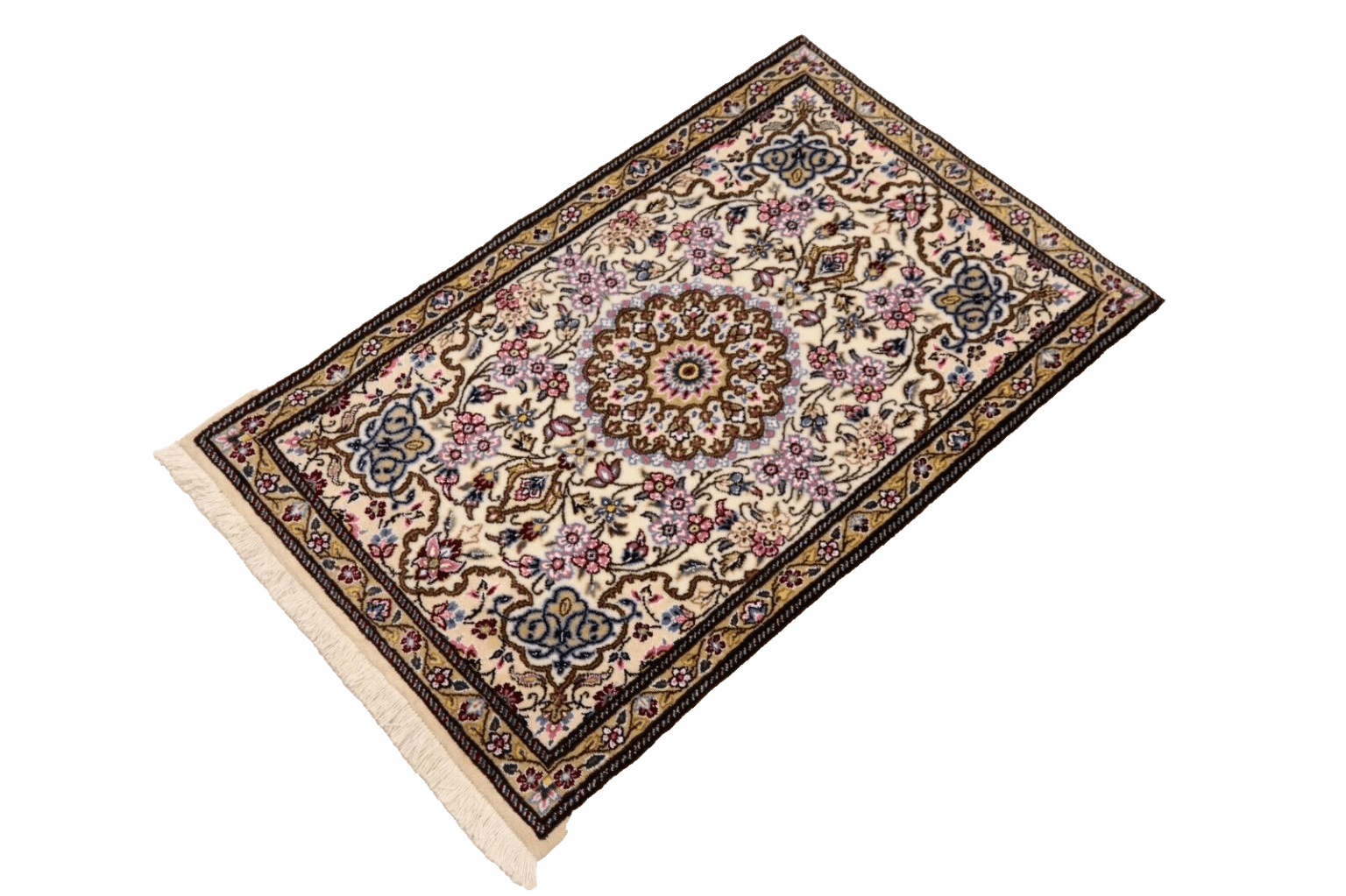
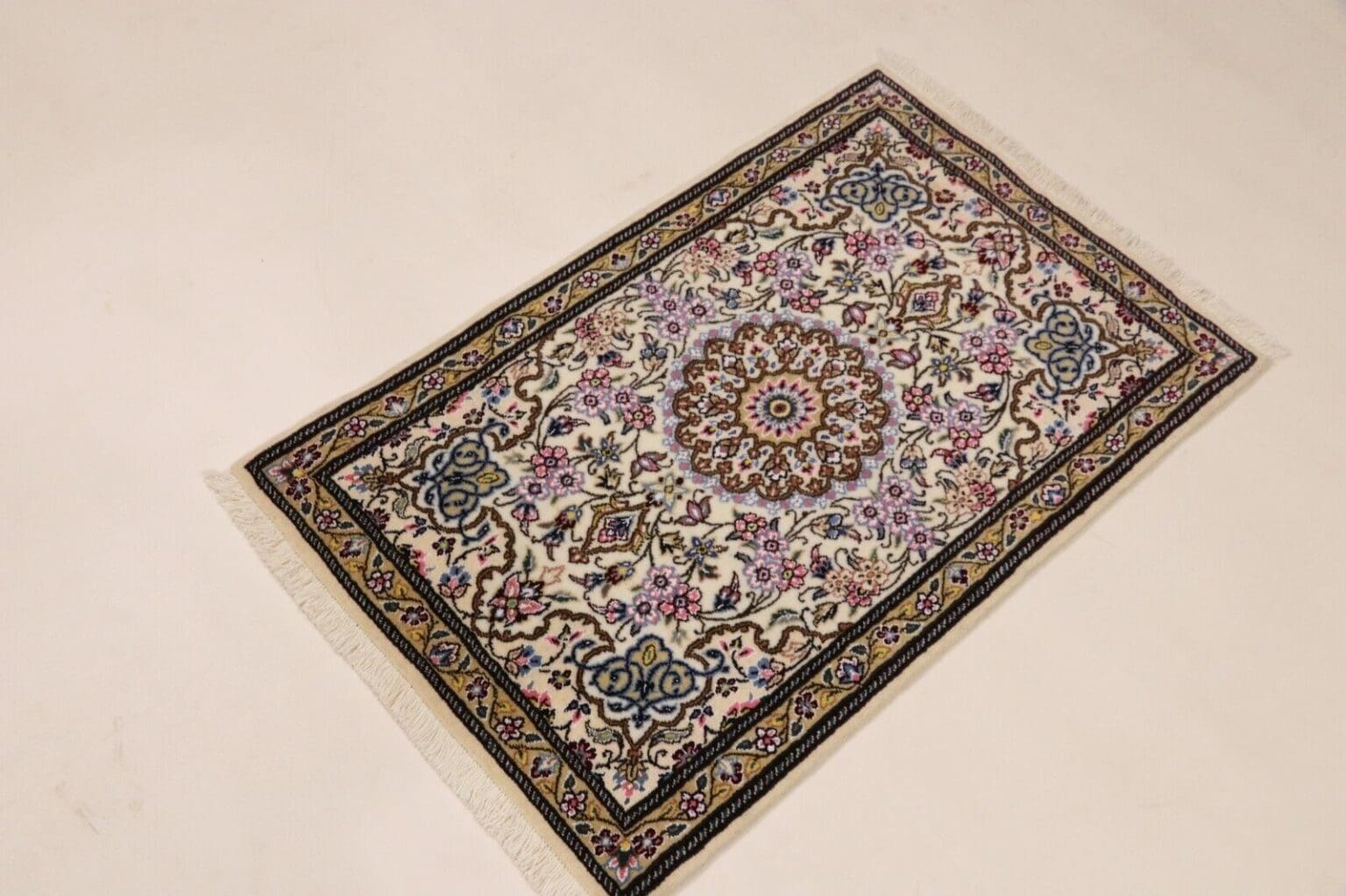
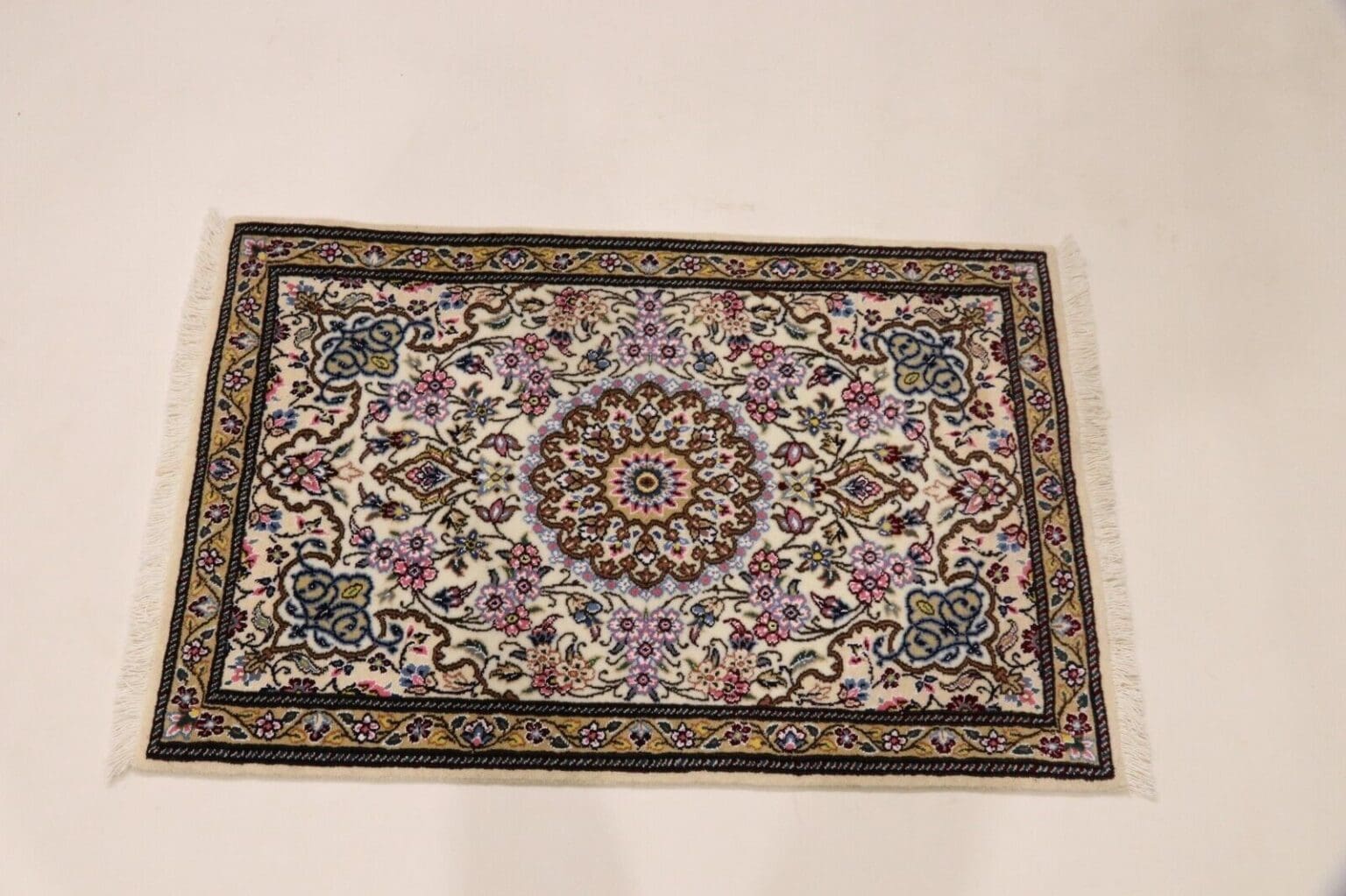
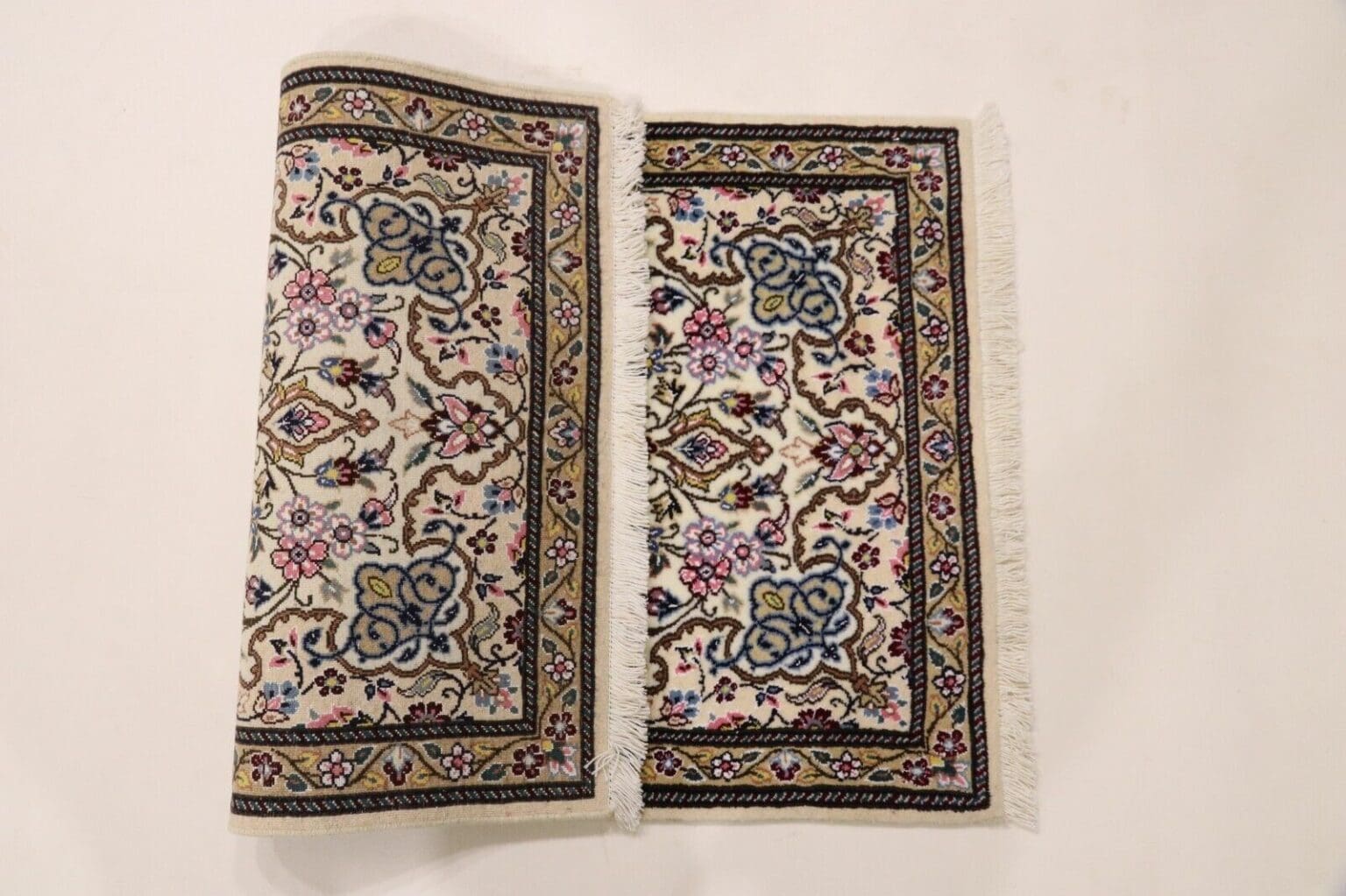
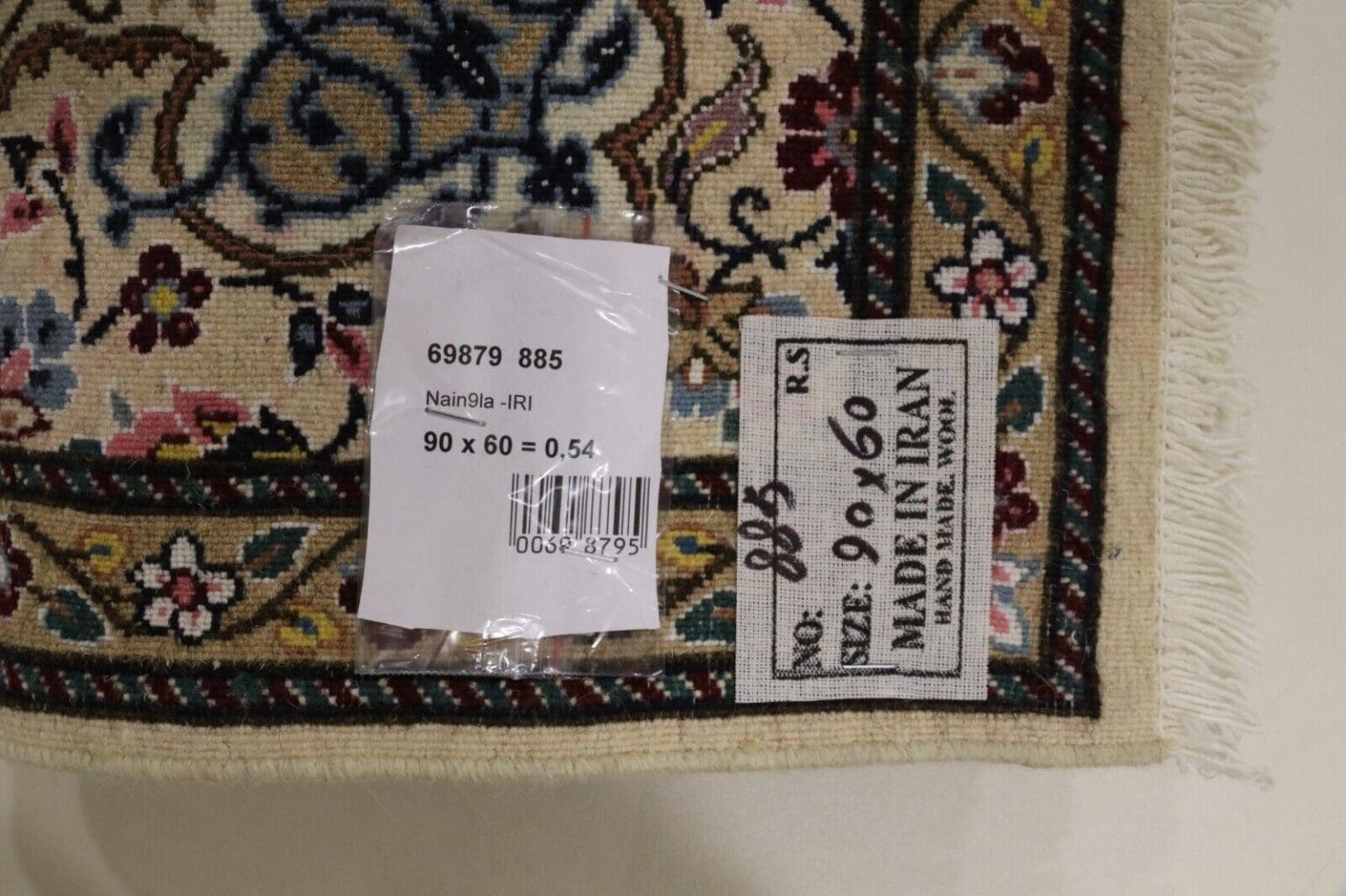
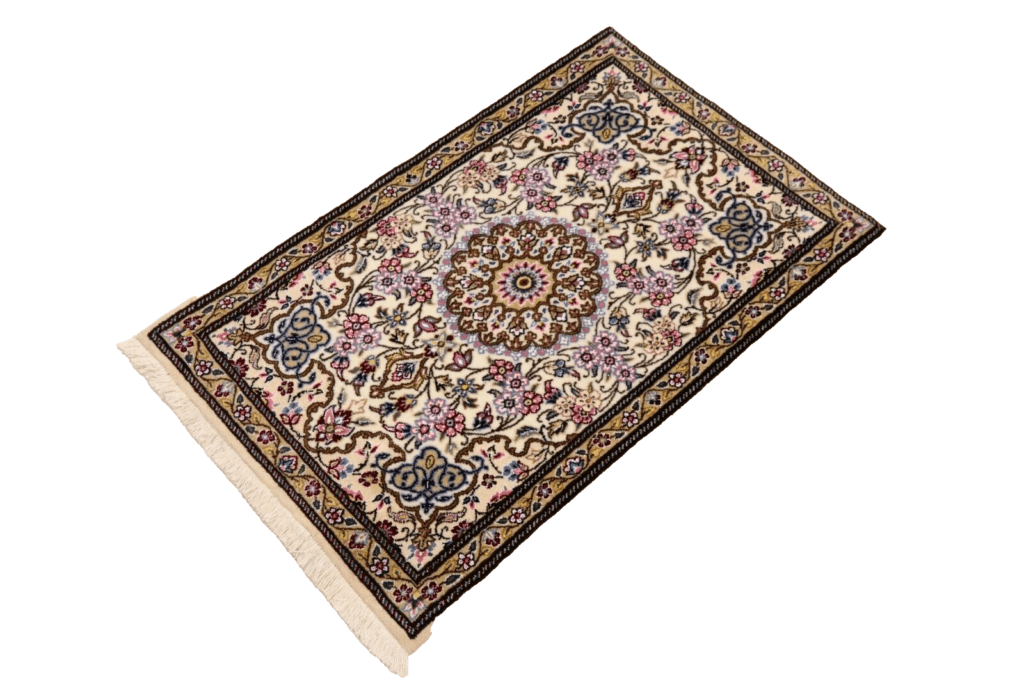
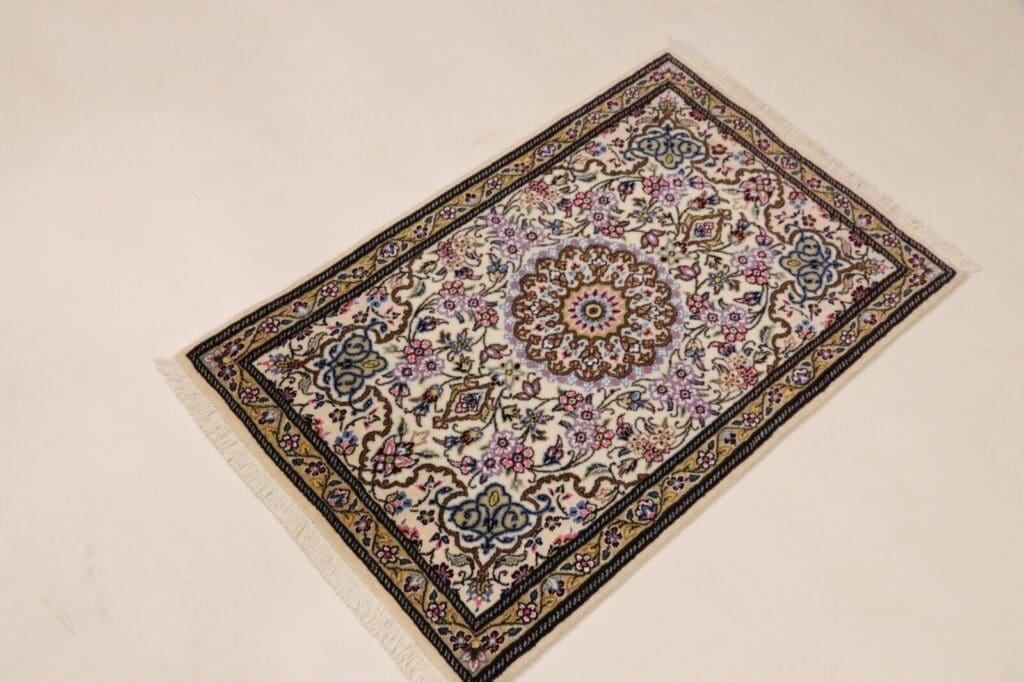
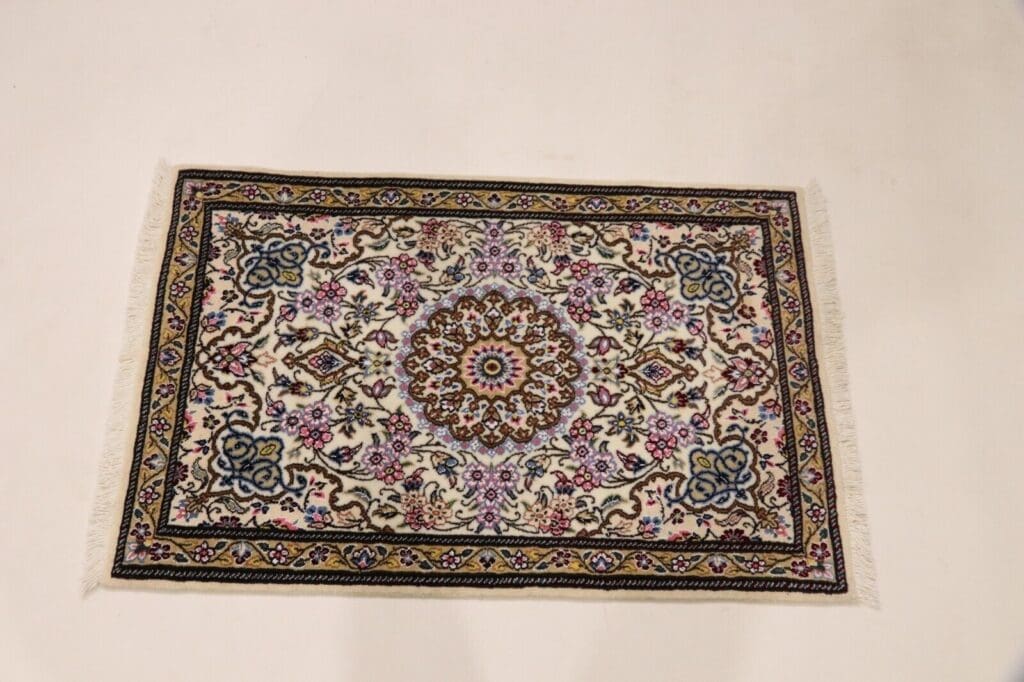
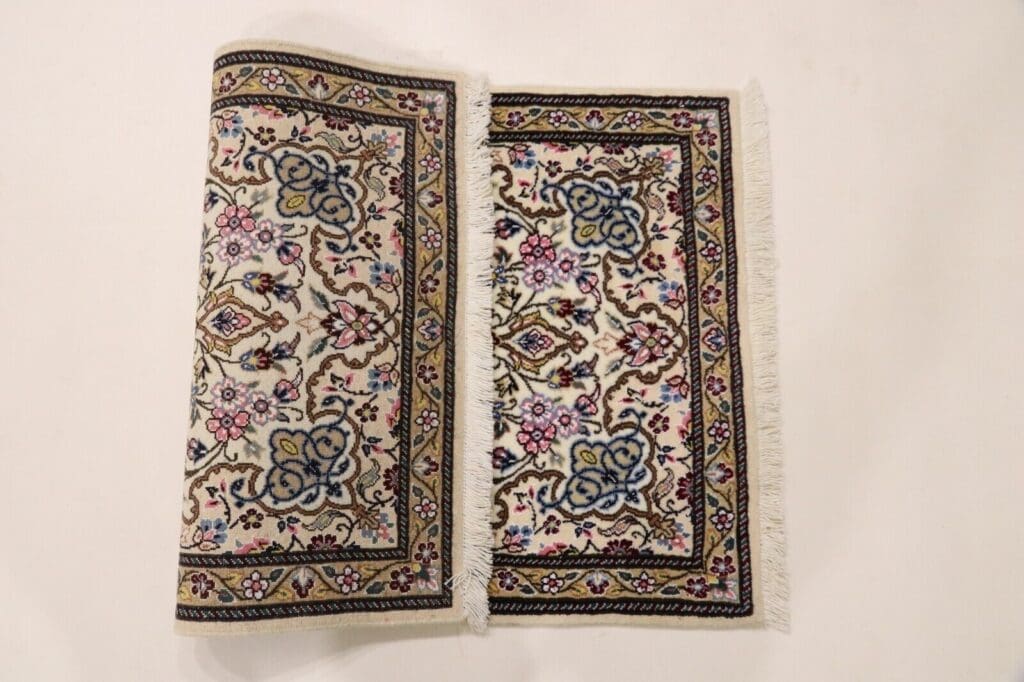
Persian Rug Nain 90 x 60 cm Wool Hand-knotted
€ 632
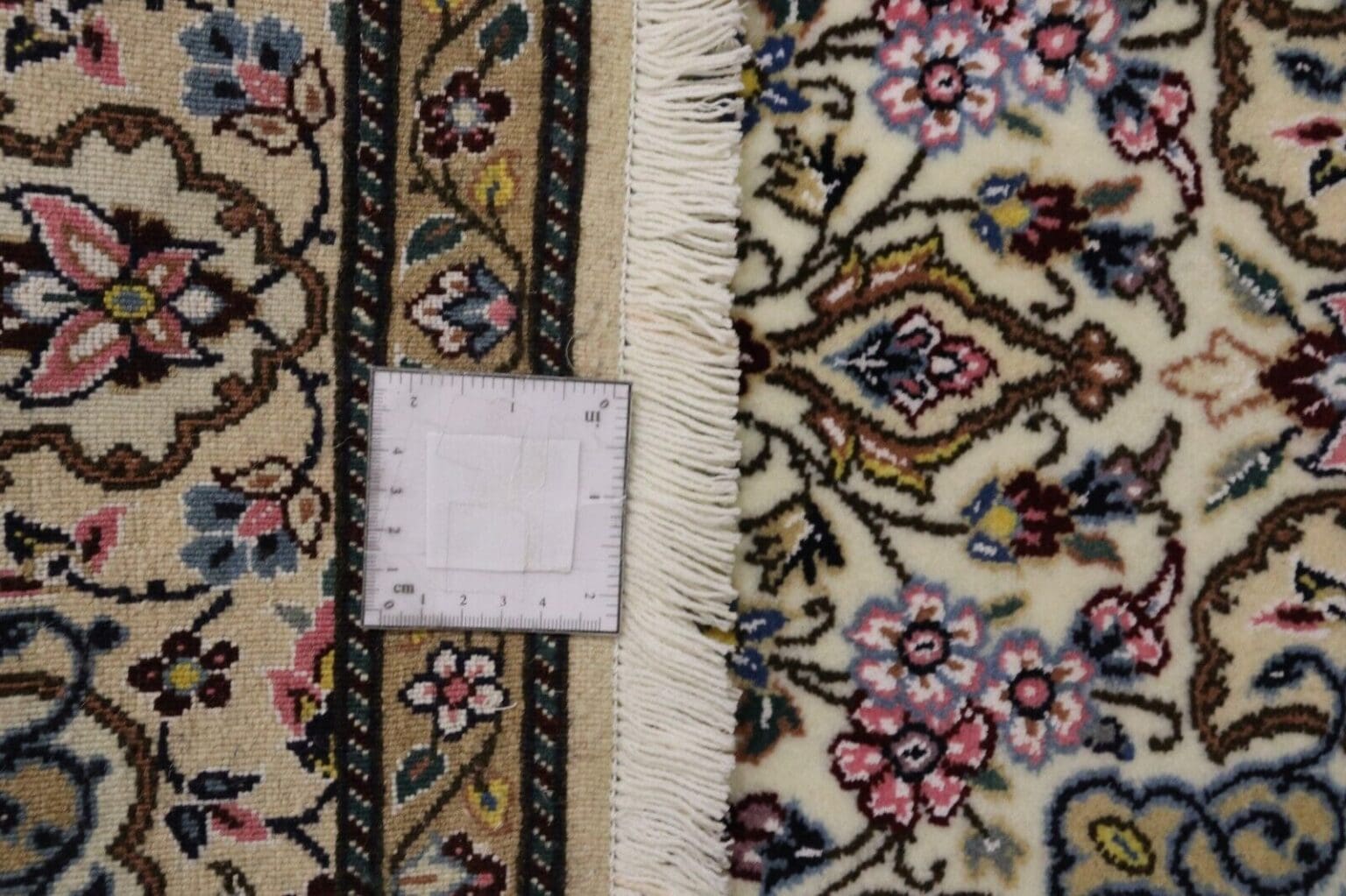
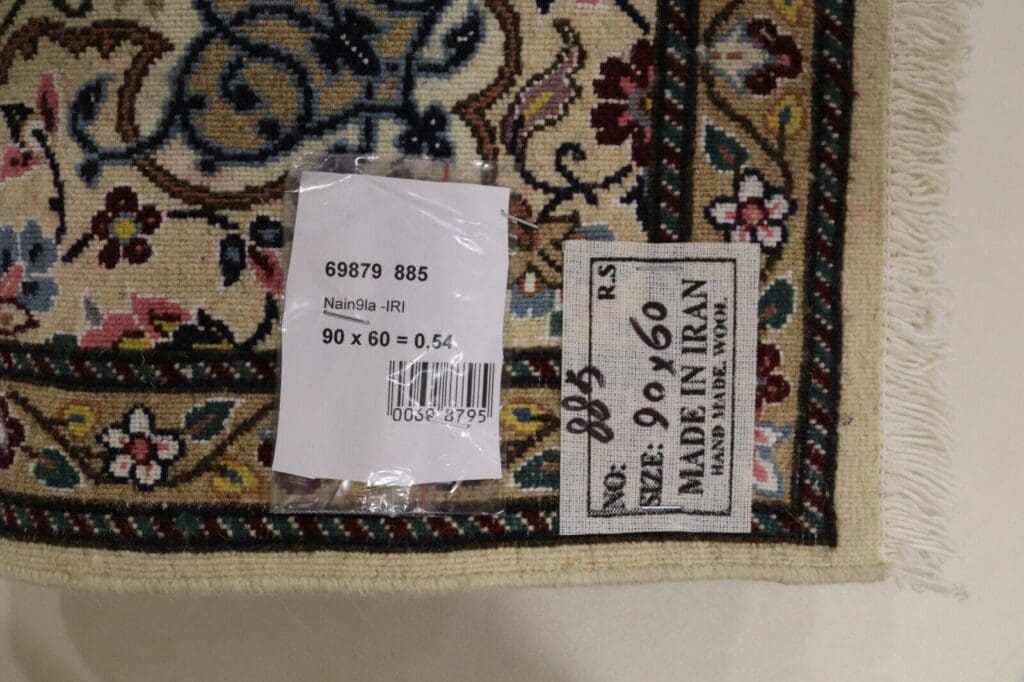
Hand-knotted Nain Persian rug | Knot density: approx. 500,000 knots/m² | Material: pile 90% virgin wool, 10% silk, warp 100% cotton | Size: 90×60 cm | Pattern: Oriental | Condition: New, perfect
1 available
- ✓Free Shipping in EU
- ✓2-5 Business Days Delivery
- ✓14-Day Return Policy
- ✓Worldwide Shipping on request
 SECURE PAYMENT
 SHIPPING PARTNERS
Inventory number: 99A92F2C
Description
Nain Persian Rug
Material and Craftsmanship
This Nain Persian rug is hand-knotted with a pile made from 90% virgin wool and 10% silk, supported by a warp of 100% cotton. The pile and warp materials are therefore clearly distinguished. Virgin wool forms the larger share of the surface. It has long been used in rug making because its natural fibres provide a resilient textile structure and a comfortable handle. Wool also accepts colour well, allowing the outlines and fields of a woven design to be built up with variation and definition.
The silk content changes the character of the wool pile. Silk has a smooth fibre surface and may catch the light with a gentle sheen as the viewing angle changes. Combined with wool, it creates a hand-feel that differs from an all-wool rug. The cotton warp provides the foundation to which the knots are attached. In hand-knotting, the pile is constructed knot by knot along this foundation, with rows being secured and compacted as the work progresses.
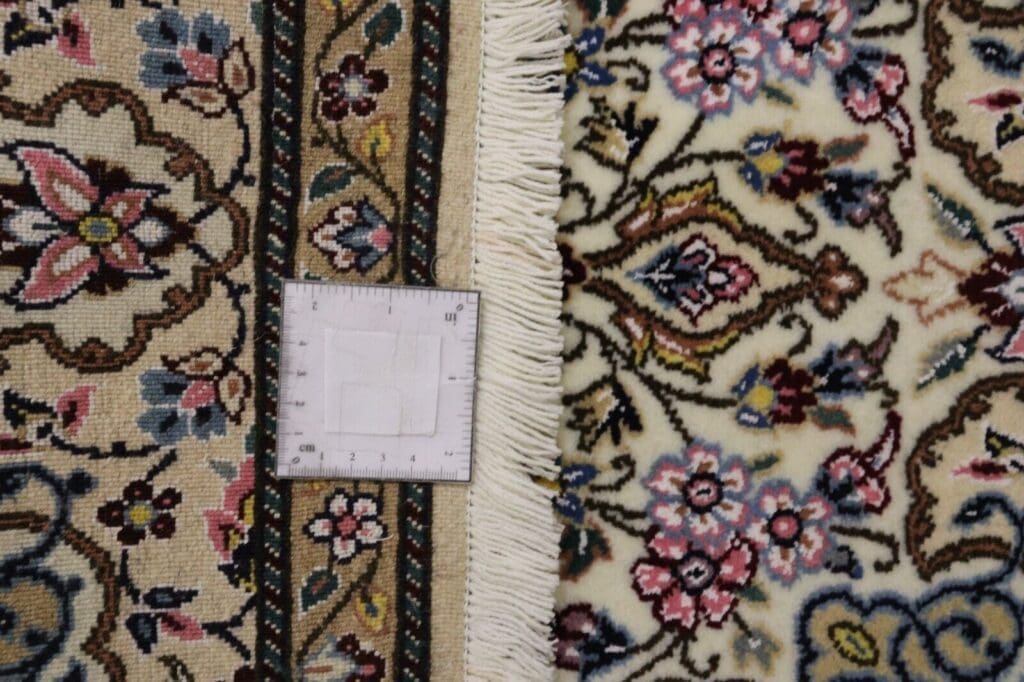
Hand-knotting is a manual process rather than one continuous machine operation. The weaver must keep the warp, weft and pile under control while following the planned drawing. Every knot is placed by hand and becomes part of the structure of the finished surface. This method allows the pattern to be formed directly through the arrangement of coloured knots. The stated density is approximately 500,000 knots per square metre. The rug is described as new and in perfect condition.
Origin and Tradition
The rug comes from Nain in Iran and belongs to the Persian rug tradition. Nain is recognised as a weaving centre known for finely executed rugs. The town lies in central Iran, where textile crafts developed within a long-established regional culture. Nain rugs are associated with careful knotting, controlled drawing and the use of refined materials. Their making combines an initial design, knowledge of fibres and dyes, and the sustained manual work required to translate a drawing into a textile surface.
The tradition of rug making in Nain reaches back to the nineteenth century. During that period, local production developed a reputation for fine construction and carefully organised designs. Rug weaving served both a practical and an artistic purpose: it produced a durable floor covering while also preserving visual conventions through colour, ornament and composition. Designs could be passed on through pattern drawings, workshop practice and the experience of individual weavers.
Persian rugs are distinguished from one region to another by their materials, construction, colours and repertory of motifs. In Nain, precision is an important part of the regional identity. A rug begins with a planned arrangement of field, borders and ornament. The weaver then follows the required sequence of colours and knots, checking the proportions as the work advances. Maintaining the relationship between the central field and the surrounding borders requires attention throughout the process. The result is shaped by both the original design and the decisions made during hand production.
The product name includes the designation Super Nain 9 La. This is a trade and design description connected with the Nain classification. The piece is also identified by its hand-knotted construction, its wool-and-silk pile and its cotton warp. Nain rugs are often associated with finely drawn compositions in which floral details and geometric organisation can be read together. These characteristics describe the regional tradition and provide context for this rug without adding a separate origin or motif claim.
Persian rug culture is not defined by origin alone. Construction, fibre selection and pattern language are also part of the way a rug is understood. The Nain origin places this piece within a specific Iranian weaving tradition, while the listed materials and handwork describe its physical making. Its oriental pattern brings together the decorative vocabulary associated with Persian rugs and the ordered execution associated with Nain weaving. The regional identity therefore works together with, rather than replacing, the description of the individual piece.
Design and Pattern
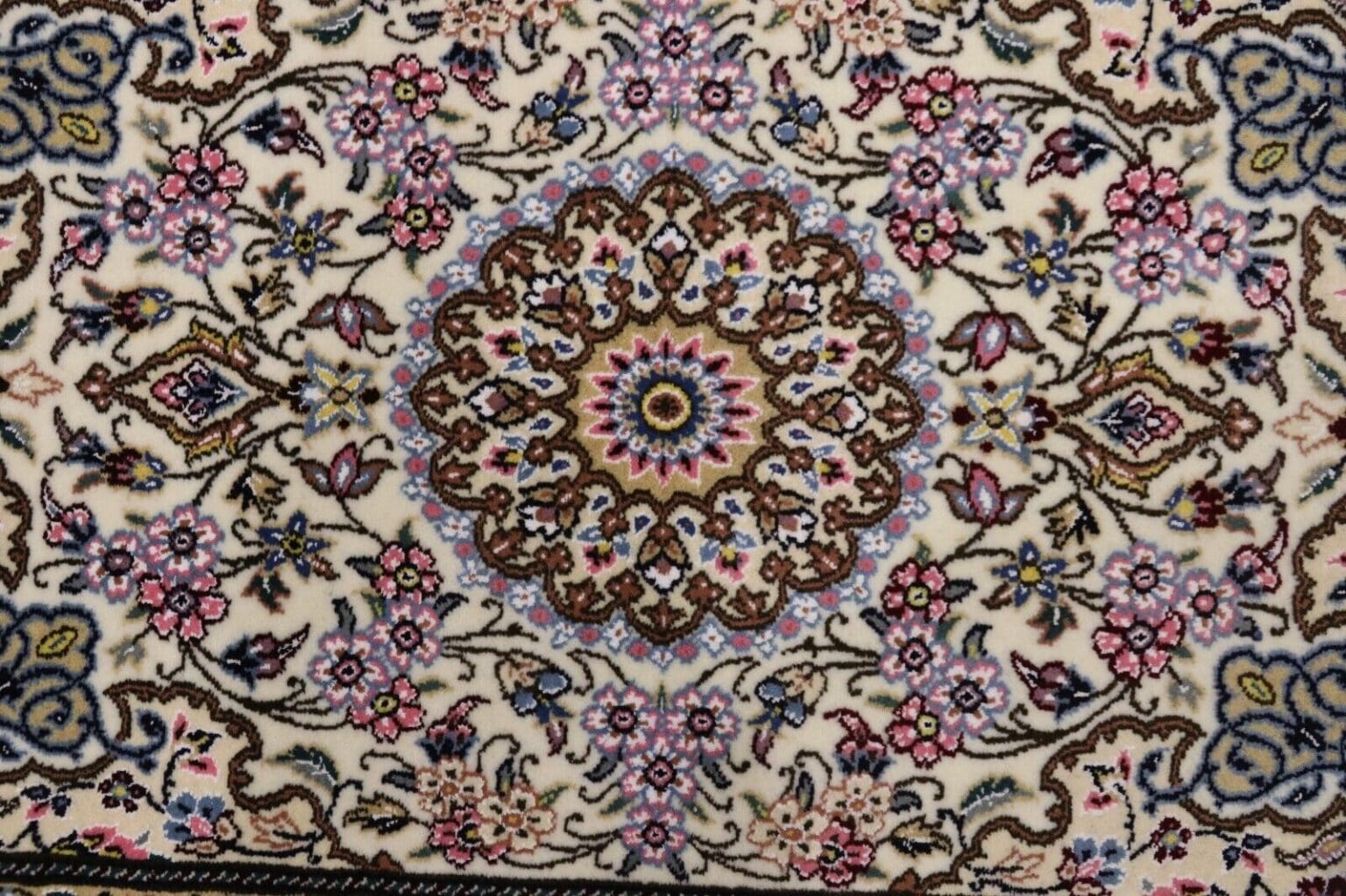
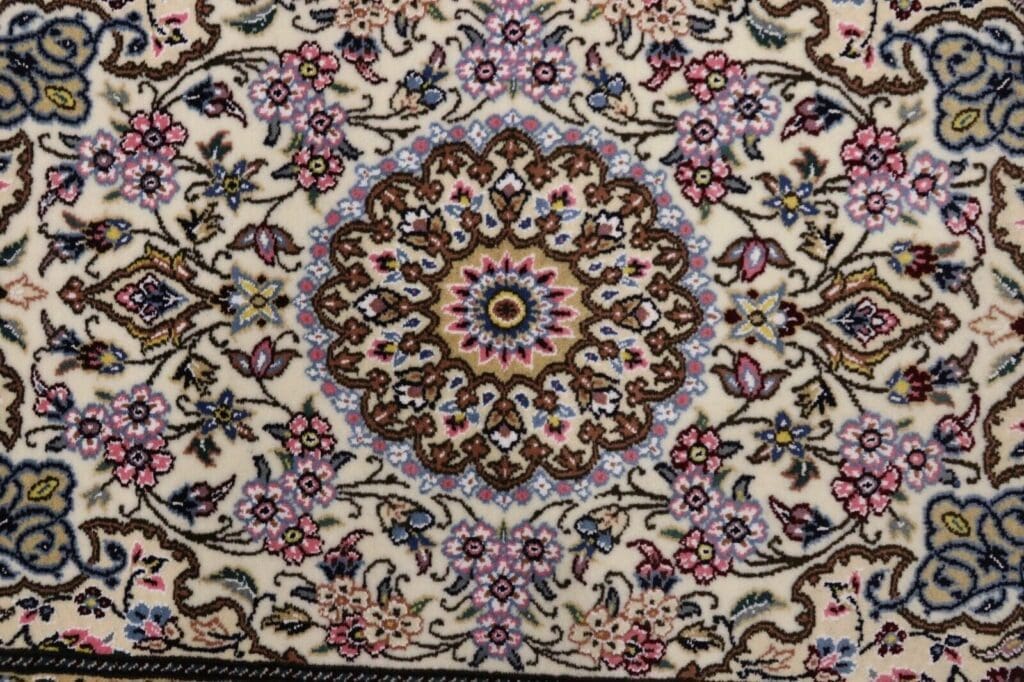
The rug is described as having an Oriental pattern. The supplied description identifies floral and geometric elements as part of the design. Floral forms may be expressed through stylised leaves, blossoms and scrolling lines, while geometric forms provide structure, repetition and clearly defined areas. In a hand-knotted rug these motifs are not printed onto the finished surface. They are constructed through the placement of individual coloured knots, so the pattern develops as part of the pile itself.
Persian compositions commonly organise a rug through a central field and surrounding borders. In Nain designs, these zones may be kept legible through a carefully controlled relationship between ornament and ground. This particular rug is not assigned a single named historical motif in the source description. It is therefore best characterised through its stated Oriental pattern and its combination of floral and geometric elements. Those elements provide the visual framework without requiring an additional design attribution.
The colour range is described as extending from soft natural tones to lively accents. Natural tones can establish a restrained ground, while stronger accents can draw attention to selected parts of the ornament. The appearance of colour is influenced by the fibres and by the way light meets the pile. Wool contributes a more tactile, softly absorbing surface, while silk can reflect light more directly in the areas where it is used. This interaction adds variation to the way the pattern is seen without changing its underlying design.
The mixture of floral lines and geometric order gives the composition a traditional yet clearly arranged character. Its traditional quality comes from the use of established Oriental ornament. Its ordered quality comes from the placement of motifs within the field and borders. Such a design language can be read in a classic interior or alongside restrained contemporary furnishings. This is a description of the pattern tradition, not an additional claim about the rug beyond the Oriental, floral and geometric features stated for it.
Fine knotting supports the rendering of small details and precise contours. Leaves, lines and geometric boundaries can be built up gradually through changes in colour and knot placement. The pattern therefore depends on the relationship between drawing, colour blocks and material. This rug remains specifically described as Oriental in pattern, with its visual identity determined by the floral and geometric vocabulary, the range from natural tones to lively accents, and the fine hand-knotted surface.
Special Features
The stated density of approximately 500,000 knots per square metre is a defining feature of this rug. Reaching such a fine construction involves a large number of individual manual actions and careful control of the design. A dense knot structure can support detailed pattern work and clearly articulated surface areas. Because the rug is hand-knotted, its making is the result of a sequence of human decisions rather than a single automated production step.
The pile composition is another notable feature: 90% virgin wool and 10% silk. Wool contributes a natural textile body, while silk adds a smoother handle and may provide a soft sheen. The warp is made from 100% cotton. The rug is listed as new and in perfect condition. Its thickness is approximately 9 mm.
FAQ
How should I clean this Oriental rug?
For routine care, use a soft brush or a vacuum cleaner fitted with an upholstery attachment. Work gently and avoid pressing heavily into the pile, particularly when removing loose dust. Strong stains should not be treated with harsh household chemicals. For more substantial soiling, a cleaner who specialises in Oriental rugs is the appropriate choice. Professional treatment can take account of the hand-knotted structure and the combination of virgin wool and silk in the pile.
How can I assess the quality of a Persian rug?
Quality is considered through several features rather than one feature alone. Knot density, fibre selection, construction, surface regularity and the clarity of the pattern all contribute to the assessment. A fine density can support detailed drawing, but it should be viewed together with the materials and the way the rug has been made. This Nain has a pile of 90% virgin wool and 10% silk, a 100% cotton warp, hand-knotted construction and a stated density of approximately 500,000 knots per square metre. Its listed new and perfect condition is also part of the product description.
Where is the Nain Persian rug best placed?
The rug can be used in a living room or bedroom as an Oriental furnishing element. Neutral furniture and quiet surrounding colours allow the floral and geometric design to remain easy to read. It can also sit within a more traditional room, where its Iranian origin and Persian pattern language are appropriate points of reference. Direct sunlight should be avoided as far as possible to help the colours remain even over time. A clean, level surface is also suitable for placing a hand-knotted rug.
Additional information
| Design Style | |
|---|---|
| Color | |
| Size | |
| Shape | |
| Origin | |
| Knot Density | |
| Material |
Related products

Persian Rug Tabriz 355 x 252 cm Wool Hand-knotted
€ 4890
Persian Rug Nain 330 x 215 cm Wool Hand-knotted
€ 3600
Persian Rug Kashan 198 x 128 cm Silk Hand-knotted Antique
€ 7249
Oriental Rug Kashmir 405 x 299 cm Silk Hand-knotted
€ 3300
Persian Rug Nain 200 x 129 cm Wool Hand-knotted
€ 2100
Persian Rug Kashan 211 x 140 cm Wool Hand-knotted
€ 900
Persian Rug Tabriz 353 x 253 cm Wool & Silk Hand-knotted
€ 4200
Persian Rug Rosenbidjar 222 x 131 cm Wool Hand-knotted
€ 1530