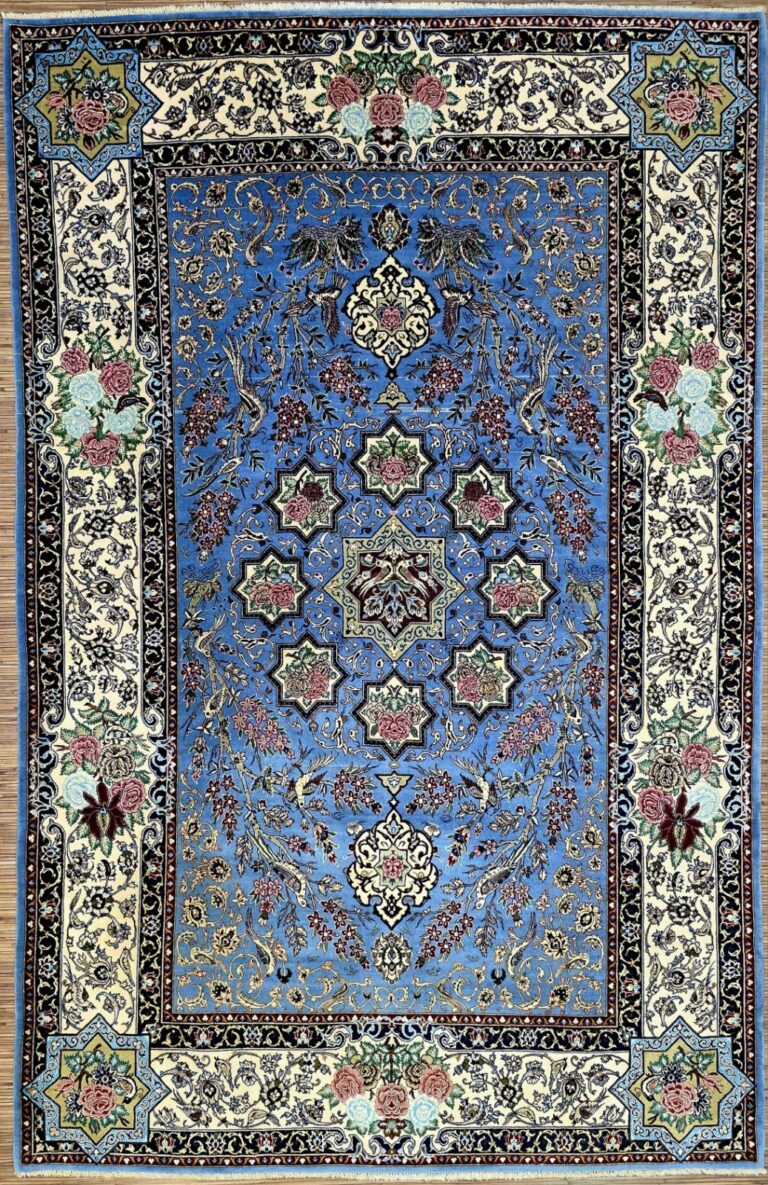
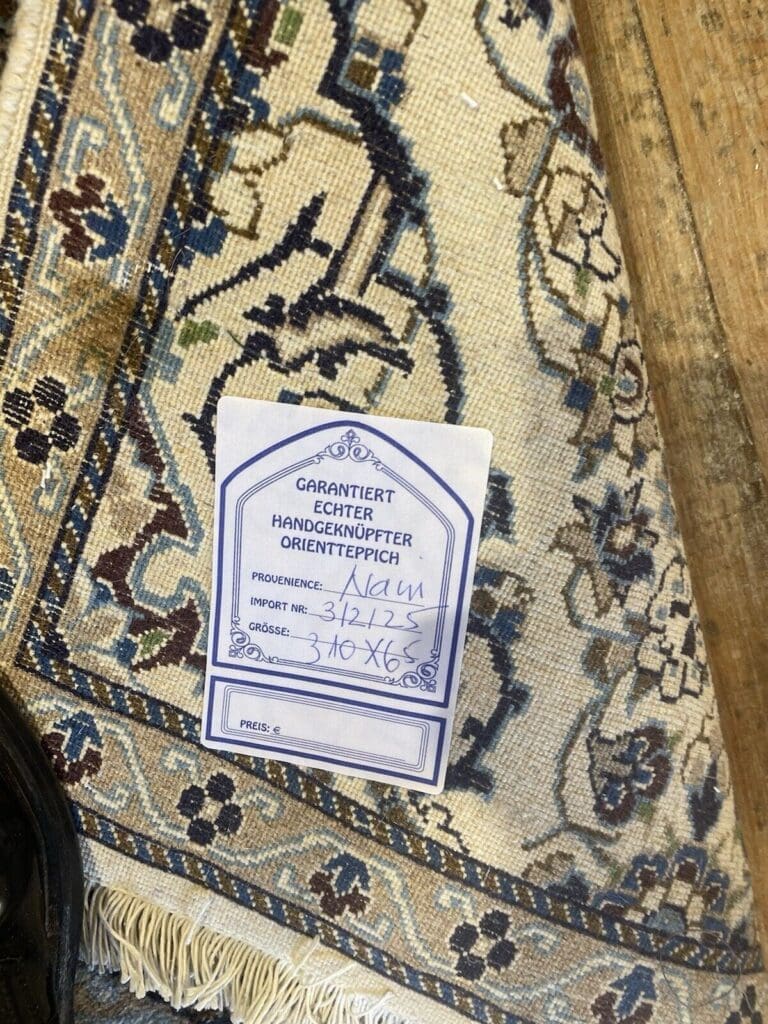
Persian Rug Nain 9 LA 310×65 cm Wool Silk Hand-knotted
€ 1118
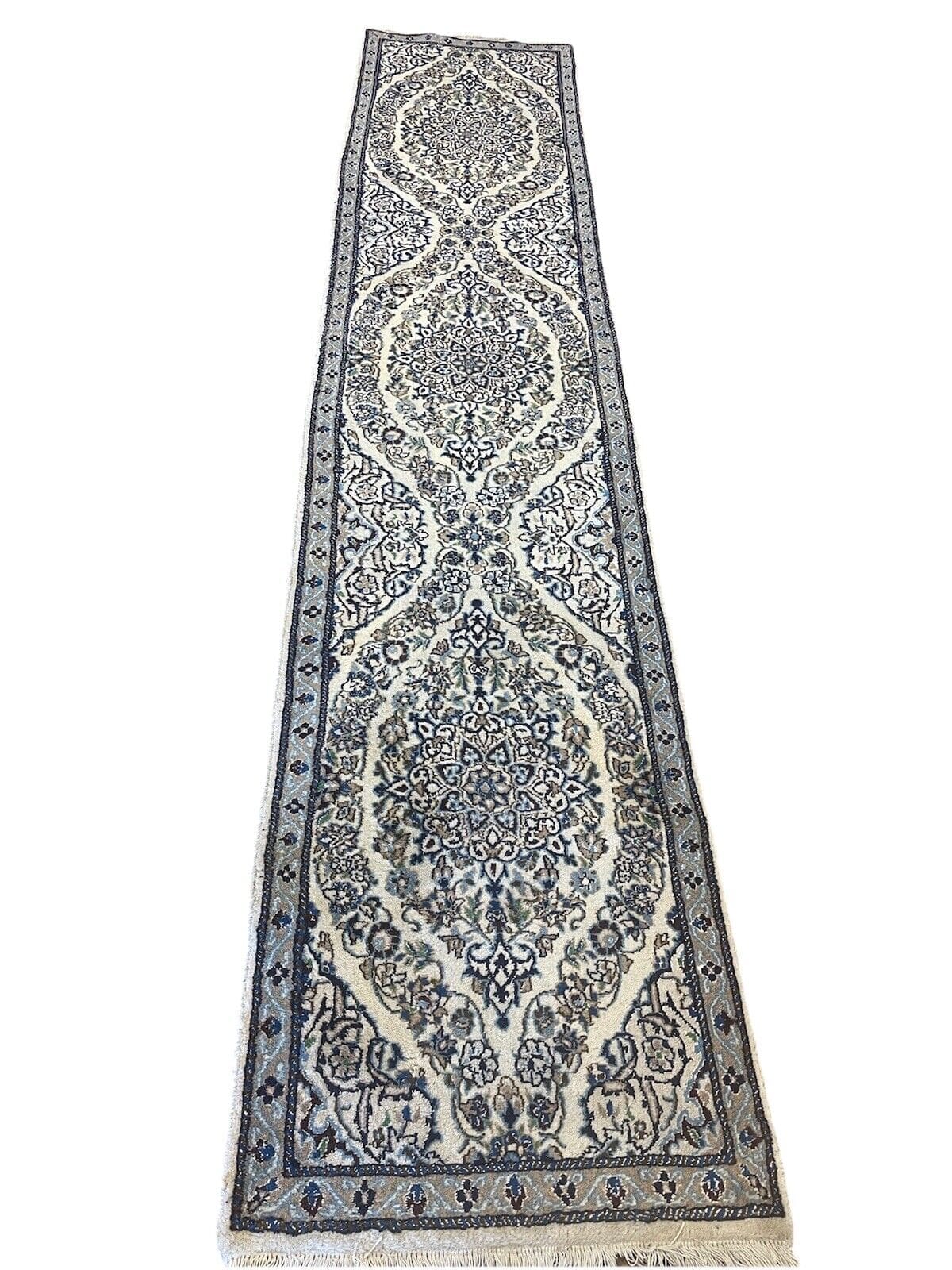
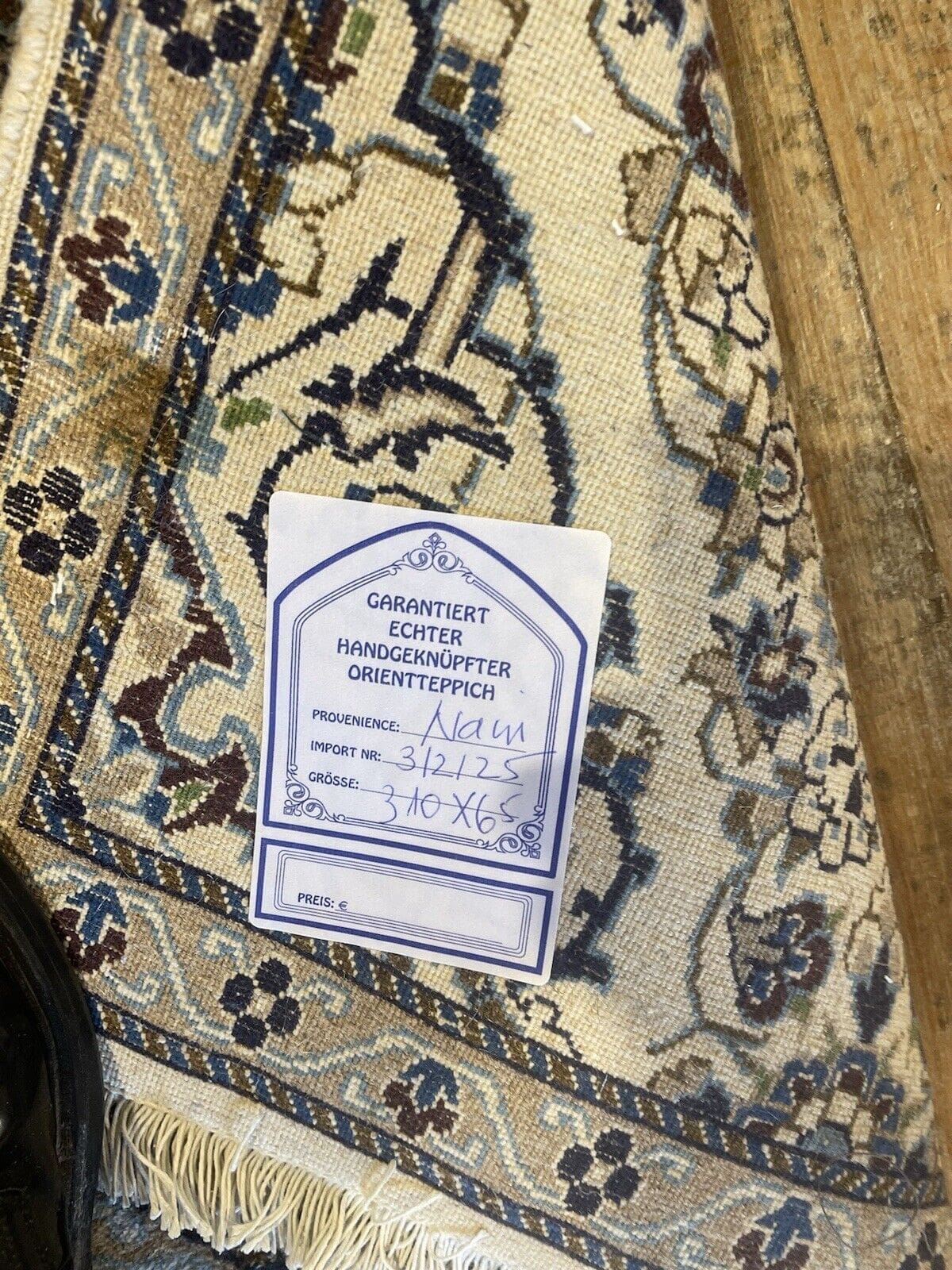
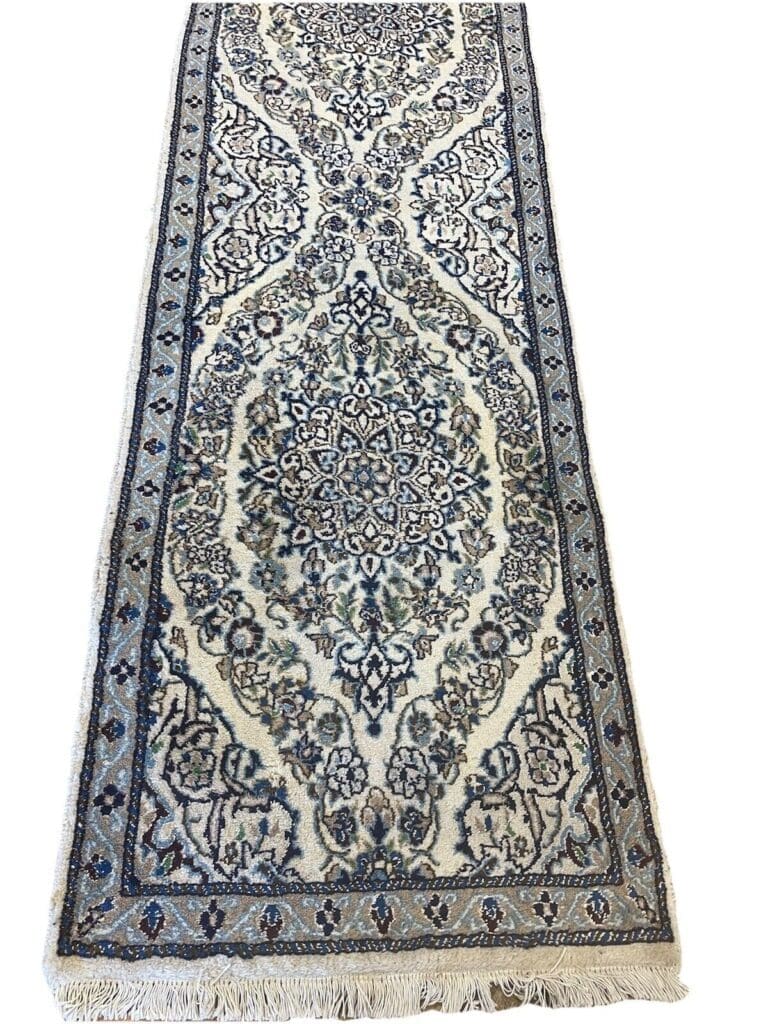
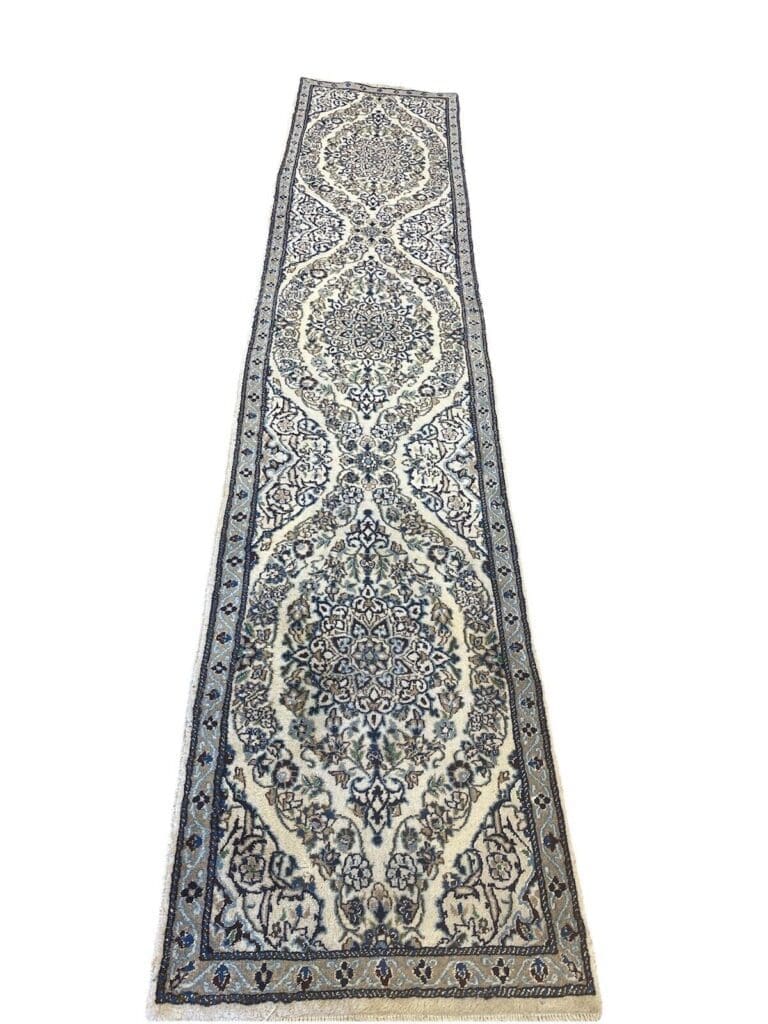
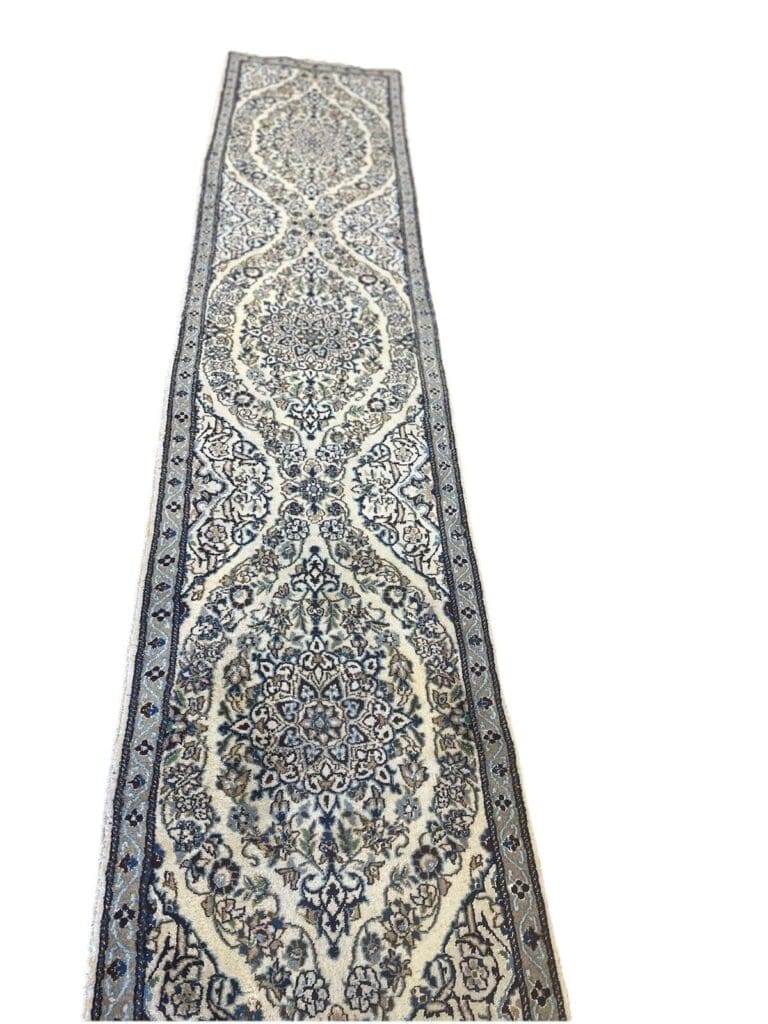
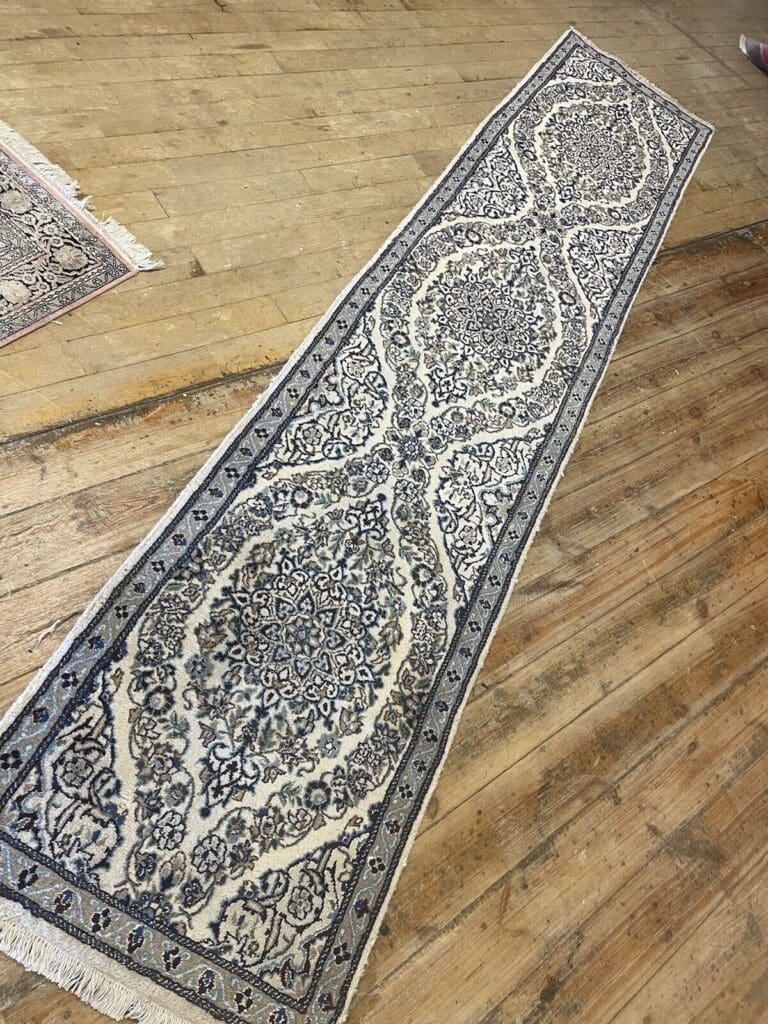
Hand-knotted Nain Persian rug | Knot density: high | Material: pile wool and silk | Size: 310 x 65 cm | Pattern: Oriental, colour beige | Condition: New with tag
This Nain 9 LA is a hand-knotted Persian rug made from wool and silk. The two fibres create the material character of the pile and give the surface a combination of woollen texture and silk sheen. Wool has long been used in oriental rugs for its resilient, pleasantly tactile qualities. Silk adds a smoother feel and a distinctive way of reflecting light. For this individual rug, the material is specified as wool and silk.
Hand-knotting builds the rug knot by knot on a loom. The design is therefore formed during the making process rather than printed or mechanically applied afterwards. The knot density is described as high. In general, high knot density allows fine outlines, small ornaments and controlled transitions to be rendered with greater precision. This is particularly relevant to the orderly floral and symmetrical language associated with Nain rugs.
The pile height is 10 mm. The pile forms the visible and tactile surface underfoot. In combination with wool and silk, it creates a texture in which the durable wool fibre and the characteristic lustre of silk appear together. Hand-knotting also means that the rug is individually made through a sequence of manual working steps. This particular piece is new and comes with a tag.
Hand production requires the weaver to coordinate knots, colours and pattern lines continuously. In a finely drawn oriental rug, the design is transferred section by section into the textile surface. Silk can help distinguish delicate outlines and small changes within an ornament, while wool provides the familiar body of the pile. The stated construction is therefore specific and clear: this is a hand-knotted Nain rug using wool and silk.
Origin and Tradition
Nain rugs originate in the city of Nain in Iran. Nain lies in a central Iranian region with a distinct carpet tradition shaped by careful drawing, balanced colour fields and fine execution. The city gave its name to this type of Persian rug. Nain is consequently more than a general reference to an oriental appearance; it identifies a regional tradition with recognisable approaches to structure, ornament and craftsmanship.
The carpet-making tradition of Nain reaches back to the eighteenth century. Over time, local practice developed forms that place emphasis on controlled composition and accurate execution. Nain rugs are commonly associated with light colour schemes, floral detail and symmetrical arrangements. These are general characteristics of the type and provide the cultural setting for the Nain 9 LA described here.
Iranian carpet culture preserves knowledge of drawing, dyeing, knotting and finishing. A traditional design is understood as an organised relationship between field, borders and connecting motifs rather than as an accidental collection of decorations. A central composition may be framed by border bands, while vines and floral forms create continuity across the surface. In Nain work, this organisation is often combined with fine line work and restrained colour relationships.
The name Nain therefore refers to both place and tradition. Iranian weaving centres developed different preferences in ornament, layout and tonal balance, and Nain is associated with rugs in which the drawing remains legible and carefully articulated. Floral elements, geometric order and a controlled palette can work together without making the composition visually disjointed. Wool and silk are materials that support both the practical and visual aspects of this regional tradition.
Regional carpet traditions are transmitted through repeated craft knowledge. The weaver must understand how a design is proportioned, how motifs relate to one another and how the knotting builds the intended contours. The loom, the sequence of knots and the choice of materials all influence the final surface. Hand-knotting keeps the connection between design and making visible: the pattern is not separate from the construction but develops with it.
Nain rugs are traded internationally because their fine execution and balanced compositions are widely recognised. Their appearance can sit within classical interiors as well as more restrained settings. That versatility does not alter their origin. It comes from the relationship between a clear design, a light colour language and a traditional Persian construction. For this rug, the named origin is Nain in Iran, and the stated technique is hand-knotting.
Design and Pattern
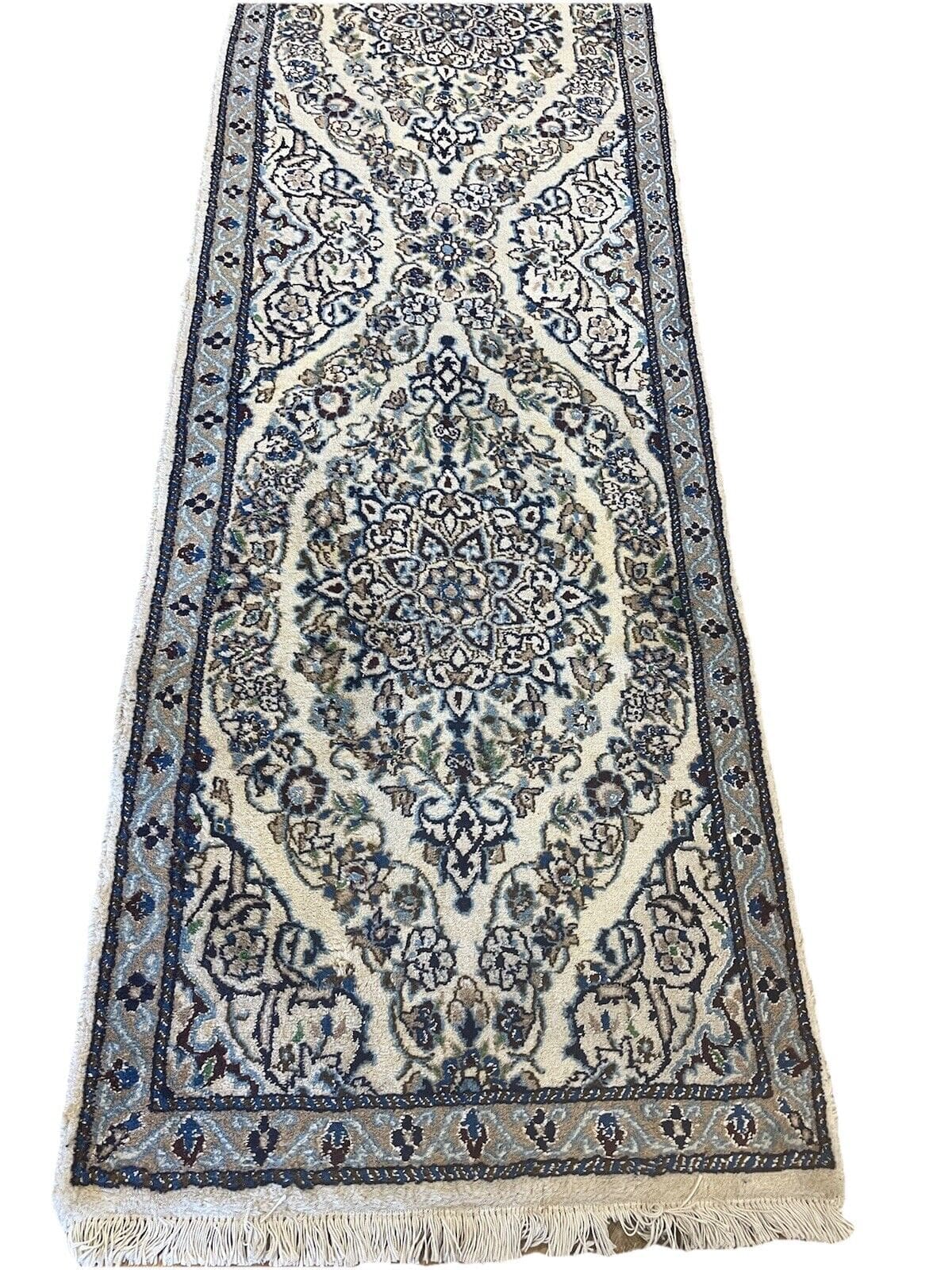
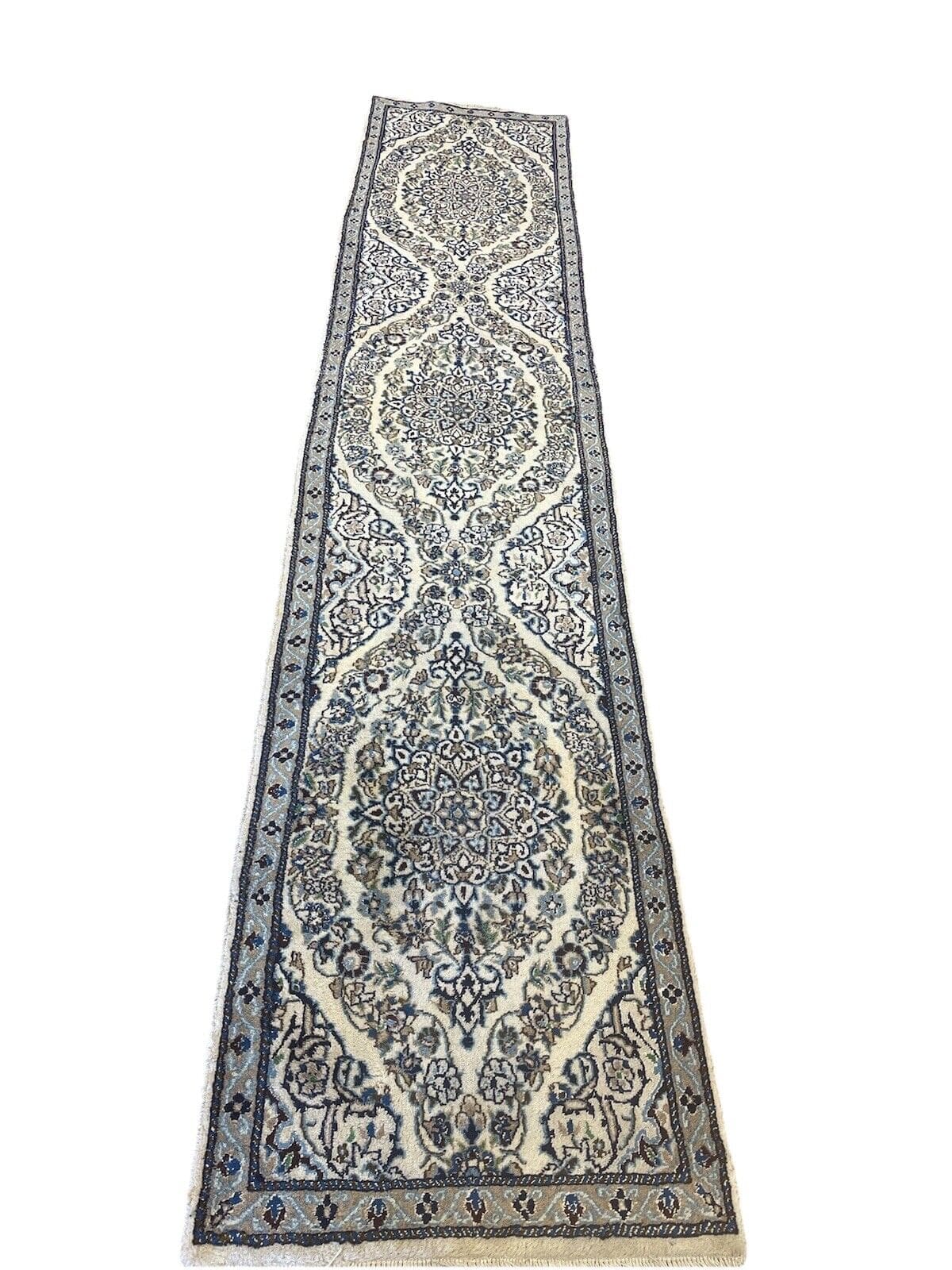
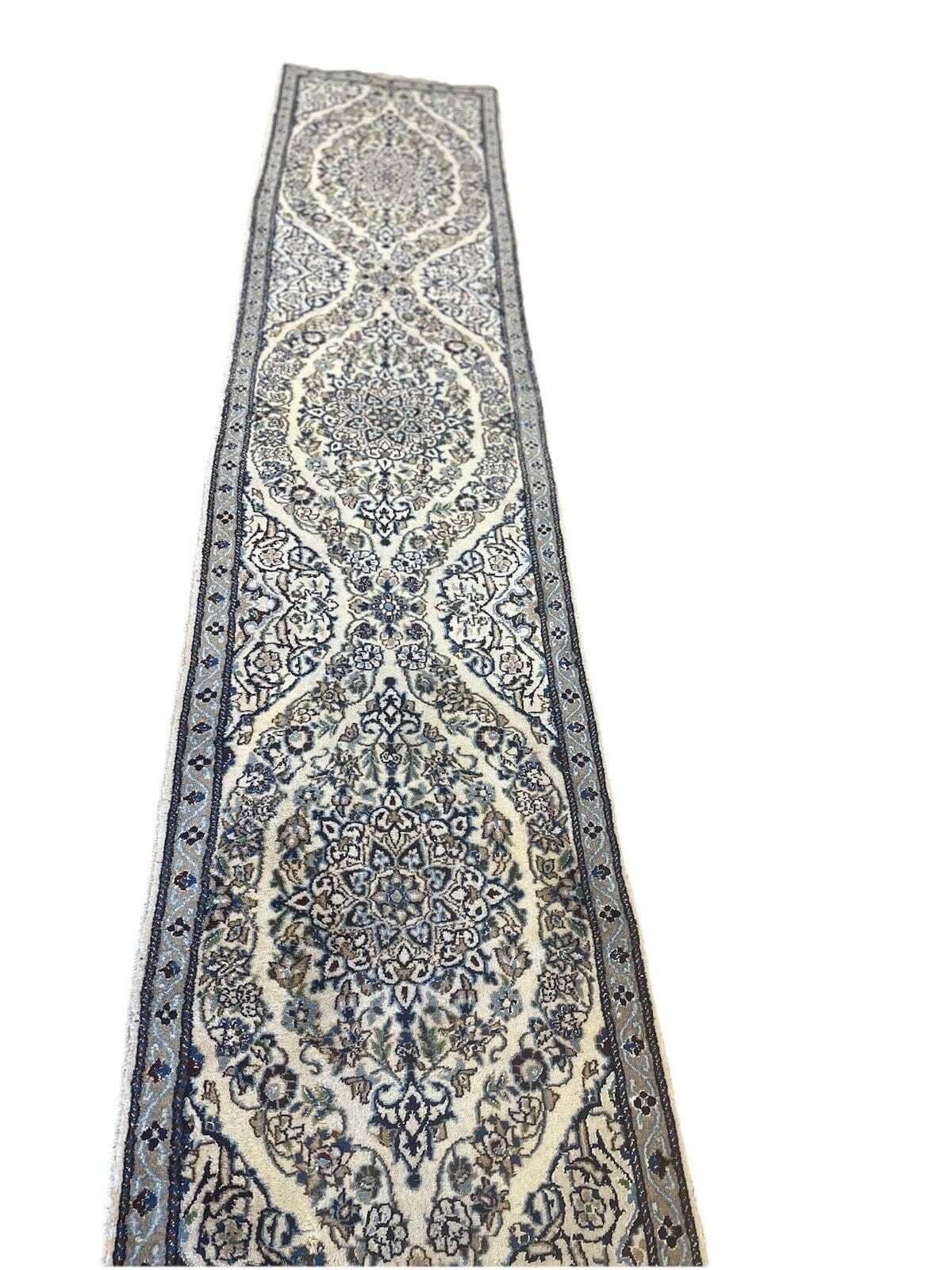
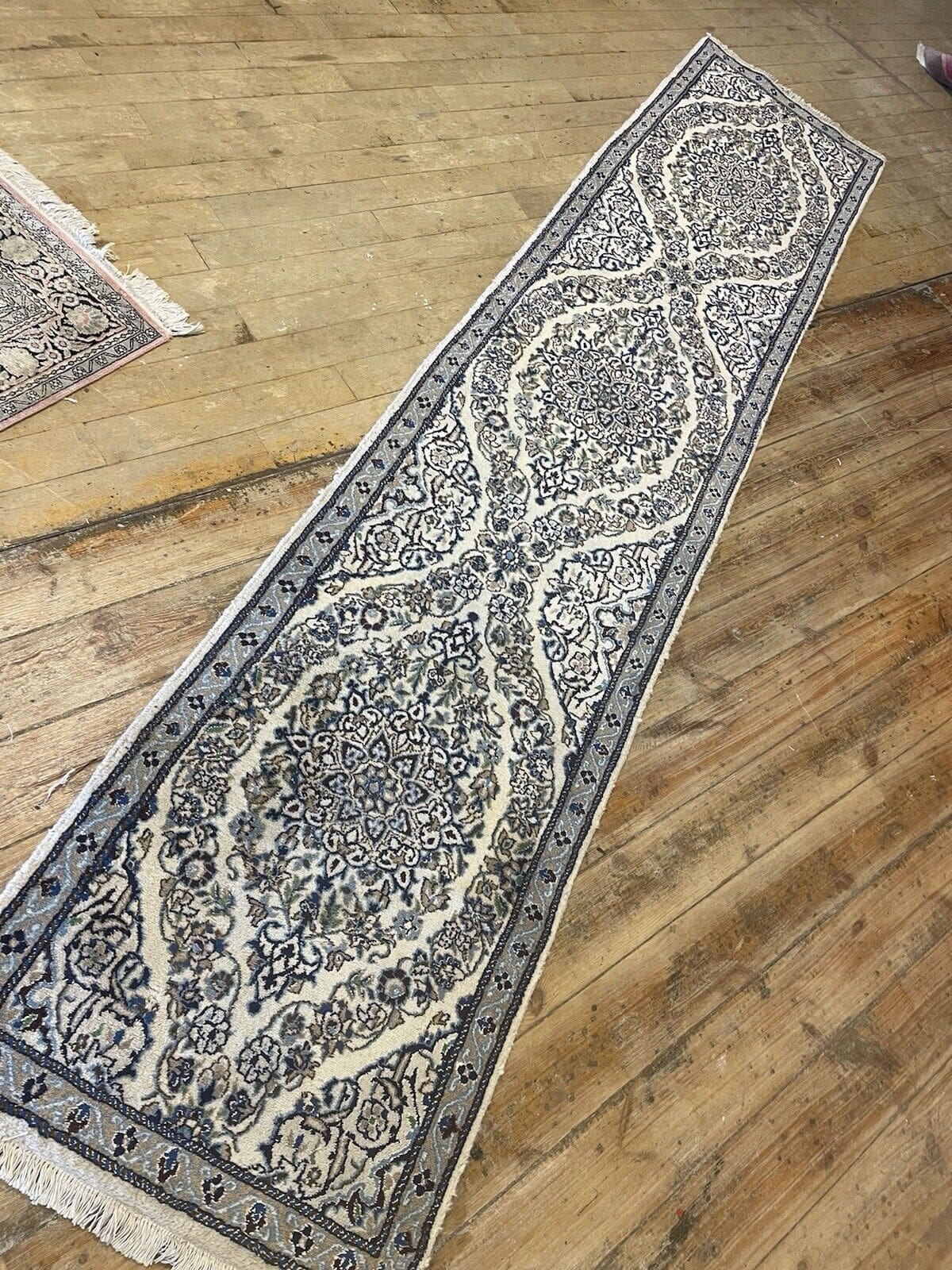
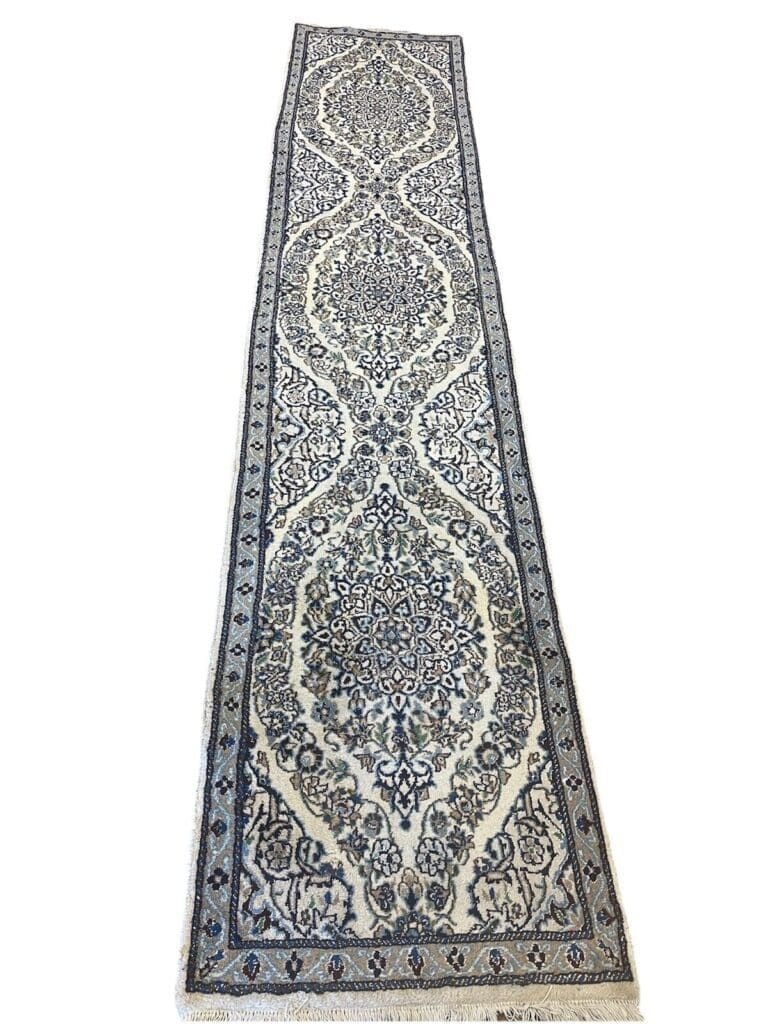
The design of this rug is described as Oriental, traditional Oriental and Persian. Its colour is beige. This gives the piece a light and quiet visual basis. Beige can act as a connecting field in a rug composition, allowing ornamental lines and floral details to remain visible without a strong colour contrast taking over the design. The specific colour named for this rug is beige; no additional individual colours are assigned to it.
Nain designs frequently draw on classical floral motifs. Stylised flowers, leaves, vines and arabesques may be arranged into a coherent field. Symmetrical divisions and a clear relationship between the centre and the surrounding borders are also characteristic of the regional tradition. Such compositions rely on recurring forms and measured spacing. They create rhythm through repetition while allowing small variations in line and ornament to give the surface detail.
A traditional oriental rug often develops its pattern across several structural levels. The central field establishes the main visual area, while one or more borders organise the transition towards the edges. Vines may connect separate floral forms, mirrored elements can reinforce symmetry, and fine contours can divide larger areas into smaller sections. Nain rugs are commonly linked with this kind of carefully ordered drawing and precise ornament.
Silk has a particular role in the way a pattern may be perceived. Its smoother surface reflects light differently from wool, so a line or small motif can appear distinct through a change in sheen as well as through colour. This general material effect explains why wool and silk are often used together in finely made Persian rugs. In this piece, the material combination is stated alongside the Oriental design and the beige colour.
The designation 9 LA is part of the product name for this Nain rug. It is not used here as an additional statement about size or age. The pattern itself is described as an elegant Oriental design with floral and symmetrical elements. Its visual language therefore combines beige with the classical ornament associated with Nain. The result is a traditionally oriented textile composition whose lines and details are supported by the fine knotting.
Floral and geometric ordering in Persian carpet design does more than decorate the surface. It establishes structure, guides the eye and gives the composition a recognisable rhythm. Repeated shapes create unity, while changes in scale and contour prevent the field from becoming visually flat. Fine knotting can support this effect by allowing small transitions and narrow outlines to be represented with control.
The product description identifies the rug as a runner and names the living room, bedroom and hallway as possible areas of use. Those applications relate to the long format and the intended domestic setting, not to a particular interior. The beige Oriental design can be placed within traditional or Persian-inspired schemes. The design remains rooted in Nain tradition regardless of where the rug is used.
Special Features
The stated features of this individual rug are its hand-knotted construction, wool and silk material, high knot density, 10 mm pile height and beige colour. It is new and supplied with a tag. Together, these details describe its material, making, surface and condition. They do not imply an age, previous use or additional provenance beyond the named Nain origin in Iran.
The rug is described as suitable for several areas of the home. The living room, bedroom and hallway are named as possible locations, and the product title identifies it as a runner. Its care instructions recommend regular vacuuming without a brush attachment. For stains, a damp cloth and a specialised carpet cleaner are advised. Professional cleaning every few years may also be useful.
A hand-knotted Nain made from wool and silk brings together regional Persian tradition, a distinct textile surface and an Oriental pattern. The new condition with tag distinguishes this piece from a used rug. In general, the value of a Persian rug is assessed through factors such as age, condition, knot density, material and design rarity. A precise valuation requires examination by a carpet specialist.
FAQ
How should I care for my Nain Persian rug?
Regular vacuuming without a brush attachment is recommended for removing loose dust while avoiding unnecessary mechanical action on the surface. If a stain occurs, use a damp cloth. A specialised carpet cleaner may also be used, provided it is suitable for the material and applied according to its instructions. Because this rug combines wool and silk, strong or uncertain treatments should be handled carefully. Professional cleaning every few years can be sensible. Persistent stains or damage should be assessed by a qualified carpet cleaner rather than treated aggressively at home.
Where does a Nain rug come from?
Nain rugs come from the city of Nain in Iran. The city is known for a long tradition of carpet making and for finely executed rugs with harmonious colour relationships. Floral motifs, symmetrical compositions and careful line work are commonly associated with the Nain tradition. The name therefore identifies both a place of origin and a recognised Persian carpet style. The rug described here is designated an original Nain 9 LA Persian rug and is hand-knotted from wool and silk.
How can I determine the value of my Persian rug?
The value of a Persian rug can be influenced by several factors, including age, condition, knot density, material and the rarity of its design. Origin and the quality of the handcraft may also be considered during a professional assessment. For this piece, the listed details include high knot density, wool and silk, hand-knotted construction and a new condition with tag. A general product description cannot establish an exact value on its own. A carpet specialist can inspect the relevant characteristics and provide a more reliable valuation.
To provide the best experiences, we use technologies like cookies to store and/or access device information. Consenting to these technologies will allow us to process data such as browsing behavior or unique IDs on this site. Not consenting or withdrawing consent, may adversely affect certain features and functions.
Functional Always active
The technical storage or access is strictly necessary for the legitimate purpose of enabling the use of a specific service explicitly requested by the subscriber or user, or for the sole purpose of carrying out the transmission of a communication over an electronic communications network.
Preferences
The technical storage or access is necessary for the legitimate purpose of storing preferences that are not requested by the subscriber or user.
Statistics
The technical storage or access that is used exclusively for statistical purposes.The technical storage or access that is used exclusively for anonymous statistical purposes. Without a subpoena, voluntary compliance on the part of your Internet Service Provider, or additional records from a third party, information stored or retrieved for this purpose alone cannot usually be used to identify you.
Marketing
The technical storage or access is required to create user profiles to send advertising, or to track the user on a website or across several websites for similar marketing purposes.

 SECURE PAYMENT
 SHIPPING PARTNERS