This hand-knotted Nain Persian rug has a pile made from 95% virgin wool and 5% silk. Its warp and weft are made from 100% cotton. The construction therefore combines a wool pile with silk content and a cotton foundation. The source description associates the virgin wool with a soft, pleasant handle and good durability. Silk adds fine points of sheen and contributes to the way the colours and ornament are perceived across the surface.
The rug is made by hand knot by knot. With this method, individual knots are tied into the foundation and built up row by row. The surface is then finished so that the design can be read with precision. The source gives an approximate density of 300,000 knots per square metre. In the context of this rug, that density is connected with a finely executed structure and carefully rendered details.
The rug is described as a one-off piece and comes with a certificate of authenticity. Its condition is new and perfect. The combination of virgin wool and silk affects both the tactile character and the visual definition of the design. Silk can accent individual outlines and ornaments through its lustre, while wool forms the soft yet durable body of the pile. Cotton provides the woven foundation into which the knots are secured.
The source also states a thickness of approximately eight millimetres. This refers to the finished textile construction. Hand knotting, the stated fibre composition and the certificate are the principal production features of this individual rug. No further manufacturing claim is needed to identify its character: it is a new, hand-knotted Nain Persian rug with a wool and silk pile, made on a cotton foundation.
Origin and Tradition
Nain is a city in Iran’s Isfahan Province. Nain rugs therefore belong to the Persian weaving tradition of Iran. The city and its surrounding region are known for producing finely drawn Persian rugs. Within this tradition, designs are organised through a relationship between field, borders and small ornamental details. The origin name Nain identifies the Iranian weaving centre associated with the rug; it does not merely describe a motif used in another regional style.
Nain’s rug production developed from the area’s established textile and craft culture. Its weaving tradition is often associated with a controlled overall composition, delicate line work and carefully balanced ornament. A weaver follows a design plan that determines the arrangement of the field, border bands and individual motifs. The drawing is formed one row at a time as the knots are tied. This allows a complex pattern to remain legible even when it contains many small elements.
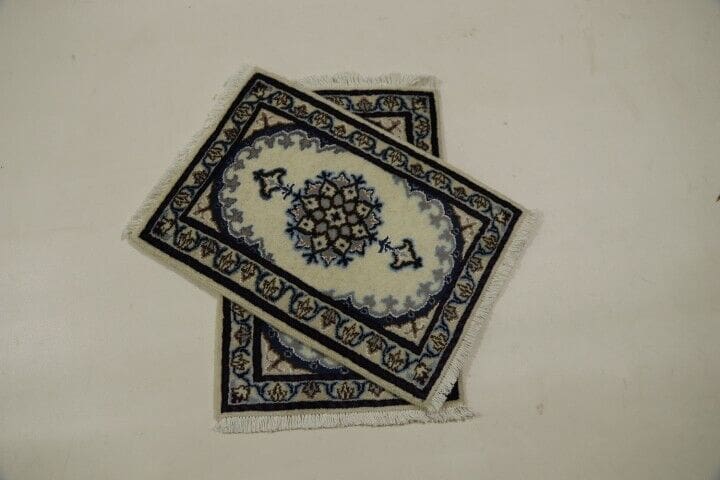
Nain rugs are commonly connected with light grounds and finely worked floral or geometric designs. Darker outlines and accents may separate the motifs and give the composition definition. This approach belongs to a broader Persian design language in which the central field and surrounding borders are intended to be viewed as one ordered arrangement. Individual rugs can differ in their exact colours and layout, but the combination of a light ground, measured ornament and precise drawing remains an important reference for the Nain school.
The history of rug knotting in Nain reaches back to the nineteenth century. During that period, the city established itself as a centre of its own rug production. Local work continued older Persian approaches to composition while developing a particularly fine execution. Knowledge of preparing the warp, inserting the weft, tying the knots, trimming the pile and finishing the rug is part of the practical craft tradition passed between generations.
Persian rugs from Isfahan and Nain are valued for their orderly compositions and differentiated detail work. They also represent a form of cultural textile production in which use, design and construction remain closely related. A Nain rug is therefore considered through more than colour alone. Its regional identity, its method of manufacture and the relationship between the drawn design and the knotted surface are equally relevant to its classification.
This piece is identified as Nain and its origin is given as Persia. It is consequently a Persian rug from the Iranian tradition. The classification is based on the named origin, rather than on the presence of a particular floral or geometric motif. The certificate of authenticity accompanies the piece described as a one-off.
Design and Pattern
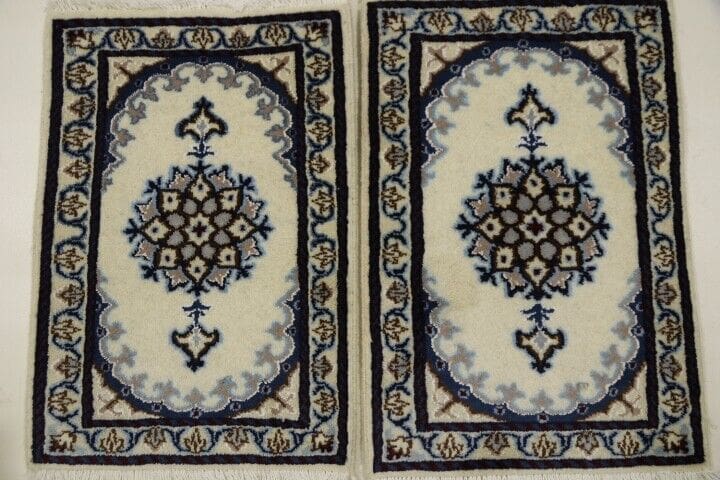
The design of this Nain Persian rug is described as floral and geometric ornament. Typical forms in this design vocabulary include stylised flowers, scrolling vines and geometric shapes. They are not presented as a naturalistic picture; instead, they are adapted to a regular rug composition. Leaves, blossoms and lines may connect into repeating arrangements, while geometric elements provide order and establish clear transitions across the field.
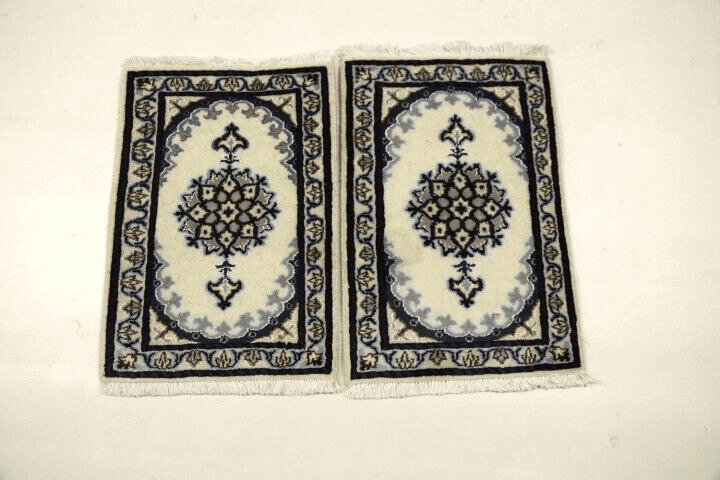
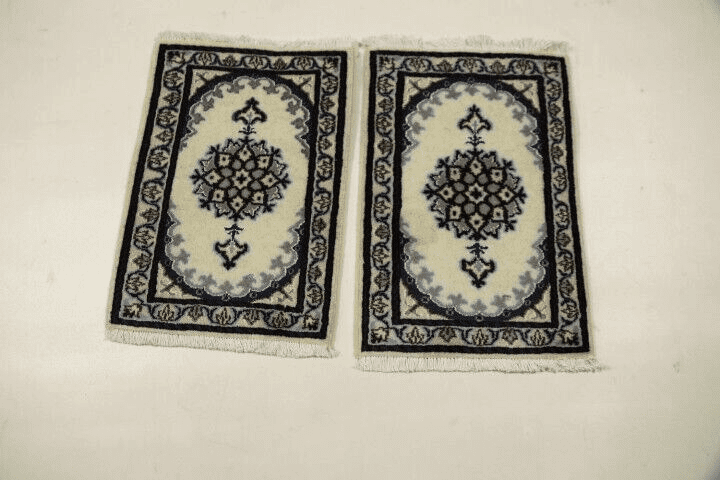
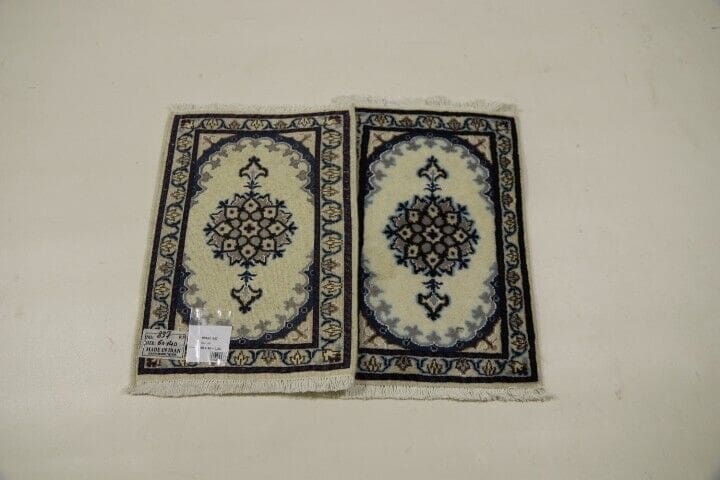
The composition commonly uses a light ground supported by darker accents. This contrast makes outlines and smaller ornaments easier to distinguish. The light background gives the design a restrained appearance, while darker lines define its structure. In a Nain rug, the central field, secondary motifs and border can be coordinated so that the surface reads as a continuous and balanced whole.
Floral vines are recurring ideas in Persian rug design. They may surround a central medallion, extend through the field or continue within a border. Stylised blossoms create recognisable points of emphasis without disturbing the regularity of the composition. Geometric forms often perform an organising role: they frame areas, reinforce axes or mediate between the central field and the surrounding border bands.
The fine knotting supports the representation of these details. Small changes in direction, narrow outlines and closely placed ornaments can be rendered with distinction when the hand-knotted structure is dense. The pattern consequently remains clear to the eye. Silk content may bring additional sheen to selected lines or areas, while the wool pile carries the broader surface. The visual result is thus tied to both the design tradition and the materials used to make the rug.
Nain designs are generally organised around balance. Repetition creates rhythm, mirrored arrangements provide stability and a border contains the central field. This structure allows the pattern to work with different interior styles. The source describes this rug as suitable for hallways, living rooms, bedrooms and other spaces, and as compatible with both traditional and modern interiors. That suitability relates to its calm ornamental arrangement; it does not alter the rug’s Iranian origin or its hand-knotted construction.
The source characterises the colour effect as mostly light ground colours combined with darker accents. Floral, ornamental and geometric forms provide the main visual content. Their fine execution gives the surface a differentiated drawing. The pattern is therefore best understood as a Persian rug composition with inherited rules of order, rather than as an isolated decorative image. Each element contributes to the relationship between field, border, line and repeated ornament.
Special Features
The distinguishing features of this piece are its hand-knotted construction, its pile of 95% virgin wool and 5% silk, and its cotton warp and weft. The source also gives an approximate density of 300,000 knots per square metre, describes the condition as new and perfect, and states that the rug comes with a certificate of authenticity. It is identified as a one-off.
The source further describes the rug as dirt-repellent, colourfast in appearance and easy to clean. Regular care consists of vacuuming without a brush attachment. Spills should be treated immediately with a damp cloth. Professional cleaning every few years is recommended as an additional measure. These care instructions are presented in connection with the hand-knotted pile and the combination of virgin wool and silk.
Suggested settings include a hallway, living room, bedroom, dining room or office. The rug is described as suitable for traditional as well as modern interiors. The source also states that it can be used over underfloor heating. These uses and characteristics are included here within the scope in which they are specified for this individual Nain rug.
FAQ
How should I care for my Nain Persian rug?
Vacuum the rug regularly without using a brush attachment. Any stain should be treated immediately with a damp cloth. Professional cleaning every few years helps maintain the rug. The source describes this piece as dirt-repellent and easy to clean. Care should nevertheless take account of its hand-knotted structure and its pile of virgin wool and silk.
Where can I use the Nain Persian rug?
The rug can be used in a hallway, living room, bedroom, dining room or office. Its floral and geometric design, with a mainly light ground and darker accents, can be combined with both traditional and modern interiors. These rooms are the applications specified for this Nain Persian rug in the source description.
Is the Nain Persian rug suitable for underfloor heating?
Yes. The source describes this rug as suitable for use over underfloor heating. The stated high-quality materials are said to provide comfortable underfoot use while conducting warmth effectively. Proper care remains important when using the hand-knotted rug, including regular vacuuming without a brush attachment and prompt treatment of stains.
To provide the best experiences, we use technologies like cookies to store and/or access device information. Consenting to these technologies will allow us to process data such as browsing behavior or unique IDs on this site. Not consenting or withdrawing consent, may adversely affect certain features and functions.
Functional Always active
The technical storage or access is strictly necessary for the legitimate purpose of enabling the use of a specific service explicitly requested by the subscriber or user, or for the sole purpose of carrying out the transmission of a communication over an electronic communications network.
Preferences
The technical storage or access is necessary for the legitimate purpose of storing preferences that are not requested by the subscriber or user.
Statistics
The technical storage or access that is used exclusively for statistical purposes.The technical storage or access that is used exclusively for anonymous statistical purposes. Without a subpoena, voluntary compliance on the part of your Internet Service Provider, or additional records from a third party, information stored or retrieved for this purpose alone cannot usually be used to identify you.
Marketing
The technical storage or access is required to create user profiles to send advertising, or to track the user on a website or across several websites for similar marketing purposes.
 SECURE PAYMENT
 SHIPPING PARTNERS


