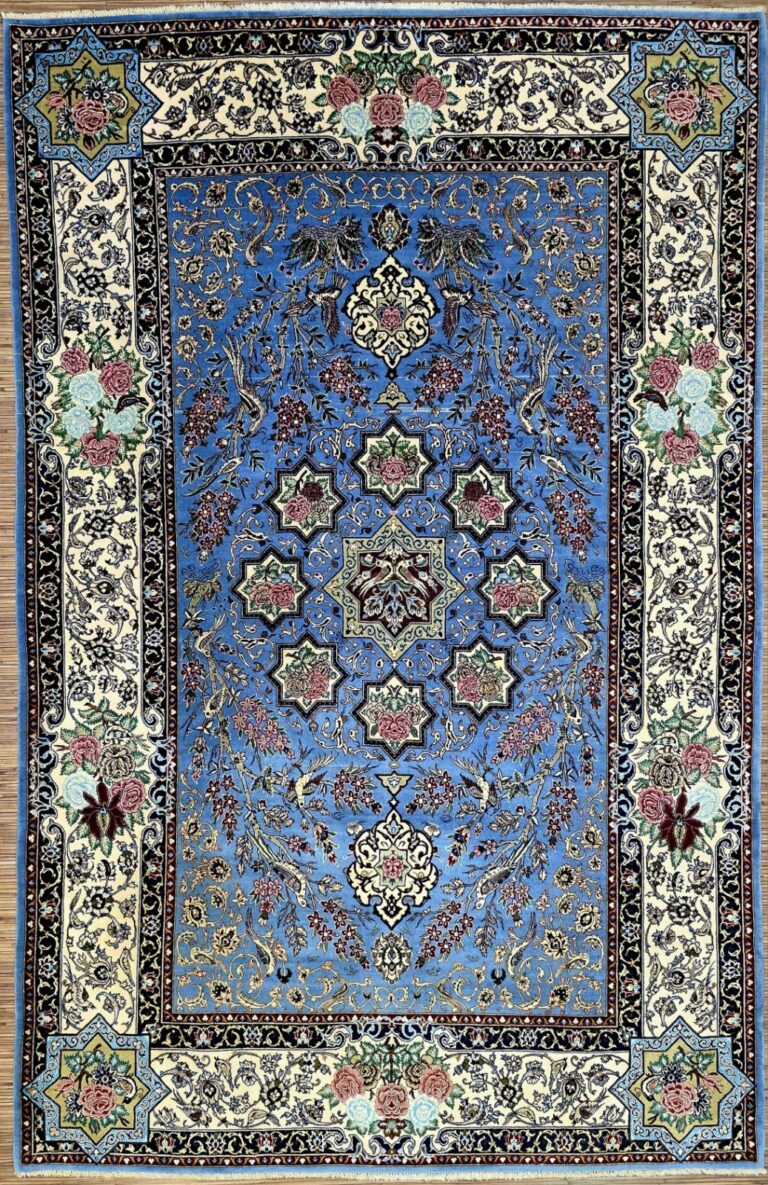
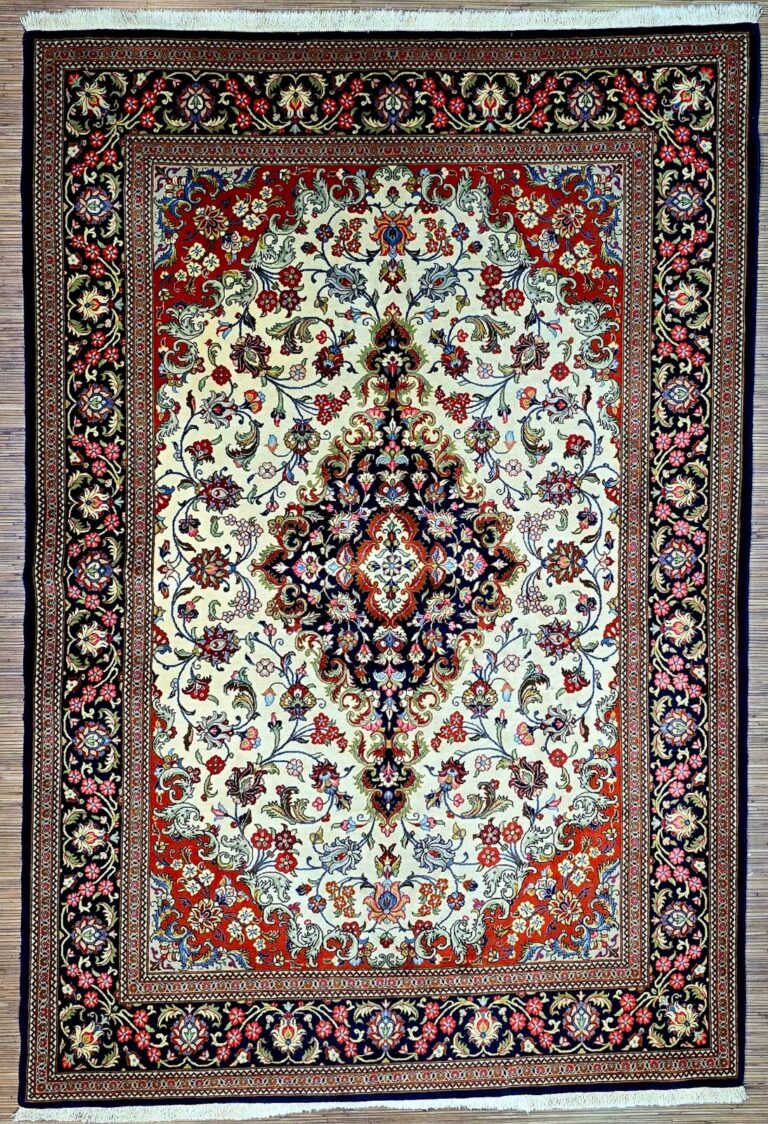
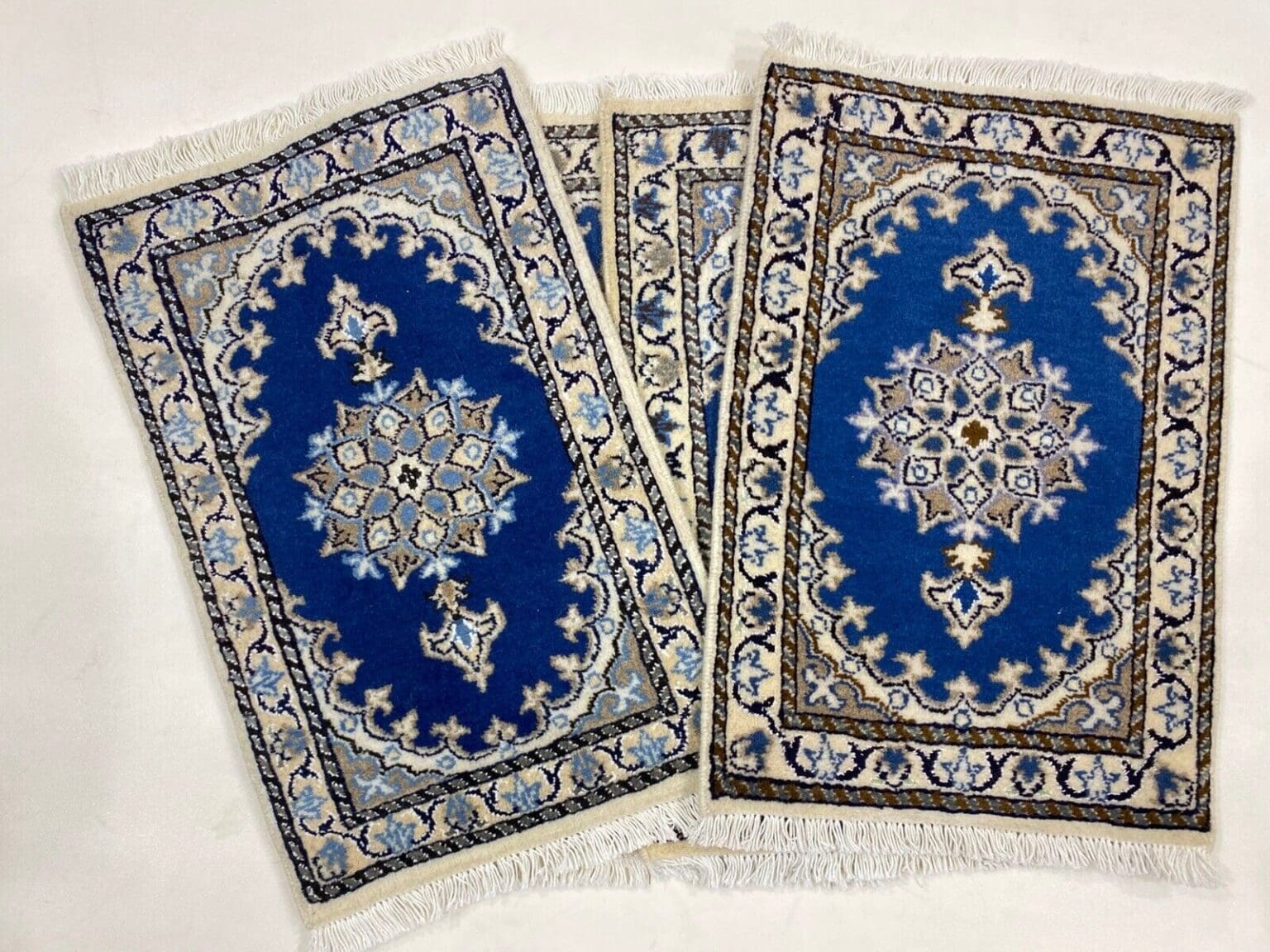
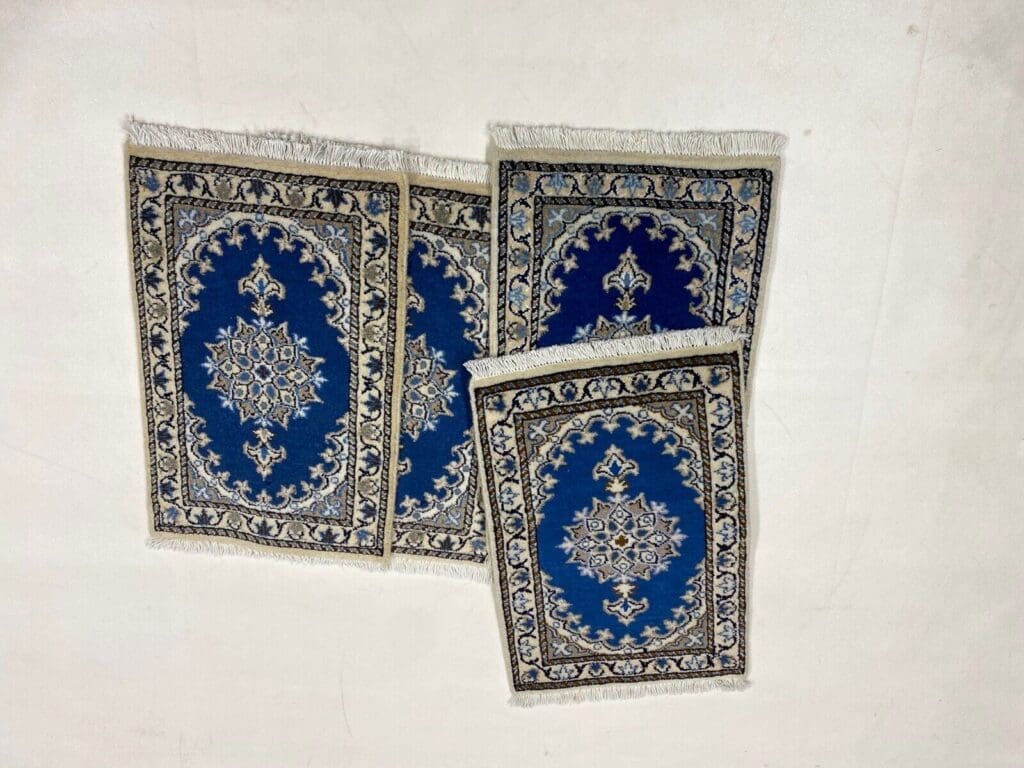
This Nain Persian rug is made from 90% virgin wool and 10% silk. The two natural fibres bring different qualities to the hand-knotted textile. Wool has a resilient, springy structure and a soft, warm handle. It is also known for its insulating properties and its ability to withstand regular use. Its surface reflects light in a gently varied way rather than with a completely uniform sheen.
The silk content adds a smoother touch and more delicate highlights. In a patterned rug, silk can help fine contours, small ornaments and subtle changes in colour appear more distinctly. Here, silk is combined with virgin wool within the hand-knotted construction. The stated composition is 90% virgin wool and 10% silk; no additional fibre composition is given.
Hand knotting is a laborious textile process in which individual knots are tied by hand into the foundation. The pile is built row by row, with the pattern developing through the placement of knots and the choice of yarn colours. This differs from a machine-made floor covering whose surface is produced through an industrial process. The handmade method allows the design to be formed directly within the structure of the rug and supports the rendering of detailed motifs.
The rug has a knot density of approximately 300,000 knots per square metre. A dense construction can accommodate small shapes, narrow outlines and carefully graduated details when the drawing and execution are well coordinated. It is also an indication of the work involved in producing the textile. This piece is described as hand-knotted and new.
Origin and Tradition
The rug is identified as a Nain Persian rug and comes from Persia, or Iran. Nain is a city in central Iran whose name is associated with finely worked carpets and carefully organised compositions. The surrounding region has a dry climate and a long history of textile production. Nain rugs form part of the wider Iranian carpet tradition and are recognised internationally as a distinct regional expression.
Iranian carpet production developed in many different centres, each with its own preferences in drawing, structure, colour and finishing. Nain is commonly associated with precise patterning and fine knotting. Designs and working methods have been passed through workshops and families, where knowledge of layout, colour relationships and knotting technique is combined with the judgement of individual craftspeople. The result is a regional tradition that can be recognised without requiring every rug to follow one fixed design.
The name Nain therefore refers to both a place and a style within Persian carpet making. It places the rug in a central Iranian context and points to a tradition that often adapts classical Persian ornament to a controlled, finely drawn surface. Medallions, mirrored axes, floral fields and enclosing borders are frequent elements in Nain designs, although the precise arrangement varies from one rug to another. The regional identity lies in the relationship between these devices, the degree of detail and the overall discipline of the composition.
The history of Iranian rugs is based on the interaction of local materials, inherited patterns and skilled manual work. Wool has long been used for durable pile, while silk may be introduced where a finer surface or sharper visual accent is required. The use of both fibres in this piece reflects a broader Persian carpet practice of combining materials for different tactile and visual purposes. The character of a rug is shaped not only by its region, but also by the balance between fibre, density, drawing and colour.
Colour has an important role in the Nain tradition. Carefully related light and dark tones can separate the field from the border and make the floral drawing easier to follow. In the history of Persian carpets, dyes were obtained from plant, animal and mineral sources, while later production also uses other dyeing methods. Regional tradition is not a single unchanging formula; it is the continued use of familiar colour relationships and compositional principles as techniques develop.
A certificate of authenticity is included with this one-off piece. It forms part of the product information and records its stated classification. The rug is offered as a unique individual item rather than as one example from a series of identical pieces. Its Persian origin, Nain designation, hand-knotted construction and fibre composition are the defining details supplied for this rug.
Design and Pattern
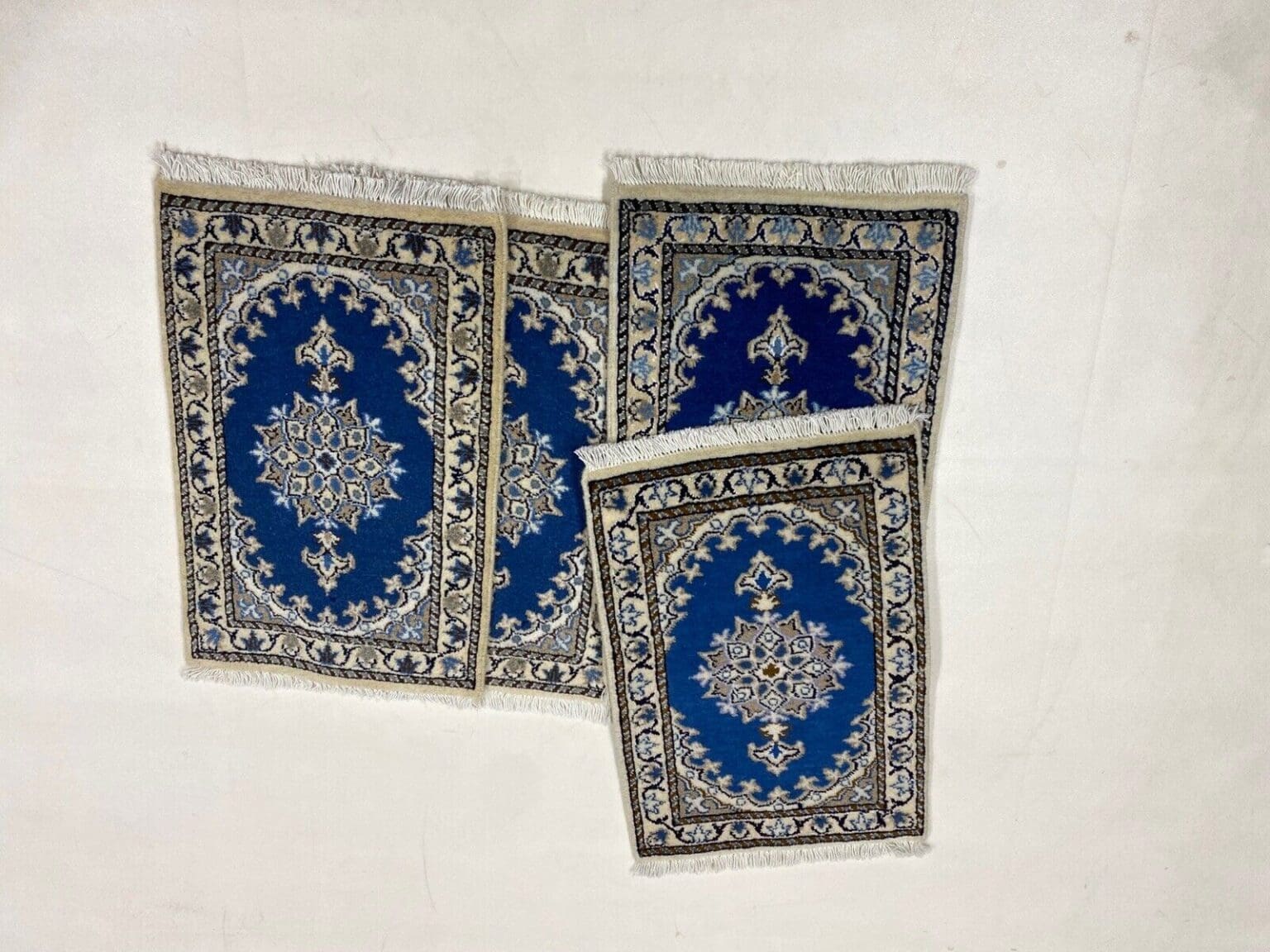
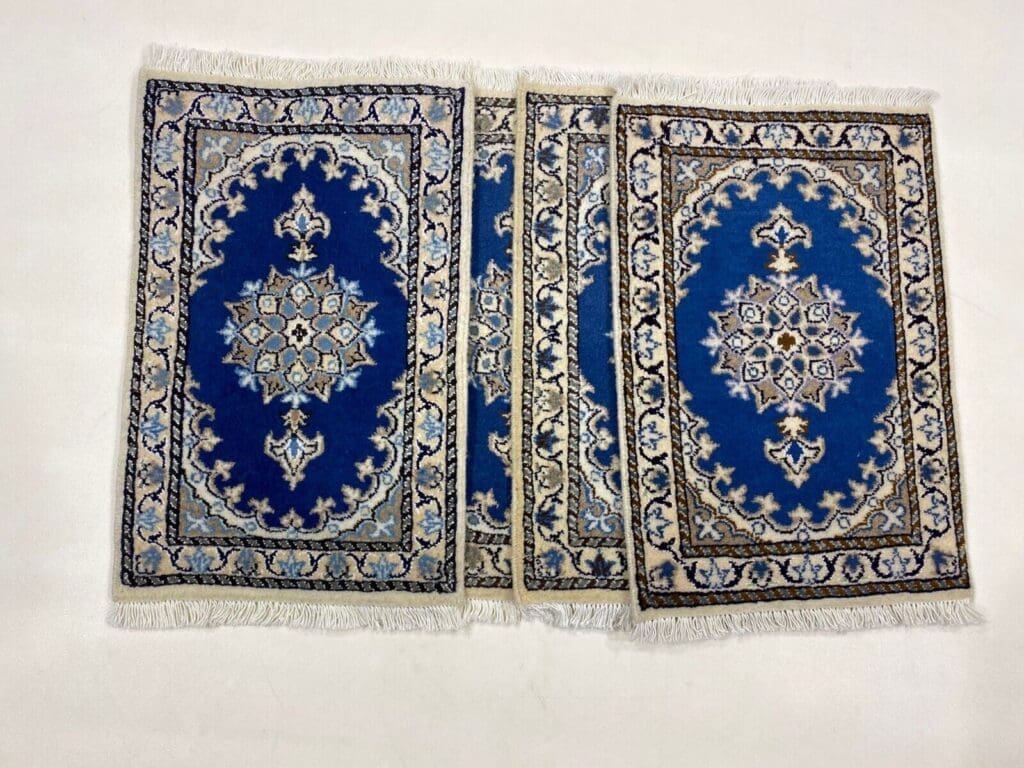
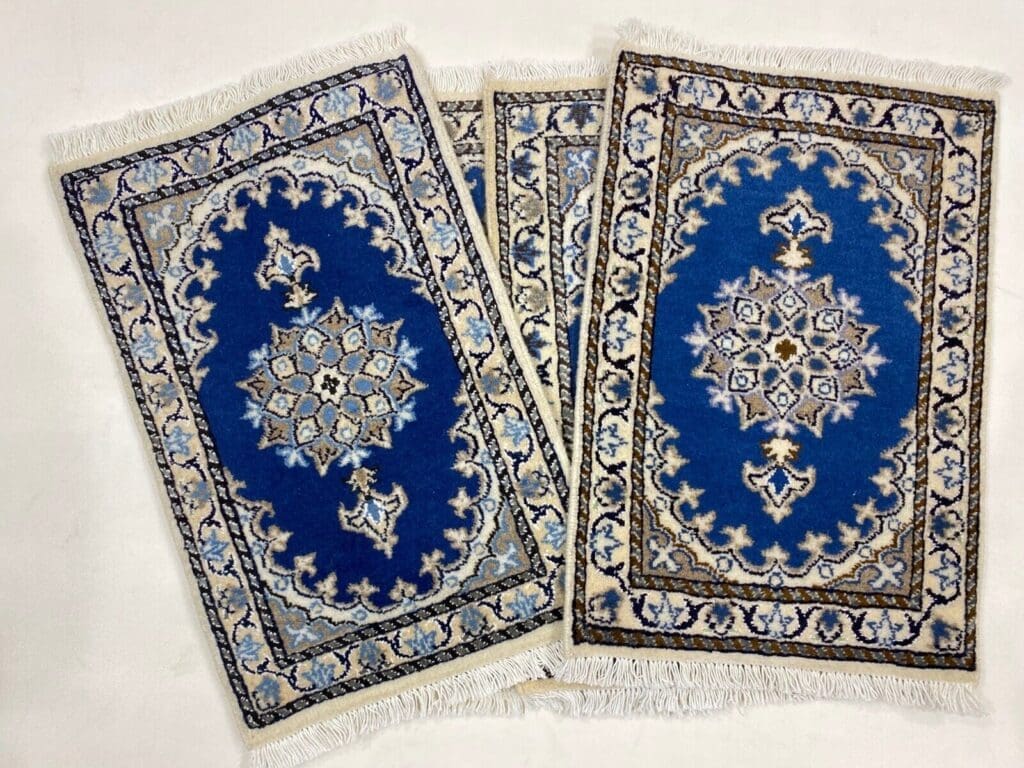
Nain carpets are known for orderly, finely articulated ornament. Common elements in the regional vocabulary include flowers, leaves, curling vines and arabesque forms. These may be arranged around a central medallion, distributed across an open field or repeated as a connected pattern. Geometric devices often frame the floral details and help organise the transitions between the central area and the surrounding borders.
Many Persian rugs are built from distinct visual zones. The field carries the main design, while one or more borders enclose it and establish a clear edge. A central axis or mirrored arrangement can create balance from one side of the composition to the other. The hand-knotted structure remains visible in the way the design is translated into textile form. Small variations in the execution are part of the relationship between a drawn pattern and manual production.
Floral motifs in Persian art have accumulated different cultural associations over time. Blossoms may suggest renewal, vines may express continuity, and repeated geometric forms may be connected with order and harmony. These are general interpretive traditions rather than a claim that every individual motif on this rug has one fixed meaning. The visual effect comes from the combined use of contour, repetition, spacing and contrast.
Nain designs are often composed from coordinated shades rather than isolated colours. A lighter ground can make fine lines more legible, while deeper accents give structure to the ornament. Subtle changes between related tones can create depth without relying on strong contrast. Textile surfaces also change in appearance with the direction of the pile, the position of the viewer and the available light. The presence of both wool and silk can add further variation to the way different areas reflect light.
The dense knotting is relevant to the treatment of detail. Small leaves, narrow tendrils and compact geometric accents can be drawn with greater definition than on a coarsely knotted surface. Knot density alone does not determine the quality of a pattern, however. The result also depends on the clarity of the design, the consistency of the execution, the colour balance and the relationship between field and border. Nain weaving tradition brings these factors together in a measured and legible ornamental language.
The listed style is traditional Oriental and Persian. This describes the cultural vocabulary of the design rather than prescribing one type of interior. Persian ornament can sit within a classic setting, a restrained contemporary room or an interior with other Oriental references. The rug’s visual role depends on the surrounding colours, furnishings and amount of pattern in the room. Its design is read through the interaction of ornament and open space.
Special Features
The stated knot density of approximately 300,000 knots per square metre is a central feature of this rug. A dense hand-knotted structure supports a finely drawn pattern and allows individual ornamental areas to be worked with precision. Every row contributes to the completed surface. Unlike a printed design, the pattern is integrated into the pile through the placement of the knots and the sequence of the coloured yarns.
The combination of 90% virgin wool and 10% silk affects both the tactile character and the way the surface catches light. Wool contributes a durable, insulating natural fibre, while silk adds a smoother feel and more restrained highlights. The rug is hand-knotted, new and supplied with a certificate of authenticity. It is described as a one-off, so the offer concerns one individual piece.
The product description also states that the rug is suitable for rooms with underfloor heating. The heating system should be operated according to its own technical instructions. For everyday care, regular vacuuming is recommended to remove dust and loose dirt. Fresh stains should be treated promptly with a damp cloth and mild soapy water. Direct, intense sunlight should be avoided to reduce the risk of uneven fading. A substantial or specialist cleaning should be entrusted to a professional cleaner familiar with wool and silk textiles.
FAQ
How should I care for this Nain Persian rug?
Vacuum the rug regularly to remove dust and surface dirt. If a spill occurs, treat it promptly with a damp cloth and mild soapy water. Avoid aggressive rubbing, since friction can affect the fibres and the appearance of the pattern. The rug should not be exposed to strong direct sunlight for long periods, as this can cause the colours to fade unevenly. For a thorough cleaning, use a professional service that can work appropriately with a hand-knotted textile made from virgin wool and silk.
Which interior style works with a Nain rug?
The traditional Oriental and Persian character can be used in several types of interior. In a classic room, the ornament can relate to established furniture forms and natural materials. In a modern setting, the rug can provide a defined textile pattern beside simpler furnishings. It can also be combined with other Oriental elements. The most suitable placement depends on the room’s colours, the furniture arrangement and how much pattern is already present. A Nain rug is therefore not restricted to one decorating style.
Is the rug suitable for underfloor heating?
Yes. The product description identifies this Nain Persian rug as suitable for rooms with underfloor heating. The wool and silk construction provides a textile surface while allowing the room’s warmth to be experienced through the rug. Operate the heating in accordance with the instructions for the particular system. Correct installation and adequate air circulation support appropriate use. If the floor construction has special technical conditions, those conditions should be checked before placement.
To provide the best experiences, we use technologies like cookies to store and/or access device information. Consenting to these technologies will allow us to process data such as browsing behavior or unique IDs on this site. Not consenting or withdrawing consent, may adversely affect certain features and functions.
Functional Always active
The technical storage or access is strictly necessary for the legitimate purpose of enabling the use of a specific service explicitly requested by the subscriber or user, or for the sole purpose of carrying out the transmission of a communication over an electronic communications network.
Preferences
The technical storage or access is necessary for the legitimate purpose of storing preferences that are not requested by the subscriber or user.
Statistics
The technical storage or access that is used exclusively for statistical purposes.The technical storage or access that is used exclusively for anonymous statistical purposes. Without a subpoena, voluntary compliance on the part of your Internet Service Provider, or additional records from a third party, information stored or retrieved for this purpose alone cannot usually be used to identify you.
Marketing
The technical storage or access is required to create user profiles to send advertising, or to track the user on a website or across several websites for similar marketing purposes.
 SECURE PAYMENT
 SHIPPING PARTNERS