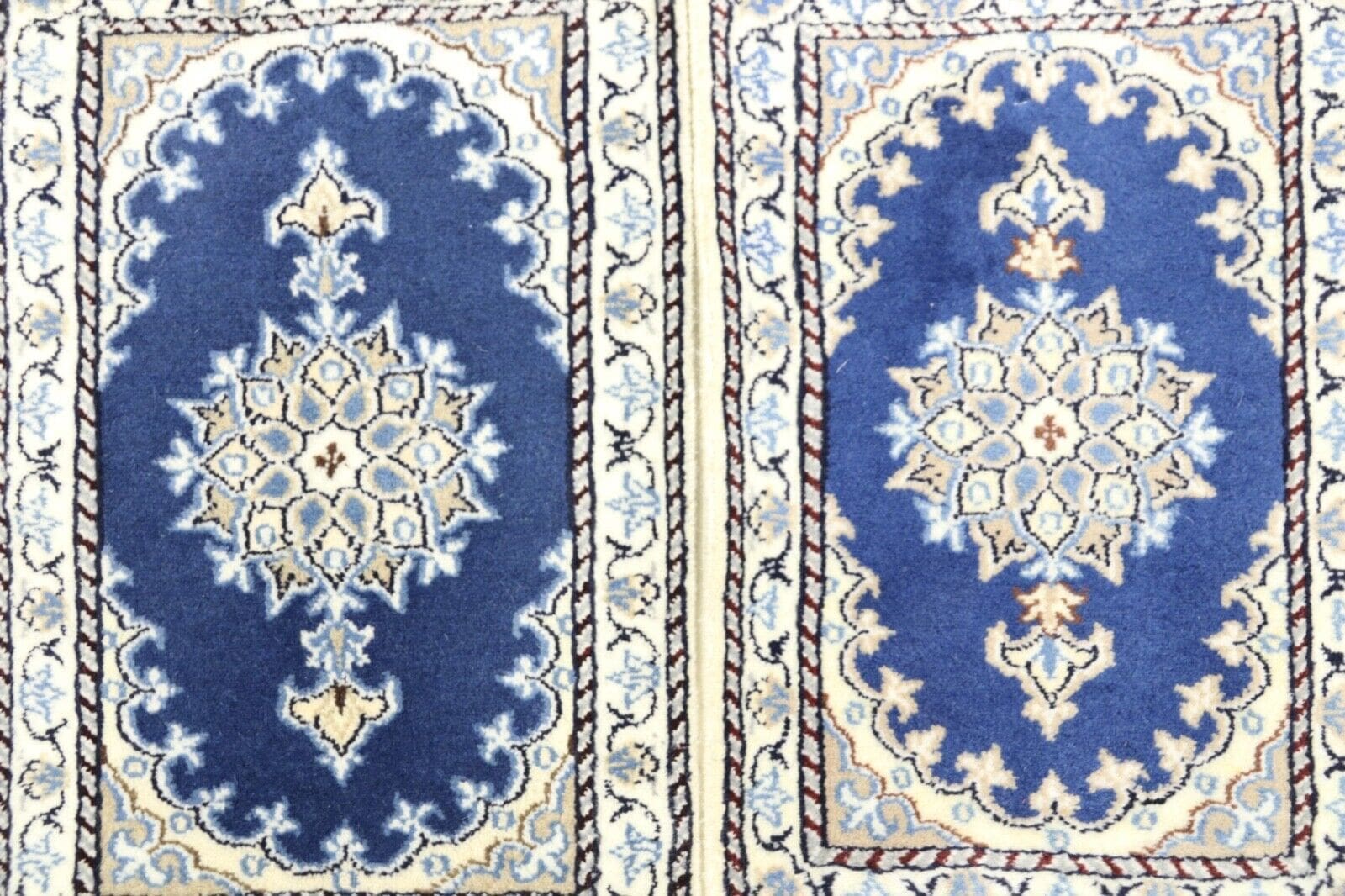
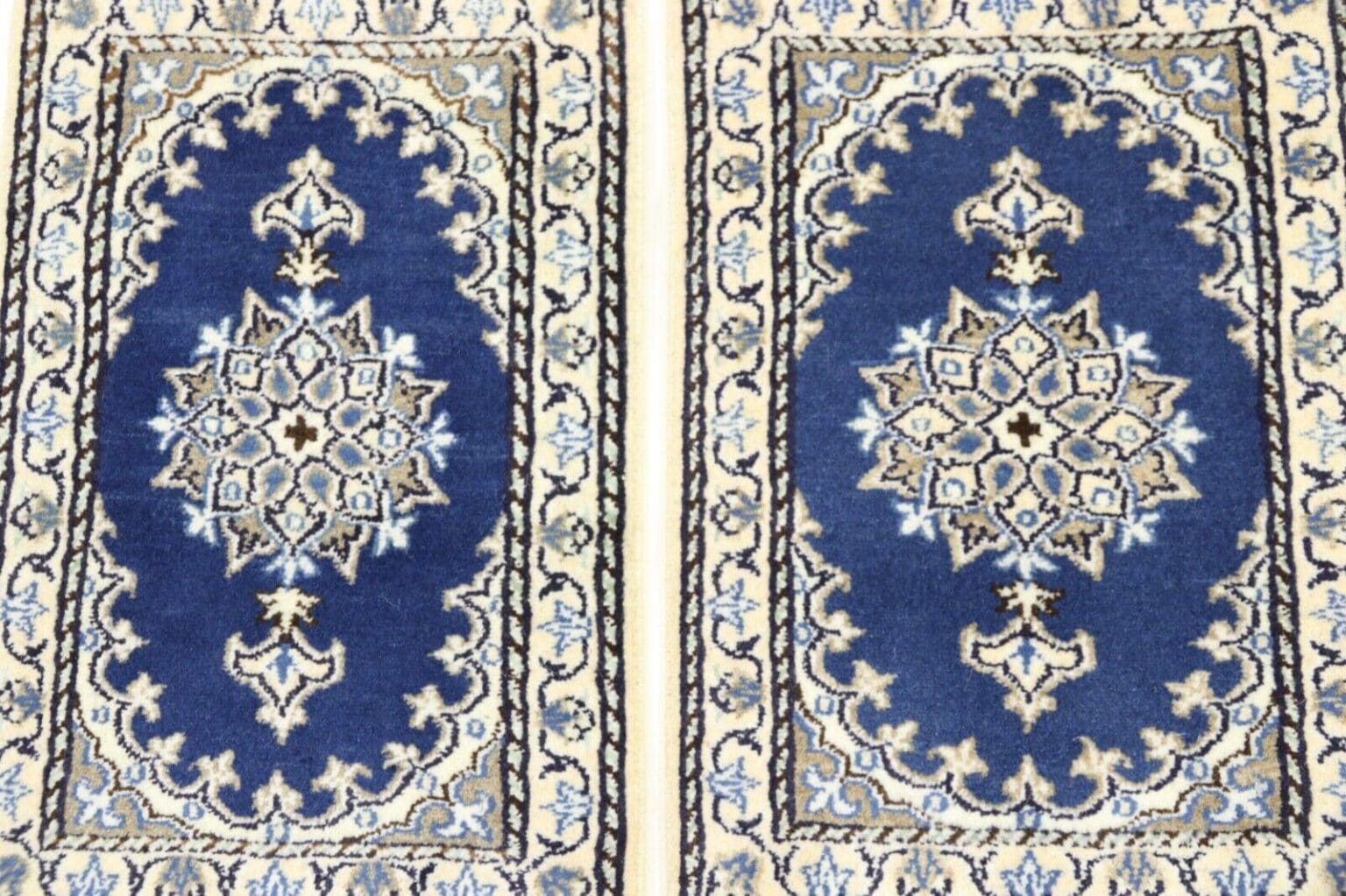
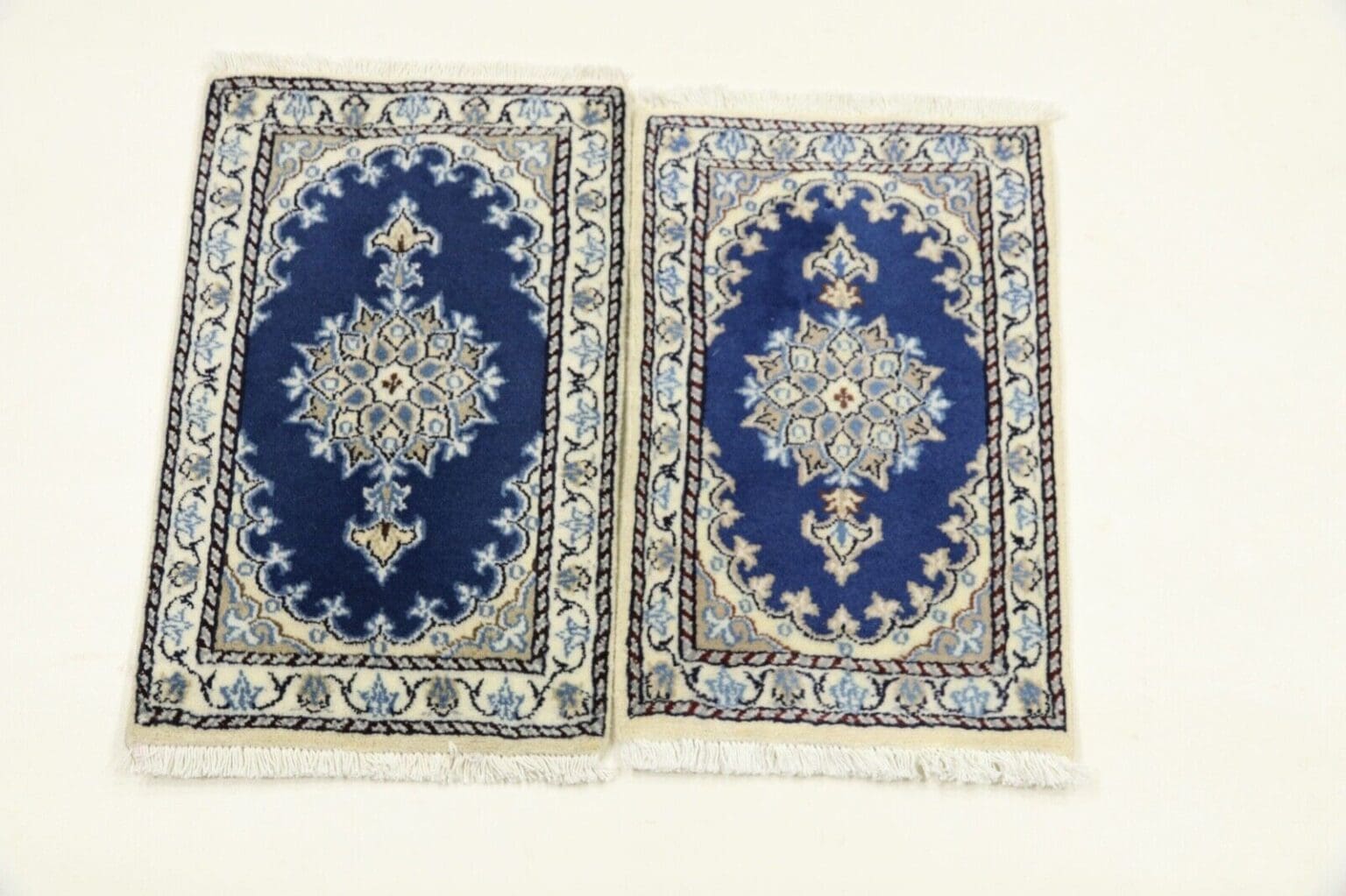
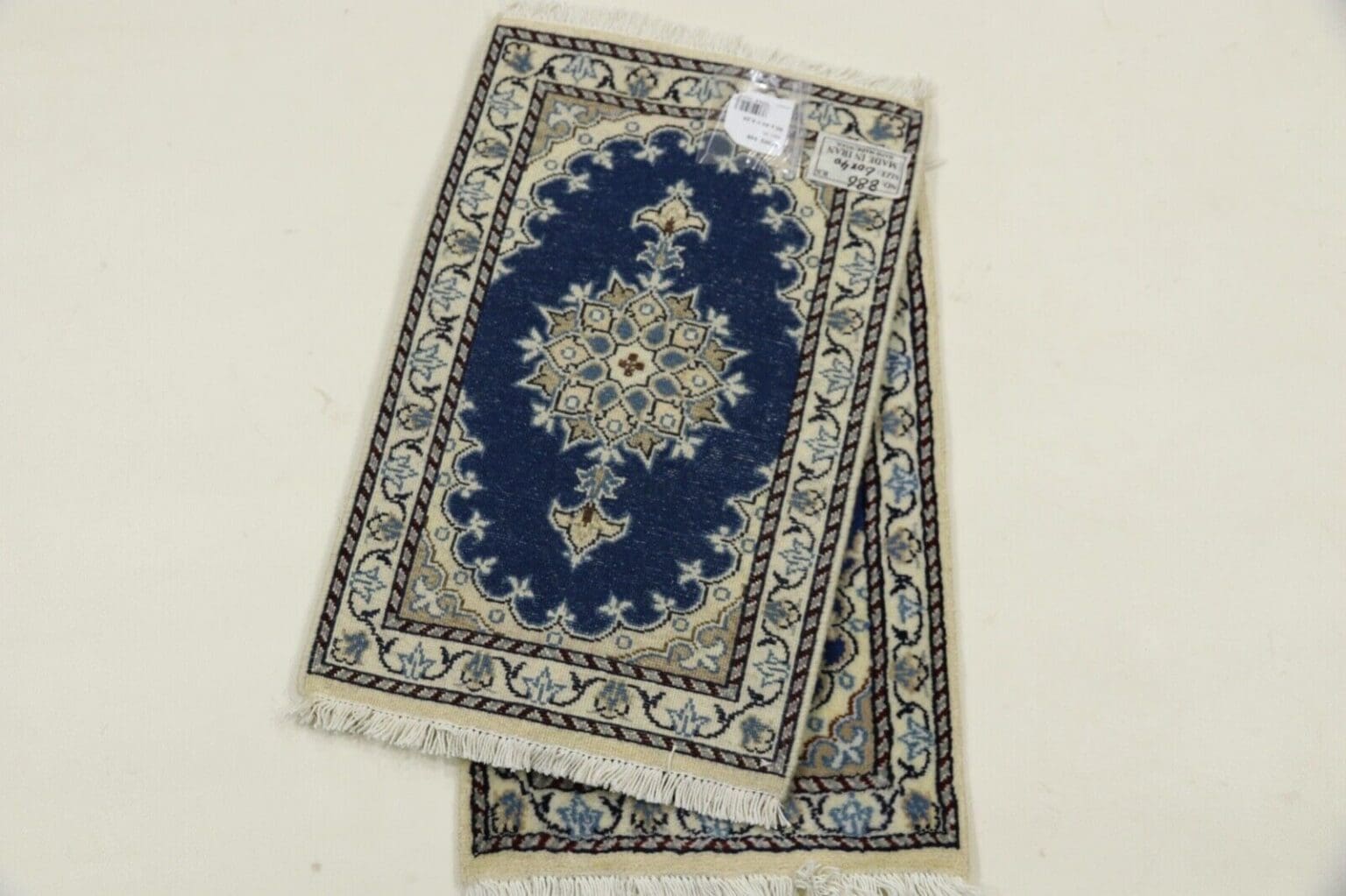
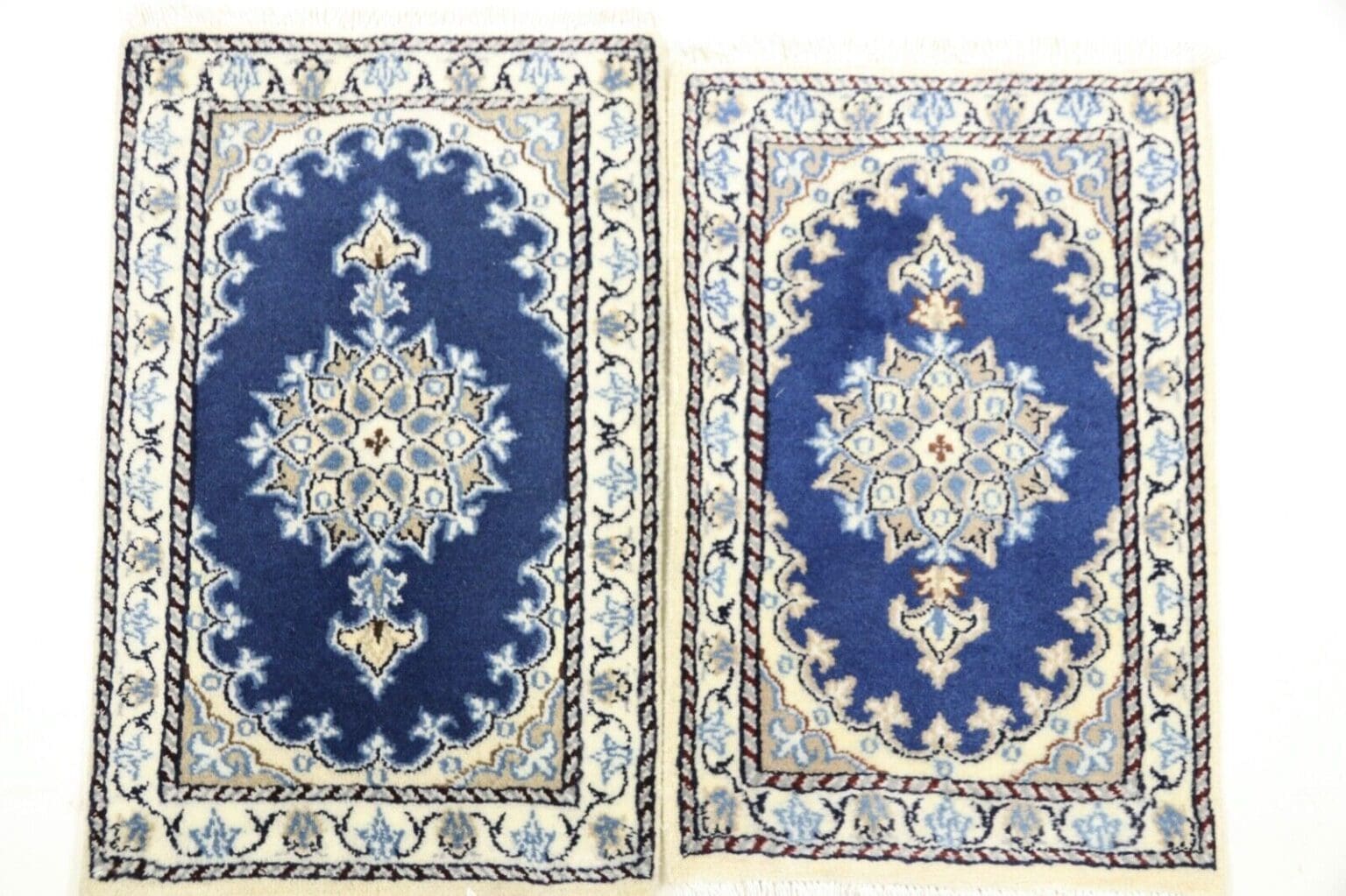
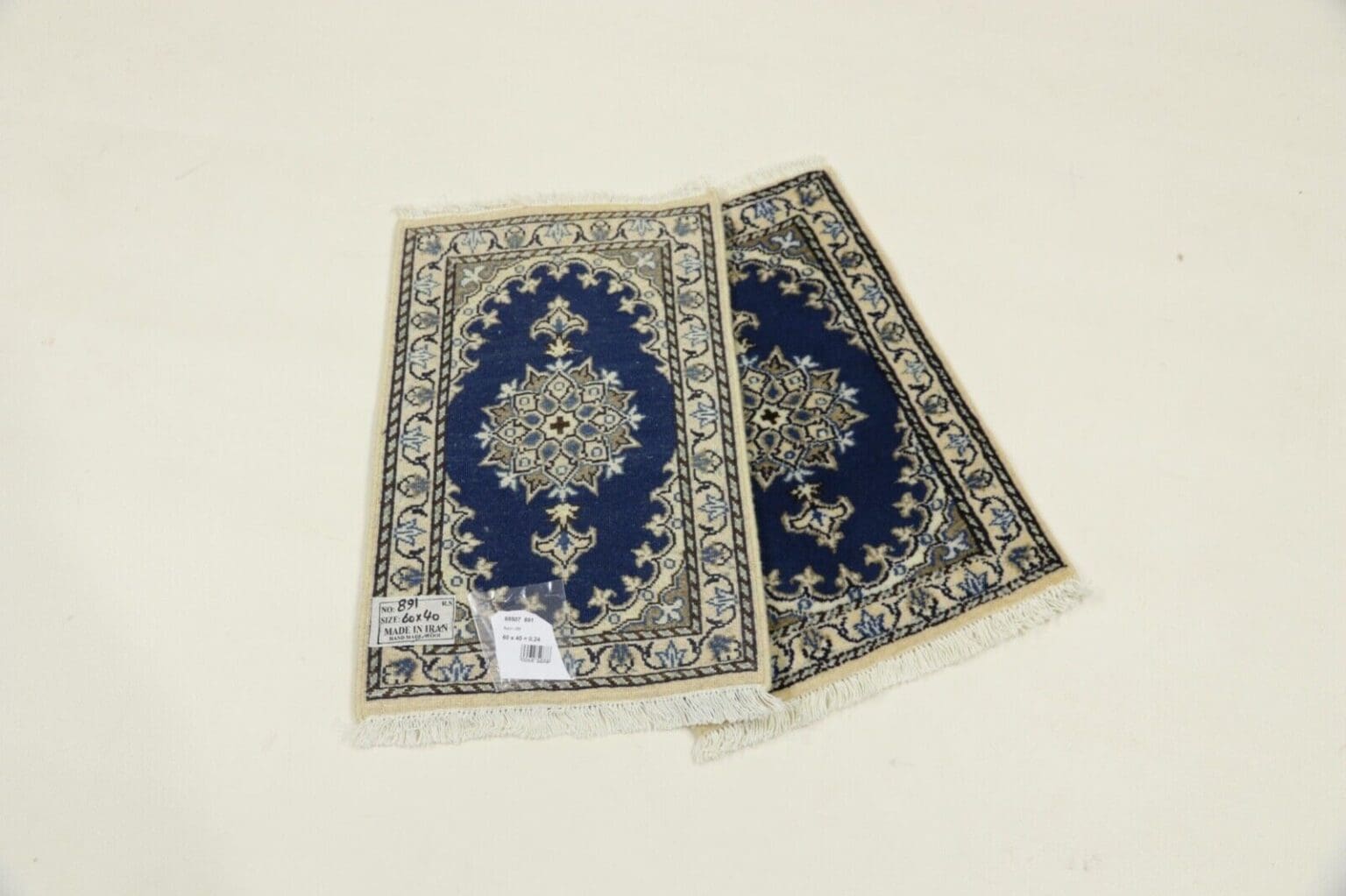
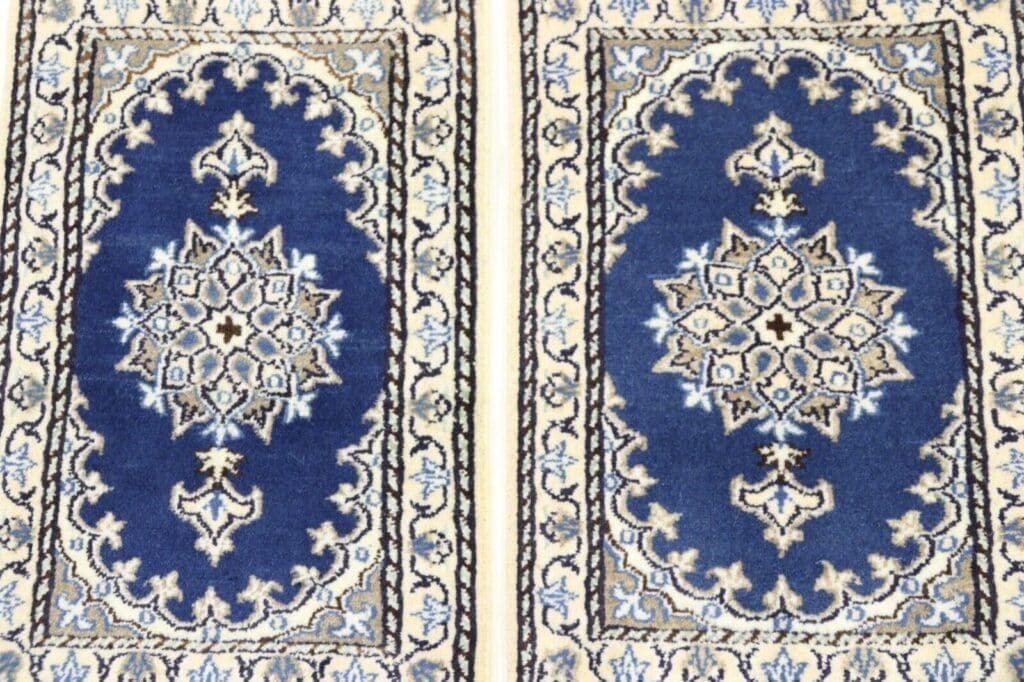
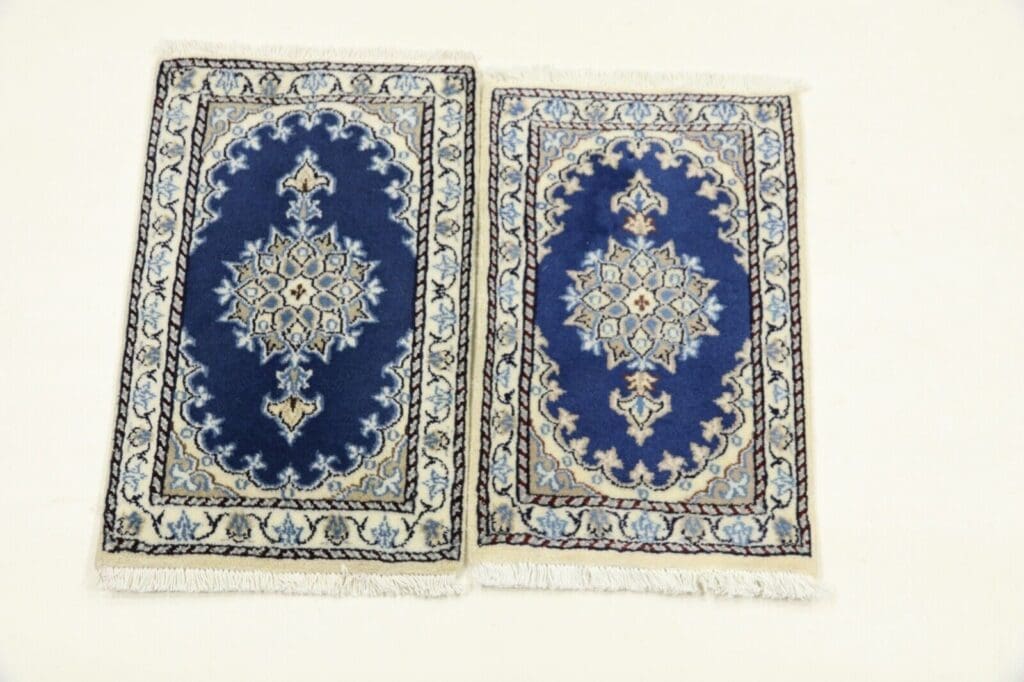
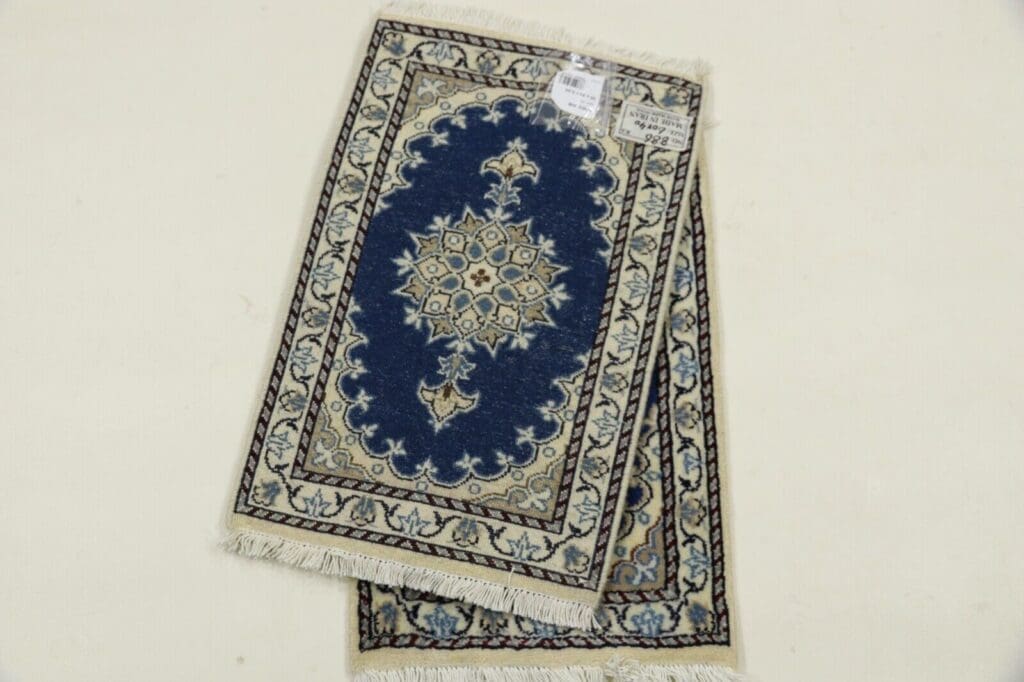
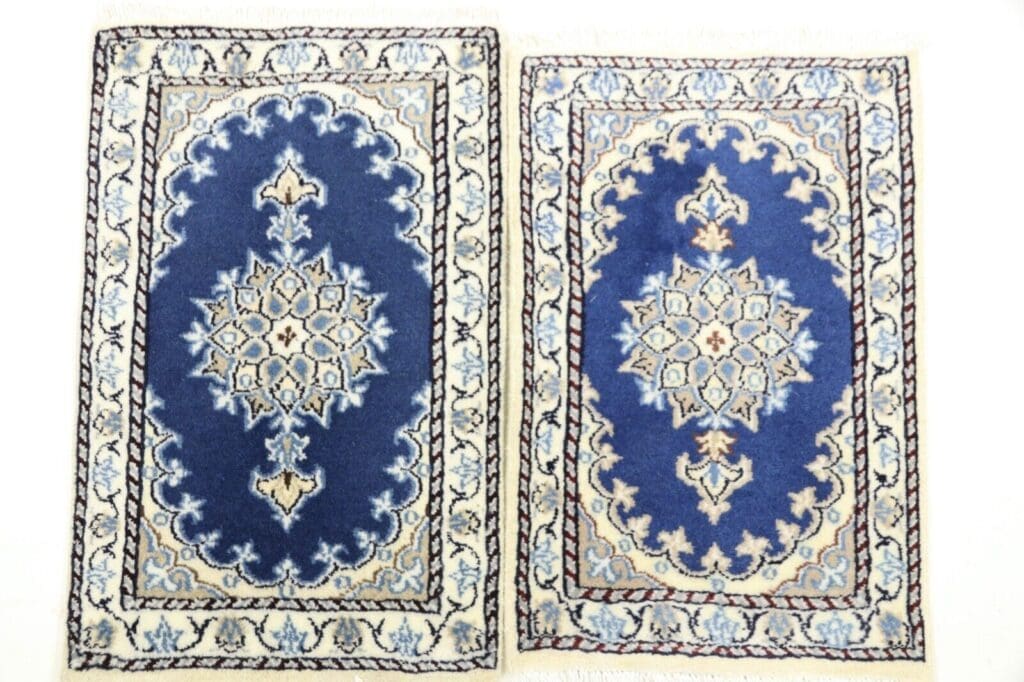
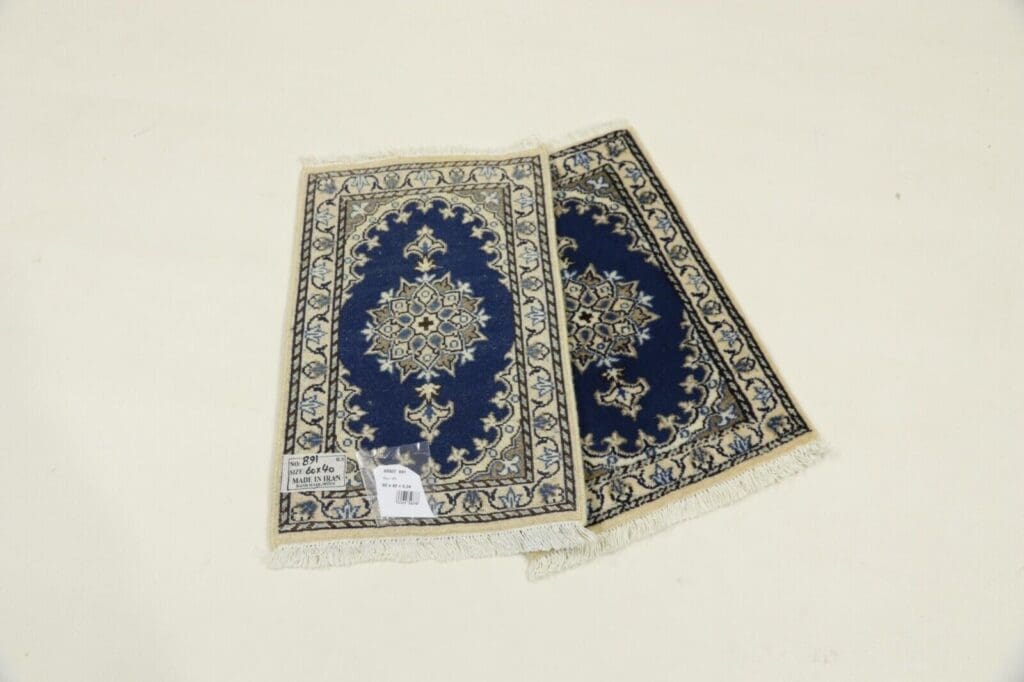
Persian Rug Nain 60 x 40 cm Wool Hand-knotted
€ 221
Hand-knotted Nain Persian Rug | Knot density: approx. 300,000 knots/m² | Material: pile 95% new wool, 5% silk, warp 100% cotton | Size: 60 x 40 cm | Pattern: Traditional Persian and Oriental, floral and geometric | Condition: New, very good
Sold out
- ✓Free Shipping in EU
- ✓2-5 Business Days Delivery
- ✓14-Day Return Policy
- ✓Worldwide Shipping on request
 SECURE PAYMENT
 SHIPPING PARTNERS
Inventory number: 451C45A8
Description
Nain Persian Rug
Material and Craftsmanship
This Nain Persian rug is hand-knotted and combines new wool, silk, and cotton in a traditional textile construction. New wool forms the main part of the pile. It provides a soft surface while also contributing strength, resilience, and durability. The silk portion adds a restrained sheen to the pile. This allows the colours to appear lively and finely differentiated while the rug retains the tactile character of wool.
The warp is made of cotton and provides the foundation for the knotting process. The pile is not printed onto a finished textile; the design is built as individual knots are tied row by row. This traditional technique allows the outlines, floral details, and geometric arrangements to be worked out with precision. Each hand-knotted rug therefore develops as an individual piece rather than as a repeated industrial surface.
The combination of wool and silk influences both the feel and the appearance of this rug. Wool contributes a comfortable, soft texture and a durable textile base. Silk introduces a subtle reflective quality within that structure. Together with the cotton warp, these materials create a construction intended to combine comfort and lasting use. The rug comes with a certificate of authenticity. Its condition is described as new and very good.
Origin and Tradition
This Nain Persian rug belongs to the Persian carpet tradition and comes from Nain in Iran. Nain is known as a city and weaving region associated with finely made rugs. Its tradition grew from a craft culture in which careful execution, selected materials, and an ordered arrangement of motifs are central concerns. Nain therefore refers not only to a place name, but also to a regional form of Persian rug making with a recognisable technical and decorative language.
The production of rugs in this tradition depends on processes passed down through generations. The warp is prepared first, then knots are placed according to a planned design and secured through the continuing sequence of rows. As the surface develops, the pile becomes dense and structured. The craftsperson’s control can be seen in the succession of knots, the direction of the lines, and the clean treatment of small elements. Nain workmanship brings this technical discipline together with a calm and balanced overall composition.
Persian rugs from Nain form part of a culture in which textile craftsmanship has lasting importance. A rug can organise a room, define a surface, and carry a vocabulary of forms inherited from earlier generations. Nain designs often bring floral and geometric elements into a coherent arrangement. Their effect is created through the relationship between field, borders, lines, and colour areas. The resulting decoration is deliberate and structured rather than random.
The regional tradition also explains the relationship between material and design. New wool is suited to a surface that is both hard-wearing and pleasant to touch. Silk can highlight selected areas through its sheen and give the colours additional liveliness. A cotton warp offers an orderly base for the knotting work. These materials belong to a method of production in which practical use, manual skill, and decorative composition are considered together.
The Persian origin distinguishes this rug from products made elsewhere that merely borrow Oriental visual references. Here, Nain identifies the Iranian origin and the associated Persian rug tradition. The hand-knotted construction, the chosen materials, and the established arrangement of motifs all belong to that context. The certificate of authenticity further accompanies this particular rug as a unique individual piece.
Design and Pattern
The design of this Nain rug is traditional Persian and Oriental in character. Its pattern language combines floral motifs with geometric organisation. Floral forms may recall leaves, blossoms, and stylised plant elements. Geometric lines provide a clear framework and place the individual ornaments in a measured relationship to one another. The design therefore depends on a balance between organic shapes and controlled symmetry.
A carefully developed composition is central to the described Nain aesthetic. Repeated motifs can guide the eye across the field, while finer details shape the transitions between larger ornaments and smaller fillers. Symmetry creates visual order. Variations in contours and floral forms keep the surface from becoming uniform. The hand-knotted technique supports this precision because every line is formed through the sequence of individual knots rather than applied afterwards.
The colour concept associated with the rug extends from gentle cream tones to deep blues. Lighter shades can give the field a quiet and open appearance. Deeper blues establish contrast and make the drawing more legible. Between these extremes, the composition gains a harmonious colour relationship. Pattern and colour are intended to be read together: the tones support the ornament, while the ornament gives the colour fields definition.
Floral motifs introduce a nature-related visual language without requiring a literal depiction of nature. In Persian rug design, plant forms are often stylised, repeated rhythmically, and placed within symmetrical structures. Geometric details can contain, separate, or connect these organic forms. The result is decorative while remaining clearly organised. Fine knotting is particularly suited to rendering the transitions and small details that give such a pattern its internal order.
The traditional design can be used in different interior settings. In a classic room, it connects naturally with Persian decorative forms. In a contemporary interior, its ordered ornament and balanced colours can provide a deliberate contrast to plain furniture and clean architectural lines. It can also sit within an Oriental setting where related motifs are already present. This versatility comes from the measured relationship between colour and pattern, not from abandoning the Nain tradition.
Special Features
A defining feature of this rug is its high knot density. It allows fine details and intricate motifs to be represented across the hand-knotted surface. The density is directly related to the differentiated treatment of the floral and geometric drawing. Smaller outlines can be separated more clearly, while the overall surface retains a coherent and structured appearance.
New wool and silk contribute different qualities to the rug. Wool provides a soft handle, resilience, and durability. Silk adds a subtle sheen and supports a lively rendering of colour. The two materials also contribute to heat regulation and moisture absorption. This makes the material combination functional in different climatic conditions as well as relevant to the rug’s visual and tactile character.
The rug is a unique piece and comes with a certificate of authenticity. It is described as new and in very good condition. Its hand-knotted manufacture, Persian origin in Nain, and combination of wool, silk, and cotton define its character. Regular cleaning is recommended for maintaining the surface. Vacuuming at a low setting helps remove dust and loose dirt. Direct sunlight should be avoided, and professional cleaning is suitable when a more thorough treatment is needed.
FAQ
How can an original Persian rug be recognised?
An original Persian rug is generally hand-knotted, with its design integrated into the construction of the pile. A high knot density can support the rendering of fine details. Quality materials such as new wool and silk are also common characteristics. Traditional motifs with a regional connection provide another point of reference. In this Nain rug, the hand-knotted technique, the material composition, the Iranian origin, and the certificate of authenticity are the identifying features stated for the piece.
How should a Persian rug be cared for?
Care begins with regular vacuuming at a low setting. This removes dust and loose dirt while reducing unnecessary stress on the fibres. Direct sunlight should be avoided so that the surface and colour appearance are protected. For stains or a more intensive cleaning, a suitable rug cleaner or a professional cleaning service should be used. Proper cleaning helps preserve the colours and structure of the hand-knotted rug.
Can a Nain rug be used in a modern interior?
Yes. Its balanced colour composition and elegant floral and geometric patterns can create a clear decorative contrast with restrained furniture and contemporary lines. At the same time, the traditional Persian design language remains visible. Gentle cream tones can appear understated, while deep blues provide accents within the composition. This allows a Nain rug to work with classic, modern, or Oriental interiors without losing its regional character.
Additional information
| Design Style | |
|---|---|
| Color | |
| Size | |
| Shape | |
| Origin | |
| Knot Density | |
| Material |
Related products

Persian Rug Nain 355 x 252 cm Wool Hand-knotted
€ 4200
Persian Rug Tabriz 206 x 150 cm Wool Hand-knotted
€ 1830
Persian Rug Kashan 345 x 253 cm Wool Hand-knotted
€ 2910
Persian Rug Kashan 211 x 140 cm Wool Hand-knotted
€ 900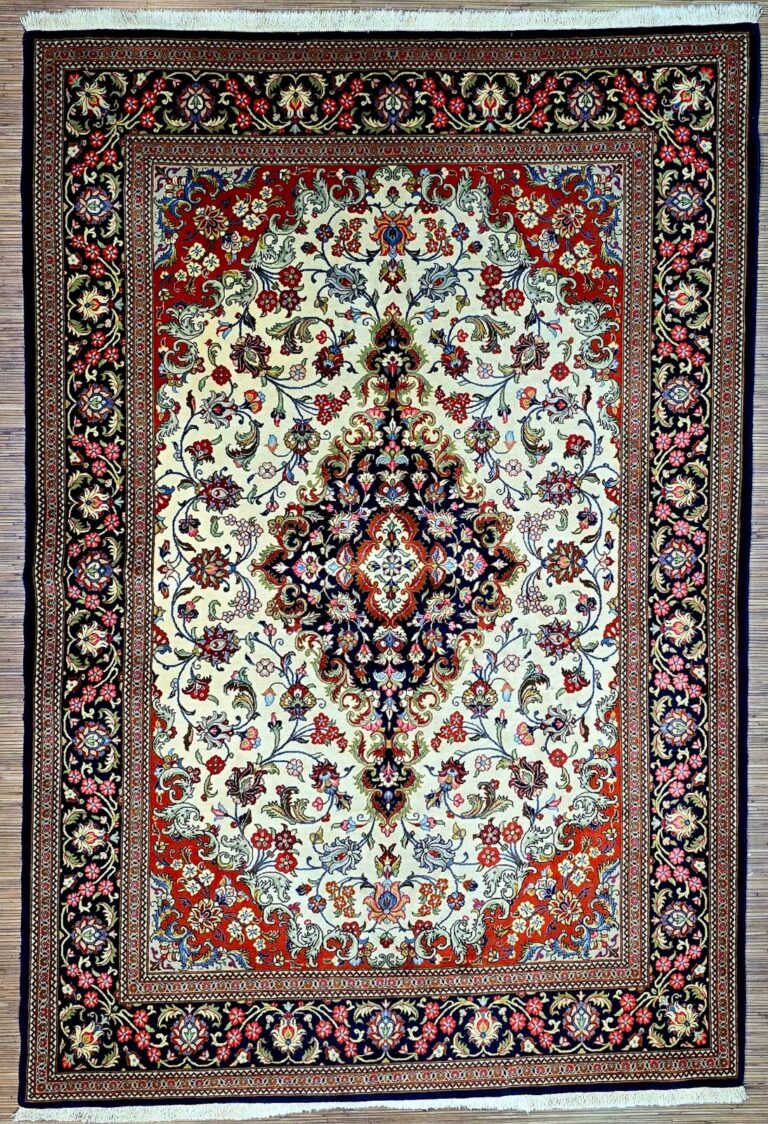
Persian Rug Qom 216 x 142 cm Wool Hand-knotted
€ 990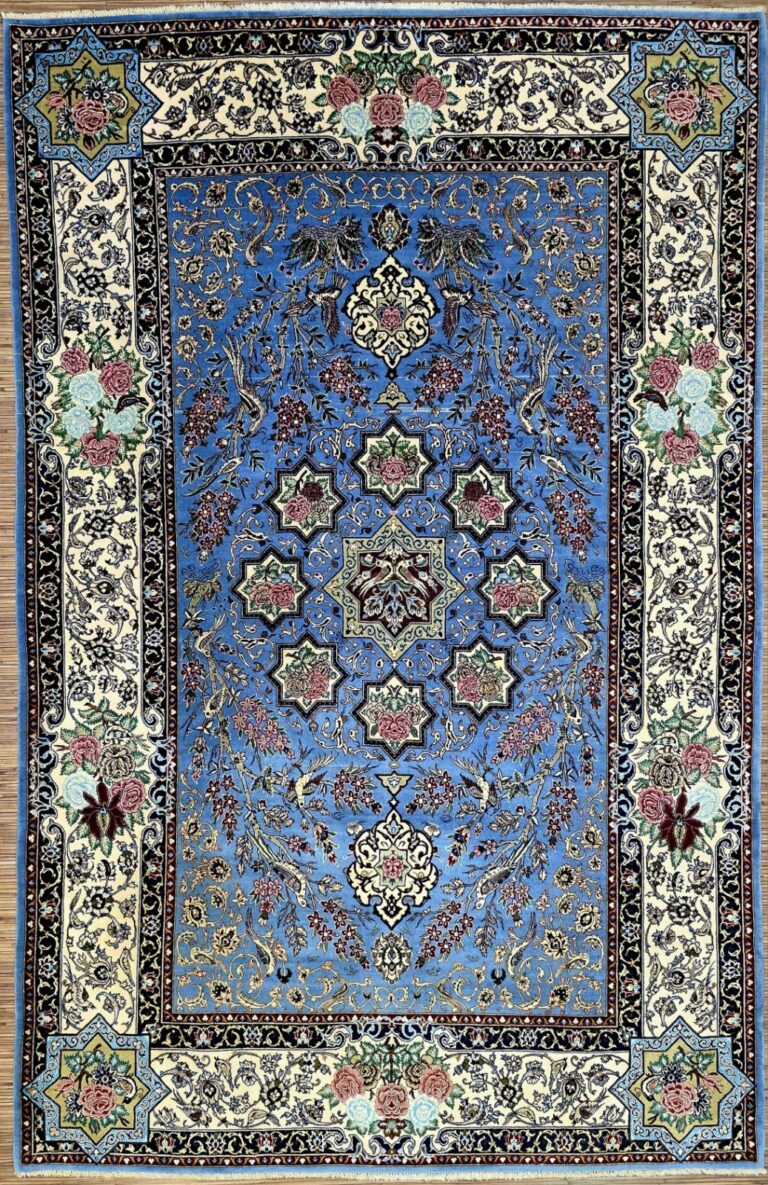
Persian Rug Isfahan 222 x 146 cm Silk Hand-knotted
€ 3905
Persian Rug Tabriz 355 x 252 cm Wool Hand-knotted
€ 4890
Persian Rug Tabriz 290 x 205 cm Wool Hand-knotted
€ 5850