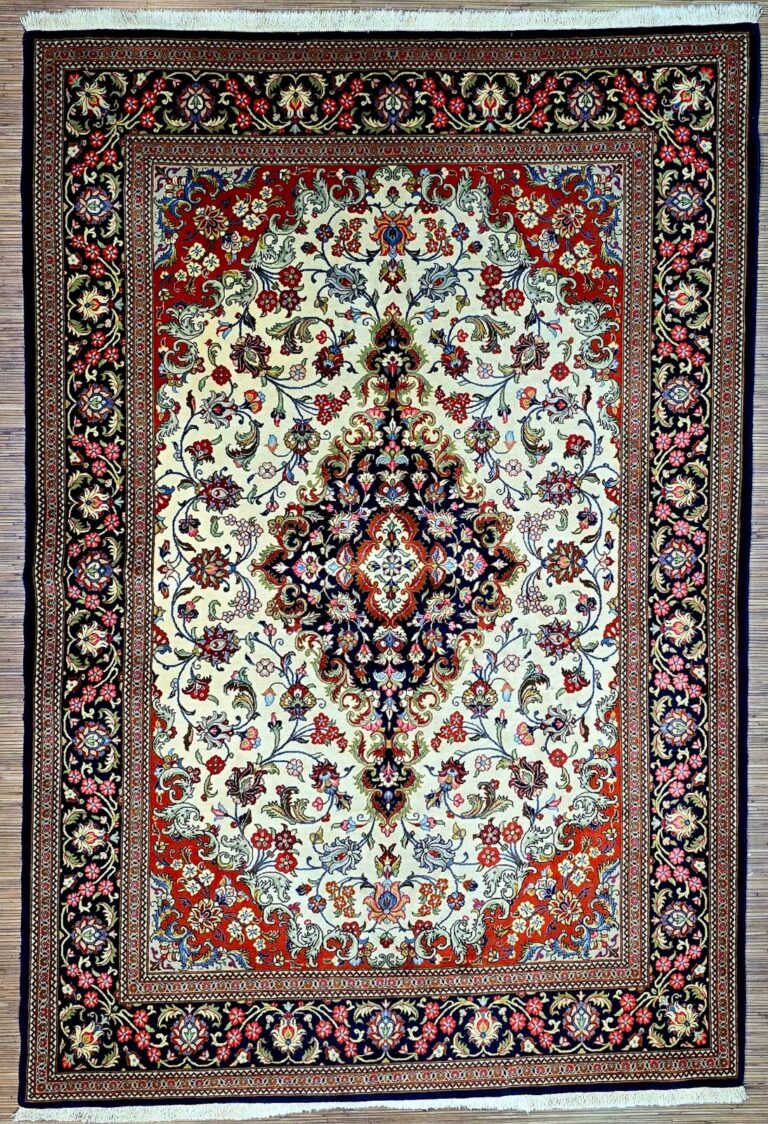
This Nain Persian Rug is hand-knotted. Its pile is made from 95% virgin wool and 5% silk, while the warp and weft are 100% cotton. The construction therefore combines a predominantly woollen pile with a smaller silk content and a cotton foundation. Virgin wool gives the pile warmth and resilience. Wool can naturally repel some dirt and dust, which supports careful routine maintenance. Silk adds a finer, subtly reflective quality to the surface. Depending on the light, that silk content can affect the way the colours and the texture of the pile are perceived.
With hand-knotting, each knot is placed individually. The knots are not produced by a machine; they are created through the controlled work of the knotter. This gives the piece its individual character and explains why it is described as a one-off. The density is approximately 300,000 knots per square metre. Such a dense structure permits detailed rendering of small floral elements, outlines and ornamental transitions. It also requires consistent handling of the foundation and considerable practical experience during the work.
The cotton warp and weft form the supporting structure to which the pile is secured. The visible surface, in contrast, is defined by the pile of virgin wool and silk. These materials contribute different qualities to the finished textile: wool gives the surface substance and warmth, while silk can make selected areas appear smoother and more light-catching. The hand-knotted construction, the certificate of authenticity and the stated new, very good condition are all part of this rug’s recorded characteristics.
Hand-knotting also means that the design is built knot by knot rather than printed or mechanically formed. Small variations in the execution are part of this type of craft and distinguish an individual rug from a repeating industrial product. The high knot density supports precise pattern work, while the wool and silk combination determines the tactile and visual character of the pile. Together with the cotton foundation, these elements describe how this particular Nain rug is made.
Origin and Tradition
The rug comes from Persia, present-day Iran, and is identified as a Nain. Nain is a city and an important carpet centre in Iran’s Isfahan Province. Its weaving tradition became especially well known during the twentieth century, when Nain developed a distinct reputation for finely worked carpets. Regional designs combine established Persian ornament with a clear, carefully ordered composition. The name Nain therefore indicates a local tradition of design and production rather than merely one isolated decorative element.
Nain has a long history as a settlement connected with trade and craftsmanship. Textile work formed part of the broader practical and artistic culture of the area. Persian carpet production generally brings together several stages: choosing and preparing fibres, establishing the foundation, planning the design, tying the knots, trimming the pile and finishing the textile. Knowledge of these processes is transmitted through workshops and families, with each generation adapting inherited methods to new pieces.
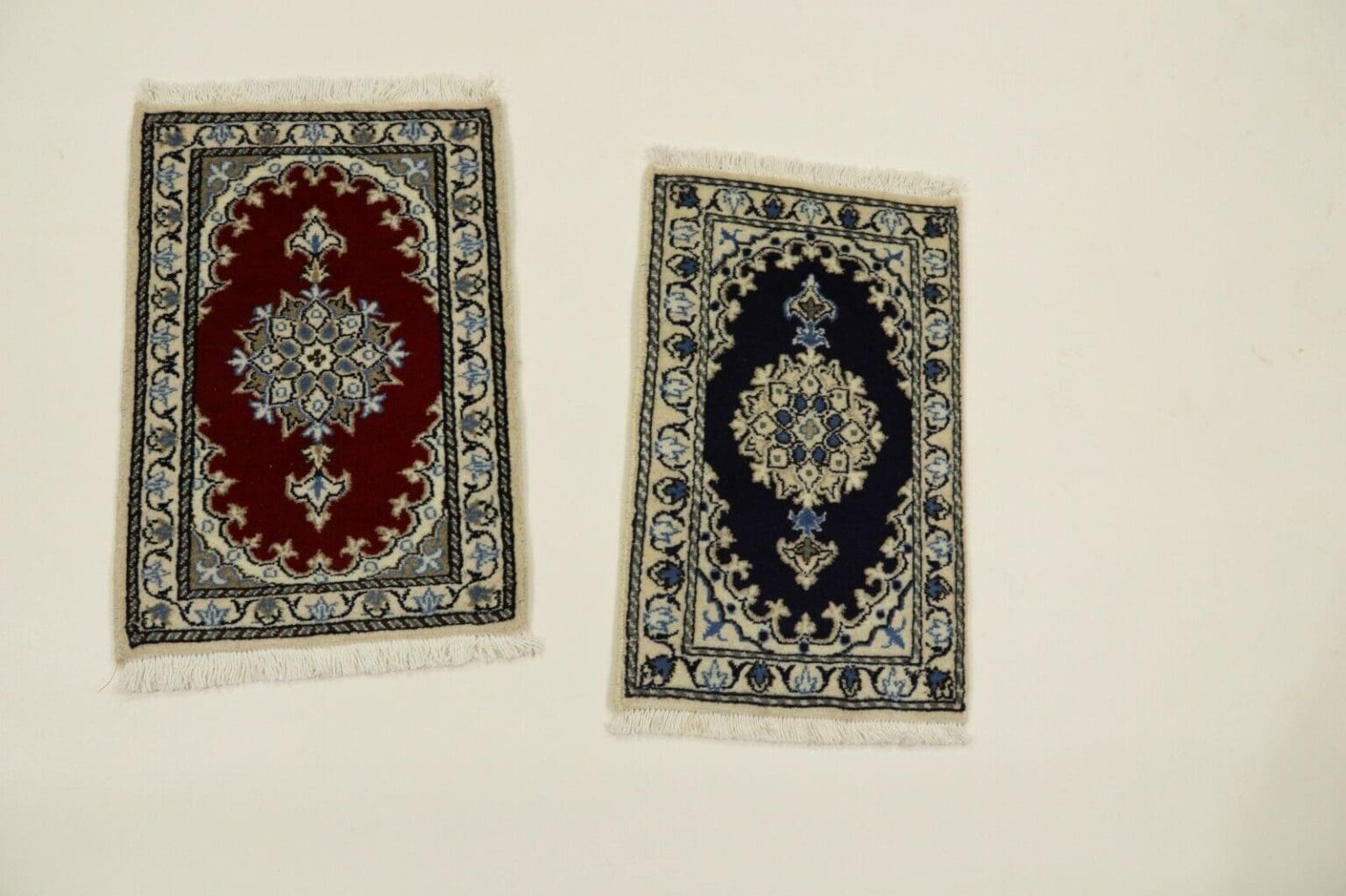
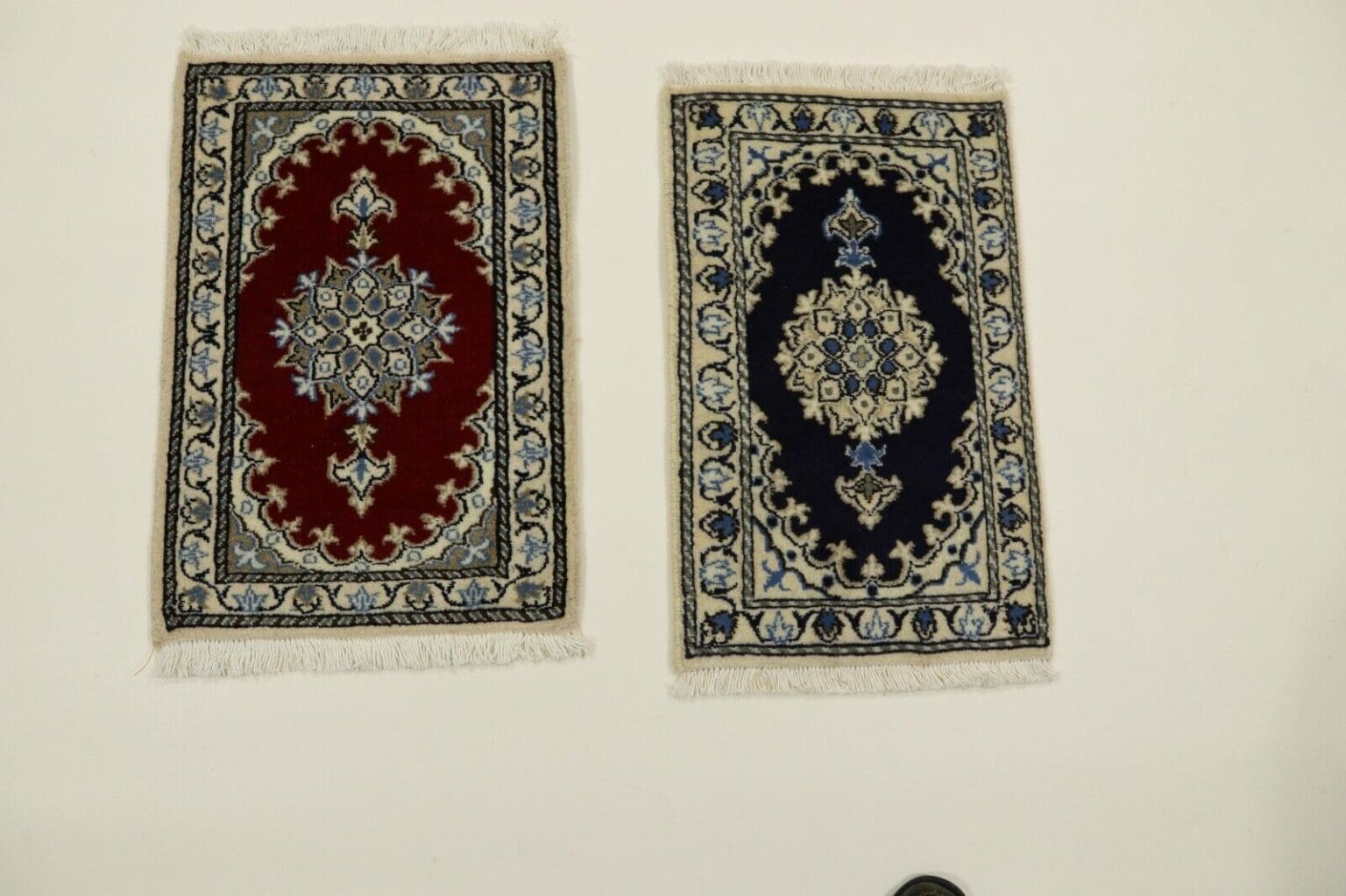
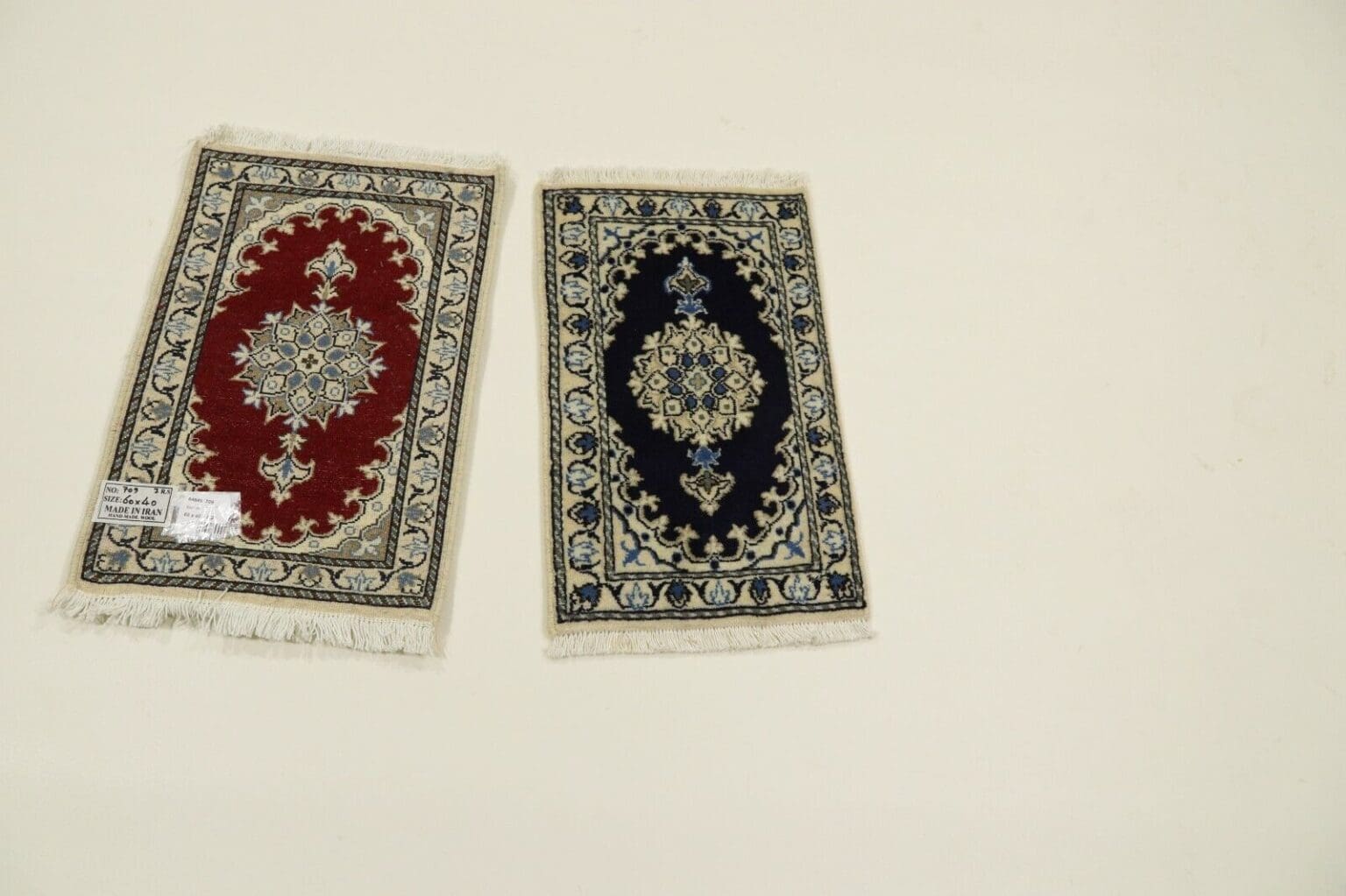
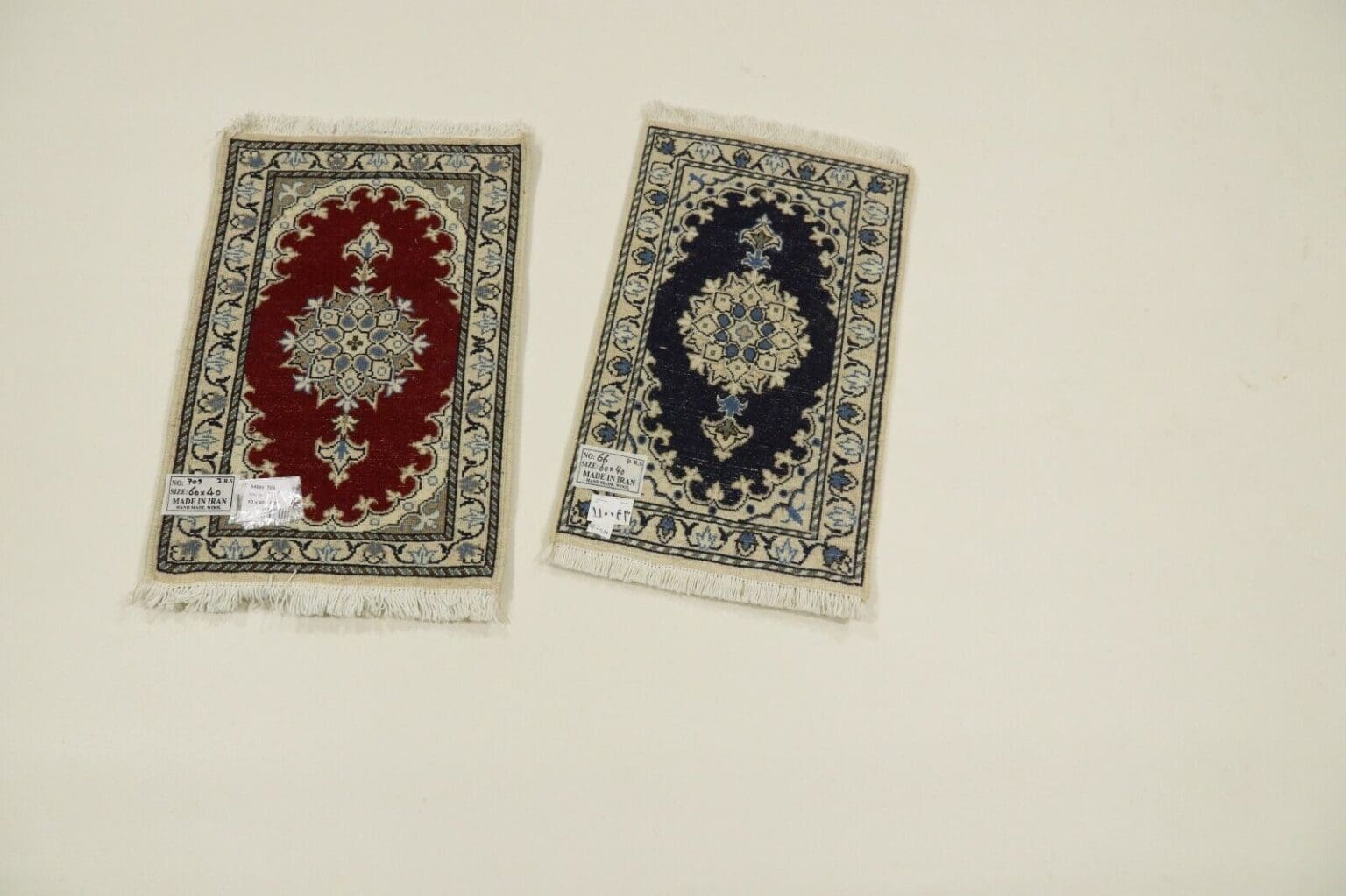
Nain rugs are commonly associated with refined floral decoration, a structured field and a defined border system. Designers may draw on flowers, leaves, vines, palmettes and medallion arrangements found throughout Persian carpet art. These elements are usually placed according to balance, symmetry or a measured repeat. The result is an ordered surface in which the central field, surrounding border and outer edge relate to one another. Fine knotting makes it possible to express narrow lines and small ornaments with greater clarity.
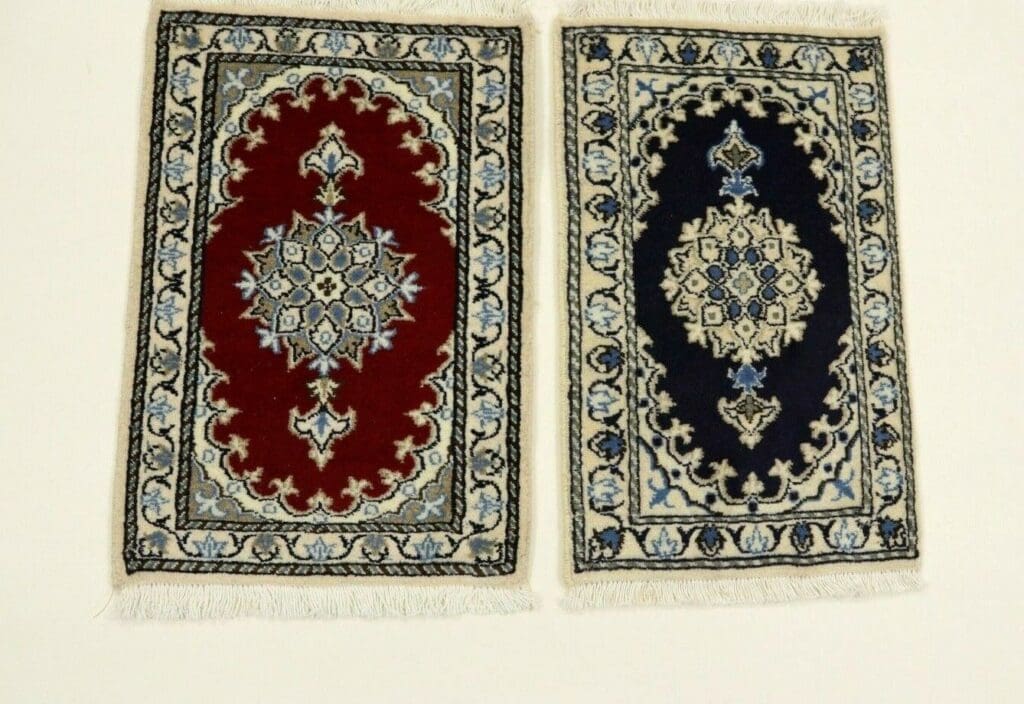
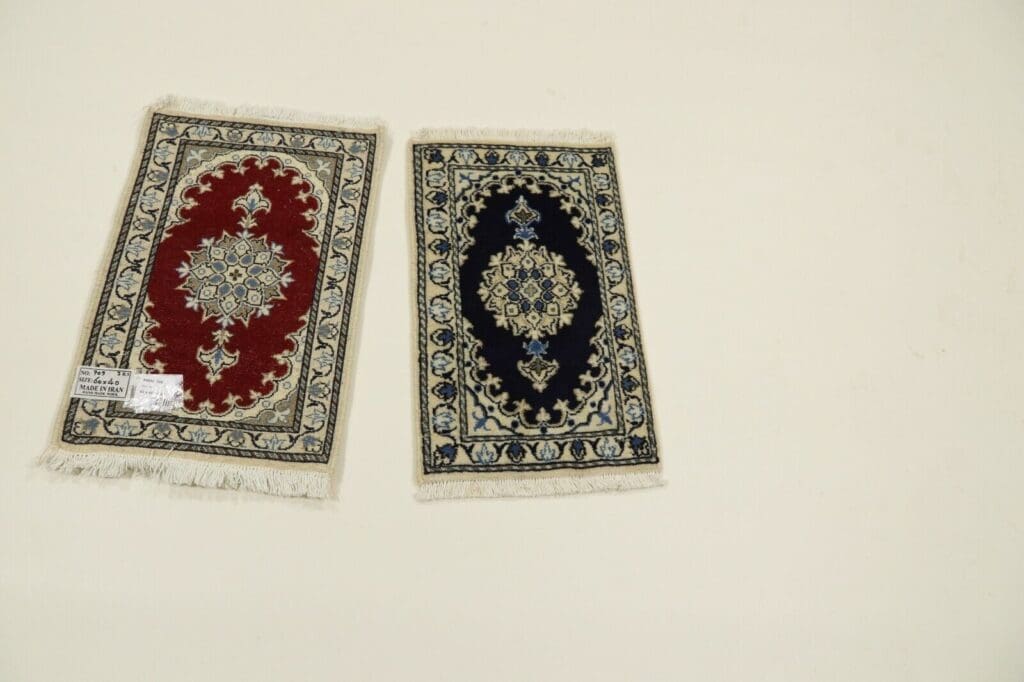
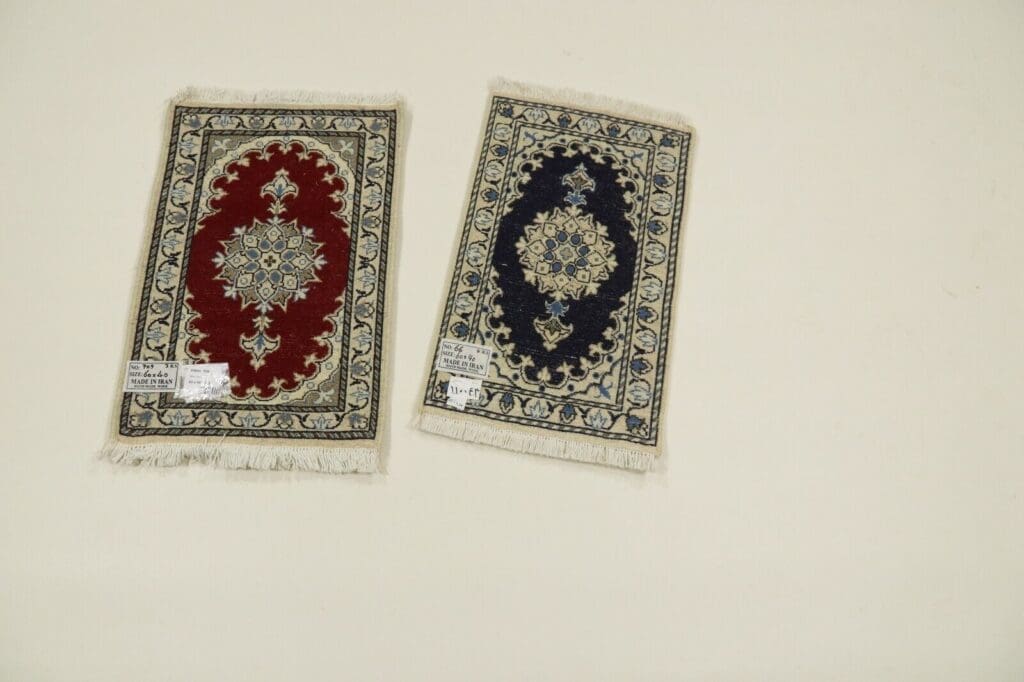
Colour is also an important part of the Nain vocabulary. Light grounds are often set against darker outlines or selected stronger accents. This approach gives the composition a controlled contrast and allows floral forms to remain legible. The use of a pale ground with red accents in this rug belongs to that general relationship between open light areas and more definite ornamental details. The exact distribution of the colours is specific to this one-off piece, while the underlying approach reflects Persian regional design practice.
Persian carpet traditions are based on the conversion of a planned drawing into a sequence of individual knots. A design may first be prepared as a drawn pattern, but the knotter must interpret it progressively across the foundation. The knot density affects the scale at which curves, leaves and contours can be represented. The relationship between warp, weft and pile is therefore both technical and visual. In Nain production, the balance of a fine structure, floral ornament and restrained colour planning has become one of the recognisable features of the regional tradition.
Regional identity does not mean that every Nain rug follows one fixed template. Workshops use related principles while varying the field arrangement, border rhythm, floral vocabulary and colour emphasis. The individual knotting process further separates one piece from another. This rug belongs to that Nain tradition through its stated origin and classification, while its own white-and-red palette and particular arrangement make it a separate textile rather than a mass-produced repetition.
Design and Pattern
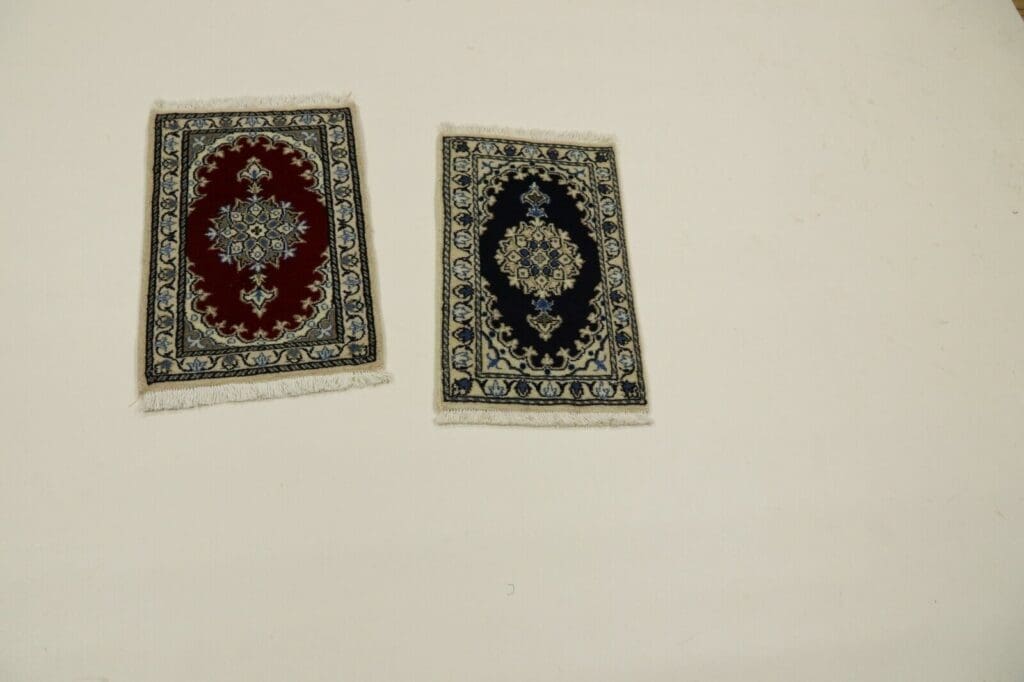
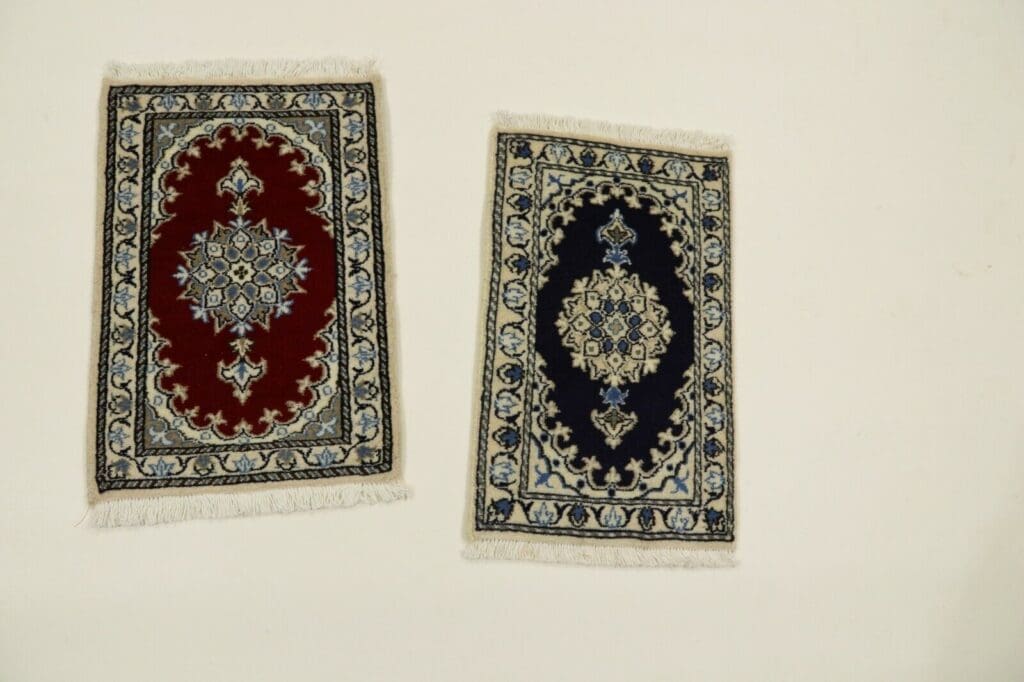
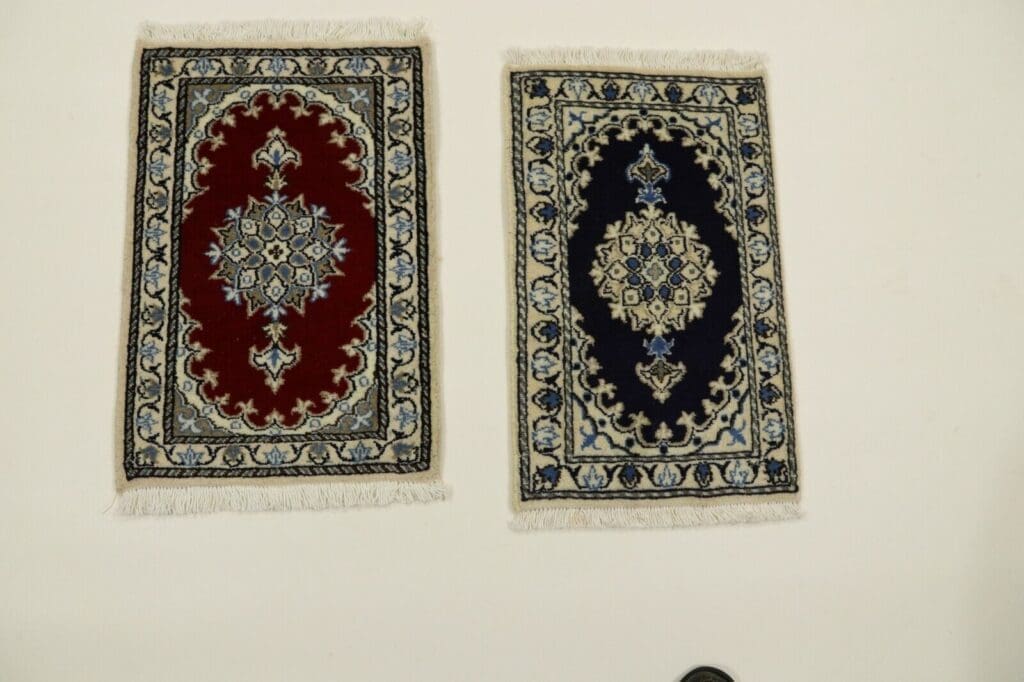
The stated colour scheme of this rug is White/Red. White provides a light visual foundation, while red acts as a clearly visible accent. The balance between the two colours affects the separation of the pattern areas. Open pale passages can make the composition easier to read, and red can give selected flowers, outlines or other details a firmer visual position. The colour description refers to the rug itself; the broader use of light grounds and accent colours is also familiar in Nain design.
Floral motifs and elegant traditional layouts are associated with Nain rugs. A floral vocabulary can include blossoms, leaves, winding stems and palmettes. These forms are not normally scattered as a literal botanical scene. Instead, they are arranged as ornament, with repetition, reflection and measured spacing creating continuity across the field. A dense hand-knotted structure helps define the edges of small forms and permits gradual transitions between one motif and the next.
Many Persian rugs are organised into a central field, one or more surrounding borders and an outer finishing zone. The field may carry a medallion, a repeated floral network or a combination of both. The border frames the central design and establishes a visual transition toward the edge. In a Nain composition, these parts are often planned as a coherent whole: the scale of the border relates to the size of the field, and recurring leaves or blossoms link separate areas of the pattern.
Pattern is created by relationships rather than by isolated shapes alone. A smaller flower can support a larger blossom, a vine can guide the eye from one group to another, and a contour can clarify the direction of a leaf or petal. Red accents may emphasise particular points in the composition, while the white ground leaves space between the ornamental lines. This contrast allows the surface to remain articulated instead of becoming a single uninterrupted block of colour.
Nain ornament is part of the wider Persian design heritage, but it is not limited to one compulsory drawing. Regional workshops interpret familiar motifs in different arrangements and adjust their proportions to the individual weaving. The result can be a varied balance of floral detail, borders and open ground while remaining recognisable as Nain. In this piece, the hand-knotted execution, the white-and-red palette and the stated floral tradition work together. The regional vocabulary supplies the framework; the particular knotting and colour placement give this one-off its own appearance.
The combination of wool and silk also affects how the pattern is seen. Wool gives the main pile a fuller, softer visual body, while silk can catch light on selected parts and make certain details appear more distinct. This is a material effect rather than a separate pattern claim. It contributes to the way the floral ornament and the contrast between white and red are experienced across the surface.
Special Features
The listed special features include a density of 300,000 knots per square metre, a pile made from 95% virgin wool and 5% silk, and a warp and weft made from 100% cotton. The rug is hand-knotted and is described as a one-off with a certificate of authenticity. Its condition is stated as new and very good. It is also described as suitable for all rooms. The white-and-red colour scheme, the silk content and the fine knotting shape its visible and tactile character.
The term one-off refers to the individual execution of a hand-knotted piece. Even when a Nain rug uses traditional floral ideas, the precise combination of knots, colour areas and ornament is not reproduced in exactly the same way. The certificate of authenticity accompanies this individual piece as an additional document relating to its stated characteristics.
FAQ
How should I care for my Nain Persian Rug?
Vacuum regularly and gently to remove loose dirt and dust. If something is spilled, respond promptly by blotting the area with a damp cloth rather than rubbing it. A mild cleaning product may be used sparingly. Strong friction, harsh chemicals and excessive moisture can place unnecessary strain on the pile and colours. For a full clean, use a specialist familiar with hand-knotted rugs and with surfaces combining virgin wool and silk. Careful treatment helps preserve the rug’s new, very good condition and its finish.
Are hand-knotted Persian rugs a good investment?
Hand-knotted Persian rugs are often regarded as durable pieces of textile craft whose value can be supported by quality, workmanship and condition. The relevant features of this rug include its hand-knotted construction, approximately 300,000 knots per square metre, wool-and-silk pile, new very good condition and certificate of authenticity. These details do not establish a guaranteed future price or a universal increase in value. Proper care and suitable use can, however, help retain the rug’s material qualities and documented condition over time.
Where is the best place to use my Nain Persian Rug?
The rug is described as suitable for all rooms and can be combined with both classic and modern interiors. Its white-and-red colour scheme can serve as a defined accent in a living room, while the floral design can also suit an office or reception area. It may be displayed as a central decorative element or placed with restrained furniture so that the pattern remains visible. Safe positioning and a level of use appropriate for a hand-knotted pile are important wherever it is installed.
To provide the best experiences, we use technologies like cookies to store and/or access device information. Consenting to these technologies will allow us to process data such as browsing behavior or unique IDs on this site. Not consenting or withdrawing consent, may adversely affect certain features and functions.
Functional Always active
The technical storage or access is strictly necessary for the legitimate purpose of enabling the use of a specific service explicitly requested by the subscriber or user, or for the sole purpose of carrying out the transmission of a communication over an electronic communications network.
Preferences
The technical storage or access is necessary for the legitimate purpose of storing preferences that are not requested by the subscriber or user.
Statistics
The technical storage or access that is used exclusively for statistical purposes.The technical storage or access that is used exclusively for anonymous statistical purposes. Without a subpoena, voluntary compliance on the part of your Internet Service Provider, or additional records from a third party, information stored or retrieved for this purpose alone cannot usually be used to identify you.
Marketing
The technical storage or access is required to create user profiles to send advertising, or to track the user on a website or across several websites for similar marketing purposes.
 SECURE PAYMENT
 SHIPPING PARTNERS