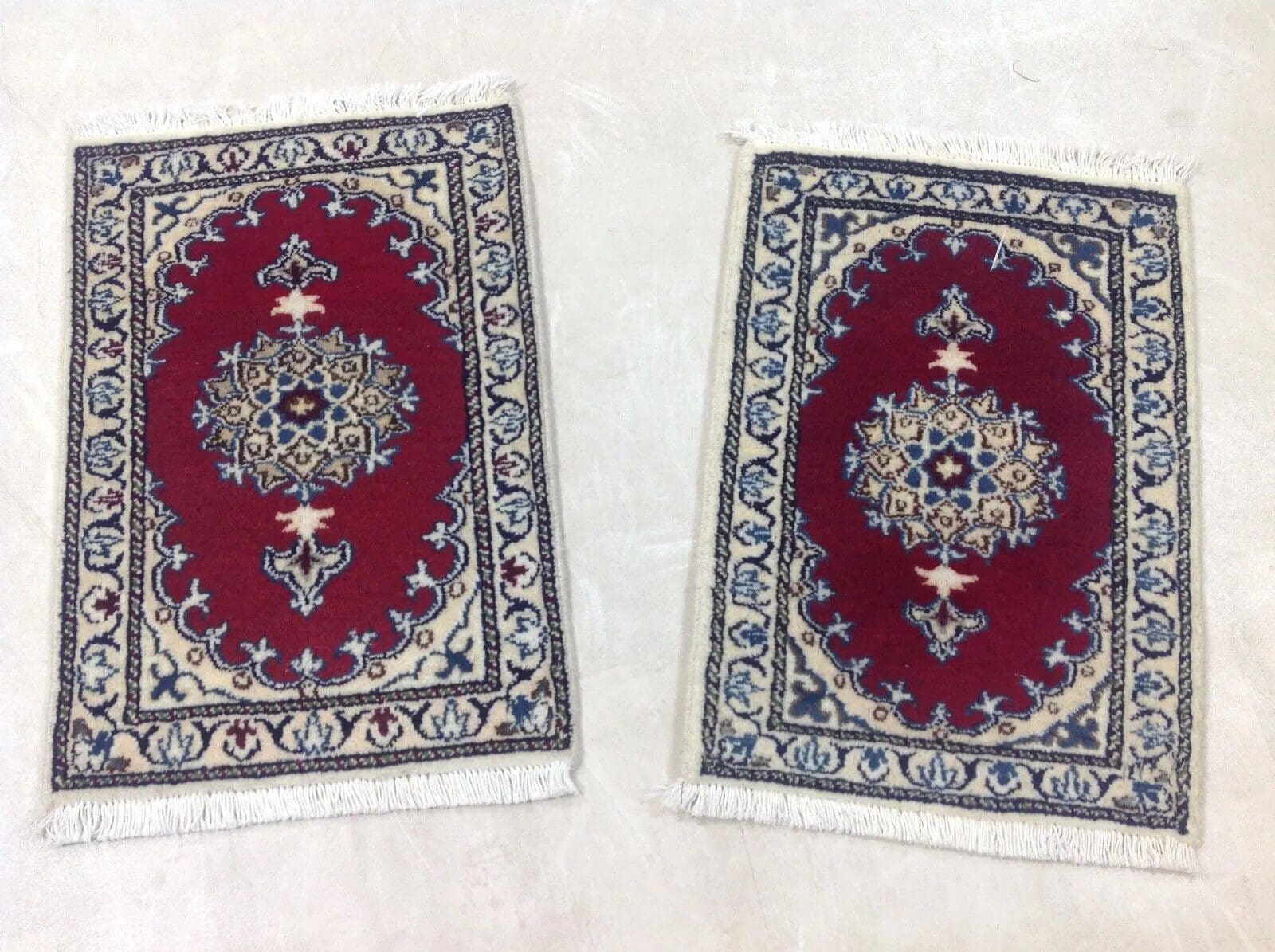
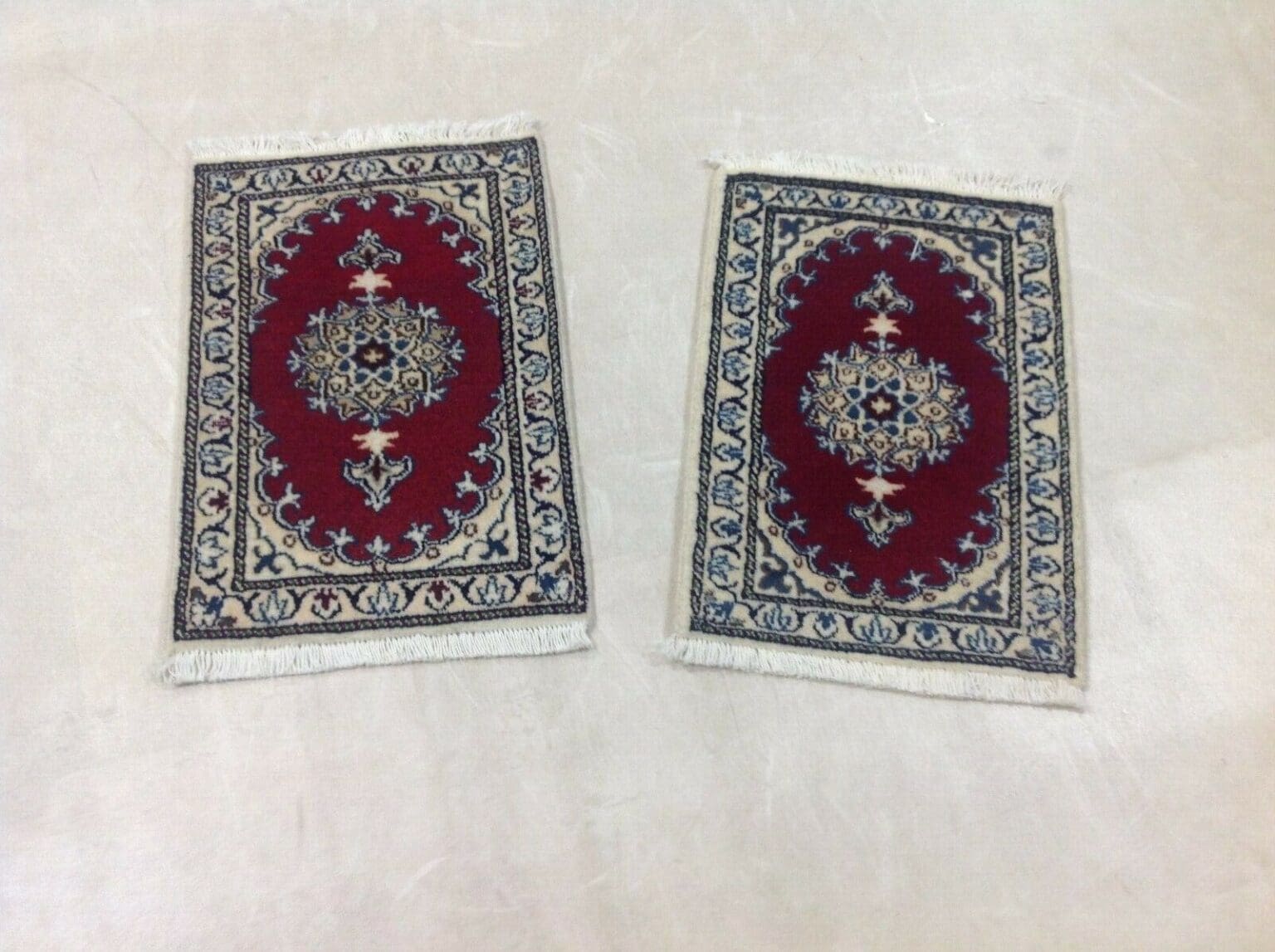
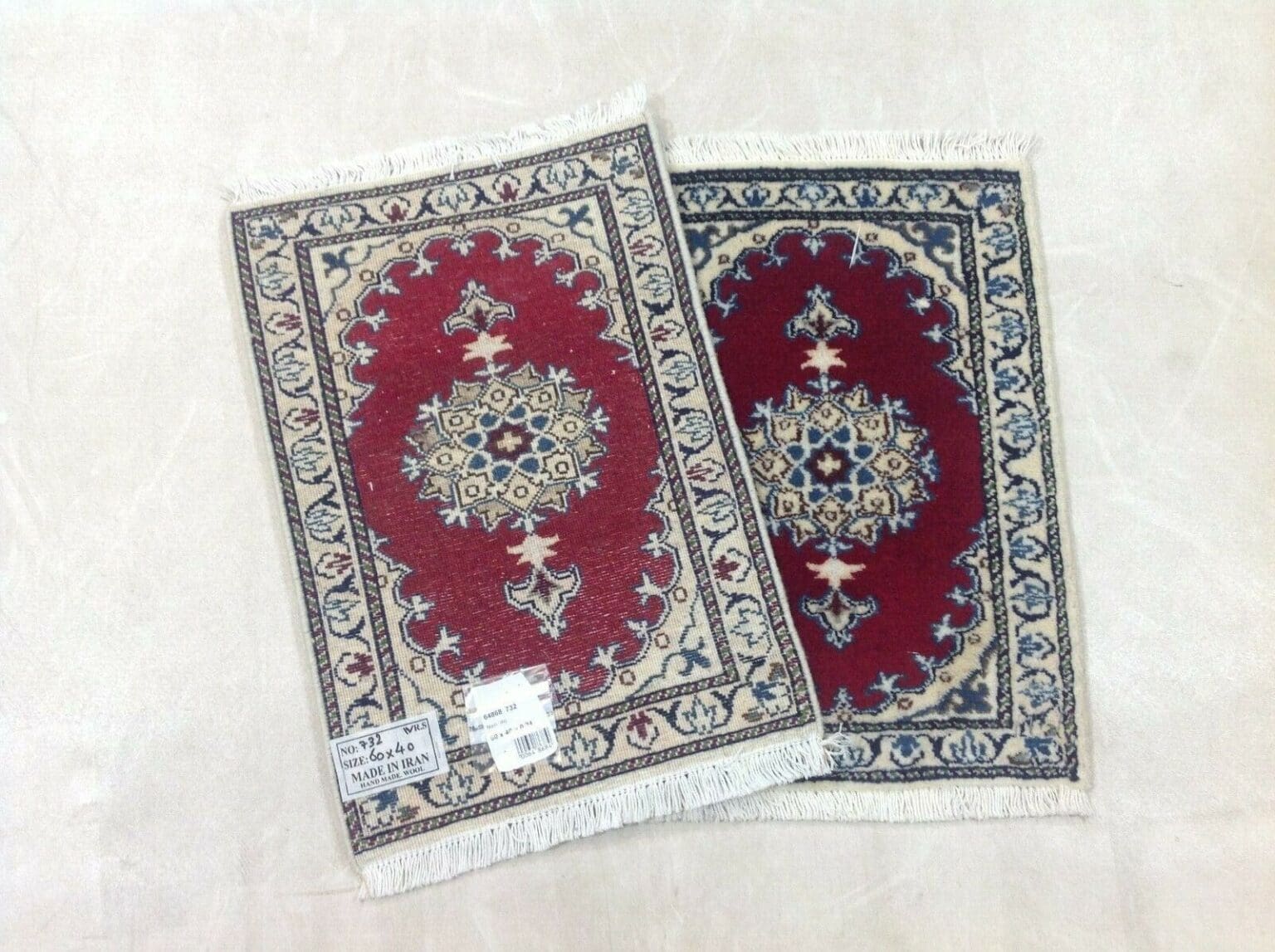
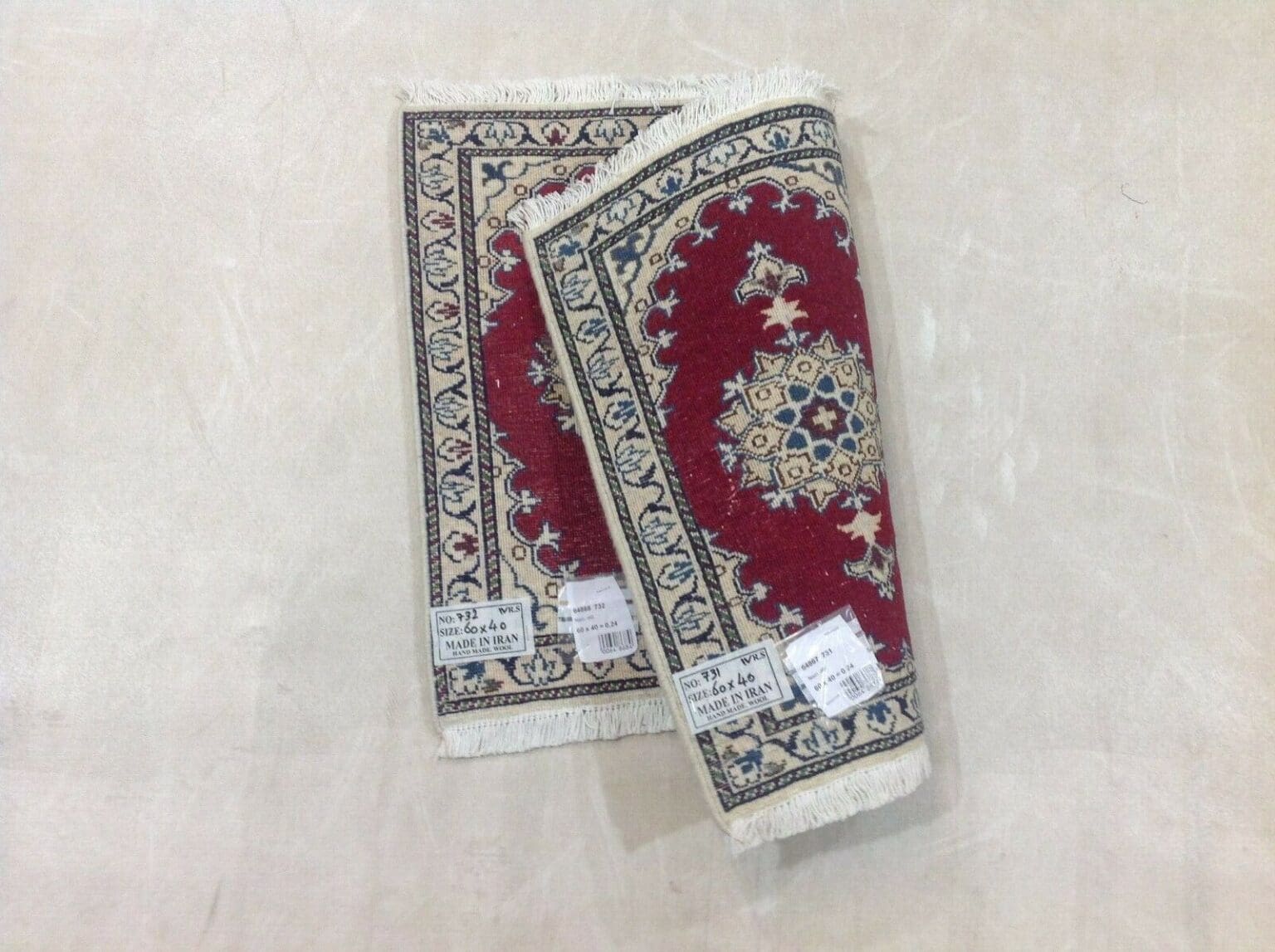
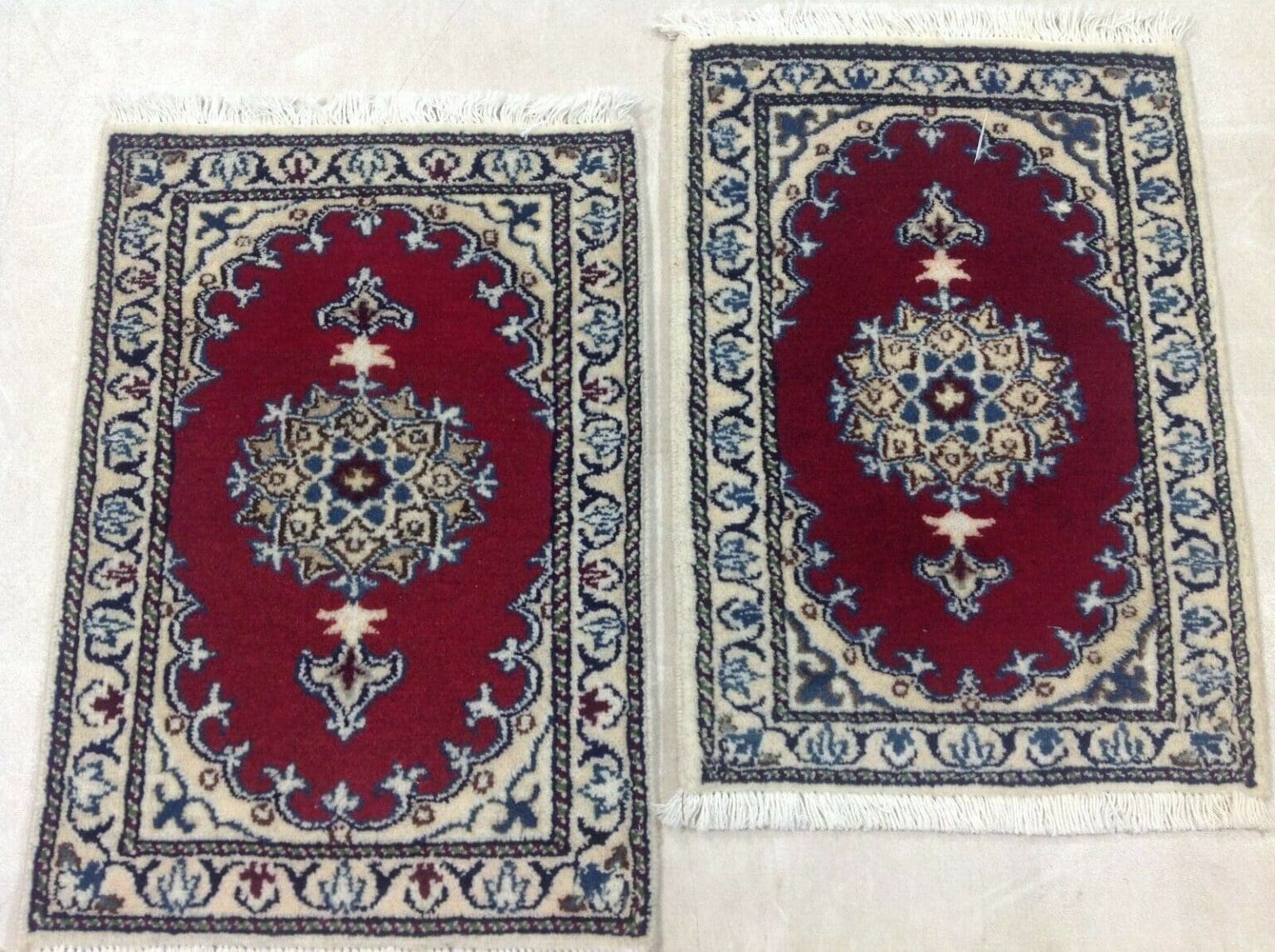
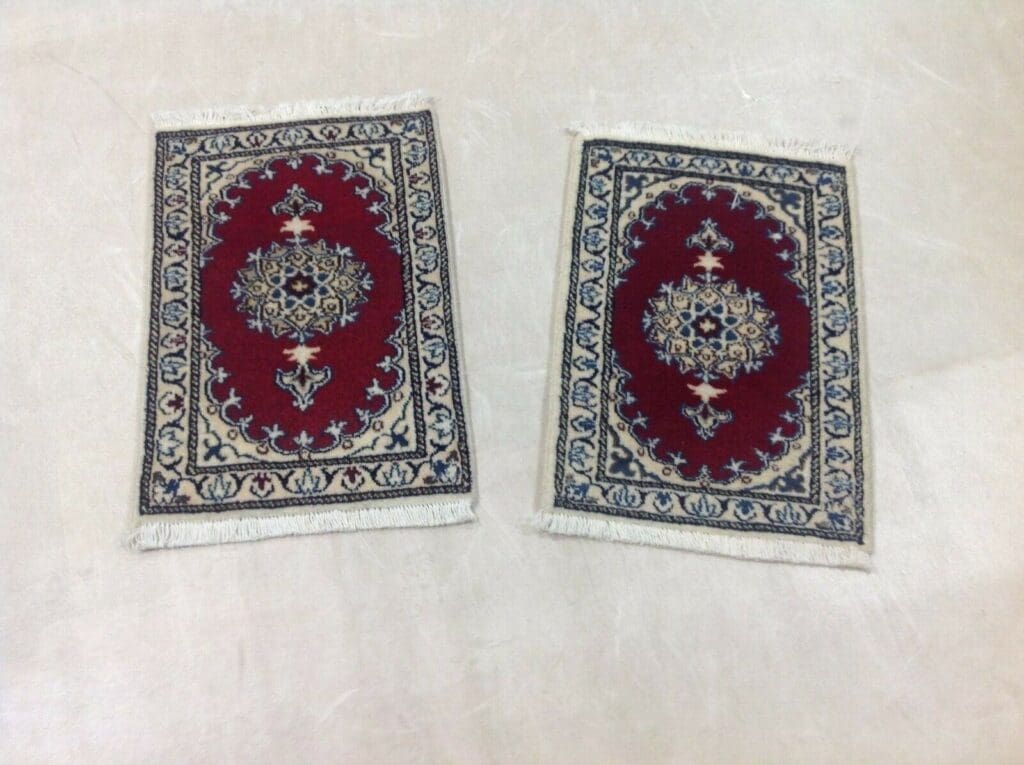
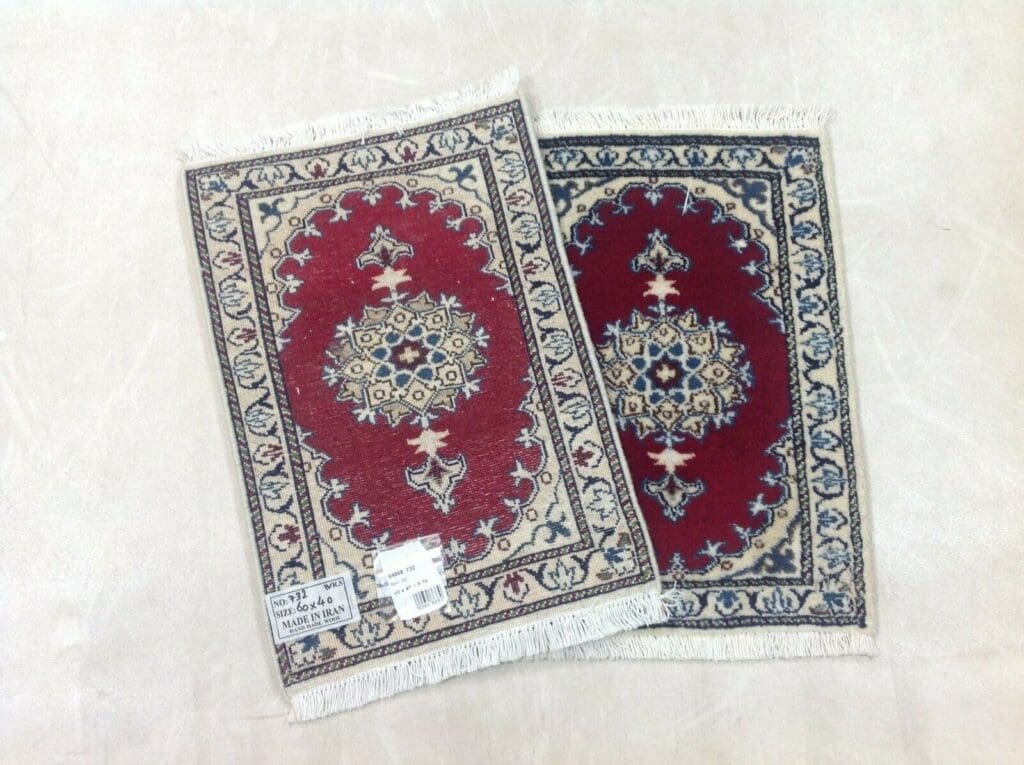
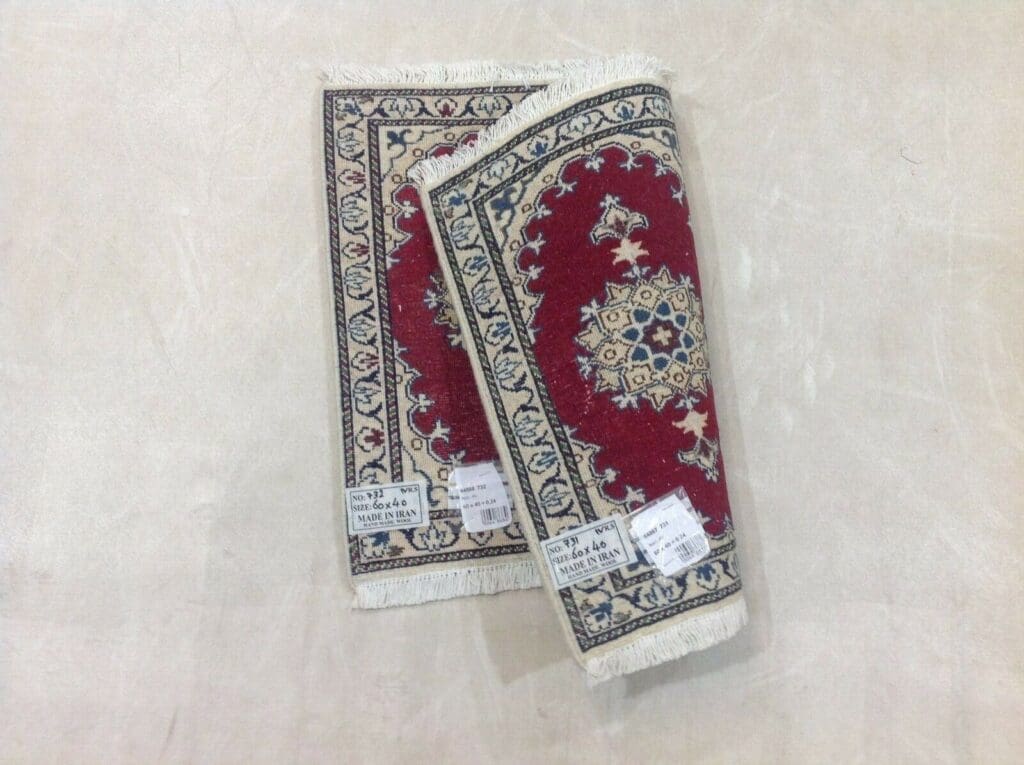
Hand-knotted Nain Persian rug | Knot density: approx. 300,000 knots/m² | Material: pile 90% virgin wool, 10% silk | Size: 60 x 40 cm | Pattern: traditional Oriental and Persian | Condition: New
This Nain Persian rug is hand-knotted from 90% virgin wool and 10% silk. The blend combines the resilient character of a wool pile with the fine sheen associated with silk. Virgin wool is a traditional rug material because it offers warmth, resilience and useful resistance to everyday soiling. It also gives the surface a naturally pleasant feel and helps it recover its shape after use.
The silk content adds a smoother touch and a restrained reflective quality. Silk catches light differently from wool, so the surface can show subtle changes as the viewing angle or room lighting changes. It does not replace the wool as the principal pile material; instead, it refines the texture and adds visual variation. Together, the fibres create a combination of warmth, softness and discreet lustre.
Hand-knotting means that the knots are inserted individually into the foundation rather than produced as one continuous industrial surface. A density of approximately 300,000 knots per square metre indicates finely executed knotting. This process takes place gradually and allows the weaver to build detailed designs with close control. It also means that every hand-knotted piece is an individual object. This rug is offered as a one-off with a certificate of authenticity.
Wool and silk serve complementary purposes in traditional rug making. Wool provides a durable, insulating base for the pile, while silk can sharpen the texture and enhance selected visual effects. The construction therefore joins practical performance with a more nuanced surface. The quality of the work is expressed through the regularity of the knotting and the way the materials support the design.
Origin and Tradition
Nain is a city in Iran and the source of the Nain rug tradition. Nain rugs are recognised as Persian rugs associated with careful workmanship, finely organised compositions and an elegant surface. Their regional style developed through a long weaving culture in which technical precision and a controlled decorative language are closely connected.
The Nain tradition is often linked with a calm, orderly impression. Designs may contain many details, yet the overall arrangement remains clearly structured. This balance is created through the relationship between the field, ornamental elements and borders. The result is a form of Persian rug design that can be intricate without appearing disordered.
Persian rugs represent more than floor coverings. They are products of a craft passed through generations, with knotting, pile, colour and pattern developed together during a lengthy production process. In Nain weaving, precision has a central role. Carefully placed motifs create a coherent surface and allow the composition to retain its sense of proportion.
Nain rugs are traditionally associated with fine materials and detailed ornament. Wool is a proven pile fibre in this setting, while silk may be used to give the surface greater refinement and a subtle play of light. The Persian origin identifies the cultural and artisanal tradition behind the Nain type; it is not merely a name for a decorative pattern.
Regional rug making also connects practical use with interior design. A rug protects and covers the floor while contributing to the structure of a room. Nain compositions therefore commonly rely on balanced proportions, carefully placed ornament and measured colour relationships. These principles remain legible in both traditional interiors and more contemporary settings.
The hand-knotted method reinforces this connection with tradition. Each knot forms part of a larger drawing, and small variations belong to the individual character of a handmade object. The combination of a finely worked surface and an ordered composition is central to the way Nain rugs are understood within Persian carpet culture.
Design and Pattern
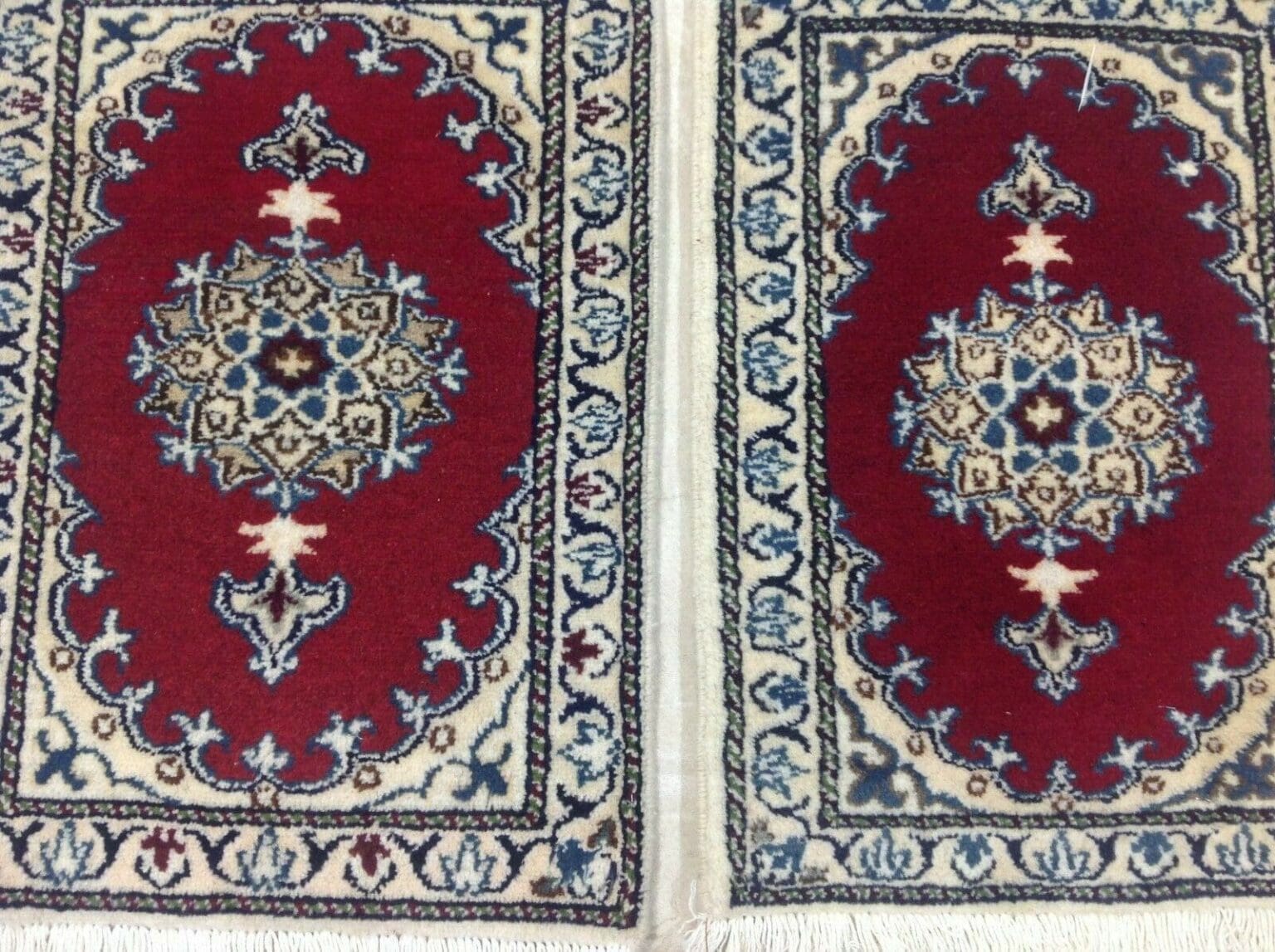
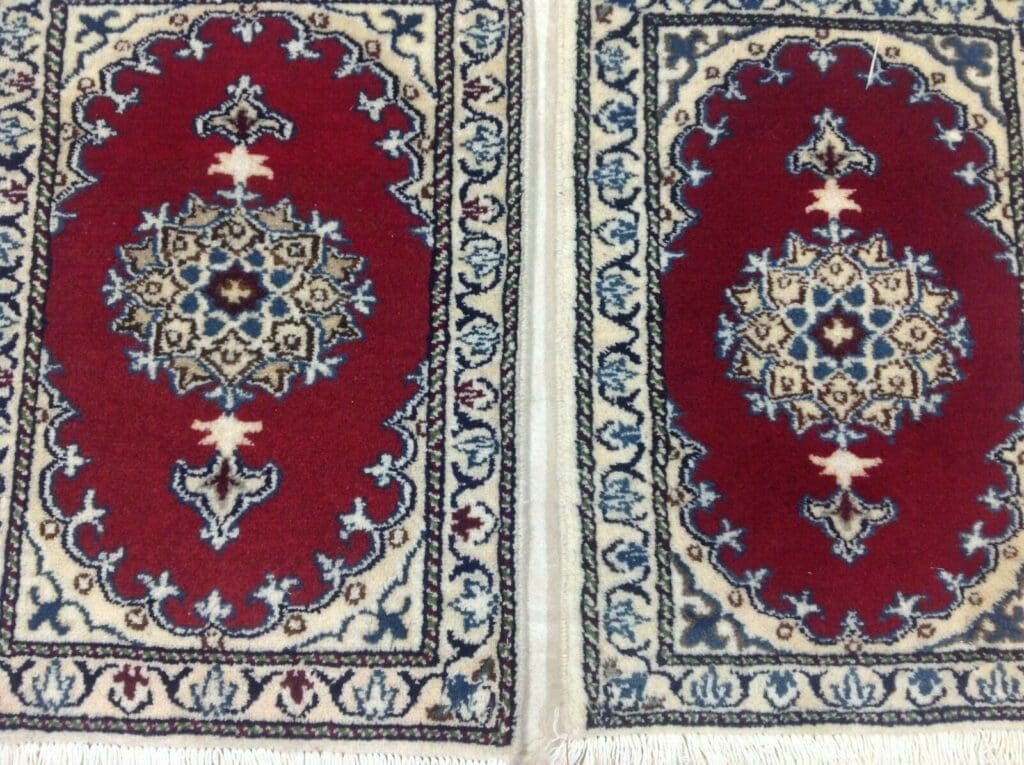
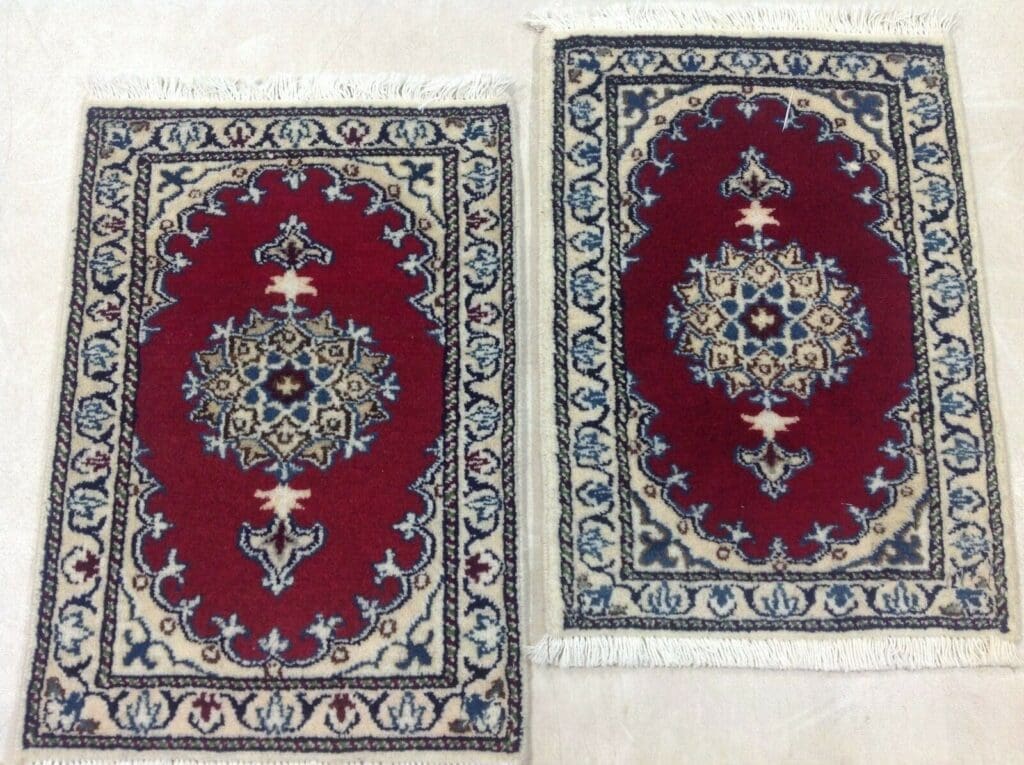
The rug is described as traditional Oriental and Persian in style. Its design is elegant and uses delicate tones. This gentle colour impression suits the Nain approach, where harmony and clarity are generally preferred to aggressive contrast. The restrained palette allows the structure of the pattern to remain visible while giving the surface a composed appearance.
Floral motifs, stylised medallions and symmetrical arrangements are typical elements of Nain design. Floral forms may be expressed through leaves, blossoms and scrolling branches that have been simplified into a woven vocabulary. They are not botanical illustrations in a literal sense; they are ornamental shapes arranged to support the rhythm of the rug.
A medallion can provide a visual centre and establish the main axis of a composition. Symmetry then helps carry the design through the surrounding field and toward the borders. In Persian pattern language, these elements are more than isolated decoration. Their character comes from their placement, repetition and relationship with the rest of the design, where inherited symbols and regional conventions meet.
Nain compositions often organise the surface through a central field, surrounding ornament and border bands. This gives the eye a clear route through the design, from the principal area to the finer details. Soft, elegant tones reinforce the distinction between these layers without breaking the unity of the whole. Floral and geometric influences can therefore appear together within a balanced arrangement.
The wool and silk construction also affects how the pattern is seen. Wool provides a quieter, natural ground, while silk introduces selective highlights and a delicate shift in reflection. Depending on the light and viewing direction, this can give the ornament additional depth. The material effect complements the traditional drawing rather than replacing it.
Because of its ordered layout and subdued colour character, the Nain design can sit alongside both classic and modern furnishings. Its Persian identity remains present in the floral vocabulary, medallion structures and symmetry, while the controlled overall effect allows the rug to integrate into different interior arrangements.
Special Features
The rug is new and is offered as a one-off with a certificate of authenticity. Its hand-knotted construction and high knot density are stated features of this piece. The mixture of 90% virgin wool and 10% silk gives it a pleasant handle, warmth and a subtle sheen.
With regular cleaning, the surface remains attractive for a long time. Wool contributes durability and is known for thermal insulation, resilience and resistance to everyday dirt. The rug is described as suitable for living areas and bedrooms. The natural virgin wool is also described as having hypoallergenic properties.
FAQ
How should a Nain Persian rug be cleaned?
For routine care, vacuum gently without using a beater brush or brush attachment. This removes dust and loose dirt while avoiding unnecessary stress on the pile. More substantial soiling should be handled by a professional rug cleaner. Professional treatment helps protect the colours and the structure of the hand-knotted surface.
Can the Nain Persian rug be used in a room with underfloor heating?
Yes, the rug can be used in rooms with underfloor heating. Wool provides thermal insulation and contributes to a comfortable room climate. The rug should not be exposed to direct overheating, however, since excessive heat could damage the materials or affect the structure.
How long does a hand-knotted Persian rug last?
With proper care and careful handling, a hand-knotted Persian rug can last for several decades and often for a lifetime. Its longevity depends in particular on the quality of the workmanship and on materials such as virgin wool and silk. Regular, gentle maintenance supports the preservation of the pile and surface.
To provide the best experiences, we use technologies like cookies to store and/or access device information. Consenting to these technologies will allow us to process data such as browsing behavior or unique IDs on this site. Not consenting or withdrawing consent, may adversely affect certain features and functions.
Functional Always active
The technical storage or access is strictly necessary for the legitimate purpose of enabling the use of a specific service explicitly requested by the subscriber or user, or for the sole purpose of carrying out the transmission of a communication over an electronic communications network.
Preferences
The technical storage or access is necessary for the legitimate purpose of storing preferences that are not requested by the subscriber or user.
Statistics
The technical storage or access that is used exclusively for statistical purposes.The technical storage or access that is used exclusively for anonymous statistical purposes. Without a subpoena, voluntary compliance on the part of your Internet Service Provider, or additional records from a third party, information stored or retrieved for this purpose alone cannot usually be used to identify you.
Marketing
The technical storage or access is required to create user profiles to send advertising, or to track the user on a website or across several websites for similar marketing purposes.
 SECURE PAYMENT
 SHIPPING PARTNERS


