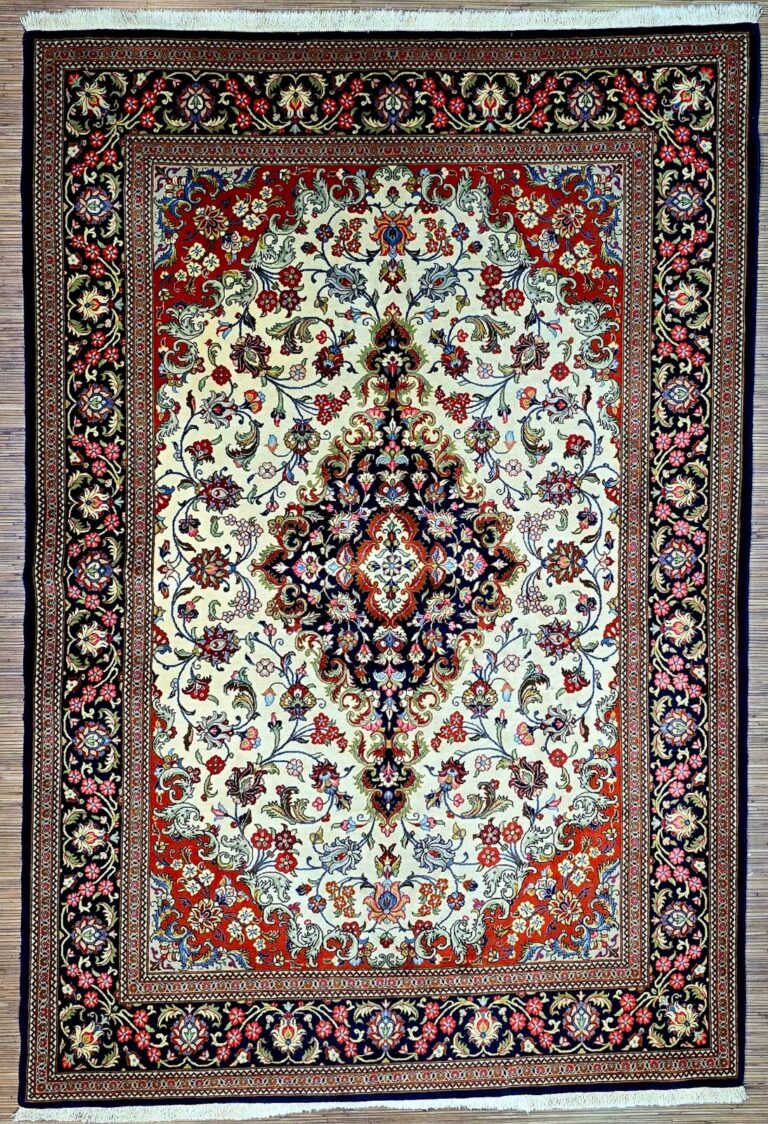
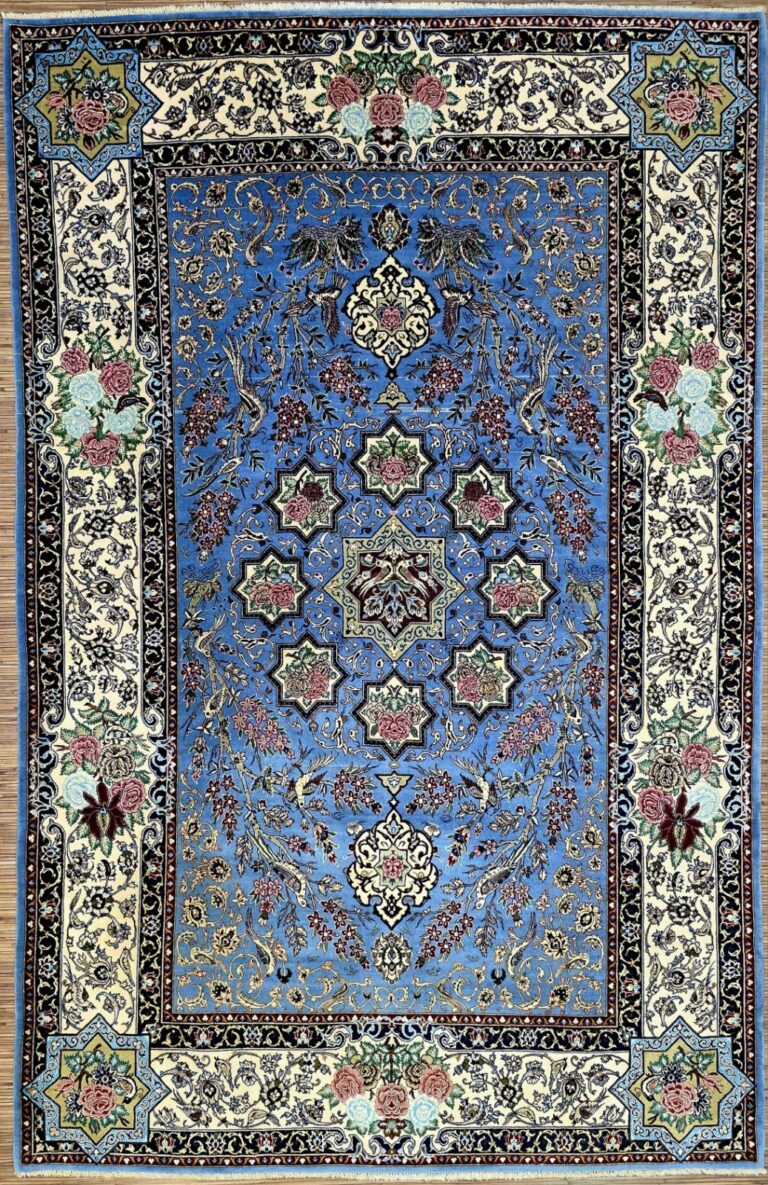
This Nain Persian rug is hand-knotted with a pile made from 100% virgin wool. The warp is specified as 100% cotton. The combination of a wool pile and a cotton foundation is part of the rug’s stated construction. Virgin wool provides a pleasant tactile surface and is also associated with warmth insulation, durability, natural resistance to dirt and the ability to regulate moisture. These properties make wool a traditional material for a rug intended to remain practical in everyday interiors as well as textile in character.
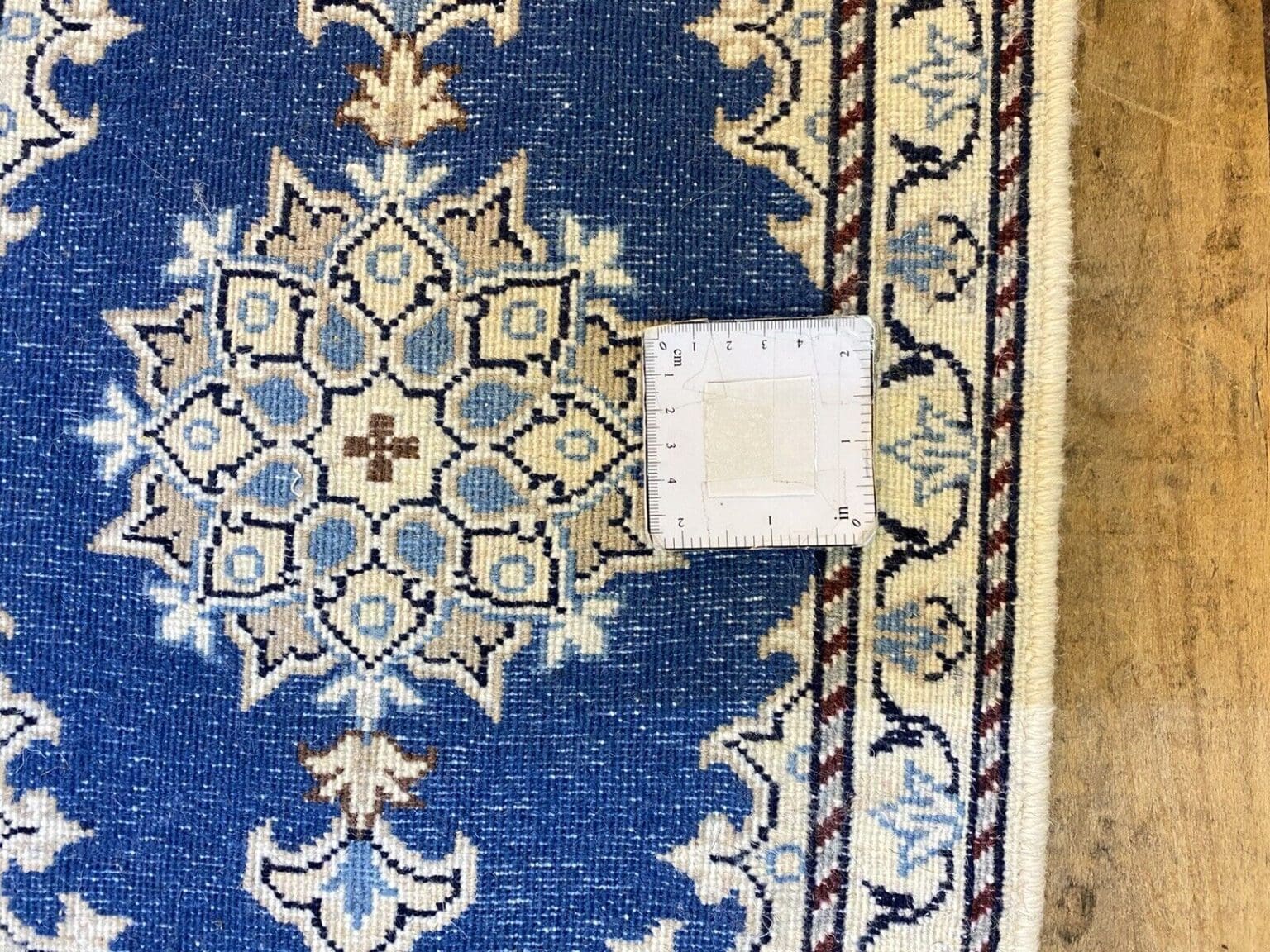
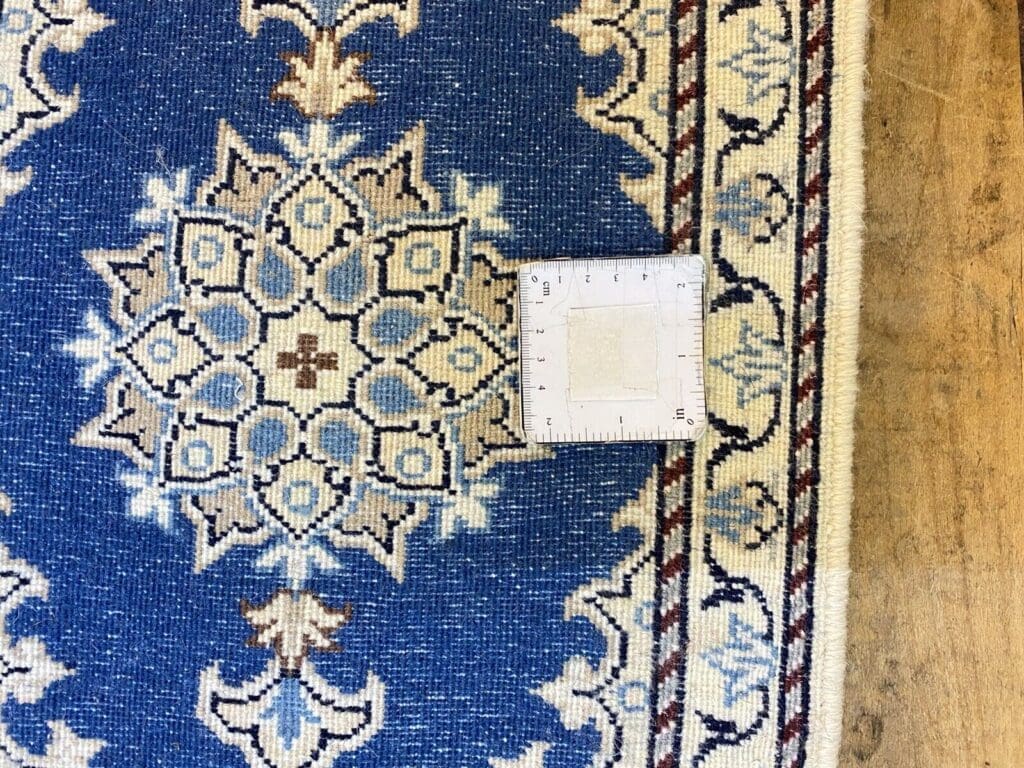
Hand-knotting is a traditional method in which individual knots are tied into the foundation one after another. The pile is then finished so that the surface and design can be clearly read. This process calls for experience, patience and precise work. The listed density of approximately 300,000 knots per square metre indicates a closely knotted textile with the capacity for fine detail. Because the work is performed by hand, each example is described as a unique one-off piece.
Wool combines a soft feel with a resilient fibre structure. It can contribute to a comfortable room climate by holding warmth and managing moisture in a natural way. Its surface is traditionally valued for everyday use, while its structure supports the durability expected from a hand-knotted rug. The cotton warp provides the foundation into which the knots are secured. Together, pile, warp and knotting form the layered construction characteristic of Oriental rugs made by hand.
The material statement for this rug is precise: 100% virgin wool is used for the pile and 100% cotton for the warp. The hand-knotted technique is likewise explicitly identified. The result is a rug whose construction can be understood through both its natural fibres and its method of manufacture. Individual variations belong to handwork and distinguish it from a mechanically produced textile.
Origin and Tradition
Nain is a city in Iran’s Isfahan Province and gives its name to this rug tradition. The city is known for fine hand-knotted rugs and for a regional approach that combines careful drawing with a controlled, detailed weave. Nain’s carpet culture developed within the broader craft history of Isfahan Province, where textile skills and ornamental design have been passed from one generation to the next.
The Nain tradition is defined by more than a place name. It brings together preparation of the foundation, selection and handling of fibres, planning of the design and finishing of the pile. Weavers work from a structured pattern and translate its lines into rows of knots. This requires close attention to proportion, repetition and colour relationships. The finished rug reflects a regional craft language in which technical precision supports an ordered decorative surface.
Nain rugs have often been made with wool and silk. Silk can help render very small details and can give colours a clear, luminous appearance. This particular rug is specified with a pile of 100% virgin wool and a cotton warp, so those are the materials that apply to it. The wider tradition explains the development of Nain’s fine drawing without adding any unlisted fibre to this piece.
Hand-knotting is a slow process. The maker builds the rug progressively, securing each knot and following the planned arrangement of motifs. The foundation must remain sufficiently regular for the design to retain its proportions, while the pile is later trimmed and finished. A dense knot structure supports the depiction of narrow lines, floral details and interlaced ornament. In Nain, this technical capacity is closely connected with a restrained and balanced visual language.
The history of Nain carpet weaving is therefore visible in the relationship between method and design. The tradition favours clarity, delicate ornament and a composed distribution of colour. Floral forms can be arranged with geometric discipline, and borders can frame the central field without overwhelming it. Such principles belong to the regional type and provide context for this hand-knotted Oriental rug from Iran.
Nain rugs are often associated with refined workmanship and careful finishing. That reputation comes from the cumulative work involved: preparing the foundation, maintaining the knot sequence, preserving the drawing and completing the pile. The process is neither a single industrial operation nor a purely printed decoration. It is a textile craft in which the pattern is built into the structure of the rug itself.
Design and Pattern
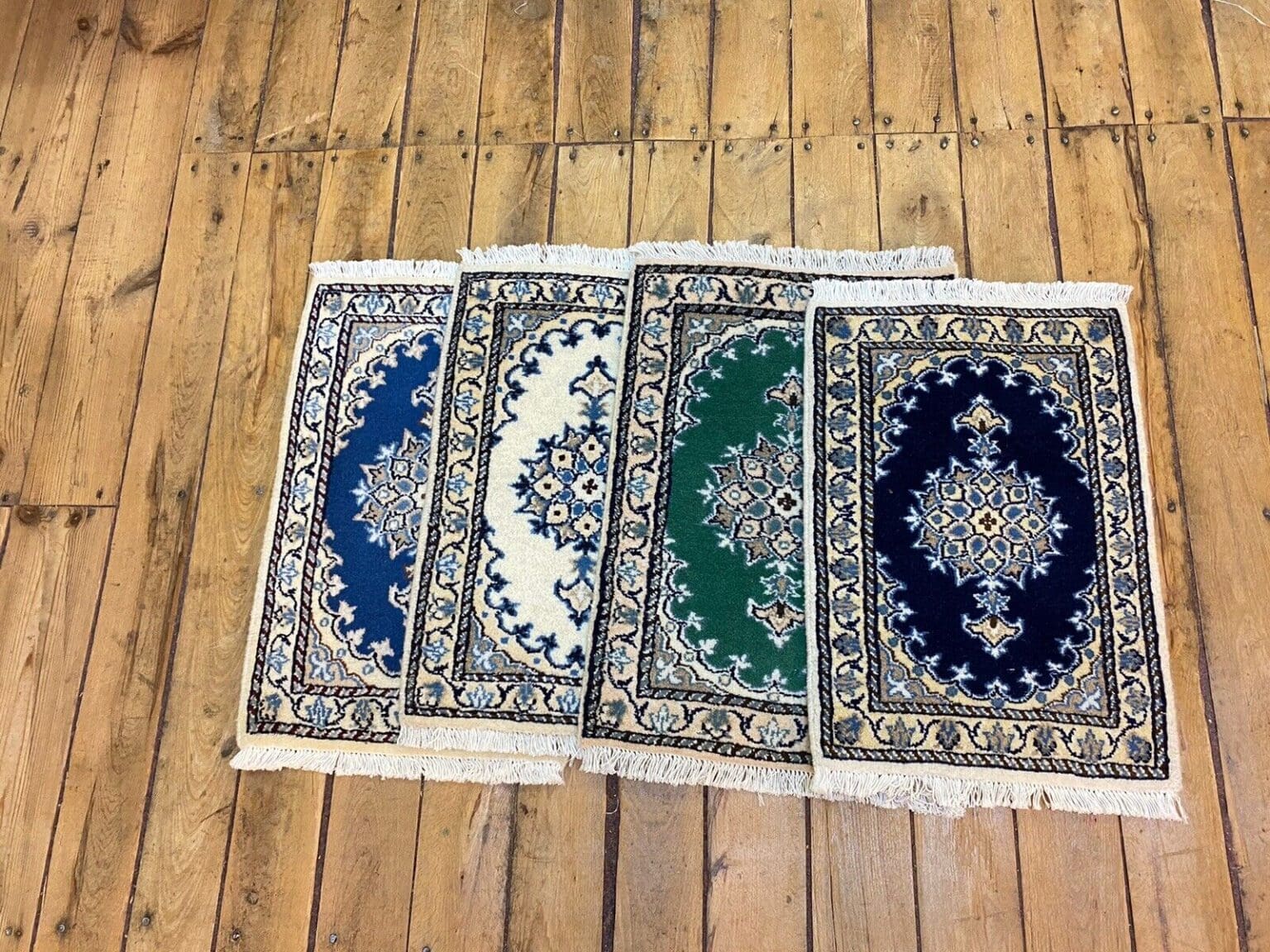
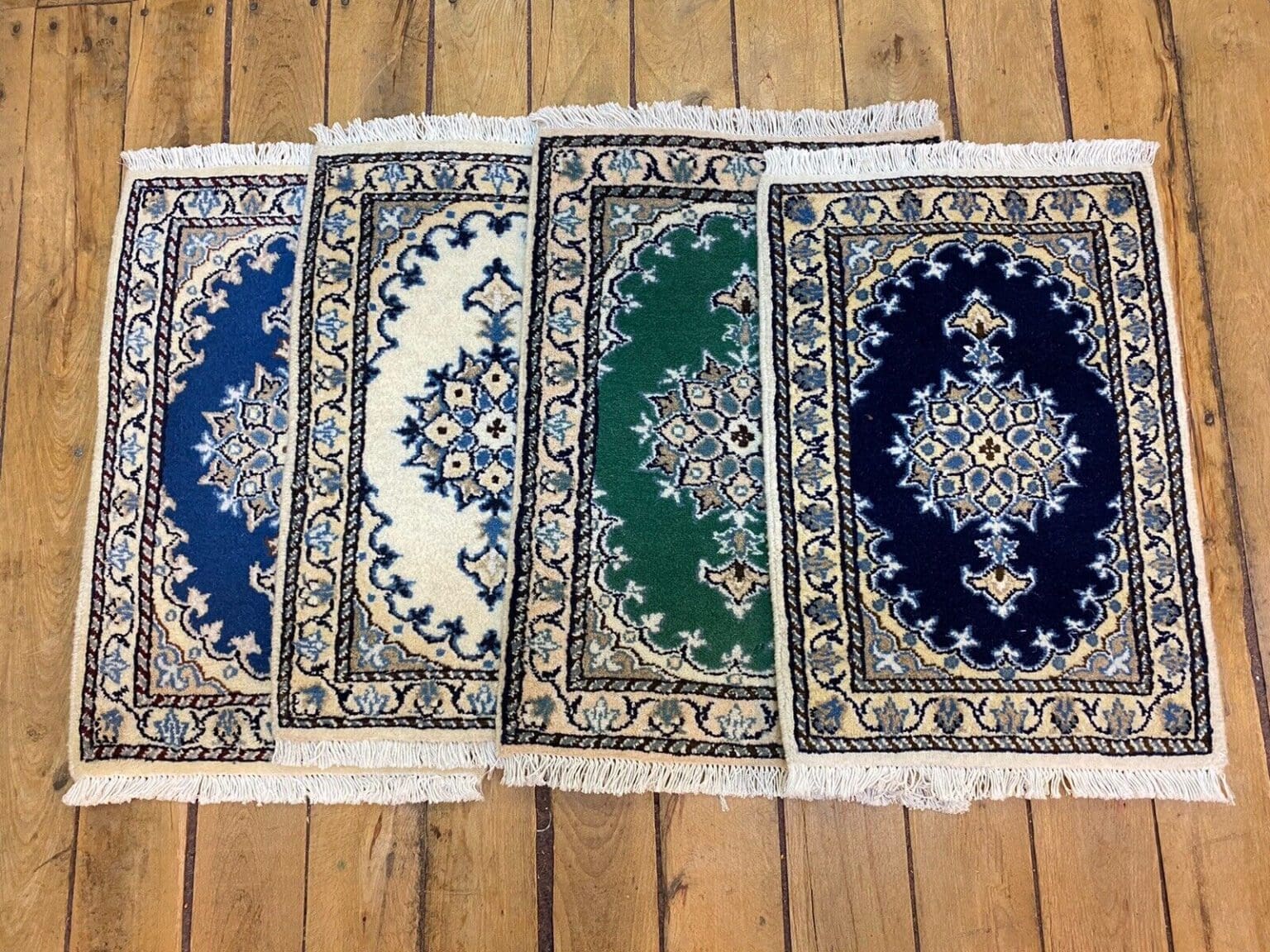
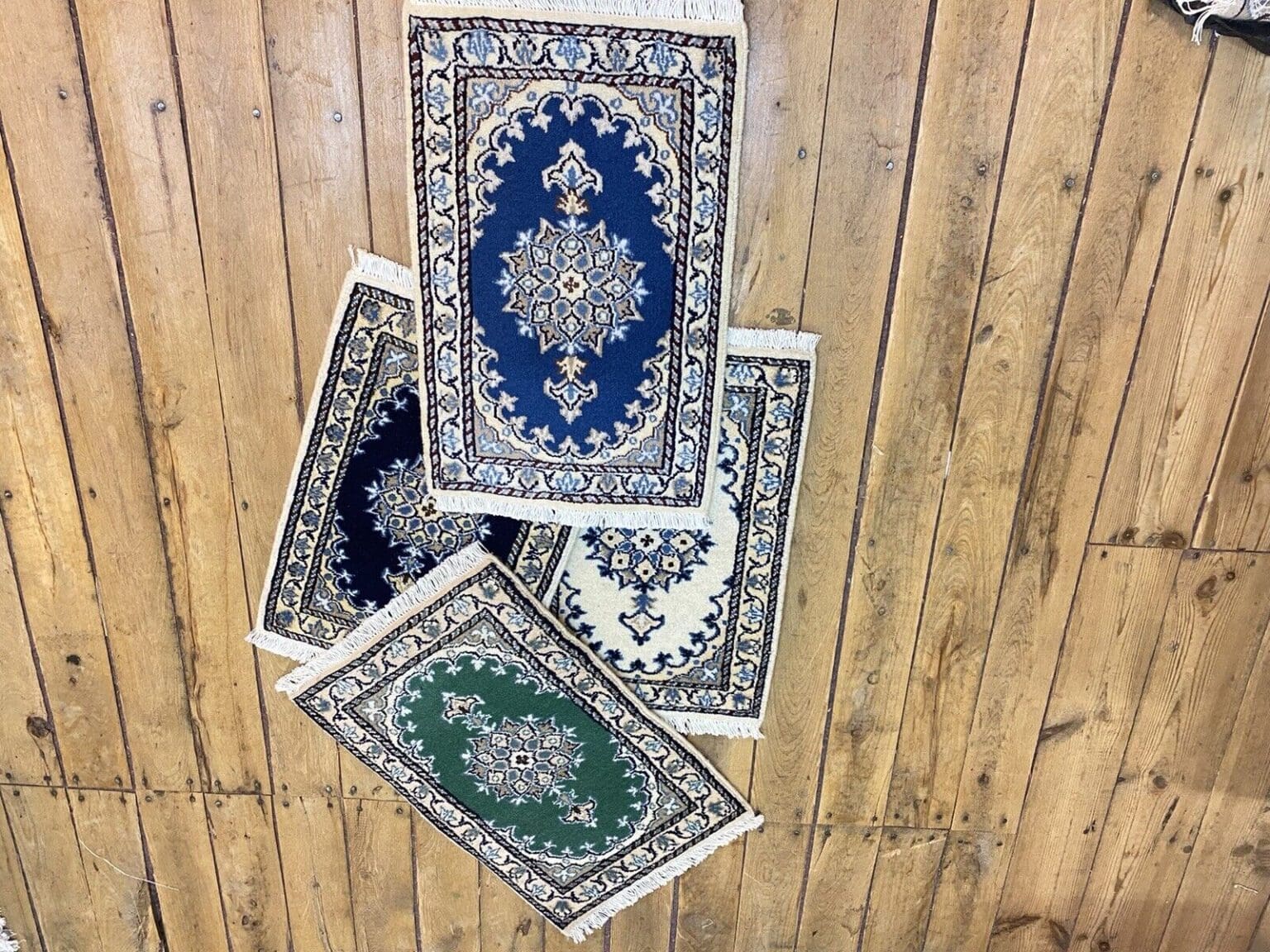
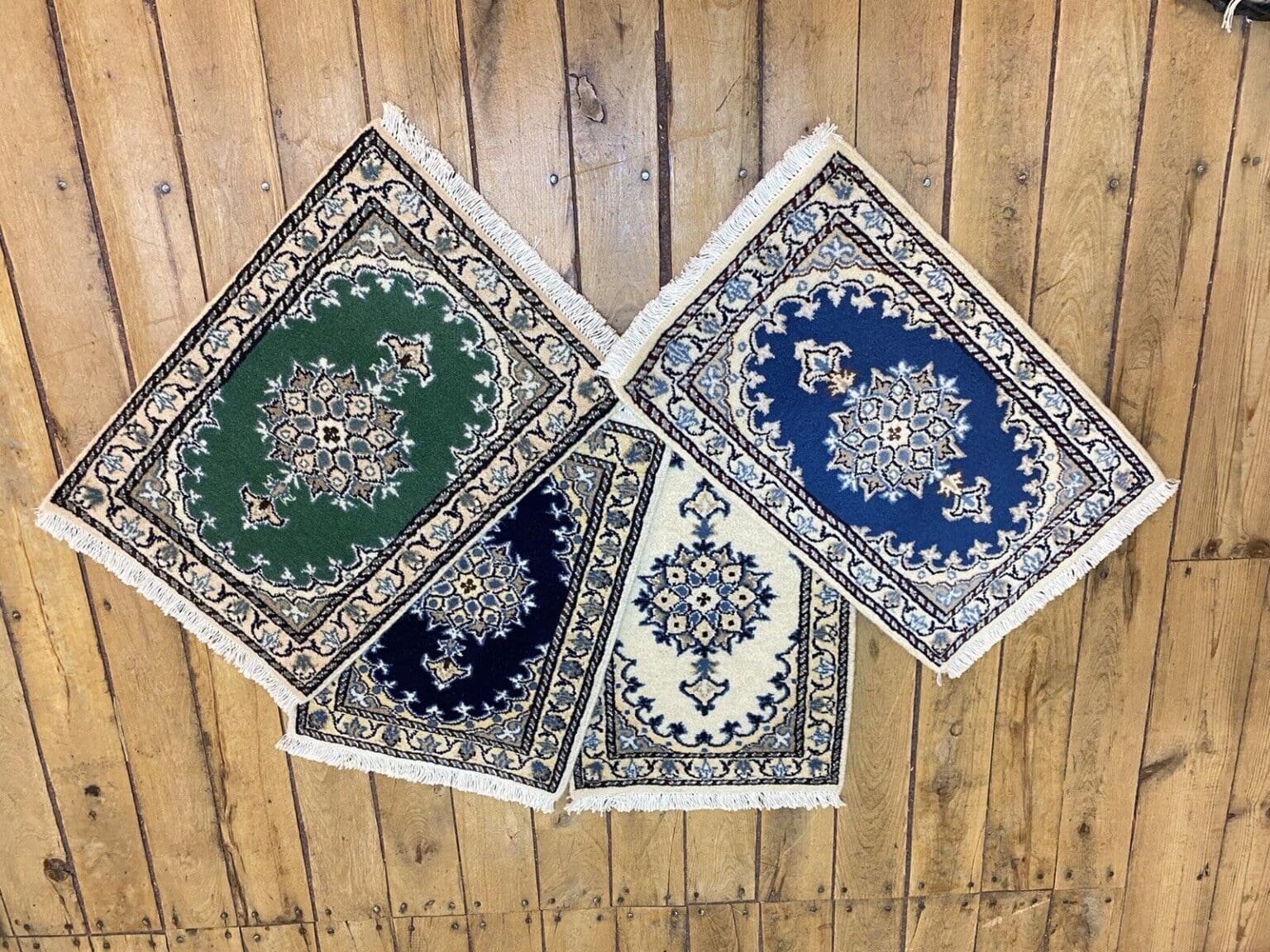
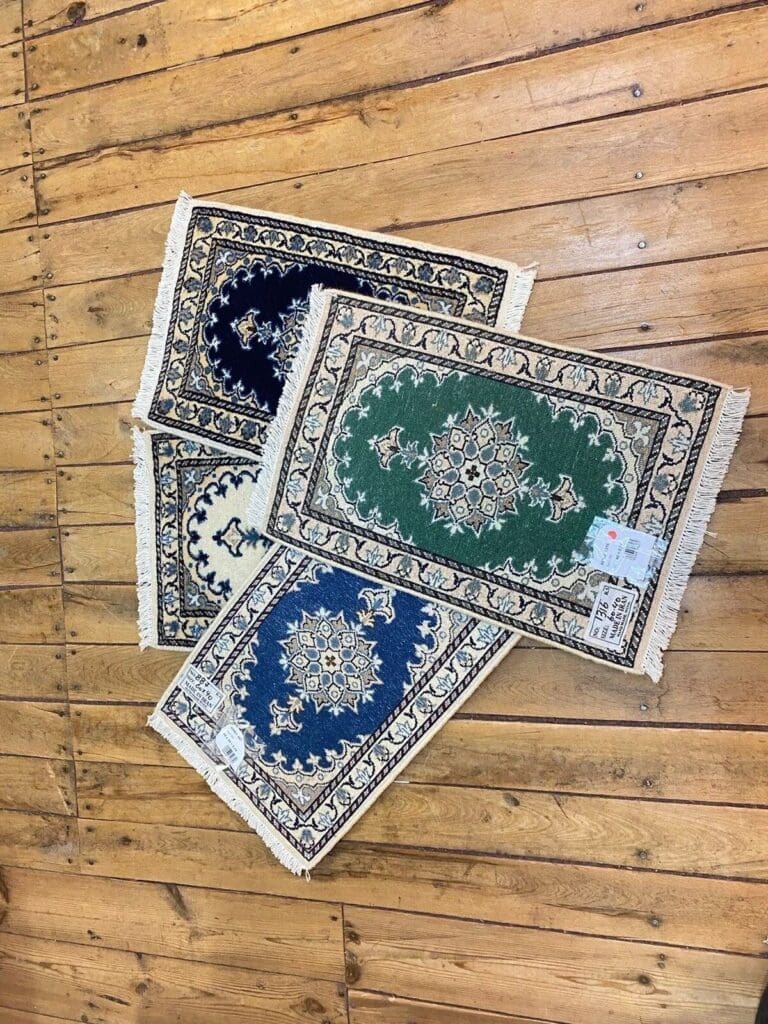
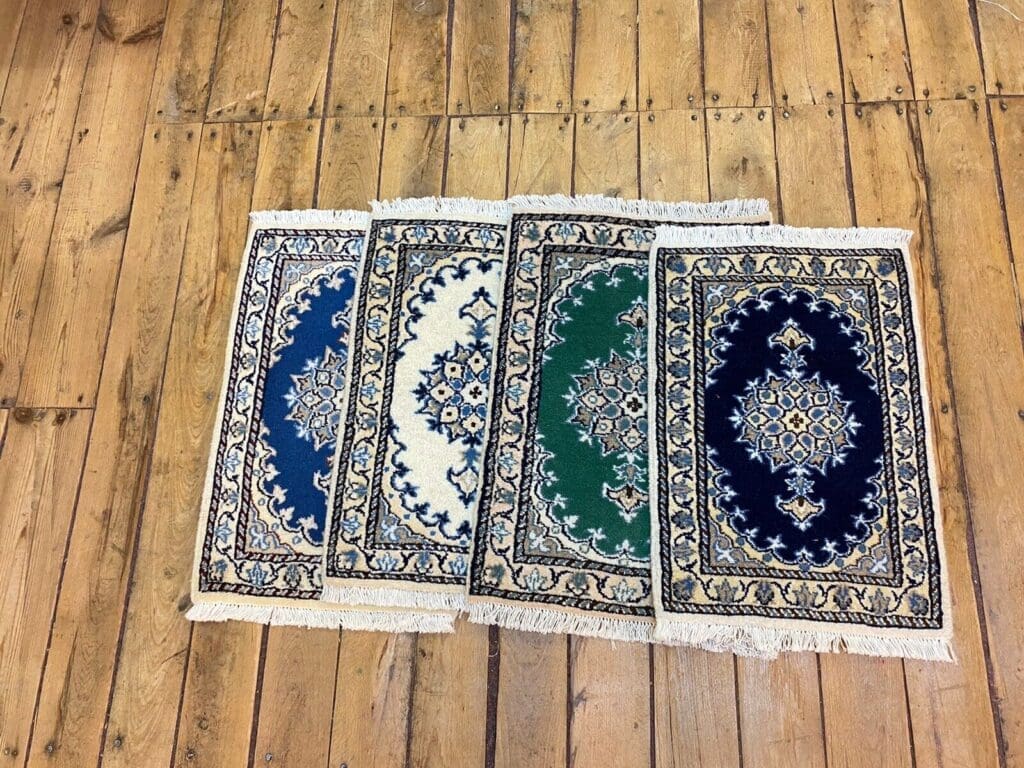
The pattern of this rug is described as Oriental. Nain designs are commonly associated with floral and ornamental compositions. Leaves, blossoms, scrolling vines and related decorative forms are combined into a coherent field. Rather than appearing as isolated symbols, the motifs are usually connected through repetition and rhythm. This gives the surface a clearly organised appearance while allowing many small details to coexist.
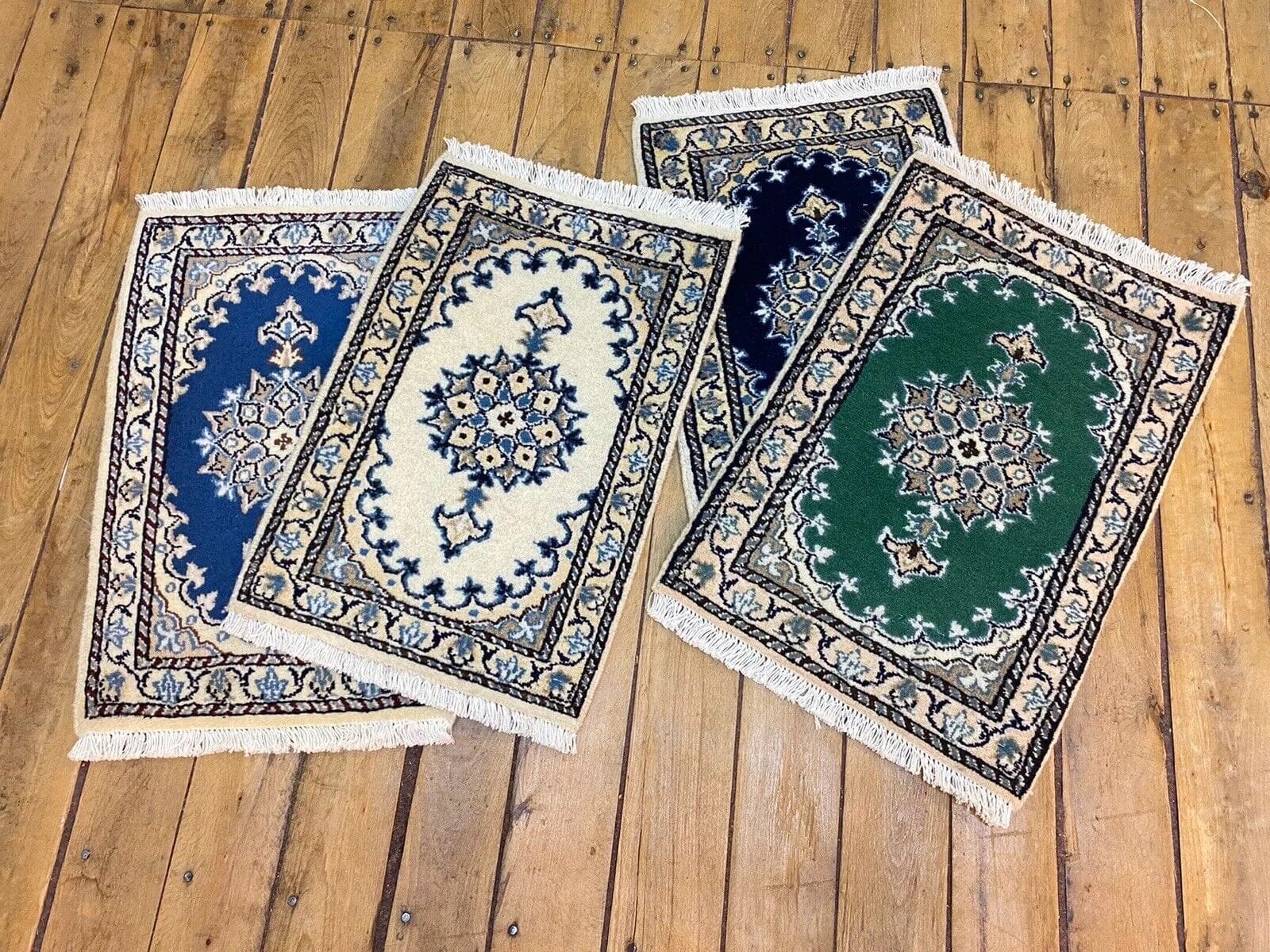
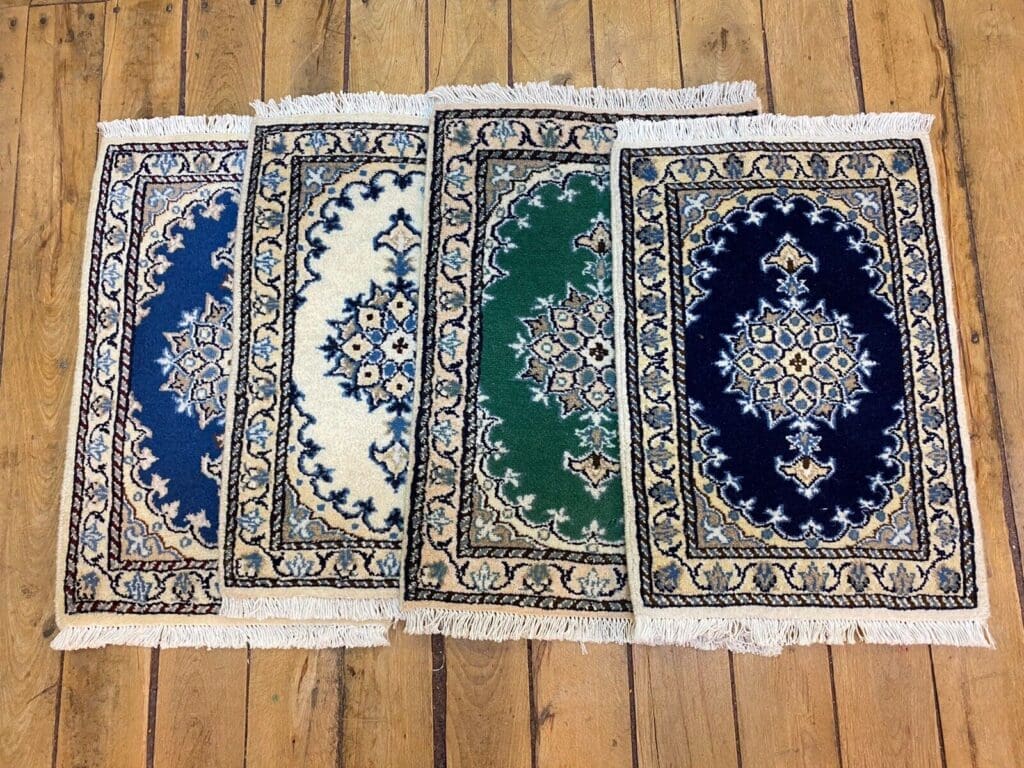
Soft blue and cream shades are frequently found in Nain designs. They create a restrained colour relationship in which the outlines of the ornaments remain legible. The rug itself is described as multicoloured, so several tones are present in its overall appearance. The regional background explains the role of gentle, harmonious colour combinations, while the specific source does not assign a more detailed colour chart to this individual piece.
A medallion-like centre is a common possibility in Nain compositions. When used, it provides a visual focus around which floral motifs, scrolling elements and secondary ornaments can be arranged. Other designs allow the pattern to flow more continuously across the field without a sharply isolated centre. Both approaches belong to the broader vocabulary of Nain weaving. What unites them is the measured relationship between the field, the surrounding borders and the repeated ornamental details.
Fine pattern work depends on the close spacing of the knots and on accurate transfer of the design into the textile. Curving stems, small leaves and geometric boundaries can be drawn with greater definition when the knotting is dense. Borders help contain the composition and establish a transition between the central field and the edge. Repeated motifs create rhythm, while differences in scale prevent the pattern from becoming a simple mechanical repetition.
The decorative structure has a practical visual function as well as an ornamental one. It divides the surface into related zones, guides the eye and creates a sense of balance. Blue and cream are traditionally used to establish calm contrast, while additional colours in a multicoloured rug broaden the palette. Floral and geometric elements can appear together: the floral forms supply organic movement, and the geometric organisation gives the composition order.
Nain pattern language is often recognised by its precision rather than by a single compulsory motif. A central medallion may be present, but it is the combination of fine drawing, floral ornament, controlled borders and harmonious colour that gives the type its identity. The Oriental pattern named for this rug should therefore be understood in the context of that Iranian tradition and its hand-knotted execution.
Special Features
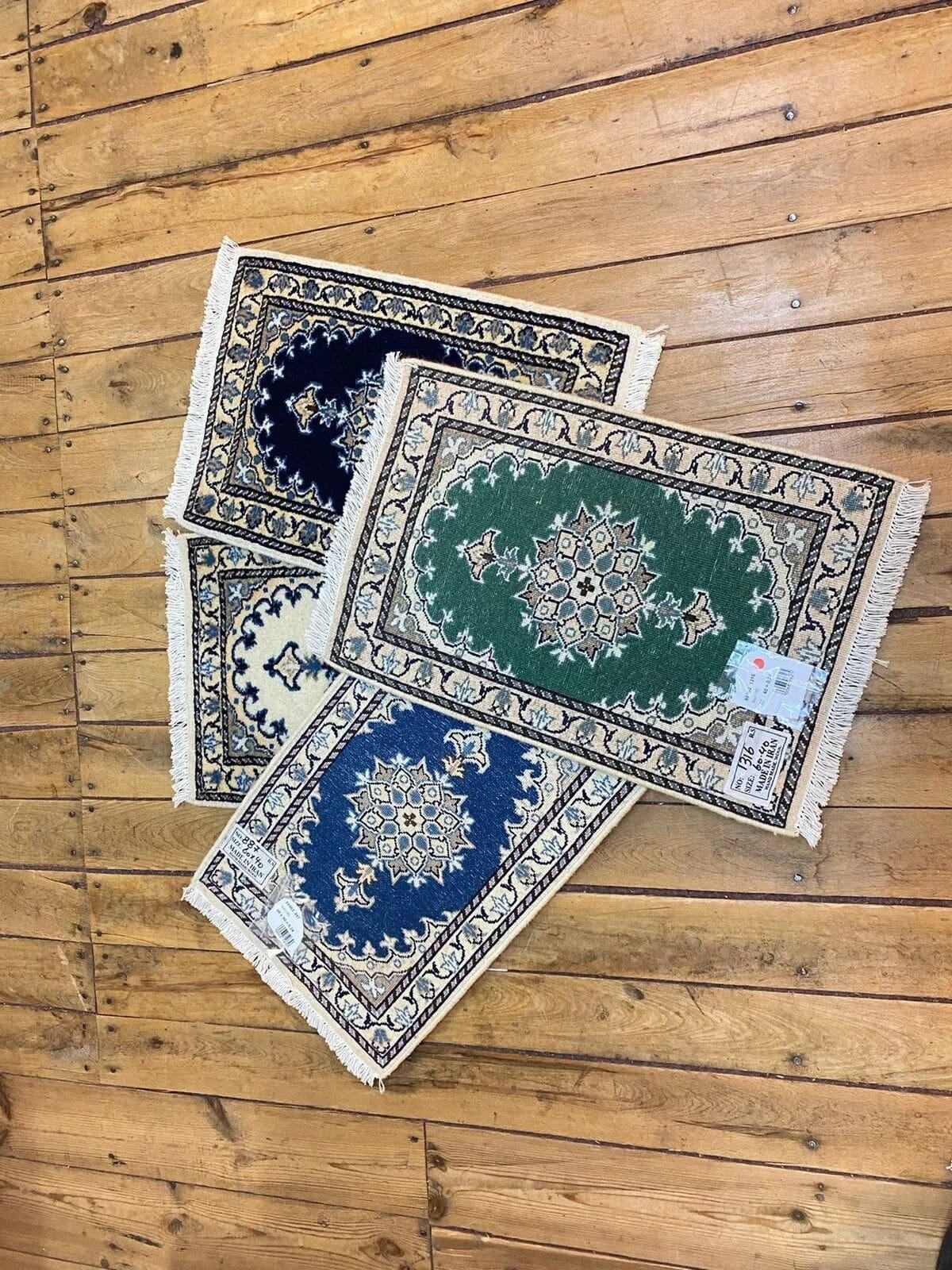
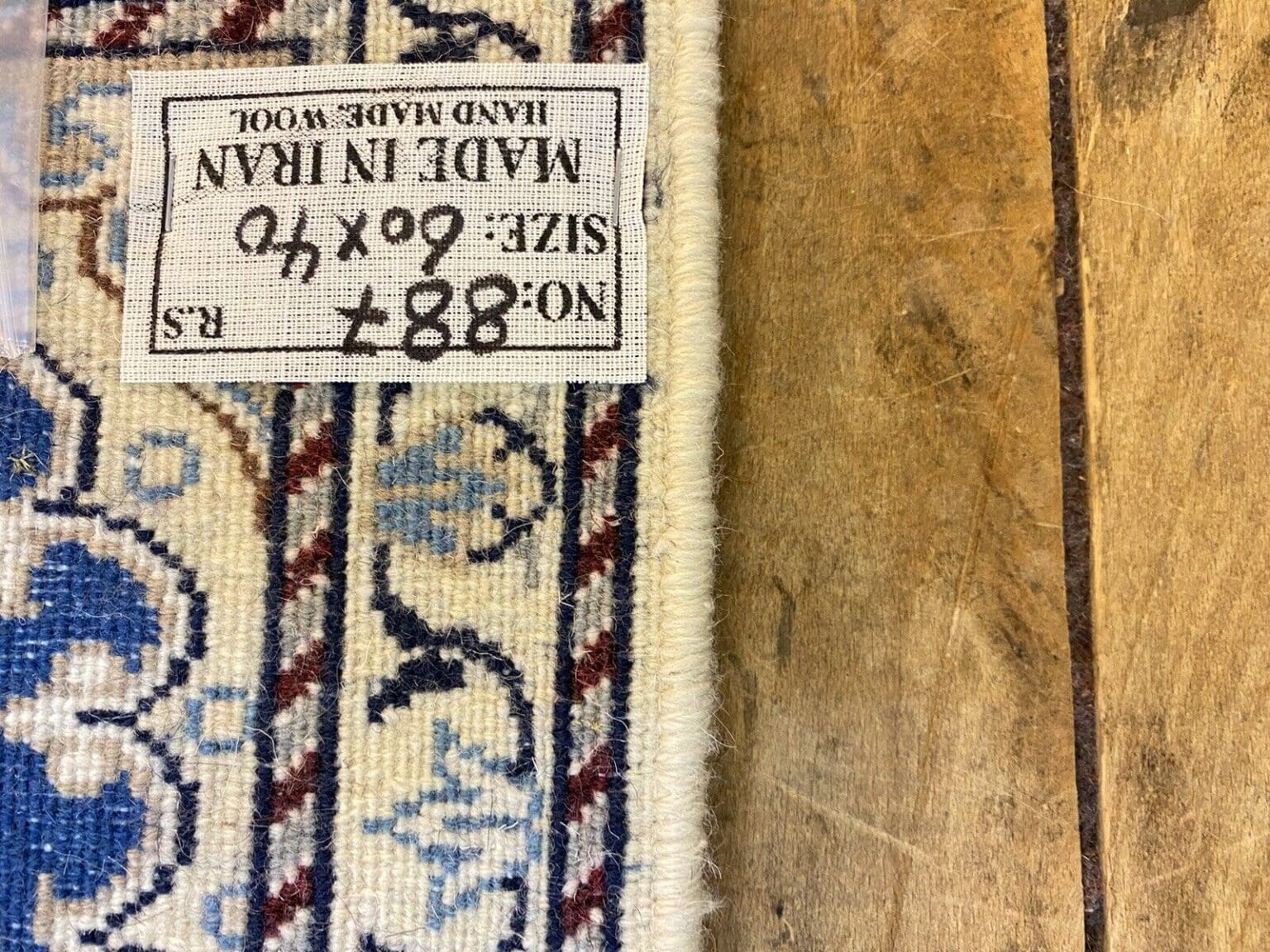
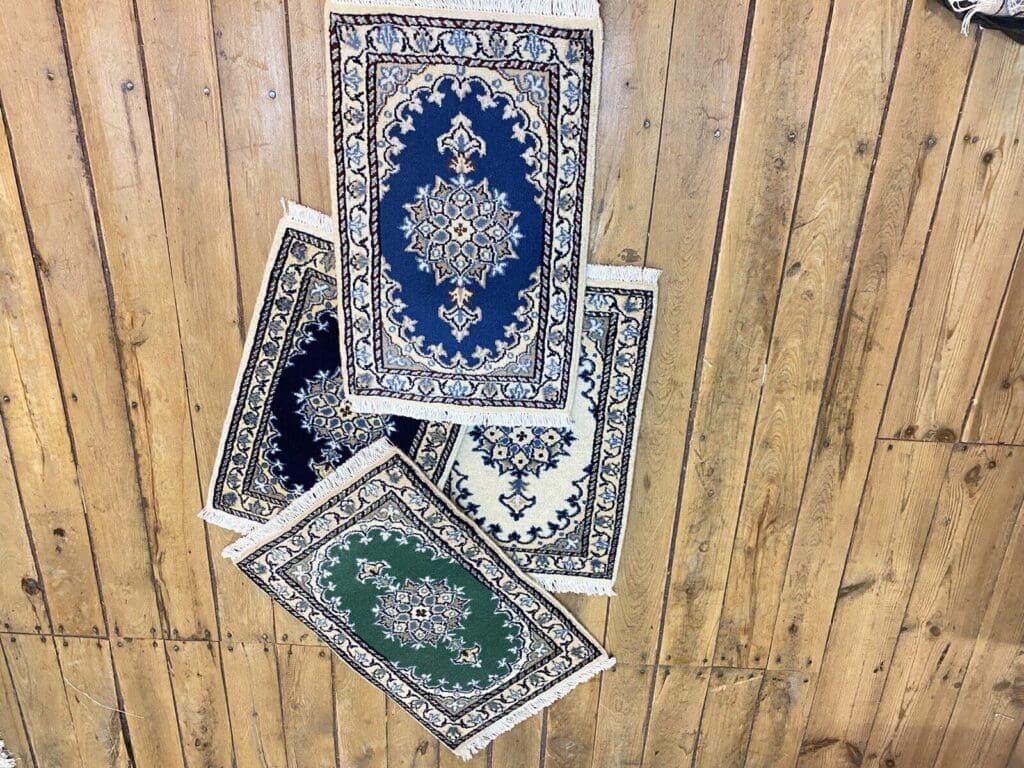
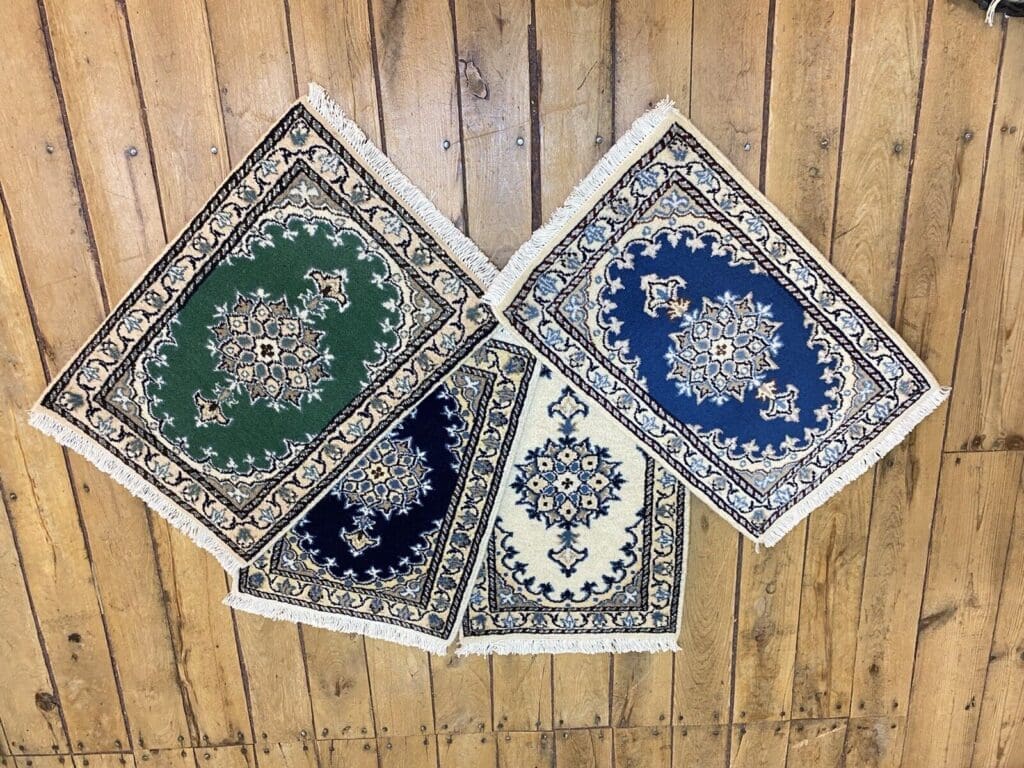
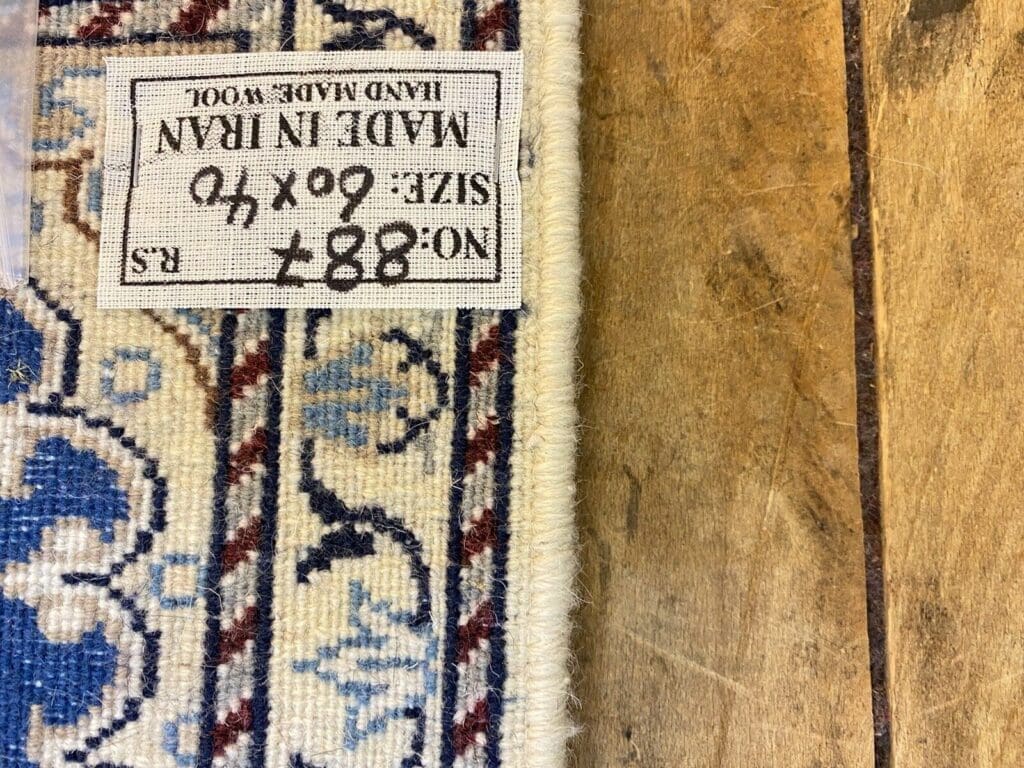
The rug is new and unused. Its pile is specified as 100% virgin wool and its warp as 100% cotton. It is hand-knotted, described as a unique one-off piece and suitable for use on underfloor heating. The source also gives an approximate weight of six kilograms and an approximate thickness of ten millimetres. The offering consists of four Nain Persian rugs.
The close knotting, natural wool and traditional workmanship bring together structural and visual characteristics. The description also states that Nain rugs undergo strict quality controls. Hand-knotted construction, an Oriental pattern and a multicoloured appearance are therefore among the expressly named features of this offering.
FAQ
How should I clean a Persian rug?
Regular vacuuming helps remove loose dust and dirt from the pile. It should be carried out carefully so that the surface is not subjected to unnecessary abrasion. Spills should be addressed promptly with a damp cloth and a suitable carpet cleaner. For a thorough clean, or whenever especially gentle treatment is required, professional rug cleaning is advisable. A cleaner should be compatible with virgin wool. Excessive water and vigorous rubbing should be avoided because they can affect the pile, colours and foundation of a hand-knotted rug.
Can I use a Persian rug over underfloor heating?
Yes. This rug is specified as suitable for underfloor heating. Wool rugs can be used over such systems because wool can absorb and transmit warmth. The heating should not be set excessively high, since moderate and even warmth is gentler on the textile. The rug should also lie freely so that heat is not unnecessarily trapped. These points support careful everyday use while the usual care requirements for a hand-knotted virgin-wool rug still apply.
What are the advantages of a hand-knotted rug?
A hand-knotted rug is built knot by knot rather than produced as a printed or mechanically formed surface. This method creates a dense, stable textile and allows the design to be drawn with considerable precision. Each hand-knotted example is described as a unique one-off piece because the work is performed individually. Virgin wool contributes a pleasant feel, durability, warmth insulation and natural moisture regulation. A dense rug can also provide comfortable footing and help improve room acoustics. The process combines practical use with traditional textile craftsmanship.
To provide the best experiences, we use technologies like cookies to store and/or access device information. Consenting to these technologies will allow us to process data such as browsing behavior or unique IDs on this site. Not consenting or withdrawing consent, may adversely affect certain features and functions.
Functional Always active
The technical storage or access is strictly necessary for the legitimate purpose of enabling the use of a specific service explicitly requested by the subscriber or user, or for the sole purpose of carrying out the transmission of a communication over an electronic communications network.
Preferences
The technical storage or access is necessary for the legitimate purpose of storing preferences that are not requested by the subscriber or user.
Statistics
The technical storage or access that is used exclusively for statistical purposes.The technical storage or access that is used exclusively for anonymous statistical purposes. Without a subpoena, voluntary compliance on the part of your Internet Service Provider, or additional records from a third party, information stored or retrieved for this purpose alone cannot usually be used to identify you.
Marketing
The technical storage or access is required to create user profiles to send advertising, or to track the user on a website or across several websites for similar marketing purposes.
 SECURE PAYMENT
 SHIPPING PARTNERS