This Nain Persian rug is hand-knotted, with a pile made of 95% virgin wool and 5% silk. Virgin wool provides the principal textile content and gives the surface the familiar resilient, tactile character associated with wool. Silk forms a smaller but clearly specified part of the pile. Its smooth structure and subtle sheen add a distinct quality to the way the surface is perceived. The two materials are therefore part of the rug’s stated construction rather than merely decorative references.
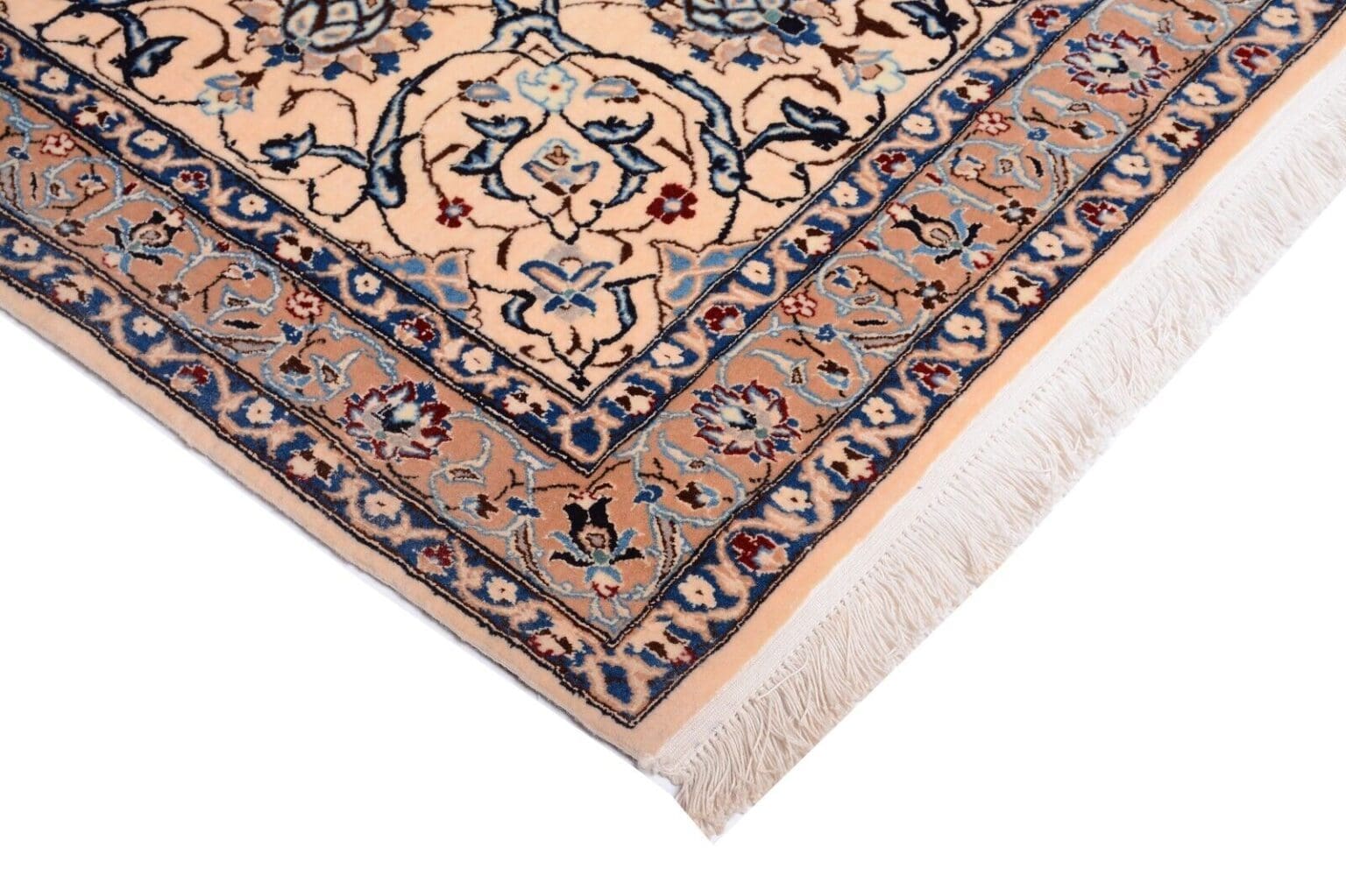
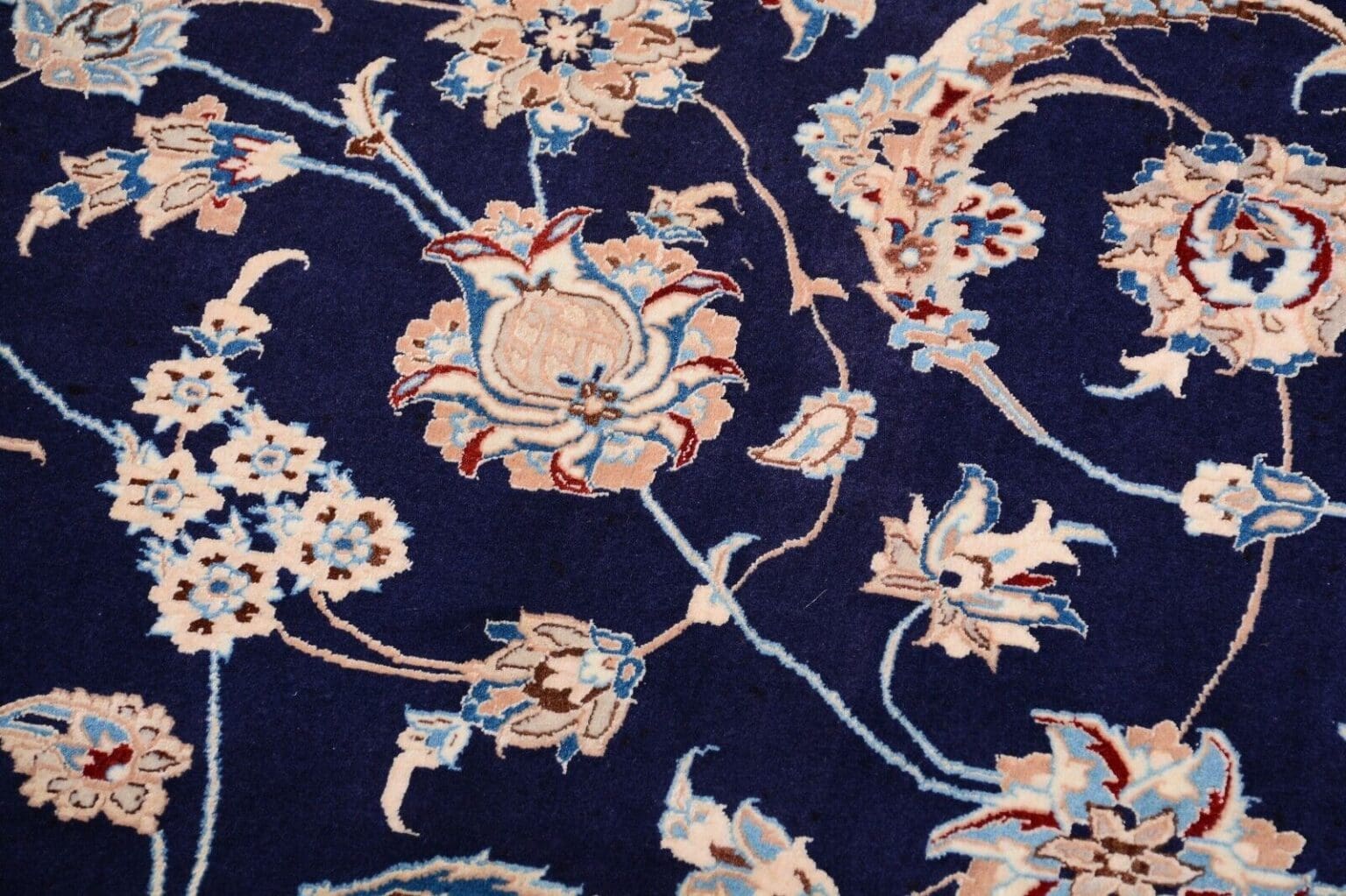
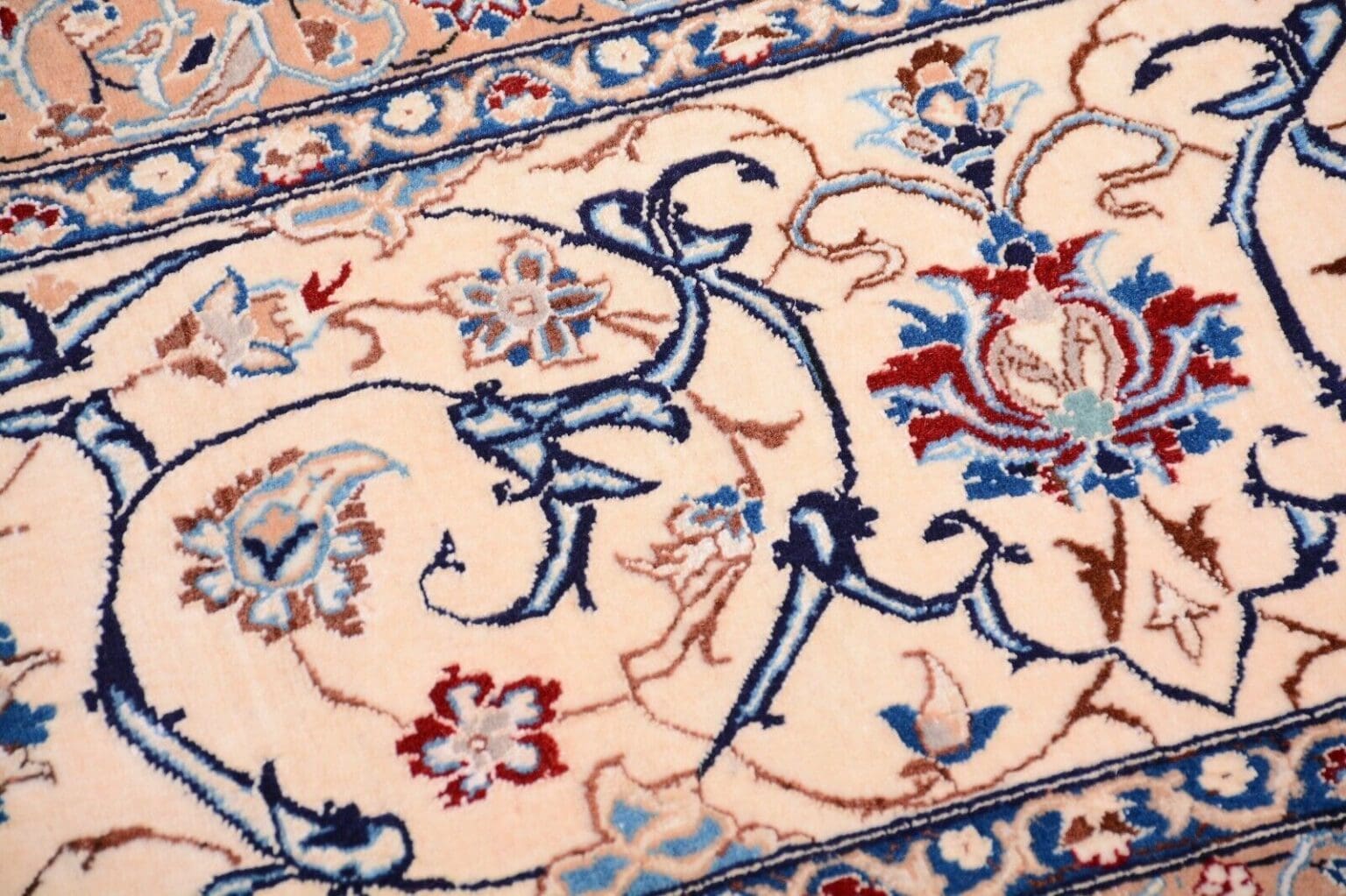
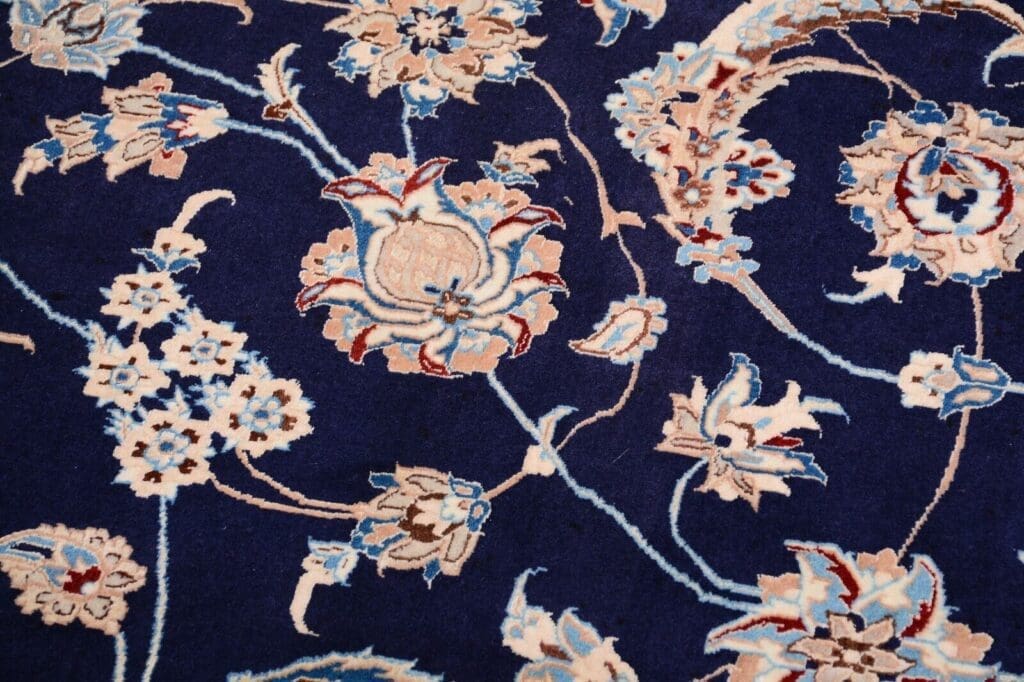
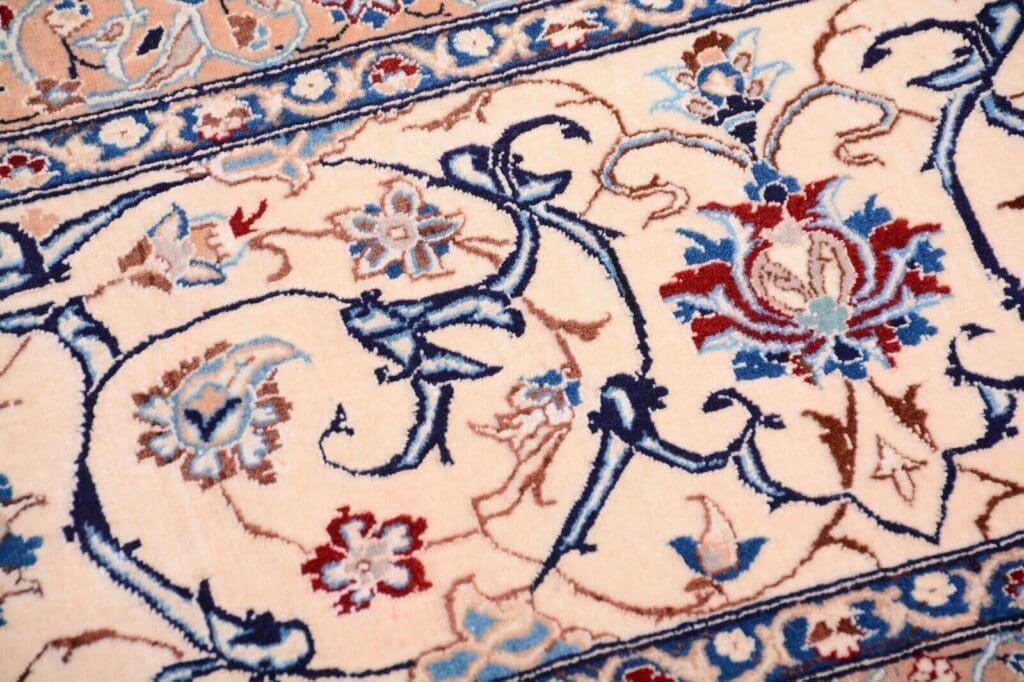
The rug has a knot density of 900,000 knots per square metre. Such a dense construction reflects finely executed knotting, in which a large number of individual knots are organised into a coherent field of colour and pattern. In a hand-knotted rug, the design is built knot by knot rather than printed onto a finished surface. The resulting pile carries the drawing through its structure, allowing small contours and ornamental details to be rendered with precision.
The designation Nain 6 La is part of this rug’s product description. Within Nain classification, the La designation is used in the trade to indicate a particular degree of fineness and knotting quality. The stated knot density gives an additional concrete description of this individual piece. Handwork, virgin wool, silk and dense knotting consequently work together to define its textile character.
Hand knotting requires the pattern to be transferred into the rug during production. Each sequence has to remain consistent with the surrounding drawing so that floral lines, ornamental areas and colour passages retain their intended relationship. On this rug, the detailed floral design is supported by the dense construction. The materials and the technique are closely connected: the wool and silk form the pile, while the knotting creates the visible surface and the structure of the pattern.
Origin and Tradition
Nain is a city in Iran known for its rug production. Nain rugs belong to the Persian weaving tradition and are associated with fine materials, carefully controlled workmanship and clearly organised designs. The tradition of rug weaving in Nain reaches back to the nineteenth century. Across the generations, this craft developed a recognisable approach to proportion, ornament and finely drawn surfaces, all of which remain linked with the Nain name.
Persian rugs are more than practical floor coverings; they also preserve methods of design and textile knowledge. Knotting brings together the selection of yarns, the planning of the composition and the manual execution of every section. A weaver must keep each row aligned with the developing image so that the field, border and individual ornaments remain connected. This combination of planning and handwork is central to the Persian rug tradition.
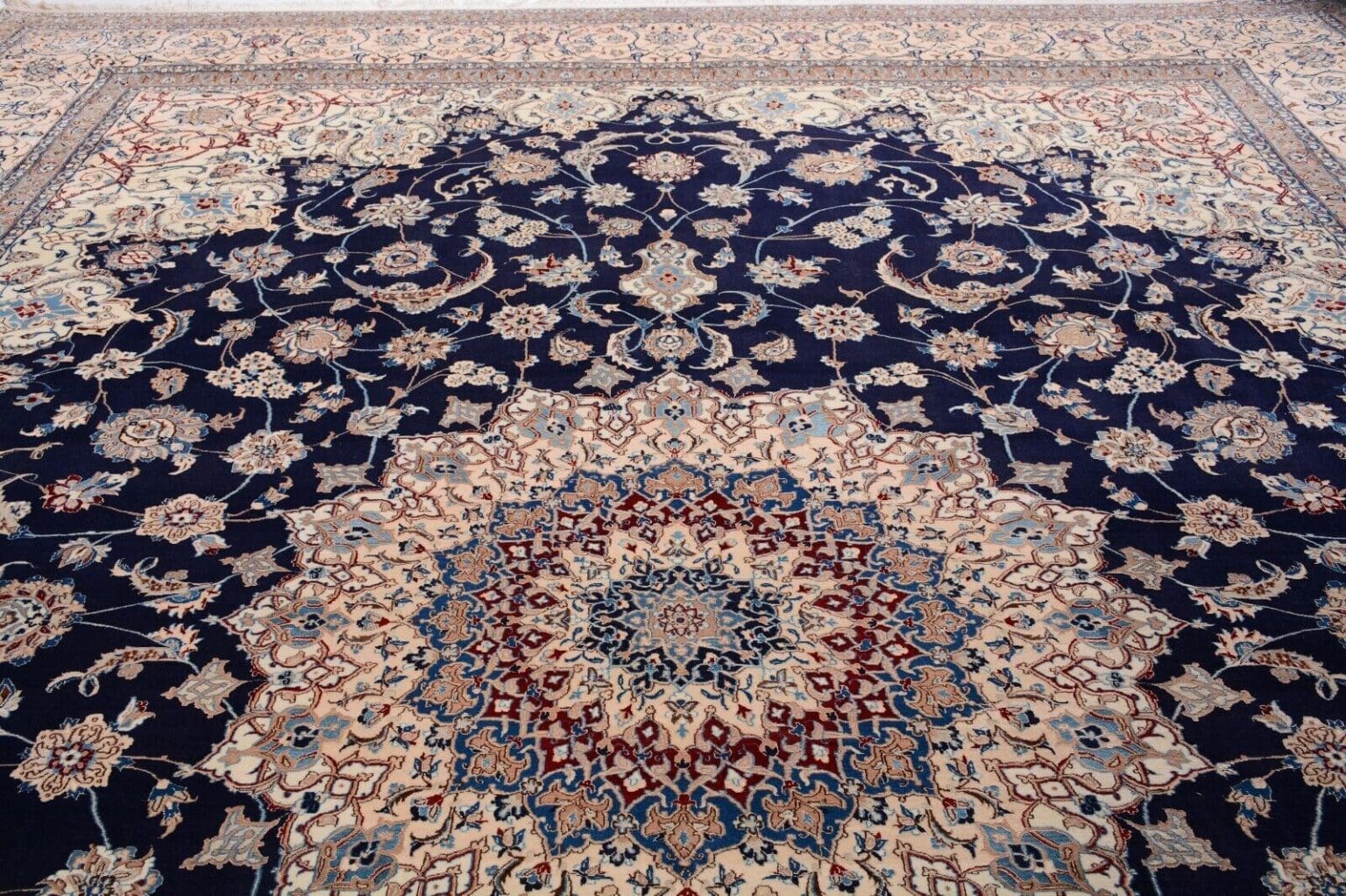
Nain rugs are often made with floral and geometric motifs. Their compositions can contain many small details, with careful attention paid to line, contour and the balance between areas of ground and ornament. The overall effect depends not on one isolated element but on the relationship between the field, the border and the repeated design units. A dense knot structure makes it possible to express this kind of differentiated drawing.
The Nain tradition is also associated with the use of wool and silk together. Wool can provide the principal pile, while silk is used for finer details and for a different interaction with light. This combination is found in high-quality Nain rugs and helps explain why these pieces are valued for both their workmanship and their surface. In this particular rug, both materials are expressly identified as components of the pile.
Persian weaving culture carries patterns forward through practical knowledge passed from one generation to the next. Floral drawings may recall the idea of a cultivated garden, while geometric structures give the composition rhythm and order. Nain belongs to this wider tradition of controlled, finely articulated design. The place name therefore indicates not only a city of origin, but also a developed textile language and a history of skilled production.
As a Persian rug, this piece belongs to the Iranian context of hand weaving. The name Nain connects it with the city and with the established rug-making tradition associated with that centre. Its hand-knotted construction makes the production process visible in principle: the finished image is created through many manual operations instead of being applied as a later surface decoration. Origin, technique and pattern tradition thus meet in the form of one Nain rug.
Design and Pattern
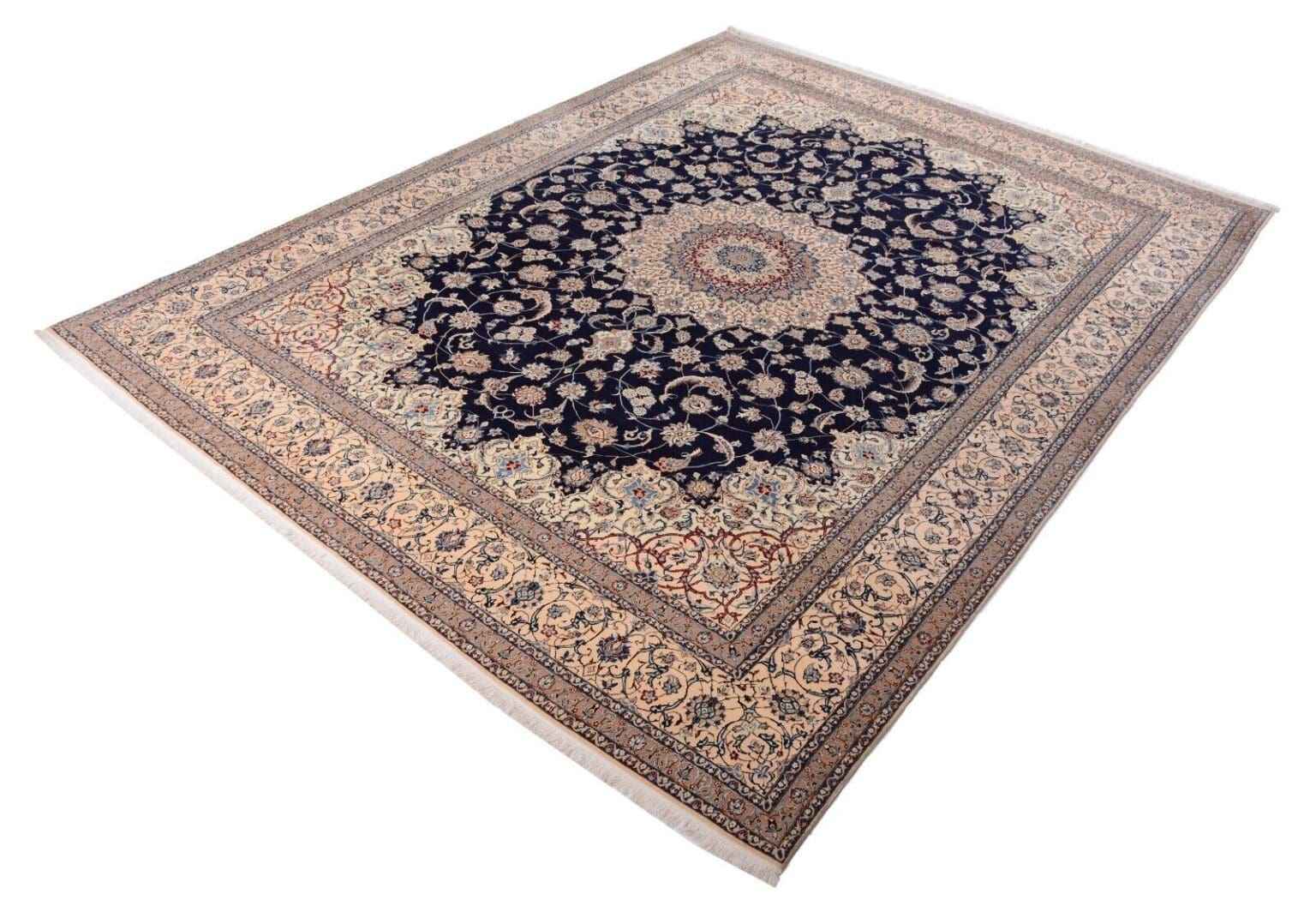
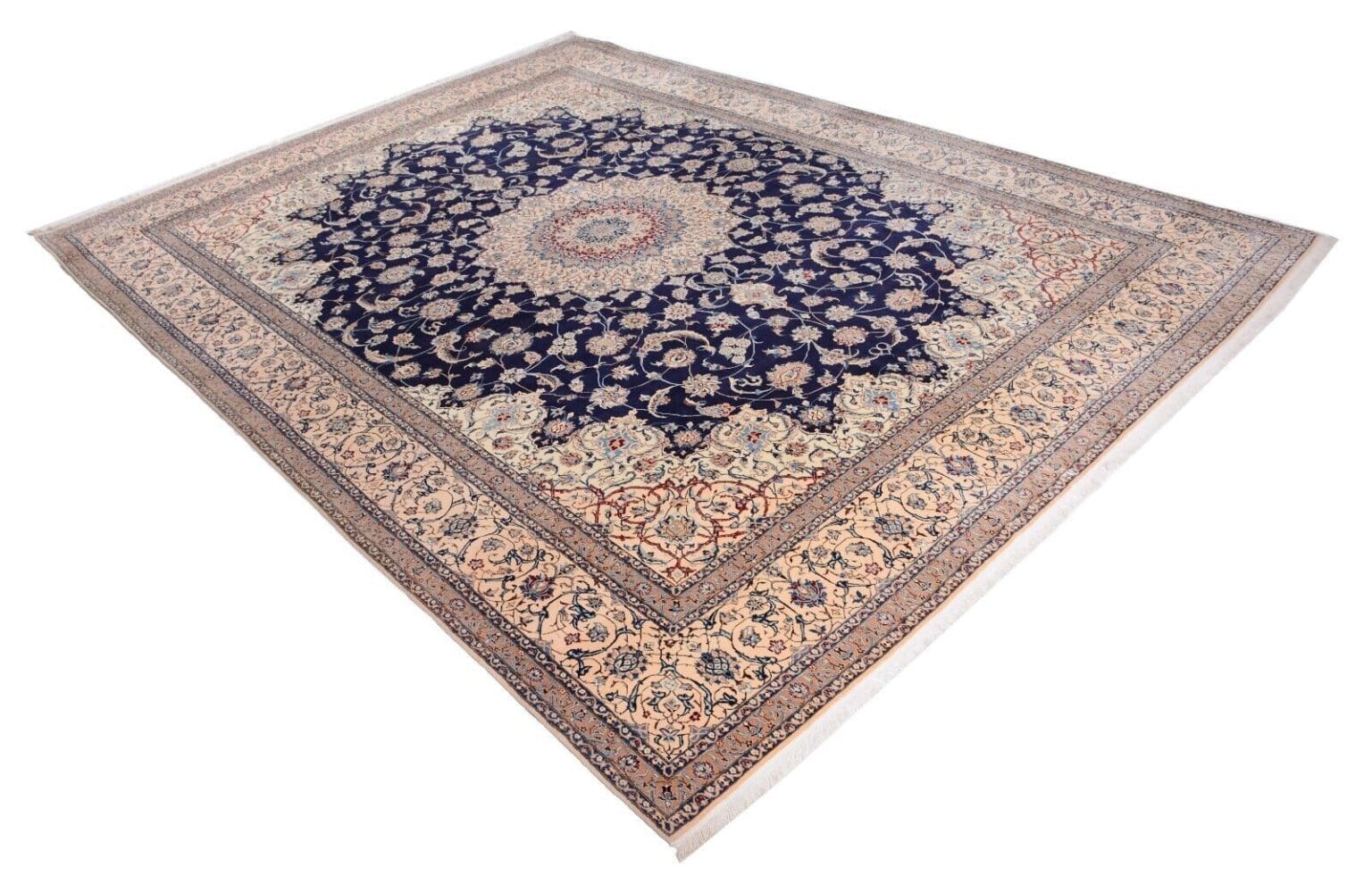
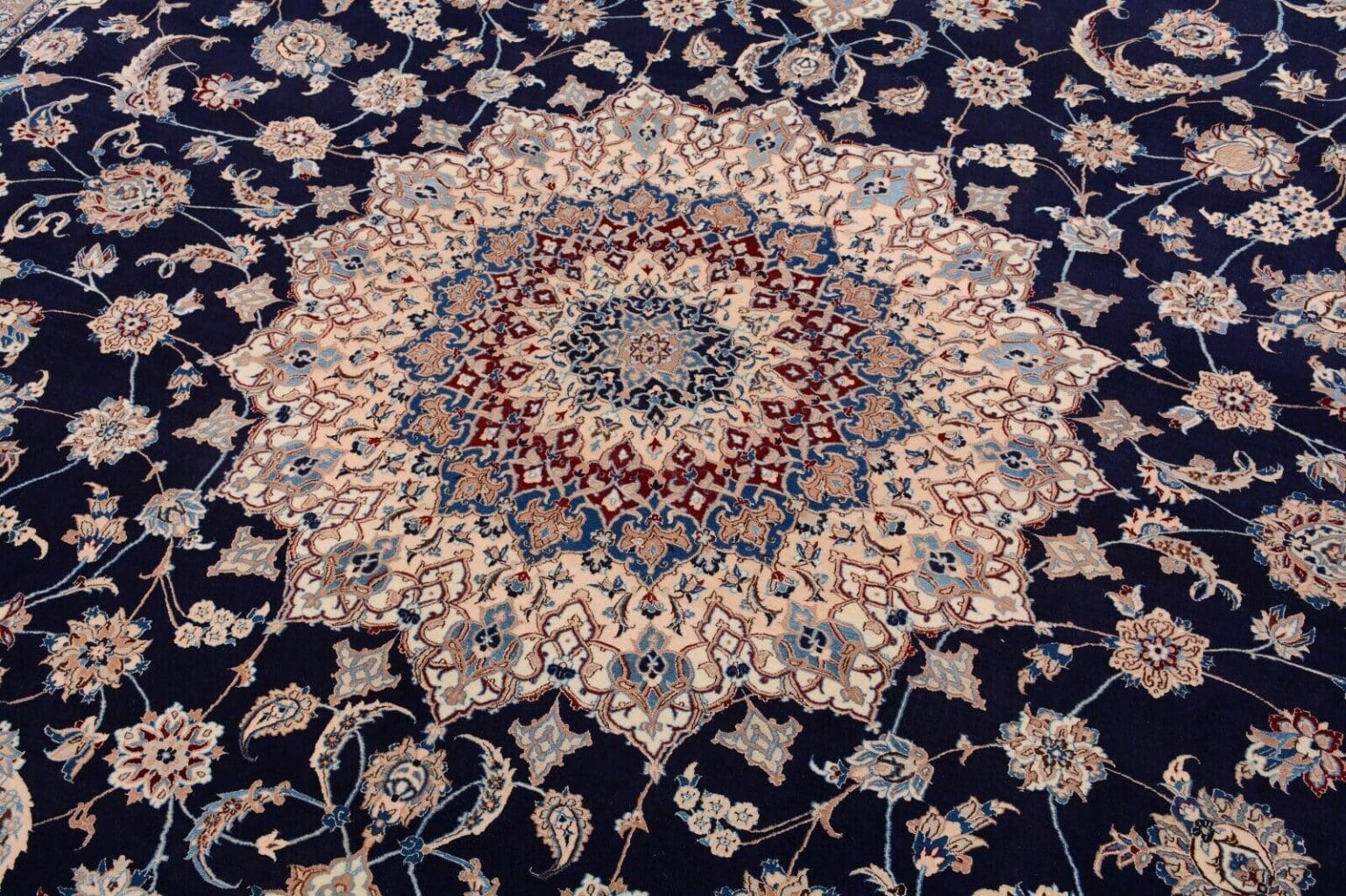
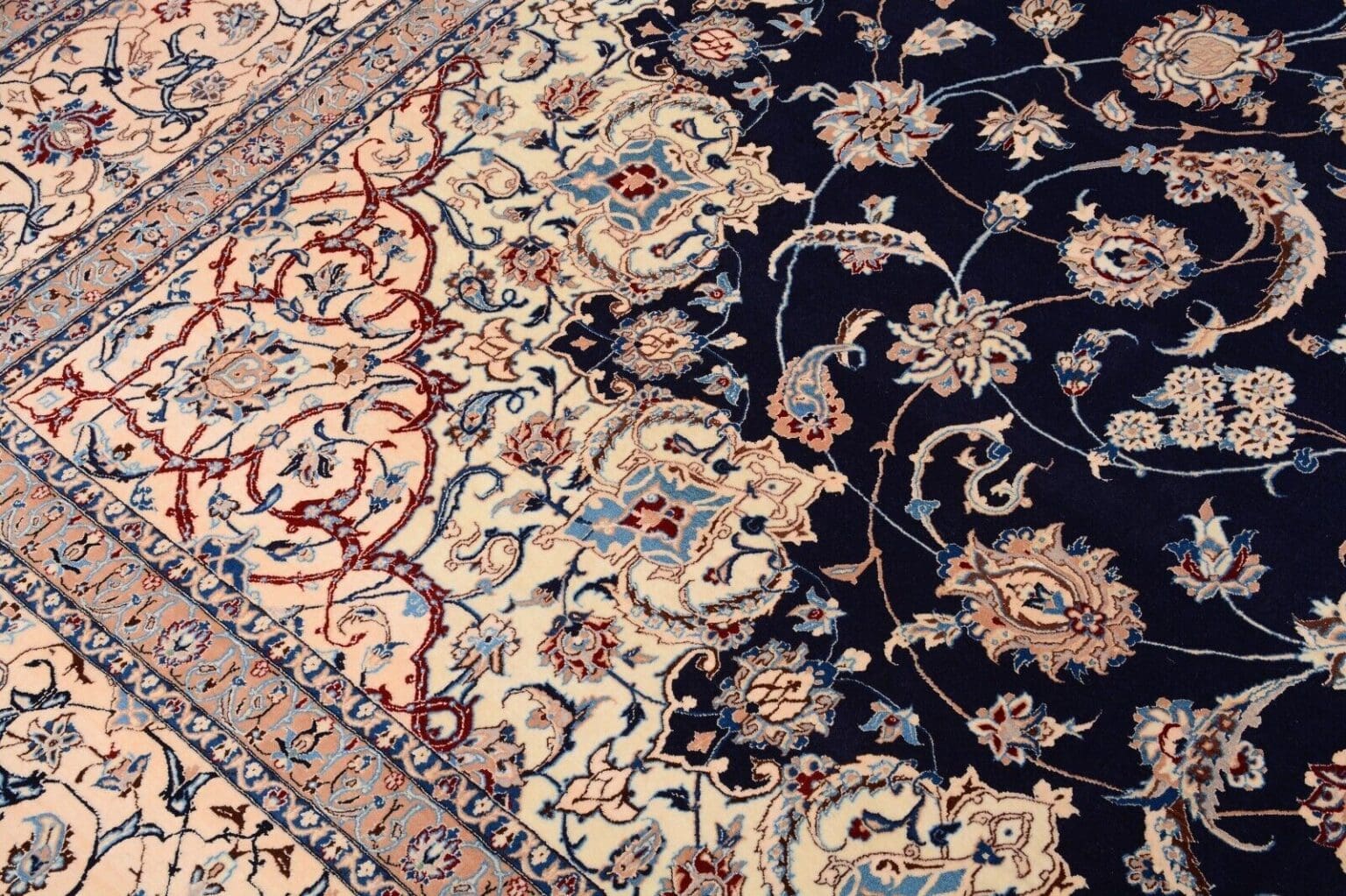
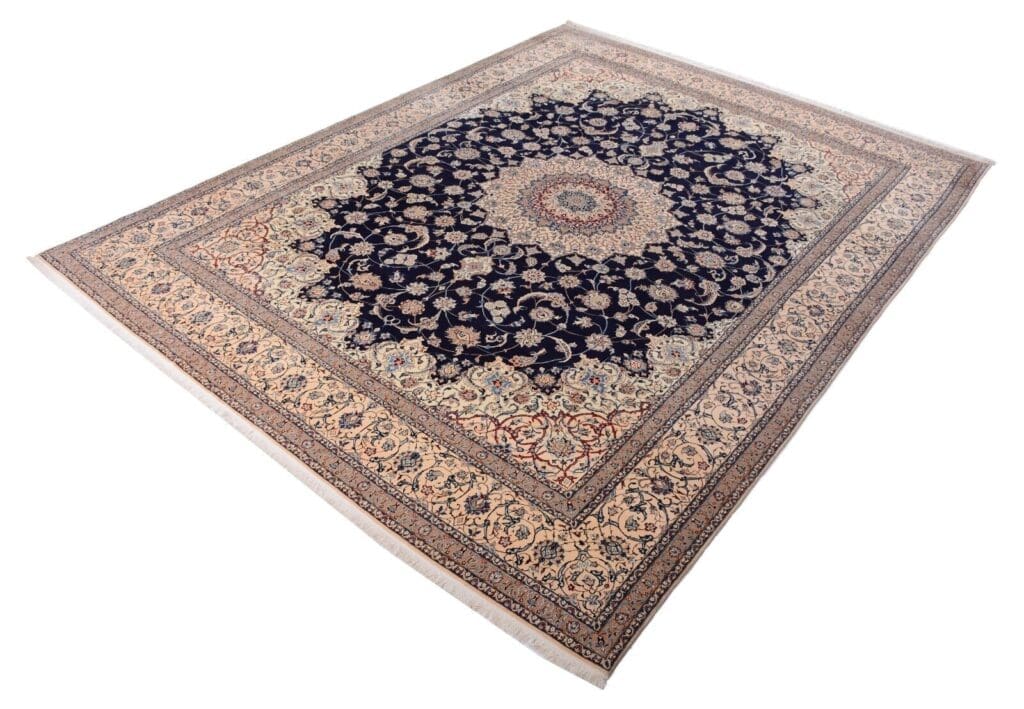
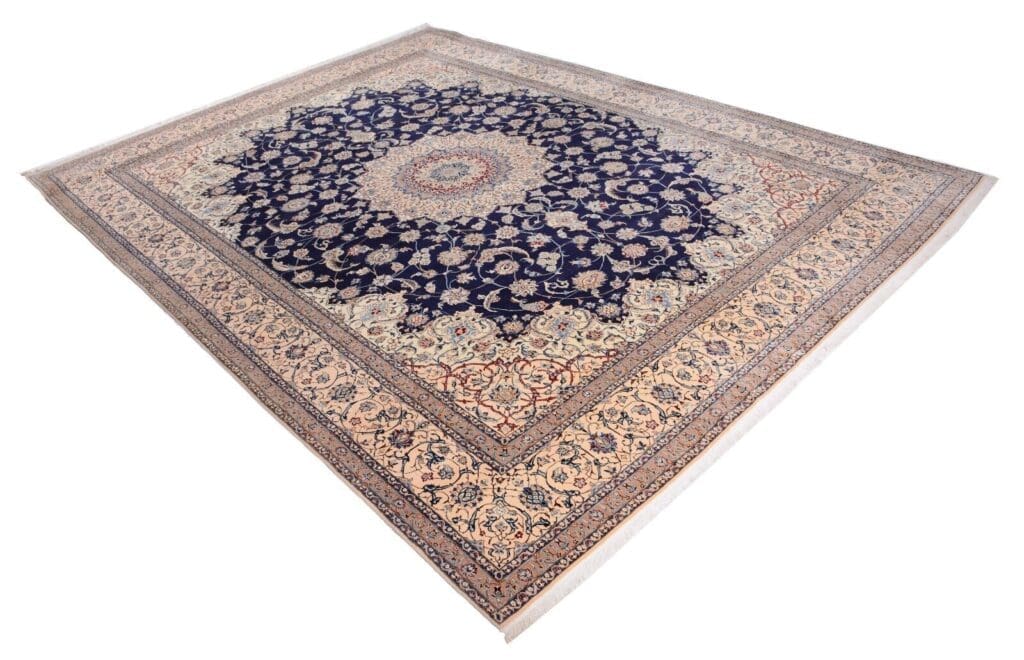
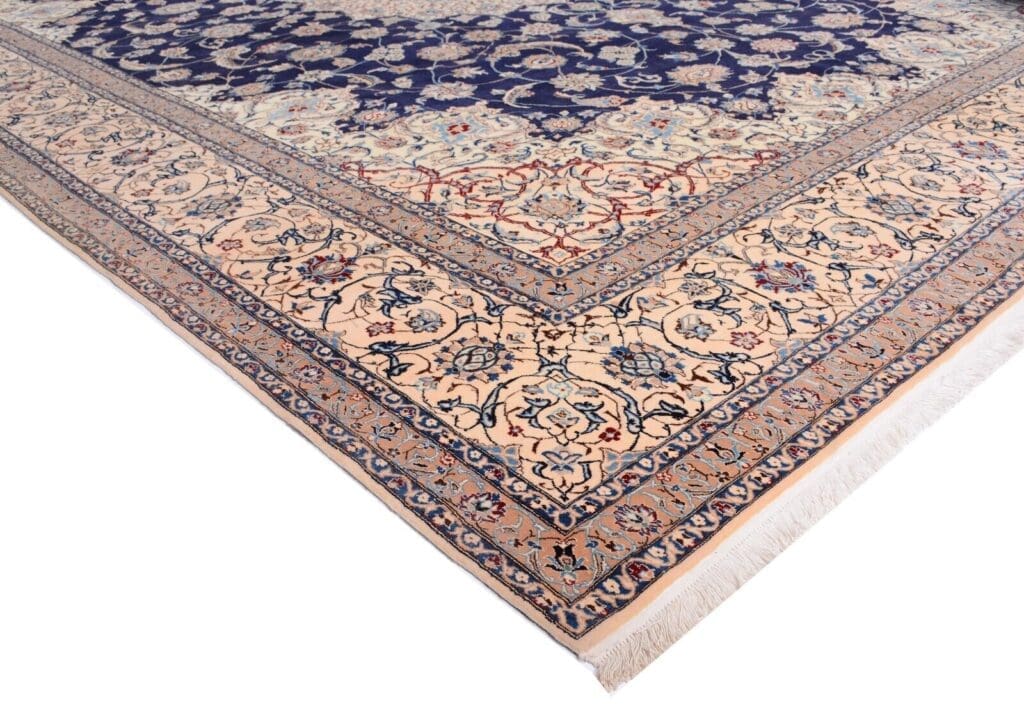
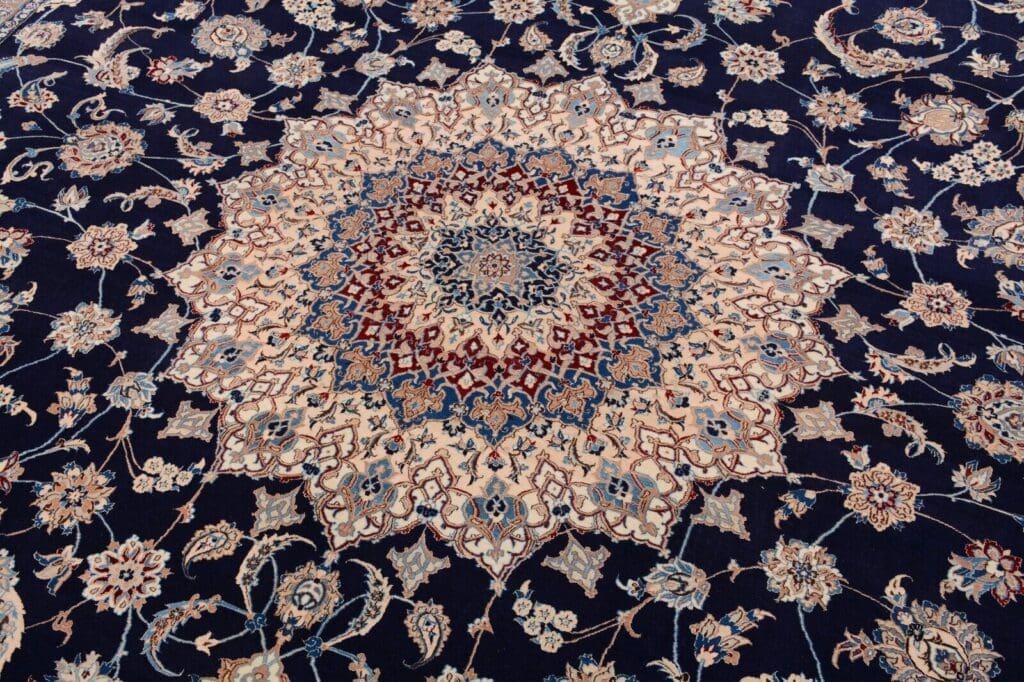
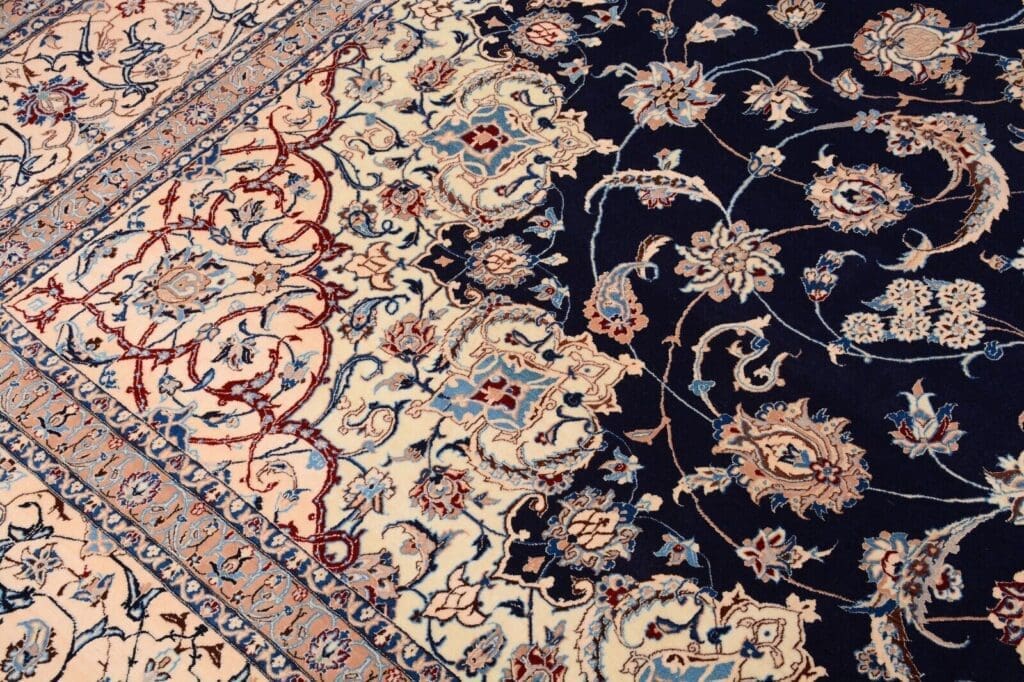
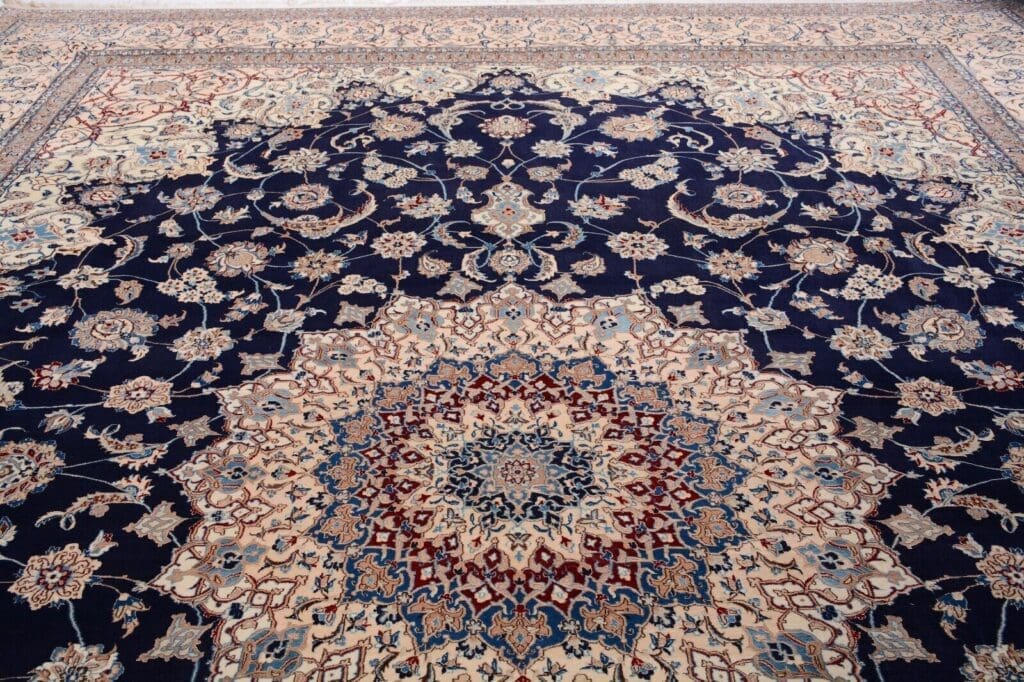
The design of this Nain 6 La rug is blue. Light and dark shades of blue are combined to create variation across the composition and to give the floral drawing an atmospheric setting. Blue is therefore the defining colour of the piece. Differences in brightness can separate outlines from surrounding areas and help smaller ornaments remain legible within the overall field.
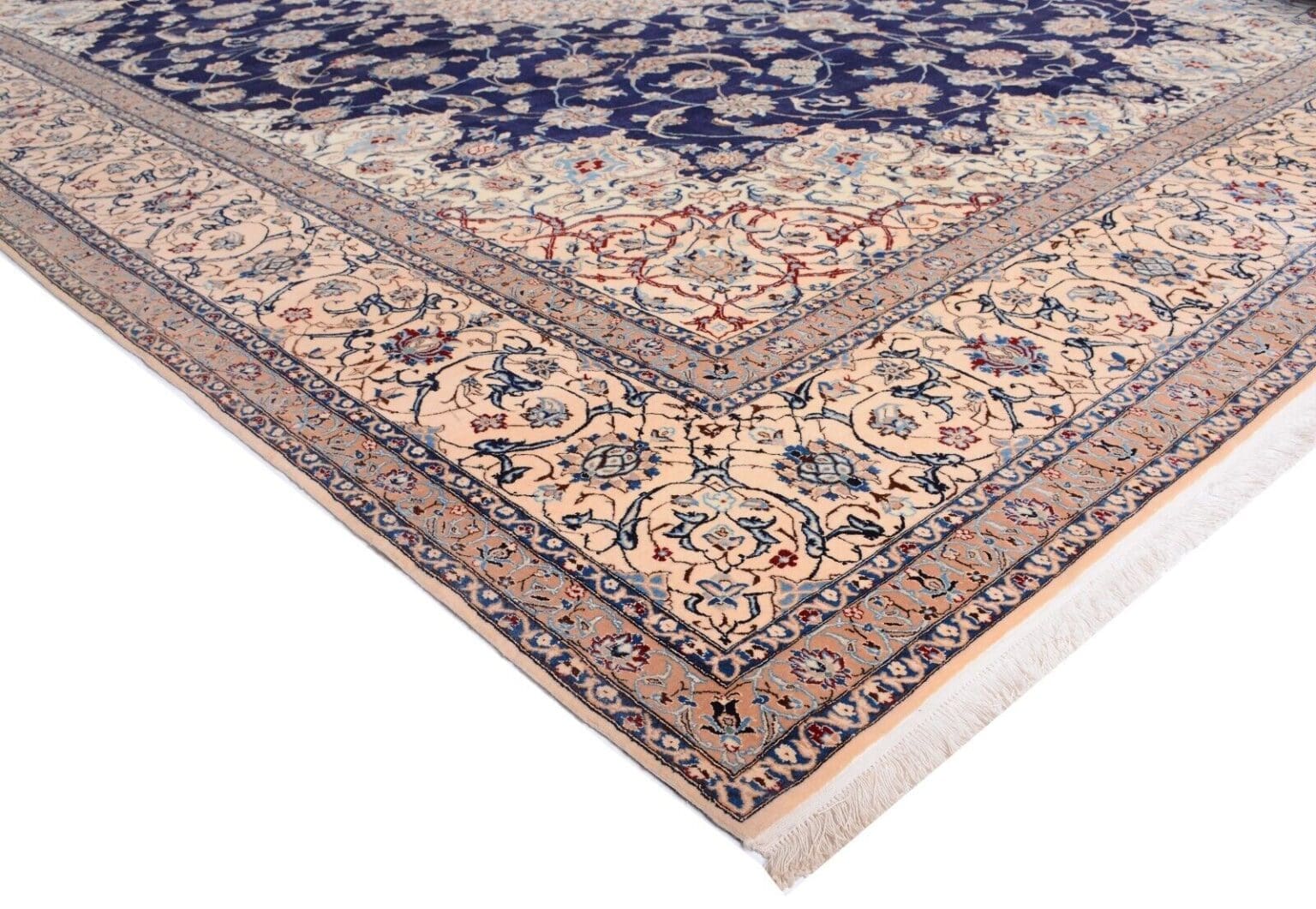
The specified pattern is floral. Floral rug designs may use blossoms, leaves, vines and other plant-based forms. These elements can be placed individually, arranged symmetrically or connected into flowing repeats. A finely knotted Nain provides the technical basis for rendering narrow lines and repeated details with clarity. The specific information for this rug identifies the floral motif and the blue colour scheme; individual flowers or additional symbols are not separately identified.
In Persian pattern language, floral ornament is often connected with the image of a garden as an ordered and harmonious space. This is not necessarily a literal botanical representation. Instead, blossoms, leaves and stems are stylised into a balanced arrangement that can be repeated across the field. The floral motif on this rug belongs to that broader Persian design context and combines decorative form with a clearly structured composition.
Floral Nain designs are frequently accompanied by fine ornaments and carefully drawn contours. Ornament can create transitions between larger colour areas and smaller interior details. Together with a high knot density, this produces a compact and carefully articulated image. The design is inseparable from the craft process, since every contour must be translated into knots before it appears as a continuous line to the viewer.
Blue changes its visual effect according to the relationship between the ground, the outlines and the filled ornamental areas. Lighter blue can bring individual details forward, while darker blue can create separation and depth. This interaction accounts for the atmospheric quality described for the design. It is produced by the arrangement of colour and motif within the rug, not by an added surface treatment.
Traditional Nain compositions are organised so that the pattern develops across the field in a measured rhythm. Floral elements can guide the eye and distribute detail between more open and more ornamented areas. Dense knotting supports the reading of these fine drawings. In this rug, those design principles meet a blue palette and a pile made from wool with a silk content, giving the pattern its stated material and visual setting.
Special Features
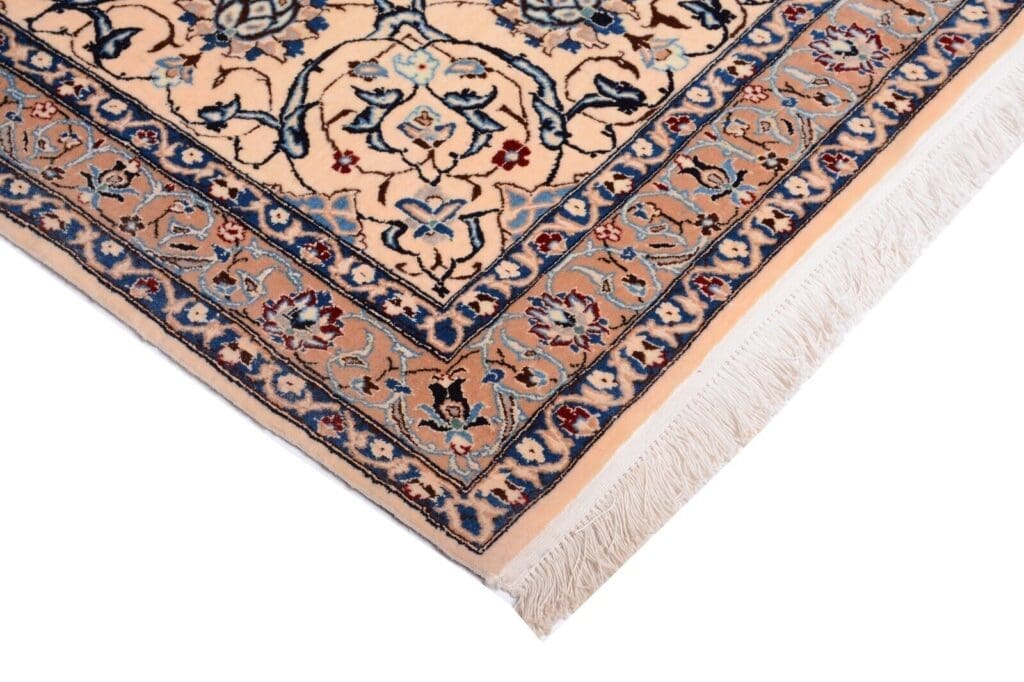
A notable feature of this rug is its signature. It is located in one corner and forms part of the execution of this individual piece. The source description identifies the artist’s signature as an indication of the product’s authenticity and as a feature relevant to collectors. It also distinguishes this rug from an otherwise comparable unsigned example.
The condition is recorded as new and perfect. The rug has been carefully maintained and is ready for a new home. It is also suitable for underfloor heating. This combines its traditional hand-knotted production with an expressly stated use in contemporary interiors where underfloor heating is installed.
The blue colour scheme, floral motif, signature and combination of virgin wool and silk together make up the specific features identified for this Nain. Each concerns a different aspect of the piece: colour and pattern describe its appearance, materials and knotting describe its textile construction, and the signature and condition describe its individual execution and present state.
FAQ
How should I care for my Nain rug?
Regular vacuuming helps remove dust and loose particles from the pile. The rug should be protected from direct sunlight. If a spill occurs, treat the area carefully with a damp cloth and a mild cleaning agent. Professional cleaning every few years is also recommended. Because the pile contains virgin wool and silk, cleaning should be gentle and vigorous rubbing should be avoided. These measures help preserve the appearance of the hand-knotted surface.
How can I identify an original Nain rug?
High knot density, the use of fine wool and silk, and detailed workmanship are described as indicators of an original Nain rug. This piece is identified as hand-knotted and has 900,000 knots per square metre, with a pile of 95% virgin wool and 5% silk. The artist’s signature in one corner is another important indication of authenticity. The name Nain also places the rug within the Persian tradition associated with the Iranian city of Nain.
Which rooms are best suited to a Nain rug?
A Nain rug can be used in a range of living spaces. Living rooms, dining rooms and hallways are particularly suitable settings. In these areas it can serve both as a decorative element and as a functional floor covering. The blue colour scheme and floral motif can be incorporated into traditional or Oriental interiors. This particular rug is also expressly described as suitable for use with underfloor heating.
To provide the best experiences, we use technologies like cookies to store and/or access device information. Consenting to these technologies will allow us to process data such as browsing behavior or unique IDs on this site. Not consenting or withdrawing consent, may adversely affect certain features and functions.
Functional Always active
The technical storage or access is strictly necessary for the legitimate purpose of enabling the use of a specific service explicitly requested by the subscriber or user, or for the sole purpose of carrying out the transmission of a communication over an electronic communications network.
Preferences
The technical storage or access is necessary for the legitimate purpose of storing preferences that are not requested by the subscriber or user.
Statistics
The technical storage or access that is used exclusively for statistical purposes.The technical storage or access that is used exclusively for anonymous statistical purposes. Without a subpoena, voluntary compliance on the part of your Internet Service Provider, or additional records from a third party, information stored or retrieved for this purpose alone cannot usually be used to identify you.
Marketing
The technical storage or access is required to create user profiles to send advertising, or to track the user on a website or across several websites for similar marketing purposes.

 SECURE PAYMENT
 SHIPPING PARTNERS


