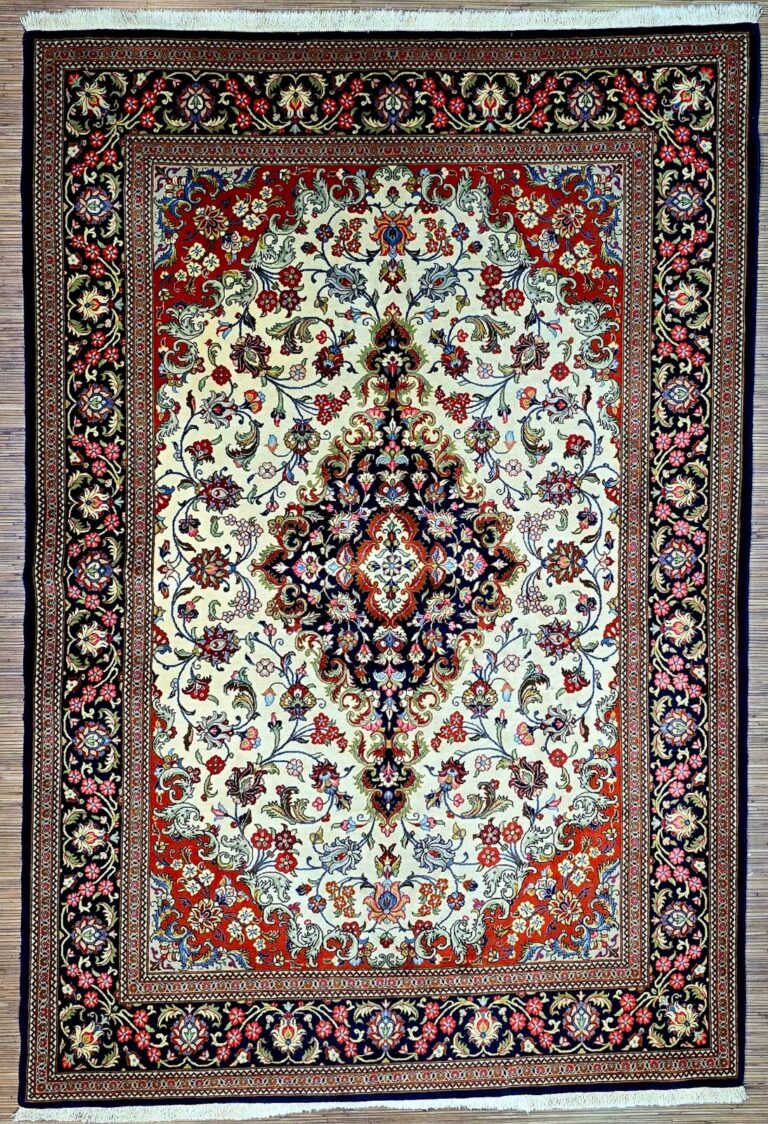
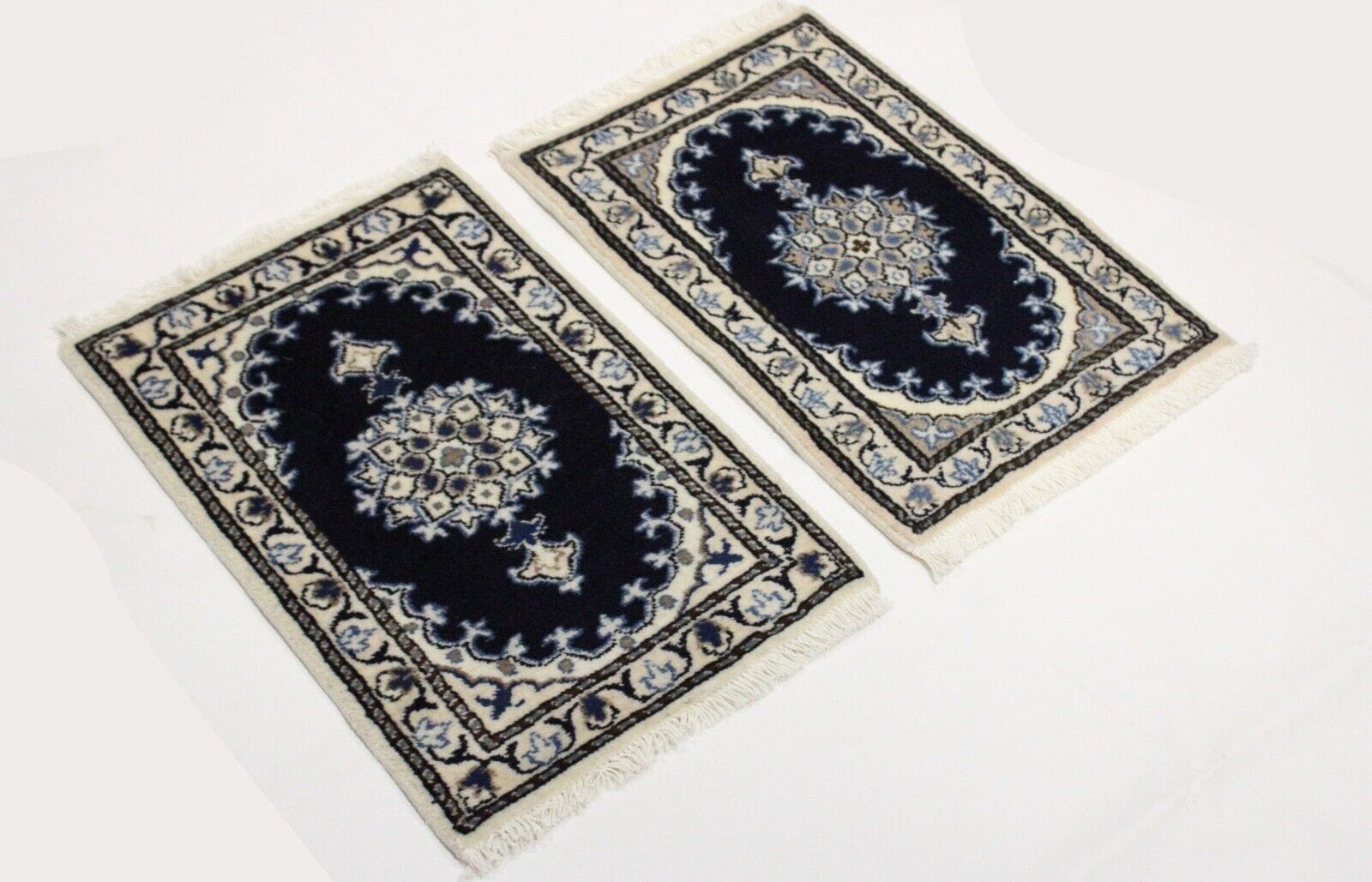
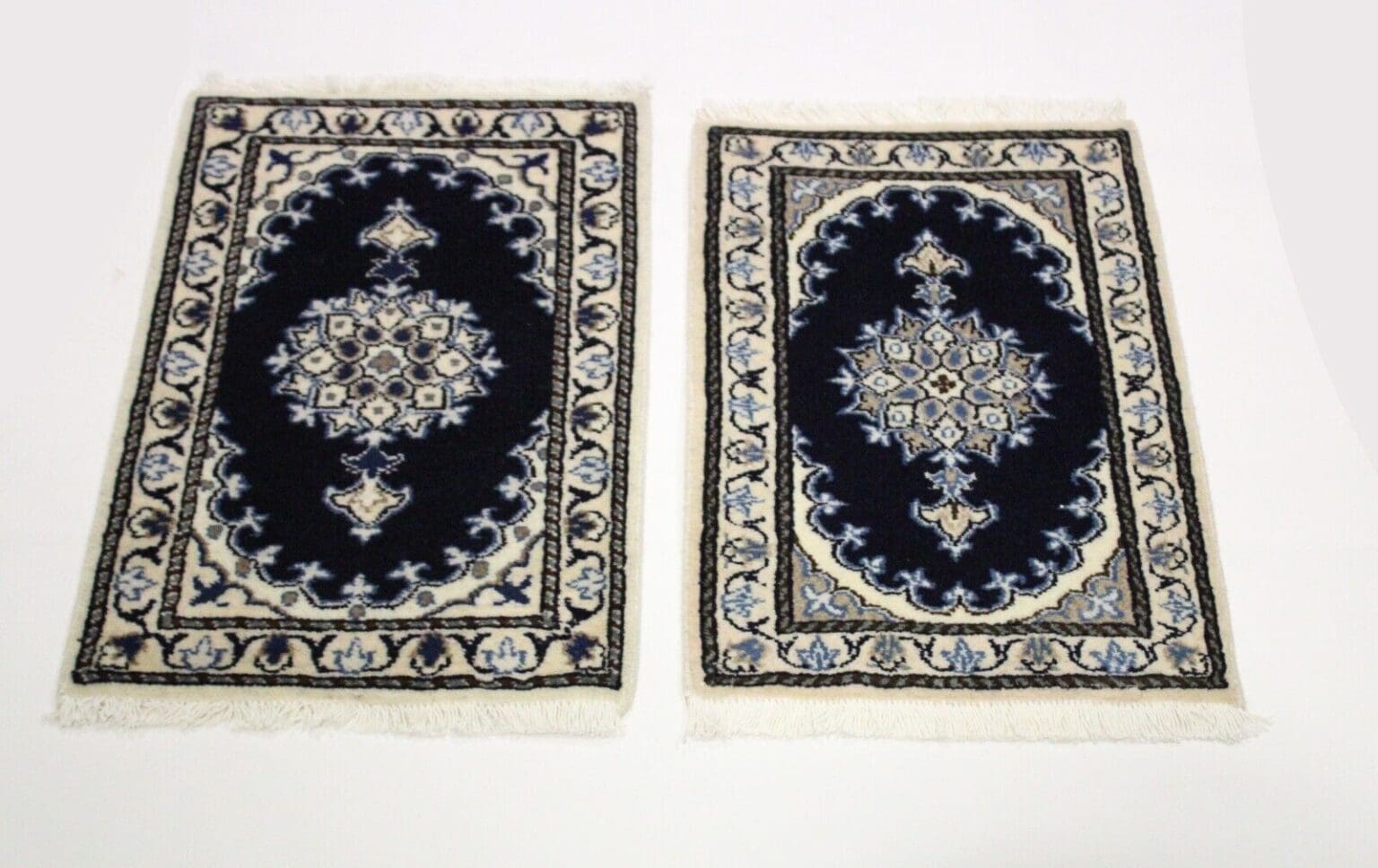
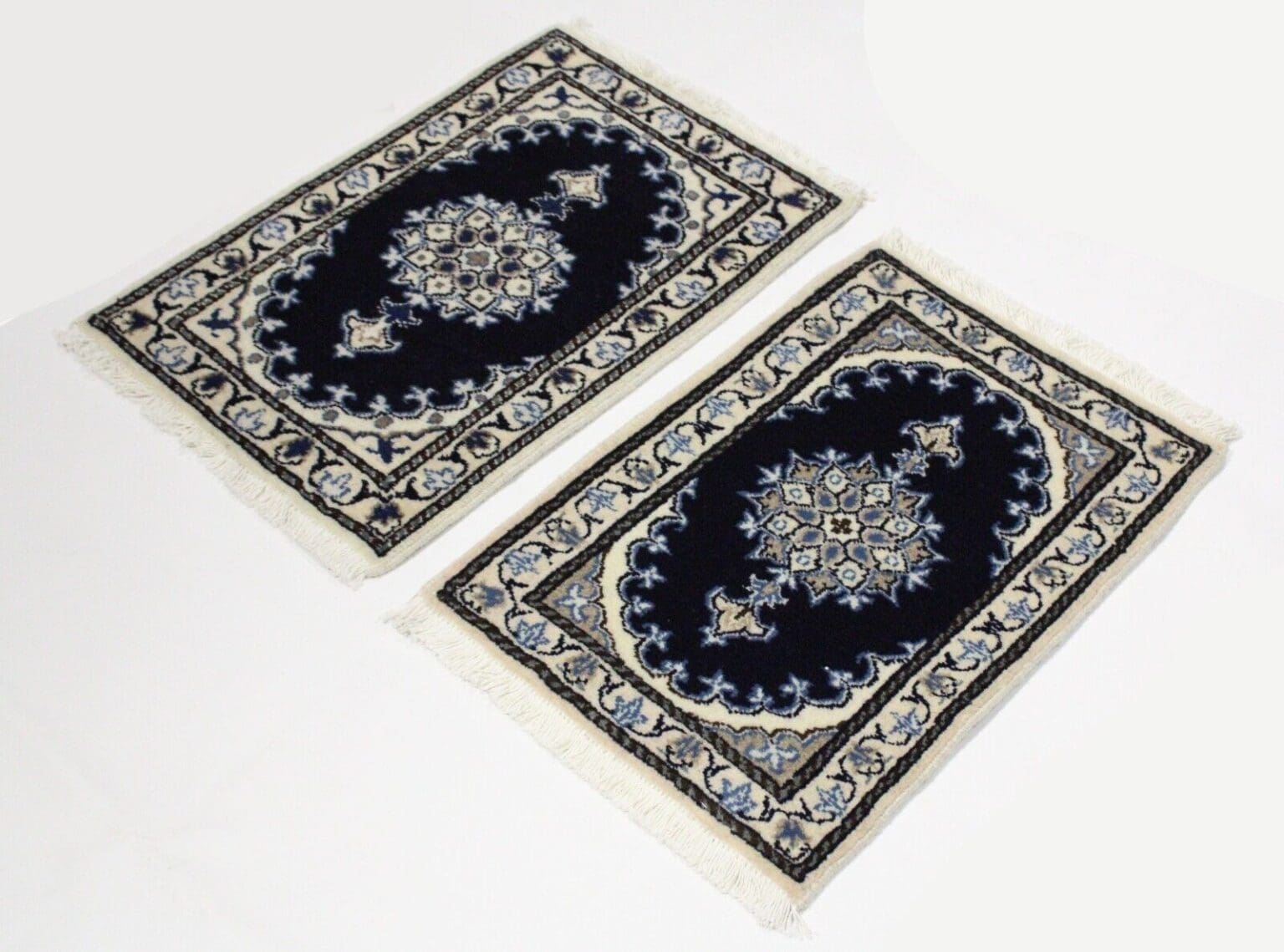
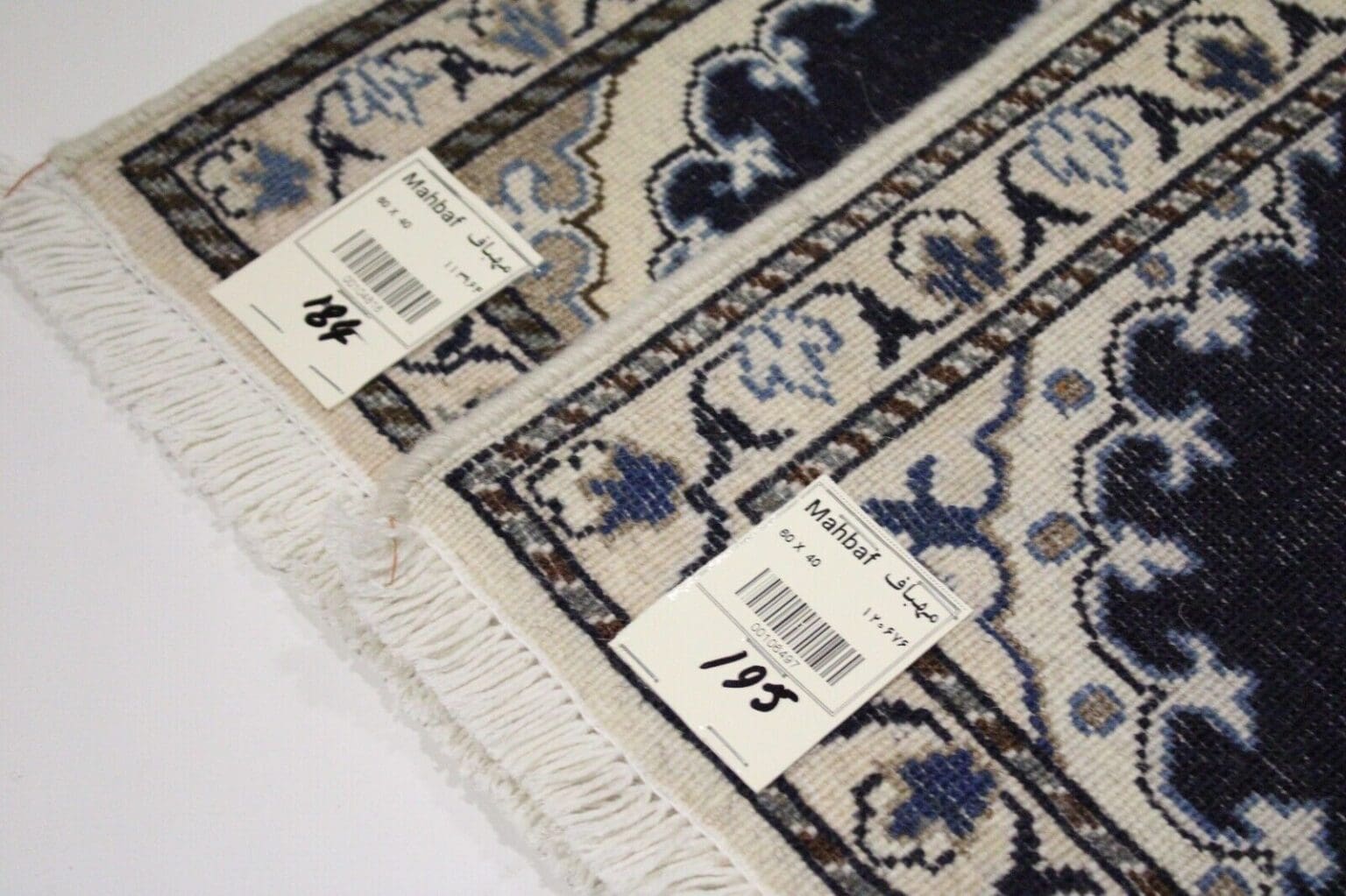
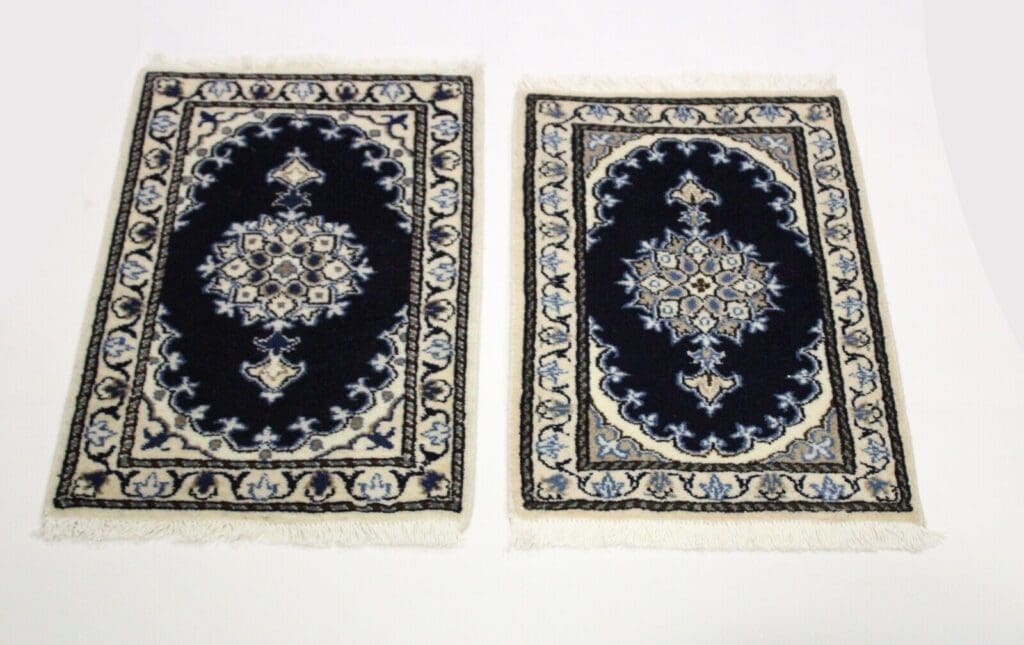
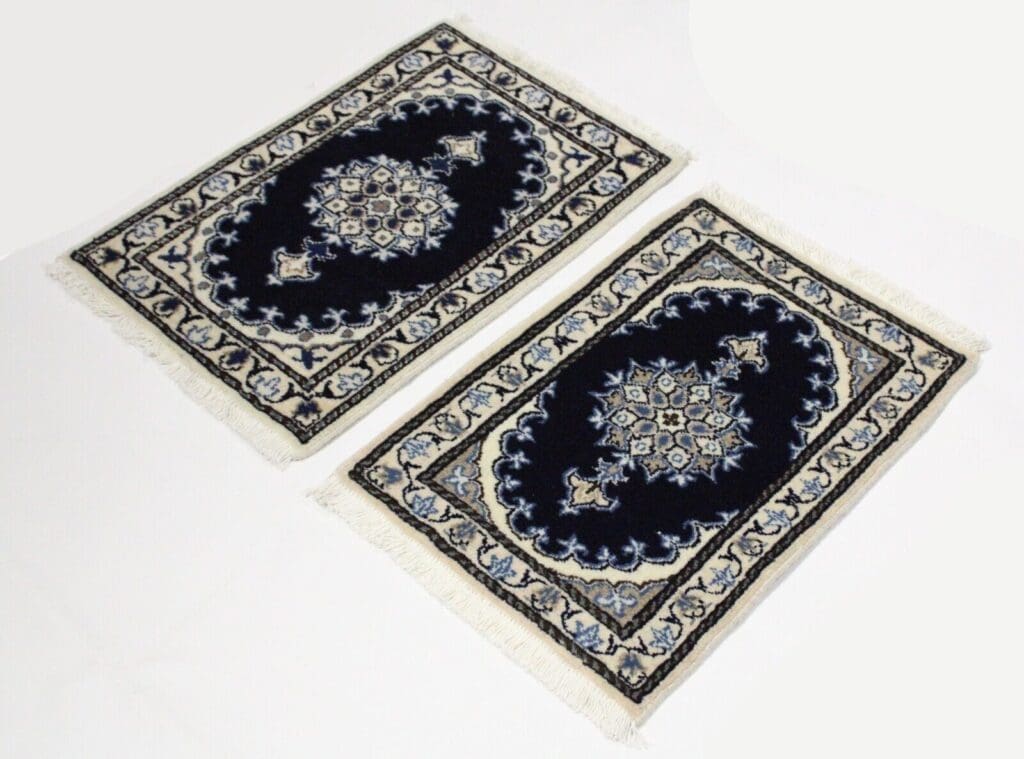
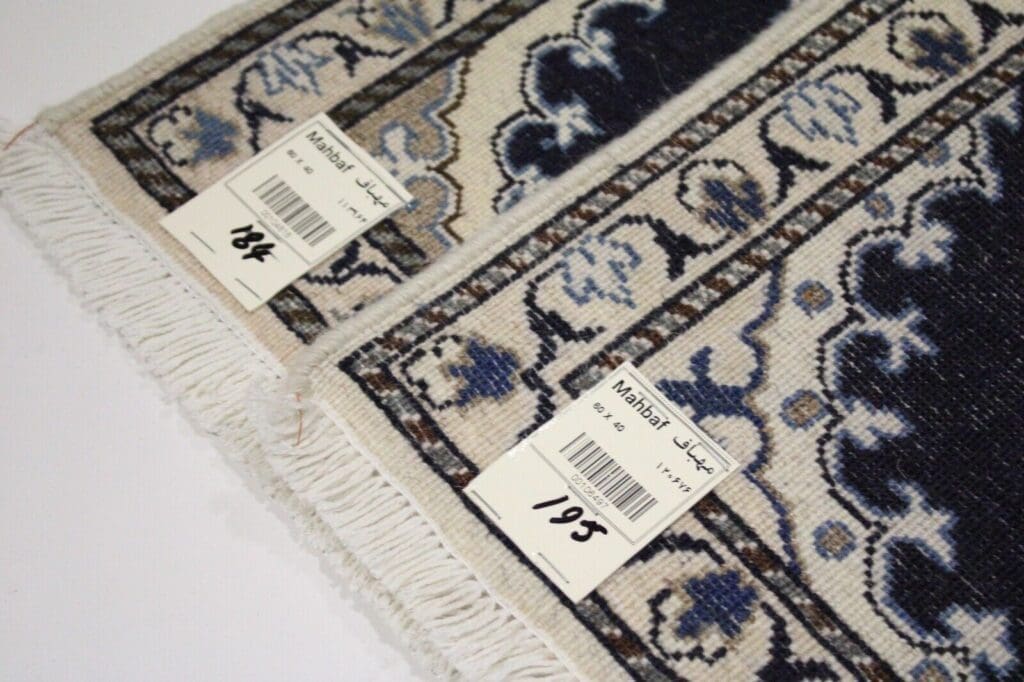
Hand-knotted Nain Persian Rug | Knot density: Hand-knotted | Material: Wool and cotton | Size: 40 x 60 cm | Pattern: Oriental, traditional Persian | Condition: New without tag
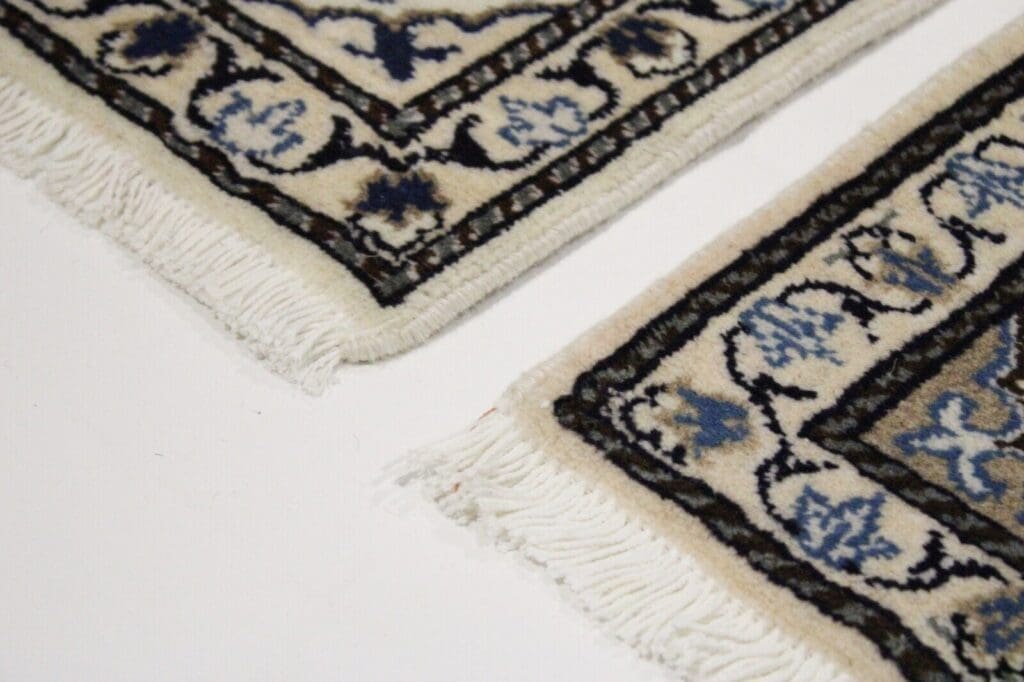
This Nain Poshti is entirely hand-knotted, with the product description specifying 100 percent hand-knotted workmanship. Its materials are high-quality wool and cotton. Wool is the principal textile element described for the rug and gives the surface a soft, comfortable feel. Cotton forms part of the stated material composition as well. The wool is also described as durable, while the combination of the materials supports the character of a traditionally made textile floor covering.
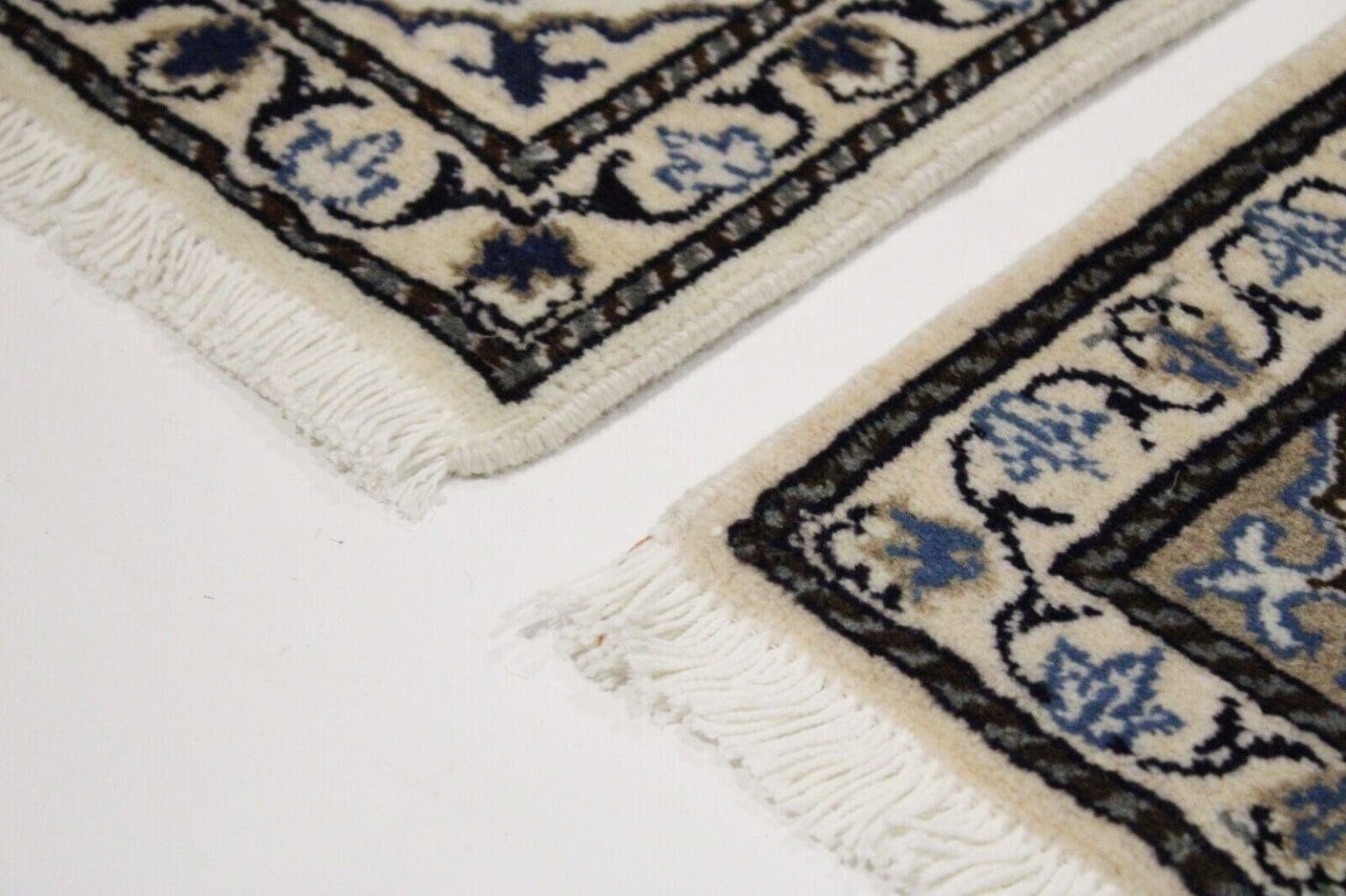
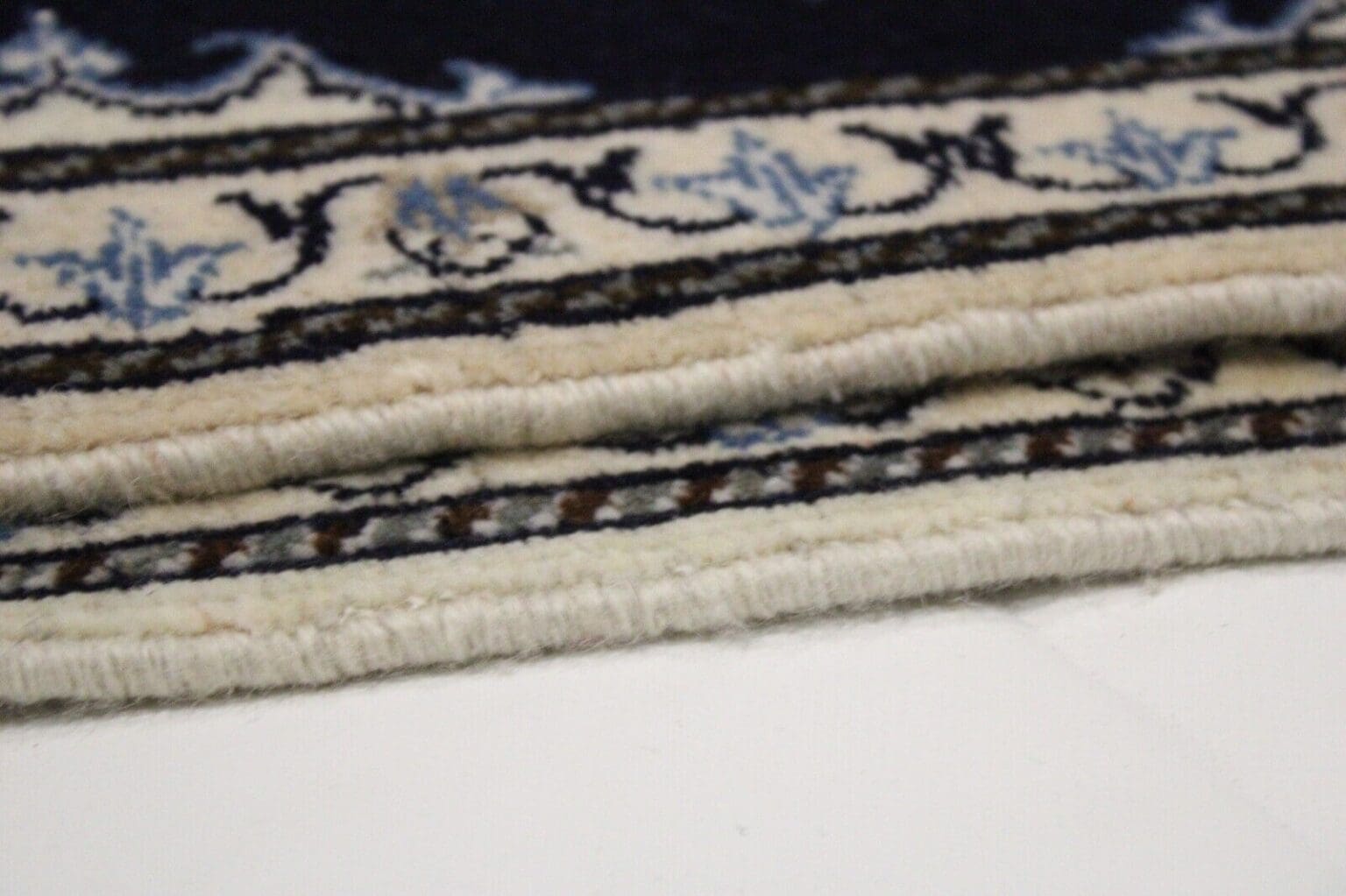
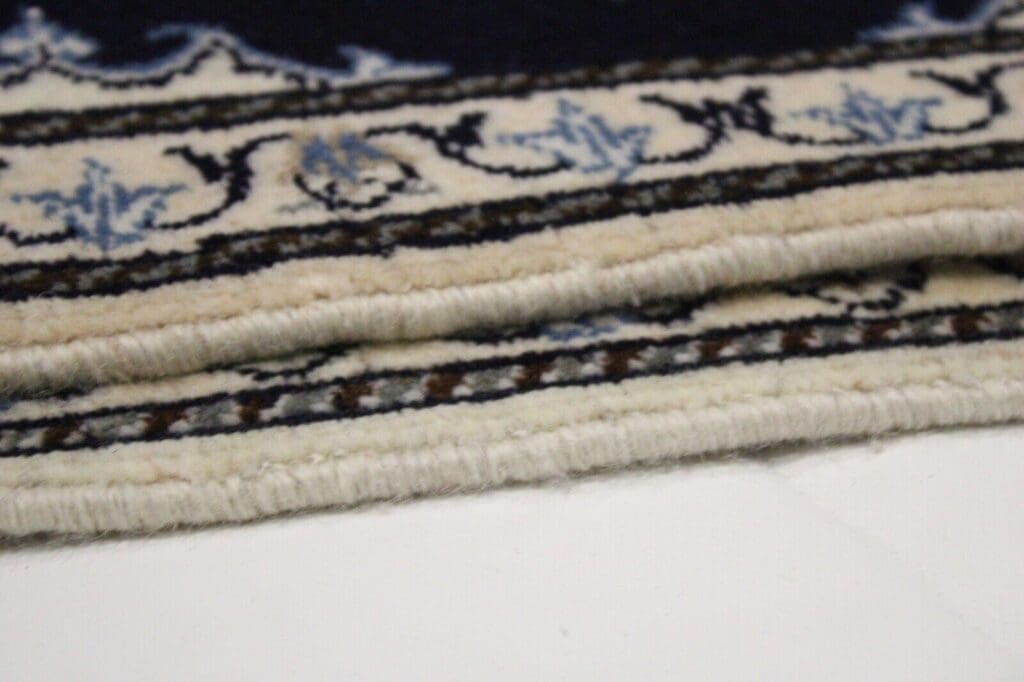
The knot density is listed as hand-knotted, and the detailed description additionally associates the rug with a high knot density. In hand-knotting, the design is built knot by knot rather than printed onto a finished surface. This method allows floral details and geometric outlines to be worked into the structure of the rug. The colours are described as rich and harmoniously blended. The pile is specified as high pile, giving the surface a clearly tactile and soft quality.
The rug is identified as second choice. At the same time, its condition is given as new without a tag. These are separate product details and should not be confused with the rug’s material or technique. The description also states that the rug is suitable for underfloor heating. Wool and cotton have long been used in carpet making, although their exact behaviour depends on the construction and on proper care.
Origin and Tradition
Nain is a city in central Iran and the named place of origin for this Persian rug. The city is known for its long tradition of carpet production. Nain carpets are associated with fine knotting and the use of high-quality materials. Those two aspects—careful manual work and selected fibres—are central to the regional identity of Nain weaving. Here, Nain identifies the rug’s origin and not merely a decorative design reference.
The carpet-making tradition in Nain reaches back to the sixteenth century. Over time, the region developed a recognisable approach in which the precise treatment of the surface and the clarity of the design are important. A hand-knotted carpet is made through several stages. Its foundation is prepared first, coloured knots are then inserted row by row, and the surface is subsequently arranged and finished. The accuracy of these steps affects how clearly the pattern can be read and how the completed textile presents itself.
Nain weaving is often connected with fine knotting, elegant floral forms and measured geometric organisation. These design languages can appear together: flowers and scrolling plant forms create an organic direction, while lines, axes and repeated shapes give the composition order. This Nain Poshti is described as containing floral elements and geometric forms. The regional tradition therefore provides the historical and technical setting for the design without adding individual motifs that are not stated for this particular rug.
Persian rugs from Nain are valued for the relationship between handwork, material quality and a carefully arranged decorative language. Their appearance depends not only on colour, but also on the interaction of knotting, pile and pattern structure. Nain’s inherited craft tradition treats the carpet as both a usable textile and a designed surface. The Nain Poshti belongs to this Persian context and is described as traditional in style.
The Iranian origin distinguishes this rug from an oriental rug that only borrows a similar floral or geometric vocabulary. For a Persian rug, a place name can describe the regional craft environment as well as the tradition of design associated with it. Nain is therefore an important part of the product’s identity, while the stated information about this piece remains focused on its hand-knotting, materials, condition, pile and pattern.
Design and Pattern
The pattern is described as oriental and traditional Persian. The longer product description specifies graceful floral elements together with geometric forms. Both are recurring components of Persian carpet design. Floral ornament may draw on blossoms, vines or stylised plant shapes. Geometric ornament works with lines, regulated intervals and repeated contours. In a hand-knotted rug, these elements become visible through the arrangement of individual coloured knots.
The Nain Poshti brings these two approaches together in a harmonious composition. Floral shapes provide an organic and lively direction, while geometric forms organise the visual structure. The colours are described as rich and as flowing harmoniously into one another. This wording presents the transitions as connected rather than sharply separated. Colour therefore supports the traditional character of the design and helps the different forms sit within one coherent decorative scheme.
The motifs are also given symbolic interpretations in the product text. Flowers can represent fertility and life, while geometric forms may express stability and harmony. These meanings belong to the wider cultural reading of oriental and Persian ornament. They are general associations of the forms named in the description, not additional claims about an unstated motif on this individual rug. The piece itself is characterised by the provided terms oriental, traditional Persian, floral and geometric.
The fine workmanship associated with a high knot density can generally support a detailed representation of pattern. Small contours and transitions can be laid out with greater differentiation when many knots are used. In hand-knotting, the drawing is created through the sequence of numerous individual knots, so material, colour and construction work together. The pattern is consequently part of the textile structure, not simply a surface image applied after manufacture.
As a Nain Poshti, the rug belongs to a tradition of Persian carpet design without allowing further, unstated motifs to be inferred from the name alone. The relevant characteristics remain the fine manual work, the high-quality materials and the combination of floral and geometric ornament. The product description places this traditional design within both classic and modern interiors. That makes the pattern adaptable to different furnishing settings while retaining its Persian regional context.
Special Features
The rug’s notable stated features are its complete hand-knotting, its use of wool and cotton, its high pile and its classification as second choice. Its condition is new without a tag. It is also described as suitable for underfloor heating. These details concern the rug’s construction and intended use. They do not imply an age, a signature or any additional provenance that has not been provided.
The rug can be used as a floor covering or as a decorative textile. The product description names both classic and modern furnishing styles as suitable contexts. Regular vacuuming is recommended for care, while the fringes should be avoided during vacuuming to prevent damage. For deeper cleaning, occasional professional carpet cleaning is advised. This kind of maintenance helps remove dust and dirt and supports the preservation of the pile, colours and textile surface.
FAQ
How should I care for this Persian rug?
Regular vacuuming helps remove dust and dirt from the rug. The fringes should not be vacuumed, since they can be damaged in the process. For a more thorough clean, professional carpet cleaning is recommended. A combination of careful routine maintenance and occasional specialist cleaning supports the condition of the pile, colours and surface. Because this rug has high pile, cleaning should be carried out with appropriate care rather than with unnecessarily harsh treatment.
How can I assess the quality of a Persian rug?
Useful points of reference include the knotting technique, knot density and materials. This rug is 100 percent hand-knotted and is associated in the description with a high knot density. Dense knotting can allow patterns to be rendered with considerable detail. The listed materials are high-quality wool and cotton. The wool is described as durable and soft. Quality should therefore be considered through the combination of handwork, fibre selection and execution rather than judged by one feature alone.
Can a Persian rug cause allergic reactions?
Rugs can collect dust or animal hair, which may contribute to discomfort for sensitive people. Regular vacuuming and occasional professional cleaning help reduce this type of build-up. The fringes should be left out of the vacuuming process. Anyone who is sensitive can first place the rug in a well-ventilated room so it can air out. Proper maintenance is therefore an important part of using a textile as a floor covering or decorative element.
To provide the best experiences, we use technologies like cookies to store and/or access device information. Consenting to these technologies will allow us to process data such as browsing behavior or unique IDs on this site. Not consenting or withdrawing consent, may adversely affect certain features and functions.
Functional Always active
The technical storage or access is strictly necessary for the legitimate purpose of enabling the use of a specific service explicitly requested by the subscriber or user, or for the sole purpose of carrying out the transmission of a communication over an electronic communications network.
Preferences
The technical storage or access is necessary for the legitimate purpose of storing preferences that are not requested by the subscriber or user.
Statistics
The technical storage or access that is used exclusively for statistical purposes.The technical storage or access that is used exclusively for anonymous statistical purposes. Without a subpoena, voluntary compliance on the part of your Internet Service Provider, or additional records from a third party, information stored or retrieved for this purpose alone cannot usually be used to identify you.
Marketing
The technical storage or access is required to create user profiles to send advertising, or to track the user on a website or across several websites for similar marketing purposes.
 SECURE PAYMENT
 SHIPPING PARTNERS