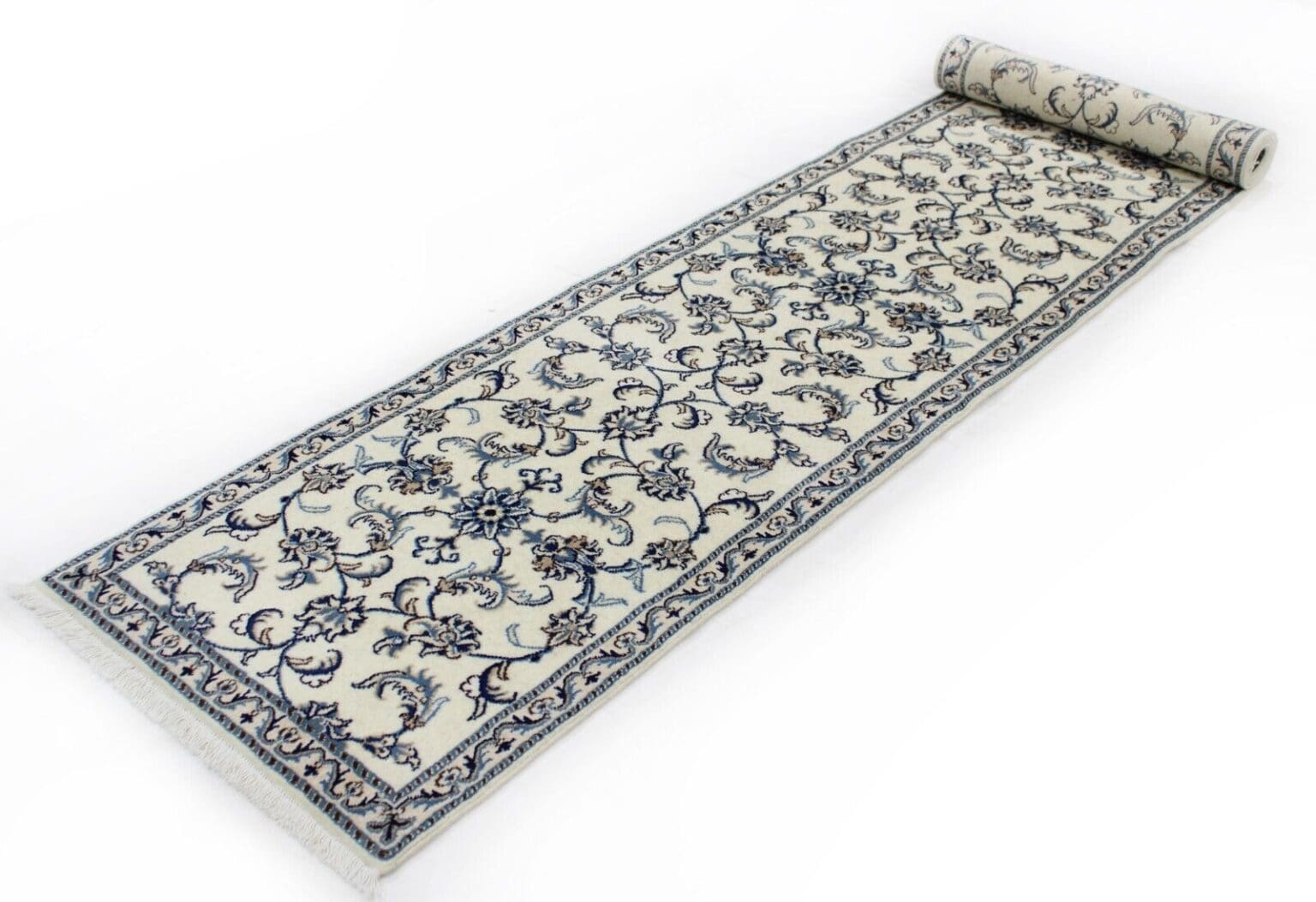
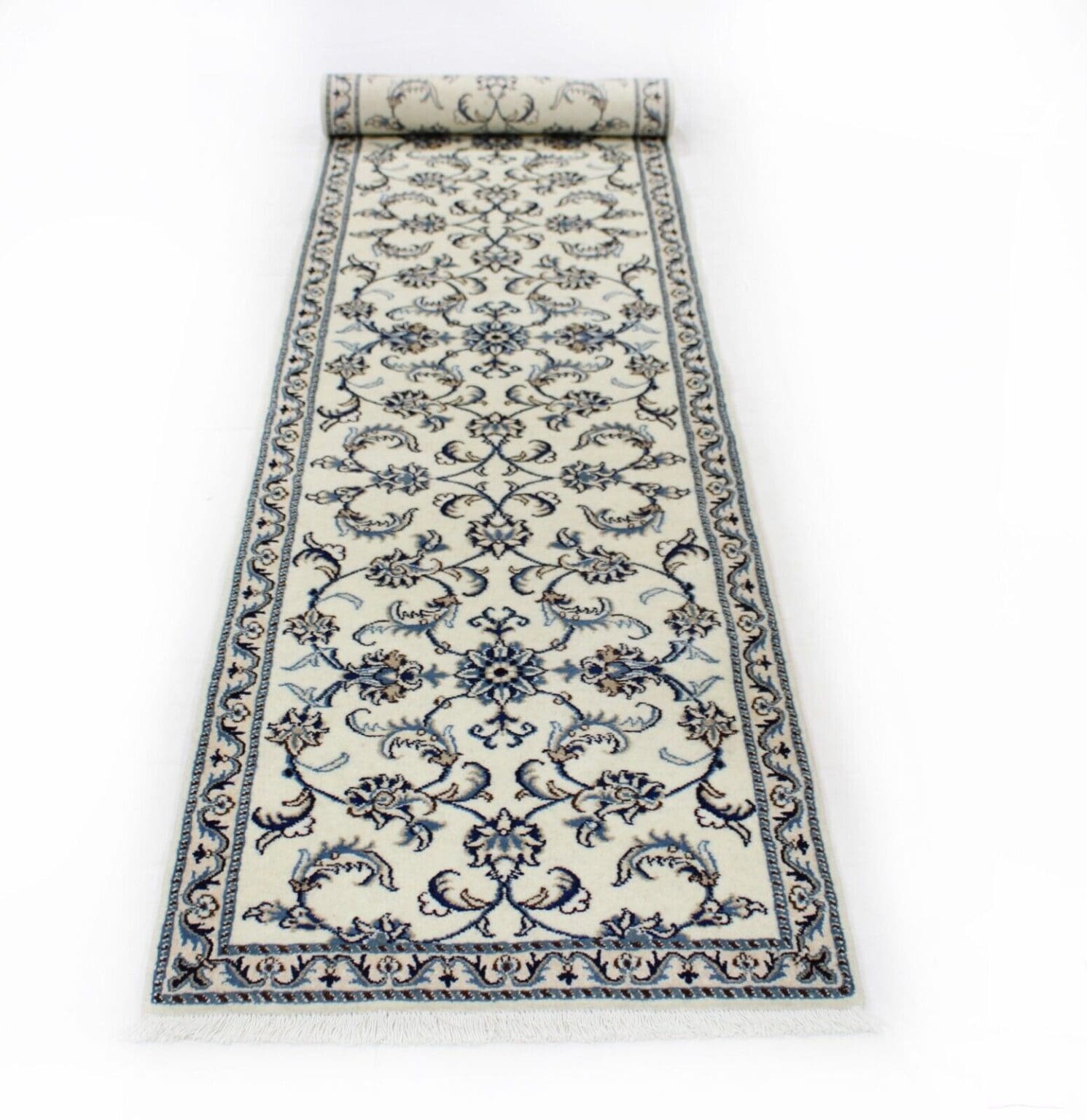
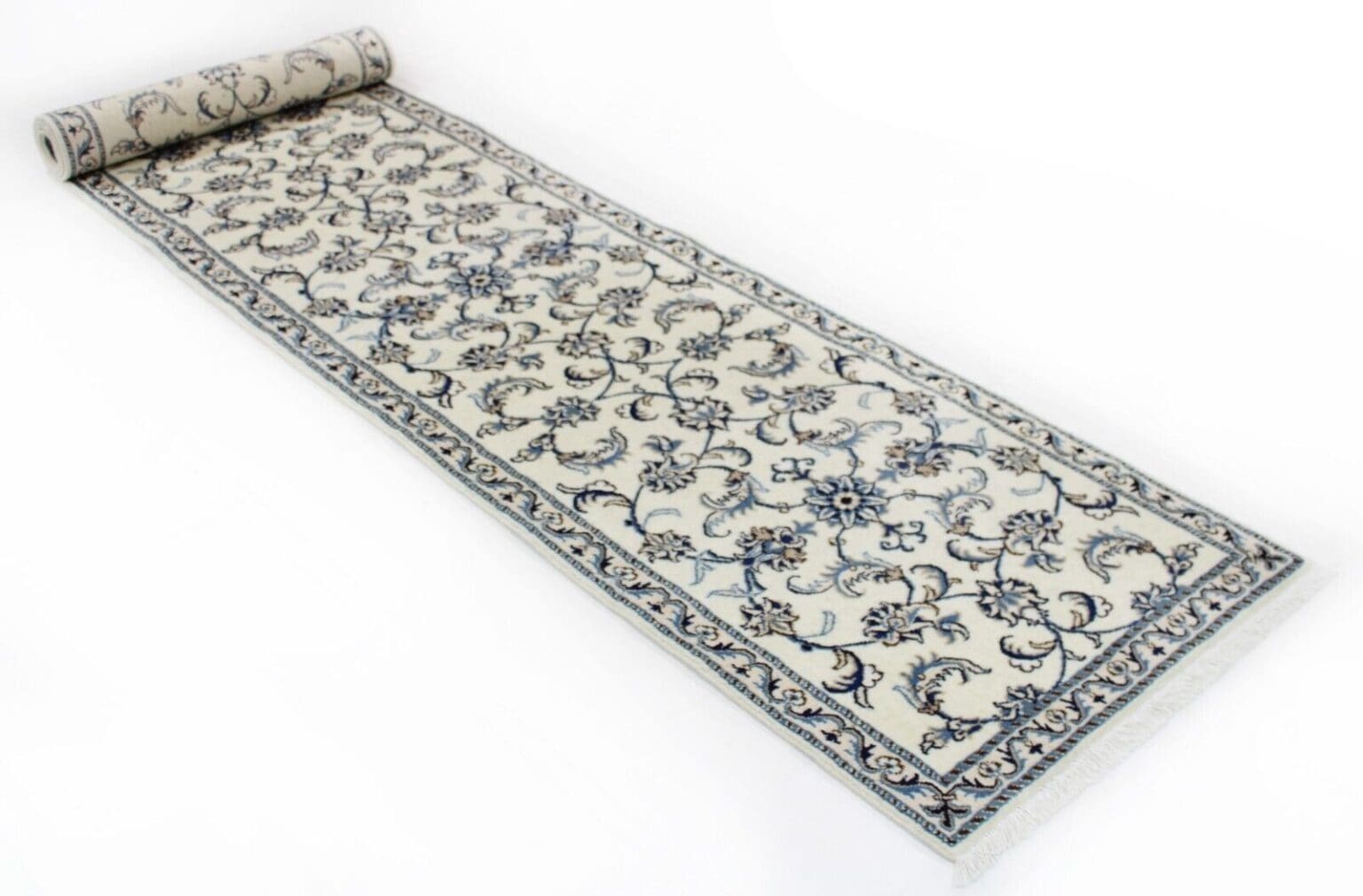
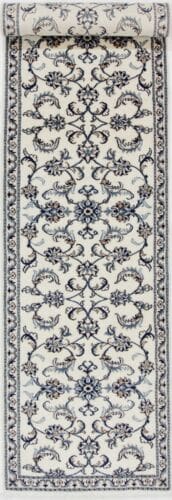
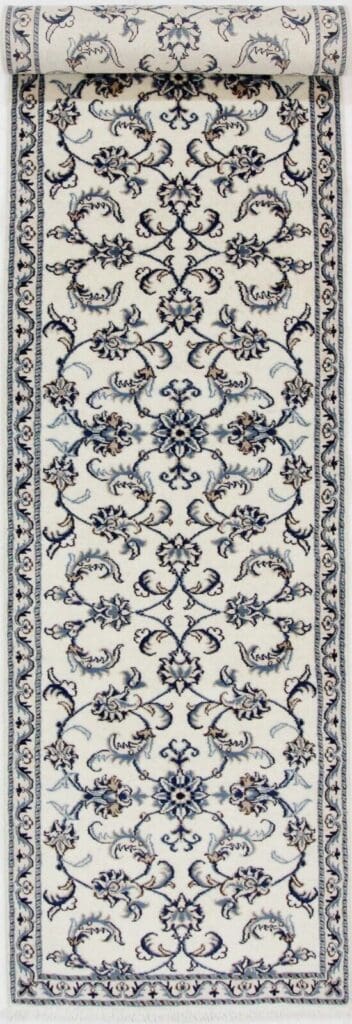
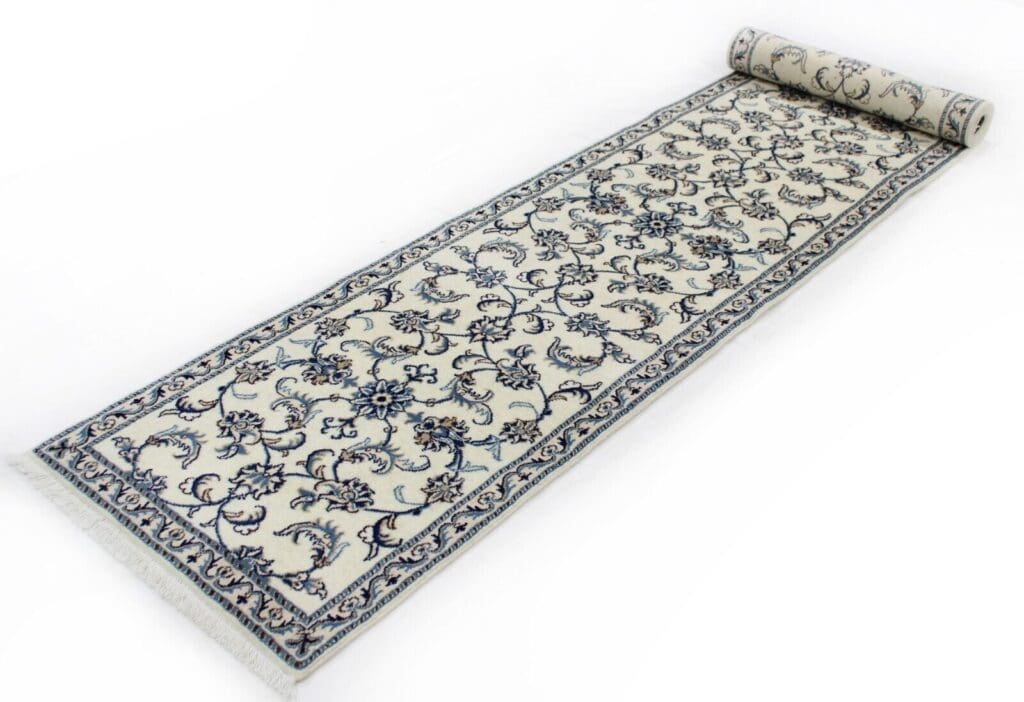
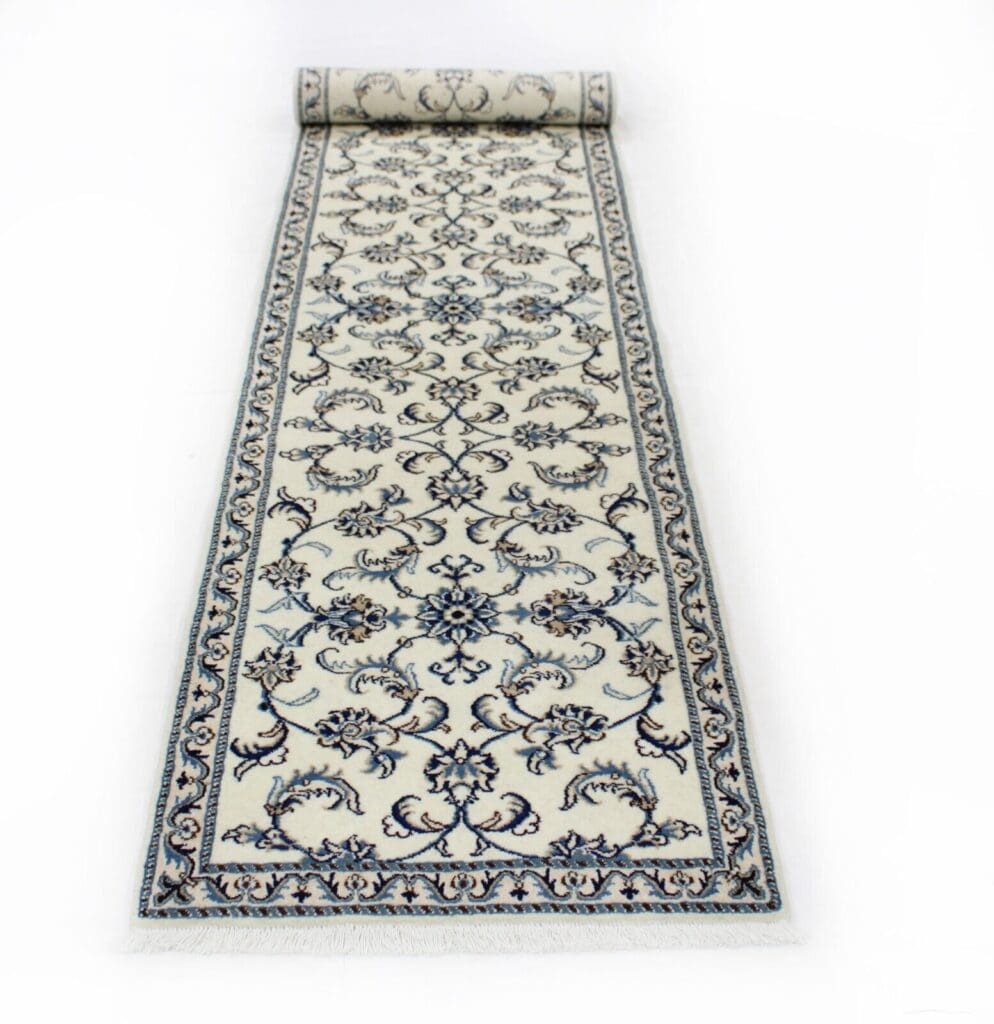
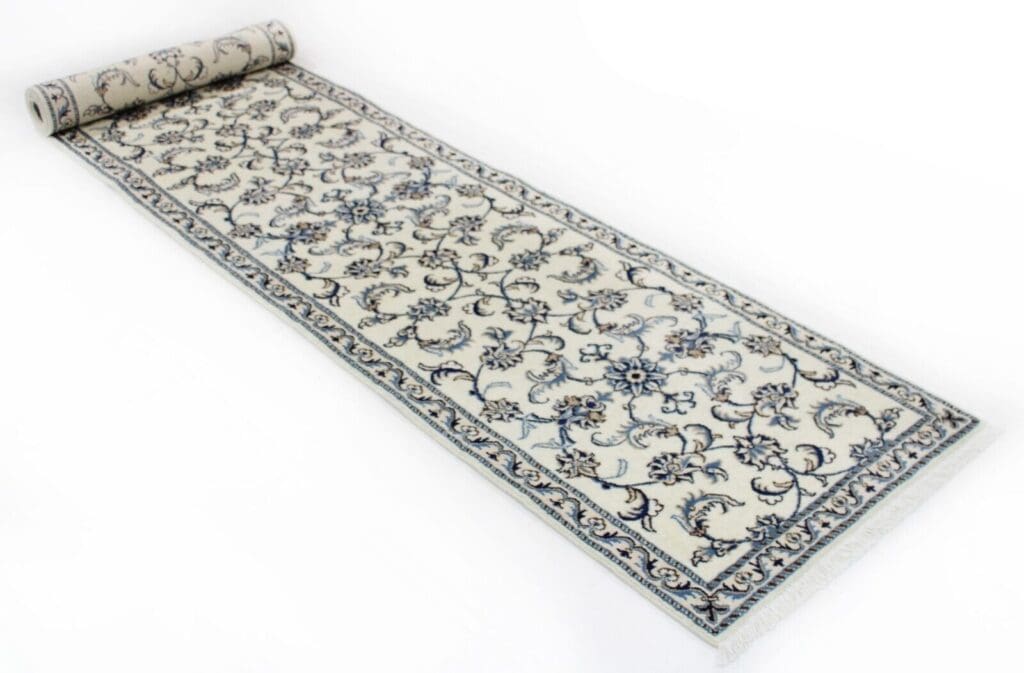
Hand-knotted Nain Persian rug | Knot density: Hand-knotted | Material: High-quality wool and cotton | Size: 383 x 78 cm | Pattern: Oriental floral design | Condition: New without label, top condition
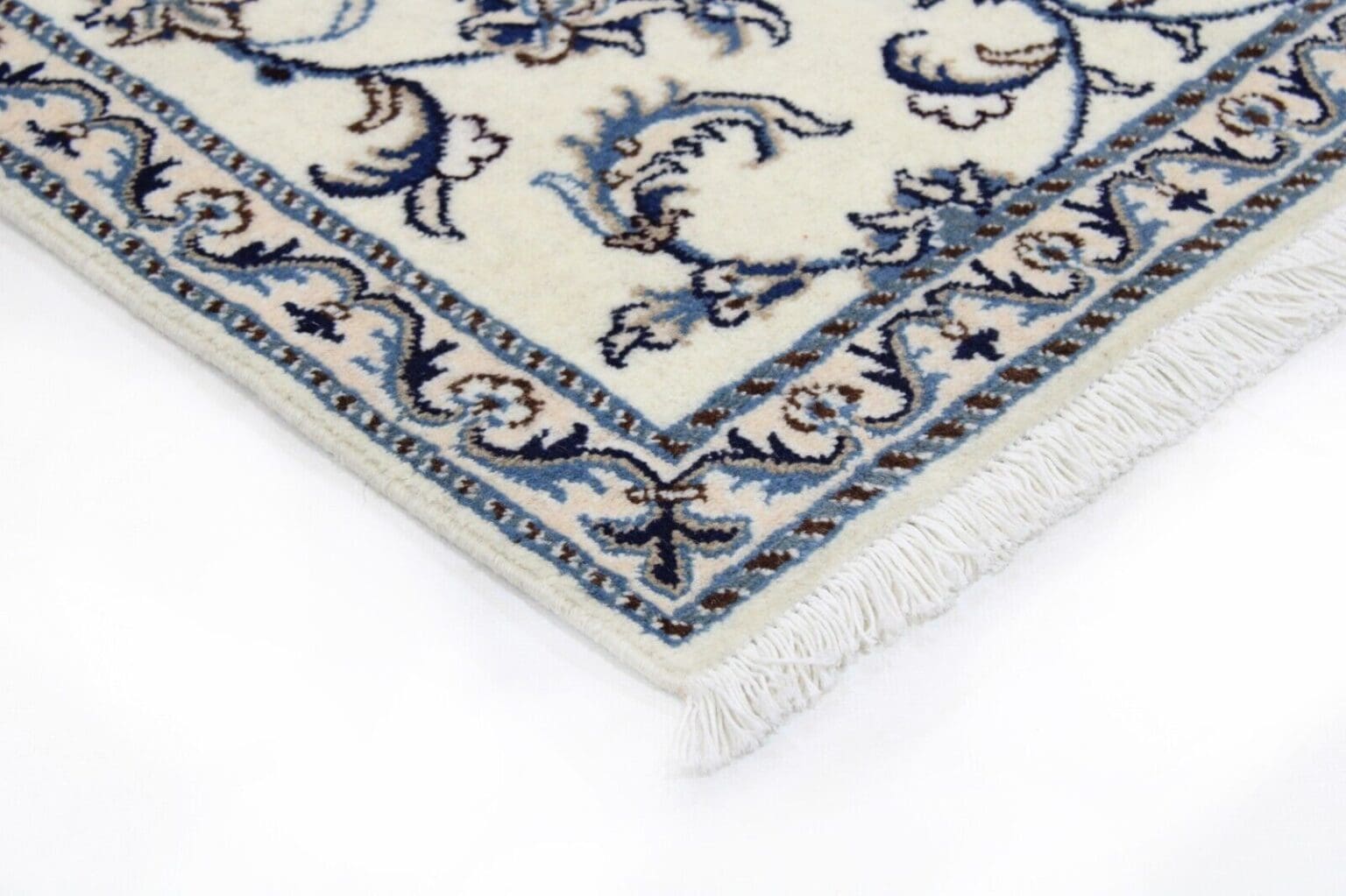
This Nain Persian rug is hand-knotted and made from high-quality wool and cotton. The combination reflects the material tradition of Persian rug making. Wool is valued for its pleasant surface, natural resilience and suitability for a substantial pile. Cotton contributes a firm and even textile structure. The product description identifies both materials without assigning either one to a specific structural layer.
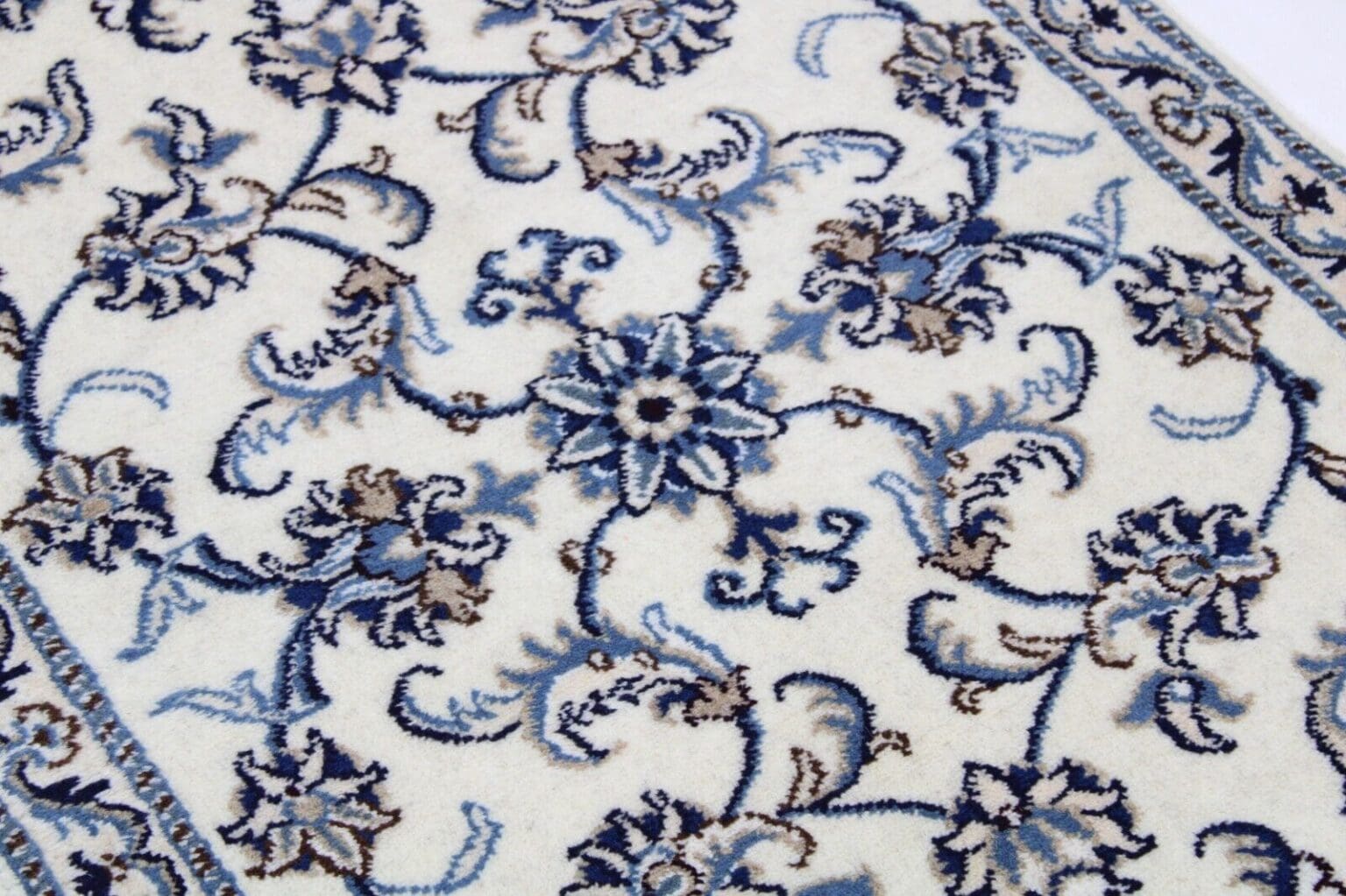
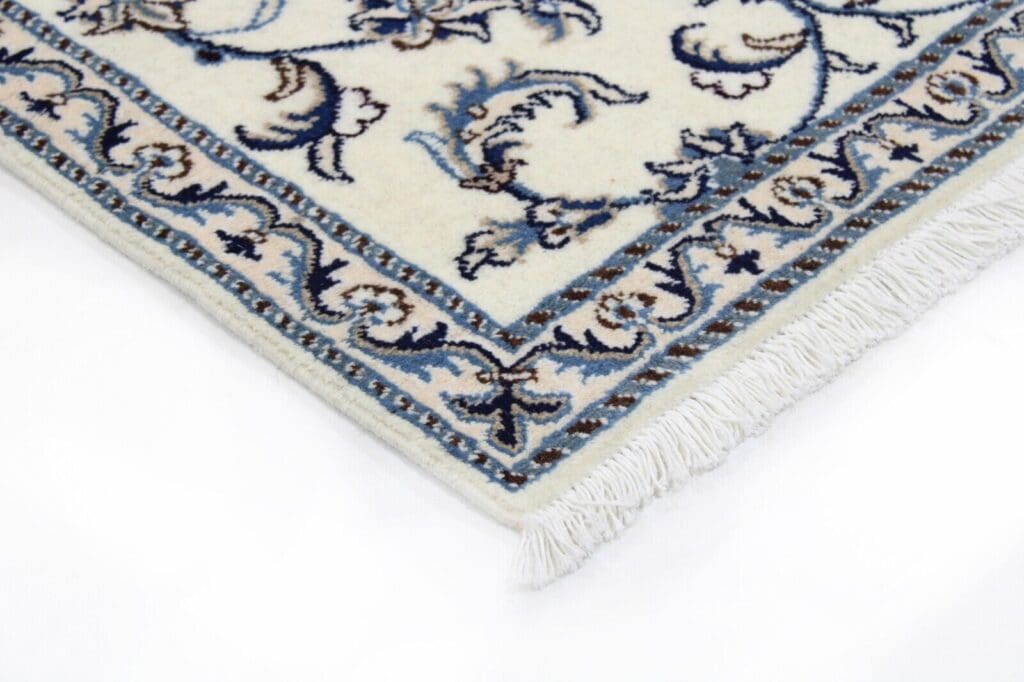
The rug is made knot by knot by hand rather than by an industrial process. The design is built gradually as the knots are placed and the different parts of the composition are brought together. This method gives every individually made rug its own character. The rug is described as having a high pile, so its surface has a pronounced height and a clearly perceptible textile feel.
Hand-knotting requires patience and careful coordination of the pattern. Each section has to follow the intended arrangement while the pile is formed across the foundation. After the knotting has progressed, the surface is brought into an even finish. On this piece, the high-pile construction is part of the stated product information. It provides the visible and tactile character of the rug without requiring any additional claim about an unreported knot count.
Wool and cotton have long been used together in Oriental rug production because they offer different useful qualities. Wool brings body and a comfortable feel to the pile, while cotton is known for its stable and regular textile character. The precise distribution of the materials in this rug is not specified, so the description remains with the confirmed statement that it contains high-quality wool and cotton.
Origin and Tradition
The rug is identified as a Persian rug from Iran and is named Nain Kashmari. Nain is a recognised name within the Iranian rug tradition. Persian rugs are connected with a long history of drawing, dyeing and hand-knotting. Their production developed as both a practical form of floor covering and a specialised textile art in which regional knowledge was passed from one generation to the next.
The history of Persian rug making reaches back to the royal workshops of the sixteenth century. Over time, different weaving centres developed their own approaches to materials, colour, structure and design. Isfahan, Tabriz and Kashan are among the best-known production regions. Their rugs are associated with wool and silk, as well as with elaborate floral and geometric compositions. The variety of these centres is one reason Persian rugs cannot be reduced to a single appearance or construction.
Nain represents one of the established directions within this wider tradition. The name is commonly associated with organised compositions, careful detail and a balanced relationship between ornament and open ground. Nain Kashmari is the designation used for this rug. The origin given for the piece is Iran; the designation does not create an additional claim that it comes from another named region.
Traditional Persian rug making depends on skills that include preparing fibres, planning a drawing, selecting colours and tying the knots in sequence. A design may be followed from a drawn guide, while the execution remains dependent on the individual hands at the loom. Small variations are therefore part of the nature of hand production. The completed surface brings together a planned pattern and the specific character of its maker.
Persian rugs are made in many formats, from compact pieces and runners to large room rugs. Their shape and scale are selected according to the intended setting. This rug is rectangular and is described as a runner. The product information states that it is suitable for all rooms, so its use is not limited to a particular area of the home. Its traditional Iranian background can therefore be placed within a range of contemporary interiors.
The structure of a hand-knotted Persian rug is traditionally valued for its strength and durability. A rug’s service life also depends on foot traffic, placement and care, so tradition alone is not a condition report for this individual piece. What is established here is that the rug is new without a label and in top condition. It is also described as suitable for underfloor heating, an indication relevant to its intended use in modern rooms.
The Persian and wider Oriental rug world includes several related traditions. Gabbeh rugs, for example, are often recognised for simpler designs and a varied use of colour. Kashmir rugs may be made from wool or silk and are known for their soft character. Ziegler rugs are associated with stylised patterns that combine traditional methods with designs suited to later interiors. These examples provide context, but they do not change the identity of this item as a Nain Kashmari Persian rug from Iran.
Regional tradition is therefore best understood as a framework rather than as a substitute for the individual product details. The stated origin, materials, technique and design describe this rug. Broader history explains how such qualities developed, while the actual piece remains a one-off hand-knotted work with its own combination of construction and pattern.
Design and Pattern
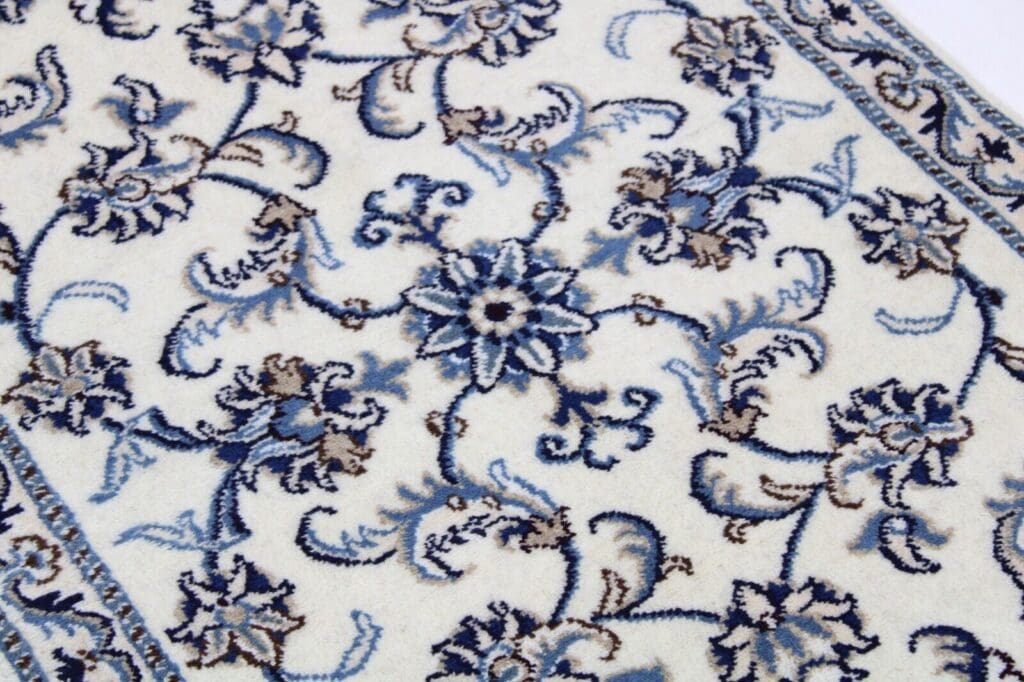
The design is described as Oriental with floral motifs. Flowers are among the enduring elements of Persian rug design. Blossoms, leaves, stems and scrolling forms can be arranged to guide the eye across a field, to define a central area or to create a repeated rhythm. For this rug, the confirmed design statement is its Oriental character and its use of floral motifs.
Floral Persian patterns are usually based on an ordered relationship between individual forms. A blossom may recur at intervals, while leaves or connecting stems create continuity between separate ornaments. This gives the composition structure rather than leaving the motifs as unrelated marks. In a hand-knotted rug, the drawing is translated into rows of coloured knots, so the pattern becomes part of the fabric instead of being applied as a surface print.
Oriental designs can be organised in several ways. Some use a central medallion, some distribute flowers over the field, and others build a continuous repeat. A border may frame the central area and establish a visual transition between the rug and its surroundings. The particular arrangement of these elements is not specified for this rug. It is therefore more accurate to describe the floral Oriental pattern in general terms than to assign an unconfirmed medallion, border structure or colour scheme.
Persian pattern traditions often balance a denser ornamental area with spaces that allow the design to remain legible. The scale of the motifs, the direction of the stems and the repetition of the flowers all contribute to the rhythm of the surface. Different workshops interpret similar ideas in different ways. Nain is associated with a disciplined approach to composition, but the exact drawing of this individual rug is represented here only by the recorded description of floral Oriental motifs.
Flowers in Persian carpets may be rendered naturalistically, stylised into decorative symbols or simplified into more geometric shapes. Their meaning and visual role can vary according to the design tradition. What remains constant is the use of repeated forms to organise the textile field. The hand-knotting gives these forms material depth, while the high pile can make the surface appear more dimensional as light changes across it.
The name Nain provides stylistic context for the rug, while Kashmari forms part of its given designation. Neither name is used here to invent details about the drawing. No particular colour, central medallion, border or symbolic motif is added beyond the documented floral pattern. This distinction keeps the description connected to the actual item while still explaining the design language in which Persian rugs are traditionally made.
A high pile also affects how a floral design is experienced. The raised surface creates texture and can soften the visual transitions between adjacent areas. Depending on light and viewing direction, parts of the pattern may appear more or less prominent. This is a general effect of the stated high-pile finish. It is not a claim about colours or fine drawing details that have not been provided for this rug.
Floral ornament is also adaptable to different rooms because it combines a recognisable traditional vocabulary with a broad range of compositions. The rug is described as suitable for all rooms, allowing the pattern to function in a hallway, bedroom, living room or another domestic setting. The way it works in a particular interior will depend on the surrounding furnishings and light, while its documented design remains an Oriental pattern with floral motifs.
Special Features
The stated special features are its hand-knotted construction, high-quality wool and cotton, and high pile. The rug is new without a label and is described as being in top condition. It is also suitable for underfloor heating. These are the confirmed details concerning the individual piece and its intended use.
The rug has a rectangular shape and is offered as a runner. The product description states that it is suitable for all rooms. It can therefore be considered for a hallway, bedroom, living area or another interior space. The final impression will depend on the furnishings, lighting and level of use in that room.
Regular vacuuming without a brush attachment is recommended for hand-knotted rugs because it helps remove dust while treating the fibres gently. A stain should be addressed promptly with a damp cloth and mild cleaning product. Professional cleaning may also help preserve the pile and colours. These are general care recommendations and do not replace the stated condition of this rug: new without a label and in top condition.
FAQ
How should I care for this hand-knotted Nain Persian rug?
Vacuum it regularly without using a brush attachment so that the pile is not unnecessarily stressed. If a stain occurs, treat it promptly with a damp cloth and a mild cleaning product, avoiding vigorous rubbing. Professional cleaning can be useful from time to time, particularly when the rug needs more thorough care. The high-pile surface should be handled gently and according to the cleaner’s instructions.
Where do high-quality Persian rugs come from?
High-quality Persian rugs come from established rug-making regions in Iran. Isfahan, Tabriz and Kashan are well-known centres of this tradition, each with its own approaches to materials and design. This rug is identified as Nain Kashmari and has Iran as its origin. Persian rug making includes many different constructions and patterns, so regional names provide context rather than describing every rug in the same way.
What makes this Persian rug distinctive?
Its distinctive documented features are the hand-knotted construction, high-quality wool and cotton, high pile and Oriental design with floral motifs. It is rectangular, offered as a runner, suitable for underfloor heating and described as suitable for all rooms. The rug is new without a label and in top condition. As a one-off hand-knotted piece, it brings together traditional Iranian craftsmanship and a versatile format for the home.
To provide the best experiences, we use technologies like cookies to store and/or access device information. Consenting to these technologies will allow us to process data such as browsing behavior or unique IDs on this site. Not consenting or withdrawing consent, may adversely affect certain features and functions.
Functional Always active
The technical storage or access is strictly necessary for the legitimate purpose of enabling the use of a specific service explicitly requested by the subscriber or user, or for the sole purpose of carrying out the transmission of a communication over an electronic communications network.
Preferences
The technical storage or access is necessary for the legitimate purpose of storing preferences that are not requested by the subscriber or user.
Statistics
The technical storage or access that is used exclusively for statistical purposes.The technical storage or access that is used exclusively for anonymous statistical purposes. Without a subpoena, voluntary compliance on the part of your Internet Service Provider, or additional records from a third party, information stored or retrieved for this purpose alone cannot usually be used to identify you.
Marketing
The technical storage or access is required to create user profiles to send advertising, or to track the user on a website or across several websites for similar marketing purposes.

 SECURE PAYMENT
 SHIPPING PARTNERS


