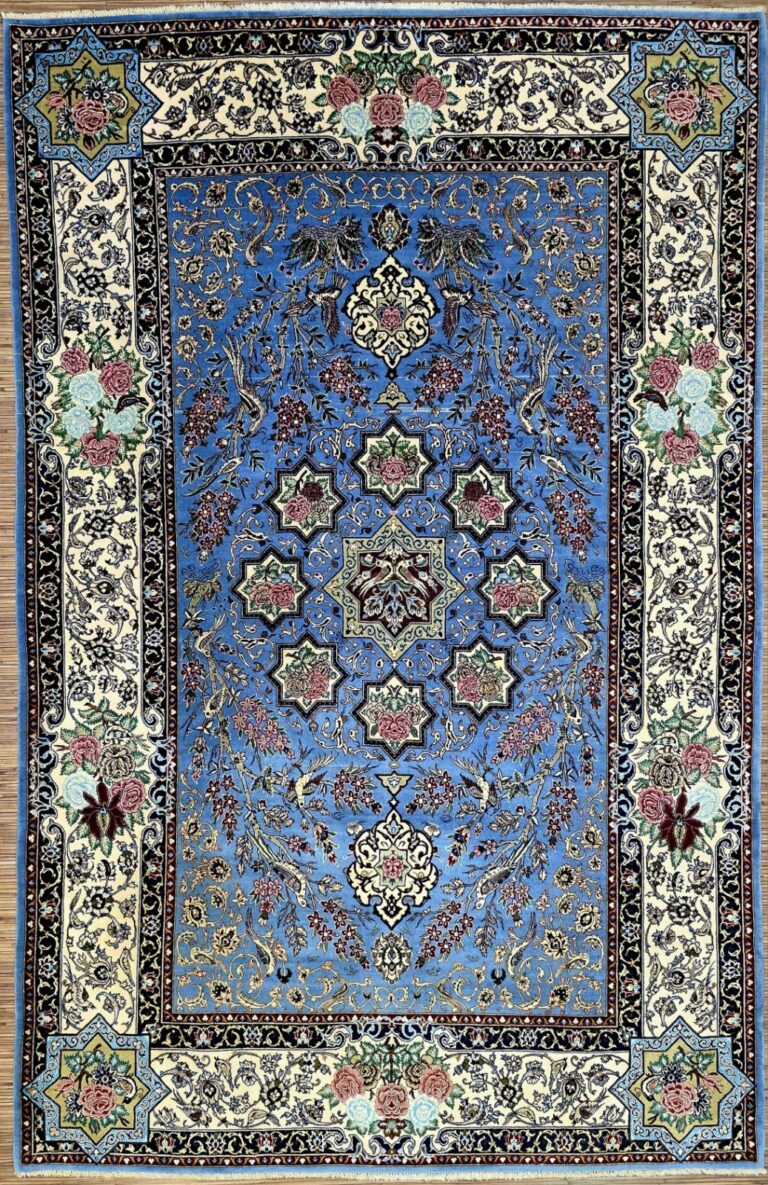
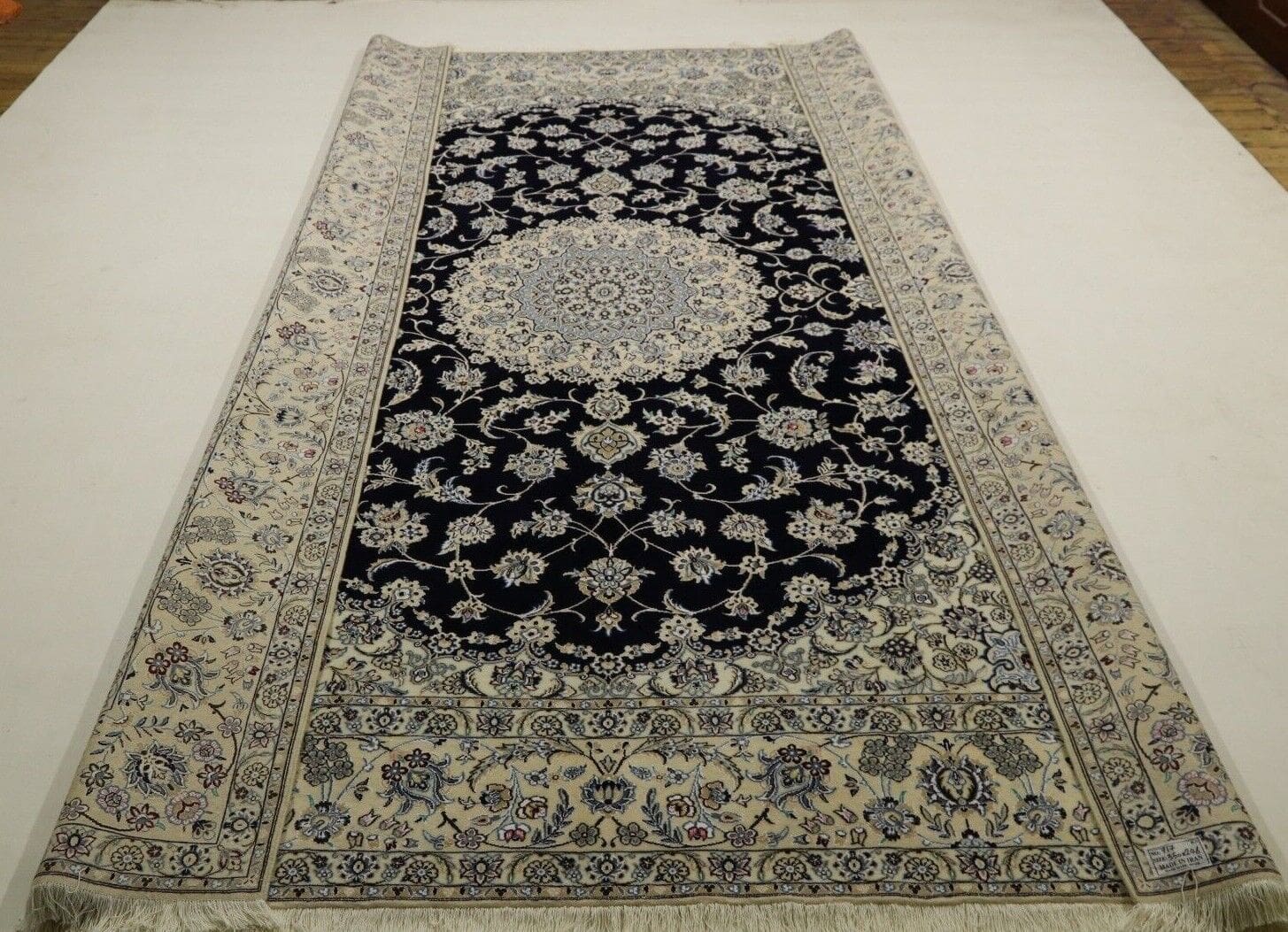
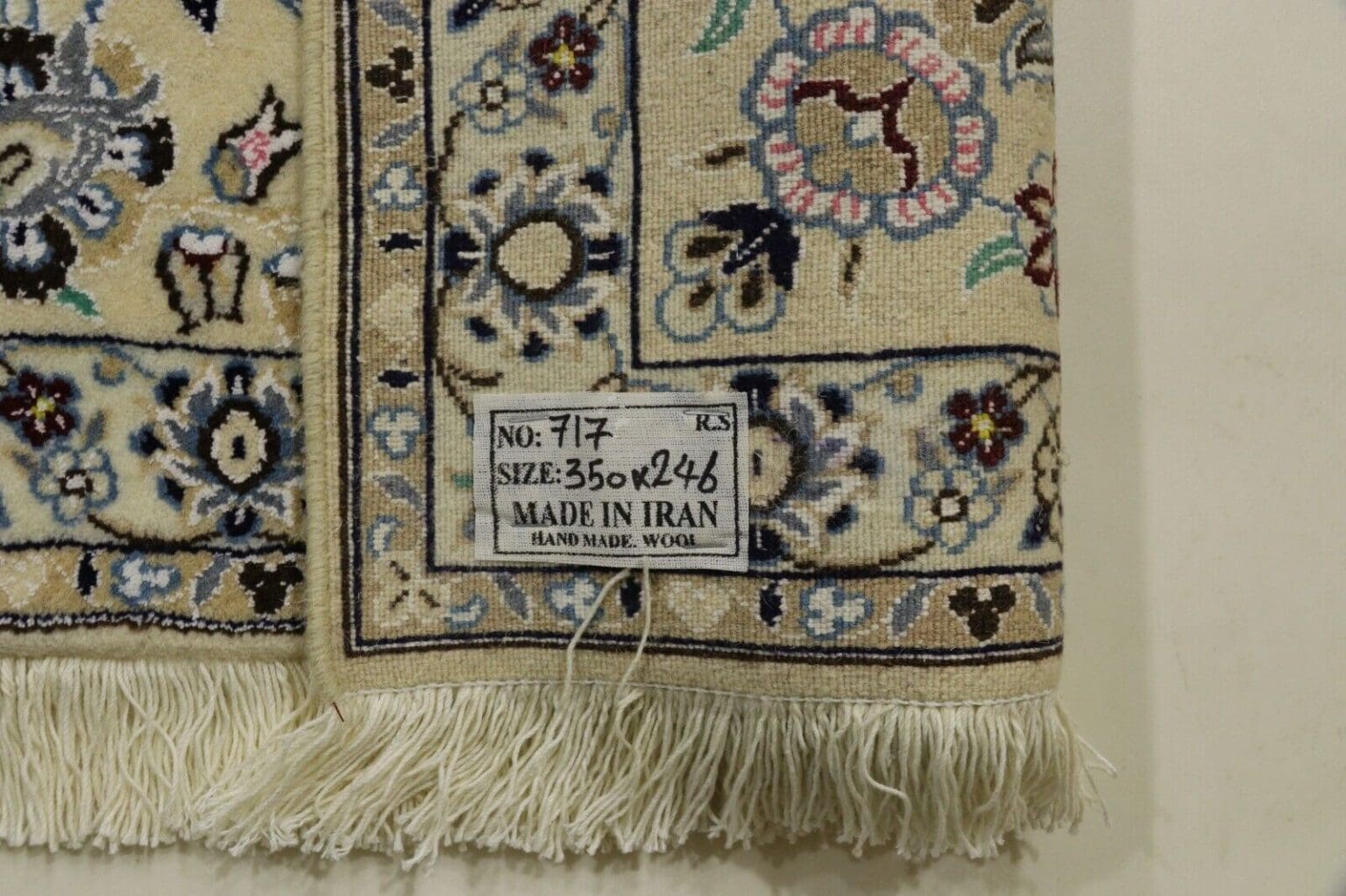
This Super Nain 9 La Persian rug is hand-knotted. Its pile is made from virgin wool and silk, while cotton is used for the warp. The combination determines the character of the surface, its handle and the structure of the textile. Virgin wool has long been used in Persian rug making because its fibres are resilient and pleasant to touch. In a pile, wool can provide a soft yet substantial feel and supports comfortable use in a living space.
Silk introduces a smoother fibre quality to the wool pile. In a wool and silk composition, it can pick up light and bring out subtle changes in the appearance of colour. The surface may therefore show different nuances as the light changes. The cotton warp forms the underlying framework to which the knots are attached. It remains largely beneath the visible pile and helps the woven foundation retain its shape.
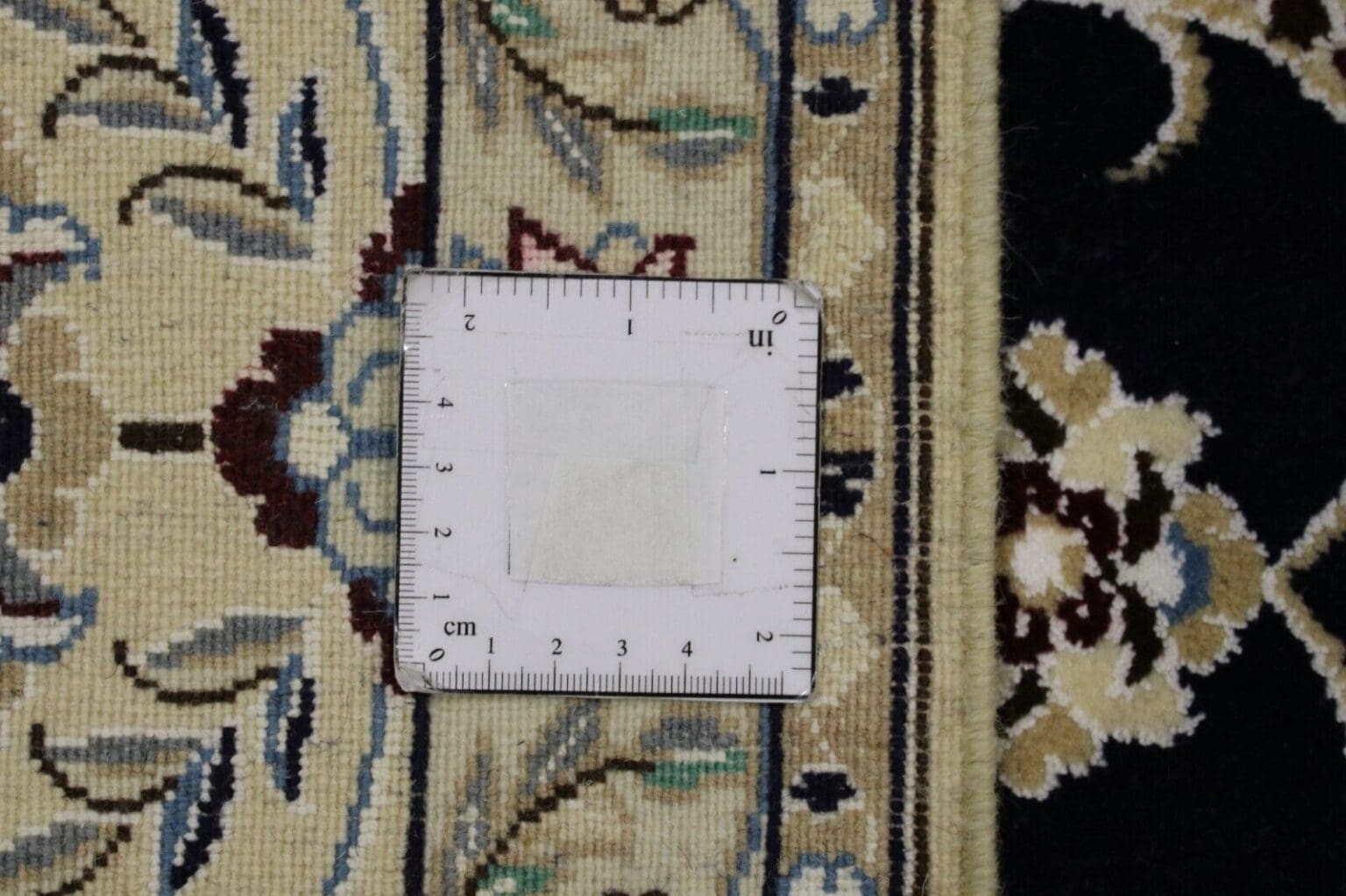
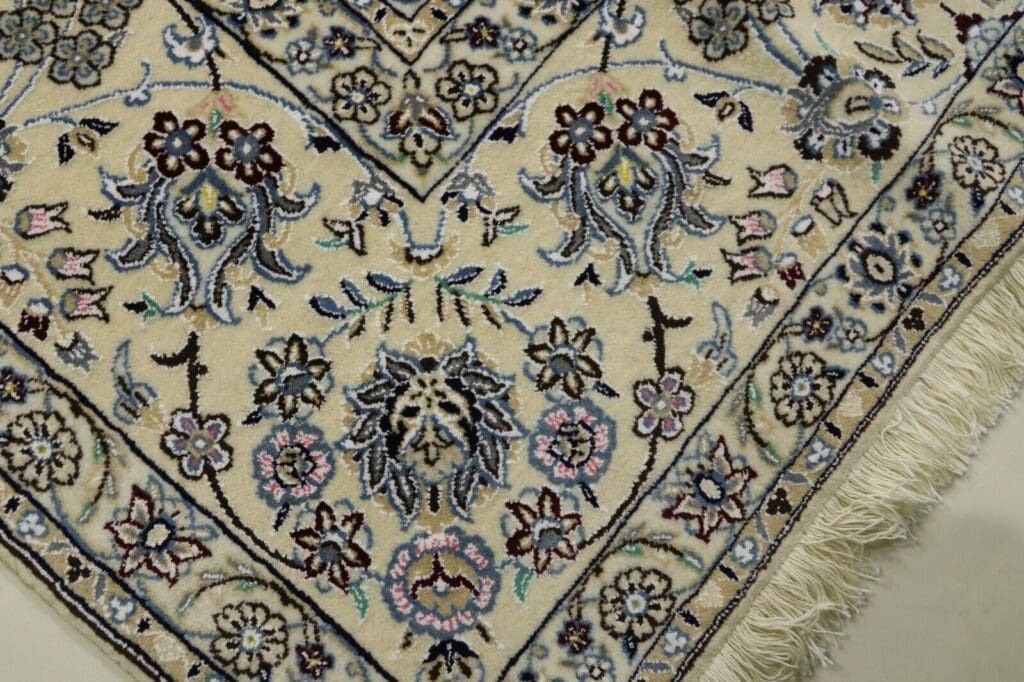
Hand-knotting means that each knot is placed individually around the warp. After a row of knots has been completed, weft is inserted and compacted, gradually building a dense pile. This process differs from the production of machine-made floor coverings. Minor variations in individual knots and in the surface are part of handmade production and reveal the way the rug was made.
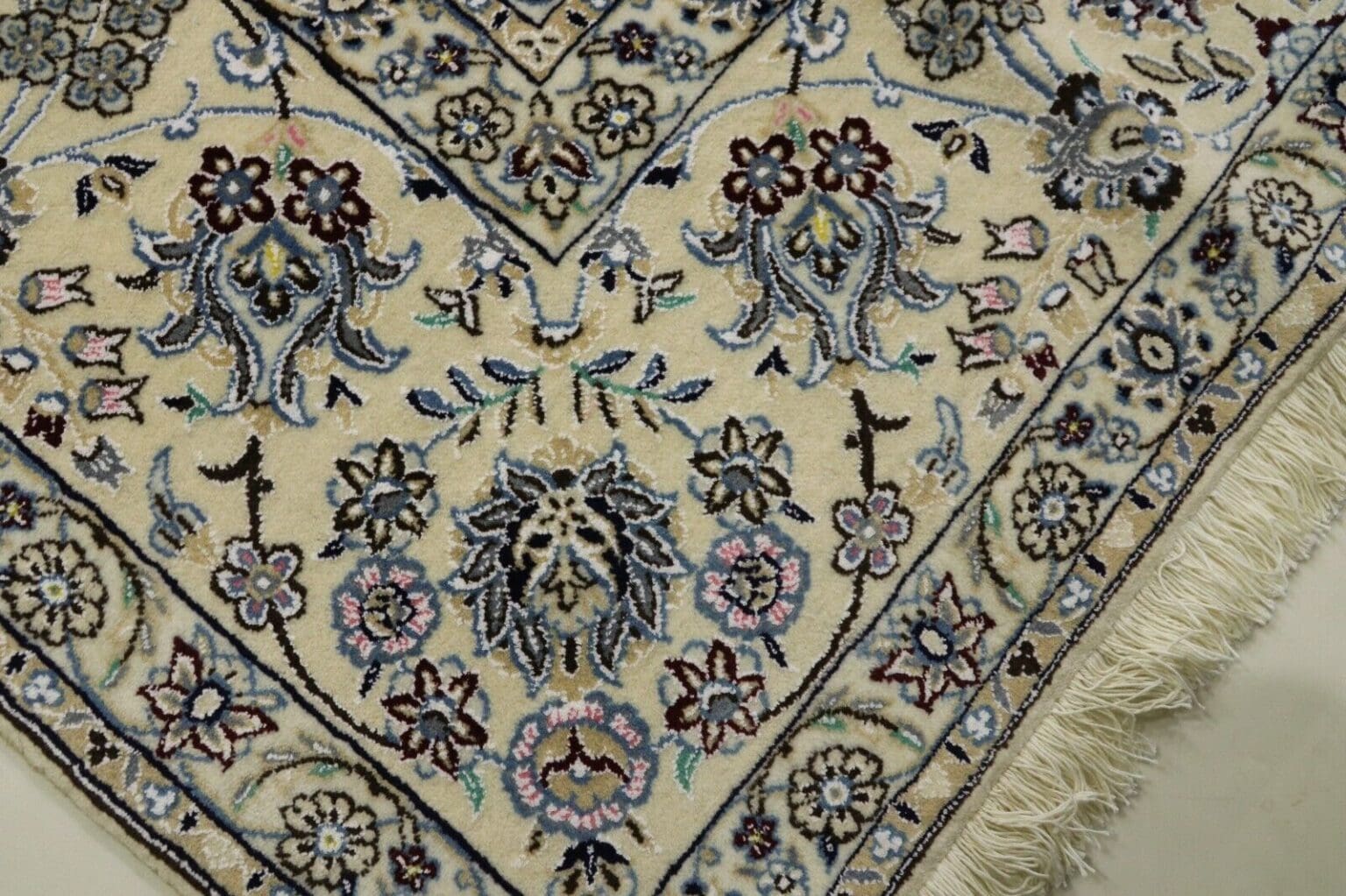
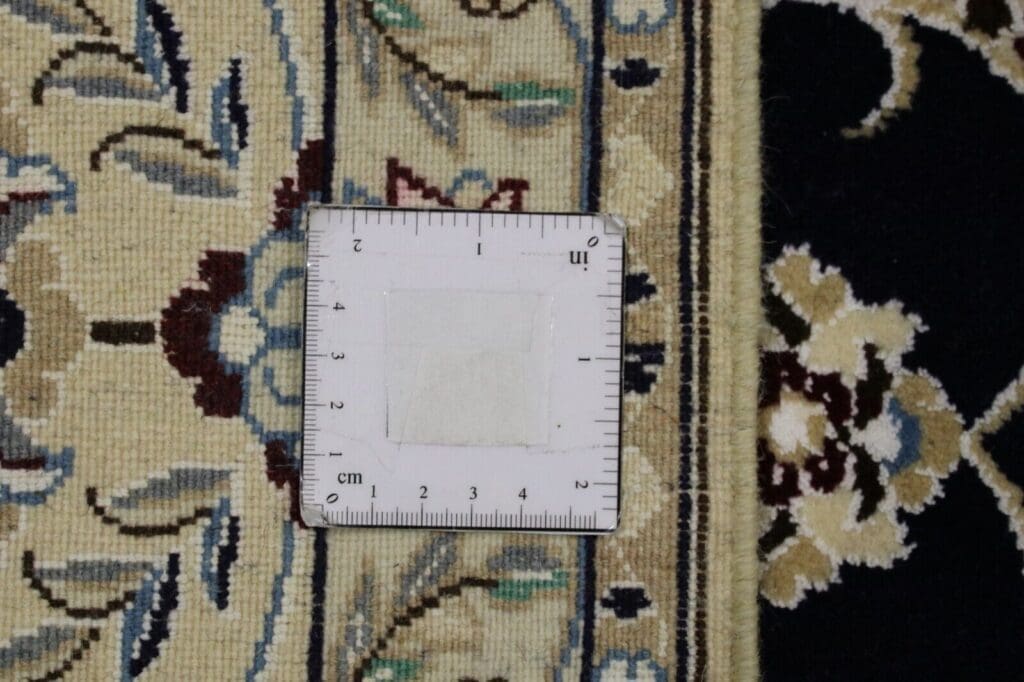
The rug’s high knot density reflects finely executed knotting. A large number of individual knots allows lines, floral details and geometric transitions to be rendered closely. The virgin-wool and silk pile combines textile durability with a smoother, lively surface. This particular rug is new and in very good condition.
Origin and Tradition
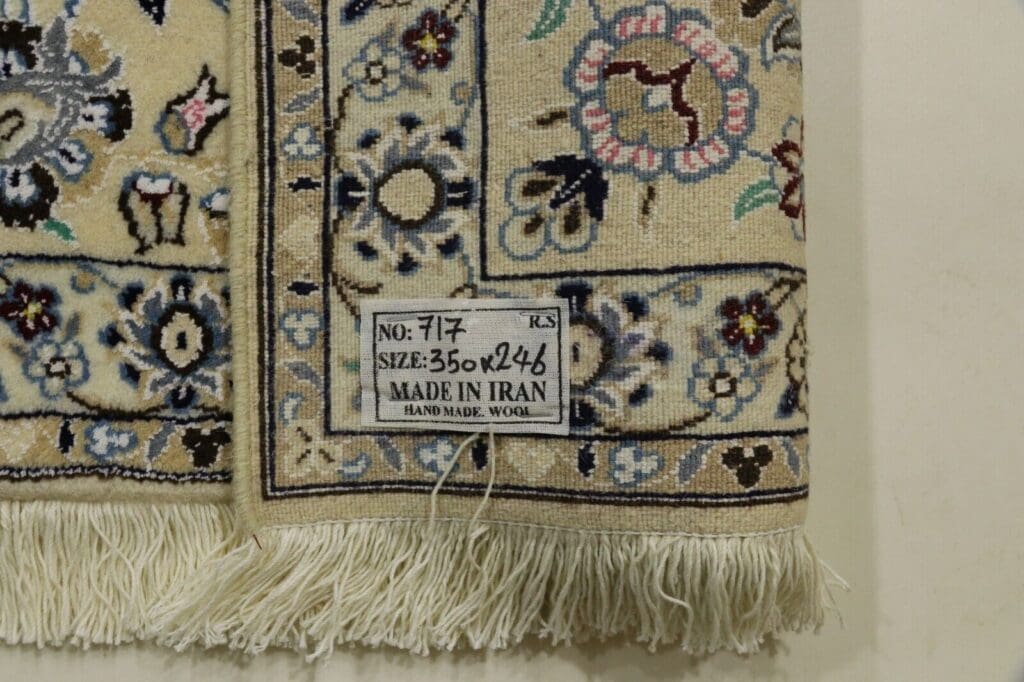
The rug comes from Persia, or Iran, and is identified as a Super Nain 9 La. Nain is a city in Iran whose rug tradition is associated with finely worked designs and a carefully ordered visual language. Its weaving heritage developed within the broader history of Persian rug making, joining technical precision with balanced and restrained compositions. Nain therefore describes more than a place: it also places a rug within a recognisable regional tradition of design and craftsmanship.
Rug making in Nain belongs to a long Iranian textile history. Persian rugs have not been made solely as practical floor coverings. They have also served as a form of textile expression through which designs, working knowledge and regional preferences could be passed on. Understanding fibres, preparing the foundation, tying knots, inserting weft and finishing the surface all require experience. Such knowledge has traditionally been transmitted through workshops and families.
A Nain rug is produced through a sequence of coordinated tasks rather than one single act. Wool and silk are prepared, the warp is established and the design is then built knot by knot. Weft helps secure each completed row, while the pile gradually gains its density. The surface is subsequently worked so that outlines and ornament become legible. Each stage calls for control of the materials and attention to the relation between the design and the woven foundation.
The designation Super Nain 9 La points to a fine Nain version within the product naming. In rug trade terminology, such descriptions are used to distinguish qualities and design directions associated with the Nain tradition. The name does not replace an examination of the individual rug; it places this piece within a recognised Nain vocabulary. Here that vocabulary is combined with a high knot density and a pile made from virgin wool and silk.
Persian rug culture is closely connected with regional ways of life, architecture and inherited ornament. Motifs have been preserved, adapted and recombined over long periods. Flowers, scrolling forms and geometric arrangements can reflect both observations of nature and a preference for ordered fields. Nain designs are often understood through their sense of balance and clarity, with individual ornaments carefully related to one another across the composition.
The regional tradition is also visible in the discipline required at the loom. A small deviation can alter the course of a line or affect the balance of a repeated motif. Maintaining a consistent sequence of knots, weft rows and patterned sections therefore requires sustained concentration. The origin in Iran and the Nain classification represent a particular meeting of material knowledge, ornament and handcraft. This is the cultural and technical context in which the rug’s pattern and construction can be understood.
Design and Pattern
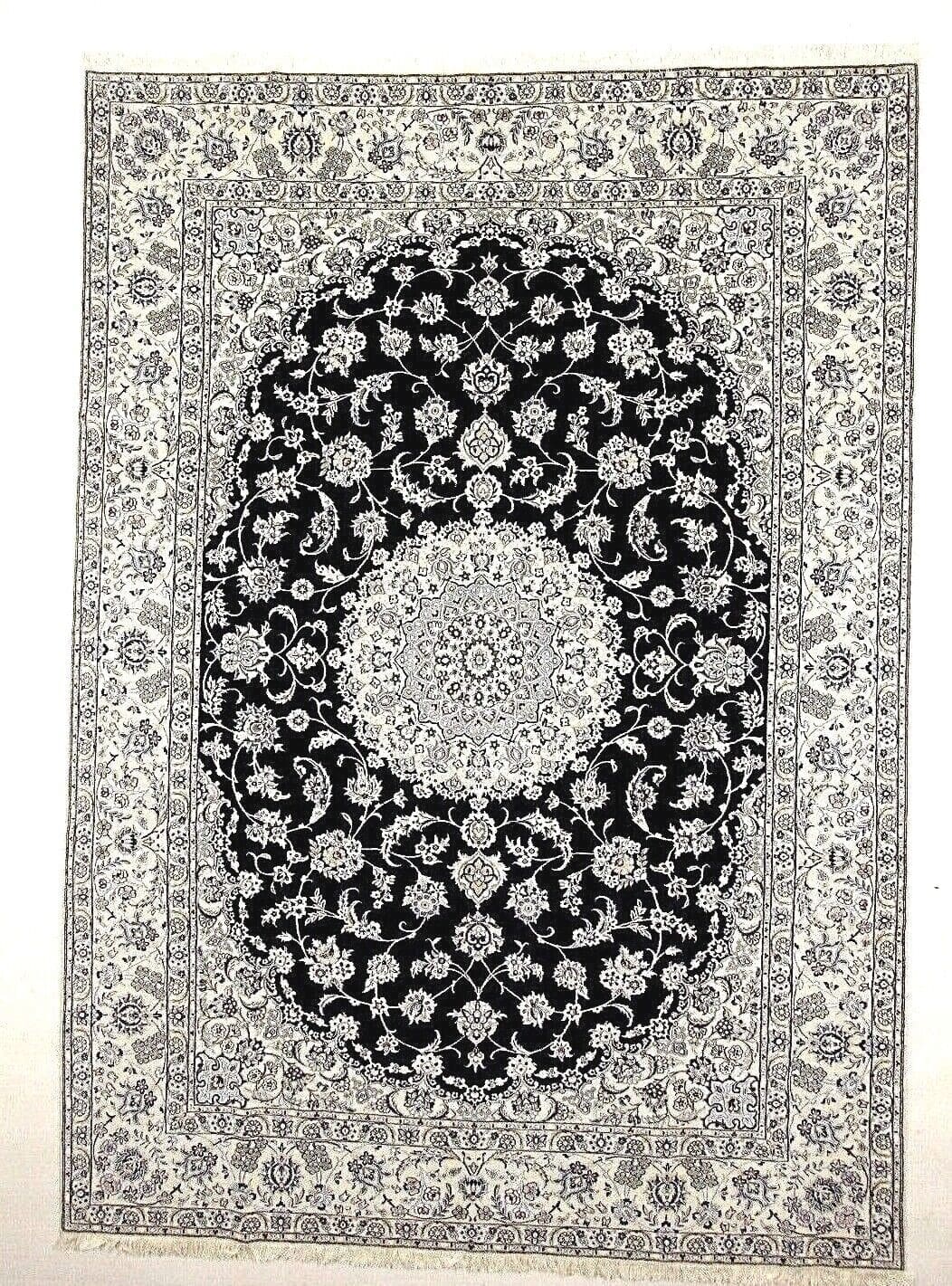
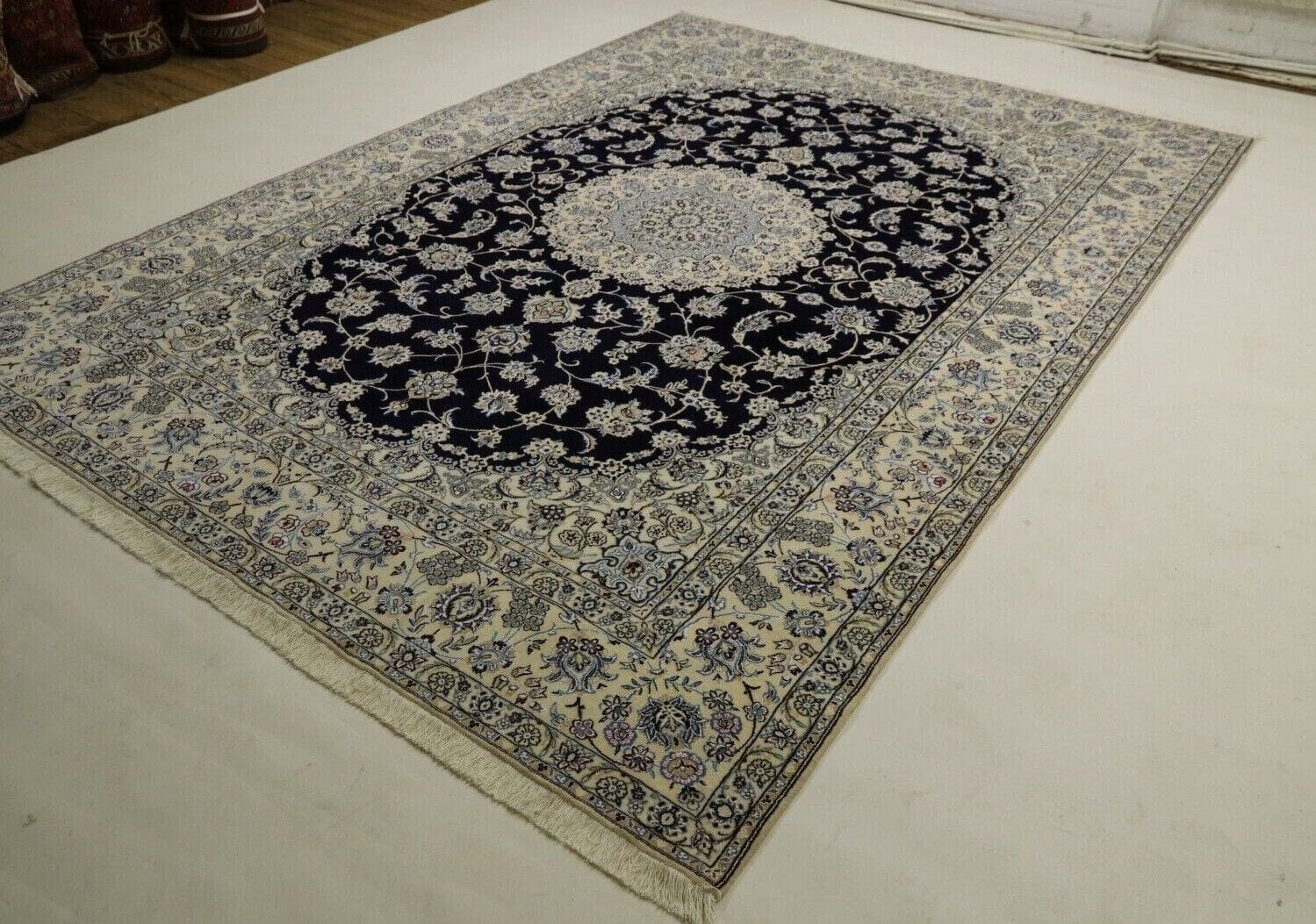
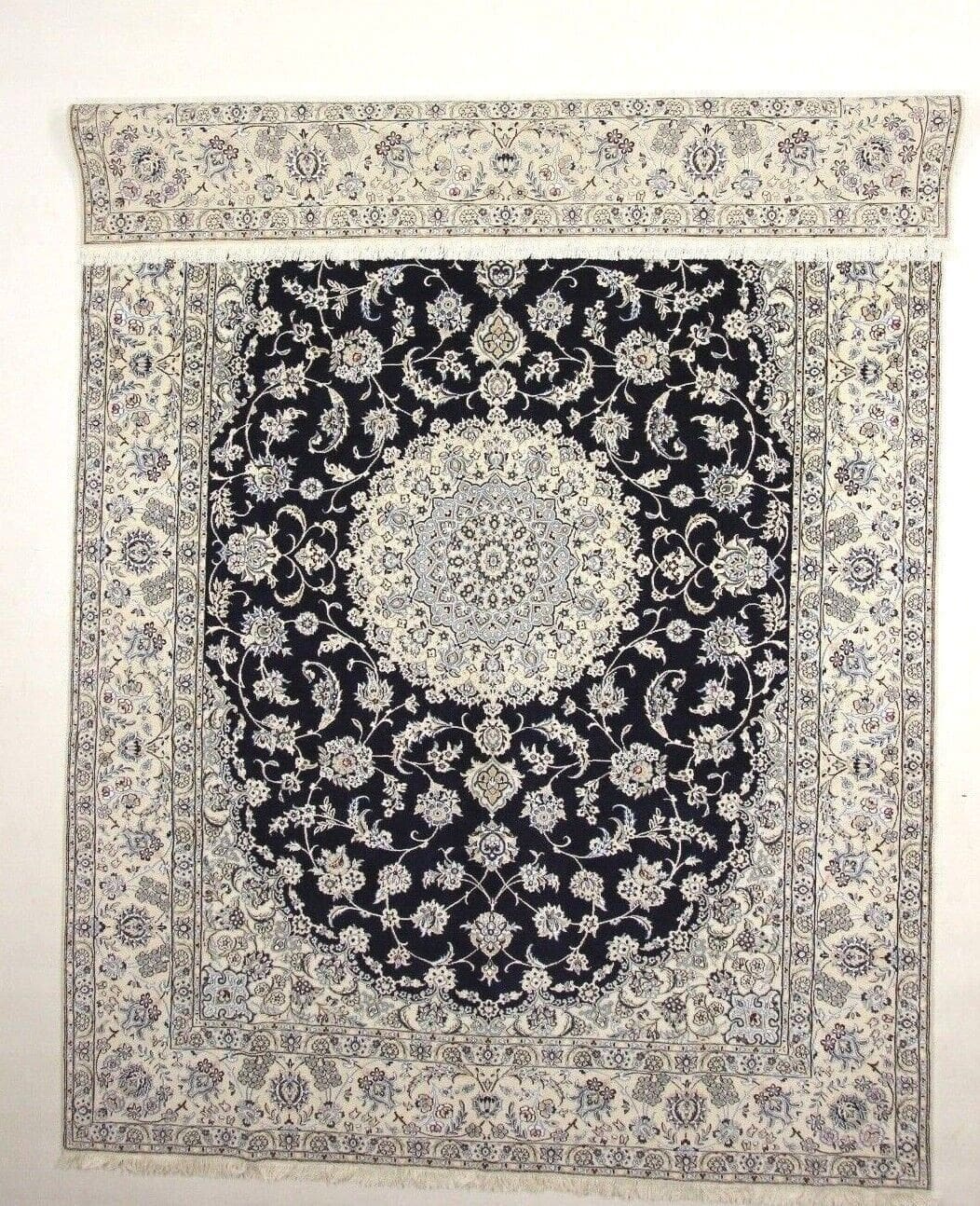
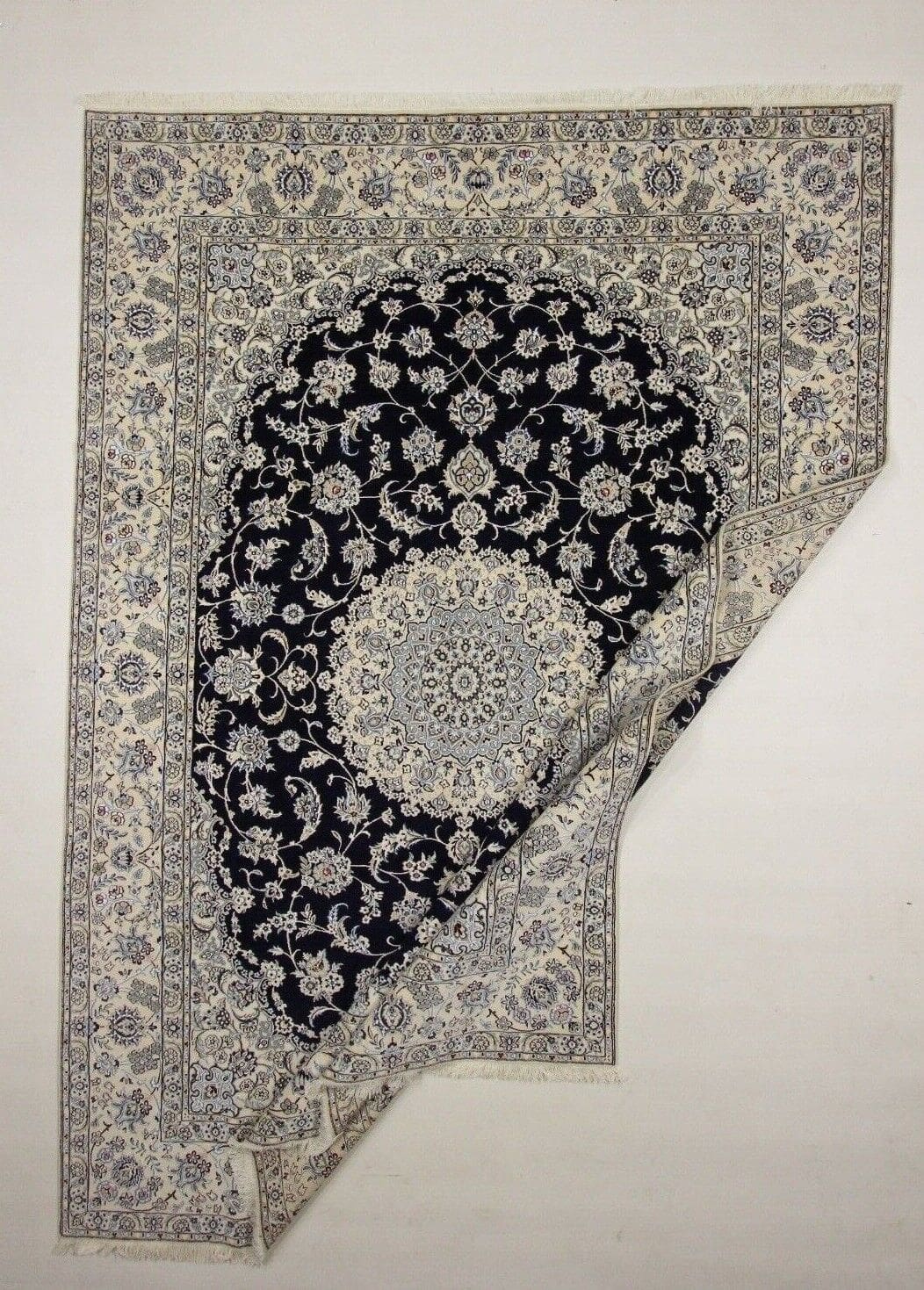
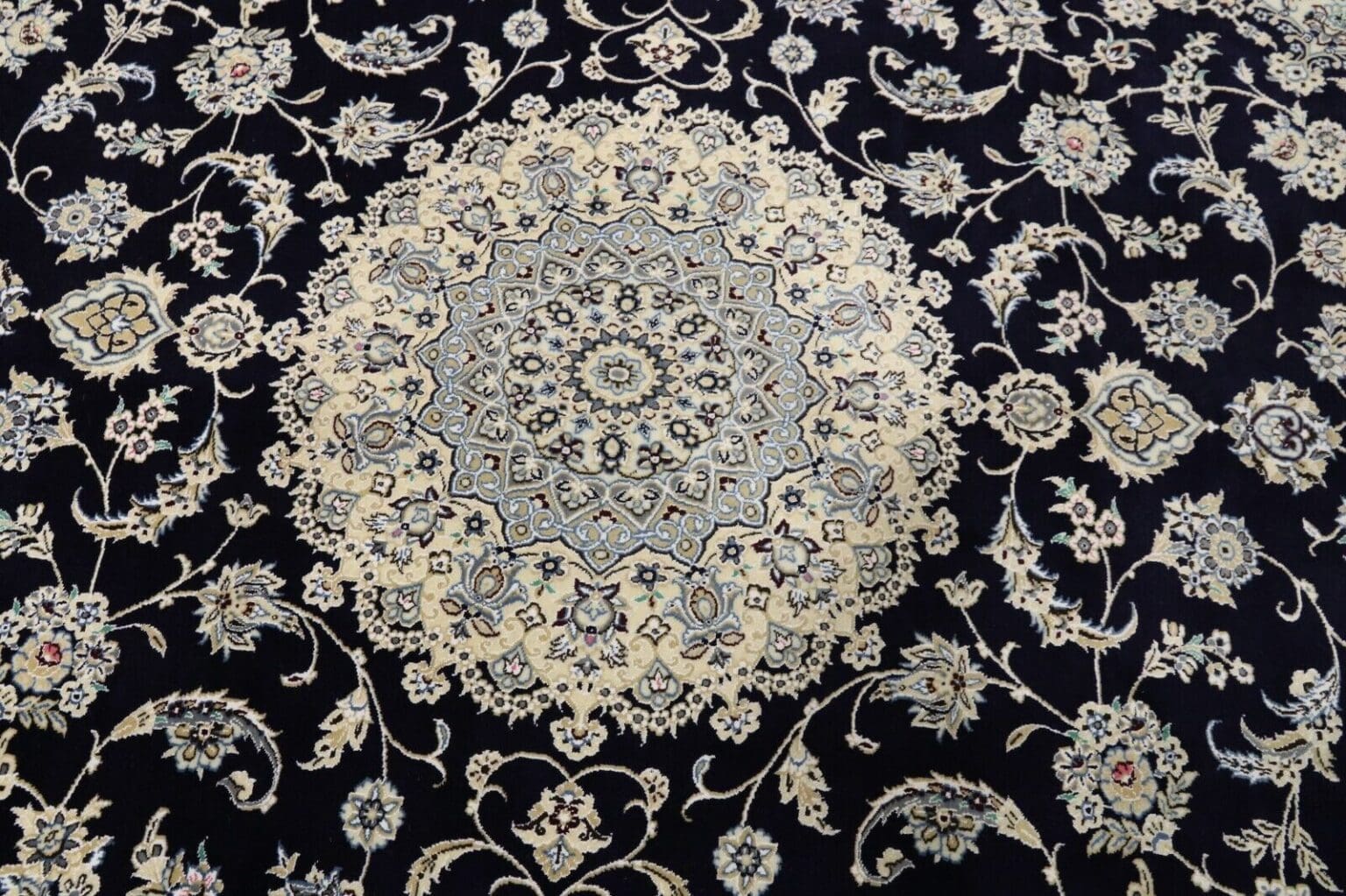
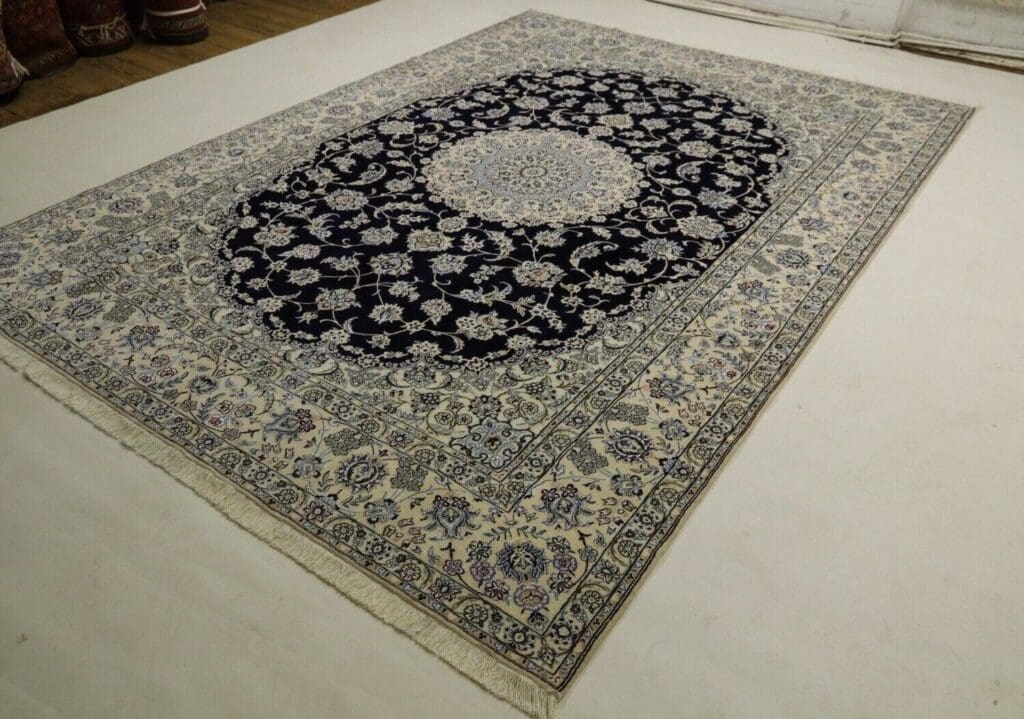
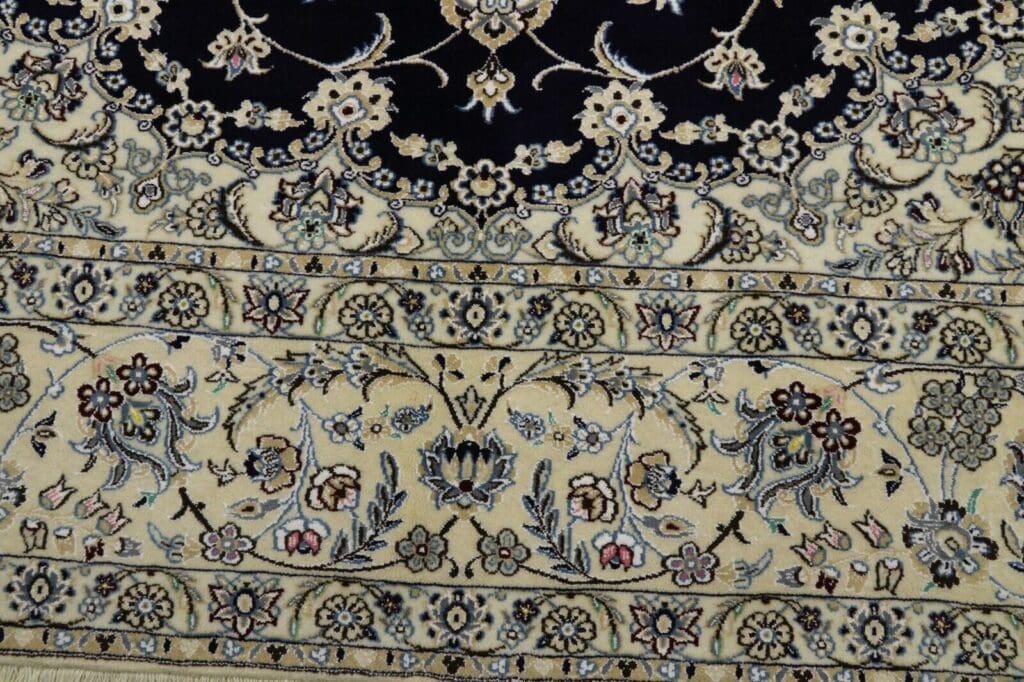
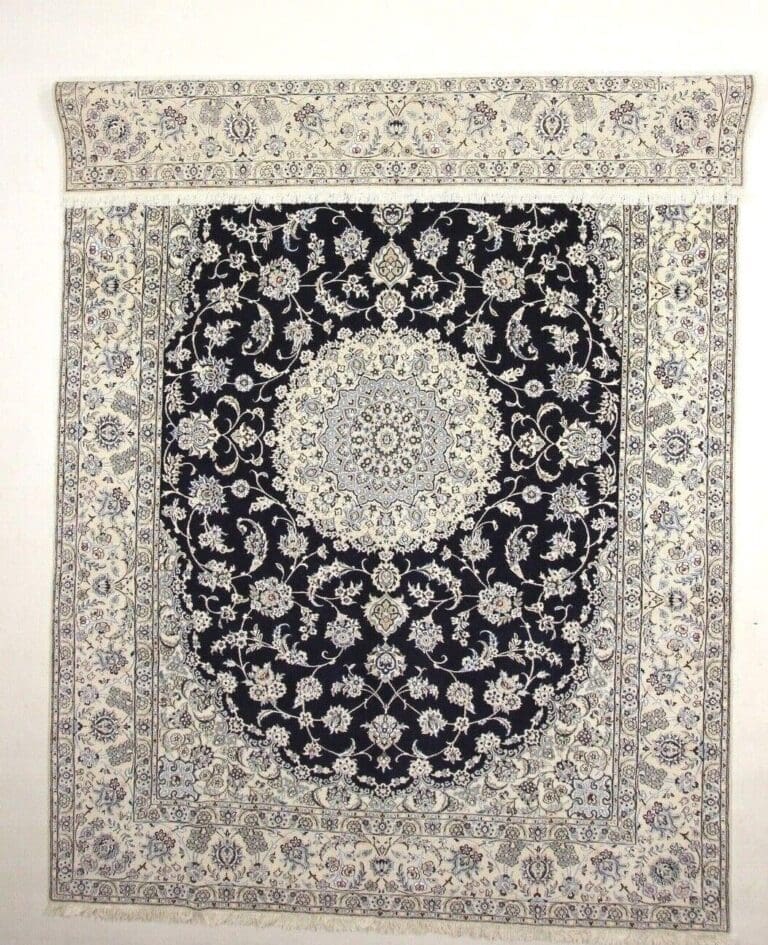
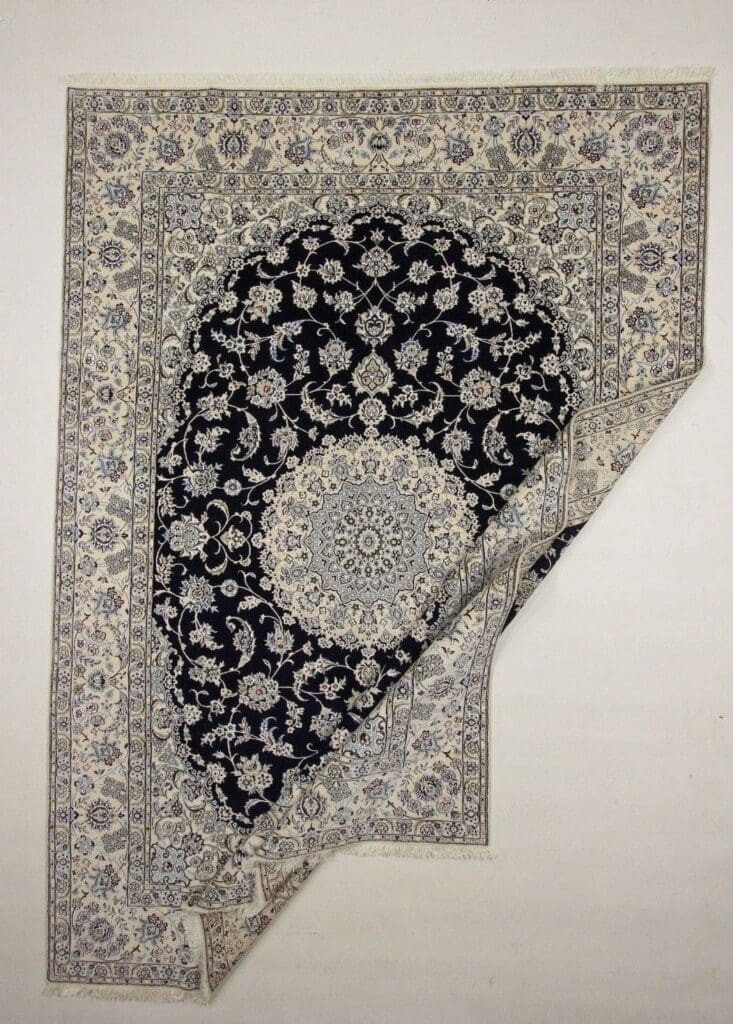
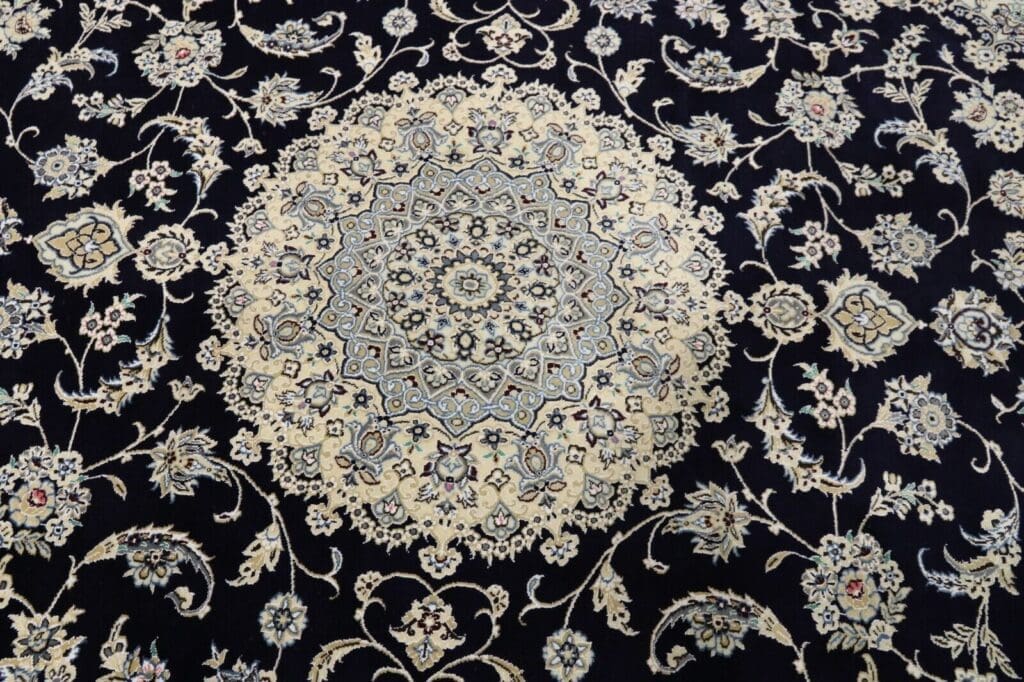
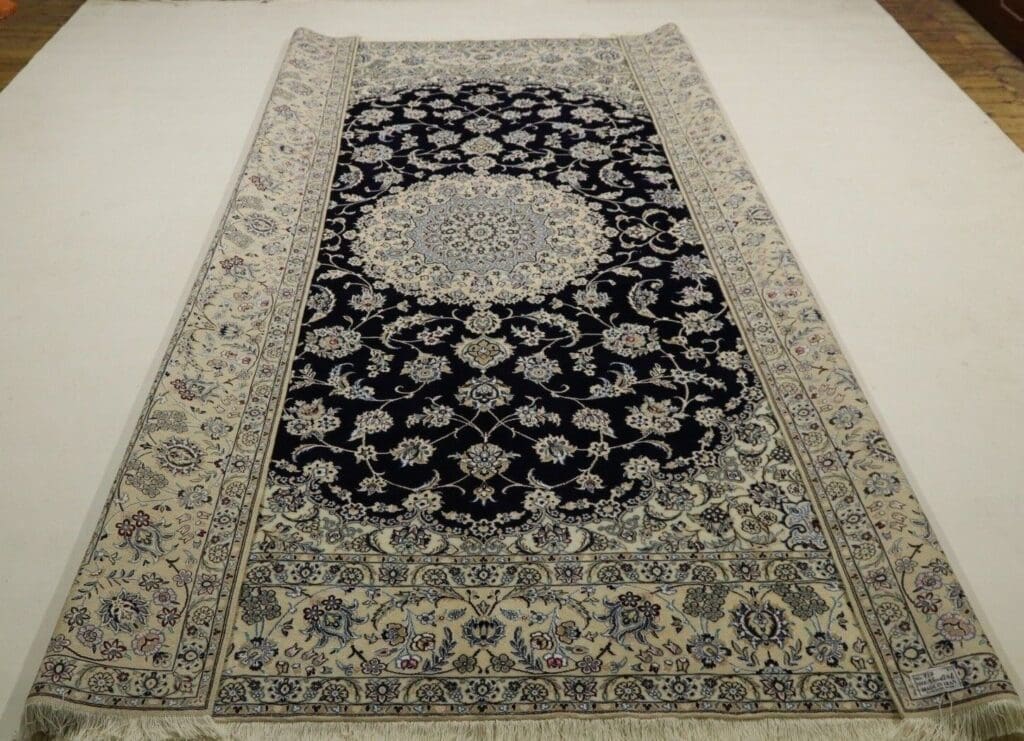
The design of this rug is described as Oriental. It combines a traditional character with a balanced, enduring elegance. Floral designs and geometric forms shape the composition. In Persian ornament, these two groups of motifs can perform different but complementary roles: floral elements bring movement and organic association, while geometric lines provide structure, rhythm and direction.
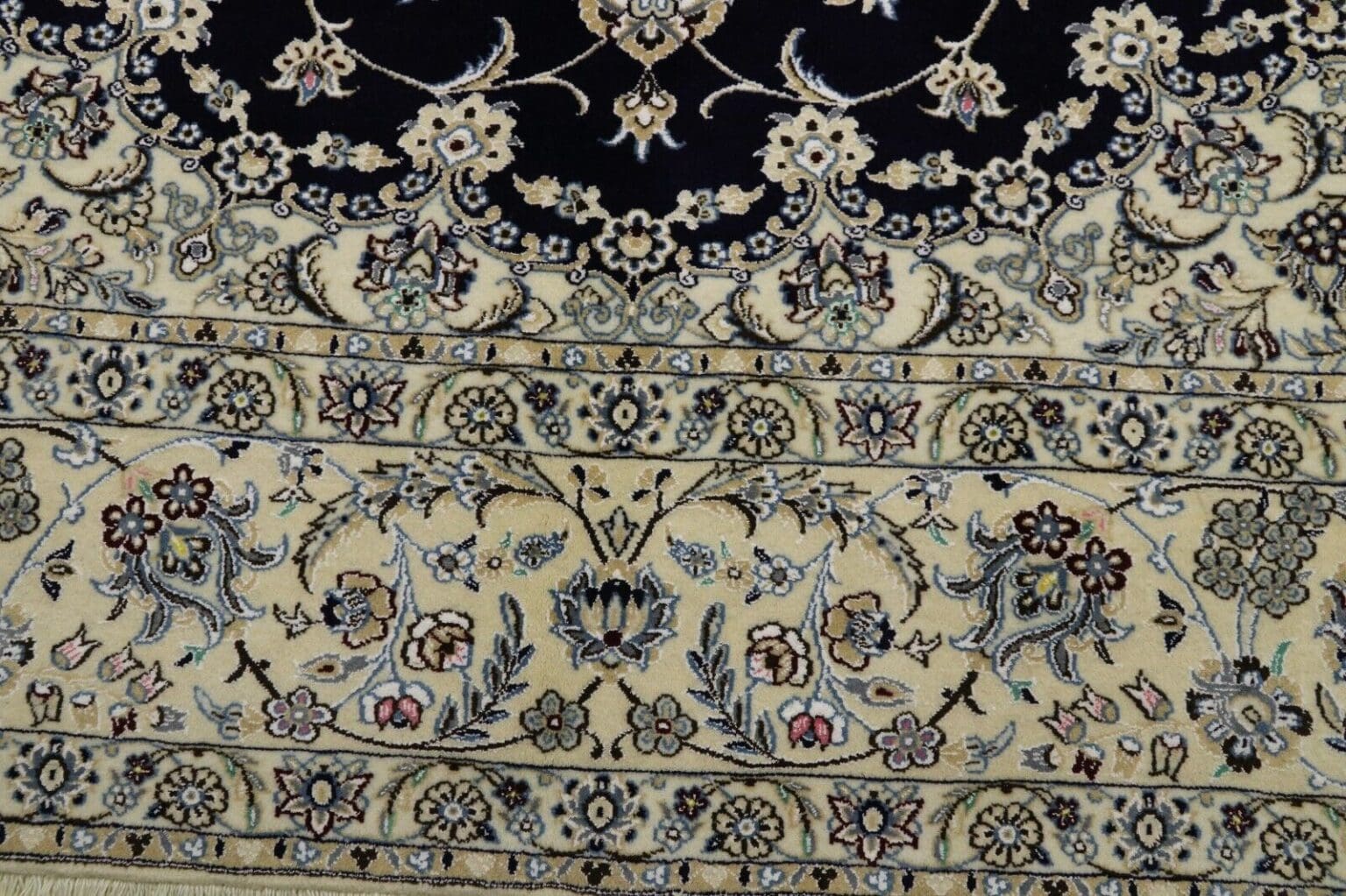
Floral motifs in Nain rugs are generally not intended as literal botanical pictures. Flowers, leaves and vines are stylised, repeated and placed in relation to the surrounding ornaments. The result is an ornamental interpretation of nature rather than a single realistic scene. The pattern is organised through the relationship between motifs, their scale and their recurrence across the field.
Geometric forms help establish the order of the design. Symmetry, recurring axes and controlled outlines can define the relationship between the central field and the surrounding border. Although these shapes are decorative, they also make the composition easier to read. The high knot density supports precise rendering of narrow lines, corners and transitions between smaller elements.
The colour effect is described as soft while remaining lively. This combination allows the motifs to be visible without disturbing the overall balance of the design. Wool and silk respond differently to light and can therefore create a nuanced surface when used together. The silk component adds fine points of lustre, while the wool determines much of the pile’s tactile character. Individual outlines and areas may appear slightly different as the viewing light changes.
The design does not tell a fixed picture story in the literal sense. Instead, it uses forms and symbols rooted in Persian culture. Traditional rug ornament can suggest ideas of nature, harmony and order through the way motifs are repeated and connected. In a Nain composition, visual calm is as important as the accuracy of the individual details. The pattern gains coherence from the interaction of all its parts rather than from one isolated emblem.
The Nain vocabulary can sit alongside a range of interior styles. A structured traditional pattern can complement a classically furnished room, while the same ordered surface can provide a textile focus in a more restrained setting. This does not require the design to be modern. Its adaptability comes from the relationship between the ornament, the colour balance and the surrounding space. The rug’s Oriental character remains visible through the floral and geometric language.
The term La forms part of the product name Super Nain 9 La and places the piece within the stated Nain designation. Its design remains Oriental, with floral and geometric elements as the central visual themes. Hand-knotting gives the pattern a textile depth because contours and transitions are assembled knot by knot. The resulting composition derives its character from repetition, proportion, material response and the careful connection of one patterned area to the next.
Special Features
A defining feature of this rug is its high knot density of approximately 500,000 knots per square metre. This indicates a finely worked and densely constructed surface and supports detailed rendering of the Oriental pattern. Together with the hand-knotted technique, it reflects a production process based on many individual operations rather than a machine-made surface.
The pile of virgin wool and silk brings together the material qualities named for this rug. Wool contributes a pleasant handle and durability, while silk adds lustre and colour brilliance. The rug is new and in very good condition. It is also suitable for underfloor heating and is described as pet-friendly. Its construction allows use in rooms with heavier traffic. Care recommendations include regular vacuuming without a brush head, avoiding direct sunlight and arranging occasional professional cleaning.
FAQ
How should I care for my Nain rug?
Regular vacuuming without a brush head is suitable for routine care. A stiff brush can place unnecessary stress on the pile fibres and should therefore be avoided. Direct sunlight should also be limited. Occasional professional cleaning helps preserve the surface and the way the colours appear. If a spill or more serious soiling occurs, a specialist cleaner is preferable to treating the wool and silk pile with an unsuitable household product.
Can the rug be used in heated rooms?
Yes. This Persian rug is suitable for underfloor heating and can be used in heated rooms. Virgin wool is part of the pile and contributes to a comfortable surface. With underfloor heating, the heat should be distributed evenly. The heating manufacturer’s instructions and proper installation should also be followed so that the rug lies flat and the warmth can pass through the floor covering appropriately.
How can I recognise an authentic hand-knotted rug?
Knot density, material quality and small irregularities in the pattern can offer useful indications of hand-knotting. Handmade rugs often contain individual details that are not produced in the same way by machine-made rugs. The reverse and the knot structure can also be examined by someone with appropriate expertise. Buyers should additionally look for certificates and provenance documents from the dealer. In the case of a Nain rug, the relationship between the Nain design tradition, the pile, the warp and the overall pattern is also relevant when assessing the piece.
To provide the best experiences, we use technologies like cookies to store and/or access device information. Consenting to these technologies will allow us to process data such as browsing behavior or unique IDs on this site. Not consenting or withdrawing consent, may adversely affect certain features and functions.
Functional Always active
The technical storage or access is strictly necessary for the legitimate purpose of enabling the use of a specific service explicitly requested by the subscriber or user, or for the sole purpose of carrying out the transmission of a communication over an electronic communications network.
Preferences
The technical storage or access is necessary for the legitimate purpose of storing preferences that are not requested by the subscriber or user.
Statistics
The technical storage or access that is used exclusively for statistical purposes.The technical storage or access that is used exclusively for anonymous statistical purposes. Without a subpoena, voluntary compliance on the part of your Internet Service Provider, or additional records from a third party, information stored or retrieved for this purpose alone cannot usually be used to identify you.
Marketing
The technical storage or access is required to create user profiles to send advertising, or to track the user on a website or across several websites for similar marketing purposes.
 SECURE PAYMENT
 SHIPPING PARTNERS