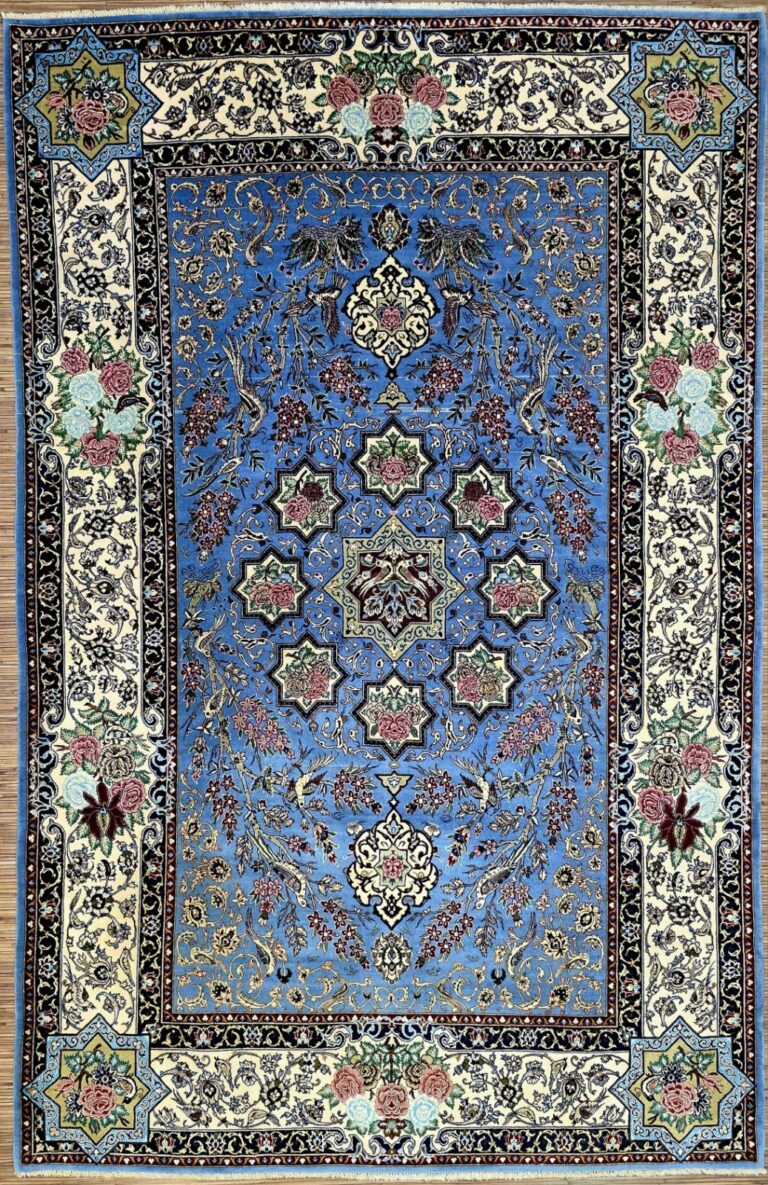
This Nain rug is hand-knotted, with a wool pile and a cotton warp. The detailed description also refers to the material as a high-quality wool blend. Wool is used for the visible pile because it provides a resilient textile surface with a naturally warm feel. The cotton warp forms part of the underlying structure and supports the arrangement of the knots. Together, pile and warp create the foundation for the finished rug.
Hand knotting is a piece-by-piece process rather than an identical mechanical print or weave. Individual knots are inserted into the foundation and then worked into the intended field of colour and ornament. This requires consistent handling of the material and careful attention to the drawing. Here, that method is used for a floral composition with a central medallion and decorated corners. The rug is described as a unique piece, so its handmade construction belongs to the identity of this particular item.
The wool is described as being dyed and prepared through several traditional stages. Those stages produce the beige and cream colour combination specified for the rug. The long description also characterises the knot density as exceptionally high. Dense knotting can support a clearly worked drawing and a durable surface, although no numerical knot-density figure is provided for this piece. In the short product information, the knot-density field identifies the rug as hand-knotted rather than giving a count.
The pile height is given in the product information, but it is not repeated here because the long description is intended to discuss the material and construction without measurements. The condition is new with a label. The combination of wool, cotton warp and hand knotting places the rug within the established craft tradition of Iranian floor coverings.
Origin and Tradition
Nain is a city in Iran and the name of an important Persian rug tradition. Nain rug making has a history extending over centuries, and its techniques have been passed from one generation to the next. The name therefore identifies a regional tradition of Iranian weaving and knotting, not merely a colour scheme or a general decorative style. This rug is presented as a Nain Persian rug within that context.
Nain is known for finely worked rugs that commonly use wool or silk. The present piece is specified with wool in the pile and cotton in the warp. These materials fulfil different roles in a knotted rug. The pile carries the visible pattern and supplies the tactile surface, while the warp provides a stable foundation through which the knots are organised. The relationship between the fibres, the knotting method and the finishing of the pile contributes to the character of the finished textile.
A recognised feature of Nain design is the combination of restrained colours with detailed ornament. Rather than depending only on a strong, dramatic palette, the pattern can be developed through subtle differences between ground and motif. Beige and cream define the colour statement of this rug. The quiet palette allows the medallion, floral details and corner ornaments to be read through their outlines and arrangement.
Iranian rug traditions preserve more than a practical method of covering a floor. They also preserve systems of proportion, repeated ornament and colour relationships. Regional workshops adapt these principles to individual compositions, while maintaining a visual connection with the tradition. Nain rugs are associated with a refined, detail-oriented approach in which the central field, borders and ornamental elements are brought into balance.
The transmission of craft knowledge does not make every hand-knotted rug identical. It provides a vocabulary of techniques and motifs that can be interpreted in a particular work. A weaver must coordinate the sequence of knots, the colour changes and the placement of the design as the rug develops. That process explains how a rug can belong clearly to Nain tradition while remaining an individual handmade object.
The historical setting of Nain is also reflected in the use of floral ornament and measured composition. Persian decorative arts have long combined natural forms with geometric organisation. A rug can translate those ideas into a field that is viewed from above and experienced through its surface. The origin of this piece is Iran, and its designation as Nain places it within that broader history of Persian textile art.
Design and Pattern
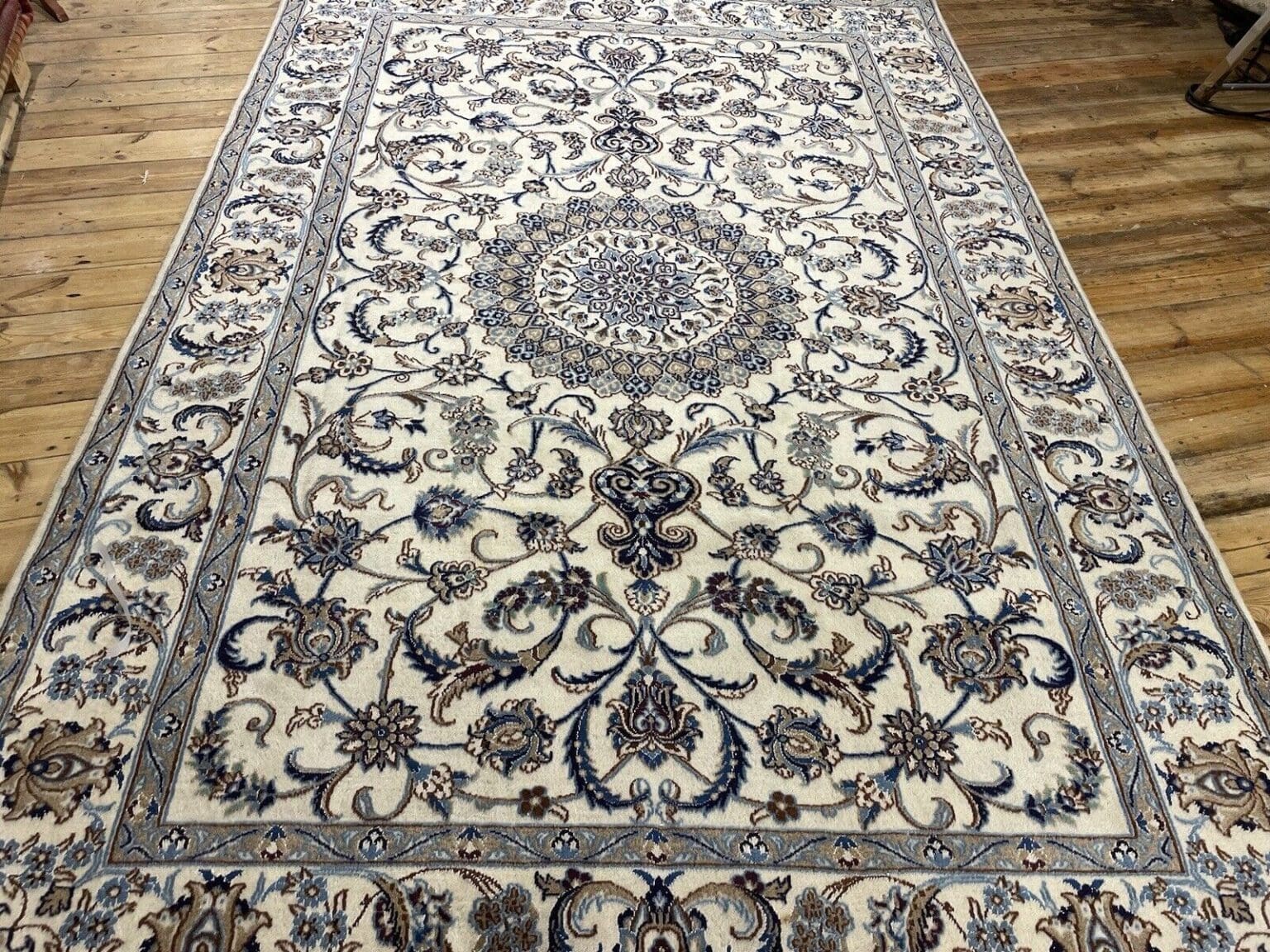
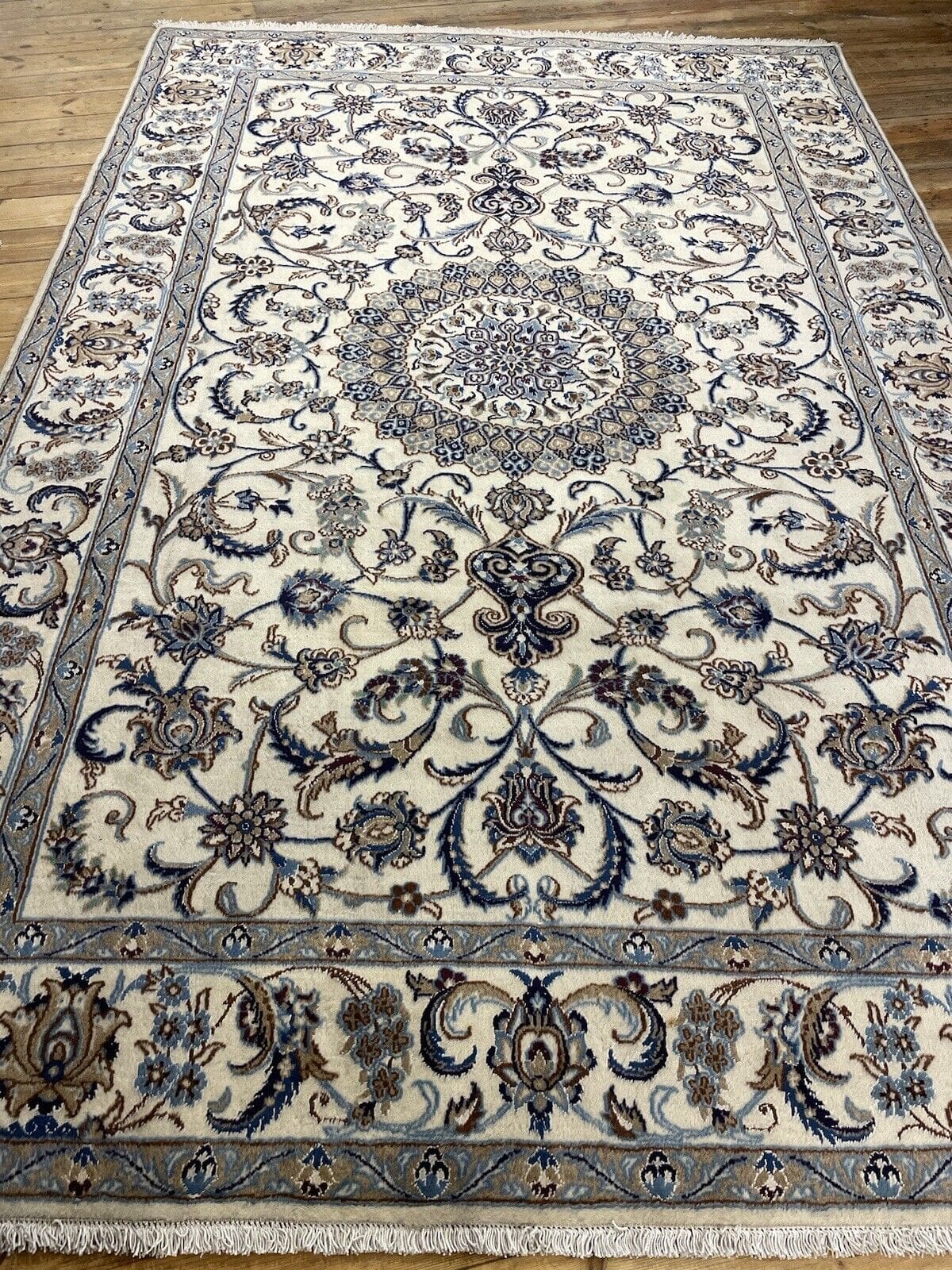
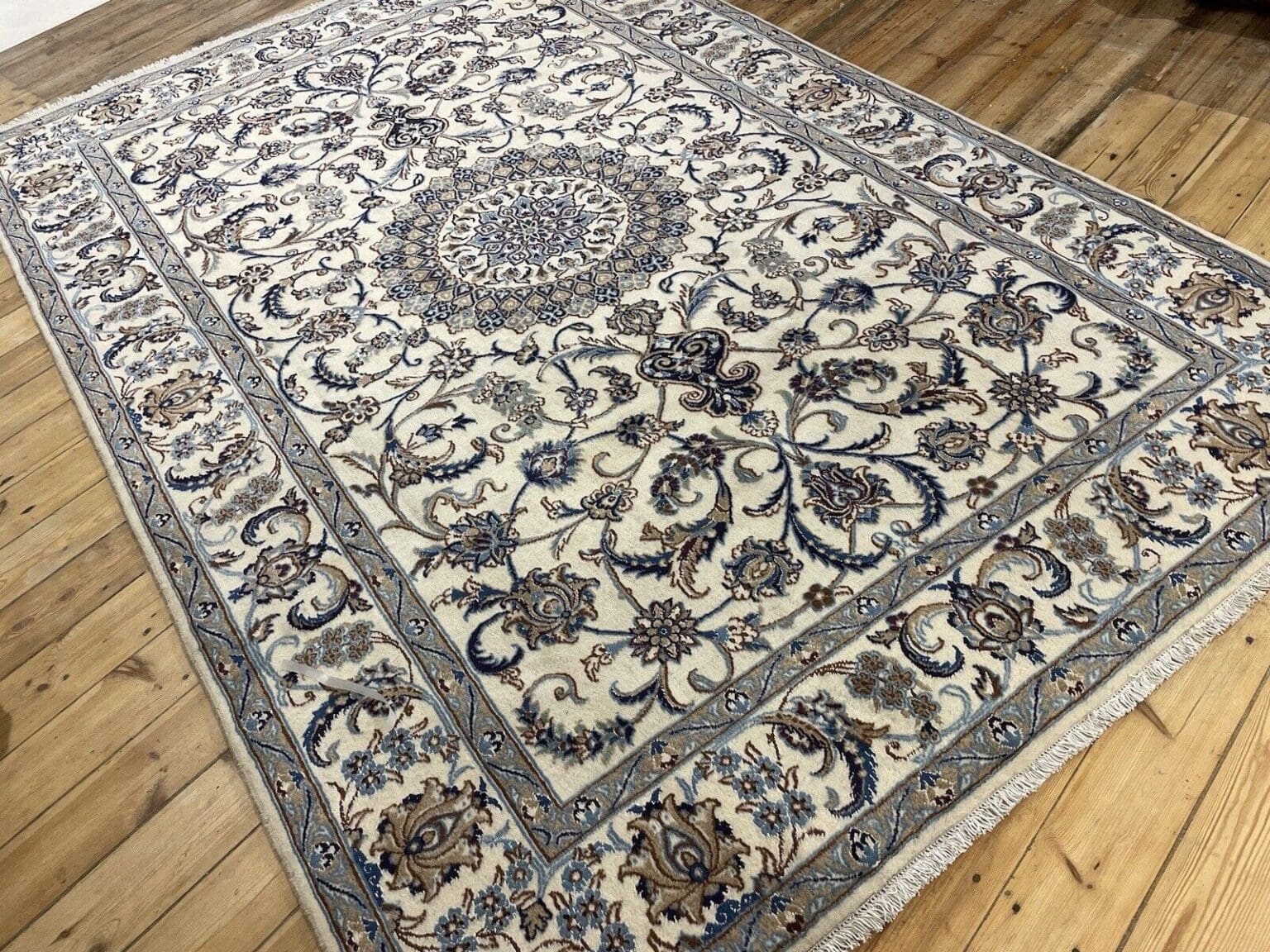
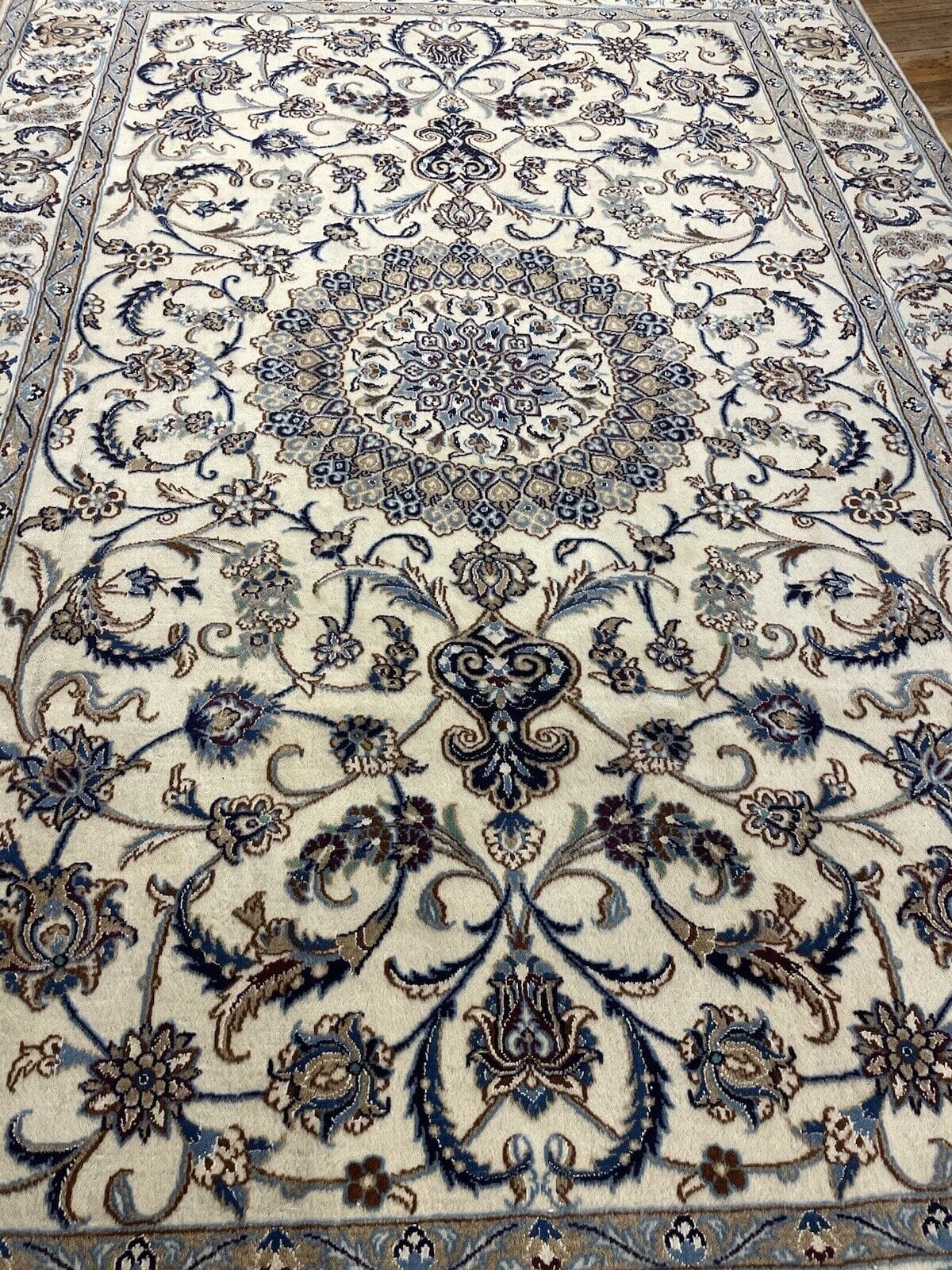
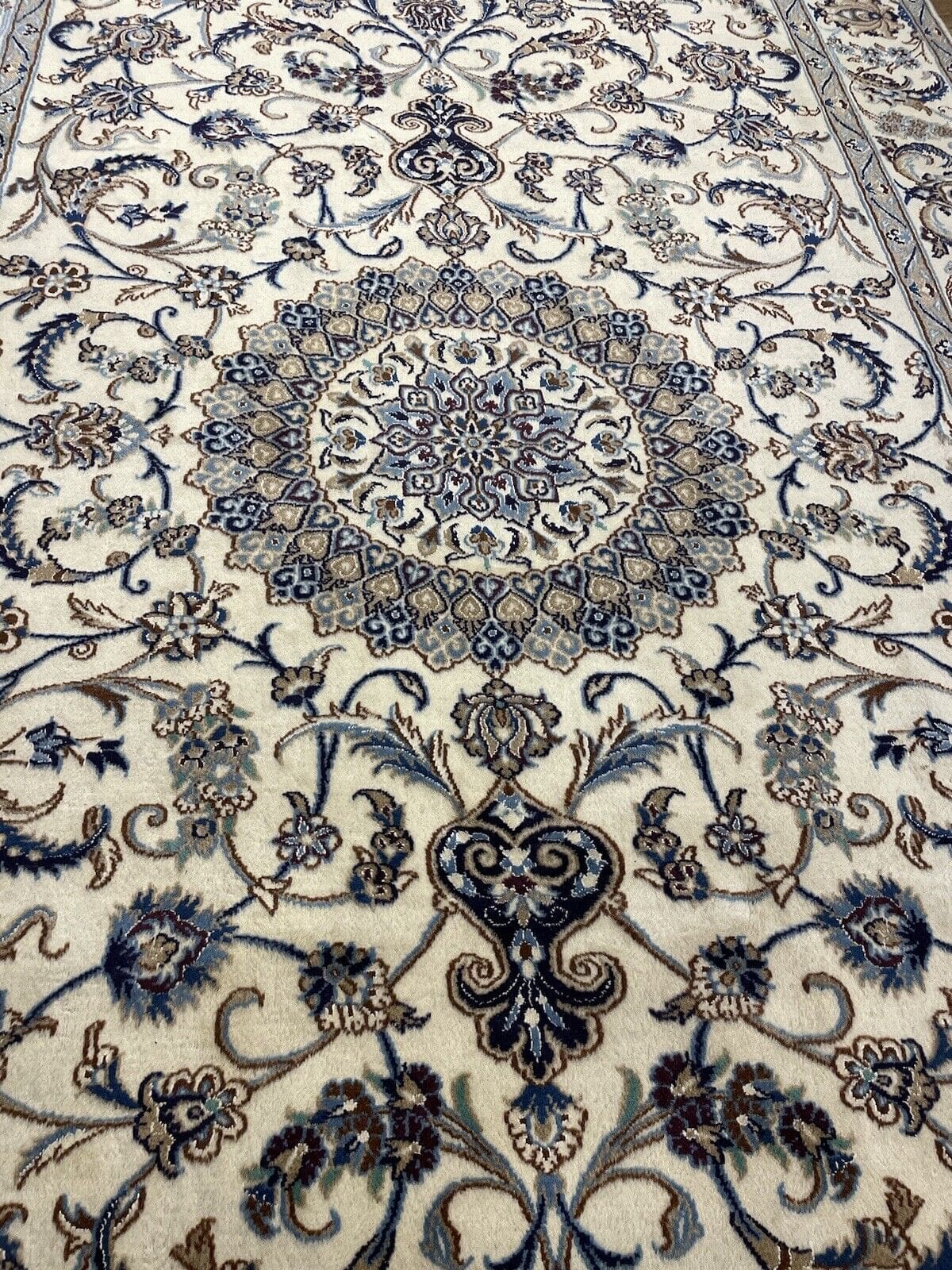
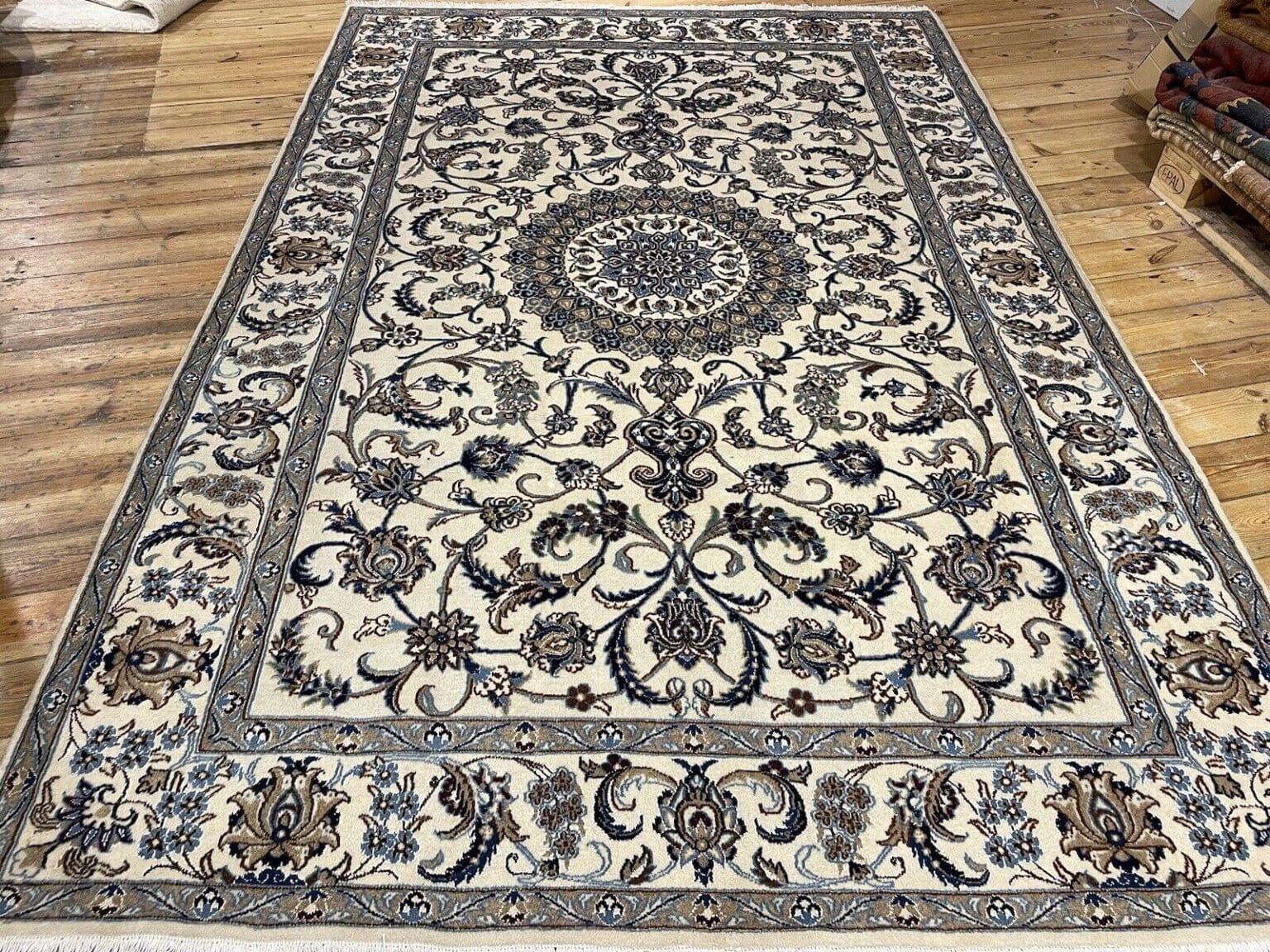
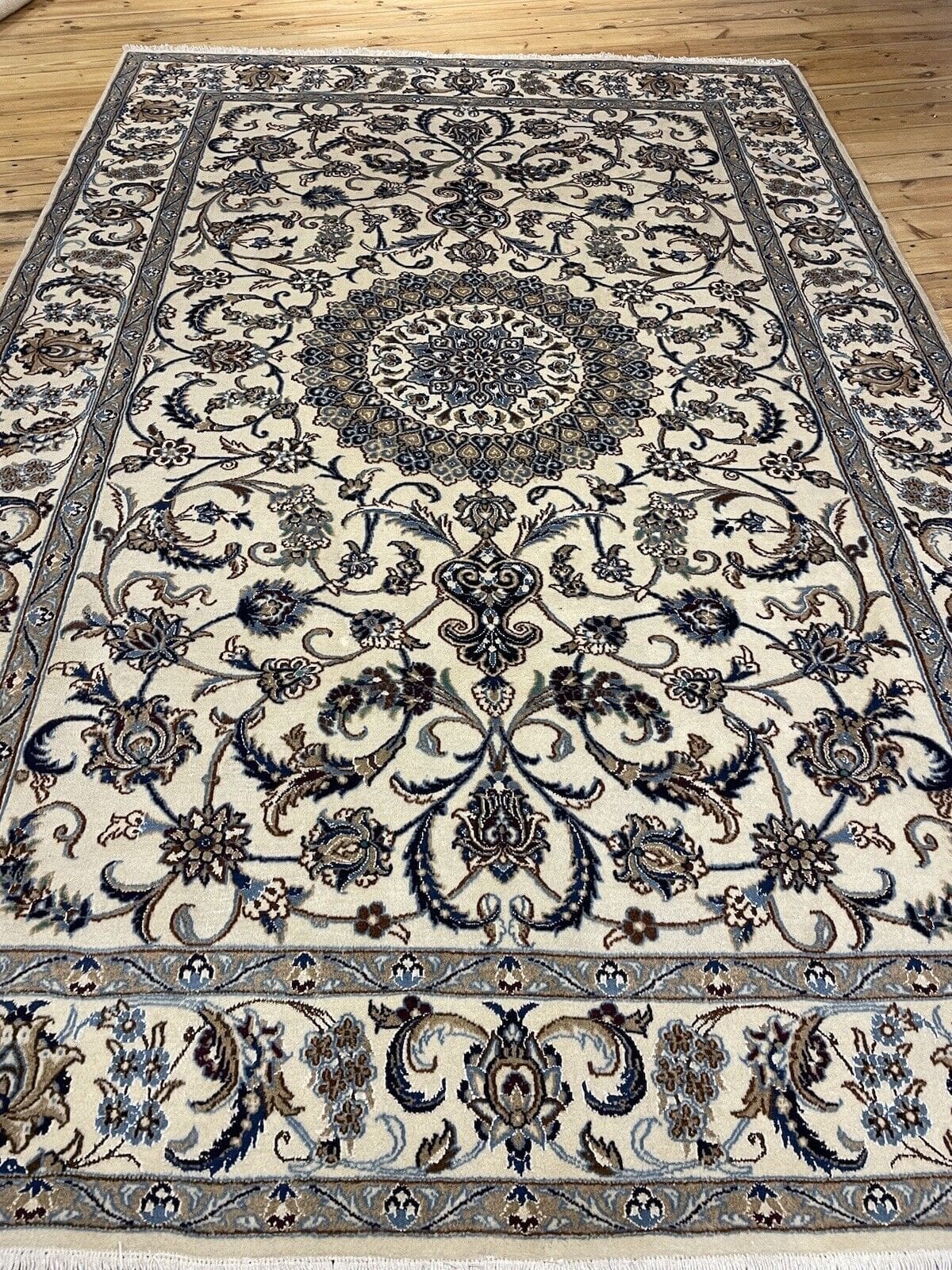
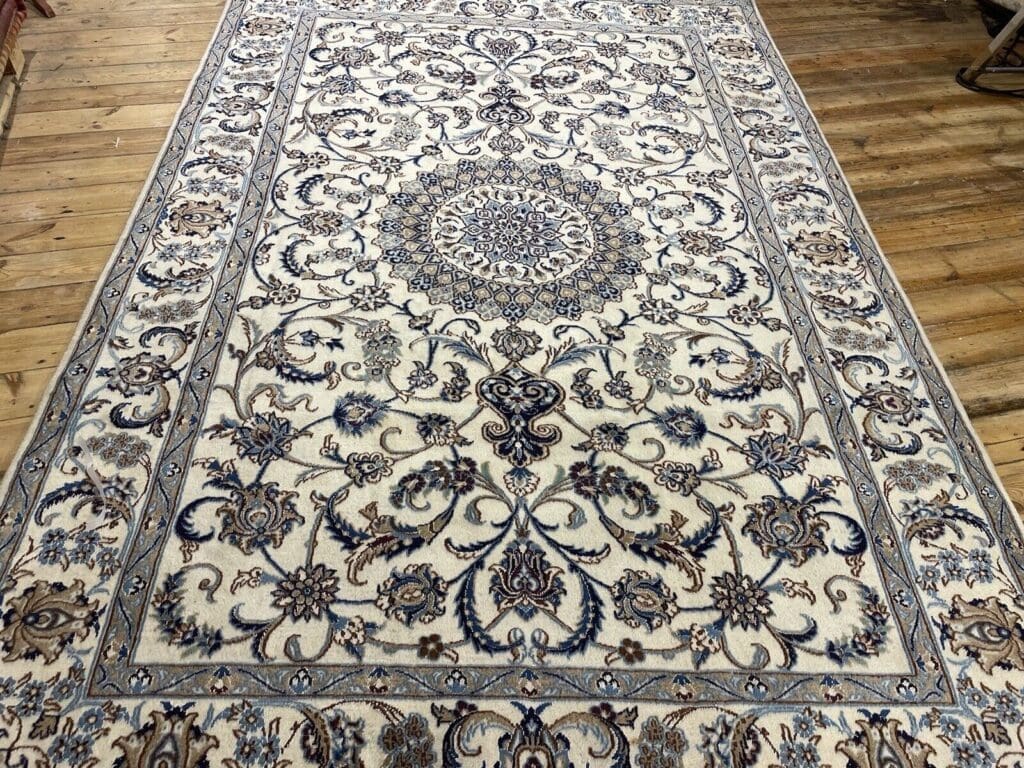
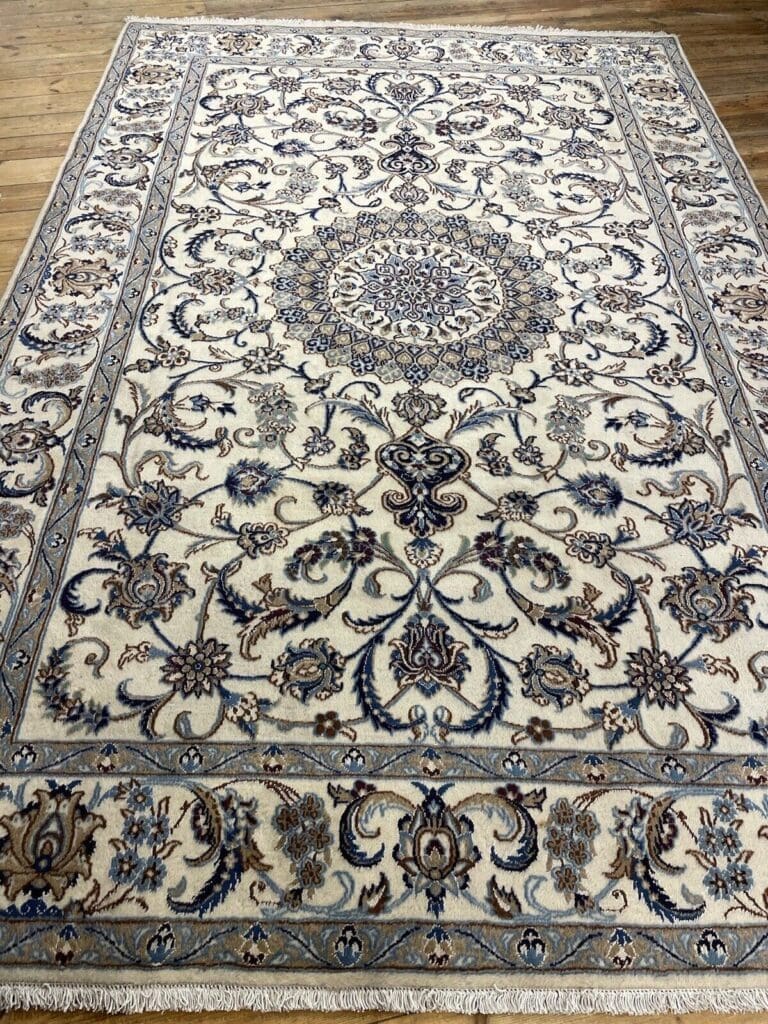
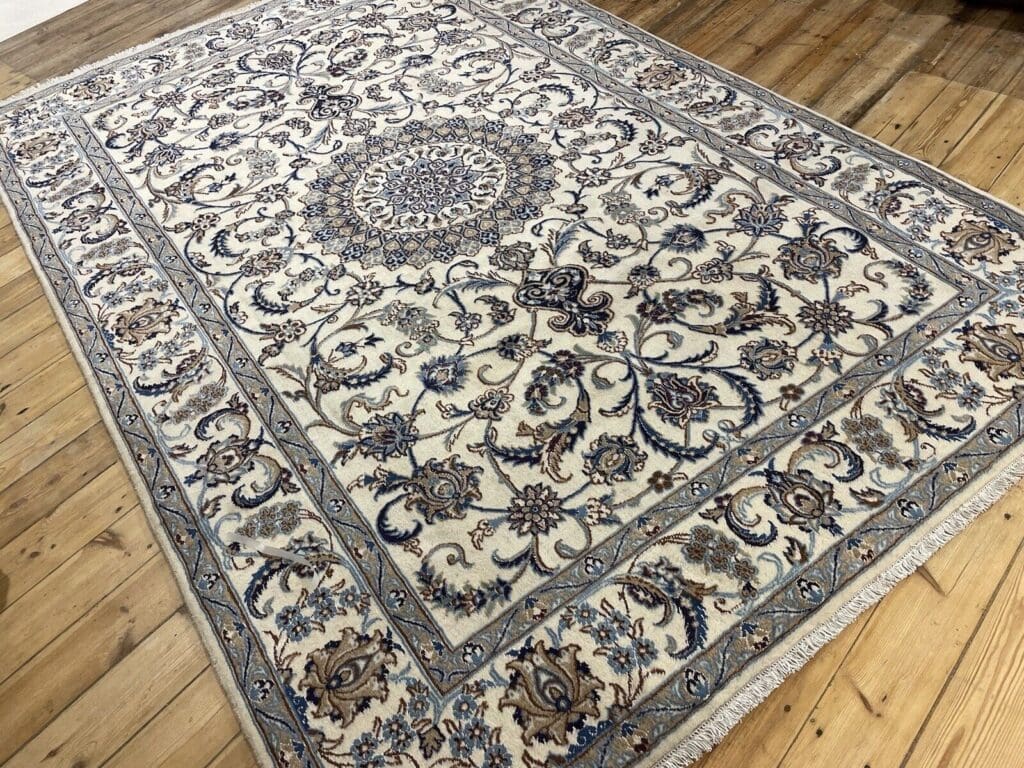
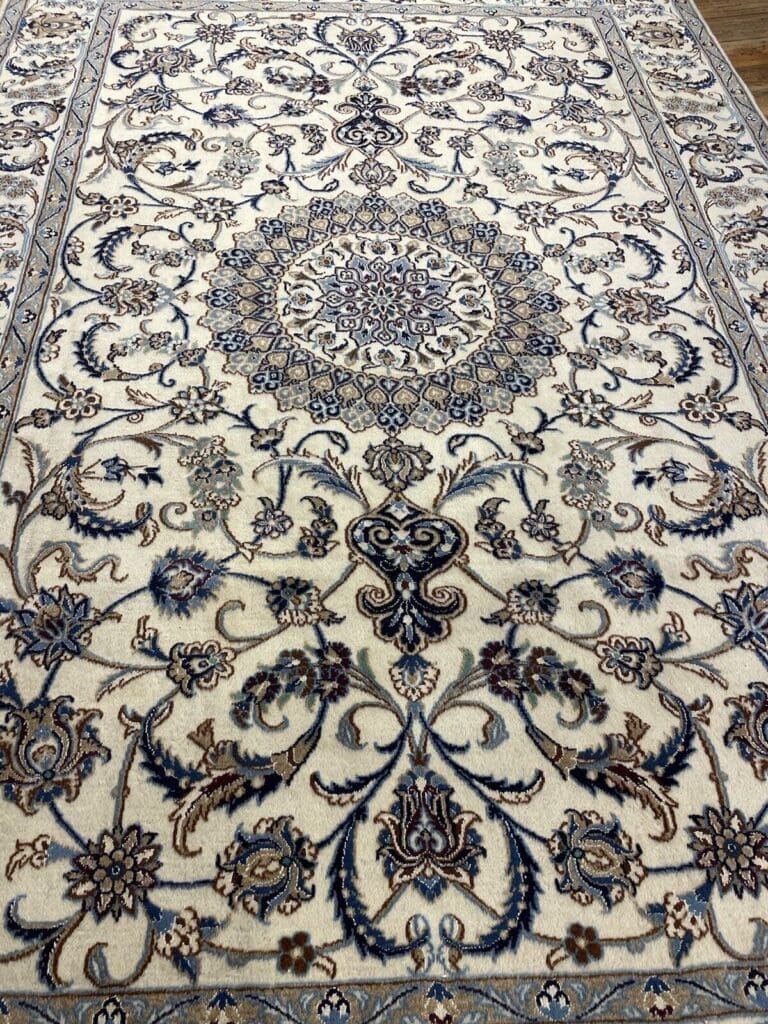
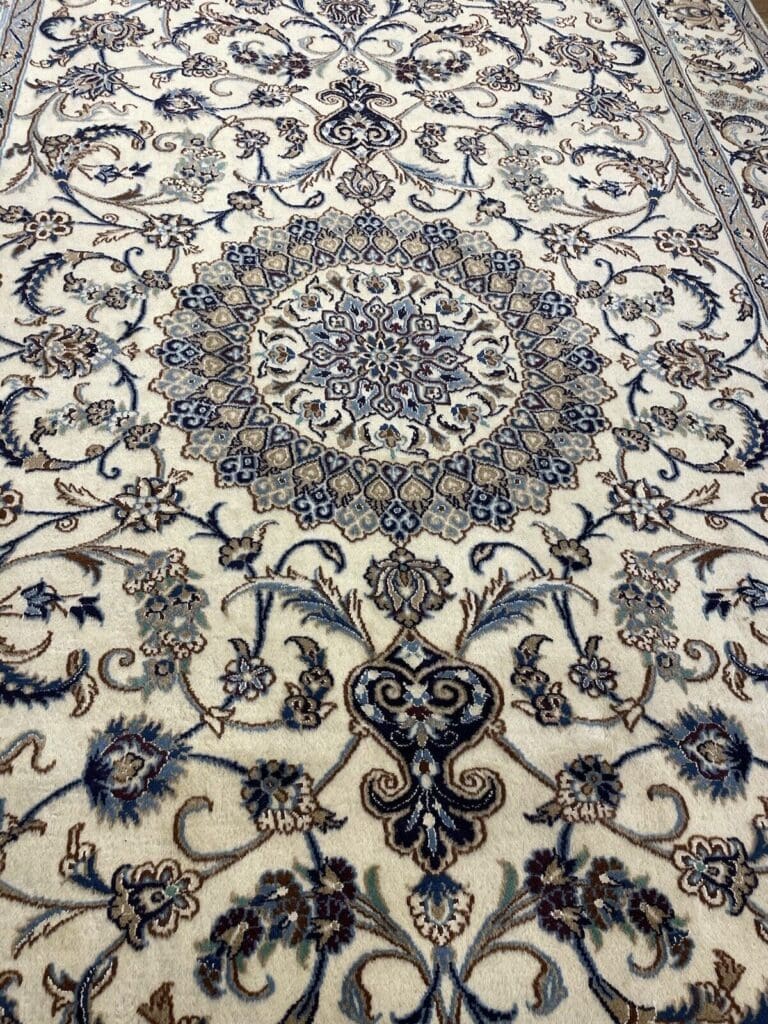
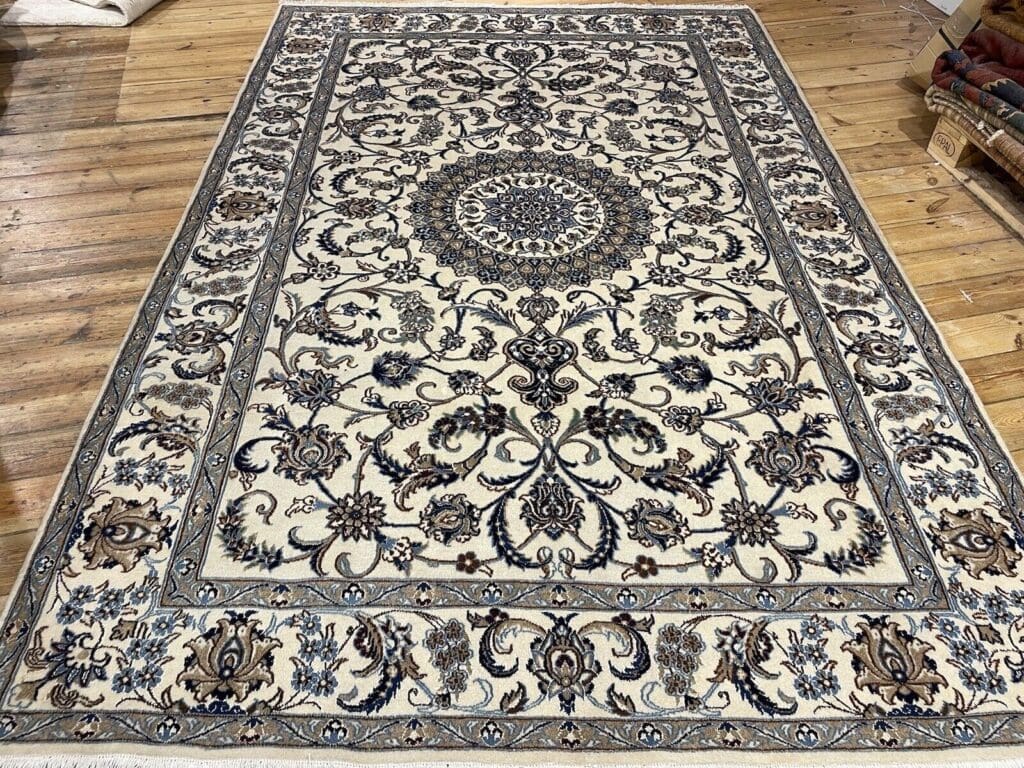
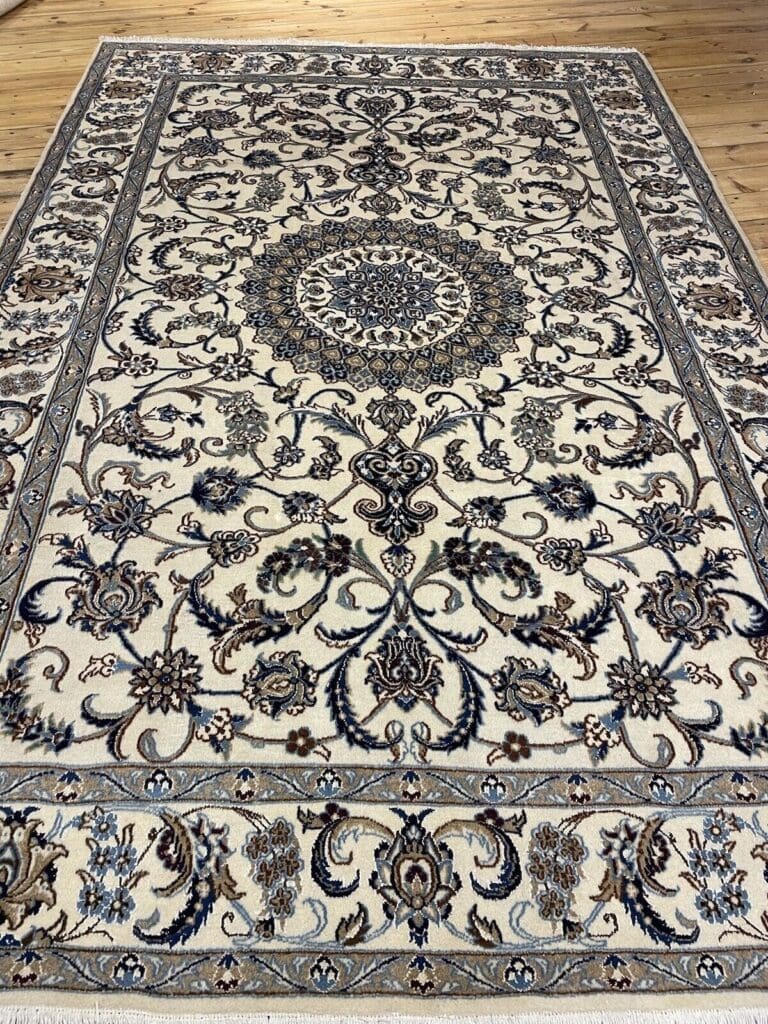
The design centres on a medallion surrounded by floral ornament. Decorated corners complete the stated composition. The medallion provides a visual focus, while the floral elements connect the centre with the surrounding field. The corner details continue the decorative language toward the edges and give the overall design a finished, framed quality.
Floral patterns are deeply established in Persian art and architecture. Flowers, leaves, vines and related forms may be arranged as repeating ornaments or combined into a more concentrated central design. On this rug, the floral theme is organised rather than pictorial. The motifs work together as a structured pattern, with the hand-knotted surface carrying the changes in line, colour and detail.
The medallion combines geometric definition with botanical-looking decoration. That contrast creates two complementary levels of order. The centre is recognisable as a controlled, measured shape, while the flowers and foliage soften the surrounding drawing and introduce rhythm. The result is a pattern that is neither purely geometric nor simply an unrestricted floral field. It reflects the combination of geometric and floral elements named in the source description.
Beige and cream give the rug a gentle tonal relationship between background and ornament. Because the contrast is moderated, the design is perceived through repetition, contour and the placement of the motifs as much as through colour intensity. This makes the composition compatible with traditional, modern or rustic interiors, as described for the rug. The visual language remains Persian in its central arrangement and detailed floral vocabulary.
The decorated corners are not separate additions to the medallion. They help relate the centre to the outer parts of the field, so that the composition reads as one connected design. Floral details repeat or echo the character of the central ornament, creating continuity across the surface. The rug therefore presents a balanced pattern built from a focal medallion, botanical forms and coordinated corner decoration.
Special Features
The rug is new with a label and is suitable for use over underfloor heating. The listed rooms include the living room, bedroom and study. The wool pile is described as naturally warm and pleasant to the touch. Traditional knotting creates a dense, hard-wearing surface that is intended to withstand extended use.
The care guidance recommends regular vacuuming without a brush. If a mark occurs, it should be treated promptly by dabbing with a damp cloth. The rug should not be cleaned while wet, and harsh cleaning agents should not be used. The description also calls it relatively easy to care for and comparatively resistant to stains and dirt. These points relate to the stated suitability for everyday residential rooms.
FAQ
How should I care for my Nain rug?
Vacuum the rug regularly without using a brush to remove dust and loose dirt while treating the pile gently. Deal with stains as soon as possible by dabbing the affected area with a damp cloth. Do not clean the rug in a wet condition, and avoid aggressive cleaning products. Following these instructions keeps care compatible with the wool pile and the handmade surface described for this rug.
Where is the best place to use my Nain rug?
The product information names the living room, bedroom and study as suitable locations. The longer description also mentions dining rooms, offices and hallways. Beige and cream tones together with the floral medallion can work with traditional, contemporary or rustic furnishing schemes. The stated suitability for underfloor heating is relevant wherever that form of heating is installed.
What is the difference between a hand-knotted and a machine-made rug?
A hand-knotted rug is built by inserting individual knots into its foundation by hand. This makes each piece individual and allows the detailed floral drawing to develop through the knotting process itself. Machine-made rugs are produced in larger series by industrial methods. The distinction described here is therefore between handmade construction and the individuality it creates on one side, and repeatable mass production on the other.
To provide the best experiences, we use technologies like cookies to store and/or access device information. Consenting to these technologies will allow us to process data such as browsing behavior or unique IDs on this site. Not consenting or withdrawing consent, may adversely affect certain features and functions.
Functional Always active
The technical storage or access is strictly necessary for the legitimate purpose of enabling the use of a specific service explicitly requested by the subscriber or user, or for the sole purpose of carrying out the transmission of a communication over an electronic communications network.
Preferences
The technical storage or access is necessary for the legitimate purpose of storing preferences that are not requested by the subscriber or user.
Statistics
The technical storage or access that is used exclusively for statistical purposes.The technical storage or access that is used exclusively for anonymous statistical purposes. Without a subpoena, voluntary compliance on the part of your Internet Service Provider, or additional records from a third party, information stored or retrieved for this purpose alone cannot usually be used to identify you.
Marketing
The technical storage or access is required to create user profiles to send advertising, or to track the user on a website or across several websites for similar marketing purposes.

 SECURE PAYMENT
 SHIPPING PARTNERS