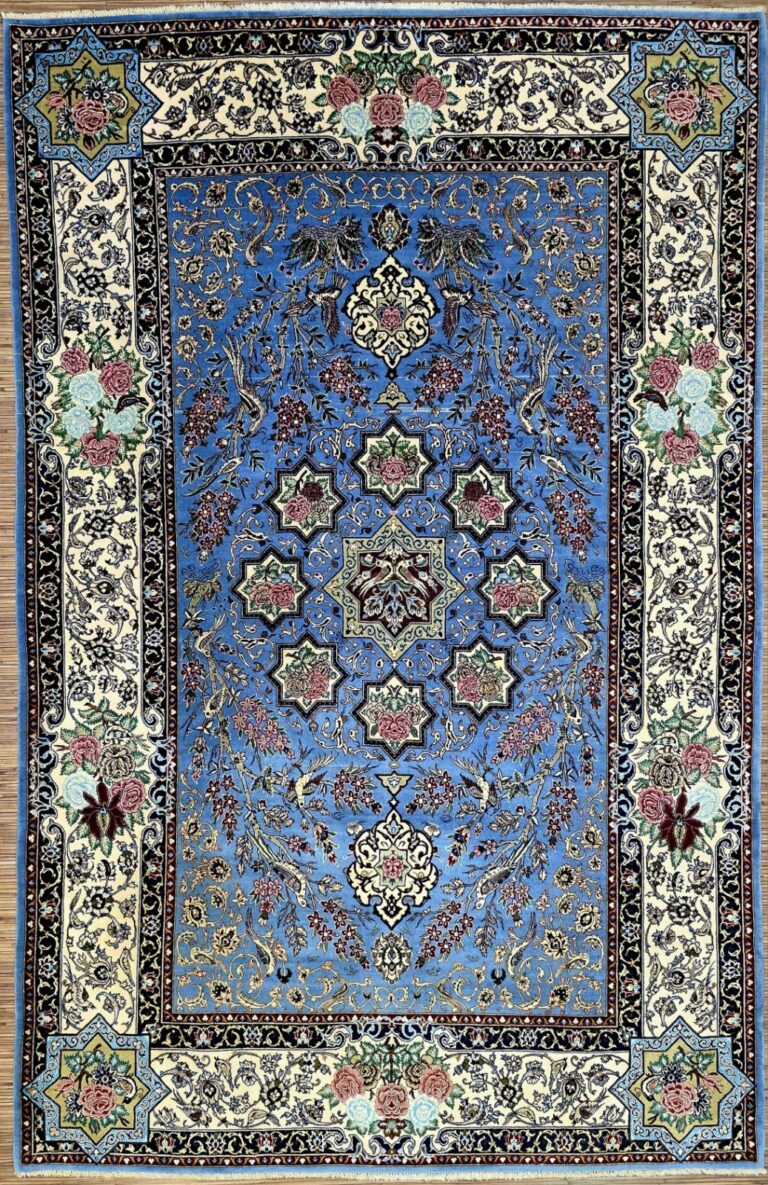
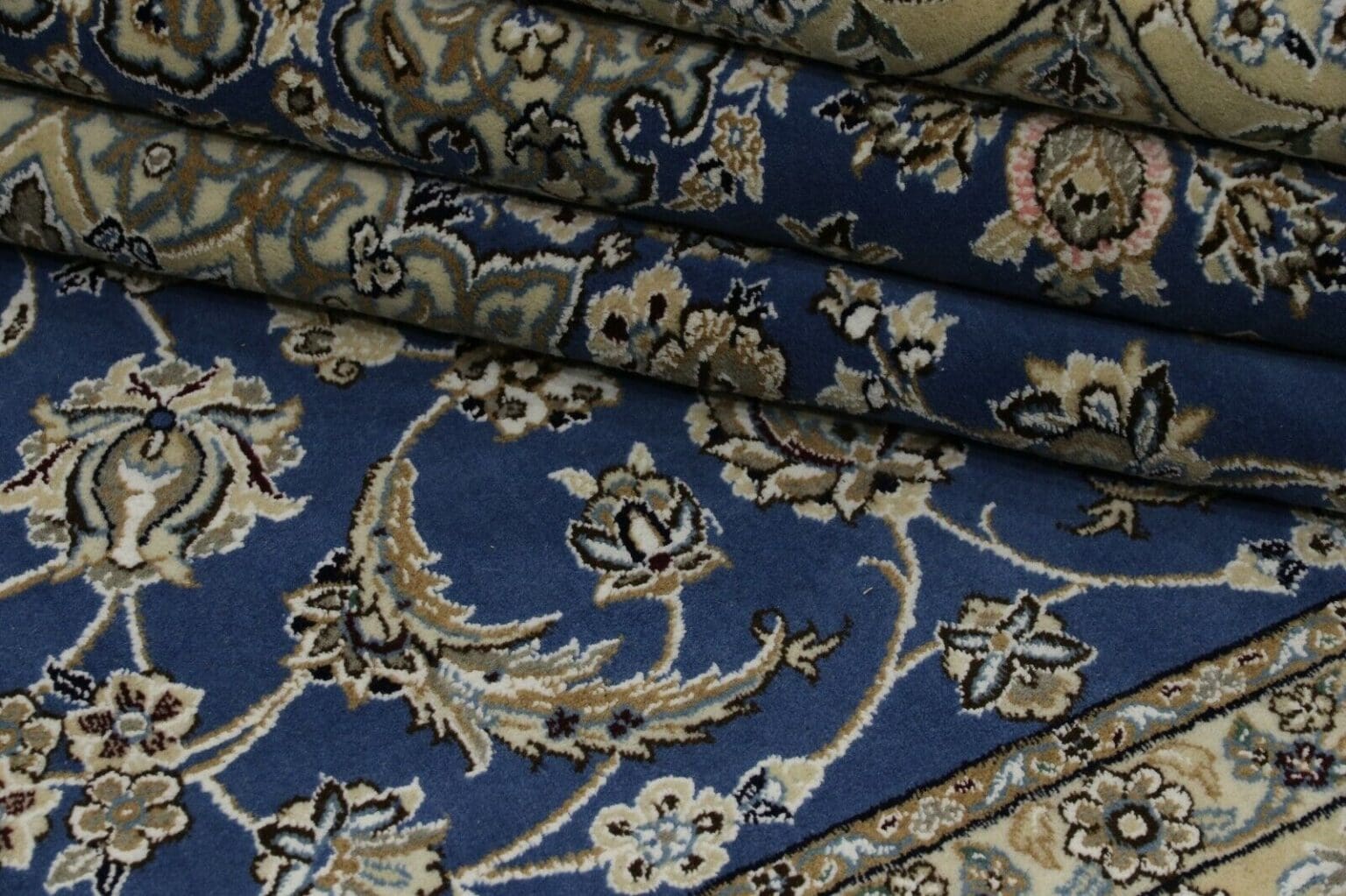
The Super Nain 9 la is a hand-knotted Persian rug made with 80% virgin wool and 20% silk. Its warp is made from 100% cotton. This combination brings together the resilient character of wool and the fine surface quality associated with silk. Wool has long been used in rug making for its durability, dimensional stability and comfortable feel. Silk can contribute a smoother touch and a restrained sheen. In this rug, the two fibres create a varied material impression across the pile.
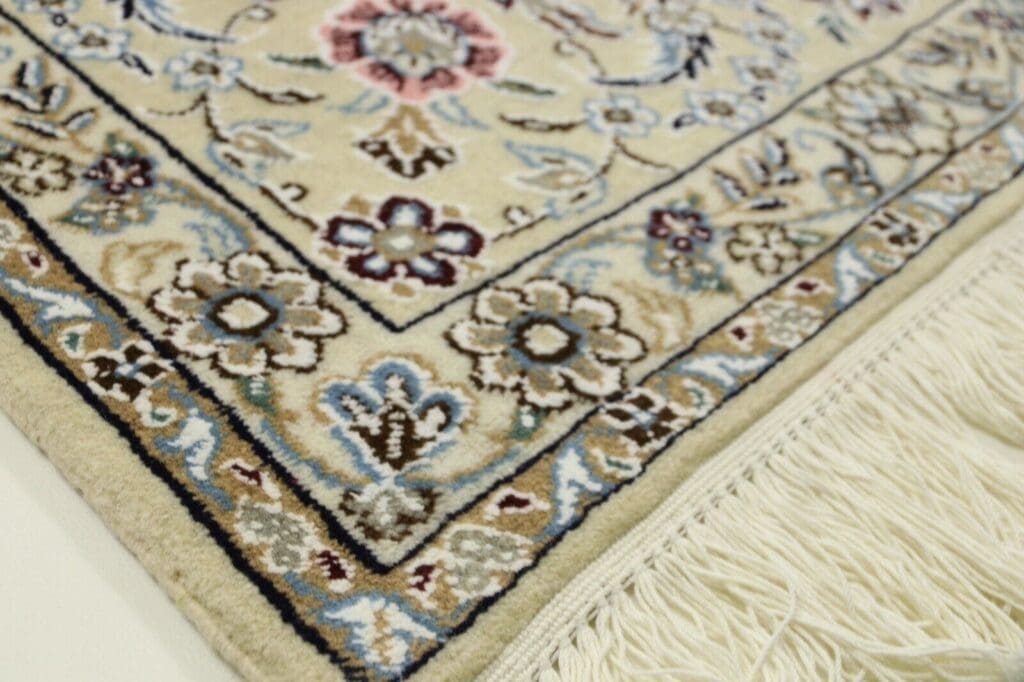
The rug was made by hand. In hand-knotting, each knot is placed individually and incorporated into the developing structure. This differs from machine production and gives the finished rug an individual textile character. Its knot density is approximately 500,000 knots per square metre. Such a fine density supports the precise rendering of narrow outlines, small ornaments and clearly separated areas within a design.
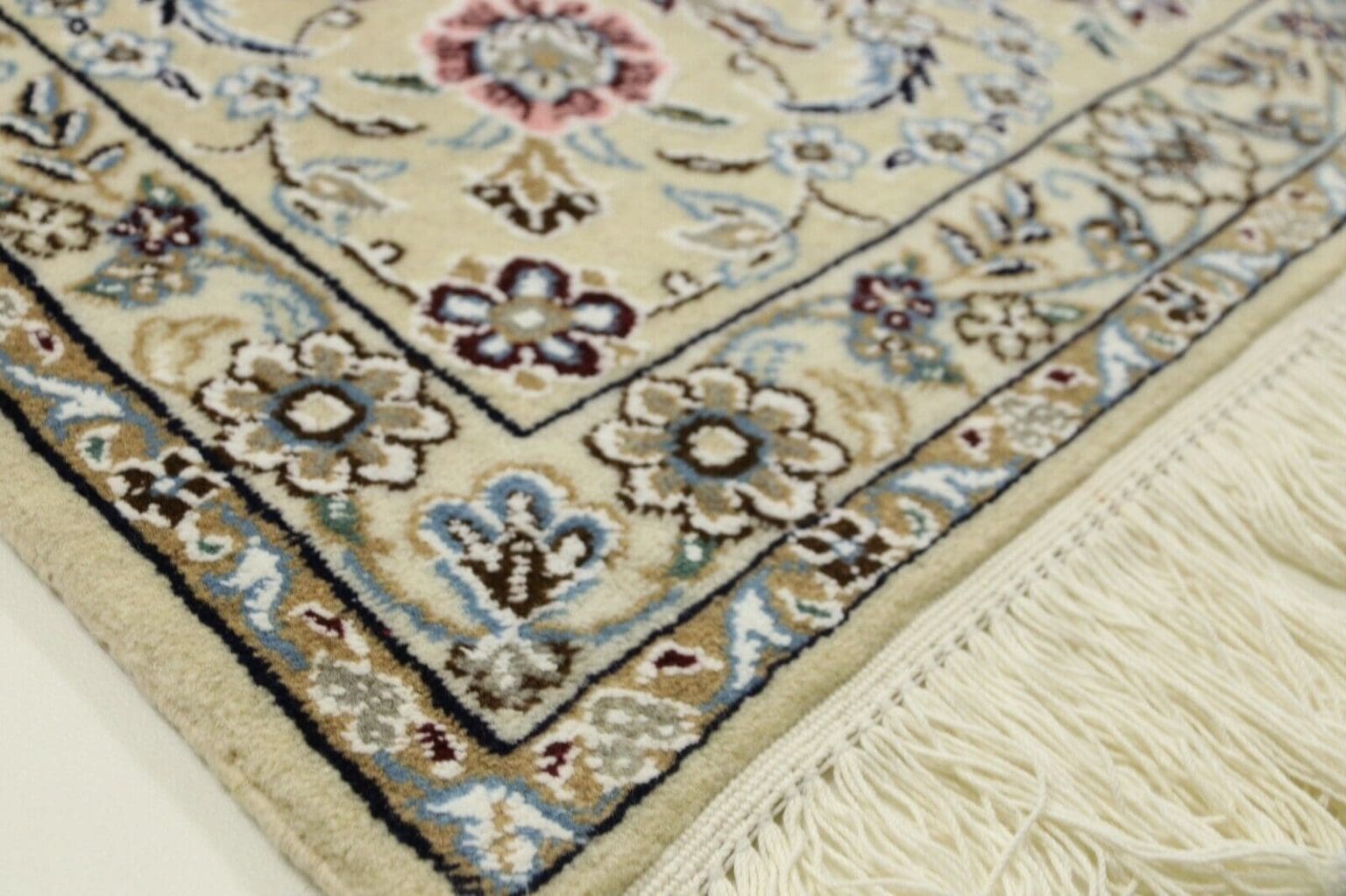
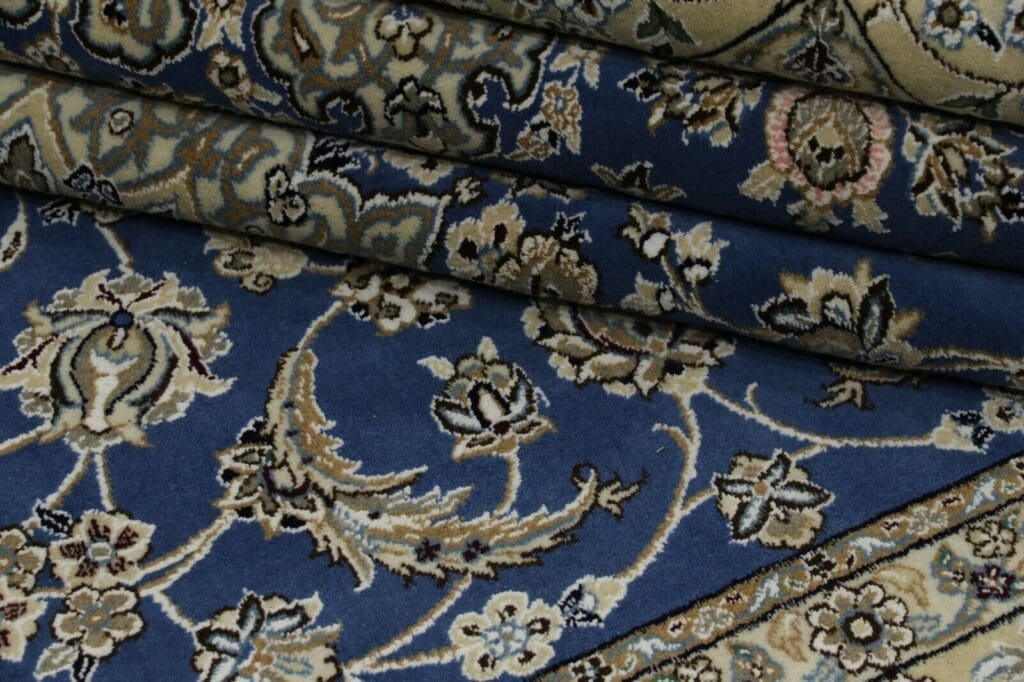
The pile consists of virgin wool and silk and has a height of 8 mm. This creates a soft textile surface with a comfortable feel underfoot. The cotton warp forms the supporting foundation of the rug. The relationship between warp, pile and knots is central to the structure of a hand-knotted piece. This rug is also suitable for use with underfloor heating.
Origin and Tradition
The Super Nain 9 la comes from Persia and belongs to the tradition of Nain rugs. Nain is a city in Iran known for finely knotted rugs. The city is located in Isfahan Province. Nain developed a distinctive rug-making culture in which careful knotting, detailed drawing and balanced compositions are closely connected. The name Nain therefore identifies not only a place of origin, but also a regional design language shaped over many years of Persian rug making.
Rug production in Nain goes back to the 19th century. Skills are passed on through families and workshops. Knowledge of knotting, fibre selection, tension, colour relationships and the organisation of motifs is built through practical experience. A Nain rug consequently joins the work invested in one individual piece with a tradition maintained in Iran across generations. Hand-knotting requires a continuous process and close attention to the planned drawing.
Nain rugs are commonly associated with fine knot densities and clearly organised ornament. Floral elements, axial arrangements and geometric areas may be brought together in a single composition. Fine construction allows contours, leaves, blossoms and secondary motifs to be shown with distinction. At a high knot density, these details can be transferred to the rug with considerable precision.
The Nain tradition also combines practical use with decorative order. A rug covers a floor, adds textile warmth and defines an area within a room. At the same time, its pattern divides the surface into a visual rhythm. Persian rug design uses inherited principles for this purpose, combining them differently according to workshop and execution. Nain rugs are valued internationally for the connection between refined workmanship and a clear, elegant drawing.
As a Persian rug, this piece belongs to the Iranian knotting tradition. Its Persian origin, the designation Super Nain 9 la and its hand-knotted construction place it within a field in which material, knot density and pattern are considered together. Origin cannot be separated from the decorative vocabulary: it describes the cultural and technical setting in which Nain rugs are made.
Design and Pattern
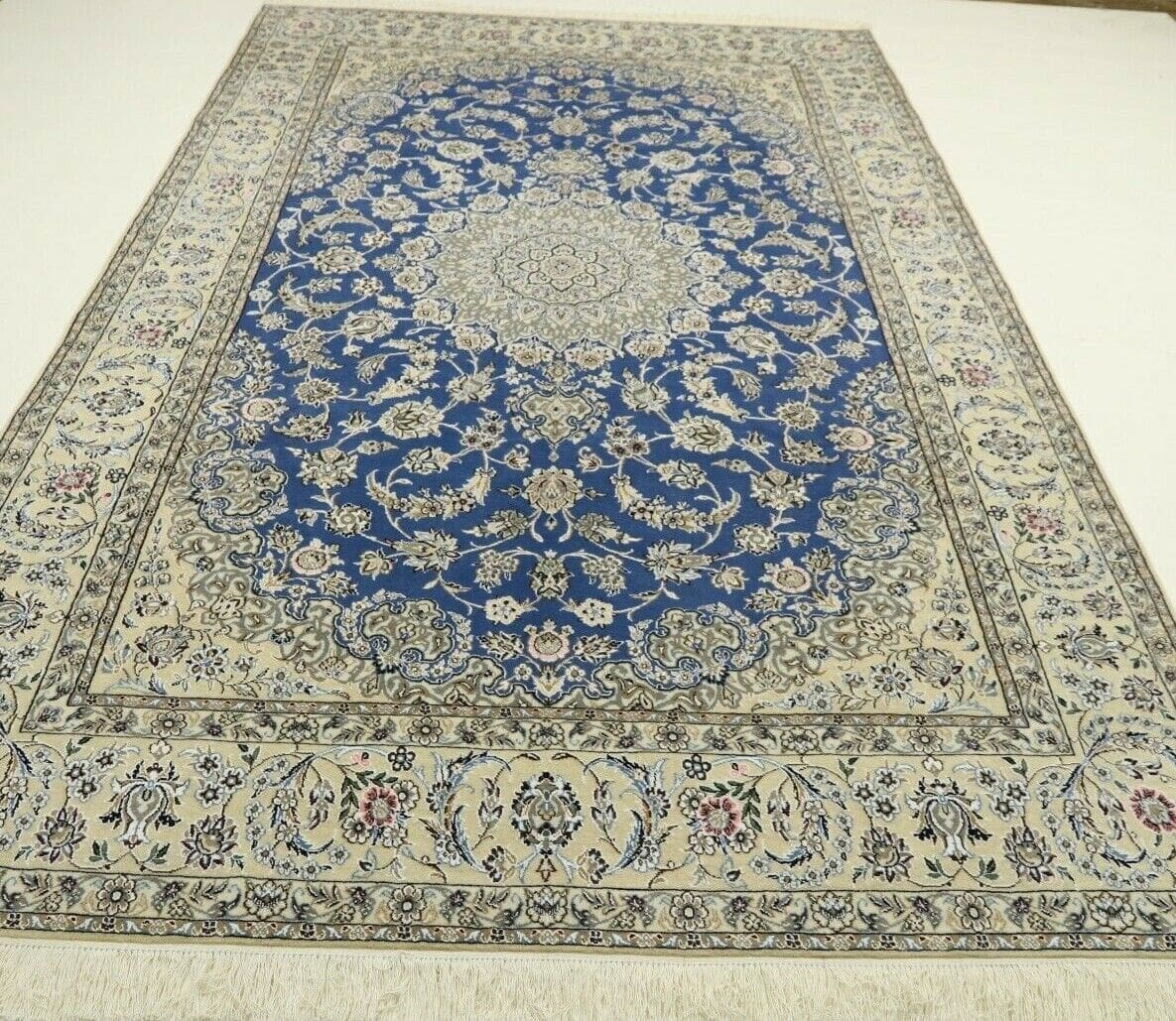
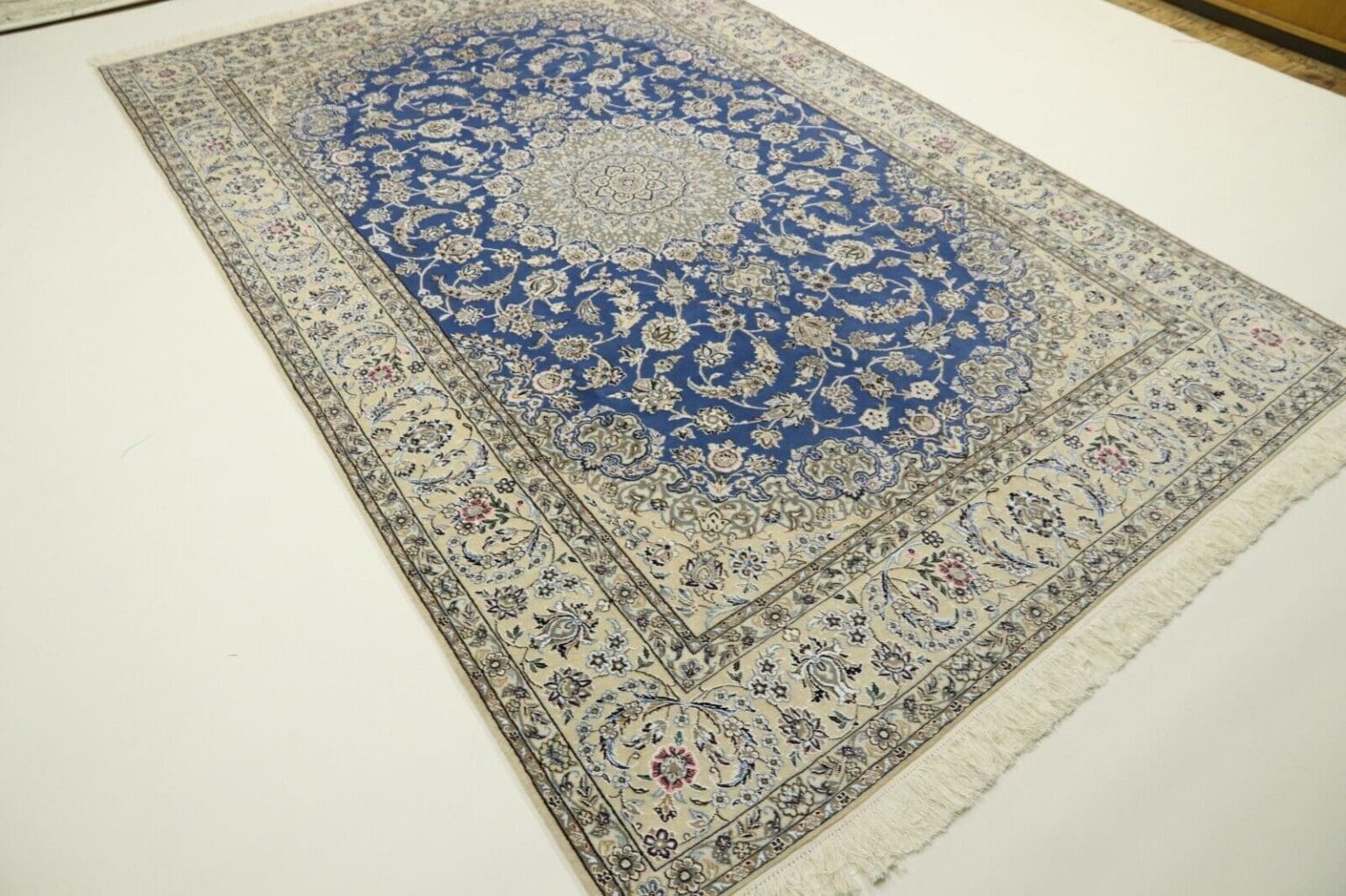
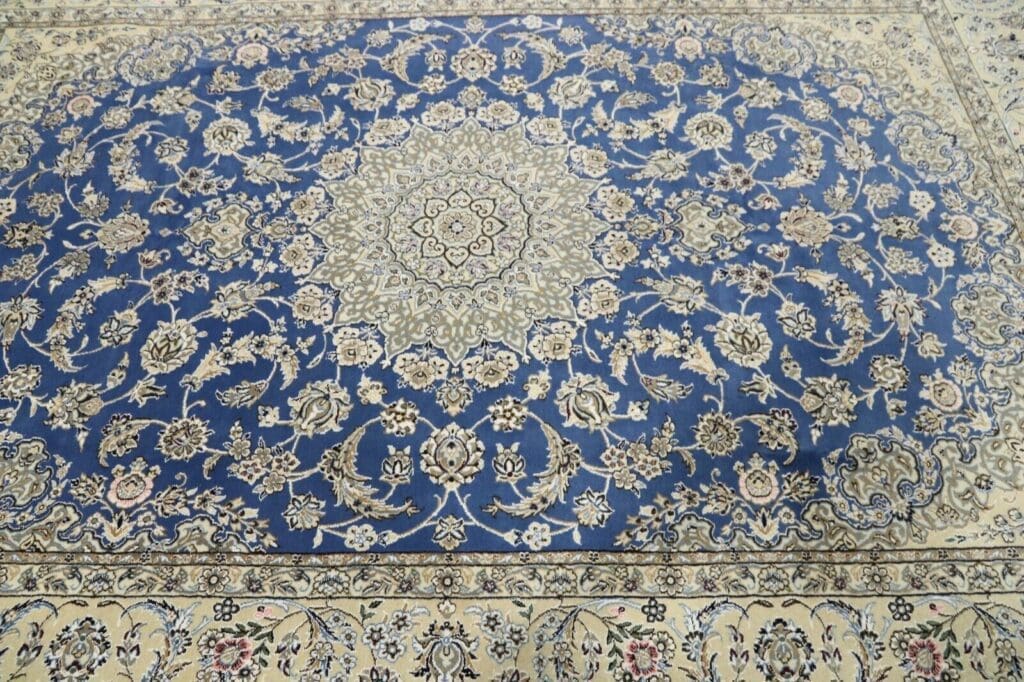
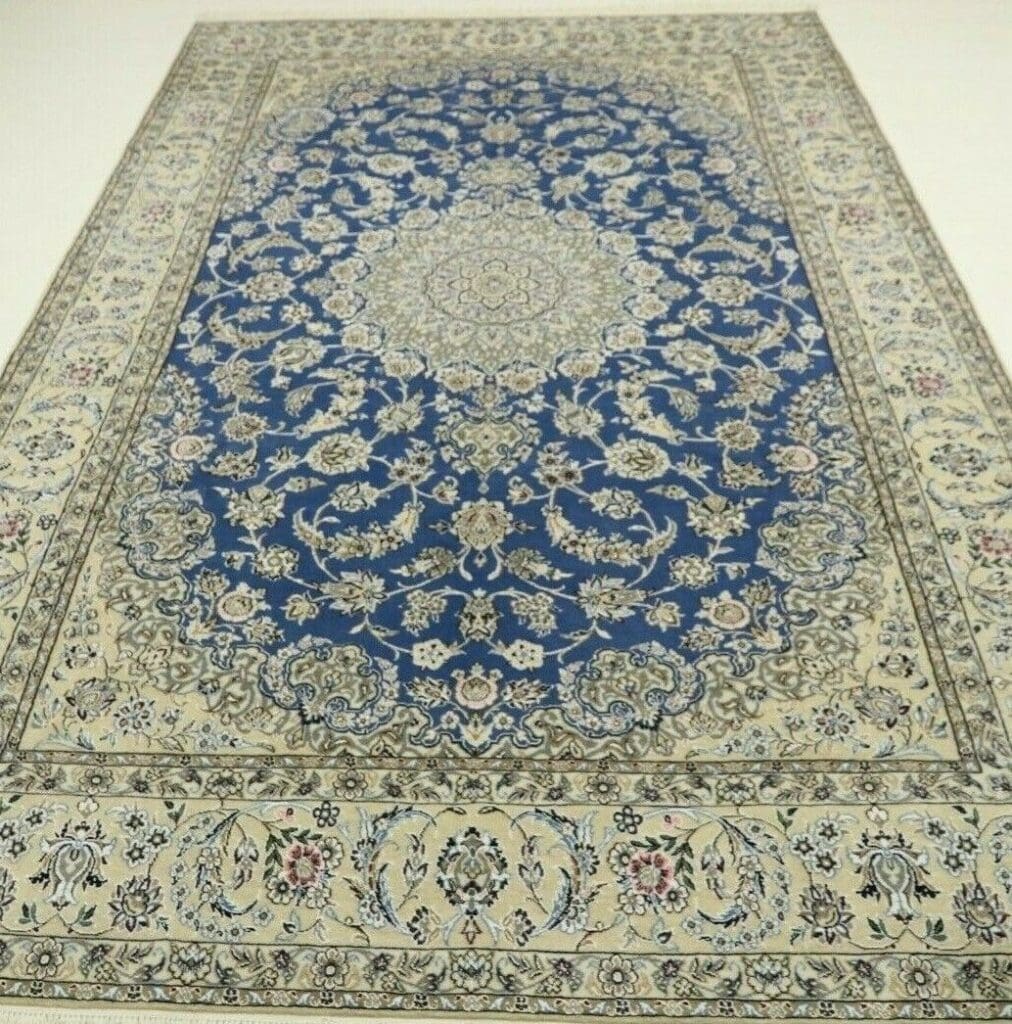
The pattern of this rug is described as a traditional Oriental pattern. Nain rugs are typically associated with floral and geometric elements. Floral motifs may include blossoms, leaves and winding vines. Geometric forms provide a firm order and help balance the design across the field. Symmetrical arrangements can establish a recognisable axis, while asymmetrical details may add variation to the ornamental structure.
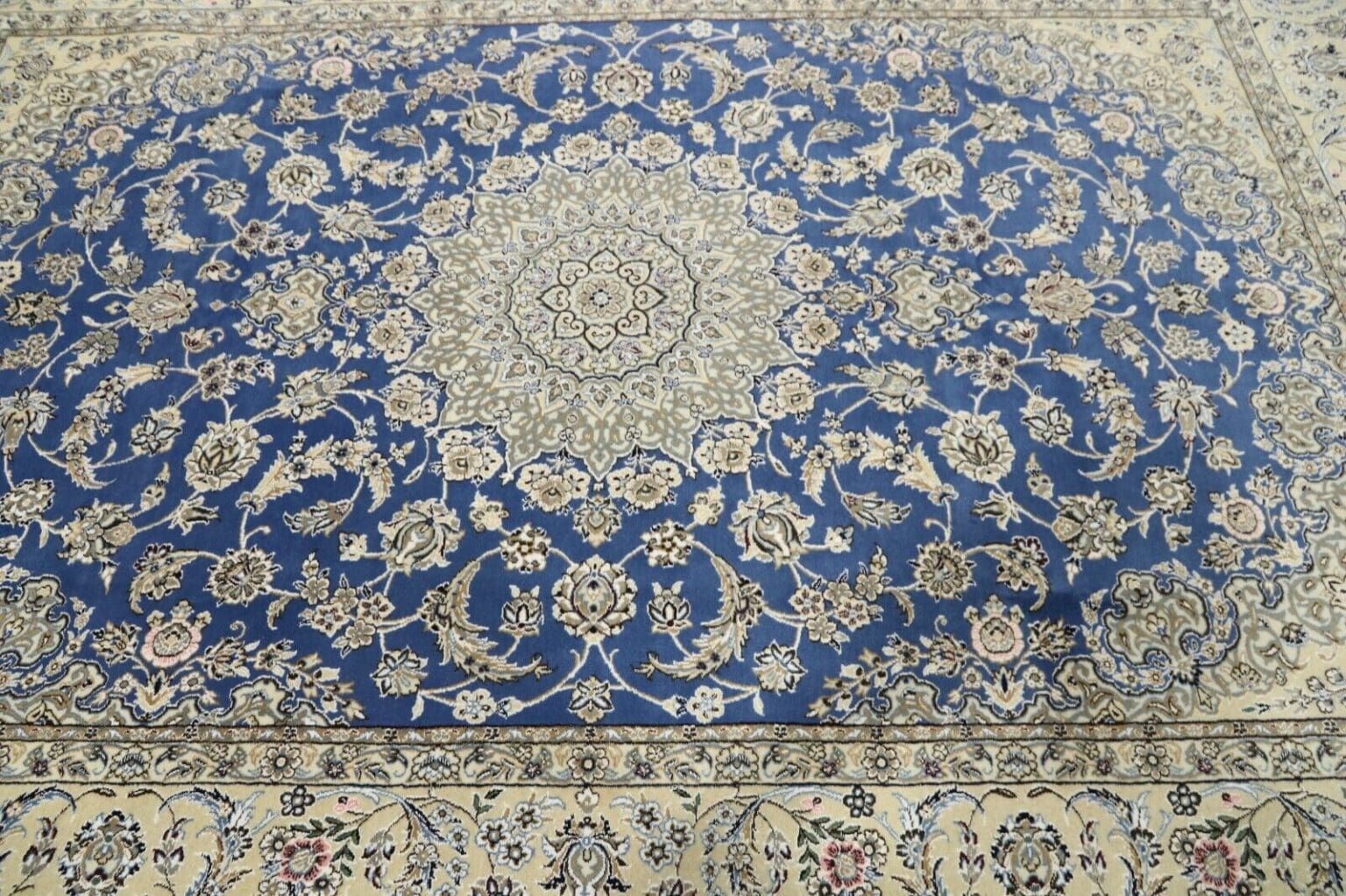
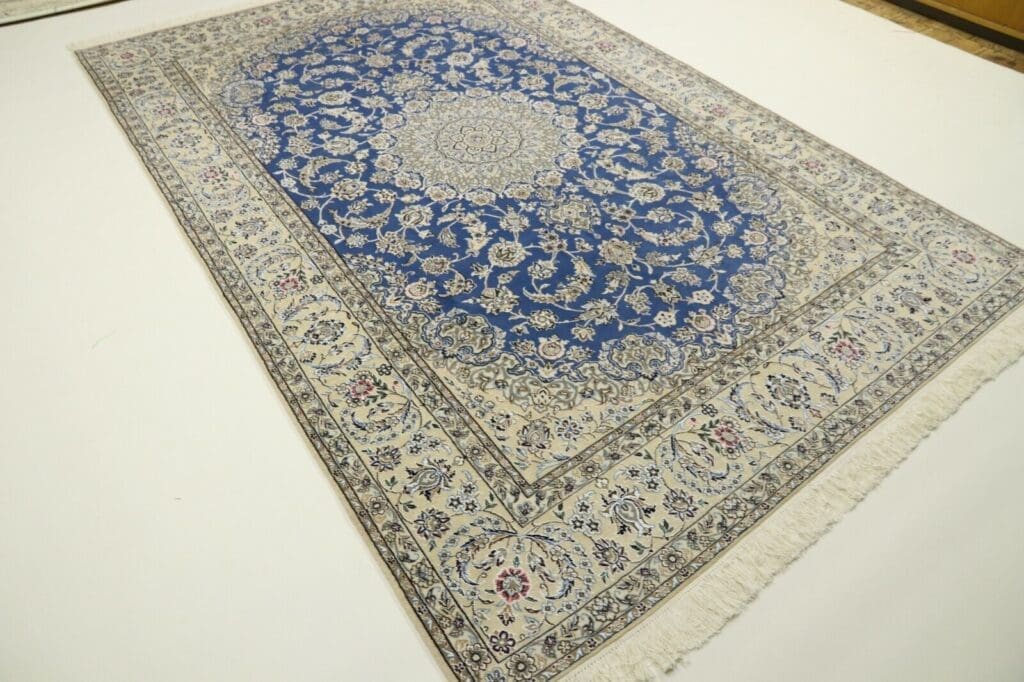
Nain designs often use a central organisation or a continuously balanced field. A central medallion can act as the visual focus, while an all-over vine pattern can connect the interior of the rug from one area to the next. The exact choice depends on the individual drawing. In general, the Nain tradition is known for controlled pattern placement, with the main motif, secondary ornaments and border zones designed to work together.
Floral drawing has a long history in Persian rug art. Vines link individual forms and lead the eye through the field. Blossoms may appear as small repeated accents or as more prominent ornaments. Geometric boundaries and ordered borders prevent the composition from appearing unstructured. This creates a relationship between movement and organisation that is characteristic of many classical Oriental rug designs.
The colour treatment is described as harmonious, while also being soft and lively. In a rug made from wool and silk, the differing surfaces of the fibres can affect how colour is perceived. Wool generally presents a softer, more enclosed surface, whereas silk can reflect light more finely. This may reveal subtle variations and a restrained sheen within the drawing. Colour appearance depends not only on the tones used, but also on the direction of the pile, the light and the viewing distance.
The fine knot density supports detailed pattern work. Small floral accents and narrow lines can be graded more precisely in a densely knotted surface than in a coarse drawing. The hand-knotted construction preserves the individual character of the piece. Its design remains connected to the established Nain vocabulary, while each rug is realised through its own knotting work and material combination.
A traditional Oriental pattern can be used in both classic and contemporary interiors. Its clear ornamental order allows it to relate to different furniture and room arrangements. The Nain association with floral drawing, geometric structure and fine execution makes this rug an example of Persian pattern tradition without restricting it to one particular style of interior.
Special Features
The listed special features include the 8 mm pile height, a soft handle and a comfortable feel underfoot. The combination of virgin wool and silk gives the surface additional depth and a slight sheen. The silk content can strengthen the reflection of light in selected areas, while the wool contributes to the soft textile character of the pile.
The rug is in new, very good condition. It is a one-off piece and is offered with a certificate of authenticity. Its rectangular shape is a classic rug format and suits elongated or clearly defined floor areas. The rug is also suitable for use over underfloor heating.
FAQ
How should a Persian rug made from wool and silk be cared for?
Regular vacuuming removes loose dust and dirt from the pile. If a spill occurs, the area should be treated promptly by dabbing carefully with a damp cloth rather than rubbing it vigorously. Professional cleaning is recommended for a thorough treatment. Specialist care helps protect the fibres and preserve the soft surface and colour effect of wool and silk.
Is the Super Nain 9 la suitable for underfloor heating?
Yes. This rug is suitable for underfloor heating. Its virgin-wool and silk content combines textile insulation with a flexible surface. When used in a room with underfloor heating, the rug should lie flat and evenly on the floor. Suitability for underfloor heating is expressly listed as a feature of this rug.
How can the quality of a Persian rug be assessed?
Knot density, materials, the production technique and the design are among the factors used in an assessment. A high number of knots per square metre can support finer pattern drawing. Natural fibres such as virgin wool and silk are established materials in rug making. Hand-knotting, the execution of the ornaments and the way the complete pattern is balanced are also relevant quality characteristics.
To provide the best experiences, we use technologies like cookies to store and/or access device information. Consenting to these technologies will allow us to process data such as browsing behavior or unique IDs on this site. Not consenting or withdrawing consent, may adversely affect certain features and functions.
Functional Always active
The technical storage or access is strictly necessary for the legitimate purpose of enabling the use of a specific service explicitly requested by the subscriber or user, or for the sole purpose of carrying out the transmission of a communication over an electronic communications network.
Preferences
The technical storage or access is necessary for the legitimate purpose of storing preferences that are not requested by the subscriber or user.
Statistics
The technical storage or access that is used exclusively for statistical purposes.The technical storage or access that is used exclusively for anonymous statistical purposes. Without a subpoena, voluntary compliance on the part of your Internet Service Provider, or additional records from a third party, information stored or retrieved for this purpose alone cannot usually be used to identify you.
Marketing
The technical storage or access is required to create user profiles to send advertising, or to track the user on a website or across several websites for similar marketing purposes.
 SECURE PAYMENT
 SHIPPING PARTNERS