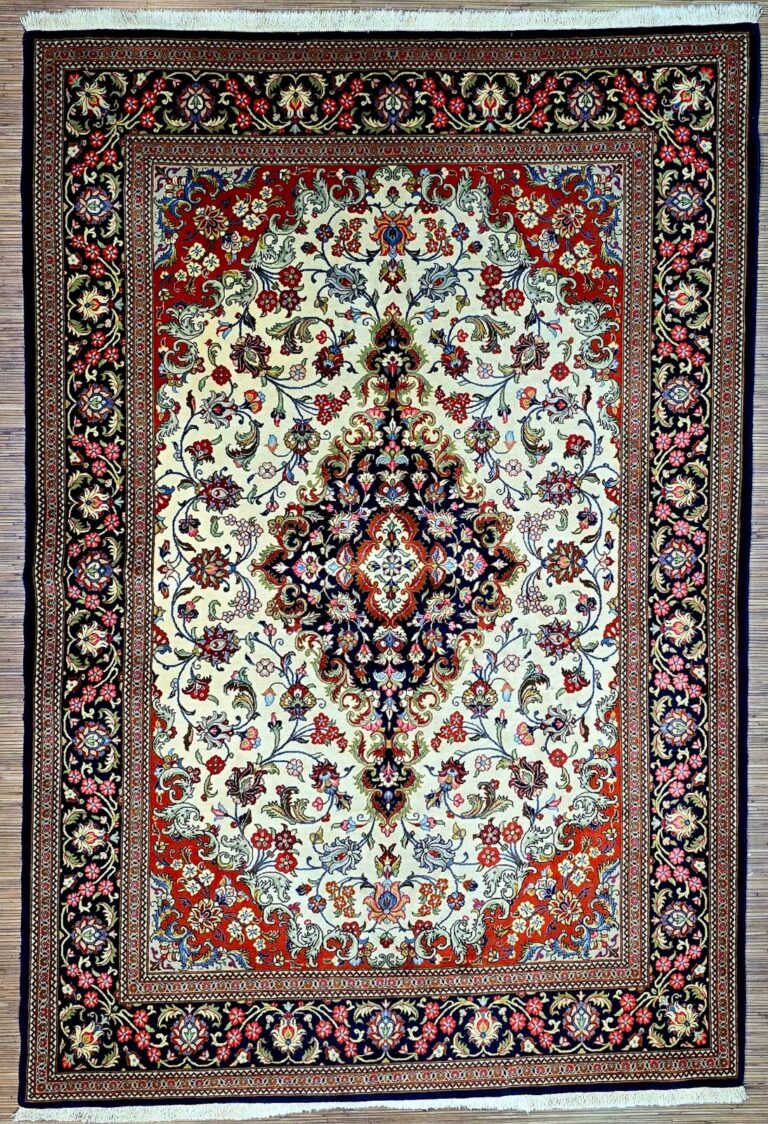
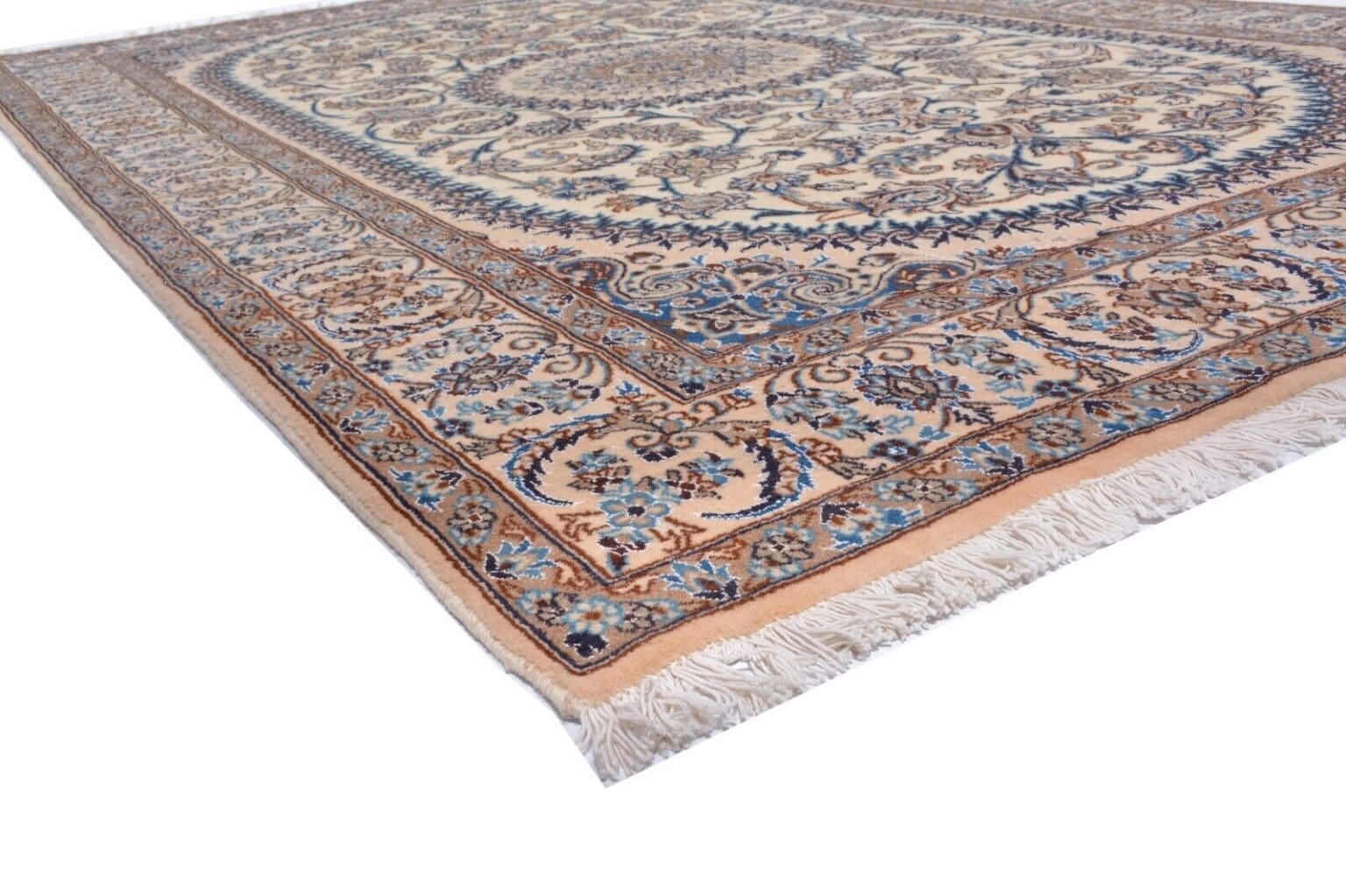
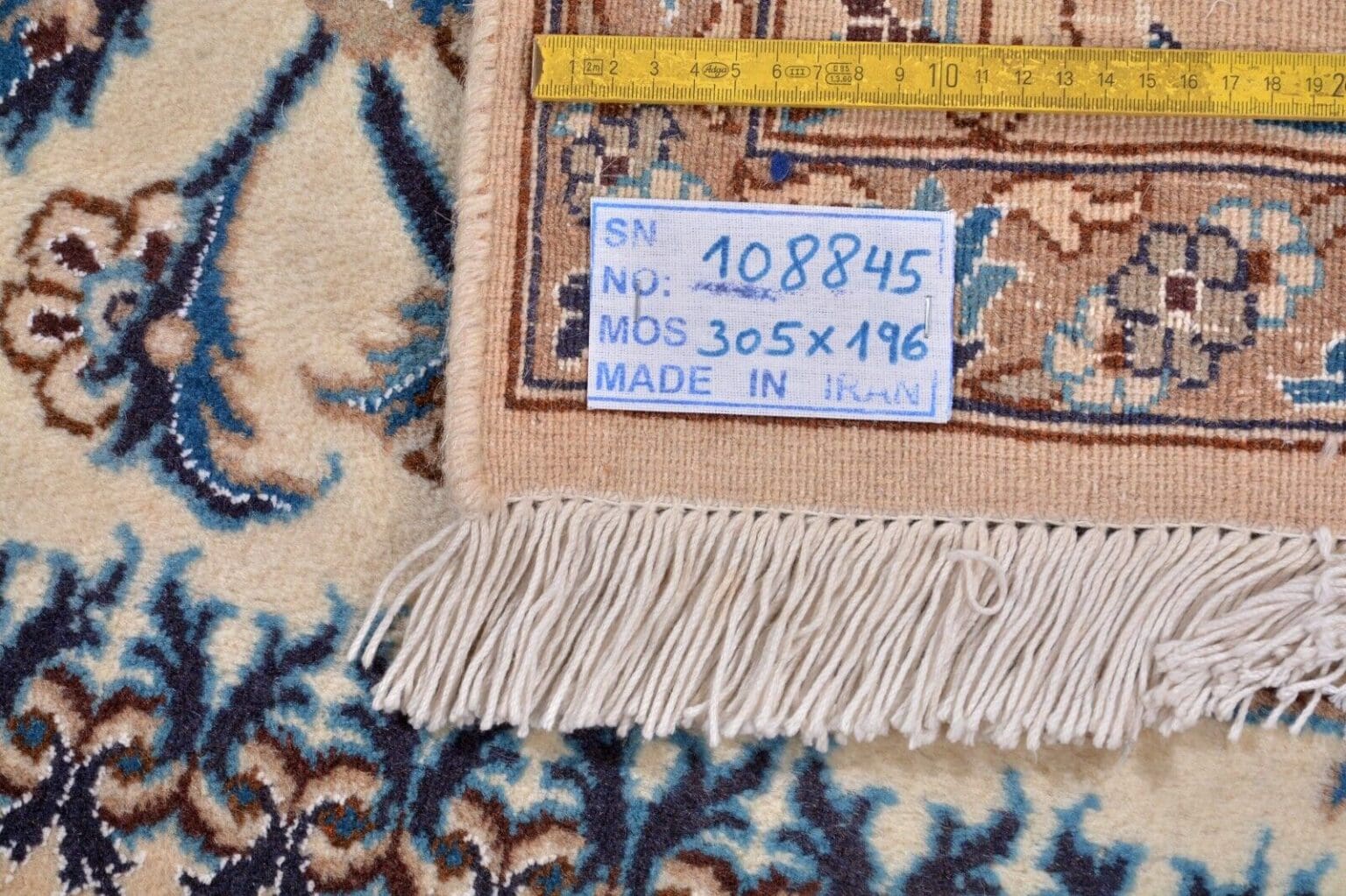
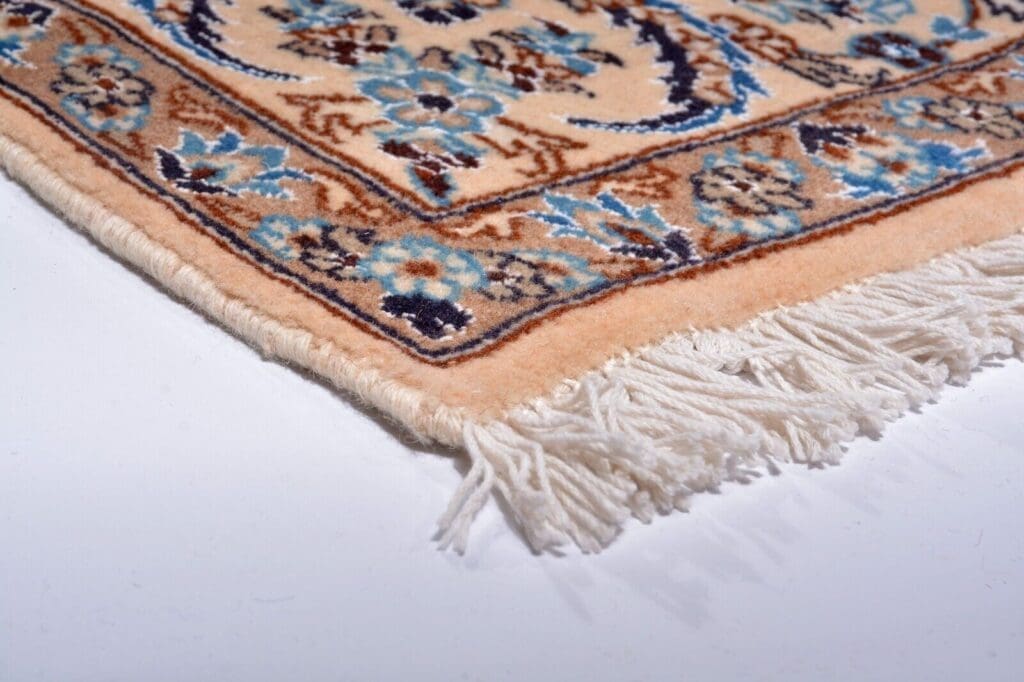
This Nain Persian rug is made of virgin wool and was hand-knotted. Virgin wool has long been used in rug making because it combines a soft handle with the resilience expected from a natural textile fibre. Here, the wool is joined with a manual knotting process in which each knot is inserted individually into the rug structure. The resulting construction gives the surface a firm and durable character suitable for regular use in living spaces.
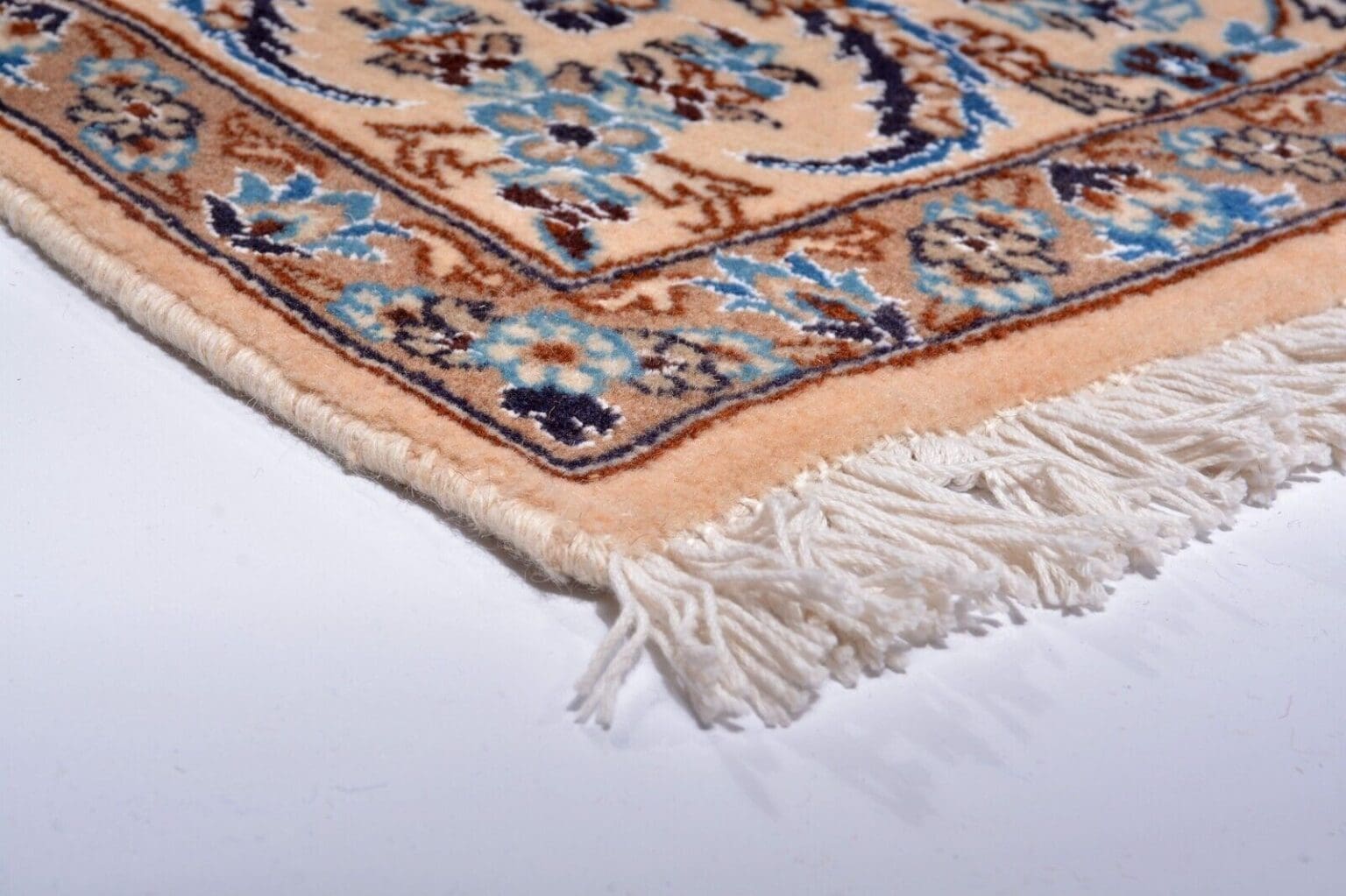
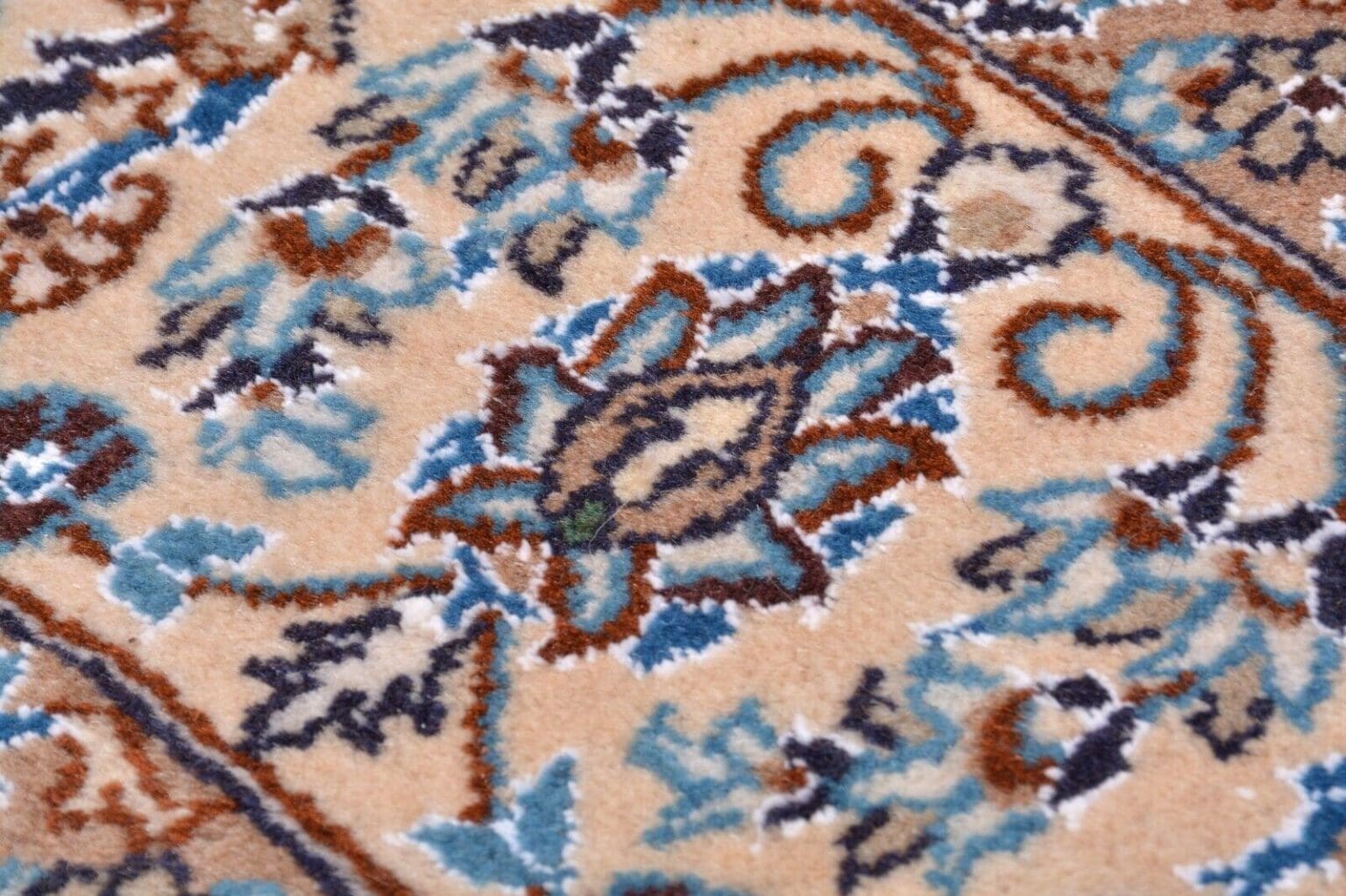
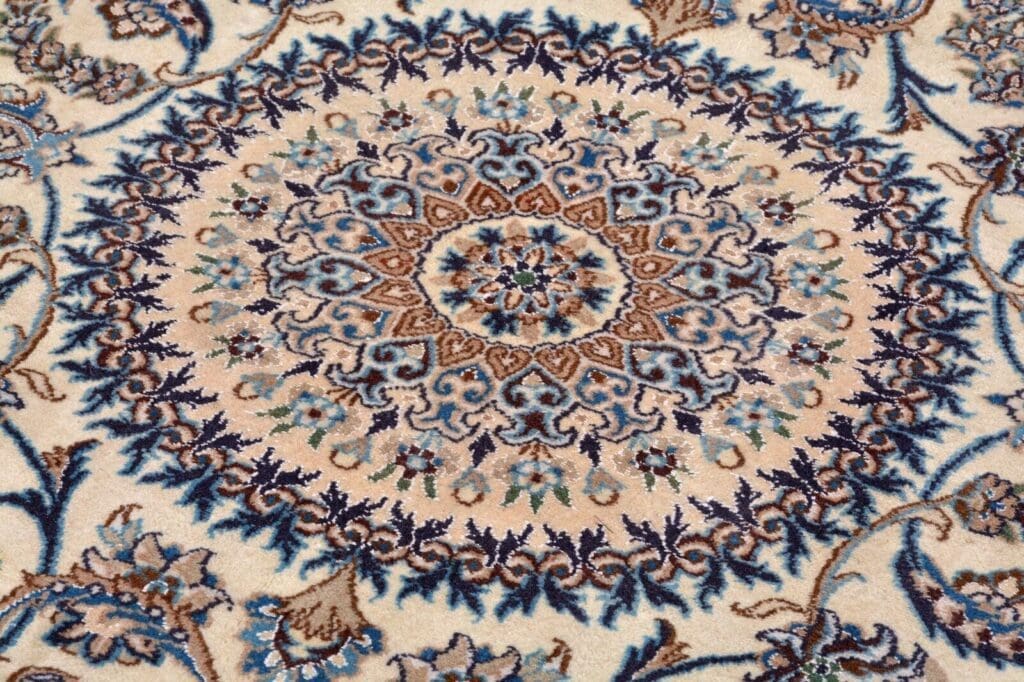
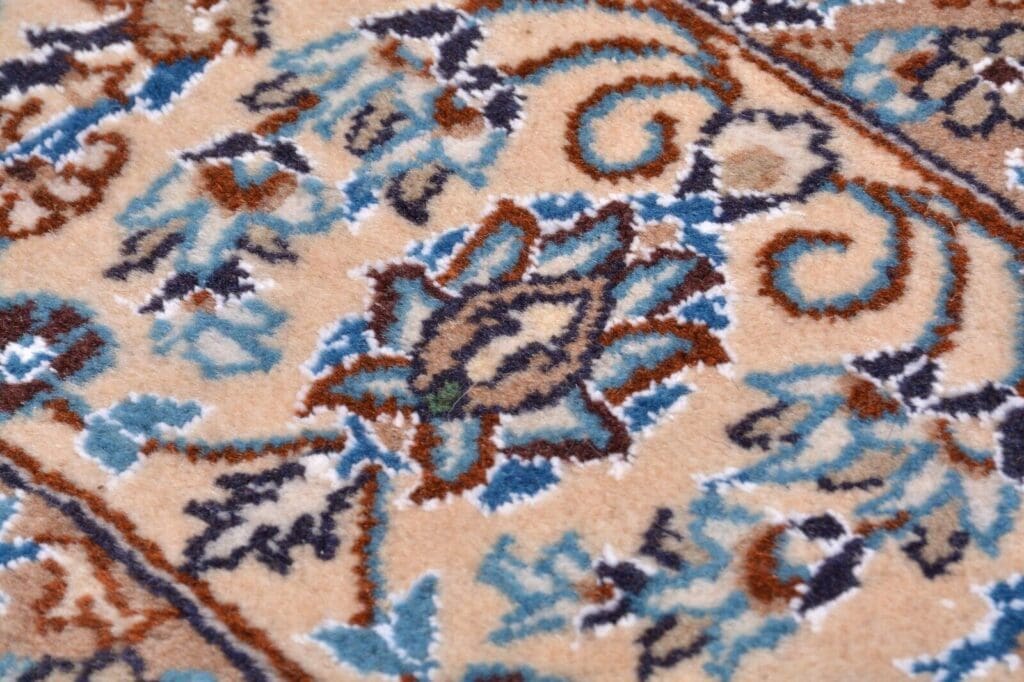
The rug’s dense knotting supports a precise rendering of the design. Fine floral details and the lines of the medallion can be worked out clearly when the knots are placed closely and consistently. Hand-knotting requires time, experience and careful attention throughout the process. Unlike machine production, it creates each rug through a separate sequence of skilled manual work. The wool contributes a pleasant feel underfoot and gives the surface its characteristic textile texture.
Wool also has moisture-regulating properties. It can absorb moisture from the surrounding air and release it again, helping to maintain a comfortable indoor climate. This is one reason virgin wool is valued in residential textiles. In this rug, the wool and the hand-knotted construction work together to provide a practical floor covering with a traditional handmade character.
Origin and Tradition
Nain is located in central Iran and is known for its rug-making tradition. The city is one of the Iranian centres associated with classical Oriental rugs and carefully structured designs. Nain weaving combines a disciplined visual language with a painstaking craft process. Knowledge passed down through the region is reflected in the choice of materials, the arrangement of the design and the way the knots are made.
The rug tradition of Nain reaches back to the nineteenth century. During that period, the city developed into an important centre for the production of classic rugs. Within Persian rug culture, Nain rugs are associated with precise drawing and a balanced overall composition. Their designs may bring together floral elements, geometric forms and Oriental symbols. These features are arranged according to an established decorative vocabulary rather than placed at random.
Making a hand-knotted rug involves a series of connected stages. The foundation is prepared first, after which knots are inserted row by row. The surface is then finished so that the intended design becomes clearly visible. A compact and even structure calls for experience and manual control. The finished object is a one-off textile whose exact appearance results from the relationship between material, design and the individual work of the maker.
Iranian rugs are often identified by the city or regional tradition associated with their production. In the name Nain rug, the reference is to the established weaving culture of Nain. It is more than a general decorative label: it identifies a particular direction within Persian rug making. Classical Nain compositions commonly use an ordered central field, carefully arranged surrounding ornament and a sense of symmetry that connects the various parts of the design.
The tradition is not limited to historical examples. Weavers continue to apply its principles in contemporary handwork, using familiar forms while preserving the regional character of the craft. This helps explain why Nain rugs can be used in both traditionally furnished rooms and more restrained interiors. Their place of origin, inherited technique and orderly pattern language belong together as aspects of one Persian textile tradition.
Design and Pattern
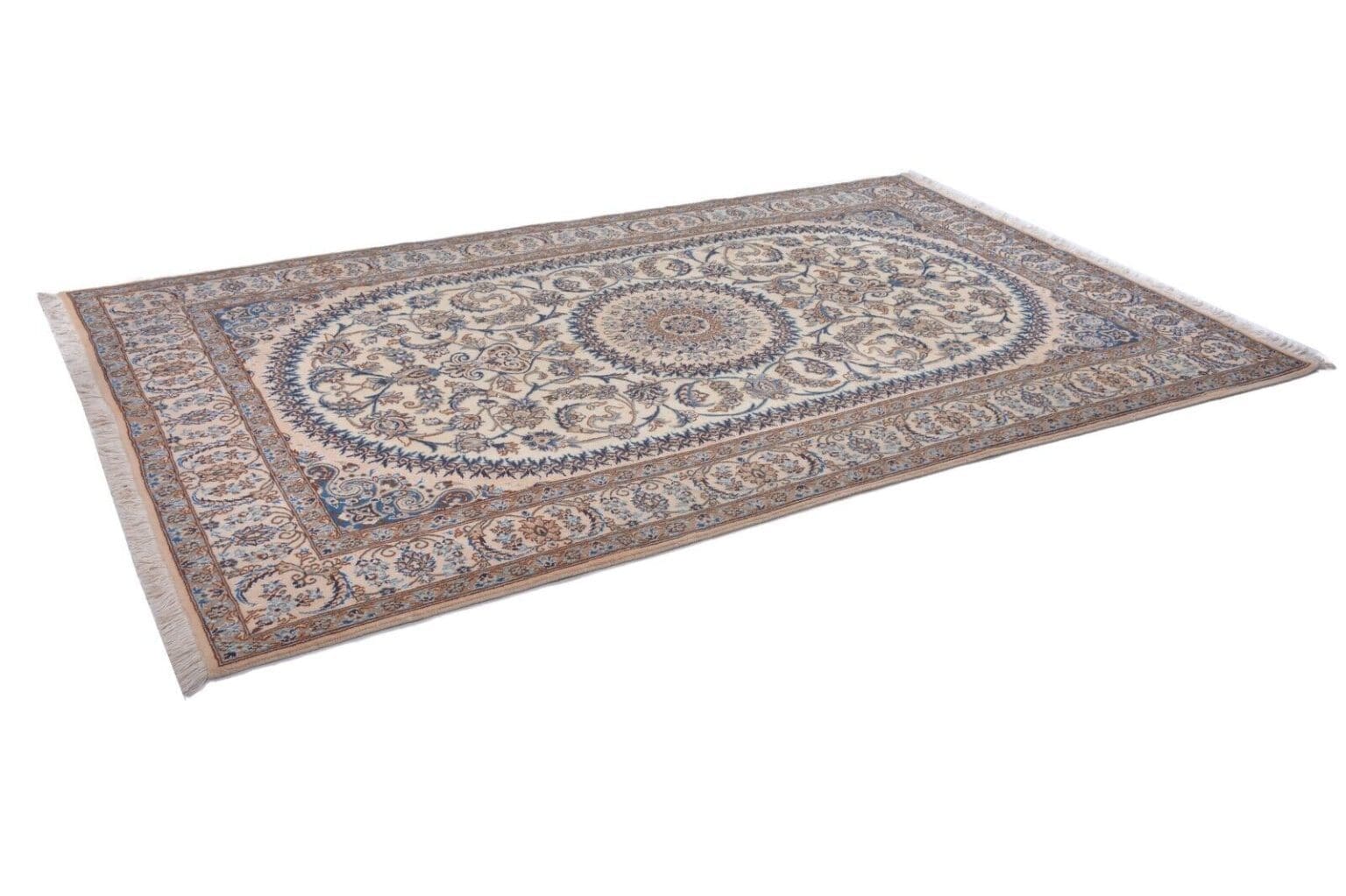
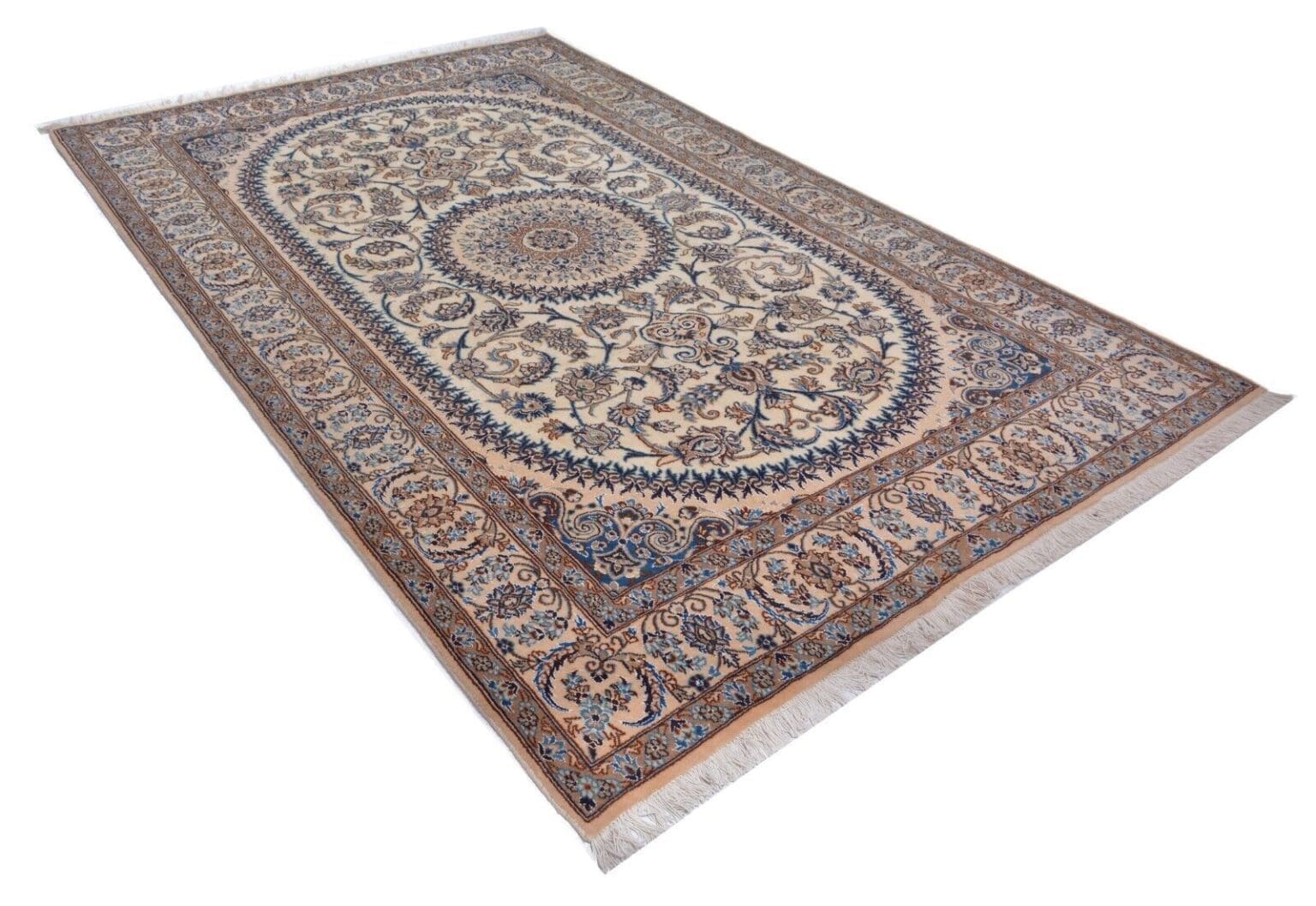
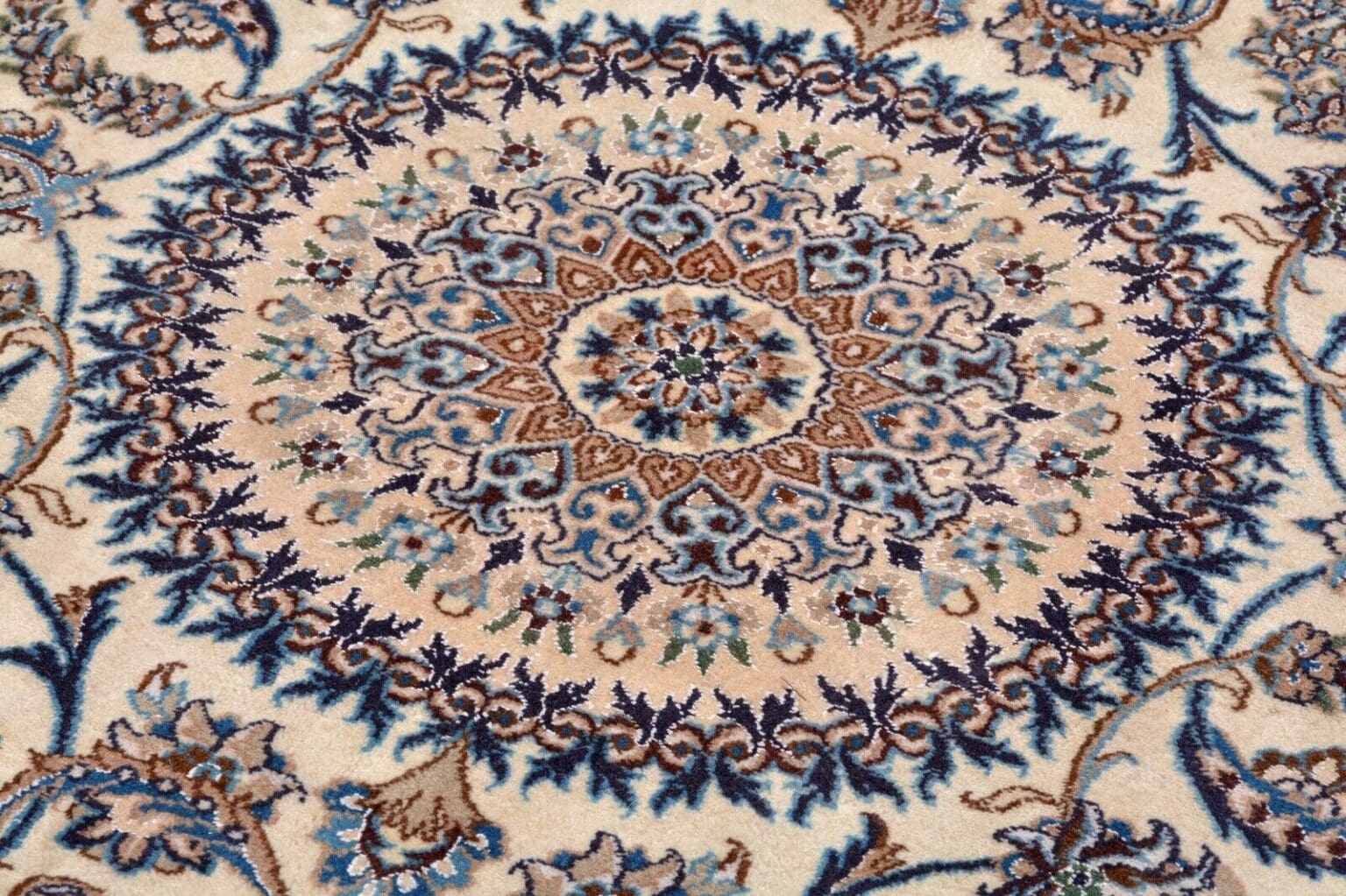
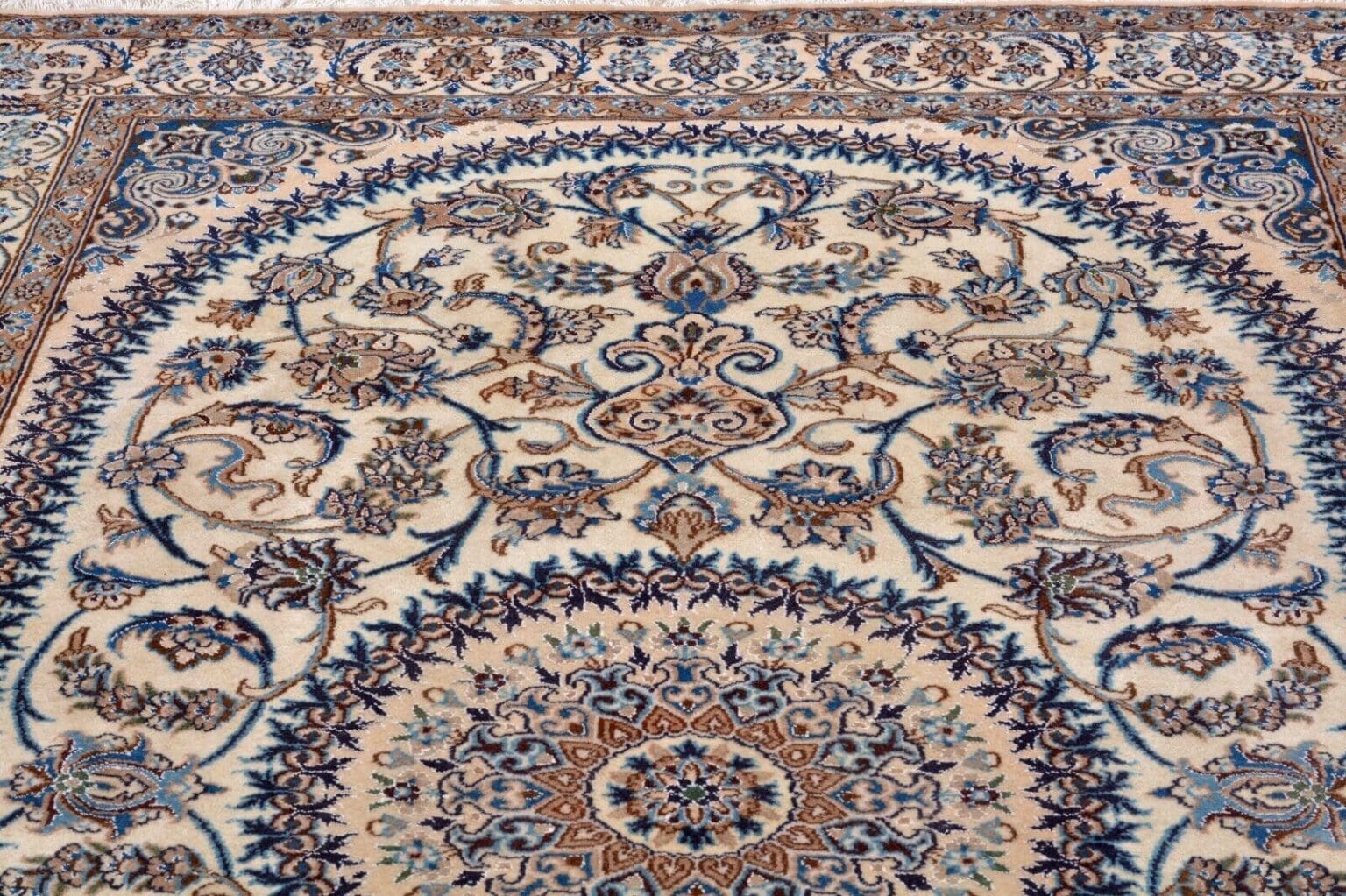
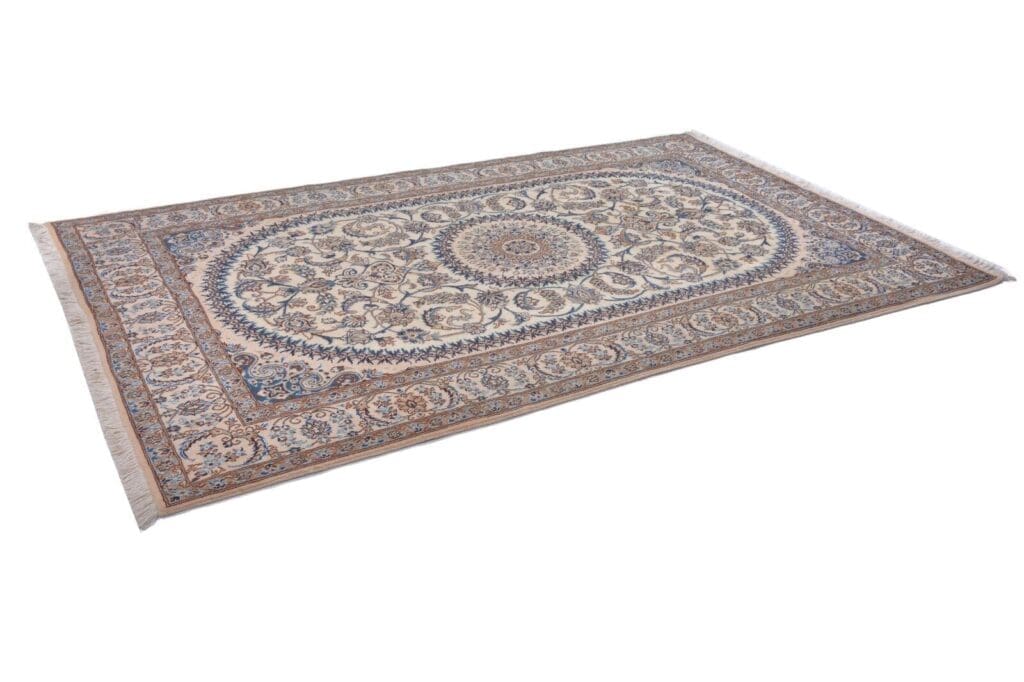
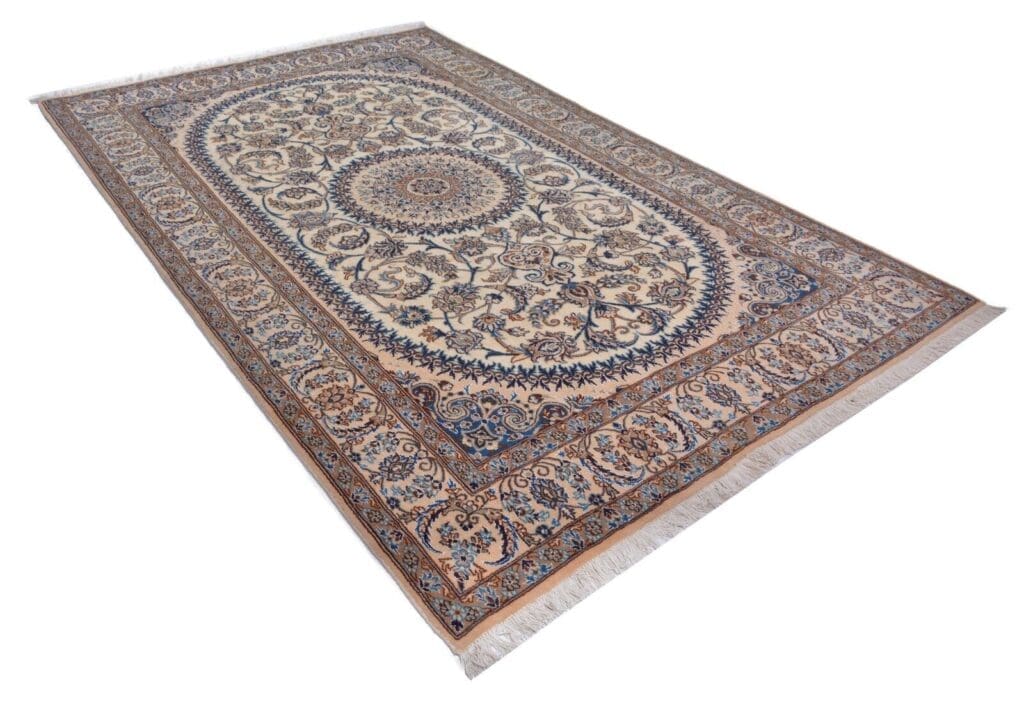
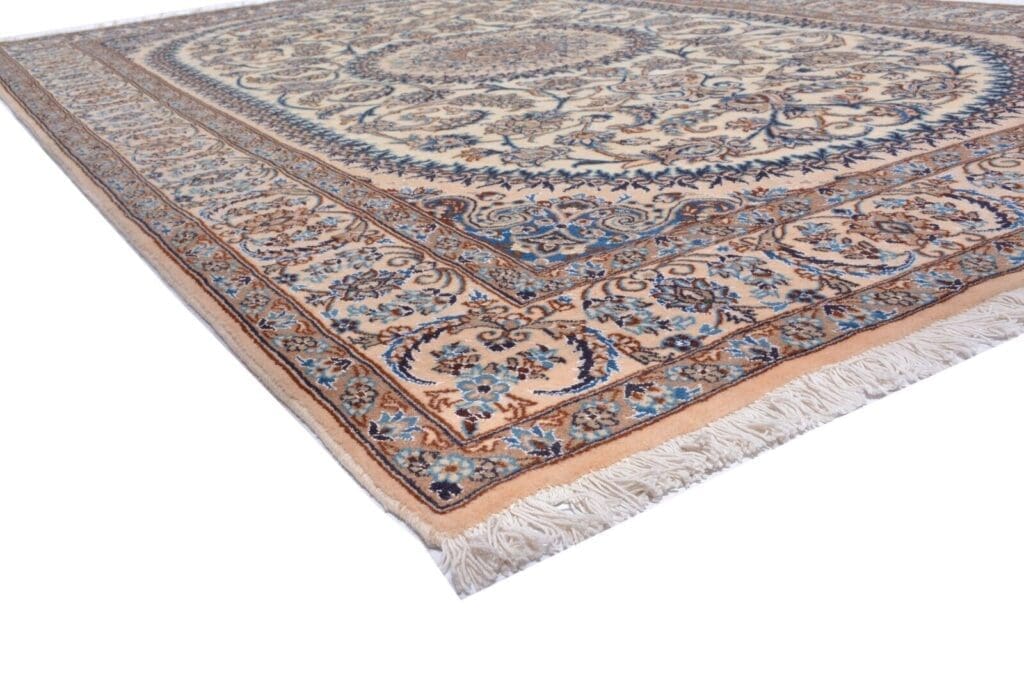
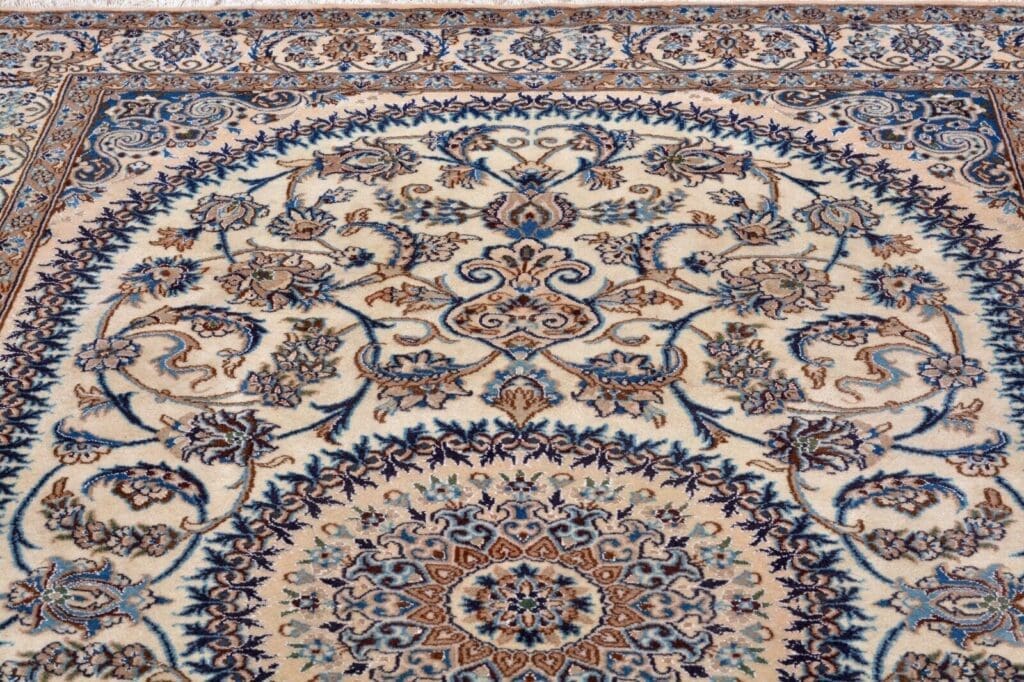
The pattern of this rug is described as a floral motif with a medallion. A medallion generally forms the visual centre of a rug and gives the composition a clear point of orientation. Floral forms extend this centre and lead the eye into the surrounding field. The result is a structured arrangement in which the central element and the ornaments around it are designed to work as a unified whole.
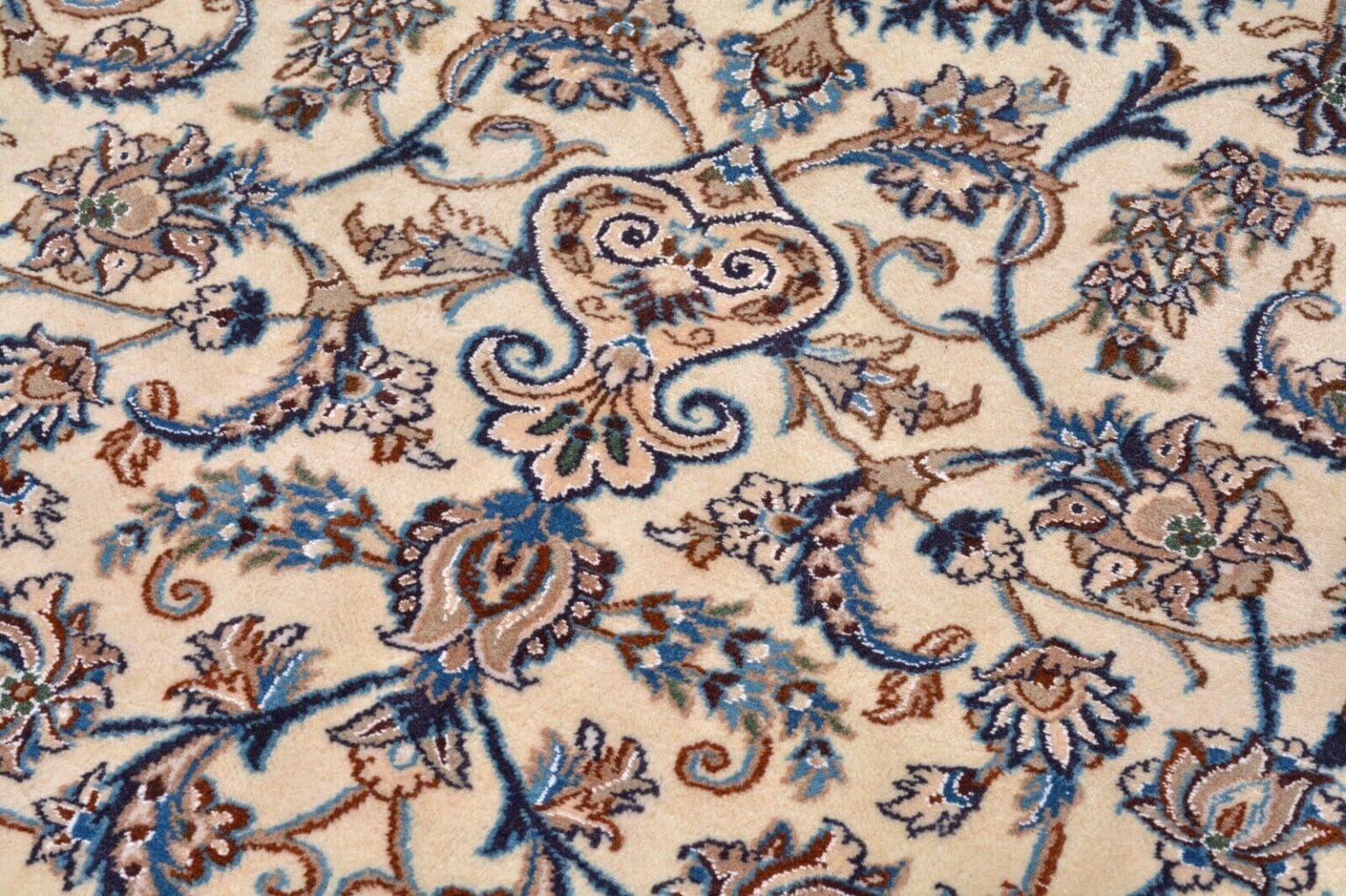
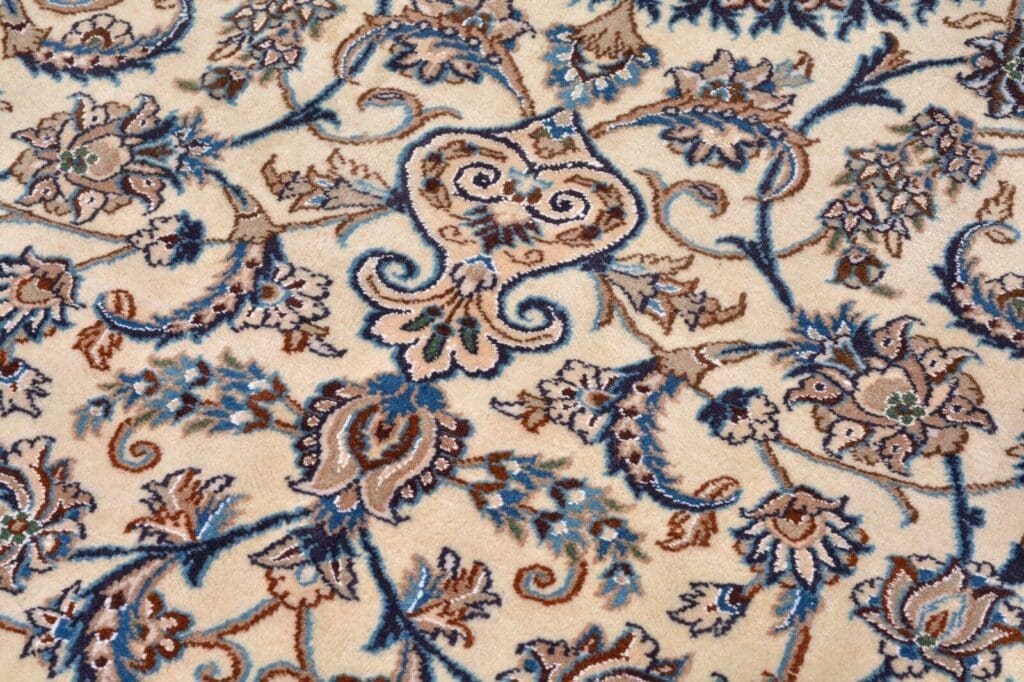
Floral ornament is a familiar feature of Persian rug design. Leaves, blossoms, vines and stylised plant forms are not normally copied as literal botanical images. Instead, they are translated into an ornamental vocabulary that allows them to be repeated, balanced and connected across the field. In Nain designs, such floral details may be combined with geometric order and a carefully maintained symmetry.
The beige colour scheme of this rug provides a calm ground for the floral ornament and medallion. Beige tones allow the separate pattern areas to read as a coherent composition and can be coordinated with a range of interior styles. The colour arrangement retains the traditional Oriental character of the design while presenting it in a restrained way. The overall effect comes from the relationship between the quiet ground and the more detailed ornamental drawing.
Medallion compositions can take many forms. The central element may be rounded, oval, polygonal or made up of several interlocking shapes. Its defining role is to organise the field around a central point. Floral vines, leaves and further ornaments may then move outward in a symmetrical or rhythmic arrangement. This structure keeps the pattern legible from a distance while allowing smaller details to be discovered closer to the surface.
The clarity of a Nain design is closely linked to its hand-knotted construction. A dense structure permits contours and small ornamental components to be differentiated with care. The floral elements can therefore remain recognisable while still forming part of a continuous decorative system. The combination of medallion, floral pattern and beige ground defines the visual identity of this individual rug.
In interior planning, a floral medallion pattern can connect traditional furniture with simpler contemporary pieces. The established ornament refers to Persian design history, while the beige palette creates a relatively quiet base for the rest of the room. This rug may therefore be used in a living room, dining room or entrance area, provided its placement is coordinated with the furniture and the way the space is used.
Special Features
This Nain Oriental rug is described as highly resistant to wear, colourfast and easy to care for. These qualities are associated with the virgin wool and the hand-knotted construction. The durable textile structure supports regular use, while the wool retains its familiar soft feel underfoot. The design and colours are intended to remain consistent during normal use and appropriate care.
The rug is suitable for underfloor heating. It also has sound-absorbing properties, which can help make the acoustics of a room more comfortable. Wool can regulate moisture in the surrounding environment as well. Together with the beige colour scheme and traditional medallion design, these features give the rug both practical relevance and a clearly Persian decorative character.
The condition is stated as new and unused. It therefore has not been shaped by previous use. The combination of floral medallion pattern, beige tones, virgin wool and hand-knotted workmanship distinguishes this one-off Oriental rug and describes its principal features without separating the decorative design from its textile construction.
FAQ
What is the best way to care for my Nain Persian rug?
Regular vacuuming helps remove dust and loose particles from the rug. If something is spilled, dab the affected area promptly with a damp cloth. Rubbing should be avoided because it can work the stain further into the fibres or place unnecessary stress on the surface. If further treatment is needed, use a cleaner intended for rugs. The rug should not be left in direct sunlight, as prolonged exposure can cause colours to fade. Gentle, consistent care helps preserve the appearance and feel of the virgin wool.
Where are Oriental rugs most commonly placed in the home?
Nain Persian rugs can be used in several areas of a home. In a living room, they define a textile area among seating and can complement both traditional and more modern furniture. In a dining room, a rug can visually organise the table area when its placement and care requirements are taken into account. Oriental rugs can also be used in entrance areas. The warm beige tones and floral medallion create an orderly traditional note. The most suitable position depends on the room layout and on how the pattern relates to the furniture already present.
Are Nain Persian rugs suitable for allergy sufferers?
Nain Persian rugs made of virgin wool are generally regarded as suitable for allergy sufferers. Virgin wool has natural anti-allergenic properties and can help regulate humidity. This may reduce the accumulation of allergens. Regular cleaning is nevertheless important, since dust and loose textile residue can collect in any floor covering. Careful vacuuming and prompt treatment of spills help keep the rug clean. Individual sensitivities differ, so people with particular concerns should take their own response into account.
To provide the best experiences, we use technologies like cookies to store and/or access device information. Consenting to these technologies will allow us to process data such as browsing behavior or unique IDs on this site. Not consenting or withdrawing consent, may adversely affect certain features and functions.
Functional Always active
The technical storage or access is strictly necessary for the legitimate purpose of enabling the use of a specific service explicitly requested by the subscriber or user, or for the sole purpose of carrying out the transmission of a communication over an electronic communications network.
Preferences
The technical storage or access is necessary for the legitimate purpose of storing preferences that are not requested by the subscriber or user.
Statistics
The technical storage or access that is used exclusively for statistical purposes.The technical storage or access that is used exclusively for anonymous statistical purposes. Without a subpoena, voluntary compliance on the part of your Internet Service Provider, or additional records from a third party, information stored or retrieved for this purpose alone cannot usually be used to identify you.
Marketing
The technical storage or access is required to create user profiles to send advertising, or to track the user on a website or across several websites for similar marketing purposes.

 SECURE PAYMENT
 SHIPPING PARTNERS