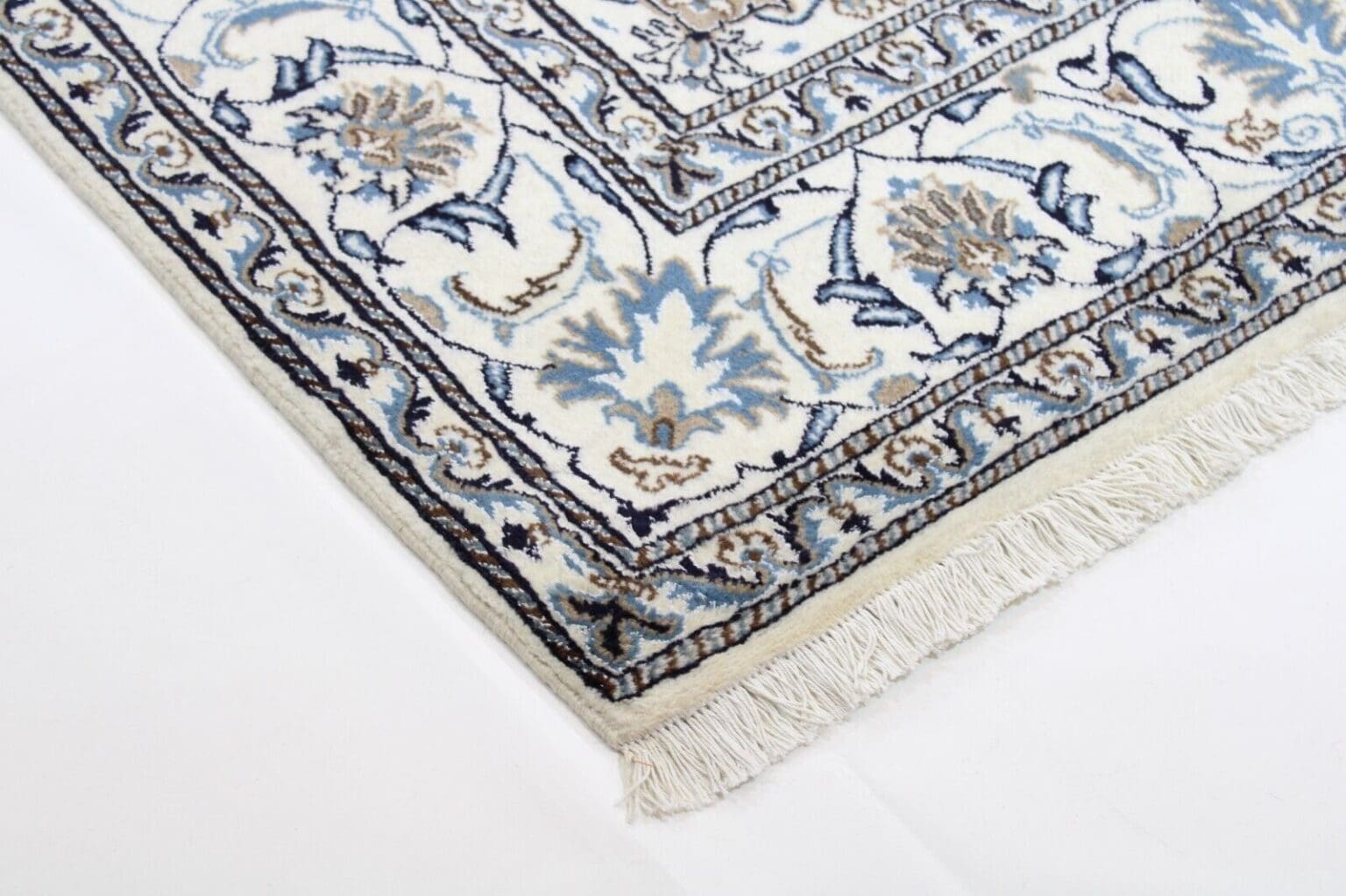
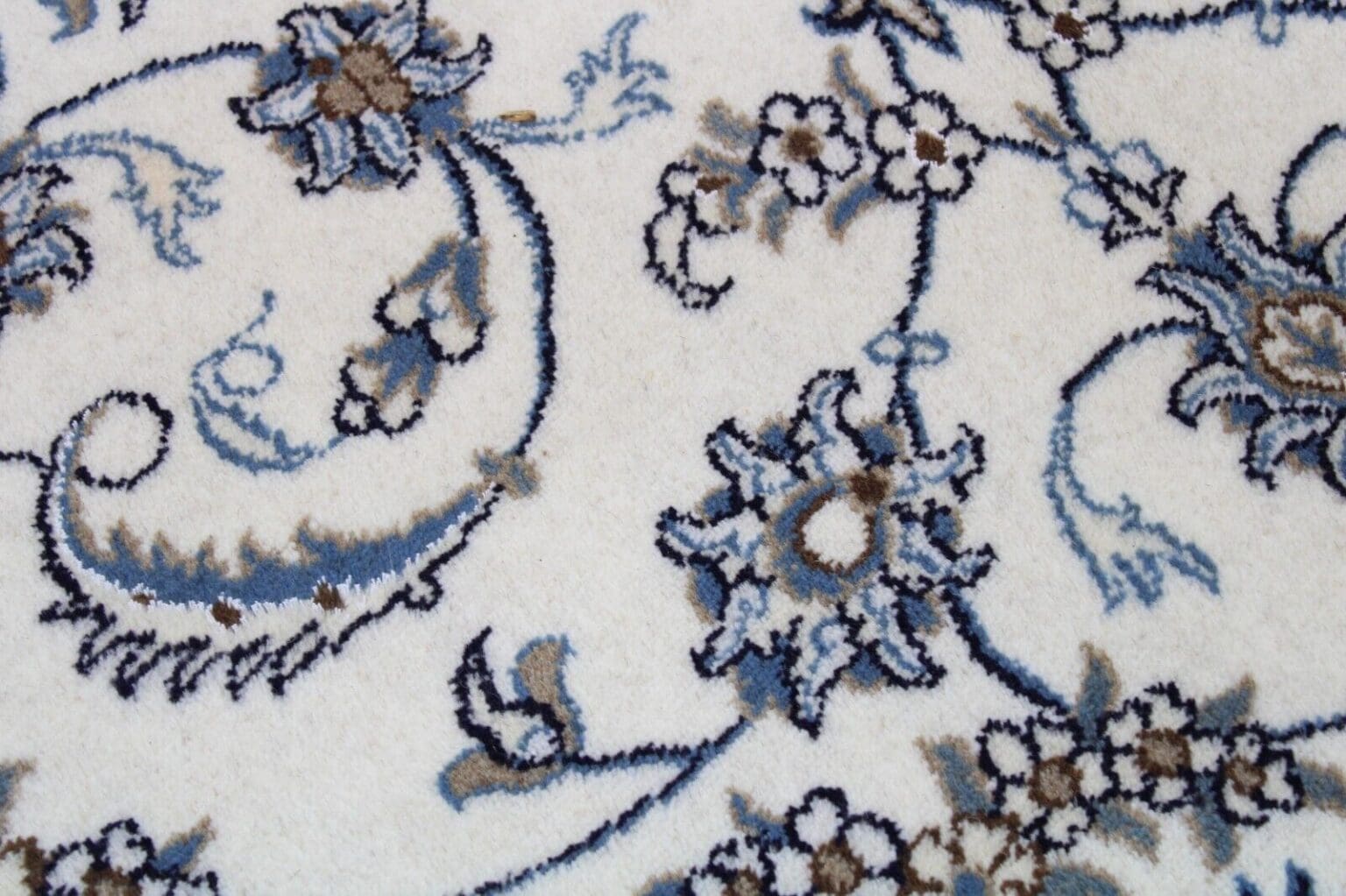
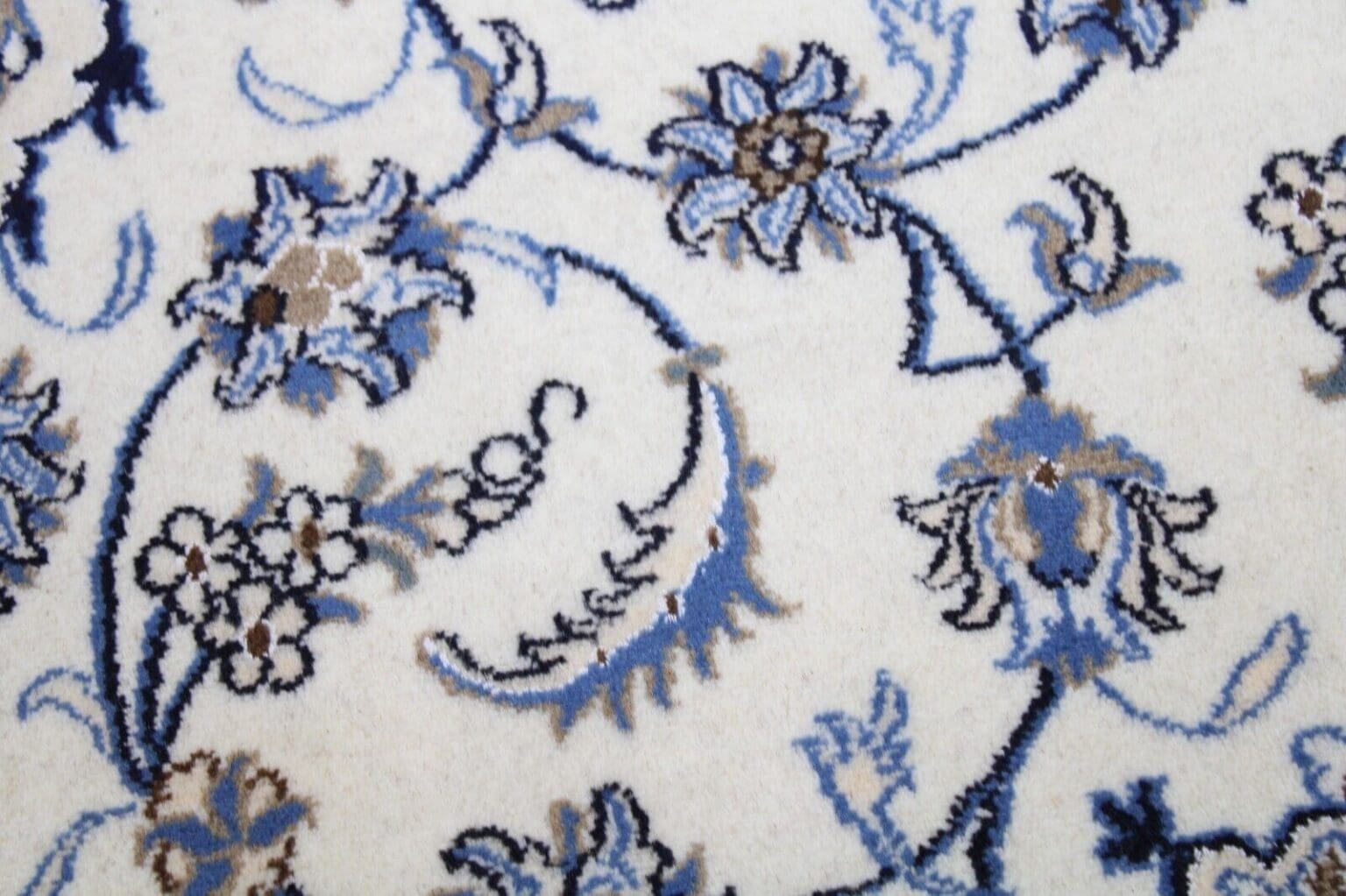
This Nain Persian rug is hand-knotted and has a pile made from genuine wool. In hand-knotting, individual knots are worked into the prepared foundation one at a time. The visible surface therefore results directly from textile craftsmanship rather than from a printed or mechanically formed design. Wool gives the pile a comfortable feel and provides the practical resilience associated with this established rug material.
Wool has long been used in Oriental rug making because it combines a pleasant surface with suitability for everyday interiors when properly worked. Its natural fibre structure accepts colour with variation and allows floral details to remain legible. On a hand-knotted rug, the character of the surface also comes from the relationship between many separate knots. The technique is consequently both a method of manufacture and an important part of the rug’s appearance.
This rug was traditionally washed and professionally inspected. Those steps form part of its preparation and support its stated excellent condition. Inspection adds a careful quality check to the original handwork before the rug is put into use. The piece is listed as new merchandise and is ready for immediate use.
Origin and Tradition
The rug is identified as a Nain Persian rug. Nain is one of the recognised centres of Persian carpet production and is associated with a controlled, finely organised design tradition. The city is located in central Iran and became an important setting for the development of classical rug weaving. Nain rugs are often associated with balanced ornament, light grounds and carefully articulated floral forms. This describes the regional tradition connected with the name; it does not add an unrecorded detail about the individual making of this rug.
Persian carpet culture contains many regional schools, each shaped over time by its own preferences in composition, colour and ornament. Nain design is often understood through a sense of order: a central field, framing borders and smaller linking elements are related so that the whole remains clear and balanced. Light, restrained colour areas are also commonly associated with this tradition. This rug is offered within that Persian Nain tradition.
Persian rugs embody knowledge passed down through generations. That knowledge includes handling wool, preparing the foundation, placing knots and washing and arranging the finished surface. The work requires concentration because the design is built gradually. A pattern is not simply applied to a completed textile; it is formed through the sequence of knots and becomes part of the structure of the rug itself.
The name Nain therefore refers to a developed craft environment and to a regional vocabulary of design. At the same time, every rug remains an individual textile object because the distribution of colour, the execution of the drawing and the final visual effect depend on the particular work. Persian carpet tradition is shaped both by recognisable regional principles and by the individual execution of each piece.
Design and Pattern
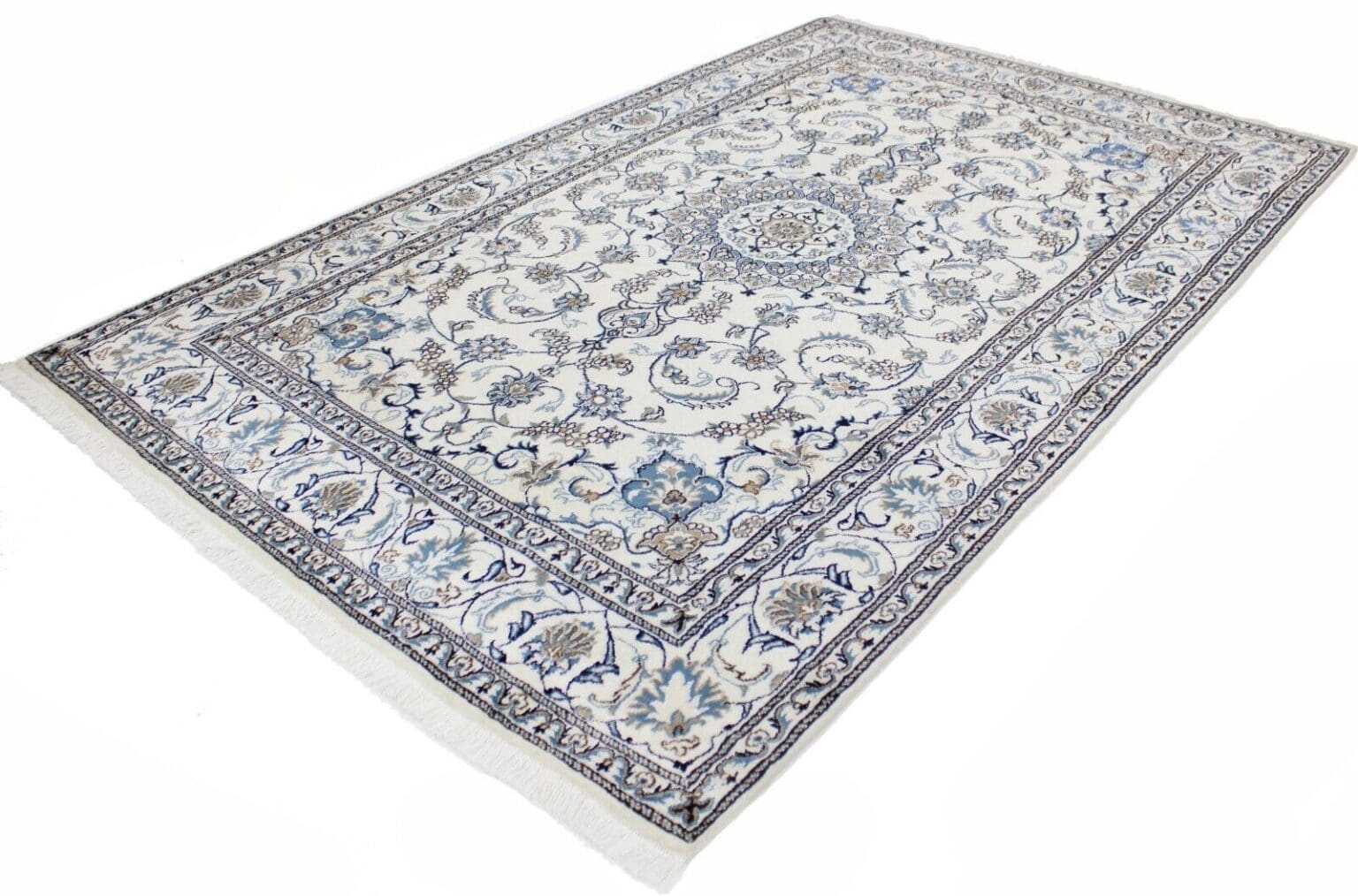
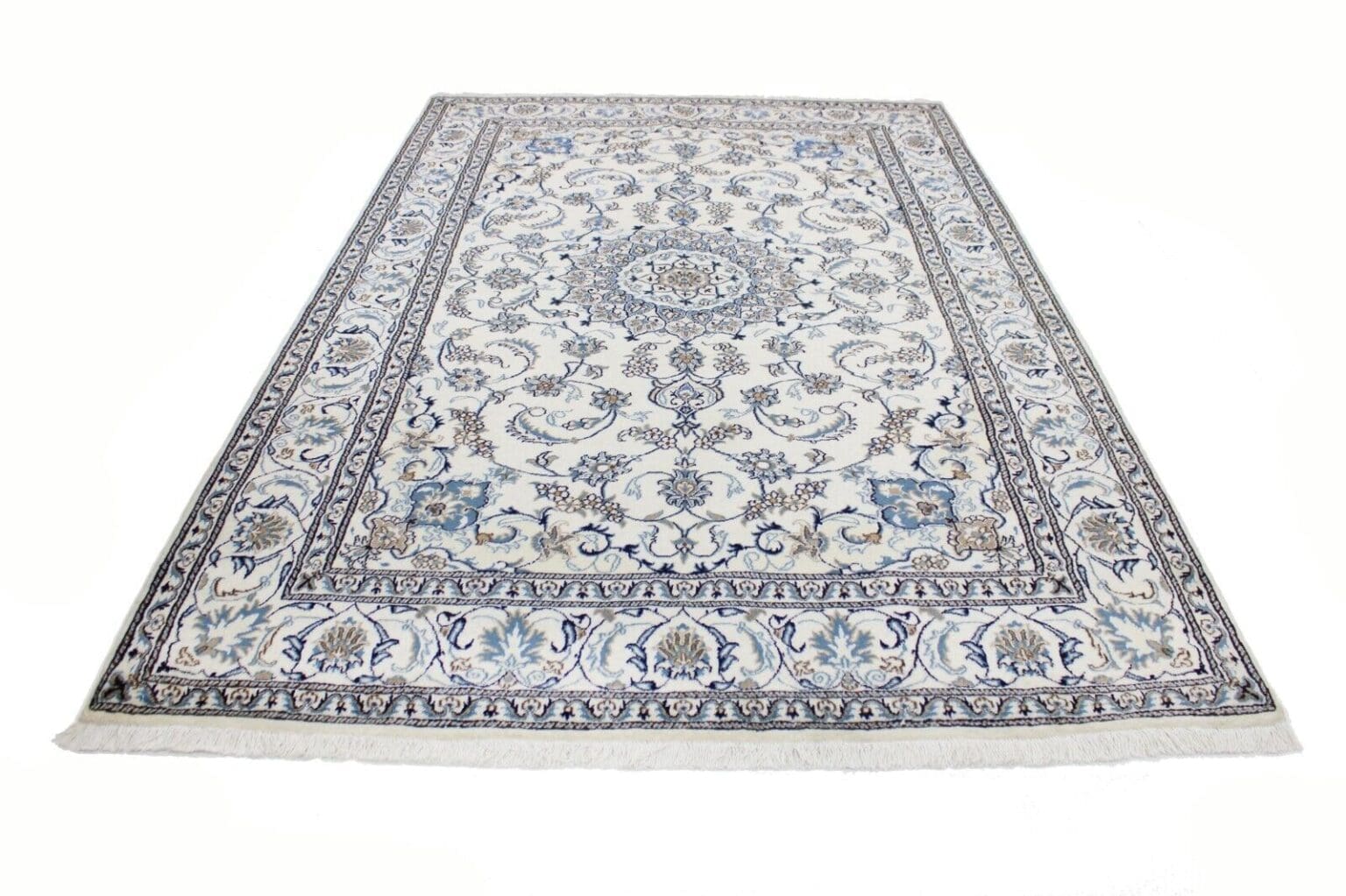
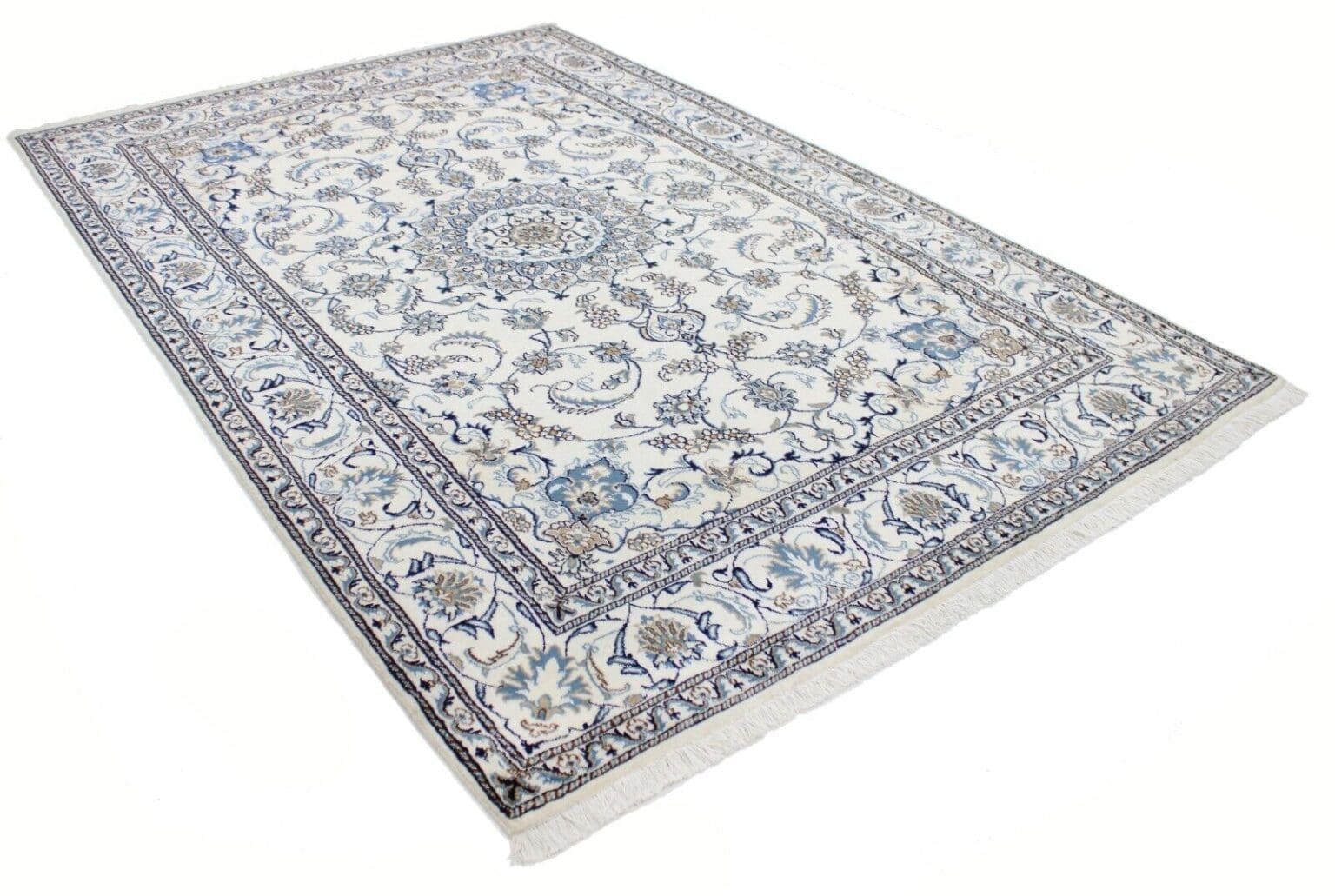
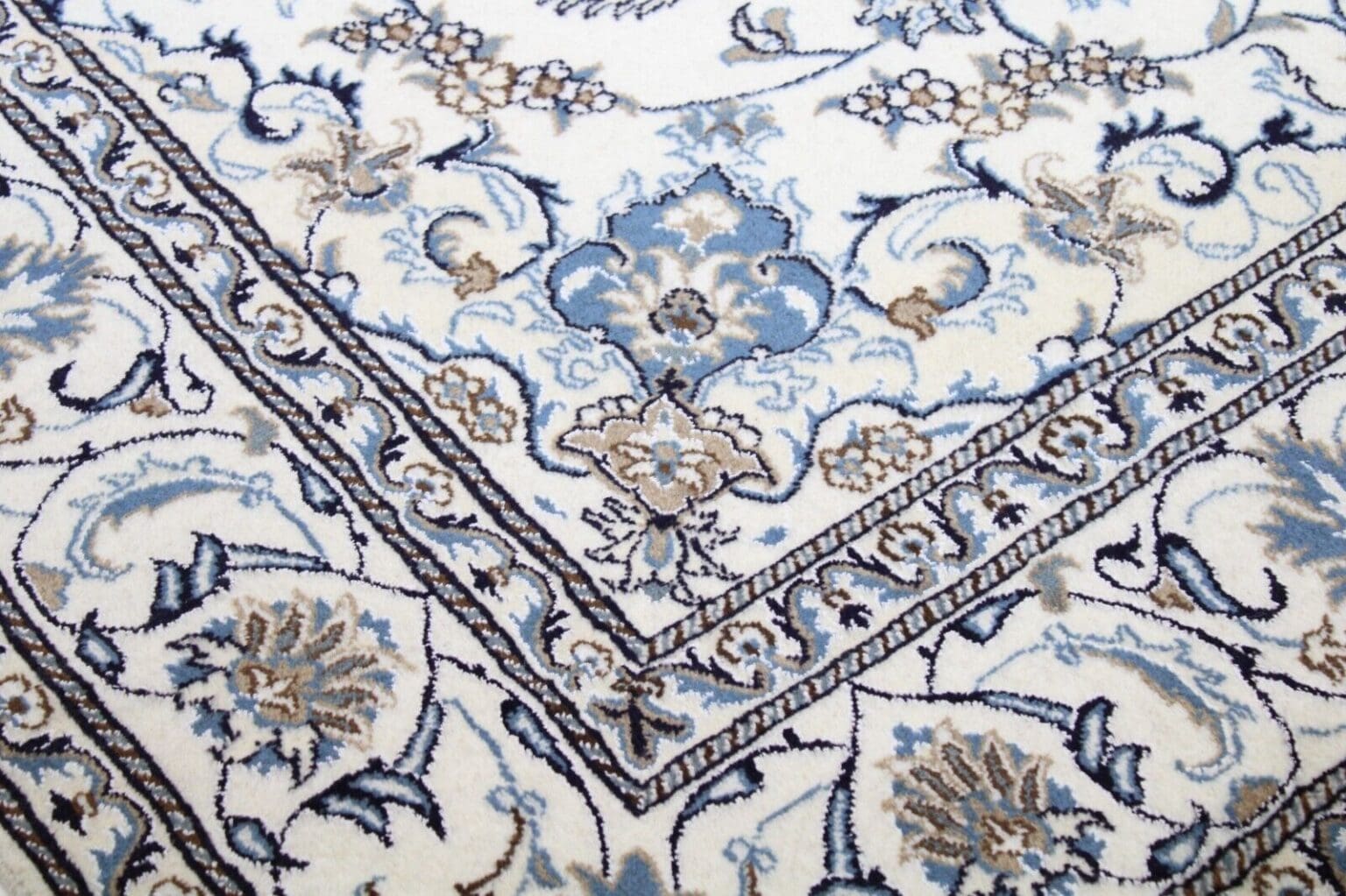
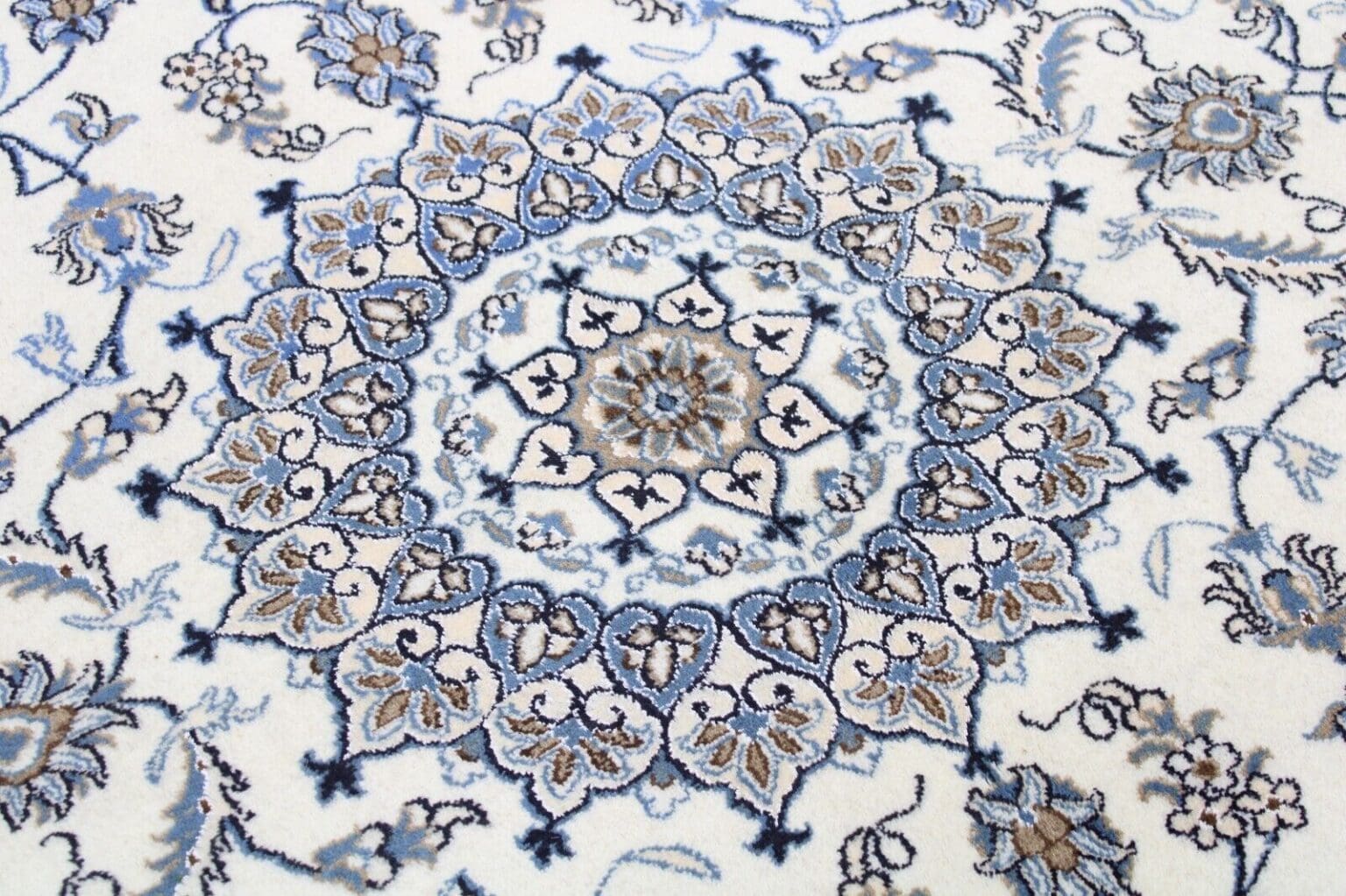
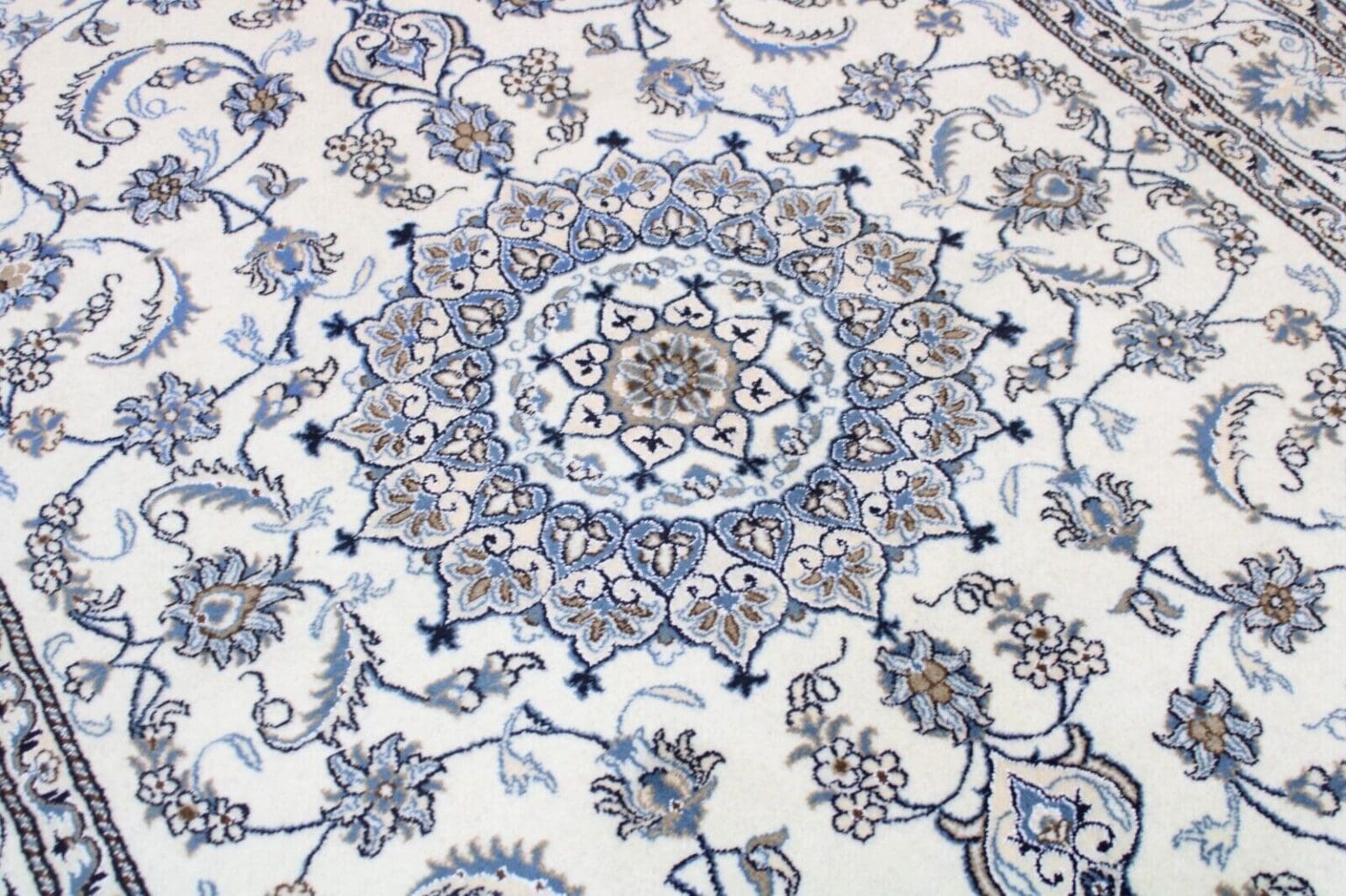
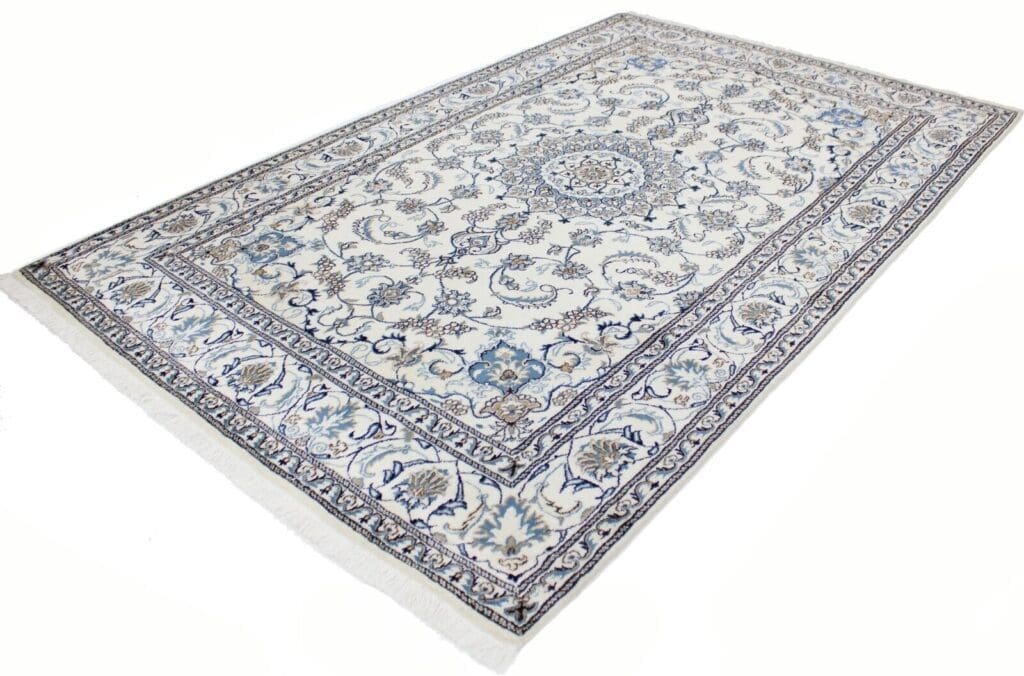
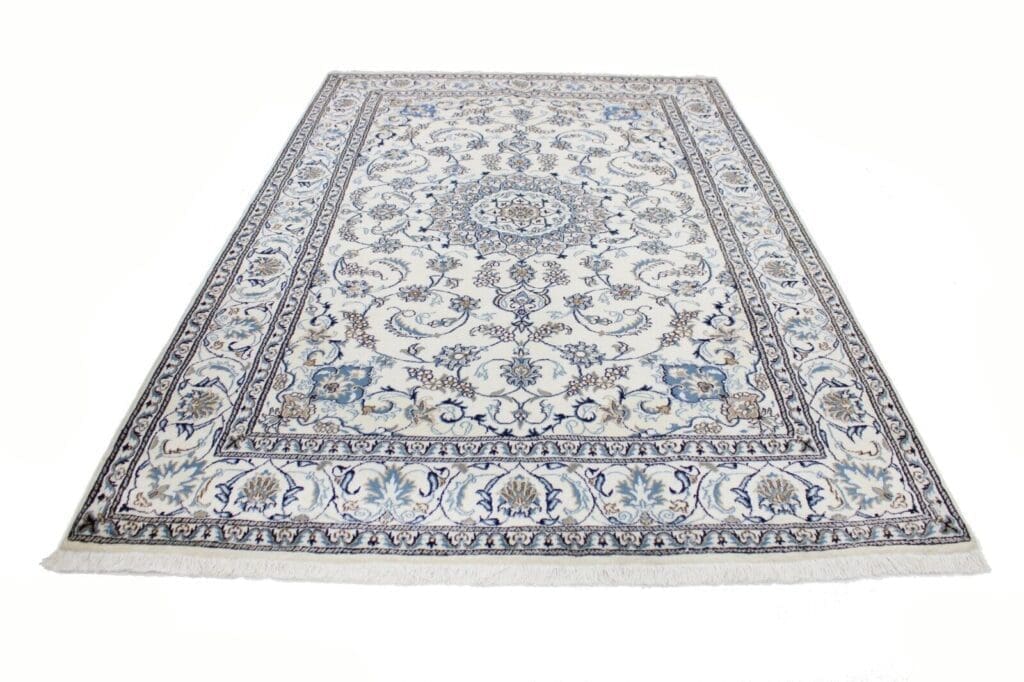
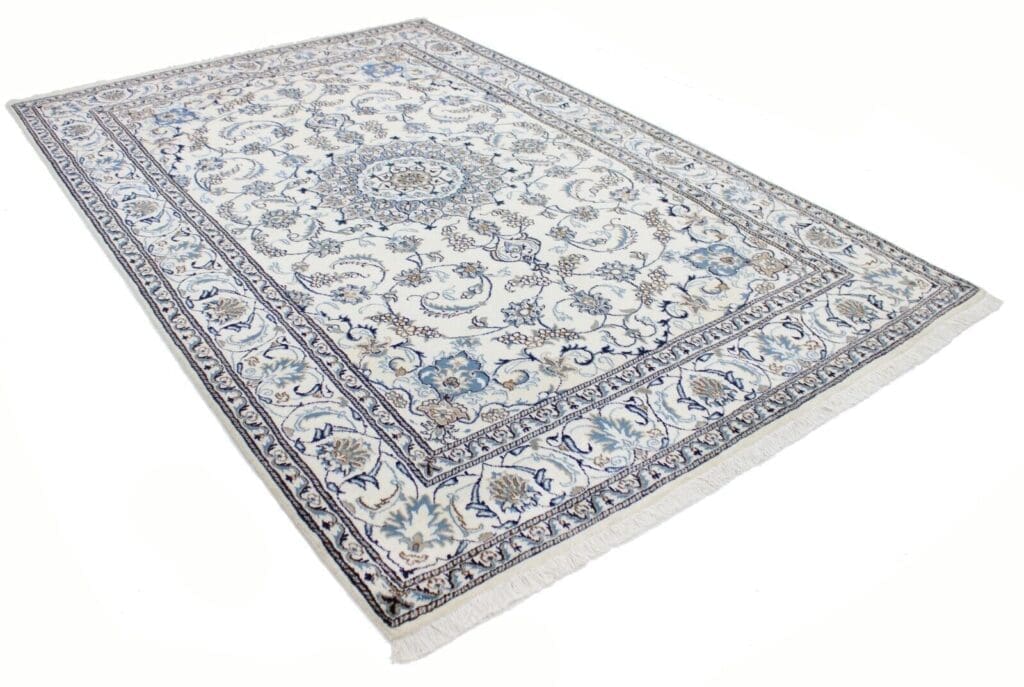
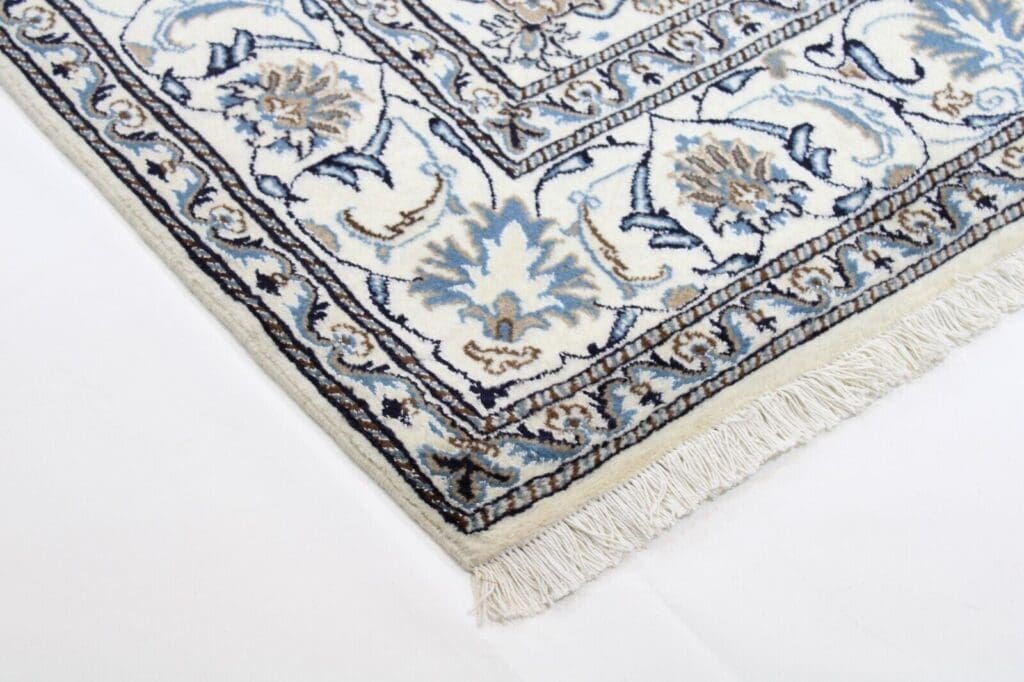
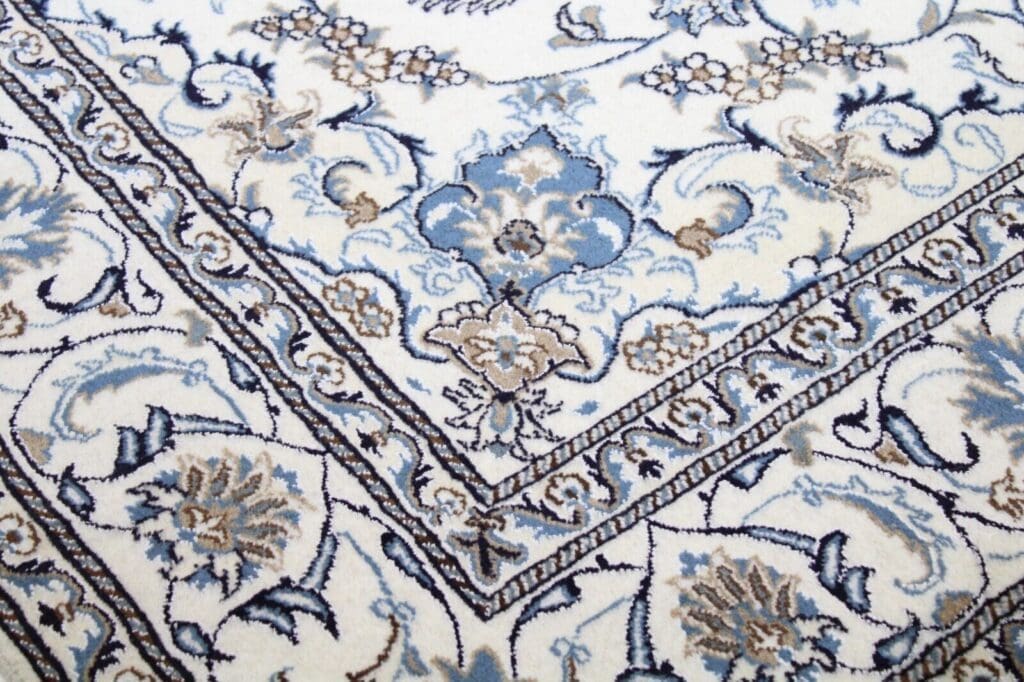
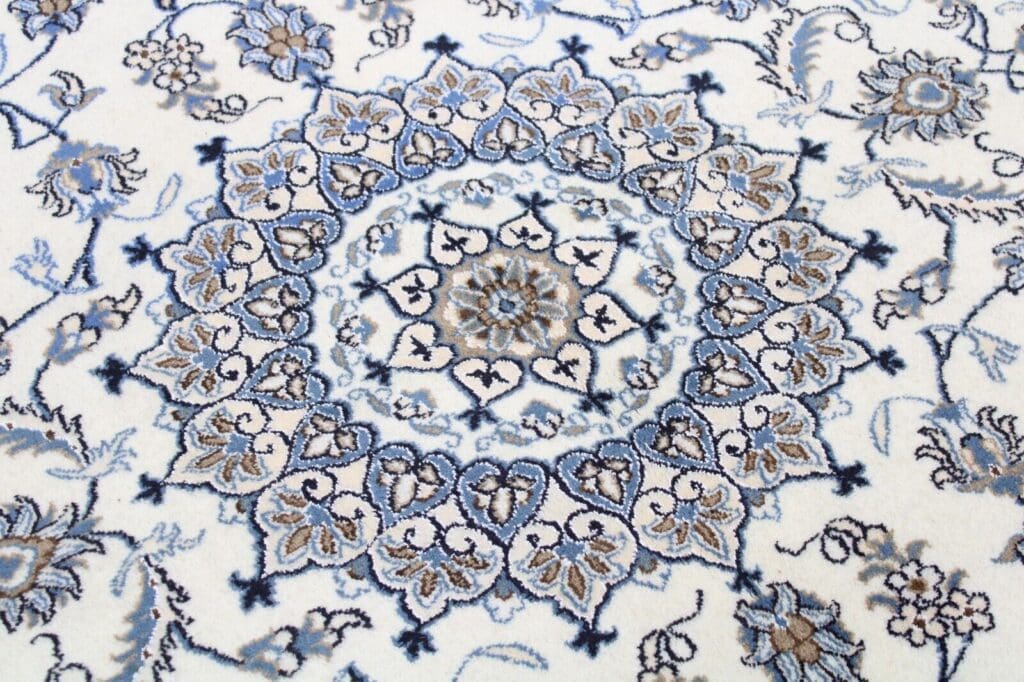
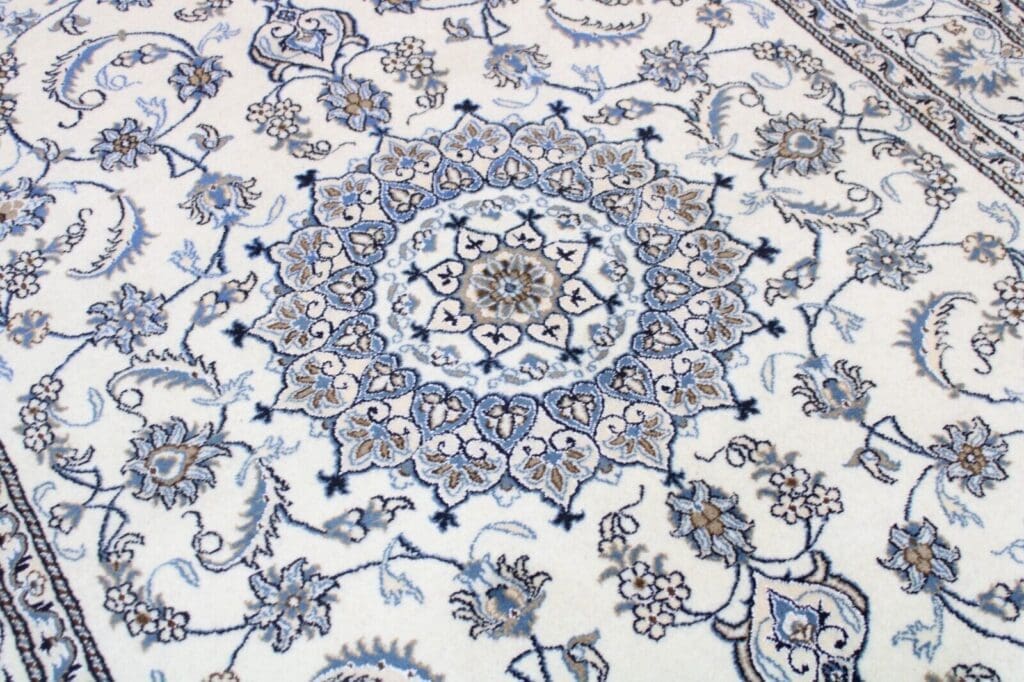
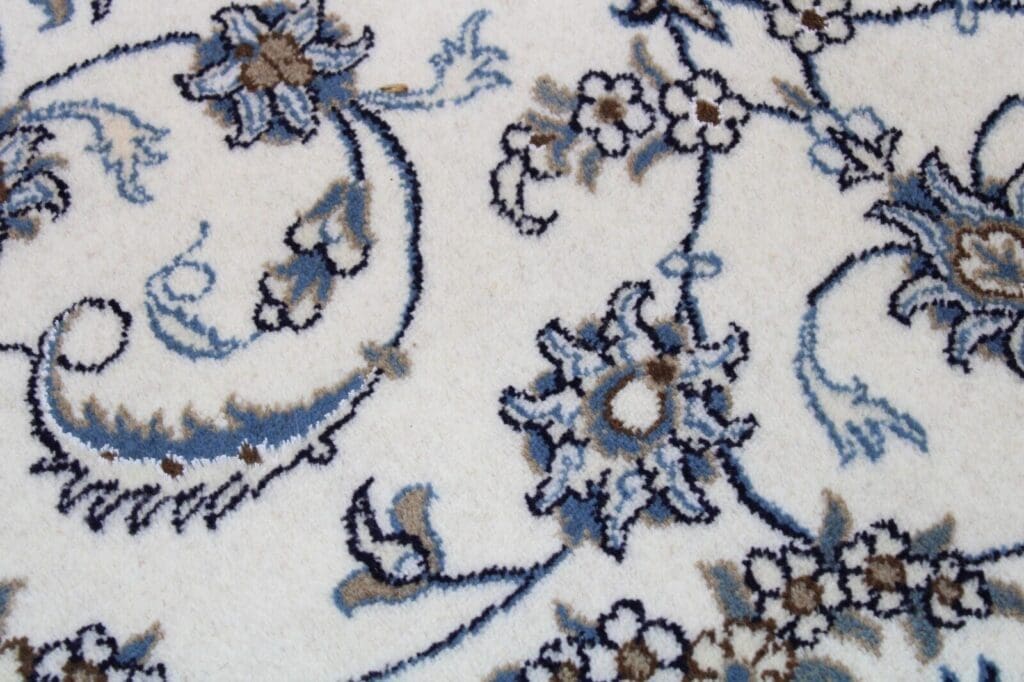
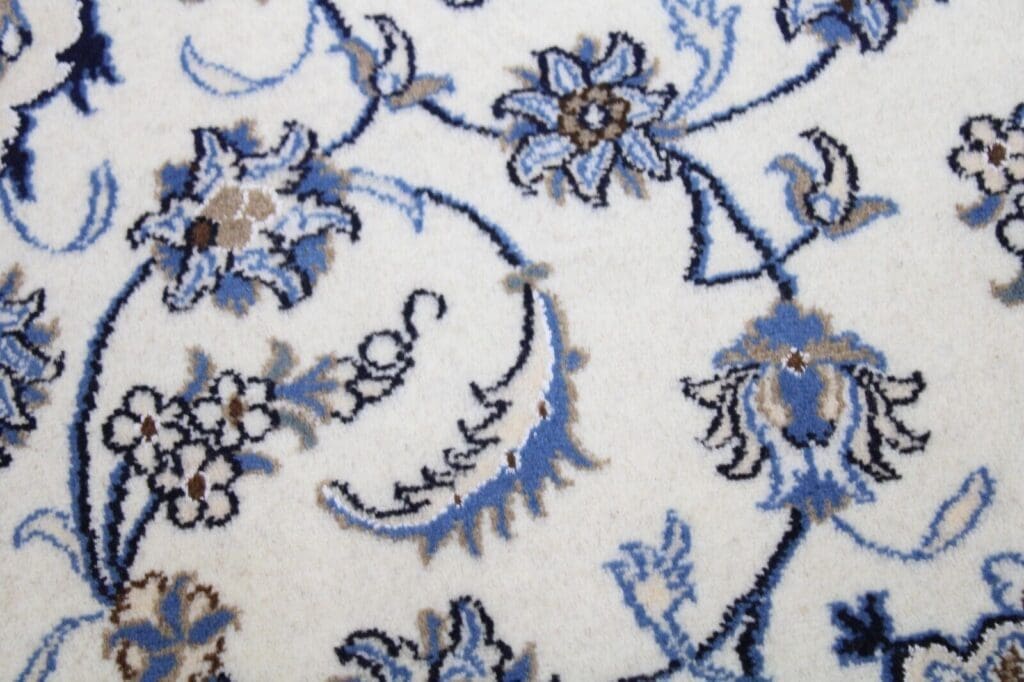
The pattern is traditionally Persian and floral in character. Floral ornament is one of the principal forms of expression in Persian carpet design. Flowers, leaves and stylised vines are arranged within an ornamental structure, often linking the central field with its surrounding frame. These botanical forms are not intended as botanical illustrations. They are refined signs that have been organised into a coherent textile composition.
The stated colour is beige. A beige ground gives the design a restrained appearance and allows the floral elements to read as a connected pattern. In traditional Persian decoration, light colour fields are often used to maintain the clarity of the ornament. The visual effect comes not only from individual shades, but also from their relationship, the recurrence of motifs and the way the borders contain the drawing.
Borders perform an important structural role in classical Persian rug design. They frame the central field and create a transition between the inner ornament and the outer edge. A principal border may be accompanied by narrower side borders that support the composition. Such framing gives the pattern definition while allowing the floral drawing to retain its rhythm and continuity.
Floral motifs in Persian art can carry cultural and symbolic associations. Plant forms may suggest growth, order and a relationship with nature. Their precise meaning depends on the relevant tradition and on the actual composition, however. For this rug, the recorded pattern description is a traditional floral Persian design in beige. No more specific interpretation of individual symbols is being assigned.
The traditional vocabulary can be used in different parts of a home because it is not limited to either a strictly contemporary or a purely historic setting. The rug is suitable for a living room, bedroom or another room. Its regional ornament and beige colour allow it to be considered alongside different interior arrangements while retaining its Persian design identity.
Special Features
This is new merchandise offered as an original Nain Persian rug. It is in excellent condition, has been traditionally washed and professionally inspected, and is ready for immediate use. Genuine wool, hand-knotting and a traditional floral pattern in beige are specifically stated characteristics of this piece. These details describe its material, construction, preparation and visible design without adding unrecorded specifications.
The rug is suitable for underfloor heating and can be used in all rooms. Shipping to Germany is free, with the stated delivery time being two to three working days. A return policy with a 100 percent satisfaction guarantee is provided. An authenticity certificate is available on request at no additional charge. These service and usage details supplement the information about the rug’s Persian Nain designation, wool pile, floral design and condition.
FAQ
What identifies a Nain Persian rug?
A Nain Persian rug belongs to a Persian regional tradition commonly associated with ordered floral ornament, clear composition and light colour fields. The name refers to Nain as a centre of carpet production rather than merely to one isolated motif. For this piece, the Nain designation, Persian classification, hand-knotted construction, wool pile and traditional beige floral pattern are all explicitly stated characteristics.
Why are floral patterns used in carpet art?
Floral patterns are among the established design resources of Persian carpet art. Flowers, leaves and vines are stylised, repeated and arranged in relation to a central field and surrounding borders. In this way, plant forms become part of an ornamental language rather than a literal copy of nature. Such motifs may carry cultural associations with nature, growth and harmony. Their exact interpretation depends on the regional tradition and on the individual design.
What does hand-knotted mean for this rug?
Hand-knotted means that the pile was built by placing individual knots by hand into a prepared foundation. The process requires suitable wool, a planned pattern and the repeated execution of the knotting technique. The visible surface is formed gradually as the work proceeds, so the design becomes part of the textile structure. In this rug, that traditional technique is combined with a genuine wool pile, professional inspection and traditional washing before use.
To provide the best experiences, we use technologies like cookies to store and/or access device information. Consenting to these technologies will allow us to process data such as browsing behavior or unique IDs on this site. Not consenting or withdrawing consent, may adversely affect certain features and functions.
Functional Always active
The technical storage or access is strictly necessary for the legitimate purpose of enabling the use of a specific service explicitly requested by the subscriber or user, or for the sole purpose of carrying out the transmission of a communication over an electronic communications network.
Preferences
The technical storage or access is necessary for the legitimate purpose of storing preferences that are not requested by the subscriber or user.
Statistics
The technical storage or access that is used exclusively for statistical purposes.The technical storage or access that is used exclusively for anonymous statistical purposes. Without a subpoena, voluntary compliance on the part of your Internet Service Provider, or additional records from a third party, information stored or retrieved for this purpose alone cannot usually be used to identify you.
Marketing
The technical storage or access is required to create user profiles to send advertising, or to track the user on a website or across several websites for similar marketing purposes.

 SECURE PAYMENT
 SHIPPING PARTNERS


