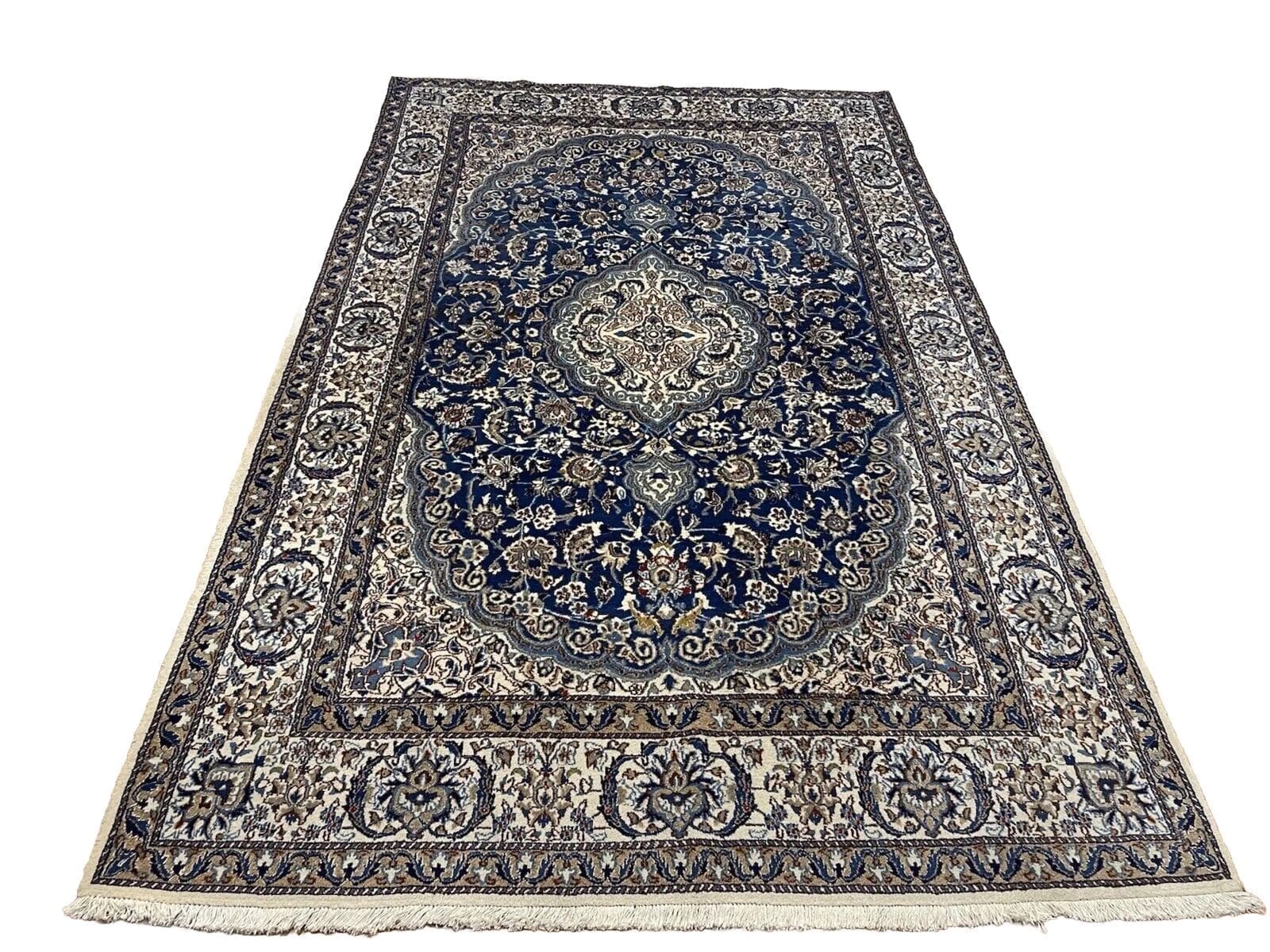
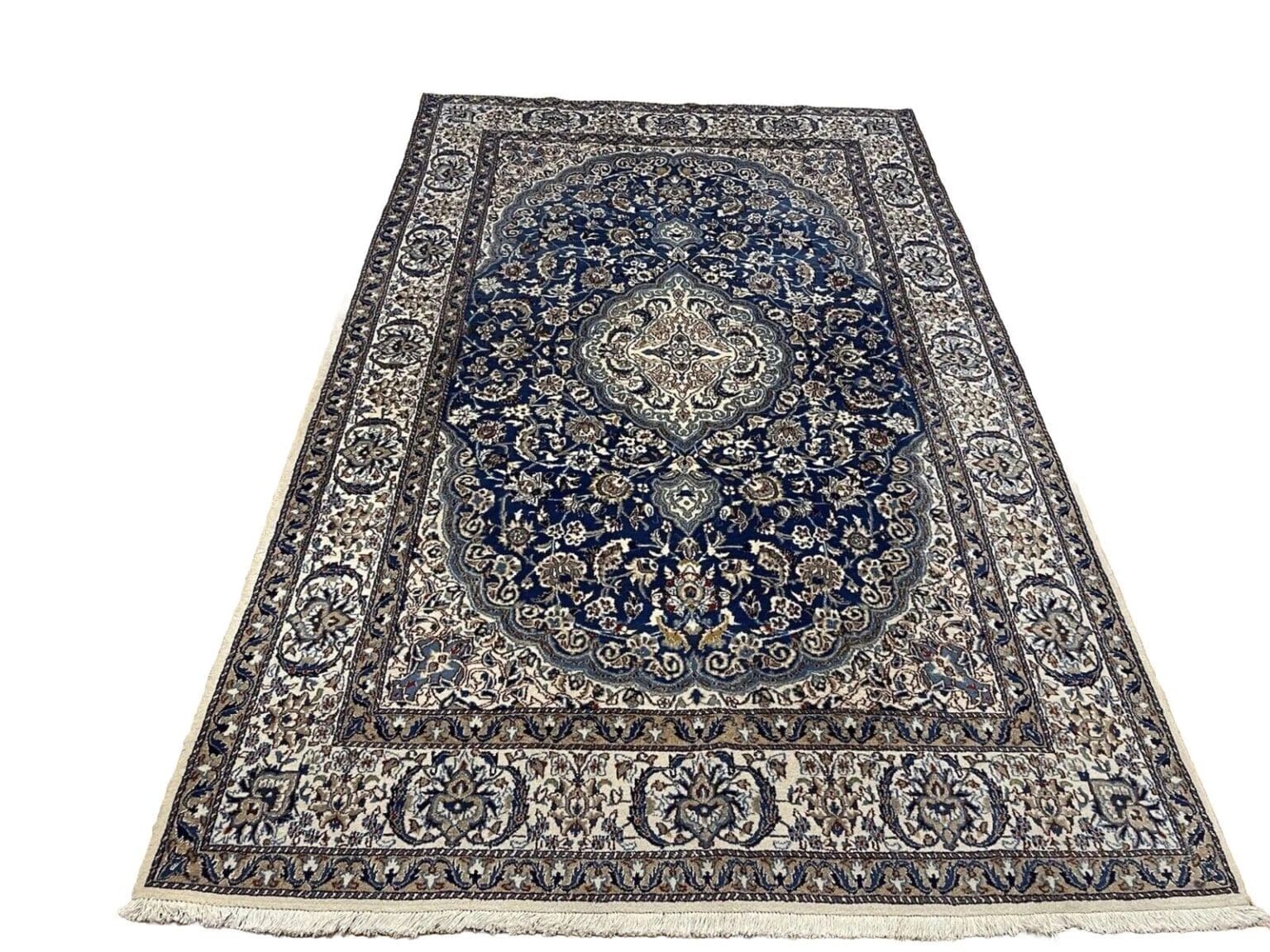
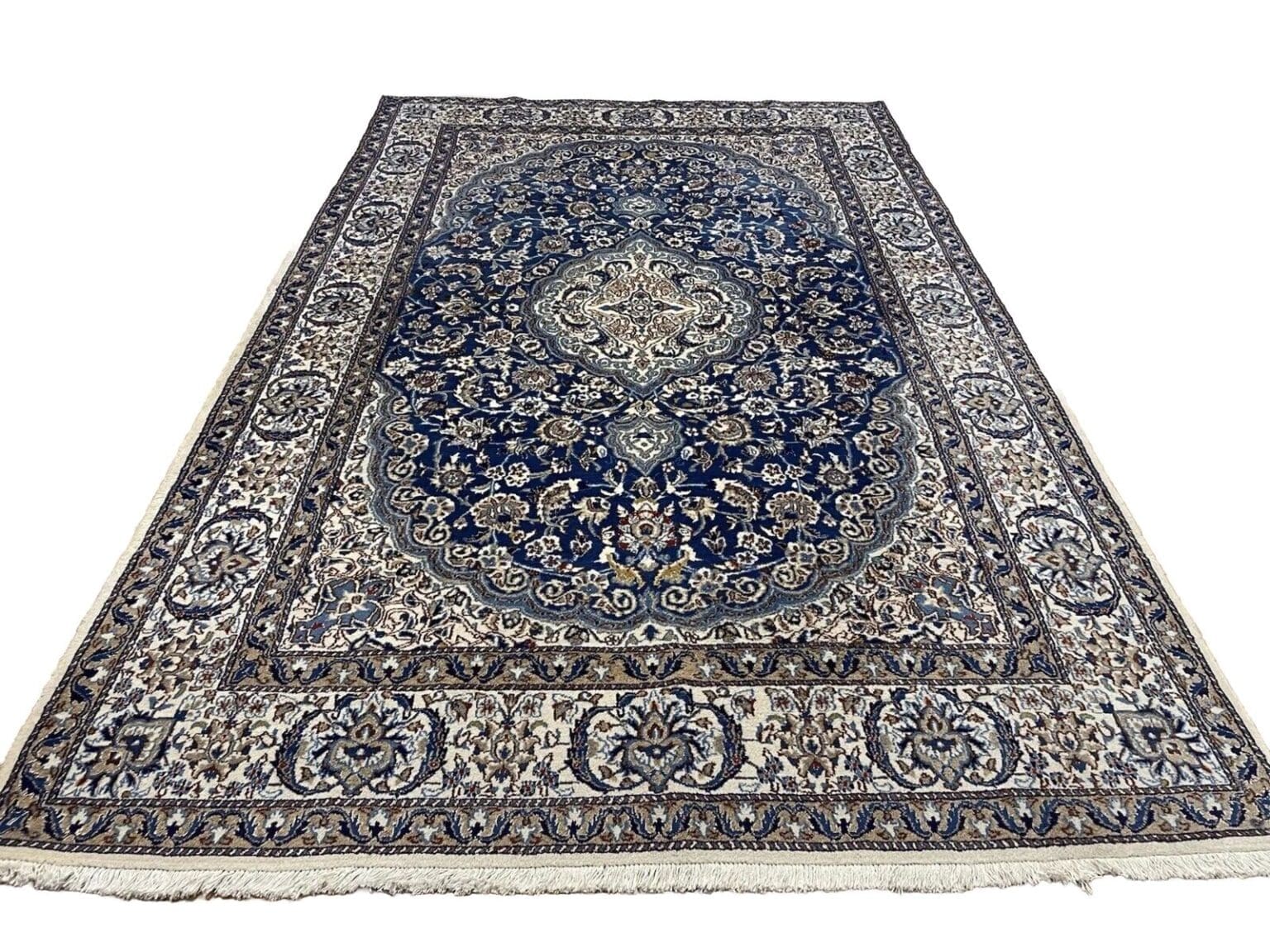
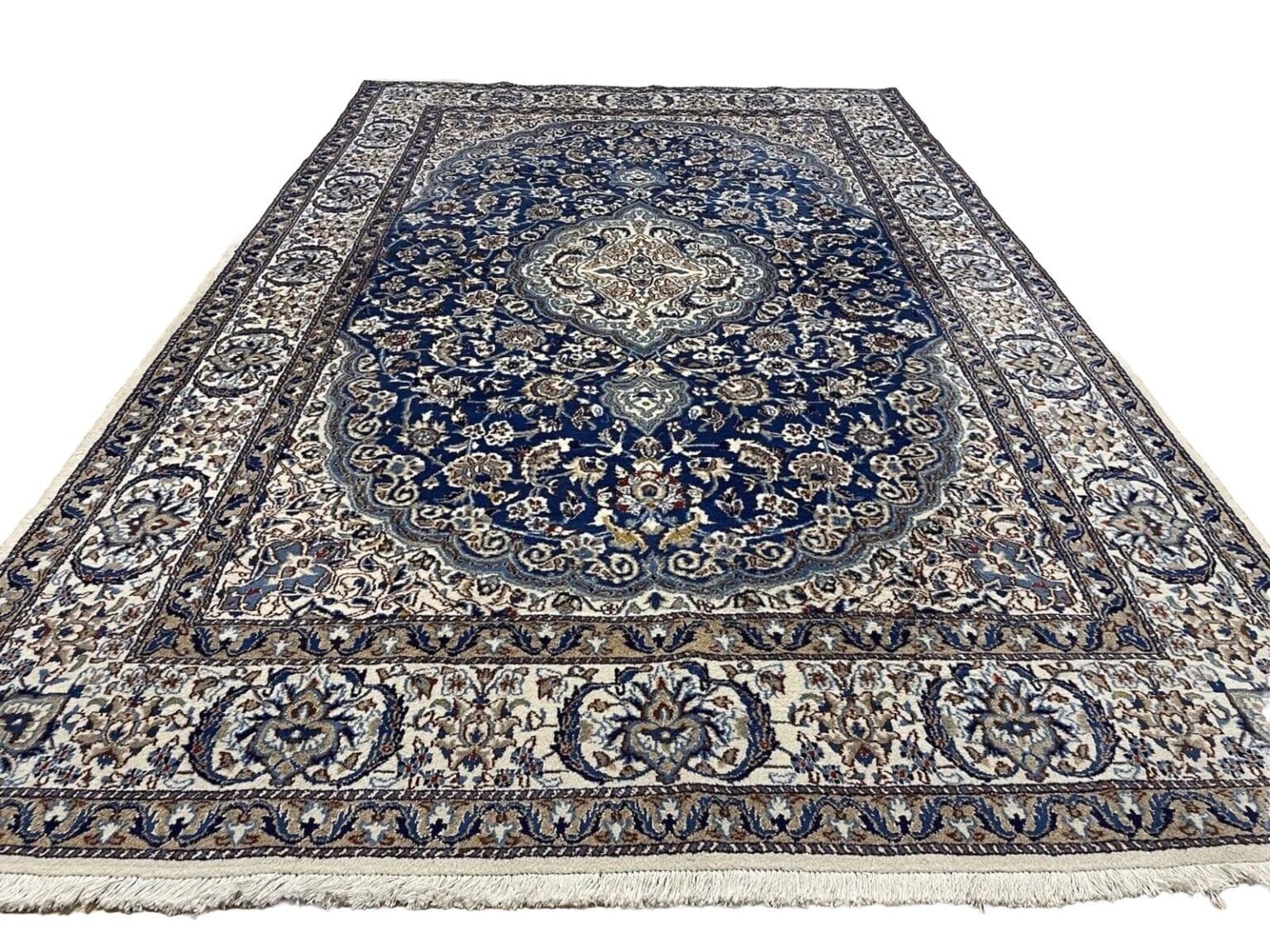
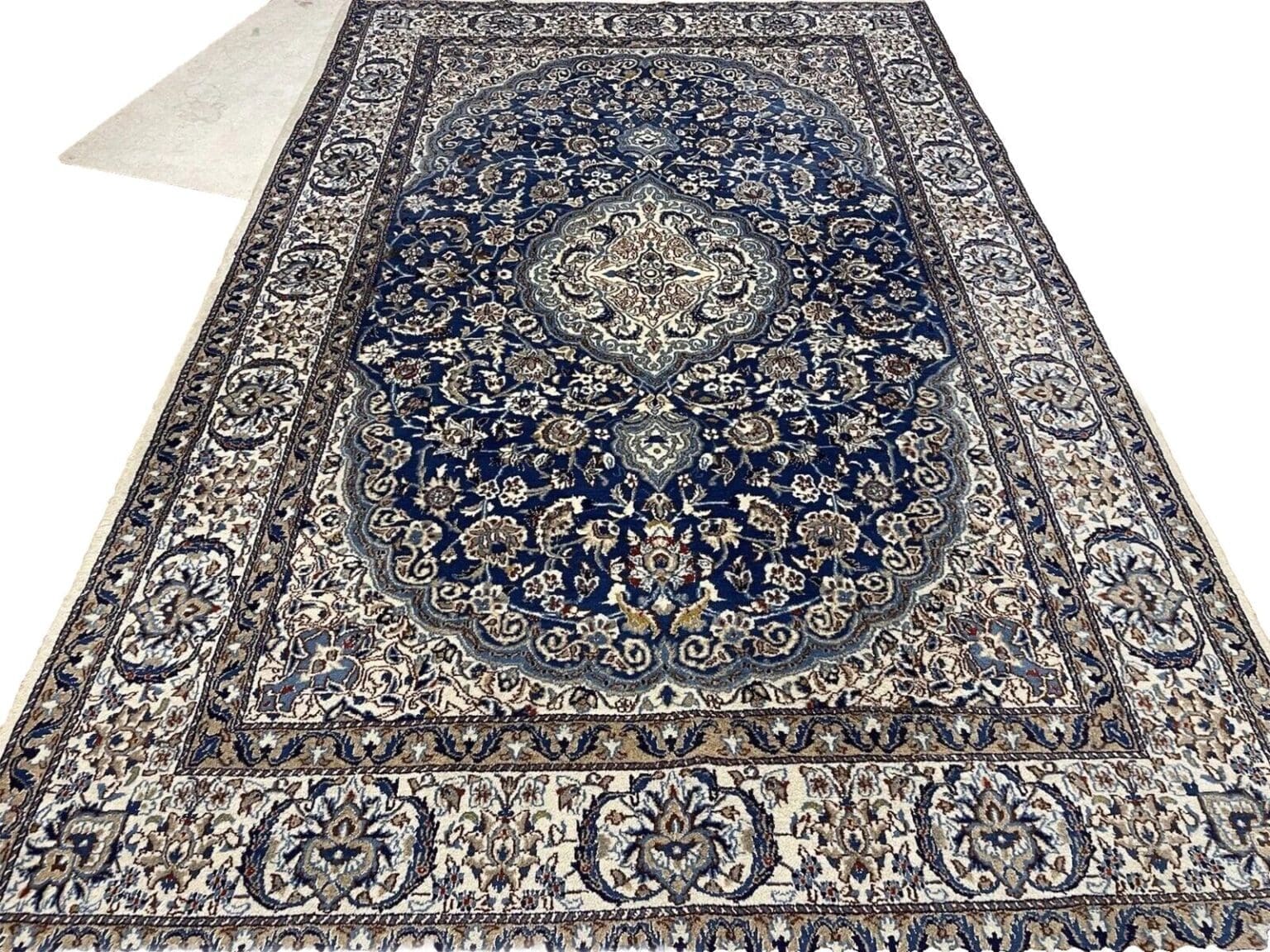
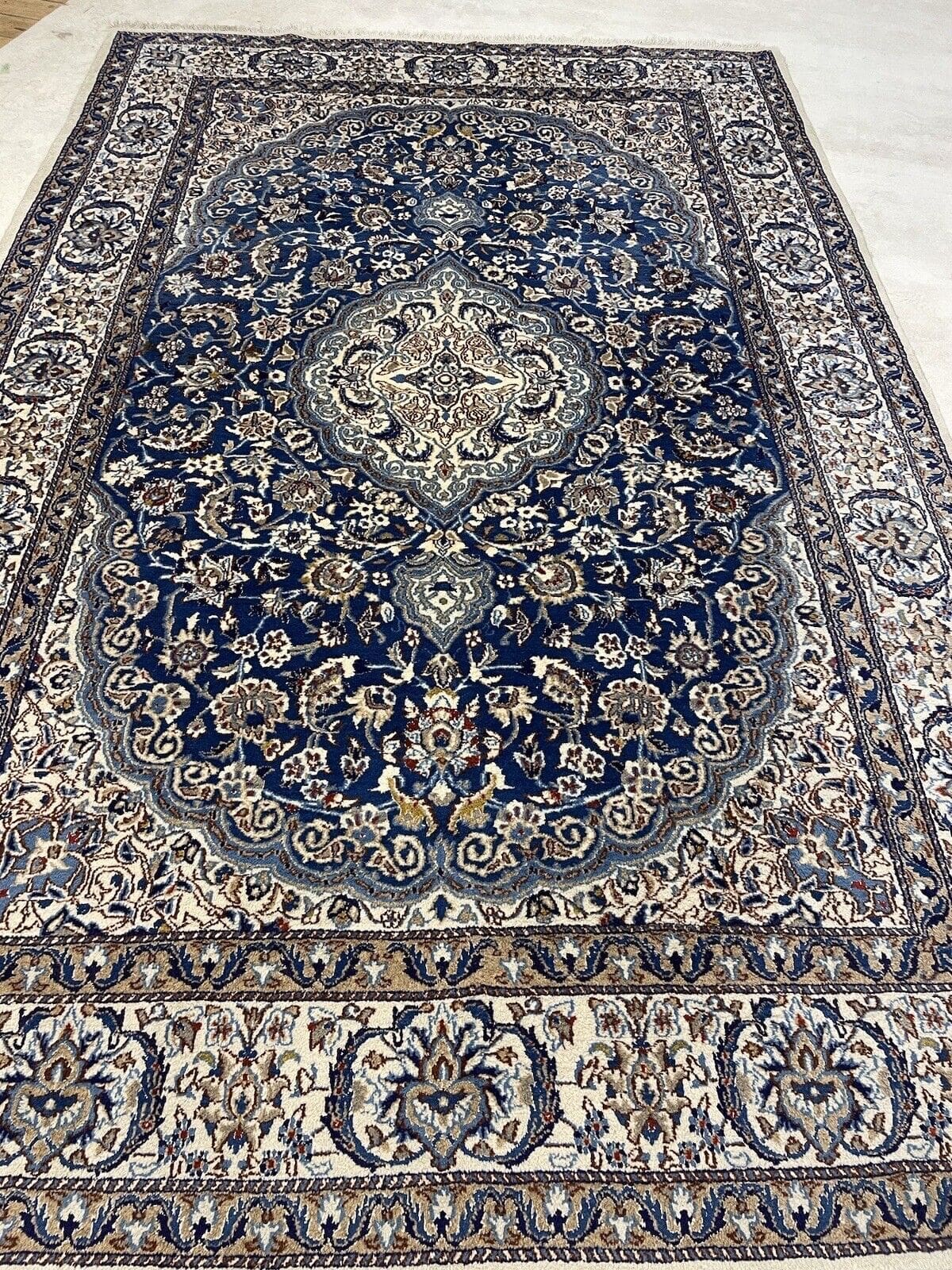
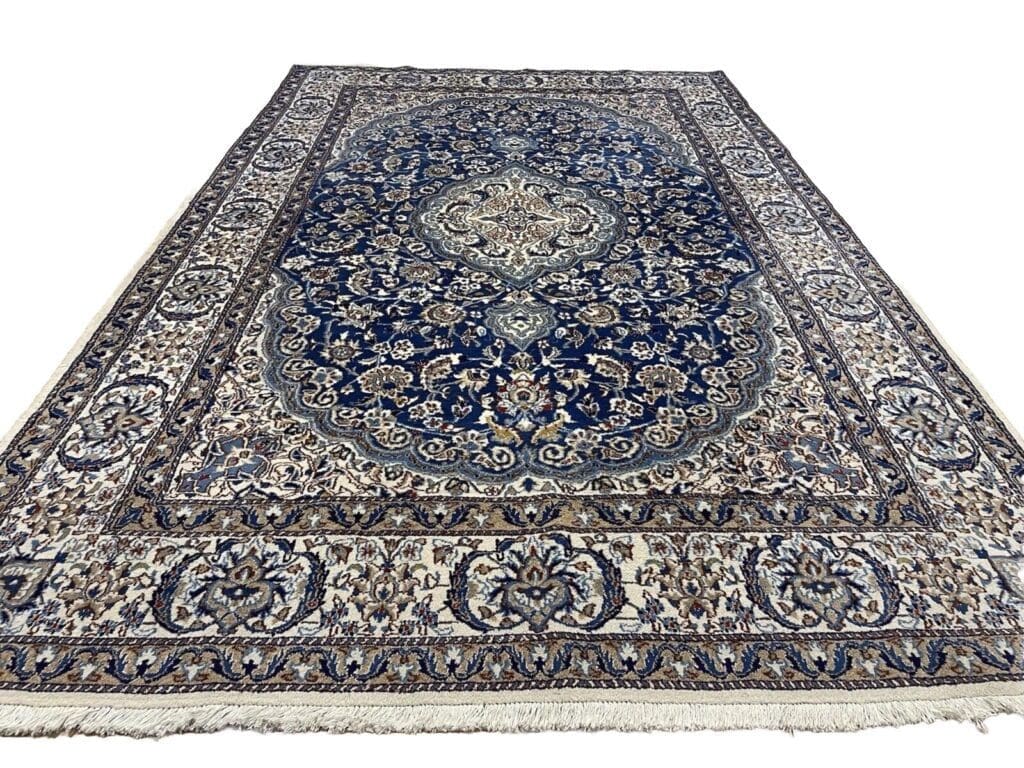
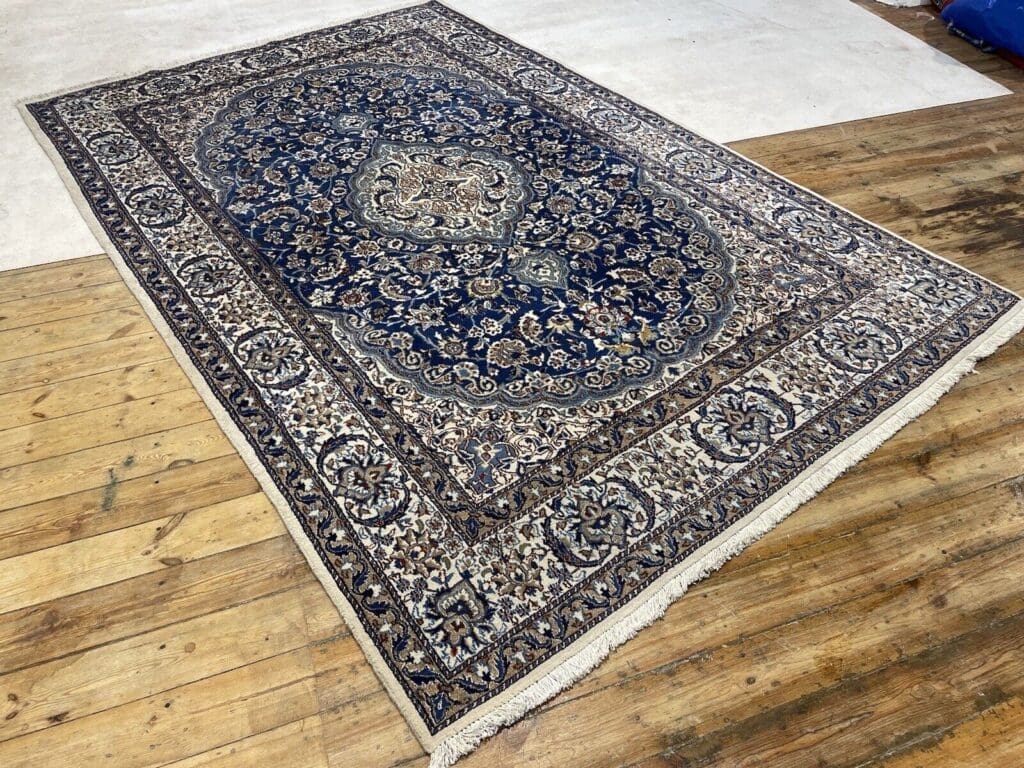
Hand-knotted Nain Persian rug | Knot density: high | Material: pile wool and silk | Size: 300 x 200 cm | Pattern: floral with border | Condition: new with label
This Nain Persian rug is hand-knotted with a pile made from wool and silk. The two fibres give the surface different but complementary qualities. Wool provides the main textile body of the pile, while silk is used within the floral motifs and as an accent. Its smoother surface reflects light more distinctly than wool, creating a restrained sheen across selected parts of the design. The material combination therefore contributes both to the look and to the feel of the rug.
Hand-knotting means that the knots are inserted individually into the rug’s structure. This method requires close attention to the outlines of flowers, flowing lines and borders. The Nain 9LA is described as having a high knot density, an aspect that supports a clearly worked pattern and a stable construction. A dense knotting structure also allows small decorative details to be set out with greater precision than a loosely executed design.
Wool is traditionally used in rugs because it provides a resilient and comfortable pile. Silk adds a smoother touch and a characteristic response to light. Together they create a surface with varied texture rather than a uniform appearance. The pile height is 8 mm, so the fibres remain perceptible when the rug is touched or walked on. The combination of materials and the hand-knotted technique are central to the character of this particular Nain rug.
The craft process brings together the choice of fibres, the arrangement of the pattern and the repeated work of tying individual knots. Wool forms the practical textile foundation of the pile, while silk is placed where the floral drawing and its accents require additional definition. The result is a surface in which the materials can be distinguished by their different reflection and texture. High knot density adds to the controlled appearance of the motifs without changing their floral character.
This rug was made in the 21st century and retains the established relationship between natural fibres and detailed handwork associated with Nain rugs. Its construction is not described through a machine-made process: it is hand-knotted. The combination of wool, silk, the stated pile height and the dense knotting gives a concise account of how the surface was produced and why its pattern can be read with clarity.
Origin and Tradition
Nain is a celebrated rug-making city in Iran, in Isfahan Province. Nain rugs are known for hand-knotted production, refined drawing and careful workmanship. The name identifies a regional origin and a tradition of weaving; it is not simply a name for a floral ornament. This rug belongs to that Iranian tradition through its Nain designation and its hand-knotted construction.
The craft of Nain has been shaped by knowledge passed from one generation to the next. Weavers learn how to establish the rug’s structure, maintain an even rhythm of knotting, draw outlines and coordinate colours across the field. They also work with the relationship between the central composition and its enclosing border. These skills are technical as well as artistic, since a small change in a contour can affect the balance of an entire floral design.
Isfahan Province forms an important cultural setting for Persian textile arts. Within this wider environment, Nain developed a recognizable approach based on fine floral compositions, ordered layouts and carefully finished details. The regional identity is expressed through the way the design is organized as much as through the subject matter of the motifs. Nain rugs are therefore read through a combination of place, construction and visual language.
The designation 9LA is used within the classification of Nain rugs. It relates to the type and fine, detail-oriented character of this group of carpets. Such classifications are useful for distinguishing related forms within a regional tradition, while the actual appearance of each one-off rug remains individual. In this piece, the classification appears together with a floral pattern, a border and a wool-and-silk pile.
Persian rug traditions are based on the interaction of technique and design. A regional style is not created by a motif alone; it is also carried by the way the rug is knotted, the way the composition is planned and the way the materials are brought together. In Nain, fine floral drawing and controlled handwork are recurring features of the tradition. The high knot density described for this rug supports that detail-oriented approach.
The rug dates from the 21st century, so it represents a contemporary piece within a long-established Iranian craft tradition. Contemporary production does not remove the regional reference. Instead, it places the known Nain vocabulary of hand-knotting, floral drawing and framed composition in a modern period. Its origin in Nain, Iran, and its Persian identity remain distinct from any decorative pattern names that might be shared by rugs from other regions.
The transmission of weaving knowledge also explains why Nain rugs are associated with consistency in structure and clarity in design. A weaver must repeat thousands of precise actions while maintaining the planned proportions of the pattern. The result depends on the coordination of material, knot and drawing. This relationship between disciplined technique and decorative detail is a central part of Nain’s place in Persian rug history.
Design and Pattern
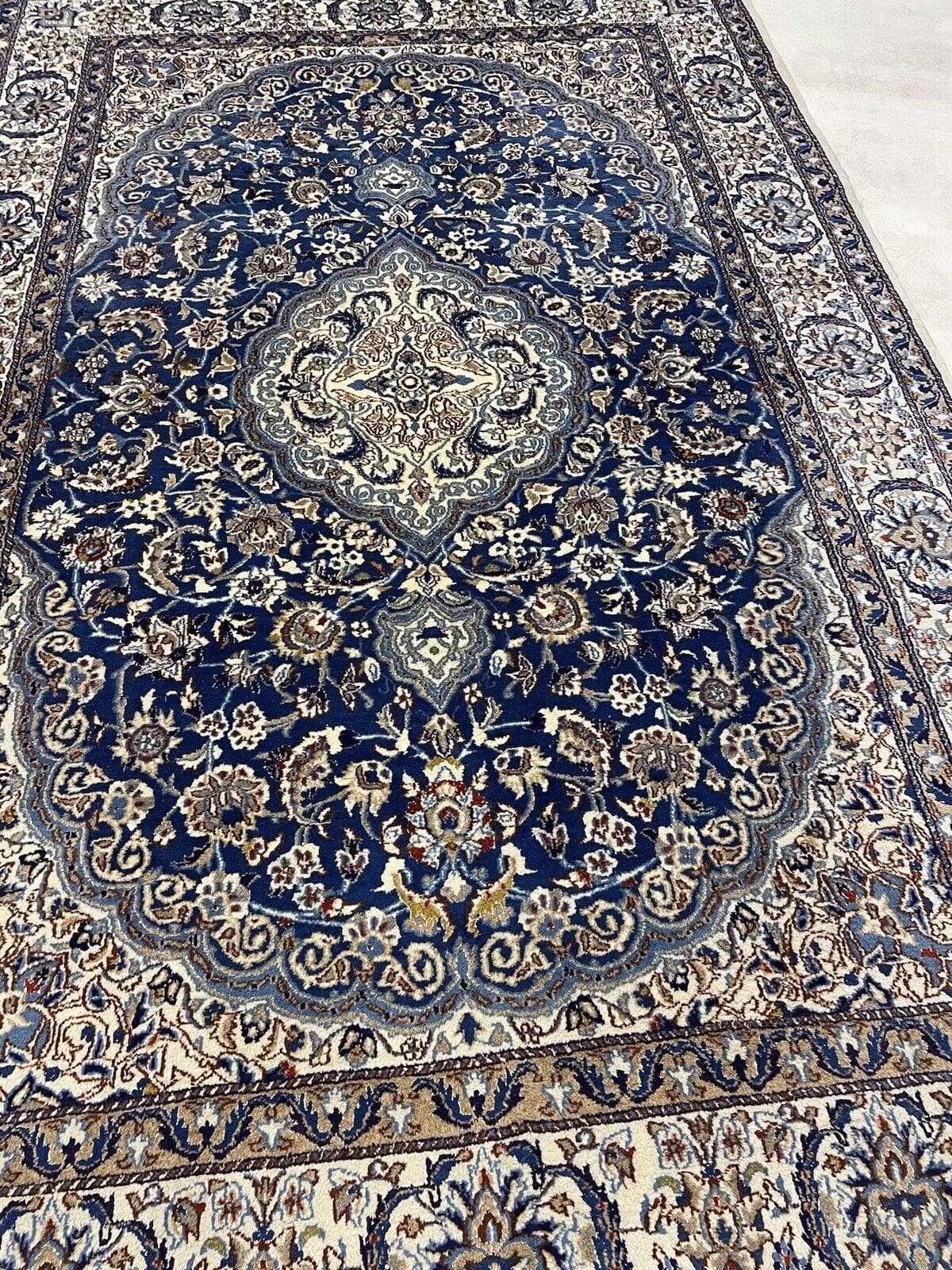
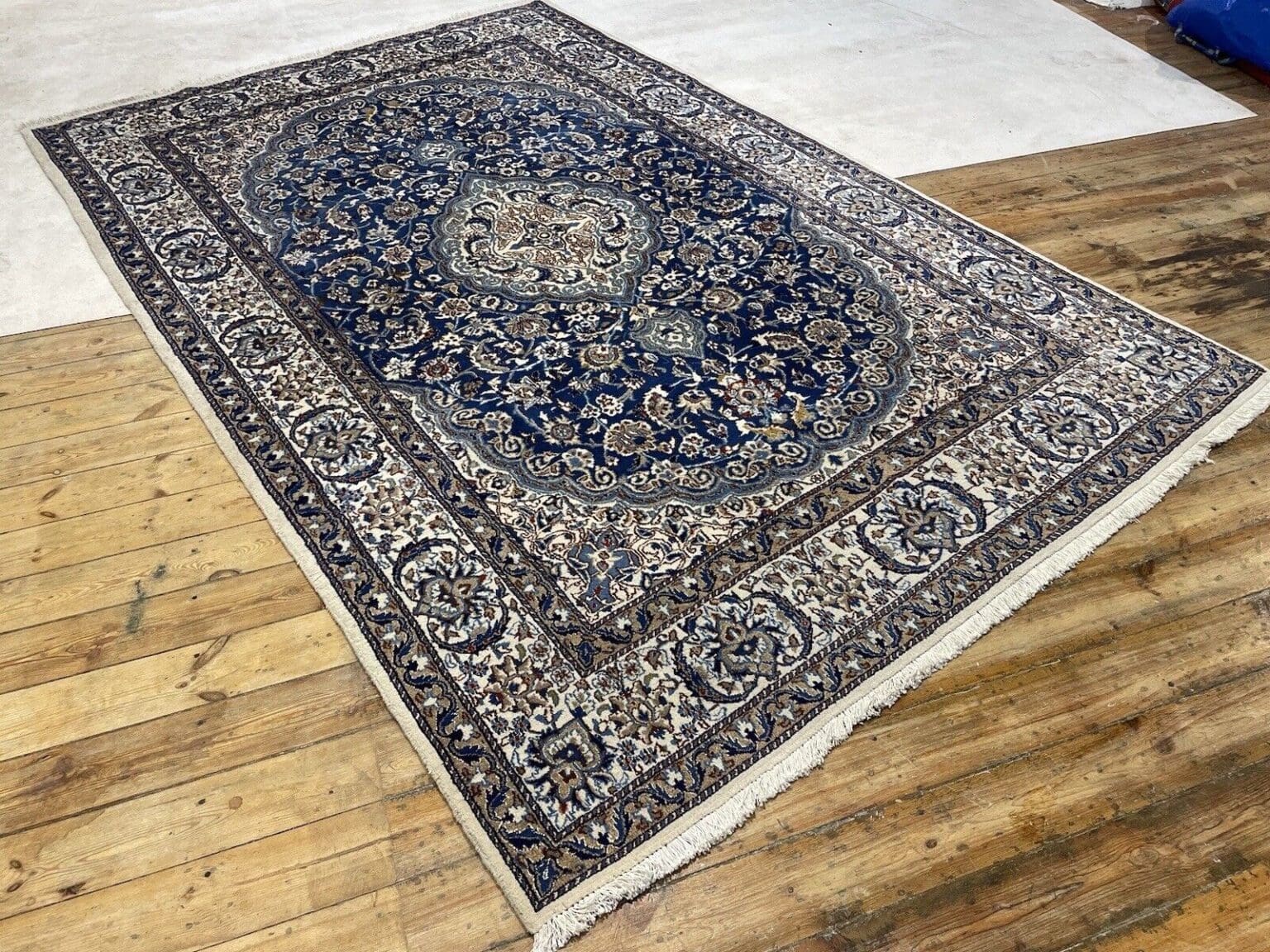
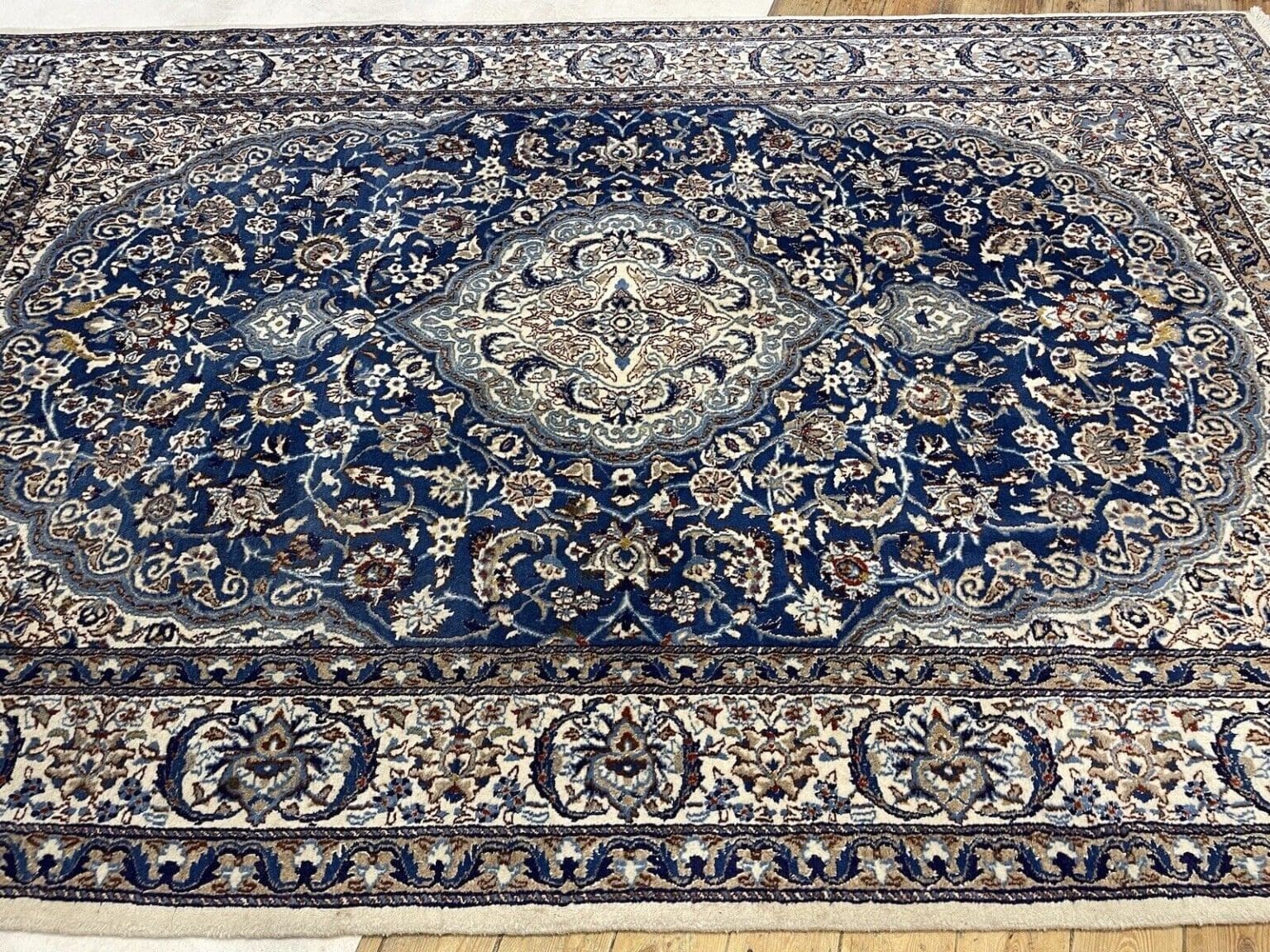
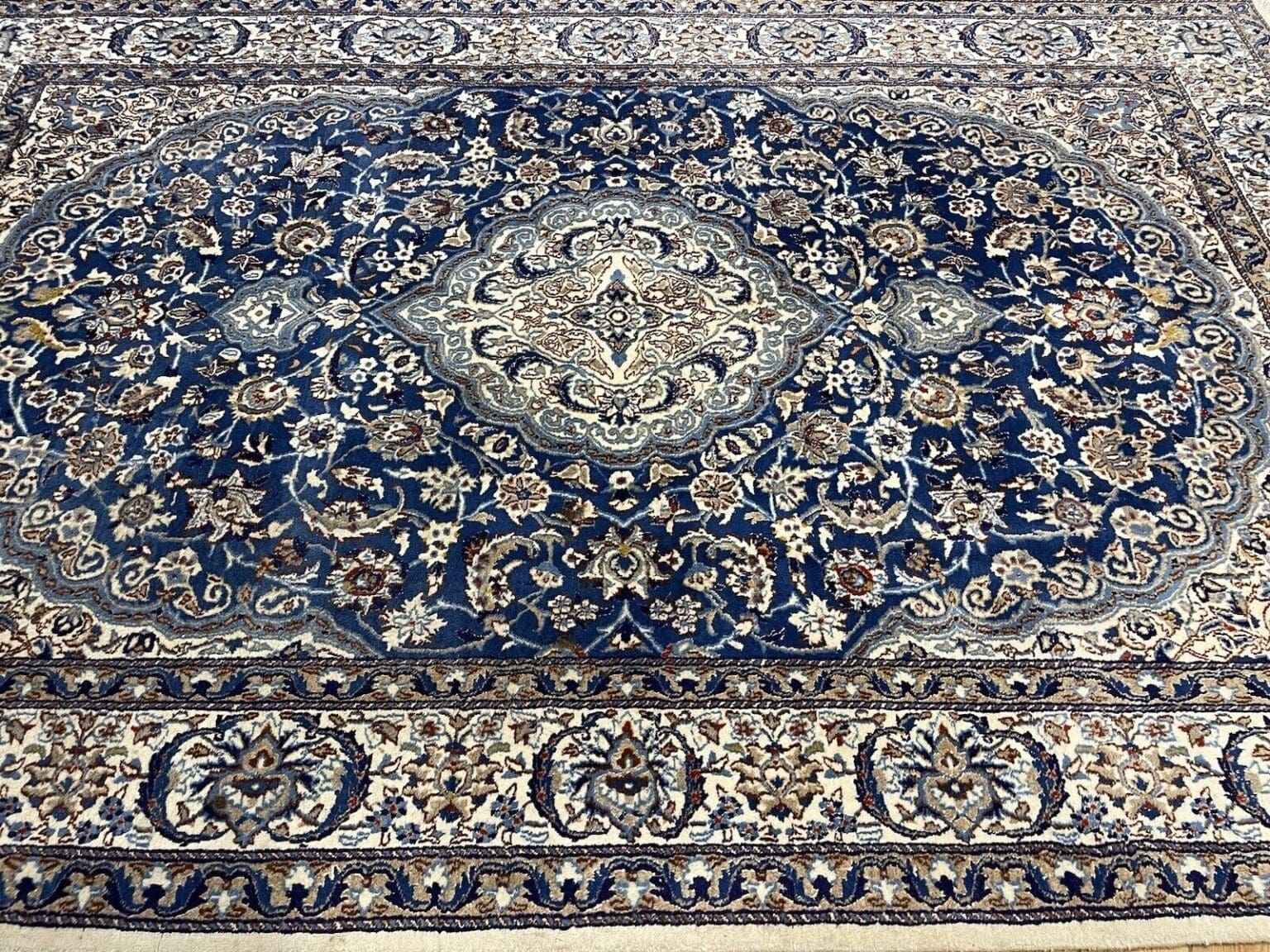
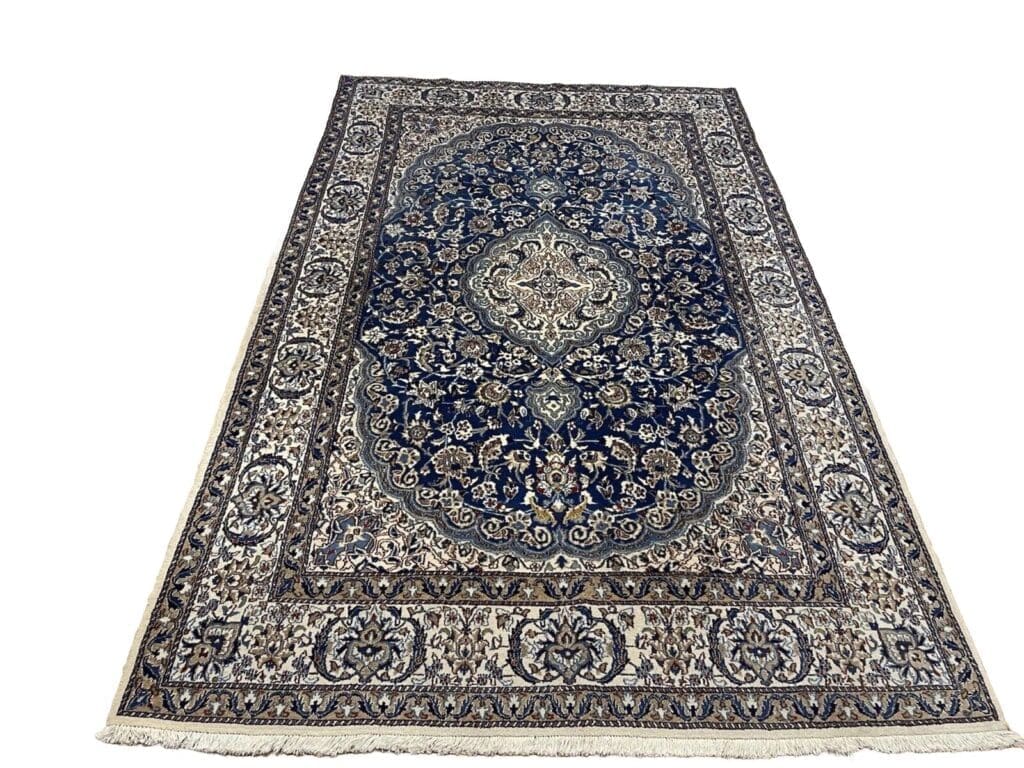
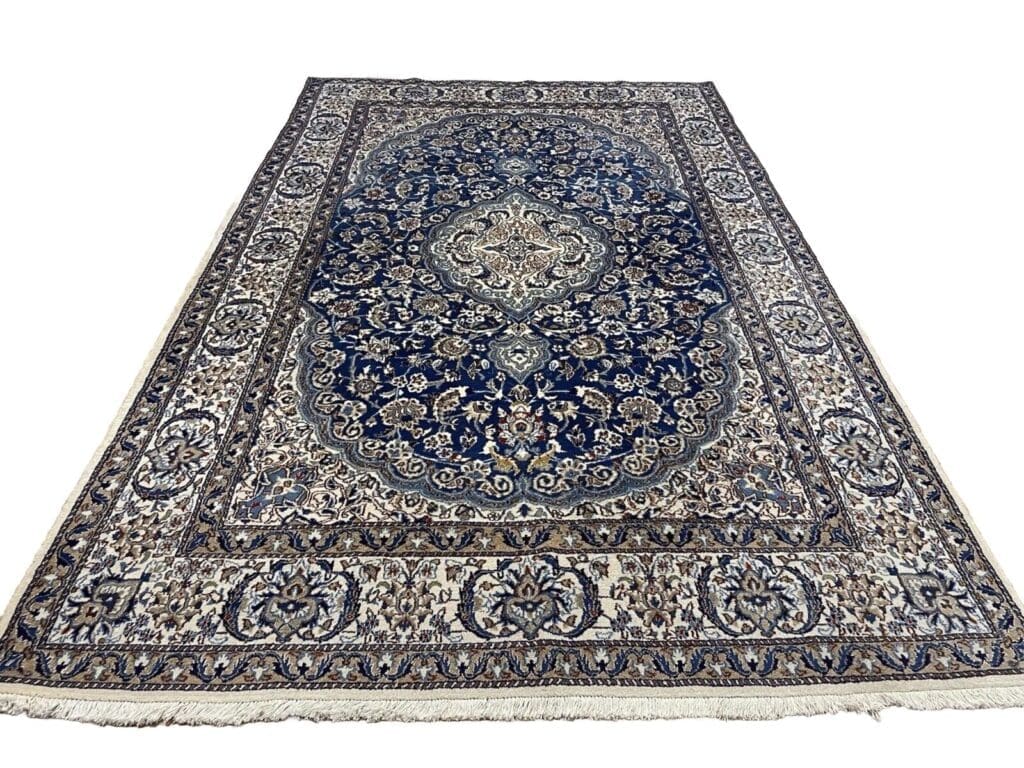
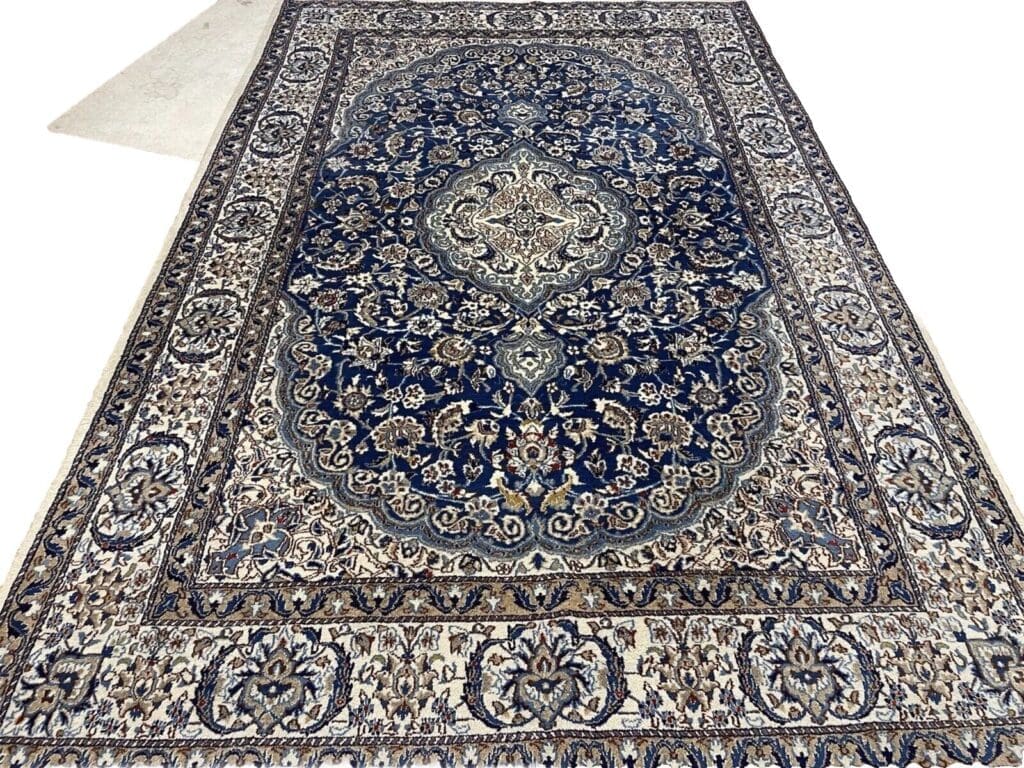
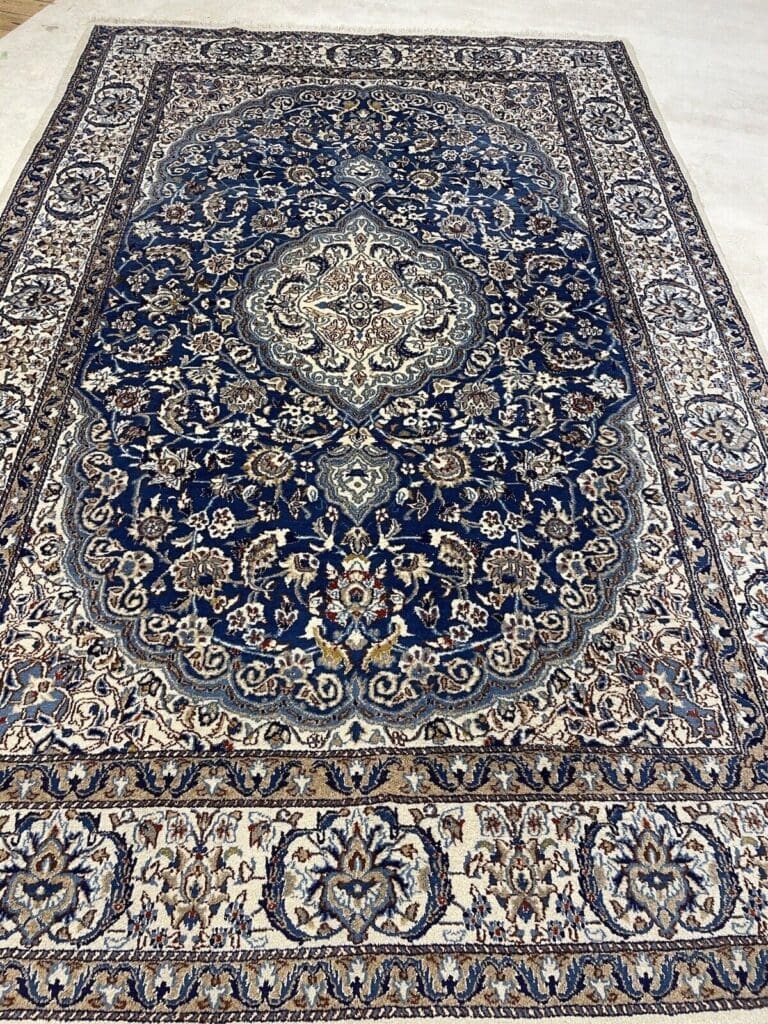
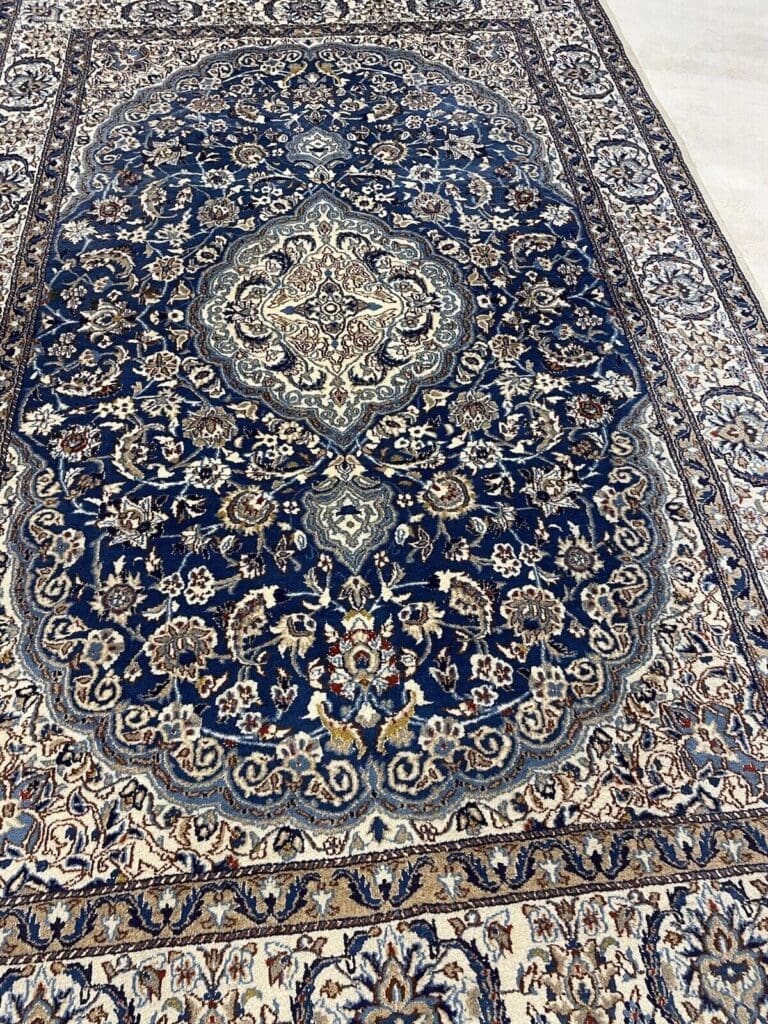
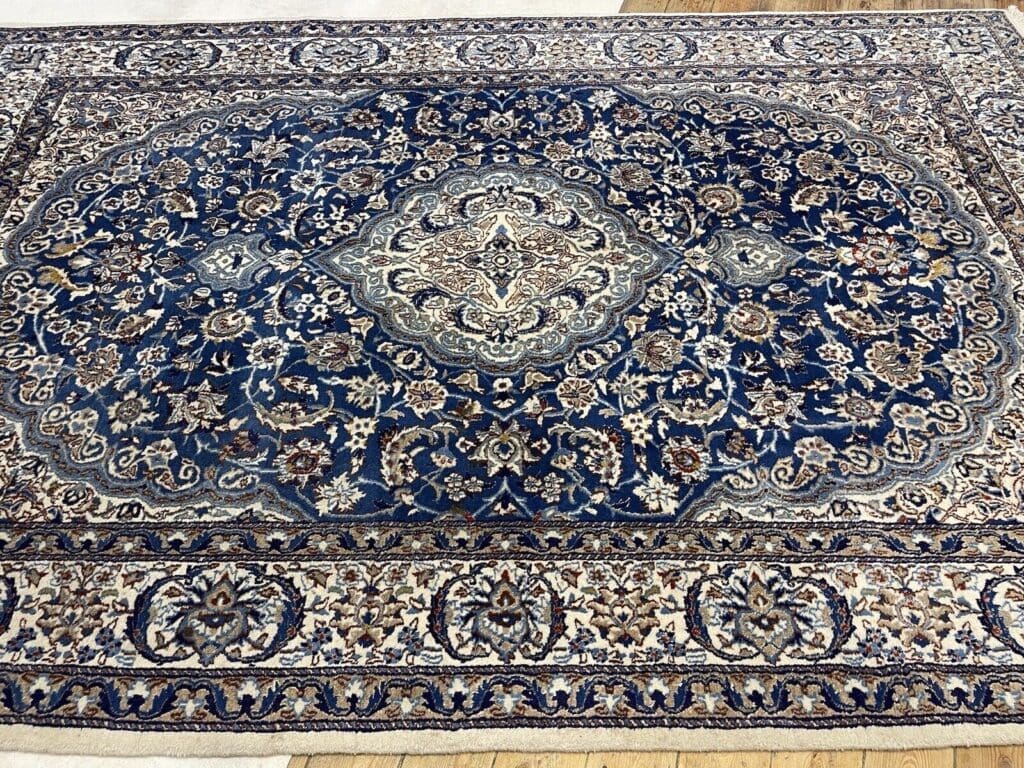
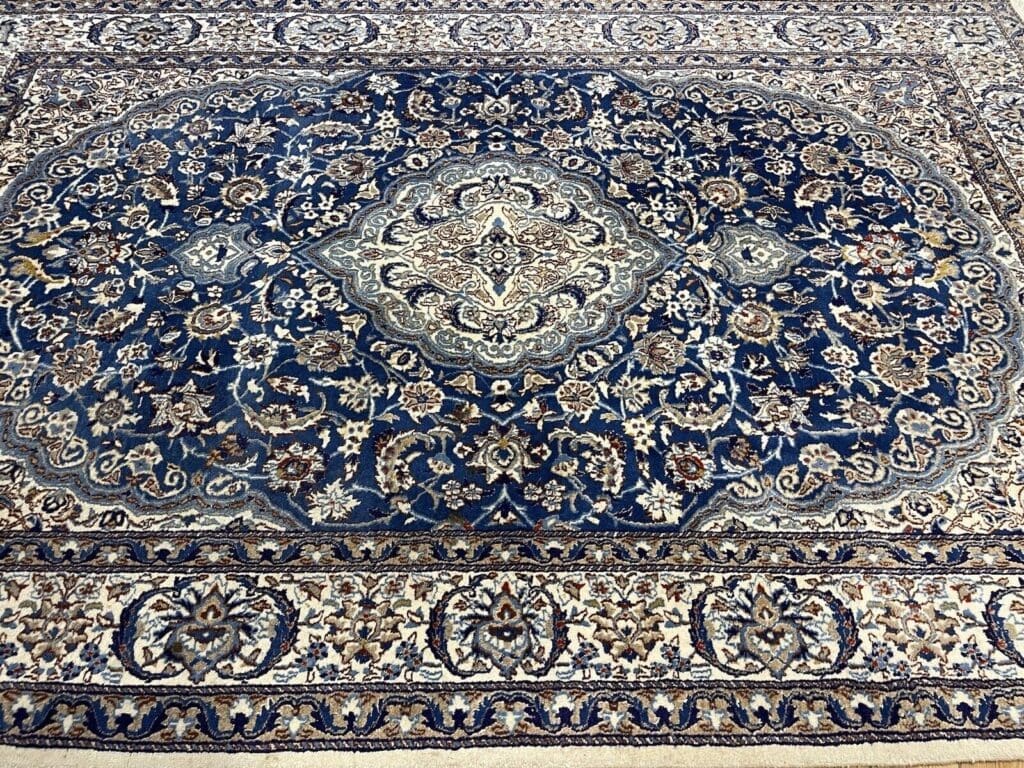
The design of this Nain 9LA is floral and includes a border. Flowers, curved lines and decorative accents form the main visual vocabulary. The border encloses the composition and gives the rectangular field a defined edge. It separates the central pattern area from the outer margin, creating a clear framework in which the floral elements can be read as a connected arrangement.
Floral ornament is closely associated with the visual language of Nain rugs. Flowers, leaves and scrolling stems may be arranged in repeated, balanced relationships rather than copied as a single natural scene. This approach turns botanical forms into textile ornament. The motifs can follow flowing lines, echo one another across the field or be placed in a measured rhythm. Hand-knotting enables the outlines and smaller transitions to be rendered as part of that organized drawing.
A border contributes structure as well as decoration. In Persian rug design, an enclosing band establishes a transition between the central field and the edge. Repeated forms within the border can reinforce the rhythm of the interior pattern, while the boundary itself keeps the composition visually contained. Here, the border is an explicit part of the floral design and not a separate feature added without relation to the central field.
Petrol blue provides the stated colour foundation of the rug. Against this tone, the wool and silk portions can produce different visual responses. Silk catches and returns light more strongly, so selected flowers and accents may appear more luminous as the viewing angle or room light changes. Wool gives the surrounding surface a more subdued texture. The colour and material combination therefore creates variation without requiring a change in the basic floral composition.
Floral motifs in Persian art are often associated with ideas of nature, balance, peace and harmony. These associations provide cultural context, but they do not reduce the design to one fixed symbolic message. What can be seen here is a floral arrangement with a border, executed in the Nain tradition. Its decorative effect comes from the relationship between blossoms, curved lines, colour and the enclosing framework.
The composition is traditional Persian in character while belonging to a rug made in the 21st century. It is neither solely geometric nor abstract. The flowers supply movement and organic rhythm; the border supplies order and containment. The use of silk in selected areas adds another layer to the reading of the pattern, because the same motif can appear differently depending on how its surface reflects the light.
Fine floral drawing requires the weaver to keep the proportions of many small elements under control. Outlines must remain legible, repeated forms must follow the intended rhythm and the border must meet the central field cleanly. The high knot density stated for this rug is consistent with a design that places value on detailed execution. The result is a pattern that can be considered both decorative and technically structured.
Special Features
The use of silk throughout the design is a notable feature of this Nain 9LA. Silk emphasizes selected areas, strengthens the colour effect and brings out fine details in the flowers and accents. Its different surface from wool produces an interplay of light and shade. As the light changes, the silk can make parts of the drawing appear more distinct, giving the floral composition additional visual depth without altering the underlying pattern.
The rug is new and comes with a label. It is also suitable for use over underfloor heating. These stated properties describe its present condition and its possible use in a contemporary interior. The hand-knotted construction, the floral border and the wool-and-silk pile remain the defining characteristics of the piece.
FAQ
How should I care for my Nain Persian rug?
Vacuum the rug regularly to remove loose dust from the pile. Treat spills as soon as possible with a damp cloth. Avoid direct sunlight, since prolonged exposure can cause colours to fade. Professional cleaning can be considered every few years. Because the pile combines wool and silk, care should be carried out gently and with attention to the differing qualities of these natural fibres.
How can the quality of a Persian rug be assessed?
Several factors are relevant when assessing a Persian rug: knot density, materials and workmanship. Natural fibres such as wool and silk are important considerations, as is the clarity of the pattern. A high knot density can support detailed drawing, while clean contours and precise motifs indicate careful work. The overall relationship between construction, material and design also helps show how consistently the rug has been made.
Can this Persian rug be used over underfloor heating?
Yes. This Nain 9LA is suitable for use over underfloor heating. Its materials and construction allow it to be used on a heated floor, but the temperature should not be set excessively high. Keeping the heat at a moderate level helps avoid unnecessary stress on the rug and supports careful long-term use of its hand-knotted wool-and-silk surface.
To provide the best experiences, we use technologies like cookies to store and/or access device information. Consenting to these technologies will allow us to process data such as browsing behavior or unique IDs on this site. Not consenting or withdrawing consent, may adversely affect certain features and functions.
Functional Always active
The technical storage or access is strictly necessary for the legitimate purpose of enabling the use of a specific service explicitly requested by the subscriber or user, or for the sole purpose of carrying out the transmission of a communication over an electronic communications network.
Preferences
The technical storage or access is necessary for the legitimate purpose of storing preferences that are not requested by the subscriber or user.
Statistics
The technical storage or access that is used exclusively for statistical purposes.The technical storage or access that is used exclusively for anonymous statistical purposes. Without a subpoena, voluntary compliance on the part of your Internet Service Provider, or additional records from a third party, information stored or retrieved for this purpose alone cannot usually be used to identify you.
Marketing
The technical storage or access is required to create user profiles to send advertising, or to track the user on a website or across several websites for similar marketing purposes.
 SECURE PAYMENT
 SHIPPING PARTNERS


