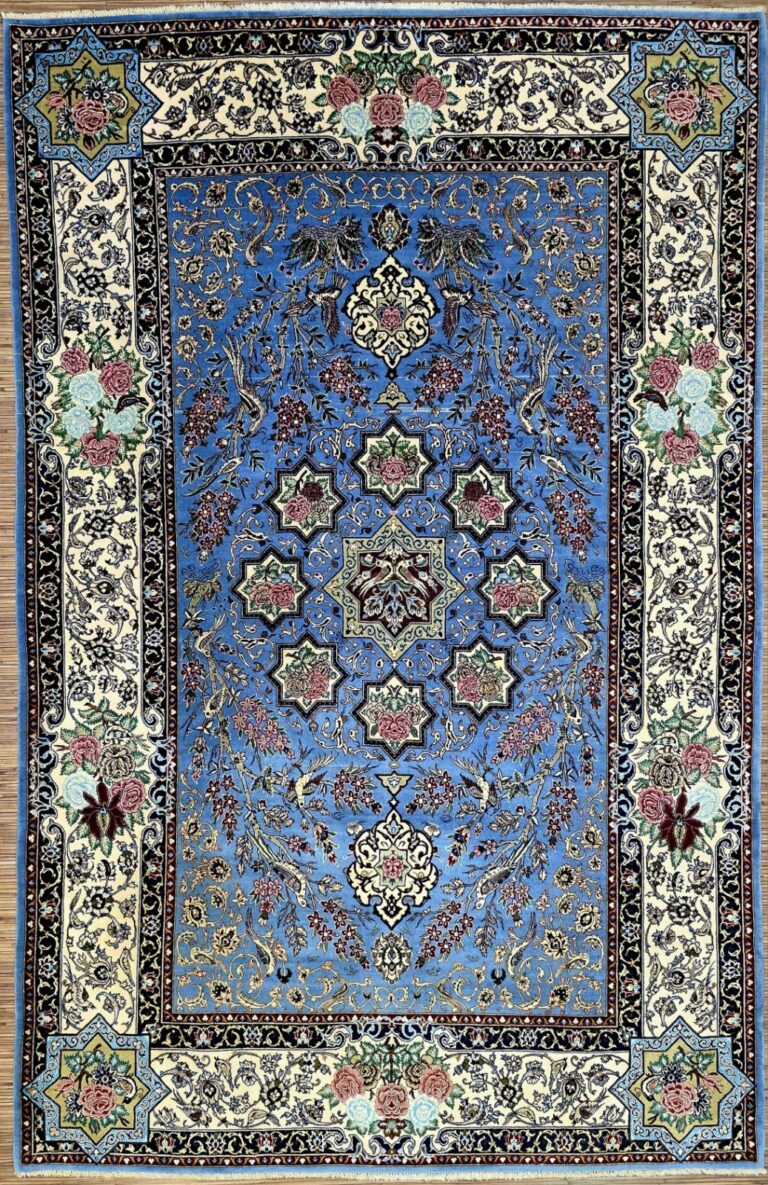
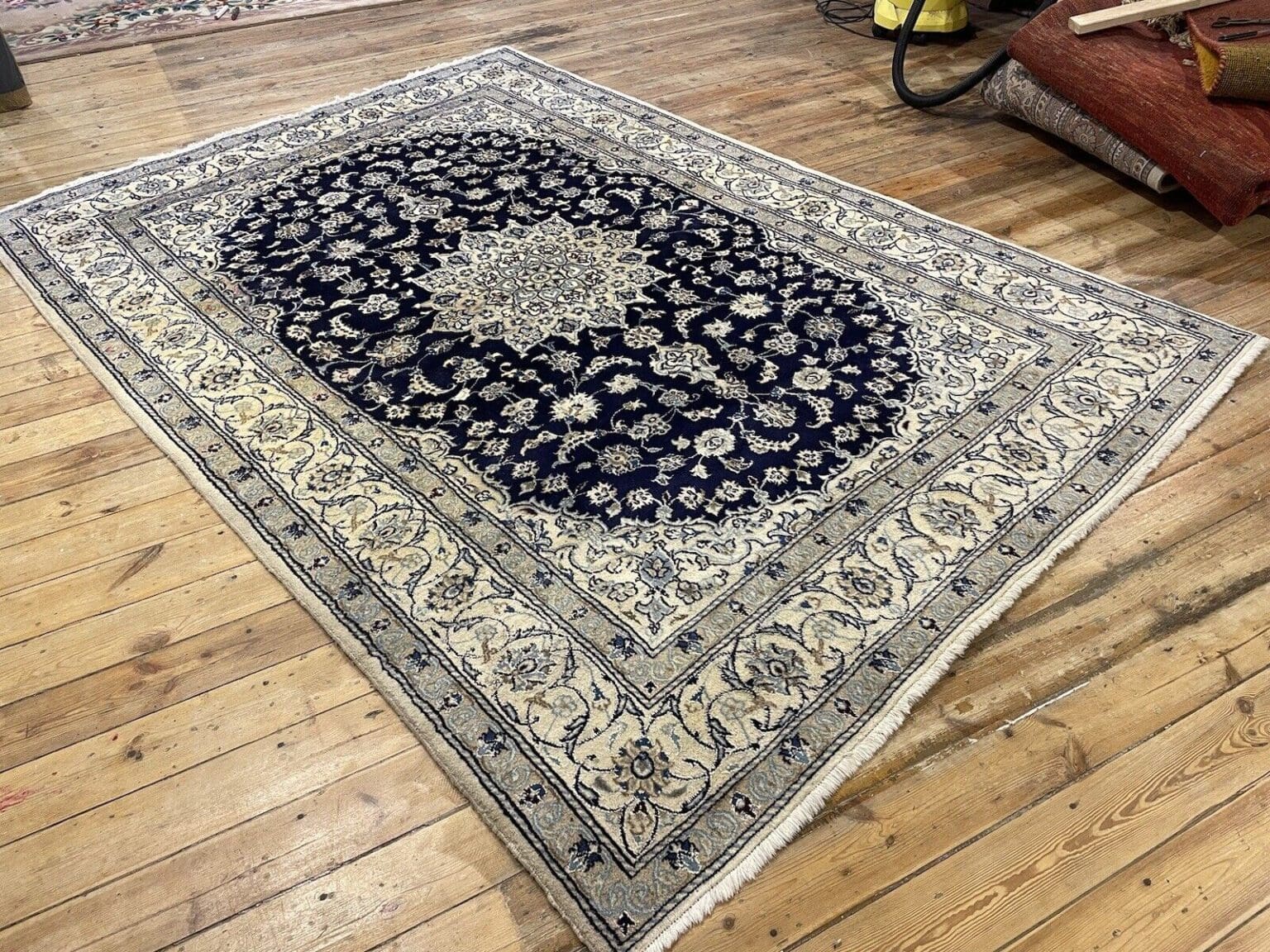
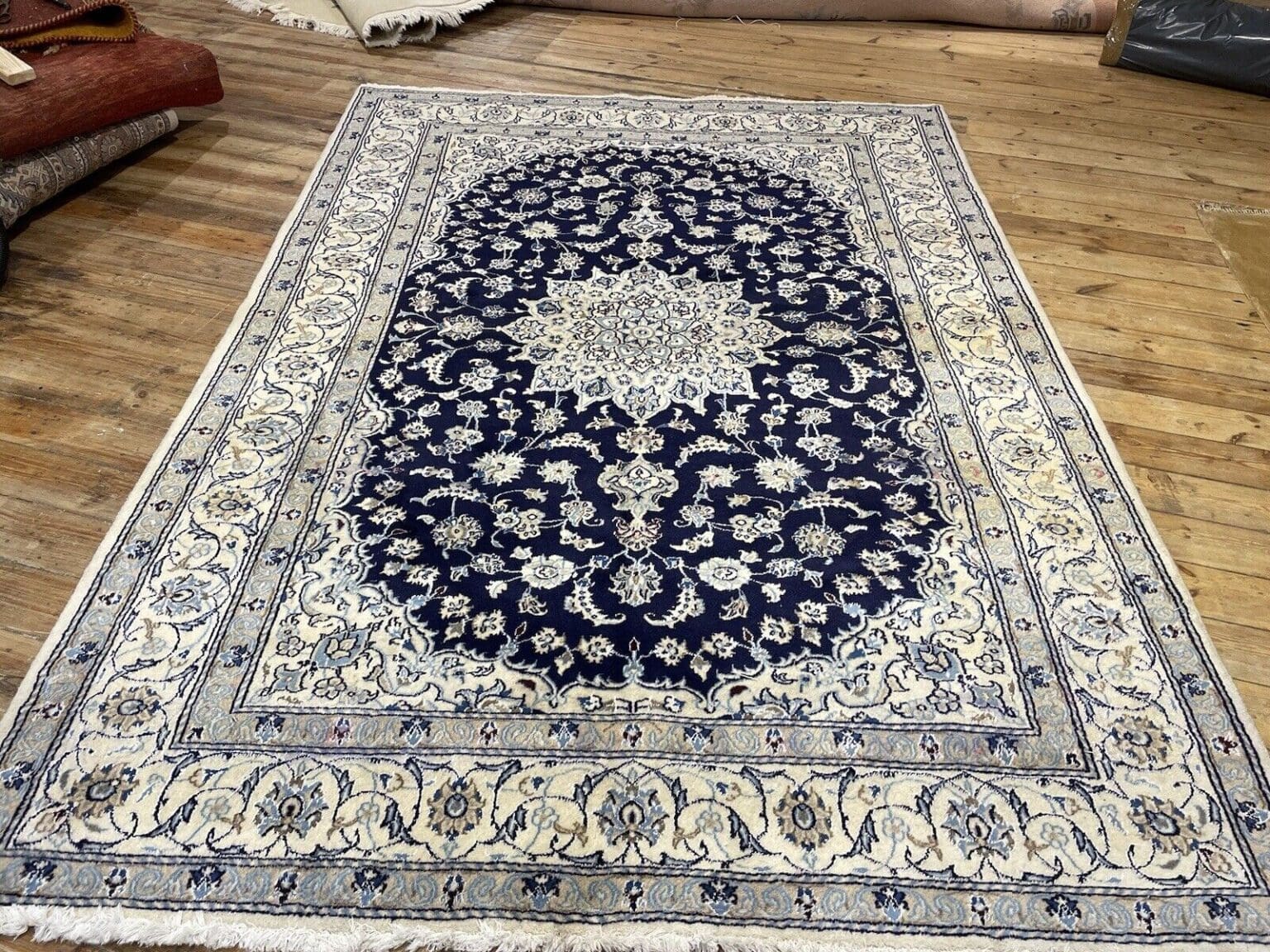
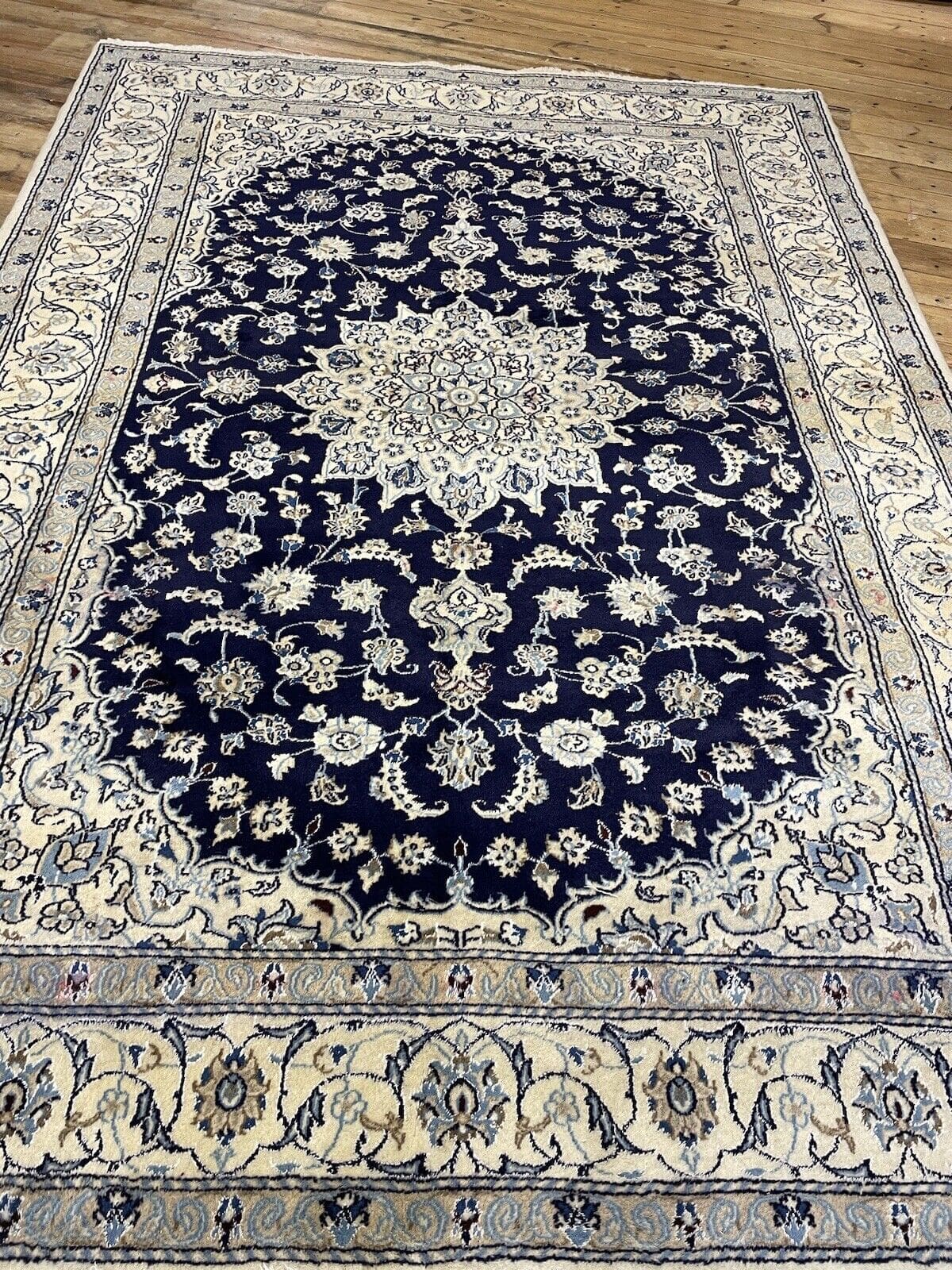
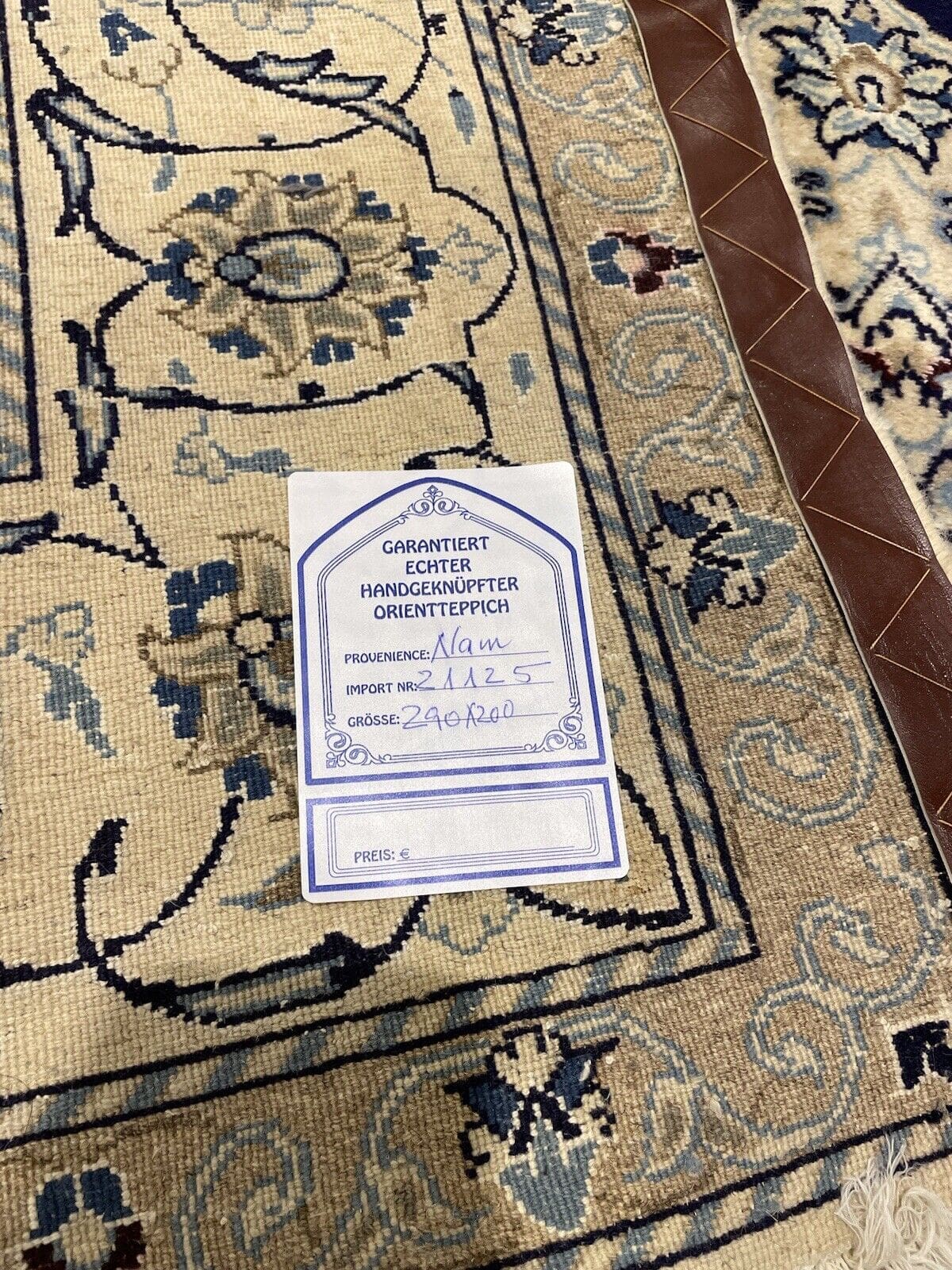
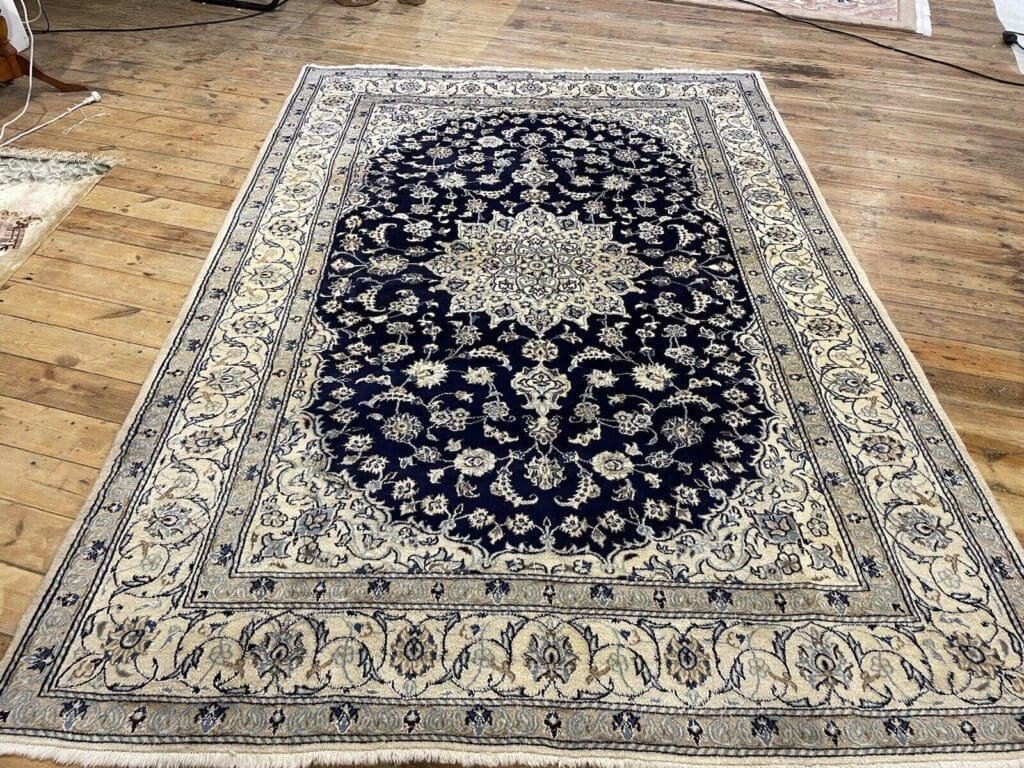
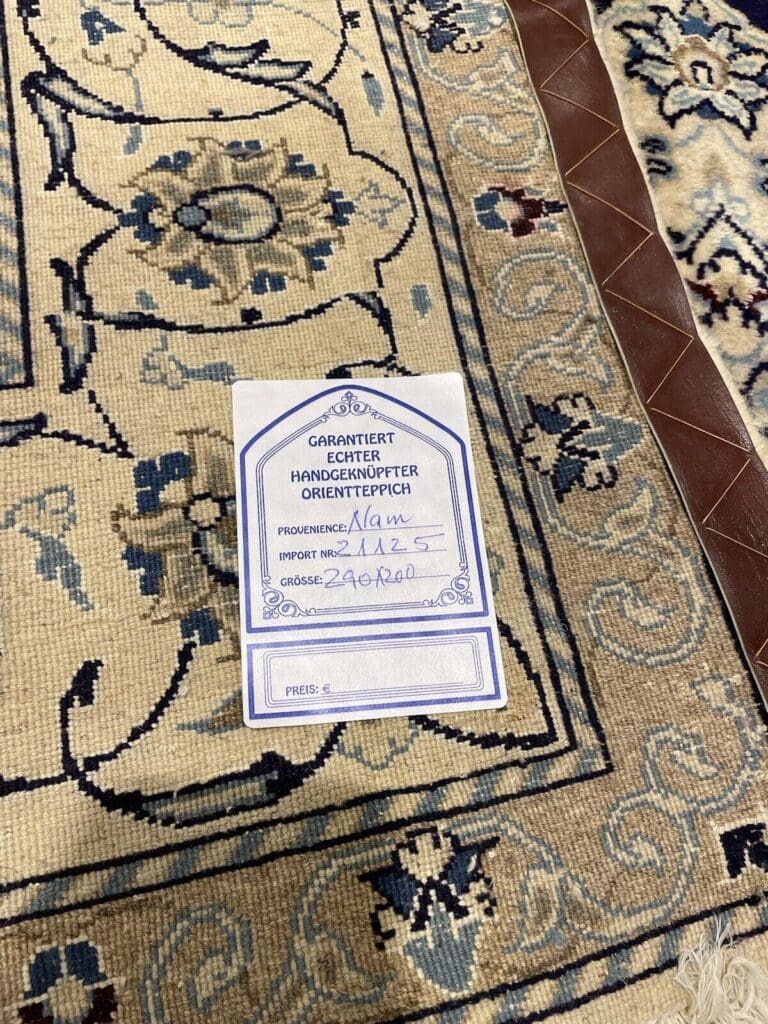
Hand-knotted Nain Persian Rug | Knot density: very high | Material: pile wool with silk, cotton warp | Size: 300 x 200 cm | Pattern: Floral | Condition: New with tag
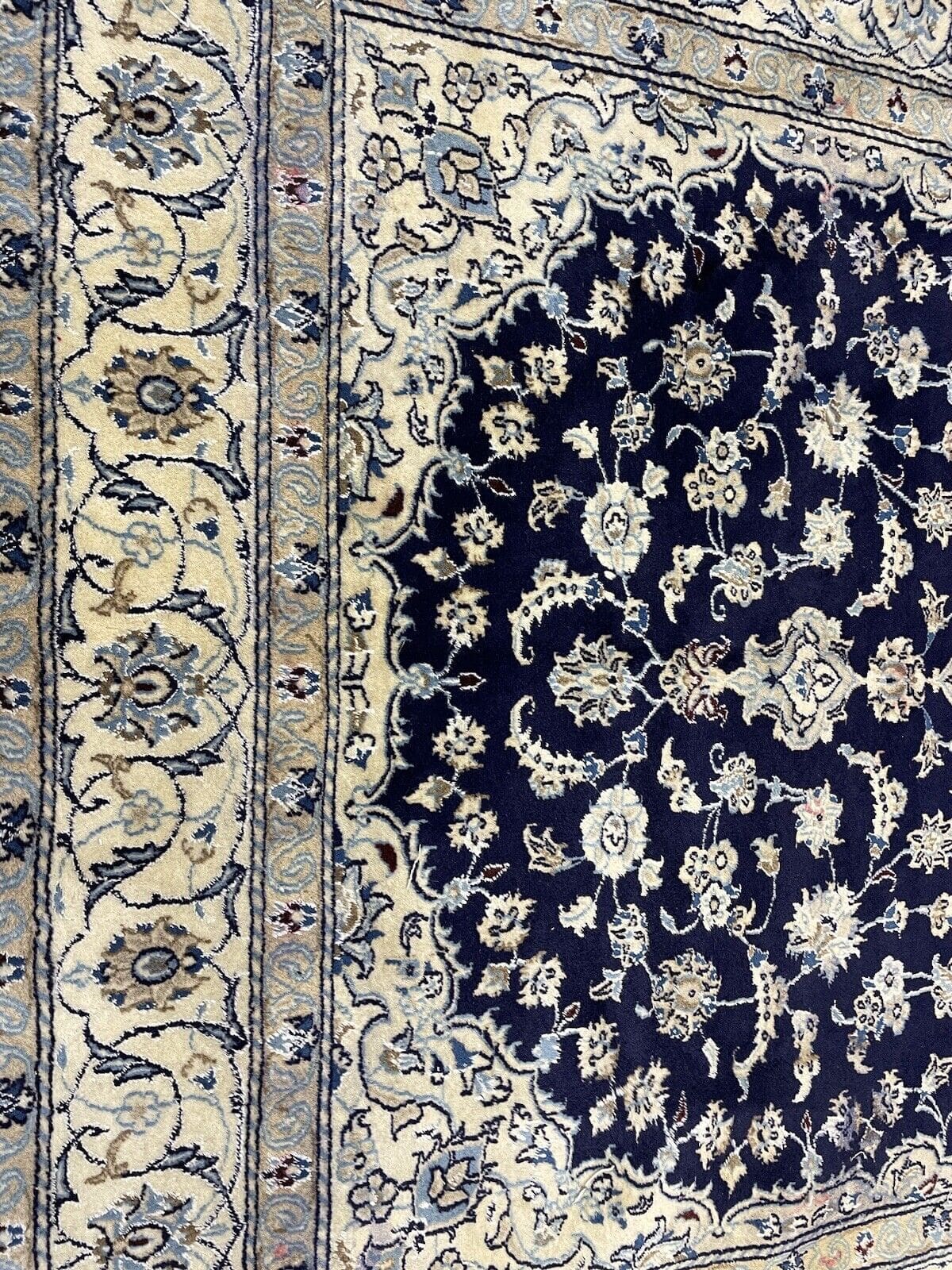
This Nain Persian rug is hand-knotted with a pile made from wool and silk. Cotton is specified for the warp. Wool gives the surface its textile foundation, while silk introduces a finer and more reflective element. Together, the two fibres create a soft, silky feel and a subtle change in the way the surface catches light. The rug has a very high knot density, reflecting the precise work involved in its construction.
A hand-knotted rug is built by attaching individual knots to a prepared warp. The knotting proceeds row by row, with the pile, structure and pattern developing at the same time. This process makes the making of the rug part of its visual character. The cotton warp provides the underlying framework for the knots, while the wool and silk pile forms the visible field. It is a traditional textile method rather than a machine-made production process.
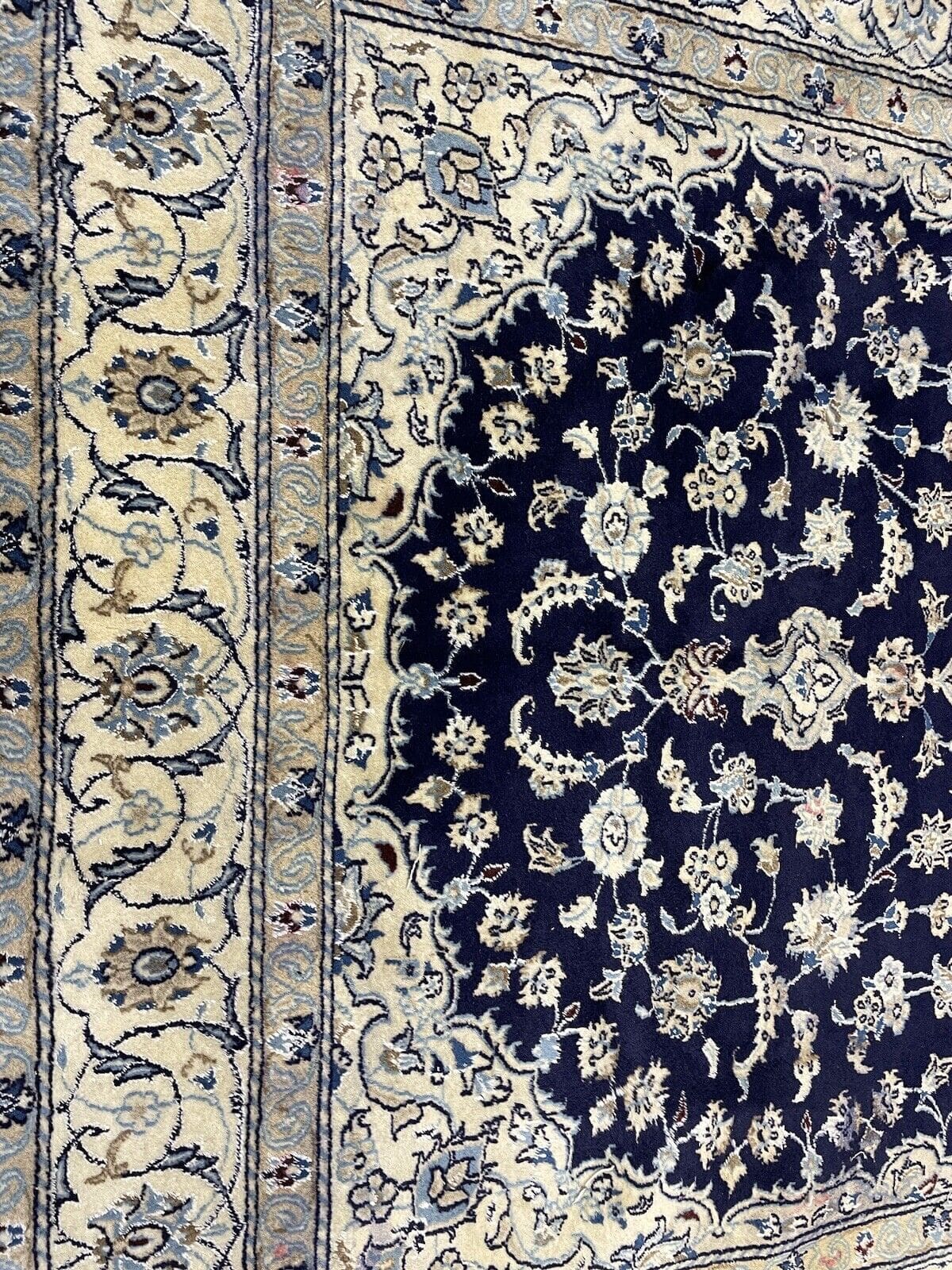
The pile height is given as 8 mm. This creates a clearly defined surface with a pleasant feel underfoot. The combination of wool and silk is described as durable and easy to care for, while the silk contributes to the soft surface impression. The rug is new with its tag attached. It has a rectangular shape and is suitable for use over underfloor heating.
Origin and Tradition
The Nain 9LA comes from Nain in Iran. Nain is located in Isfahan Province and is known for its carpet-making tradition. Within the wider history of Persian rugs, Nain represents a regional approach in which careful knotting, controlled ornament and balanced colour relationships are closely connected. The name Nain therefore identifies more than a visual resemblance: it refers to the Iranian city and to the established weaving tradition associated with it.
Carpet knowledge in Nain has been passed from one generation to the next. The work includes the preparation of the warp, the placement of knots, the handling of wool and silk, and the finishing of the textile surface. Because the rug is made by hand, the process requires sustained attention to the regularity of the ground and to the accuracy of the drawing. The pattern does not sit separately on top of the rug; it is created through the arrangement of the pile within the woven structure.
Nain rugs are traditionally often made with wool and silk. Wool provides a resilient natural fibre and gives the pile a soft, matte textile presence. Silk can be used to define finer details or to bring light-reflecting accents into the design. The combination allows a pattern to be read through both colour and texture. For this particular rug, wool with silk is specified for the pile, with cotton used for the warp.
Isfahan Province has an important place in the artistic and craft history of Iran. Rugs from the area are associated with deliberate compositions and carefully developed ornament. In Nain, floral and geometric forms are arranged with a sense of order that links the rug to Persian decorative traditions. The knowledge behind these forms is regional, while each hand-knotted piece still results from the work carried out on that individual rug.
This rug belongs to the twenty-first century. It therefore combines a Nain origin and inherited Persian weaving language with a contemporary production context. Its origin is Persian and Iranian. It is not an Indian rug and does not merely use a Nain-inspired pattern made elsewhere. The designation Nain describes the stated Iranian origin of this Persian rug.
Design and Pattern
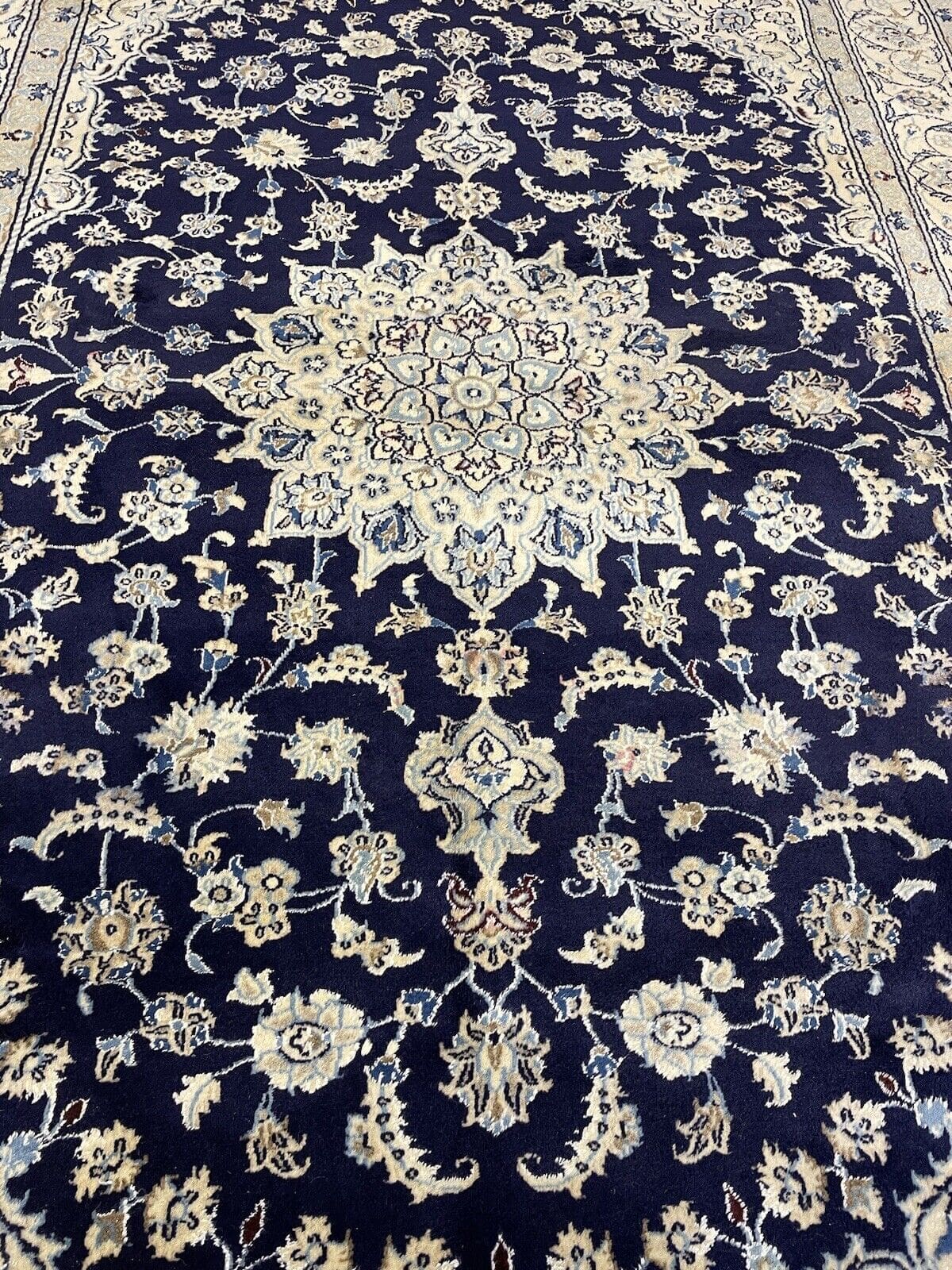
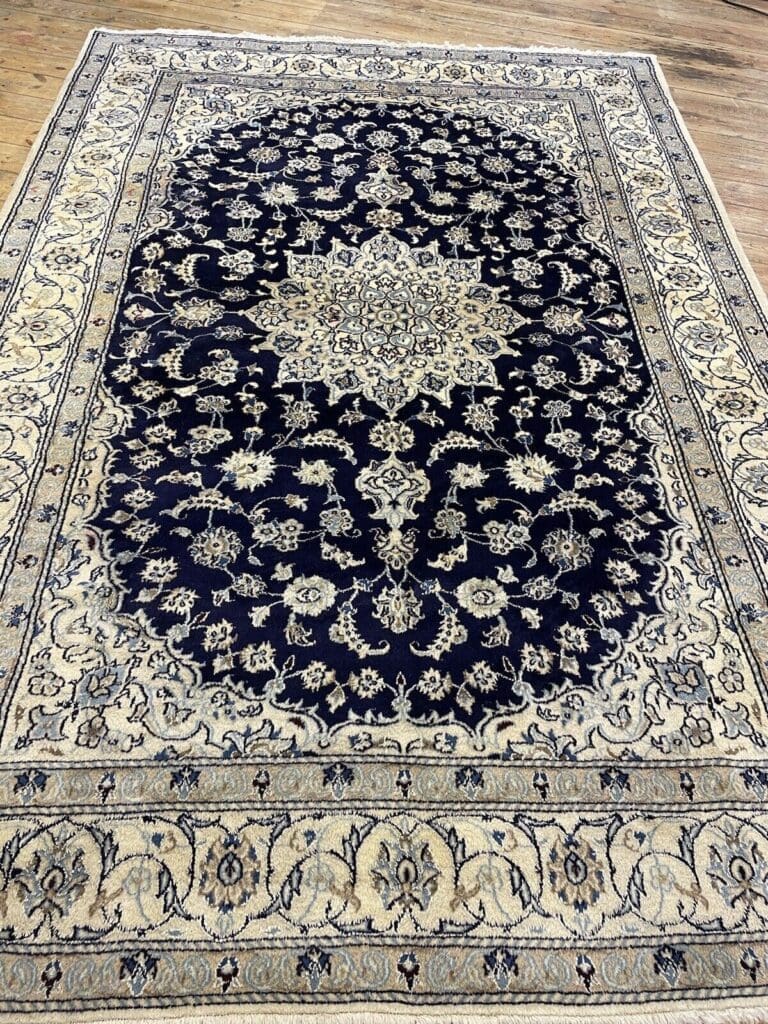
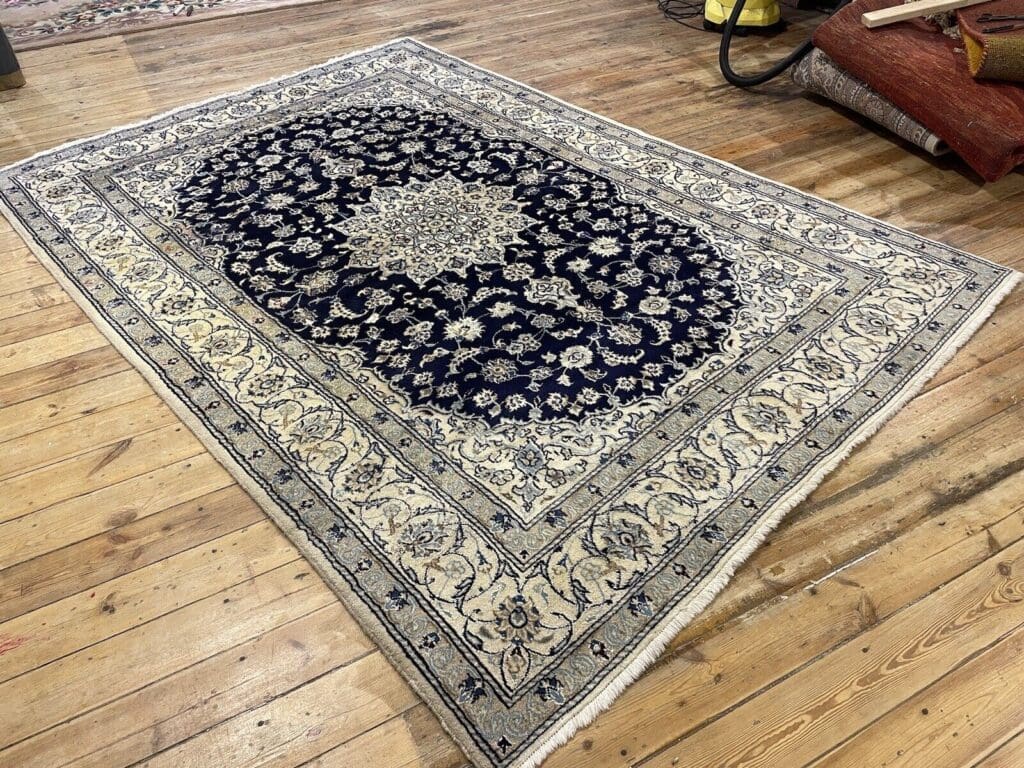
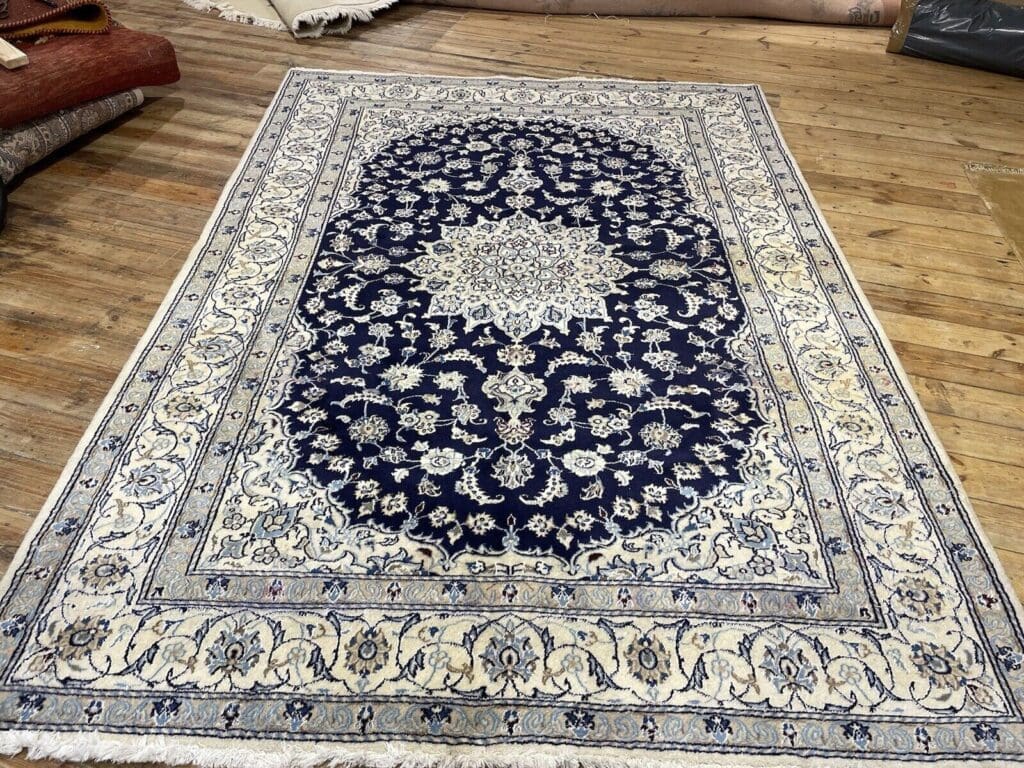
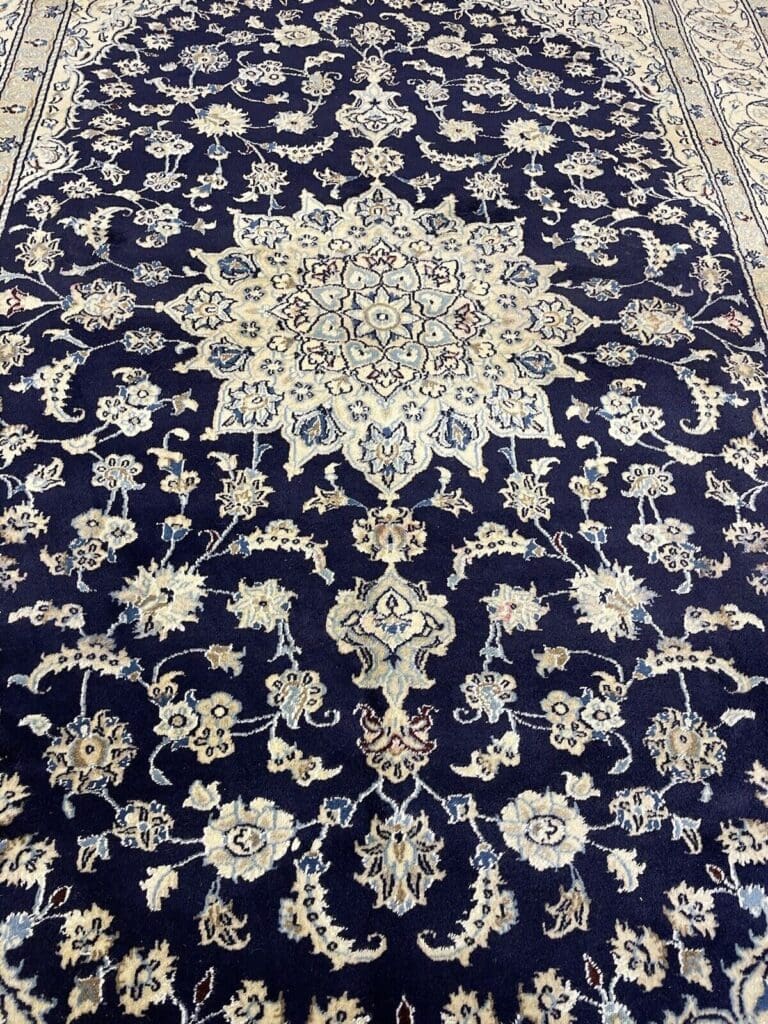
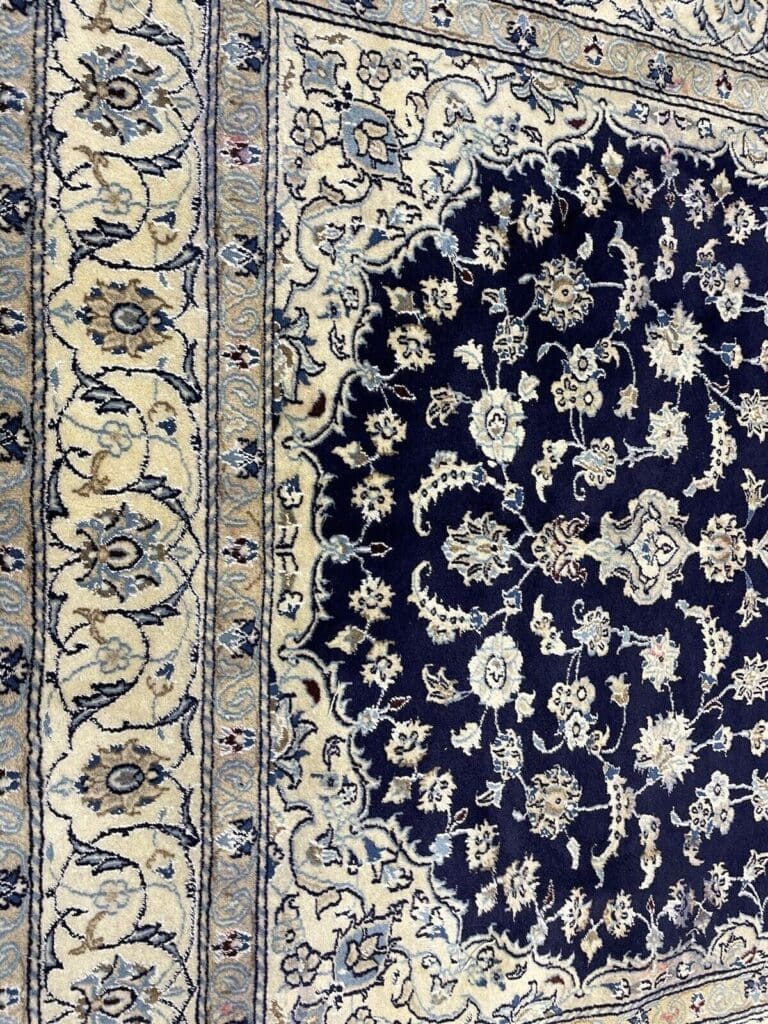
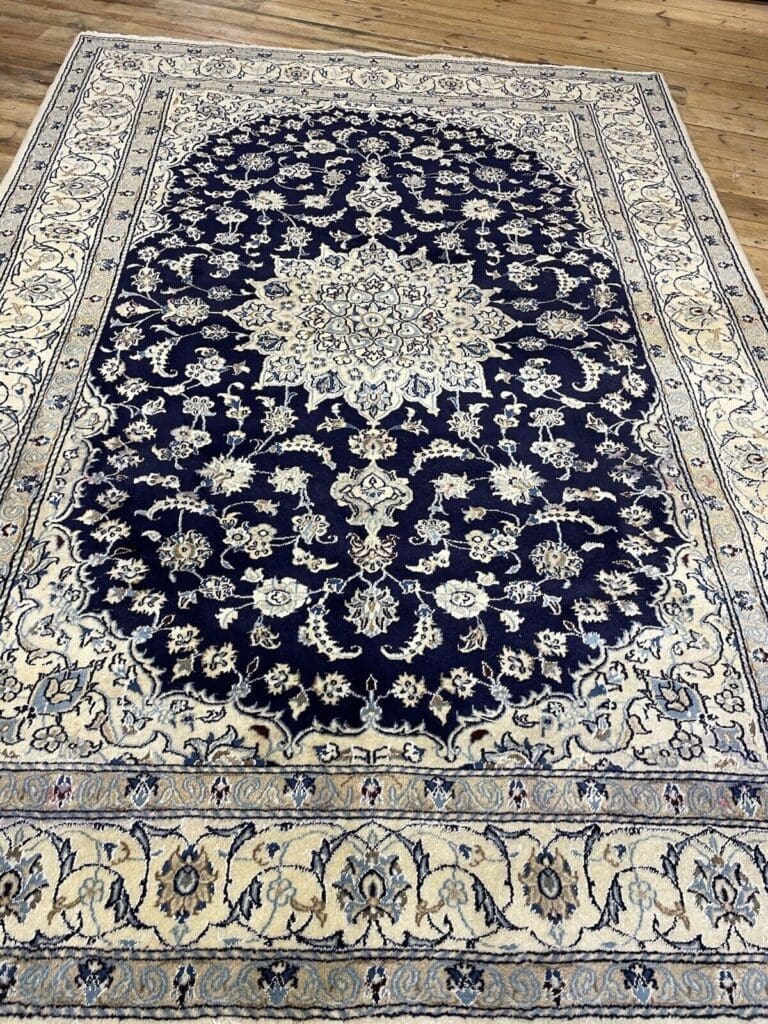
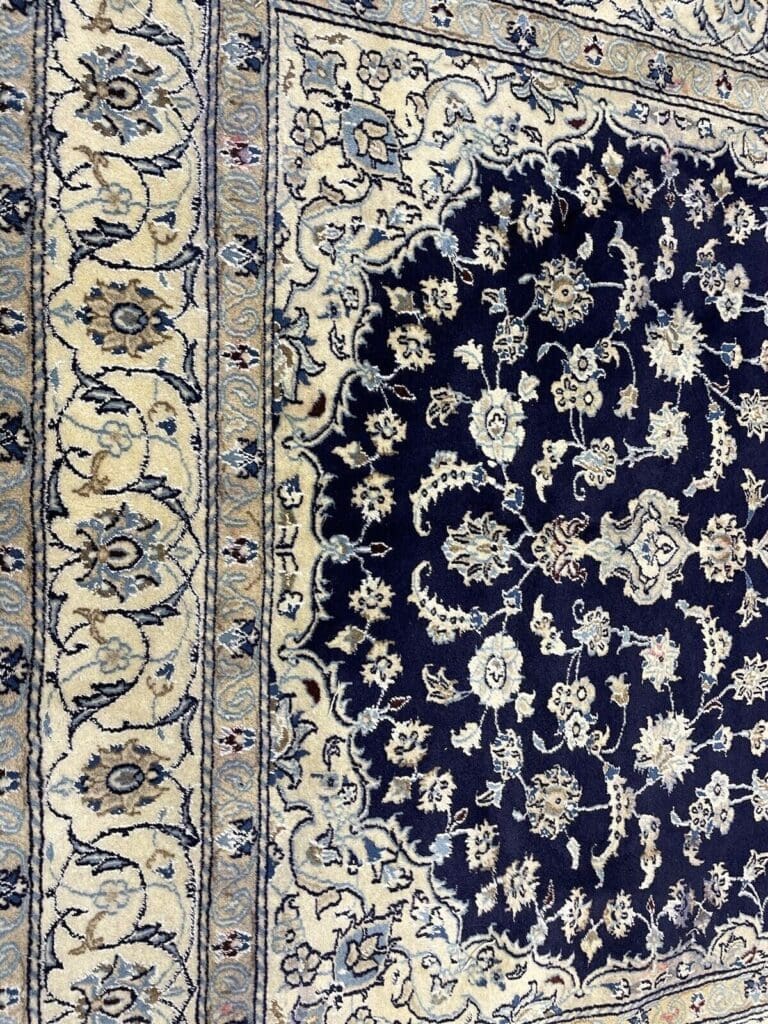
The pattern is floral. Flowers, leaves and related plant forms provide the principal decorative vocabulary. In Persian carpet design, floral motifs are often stylised and connected into repeated arrangements. They may be presented as separate blossoms, linked by stems and vines, or organised into a more continuous ornamental field. The result is a surface with movement and structure while remaining a coherent textile composition.
Nain design is known for ordered pattern systems in which floral details are handled with geometric precision. Symmetry, repetition and the relationship between ornament and open ground are important parts of this tradition. A floral description does not imply a random scattering of flowers. Instead, the motifs are placed within a planned arrangement, and their outlines are shaped by the close, careful work of the knotting process.
Petrol blue gives the traditional floral language a contemporary colour direction. The shade combines blue and green qualities and can appear to shift slightly under changing light. This effect is reinforced by the mixture of wool and silk. Wool absorbs and diffuses light differently from silk, while silk can make selected areas appear brighter as the viewing angle changes. Colour and material consequently work together in the perception of the pattern.
Floral ornament in Oriental carpet traditions is often associated with nature, growth and the beauty of life. These symbolic associations accompany the decorative role of the motifs. On this Nain rug, the floral pattern expresses a traditional Persian vocabulary through a balanced arrangement and a carefully worked surface. The meaning of the ornament is therefore connected both to its cultural background and to the specific way the flowers and foliage are organised across the rug.
The style is described as traditional Persian and Oriental. This places the rug within a design tradition that can sit alongside classic interiors while remaining adaptable to contemporary settings. The petrol-blue ground provides a current accent, while the floral drawing retains its established Persian character. The rug can be coordinated with natural wood furniture or with modern forms, allowing the pattern to remain the principal decorative reference in the room.
Its rectangular shape supports the directional reading of the composition. A rectangular rug gives a floral design a defined field in which borders, central areas and repeated motifs can be visually ordered. The rug functions as a floor covering, but its arrangement also gives it the character of a textile picture. Colour, floral ornament, dense knotting and the contrast between wool and silk all contribute to its overall appearance.
Special Features
The rug combines traditional hand craftsmanship with a contemporary petrol-blue colour. Its pile uses wool with silk, its warp is cotton, and its knot density is very high. The silk can create a fine play of light as the viewing angle changes, while the wool maintains the soft textile character of the surface. These details make the material construction directly relevant to the way the floral design is seen.
The rug is new with its tag and is suitable for use over underfloor heating. Its rectangular form, floral pattern and traditional Persian Oriental style bring together practical use and a clearly defined decorative language. As a hand-knotted one-off, it shows the individual work involved in making a rug rather than the uniform appearance of a machine-produced floor covering.
FAQ
How should I care for my Nain Persian rug?
Regular light vacuuming is suitable for everyday care. Fresh marks should be dabbed carefully with a damp cloth rather than treated aggressively. Professional cleaning every few years helps preserve the colours and the textile surface. Since the pile combines wool and silk, professional treatment is advisable when a deeper cleaning is required, as the two fibres respond differently to moisture and cleaning products. Any product should first be tested with care, and strong rubbing should be avoided on the visible surface.
Can the rug be used with underfloor heating?
Yes. This Nain Persian rug is suitable for use over underfloor heating. The wool provides pleasant warmth while the rug remains breathable. Even, moderate operation of the heating system is appropriate for regular use. A suitable rug pad can also help keep the rug stable and reduce movement at the edges. Compatibility with underfloor heating is specified as an attribute of this particular rug.
Which interior styles work with this rug?
The petrol-blue colour and timeless floral pattern can be used in both classic and modern interiors. Natural wood furniture creates a direct connection with the warm, tactile qualities of wool. Contemporary furniture can use the petrol-blue tone as a defined colour accent while allowing the Persian floral drawing to remain visible. The traditional Persian Oriental style stays clear, but the colour gives the rug a current presence within a modern room.
To provide the best experiences, we use technologies like cookies to store and/or access device information. Consenting to these technologies will allow us to process data such as browsing behavior or unique IDs on this site. Not consenting or withdrawing consent, may adversely affect certain features and functions.
Functional Always active
The technical storage or access is strictly necessary for the legitimate purpose of enabling the use of a specific service explicitly requested by the subscriber or user, or for the sole purpose of carrying out the transmission of a communication over an electronic communications network.
Preferences
The technical storage or access is necessary for the legitimate purpose of storing preferences that are not requested by the subscriber or user.
Statistics
The technical storage or access that is used exclusively for statistical purposes.The technical storage or access that is used exclusively for anonymous statistical purposes. Without a subpoena, voluntary compliance on the part of your Internet Service Provider, or additional records from a third party, information stored or retrieved for this purpose alone cannot usually be used to identify you.
Marketing
The technical storage or access is required to create user profiles to send advertising, or to track the user on a website or across several websites for similar marketing purposes.
 SECURE PAYMENT
 SHIPPING PARTNERS