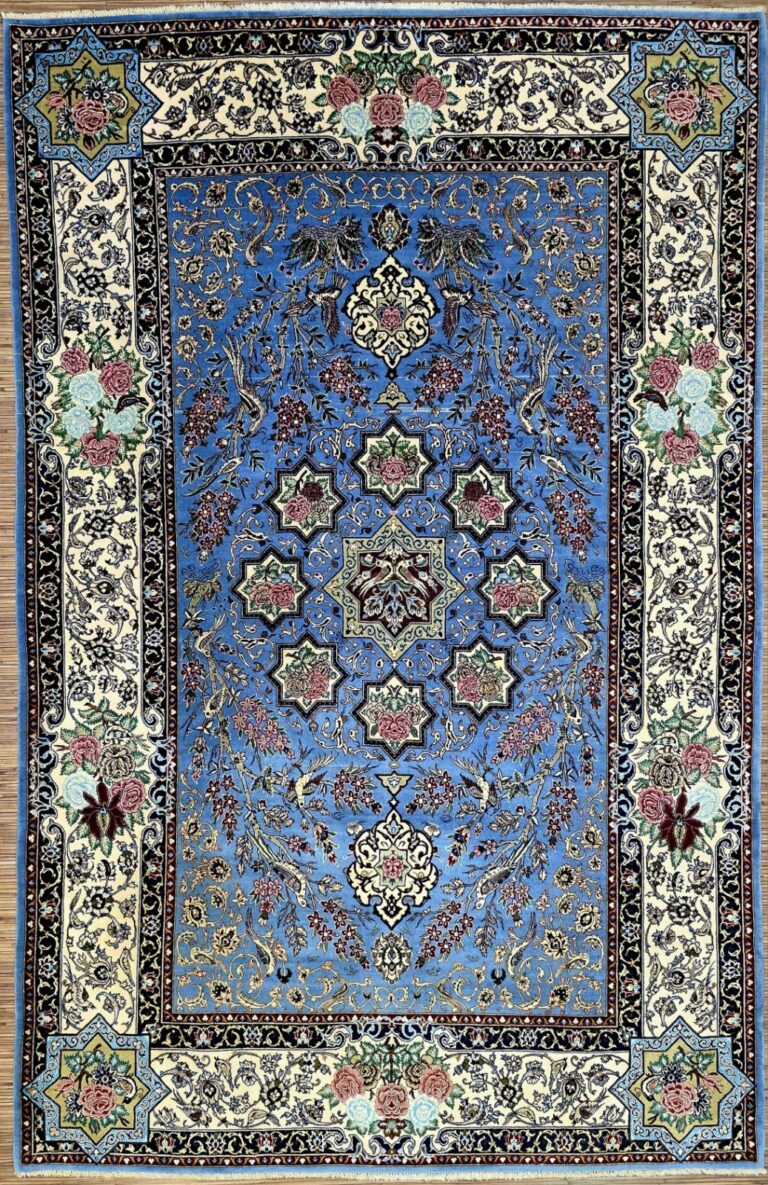
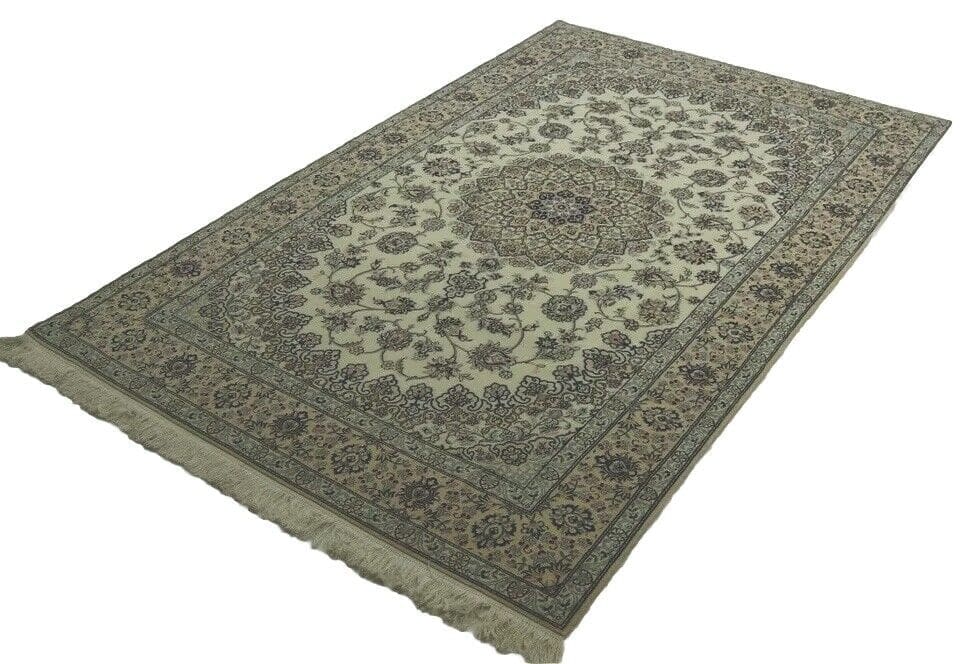
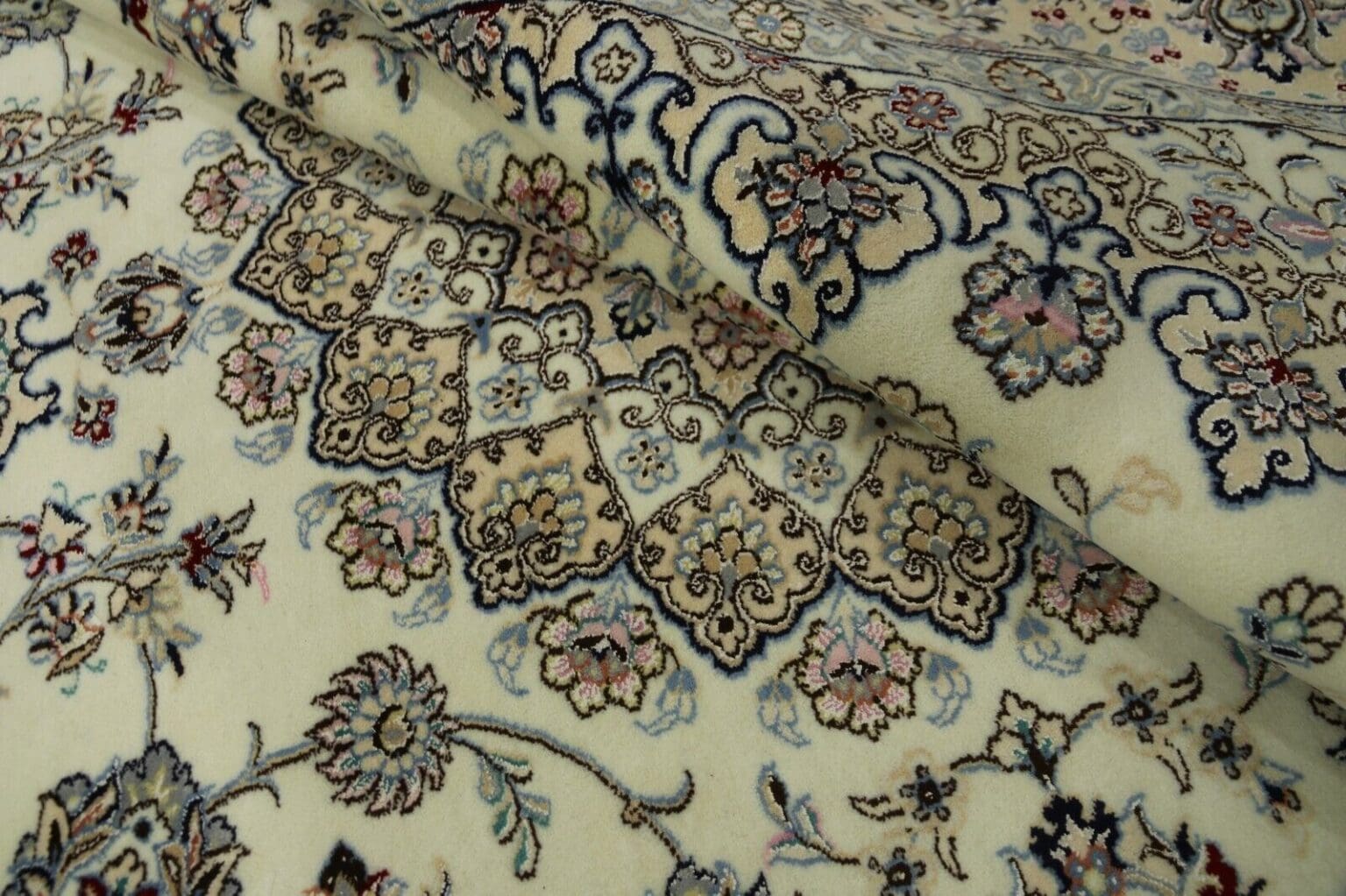
This Super Nain 9 la Persian rug is hand-knotted. Its pile is made from virgin wool and silk, while cotton is used for the warp. The material composition is clearly defined: wool forms the principal part of the pile and silk provides a finer complementary fibre. The cotton warp is part of the rug’s structure and is specifically identified as the warp material.
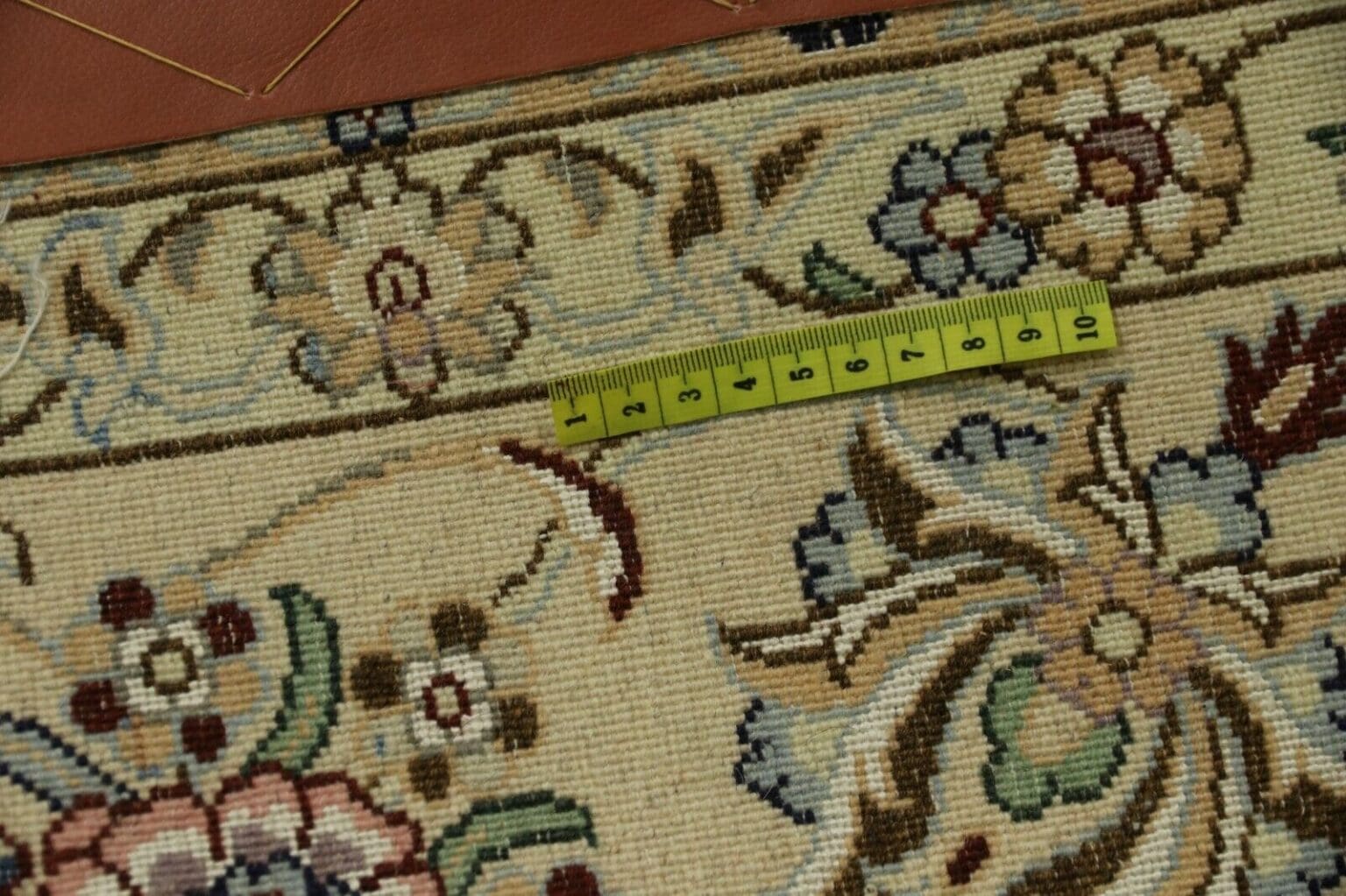
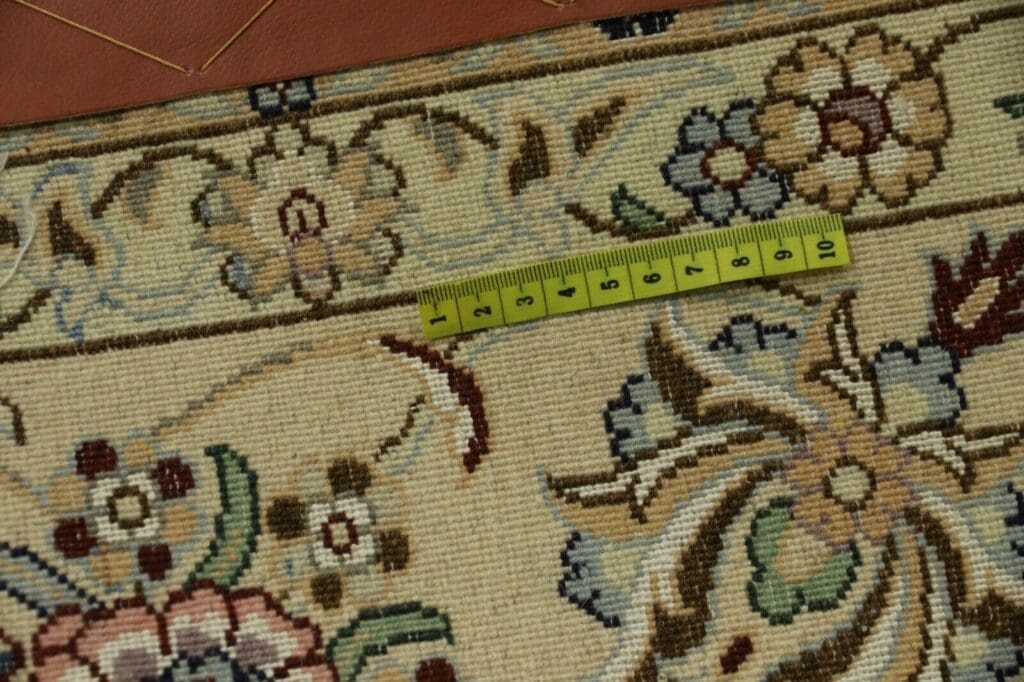
Hand-knotting is central to the character of this one-off piece. Each rug is built as an individual work rather than produced as identical machine-made stock. The high knot density associated with the Super Nain 9 la designation reflects a finely executed construction. As with handmade textiles generally, the completed rug remains an individual object shaped by its own making.
Wool and silk also determine how the surface is perceived. Virgin wool gives the pile a natural textile feel, while silk contributes a subtle sheen. Together they create a surface that combines a warm, tactile presence with a restrained brilliance. The construction remains rooted in the traditional craft associated with Nain rugs.
The rug is described as new and in very good or perfect condition. It is also suitable for use with underfloor heating. This information concerns its intended use in the home and complements the stated details about its materials and handmade construction.
Origin and Tradition
Nain is a renowned carpet city in Iran, situated in Isfahan Province. The city is associated with finely made Persian rugs, carefully controlled drawing and precise workmanship. Nain rugs are understood through the relationship between knotting quality, balanced composition and detailed pattern work, rather than through decoration alone.
The weaving tradition of Nain belongs to the wider history of Iranian rugmaking. It brings inherited knowledge of fibres, knotting methods and pattern structure together with a visual language that can work in both classical and contemporary interiors. Nain therefore identifies more than a place of manufacture: it also refers to a regional approach recognised for ordered compositions and fine detail.
A hand-knotted rug is built progressively. The warp provides the framework into which the knots are inserted. Row by row, the knotted surface takes shape, while the design and distribution of colour are established through the work itself. A fine construction supports a particularly differentiated rendering of small motifs, outlines and transitions.
Nain lies within an area where rugs have traditionally been made as useful household textiles as well as works of textile art. The connection between practical function, skilled making and careful design helps explain the standing of Nain in the history of Persian rugs. At the same time, every hand-knotted rug remains an individual piece because its materials, execution and exact arrangement are not repeated in precisely the same way.
This rug is identified as a Persian rug from Persia or Iran. The name Super Nain 9 la places it within the Nain tradition and indicates the finely worked character associated with that designation. Its origin and handmade construction together provide the cultural context for understanding this single piece.
Design and Pattern
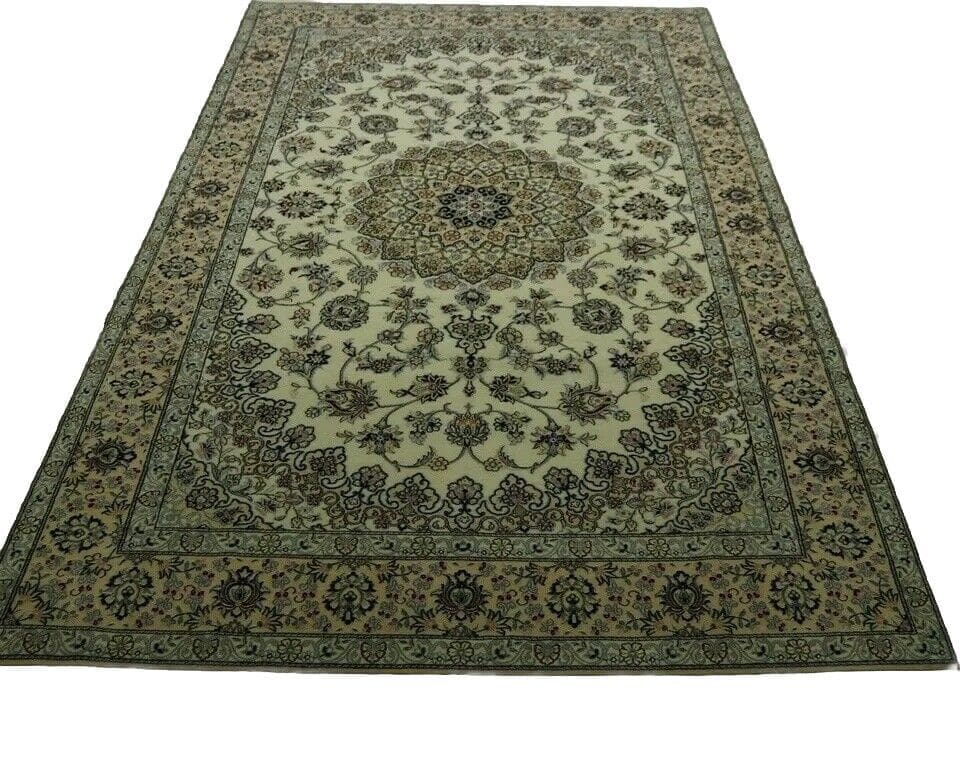
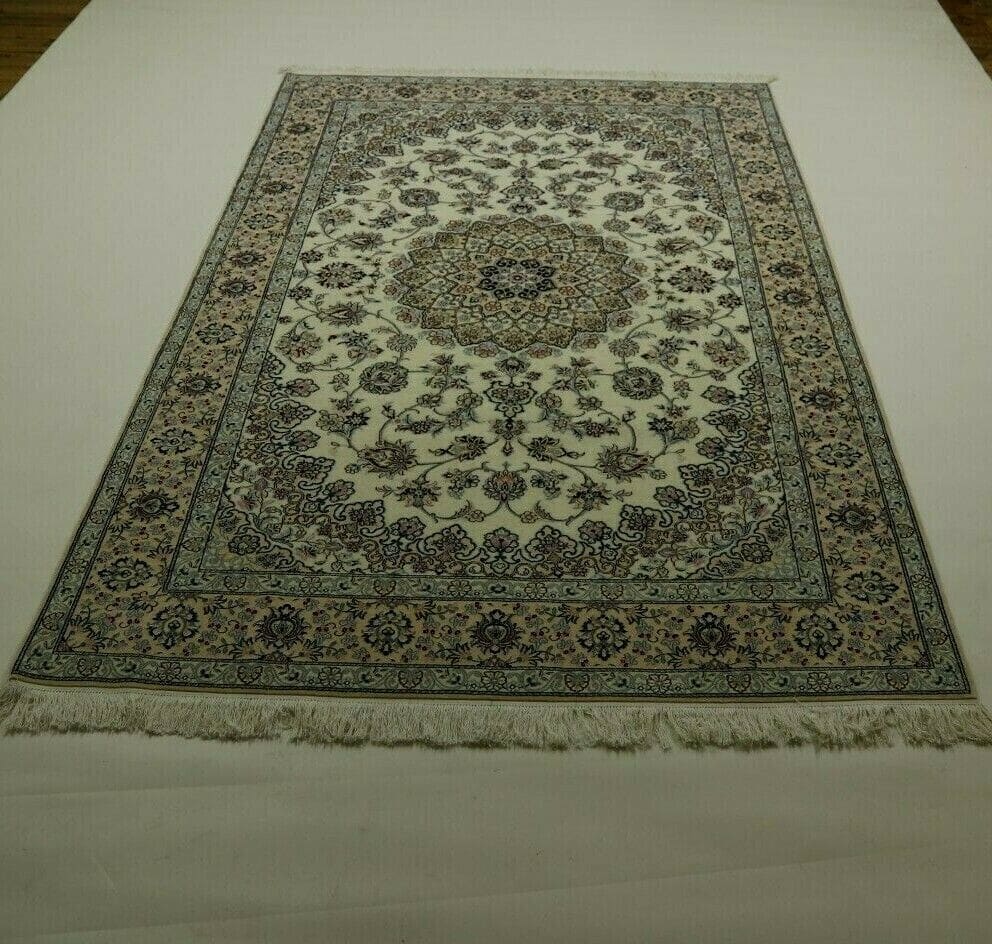
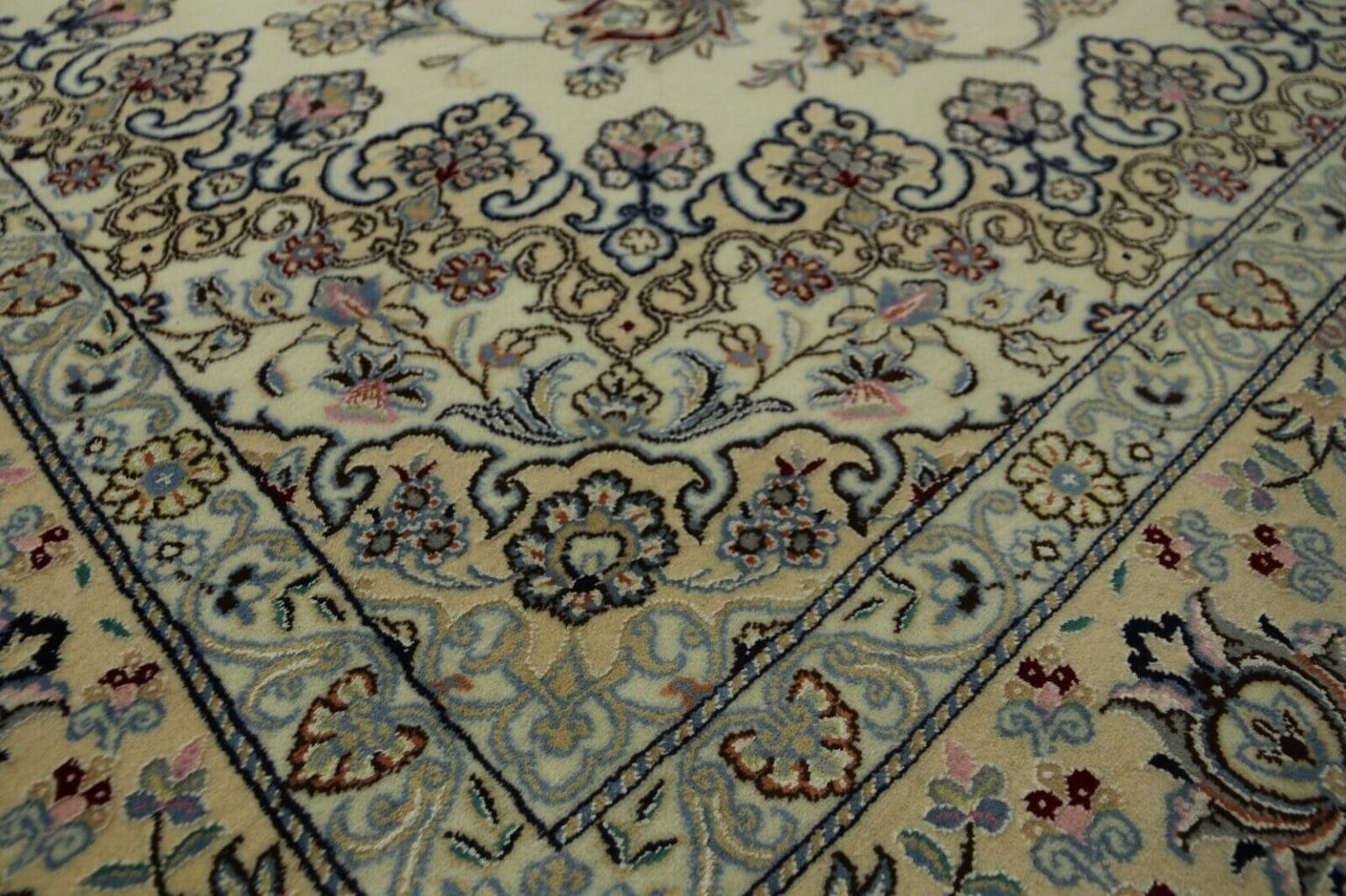
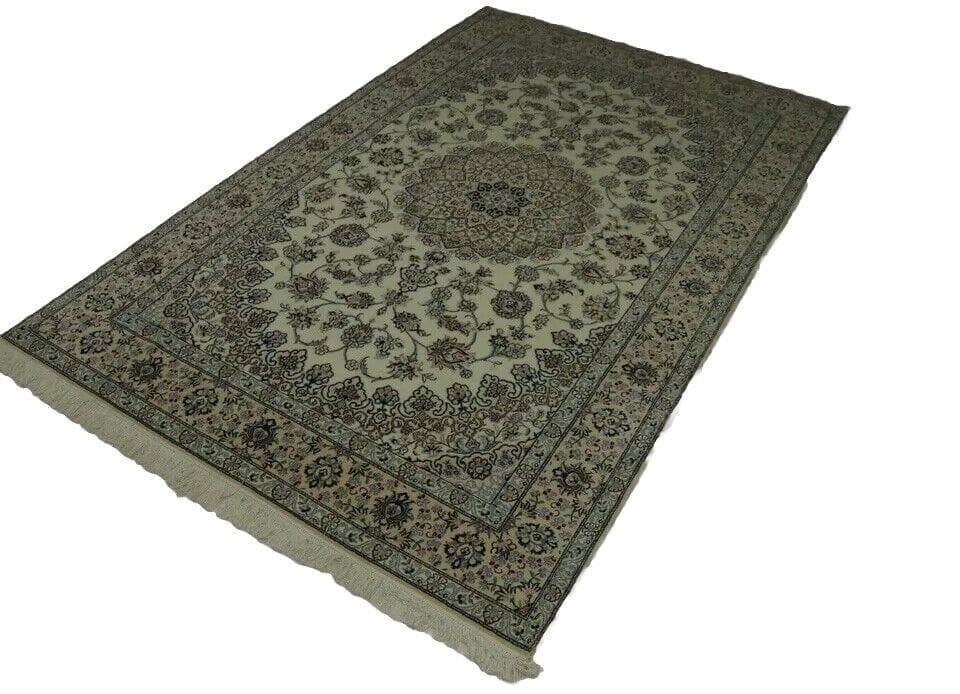
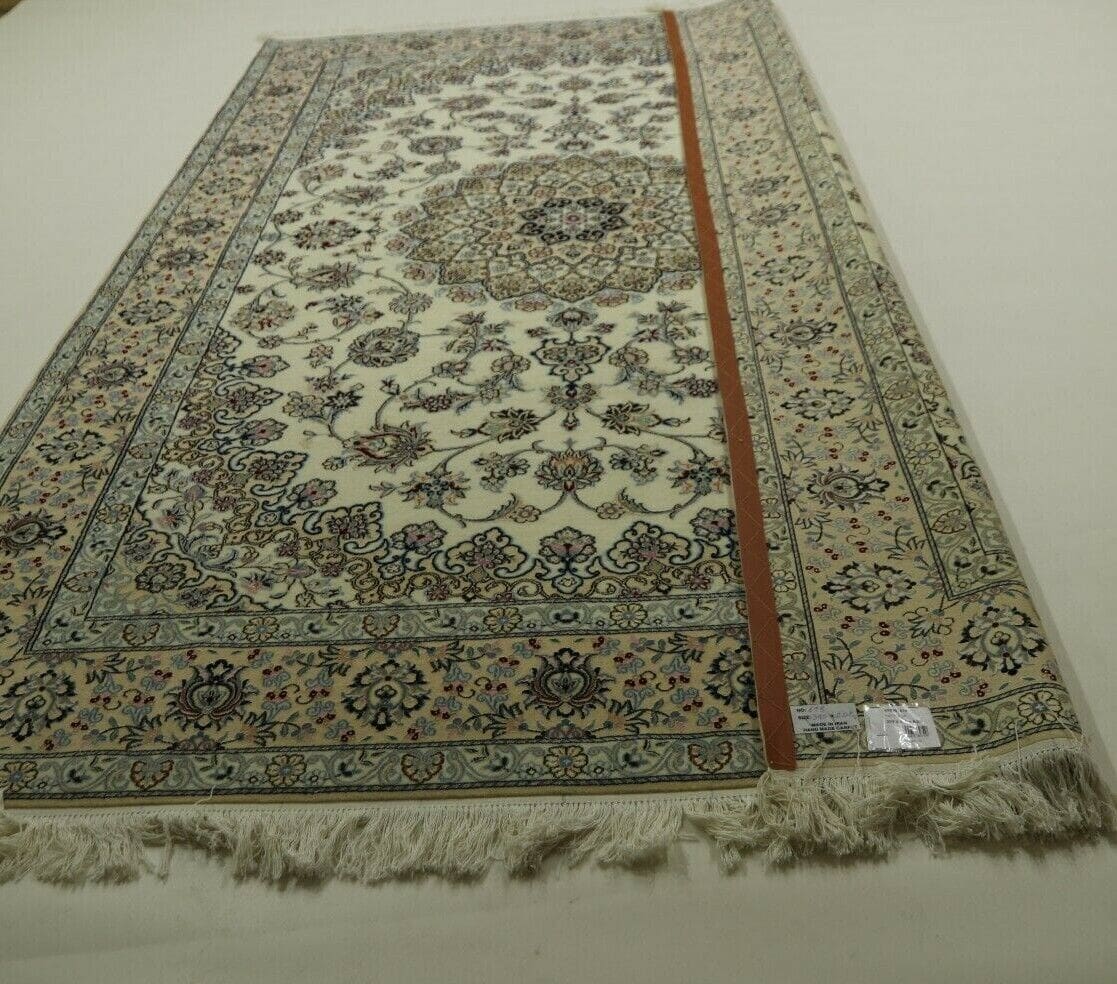
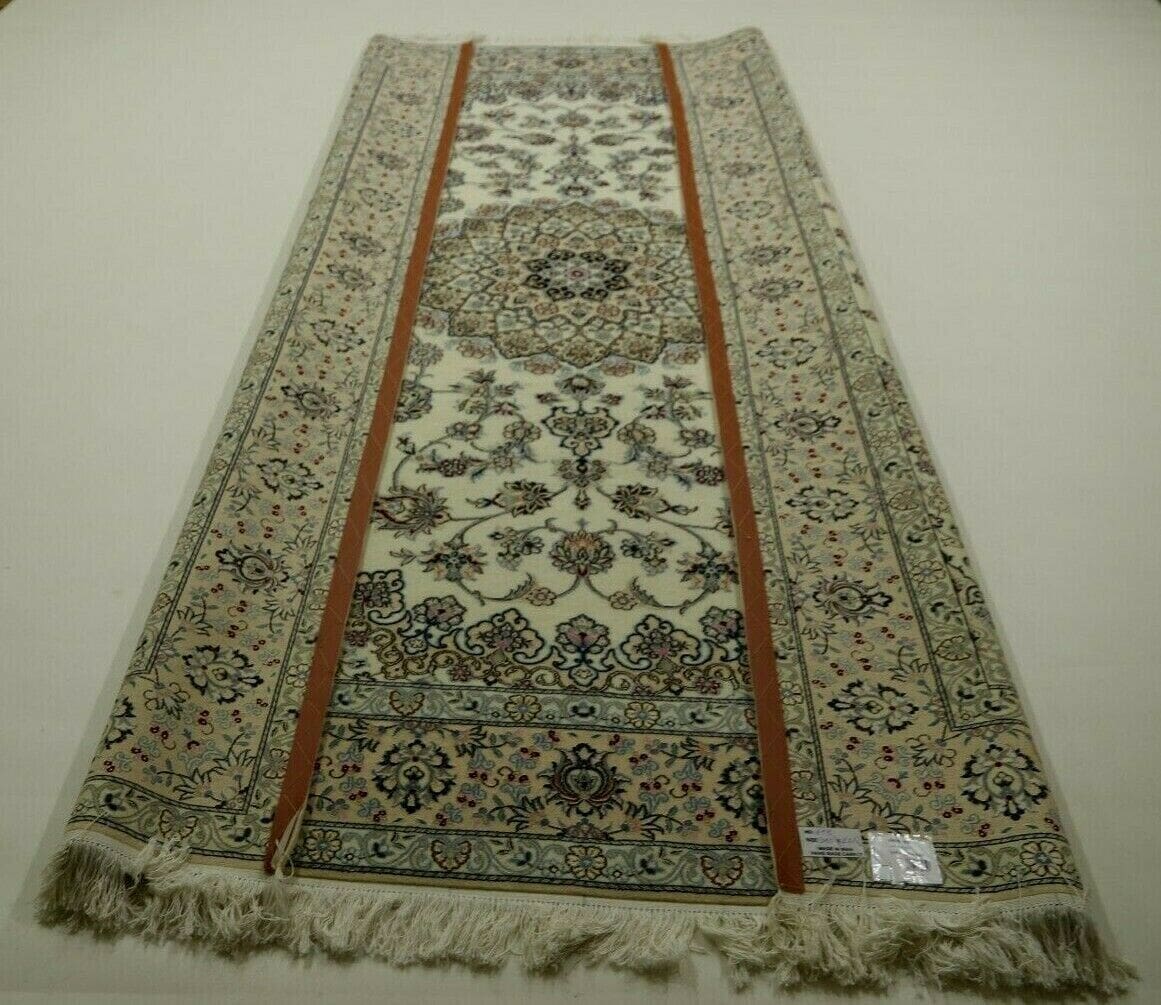
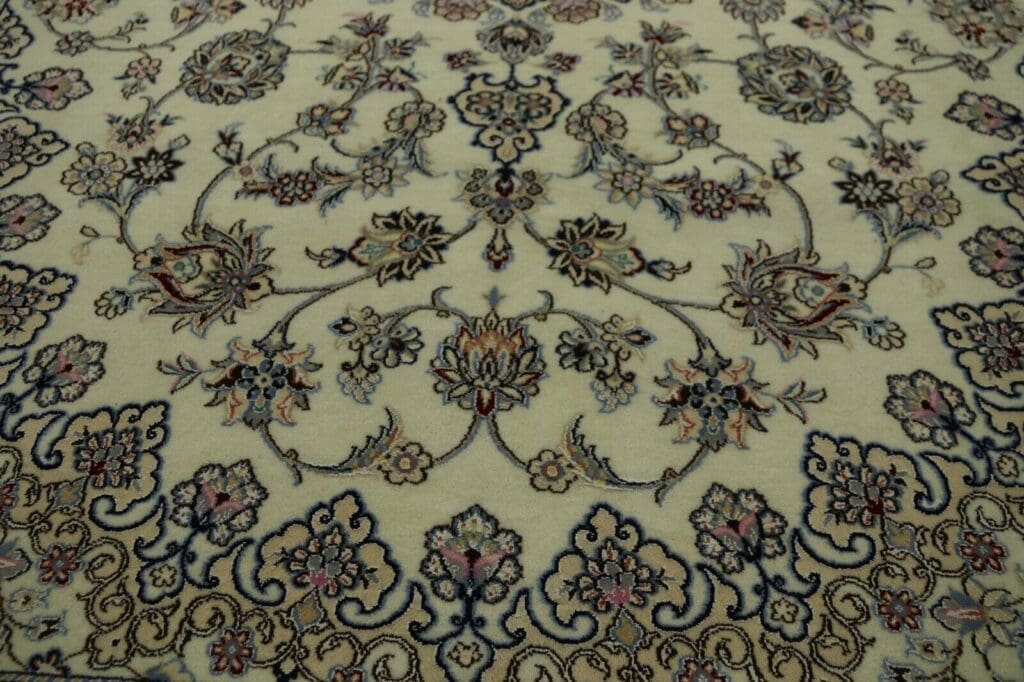
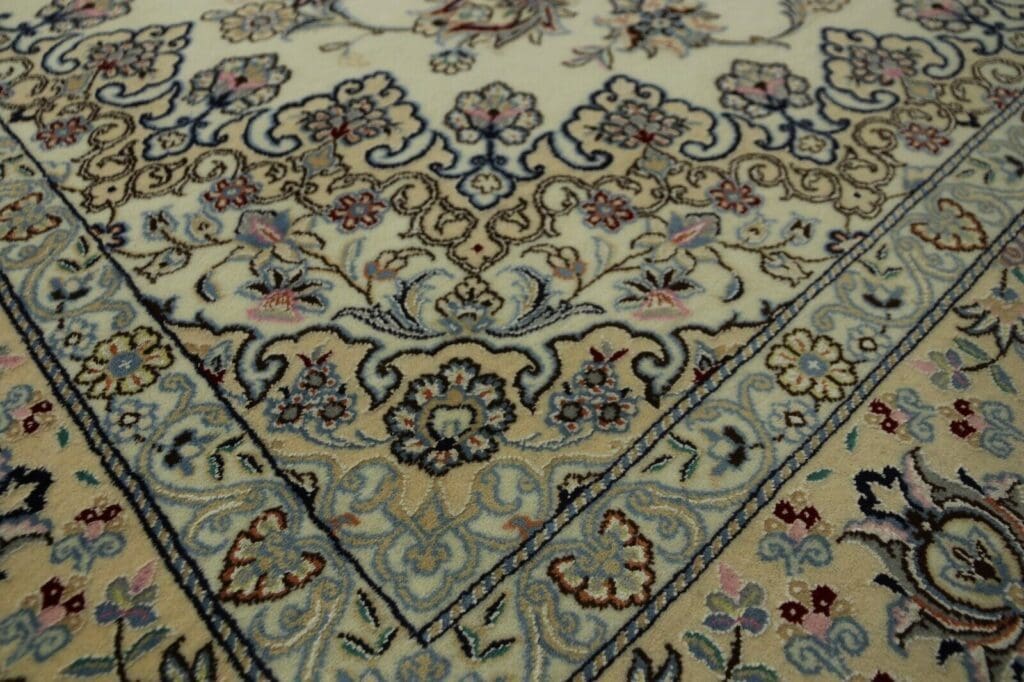
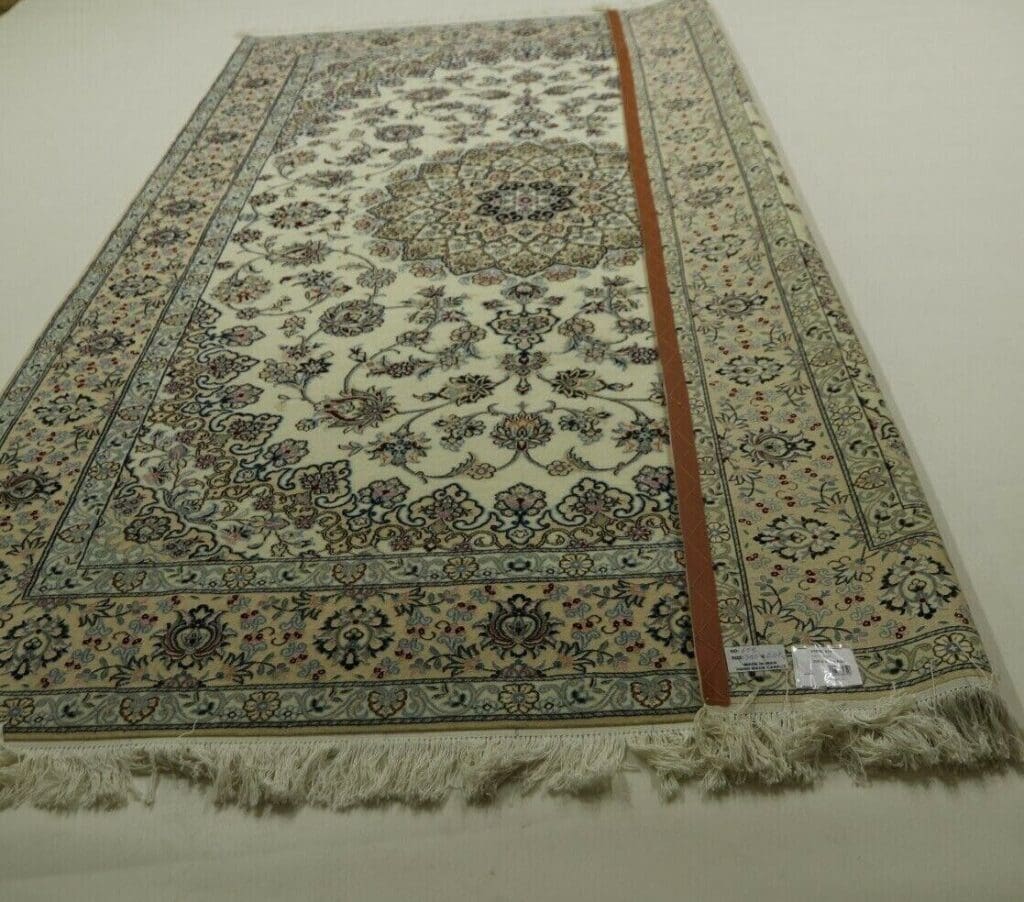
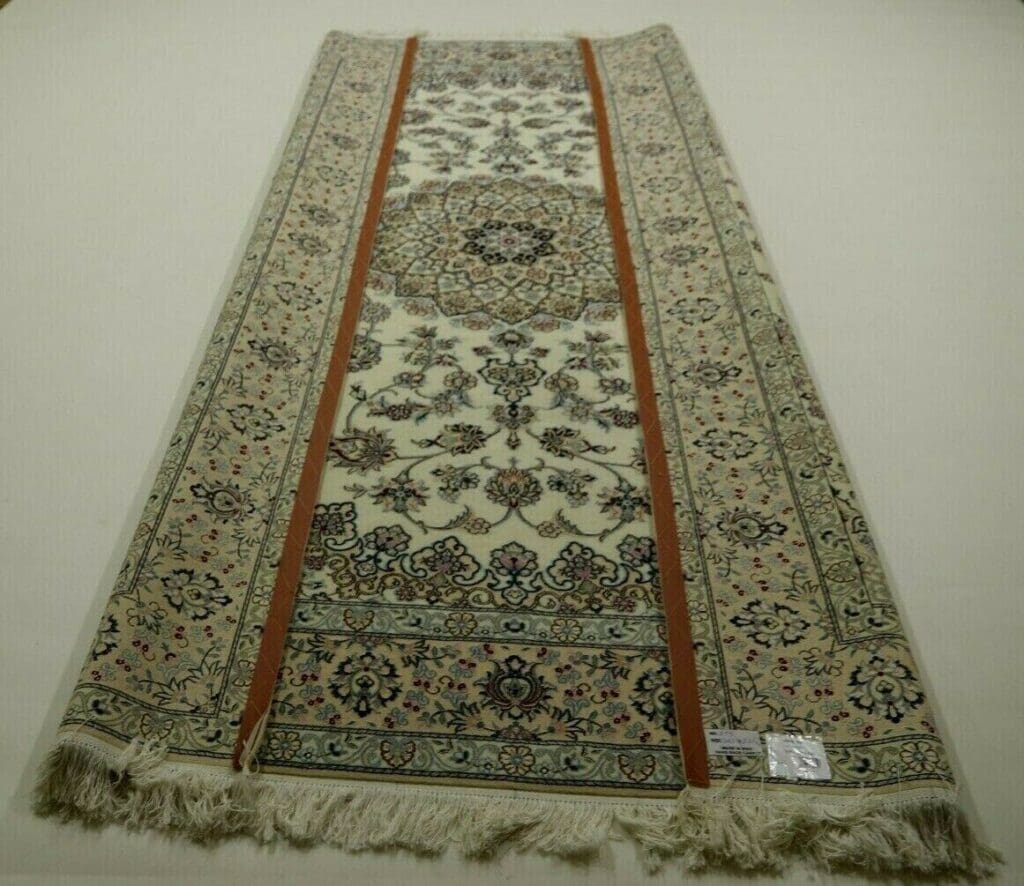
The design of this Super Nain 9 la is described as traditional Oriental and Persian. It combines classical references with a restrained appearance that can also suit contemporary interiors. Floral motifs and delicate colours are part of the stated visual character. They create a harmonious composition rather than a pattern intended to dominate through strong contrast.
Nain rugs are often recognised for symmetrical organisation, fine lines and a disciplined distribution of motifs. In the regional vocabulary, floral elements may work together with geometrically ordered structures. Blossoms, vines and regular forms can be integrated into an overall arrangement in which the centre, border and intervening spaces relate to one another. These are general features of the Nain tradition; the specific rug is described as floral and traditionally Oriental.
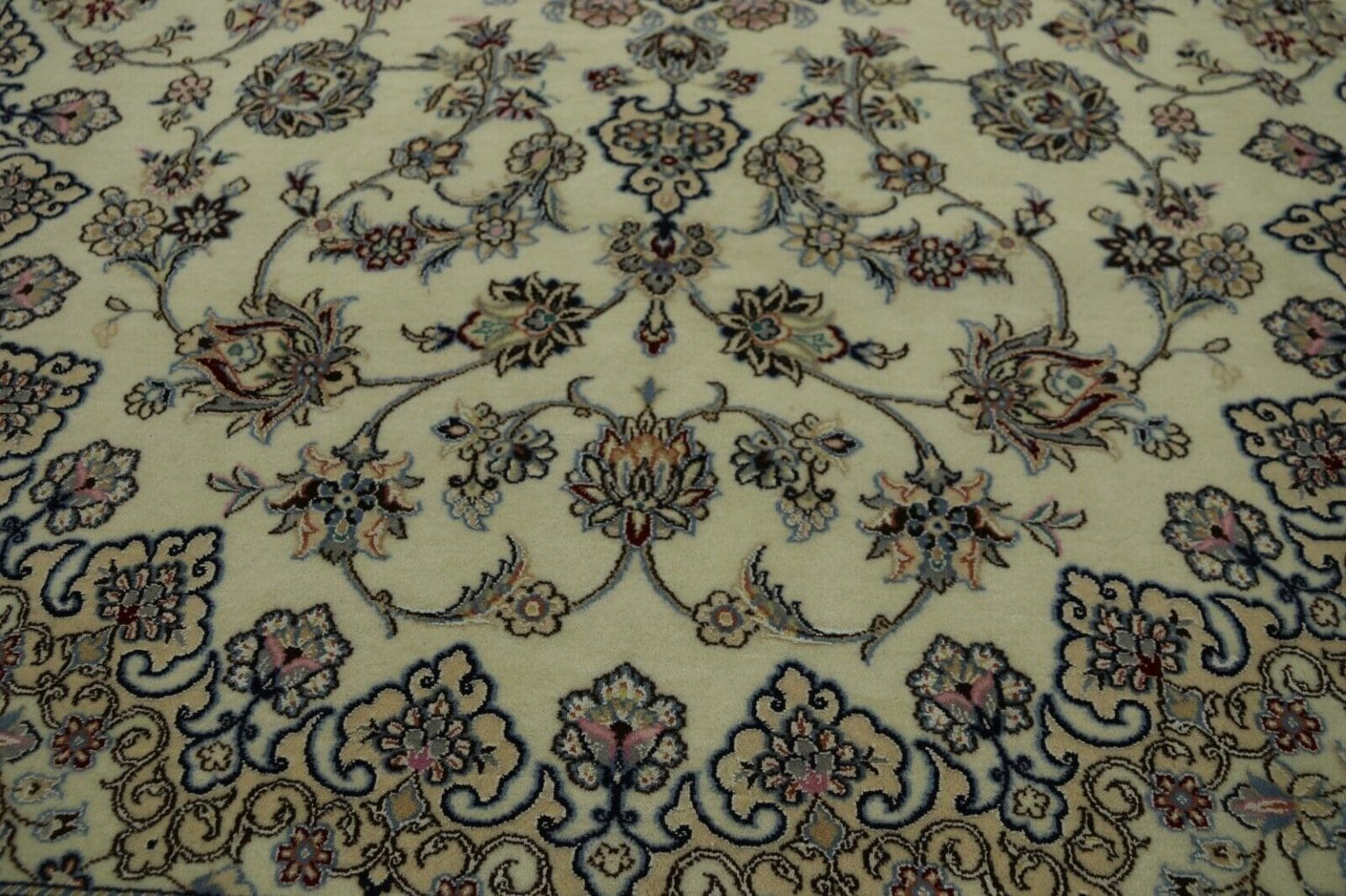
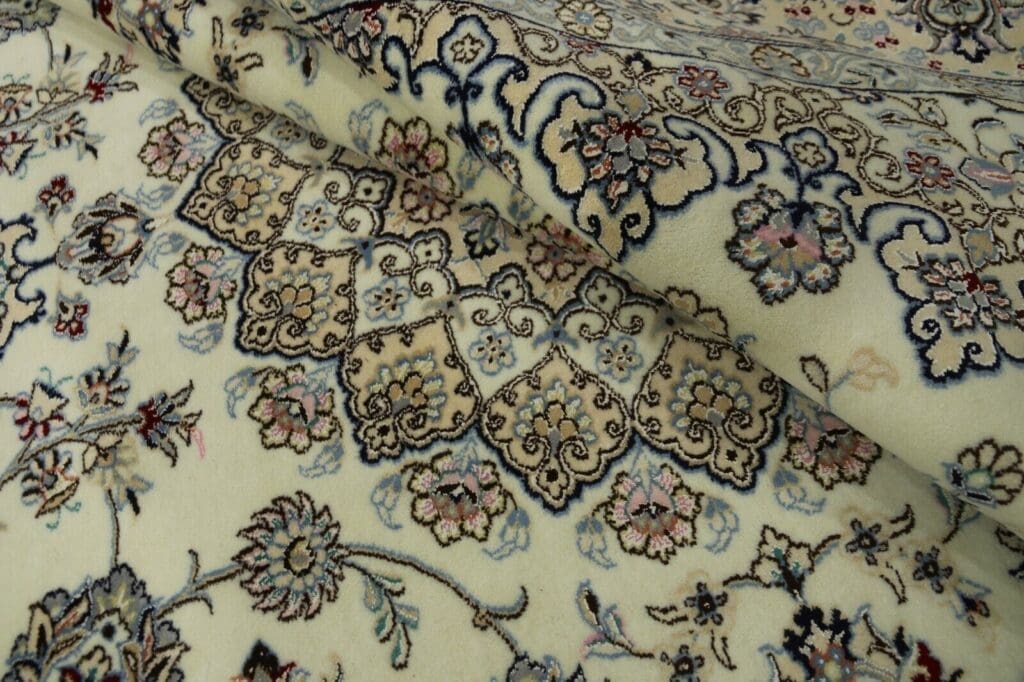
The delicate colour effect supports the legibility of the drawing. A restrained palette can keep floral details visible while preserving the order of the overall composition. In a finely knotted Nain rug, detail is an important part of the design language because small lines, contours and transitions can be distinguished with care.
The combination of traditional and modern elements makes the design adaptable. Classical rooms can echo its Persian vocabulary, while simpler contemporary settings can use its ordered and quiet appearance as a defined textile accent. The rug is described as suitable for living rooms, bedrooms, offices and elegant hallways. In each of these settings, the pattern can function as an independent element within the interior.
Floral designs have a long history in Persian rug art. They can represent natural forms in a stylised and organised manner while remaining part of a carefully structured field. Geometric borders and symmetrical placement give such motifs a framework. In Nain rugs, this often results in an interaction between precise drawing, measured colour use and clear division of space. The Super Nain 9 la belongs to this described design context.
Special Features
The explicitly stated special features are the high knot density, the combination of virgin wool and silk, and the hand-knotted construction. Silk introduces a fine reflection of light into the pile and can create a discreet sheen. Virgin wool complements this effect with its natural textile surface.
The rug is a one-off or single piece. It is offered as new and in very good or perfect condition. It is also suitable for underfloor heating. These points form part of its identity alongside the Super Nain 9 la designation and its origin in Persia or Iran.
The combination of fine knotting, the regional Nain design vocabulary and a wool-and-silk pile gives the rug a clearly defined textile character. Its special qualities therefore lie in its material, construction, pattern tradition and stated condition, rather than in an additional applied ornament.
FAQ
How should I care for my Super Nain 9 la Persian rug?
For routine care, vacuum the rug without using a brush attachment. Blot spills as soon as possible with a damp cloth rather than rubbing them forcefully into the pile. If a more thorough cleaning is needed, a professional cleaner can treat the rug. Gentle care helps preserve the surface made from virgin wool and silk as well as the finely hand-knotted construction.
Where can I use this rug?
The rug is described as suitable for living rooms, bedrooms, offices and elegant hallways. Its traditional Oriental and Persian design can be combined with a range of interior styles. The delicate colours and floral motifs can sit comfortably in a classic room as well as in a contemporary setting. The rug is also suitable for use over underfloor heating.
Why are Nain rugs considered so finely made?
Nain rugs bring together hand-knotting, fine construction and a carefully developed pattern tradition. Their high knot density supports detailed drawing, while virgin wool and silk contribute different tactile and visual qualities. Producing such a rug requires craft knowledge and patience. For this reason, Nain rugs are regarded as expressions of Iranian carpetmaking tradition and as durable works of textile art.
To provide the best experiences, we use technologies like cookies to store and/or access device information. Consenting to these technologies will allow us to process data such as browsing behavior or unique IDs on this site. Not consenting or withdrawing consent, may adversely affect certain features and functions.
Functional Always active
The technical storage or access is strictly necessary for the legitimate purpose of enabling the use of a specific service explicitly requested by the subscriber or user, or for the sole purpose of carrying out the transmission of a communication over an electronic communications network.
Preferences
The technical storage or access is necessary for the legitimate purpose of storing preferences that are not requested by the subscriber or user.
Statistics
The technical storage or access that is used exclusively for statistical purposes.The technical storage or access that is used exclusively for anonymous statistical purposes. Without a subpoena, voluntary compliance on the part of your Internet Service Provider, or additional records from a third party, information stored or retrieved for this purpose alone cannot usually be used to identify you.
Marketing
The technical storage or access is required to create user profiles to send advertising, or to track the user on a website or across several websites for similar marketing purposes.
 SECURE PAYMENT
 SHIPPING PARTNERS