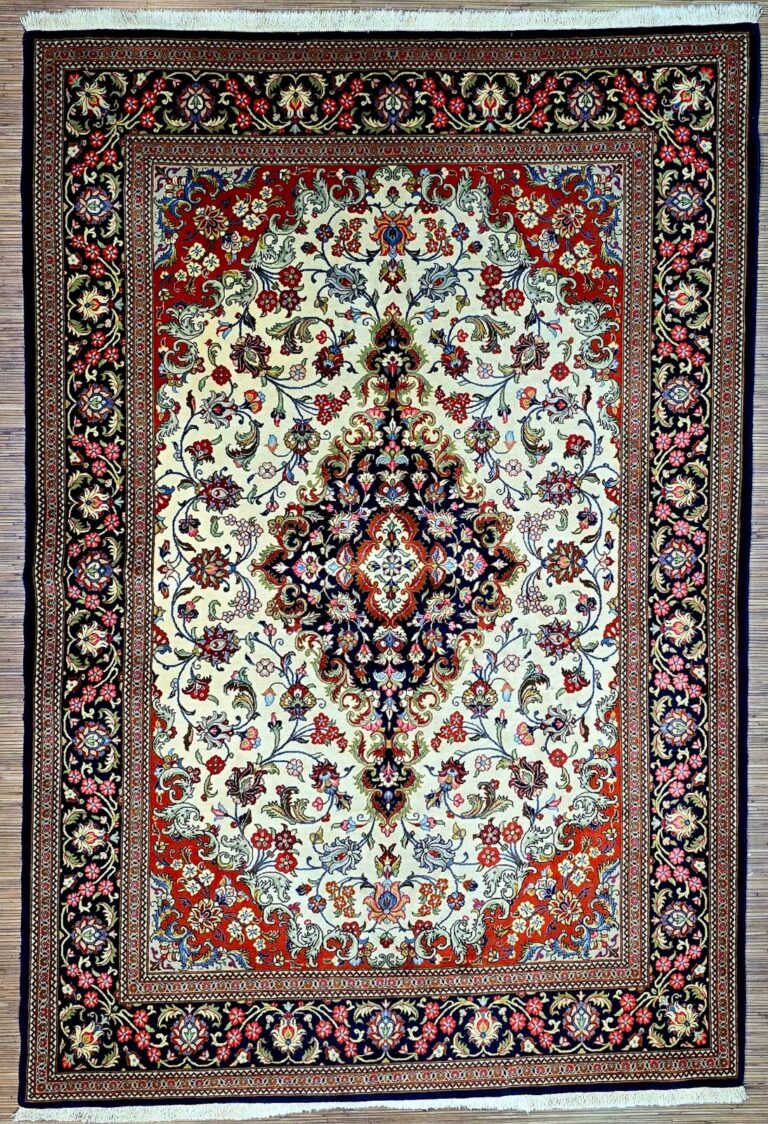
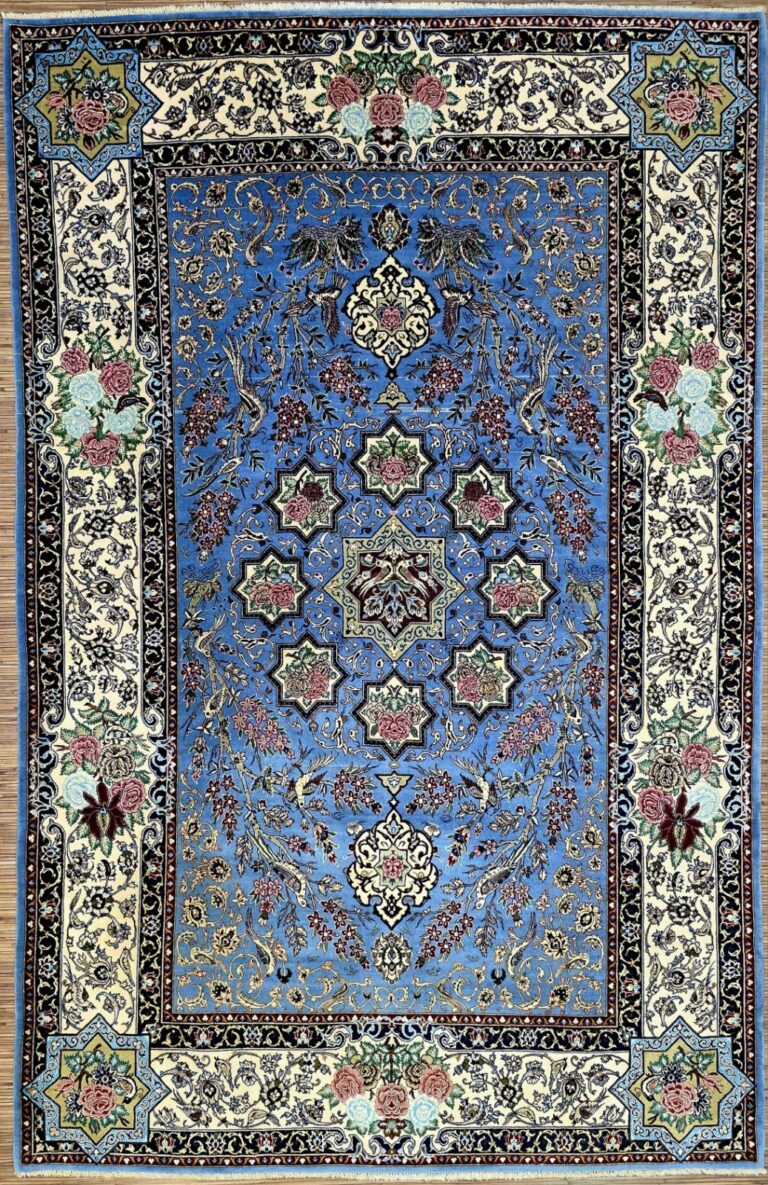
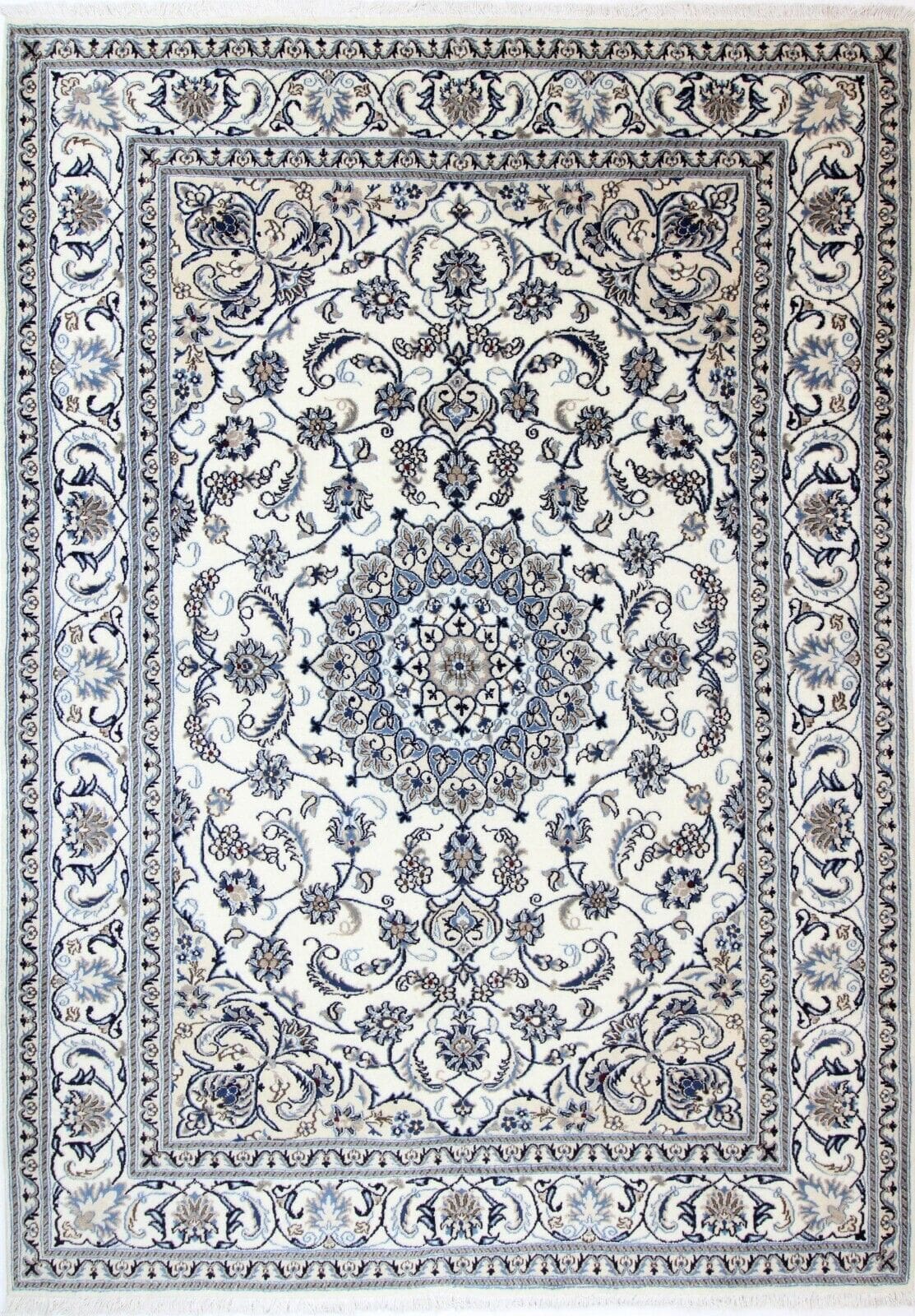
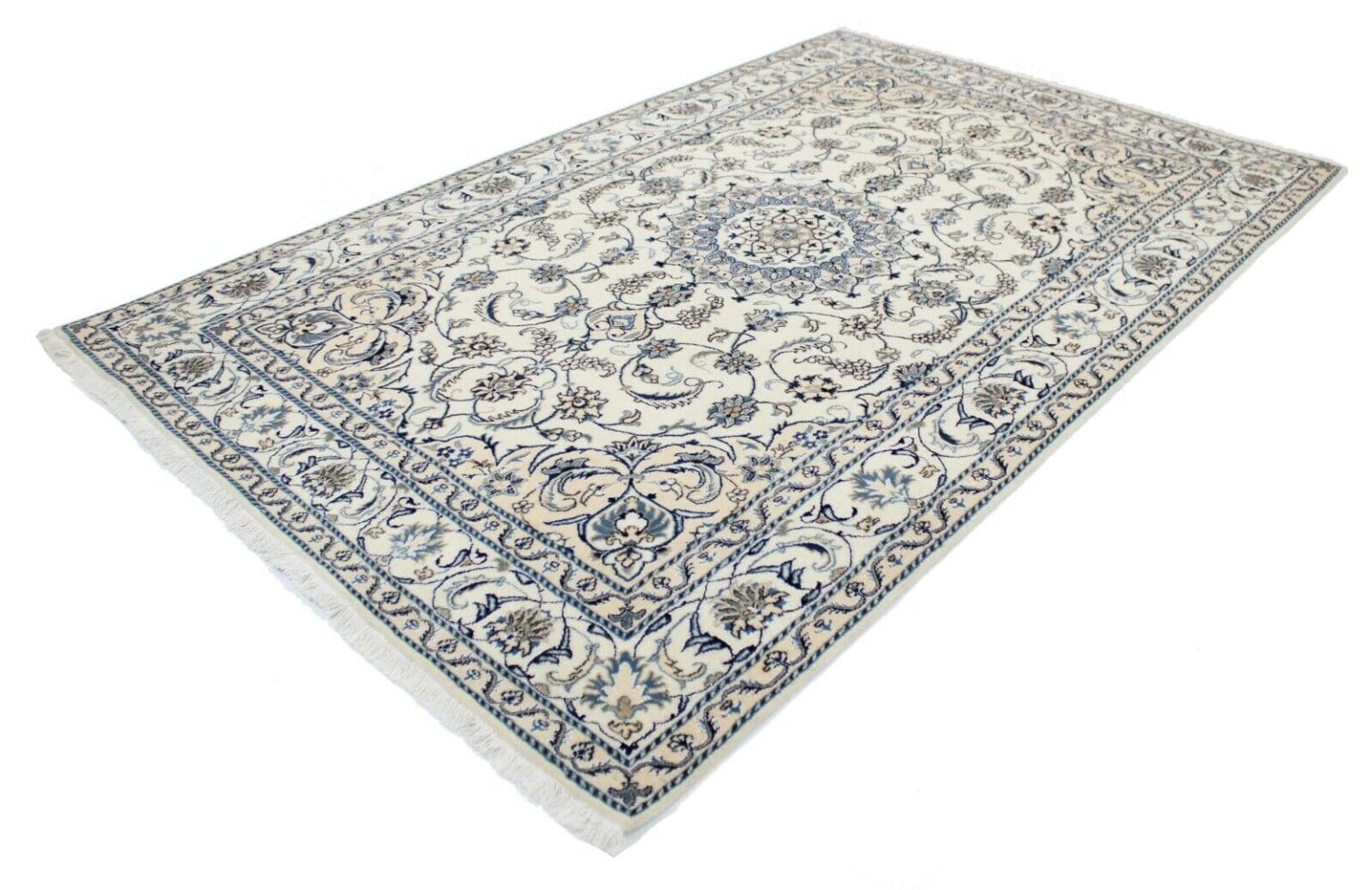
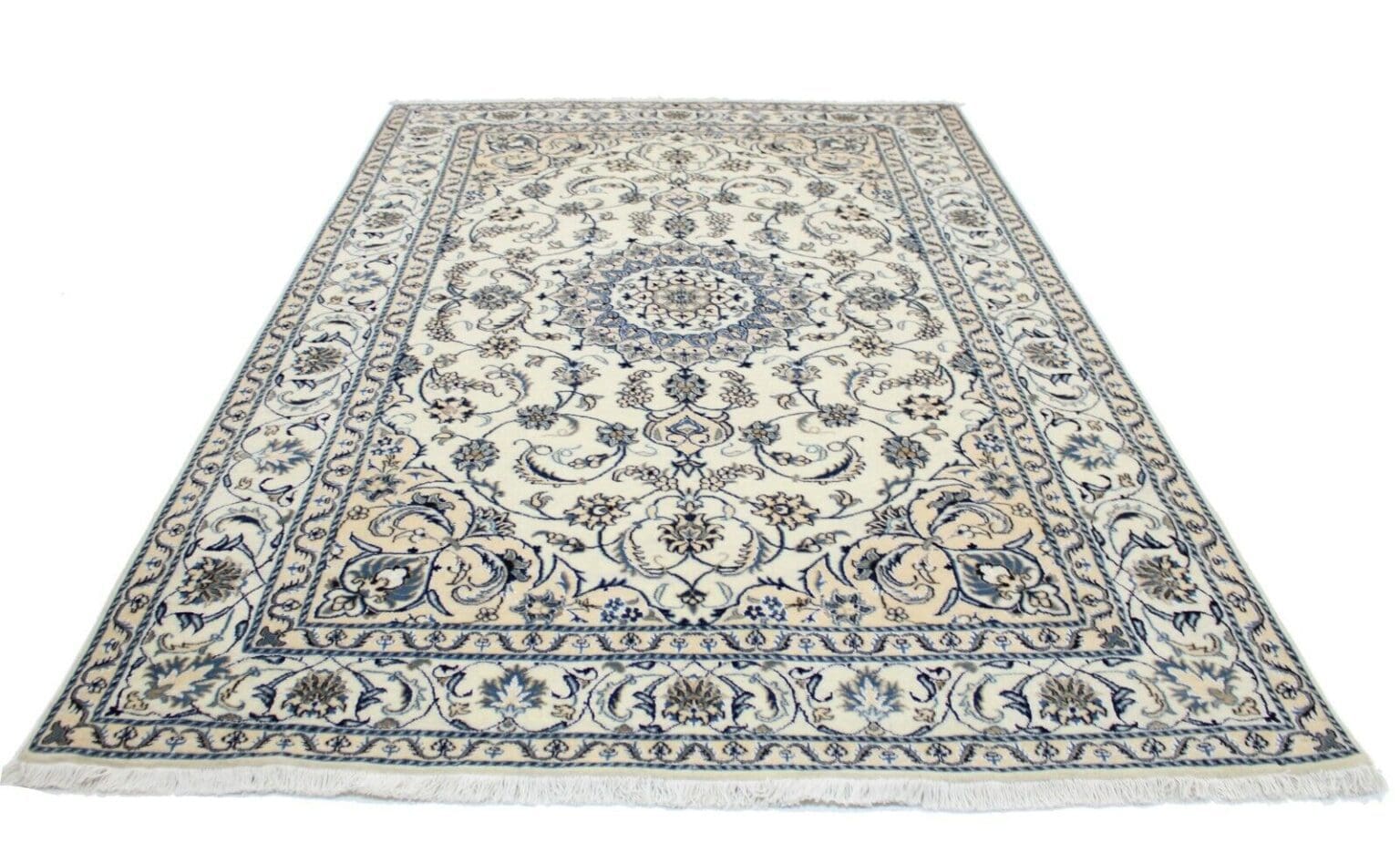
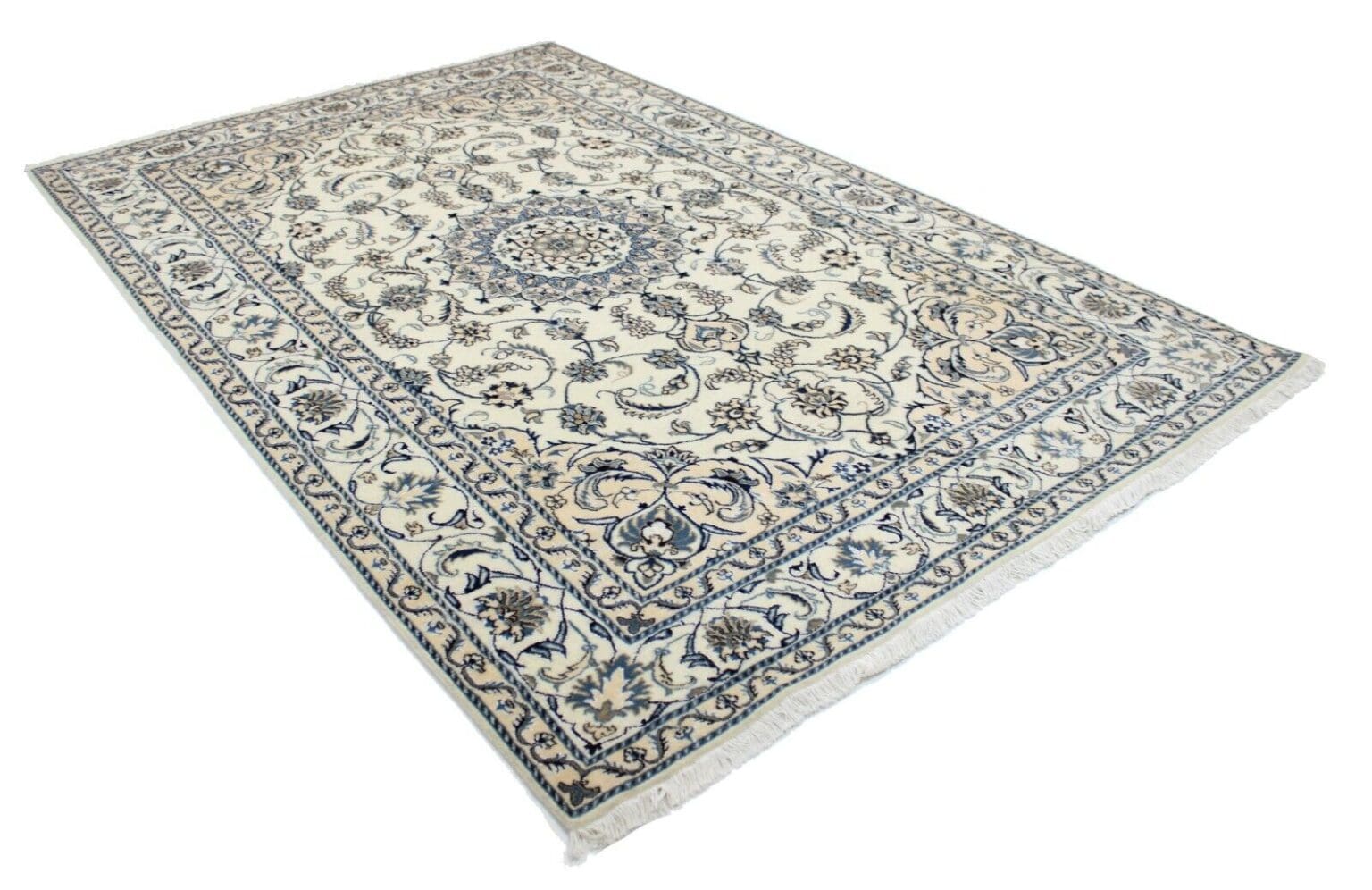
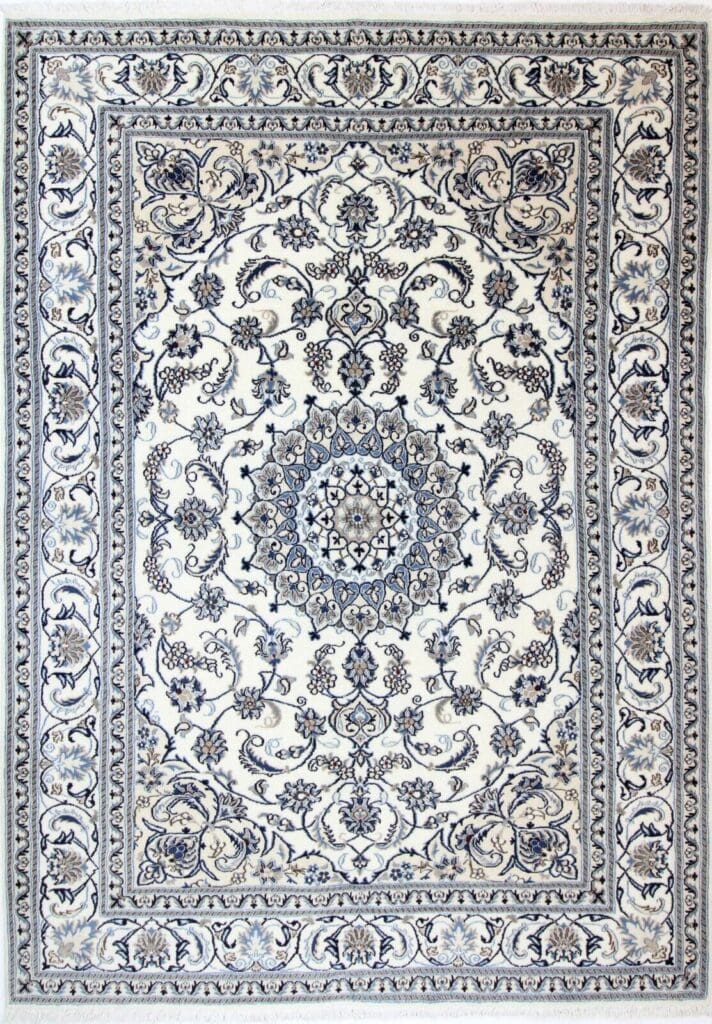
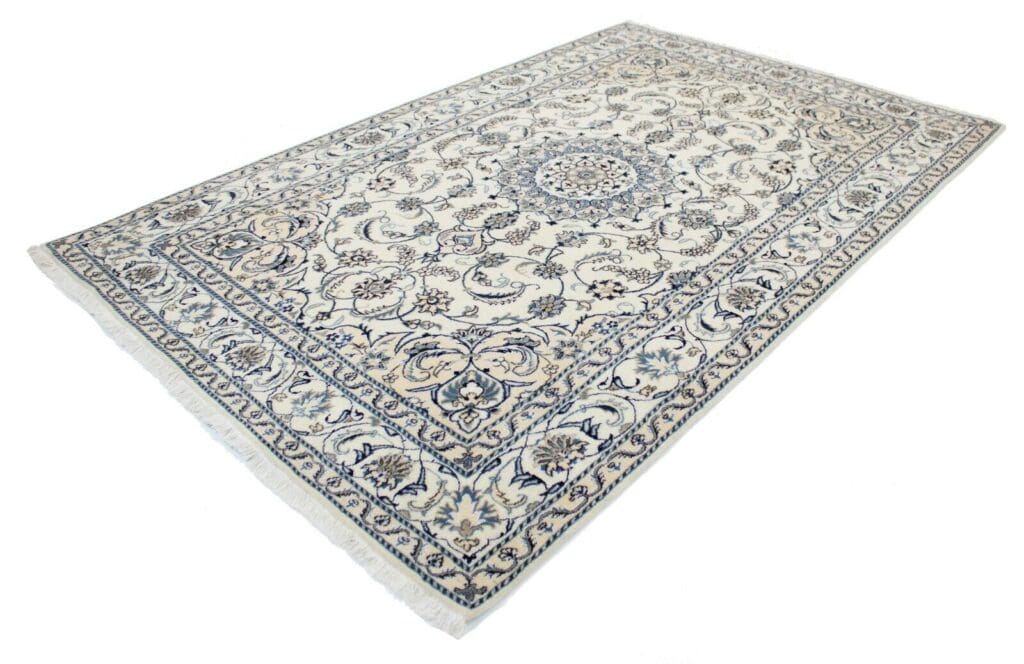
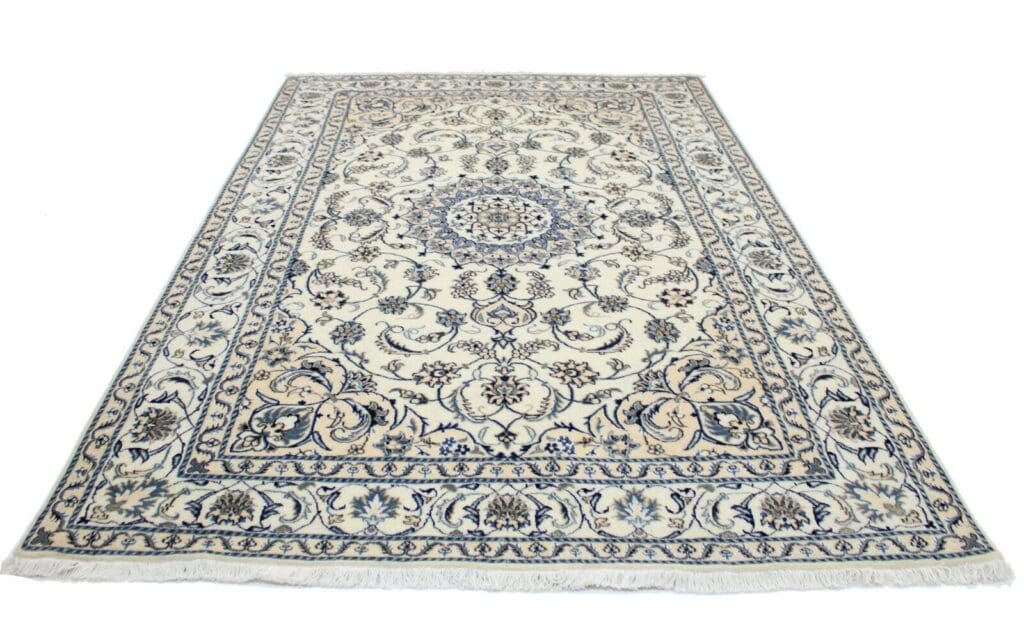
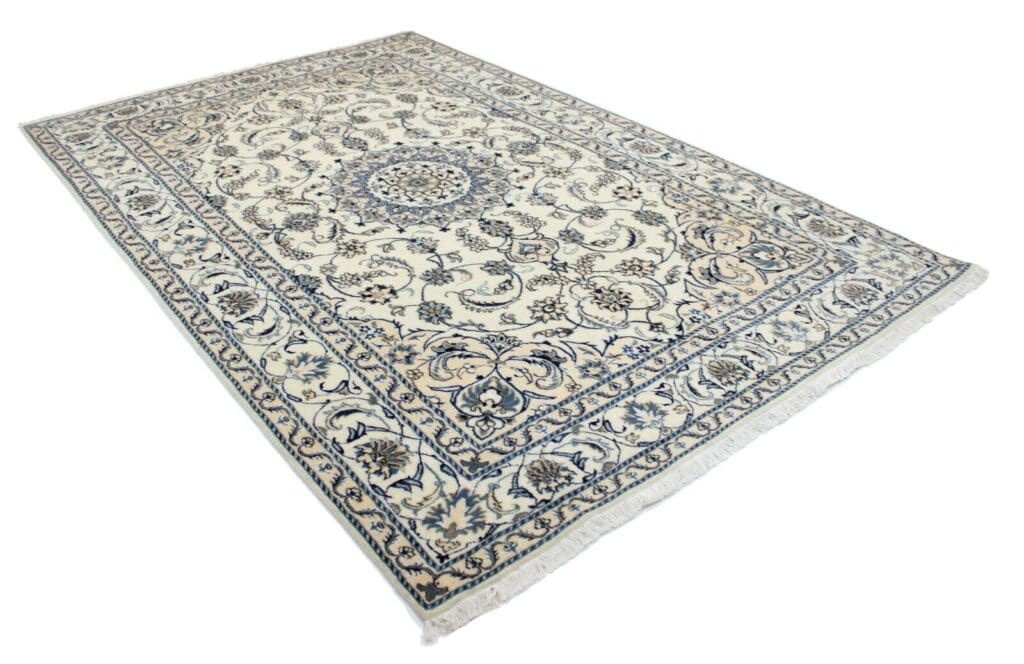
Hand-knotted Nain Persian Rug | Knot density: Hand-knotted | Material: Wool and cotton | Size: 299 x 195 cm | Pattern: Oriental with floral motifs | Condition: New without label, top condition
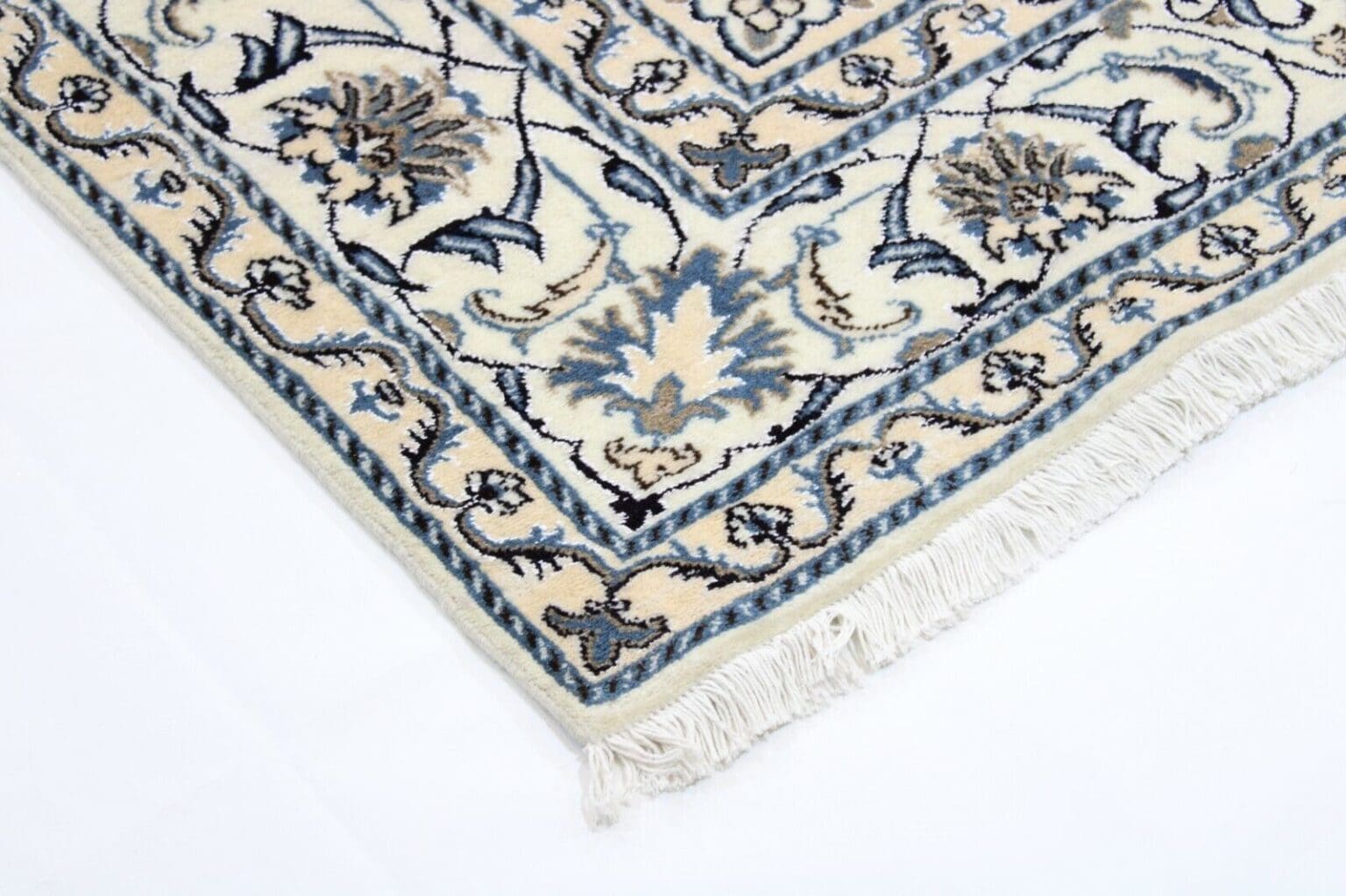
This Nain Persian rug is hand-knotted and has a high pile. The listed materials are high-quality wool and cotton. The combination gives the rug a clearly textile character and places it within the established material tradition of Persian rugs. Hand knotting means that the pile is built up knot by knot rather than produced through a machine-made process. The design is therefore worked into the structure as the rug is made, not applied to a finished surface.
Wool has long been used in Persian rugs because it is resilient, tactile and suitable for regular household use. Cotton is also a familiar material in oriental rug construction and can contribute to a stable textile foundation. For this particular rug, wool and cotton are stated as the materials; no percentage division between them is provided. The high pile gives the surface a pronounced feel and creates a softer, more substantial texture than a flat-woven rug.
The hand-knotted construction develops through a sequence of connected stages. The warp is prepared, knots are inserted by hand, and the structure is secured as the work progresses. Once the knotting is complete, the pile can be trimmed so that the drawing becomes legible across the surface. The description identifies the rug as hand-knotted but does not provide a numerical knot count. Its craftsmanship can therefore be described through the manual technique, the high pile and the stated materials.
Origin and Tradition
The rug comes from Iran and is identified as a Nain Persian rug. Nain is one of the recognised centres of Iranian rug weaving and has developed a distinct regional vocabulary within Persian textile art. The city is located in central Iran, an area associated with carefully organised compositions, precise drawing and the continuation of established workshop practices. The name Nain here refers to a regional rug tradition and not merely to a general decorative fashion.
Iranian rugs are made in many different weaving regions. Tabriz, Isfahan, Kashan and Nain are known for their own approaches to drawing, colour arrangement and ornament. Such names indicate more than a geographical point: they connect a rug with inherited designs, local working methods and a particular history of textile production. Nain is often associated with refined floral arrangements and clearly structured compositions. Persian weaving as a whole, however, includes a wide range of styles, from strongly geometric tribal designs to elaborate curvilinear patterns.
The history of Persian rugs spans many centuries. In Iranian homes, rugs have served practical purposes while also expressing regional identity and artistic ideas. Knowledge of preparing the foundation, inserting the knots, securing the rows and finishing the pile has traditionally been passed from one generation to the next. In a hand-knotted rug, these processes are directly connected: the design is formed during production and becomes part of the fabric itself.
The Nain tradition developed within this wider Persian culture of weaving and is commonly recognised for its ordered ornamentation. Designs may establish a relationship between a central field, surrounding borders and smaller linking details. This creates a coherent surface even when many delicate elements are present. The rug offered here is classified as Persian because its stated origin is Iran. The Nain designation points to the named regional tradition, while the hand-knotted technique reflects the established method of making a pile rug by hand.
Persian rugs continue to be used in contemporary interiors, yet their significance is not limited to decoration. They combine manual textile work, regional visual language and the practical role of defining a floor area. A Nain rug can work in a traditionally furnished room or in a restrained modern setting, depending on the surrounding furniture and colours. The important point is the relationship between origin, material, pile, construction and pattern. These elements identify the rug as an individually made textile rather than a generic printed floor covering.
Other Iranian weaving traditions demonstrate the breadth of this heritage. Tabriz is associated with a broad repertoire of formal designs, while Isfahan and Kashan are also known for established Persian pattern languages. Nain stands alongside these centres as a separate regional reference. Gabbeh rugs, by contrast, are known for simpler, more freely arranged designs and are often chosen for a more rustic visual effect. Mentioning these traditions helps place Nain within the larger landscape of Iranian weaving without changing the stated origin or identity of this rug.
Design and Pattern
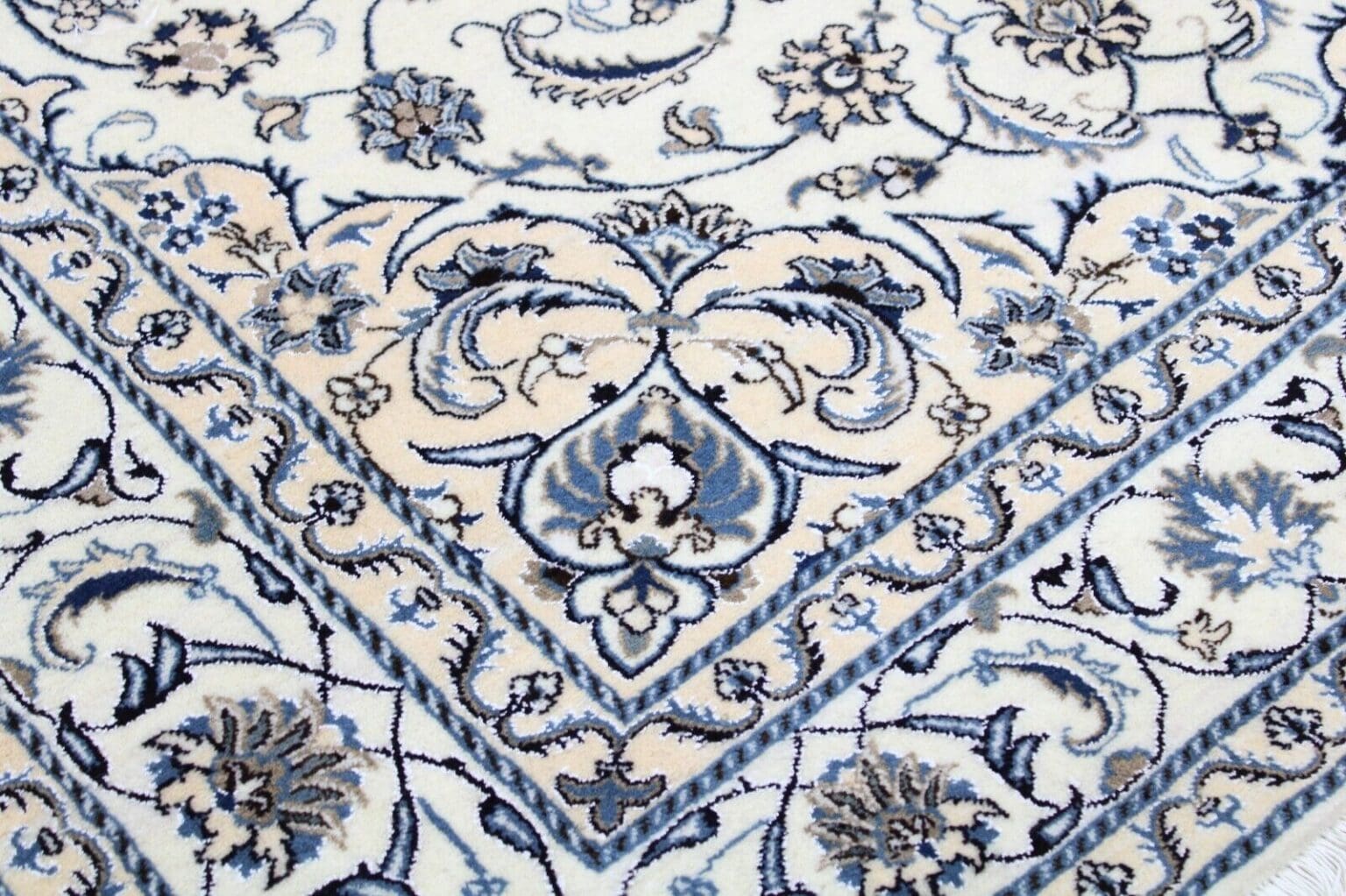
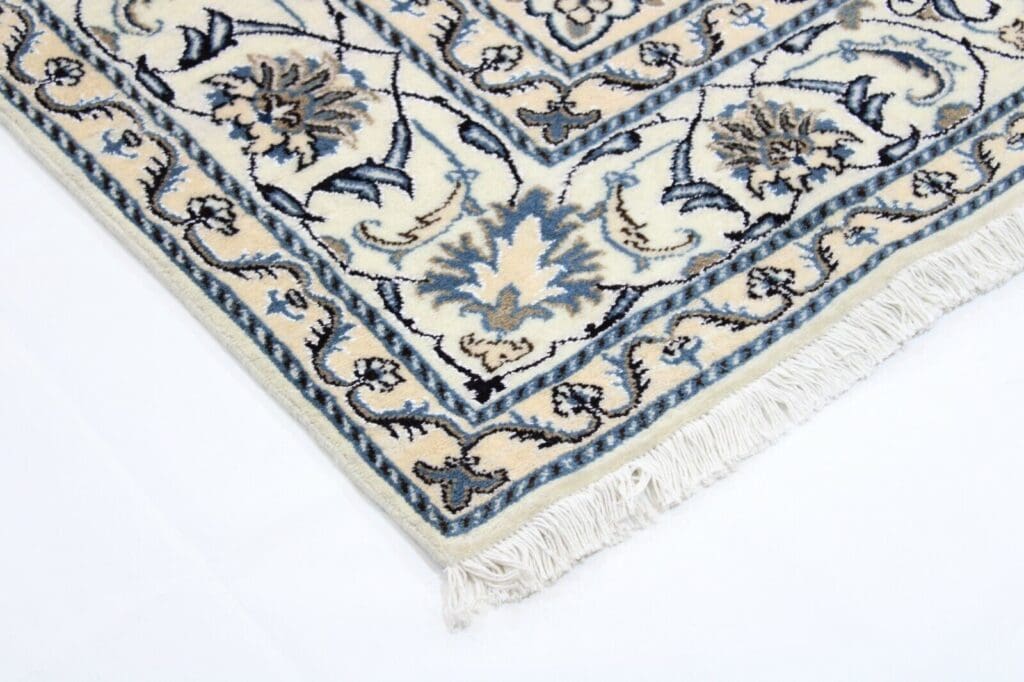
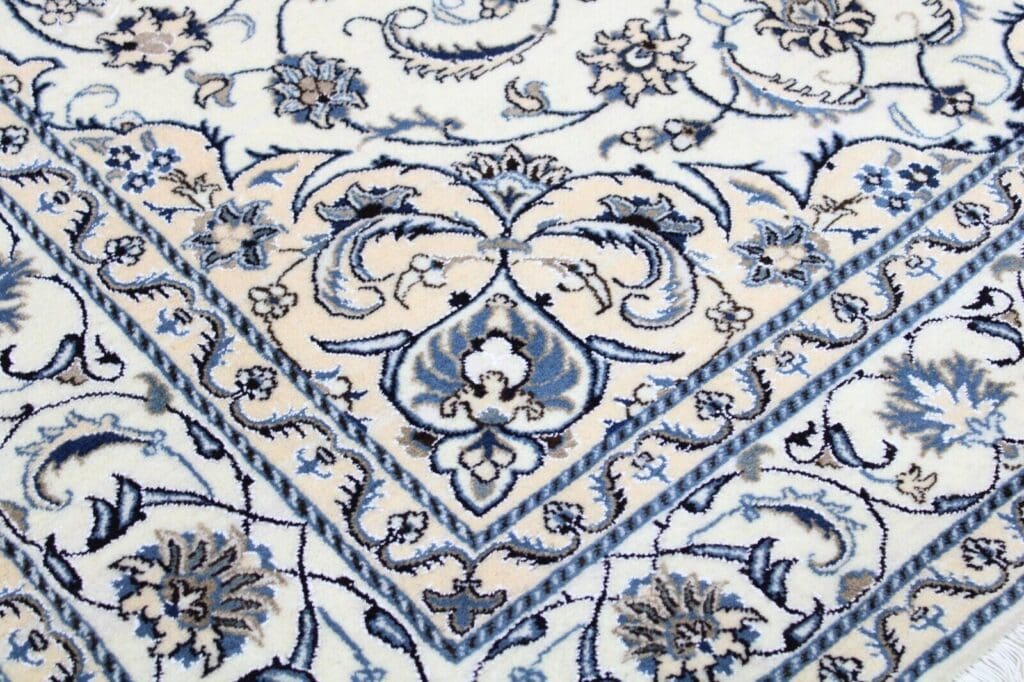
The pattern is described as oriental with floral motifs. Flowers, leaves and scrolling plant forms are among the major design resources of Persian rug art. They are usually transformed into ornamental shapes rather than copied as exact botanical illustrations. Individual motifs can be repeated, linked by vines or arranged around a central structure. In this way, plant imagery becomes a system for organising the entire rectangular field.
Persian floral designs may be built around a medallion, a continuous repeat or a balanced all-over composition. The precise arrangement of this rug is not specified, so no particular medallion, border structure or colour scheme is assigned to it. What can be stated is the oriental character and the presence of floral motifs. In general, the visual rhythm of such designs comes from the interaction between larger blossoms, smaller leaves and connecting stems. The spacing between these elements helps the pattern remain readable across the pile.
Nain designs are often associated with a controlled and finely articulated ornament. Their regional identity can lie in the balance of symmetry, the treatment of floral details and the relationship between the main field and its surrounding decoration. This does not mean that every Nain rug follows one fixed layout. Regional traditions provide recurring principles, while individual rugs retain their own drawing and arrangement. The named tradition therefore gives a useful context without replacing the description of the actual floral pattern.
Floral imagery has a long history in Persian art. It may evoke cultivated gardens, branching vines and stylised blossoms, all adapted to the requirements of a woven surface. A rectangular rug requires the design to be organised so that the eye can move across the field without losing the main structure. Borders can frame the composition, while smaller motifs can create transitions between larger areas. Since the detailed layout is not recorded for this piece, these are general features of the design tradition rather than additional claims about its exact drawing.
Hand knotting directly affects how a pattern is expressed. Curves and contours are created through sequences of individual knots, while changes in direction are built gradually into the pile. After trimming, the contrast between raised wool and the surrounding ground makes the drawing more distinct. A high pile also changes the tactile and visual reading of the motifs, giving the surface a pronounced texture. The combination of Nain origin, floral oriental design and manual knotting establishes a recognisably Persian decorative character.
Traditional Persian patterning is also based on proportion and repetition. A motif may be enlarged, reduced or repeated so that it fits the available field, and a border can give the composition a visual conclusion at the edges. These principles allow a design to appear detailed without becoming disconnected. They are part of the general knowledge surrounding Nain and Persian rugs, not measurements of this particular example. The stated description remains the basis for identifying this rug as a hand-knotted Nain piece with oriental floral ornament.
Special Features
The rug is described as new without a label and as being in top condition. This clearly states the offered piece’s condition without supplying an age or a separate history of ownership. No label is present. The condition description is therefore based on the stated new, top-condition assessment rather than on a claim about a certificate, signature or documented provenance.
Suitability for underfloor heating is also specified. When using a rug over underfloor heating, an appropriate underlay and careful installation are advisable so that the rug lies securely and the floor system can operate properly. Because this rug has a high pile, the choice of underlay is particularly relevant to stability and everyday handling. Regular vacuuming is recommended for routine care, while professional cleaning can be used when a deeper treatment is needed. Strong direct sunlight should be avoided where possible in order to reduce the risk of colour change over time.
The principal features of this one-off rug are its Iranian origin, its Nain designation, its hand-knotted construction, its high pile, its wool and cotton materials and its oriental floral pattern. Information about a signature, exact age, dye composition or numerical knot density is not provided and is therefore not added here.
FAQ
How can I recognise an authentic Persian rug?
Several features can help in assessing a Persian rug. Hand knotting may be visible in the structure of the back, the arrangement of the knots and the small variations that can occur in manual work. The materials and the way the pattern is drawn are also relevant. This rug is identified as hand-knotted and is described as using high-quality wool and cotton, with an oriental floral design. A label or certificate can provide additional documentation of origin, but this rug is specifically described as new without a label. If a formal assessment is required, an experienced rug specialist should examine the piece in person.
How should I care for my Persian rug?
Regular vacuuming helps remove loose dirt from the high pile and should be carried out without unnecessarily harsh treatment of the surface. If the rug becomes heavily soiled or requires a thorough refresh, professional cleaning is recommended. Strong direct sunlight should be avoided because prolonged exposure can affect colours. A suitable underlay can improve grip and help protect the textile structure during everyday use. As the rug is described as suitable for underfloor heating, it should also be installed with attention to secure placement and appropriate airflow. These measures support practical care without changing the rug’s hand-knotted character.
What size is right for my room?
The right rug size depends on the floor area, the furniture arrangement and the zone that should be defined. In a spacious room, a large rug can bring several pieces of furniture together into one seating or living area. In a smaller room, a more limited format can mark a specific area while leaving enough visible floor around it. Before placing a rug, consider door clearance, walking routes and the position of the furniture. The stated size of this rug should therefore be assessed in relation to the actual layout and proportions of the intended room.
To provide the best experiences, we use technologies like cookies to store and/or access device information. Consenting to these technologies will allow us to process data such as browsing behavior or unique IDs on this site. Not consenting or withdrawing consent, may adversely affect certain features and functions.
Functional Always active
The technical storage or access is strictly necessary for the legitimate purpose of enabling the use of a specific service explicitly requested by the subscriber or user, or for the sole purpose of carrying out the transmission of a communication over an electronic communications network.
Preferences
The technical storage or access is necessary for the legitimate purpose of storing preferences that are not requested by the subscriber or user.
Statistics
The technical storage or access that is used exclusively for statistical purposes.The technical storage or access that is used exclusively for anonymous statistical purposes. Without a subpoena, voluntary compliance on the part of your Internet Service Provider, or additional records from a third party, information stored or retrieved for this purpose alone cannot usually be used to identify you.
Marketing
The technical storage or access is required to create user profiles to send advertising, or to track the user on a website or across several websites for similar marketing purposes.
 SECURE PAYMENT
 SHIPPING PARTNERS