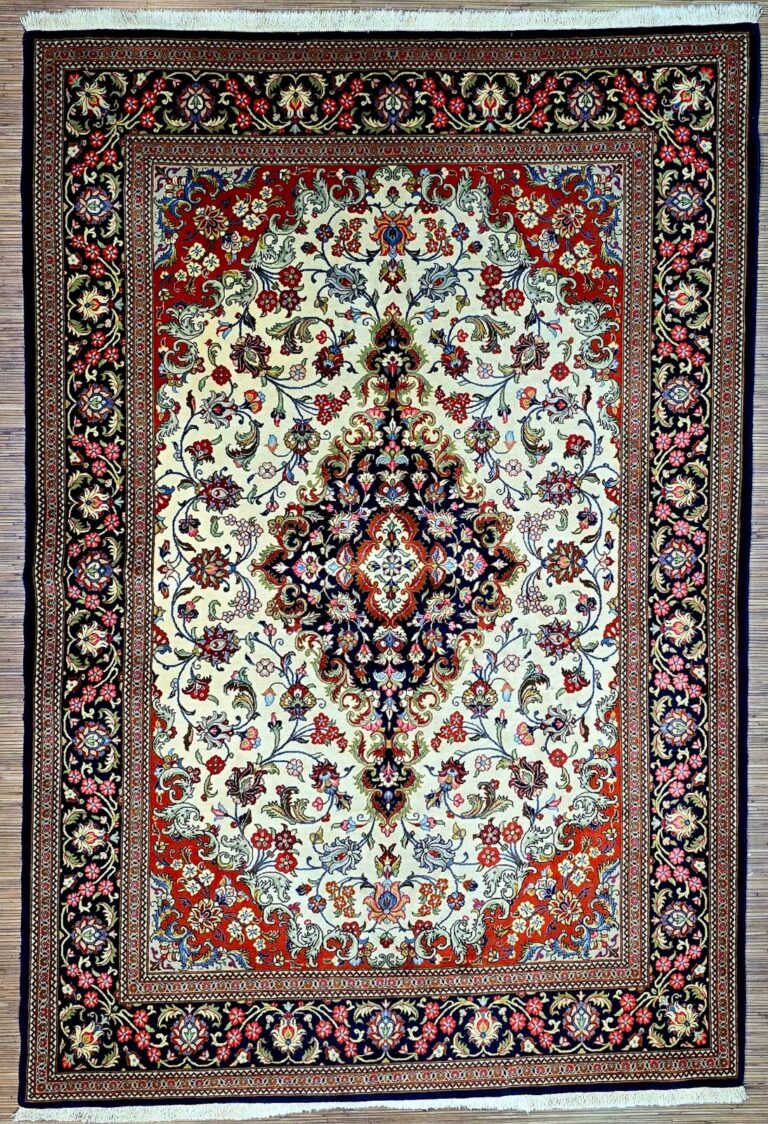
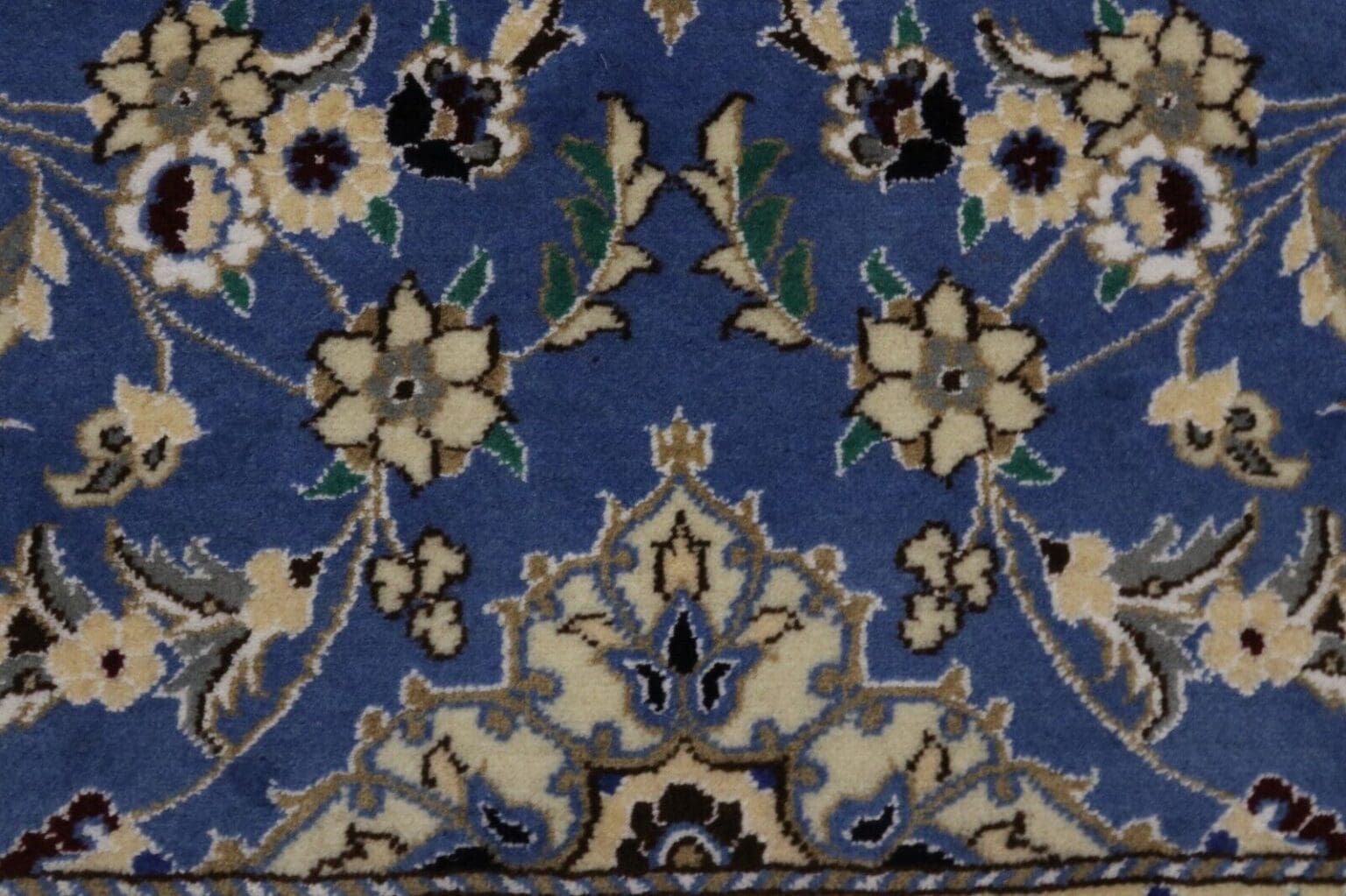
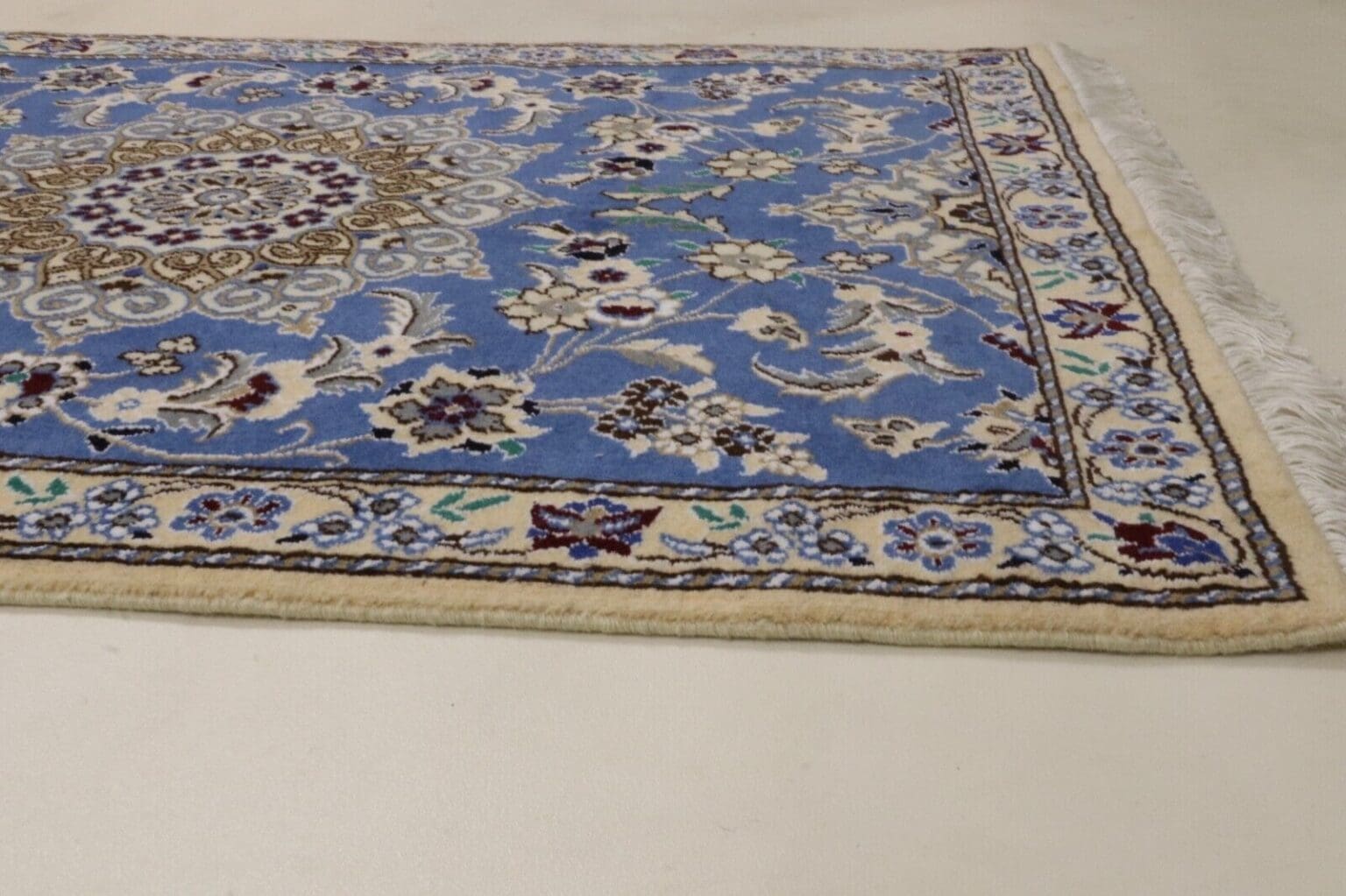
This Nain Persian rug is hand-knotted with a pile made from 90% virgin wool and 10% silk. Its warp consists of 100% cotton. The combination gives the rug two distinct textile qualities: virgin wool creates a warm, pleasantly soft pile, while silk contributes a smooth surface and a subtle sheen. The cotton warp forms the structural foundation into which the knots are tied.
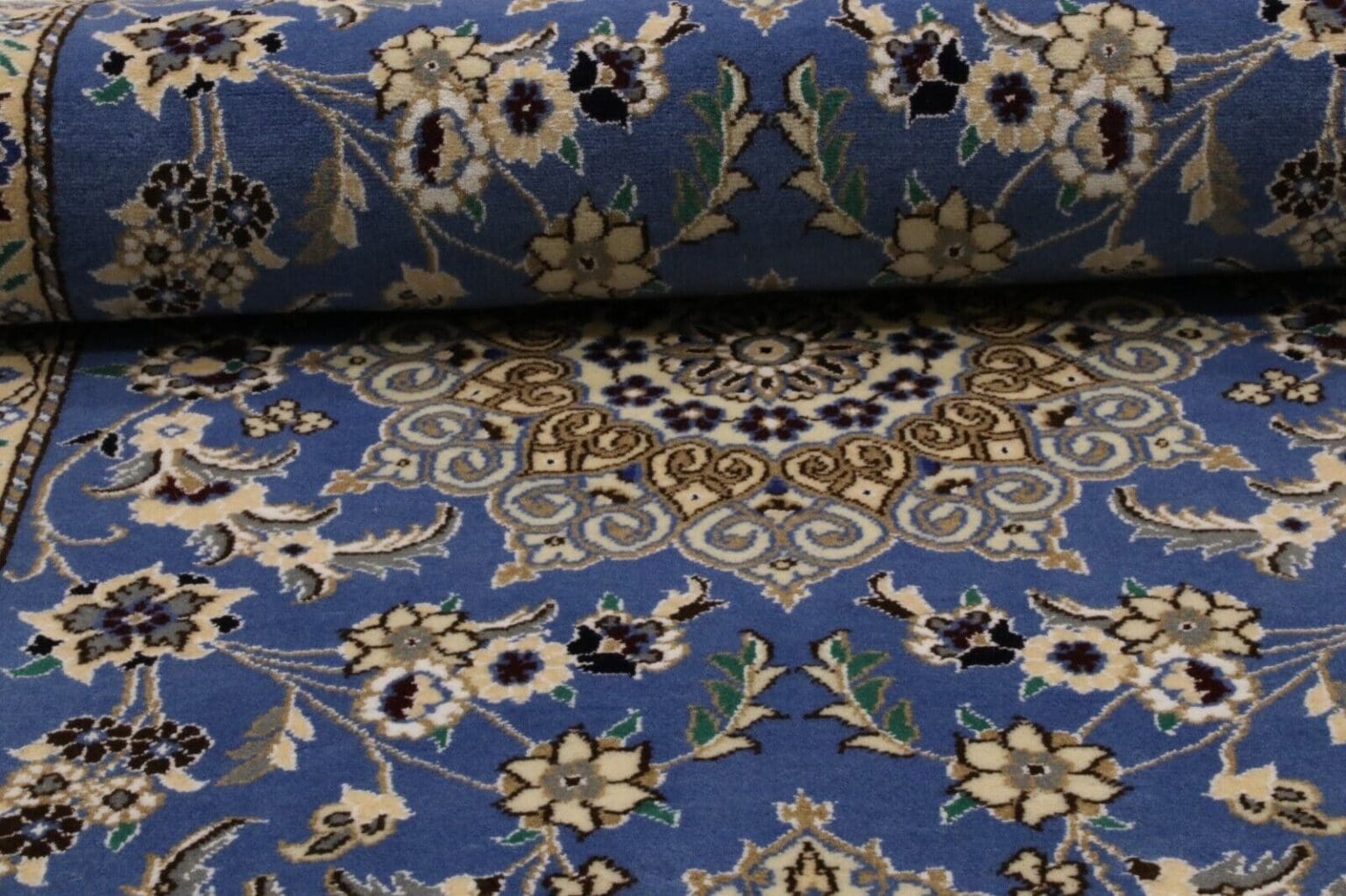
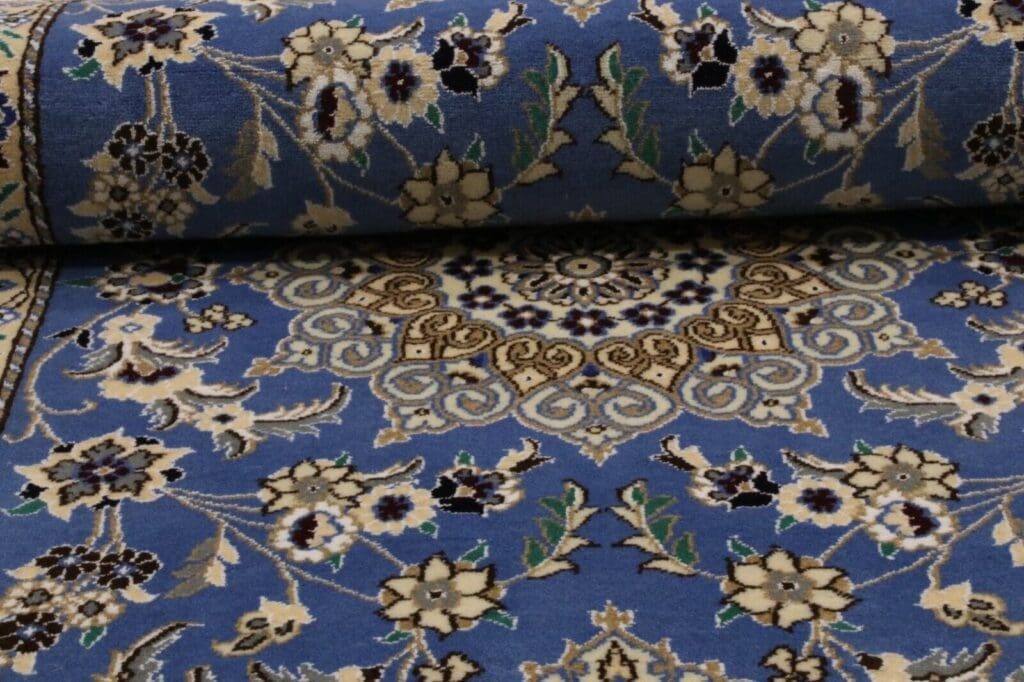
Hand-knotting means that the knots are worked individually around the prepared warp. The knotting progresses row by row until the pile has formed across the rug. It is then trimmed and aligned to produce an even surface. This method is different from machine manufacture because the visible textile structure is created through a sequence of manual operations. The result depends on the care given to the design, the knotting, the trimming and the finishing of the rug.
The listed pile height is 8 mm. Wool gives the surface a warm feel underfoot and is described here as hard-wearing and relatively resistant to dirt. Silk adds a refined smoothness and a light-catching quality to the pile. These materials are not interchangeable: wool provides the substantial textile body, while silk changes the surface effect. Together with the cotton warp, they define the material construction of this individual rug.
The rug is described as suitable for underfloor heating and as pet-friendly. Those practical characteristics accompany its hand-knotted construction rather than replacing it. Care should still be appropriate to a wool and silk pile. The new, very good condition also belongs to the description of this particular piece.
Origin and Tradition
Nain is a city in Iran and the place that gives this rug type its name. It lies in Isfahan Province, a region known for its carpet-making tradition. A Nain rug therefore belongs to the Iranian Persian-rug tradition. Its identity combines a regional origin with a method of weaving and knotting that places value on careful workmanship, ordered ornament and fine visual detail.
The carpet tradition of Nain reaches back to the sixteenth century. Across its development, the local school became associated with precise execution and balanced compositions. In a hand-knotted rug, the finished surface is the result of several linked stages: a design is planned, the warp is prepared, colours and yarns are selected, knots are tied, and the pile is later trimmed and finished. The regional tradition brings these technical steps together with a recognisable approach to ornament.
The name Nain consequently describes more than a place on a map. It also refers to an established Iranian weaving culture. Nain designs are known for fine knotting, controlled colour nuances and patterns that can combine floral and geometric elements. The precise character of a particular rug depends on its own drawing and colour arrangement, while its connection with Nain remains rooted in the shared regional tradition.
Traditionally, a Nain rug can serve both a practical and an artistic purpose. It covers and structures a floor, marks a passage or helps define an area within a room. At the same time, its pattern carries the visual language of Iranian textile design. A hand-knotted rug is built to be seen at different distances: its overall order is legible across the room, while the finer details become apparent closer to the surface.
This individual piece is described as a Nain 9 La rug. The designation belongs to the naming of the rug and accompanies its Iranian origin, hand-knotted technique and material composition. It does not replace the broader regional context. Nain remains associated with the city of the same name, with Isfahan Province and with a tradition in which technical precision and planned ornament are closely connected.
Design and Pattern
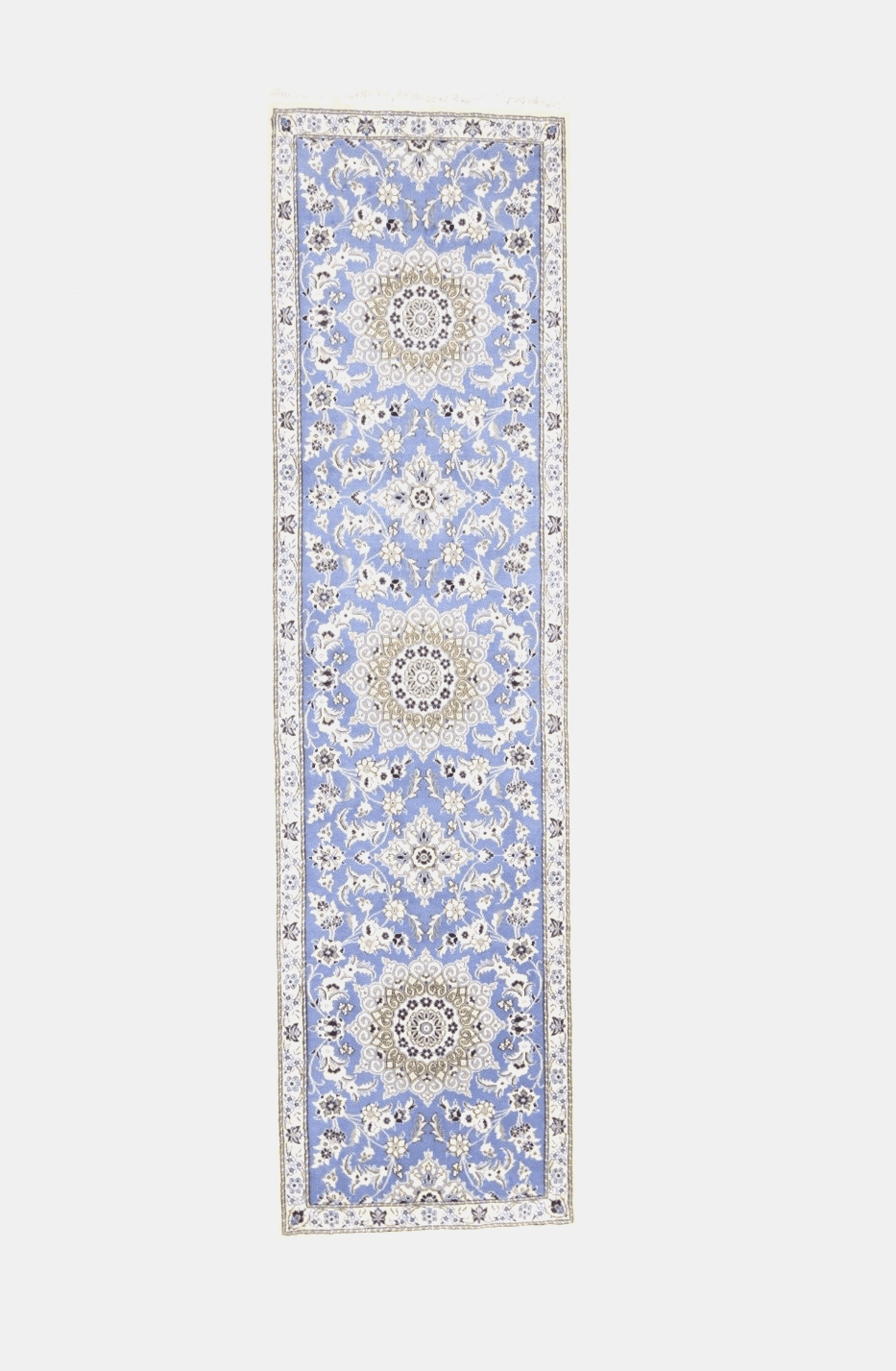
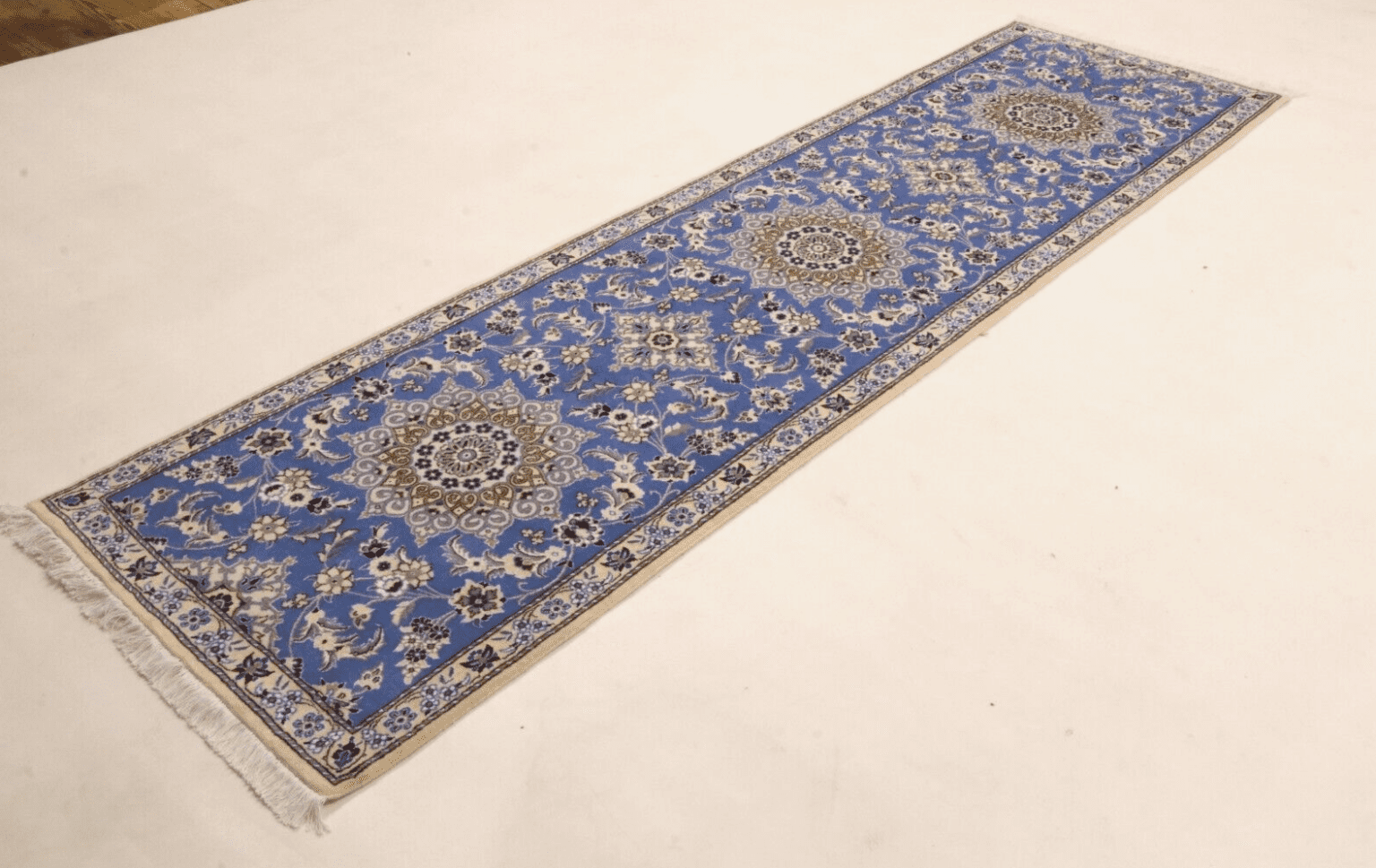
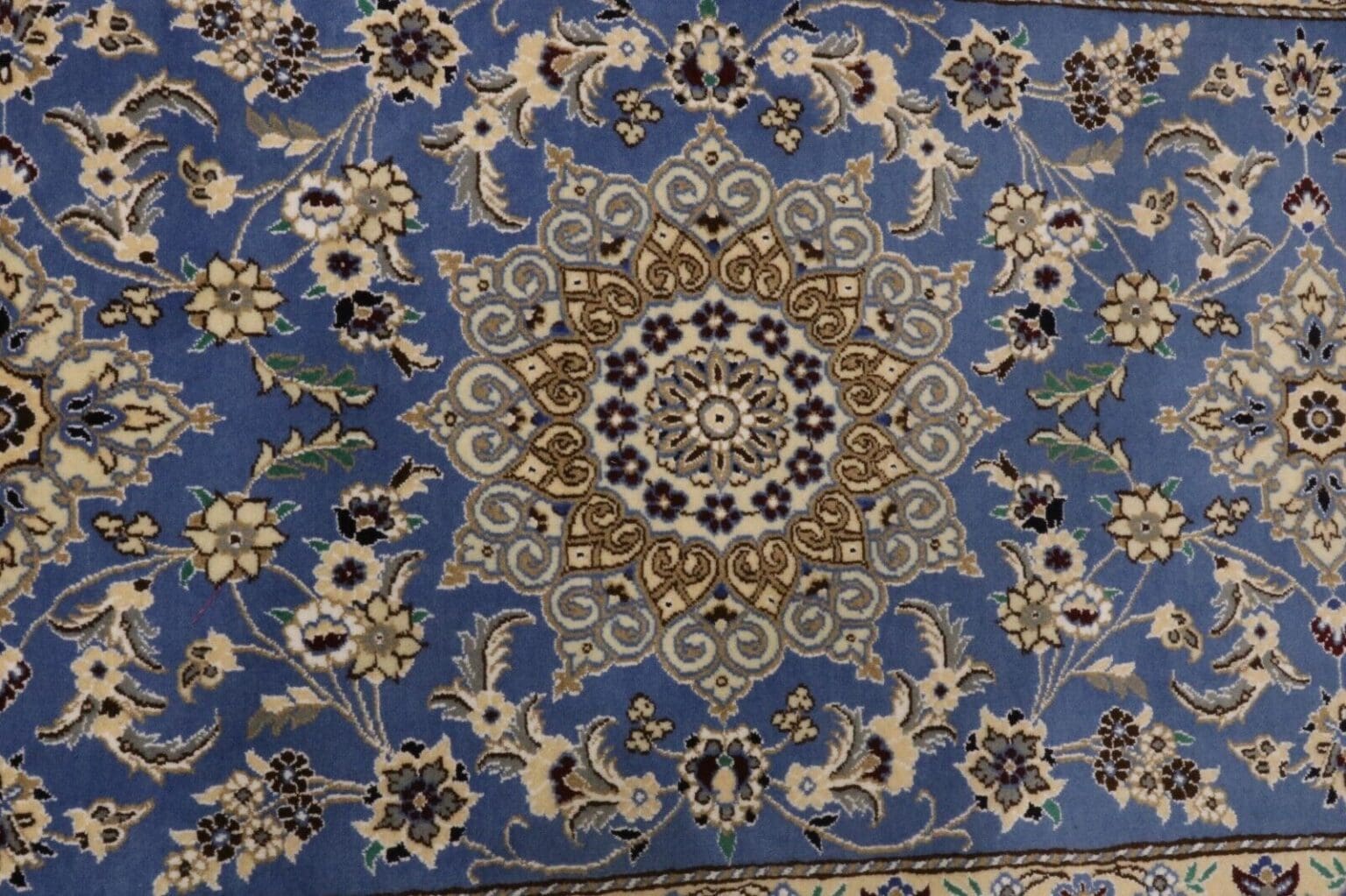
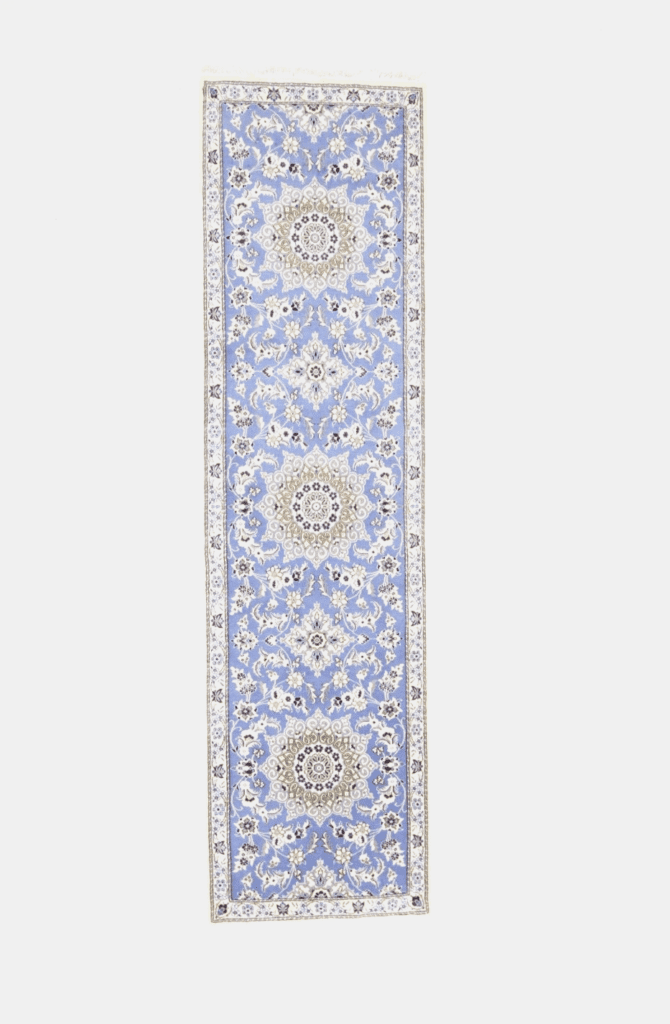
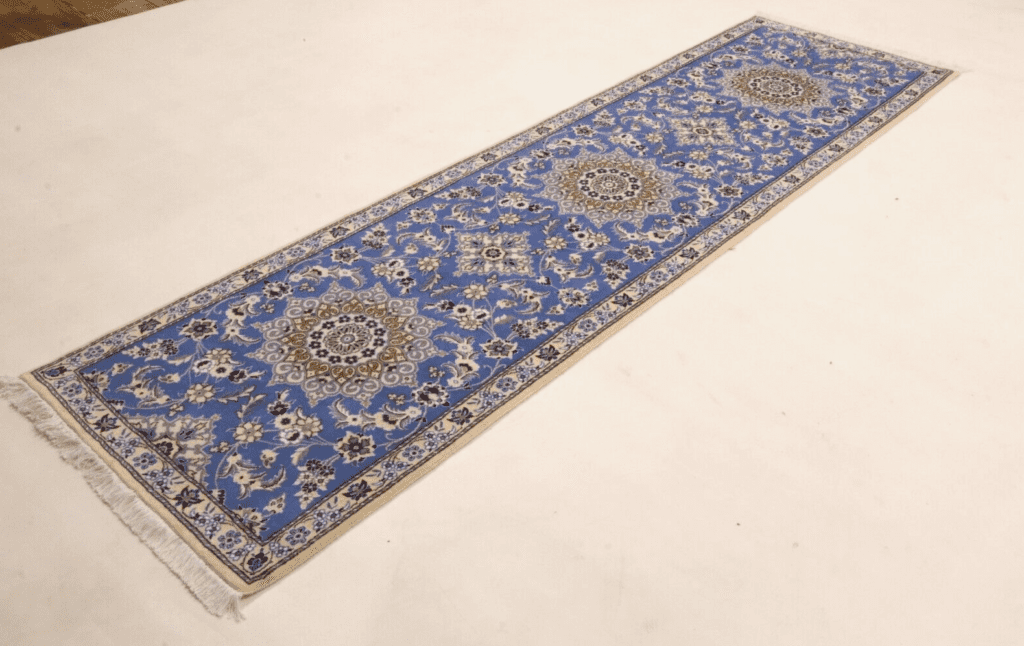
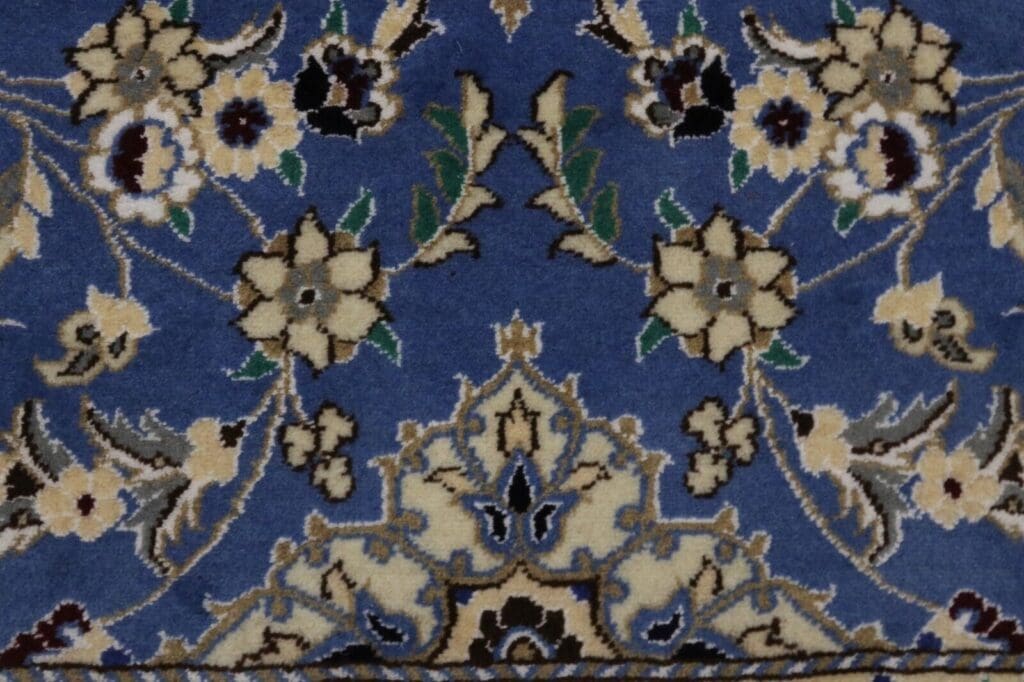
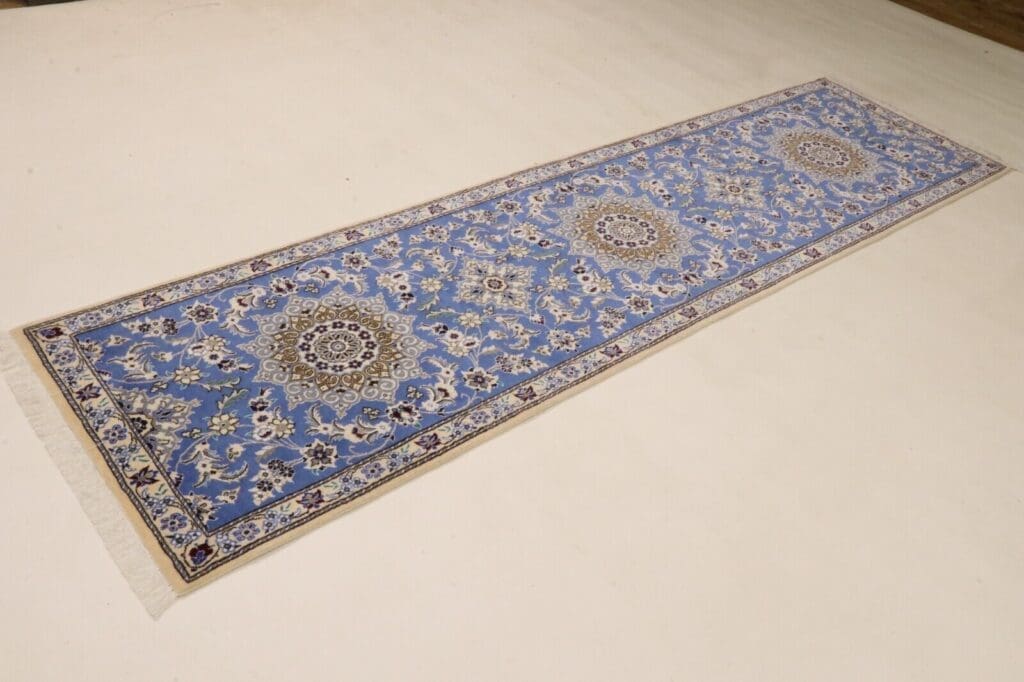
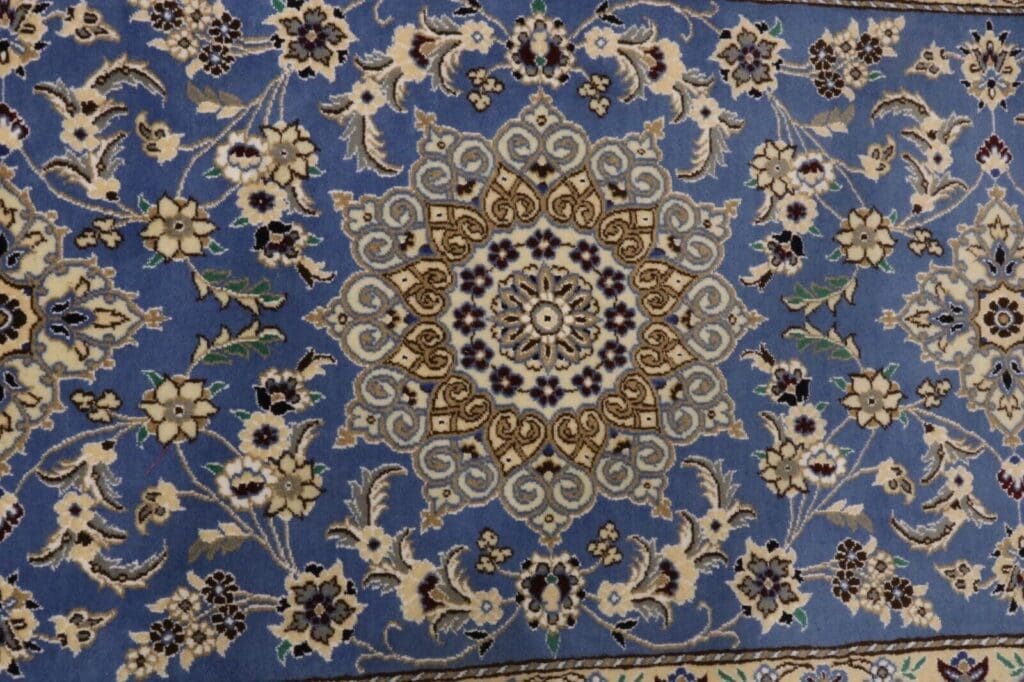
The rug is classified in the traditional Oriental and Persian style. Nain compositions commonly use soft colour effects, floral motifs and geometric organisation. Flowers, leaves and scrolling lines may connect different parts of a design, while geometric structures provide order and symmetry. This relationship between natural forms and controlled lines gives the pattern a calm, clearly arranged appearance.
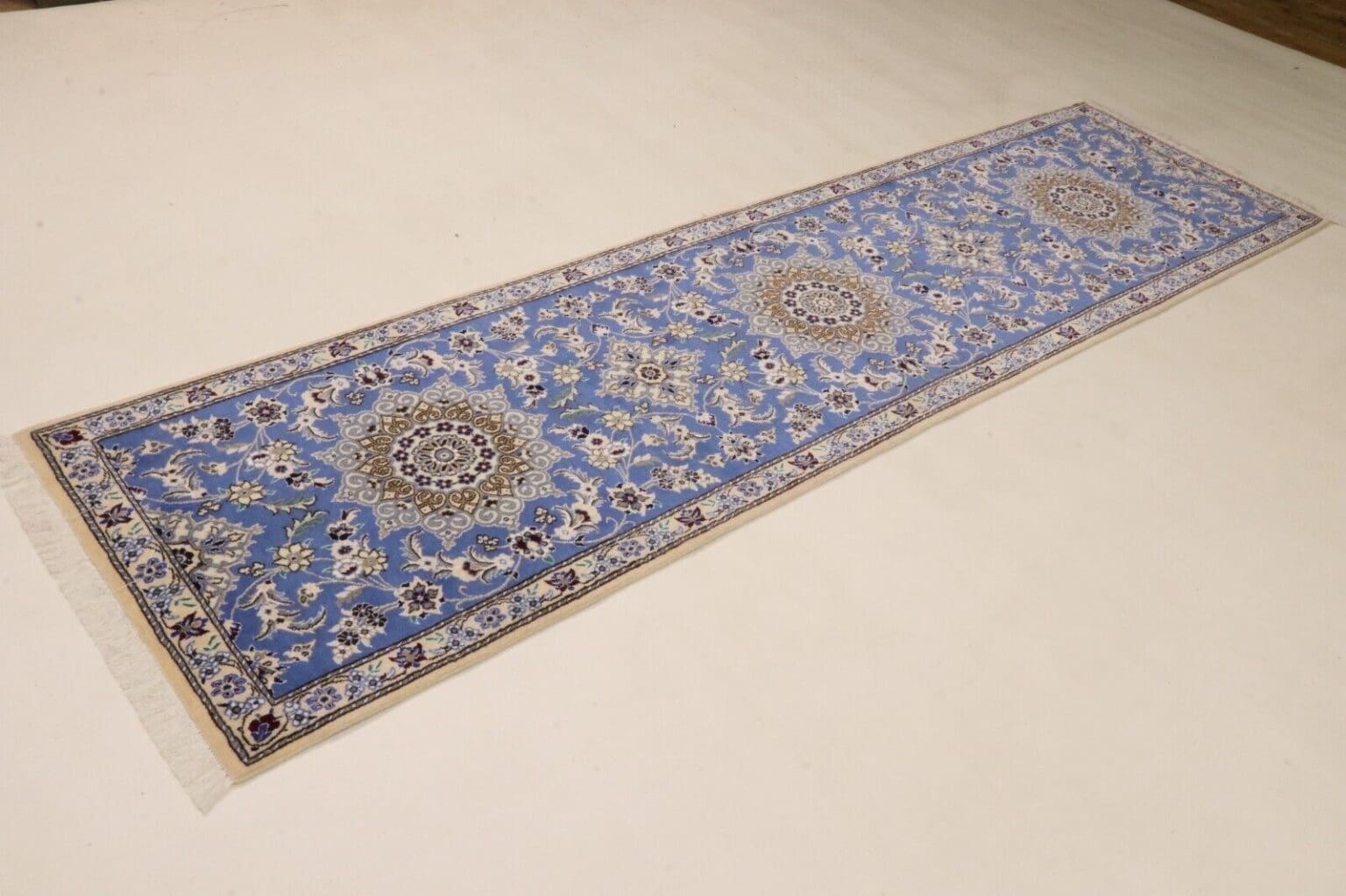
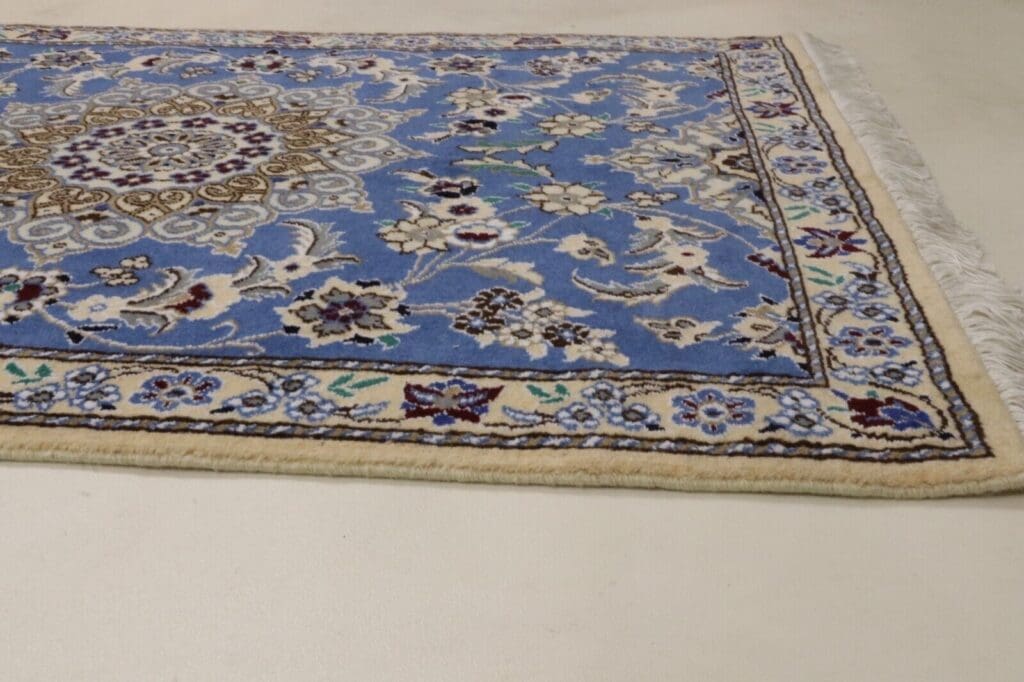
A Nain design is often built around a visual centre and a surrounding framework. A central field may be enclosed by a border that defines the outer edge of the composition. Medallions, floral sprays, leaf scrolls and balanced axes are possible elements within this regional design vocabulary. They do more than decorate the surface: they divide the field, establish rhythm and guide the eye from the centre towards the edges.
Soft colours are frequently used in Nain weaving to keep the composition harmonious and to allow the drawing to remain readable. A restrained palette can make delicate floral details visible without making the overall design restless. The effect is not dependent on ornament alone. It also comes from the relationship between background, border, line work and the spacing of individual motifs.
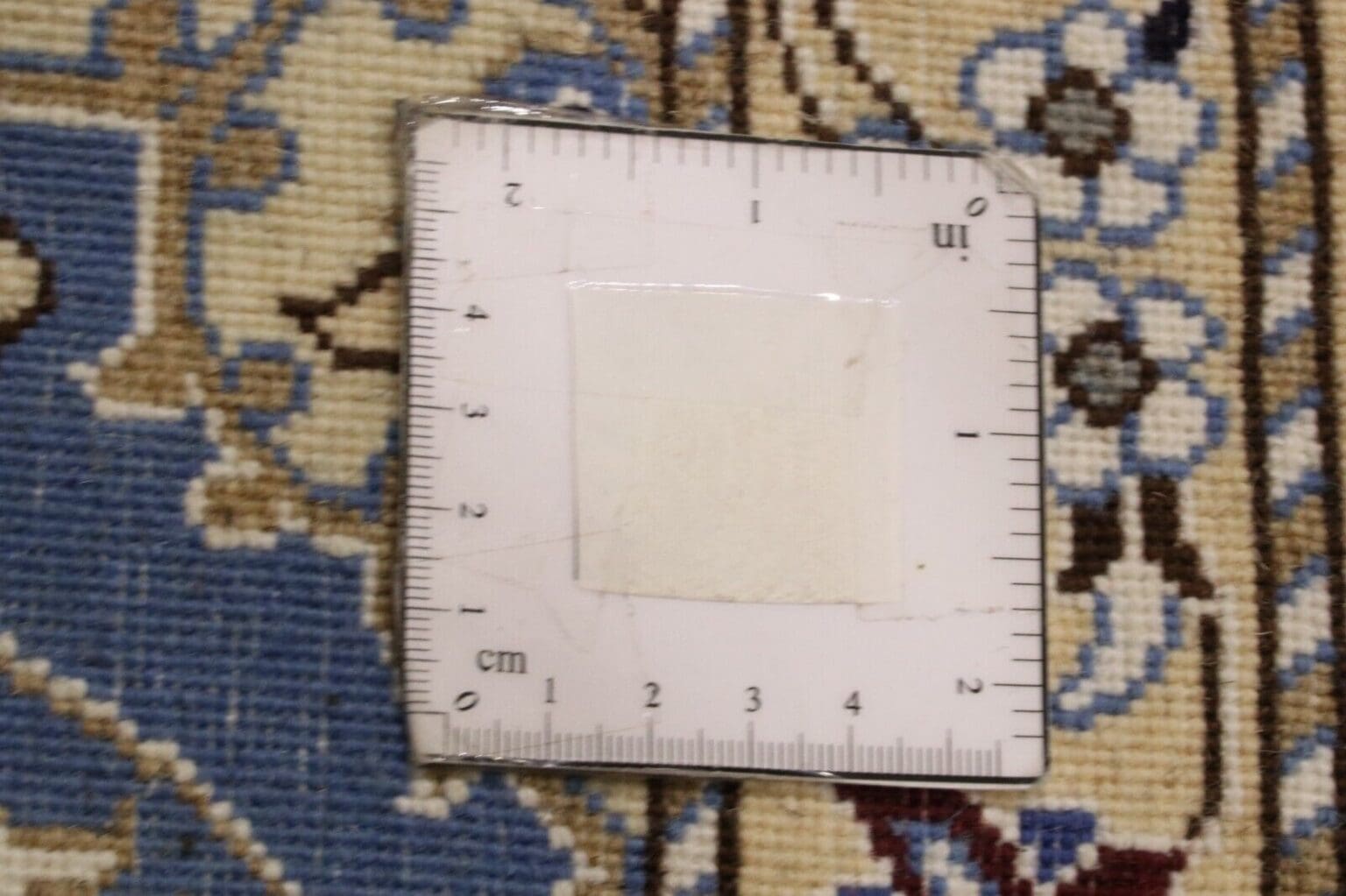
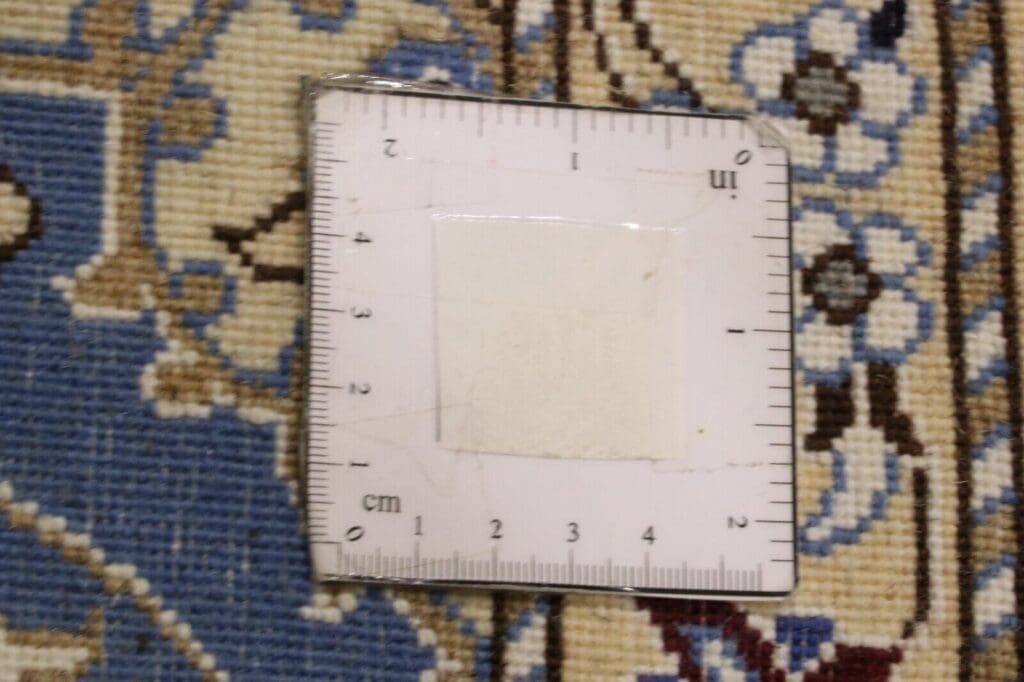
The high knot density supports sharply defined lines and the rendering of small ornamental transitions. It is a technical basis for detailed drawing, while the final visual effect also depends on the design plan and the distribution of colour. In a runner, a pattern can extend lengthwise and reinforce the direction of the room. The rectangular format supports this linear reading and allows the border and central field to work together along the length of the rug.
Because its design language is traditionally Persian, a Nain rug can accompany both classic interiors and more restrained contemporary rooms. Its regional character remains visible through the floral and geometric vocabulary, even when the surrounding furniture is modern. Each hand-knotted rug nevertheless has its own composition. The pattern is therefore experienced as a combination of a shared Nain tradition and the individual drawing of this one-off piece.
Special Features
The rug is listed as new and in very good condition. Its specifically stated practical features are suitability for underfloor heating and pet-friendly use. These details add an everyday dimension to the description of the rug. The textile basis remains its hand-knotted construction, its virgin-wool and silk pile, and its cotton warp.
The wool material is described as easy to care for and suitable for careful cleaning. Regular, gentle maintenance helps remove dust and ordinary dirt from the pile. Because silk is also present, cleaning should be carried out with restraint rather than with aggressive rubbing or unsuitable products. The stated knot density supports the definition of the pattern, while the fibres determine the feel and surface appearance. Together, these points describe the rug without separating its practical use from its traditional craft.
FAQ
How should I clean this Nain rug?
Regular vacuuming is suitable for removing loose dust and everyday dirt from the pile. Use a gentle setting and avoid treating the surface more harshly than necessary. For a stubborn spot, a slightly damp cloth and a mild cleaning product can be applied carefully. Rubbing should be avoided because it can stress the pile and the fibres. If the soiling is extensive or difficult to remove, professional rug cleaning is an appropriate choice. The wool pile should be treated with care, and the presence of silk makes a restrained cleaning method especially sensible.
What is the best way to care for a Nain rug?
A consistent care routine helps prevent dust and dirt from remaining in the pile. The rug should be protected as far as possible from strong, direct sunlight so that the colours do not fade. Heavy furniture can be moved from time to time to reduce the risk of lasting impressions. Furniture should be lifted rather than dragged across the rug, and the rug should not be sharply folded. Timely, careful absorption of spilled liquids is also advisable. Regular maintenance supports the colour appearance and helps preserve the new, very good condition stated for this piece.
Which room is suitable for a Nain rug?
The rectangular runner format is naturally suited to elongated areas such as hallways and passageways. It can also be used in a living room or dining room when its proportions suit the available floor area. Its traditional Oriental and Persian design introduces floral and geometric structure without being limited to one type of interior. The stated suitability for underfloor heating broadens the possible locations. Pet-friendly use is another practical feature given for this rug. The pattern is easiest to appreciate when the runner is not covered entirely by heavy furniture.
To provide the best experiences, we use technologies like cookies to store and/or access device information. Consenting to these technologies will allow us to process data such as browsing behavior or unique IDs on this site. Not consenting or withdrawing consent, may adversely affect certain features and functions.
Functional Always active
The technical storage or access is strictly necessary for the legitimate purpose of enabling the use of a specific service explicitly requested by the subscriber or user, or for the sole purpose of carrying out the transmission of a communication over an electronic communications network.
Preferences
The technical storage or access is necessary for the legitimate purpose of storing preferences that are not requested by the subscriber or user.
Statistics
The technical storage or access that is used exclusively for statistical purposes.The technical storage or access that is used exclusively for anonymous statistical purposes. Without a subpoena, voluntary compliance on the part of your Internet Service Provider, or additional records from a third party, information stored or retrieved for this purpose alone cannot usually be used to identify you.
Marketing
The technical storage or access is required to create user profiles to send advertising, or to track the user on a website or across several websites for similar marketing purposes.

 SECURE PAYMENT
 SHIPPING PARTNERS