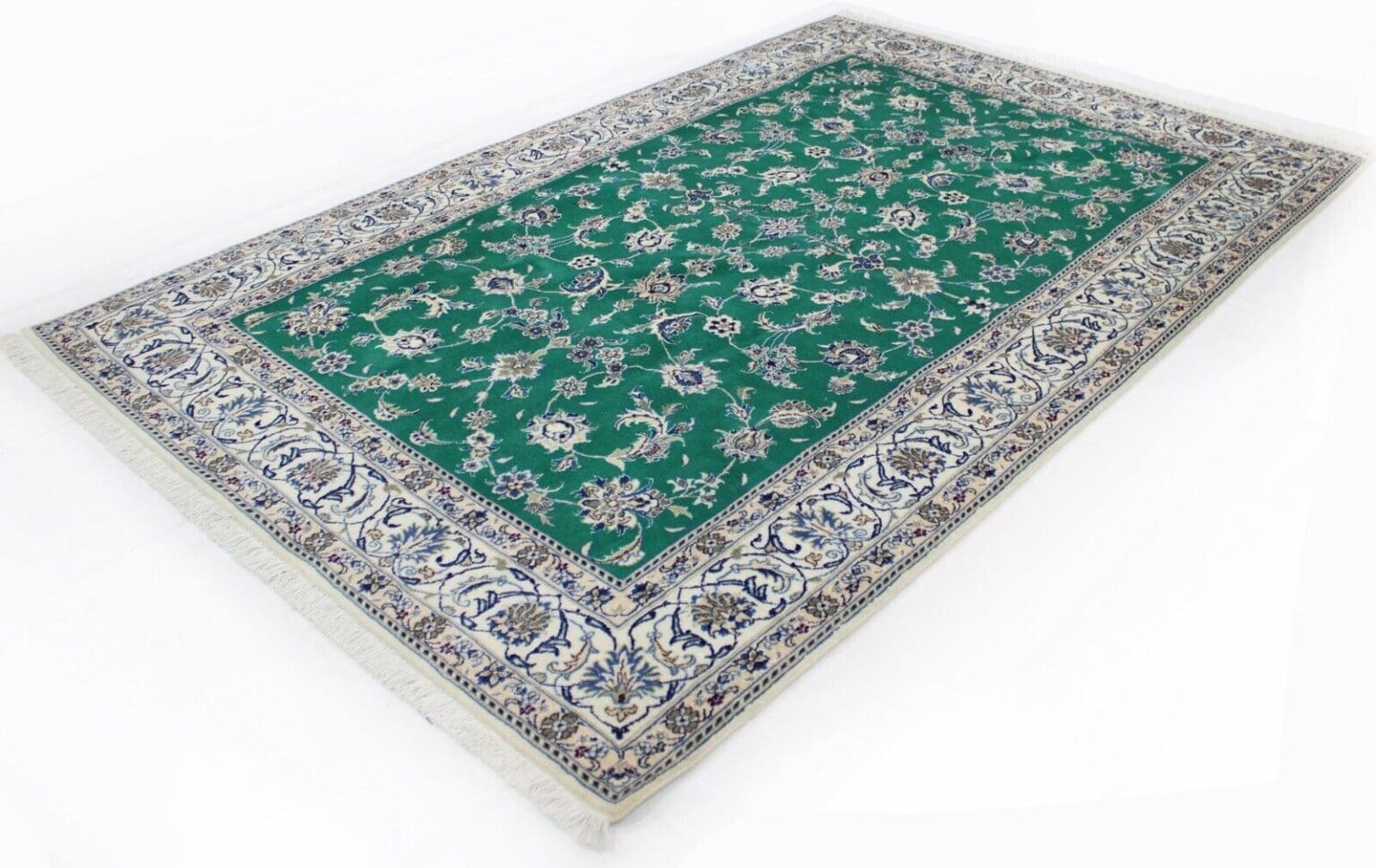
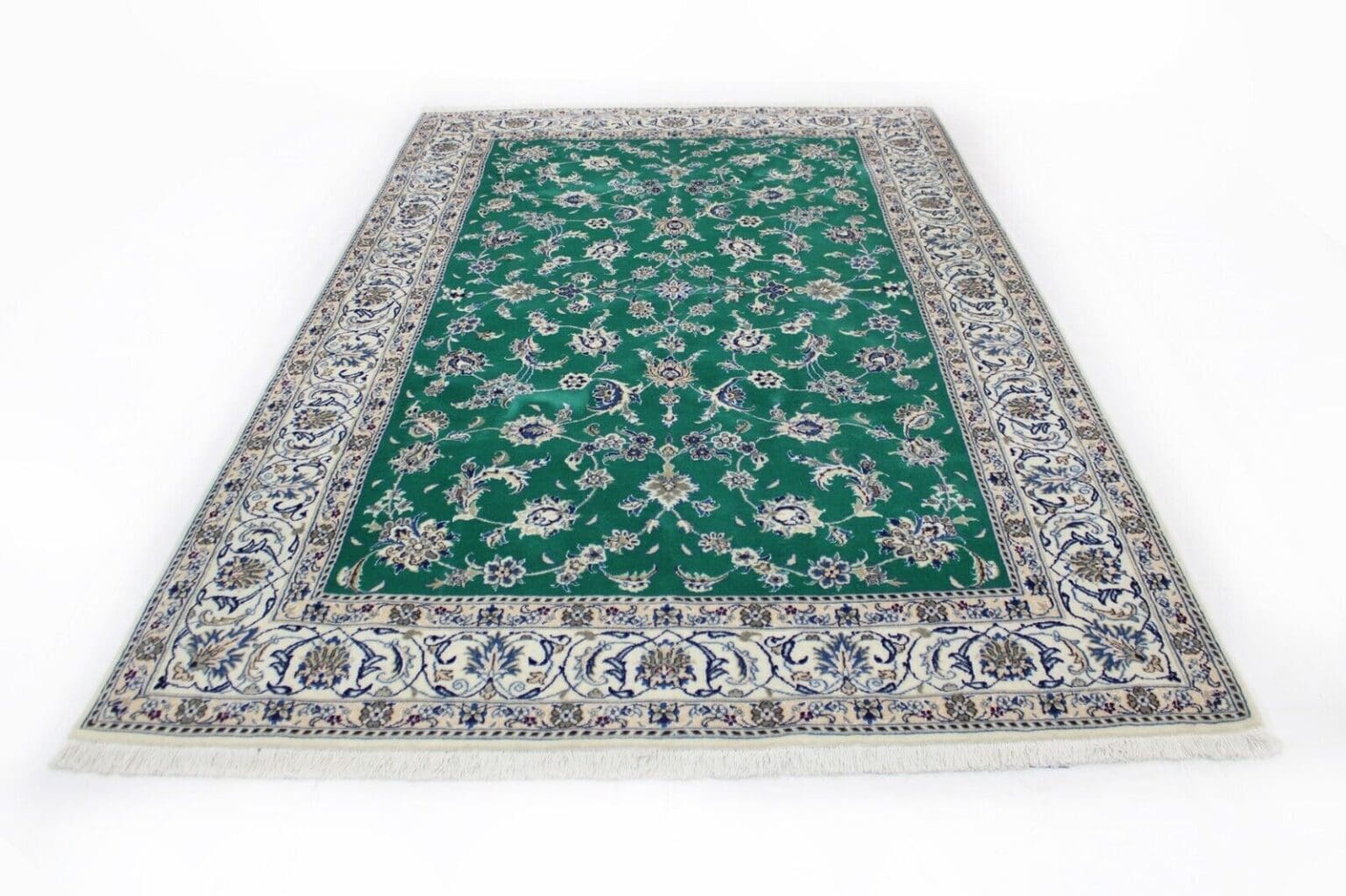
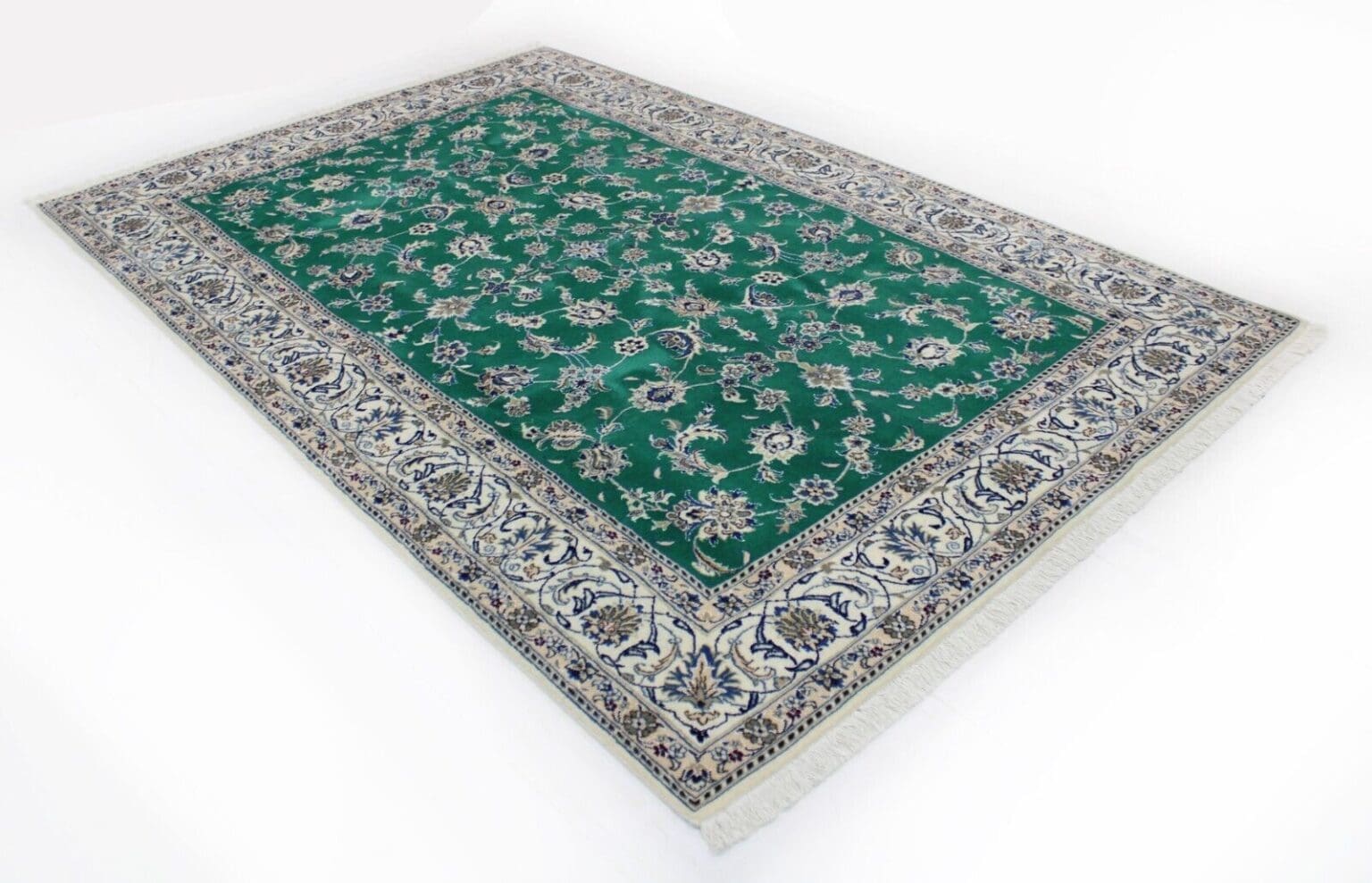
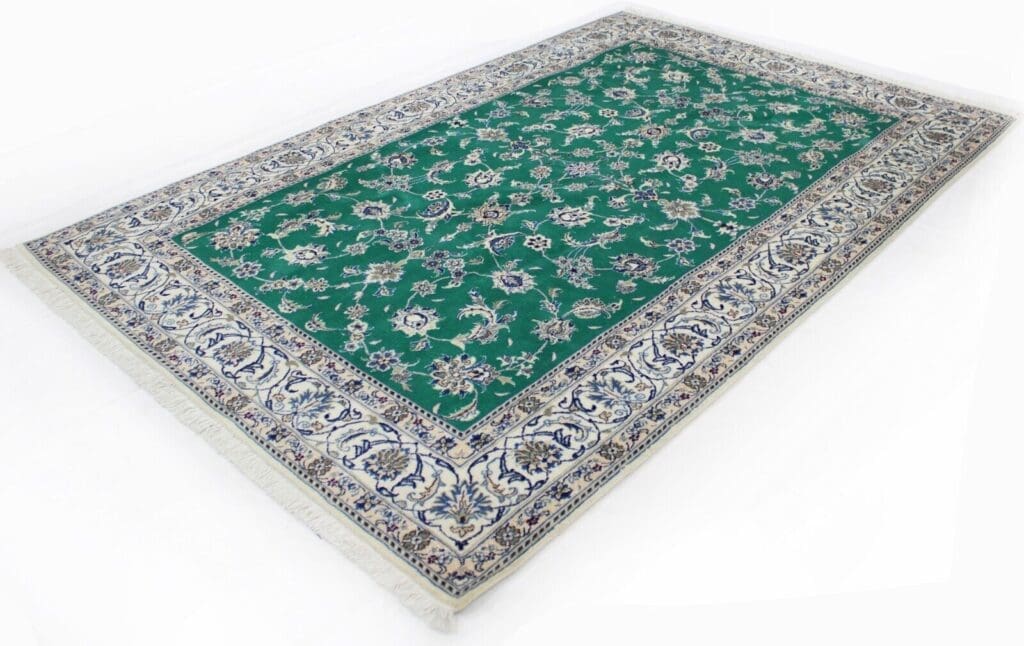
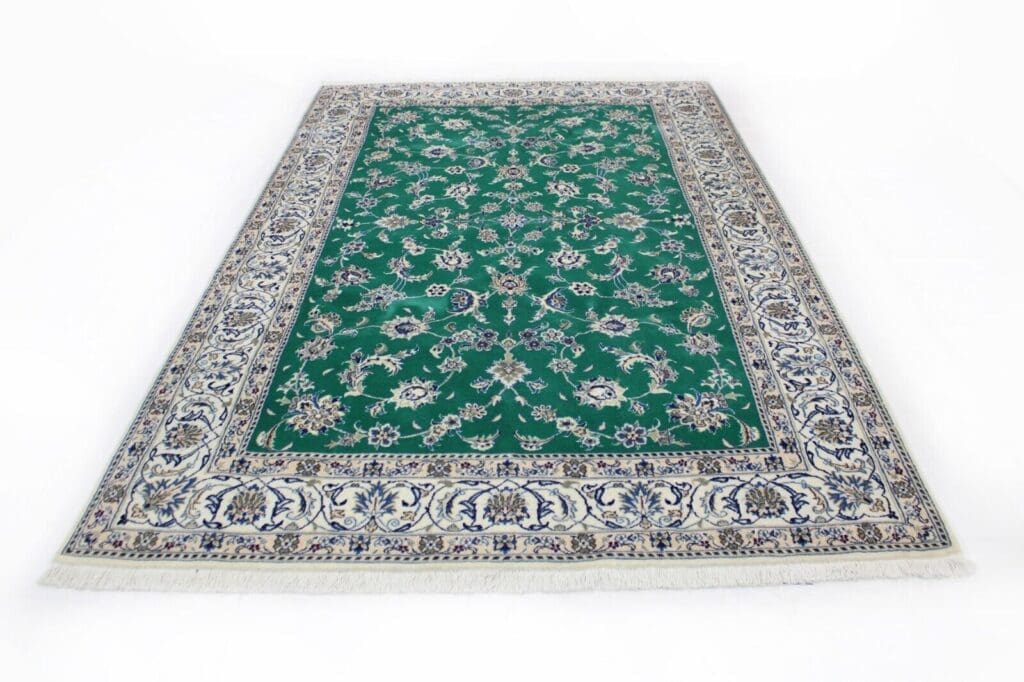
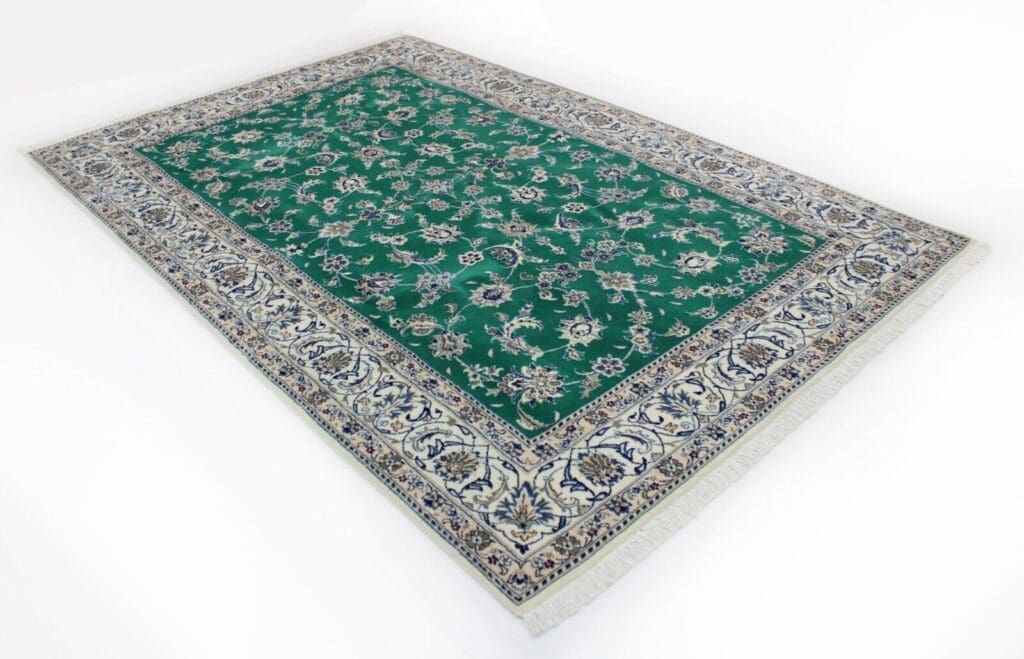
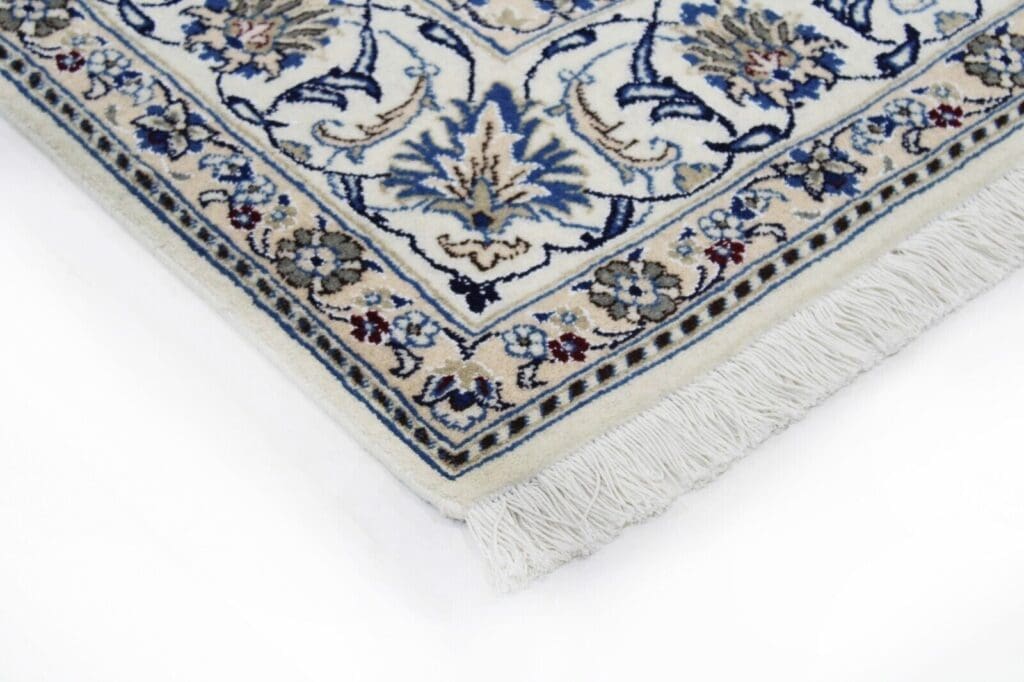
Hand-knotted Nain Persian rug | Knot density: exceptionally high | Material: pile wool and silk | Size: 297 cm x 194 cm | Pattern: Oriental pattern, floral motifs and stylised medallions | Condition: new and excellent
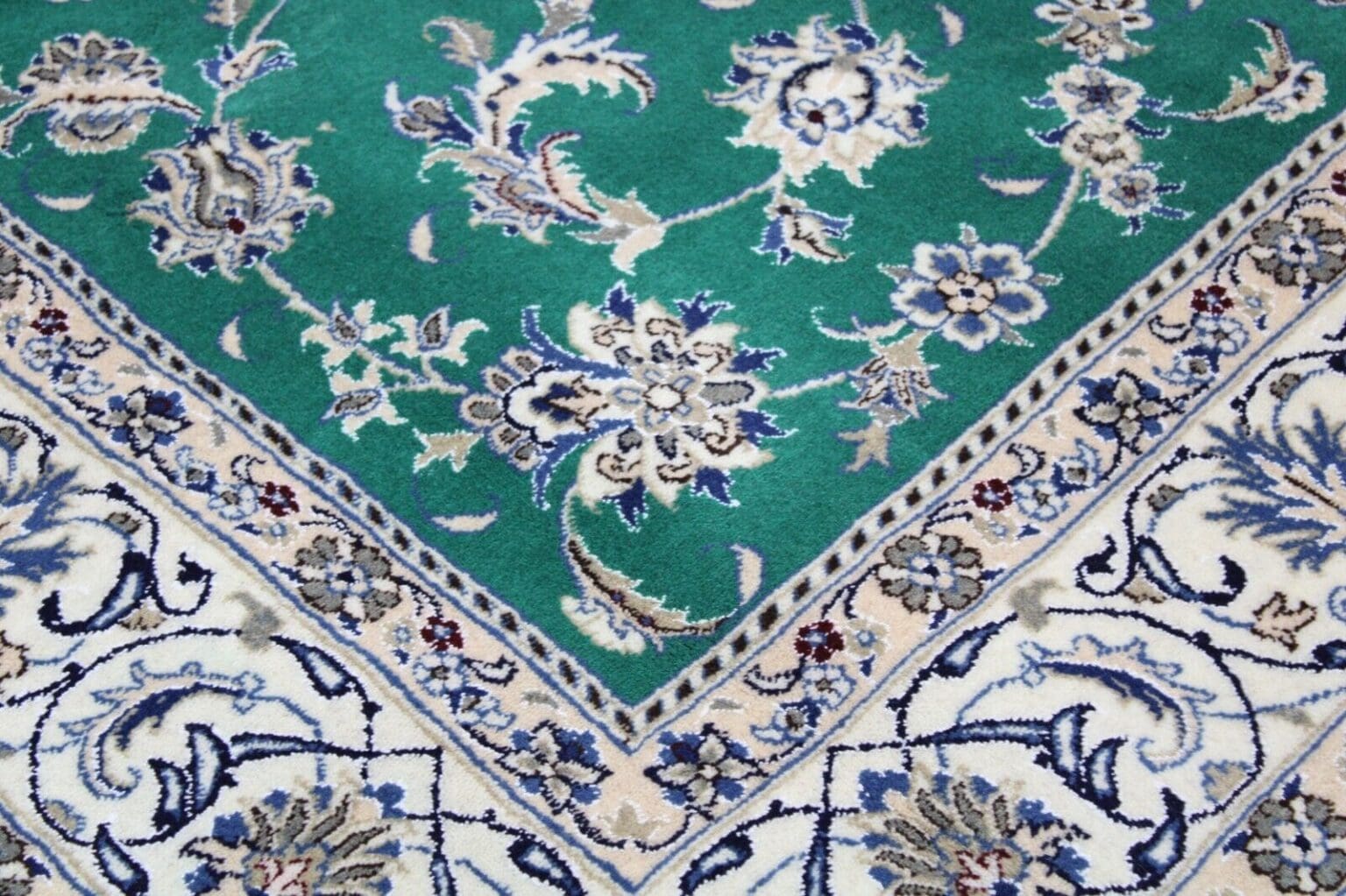
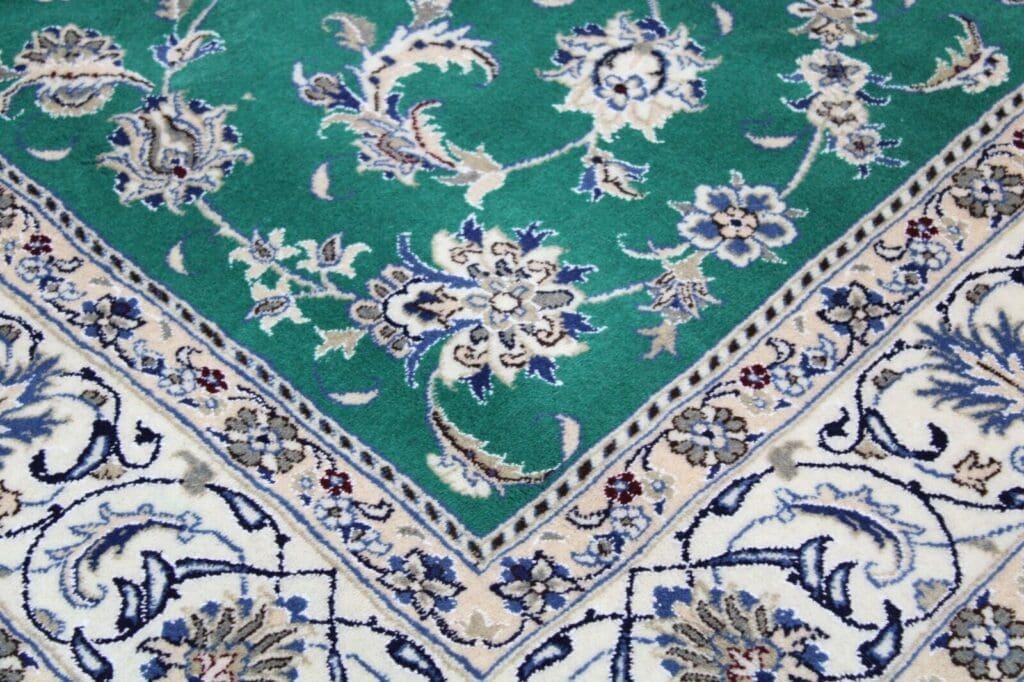
This Nain Kashmari Persian rug is hand-knotted and made from wool and silk. Wool provides a durable and practical foundation, while the silk content adds a soft, gently shimmering effect. Together, the two materials give the rug a combination of resilience and fine visual detail. The pile is described as high pile and is green in colour.
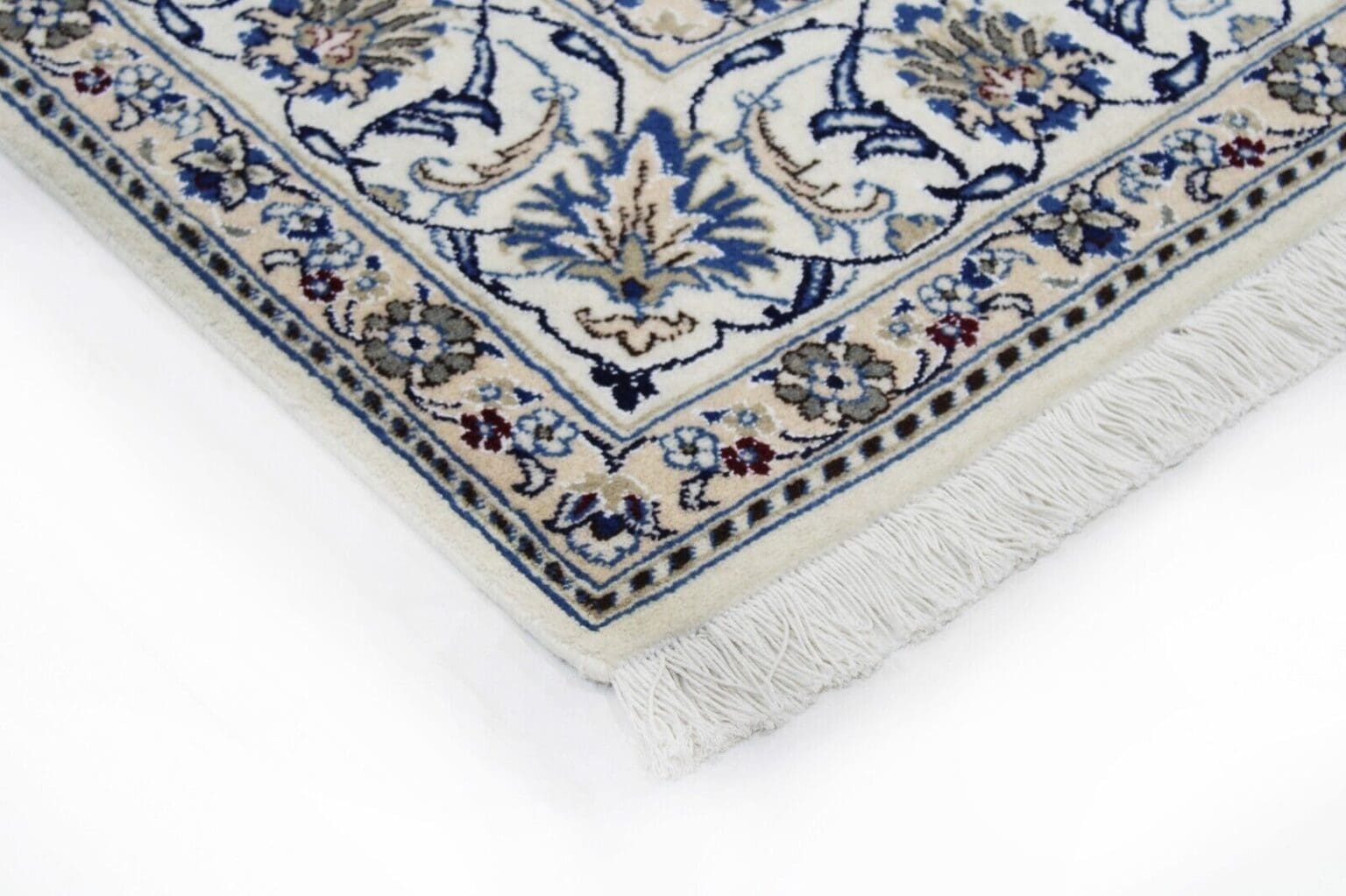
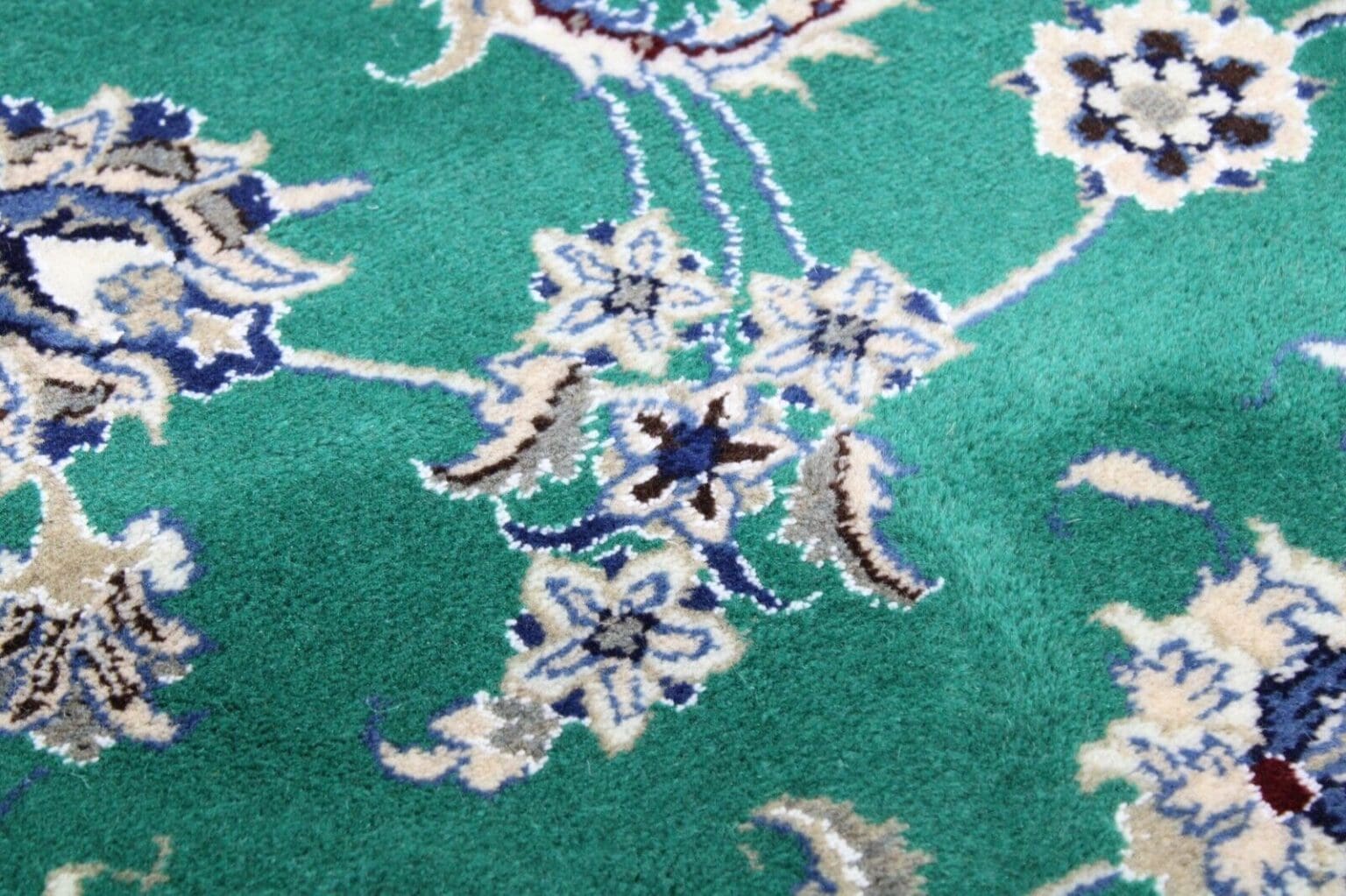
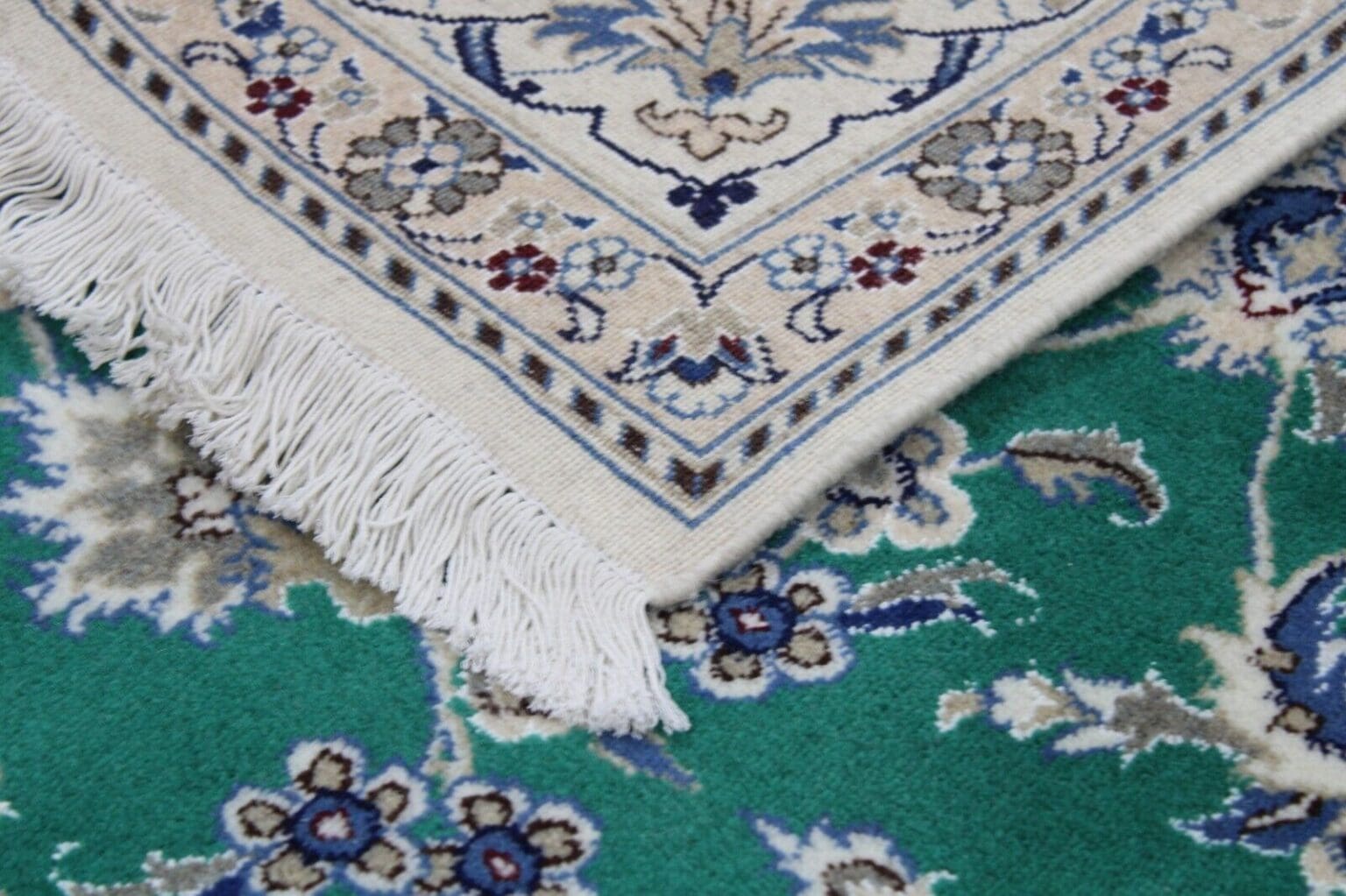
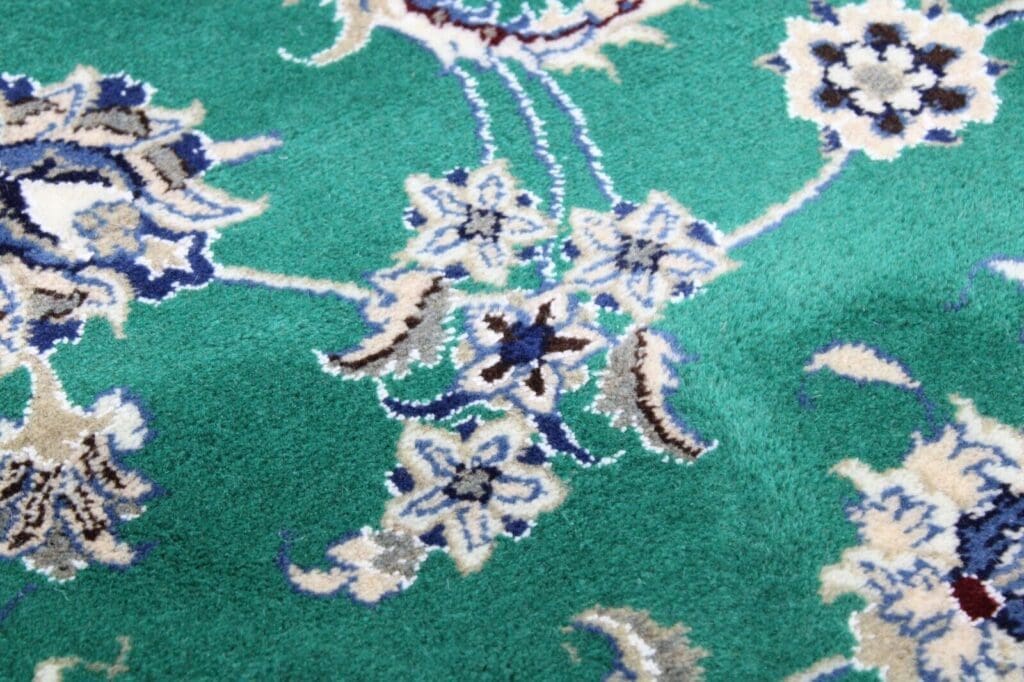
The rug has an exceptionally high knot density. Such density results from the careful placement of many individual knots and supports the rendering of detailed surface designs. In hand-knotting, each knot is made by hand. The process requires patience, precision and experience because the design is built gradually into the structure. The method is therefore an essential part of this individual rug’s character.
Wool is widely used in hand-knotted rugs for its durability and practical everyday qualities. Silk can introduce delicate highlights and a restrained sheen into a woven design. Both materials are specifically named for this rug. Their combination contributes to its feel and to the way the high pile responds to light.
The rug has been bio washed and professionally inspected. It is described as new and in excellent condition, and it is ready for immediate use. An authenticity certificate is available on request at no additional charge. This refers to the certificate option offered with the rug and does not represent an additional change to its construction.
Origin and Tradition
This Nain Kashmari Persian rug comes from the area around Nain in Iran’s Isfahan province. Nain is one of the recognised Iranian centres of hand-knotted rug production. Its weaving tradition combines precise knotting with finely developed drawing. Over time, a regional visual language emerged in which the field, border treatment and small decorative elements are designed to work together.
Nain is a city and weaving region in the Iranian highlands with a distinct carpet tradition. Nain rugs are typically associated with the use of wool and silk. Their designs often emphasise clarity, fine lines and a controlled colour arrangement. Rather than relying on an unstructured collection of motifs, the composition usually relates the central design, surrounding field and borders to one another.
Iranian rug traditions vary from one region to another. In Nain, careful drawing is closely connected with a high degree of technical precision. A hand-knotted rug is not produced through an industrial printing process. Its pattern is built knot by knot, which makes the work a process of time, concentration and skill. A high knot density helps the weaver represent small forms and maintain clear outlines.
Nain is often associated with a restrained palette including soft cream, blue and red tones. This regional colour tradition provides useful context, although individual rugs may have a different dominant colour. This rug is green. The identity of a Nain rug therefore rests not on one fixed palette alone, but also on the craftsmanship, detailed drawing and ordered composition associated with the region.
Rugs from Nain are valued for their detailed patterns and elegant, controlled visual language. Weaving is both a craft and a form of artistic expression. Motifs, colours and the arrangement of the field may reflect regional conventions while still varying from one individual rug to another. In this one-off piece, the wider Nain tradition meets the specific use of wool and silk, the green colour and the hand-knotted construction.
The name Nain here identifies an Iranian origin rather than merely a decorative motif. Nain is a city in Isfahan province and is named as the source region of this Persian rug. Kashmari forms part of the product designation. The classification as an Iranian Persian rug follows from the stated production in Iran and the origin in the Nain area.
Design and Pattern
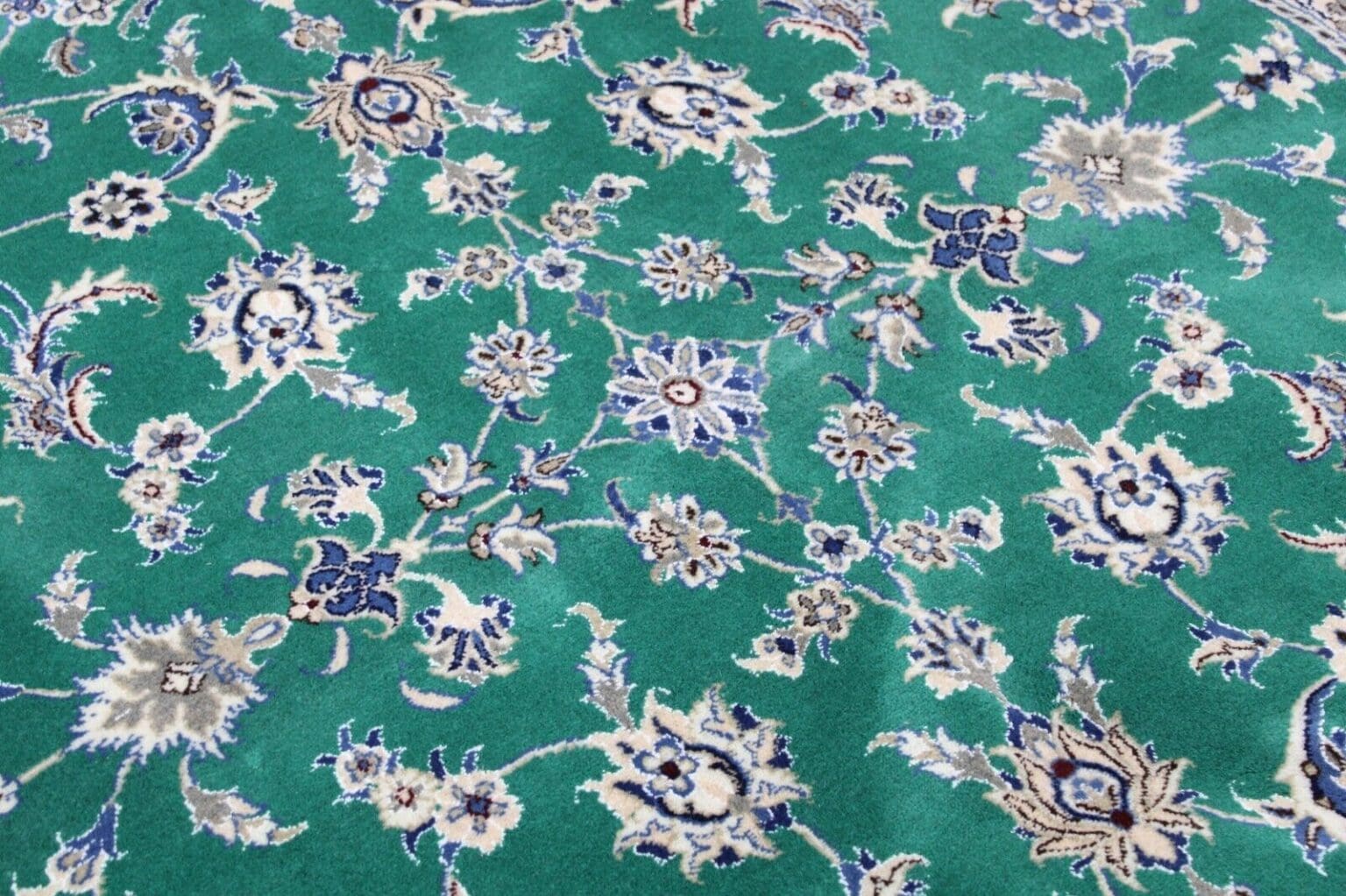
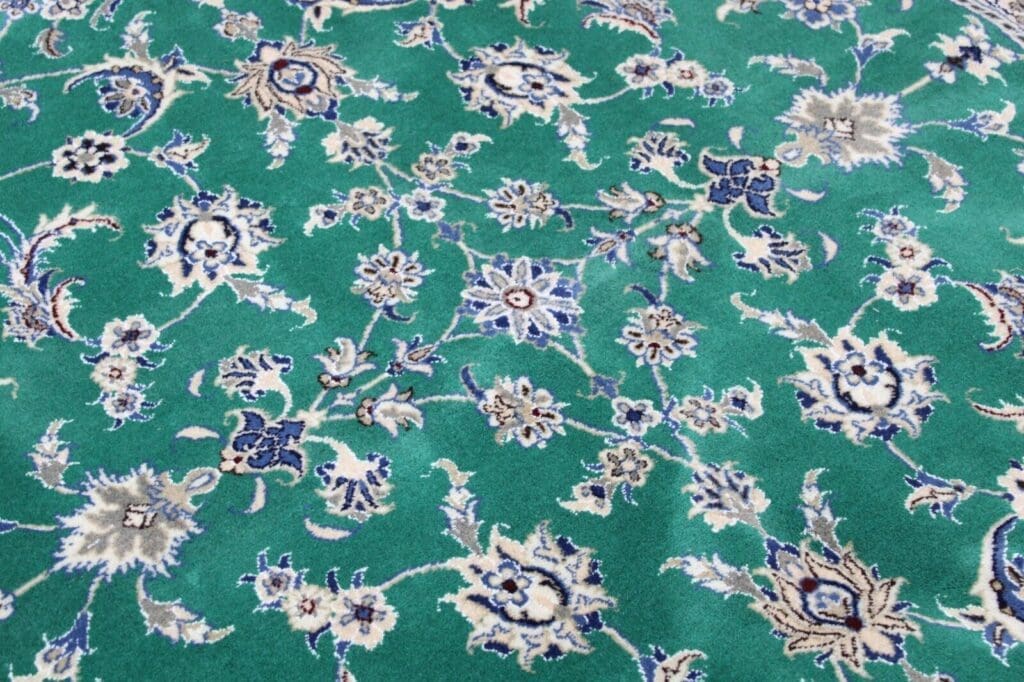
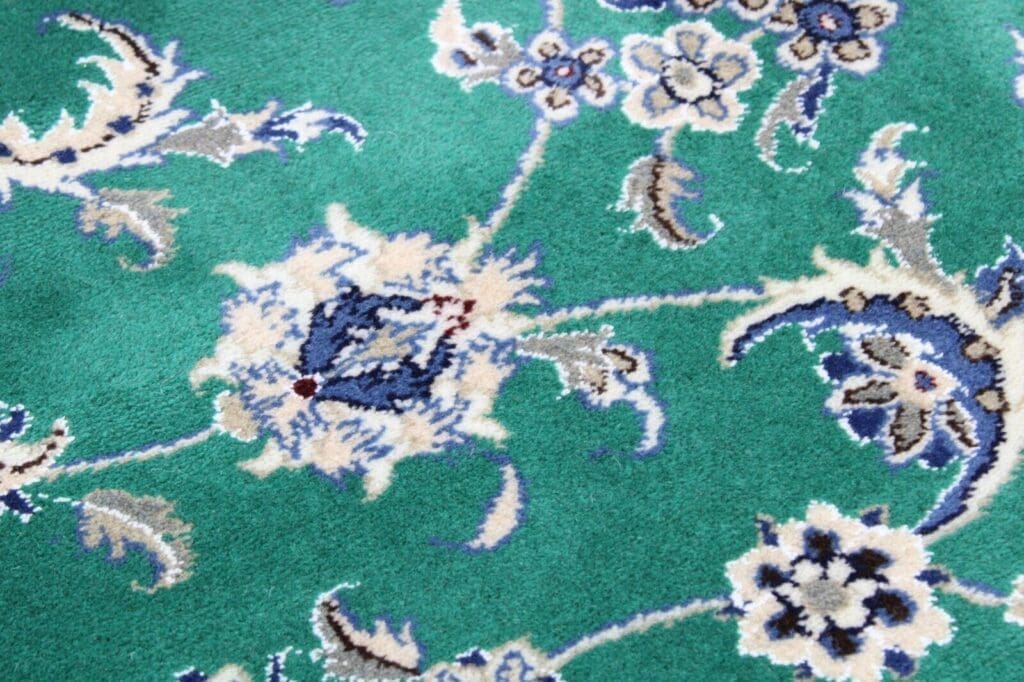
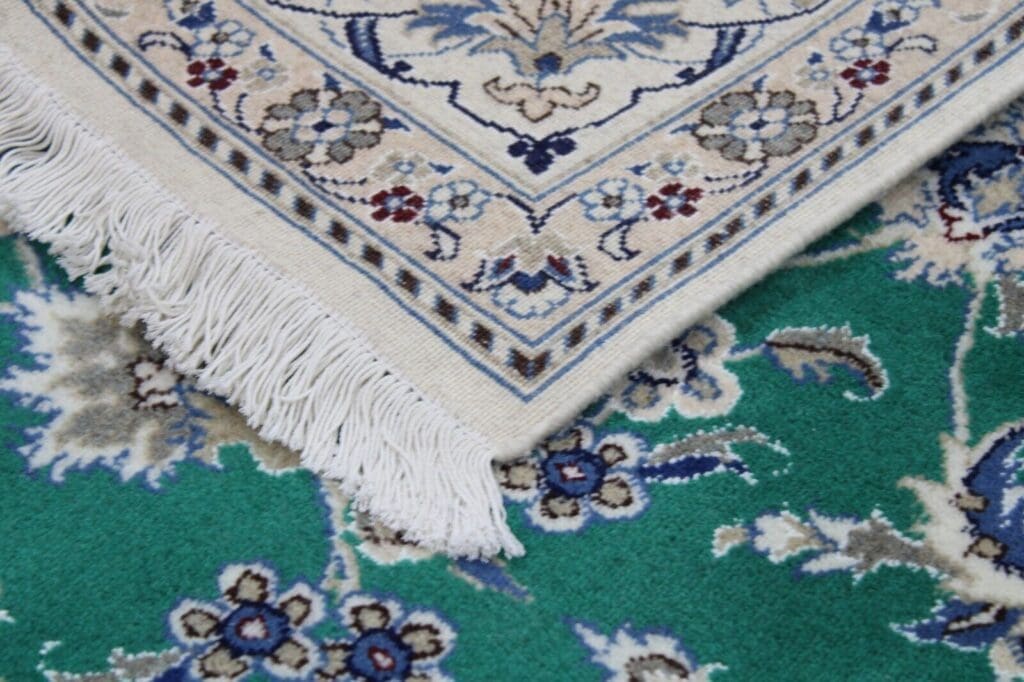
The design of this rug is described as an Oriental pattern, with a green high pile. Nain design traditions commonly include floral elements, stylised blossoms and medallions. These features are normally placed within a relationship of central field, secondary forms and borders. The visual effect comes from the interaction of lines, repetition and the careful adjustment of individual details.
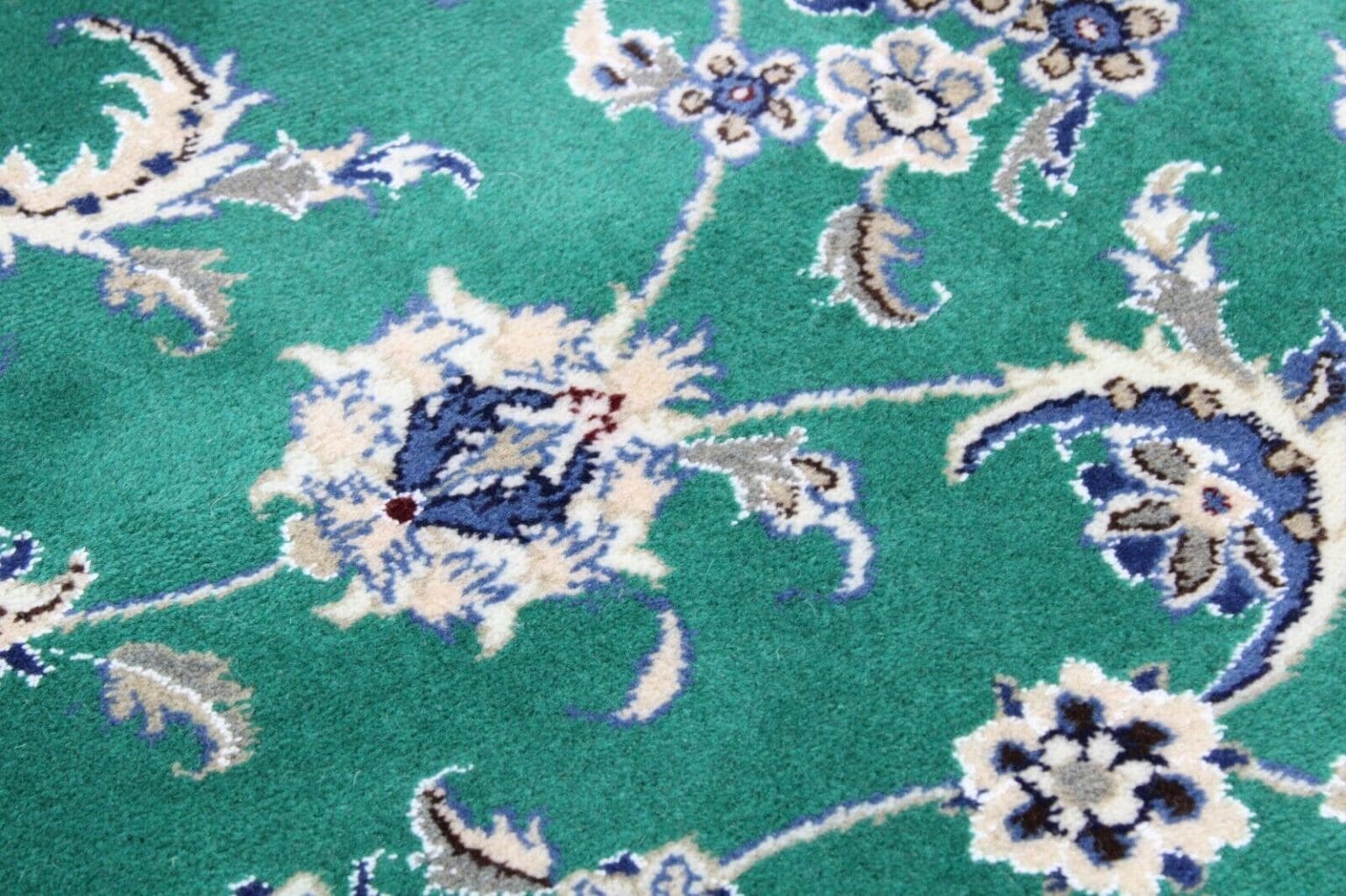
Floral motifs are established elements of Persian rug ornament. They may suggest life and fertility while also serving as decorative building blocks. In Nain designs, flowers are often stylised and arranged within finely drawn compositions rather than presented as a literal view of one particular garden. Floral forms may extend across the field or be concentrated within medallions and border sections.
Stylised medallions provide a clear organising principle. A medallion can emphasise the centre and guide the eye through the field. Geometric forms are associated in many cultures with stability and harmony. In rug design they also perform a compositional function: they divide areas, create repetition and connect different ornaments. Floral and geometric elements can therefore form one coherent structure.
Green is the defining colour stated for this piece. Nain is often discussed in connection with gentle cream, blue and red tones, but this rug takes a different colour direction within the regional tradition. The relationship between the green ground, the motifs and the borders determines whether the drawing appears quiet or more contrasted. The description also refers to harmonious colour combinations and lively accents as features of the design language.
Nain patterns often combine fine, detailed drawing with a restrained overall appearance. This does not mean that the surface lacks contrast. Instead, individual accents are placed within a measured composition. With a hand-knotted rug, each motif is created during the knotting process. Small variations and the individual character of handwork belong to the making of a one-off piece without removing the underlying order of the design.
An Oriental pattern can work in different interiors because it is not limited to one furnishing style. Floral forms, possible medallions, geometric order and the green colour can be combined with both classical and contemporary surroundings. This describes the adaptability of the design tradition and complements the specific information that this rug can be used in all rooms.
The Nain design tradition brings together regional heritage and careful composition. Its vocabulary refers to Persian ornament, while the precise arrangement differs from rug to rug. The same regional background can therefore produce different visual effects. For this example, the Nain origin, green colour, high pile and Oriental pattern are the defining design features.
Special Features
The specifically stated features include hand-knotting, high pile, the use of wool and silk, and an exceptionally high knot density. The rug is green and has an Oriental pattern. It has been bio washed and professionally inspected. Its condition is described as new and excellent, and it is ready for immediate use.
The rug can be used in all rooms and is suitable for underfloor heating. The named areas of use include living rooms, bedrooms, dining rooms and hallways. A study or office is also mentioned as a suitable setting. Its suitability for different rooms reflects the combination of a traditional Oriental pattern and a versatile colour. It is not restricted to one particular part of the home.
An authenticity certificate is available on request without an additional charge. Shipping to Germany is free, with a stated delivery time of two to three working days. These are service details connected with the offer and should be distinguished from the rug’s physical characteristics. For long-term care, regular vacuuming and occasional professional cleaning are recommended.
The rug should not be exposed continuously to direct sunlight, so that fading of the colours can be avoided. A specialist cleaner with experience in hand-knotted rugs is suitable for more thorough care. This helps preserve the green colour effect, the high pile and the material structure over time.
FAQ
How should a Nain Kashmari Persian rug be cleaned and cared for?
Regular vacuuming is suitable for everyday care and removes dust and dirt from the pile. For a deeper clean, a professional service experienced with hand-knotted rugs is recommended. Strong do-it-yourself cleaning methods should be avoided if they could put stress on the wool, silk content or high pile. Continuous direct sunlight should also be avoided to help prevent the green colour from fading. Occasional professional cleaning complements routine maintenance.
Where can the Nain Kashmari Persian rug be used?
The rug is suitable for all rooms and can be used with underfloor heating. The specifically mentioned locations are living rooms, bedrooms, dining rooms and hallways. It can also be placed in a study or office, where the Oriental pattern can provide a structured decorative element. The green colour and classically oriented drawing can be combined with different interior styles, from traditional to modern. The high pile and hand-knotted surface should be maintained appropriately wherever it is placed.
What distinguishes Nain rugs from other Persian rugs?
Nain rugs are known for high knot density, refined materials and finely detailed patterns. Wool and silk are frequently combined in this tradition. Compared with Persian rugs that use especially bold colours or more striking compositions, Nain rugs are often associated with a subtler and more elegant aesthetic. Floral motifs, stylised medallions and geometric forms may be brought together in a clearly ordered design. The regional setting in Isfahan province and the precise handwork are central to this classification.
To provide the best experiences, we use technologies like cookies to store and/or access device information. Consenting to these technologies will allow us to process data such as browsing behavior or unique IDs on this site. Not consenting or withdrawing consent, may adversely affect certain features and functions.
Functional Always active
The technical storage or access is strictly necessary for the legitimate purpose of enabling the use of a specific service explicitly requested by the subscriber or user, or for the sole purpose of carrying out the transmission of a communication over an electronic communications network.
Preferences
The technical storage or access is necessary for the legitimate purpose of storing preferences that are not requested by the subscriber or user.
Statistics
The technical storage or access that is used exclusively for statistical purposes.The technical storage or access that is used exclusively for anonymous statistical purposes. Without a subpoena, voluntary compliance on the part of your Internet Service Provider, or additional records from a third party, information stored or retrieved for this purpose alone cannot usually be used to identify you.
Marketing
The technical storage or access is required to create user profiles to send advertising, or to track the user on a website or across several websites for similar marketing purposes.

 SECURE PAYMENT
 SHIPPING PARTNERS


