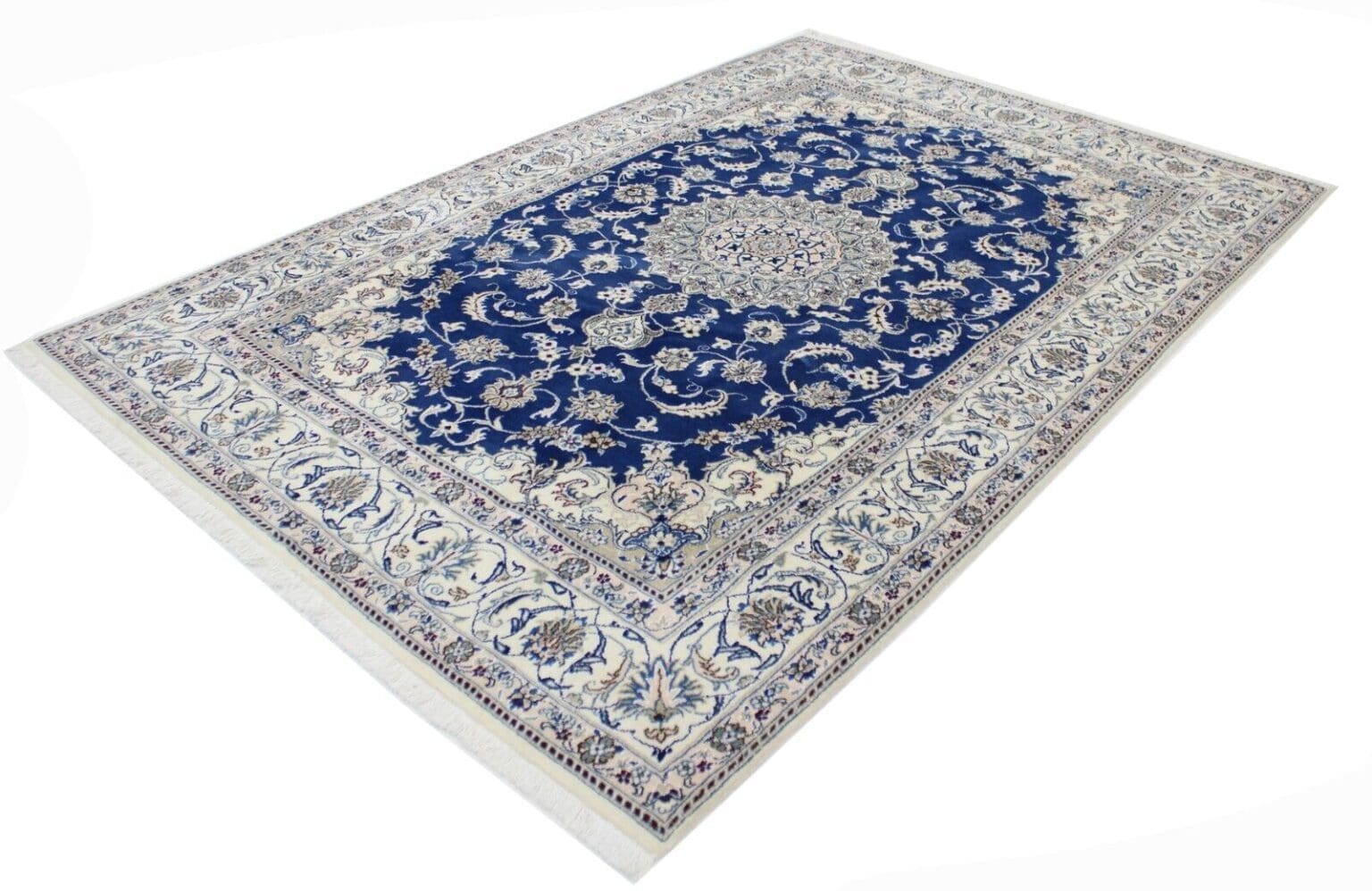
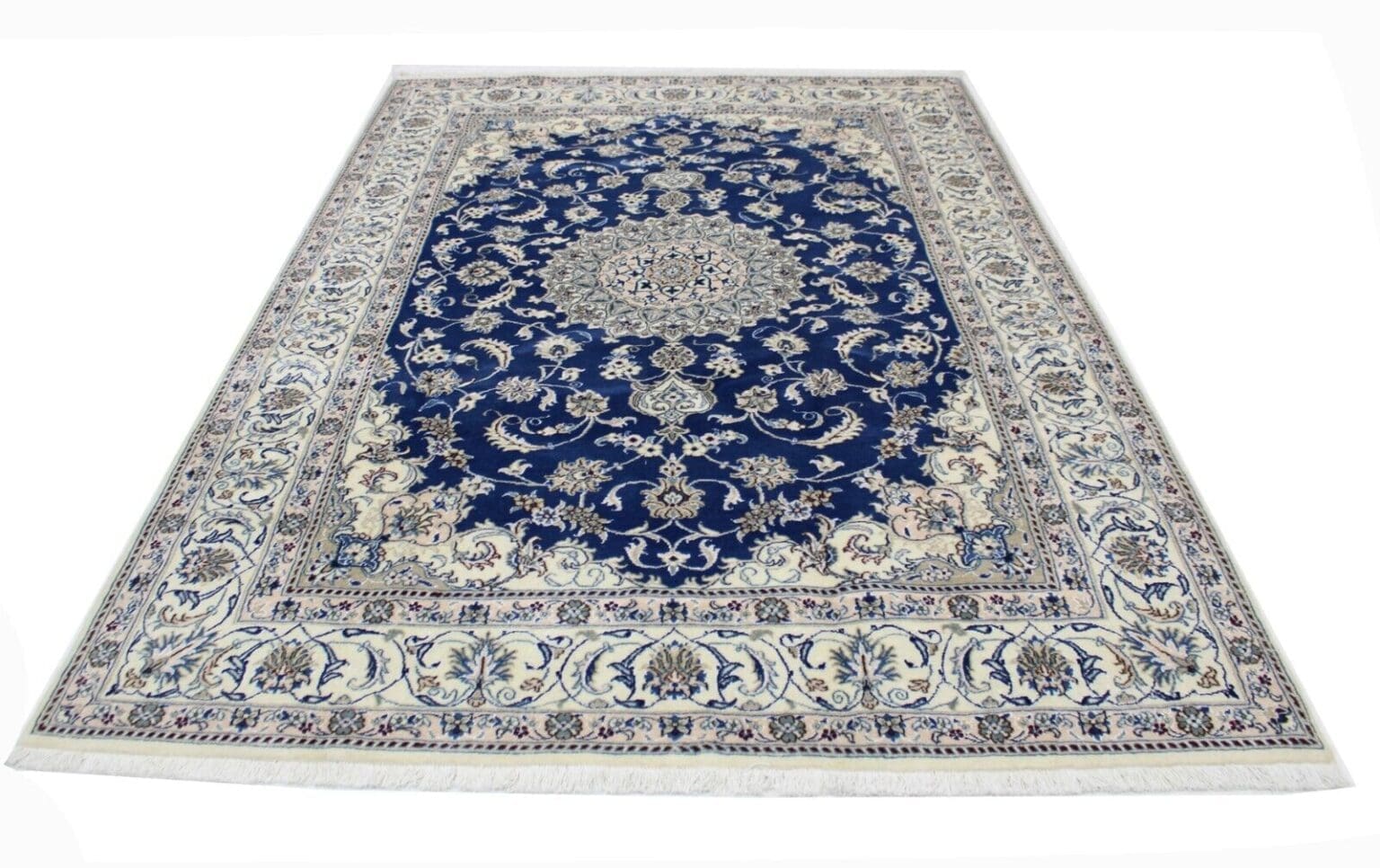
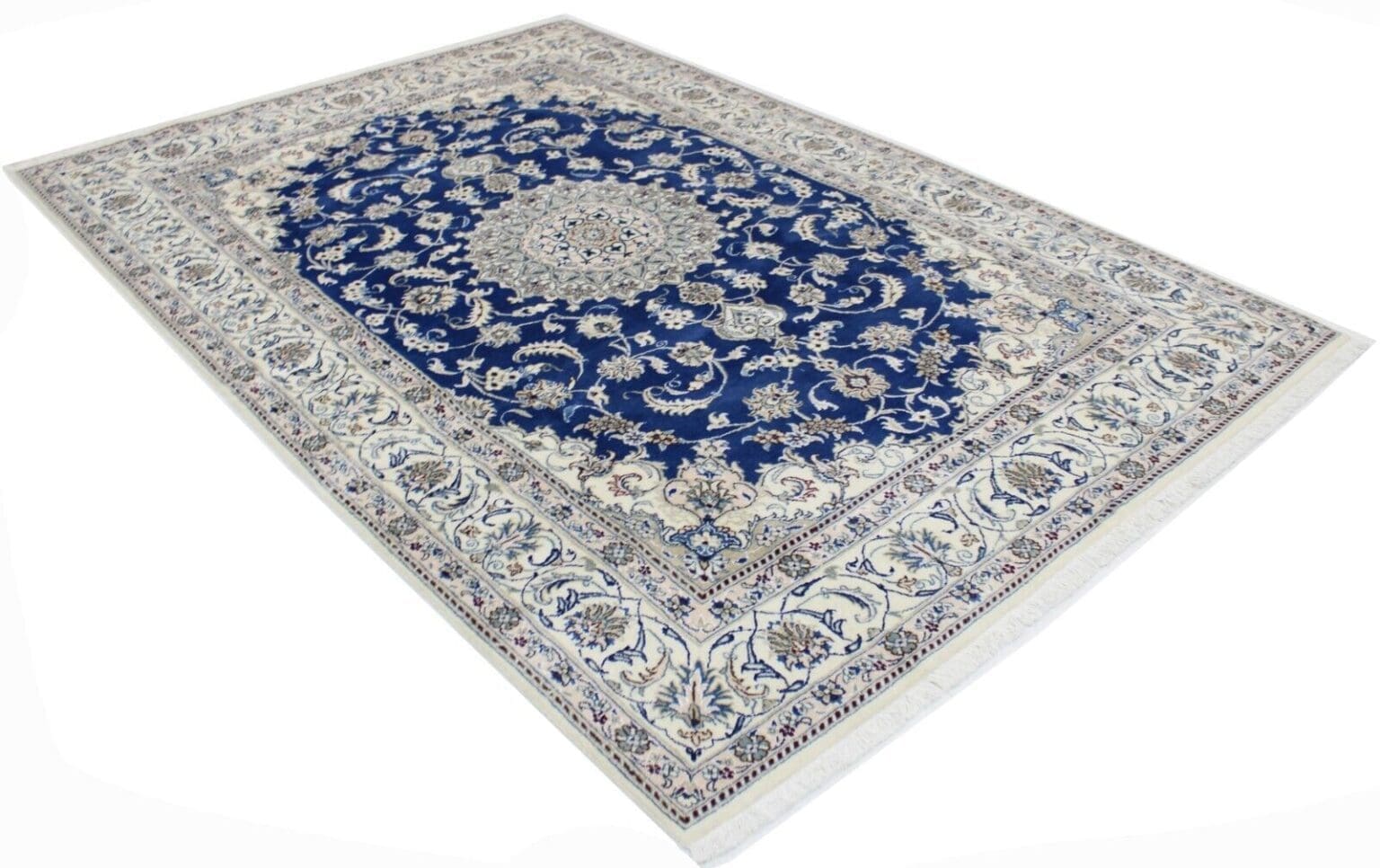
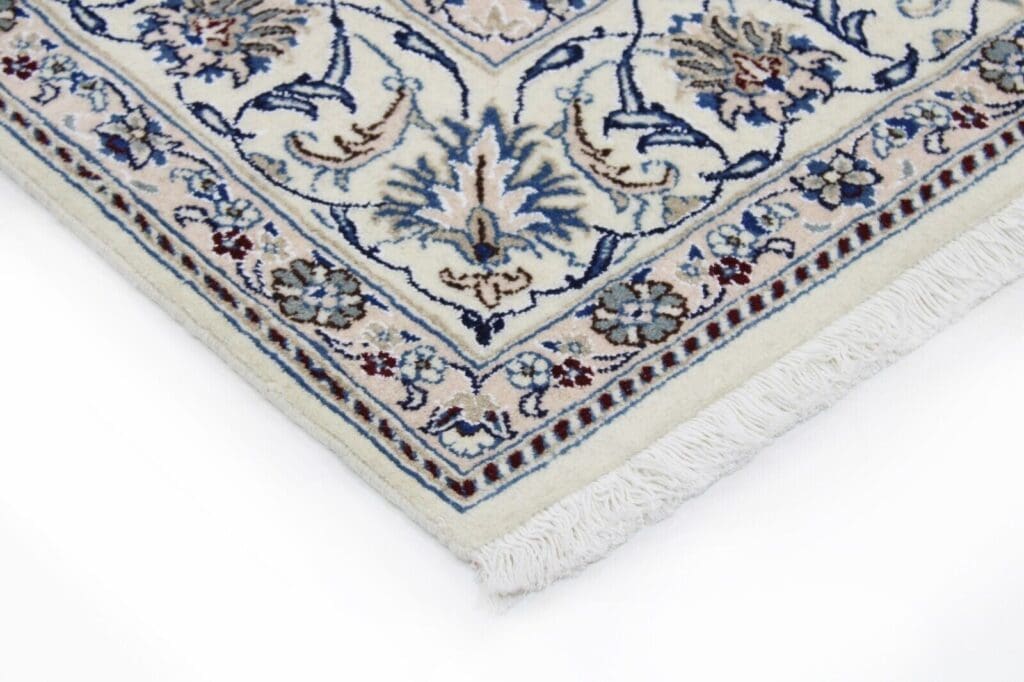
This original Nain Kashmari is a hand-knotted Persian rug made with genuine wool. Wool forms the pile and is valued for its pleasant feel and resistance to wear. A wool pile can feel soft underfoot while remaining durable when used and cared for properly. Its natural structure also gives the rug a warm, composed presence in a room.
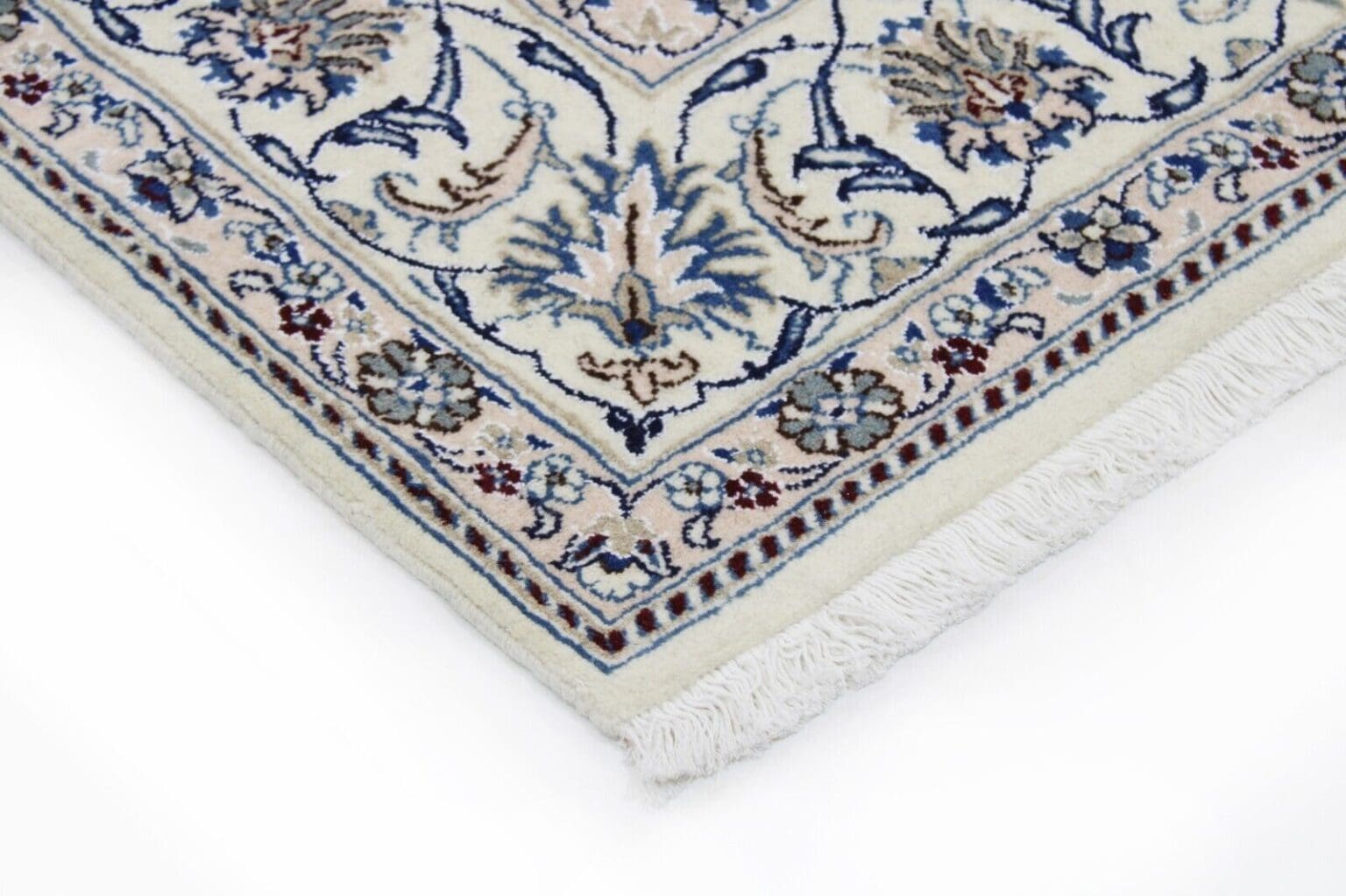
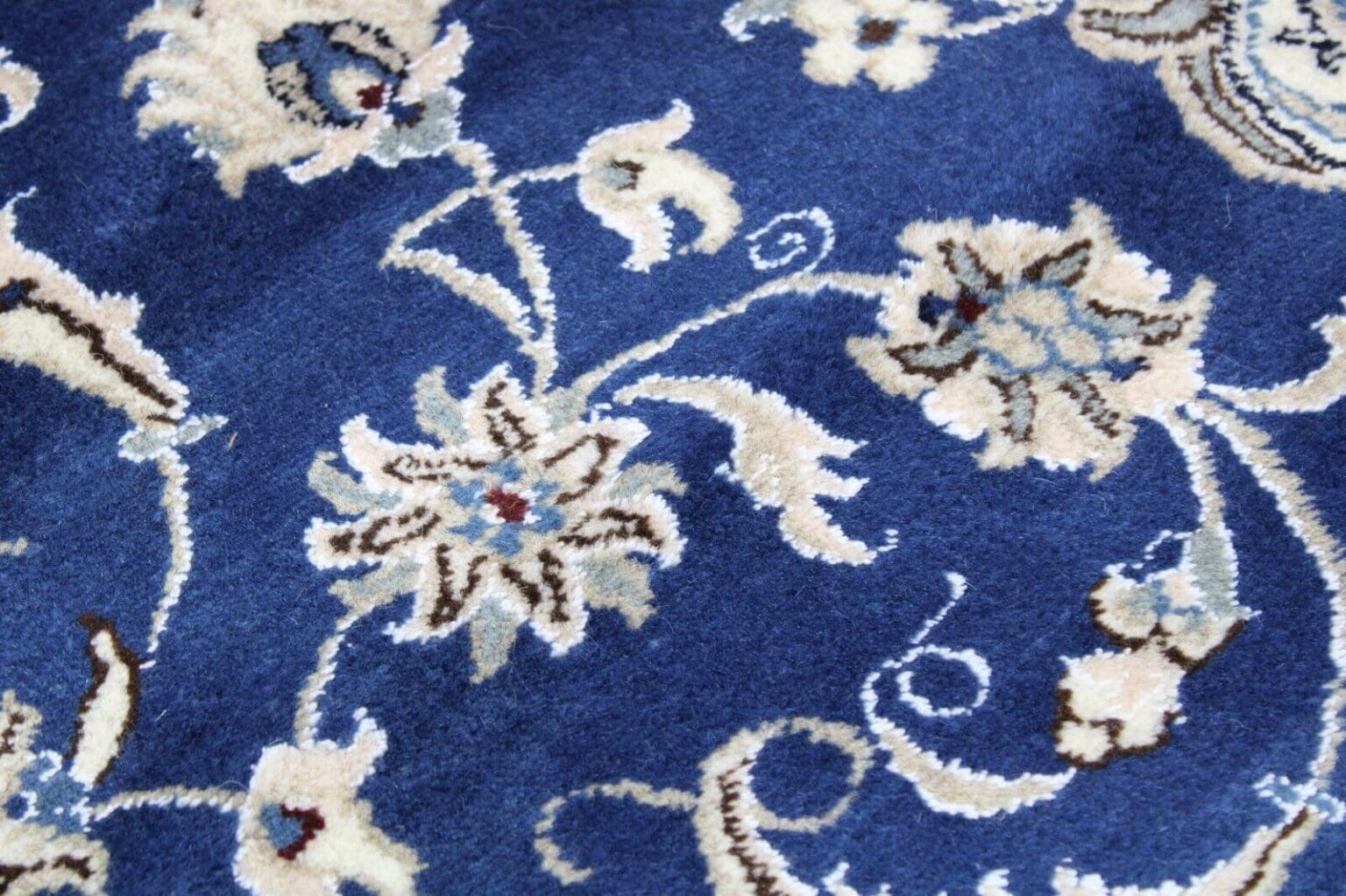
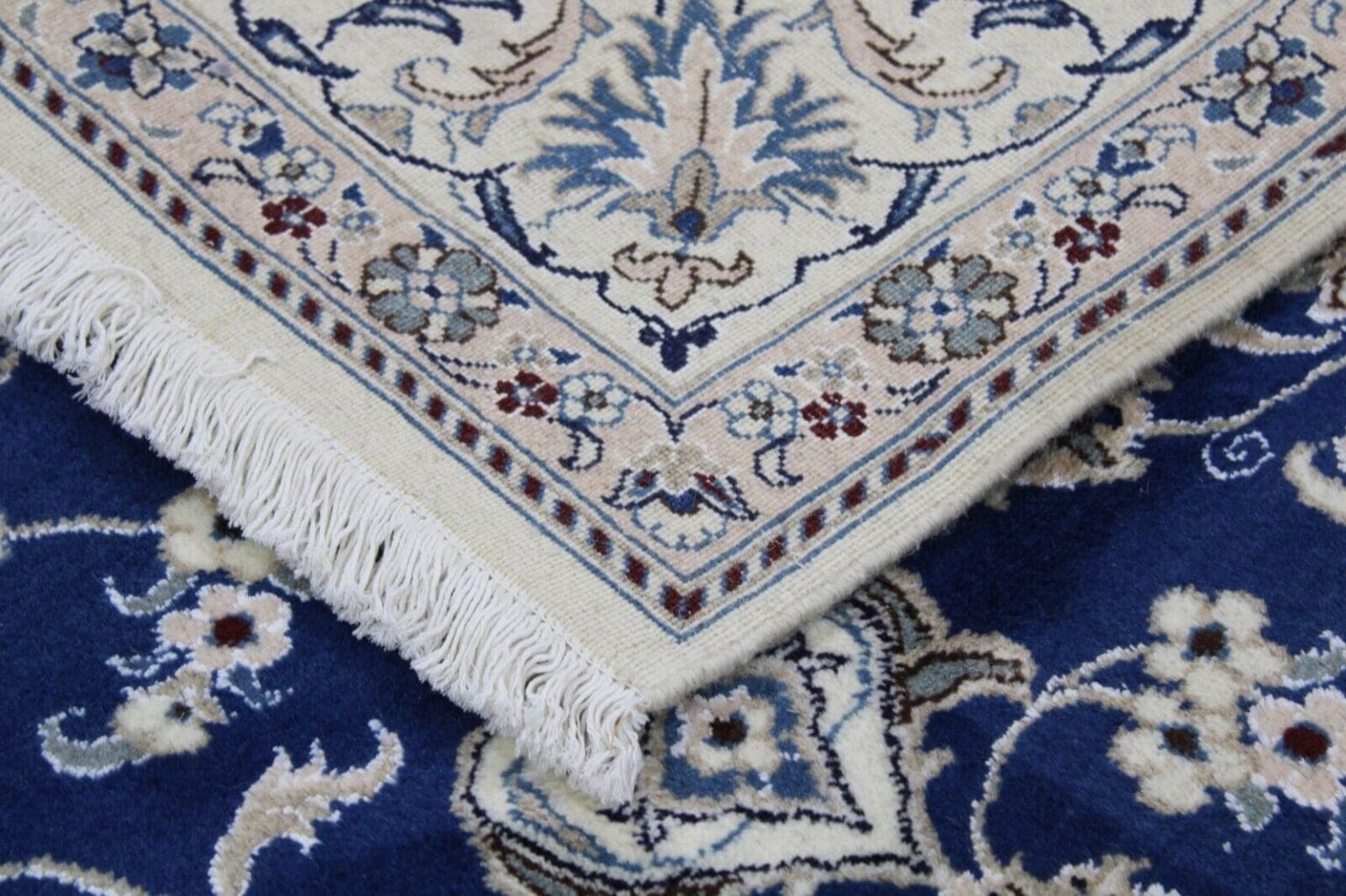
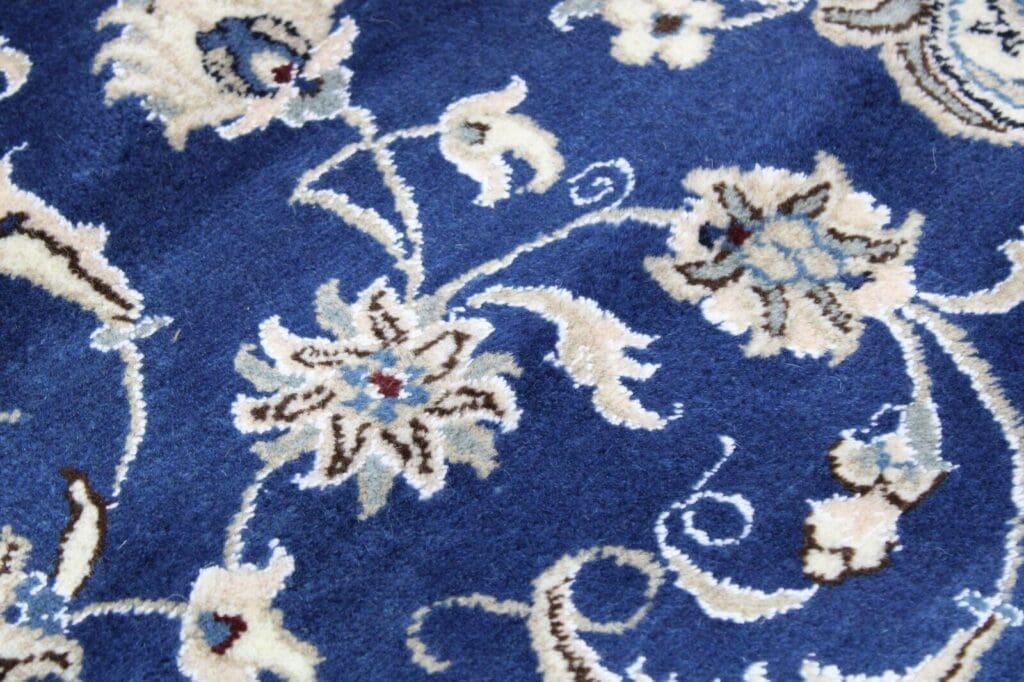
In hand-knotting, each knot is individually inserted into the prepared warp. The rug is therefore built gradually, one knot at a time, rather than produced through mechanical repetition. The process requires many hours of careful work and accurate placement of the individual knots. Nain rugs are traditionally associated with fine knotting, which allows small floral details to be rendered with precision. The knot density of this rug contributes to its strength and to the clear appearance of its colours and details.
The rug has been carefully washed and inspected. It is described as being in excellent condition and is offered as a new rug. An authenticity certificate is available on request at no additional charge. This option provides accompanying documentation for the stated authenticity while leaving the rug’s handmade character unchanged.
Origin and Tradition
The Nain Kashmari belongs to the Persian rug tradition of the city of Nain. Nain lies west of Isfahan and is known for producing high-quality rugs. The city’s rug-making history reaches back to the 19th century. Over time, Nain became associated with finely made pieces in which controlled drawing, careful colour work and precise knotting are closely connected.
The name Nain refers to this regional tradition. It represents a weaving culture in which the design, colour balance and execution of the knots are considered together. A handmade rug is not created by repeating a design mechanically; it develops through a sequence of deliberate tasks. The weaver follows a design, builds the colour fields and gradually defines the outlines of flowers, leaves and other forms. This process explains the level of detail traditionally associated with Nain rugs.
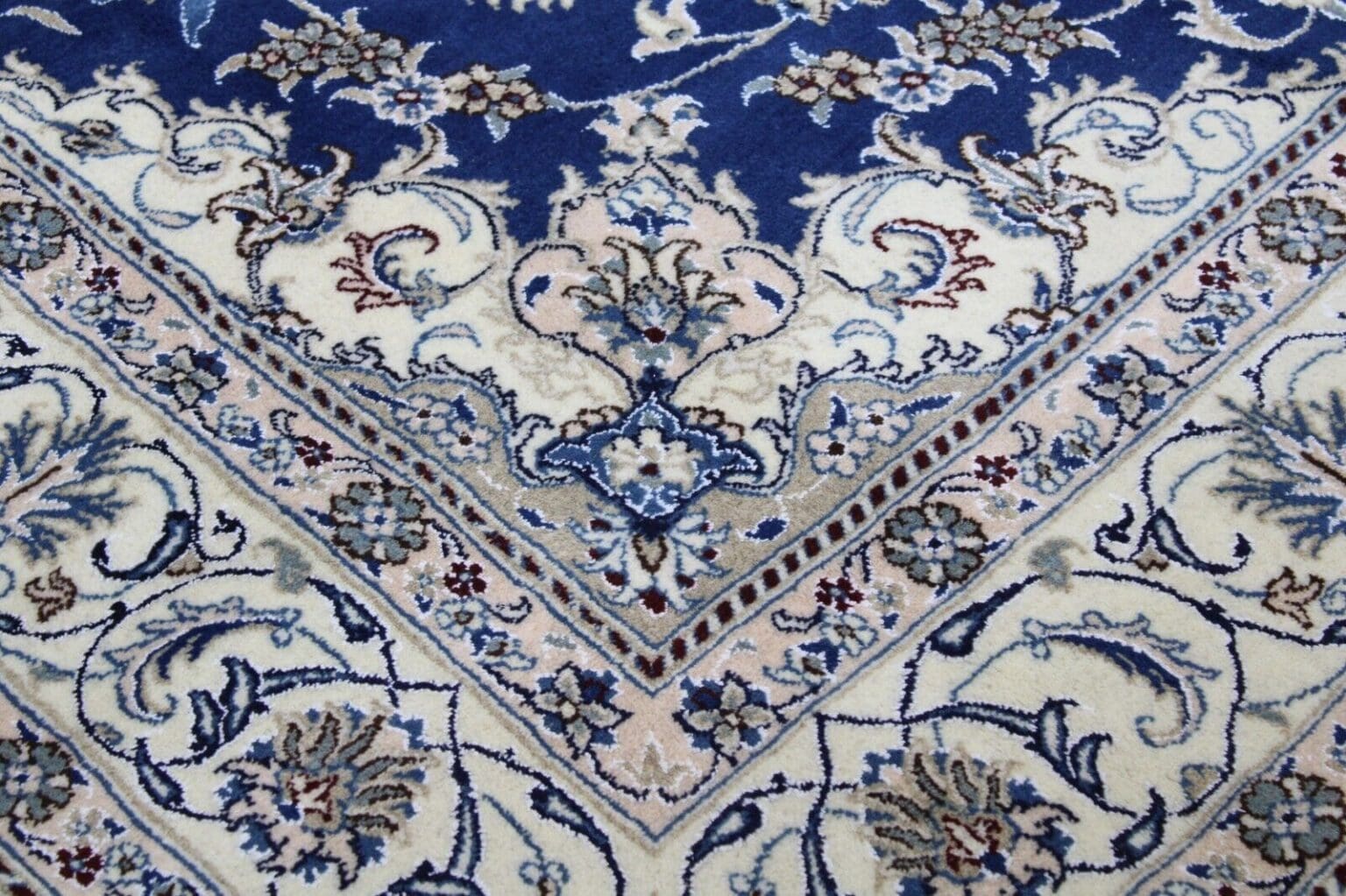
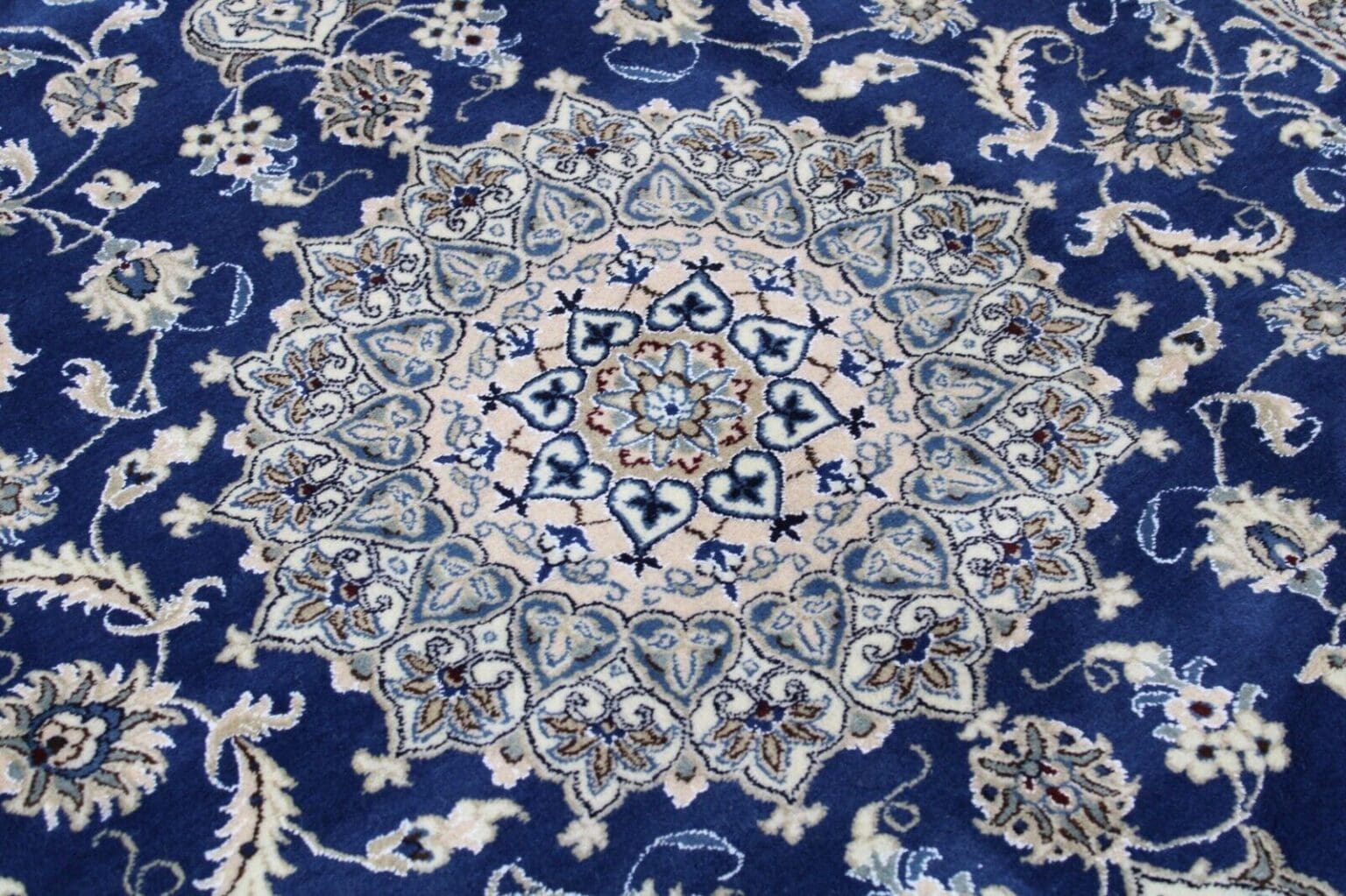
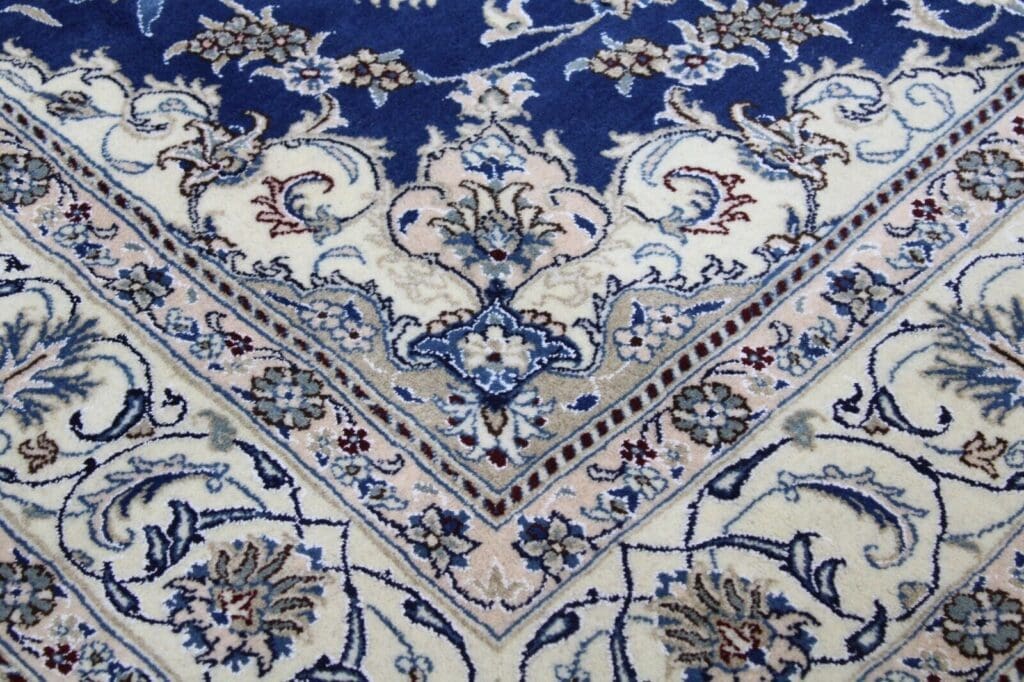
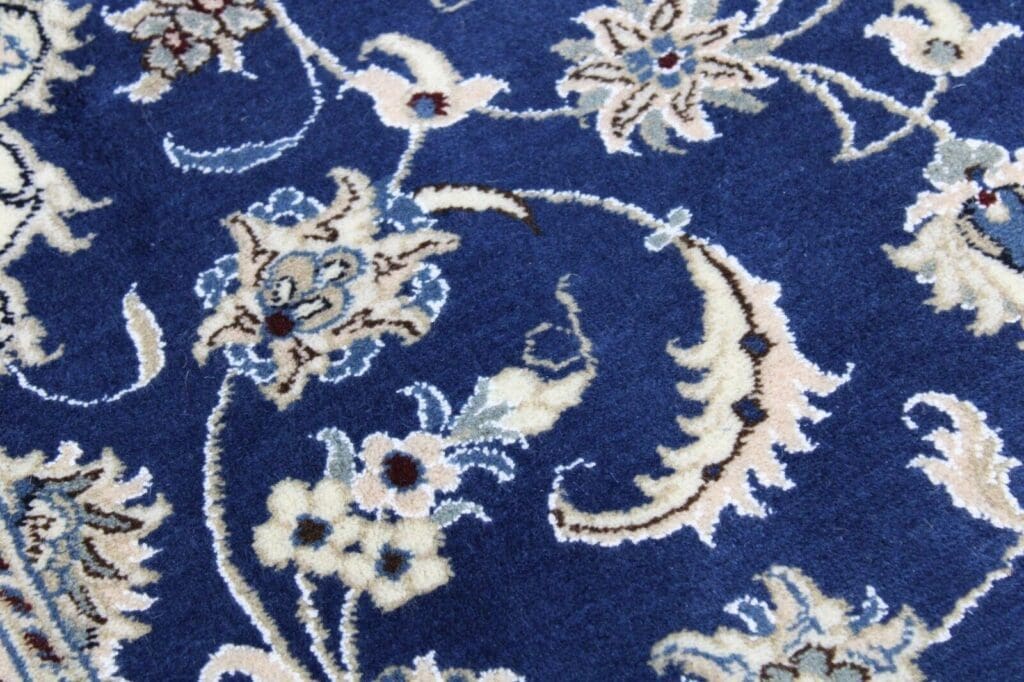
Nain rugs are often decorated with floral patterns and medallion-like compositions. These forms connect the local Nain tradition with established Persian rug design. A structured field, scrolling vines and a defined border are recurring principles in such compositions. They are not arranged identically in every rug: the final appearance depends on the individual design, the palette and the way the weaver carries out the work.
Colour is another important part of Nain’s tradition. Nain is known for the use of natural dyes derived from plants and mineral materials. These sources can produce warm, deep tones. Their appearance changes with the wool pile and with the light in the room. The colours do more than separate one motif from another; they help establish an orderly relationship between the central field, the border and the smaller decorative elements.
Persian rug making combines inherited design principles with accumulated technical knowledge. Patterns are passed down through generations, while individual workshops and weavers develop their own variations. In a Nain rug, these established forms meet a fine method of execution. The identity of this rug type is therefore shaped by its regional tradition, its material, its knotting technique and its pattern language.
Design and Pattern
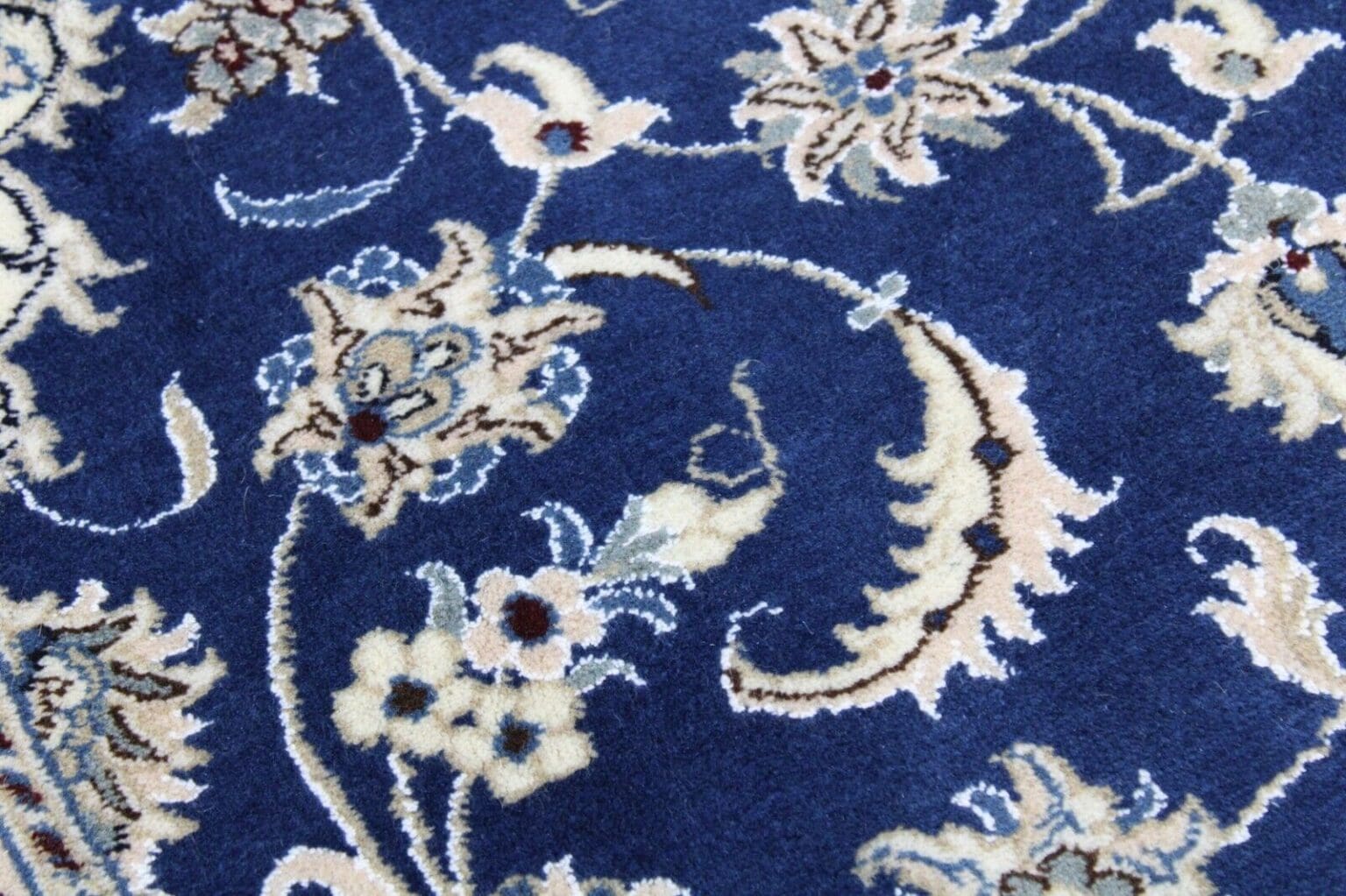
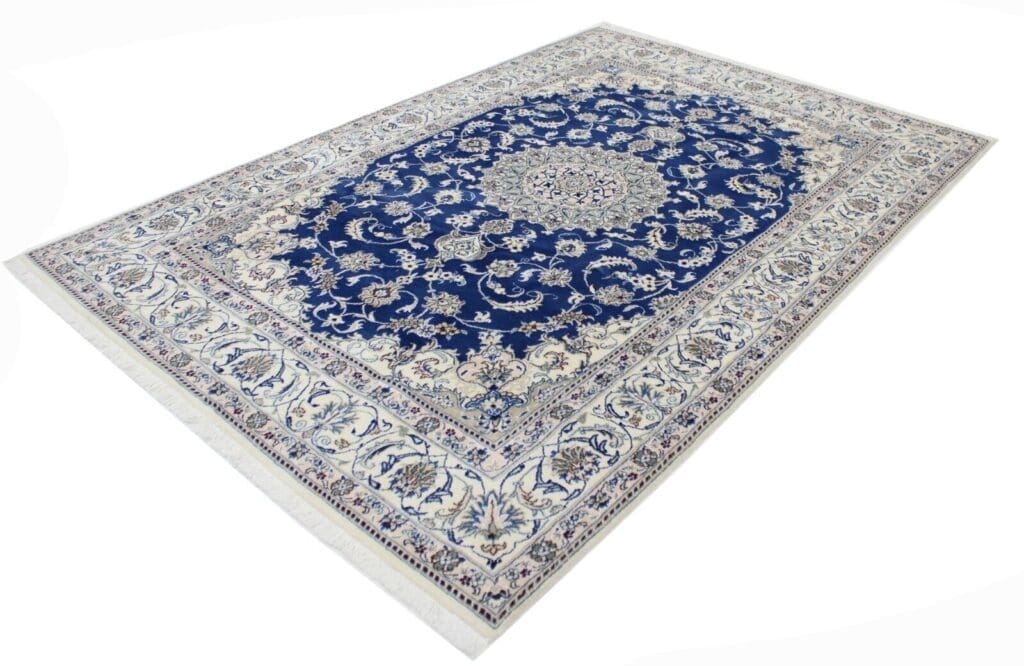
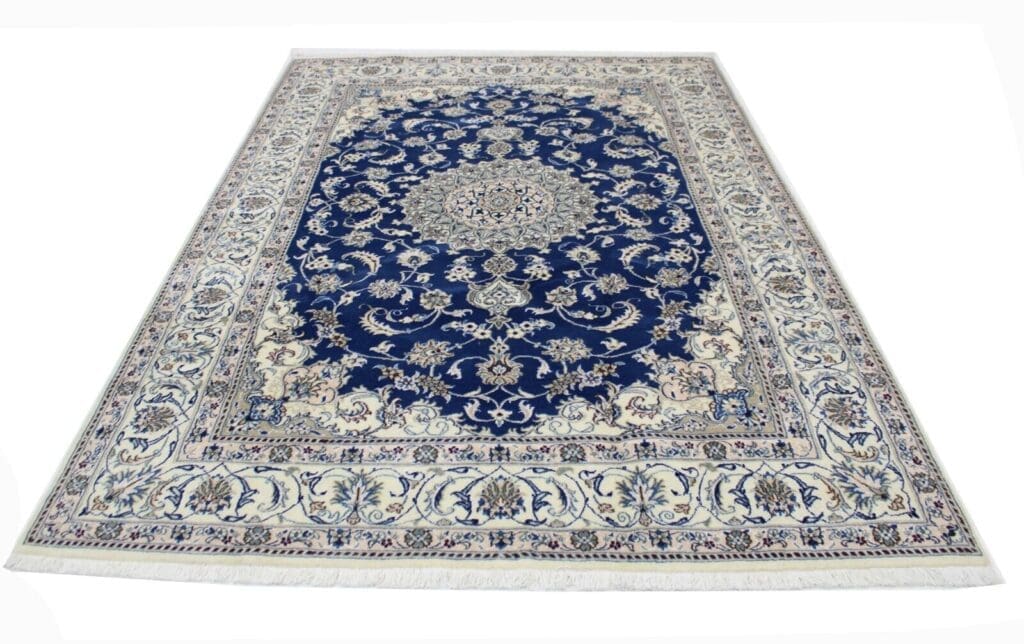
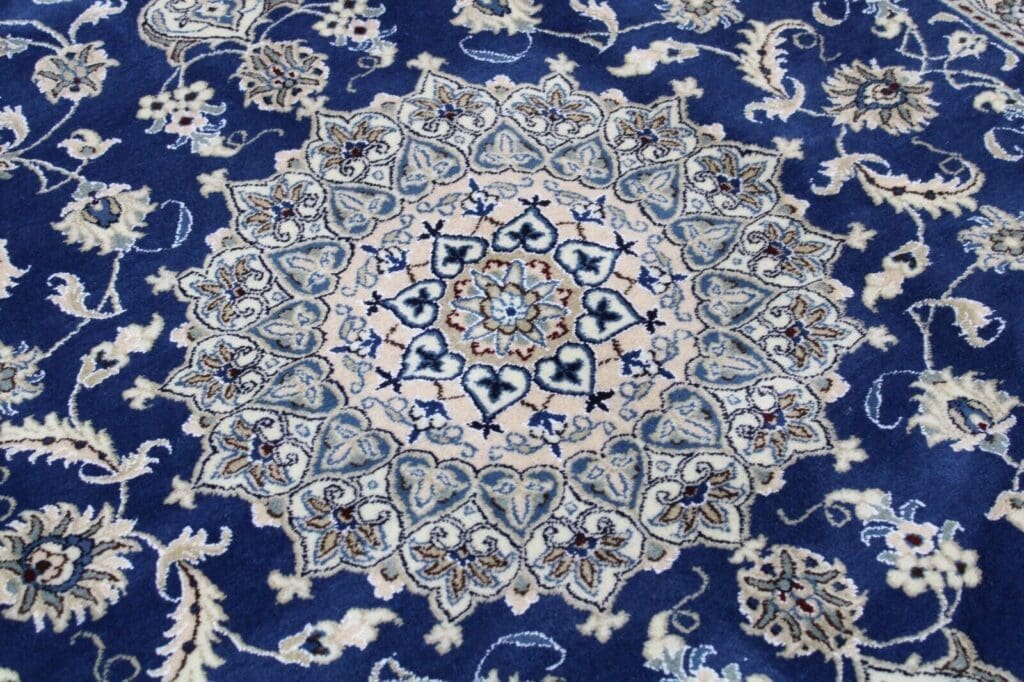
The Nain Kashmari is described through a balanced interaction of colour and form. Floral motifs frequently play a central role in Nain rug design. Flowers, leaves and scrolling vines can organise the field and guide the eye across its surface. The motifs are arranged as part of a considered composition rather than scattered at random. This creates a calm overall structure even when the design contains many small details.
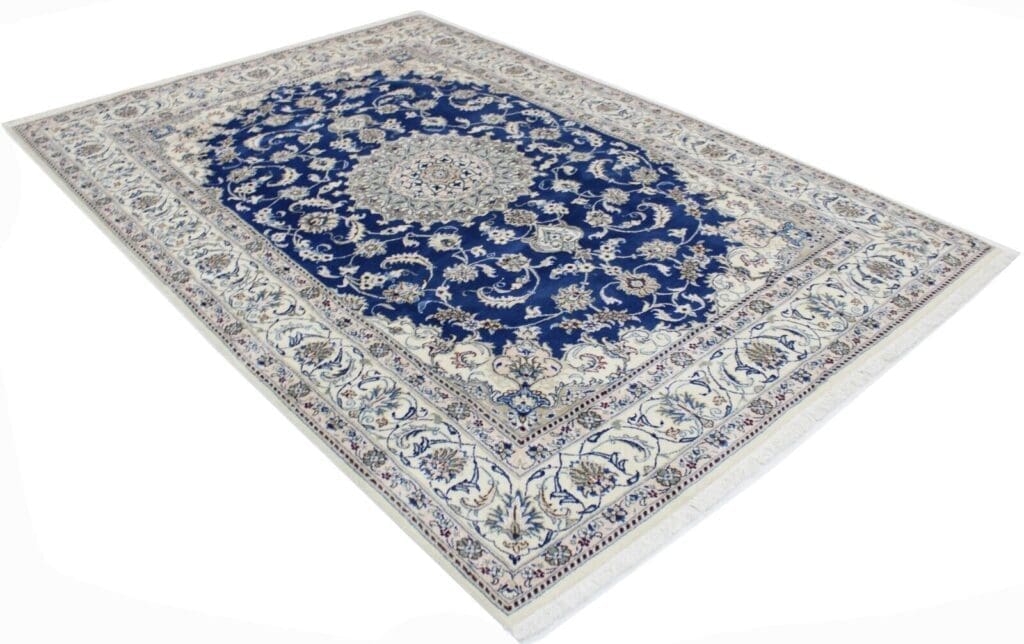
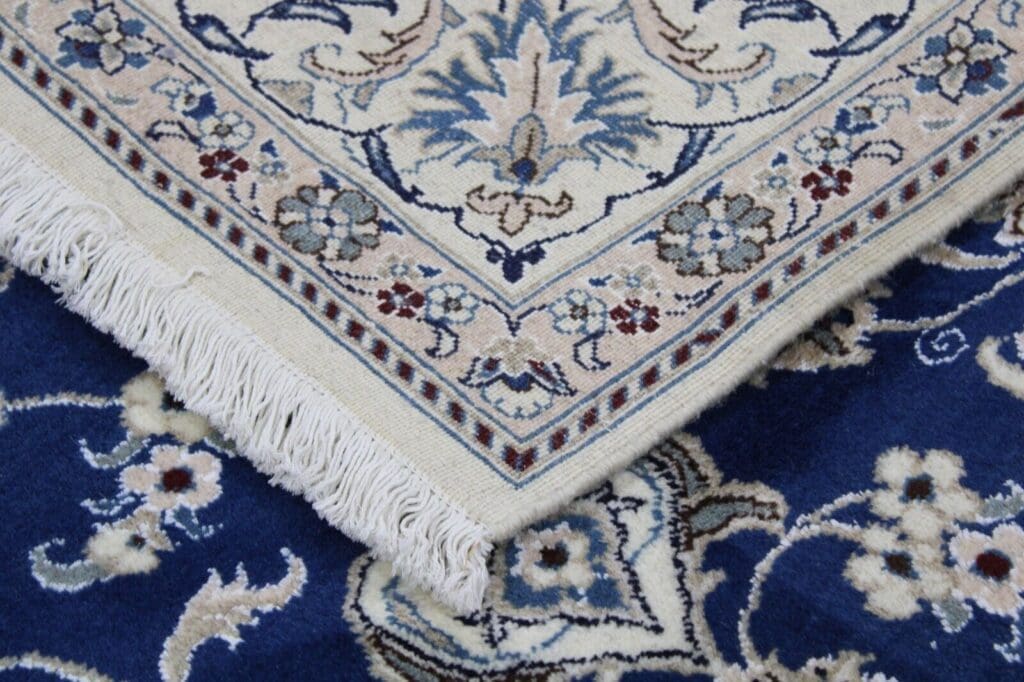
Central medallions and elegant floral vines are among the familiar elements of this design tradition. A medallion may serve as the visual focus of the field. Vines and blossoms can surround it or extend throughout the composition. A border often frames the inner field and creates a transition between the main design and the outer edge. The relationship between centre, vines and border is a recognised principle of Persian rug design.
Floral motifs in Persian culture are not solely decorative. They are associated with harmony and with a connection to nature. Blossoms can suggest growth and order, while vines link separate elements of a composition. This symbolic dimension adds cultural context to the visible design, without requiring every individual motif to have one fixed or exclusive meaning.
The character of the design also depends on how colour is distributed. Lighter and deeper shades can emphasise the centre, separate the vines or make the border easier to read. Natural dyes are traditionally associated with Nain, with plants and mineral materials providing the basis for warm, deep nuances. In the finished rug, these colours work together with the wool and the knot density, allowing fine lines and smaller pattern areas to remain legible.
The design of a hand-knotted rug cannot be separated from its construction. A pattern appears clearly only when the individual knots are placed with care. Fine knotting permits flowers, vines and outlines to be worked out with greater differentiation. At the same time, knot density affects how compact the surface looks and how clearly one colour area transitions into another. The visual language of the rug is therefore closely tied to the craft used to make it.
The Nain Kashmari can be used with both traditional and contemporary interiors. Its floral vocabulary and ordered composition suit rooms where a classical accent is appropriate. Clear furniture lines and a restrained setting can also make the structure of the rug easier to see. It is suitable for living rooms, dining rooms and bedrooms.
Special Features
The stated special features include the hand-knotted construction, a genuine wool pile, and careful washing and inspection. The rug is in excellent condition and is offered as a new rug. Its knot density supports its durability and the depiction of colours and details. An authenticity certificate can be supplied on request without an additional charge.
The rug is suitable for use in rooms with underfloor heating. Wool is naturally breathable and conducts heat well. The heating should not be set to excessively high temperatures, so that the fibres are protected. Shipping to Germany is free. Delivery takes two to three working days within Germany and three to five working days within the European Union. A satisfaction guarantee and a right of return are provided.
FAQ
How should I care for the Nain Kashmari?
Regular vacuuming removes dust and dirt from the wool pile and helps keep the surface clean. Any spills should be dabbed immediately with a damp cloth. Rubbing can place unnecessary stress on the fibres and affect the appearance of the colours. Professional cleaning every few years may also be useful for thorough care and for refreshing the colours.
Can the rug be used with underfloor heating?
Yes, the Nain Kashmari can be used in a room with underfloor heating. Wool is breathable by nature and conducts heat well. The system should not be set to an excessively high temperature, so that the fibres are not exposed to avoidable heat stress or damage. Use with suitably regulated underfloor heating is therefore possible.
Which rooms are suitable for this rug?
The Nain Kashmari is suitable for living rooms, dining rooms and bedrooms. Its floral designs and ordered treatment of colour and form can be combined with both traditional and modern interior styles. In a living room it can define a seating area, in a dining room it can frame the area beneath the table, and in a bedroom it can provide a warm textile surface.
To provide the best experiences, we use technologies like cookies to store and/or access device information. Consenting to these technologies will allow us to process data such as browsing behavior or unique IDs on this site. Not consenting or withdrawing consent, may adversely affect certain features and functions.
Functional Always active
The technical storage or access is strictly necessary for the legitimate purpose of enabling the use of a specific service explicitly requested by the subscriber or user, or for the sole purpose of carrying out the transmission of a communication over an electronic communications network.
Preferences
The technical storage or access is necessary for the legitimate purpose of storing preferences that are not requested by the subscriber or user.
Statistics
The technical storage or access that is used exclusively for statistical purposes.The technical storage or access that is used exclusively for anonymous statistical purposes. Without a subpoena, voluntary compliance on the part of your Internet Service Provider, or additional records from a third party, information stored or retrieved for this purpose alone cannot usually be used to identify you.
Marketing
The technical storage or access is required to create user profiles to send advertising, or to track the user on a website or across several websites for similar marketing purposes.

 SECURE PAYMENT
 SHIPPING PARTNERS


