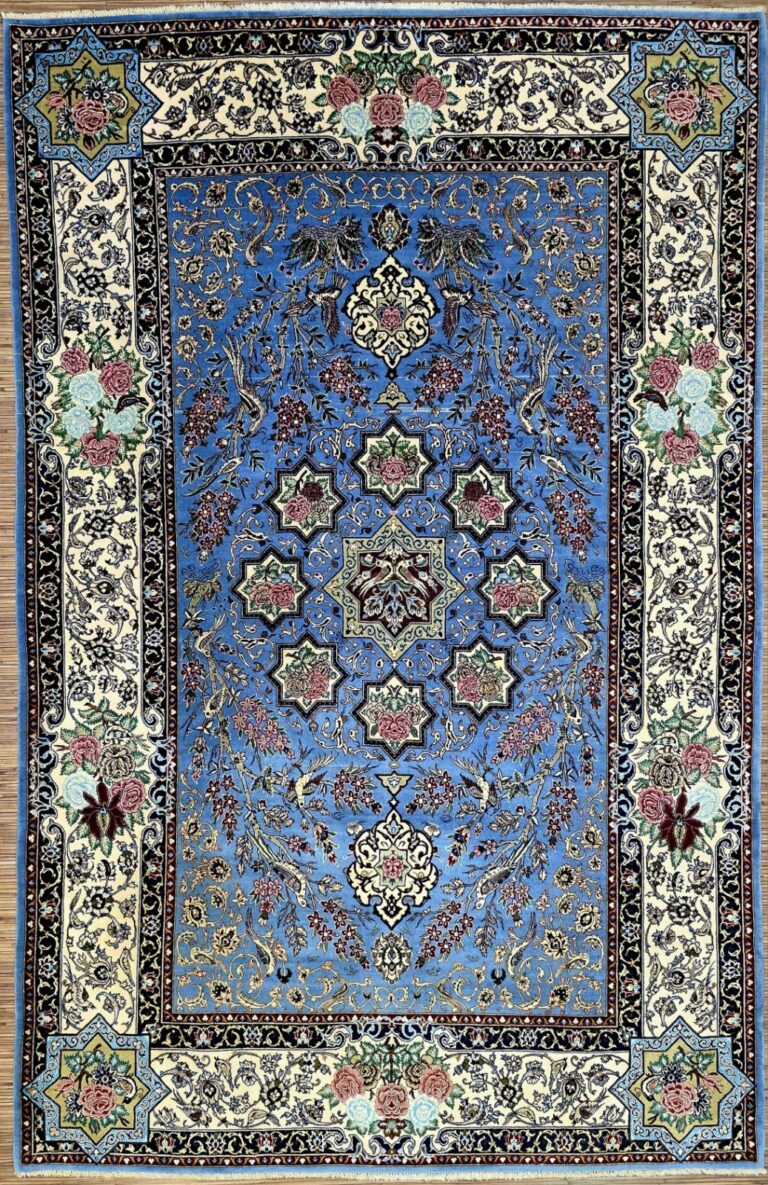
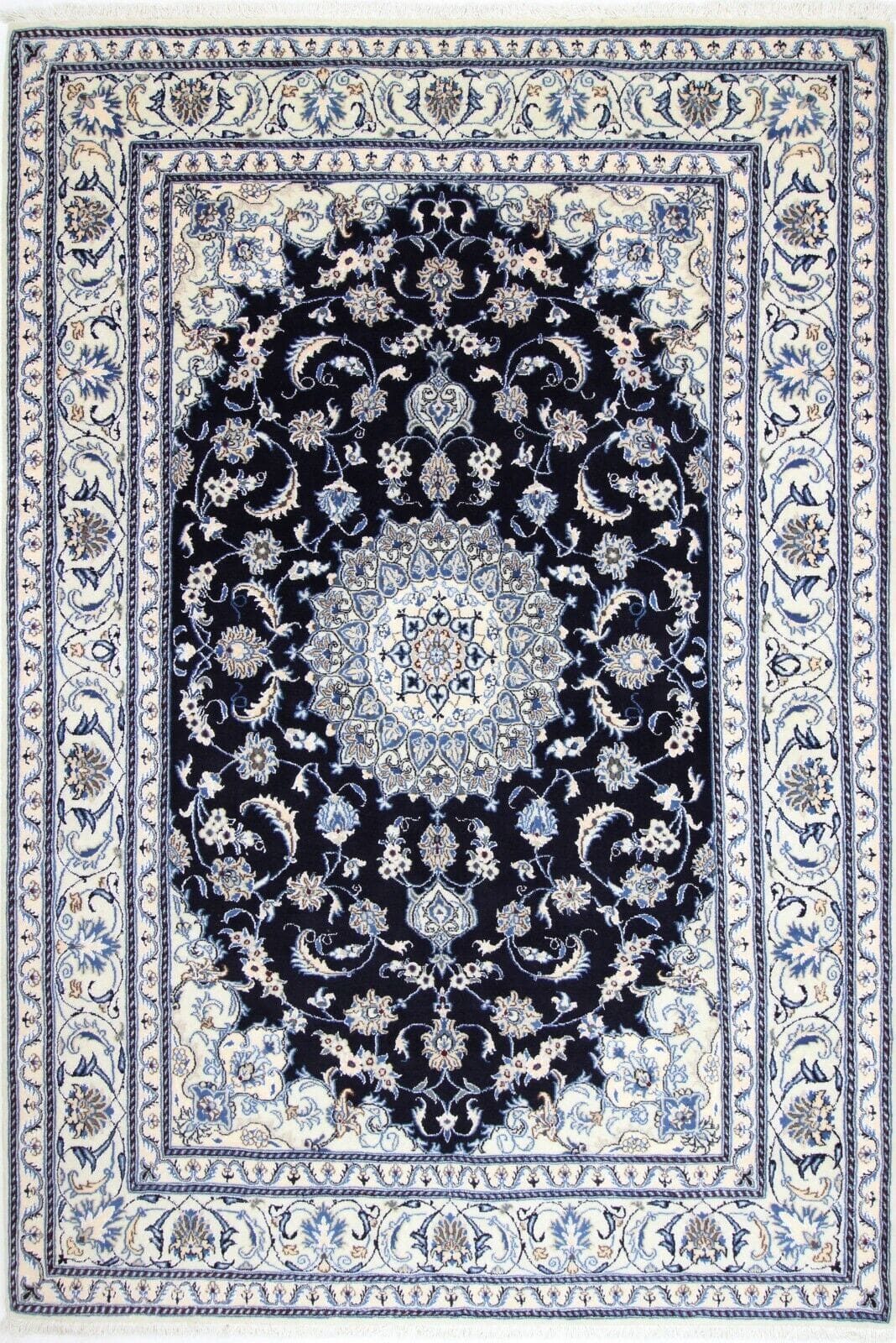
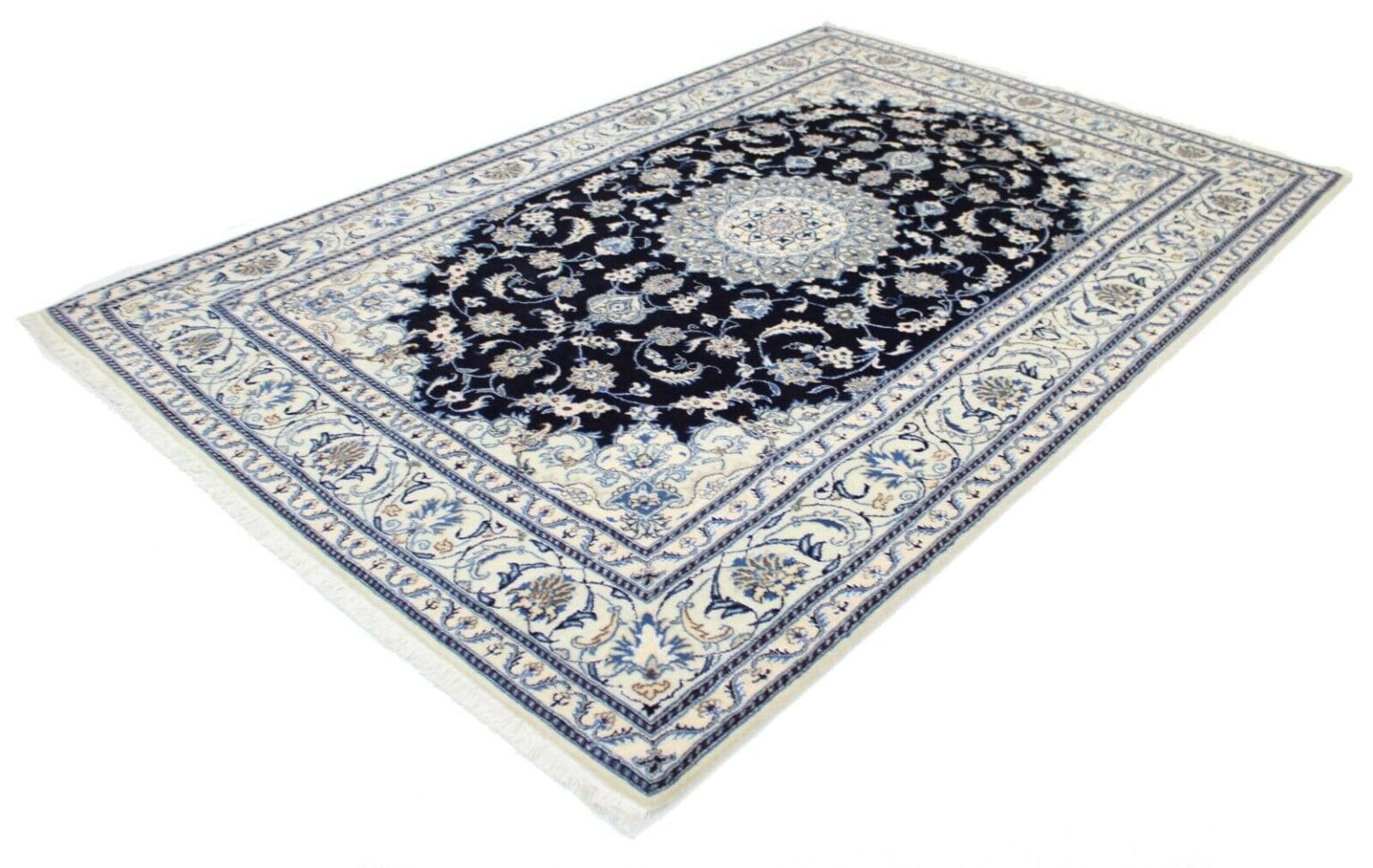
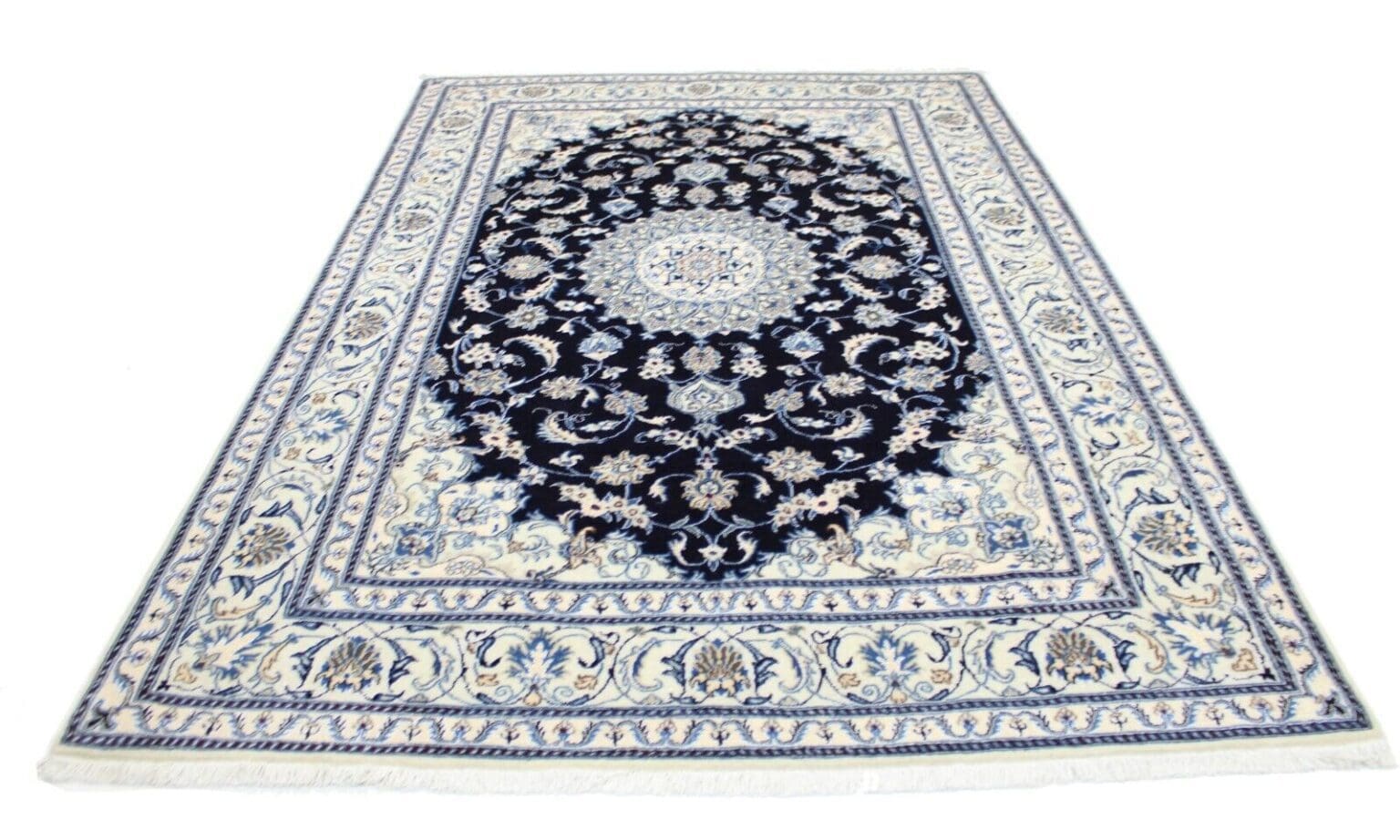
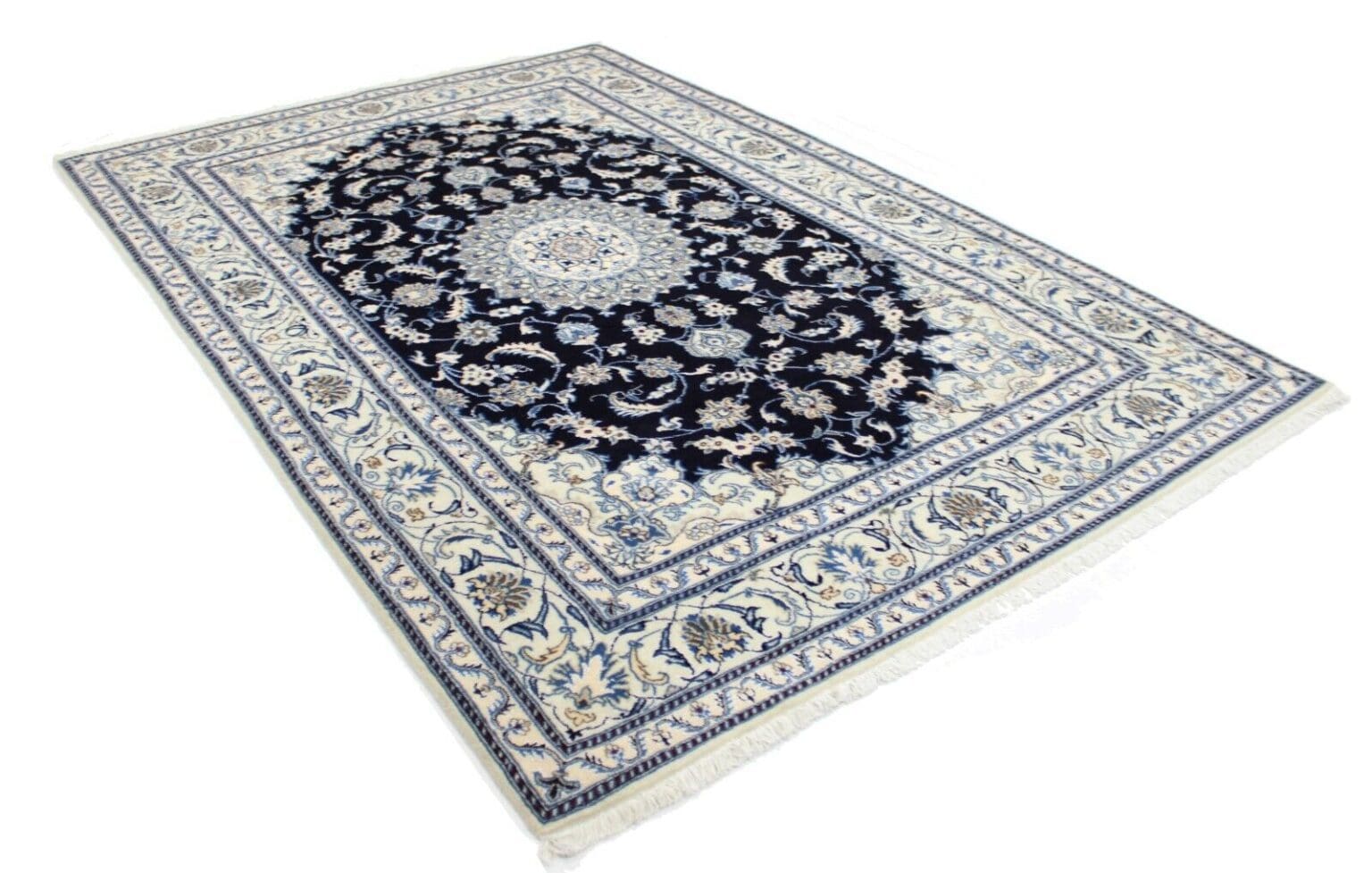
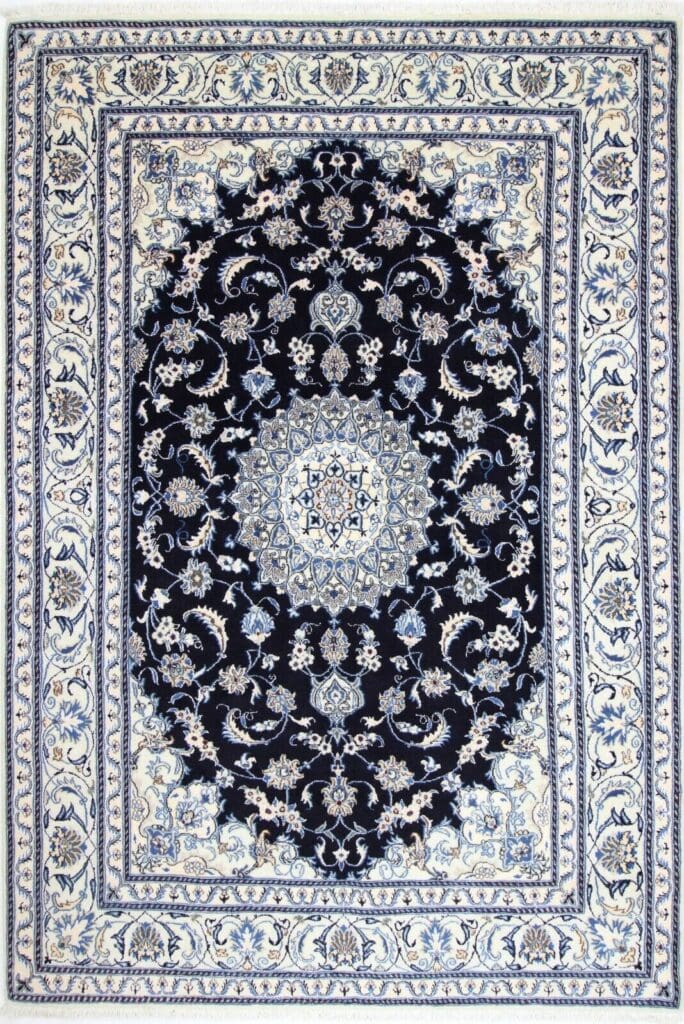
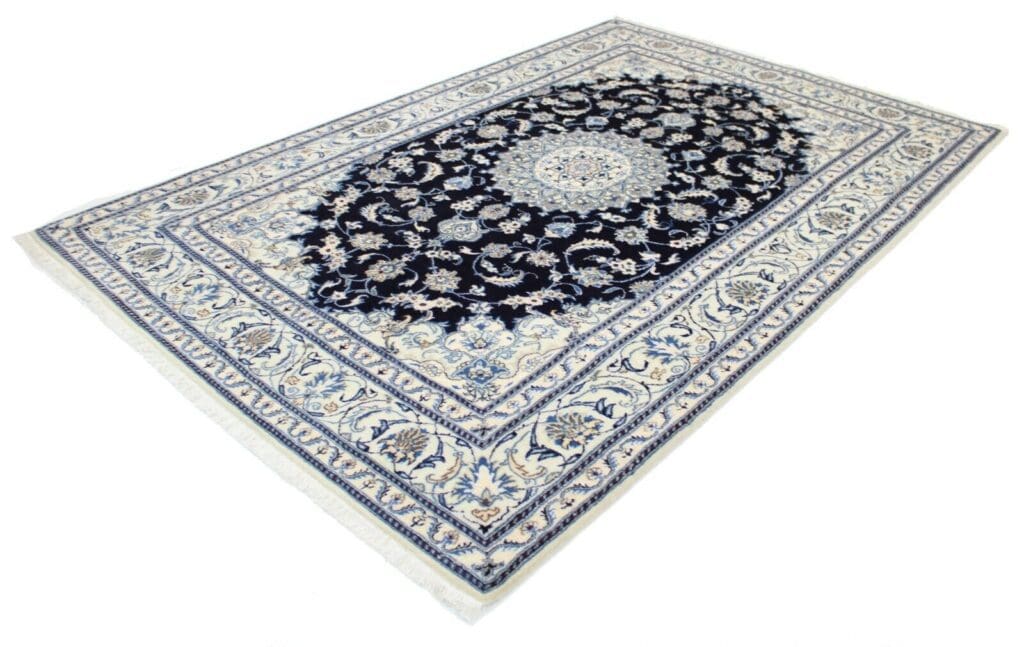
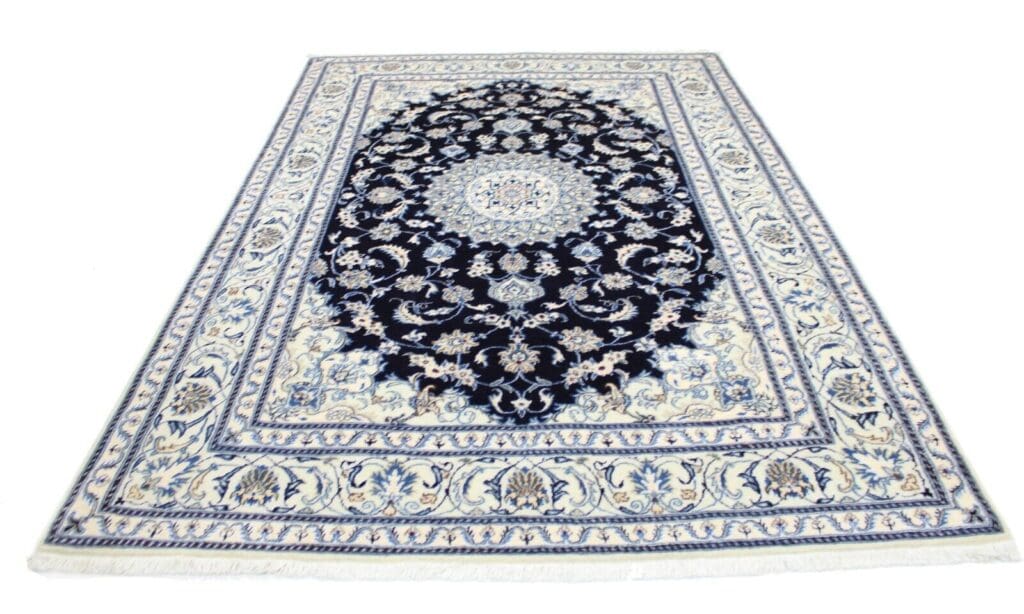
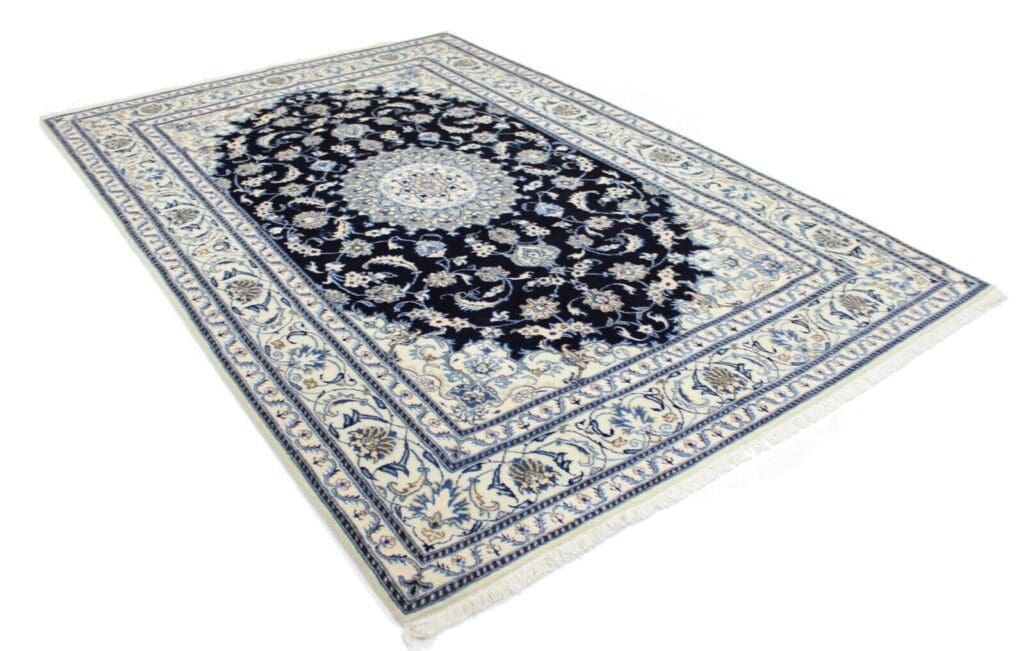
Hand-knotted Nain Persian rug | Knot density: High pile | Material: Wool pile, cotton warp | Size: 296 x 195 cm | Pattern: Oriental with floral motifs | Condition: New without label, top condition
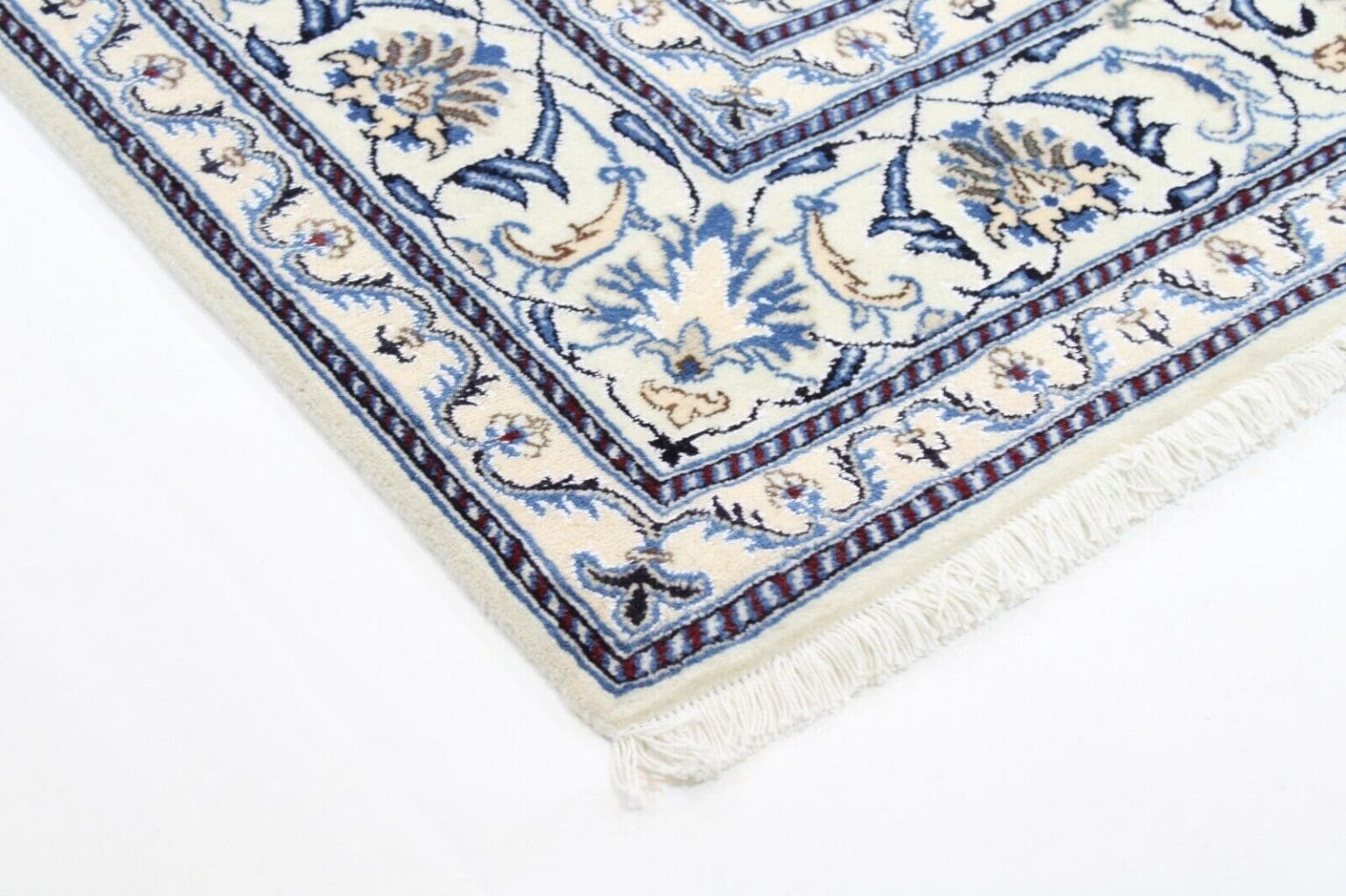
This Nain Persian rug is hand-knotted. In this traditional process, individual knots are worked into the foundation one by one. The pile is then secured and the surface is finished by hand. Its structure therefore comes directly from the weaving process rather than from a mechanically repeated surface. Hand-knotting is one of the defining methods of Oriental rug production and gives each finished piece its own textile character.
The pile of this rug is made of wool, while cotton is specified for the warp. Wool has long been valued in rug making for its resilient fibres, pleasant handle and ability to take colour evenly. It provides a practical surface for displaying both broad fields and finely drawn ornament. The cotton warp forms the underlying structure into which the knots are tied. It gives the rug a regular foundation and supports the pile throughout the woven construction.
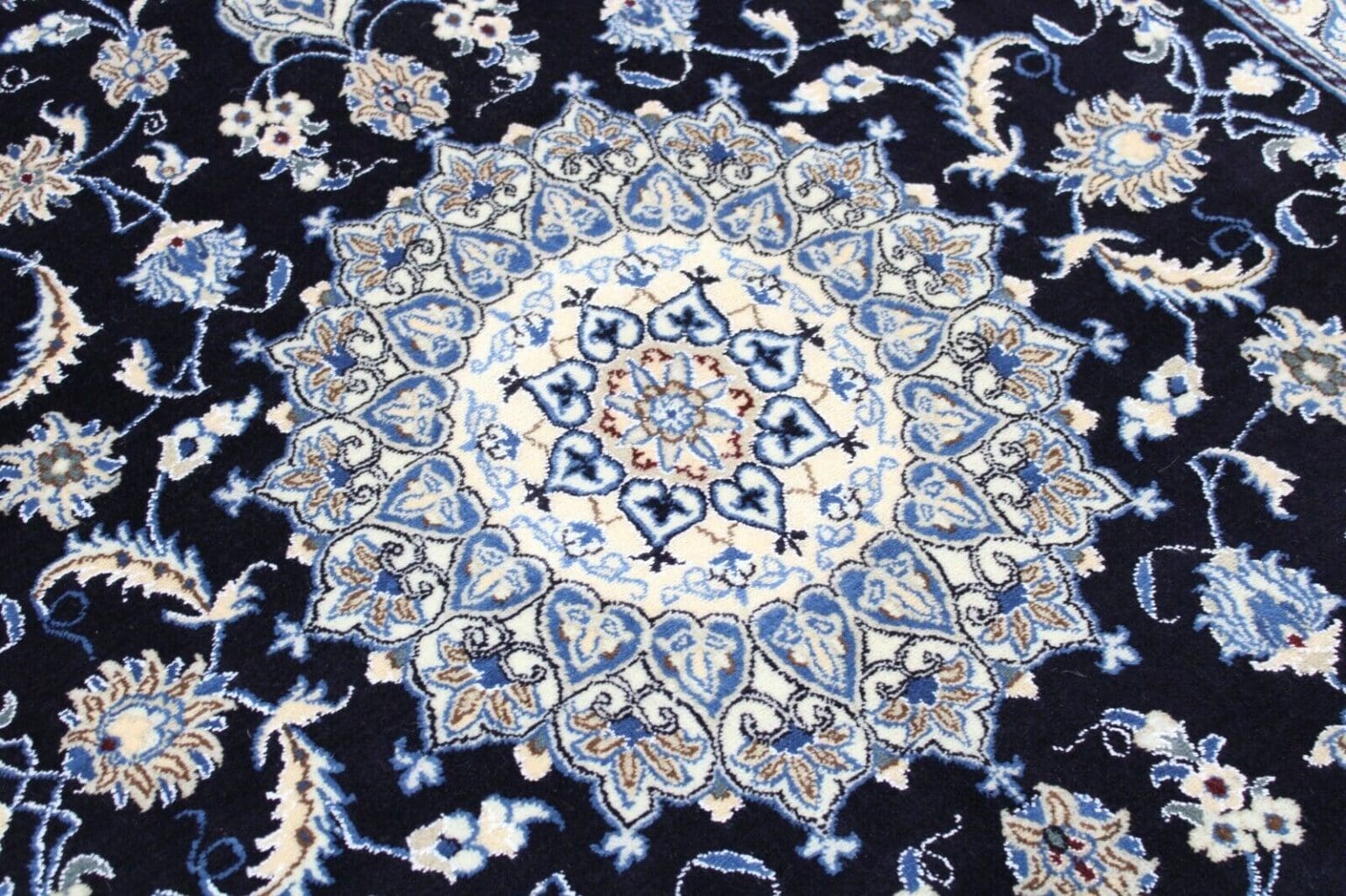
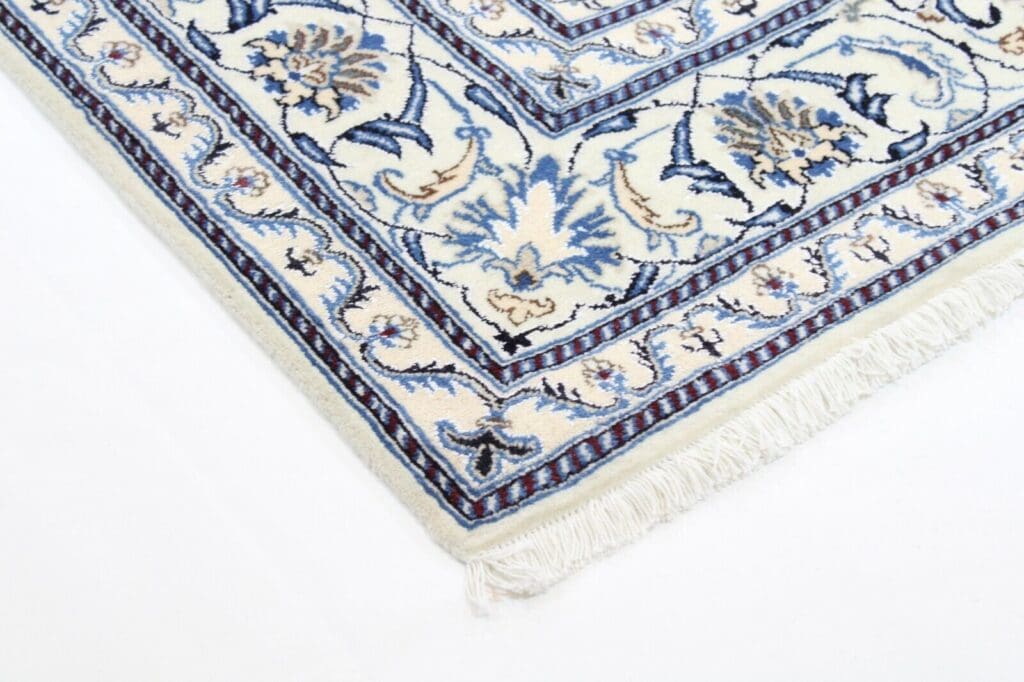
The source describes the knot density as high pile and also identifies the knot density as notably high. A closely worked hand-knotted surface allows small outlines, leaves and floral details to be represented with greater definition. The design is built progressively as the maker places knots, controls the colour sequence and maintains the intended contours. This makes the surface the result of a sustained manual process, with the pattern integrated into the textile itself.
The condition is stated as “new without label, top condition”. The rug is also described as suitable for underfloor heating. This makes it appropriate for interiors where that type of heating is installed. The individual details should be kept distinct: wool refers to the visible pile, cotton to the warp, hand-knotting to the technique, and the condition statement to the present state of the rug.
Origin and Tradition
Nain is a recognised rug centre in Iran. Nain rugs belong to the Persian carpet tradition and represent a regional approach in which controlled drawing, balanced colour arrangements and careful knotting work together. The name Nain refers to a place of origin, not merely to a broad Oriental style. This rug is described as an original Nain Persian rug from Iran.
Iran has a wide range of regional rug traditions, each shaped by local preferences in design, colour, structure and workmanship. Nain is associated with orderly compositions and a close attention to detail. Floral forms are often arranged in a disciplined structure, with smaller ornaments supporting the principal elements. The visual effect comes from the relationship between an organised field and the many details placed within it.
Persian rug making combines the planning of a design with the practical work of knotting. A pattern is not simply printed onto a completed textile. It is created as the rug is made, with each knot contributing to the final drawing. Makers follow a pattern plan or an established arrangement of motifs, monitor the sequence of colours and keep the lines of the design coherent. This process explains why a hand-knotted rug is both a functional textile and a record of regional craft knowledge.
The Nain tradition is associated with a calm, structured visual language. Floral elements may be gathered into larger compositions or used as smaller details within a dense ornamental field. There is no single design that defines every Nain rug; rather, a shared regional vocabulary appears in different interpretations. Careful drawing, proportion and the relationship between the field and its borders remain important parts of that vocabulary.
Persian rugs from Nain are connected with domestic interiors, formal rooms and the transmission of textile skills over generations. Knowledge of fibres, knotting methods and pattern construction is preserved within the broader rug culture while continuing to develop. A regional design language can therefore remain recognisable even when individual colour arrangements, borders or floral details vary. Each piece can retain its Nain identity without being identical to another rug from the same area.
The stated origin in Iran and the Nain designation place this rug within the Persian tradition. Its hand-knotted construction links it to a method in which time, material knowledge and careful pattern control are central. Calling it an original Nain Persian rug reflects the described origin and its place within Iranian rug making.
Design and Pattern
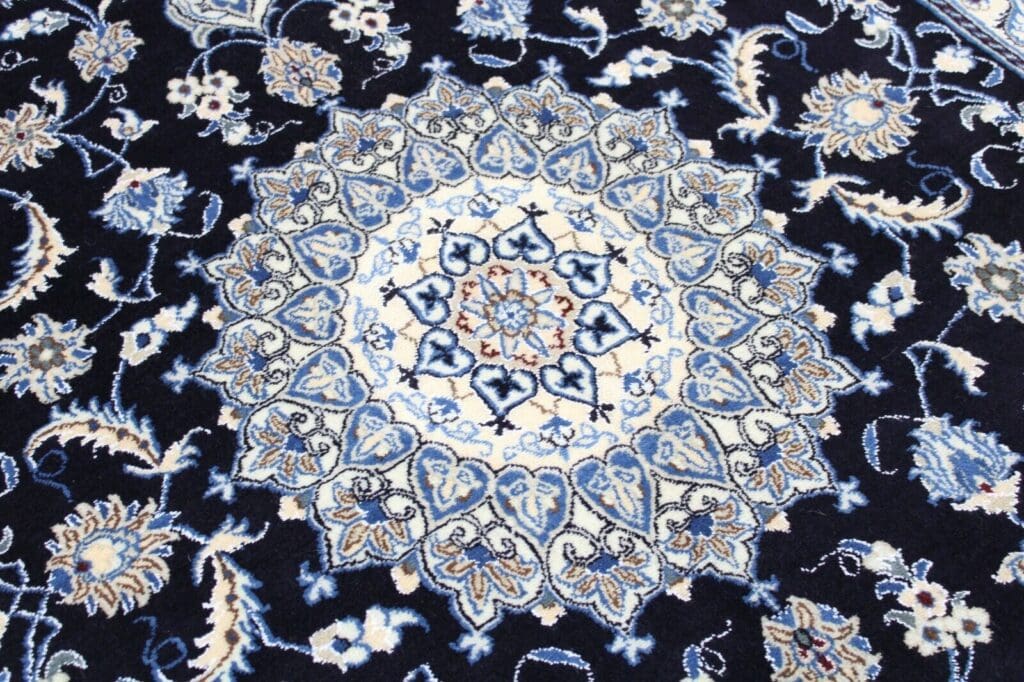
The pattern of this rug is described as Oriental with floral motifs. Floral ornament is one of the important design resources of Persian rug art. It may include stylised blossoms, leaves, stems and scrolling plant forms. These are not necessarily botanical depictions; they are decorative shapes arranged to create rhythm and balance across the textile. The individual motifs are designed to belong to a unified composition rather than to appear as isolated images.
In Nain designs, the relationship between the main field, secondary motifs and border often provides the underlying order. A floral centre may be accompanied by additional blossoms, leaves or connecting vines. Borders frame the field and give the composition a defined edge. Smaller ornaments can fill transitions and connect larger areas. The character of the design therefore comes from the arrangement of all its parts, not from one flower considered on its own.
Oriental rug patterns are frequently built from recurring units. A blossom may return in a modified form, a vine may link several elements, and a leaf may balance the shape of a flower. Repetition and variation keep the pattern coherent while preventing it from becoming mechanically uniform. In a hand-knotted rug, this order is translated into the foundation knot by knot. The described high knot density supports the rendering of small forms and fine transitions within the floral drawing.
The style is identified as traditionally Persian and Oriental. This places the floral decoration within a long-established ornamental language while keeping the rug connected to its Nain origin. The motifs are not only surface decoration; they organise the field, establish a visual rhythm and guide the eye through the composition. The regional name and the Oriental floral pattern therefore describe related but distinct aspects of the rug: one indicates origin, the other describes design.
A floral Nain pattern can be read on two levels. At first, the viewer sees the overall order of the field and the balance of its larger shapes. On closer inspection, smaller leaves, stems and contour lines become visible and explain how the main forms are connected. This difference between immediate structure and fine detail is a central feature of detailed hand-knotted ornament. It also shows why the preparation of the design and the precision of the knotting are closely linked.
The design can be used in both traditional and contemporary interiors. In a classic setting, the Persian origin and floral ornament can reinforce an established decorative scheme. In a modern room, the pattern can introduce a structured textile element and a clear reference to Iranian craft tradition. This adaptability concerns the visual language only. The rug remains a hand-knotted Nain Persian rug from Iran, made with a wool pile and cotton warp.
Special Features
The listed special features are the hand-knotted construction, the wool pile, the cotton warp and the high-pile knot-density description. The rug is stated to be new without a label and in top condition. It is also suitable for underfloor heating. These details describe this particular piece without adding claims about age, signature or certification.
Its Iranian origin, Nain designation and Oriental floral design place it within a clearly defined Persian rug tradition. The construction remains tied to the description of this individual rug: it is presented as an original Nain Persian rug and is hand-knotted. No further provenance details are given.
FAQ
How should I care for the Persian rug?
Regular vacuuming helps remove dust and loose dirt from the rug. The surface should be treated gently so that the pile and edges are not subjected to unnecessary stress. If a deeper cleaning is needed, professional rug cleaning can be considered. Direct sunlight should be avoided because it can contribute to colour fading. Keeping the rug away from prolonged, intense exposure helps preserve the appearance of its floral pattern and its colour balance.
Where is the Nain rug best used?
The rug can be used in living rooms, dining rooms or offices. Its traditional Persian and Oriental design can be integrated into both classic and modern interiors. The floral motifs provide a textile accent and can help connect other elements within a room. Since the rug is described as suitable for underfloor heating, it can also be placed in interiors equipped with that system. The most suitable position depends on the existing furnishings and on how prominently the pattern is intended to appear.
How can the authenticity of a Persian rug be assessed?
Knotting technique, materials and origin can provide important points of reference when assessing a Persian rug. With a Nain rug, the regional design tradition and characteristic floral organisation can also be considered. Hand-knotted construction is reflected in the structure of the textile and is one of the relevant features. Additional certification from recognised experts may help confirm authenticity. This rug is described as an original Nain Persian rug from Iran.
To provide the best experiences, we use technologies like cookies to store and/or access device information. Consenting to these technologies will allow us to process data such as browsing behavior or unique IDs on this site. Not consenting or withdrawing consent, may adversely affect certain features and functions.
Functional Always active
The technical storage or access is strictly necessary for the legitimate purpose of enabling the use of a specific service explicitly requested by the subscriber or user, or for the sole purpose of carrying out the transmission of a communication over an electronic communications network.
Preferences
The technical storage or access is necessary for the legitimate purpose of storing preferences that are not requested by the subscriber or user.
Statistics
The technical storage or access that is used exclusively for statistical purposes.The technical storage or access that is used exclusively for anonymous statistical purposes. Without a subpoena, voluntary compliance on the part of your Internet Service Provider, or additional records from a third party, information stored or retrieved for this purpose alone cannot usually be used to identify you.
Marketing
The technical storage or access is required to create user profiles to send advertising, or to track the user on a website or across several websites for similar marketing purposes.
 SECURE PAYMENT
 SHIPPING PARTNERS