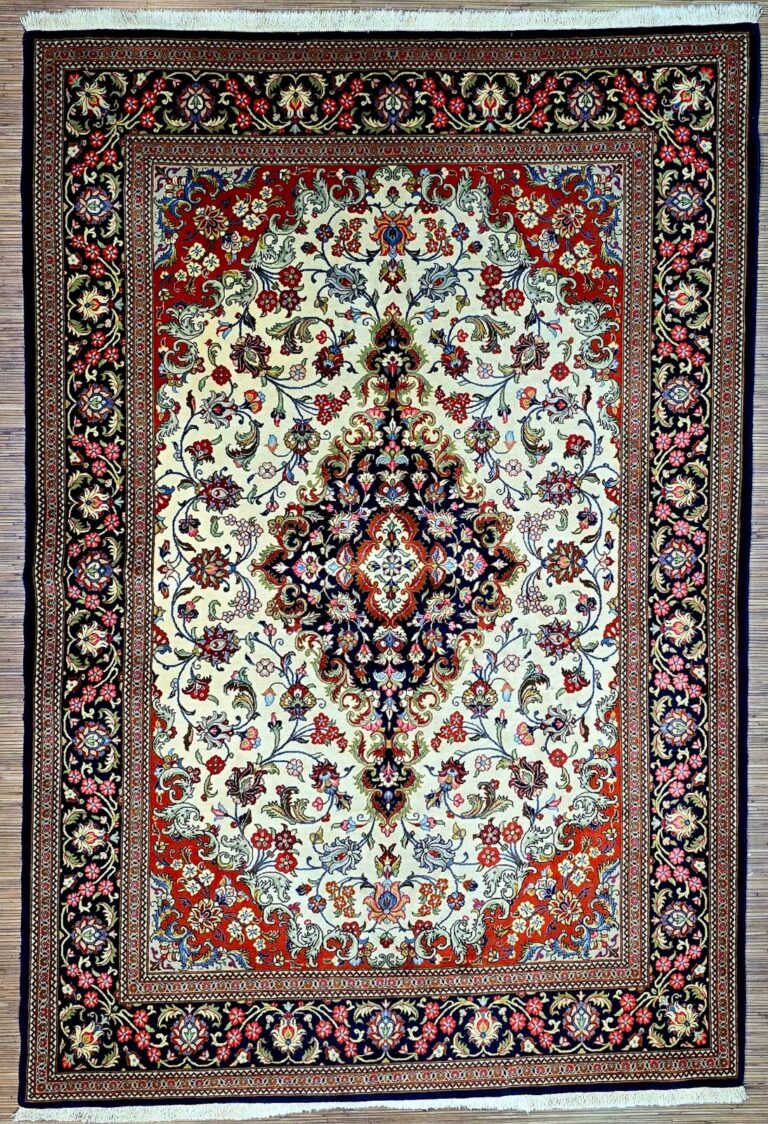
This Nain Persian rug is hand-knotted. Its material is specified as 100% pile with a warp made from 100% cotton. The cotton warp forms the supporting foundation of a knotted rug. It runs lengthwise through the piece and holds the knots in place as the surface is built. The pile consists of the threads visible at the face of the rug. For this individual rug, the pile is stated as 100%, while the warp is specifically identified as cotton.
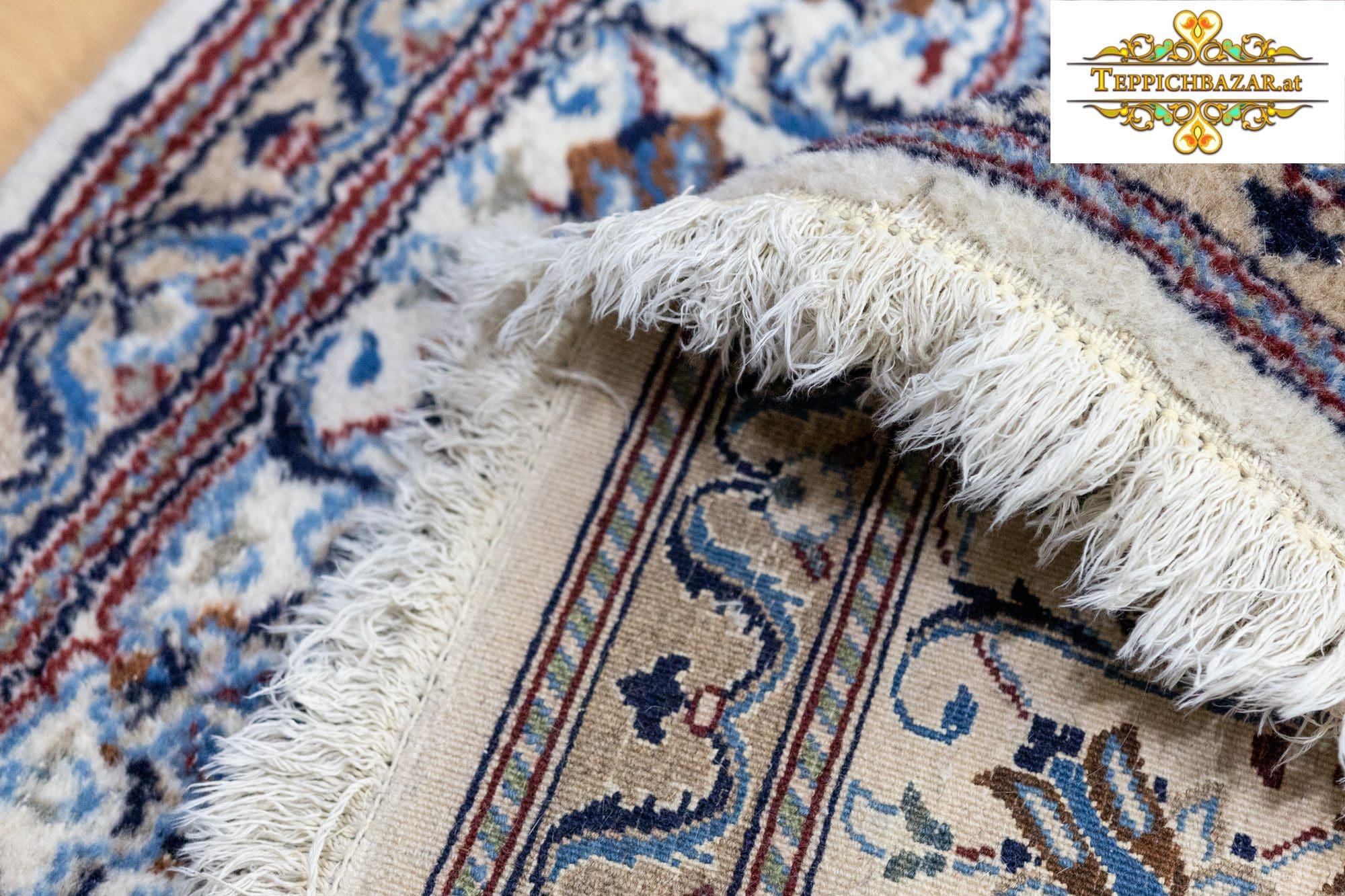
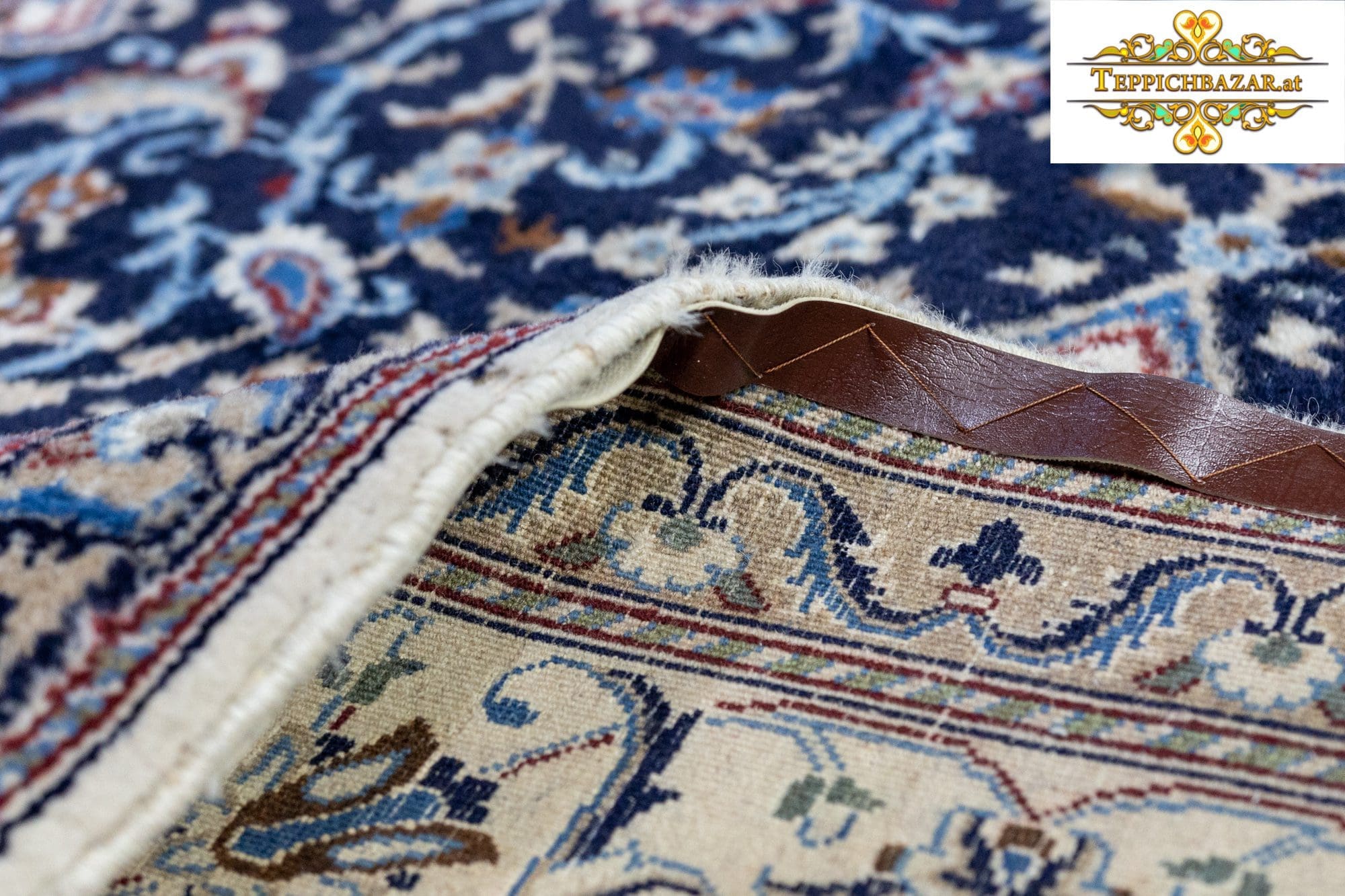
Traditional Nain construction uses a cotton foundation with depressed warp threads and two cotton wefts. Warp threads run along the length of the rug, while weft threads pass from side to side. When the wefts are pulled tightly from both sides, the warp threads shift into two levels. This creates the depressed warp associated with Nain rugs. The structure provides a firm basis for a finely drawn knotted surface.
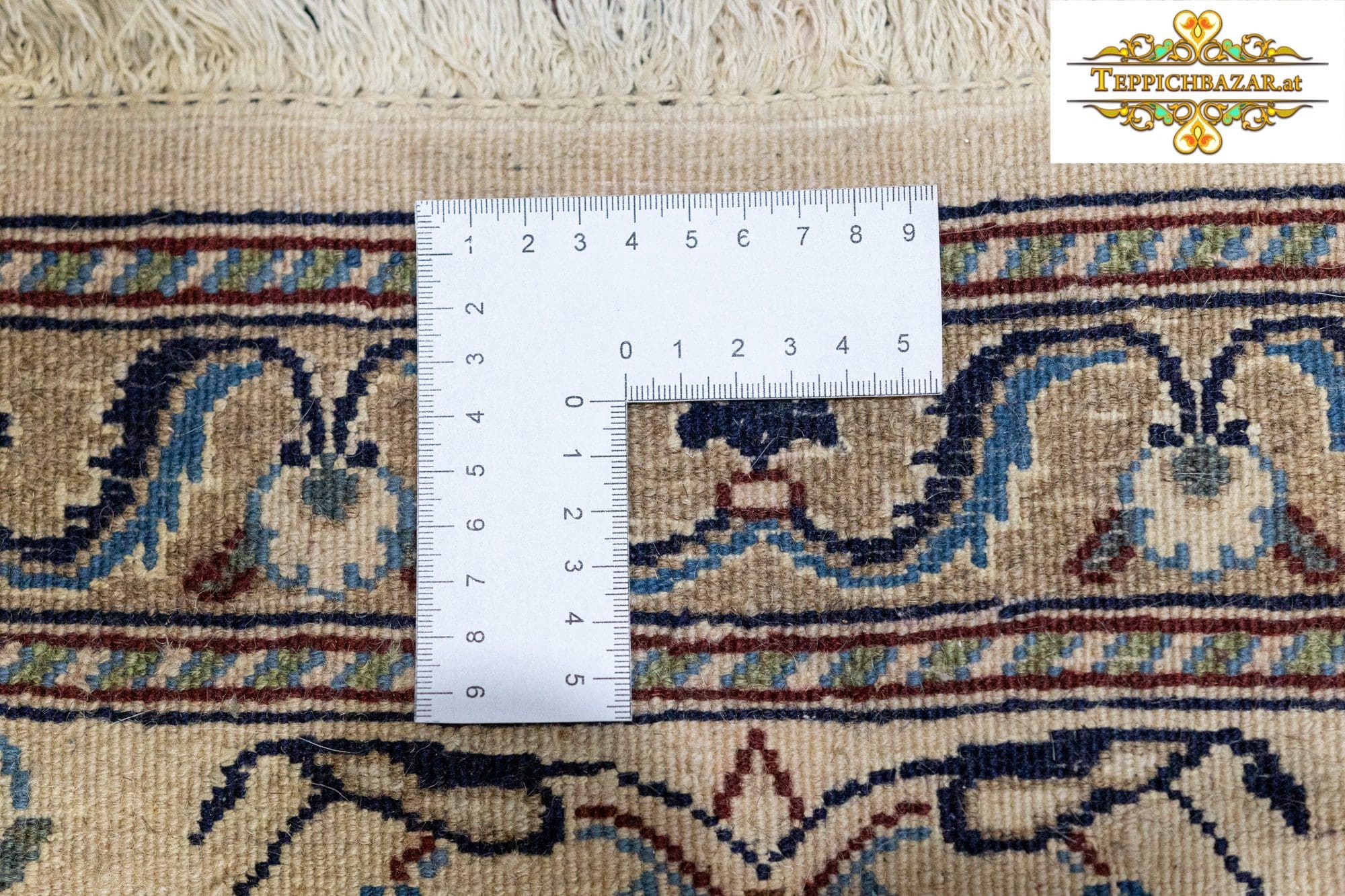
Nain rugs are traditionally made with asymmetrical Persian knots. Their pile is often closely sheared so that medallions, flowers, vines and narrow outlines remain clearly legible. A short pile helps separate adjoining areas of the design, while dense knotting allows delicate lines and carefully controlled curves. The knot density given for this rug is 12La, meaning twelve yarn layers, and approximately 250,000 knots per square metre. The term 12La refers to the layers of warp threads and can also be understood through the number of yarn fibres forming a fringe.
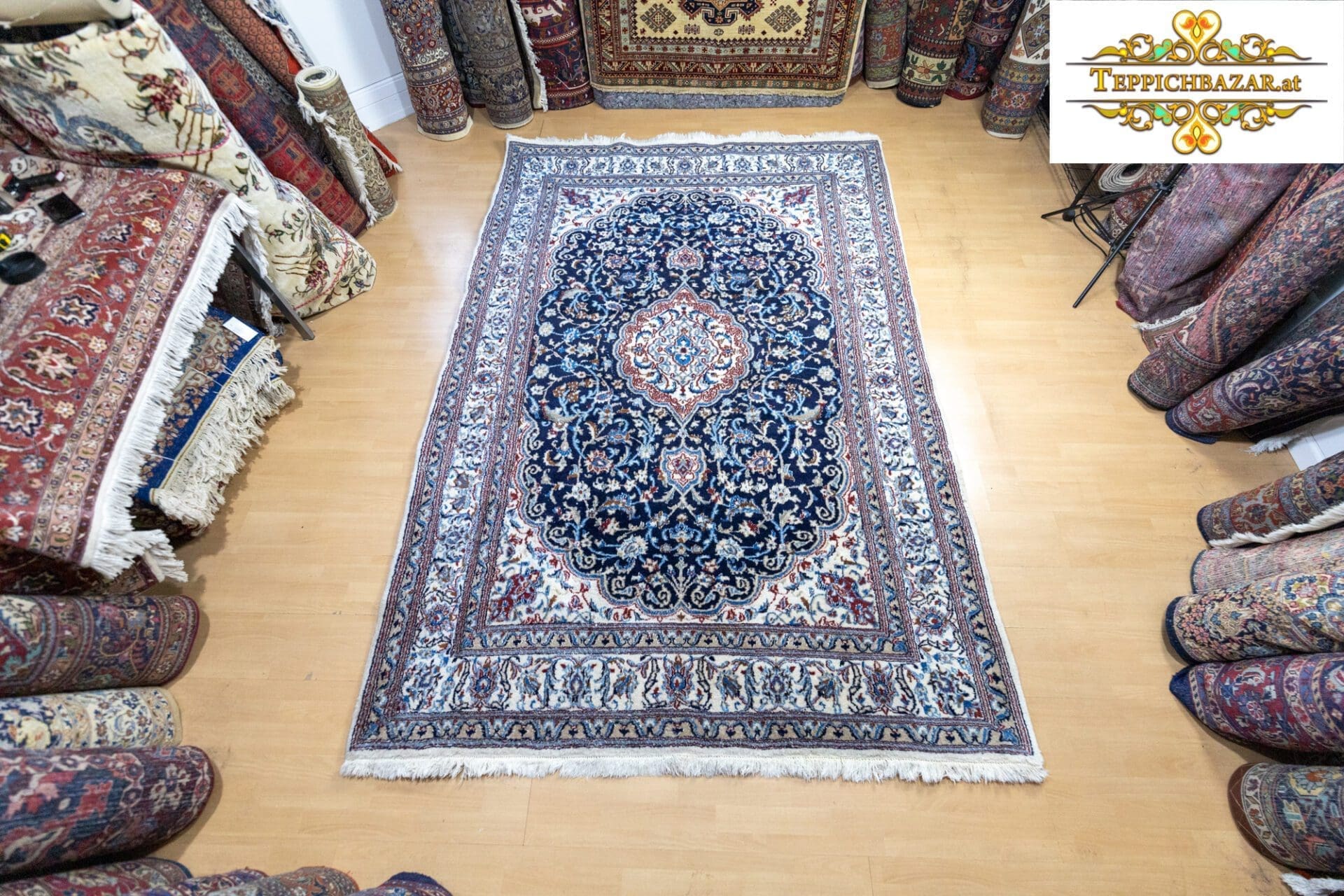
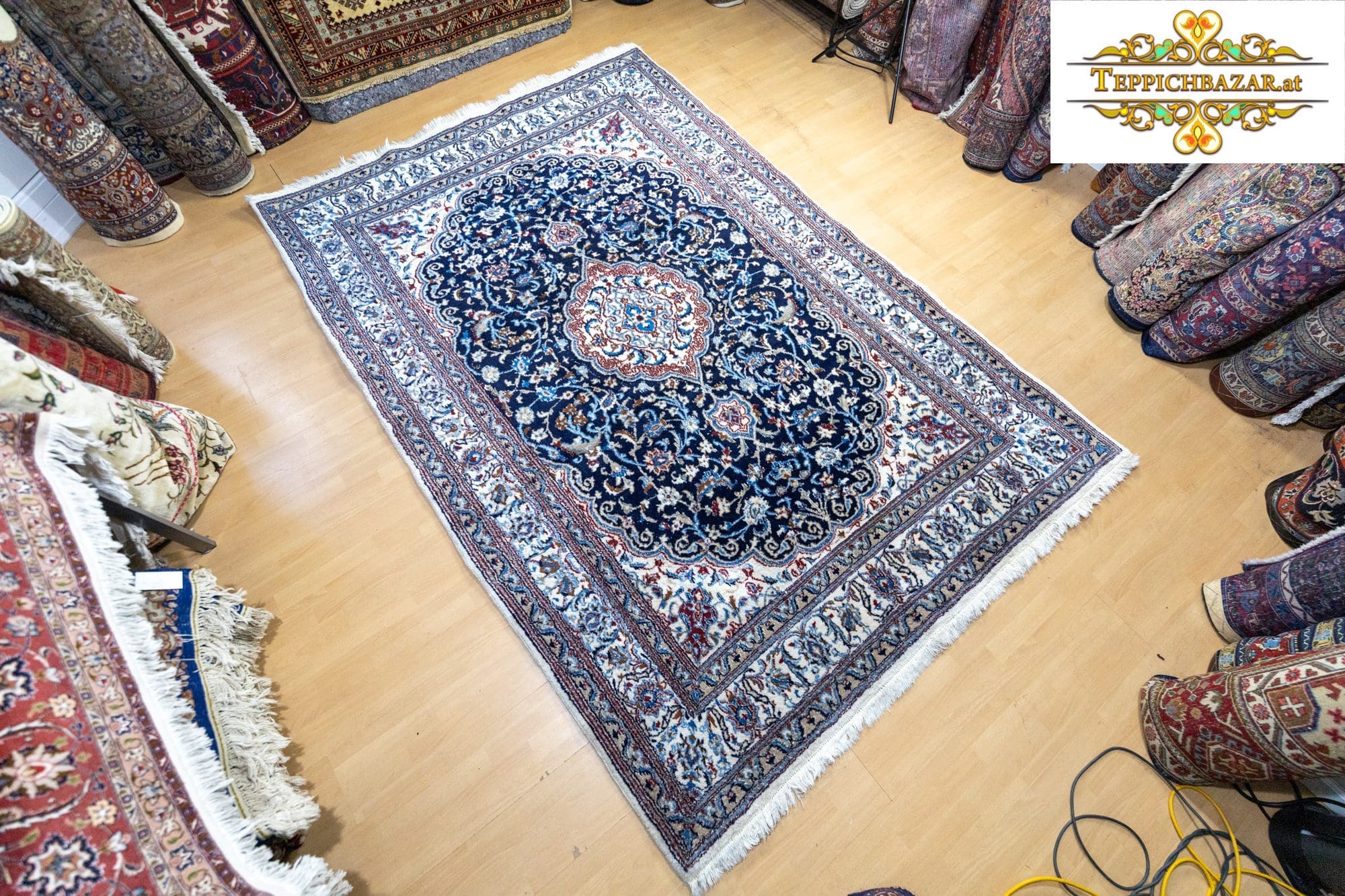
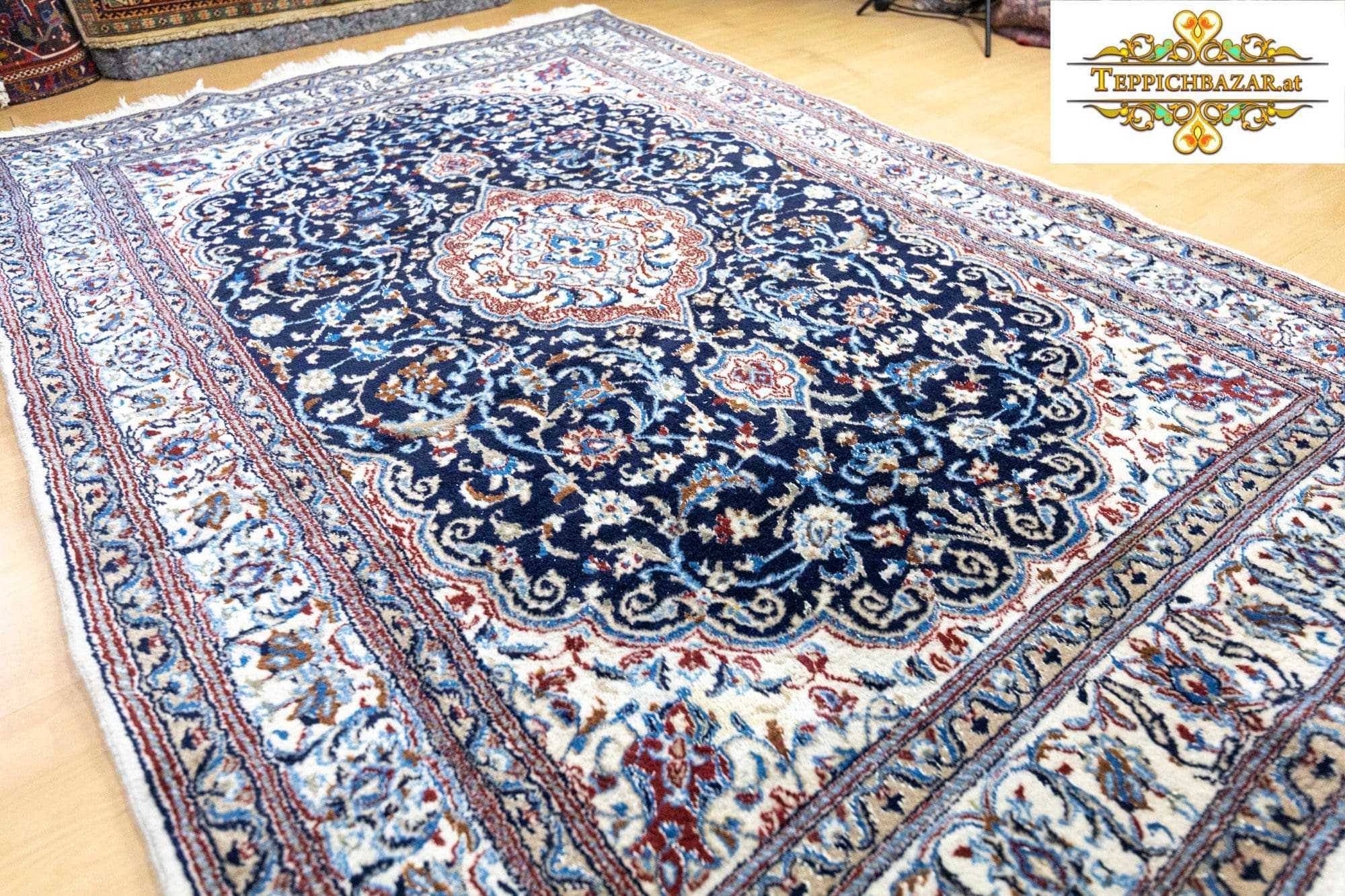
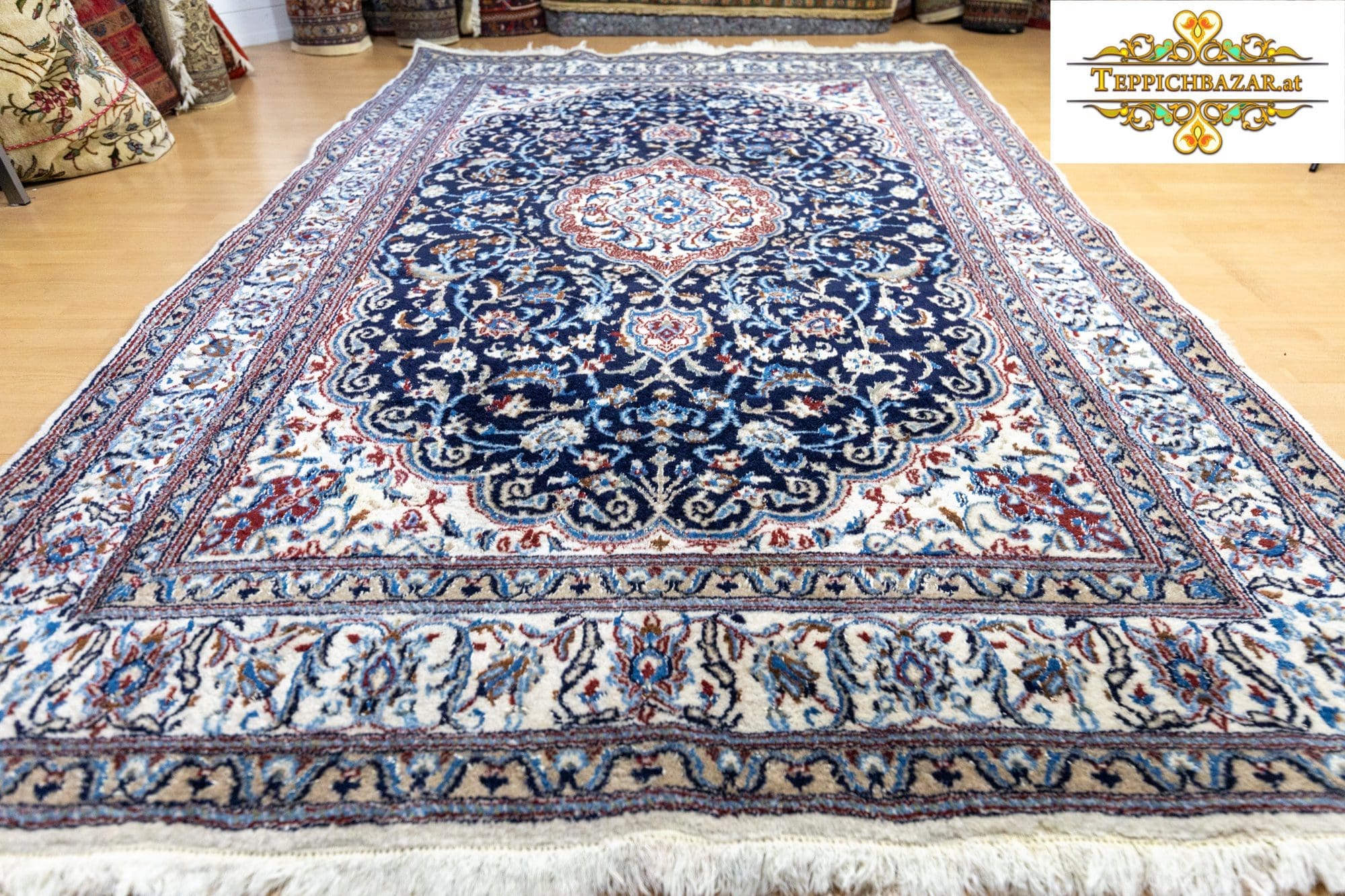
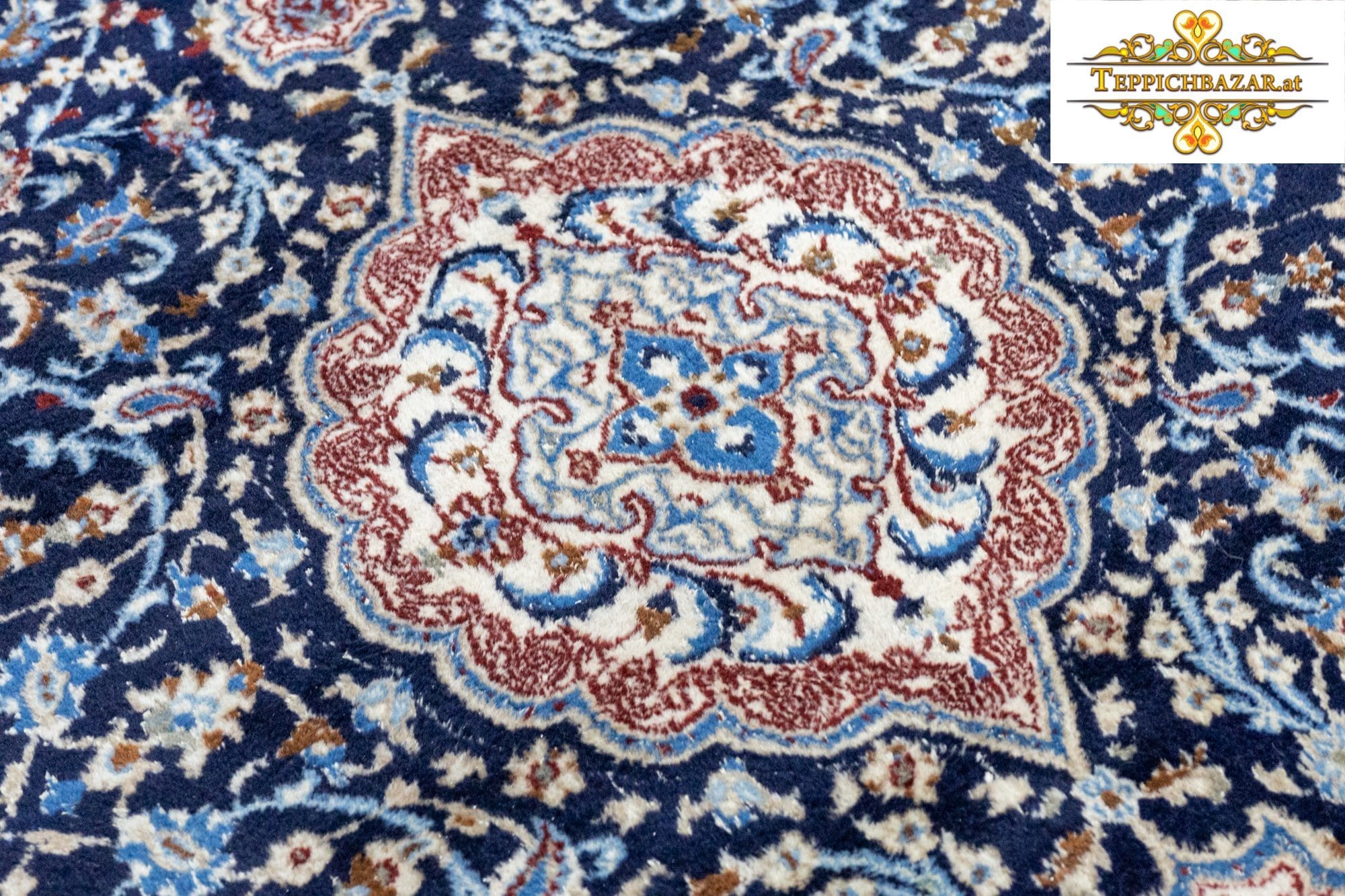
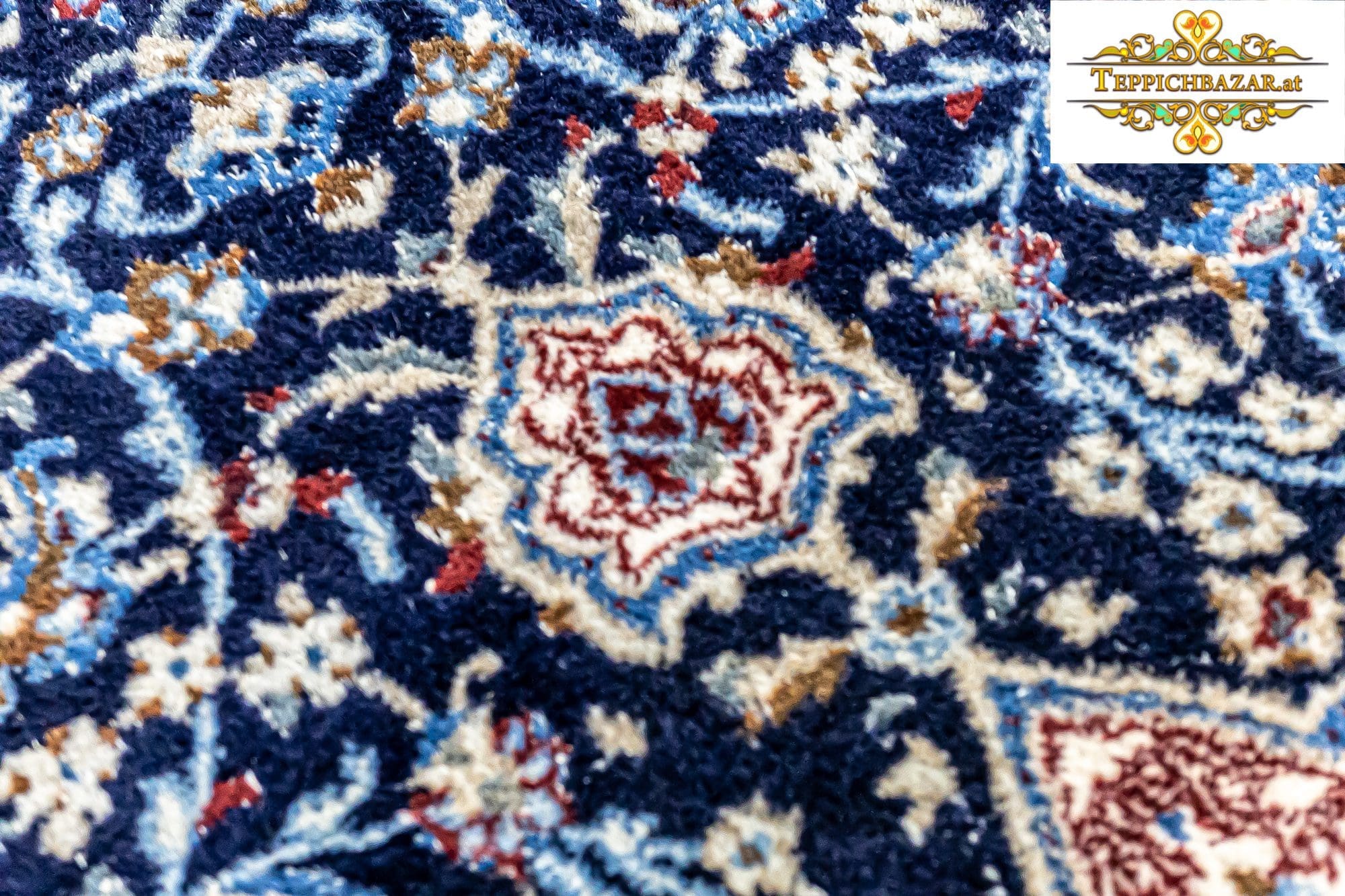
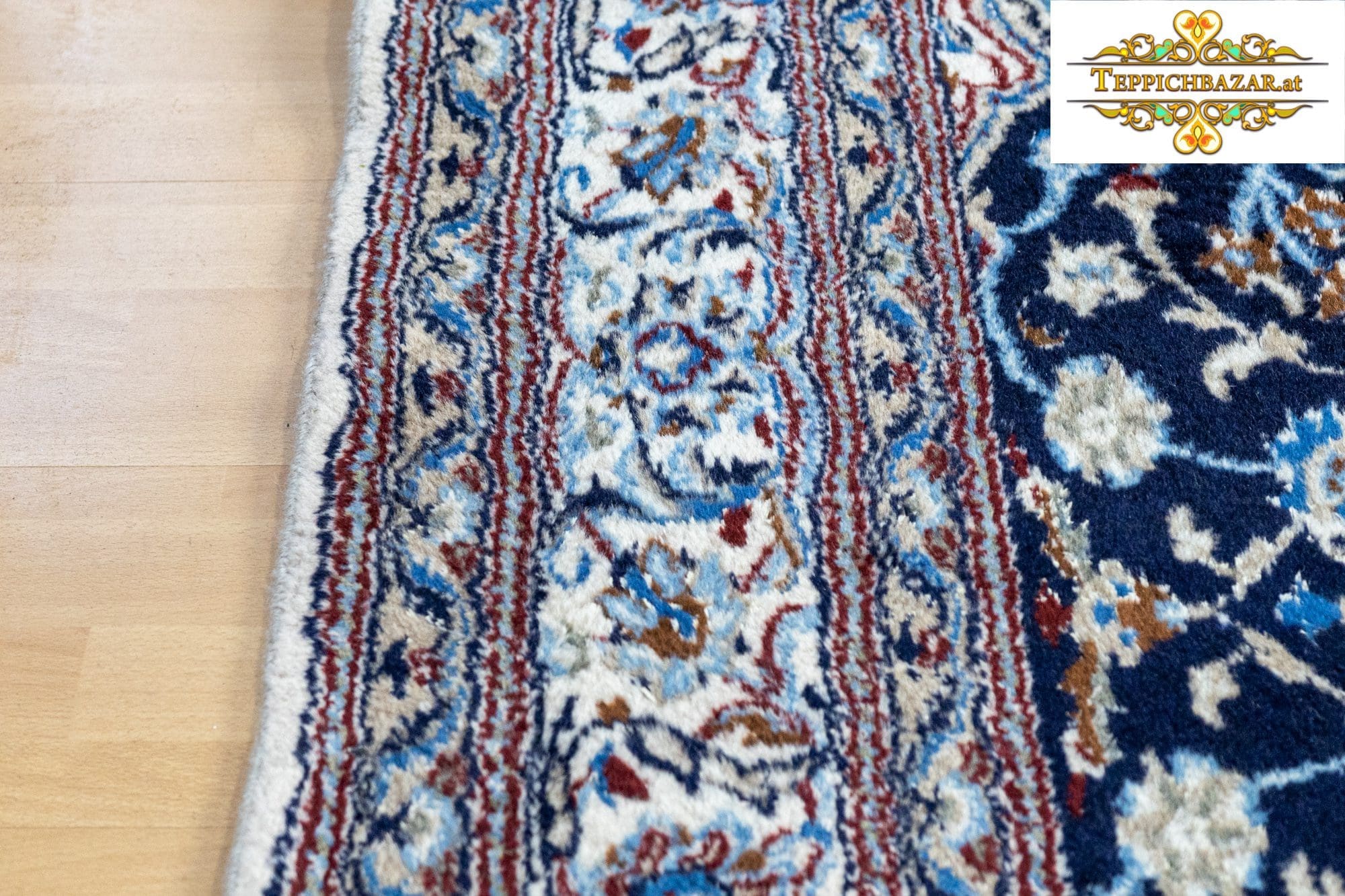
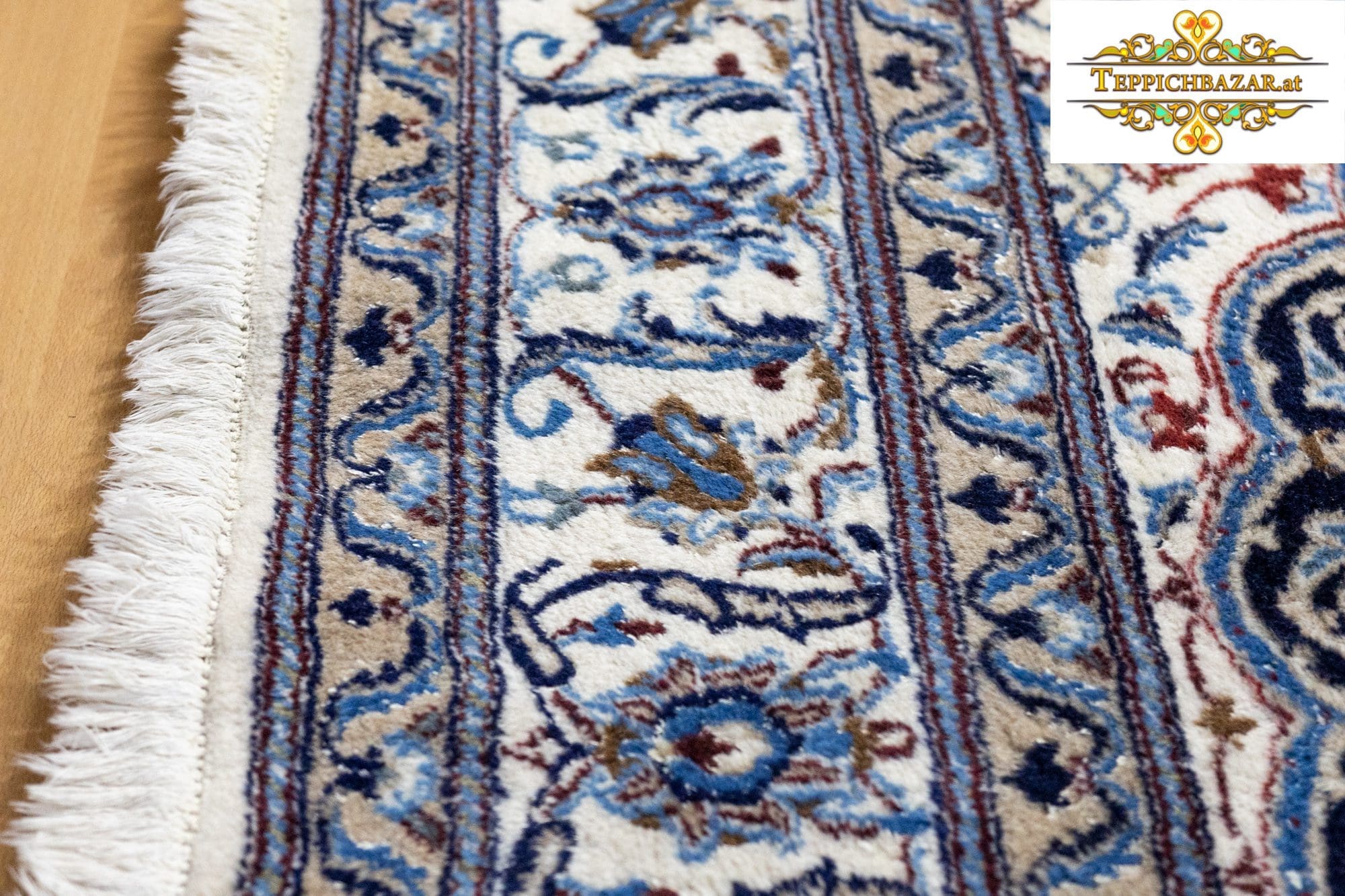
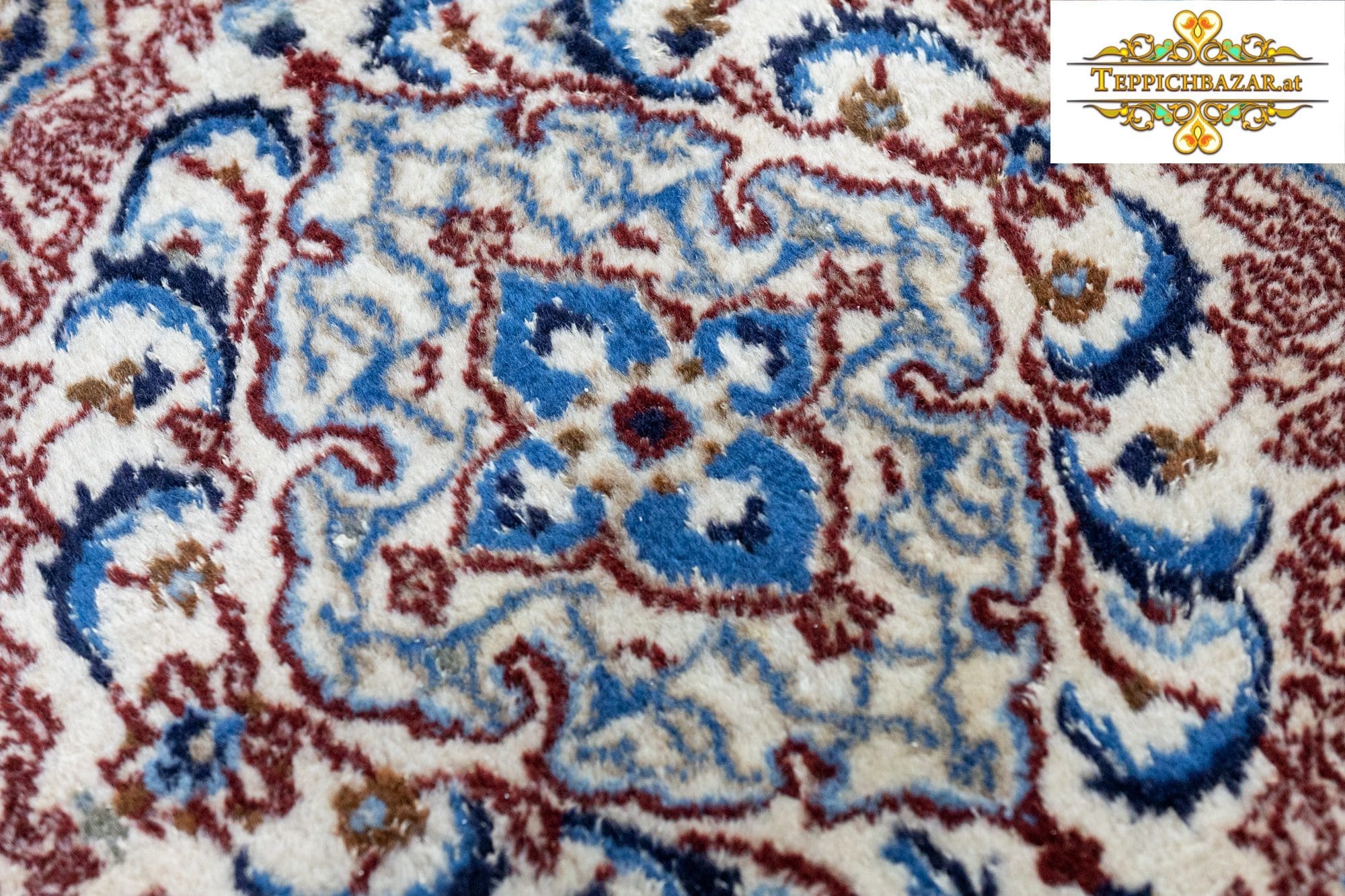
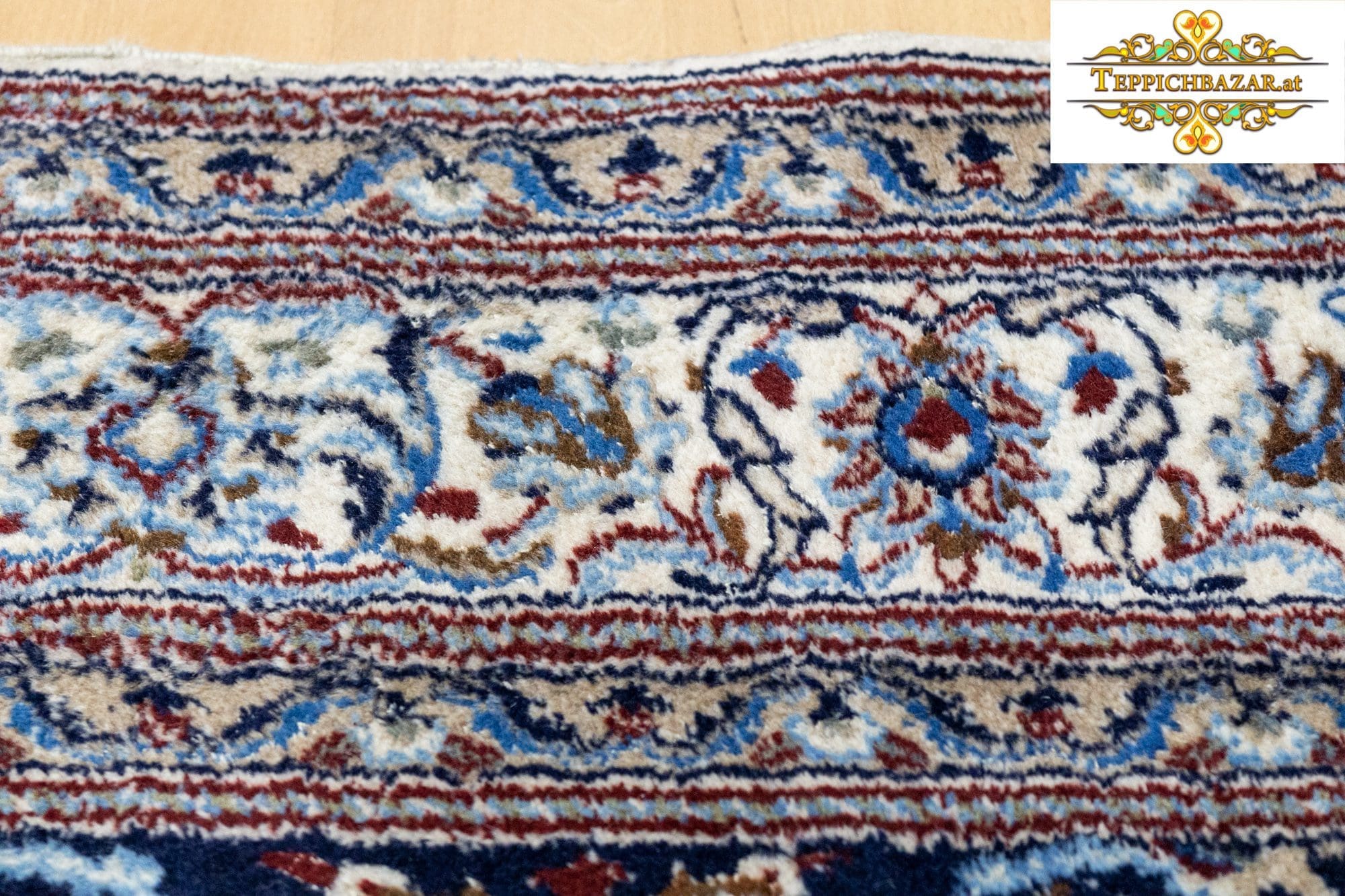
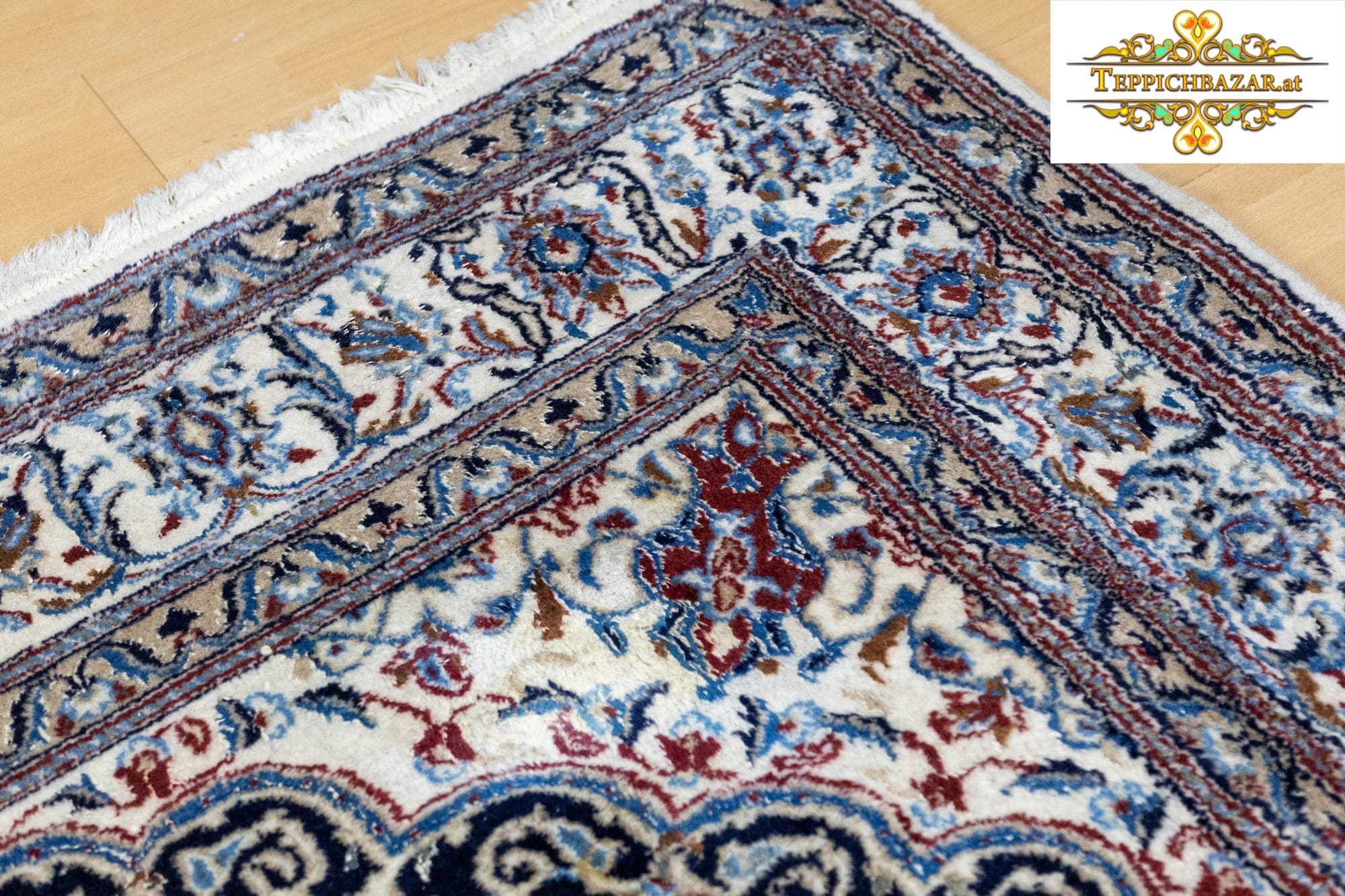
This rug was extensively restored and professionally washed. Its condition is described as very good with minimal patina. Restoration and cleaning are therefore explicit characteristics of this one-off piece. The images are intended to provide a direct view of the surface, the visible patina and the restoration work.
Origin and Tradition
The rug comes from the city of Nain in Persia. Nain lies in central Persia, close to Isfahan. Unlike several other Persian carpet centres, the city was not historically known first and foremost for carpet production. Before the twentieth century, Nain was better known internationally for finely made hand-crafted woollen cloth. This textile background formed part of the setting in which its later carpet tradition developed.
At the beginning of the twentieth century, the trade in woollen cloth declined for various reasons. Local authorities then turned greater attention towards carpet production. During the early period, rugs associated with Nain were initially woven by weavers from nearby Isfahan. This connection helps explain why many contemporary Nain rugs share certain design features with Isfahan carpets.
Nain nevertheless developed a distinct regional identity. When local tribes and weavers began producing their own rugs, they introduced personal approaches and local characteristics into the work. The result was a tradition that combines connections to Isfahan with recognisable Nain qualities. Fine drawing, carefully organised ornament and a restrained colour approach are recurring features of the regional style.
Nain rugs are often discussed in relation to Safavid design. The Safavid rulers governed from 1502 to 1722 and brought major changes to the patterns and compositions used in Persian carpets. Schools, workshops and factories encouraged weavers to develop more elaborate designs and to work with complex ornamental arrangements. In Nain rugs, this historical influence can be seen in stylised medallions, floral forms, scrolling vines and occasional representations of fantastical creatures.
The Laa or La indication is traditionally used when discussing the fineness of Nain rugs. The word comes from Farsi and means layers. It refers to the layers of individual warp threads used in the construction. Because the extra length of the warp forms the fringe, Laa can also be counted through the yarn fibres making up a fringe. In the traditional scale, a Nain rug with 4La is regarded as the finest, while 9La is also considered good quality within the broader Nain tradition.
Making a finely knotted Nain rug requires time and practiced hands. Thousands of individual knots must be placed so that they become a coherent field of ornament. As knot density rises, progress across the surface becomes slower. The production of such rugs can therefore take months and, in some cases, several years. The completed textile reflects a sequence of tasks that includes preparing the warp, inserting the wefts, tying the knots, trimming the pile and defining the finished pattern.
Design and Pattern
The pattern of this rug is described as a Lachak-Toranj Nain medallion. Its design is therefore organised around a Nain medallion and belongs to the medallion-based side of the Nain tradition. Lachak-Toranj describes a composition in which corner elements relate to a central toranj or medallion. The pattern name summarises the formal arrangement of this piece, while the images provide the direct view of its individual drawing.
Medallion layouts are an important part of Persian carpet design. A central ornament gives the field a clear organising point and establishes a visual axis. Vines, leaves and flowers arranged around it can guide the eye towards the borders. Nain interpretations are frequently finely drawn, with curved floral lines and forked leaves that recall the arabesque style. These elements create movement while preserving the balance of the central composition.
Nain weavers have traditionally used the Shah Abbas design as an important source of pattern ideas. It brings together stylised flowers, curling vines and repeated plant forms. The Islimi motif is another pattern associated with Nain rugs and may be built from interconnected vines and several star medallions. Animal motifs can appear between floral elements. Some highly skilled master weavers have also incorporated human figures into their compositions.
Colour is closely connected with the visual language of Nain. The tradition often combines shades of blue with beige, grey and brown against an ivory or cream ground. White silk may be used to outline ornaments so that fine contours stand out. Green, yellow and orange are less common and may be introduced selectively to highlight particular details. These are general characteristics of Nain design and do not add unrecorded colour details to this individual rug.
Technique has a direct effect on how the pattern is read. A closely trimmed pile allows the edges of medallions, leaves and vines to remain distinct. Dense knotting supports narrow lines and small changes in direction. The warp creates the foundation, the knots build the drawing and the final trimming reveals the intended separation between design elements. In this way, construction and pattern are not independent features but parts of one continuous weaving process.
The Lachak-Toranj Nain medallion therefore combines a central Persian layout with the fine floral vocabulary associated with Nain. The wording identifies the design of this rug, not an additional place of origin. Its stated origin is the city of Nain in Persia. The regional background helps place the medallion within the history of Nain weaving without changing the specific description of the piece.
Special Features
This one-off rug is identified as a hand-knotted Nain Persian rug with a 12La construction, meaning twelve yarn layers, and an indicated density of approximately 250,000 knots per square metre. Its named pattern is a Lachak-Toranj Nain medallion. The material description records 100% pile and 100% cotton for the warp. These are the specific technical and design details given for the rug.
The rug has been extensively restored and professionally washed. Its condition is described as very good with minimal patina. Patina can refer to the traces left by previous use and to the surface character that develops over time. Here it is expressly described as minimal. The photographs allow the surface, the visible patina and the restoration work to be examined directly.
Hand-knotting produces a textile through many separate actions, and small variations in knot placement, contour and surface belong to that method of manufacture. This description does not add further claims about the individual piece. Its stated features remain its Nain origin, its Lachak-Toranj medallion, its 12La classification, its material information, and its restoration, washing and condition.
FAQ
Where does this Nain Persian rug come from?
This rug comes from the city of Nain in Persia. Nain is located in central Persia near Isfahan. The city developed its own carpet tradition while retaining historical links with the neighbouring weaving centre. The word Nain therefore identifies the origin of this rug. Lachak-Toranj Nain medallion, by contrast, names the design. It should be read as a pattern description rather than as a second place of origin.
What does 12La mean in a Nain rug?
12La means twelve yarn layers. In Nain weaving, La or Laa refers to the layers of the warp threads and can also be considered through the yarn fibres that form a fringe. The term is traditionally used when assessing the fineness of Nain rugs. For this rug, the 12La designation is accompanied by an indicated density of approximately 250,000 knots per square metre. The rug uses asymmetrical Persian knots, a customary feature of Nain construction.
What is the condition of the rug?
The rug is described as being in very good condition with minimal patina. It has been extensively restored and professionally washed. These statements concern the condition of this specific one-off piece. The photographs provide the appropriate way to inspect its surface, the visible patina and the restoration work. No further condition claims are added beyond the details provided for this rug.
To provide the best experiences, we use technologies like cookies to store and/or access device information. Consenting to these technologies will allow us to process data such as browsing behavior or unique IDs on this site. Not consenting or withdrawing consent, may adversely affect certain features and functions.
Functional Always active
The technical storage or access is strictly necessary for the legitimate purpose of enabling the use of a specific service explicitly requested by the subscriber or user, or for the sole purpose of carrying out the transmission of a communication over an electronic communications network.
Preferences
The technical storage or access is necessary for the legitimate purpose of storing preferences that are not requested by the subscriber or user.
Statistics
The technical storage or access that is used exclusively for statistical purposes.The technical storage or access that is used exclusively for anonymous statistical purposes. Without a subpoena, voluntary compliance on the part of your Internet Service Provider, or additional records from a third party, information stored or retrieved for this purpose alone cannot usually be used to identify you.
Marketing
The technical storage or access is required to create user profiles to send advertising, or to track the user on a website or across several websites for similar marketing purposes.

 SECURE PAYMENT
 SHIPPING PARTNERS