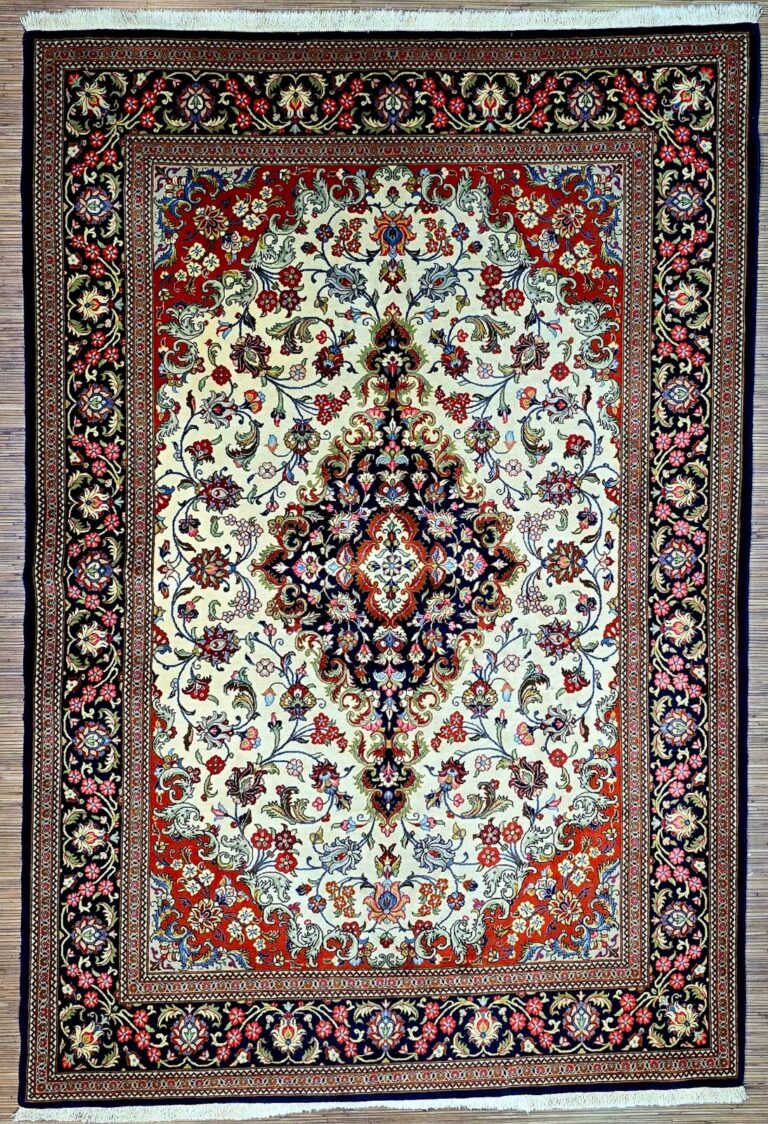
Persian Rug Nain 250×160 cm Wool Hand-knotted (Sold)
€ 1685
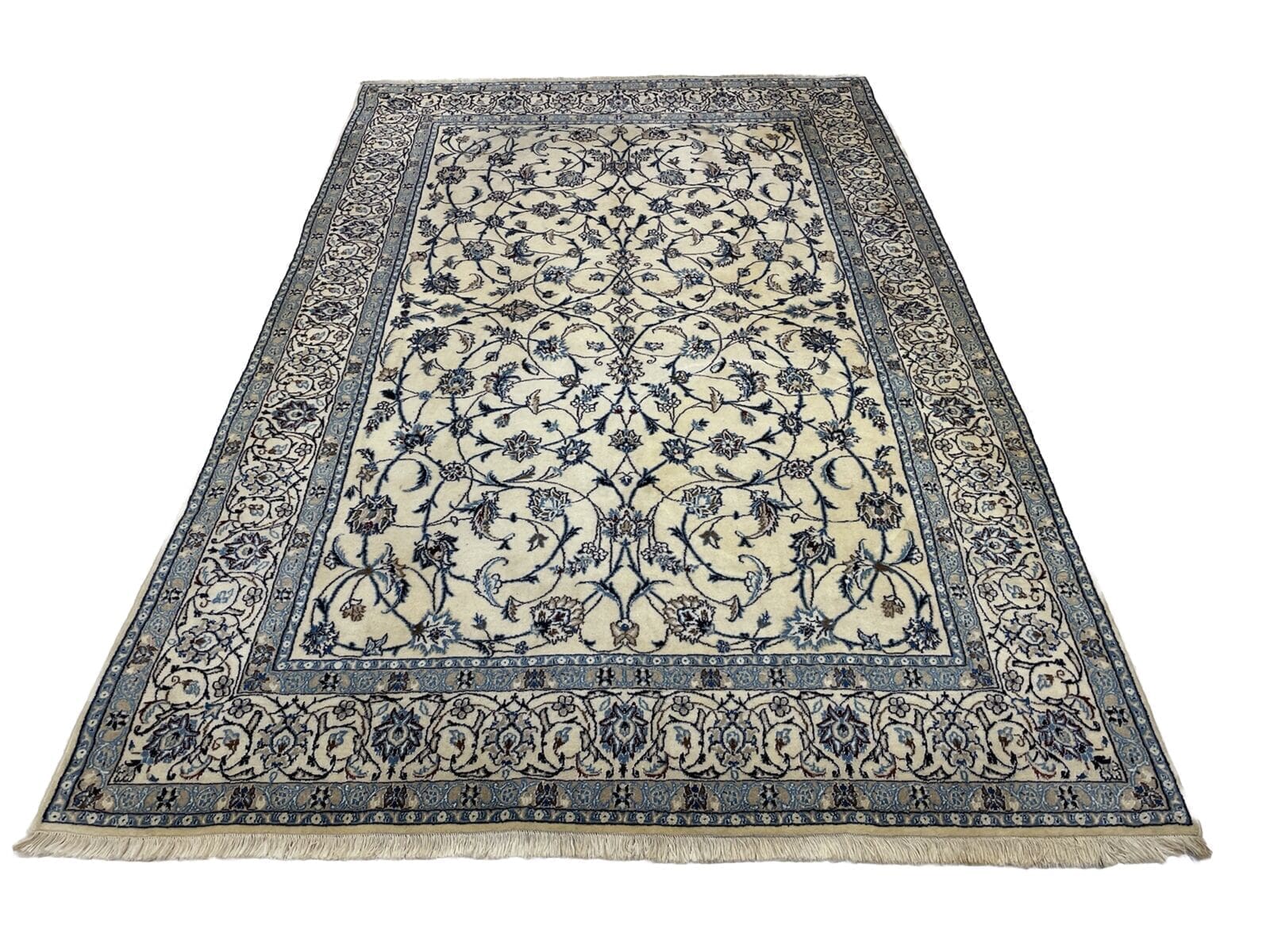
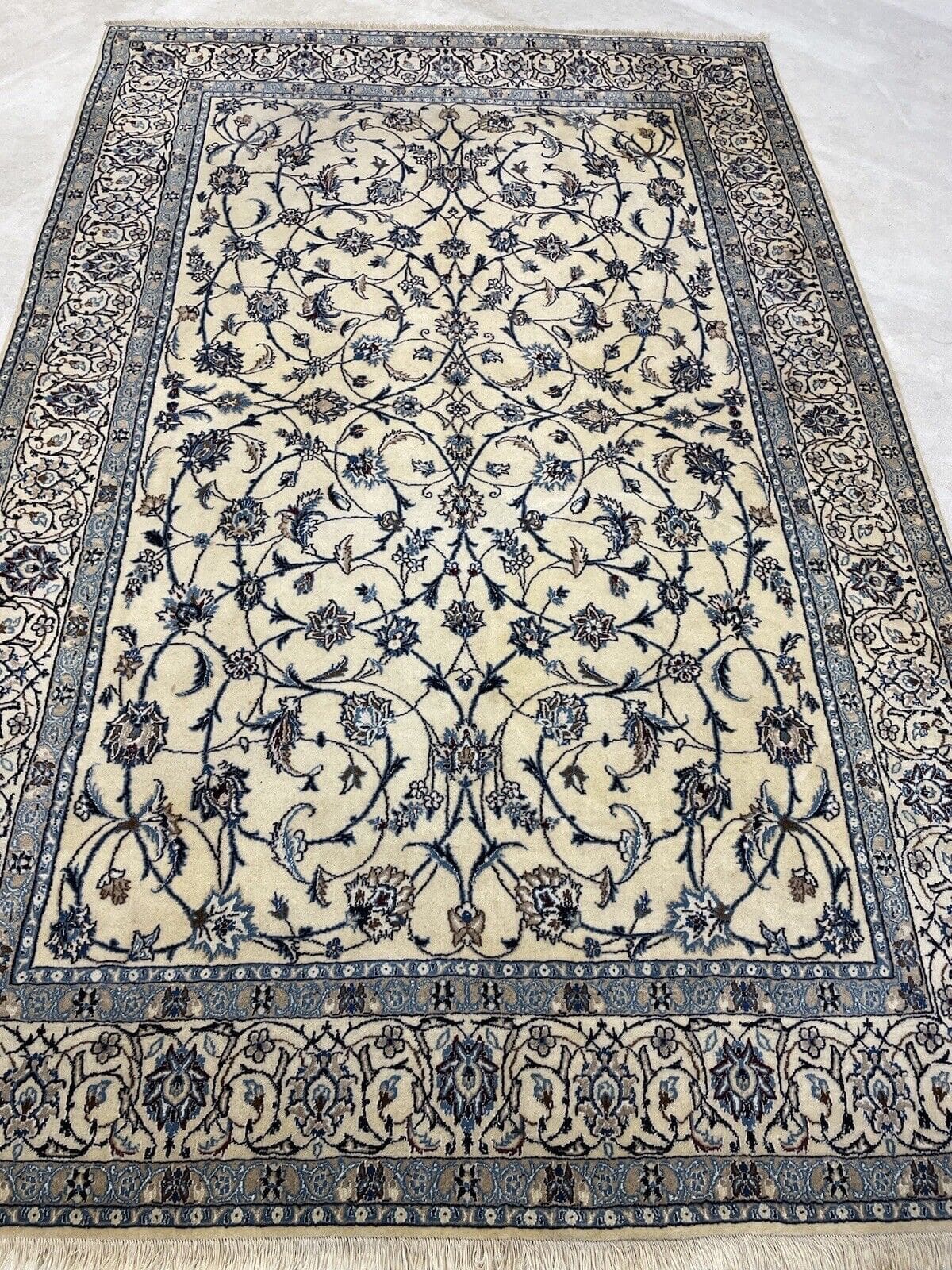
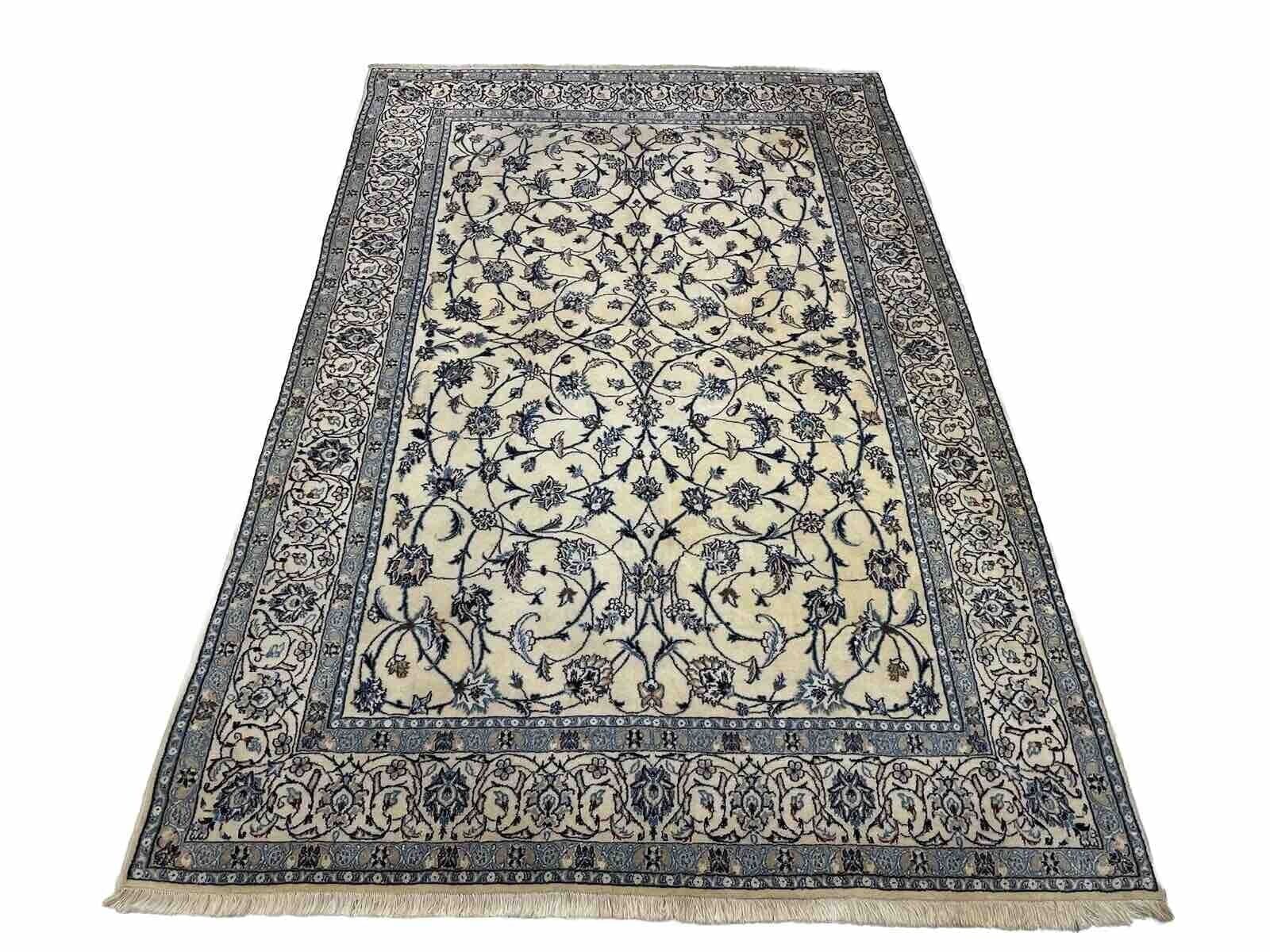
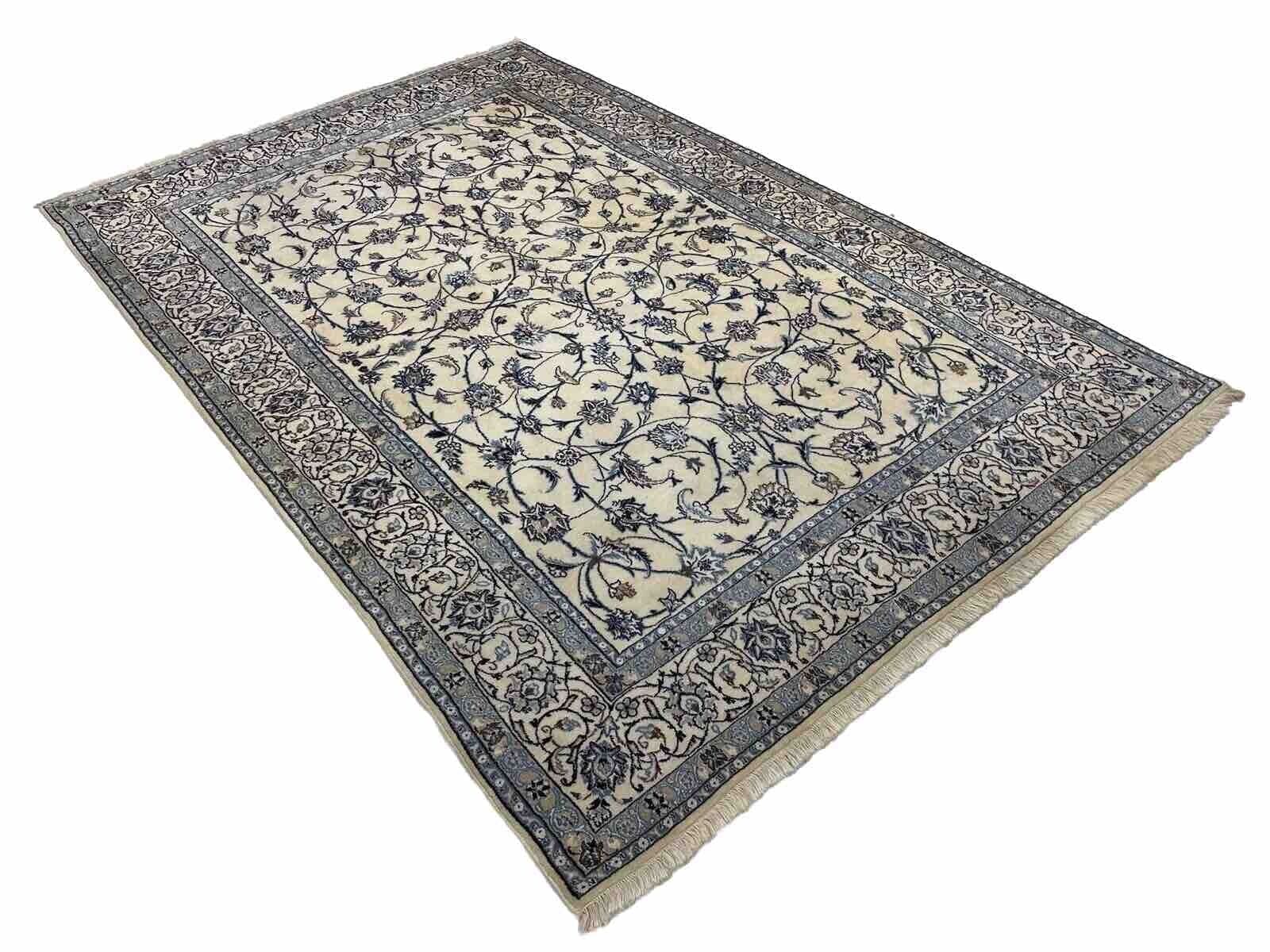
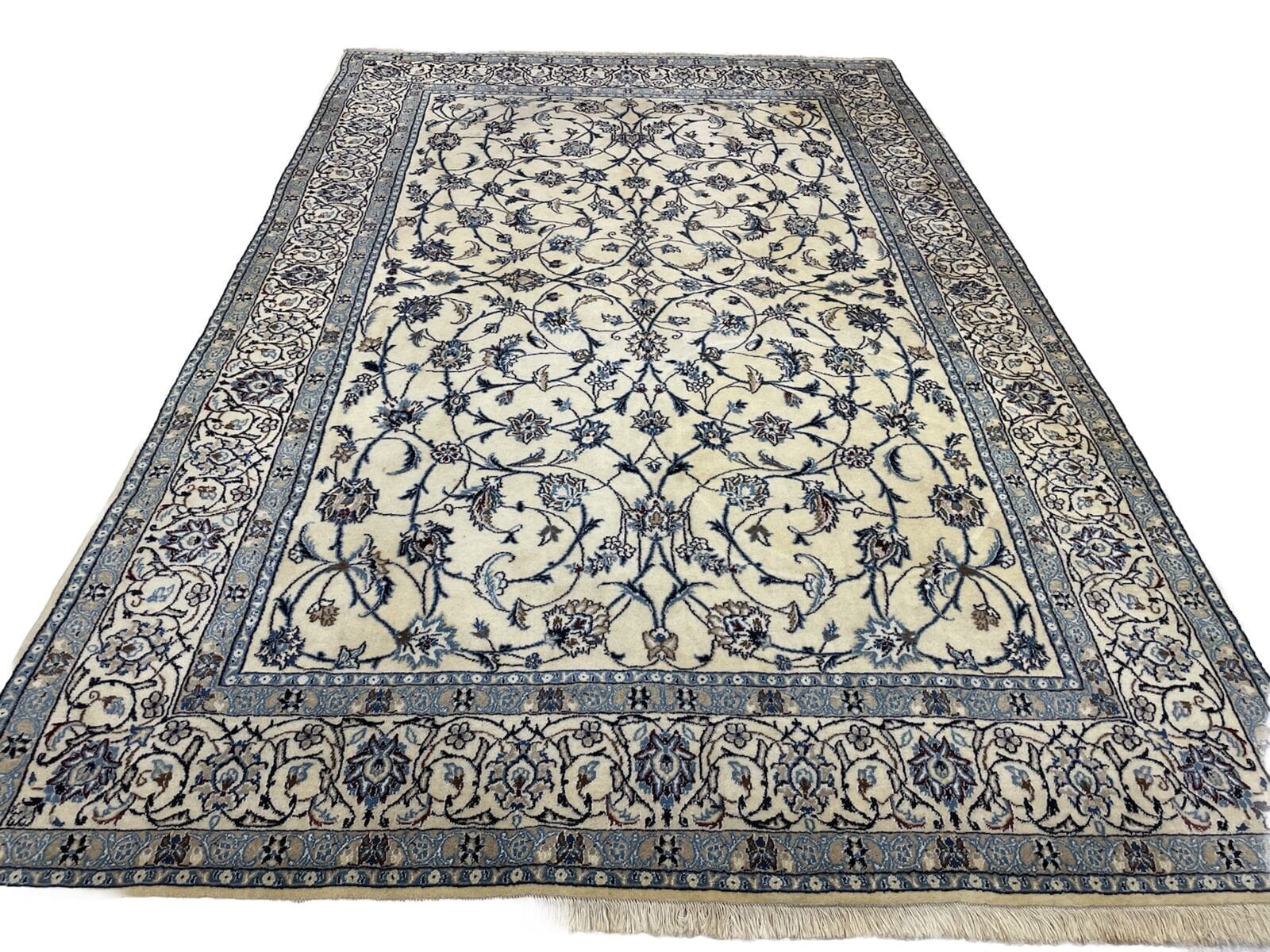
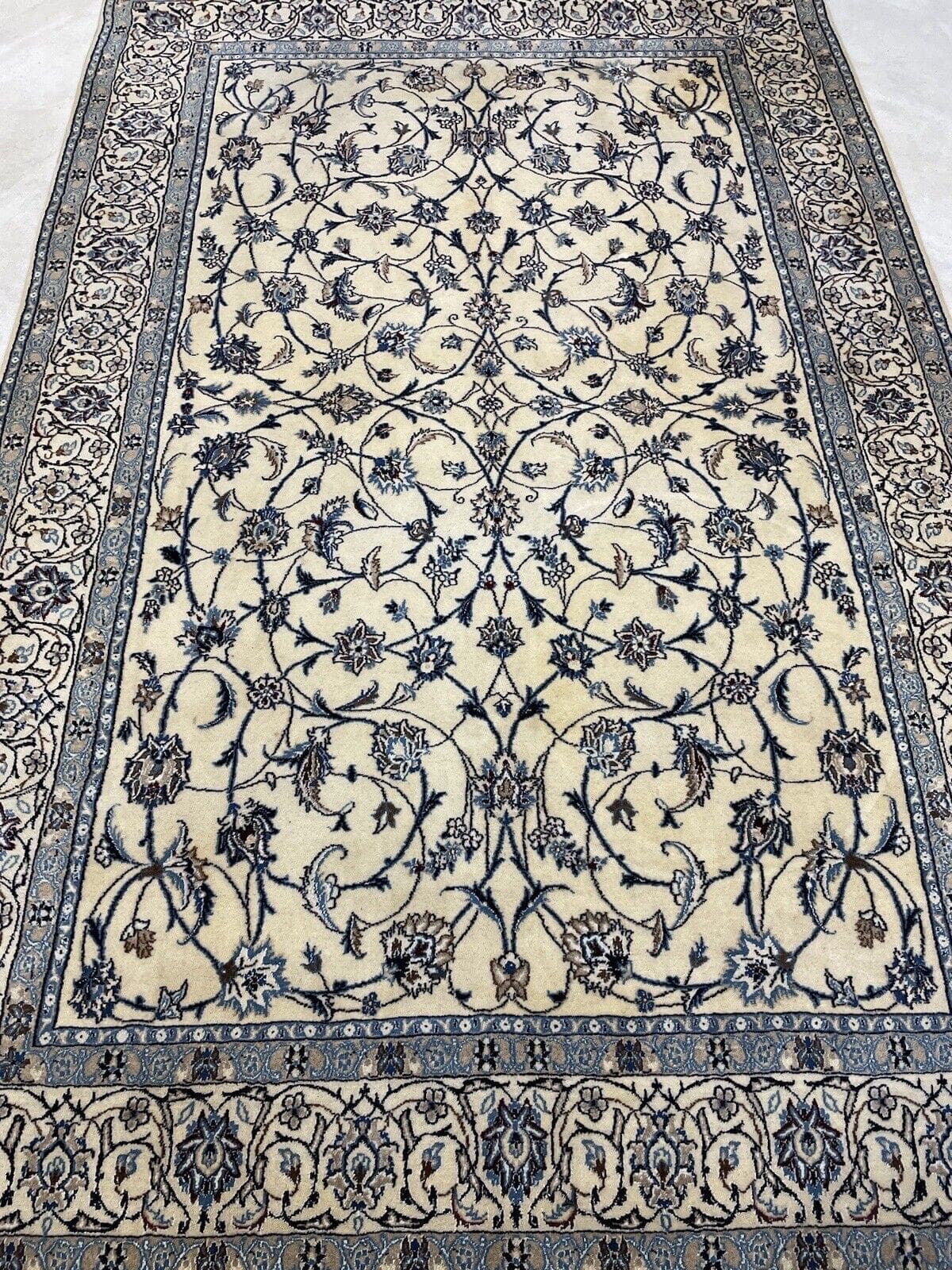
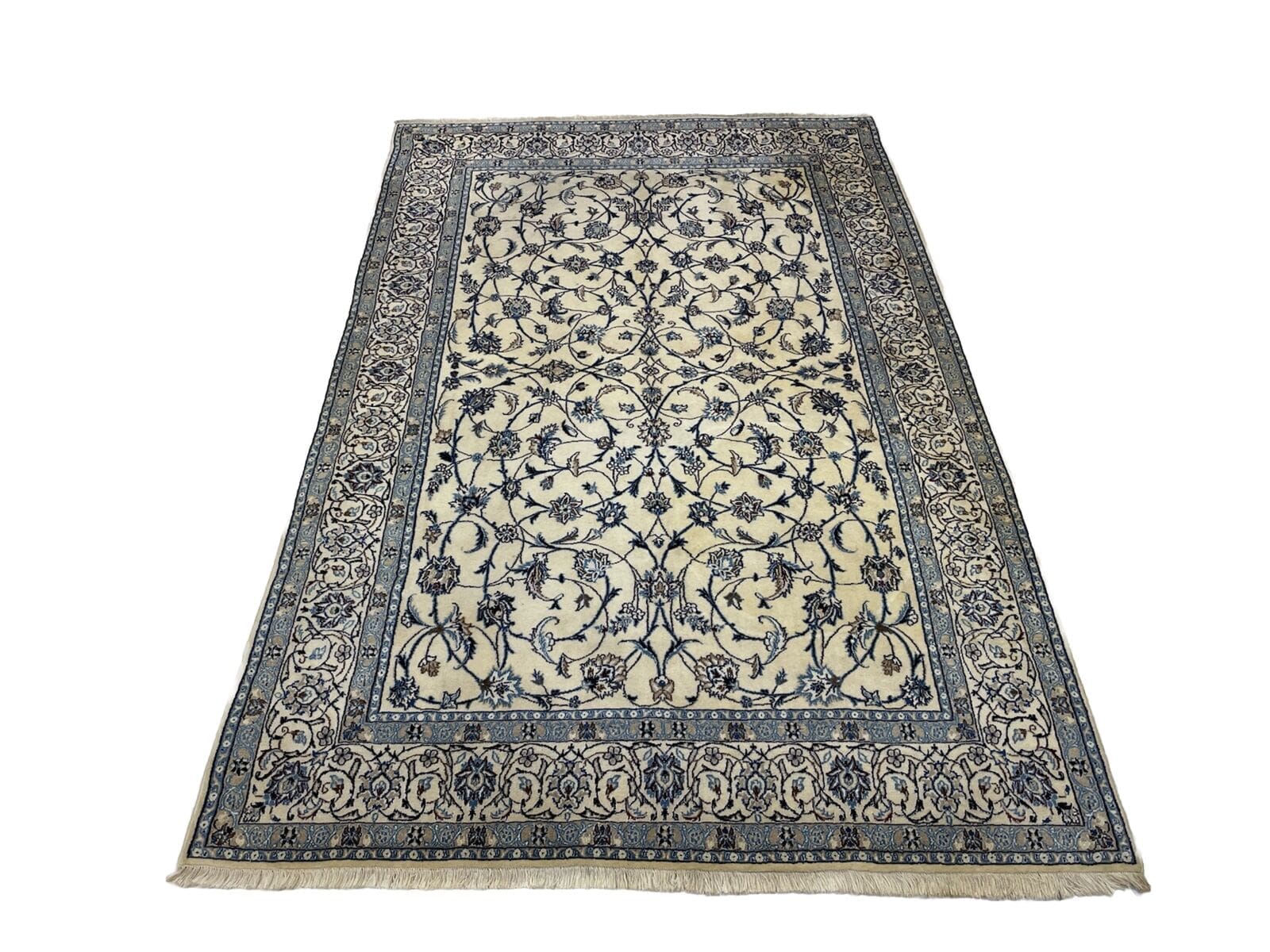
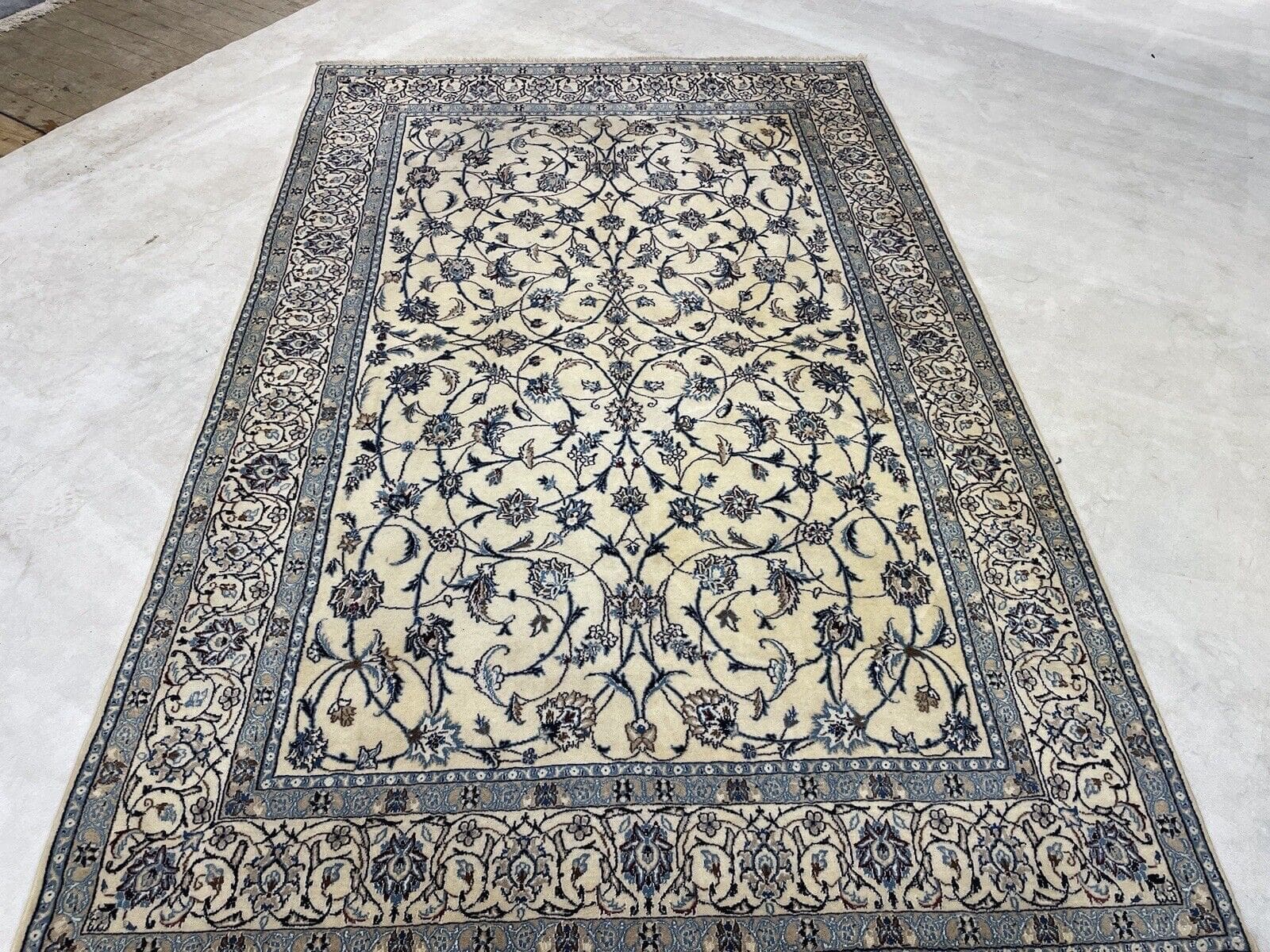
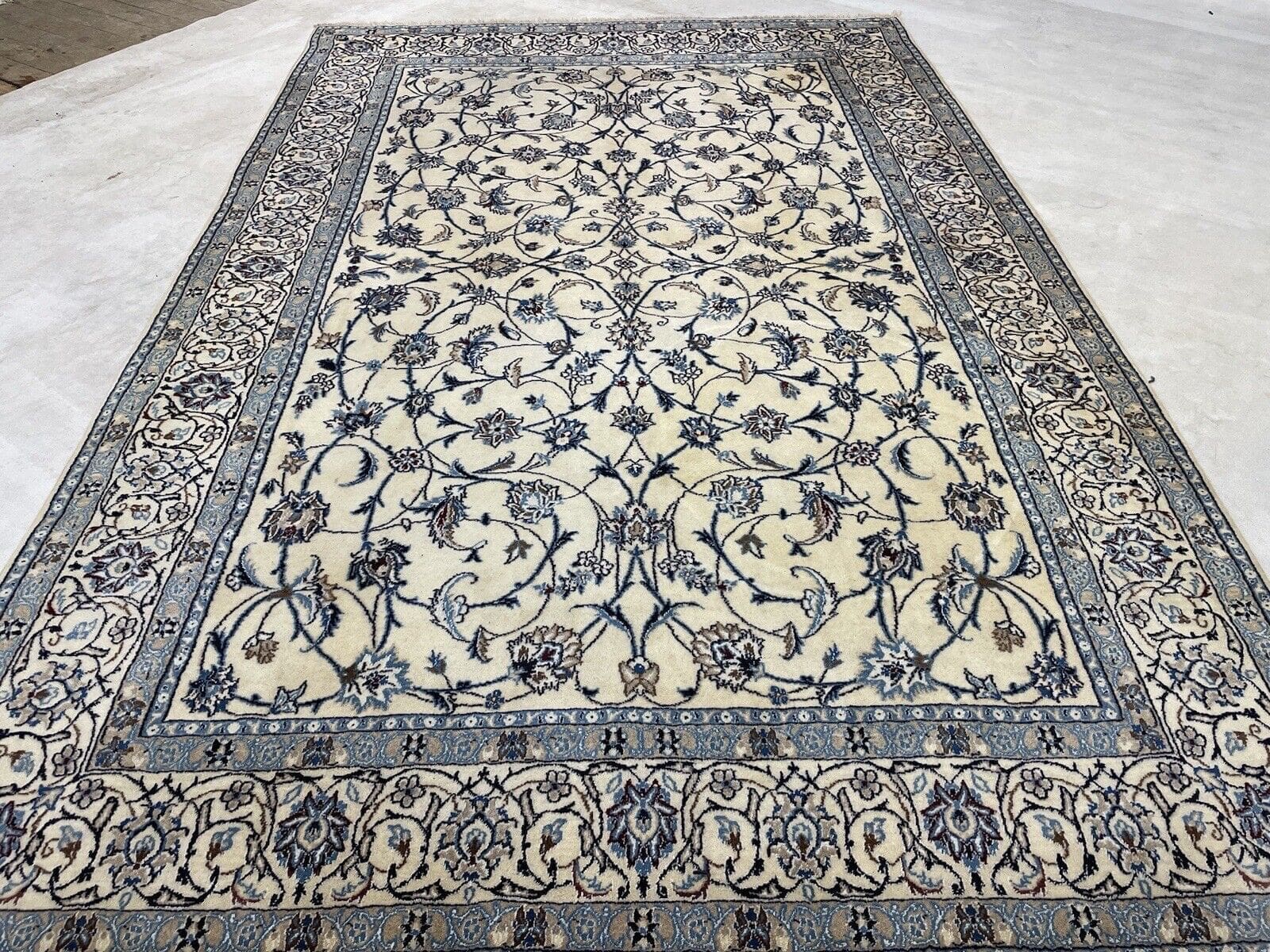
Hand-knotted Nain Persian rug | Material: pile high-quality wool with silk | Size: 250×160 cm | Pattern: Floral design with medallion | Condition: New with label | Pile height: 1-3 cm
This Nain Persian rug is hand-knotted. Its pile is made from high-quality wool with silk. This combination brings together the textile character of wool and the smoother, finer qualities associated with silk. The material is specified for this rug as high-quality wool with silk. No separate warp material is stated, so no additional warp claim is made here.
Hand-knotting is a gradual textile process. Individual knots are worked into the foundation row by row, with weft threads helping to secure the structure as the rug develops. The design therefore emerges through a large number of separate manual operations rather than through a printed or mechanically applied surface pattern. A floral medallion requires careful control of outlines, repeated motifs and the relationship between the central field and its surrounding elements.
The pile height given for this rug is 1-3 cm. Pile height refers to the height of the visible pile above the foundation. Wool and silk also respond differently to light and touch. Wool generally provides a more textured and subdued surface, while silky fibres can contribute finer highlights to individual areas of a design. The stated material combination is therefore suited to a rug whose pattern depends on clear floral detail.
Hand-knotted wool and silk should be handled with care. Gentle vacuuming without an aggressive brush, protection from persistent moisture and professional cleaning when necessary are sensible measures for this type of textile. These are general care principles and do not add any unstated information about the construction of this particular rug. The documented features remain its hand-knotted technique, its wool and silk pile, and its stated pile height.
Origin and Tradition
Nain is a well-known carpet centre in central Iran. The town lies in an arid region and has developed a distinctive tradition within Persian weaving. Nain rugs are commonly associated with finely organised floral decoration, a clear central field and a restrained, carefully balanced composition. Their designs belong to the broader Persian tradition in which a rug is conceived as an ordered ornamental field rather than as a randomly filled surface.
The Nain tradition took shape during the twentieth century while drawing on older Persian forms of ornament. A central medallion is often combined with scrolling vines, blossoms, leaves and coordinated corner pieces. These components are arranged in relation to one another: the centre establishes the main axis, the field carries the secondary decoration, and the border provides a visual conclusion. The result is a composition in which the parts remain distinct while contributing to one unified pattern.
Regional Persian weaving traditions differ in their preferred drawing, colour relationships and structural approaches. Nain is especially associated with precise floral layouts and a refined treatment of small ornamental elements. Persian floral vocabulary may include vines representing continuous movement, blossoms that punctuate the line, and leaves that fill or connect the spaces between larger motifs. These forms are usually stylised rather than intended as a literal botanical scene.
The craft tradition depends on translating a drawn pattern into small repeatable units. A weaver must keep the proportions and alignment of the design in view while building the rug knot by knot. Symmetry is important in many medallion compositions, particularly along the central axis and across the corner areas. At the same time, the distribution of smaller floral details gives the field visual rhythm and prevents the design from becoming a mere geometric diagram.
Nain rugs are also part of the long history of Persian carpets as practical and decorative textiles. A carpet can define an interior space while carrying a carefully structured visual language. Borders frame the central field, corner pieces mediate between the rectangular format and the inner design, and the medallion establishes a point of focus. This relationship between function and ornament is characteristic of Persian carpet design in general.
The name Nain identifies the Persian regional and stylistic category used for this rug. It does not, by itself, establish a particular workshop, date, signature or knot density. Those details are not supplied for this piece and are not inferred here. The documented origin is Persian, and the rug is described as a Nain Persian rug with a hand-knotted construction.
Design and Pattern
The pattern of this rug is described as a floral design with a medallion. In carpet design, a medallion is a central ornament that gives the inner field its main point of organisation. It may be formed from curved, oval or angular contours, or from several interlocking shapes. Its role is to establish a centre from which the surrounding floral arrangement can be balanced.
Floral ornament is one of the central languages of Persian carpet design. Vines, leaves, buds and blossoms can be combined into scrolling movements that guide the eye across the field. The motifs may be highly stylised, with shapes reduced to lines and repeated forms rather than copied directly from nature. Repetition creates continuity, while variations in scale and placement give the composition its internal rhythm.
A medallion composition is often organised around vertical and horizontal axes. Corresponding sections may mirror one another, giving the pattern a sense of order. The floral details surrounding the centre can repeat the geometry of the medallion or soften it with curved stems and foliage. This contrast between a defined centre and flowing plant forms is one reason medallion designs remain a lasting part of Persian carpet tradition.
Corner pieces have a practical visual function in a rectangular rug. They help the central field transition toward the edges and fill the areas where a circular or oval composition would otherwise leave open spaces. Corner ornaments can echo the medallion, repeat its floral vocabulary or provide a more compact version of the surrounding design. Together with the border, they prevent the composition from appearing unfinished at the margins.
The border traditionally frames the field through one or more bands. A narrow guard stripe may separate the inner design from a wider main border, while the main border carries repeated ornamental elements. The exact border drawing of this rug is not further specified. In general, a border gives a floral medallion rug a clear edge and establishes a visual relationship between the central motif and the outer perimeter.
Because the rug is hand-knotted, the visible design is built from textile structure rather than applied as a flat print. Lines, leaves and blossoms are rendered through the arrangement of individual knots and the contrast between the materials in the pile. This makes craftsmanship and pattern closely connected. The stated floral medallion design belongs to a tradition in which precision, repetition and balance are used to create an ordered ornamental surface.
Special Features
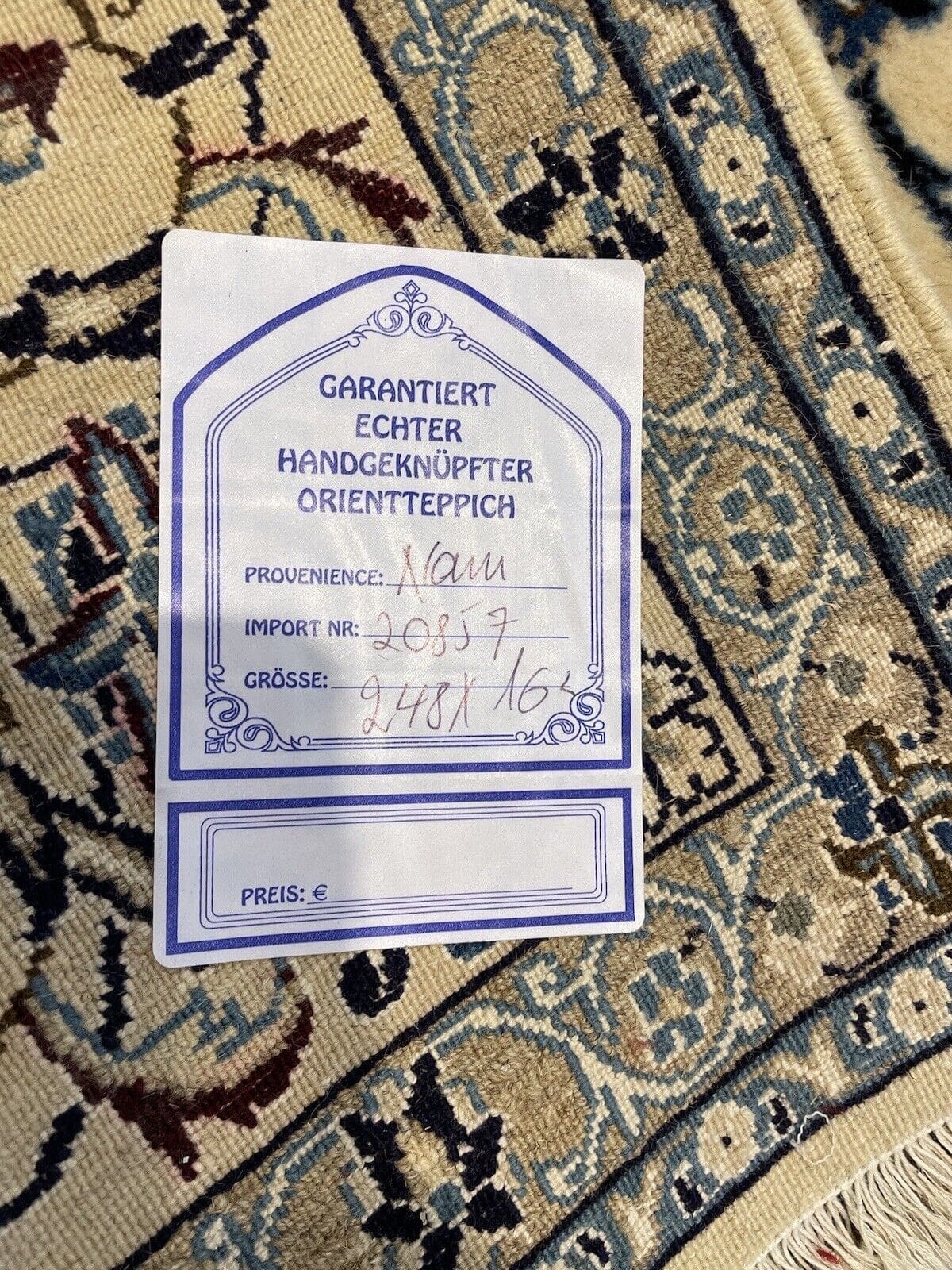
The rug is described as new with a label. It is also specified as suitable for underfloor heating. For this use, it should be placed on a clean, dry and level surface so that heat and air circulation are not unnecessarily obstructed. Even heat distribution and moderate operation are sensible precautions. The floor and rug should be checked periodically for moisture or excessive heat accumulation.
Its combination of hand-knotted construction, high-quality wool with silk, floral medallion design and Persian Nain classification defines the documented character of this piece. No signature, production year or knot density is stated. No specific workshop is claimed either. The description therefore remains focused on the features that are recorded: origin, technique, materials, pattern, condition and suitability for underfloor heating.
FAQ
What is a Nain Persian rug?
A Nain Persian rug belongs to the Persian carpet tradition associated with Nain in central Iran. Nain designs are commonly recognised for carefully organised floral ornament, central medallions and balanced layouts. The term identifies a regional and stylistic category, not a particular workshop or date. This rug is additionally described as hand-knotted and made with a pile of high-quality wool with silk.
What pattern does this rug have?
This rug has a floral design with a medallion. The medallion forms the central ornamental focus, while floral motifs generally organise the surrounding field through vines, leaves, blossoms and repeated details. Such elements are part of the established Persian design vocabulary. The product description specifies the floral design and medallion but does not provide more detailed information about individual flower types or the exact border drawing.
Can this rug be used with underfloor heating?
Yes. The rug is described as suitable for underfloor heating. It should be used on a dry, level surface with even heat distribution. Moderate operation and occasional checks of the rug and floor can help prevent moisture or heat build-up. The hand-knotted construction and wool-with-silk pile also call for careful cleaning and handling. These recommendations support normal use without adding any unrecorded claim about the rug.
To provide the best experiences, we use technologies like cookies to store and/or access device information. Consenting to these technologies will allow us to process data such as browsing behavior or unique IDs on this site. Not consenting or withdrawing consent, may adversely affect certain features and functions.
Functional Always active
The technical storage or access is strictly necessary for the legitimate purpose of enabling the use of a specific service explicitly requested by the subscriber or user, or for the sole purpose of carrying out the transmission of a communication over an electronic communications network.
Preferences
The technical storage or access is necessary for the legitimate purpose of storing preferences that are not requested by the subscriber or user.
Statistics
The technical storage or access that is used exclusively for statistical purposes.The technical storage or access that is used exclusively for anonymous statistical purposes. Without a subpoena, voluntary compliance on the part of your Internet Service Provider, or additional records from a third party, information stored or retrieved for this purpose alone cannot usually be used to identify you.
Marketing
The technical storage or access is required to create user profiles to send advertising, or to track the user on a website or across several websites for similar marketing purposes.
 SECURE PAYMENT
 SHIPPING PARTNERS