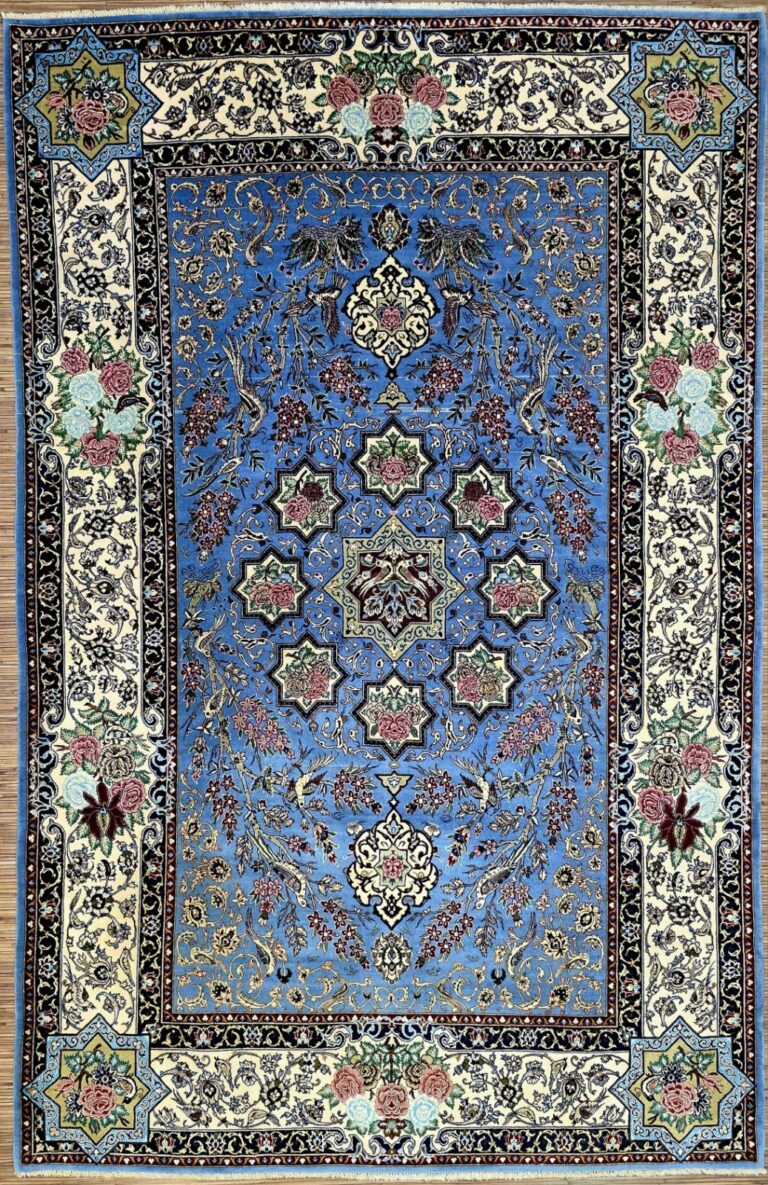
This Nain Persian rug is hand-knotted, with a pile made from 90% virgin wool and 10% silk. Its warp is 100% cotton. Wool and silk have long been used together in Persian rug making, combining the resilient character of wool with the smoother surface and subtle sheen of silk. Wool forms the principal pile material here, while the silk content contributes a finer texture and changing light response across the surface.
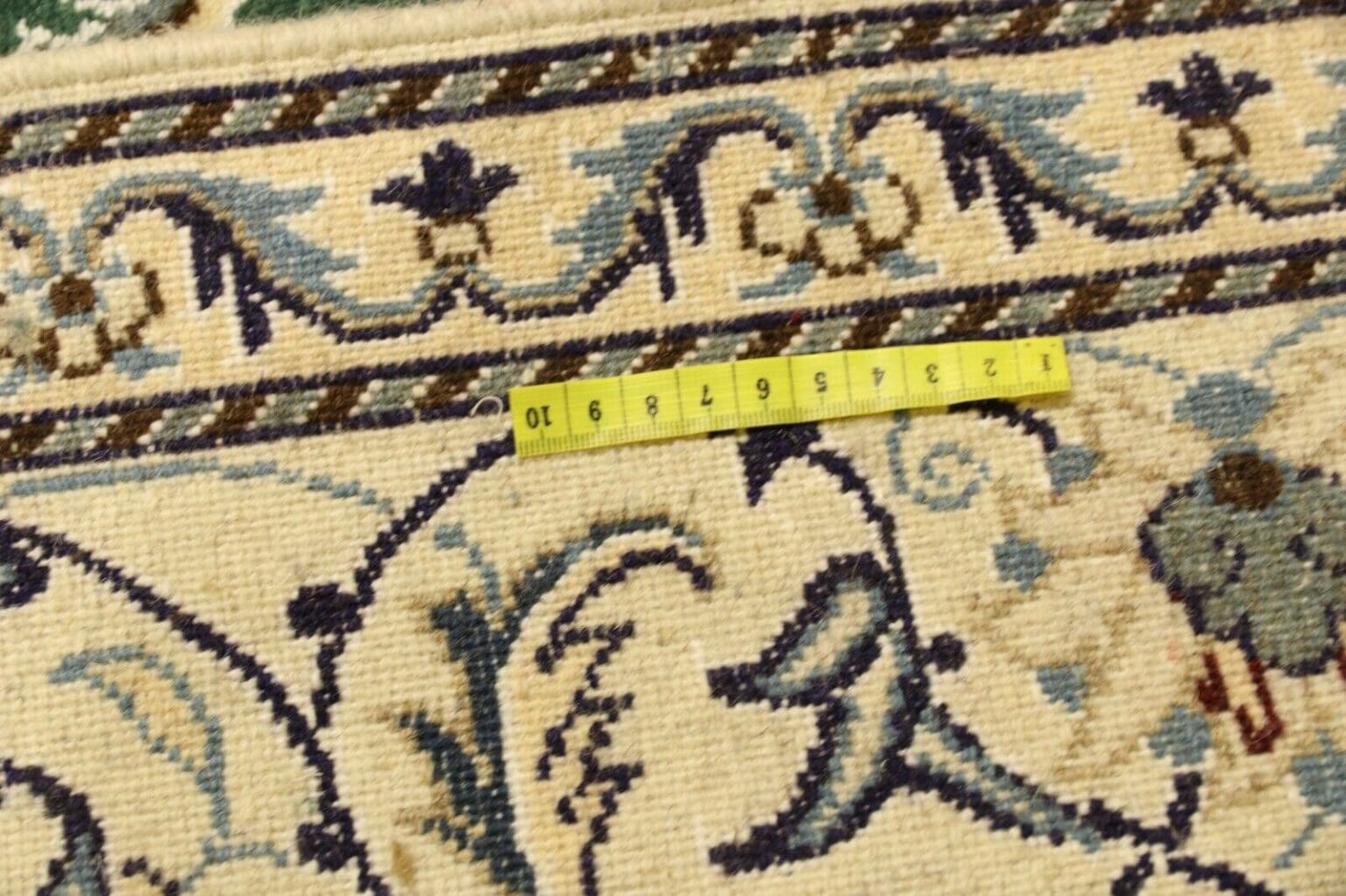
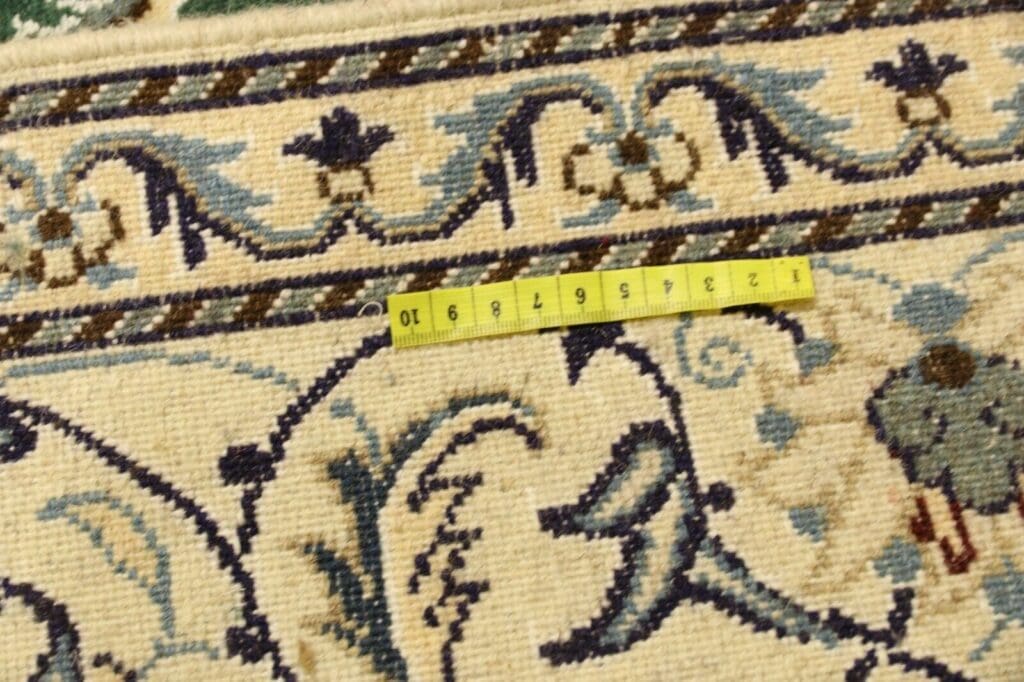
The rug has a knot density of approximately 300,000 knots per square metre, giving it a closely worked construction. A dense structure supports the careful rendering of narrow outlines, small floral elements and detailed ornamental transitions. Hand-knotting builds the rug knot by knot rather than through a mechanical production process. This individual piece is described as new and in very good condition.
In a hand-knotted rug, the warp is stretched on the loom as the foundation of the textile. The pile is then created by placing individual knots around the warp and securing successive rows with weft elements. Once the knotting is complete, the pile is trimmed and the surface is finished. Exact methods vary between weaving regions and workshops, but the direct manual construction is the defining technical feature of this type of rug.
Origin and Tradition
The rug comes from Persia and belongs to the Nain tradition. Nain is an Iranian city associated with finely made Oriental rugs and a distinctive approach to ordered decoration. Its weaving tradition developed within the wider history of Persian carpet making, where the relationship between design, knotting and material is central. Nain rugs are commonly recognised for precise workmanship, balanced compositions and patterns that combine delicacy with a clear overall structure.
The history of Persian carpet making extends across many regions and generations. Rugs were produced for domestic use, formal interiors and decorative purposes, with skills passed between family workshops and local weaving communities. Knowledge of preparing fibres, creating dyes, planning patterns and finishing the woven surface formed part of this craft culture. Regional schools gradually developed their own proportions, colour relationships and ornament systems. Nain is placed within this broader tradition while retaining a recognisable preference for fine detail and visual order.
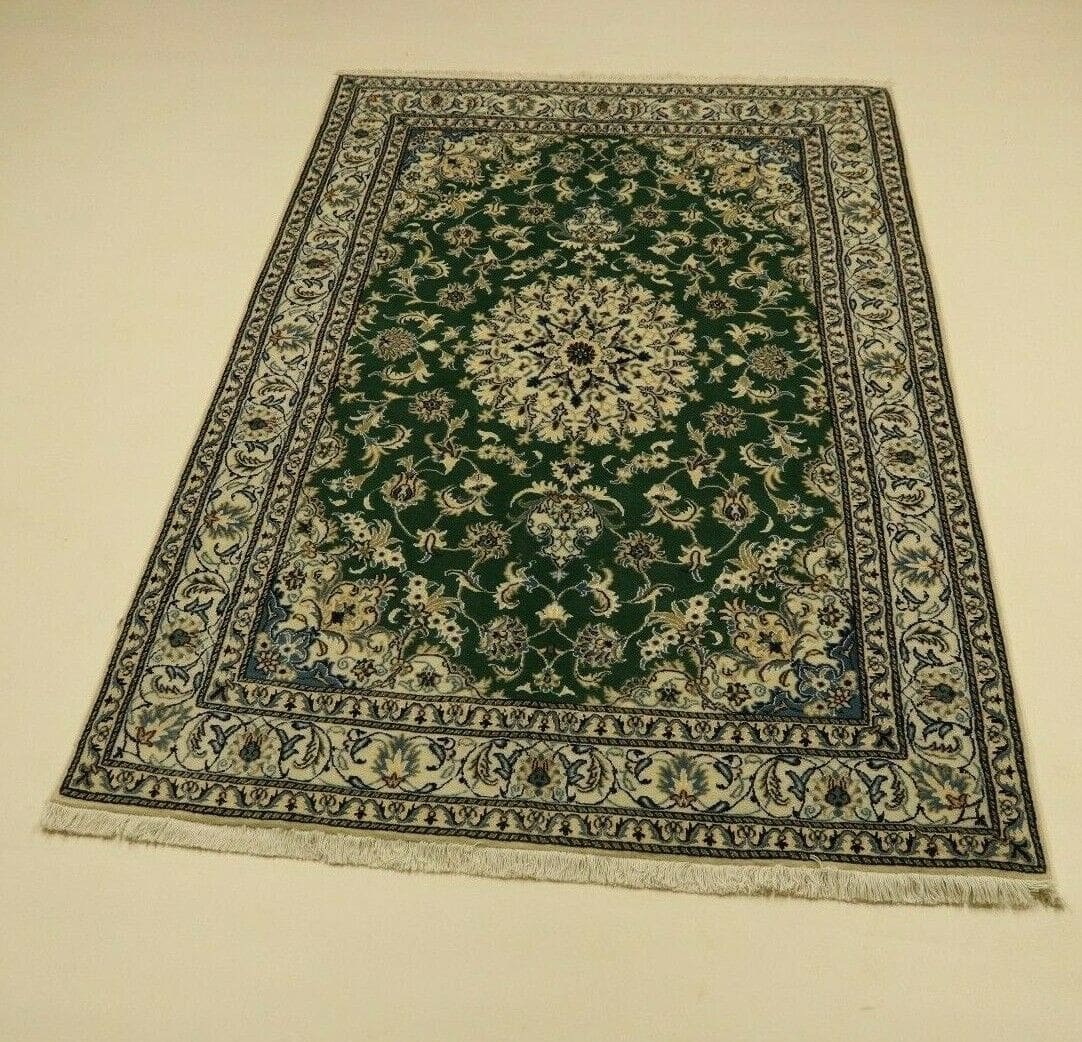
The Nain tradition reflects a form of Persian craftsmanship in which a rug is planned as a complete field of interconnected elements. A central medallion may organise the interior, while side sections and borders reinforce symmetry. Other designs use a continuous arrangement of vines, blossoms and smaller ornaments. These conventions are not merely surface decoration; they establish rhythm, direction and proportion across the woven field.
Hand-knotting gives the weaver control over the gradual development of the design. Each row and each knot contributes to the outline and density of the finished pattern. The pile material, the silk content and the cotton warp all influence the resulting textile character. The Persian origin therefore describes more than a location. It also places the rug within a living craft tradition based on manual construction, inherited design principles and regional methods of interpretation.
Persian rugs differ considerably from one weaving area to another. Nain is often associated with lighter, restrained colour schemes, carefully drawn floral details and an orderly distribution of motifs. This visual language allows Nain designs to work in a range of interior settings without relying on a strongly rustic or heavily saturated appearance. This rug combines that Nain identity with hand-knotted workmanship and a knot density suited to fine pattern definition.
Regional traditions are not static. Pattern designers and weavers have long adapted established compositions by changing scale, spacing, border treatment and the balance between central and continuous designs. A rug can therefore retain the vocabulary associated with Nain while presenting an individual arrangement of familiar forms. Continuity lies in the principles of proportion, detail and craftsmanship, while each finished piece remains the result of a particular making process.
Design and Pattern
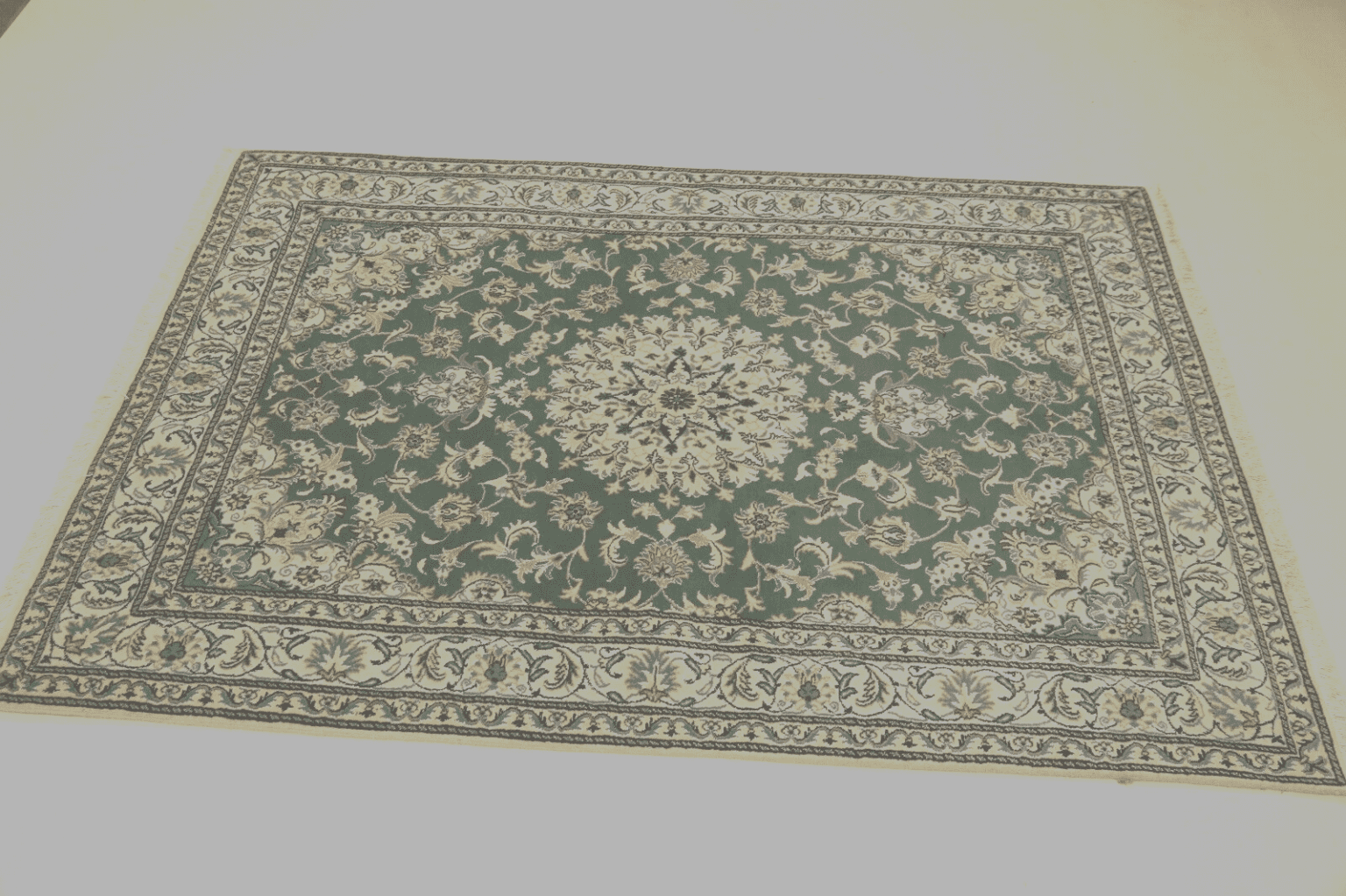
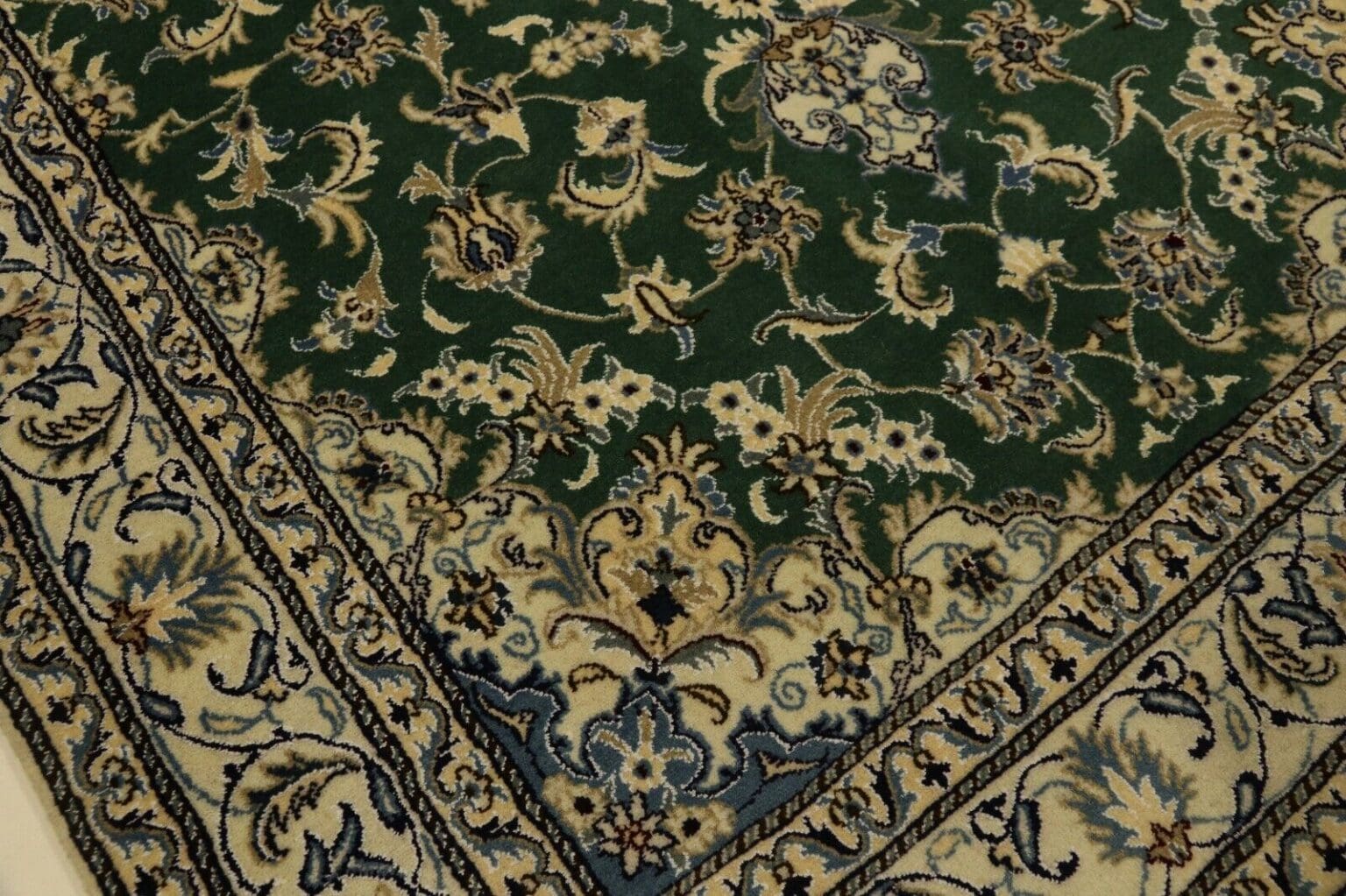
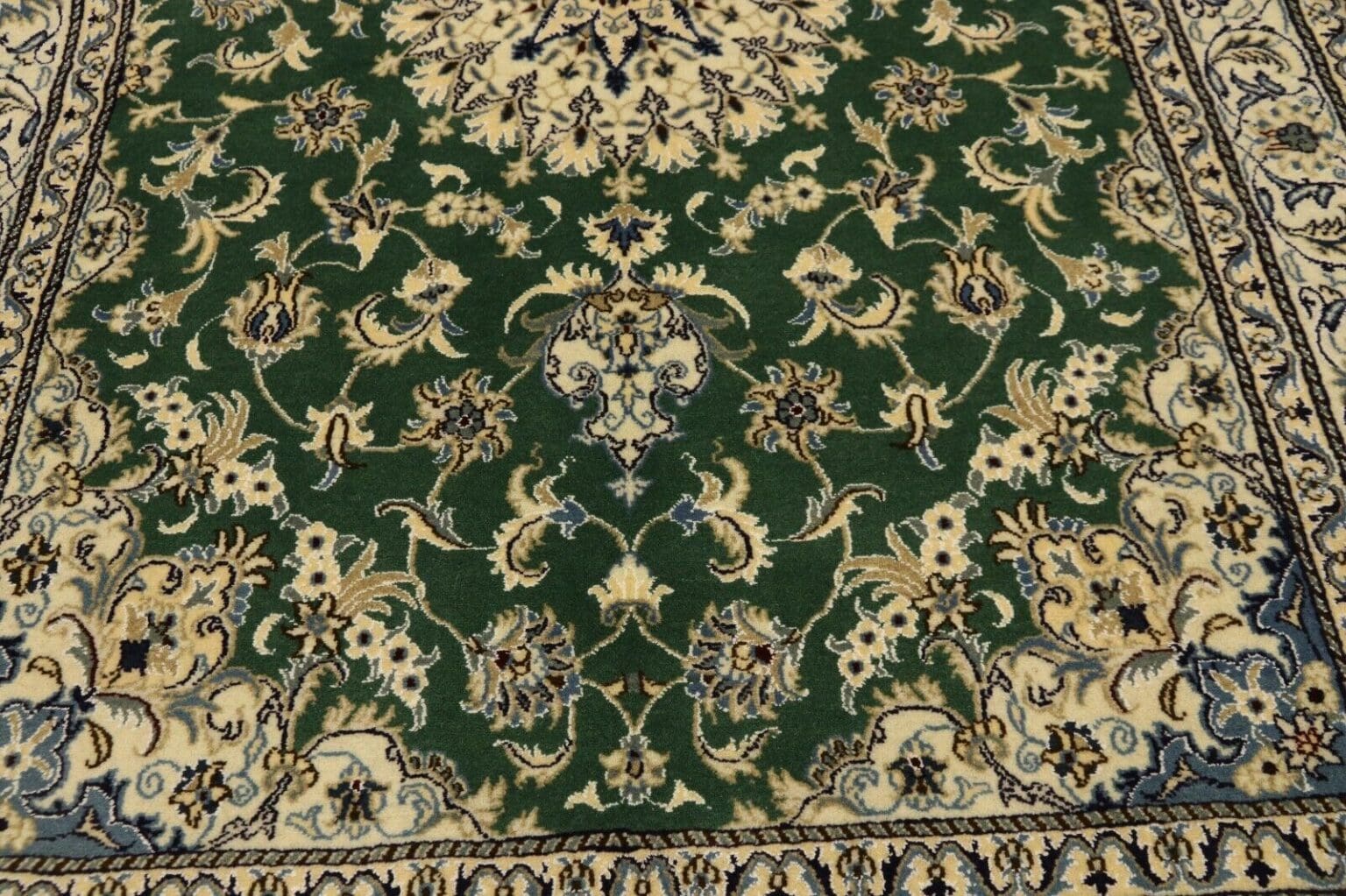
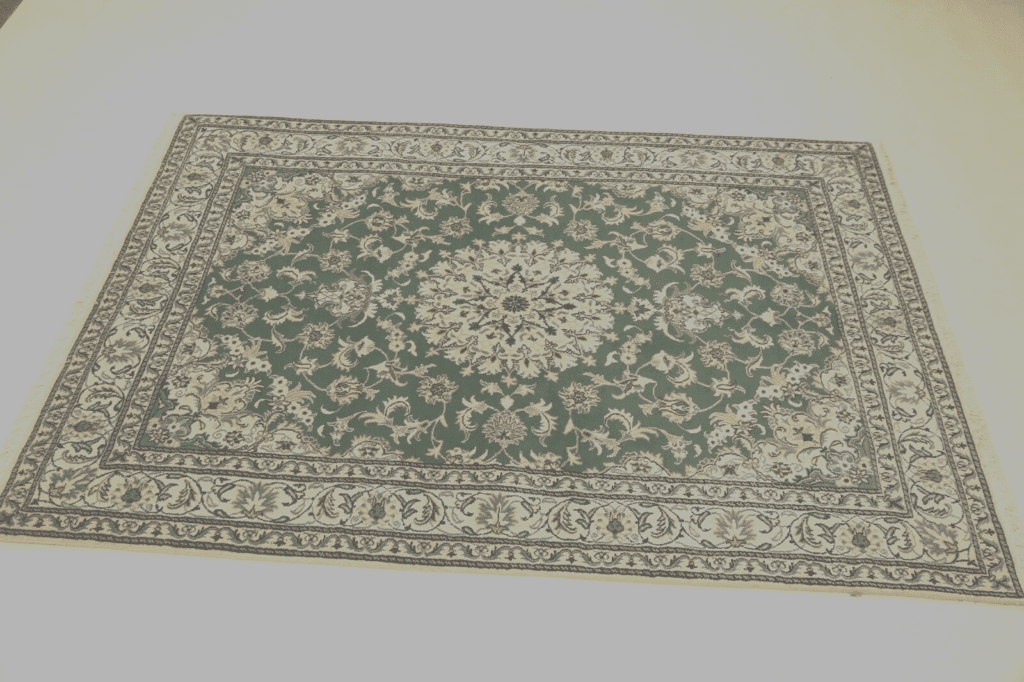
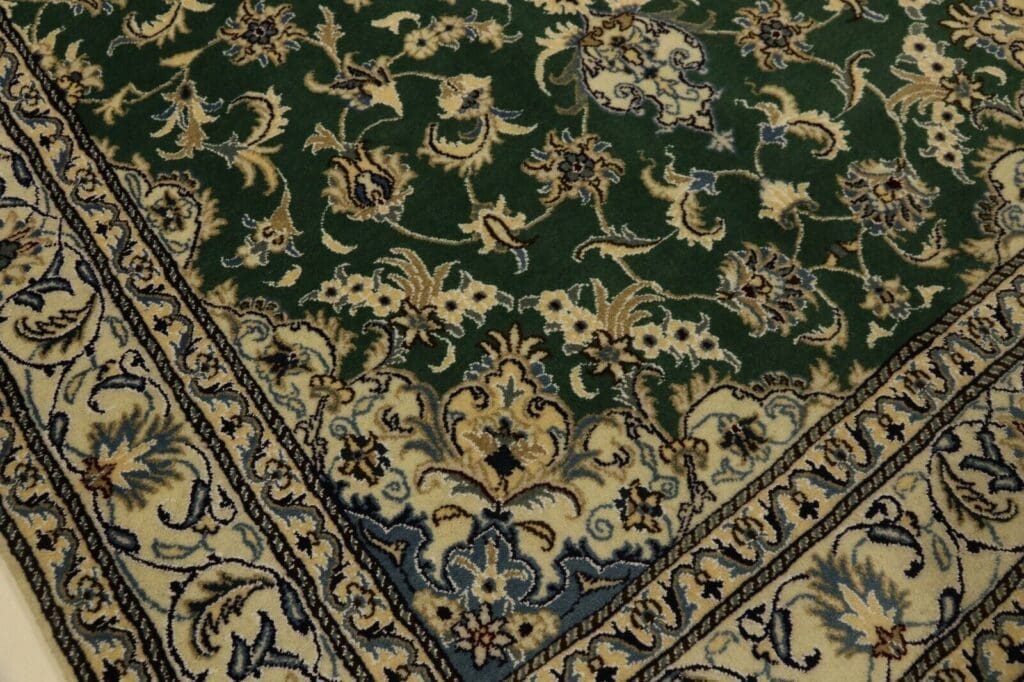
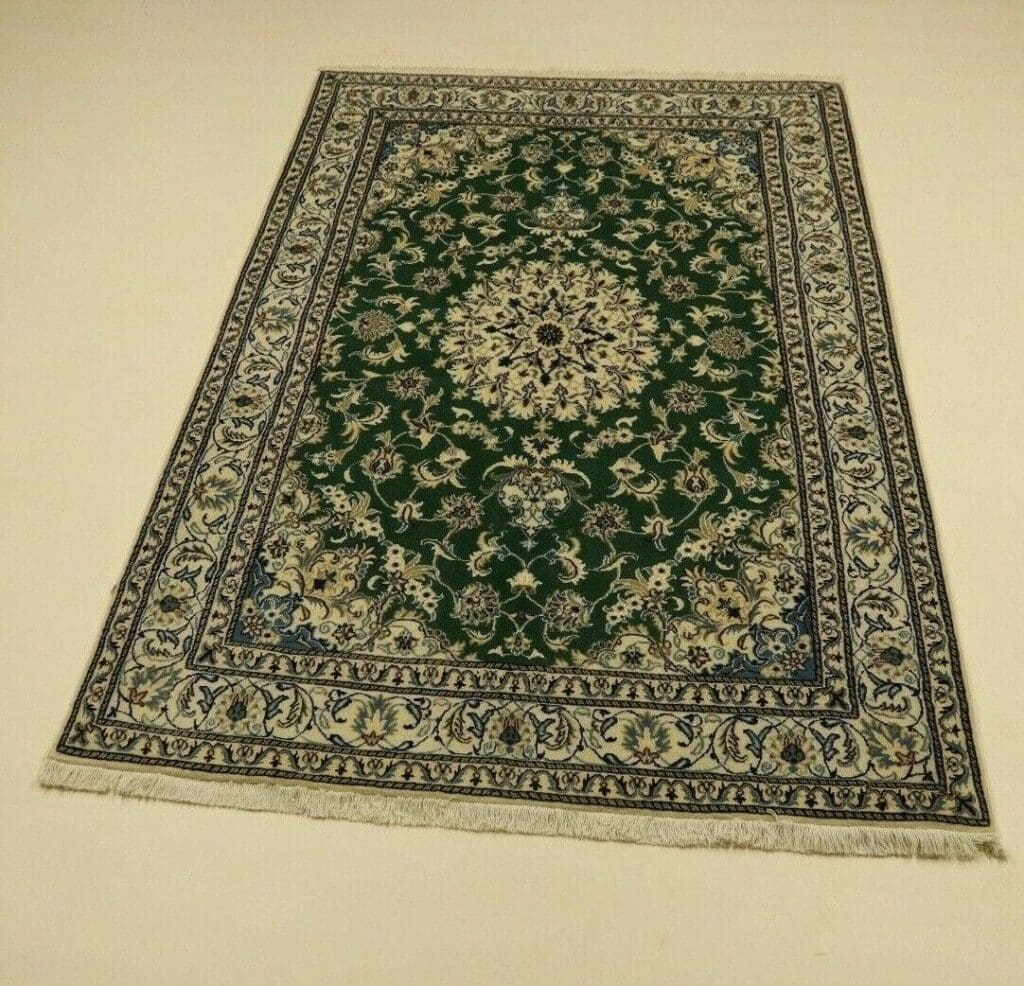
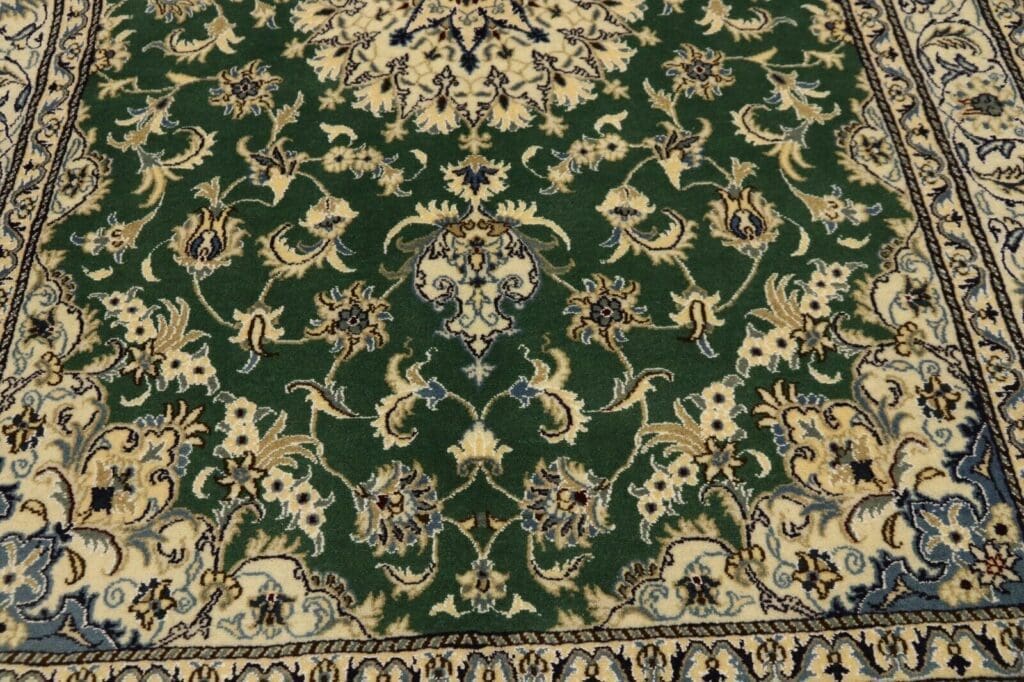
The design of this Super Nain is described through the floral and geometric motifs typical of Nain rugs. Floral ornaments may take the form of stylised blossoms, leaves and curling branches. Geometric components add structure through measured contours, repeated shapes or clearly framed sections. In Persian rug design, organic and geometric forms are often placed together so that flowing vegetal lines are held within a precise compositional order.
A Nain composition may be centred on a medallion surrounded by finely divided fields and an ornamented border. The medallion provides a visual focus and helps organise the surrounding pattern. A continuous field design follows a different principle, distributing vines, flowers and smaller details throughout the interior. In either case, the character of the rug depends on the relationship between the motifs, their repetition and the controlled spacing between individual elements.
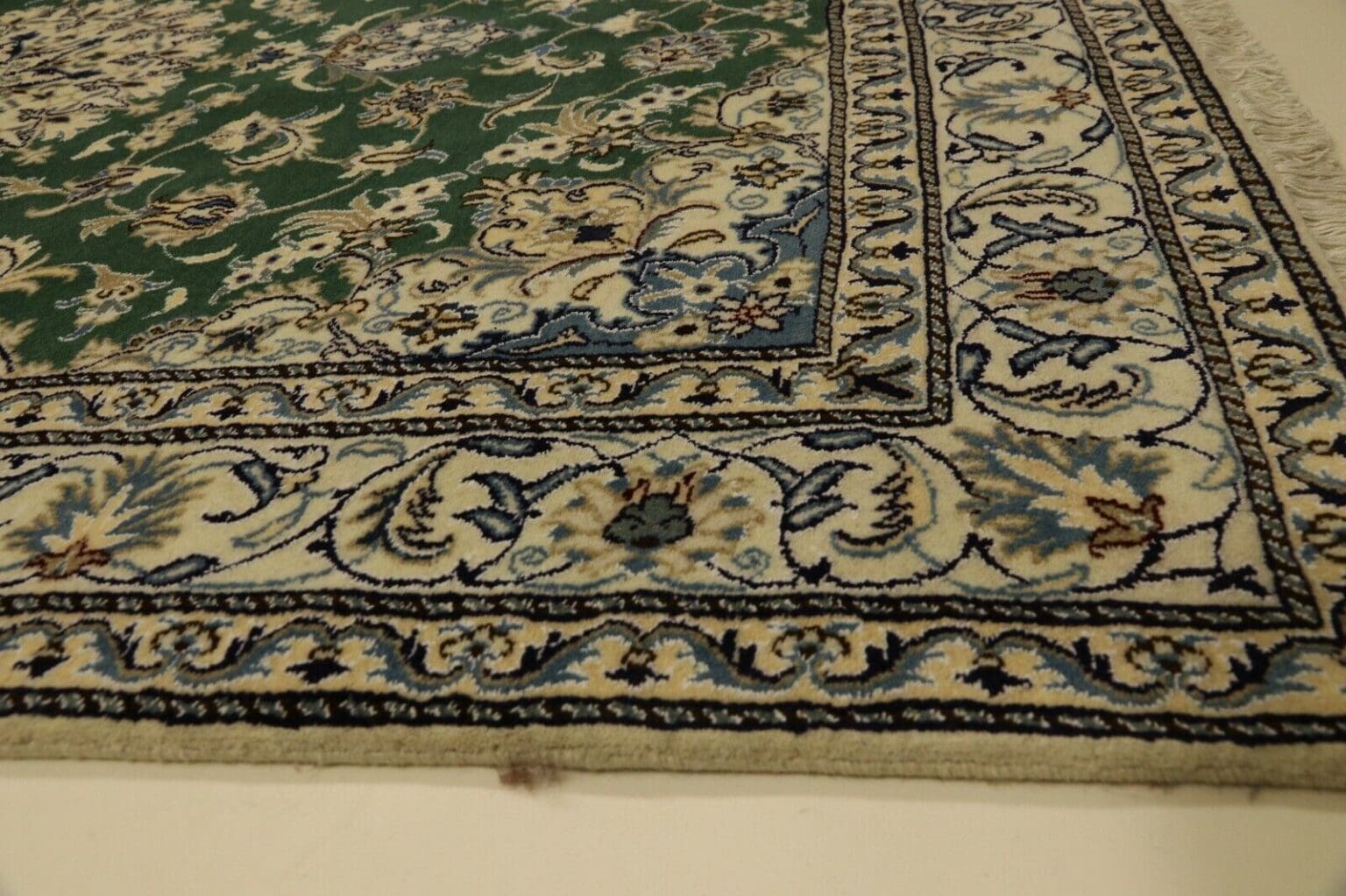
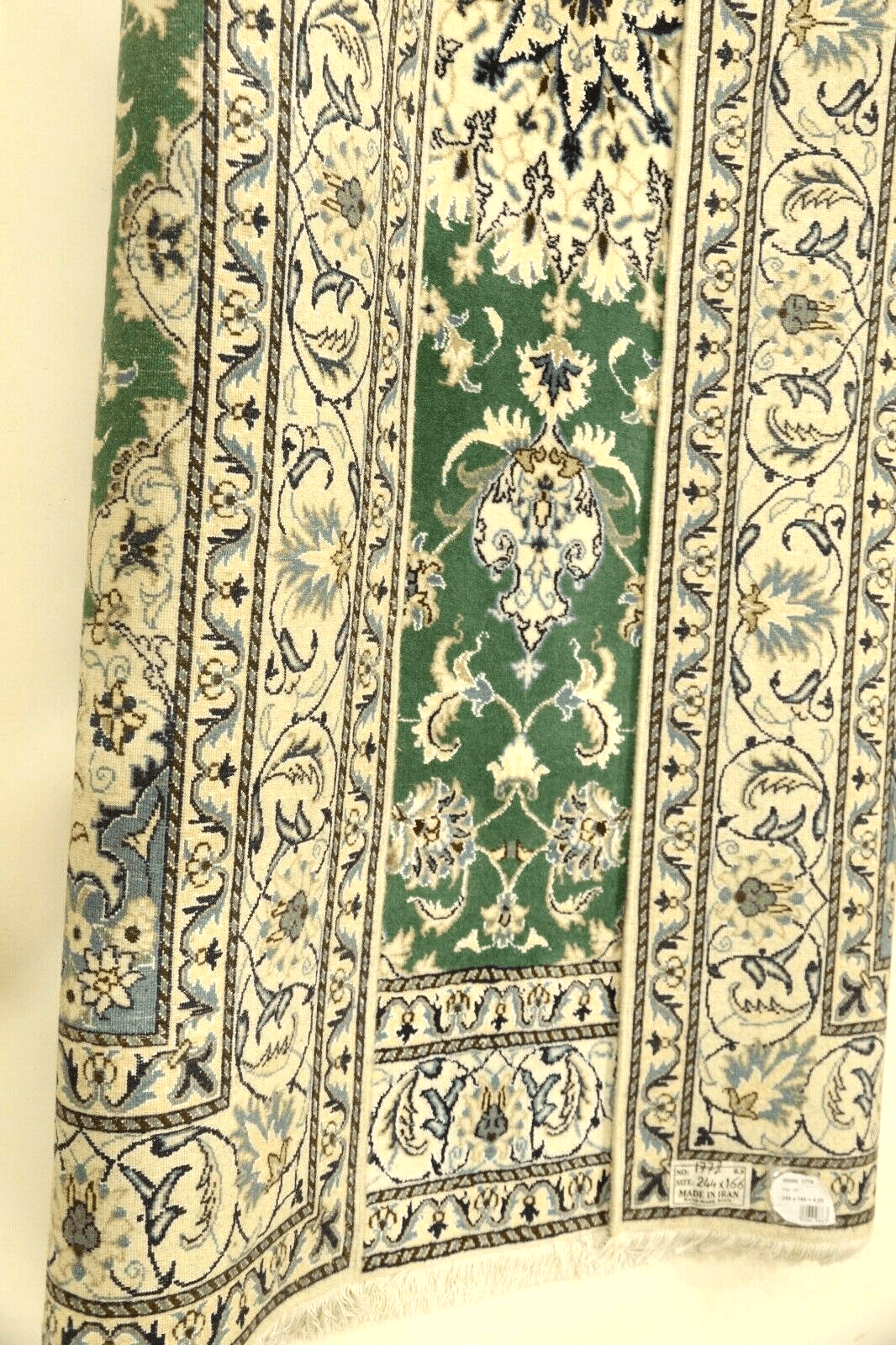
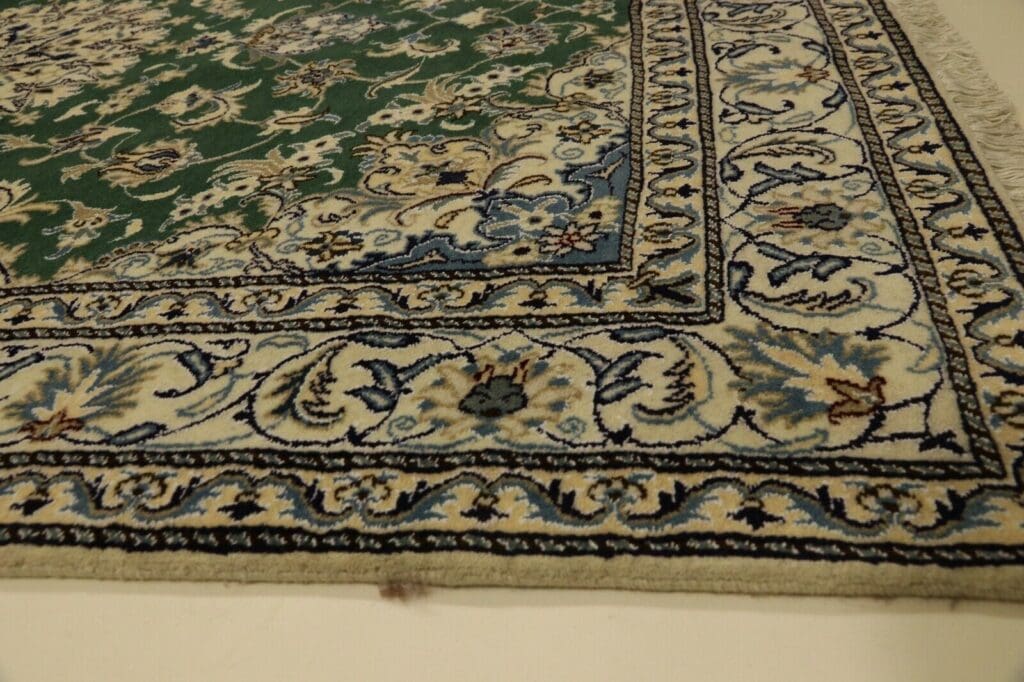
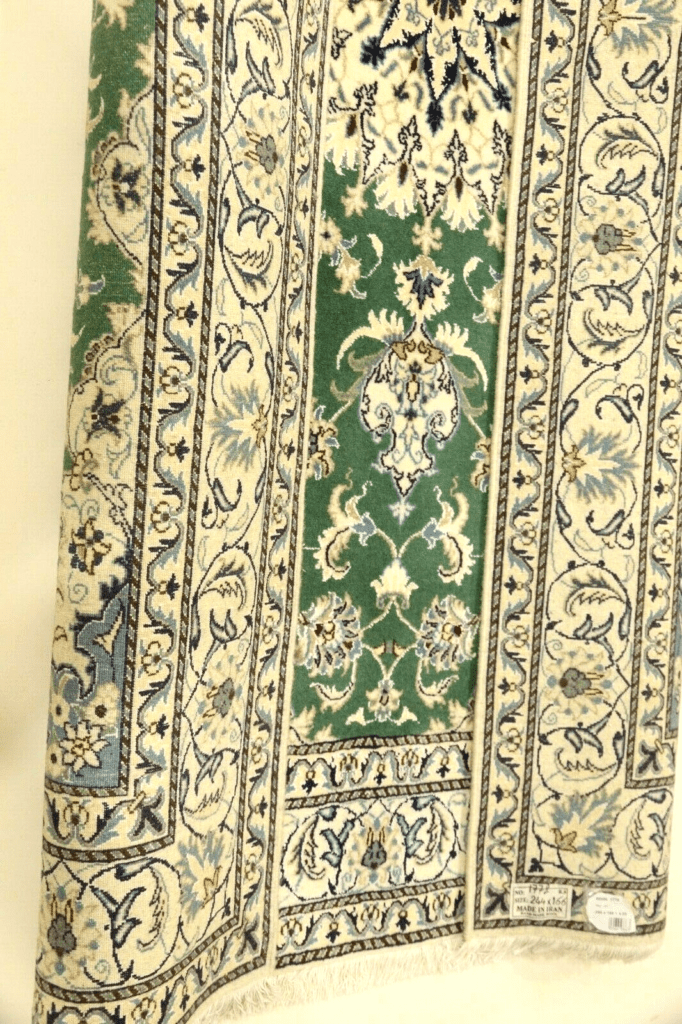
Borders play an important role in many Persian rug designs. They frame the central field, establish a transition between the interior and the outer edge, and may repeat or complement the main ornament. Narrower secondary borders can accompany a principal border and provide additional structure. Through this layered arrangement, the pattern gains a clear beginning and end while remaining connected across the surface.
The close knotting supports a detailed interpretation of these forms. Fine lines and small ornaments can be drawn with greater definition when the underlying structure is dense. Silk within the wool pile can catch the light differently from the surrounding fibres, giving selected areas a subtle variation in surface appearance. The effect changes with the viewing angle and illumination while the design remains anchored in the established Nain vocabulary.
Nain rugs are frequently linked with soft and lighter colour impressions. Such a palette gives the composition a calm, ordered appearance and allows floral details and geometric lines to remain legible without overwhelming the field. The pattern is therefore adaptable to different indoor rooms. Its character comes from a long-established Persian design tradition rather than from a temporary decorating trend, with familiar motifs continually interpreted through the weaver’s arrangement and execution.
Floral motifs in Persian ornament are generally stylised rather than intended as literal botanical pictures. Blossoms, leaves and stems can be repeated, mirrored or linked into larger sequences. Geometric lines provide a measured framework for these flowing forms. The resulting visual language balances movement and regularity. Dense knotting helps preserve the relationship between small details and the larger composition, allowing the structure of the design to remain readable across the field.
Special Features
This rug’s defining features are its combination of virgin wool and silk in the pile, its dense hand-knotted construction and its status as a genuine one-off piece. It is described as new and in very good condition. The wool provides the principal textile foundation, while silk adds a finer surface quality. The rug is pet-friendly and suitable for all rooms. With appropriate care, a hand-knotted Oriental rug can remain in use for a long period and may be passed on to another generation.
Routine care consists of gentle vacuuming to remove loose dust. Spills and marks should be blotted with a damp cloth rather than rubbed into the fibres. More extensive soiling is best handled by a professional rug-cleaning service. The rug is intended for dry indoor use and should not be exposed continuously to moisture or outdoor weather.
Its status as a one-off piece is connected to the handmade process. Traditional designs may contain recurring motifs, yet no hand-knotted rug is identical in every detail to another. Variations can occur in the placement of ornaments, knot tension, colour interaction and the treatment of individual lines. These are normal characteristics of Oriental rug production and make the textile nature of the finished piece apparent.
FAQ
How should I clean my Oriental rug?
Vacuum the rug regularly and gently to remove surface dust without placing unnecessary stress on the pile. If a spill occurs, blot it promptly with a damp cloth. Rubbing can disturb the fibres and affect the appearance of the patterned surface. For a deep clean or persistent marks, use a professional rug-cleaning service familiar with hand-knotted Oriental rugs and with mixed wool-and-silk piles.
Can I use the Oriental rug outdoors?
No. This rug is intended for dry indoor spaces and is not suitable for outdoor use. Moisture can affect the natural fibres and the construction of the rug. Prolonged direct sunlight should also be avoided because it can alter the appearance of the colours over time. Used in a living room, dining room, hallway or another protected interior area, the rug remains in the environment for which it was made.
How can I determine the value of my Oriental rug?
The value of an Oriental rug depends on a combination of characteristics rather than on one feature alone. Knot density, materials, hand-knotted construction, origin and condition all contribute to an assessment. The design and quality of its execution may also be considered. A professional rug expert can inspect the piece directly and evaluate these characteristics together in order to provide a reliable valuation.
To provide the best experiences, we use technologies like cookies to store and/or access device information. Consenting to these technologies will allow us to process data such as browsing behavior or unique IDs on this site. Not consenting or withdrawing consent, may adversely affect certain features and functions.
Functional Always active
The technical storage or access is strictly necessary for the legitimate purpose of enabling the use of a specific service explicitly requested by the subscriber or user, or for the sole purpose of carrying out the transmission of a communication over an electronic communications network.
Preferences
The technical storage or access is necessary for the legitimate purpose of storing preferences that are not requested by the subscriber or user.
Statistics
The technical storage or access that is used exclusively for statistical purposes.The technical storage or access that is used exclusively for anonymous statistical purposes. Without a subpoena, voluntary compliance on the part of your Internet Service Provider, or additional records from a third party, information stored or retrieved for this purpose alone cannot usually be used to identify you.
Marketing
The technical storage or access is required to create user profiles to send advertising, or to track the user on a website or across several websites for similar marketing purposes.

 SECURE PAYMENT
 SHIPPING PARTNERS