This Nain Persian rug is hand-knotted from 90% virgin wool and 10% silk. Virgin wool forms the main part of the pile and is valued for its resilience, warmth and pleasant softness. As a natural fibre, wool can help regulate temperature and feels comfortable underfoot. The silk content adds a gentle lustre to the surface and supports the fine appearance of the design.
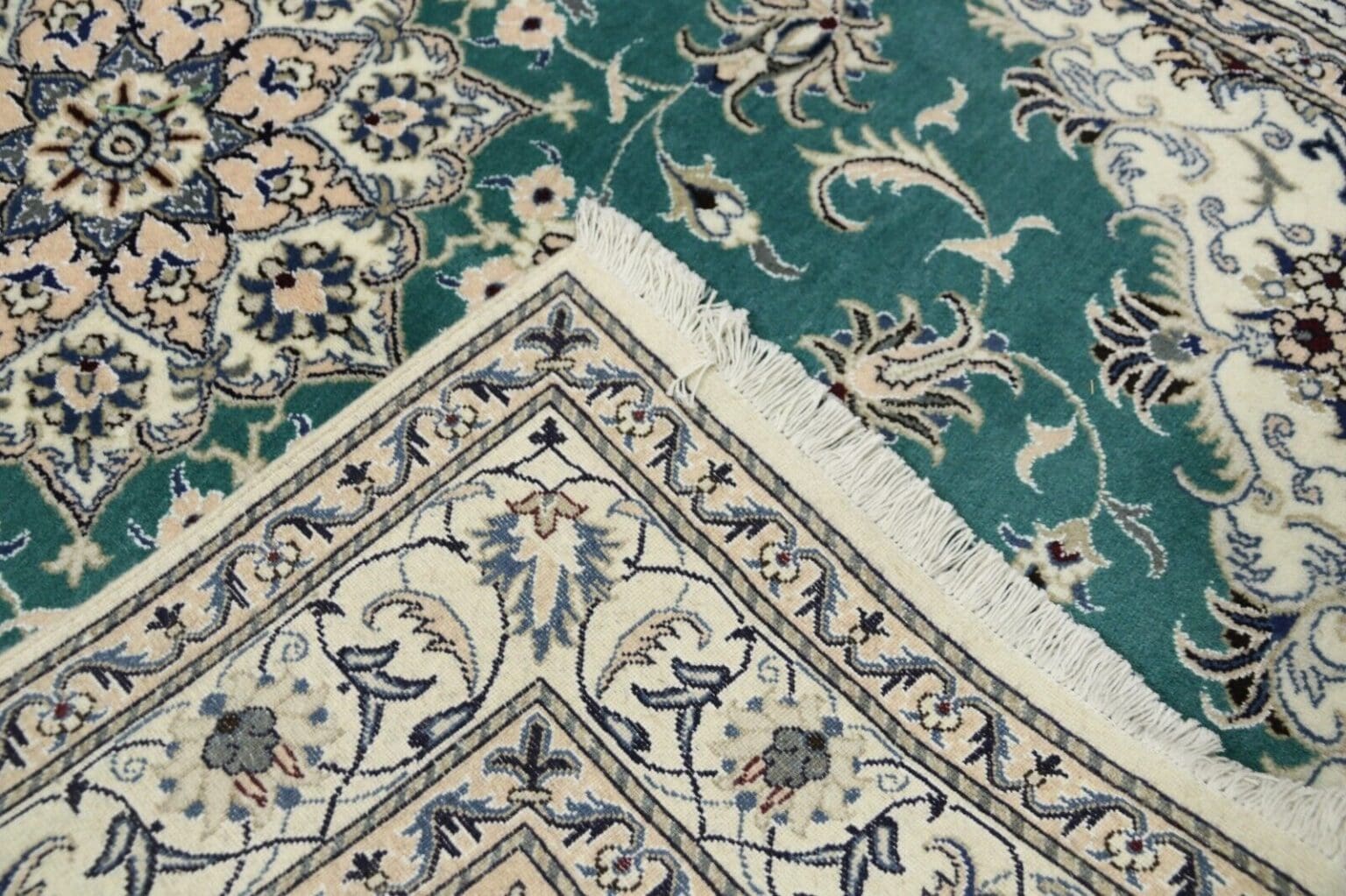
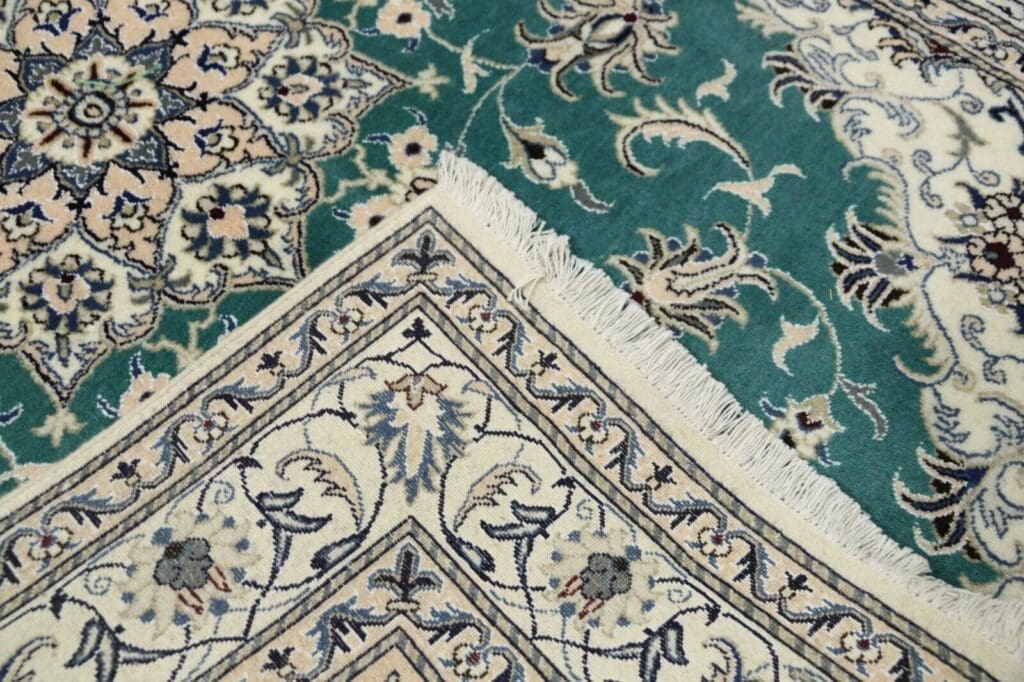
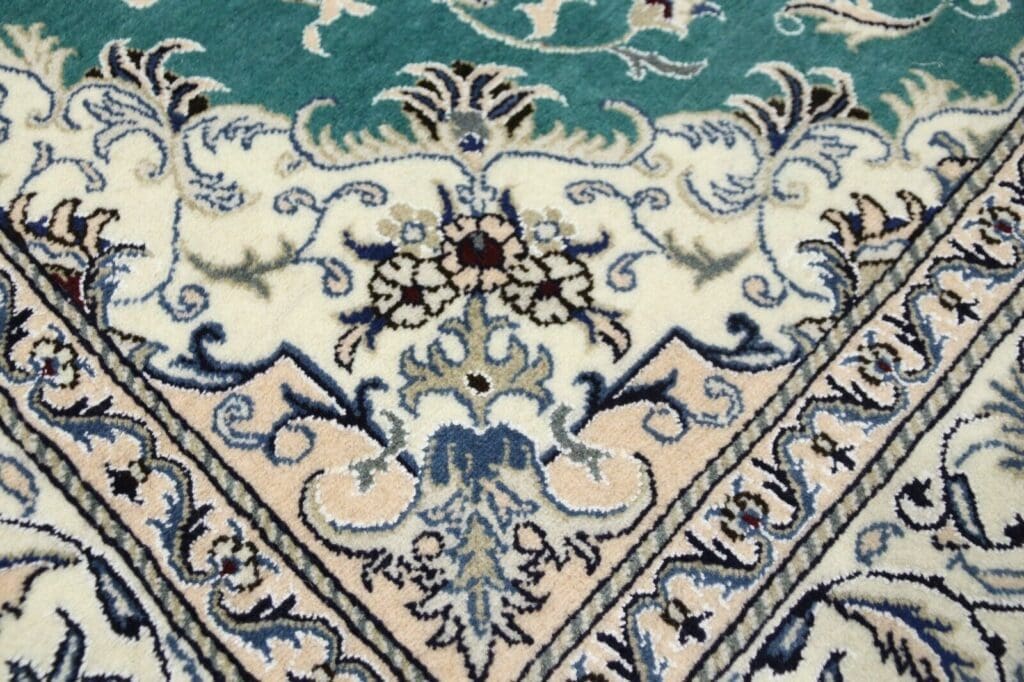
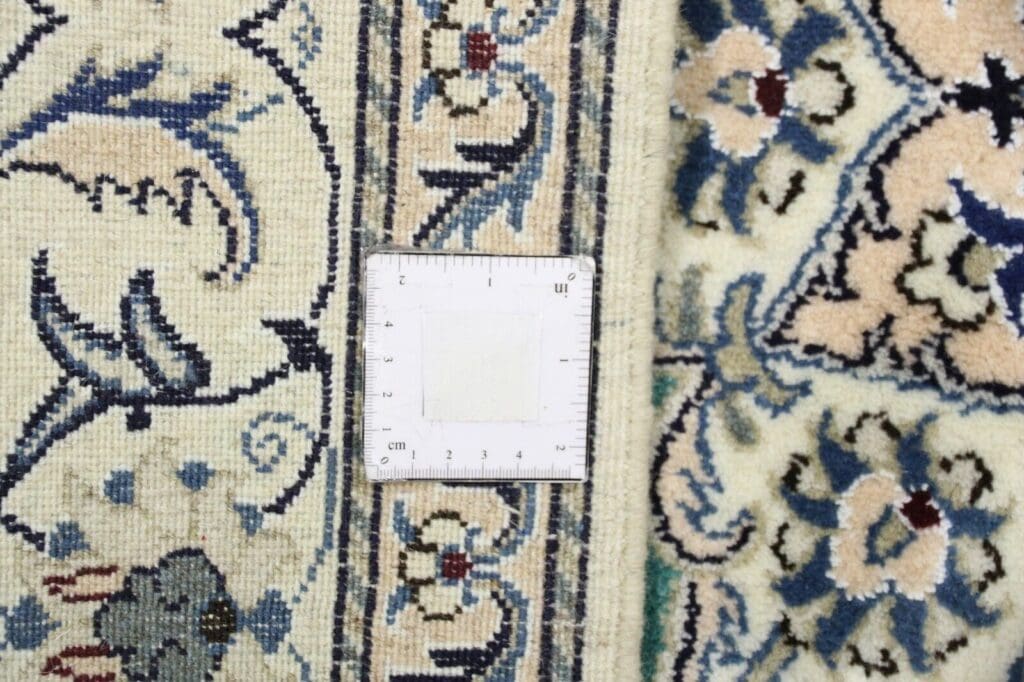
The rug is made entirely by hand through knotting. In this technique, individual knots are placed one by one into the prepared structure. A dense surface is created in this way, allowing small details in the pattern to be rendered with clarity. Hand knotting requires careful, concentrated work throughout numerous stages of production. This rug is new and in perfect condition.
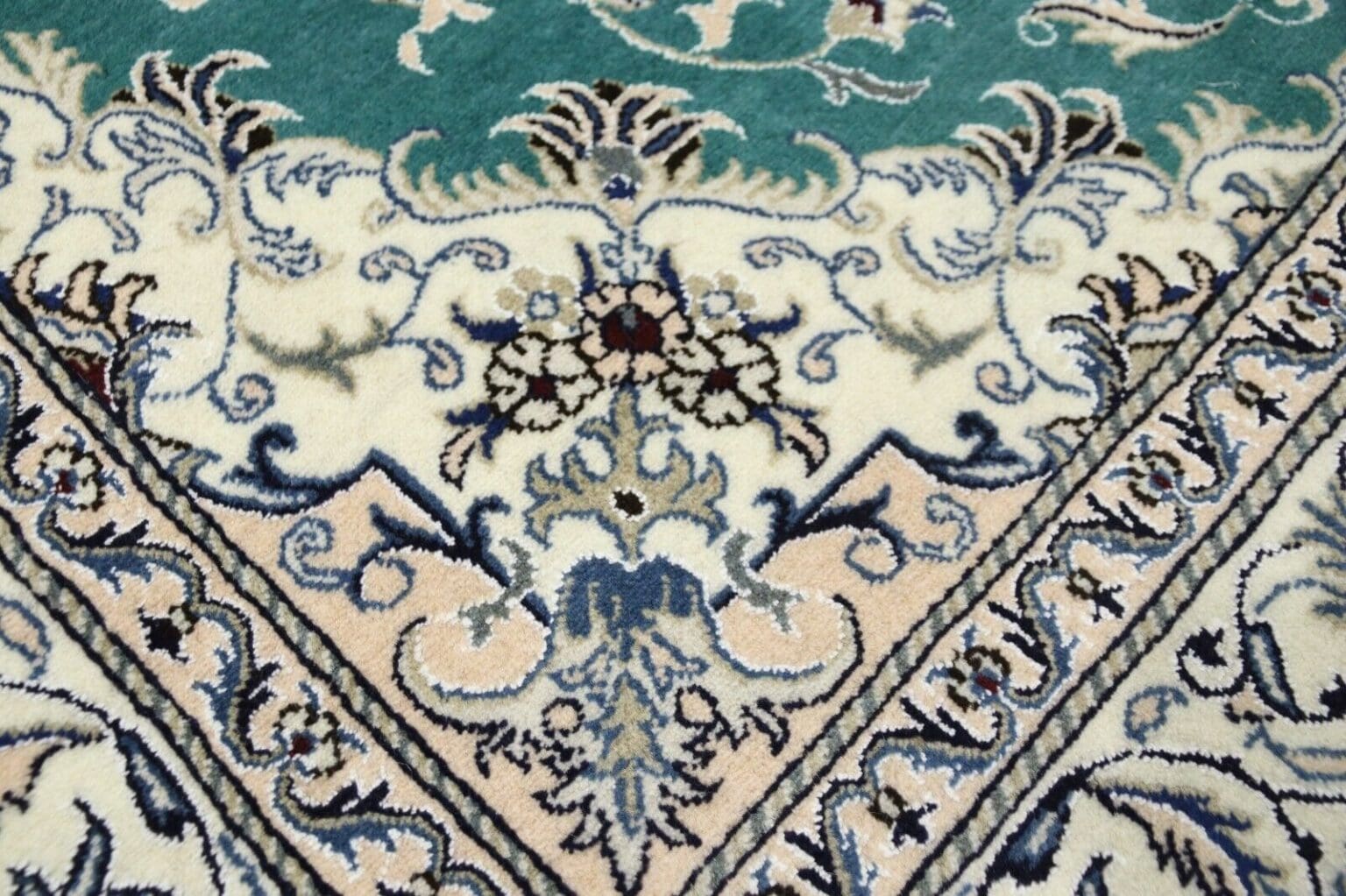
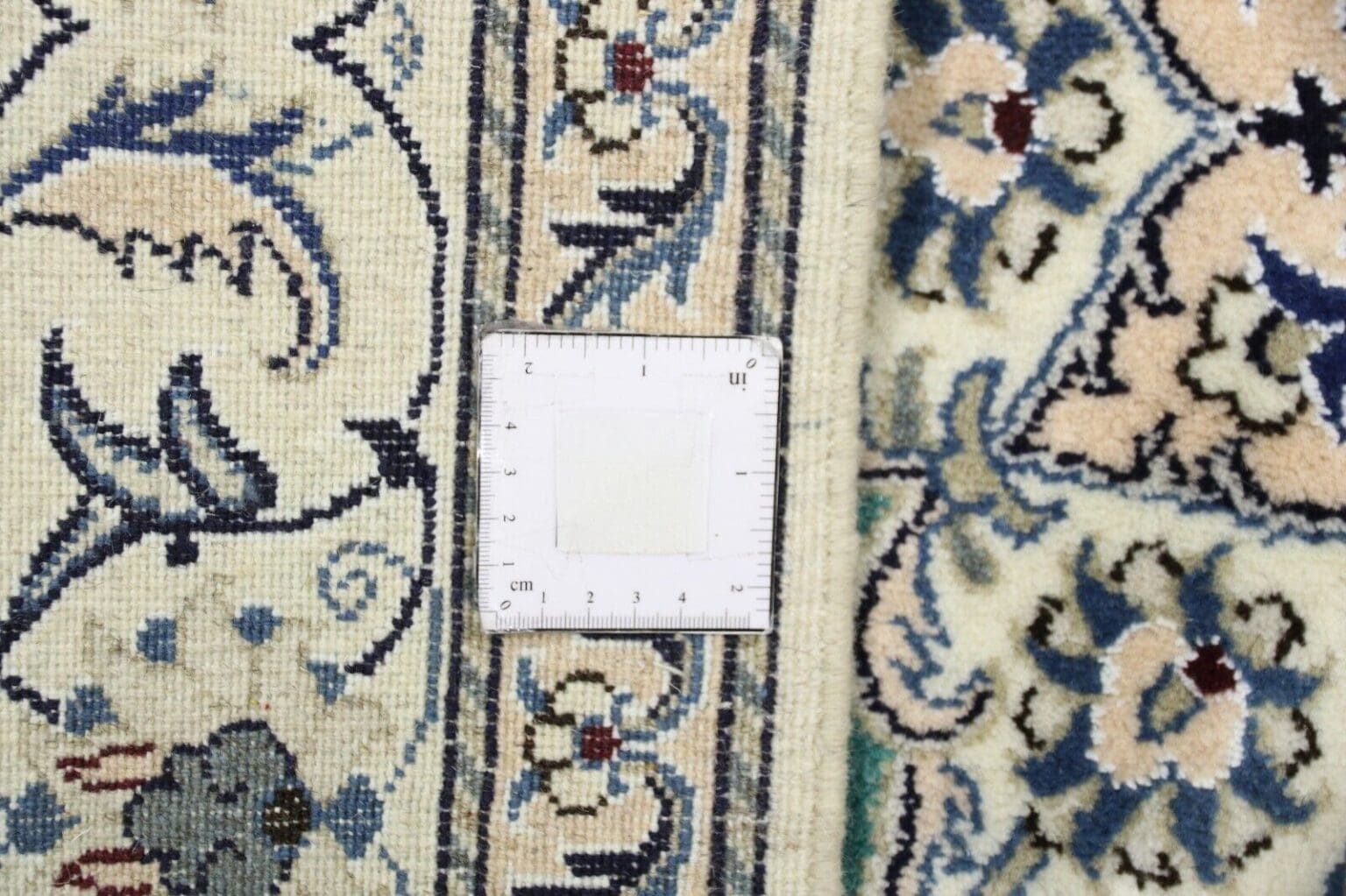
Its knot density is approximately 300,000 knots per square metre. In Nain rugs, such a dense construction is associated with detailed pattern work and a finely worked surface. The two fibres contribute different textile qualities: wool provides a warm and durable pile, while silk catches the light softly and gives the surface additional delicacy. The hand-knotted construction also means that each rug has its own individual execution.
Origin and Tradition
The rug is identified as a Nain and comes from Persia, present-day Iran. Nain is a city known for its rug production. The local tradition reaches back to the 16th century and forms part of the long history of Persian textile art. Knowledge of materials, knotting and pattern design has been passed from one generation to the next. The work combines established forms with the practical experience of individual weavers.
Nain rugs are especially associated with fine knotting and carefully developed designs. A high knot density allows lines, floral forms and geometric details to be coordinated closely. Production is not defined by knot count alone. Even execution, precise handling of the design and the relationship between the yarns are equally important. This combination of technical precision and inherited knowledge is characteristic of the Nain tradition.
Persian rug making developed over many centuries in different towns and regions. Each weaving centre formed its own preferences in composition, colour effect and technical execution. In this wider tradition, Nain is associated with controlled, finely drawn pattern structures and close attention to detail. Workshops often pass their experience through families and working communities. In this way, established methods remain present while individual designs and working practices continue to meet.
Oriental rugs are both useful household objects and part of a broader cultural and artistic tradition. Their patterns may reflect stories, religious ideas and regional customs. The meaning of a particular sign is not identical everywhere; it depends on its cultural setting. Persian rug art traditionally brings practical textile work together with symbolic design. A Nain rug therefore belongs to a history in which craft, ornament and everyday life are closely connected.
The name Nain refers to this place of origin and to the associated tradition of rug making. It is not simply a description of appearance, but the name of a recognised Persian rug region. The combination of virgin wool and silk suits a design approach focused on fine visual detail. Hand knotting preserves the method through which each finished rug receives its own individual character.
Design and Pattern
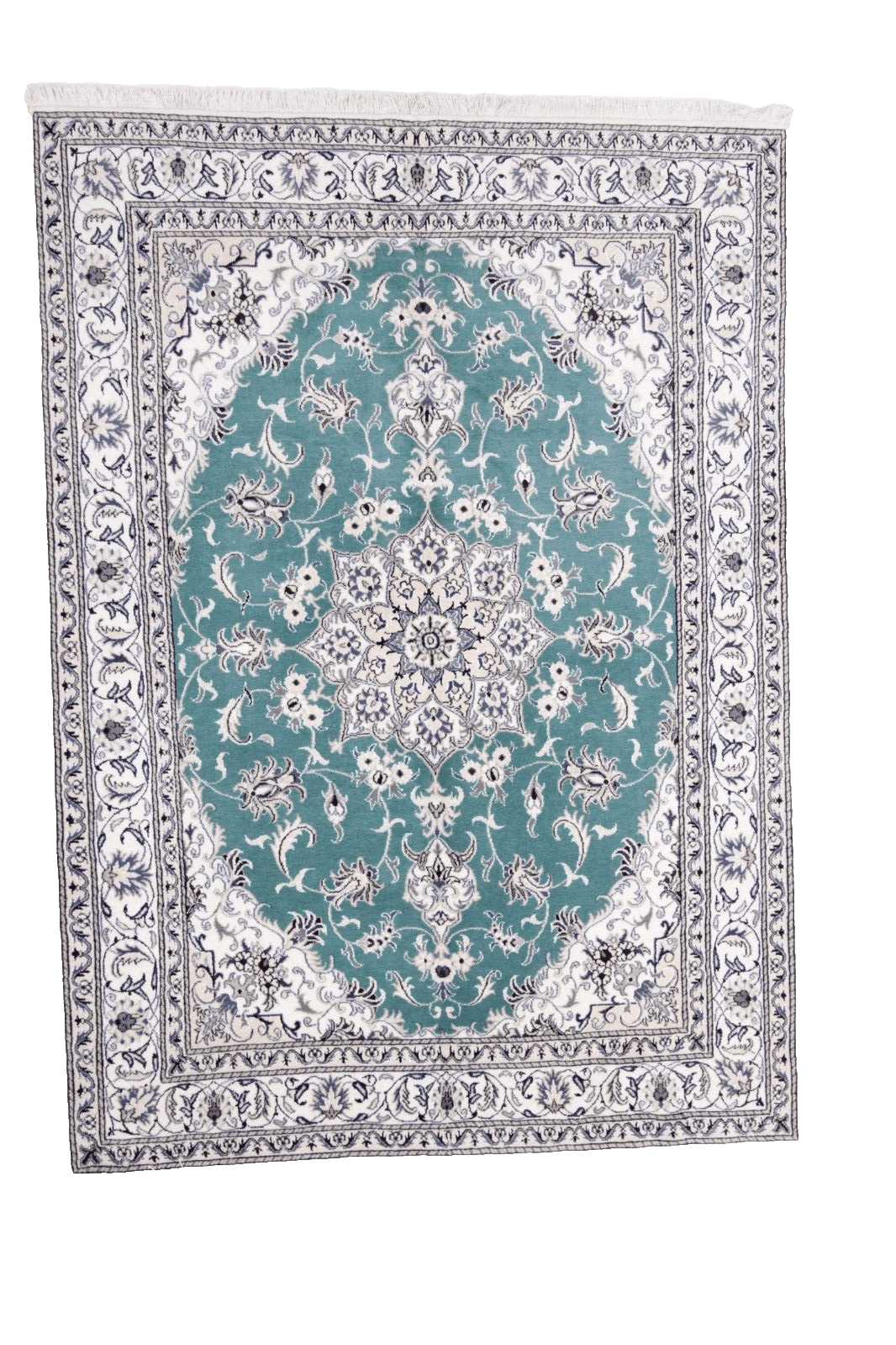
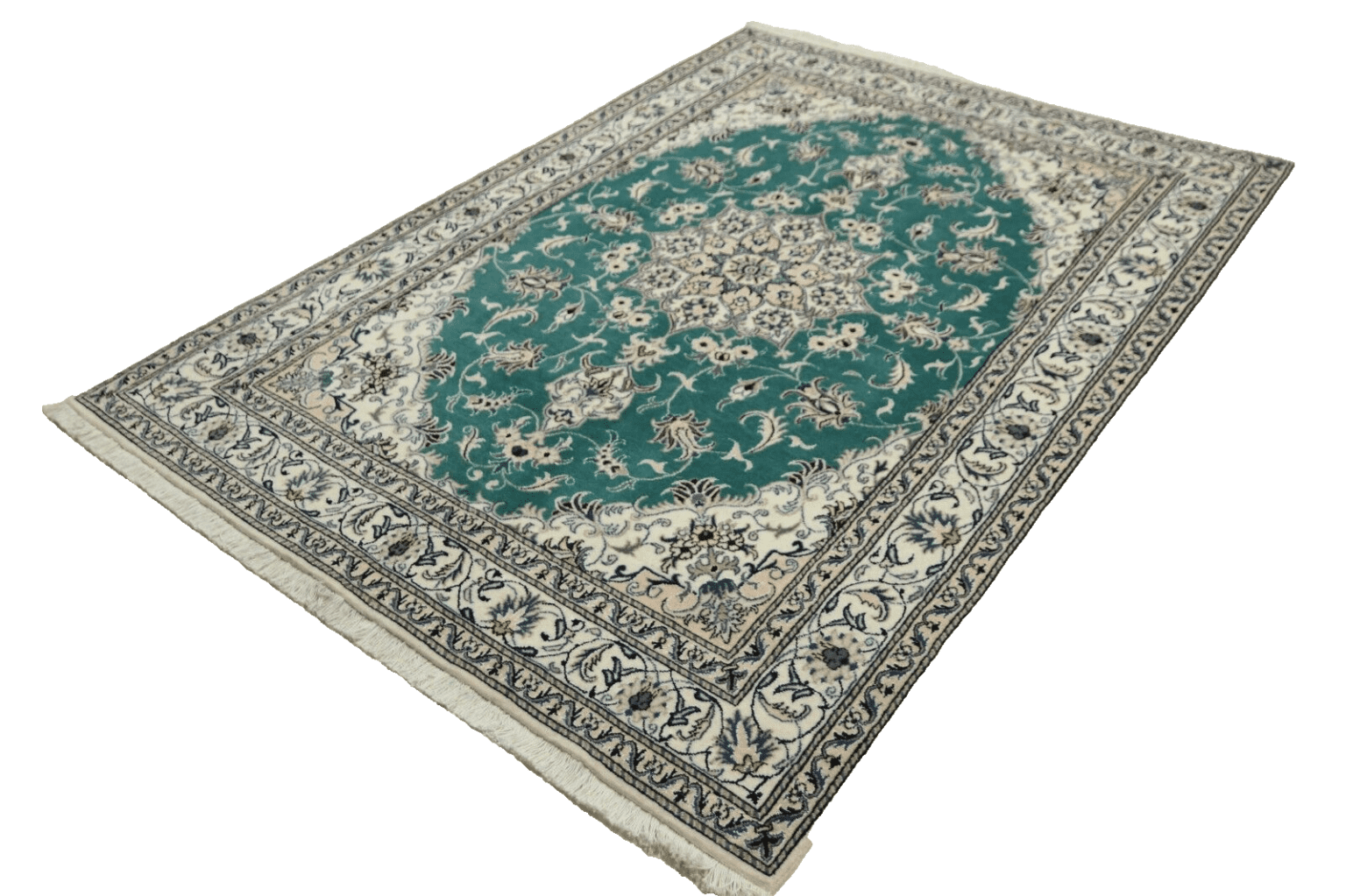
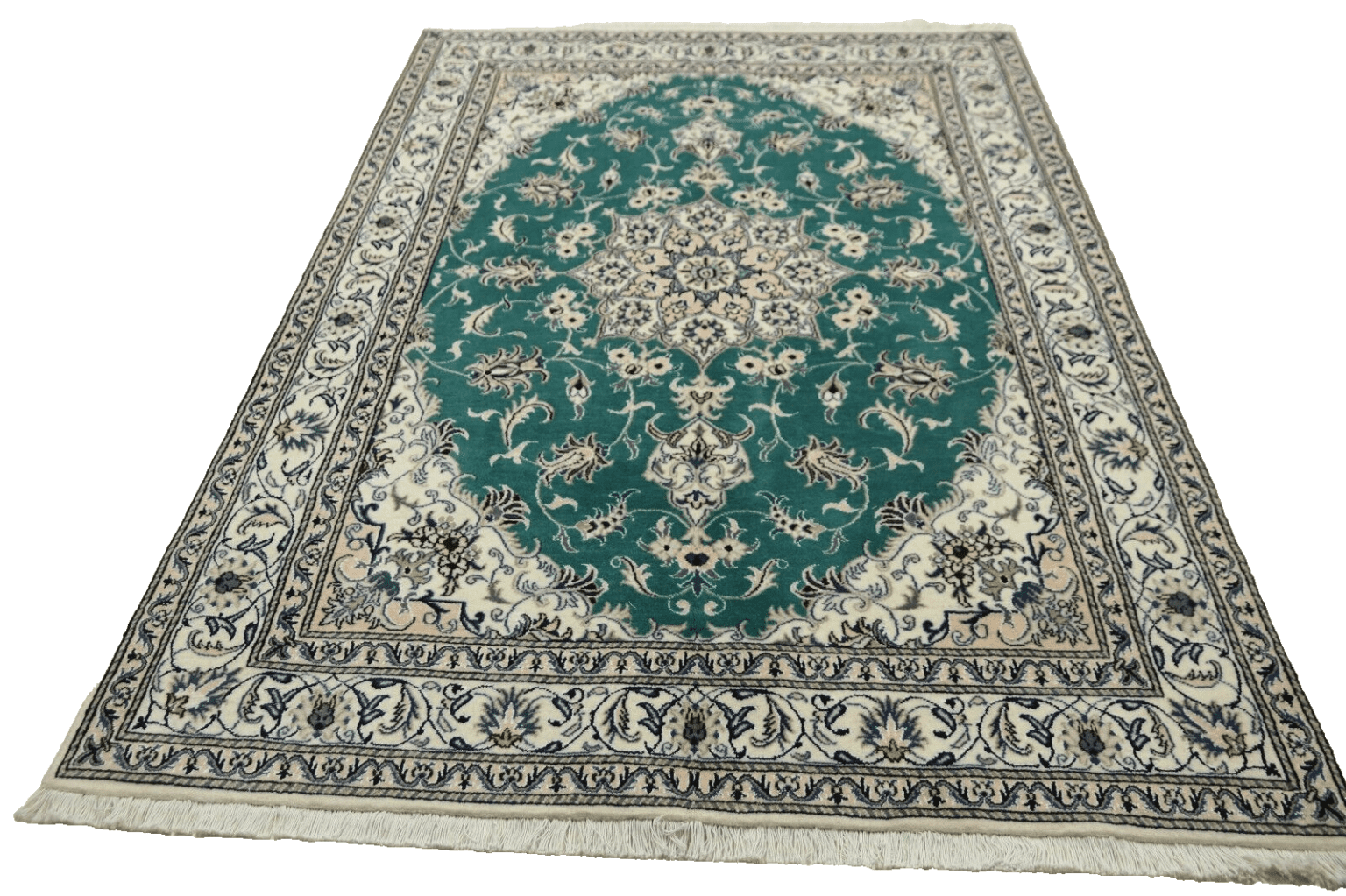
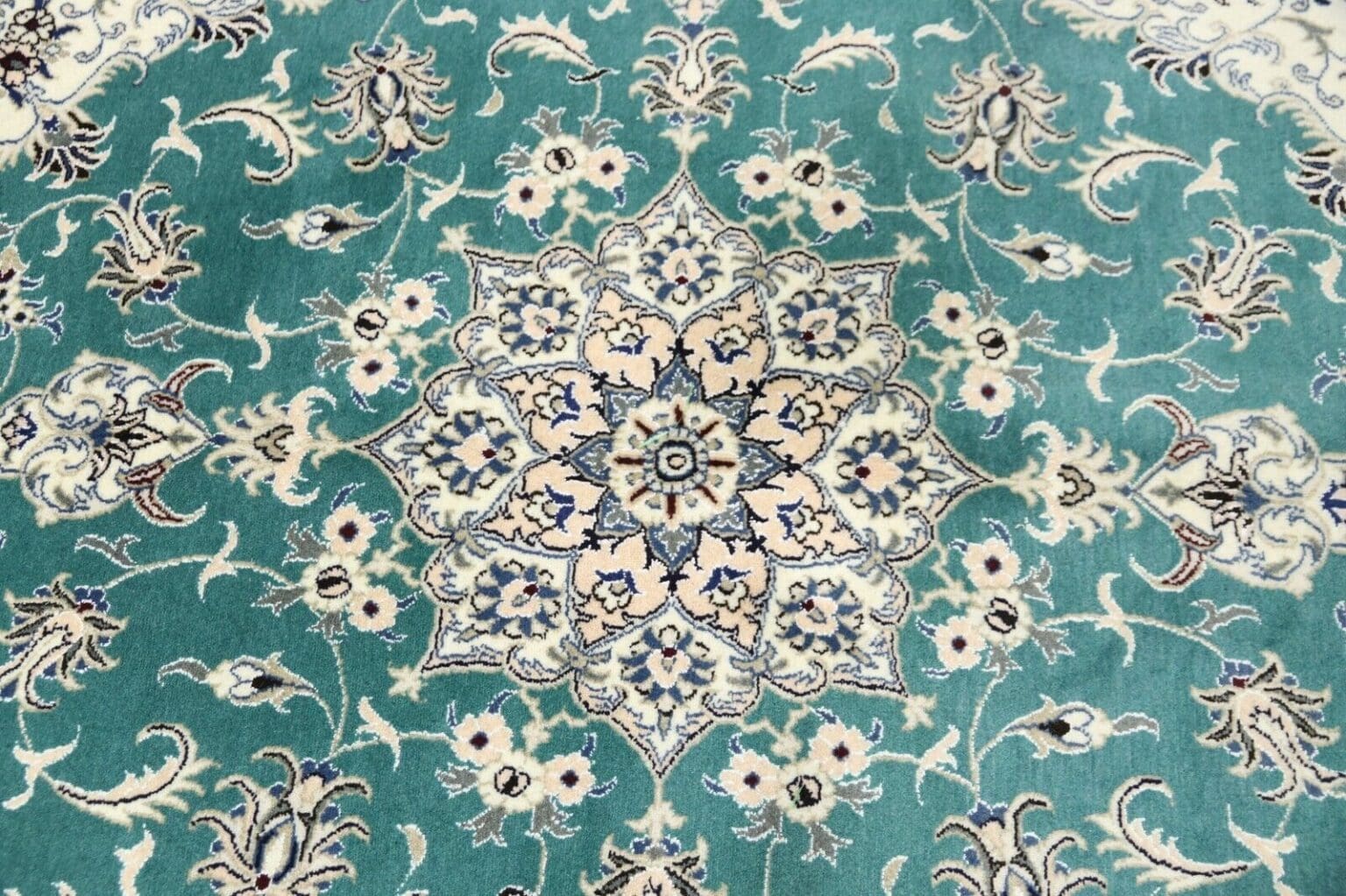
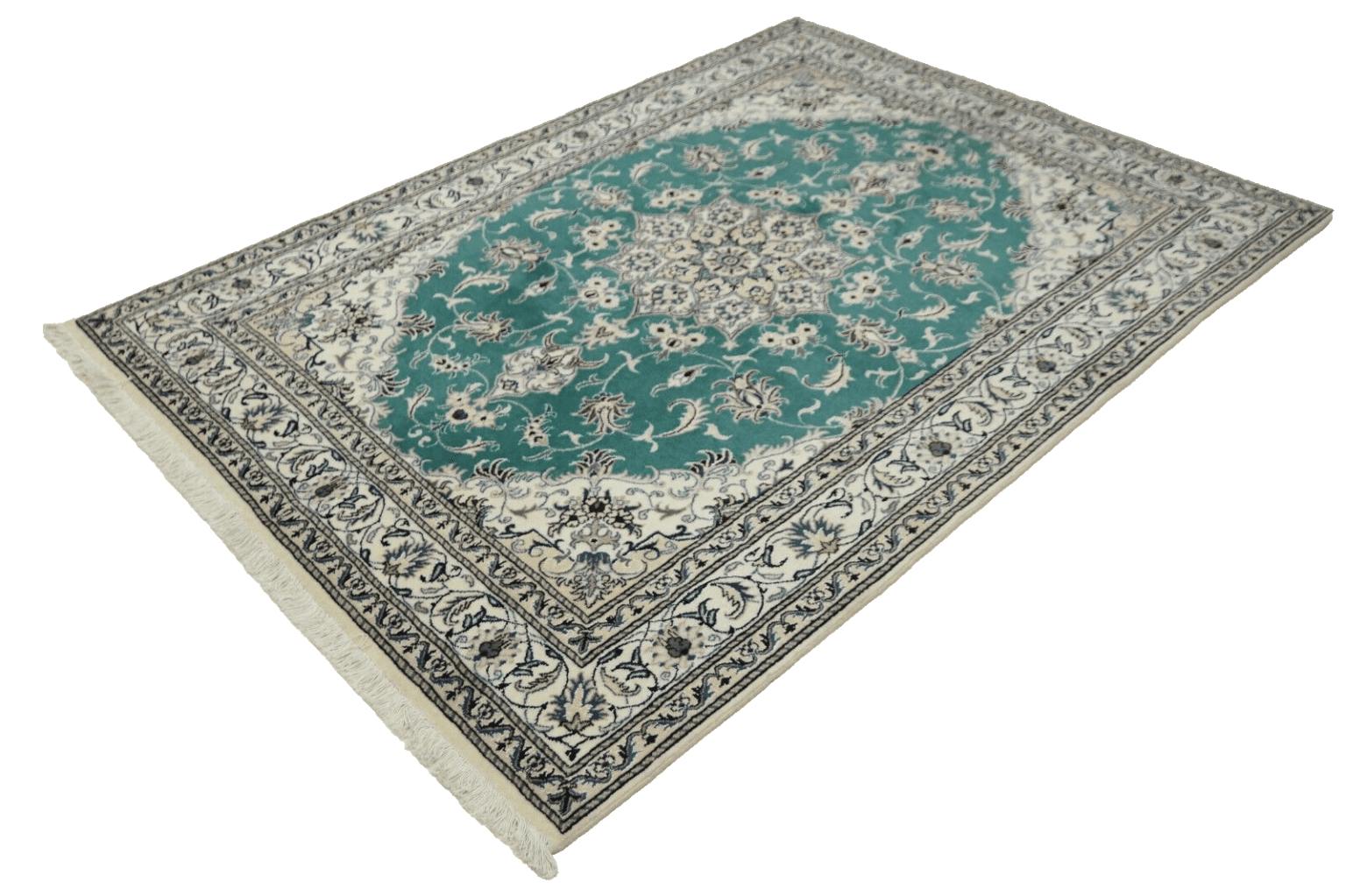
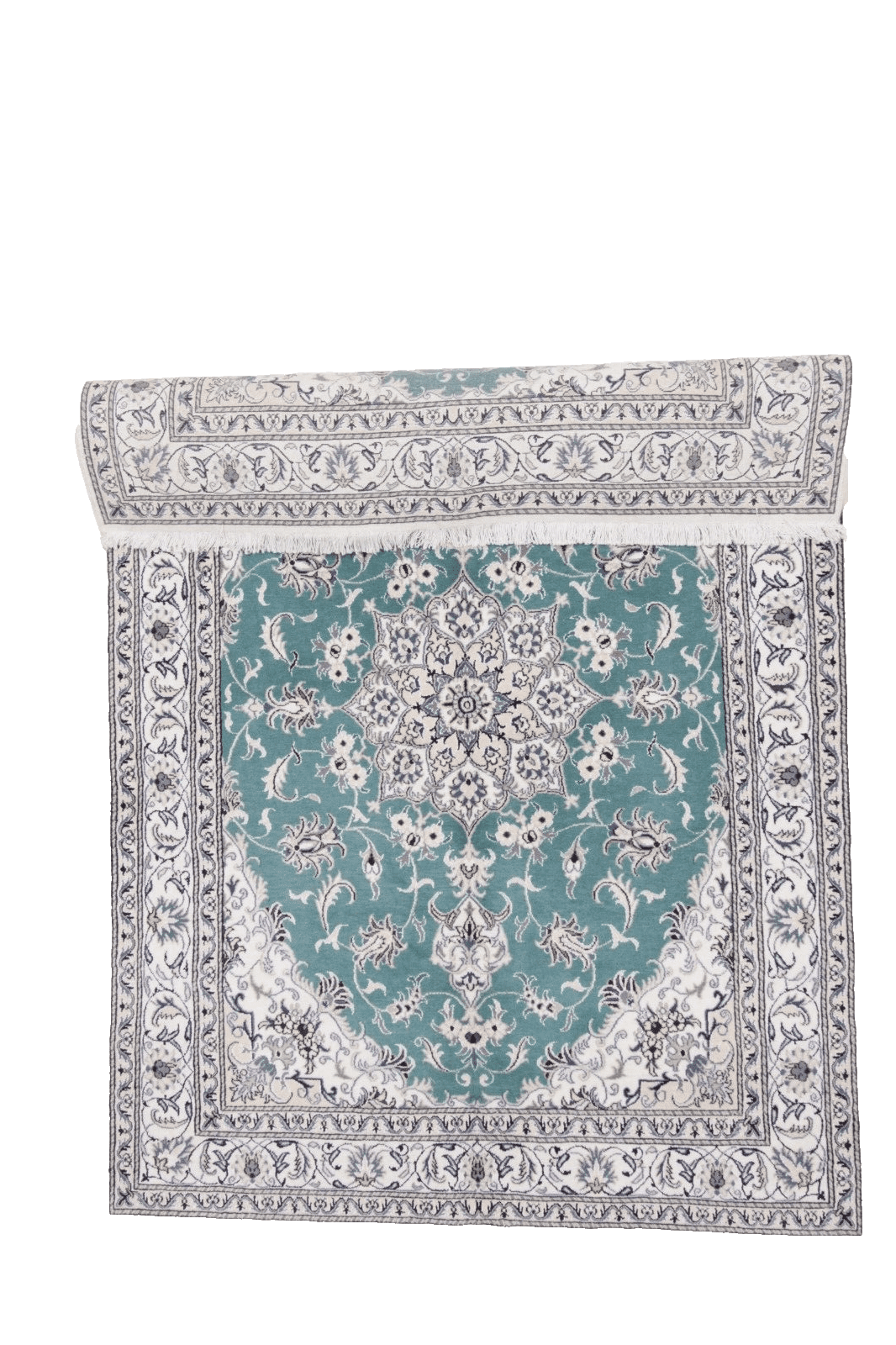
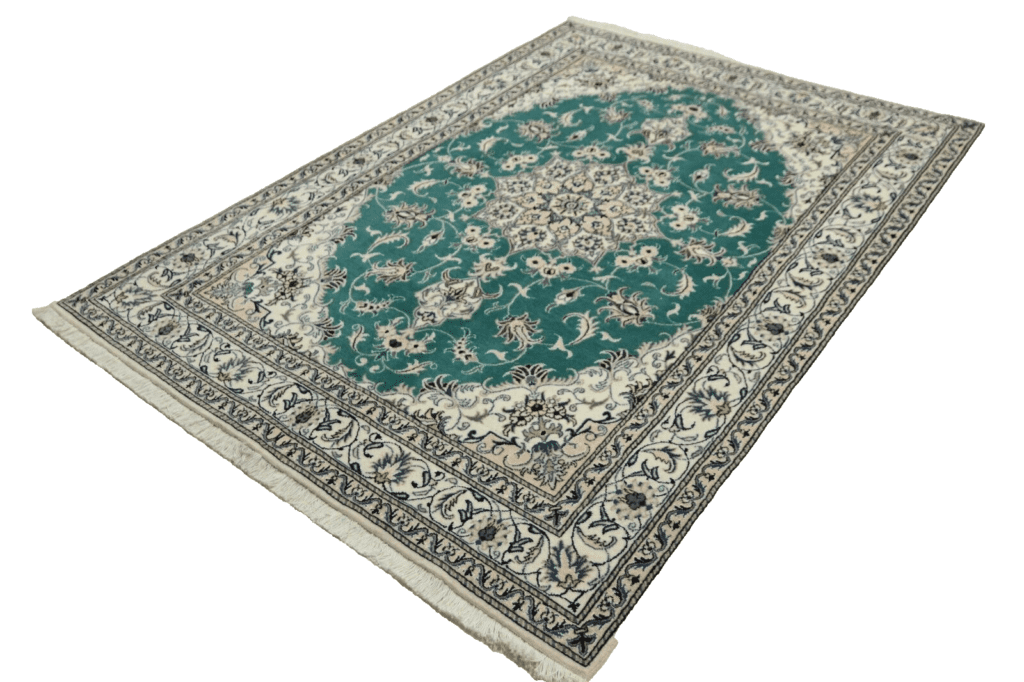
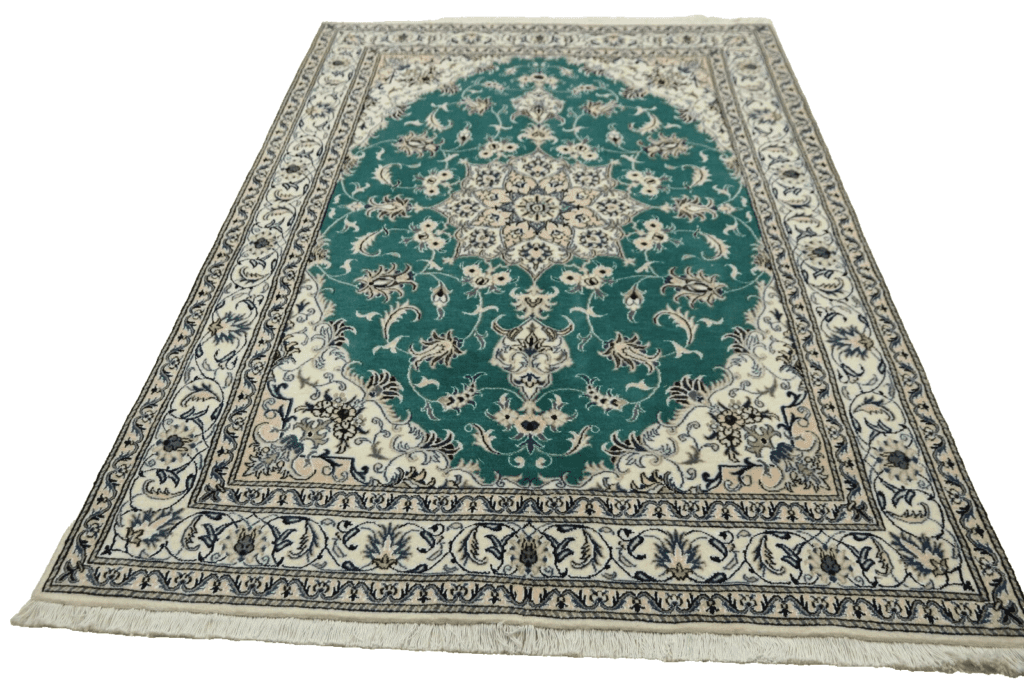
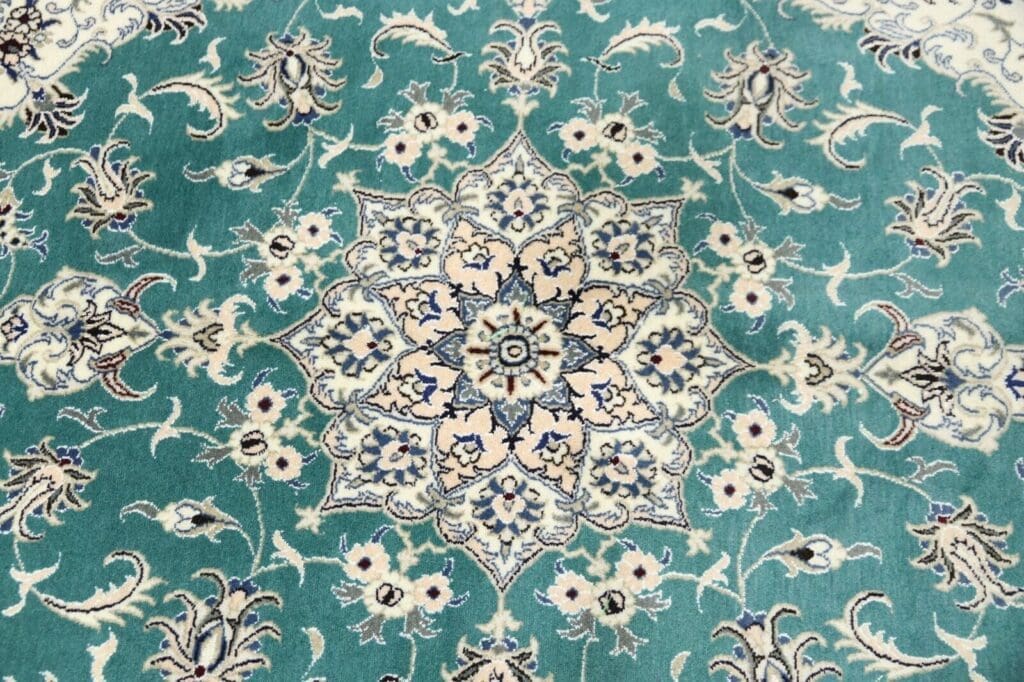
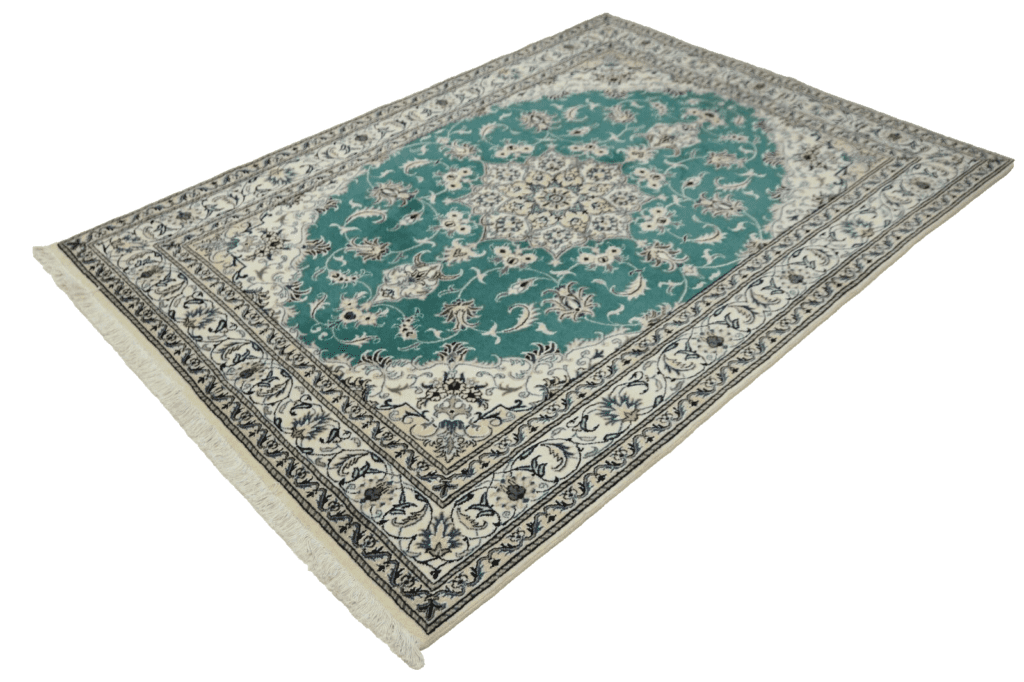
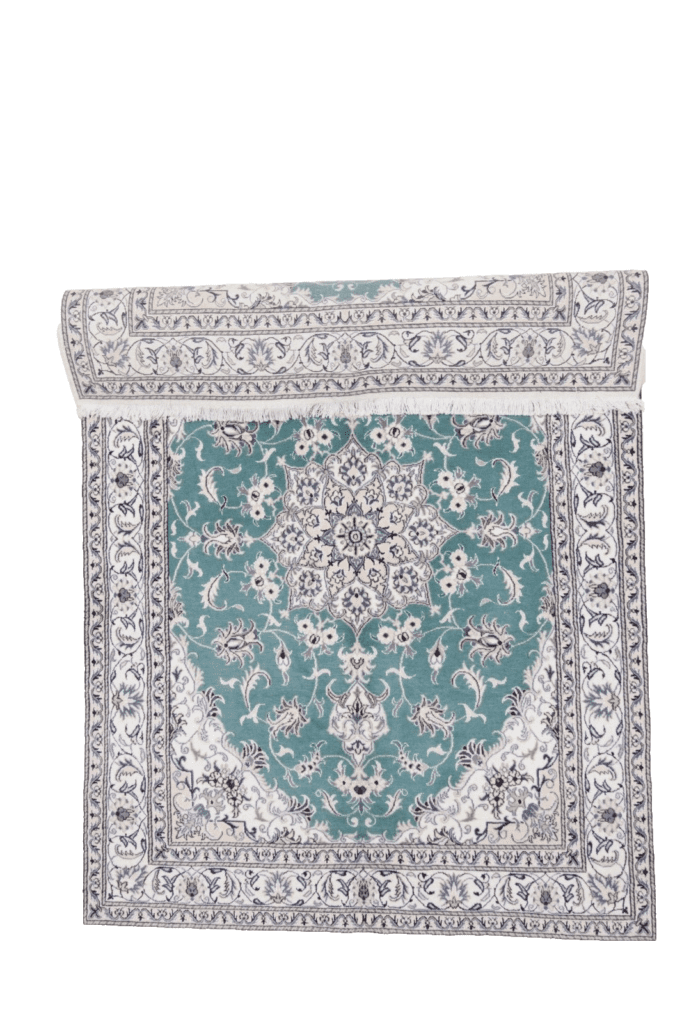
The design is described as traditionally Oriental and Persian. It combines fine floral motifs with elegant geometric forms in a harmonious arrangement. Floral elements may appear as stylised blossoms, scrolling plants or connected botanical shapes. Geometric lines provide structure and create clear transitions between different areas of the composition. In Nain rugs, these elements are often coordinated with particular care.
Persian rug design frequently relies on an ordered composition, repeated ornaments and balanced border areas. Whether a design is dominated by blossoms, lines or geometric fields depends on the individual arrangement. In a finely knotted rug, small variations in line work and ornament density can be represented with precision. The high knot density supports the rendering of such details without requiring any particular motif that has not been named for this rug.
Colours in the Nain tradition are selected carefully so that the overall effect can appear both classical and compatible with modern interiors. Colour relationships influence how clearly floral and geometric forms are distinguished. Lighter and darker areas can organise the composition, while related shades create visual continuity. The description of this rug emphasises harmony and versatility rather than specifying individual colours.
Oriental ornament often carries more than one possible level of meaning. Plant motifs may be associated with nature and growth, while geometric repetition can suggest order, rhythm and continuity. These interpretations belong to a wider symbolic language and should not be assigned in exactly the same way to every individual pattern. Regional customs and religious ideas have influenced the development of this language. Traditional rug design thus joins decoration with cultural memory.
The fine workmanship makes the rug suitable for several areas of the home. The living room, bedroom and hallway are named as possible settings. A traditionally oriented design can be combined with both classical and more contemporary furnishings. The motifs do not appear as isolated signs, but as a connected composition of floral and geometric forms. Through hand knotting, the design receives the individual execution of a one-off rug.
Special Features
A defining feature is the knot density of approximately 300,000 knots per square metre. It supports detailed pattern representation and is one of the craft characteristics associated with finely made Nain rugs. The mixture of virgin wool and silk combines a pleasant tactile quality with the durability stated for this rug. It is new and in perfect condition.
The rug is suitable for underfloor heating and is described as pet-friendly. These features bring its traditional hand-knotted construction together with requirements of contemporary living. It can be used as a decorative element as well as a functional floor covering. Its Persian origin, the Nain tradition and the carefully chosen fibre combination all contribute to its character.
Regular vacuuming is recommended to remove dust and dirt. Any spill should be dabbed immediately with a damp cloth so that the material is treated gently. Professional cleaning every few years can help keep the colours fresh and protect the fibres.
FAQ
How should I care for this Nain Persian rug?
Vacuum it regularly to remove dust and dirt. If a stain occurs, dab it promptly with a damp cloth rather than rubbing the material strongly. Professional cleaning every few years can help preserve fresh colours and protect the fibres.
Is the rug suitable for allergy sufferers?
A hand-knotted Oriental rug made from virgin wool is generally suitable for allergy sufferers because wool is antistatic and therefore attracts less dust and fewer allergens. Sensitive people should also check that the rug is untreated and allergy-friendly.
What gives this Oriental rug its value?
Its fine knot density, hand-knotted construction, combination of virgin wool and silk, and the cultural history of the Nain tradition all contribute to its value. Rugs of this kind can remain in use for a long time and may be treasured as heirlooms across generations.
To provide the best experiences, we use technologies like cookies to store and/or access device information. Consenting to these technologies will allow us to process data such as browsing behavior or unique IDs on this site. Not consenting or withdrawing consent, may adversely affect certain features and functions.
Functional Always active
The technical storage or access is strictly necessary for the legitimate purpose of enabling the use of a specific service explicitly requested by the subscriber or user, or for the sole purpose of carrying out the transmission of a communication over an electronic communications network.
Preferences
The technical storage or access is necessary for the legitimate purpose of storing preferences that are not requested by the subscriber or user.
Statistics
The technical storage or access that is used exclusively for statistical purposes.The technical storage or access that is used exclusively for anonymous statistical purposes. Without a subpoena, voluntary compliance on the part of your Internet Service Provider, or additional records from a third party, information stored or retrieved for this purpose alone cannot usually be used to identify you.
Marketing
The technical storage or access is required to create user profiles to send advertising, or to track the user on a website or across several websites for similar marketing purposes.
 SECURE PAYMENT
 SHIPPING PARTNERS


