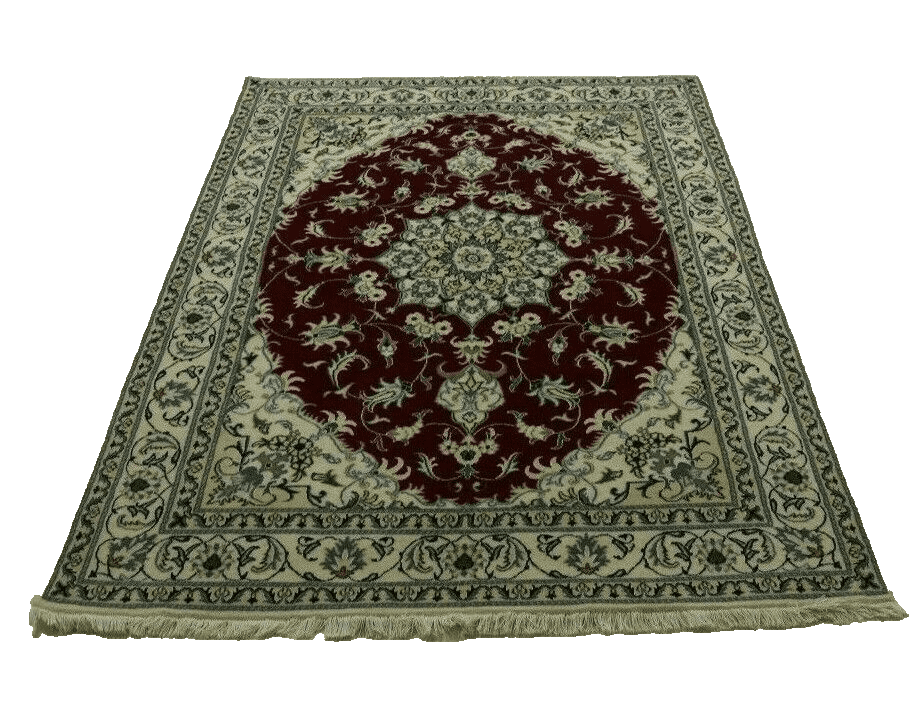
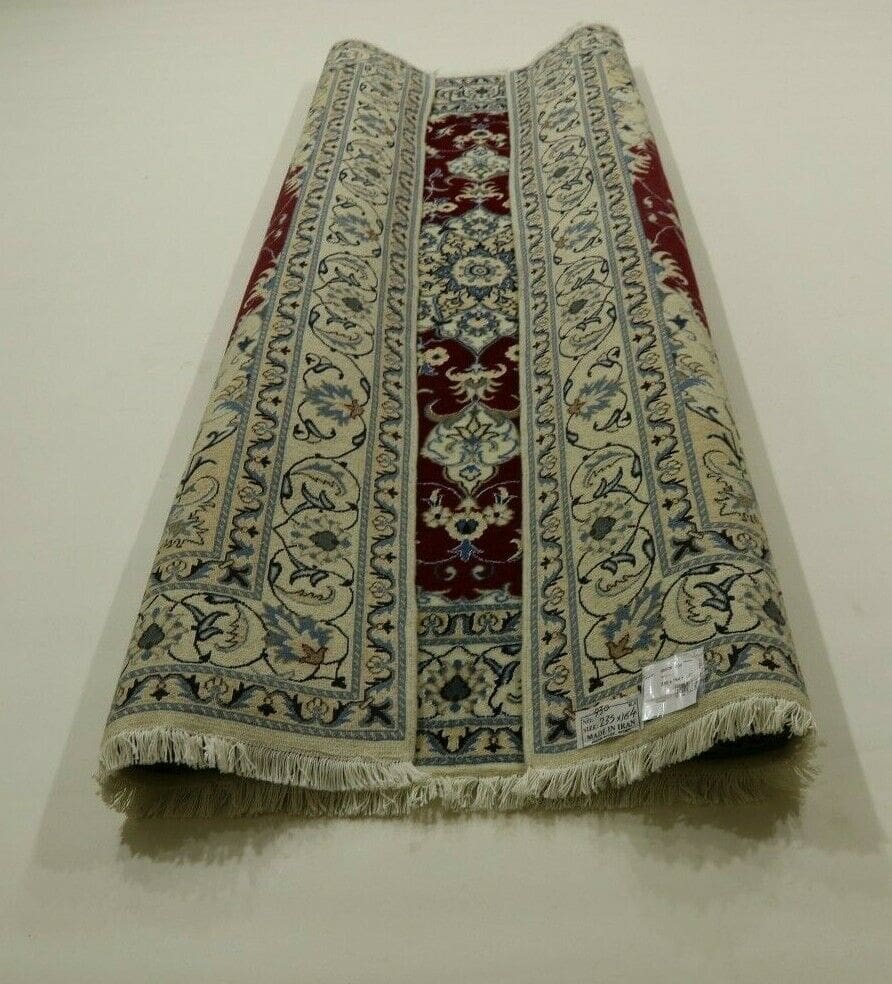
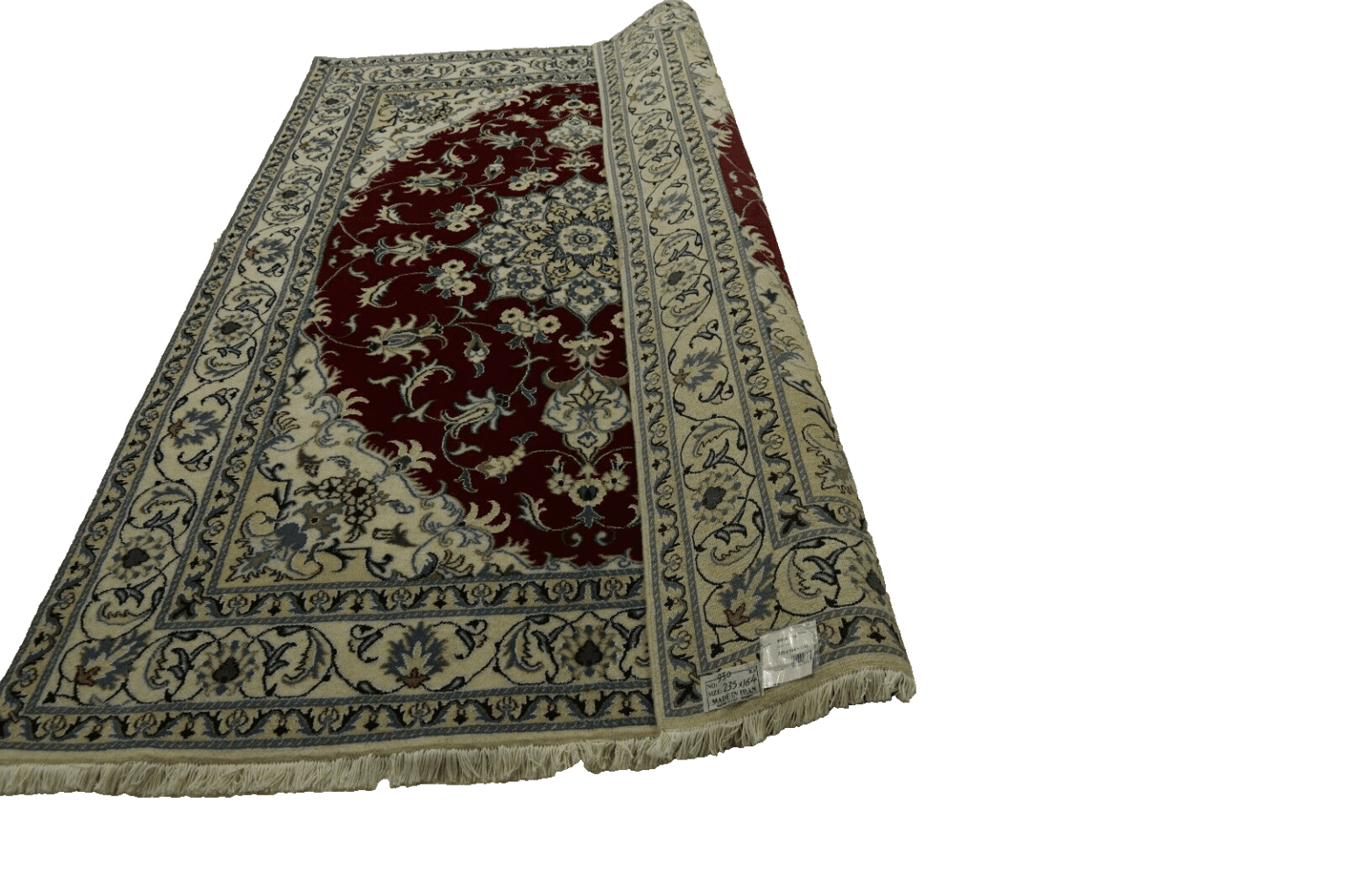
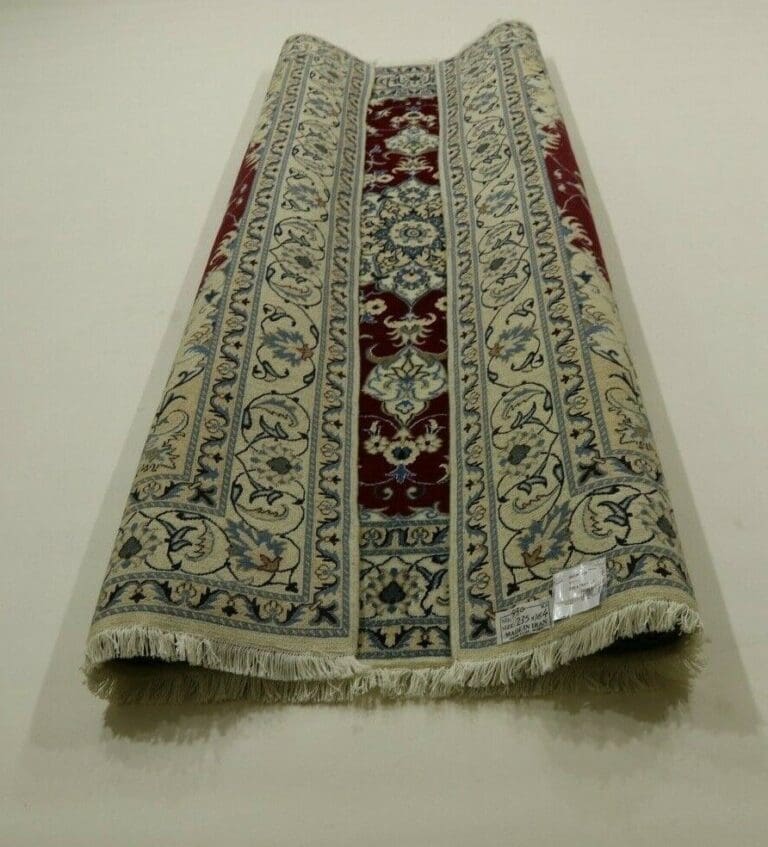
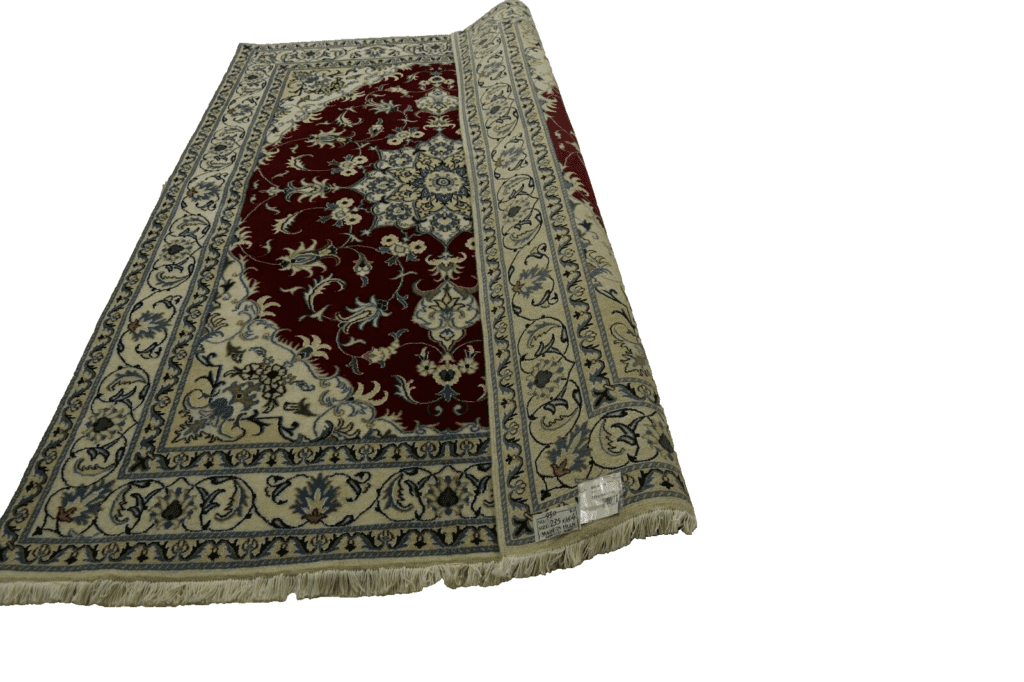
Hand-knotted Nain Persian Rug | Knot density: approx. 300,000 knots/m² | Material: 90% virgin wool, 10% silk | Size: 235 x 164 cm | Pattern: traditional Oriental and Persian | Condition: new, very good
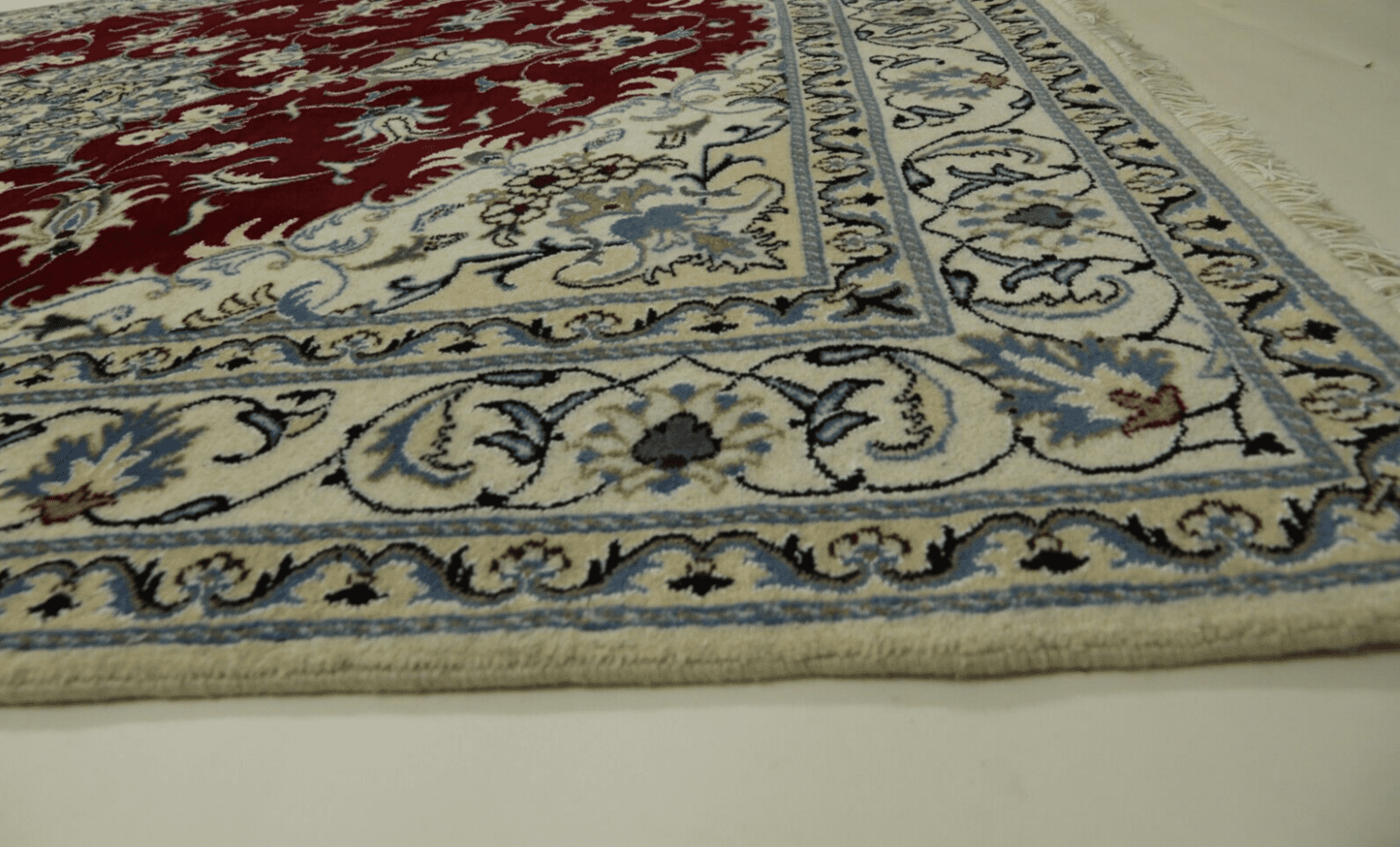
This Nain Persian rug is hand-knotted from virgin wool and silk. Virgin wool forms the principal material component and gives the pile a soft feel together with a firm, resilient surface. The silk content adds a fine sheen and creates greater visual depth within the pile. This combination of materials is associated with the refined appearance and careful construction found in Nain rug making.
Hand knotting builds the rug one knot at a time. Each knot is placed by hand as the design gradually takes shape. The process differs from machine production because the craftsmanship is present directly in the surface and structure of the rug. Minor individual variations in the drawing are part of the character of a hand-knotted one-off piece and distinguish it from an industrially repeated product.
The fine knotting supports a precise rendering of the motifs. Outlines can be worked carefully, while the contrast between wool’s subdued surface and silk’s reflective quality gives the design a varied texture. This rug is described as new and in very good condition. It is offered as a unique piece, or one-off, rather than as one item from a uniform series.
Origin and Tradition
The rug comes from Nain in Iran. Nain is one of Persia’s established carpet centres and is known for a careful weaving tradition involving wool and silk. The city lies in central Iran and developed a distinct reputation for finely worked Persian rugs. The name Nain therefore identifies more than a decorative look: it also points to a regional practice with its own approach to materials, drawing and knotting.
Nain production is shaped by close control of the whole making process. The design, the knot work and the colour arrangement have to correspond with one another. In finely detailed Nain rugs, particular attention is given to clean separation between ornaments and to calm, accurate lines. A high knot density can allow flowers, vines and geometric elements to be represented with considerable detail. The finished surface is the result of design preparation, material handling and the repeated manual work of tying knots.
Persian carpet knowledge has often been passed from one generation to the next. Nain developed its own forms within that wider tradition. Wool provides substance and body, while silk is traditionally used to make selected passages finer and more luminous. This relationship between the two fibres appears regularly in Nain weaving, although individual rugs can differ in their exact arrangement of colours and motifs.
Nain rugs are recognised in Iran and internationally as part of Persian carpet culture. Their designs often balance disciplined order with the movement of floral ornament. Medallions, vines, blossoms and symmetrical divisions may be brought together in a unified composition. Regional identity can be expressed through the precision of the drawing as well as through the balanced use of wool and silk. With its Nain origin, hand-knotted construction and stated material combination, this rug belongs to that craft tradition.
The history of Nain weaving is also connected with the adaptation of established Persian design principles to a refined regional language. A successful composition depends on the relationship between the central structure, border organisation and smaller filling motifs. The knotting must preserve that relationship across the entire field. This is why the making of a Nain rug requires both technical repetition and a consistent understanding of the original pattern. The result is not simply a flat printed image, but a design formed through the placement of fibres and knots.
Design and Pattern
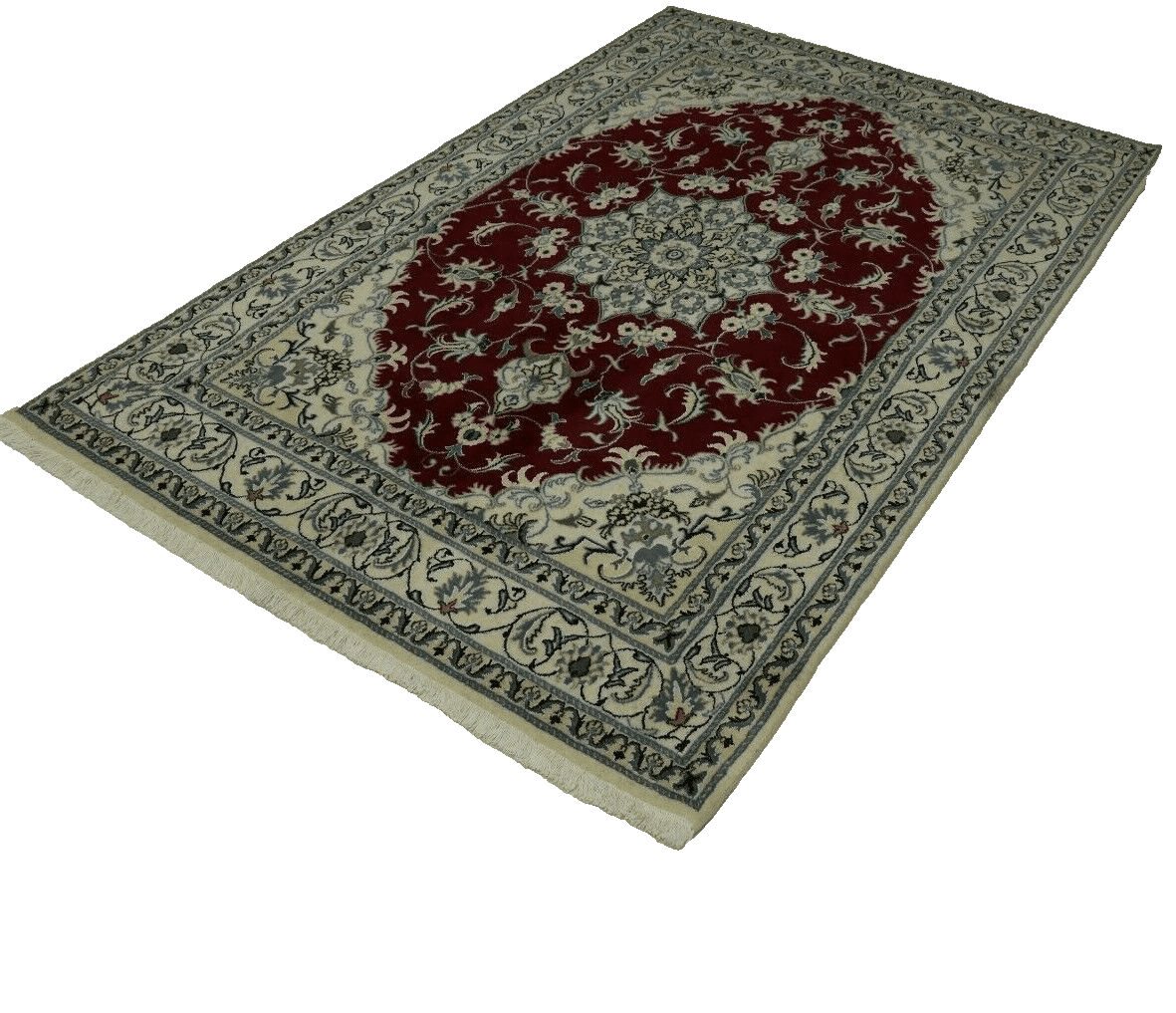
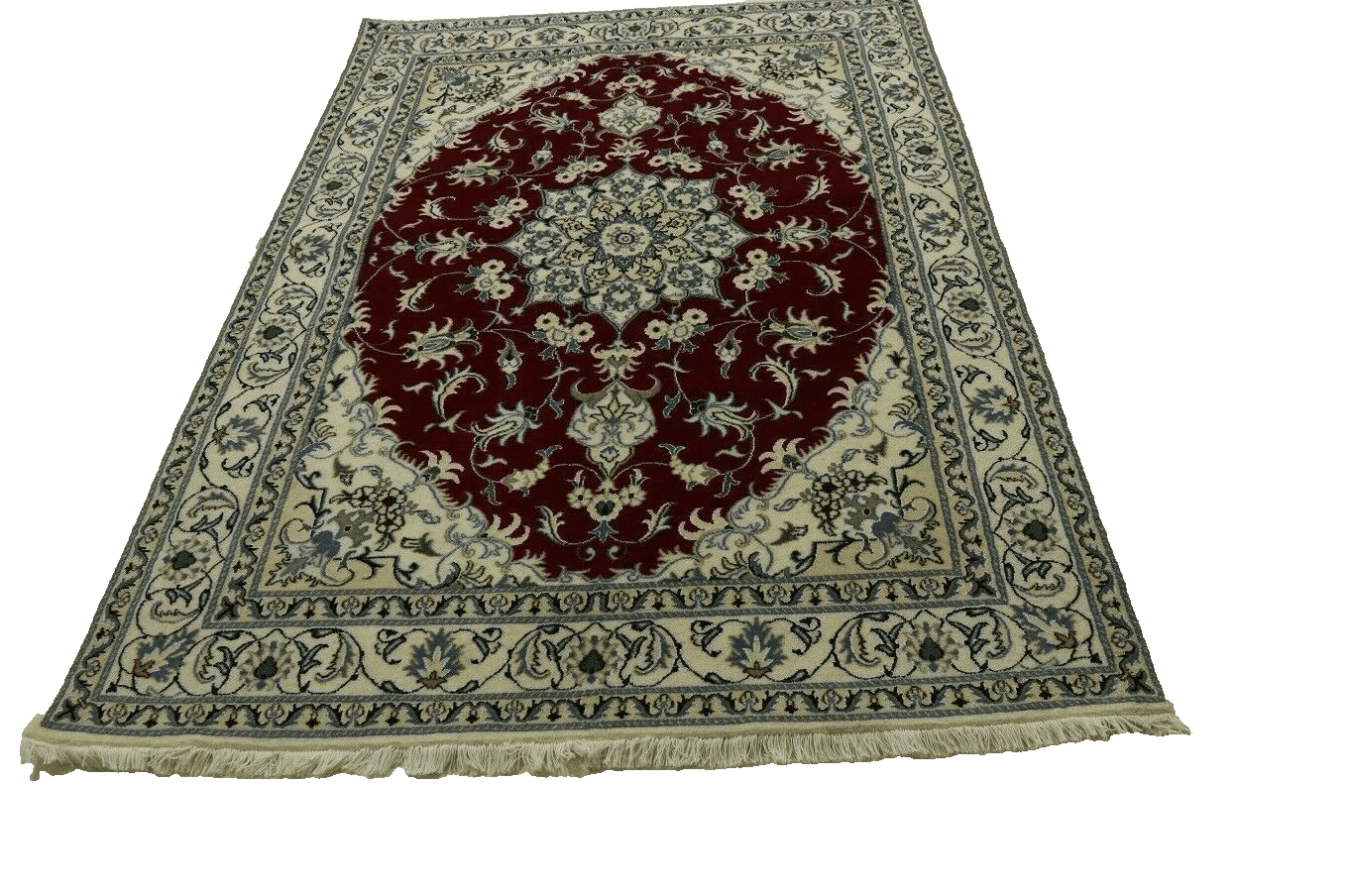
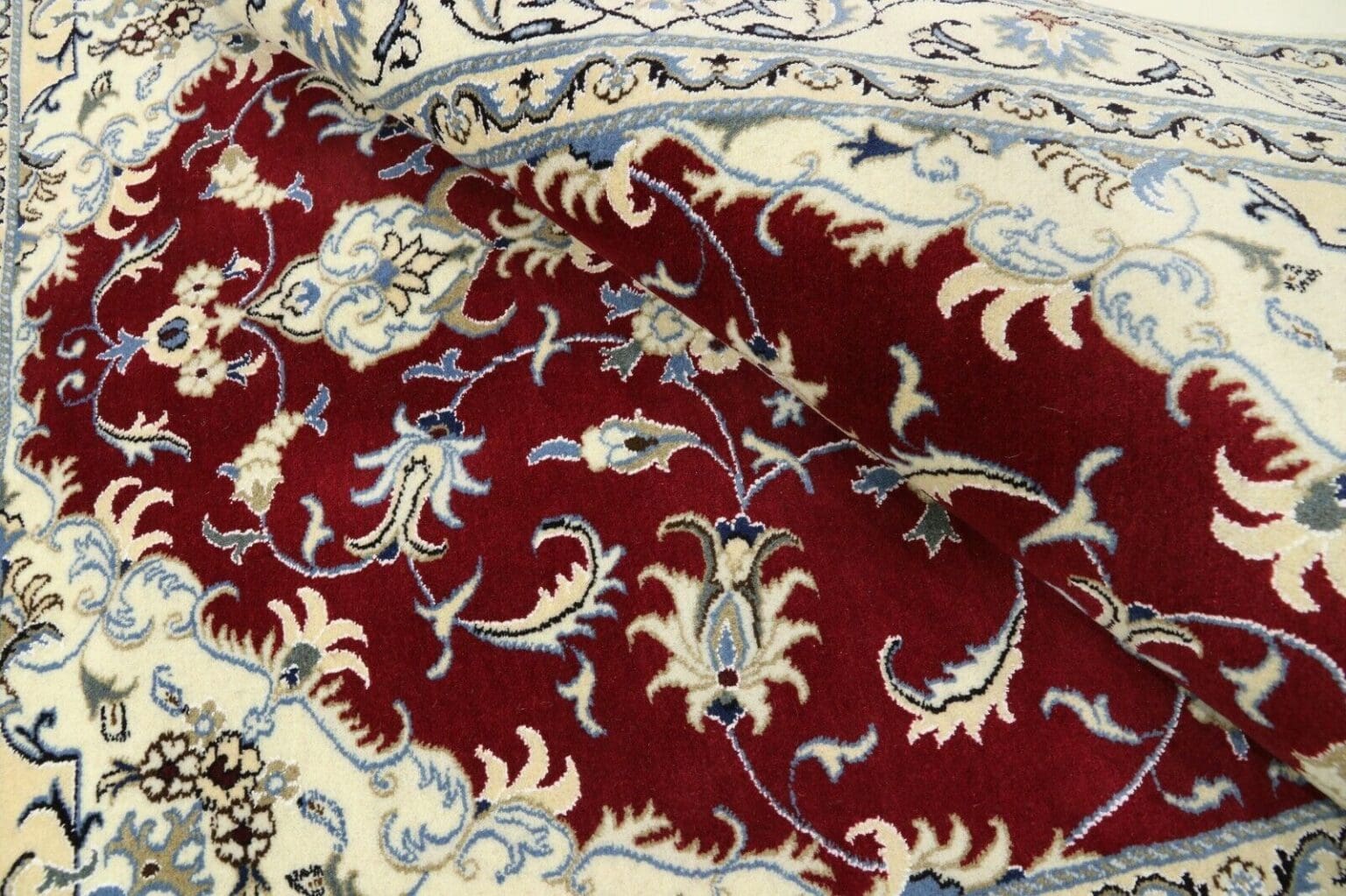
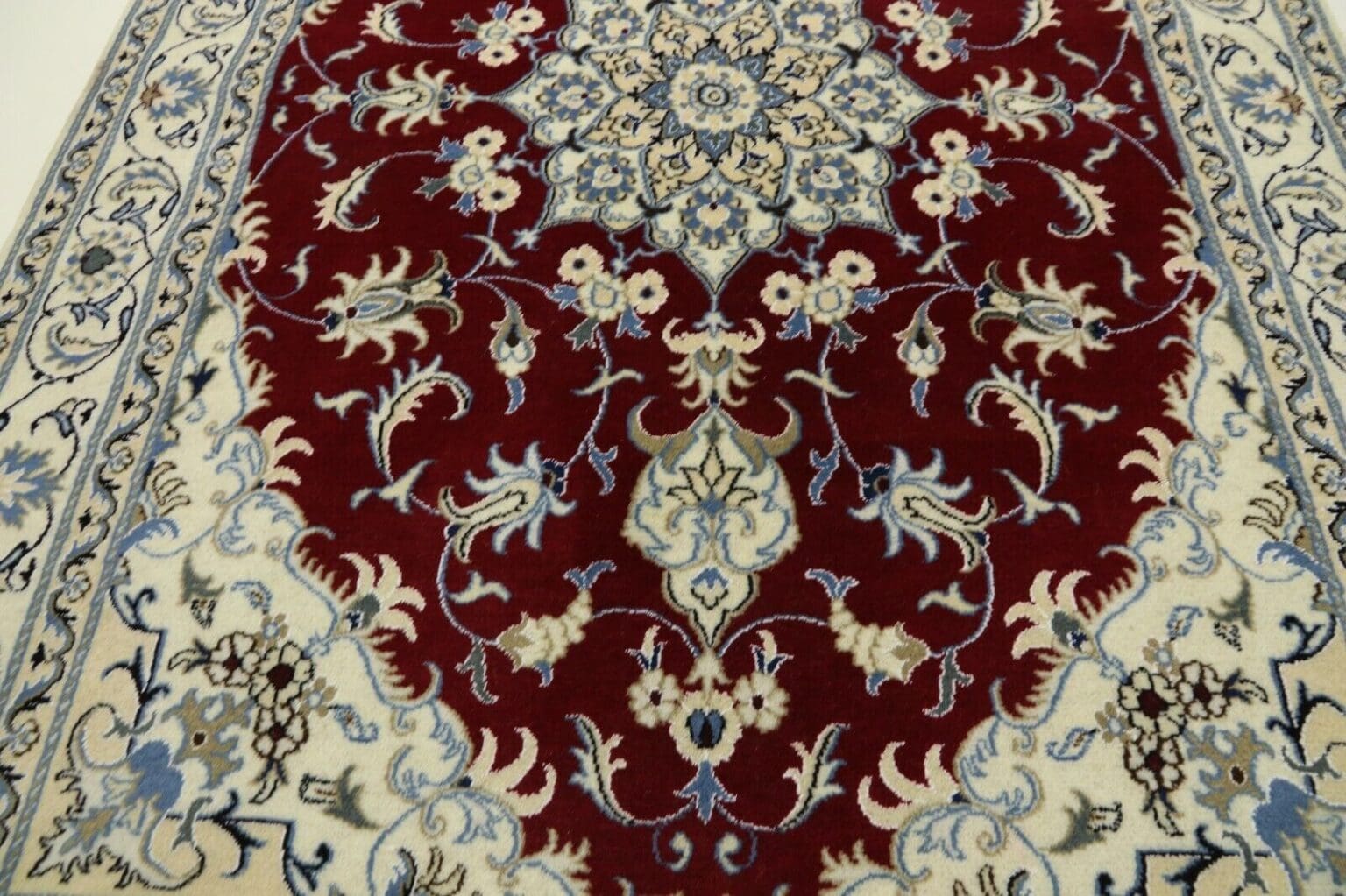
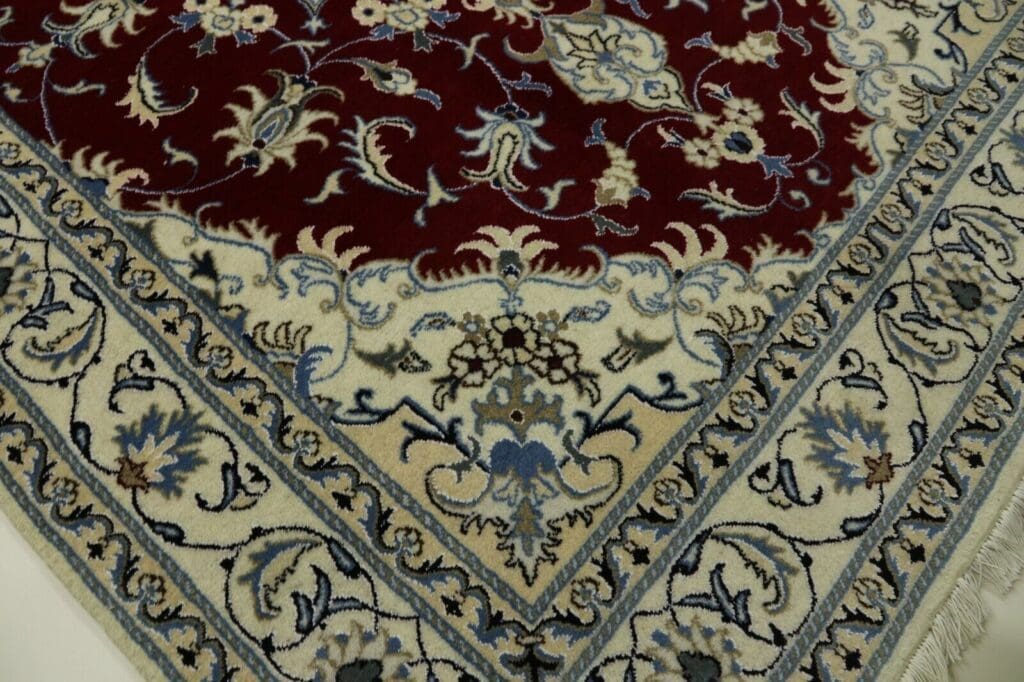
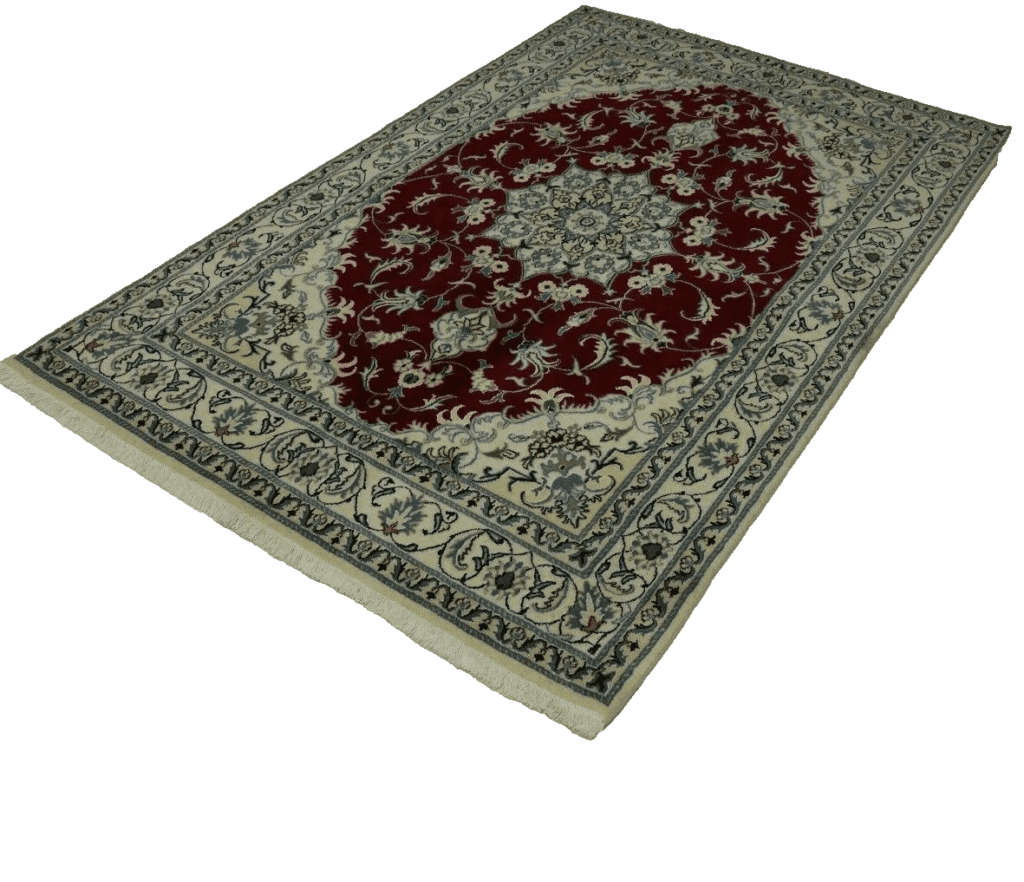
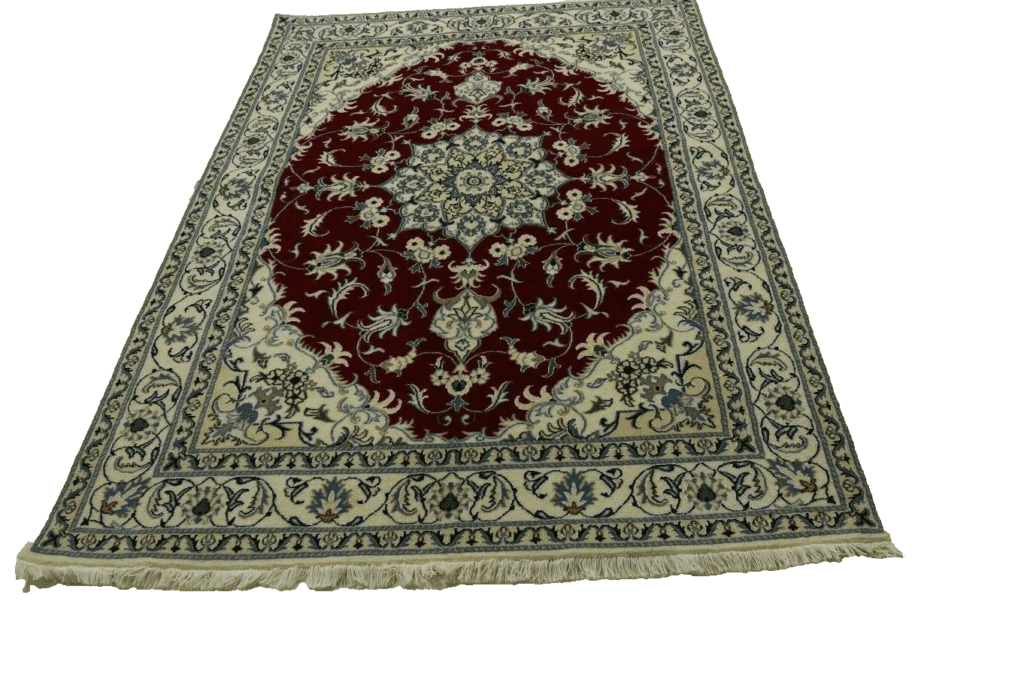
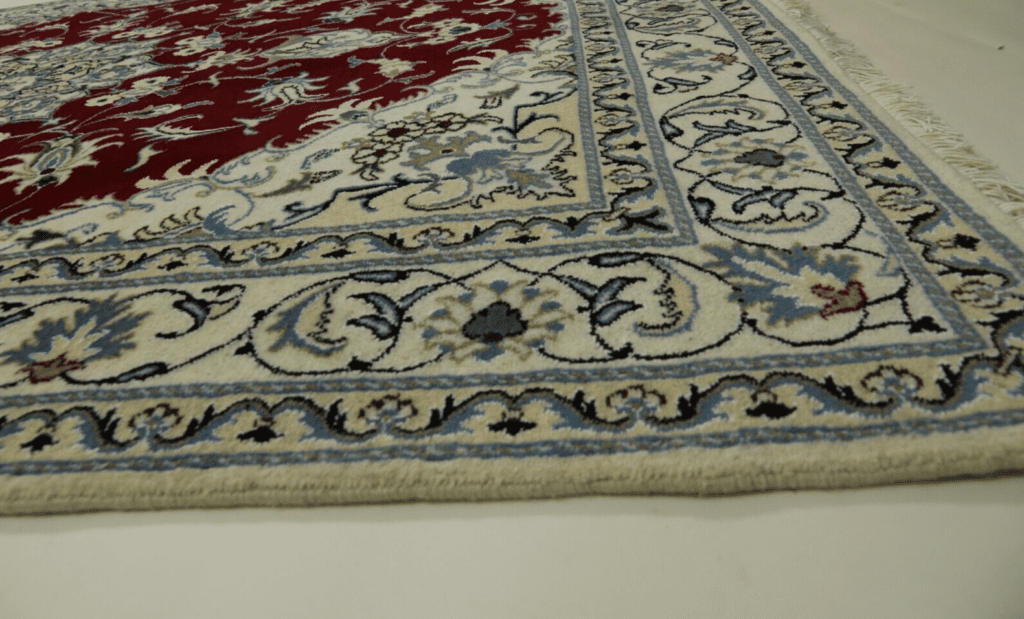
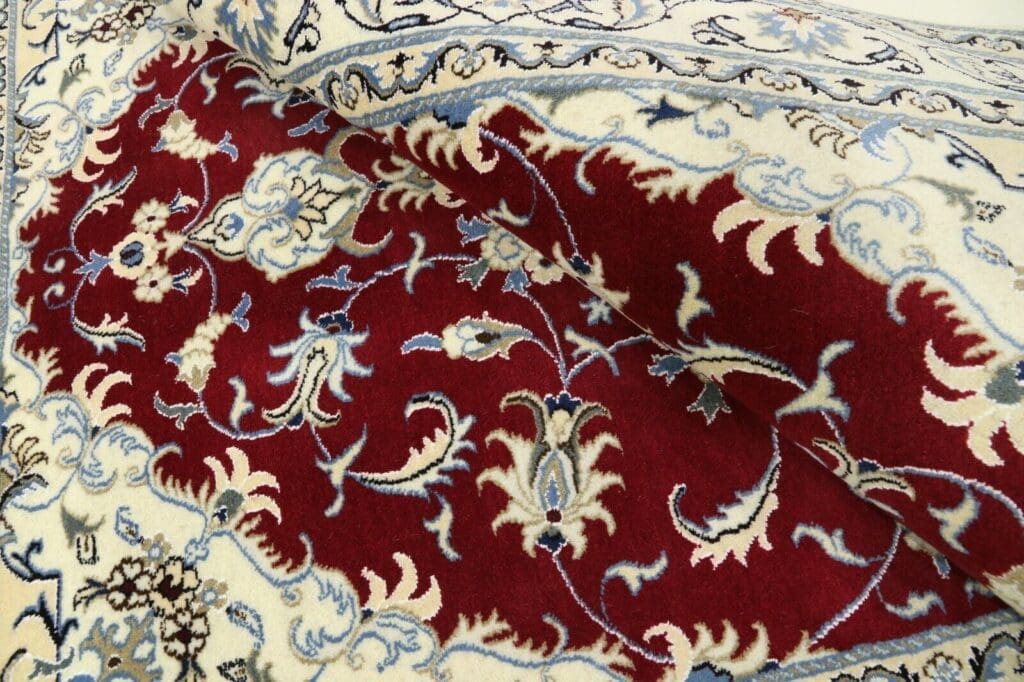
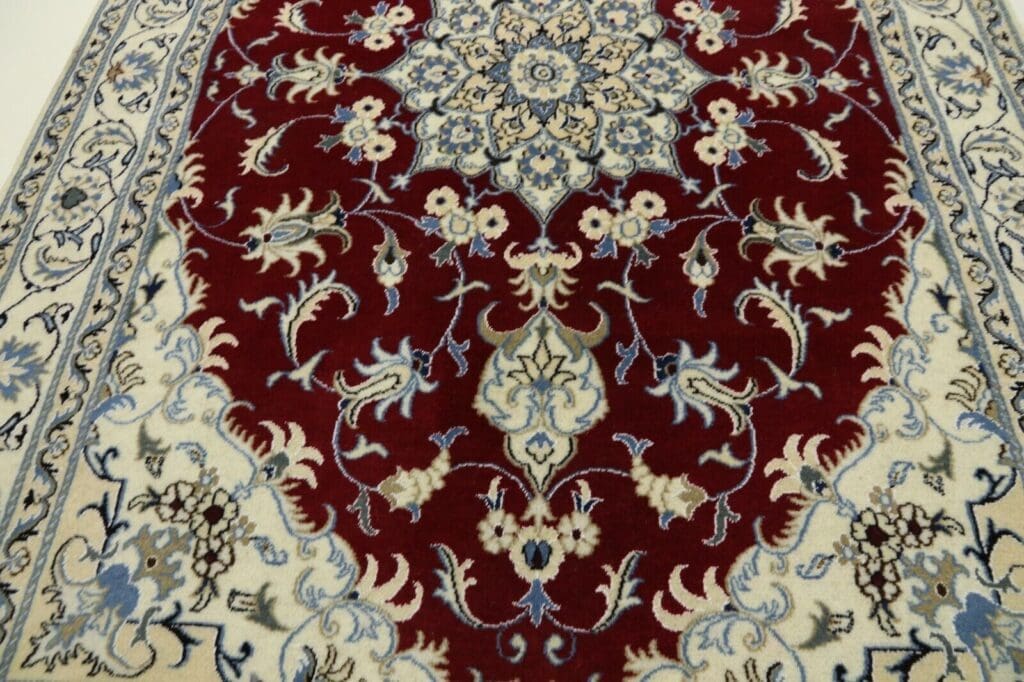
The design of this rug uses motifs associated with Persian carpet art. Floral elements and geometric forms are arranged in a harmonious composition. Blossoms and vines bring organic movement to the field, while geometric shapes provide order and orientation. Bringing these two visual languages together is common in classical Persian design and allows the pattern to appear detailed without losing its overall structure.
In a Nain design, the relationship between the ground, the ornaments and the outlines is important. Motifs are not placed as unrelated units; they are connected through a coherent system of lines and repetition. Repeated forms establish rhythm, and symmetrical relationships give the composition balance. Fine contours can separate leaves, flowers and vines, while larger structural elements hold the entire pattern together.
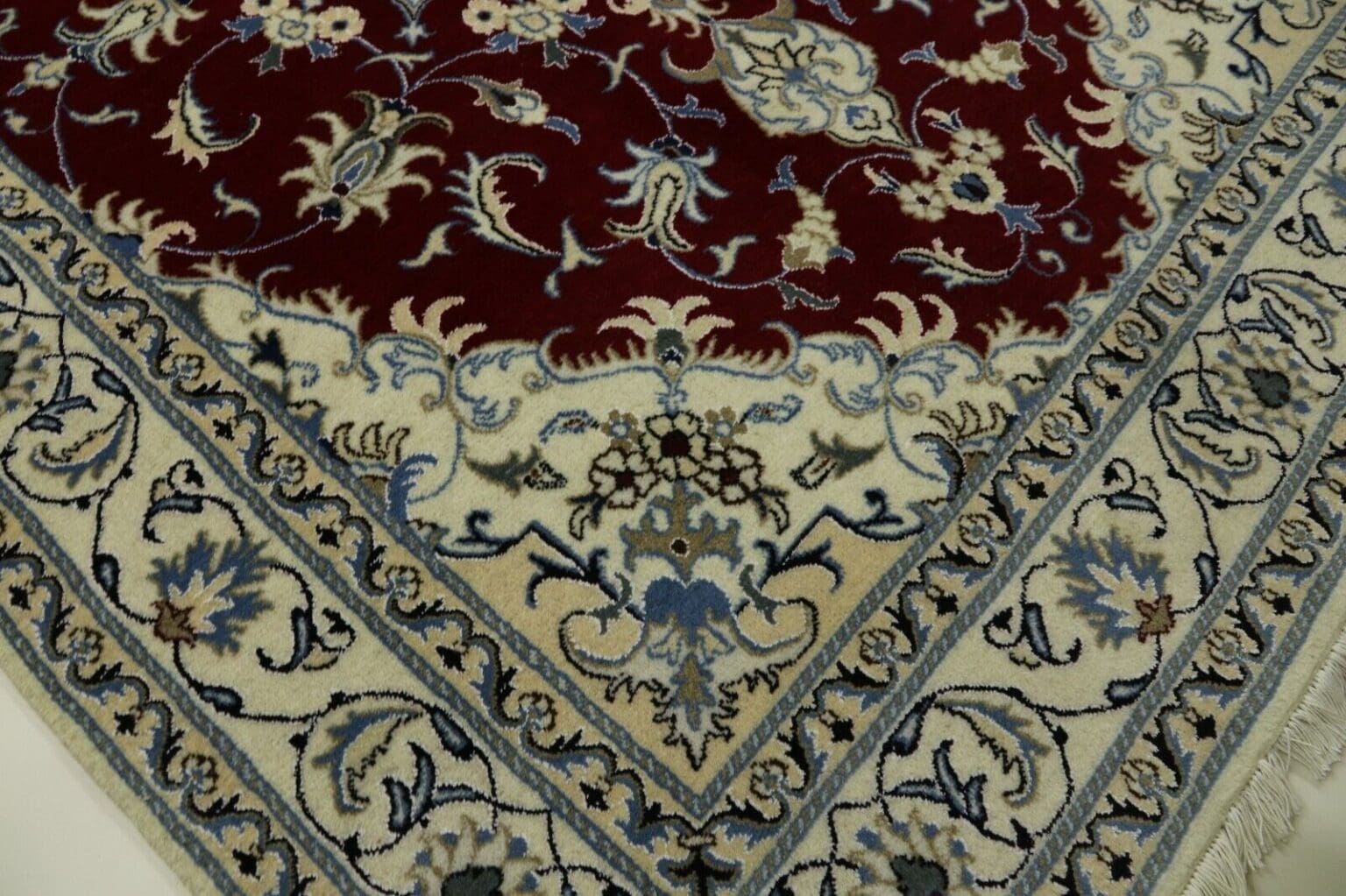
The colour scheme is described as rich and varied. High-quality dyes support a clear and lively appearance. In a Persian rug, colour depends not only on the individual shades but also on their neighbours and on the way pile and outlines meet. Silk can make selected areas stand out because it reflects light differently from virgin wool. The material contrast therefore contributes to the reading of the pattern as well as to the tactile experience of the rug.
The impression of the pattern changes with viewing distance. Close observation reveals the hand-knotted details, fine lines and differing surfaces of wool and silk. From farther away, the ornaments merge into a balanced and continuous field. This allows the rug to work with traditional interiors as well as with contemporary rooms. Its visual language remains rooted in Persian tradition without being restricted to one particular historical furnishing style.
The floral and geometric elements demonstrate how decorative drawing and technical order can work together. Knotting supports the definition of the contours, while the mixture of wool and silk makes differences between areas of the design more visible. Pattern, colour and texture consequently operate as connected parts of the surface. The term Super Nain is used in the product description for this Nain rug, while its specific characteristics are defined by the stated origin, materials and hand-knotted construction.
Special Features
The rug is described as new and in very good condition. It is a hand-knotted unique piece and is offered as a one-off. Its combination of virgin wool and silk brings together a wool-based surface with silky accents. The fine workmanship and high knot density are among the expressly stated characteristics of this particular rug.
Its traditional Oriental and Persian appearance allows it to be used in a range of domestic settings. The product description names the living room, dining room, bedroom and hallway as suitable areas. It also describes the design as compatible with both traditional and modern interiors. As a hand-knotted one-off, the rug functions as a practical textile while also contributing a crafted, decorative element to a room.
For care, the rug should be vacuumed regularly without a rotating brush. Spills and marks should be dabbed promptly with a damp cloth and, when needed, treated with a mild soap solution. Professional cleaning is recommended for preserving the colours and the quality over the long term.
FAQ
How should I care for the Nain Persian rug?
Vacuum the rug regularly using a vacuum cleaner without a rotating brush. If a mark occurs, gently dab the affected area with a damp cloth rather than rubbing it forcefully. A mild soap solution can be used for treatment when required. Careful handling helps protect the pile, pattern and colours. Professional rug cleaning is recommended as part of long-term care, particularly when the aim is to preserve the original colour effect and overall quality.
Where can the rug be used?
The Nain Persian rug is described as suitable for several living areas. The suggested locations are the living room, dining room, bedroom and hallway. Its traditional Oriental and Persian pattern can be combined with classic furnishings or placed within a modern interior. The best position depends on the existing room arrangement and the intended visual effect. As a hand-knotted unique piece, it can serve both as a functional floor textile and as a decorative feature.
What makes Nain rugs distinctive?
Nain rugs are known for high knot density and for combining virgin wool with silk fibres. They are also associated with precise, complex designs that may include floral and geometric motifs. These characteristics belong to the wider tradition of Persian carpet making, whose skills have been refined and transmitted across generations. In this example, the material combination, hand-knotted construction, Nain origin and new, very good condition are the stated features that define the piece.
To provide the best experiences, we use technologies like cookies to store and/or access device information. Consenting to these technologies will allow us to process data such as browsing behavior or unique IDs on this site. Not consenting or withdrawing consent, may adversely affect certain features and functions.
Functional Always active
The technical storage or access is strictly necessary for the legitimate purpose of enabling the use of a specific service explicitly requested by the subscriber or user, or for the sole purpose of carrying out the transmission of a communication over an electronic communications network.
Preferences
The technical storage or access is necessary for the legitimate purpose of storing preferences that are not requested by the subscriber or user.
Statistics
The technical storage or access that is used exclusively for statistical purposes.The technical storage or access that is used exclusively for anonymous statistical purposes. Without a subpoena, voluntary compliance on the part of your Internet Service Provider, or additional records from a third party, information stored or retrieved for this purpose alone cannot usually be used to identify you.
Marketing
The technical storage or access is required to create user profiles to send advertising, or to track the user on a website or across several websites for similar marketing purposes.
 SECURE PAYMENT
 SHIPPING PARTNERS


