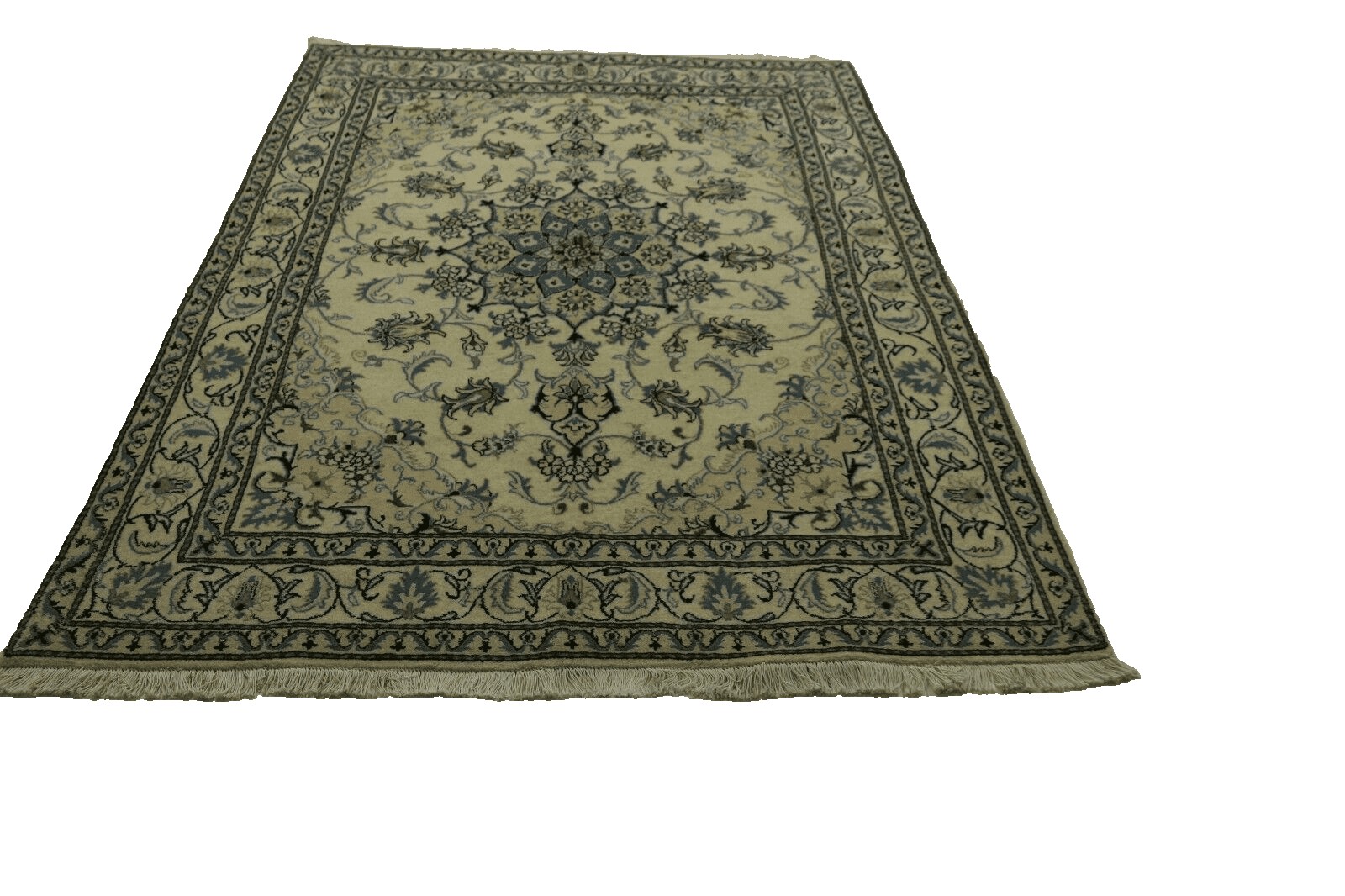
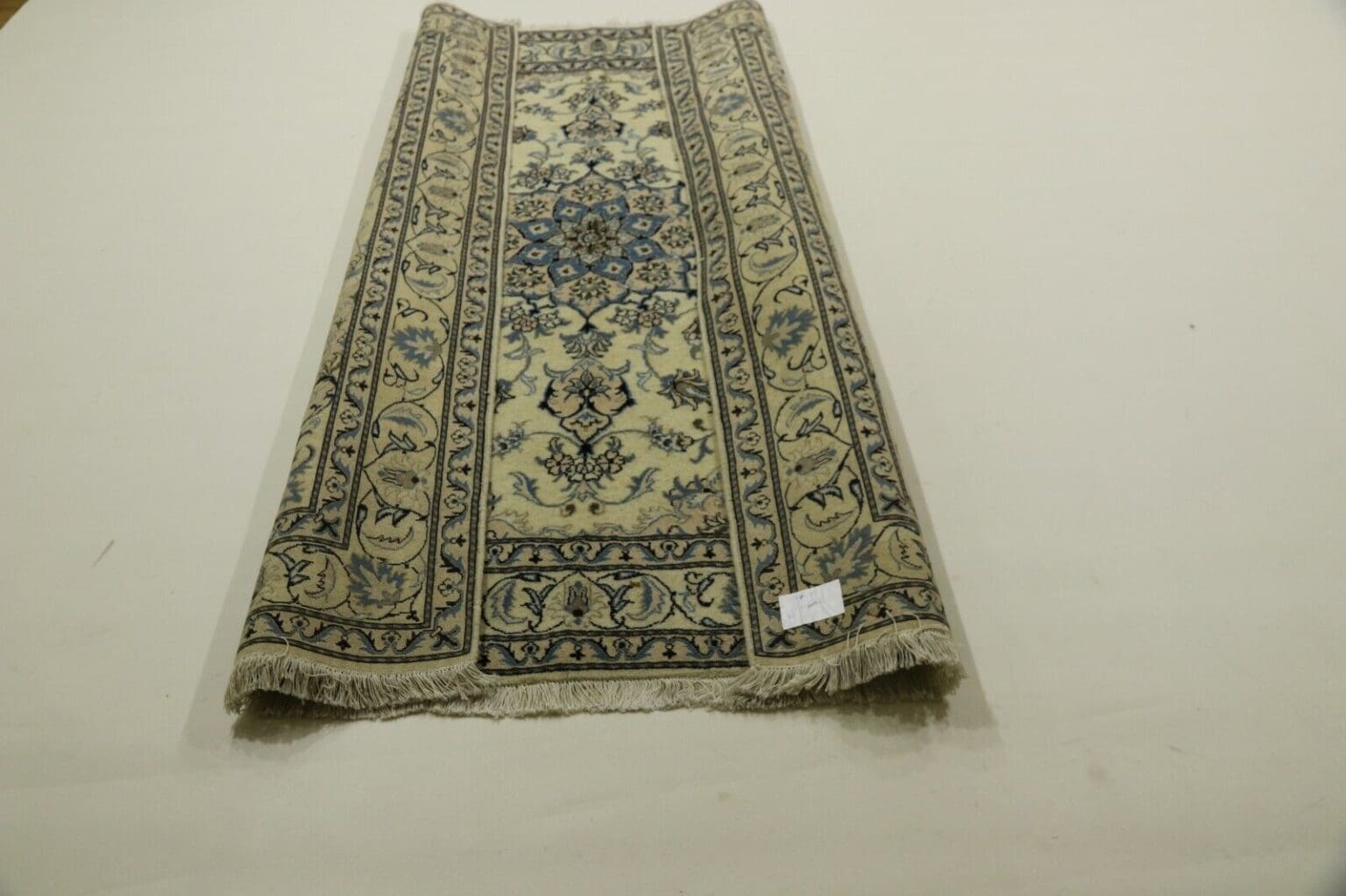
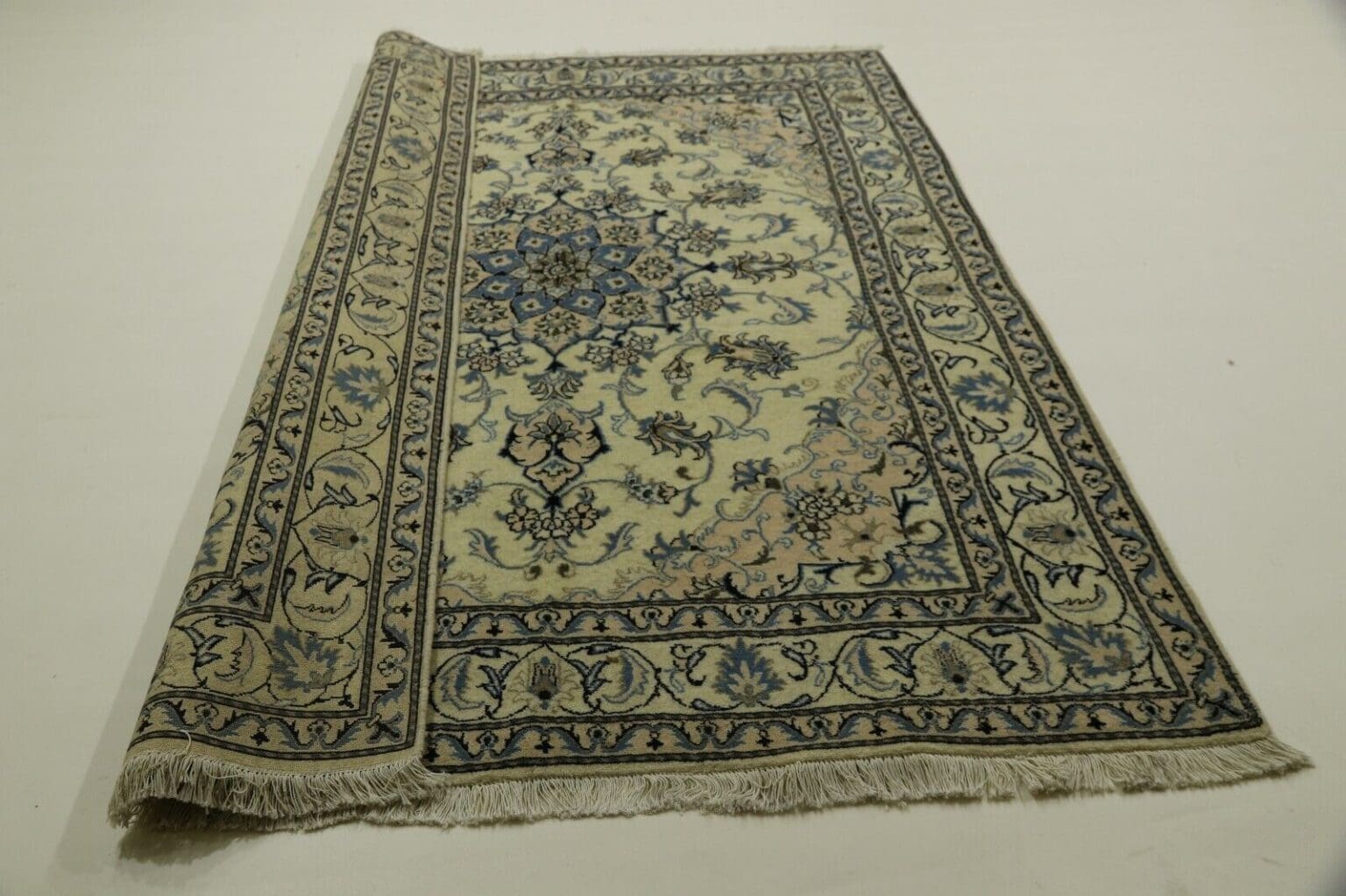
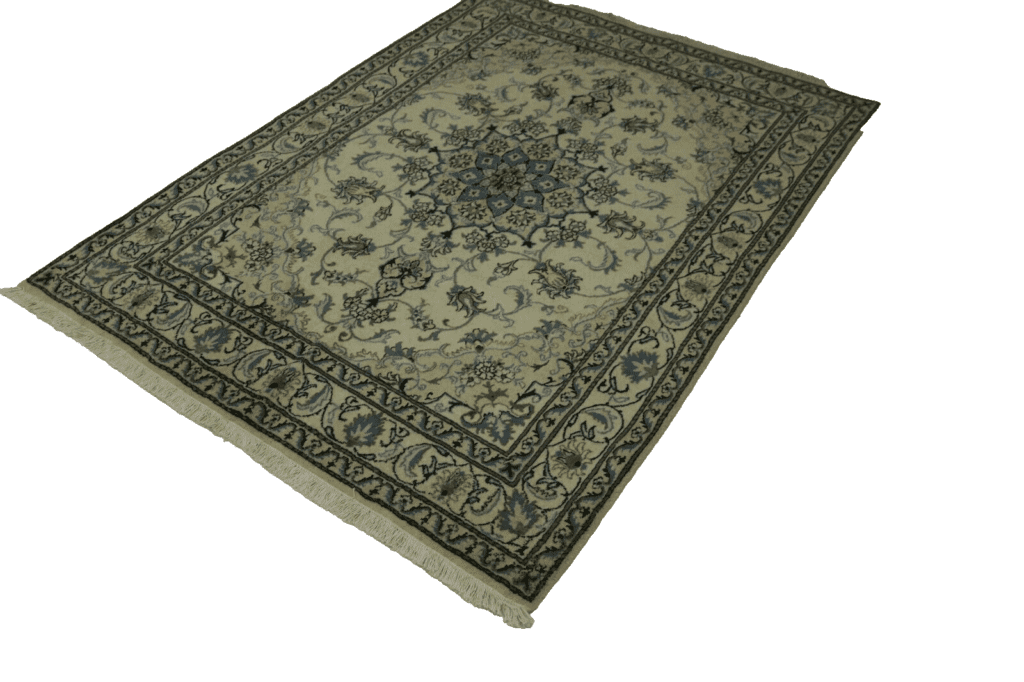
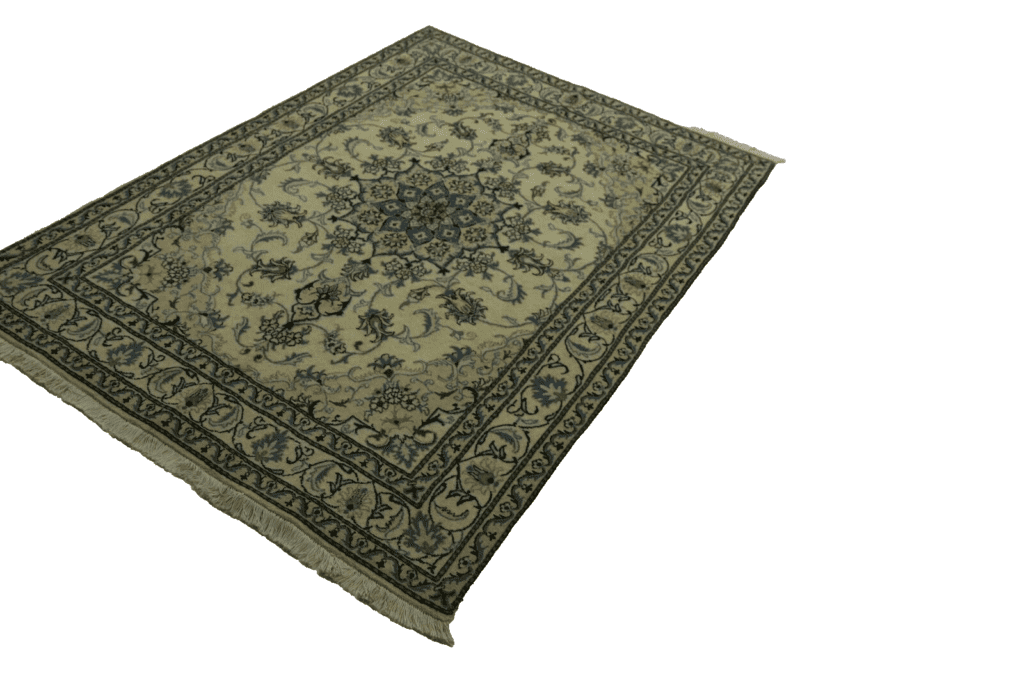
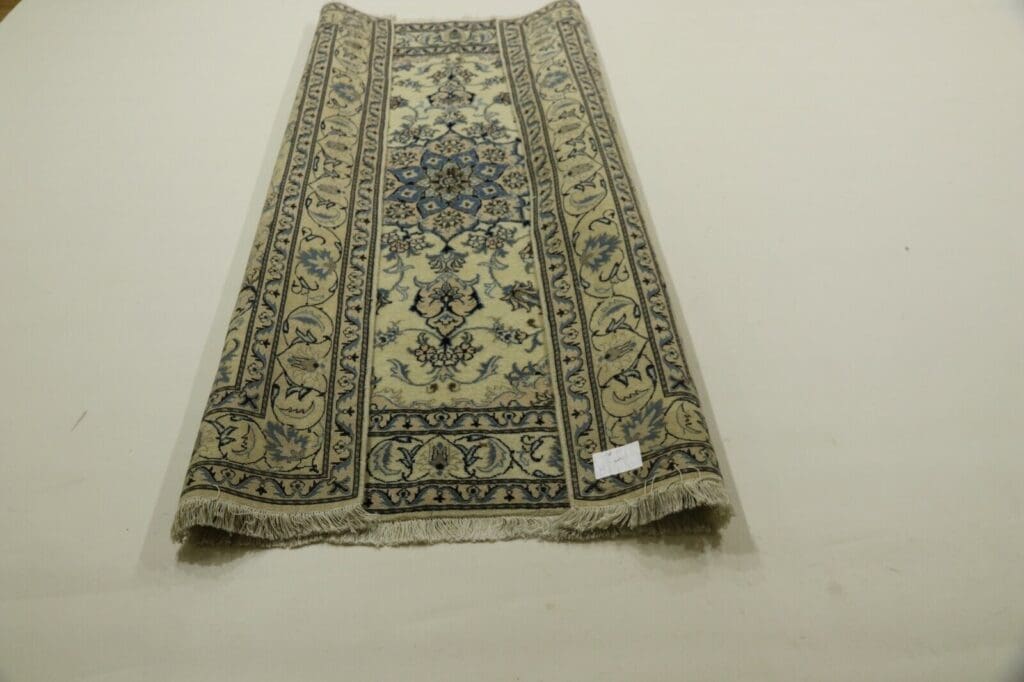
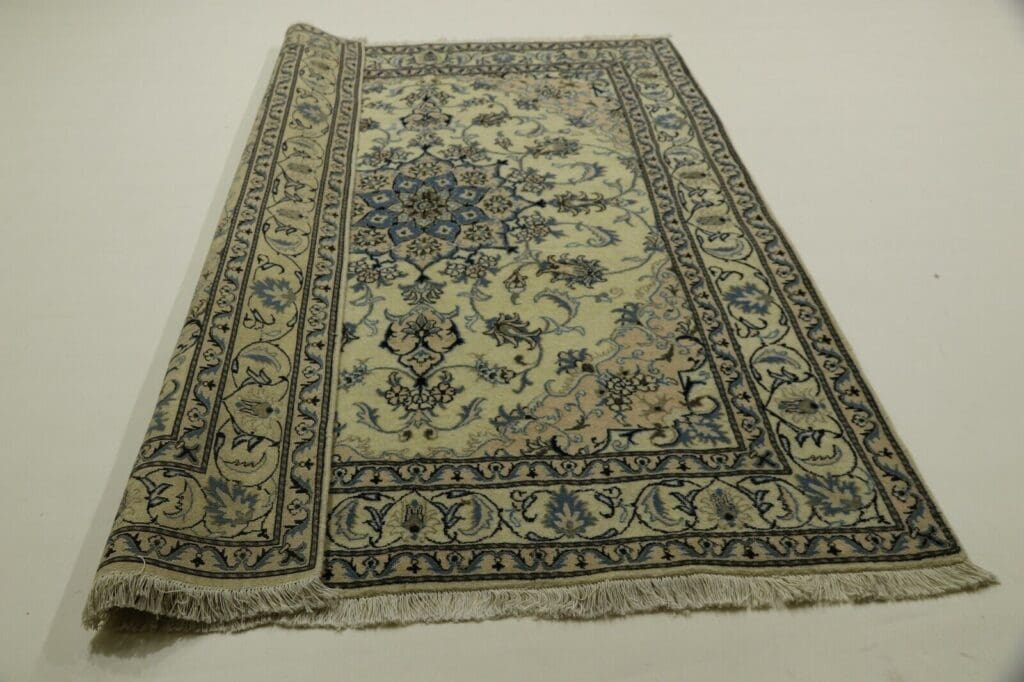
Hand-knotted Nain Persian Rug | Knot density: approx. 300,000 knots/m² | Material: pile 90% virgin wool, 10% silk, warp 100% cotton | Size: 228 x 166 cm | Pattern: traditional oriental and Persian | Condition: new, very good
This Nain Persian rug is hand-knotted. Its pile is made from 90% virgin wool and 10% silk, while the warp is 100% cotton. Each fibre contributes a different quality to the surface. Virgin wool provides a resilient and pleasantly substantial pile, whereas silk adds smoothness and a restrained sheen. Silk is not the principal pile material here; it is used as a refined complement to the wool. The stated fibre combination therefore describes both the practical foundation and the visual character of the rug.
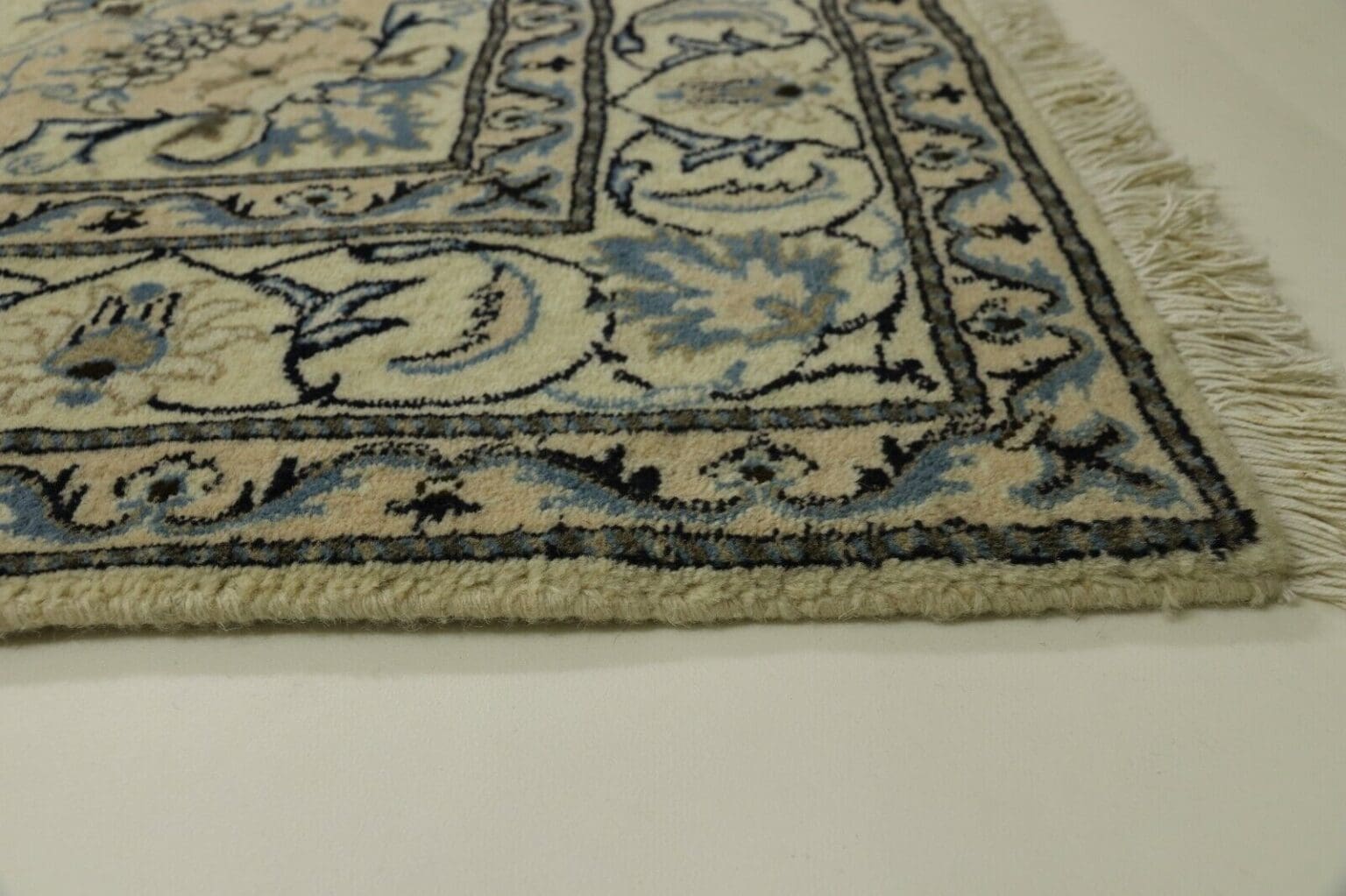
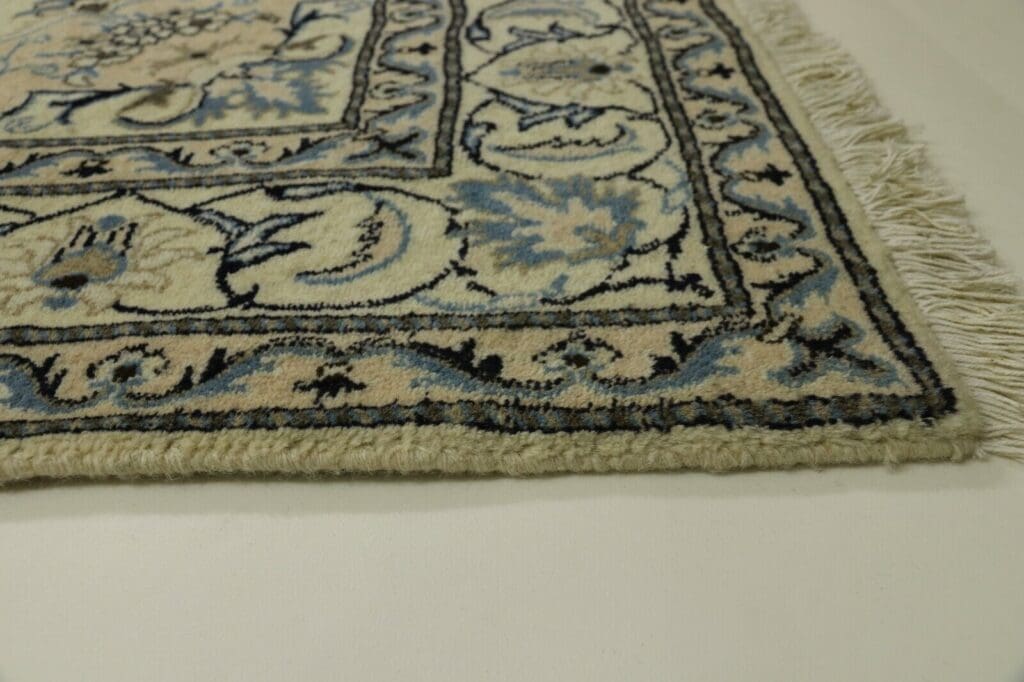
Hand-knotting is a row-by-row process in which individual pile knots are inserted into the foundation. It differs from machine production because the work is performed manually throughout the weaving process. The approximate density of 300,000 knots per square metre indicates a finely executed construction. A dense knot structure gives the weaver the means to draw small elements and close contours with greater precision. At the same time, every hand-knotted rug remains an individual piece, since manual work cannot reproduce every detail in exactly the same way.
Wool and silk perform different functions within the pile. Wool has long been used in rug making because it can withstand regular use and retain a flexible, comfortable surface. Silk has a smoother fibre structure and can catch the light differently from wool. In this rug the two materials are combined rather than used separately. The cotton warp forms the foundation into which the knots are secured. Keeping the pile composition distinct from the warp makes clear how the rug is constructed: cotton supports the structure, while wool and silk form the visible working surface.
The material combination also relates to the detailed character associated with Super Nain rugs. A fine knot structure supports careful drawing, while the silk content can give selected areas a more polished appearance. The hand-knotted construction makes this an individual rug rather than a repeated industrial product. It is described as a unique piece and comes with a certificate. Its condition is new and very good. The rug is identified as suitable for different living spaces, including living rooms and bedrooms.
Origin and Tradition
This rug comes from Persia and is identified as a Nain rug. Nain is a city in Iran with a well-established tradition of Persian carpet making. The name therefore refers both to a place of origin and to a recognised regional school of craftsmanship. Nain weaving is associated with careful construction, fine materials and designs that are organised with considerable precision. Skills involving knotting, proportion, colour arrangement and pattern drawing have been maintained through generations of textile work.
In Nain carpet making, the finished rug is built as a structured composition rather than as an undifferentiated textile surface. Warp, weft, pile and pattern must work together. The weaver follows a planned arrangement while placing thousands of individual knots. Repeated borders, central organisation and smaller ornamental units need to remain proportionate across the field. A high knot density requires particular attention because slight changes in a small motif can affect the continuity of the complete design. The manual process combines inherited methods with the individual execution of each piece.
Nain rugs are commonly connected with fine materials and detailed patterns. The use of virgin wool together with silk reflects the way a durable pile can be combined with a smoother, more lustrous fibre. Cotton provides the warp foundation for the knots. This arrangement shows how technical construction and visual intention meet in a Persian rug. The foundation must remain stable enough to support the pile, while the pile itself must allow the drawing to remain legible. The result is a textile in which structure and decoration are inseparable.
Persian carpets have a long cultural role beyond their use as floor coverings. They have been used in domestic interiors, cared for over extended periods and passed down within families. Their designs can preserve local forms, observations of nature and symbolic ideas. A carpet thus carries information about a region’s textile practice as well as serving a practical purpose. The manual sequence is represented in the finished object: the density of knots, the accuracy of the contours and the distribution of colour all reveal how many small operations create a coherent whole.
Nain designs are associated with elegant, classical compositions. Floral motifs are often arranged within a disciplined geometric framework, creating a measured relationship between organic lines and ordered divisions. This does not mean that every Nain rug has the same design; regional tradition allows individual variations in drawing and arrangement. The tradition instead provides a vocabulary of balanced layouts, fine ornament and controlled repetition. This rug is described as traditional oriental and Persian in style, placing it within that wider Persian design heritage.
The history of oriental rugs also explains why hand-knotting remains important in their description. Unlike a printed surface, a knotted design is formed at the same time as the textile itself. The pattern is built directly into the pile, and the density of the knots influences how much detail can be expressed. Regional schools such as Nain developed recognisable ways of combining materials, drawing and construction. The individual rug remains distinct, but it belongs to a tradition that can be understood through these recurring technical and artistic principles.
Design and Pattern
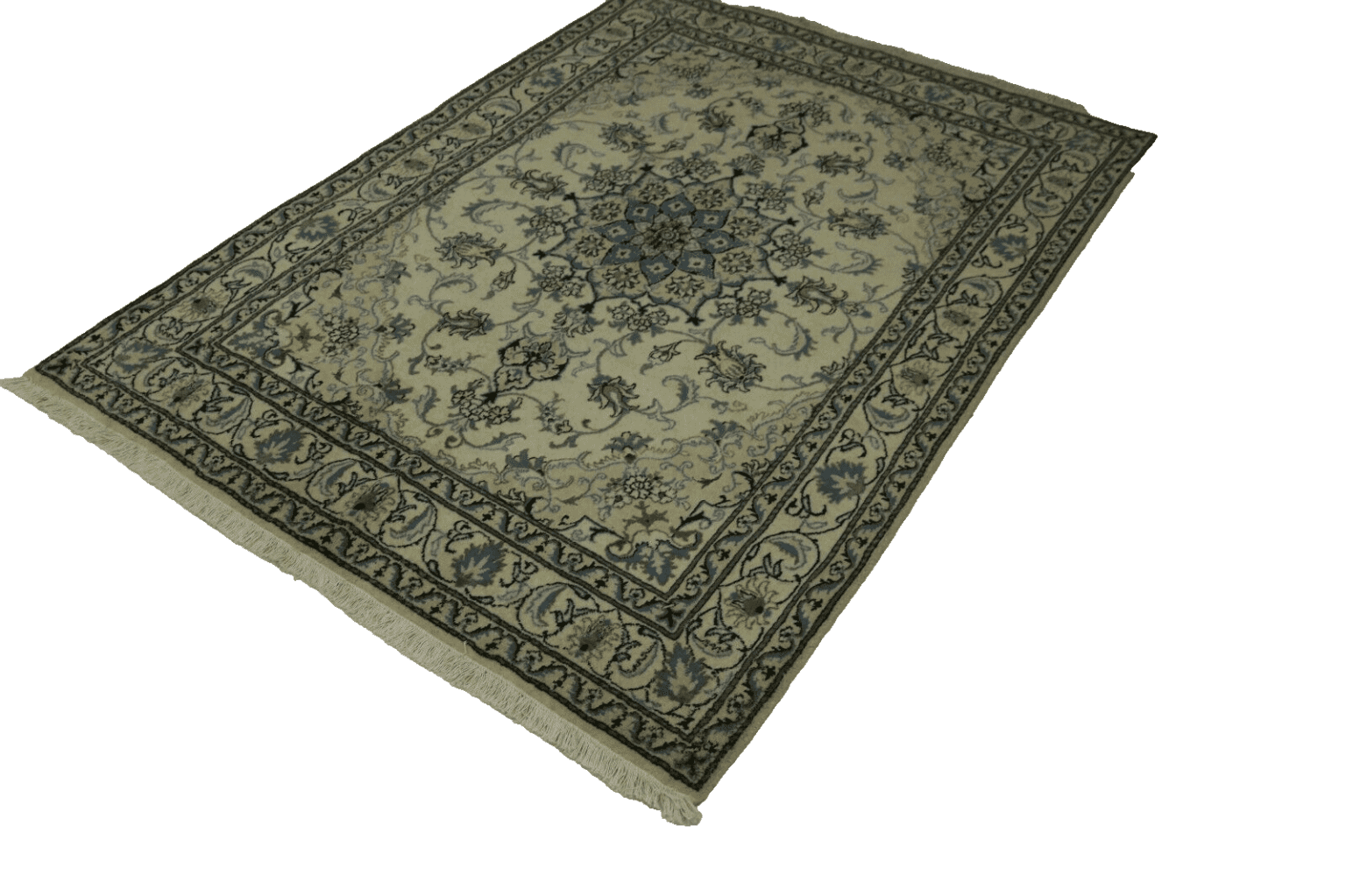
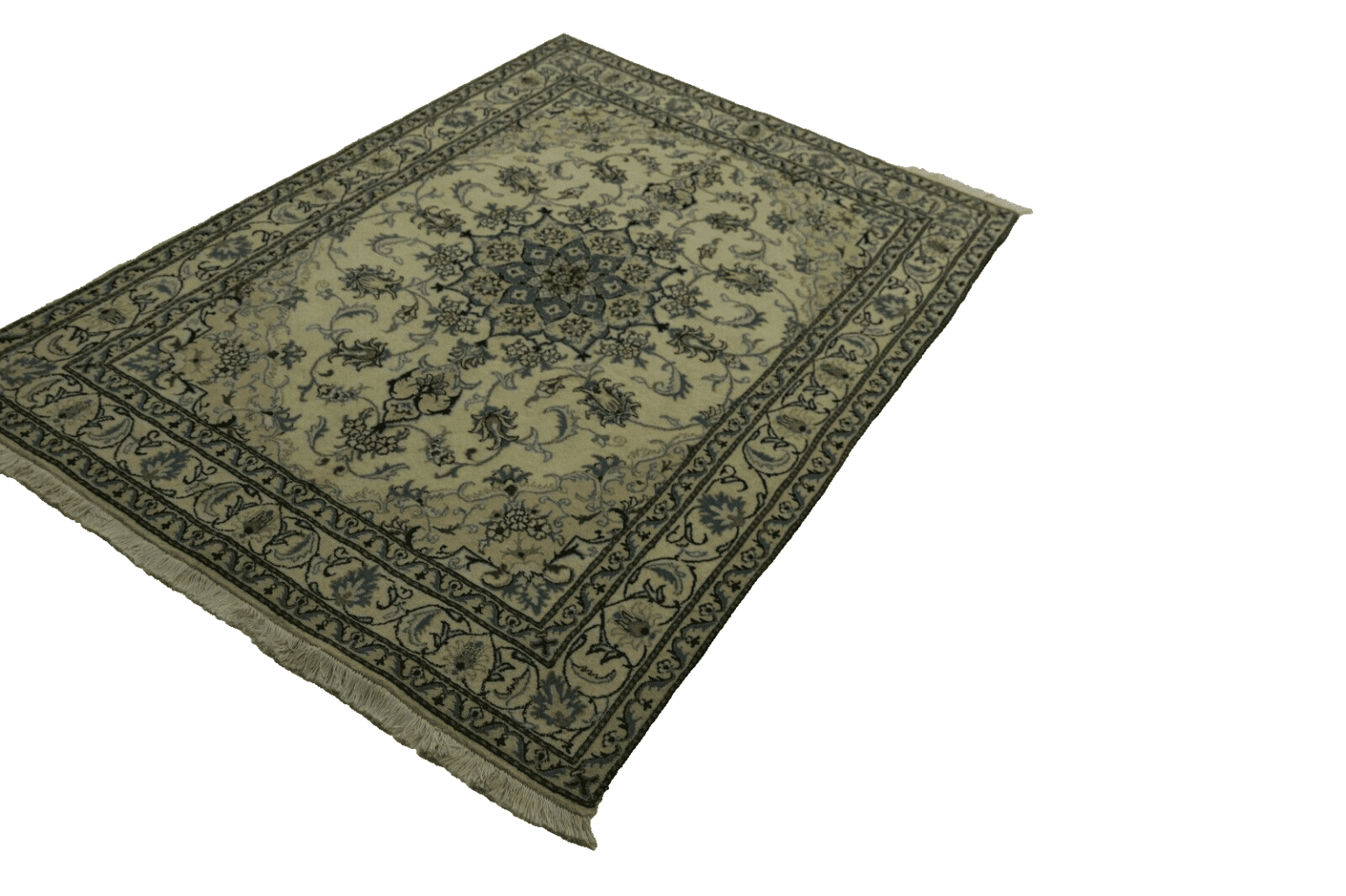
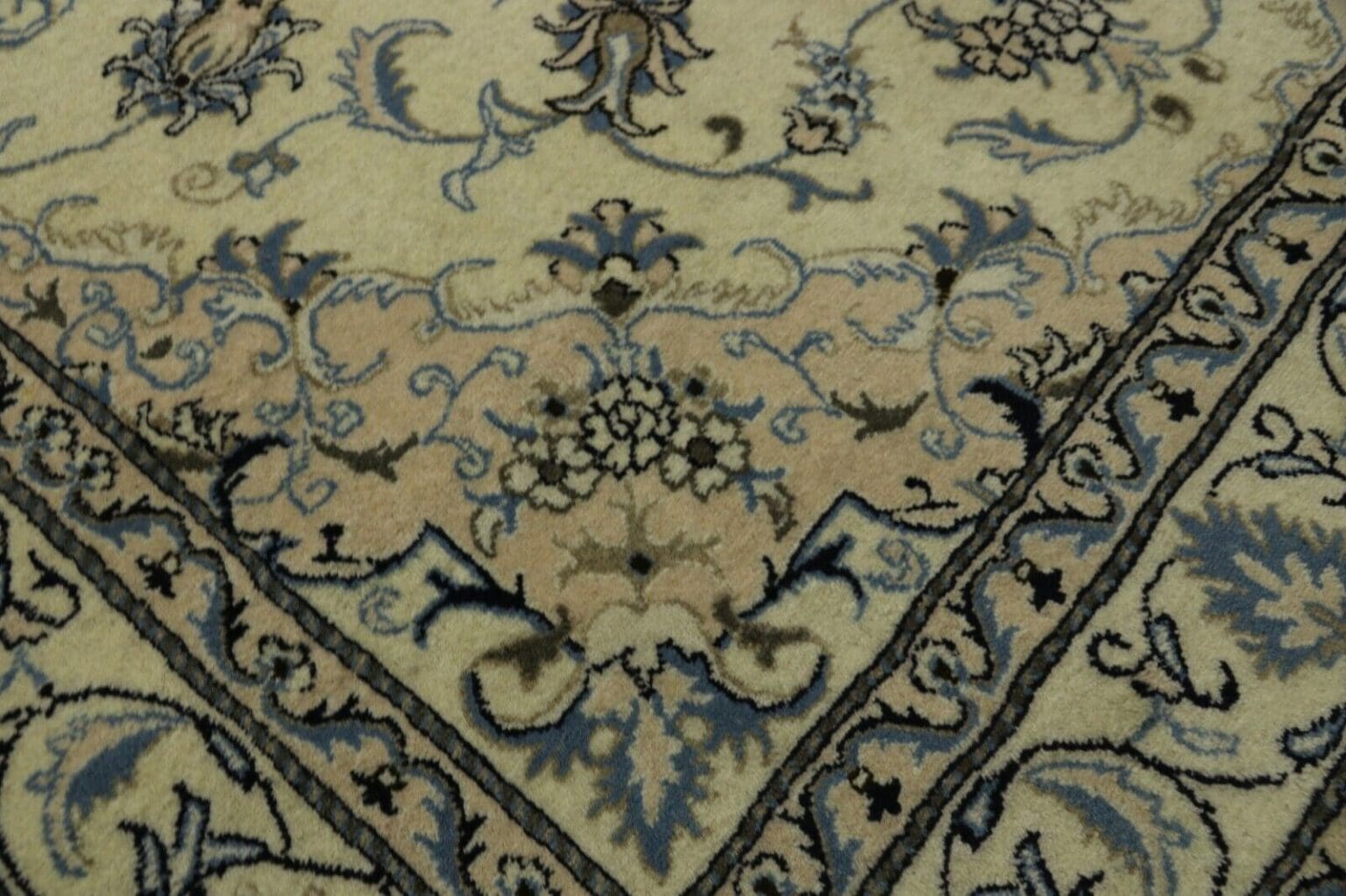
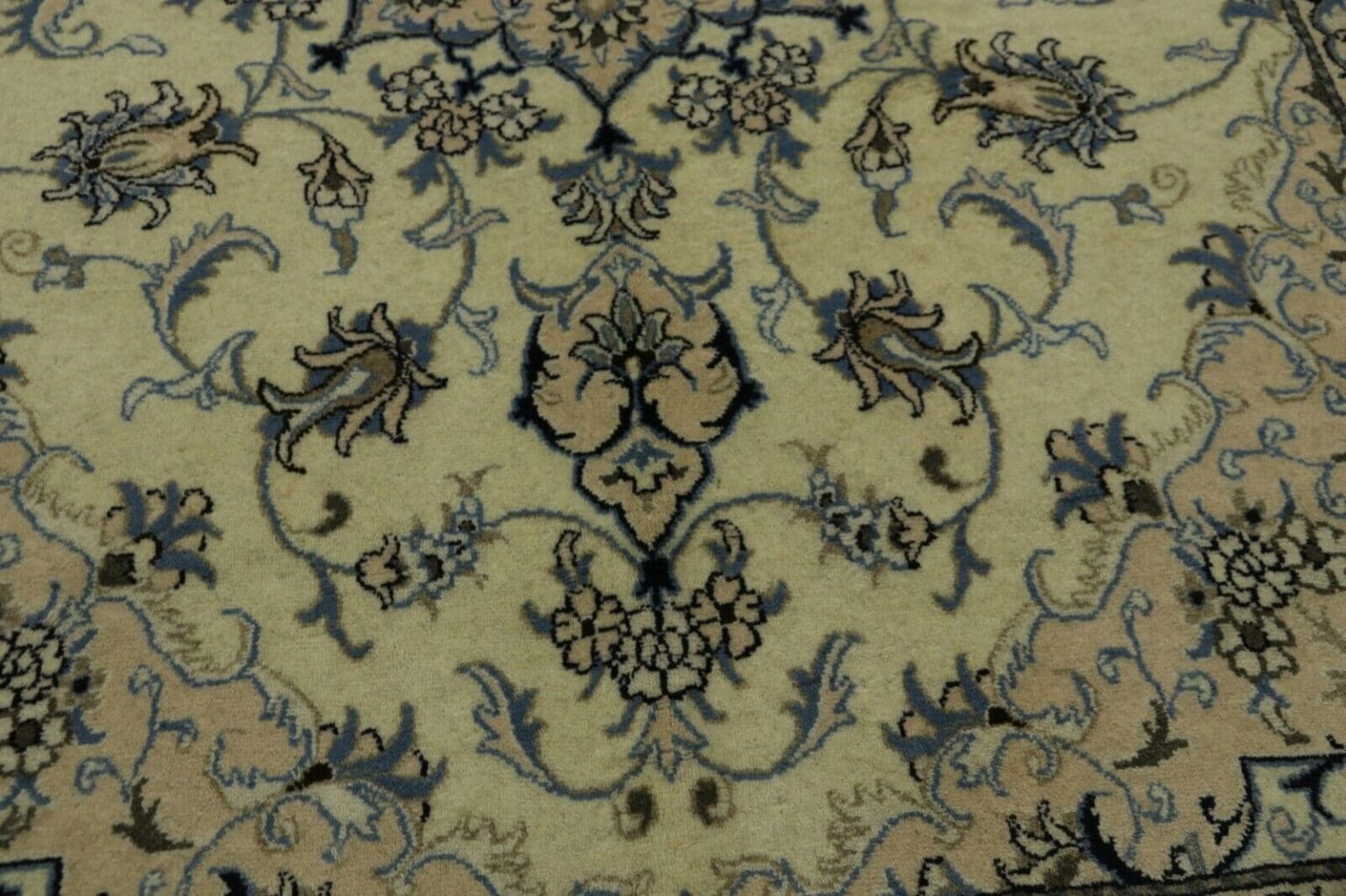
The design of this Super Nain is described as traditional oriental and Persian. Nain carpets are known for detailed compositions in which floral ornament is combined with geometric order. Flowers, leaves and scrolling forms may be arranged across the field as repeated or interconnected elements. Geometric organisation provides a framework, helping the many small details remain clear and balanced. The resulting visual language is based on harmony, proportion and continuity rather than on irregular placement.
Nature is an important source for Persian carpet design, but botanical forms are translated into a textile vocabulary rather than copied literally. A leaf may become a repeated contour, a flower may be reduced to a symmetrical ornament, and a vine may connect separate parts of the composition. Repetition gives the pattern rhythm, while variation prevents it from becoming mechanically uniform. In Persian artistic symbolism, certain motifs may be associated with happiness, fertility and prosperity. These are general meanings within the tradition and do not assert a private history for this particular rug.
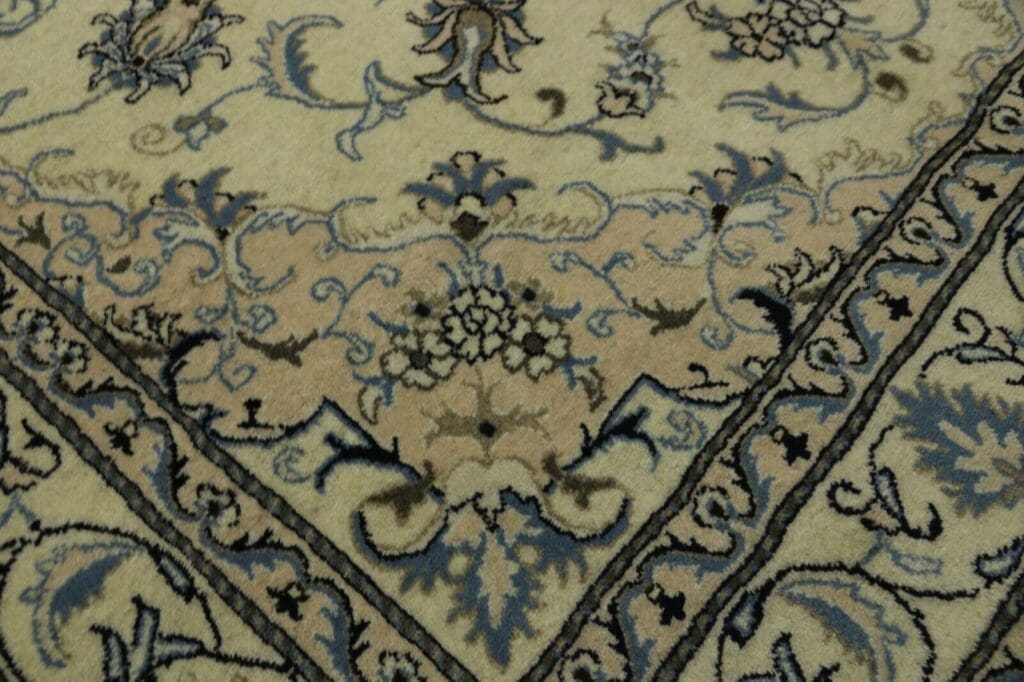
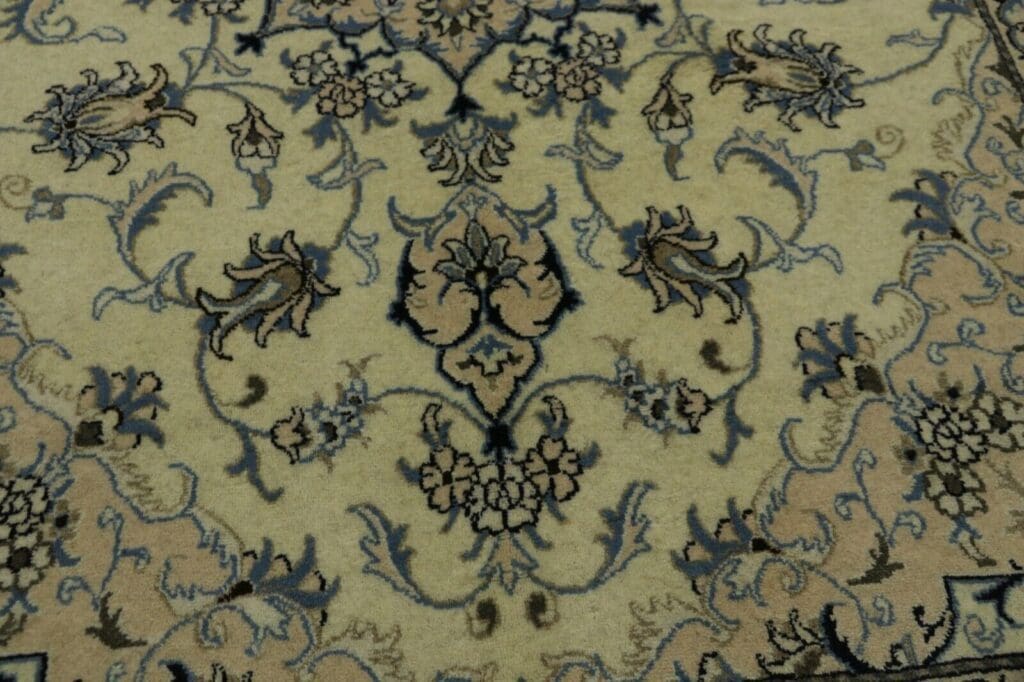
The approximate knot density of 300,000 knots per square metre supports the detailed appearance of the pattern. Smaller knots allow lines to be placed close together and make transitions between motifs more controlled. This is particularly relevant to floral scrolls, fine borders and interlocking ornamental forms. Knot density is therefore both a construction detail and a factor in the way the design can be read. From close range, the viewer can distinguish individual contours and material effects; from farther away, the larger balance of the composition becomes more apparent.
The rug is described with soft colour tones. Such tones can allow the floral and geometric drawing to remain present without making the overall surface visually heavy. Colour differences help separate motifs, establish hierarchy and guide the eye through the pattern. Together with the fine details, the restrained tones support the traditional character associated with the Super Nain designation. The rug is described as suitable for both classical and modern interior styles, as well as for rooms such as living rooms and bedrooms.
A finely drawn Persian pattern often works on more than one visual scale. At close distance, the construction reveals knots, fibre differences and narrow outlines. At a greater distance, the eye first registers the arrangement of the field and the relationship between ornament and open space. This combination allows a detailed rug to remain orderly rather than visually fragmented. In this Super Nain, the floral references, meditative geometric forms, soft tones and high knot density are presented as connected aspects of the design.
The pattern tradition also has a cultural dimension. Oriental rugs can express the values, artistic knowledge and visual conventions of the communities that make them. Floral signs may refer to the natural world, while symmetry and repetition suggest balance and continuity. These ideas are carried through practical weaving methods, not added after the rug has been made. The design is therefore part of the construction itself. The hand-knotted technique gives the pattern a material presence that differs from a decorative image applied to an existing fabric.
Special Features
Key features of this rug are its approximate density of 300,000 knots per square metre, its pile of 90% virgin wool and 10% silk, and its 100% cotton warp. It is hand-knotted and identified as a unique piece with a certificate. These details distinguish the rug through its construction, materials and individual status. The combination of wool and silk gives the pile both a resilient component and a smooth, subtly lustrous one. The dense knotting supports the fine, detailed appearance of the design.
The condition is new and very good. The rug is described as suitable for different living spaces, including living rooms and bedrooms. Its regional designation is Nain, its origin is Persia, and its style is identified as traditional oriental and Persian. These points belong together: the place name refers to the rug’s regional identity, the material description explains the pile and foundation, and the technique identifies the way the textile was made.
Oriental rugs also have a role as cultural objects. They can preserve regional craft traditions while remaining functional objects in the home. Over generations, rugs have been maintained, used and passed on, carrying patterns and techniques from one context to another. This individual Super Nain combines that cultural background with a certificate, a new very good condition and a hand-knotted construction. It can therefore be understood as both a usable floor covering and a textile example of Persian knotting tradition.
FAQ
How often should this oriental rug be cleaned?
Regular cleaning is part of caring for a hand-knotted rug. The required frequency depends on how intensively the rug is used and where it is placed. In addition to routine care, professional cleaning may be appropriate at longer intervals. For this rug, professional cleaning every five to ten years is given as a possible guideline for helping preserve the colours and material quality. Because the pile contains both virgin wool and silk, professional treatment should take the different fibre properties into account. A suitable cleaning method can support the condition of the hand-knotted structure and the surface.
Can the rug be used in a high-traffic area?
Yes. The rug is described as suitable for high-traffic areas because of its knot density and its use of wool and silk. Virgin wool contributes a resilient fibre to the pile, while silk adds a smoother and more delicate component. Appropriate care should accompany regular use. Direct sunlight should be avoided in order to help preserve the colours. The rug is specifically described for different living spaces, including living rooms and bedrooms, but this does not limit its use to those rooms. The actual level of wear will depend on traffic, placement and maintenance.
How long does a hand-knotted rug last on average?
With proper care, hand-knotted rugs such as this Super Nain can last for many years and often for decades. Their service life depends greatly on the quality of the materials and on how the rug is treated in everyday use. Virgin wool supports the durability of the pile, while the silk content contributes a smooth surface that should be handled appropriately. Regular cleaning and avoiding unusually heavy wear can help maintain the rug over time. Protection from direct sunlight is also important for retaining the colours. No single lifespan applies to every rug, because use, care and location all influence long-term preservation.
To provide the best experiences, we use technologies like cookies to store and/or access device information. Consenting to these technologies will allow us to process data such as browsing behavior or unique IDs on this site. Not consenting or withdrawing consent, may adversely affect certain features and functions.
Functional Always active
The technical storage or access is strictly necessary for the legitimate purpose of enabling the use of a specific service explicitly requested by the subscriber or user, or for the sole purpose of carrying out the transmission of a communication over an electronic communications network.
Preferences
The technical storage or access is necessary for the legitimate purpose of storing preferences that are not requested by the subscriber or user.
Statistics
The technical storage or access that is used exclusively for statistical purposes.The technical storage or access that is used exclusively for anonymous statistical purposes. Without a subpoena, voluntary compliance on the part of your Internet Service Provider, or additional records from a third party, information stored or retrieved for this purpose alone cannot usually be used to identify you.
Marketing
The technical storage or access is required to create user profiles to send advertising, or to track the user on a website or across several websites for similar marketing purposes.
 SECURE PAYMENT
 SHIPPING PARTNERS


