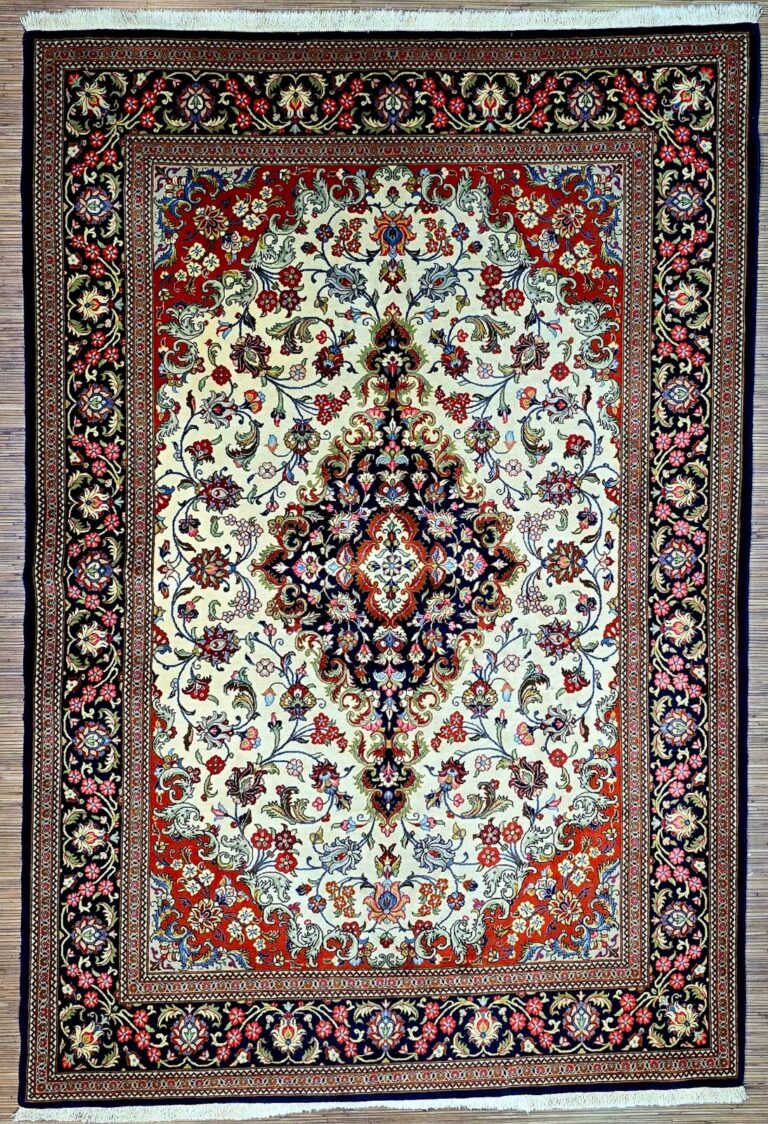
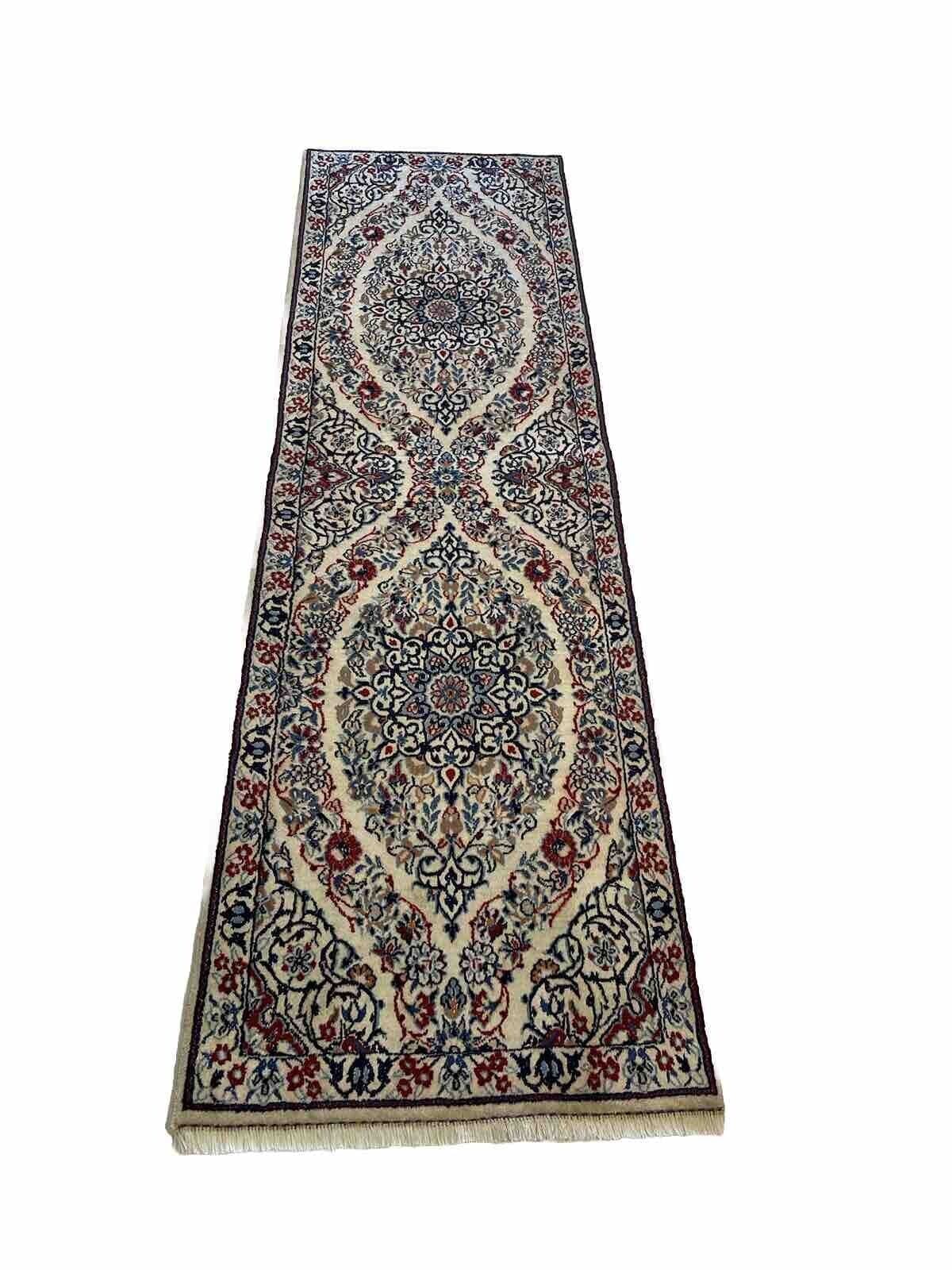
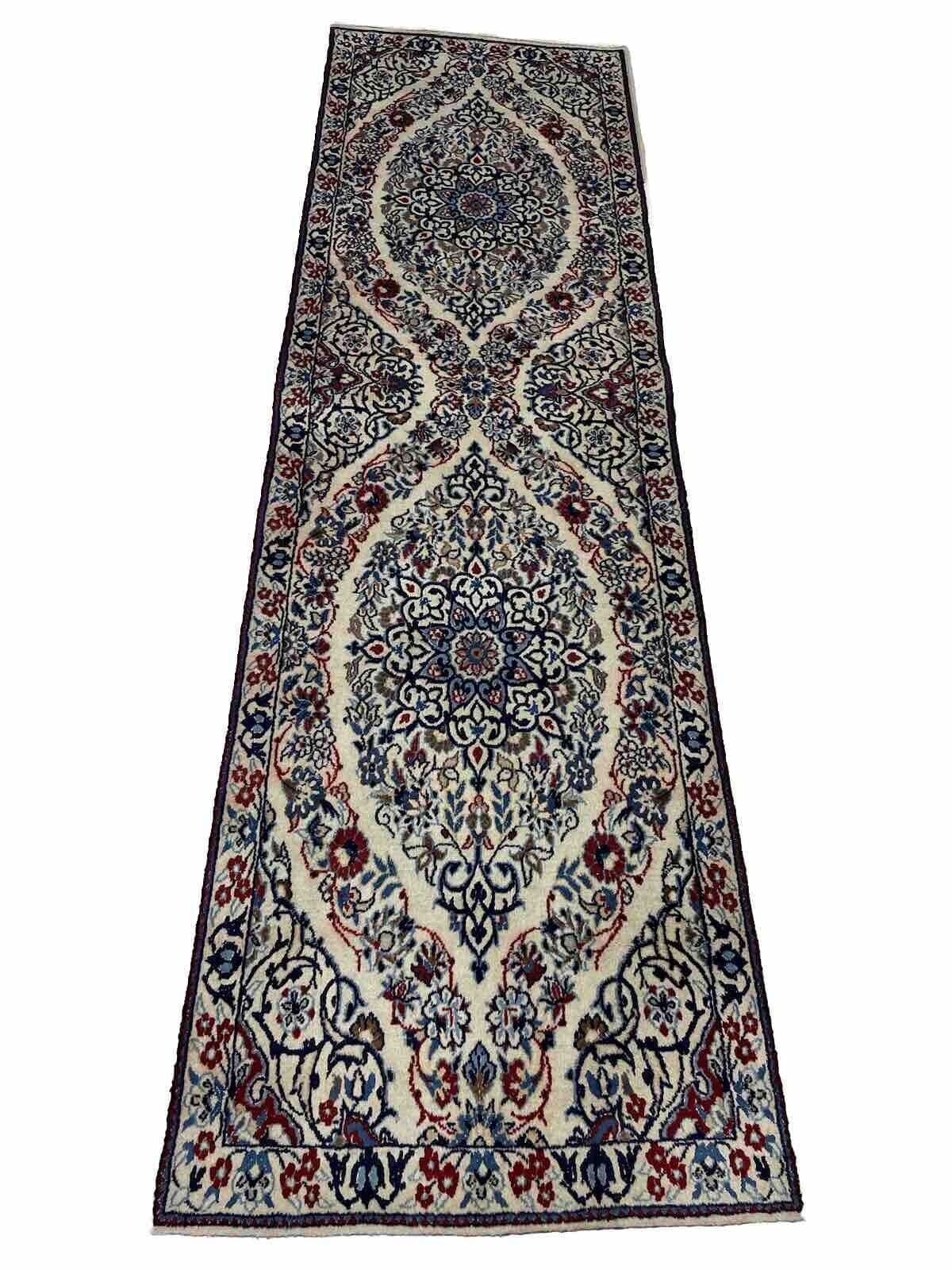
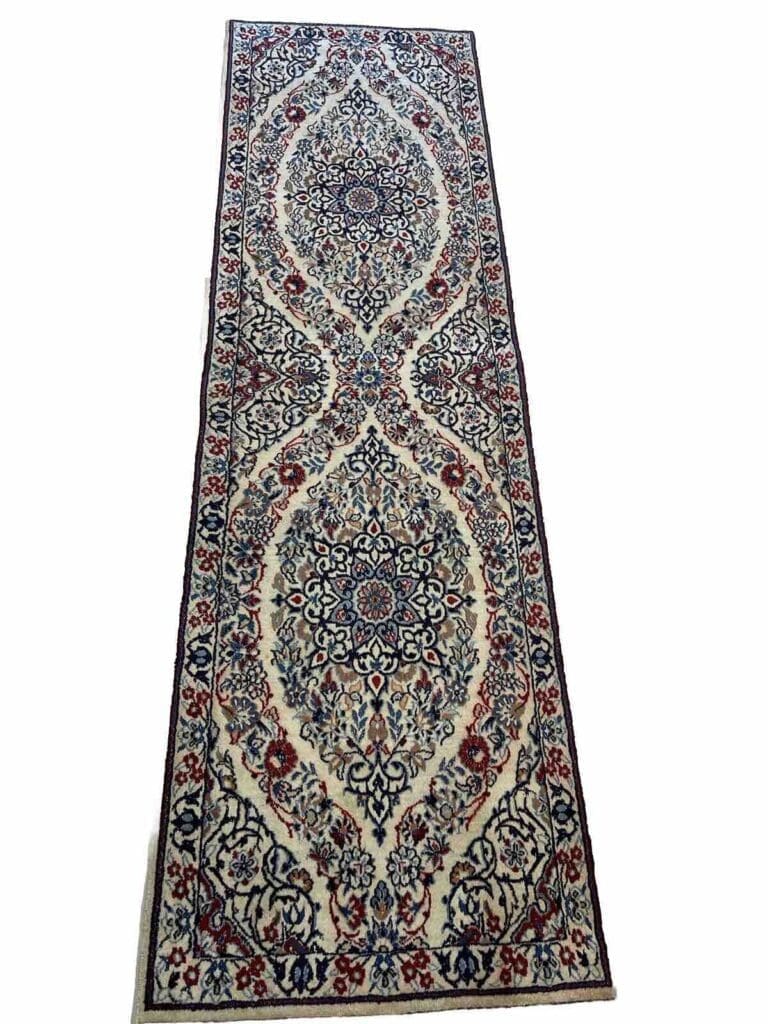
This original Nain 6 LA Persian rug is hand-knotted from wool and silk. The two materials define both its surface and its visual character. Wool forms the textile foundation of the pile, while silk introduces fine accents and a reflective sheen. As light moves across the surface, the silk can catch it differently from the wool, giving selected areas of the pattern a subtle variation in appearance. The rug has a high knot density, indicating a closely worked construction in which many individual knots form the finished field.
Hand-knotting builds a rug one knot at a time. Rather than applying a design to a completed surface, the maker creates the pattern through the placement of differently coloured threads during the weaving process. The hand-knotted technique is one of the stated characteristics of this rug, as is its production by experienced craftspeople who continue the Nain tradition. Its wool and silk composition, together with the high knot density, allows the surface to carry fine detail while retaining the composed appearance associated with the design.
Silk adds a visible lustre and reflects light in a distinctive way. Set beside wool, it creates a material balance between a soft textile presence and finer, brighter passages. The rug is classified as traditionally Oriental and Persian in style. Its hand-knotted construction therefore links the stated materials and appearance with an established form of carpet craftsmanship practised in Nain for generations.
The combination of wool and silk is not simply a decorative description. It is part of the way the surface is read: wool gives the pile its textile body, while silk can make contours and selected ornament appear more luminous. The result is a refined material contrast within a single hand-worked object. The craftsmanship remains visible in the detailed pattern and in the variation that belongs to a rug made by hand rather than to a uniform industrial surface.
Origin and Tradition
Nain is a city in Iran known for its carpet-making tradition. Carpet weaving and carpet knotting in the region reach back many centuries. Within Persian carpet culture, Nain rugs are associated with fine knotting, careful materials and an elegant, restrained visual language. Their reputation rests on the relationship between technical precision and calm ornament rather than on a single colour or one fixed composition.
The making of a Nain rug involves knowledge of knotting, thread tension, colour relationships and the organisation of a pattern. These skills are passed from one generation of craftspeople to the next. A design is developed gradually as rows and knots are added, with each part contributing to a coherent textile image. The high knot density specified for this rug belongs to that tradition of detailed workmanship and helps explain why small floral elements can be rendered with clarity.
Wool and silk have an important place in the Nain tradition. Regional rugs often use pure new wool together with silk to unite different tactile and optical qualities. Wool provides a substantial pile material, while silk can clarify outlines, accentuate parts of an ornament and reflect light. Nain rugs are also commonly associated with delicate colours and elegant patterns. This rug is beige, giving it the quiet tonal character often linked with the region’s restrained palette.
Nain carpet making is both a regional craft and part of a wider cultural heritage. The work depends on transmitted knowledge rather than on a single mechanical procedure. Choices about the arrangement of motifs, the handling of fine lines and the relationship between wool and silk all form part of the craft. A hand-knotted rug remains an individual piece because the completed surface records the particular execution of its makers. This individuality is compatible with a recognisable regional tradition.
The designation 6 LA belongs to the name of this particular Nain version. It does not replace the origin, which is Nain in Iran. The rug brings together that Iranian origin, hand-knotted production, wool and silk, and the measured elegance associated with Nain design. In the history of Persian carpets, Nain is recognised for a refined approach in which fine execution and a controlled pattern work together. The regional name therefore refers to both a place of production and a continuing body of craft knowledge.
Traditional Nain work is often discussed in relation to subtle colouring, precise outlines and an orderly arrangement of ornament. Those qualities describe the background of the type and its regional language; they are not a claim that every Nain rug follows one identical layout. Individual pieces can differ in their details while remaining connected to the same tradition. This rug is identified as an original Nain 6 LA Persian rug and has an Oriental pattern with floral elements distributed across the surface.
Design and Pattern
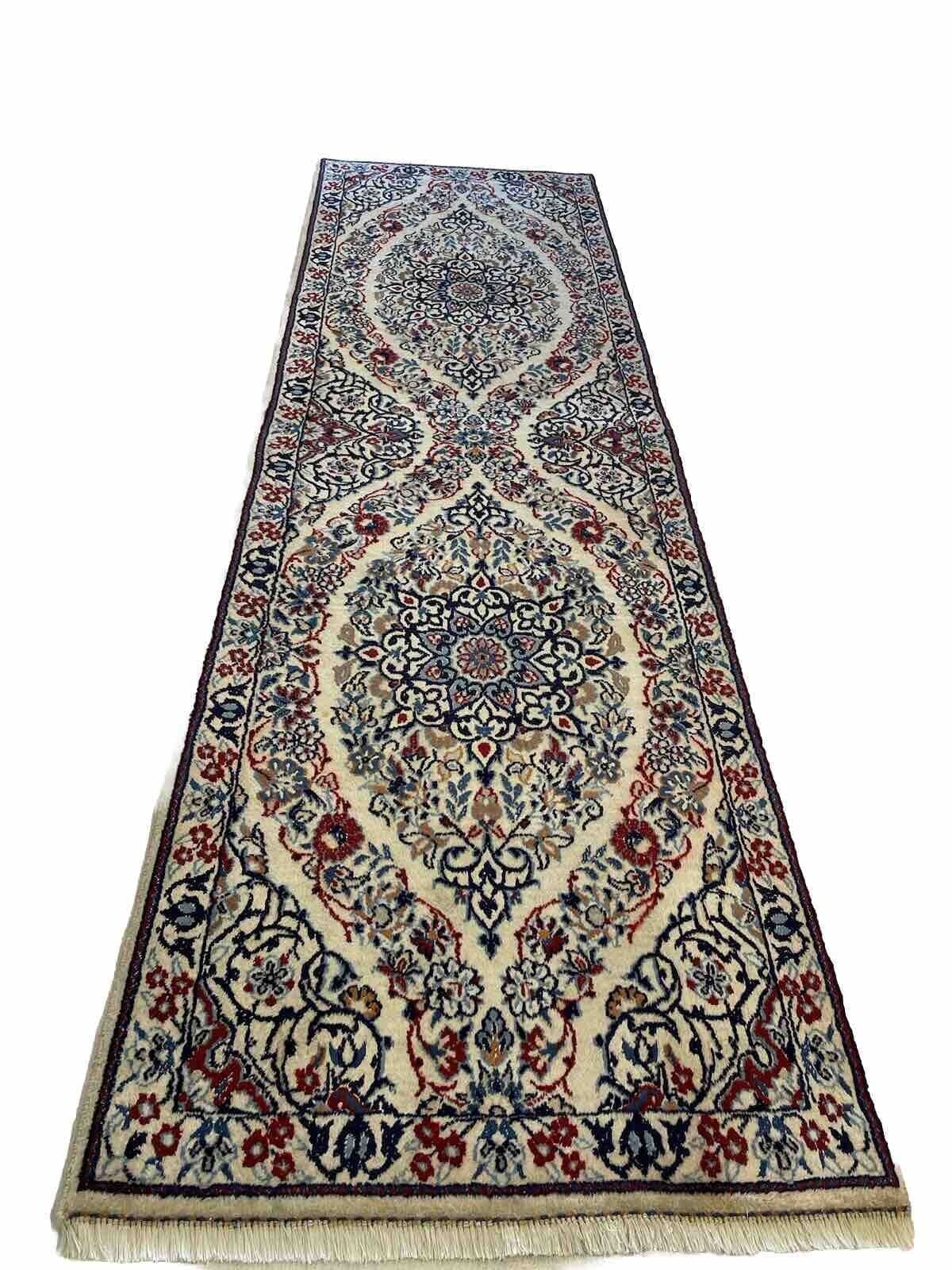
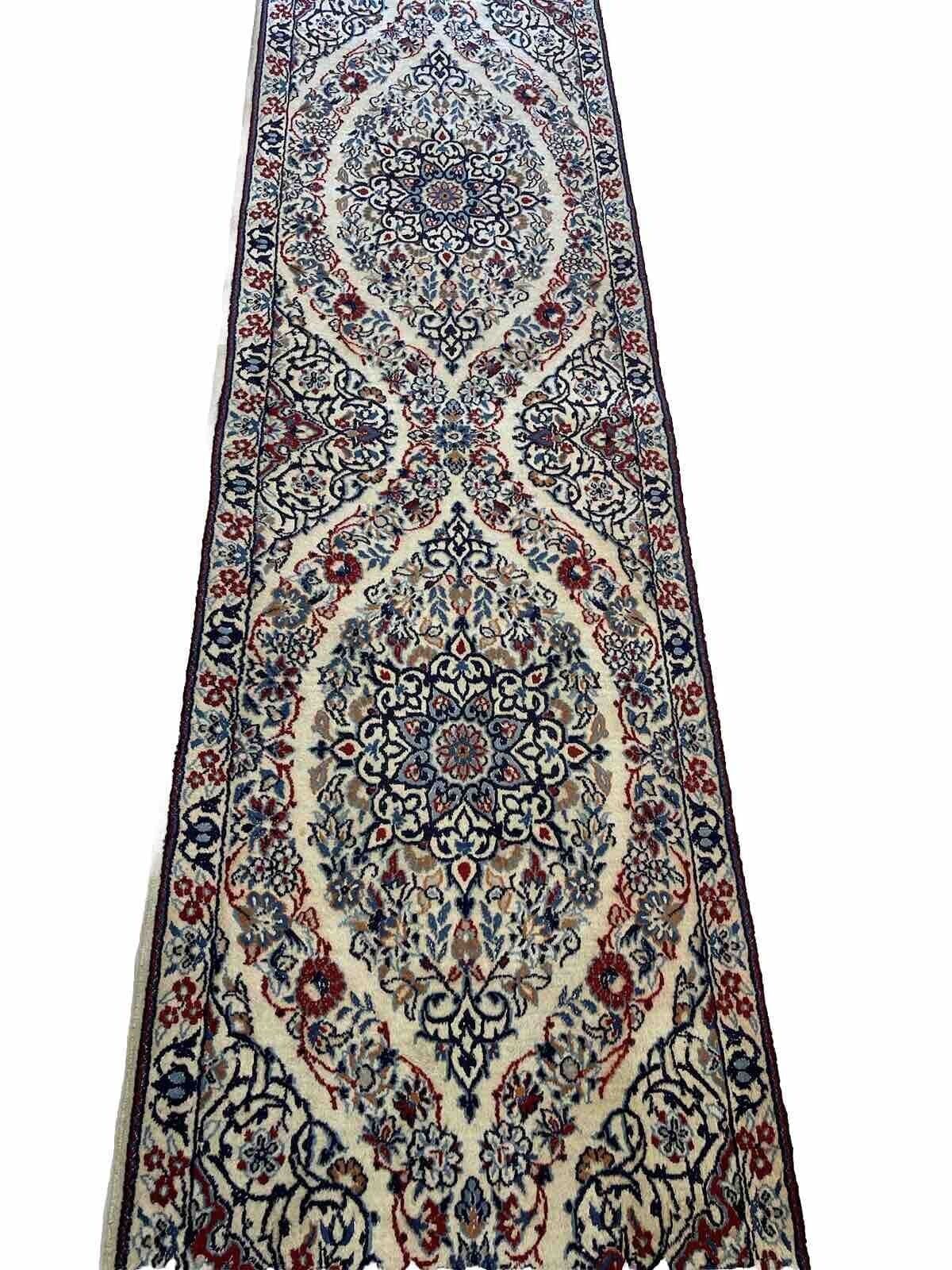
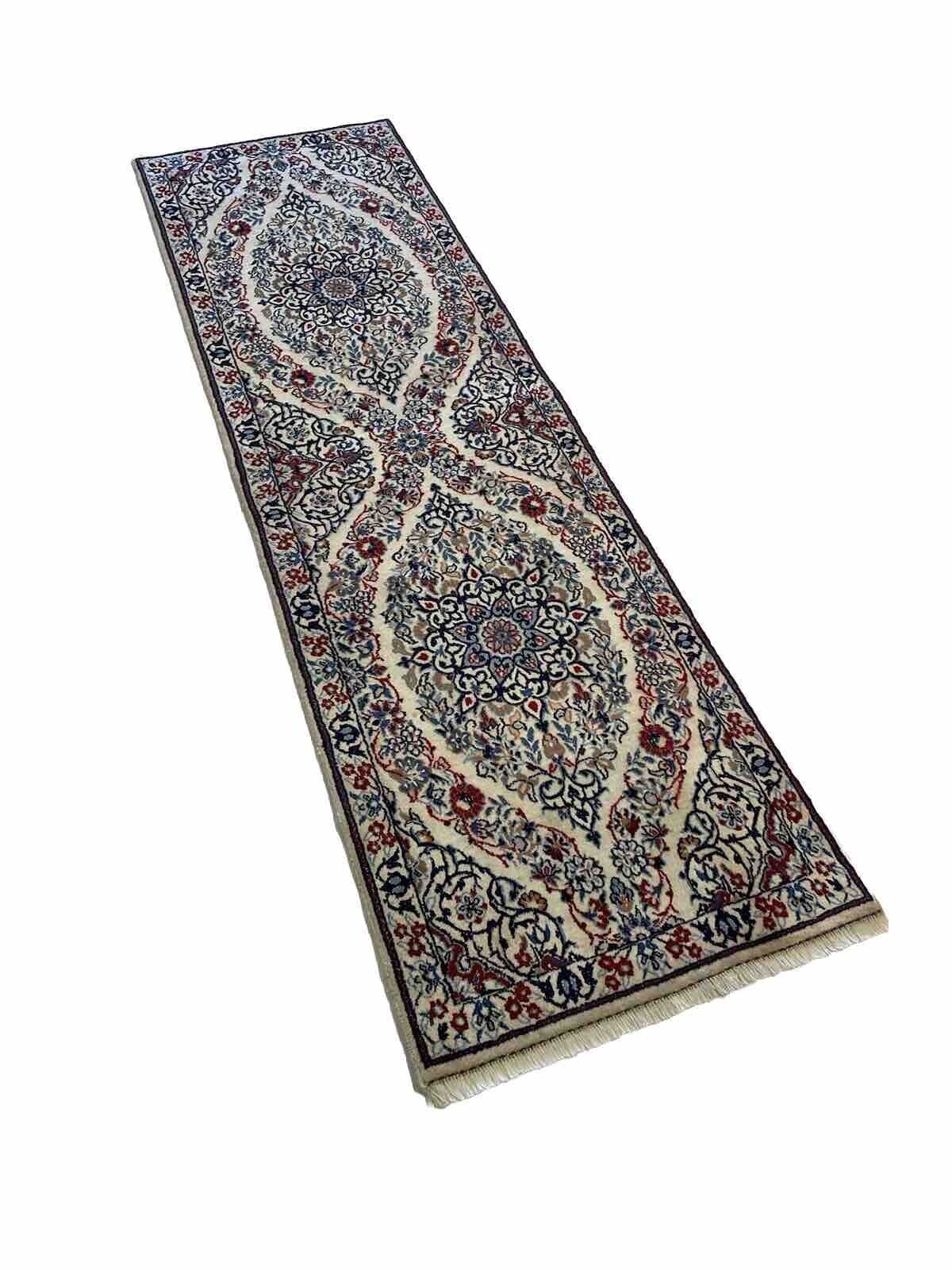
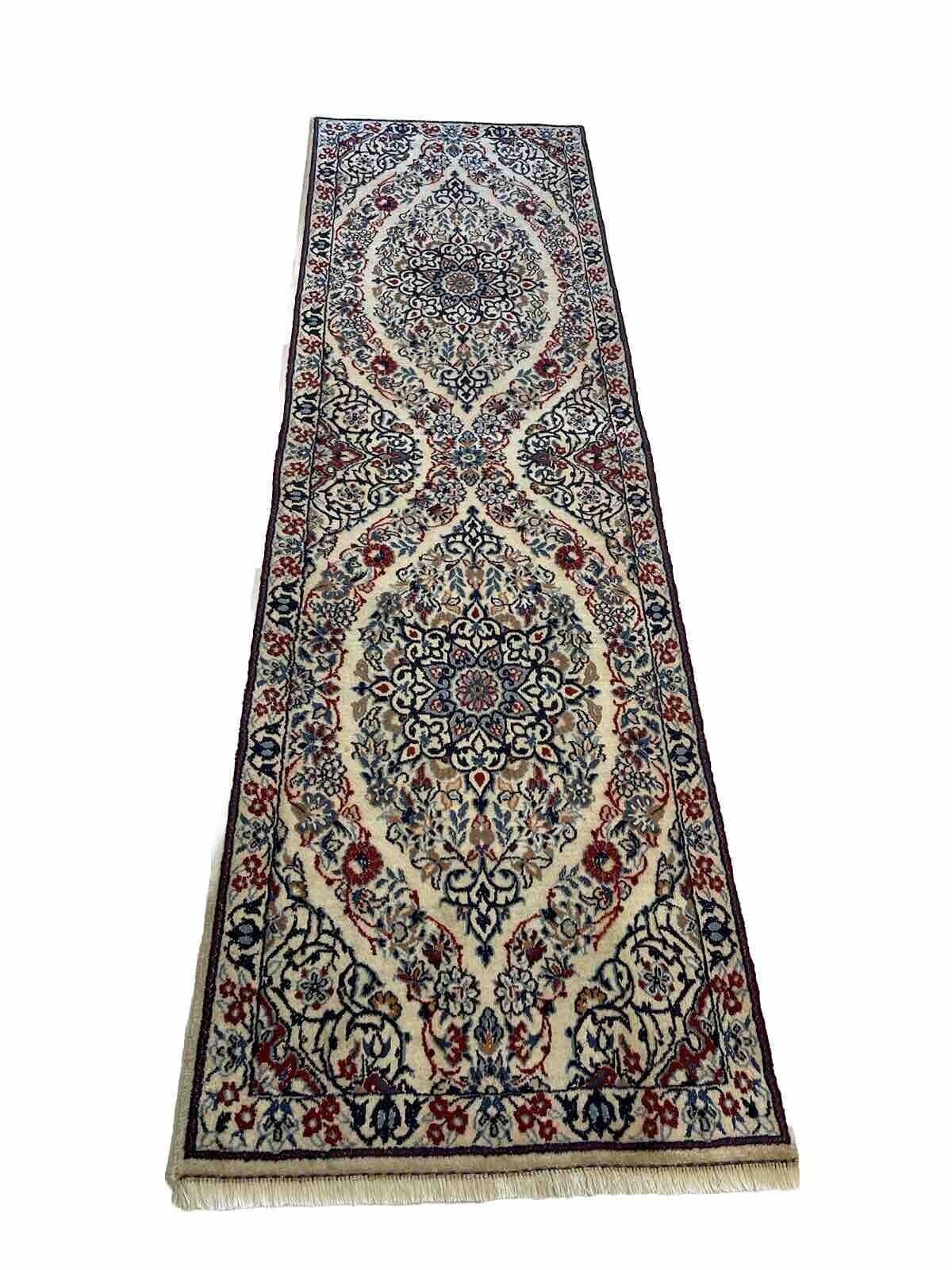
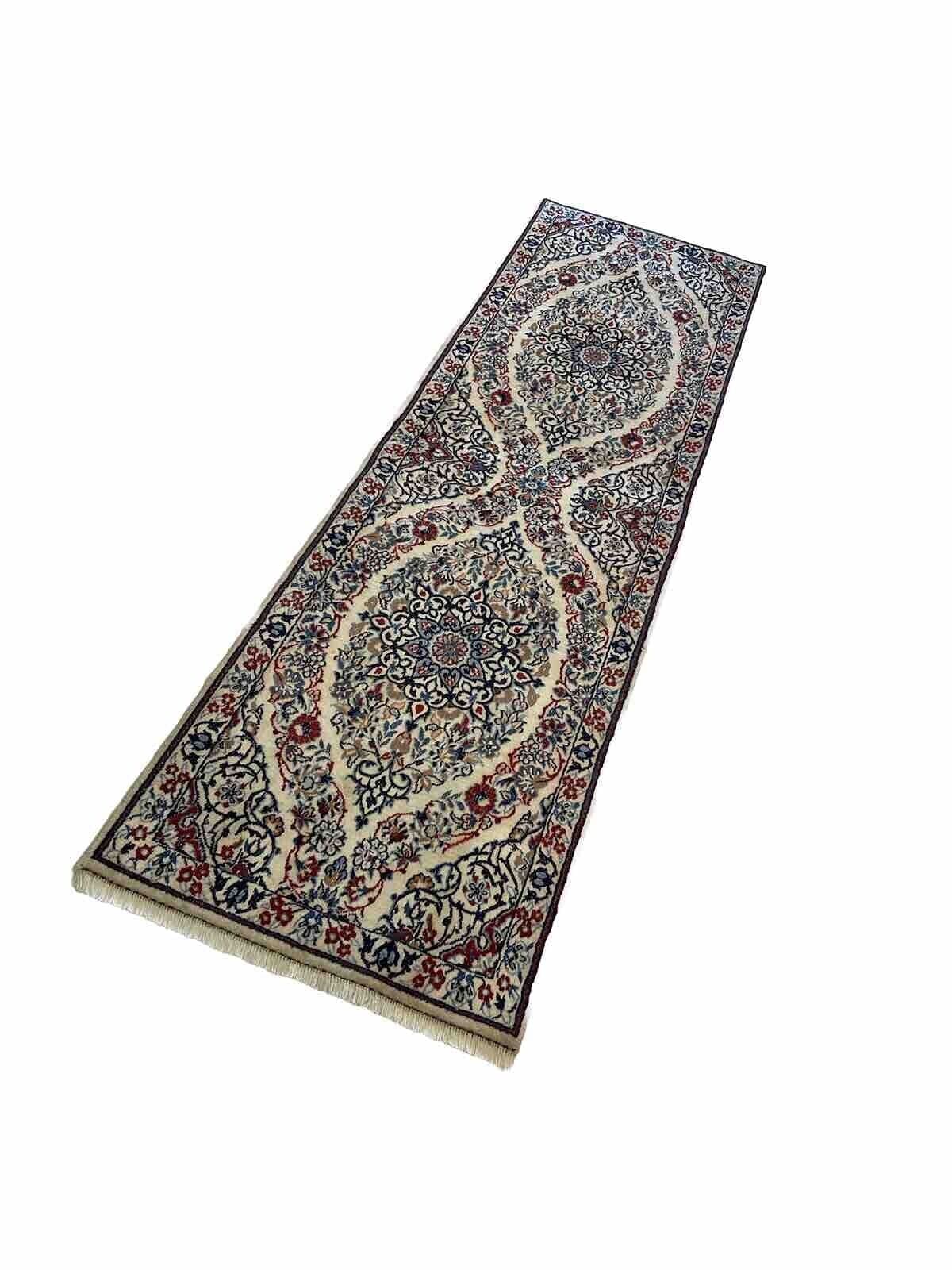
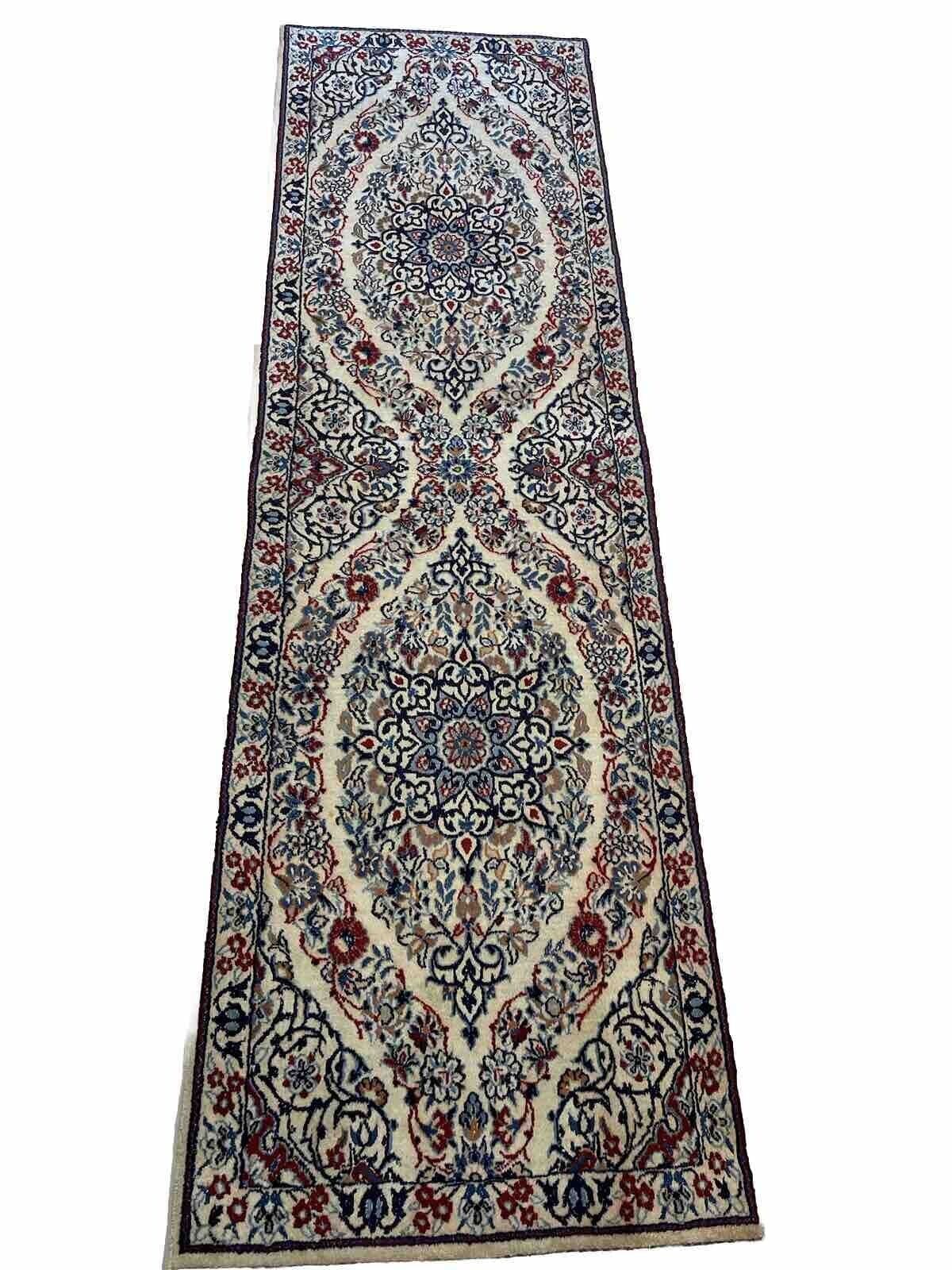
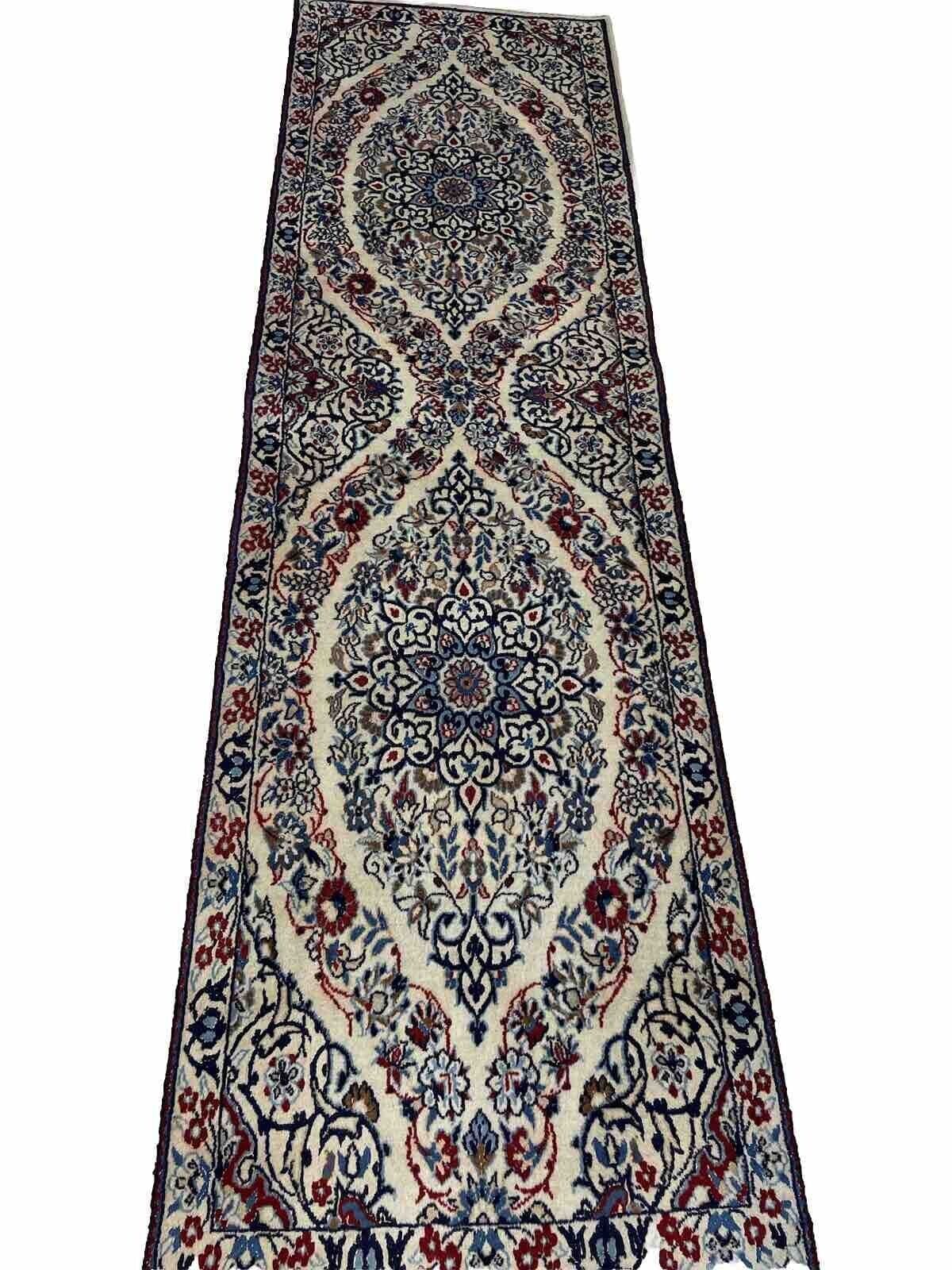
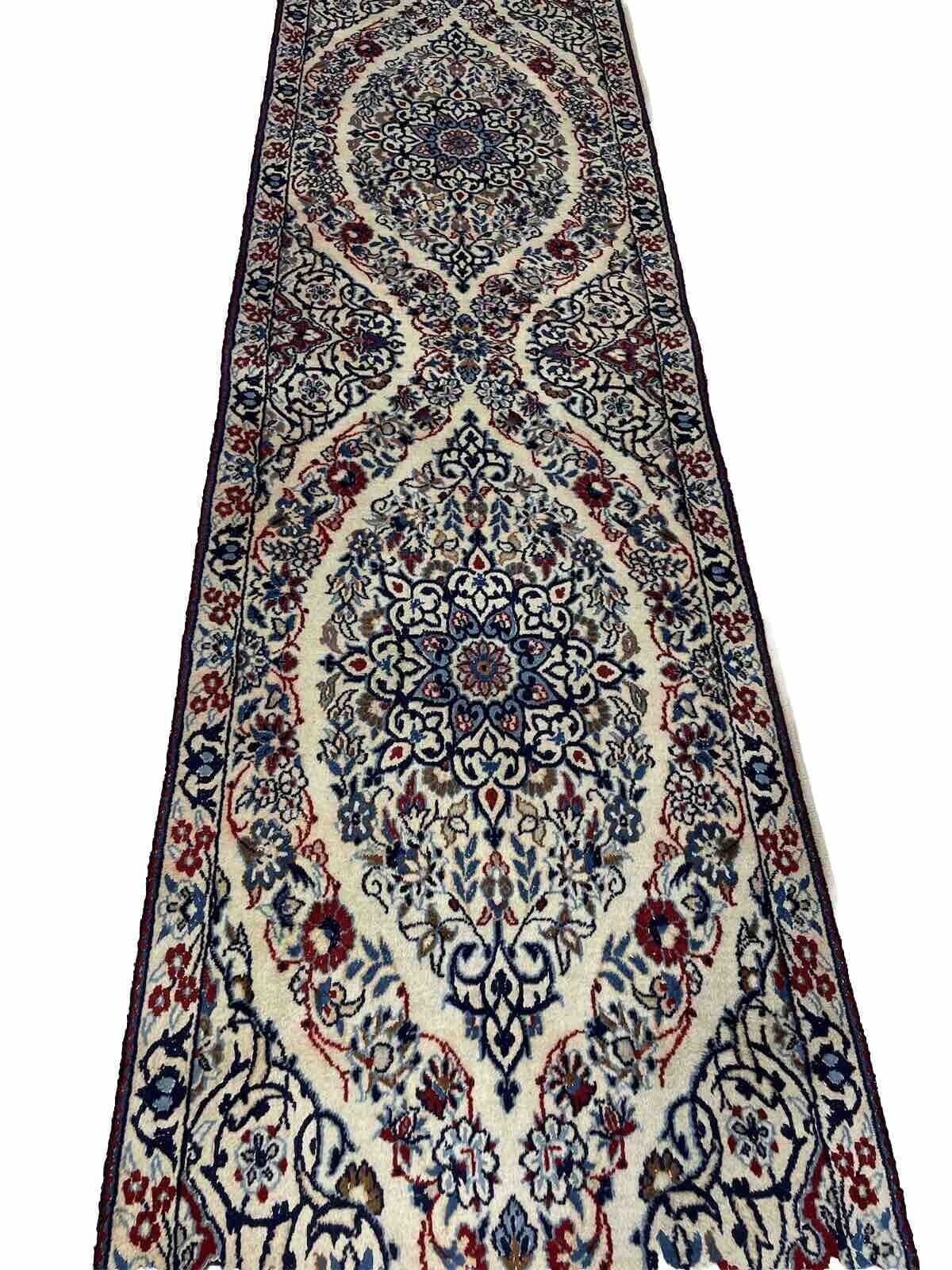
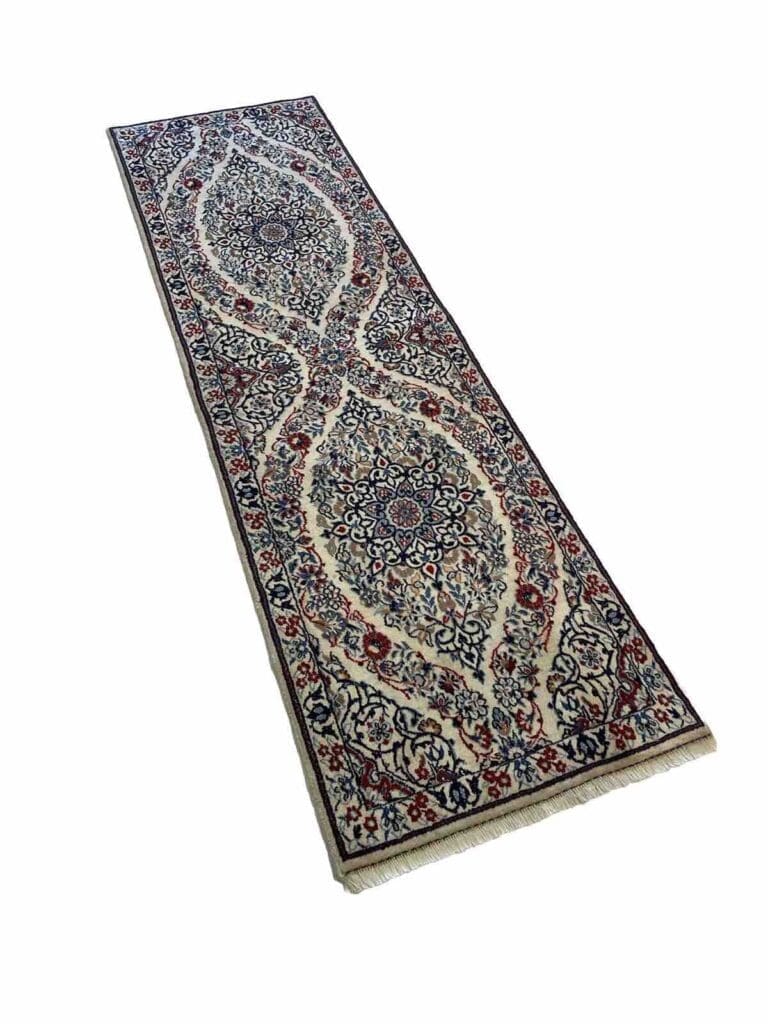
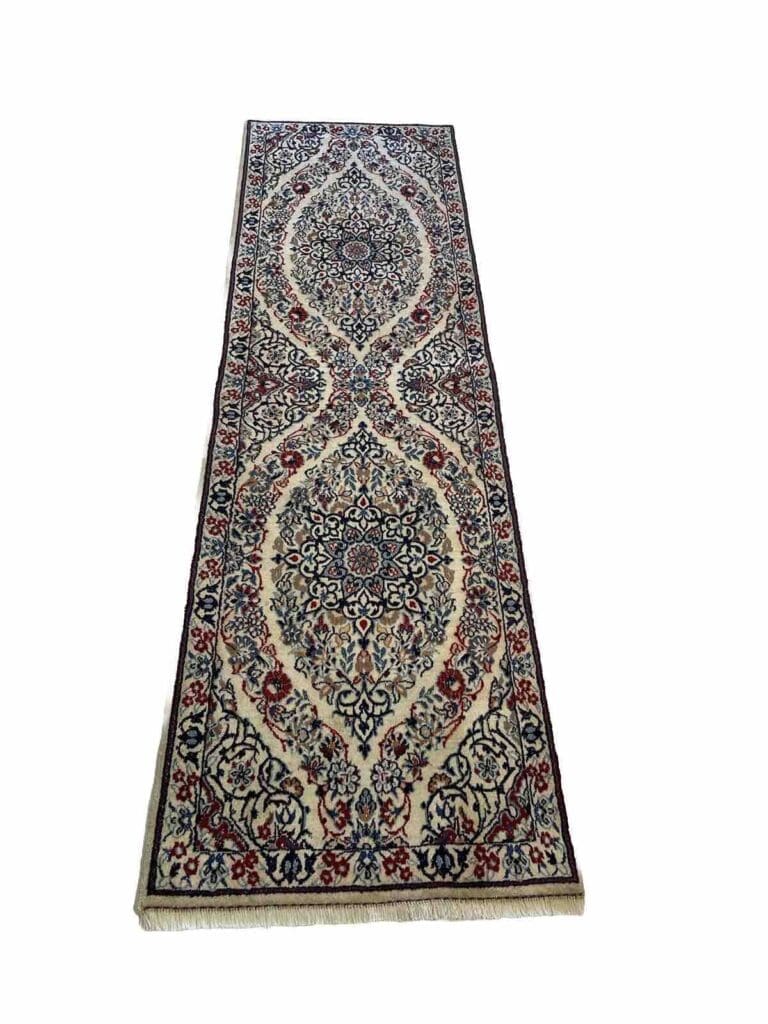
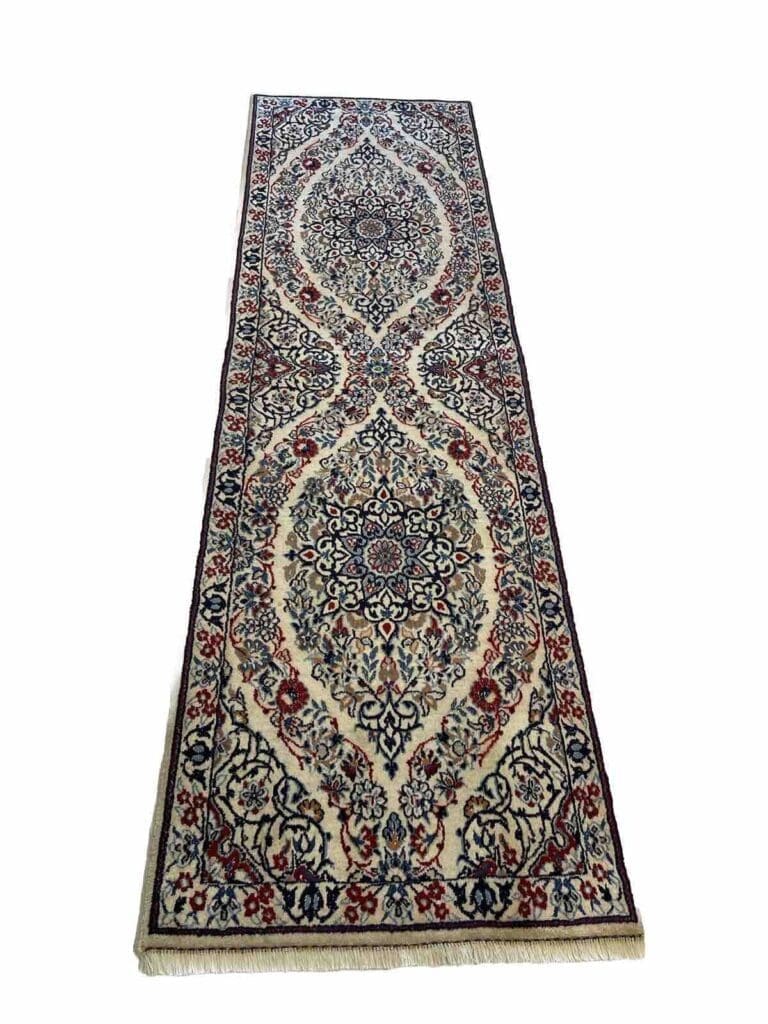
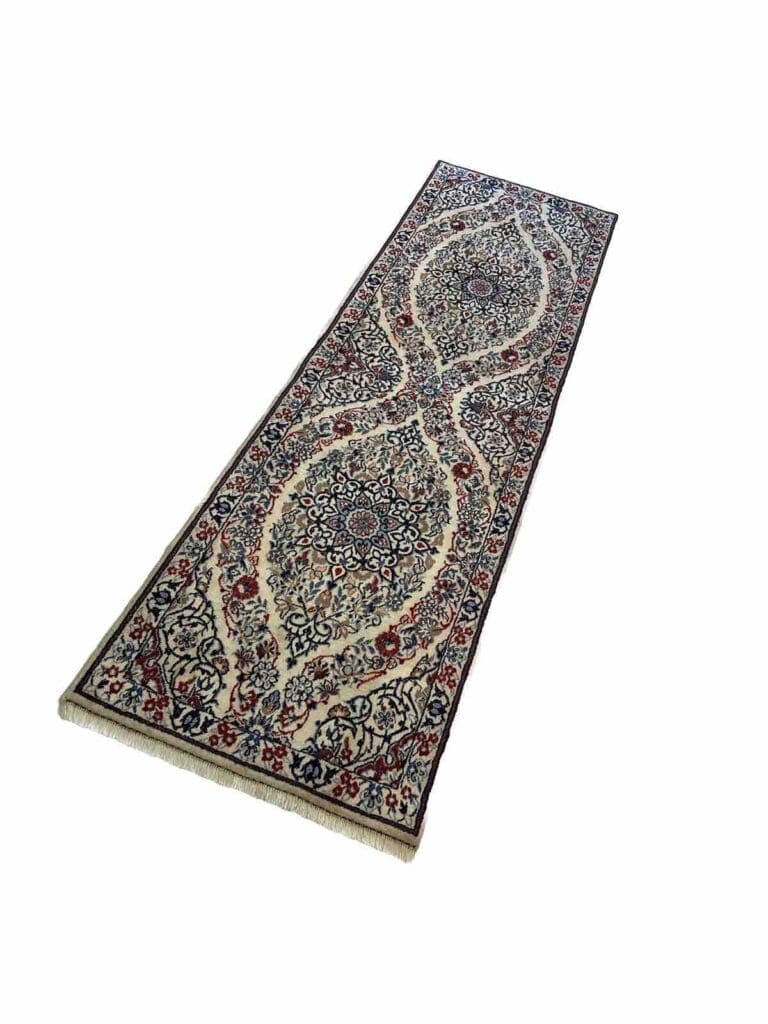
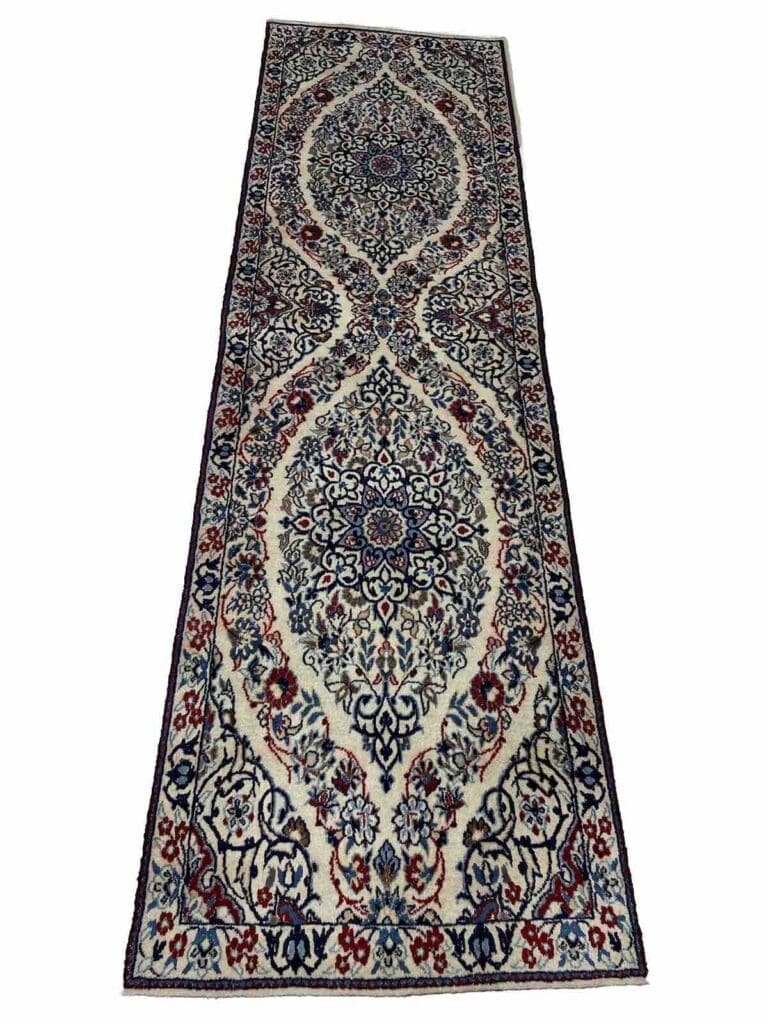
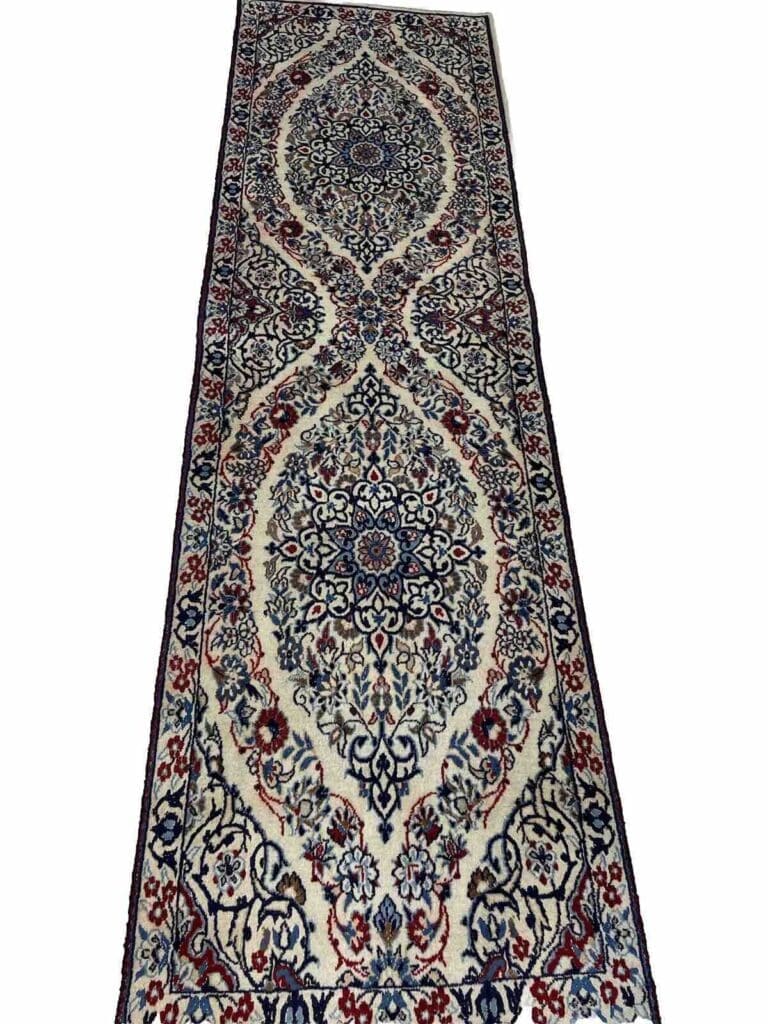
The pattern of this Nain 6 LA is described as Oriental and its design as classic and elegant. Floral elements are distributed harmoniously across the rug. They do not form a single oversized image; instead, stylised motifs take their place within an orderly composition. The balance between ornament and open visual calm gives the design its composed character.
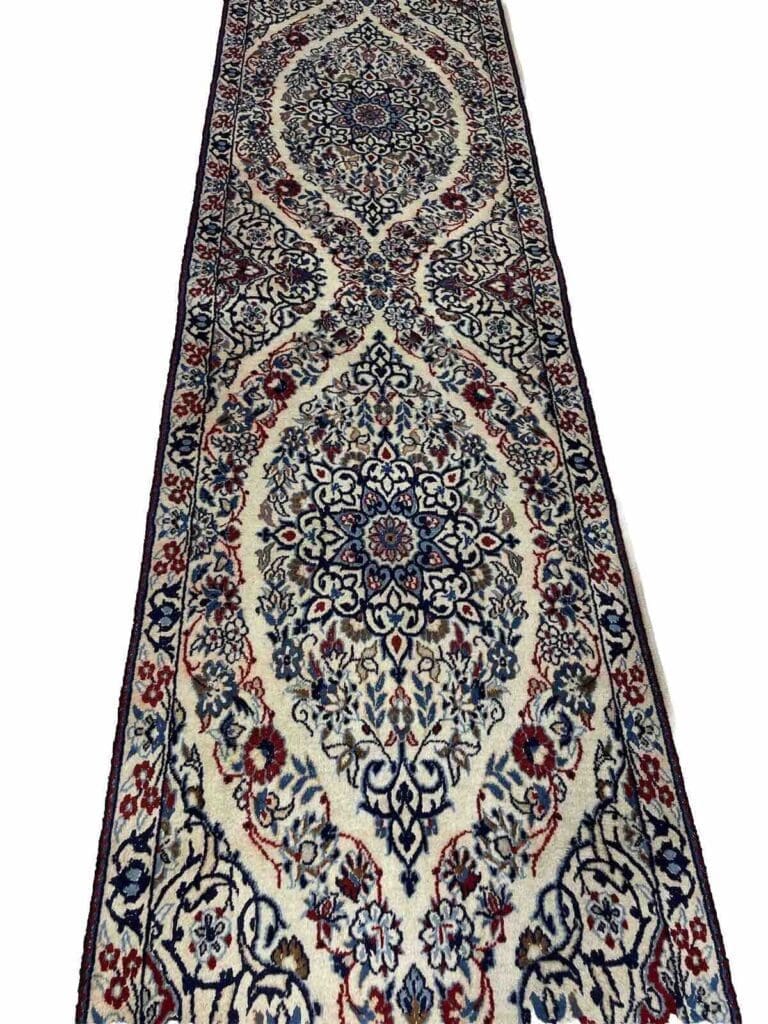
Floral ornament is an important language of Persian carpet design. Leaves, blossoms and winding stems are commonly transformed into stylised forms rather than copied as literal botanical drawings. Repetition, symmetry and flowing lines create rhythm across the textile. In a Nain rug, fine knotting can support a precise treatment of such details, allowing small changes in contour and colour to remain legible without making the overall design restless.
The beige tone establishes a gentle colour field. It gives the rug a restrained appearance and allows the floral details to remain part of a balanced whole. Soft shades are frequently associated with Nain’s elegant design tradition. Silk can add another layer to this effect, because its reflective surface may make particular outlines or decorative areas appear lighter as the viewing angle and surrounding light change. The resulting variation is subtle and belongs to the material structure of the rug.
The composition is defined by the interaction of many details rather than by one dominant motif. Floral shapes, fine lines, soft colours and their distribution across the surface work together to create the pattern. This is characteristic of an Oriental ornamental approach, where decoration also organises the field. The design can therefore be read as both a traditional Persian pattern language and a carefully controlled arrangement of repeated forms.
Its classification as traditionally Oriental and Persian describes the formal style, while the origin remains Nain in Iran. The distinction matters: a pattern can belong to a broad Oriental tradition, yet the rug itself is specifically identified as a Nain Persian rug. The beige palette and delicate floral treatment give the design a quiet presence that can be read in a traditional interior as well as alongside more contemporary furnishings. This is a description of its visual language, not an additional claim about provenance.
Special Features
The notable features of this rug are its hand-knotted construction, high knot density and use of wool and silk. Silk gives the surface a shimmering lustre and reflects light in a distinctive manner. This can make fine areas of the pattern appear differently under changing light. The material combination contributes to the elegant appearance stated for the Nain 6 LA.
The rug is new with a label. It is a rectangular rug and is described as a runner, with use named for living rooms, bedrooms, dining rooms and studies. Its period is the 21st century, connecting a current production period with the traditional Nain technique. As a hand-knotted one-off, it carries the individual workmanship of the craftspeople who made it.
FAQ
How should I care for my Nain Persian rug?
Vacuum the rug regularly so that dust and loose particles do not remain in the pile. A professional cleaning from time to time is recommended for deeper care. Avoid wet spots and do not leave moisture on the rug unnecessarily. Direct sunlight should also be avoided because it can cause colours to fade. Since the pile combines wool and silk, stronger soiling is best handled by a professional familiar with these materials.
Is a Nain Persian rug suitable for underfloor heating?
Yes, Nain Persian rugs are generally suitable for underfloor heating. Their high-quality materials allow heat to pass through the rug so that warmth can reach the room. Proper placement and a dry, well-maintained environment remain important in everyday use. This general suitability refers to Nain Persian rugs and takes into account the combination of wool and silk used here.
How does a Nain Persian rug differ from other Persian rugs?
Nain Persian rugs are distinguished by their specific pattern language, use of silk, high knot density and pronounced elegance. Compared with Persian rugs that use larger or more strongly coloured motifs, Nain designs are often finer and more delicate in appearance. Floral ornament, clear organisation and soft shades are associated with the regional tradition. In this rug, those characteristics are combined with hand-knotting and a wool-and-silk pile.
To provide the best experiences, we use technologies like cookies to store and/or access device information. Consenting to these technologies will allow us to process data such as browsing behavior or unique IDs on this site. Not consenting or withdrawing consent, may adversely affect certain features and functions.
Functional Always active
The technical storage or access is strictly necessary for the legitimate purpose of enabling the use of a specific service explicitly requested by the subscriber or user, or for the sole purpose of carrying out the transmission of a communication over an electronic communications network.
Preferences
The technical storage or access is necessary for the legitimate purpose of storing preferences that are not requested by the subscriber or user.
Statistics
The technical storage or access that is used exclusively for statistical purposes.The technical storage or access that is used exclusively for anonymous statistical purposes. Without a subpoena, voluntary compliance on the part of your Internet Service Provider, or additional records from a third party, information stored or retrieved for this purpose alone cannot usually be used to identify you.
Marketing
The technical storage or access is required to create user profiles to send advertising, or to track the user on a website or across several websites for similar marketing purposes.
 SECURE PAYMENT
 SHIPPING PARTNERS