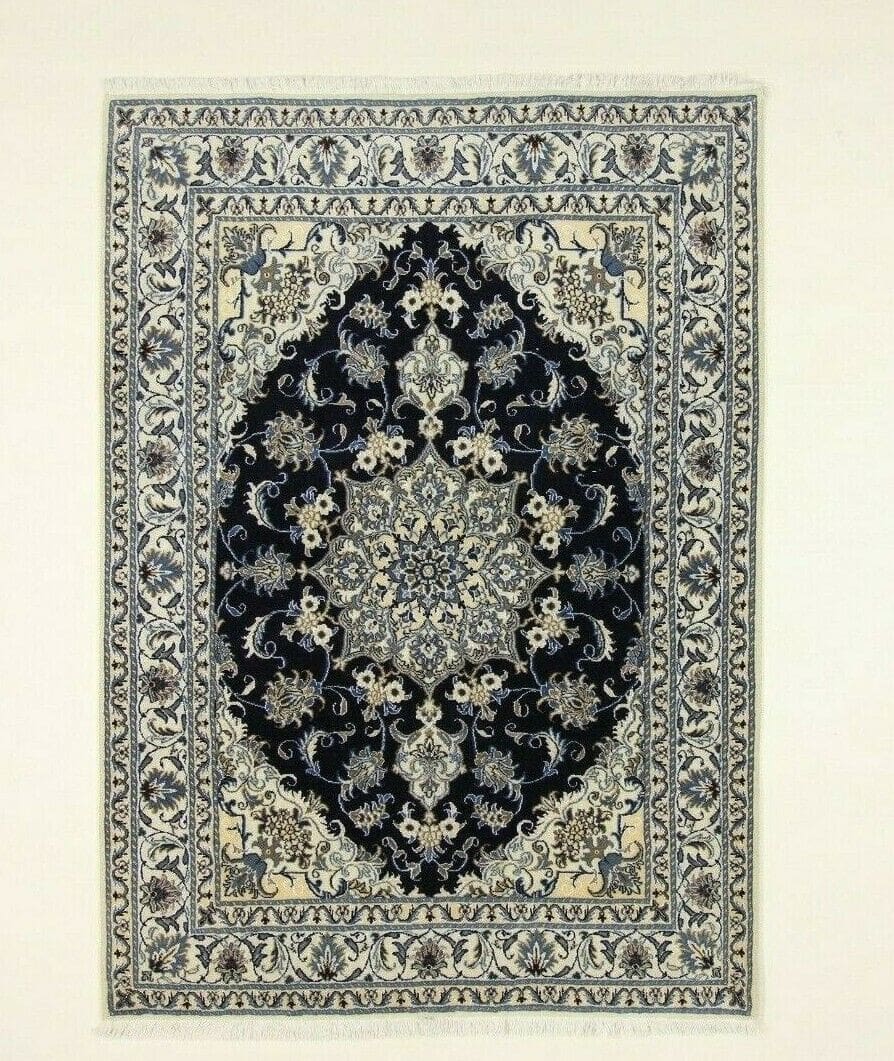
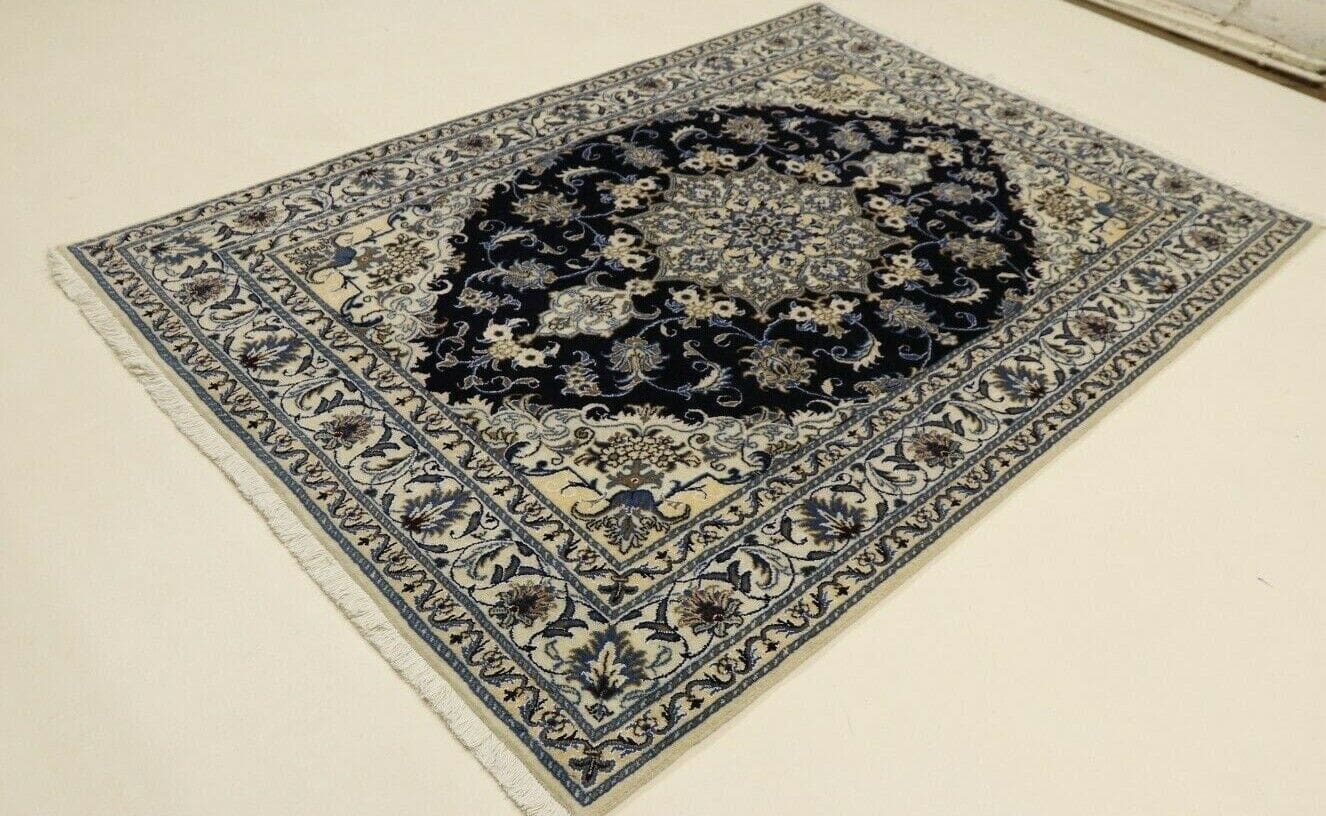
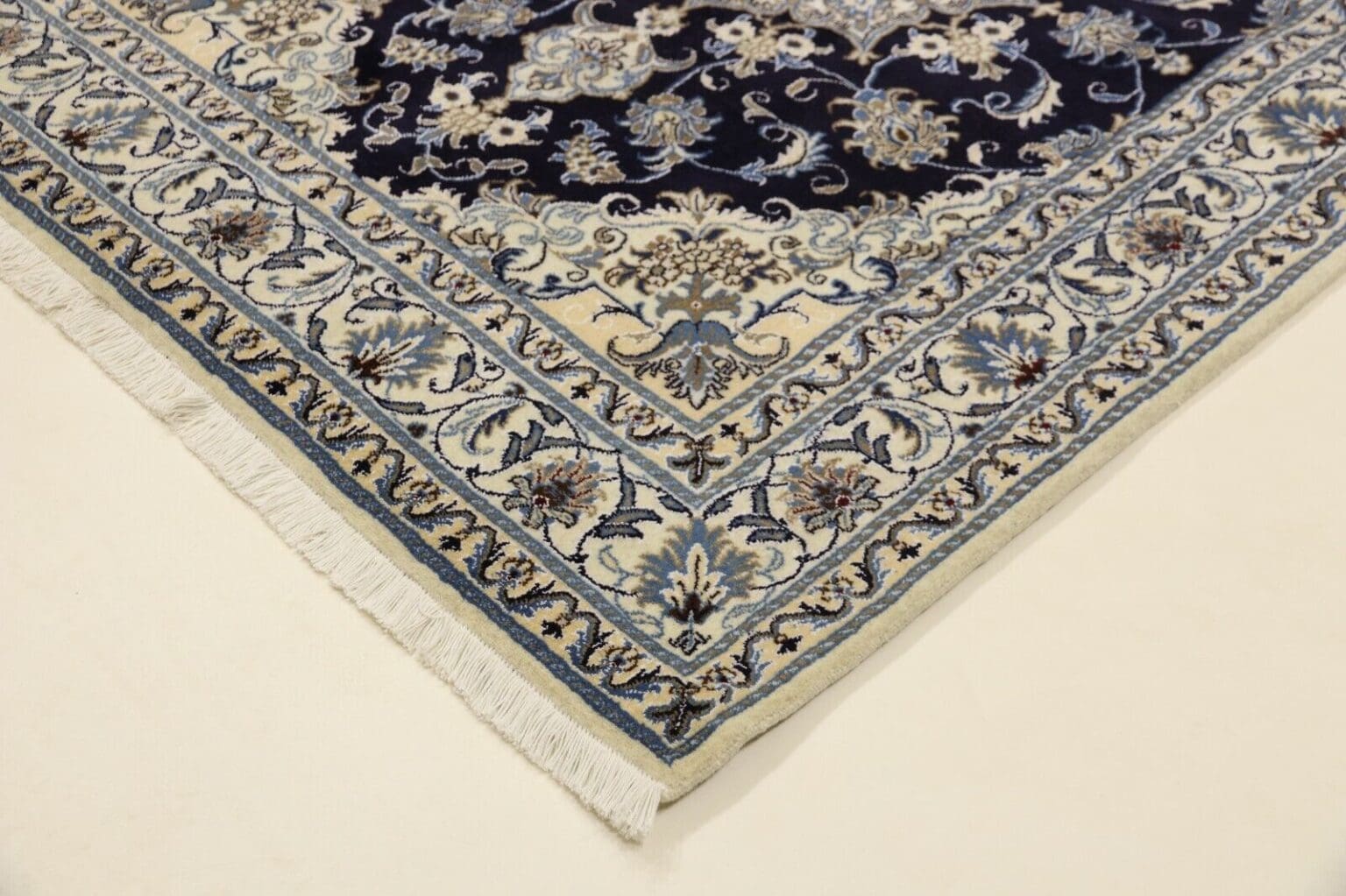
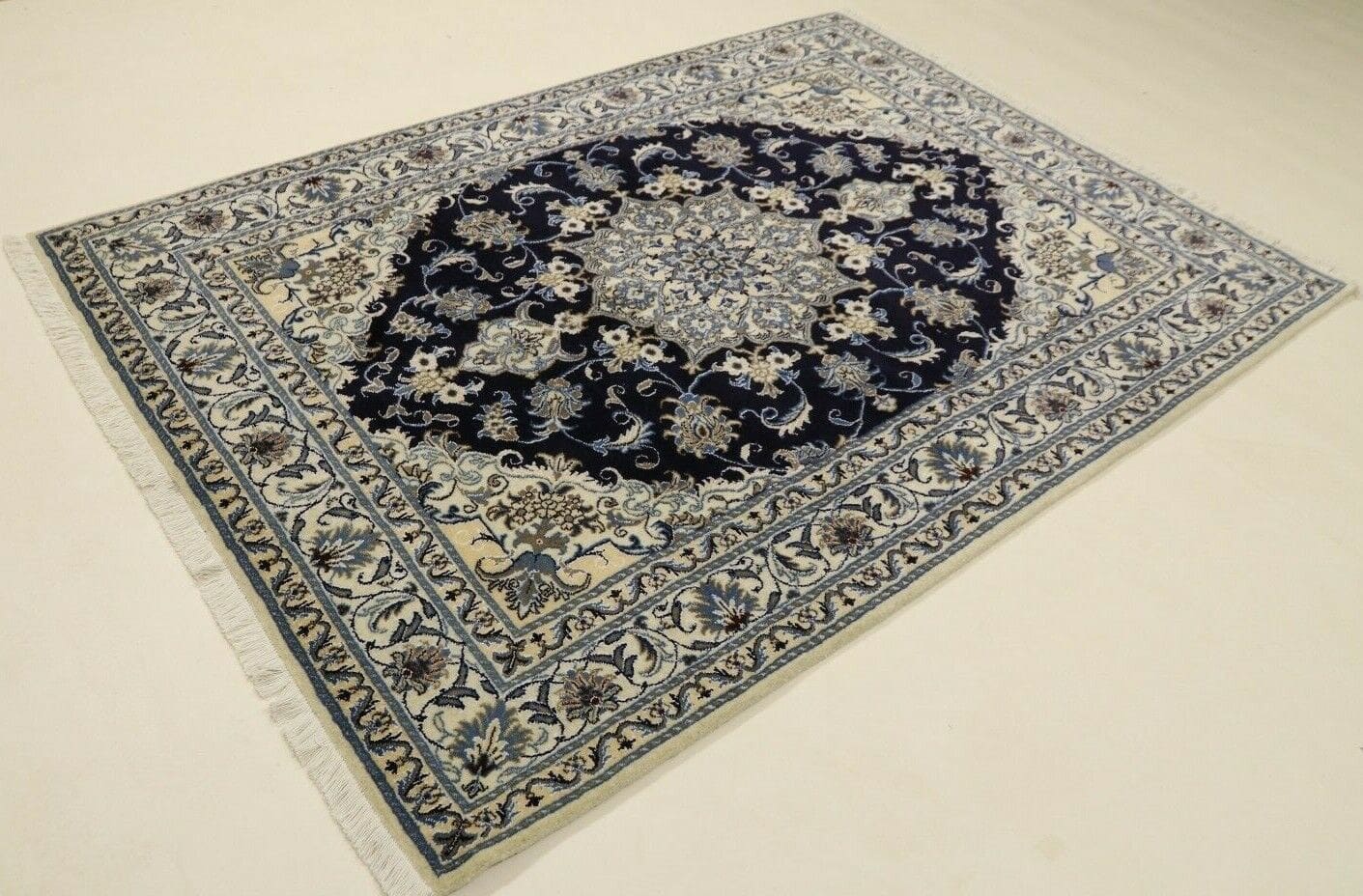
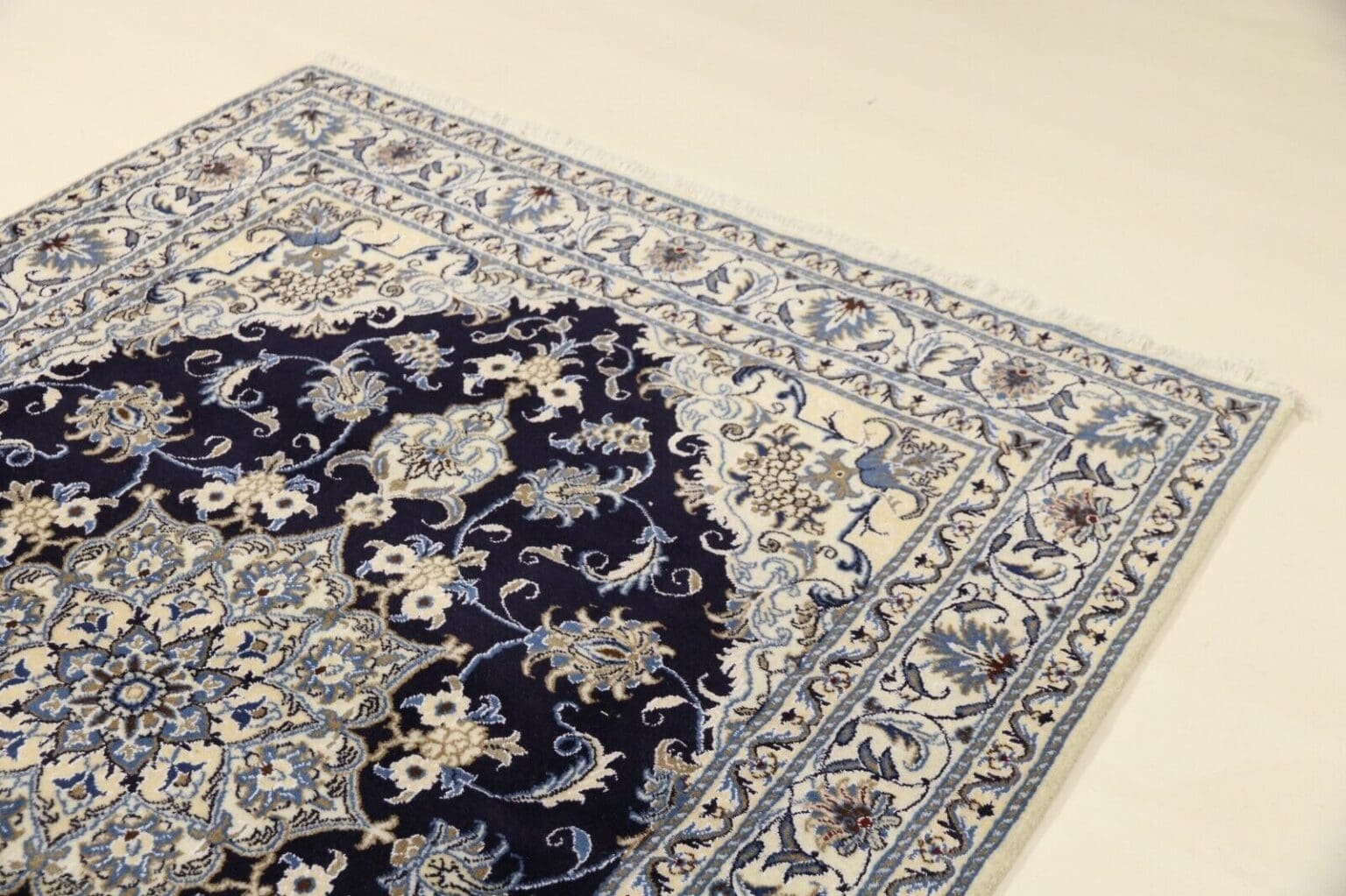
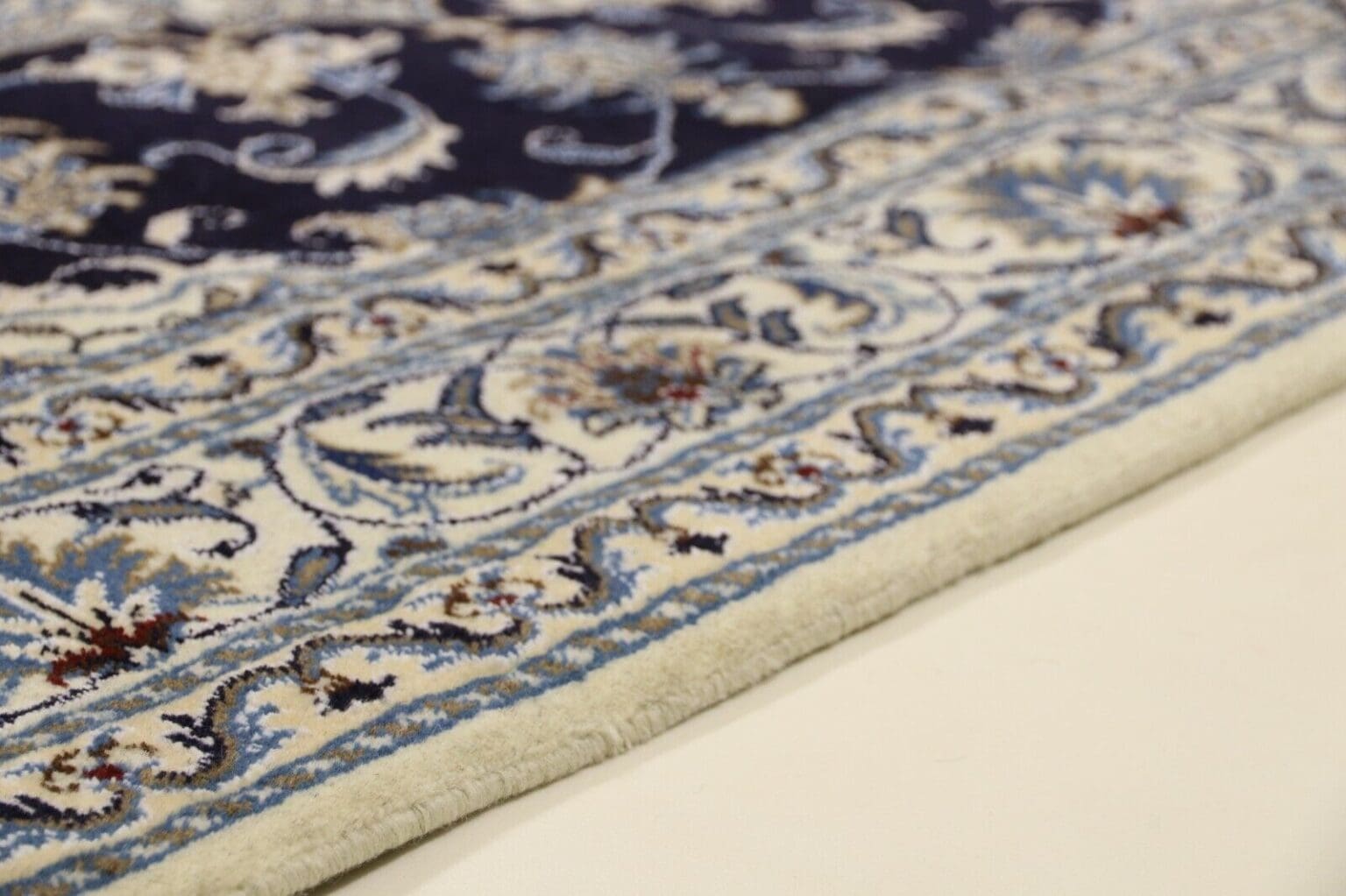
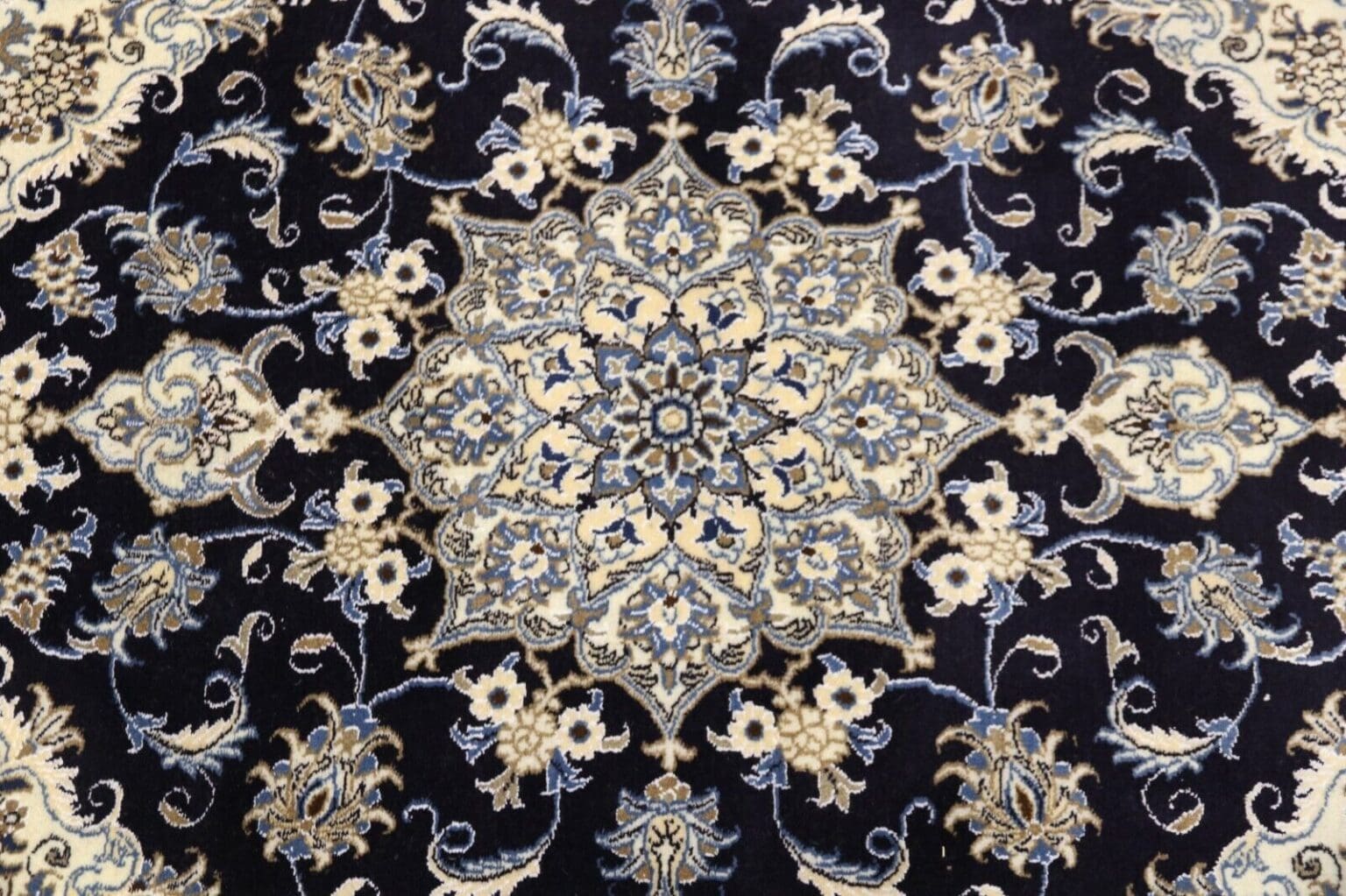
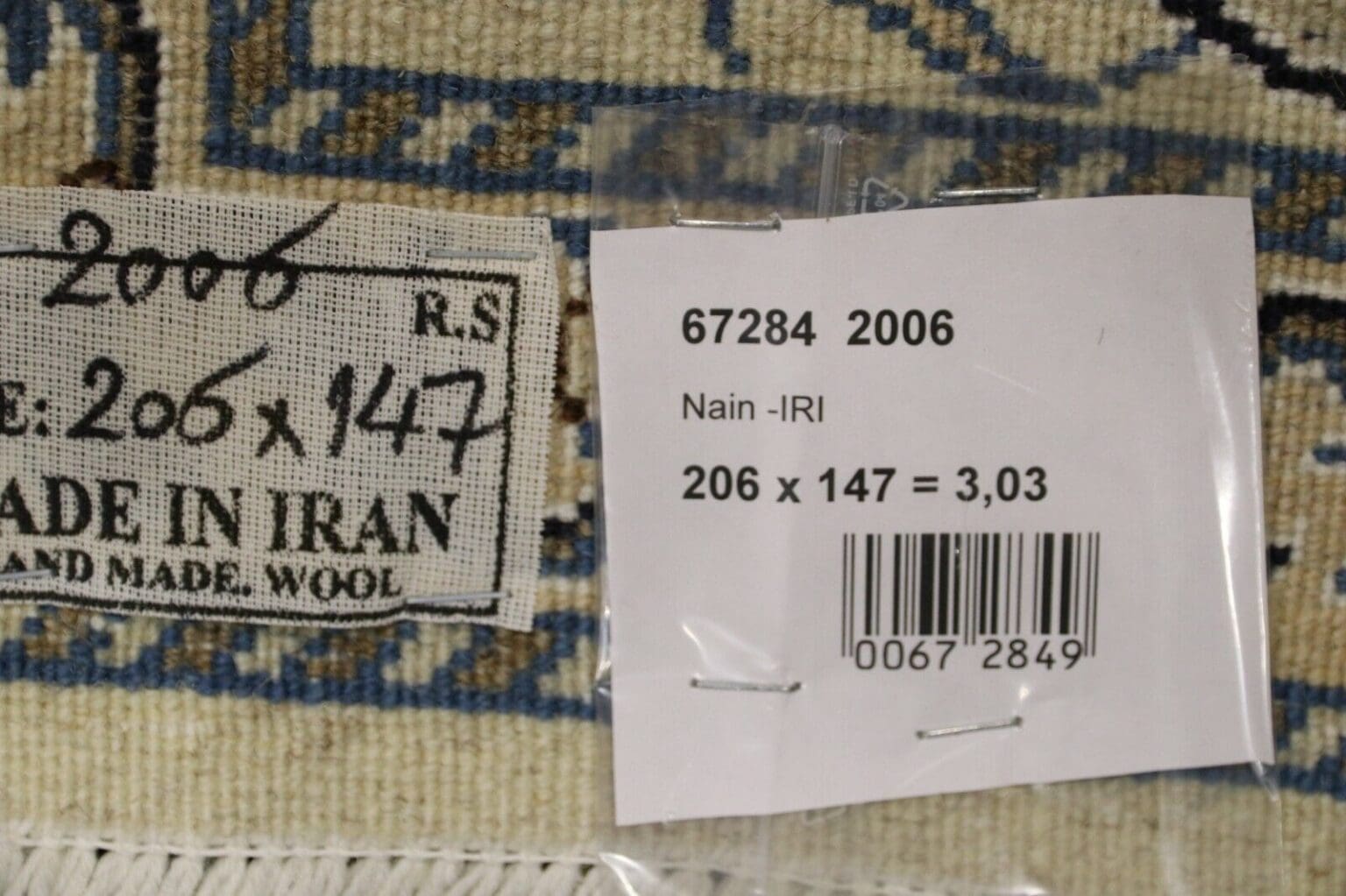
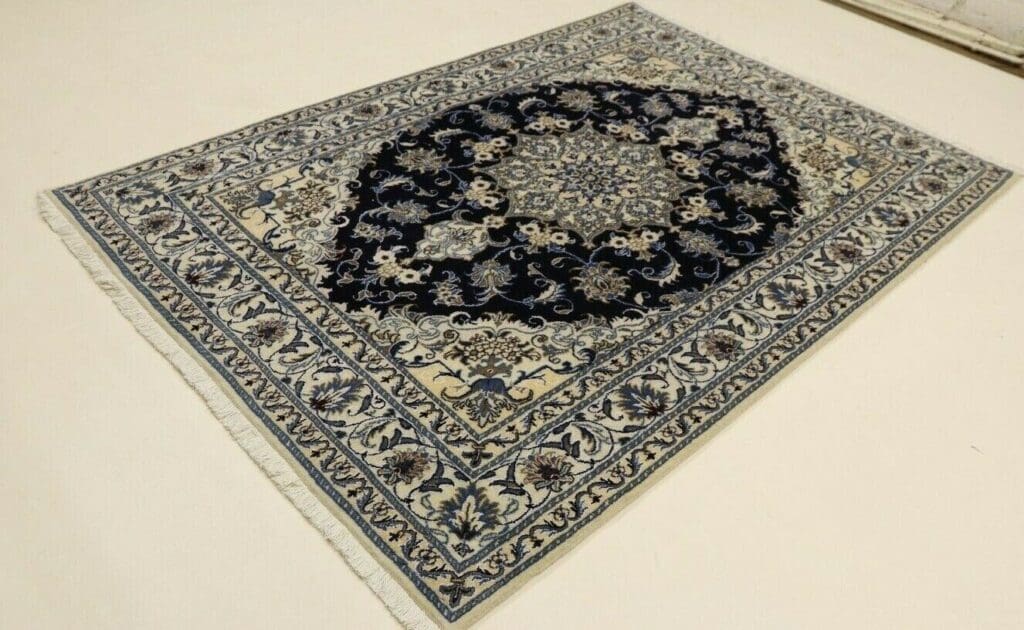
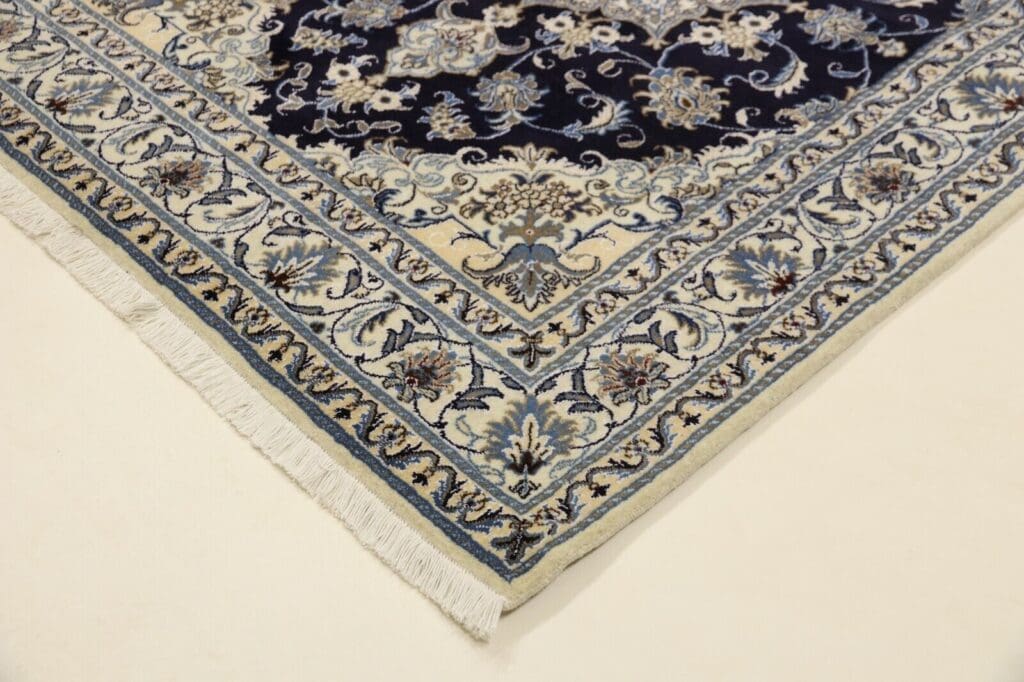
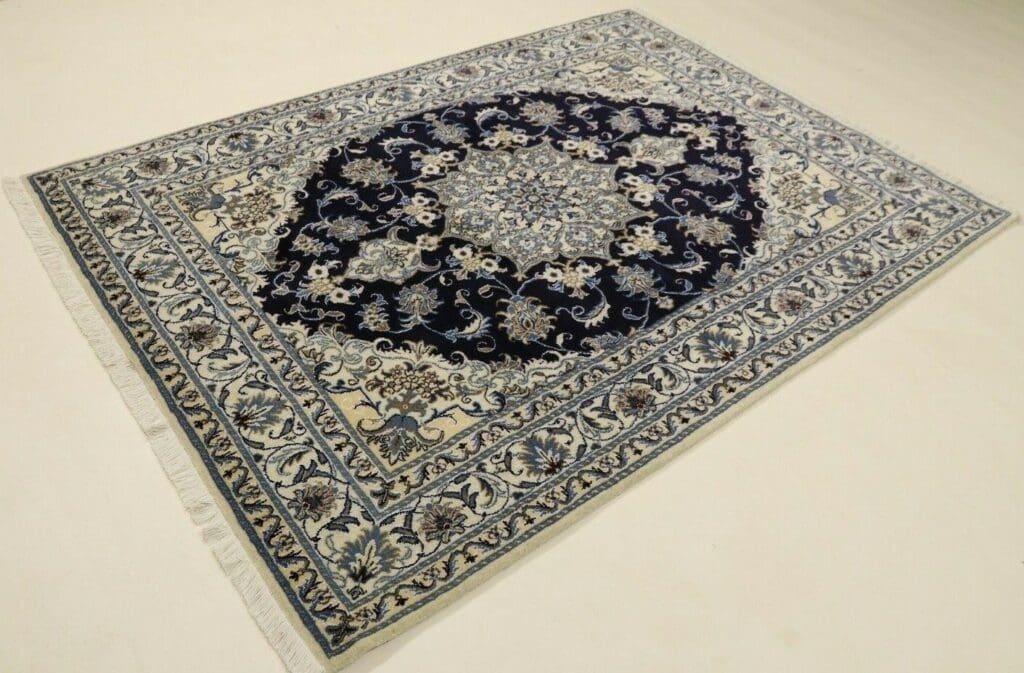
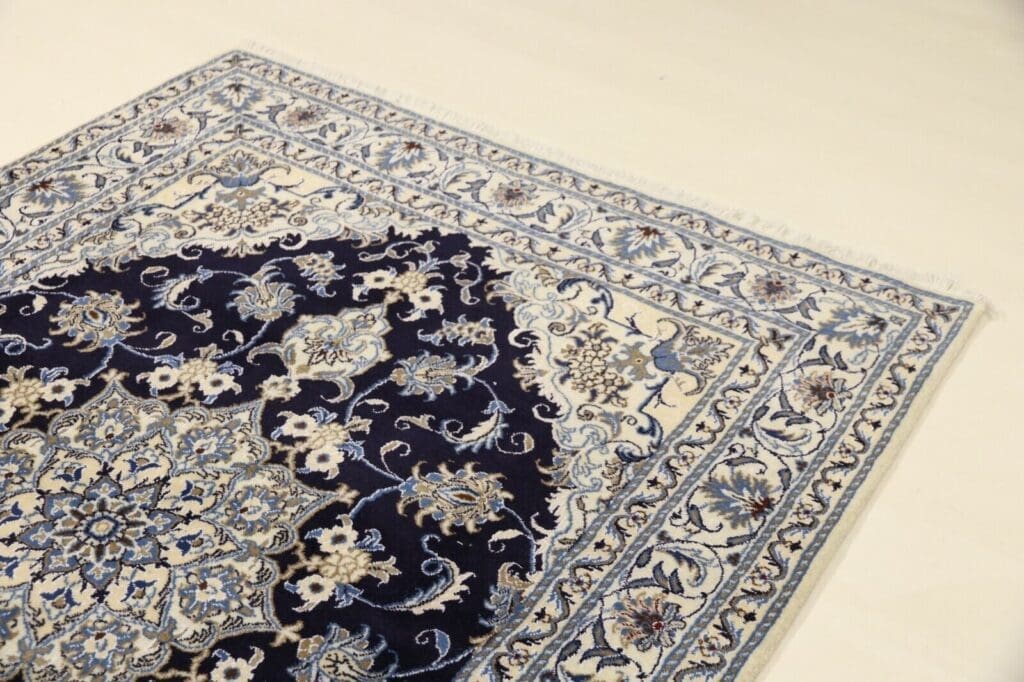
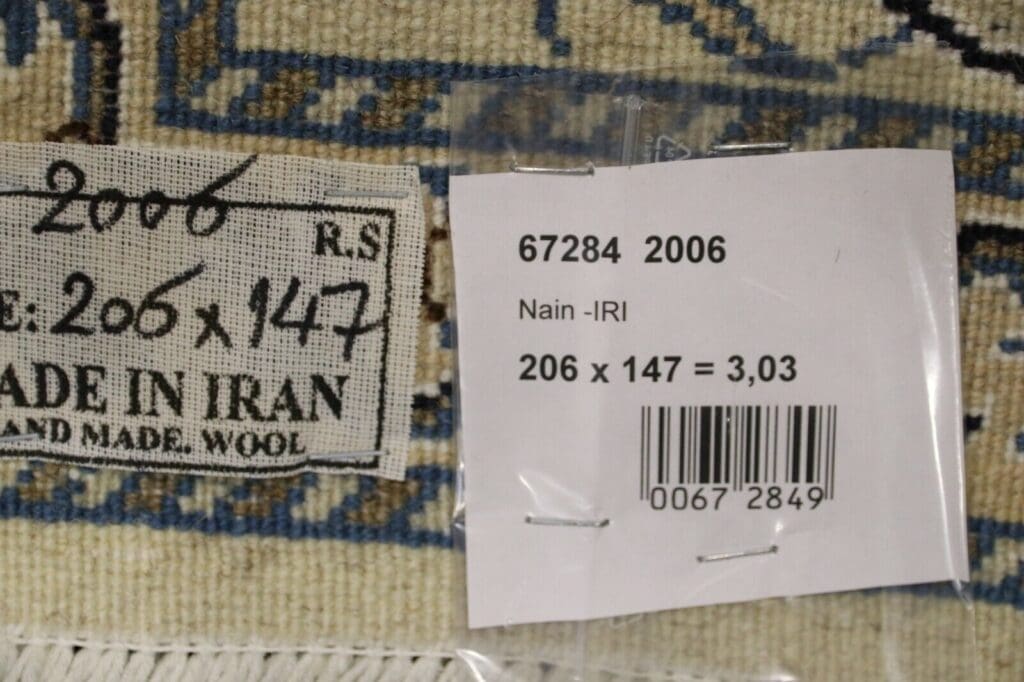
Persian Rug Nain 206 x 147 cm Wool Hand-knotted
€ 1112
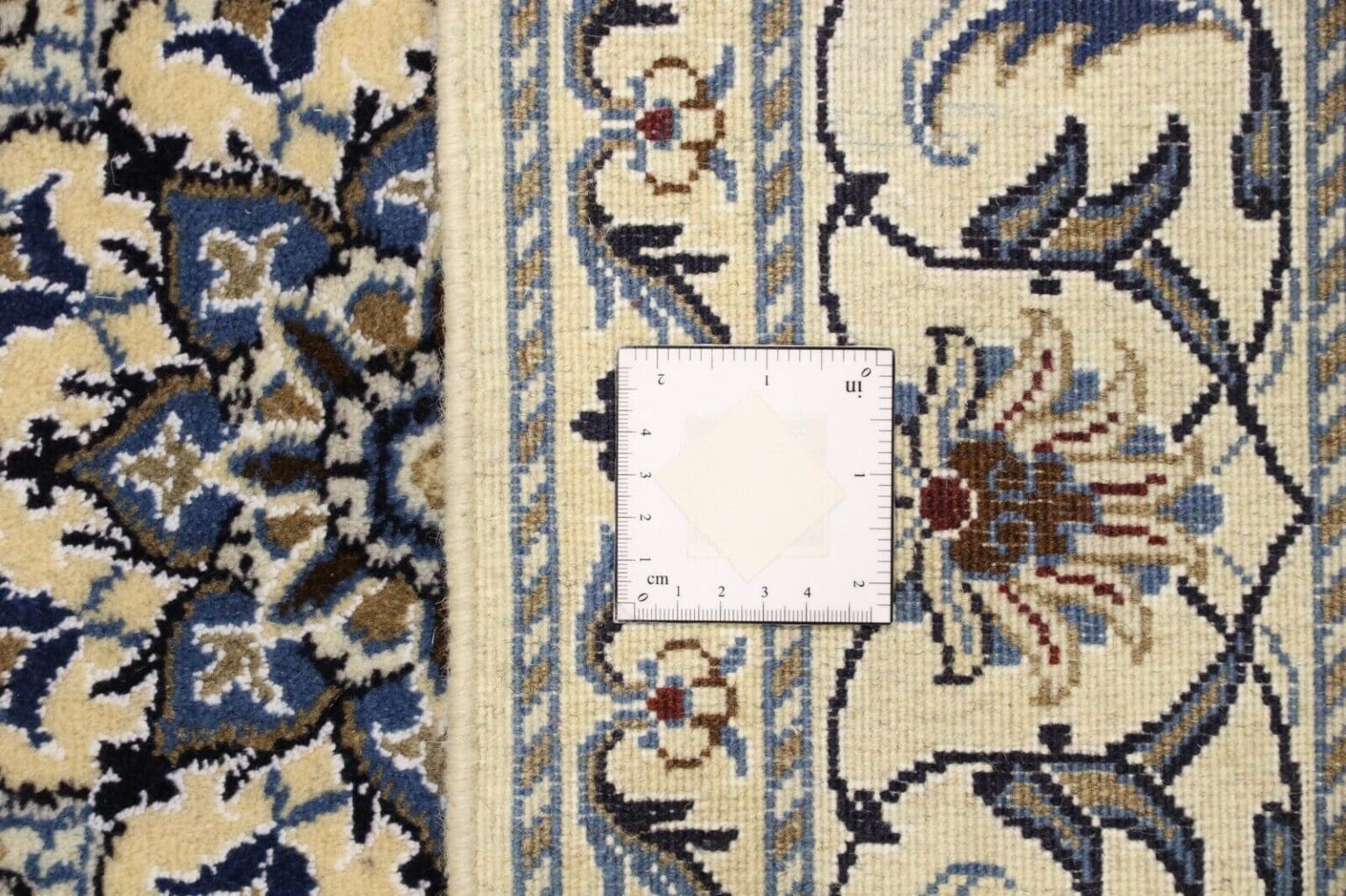
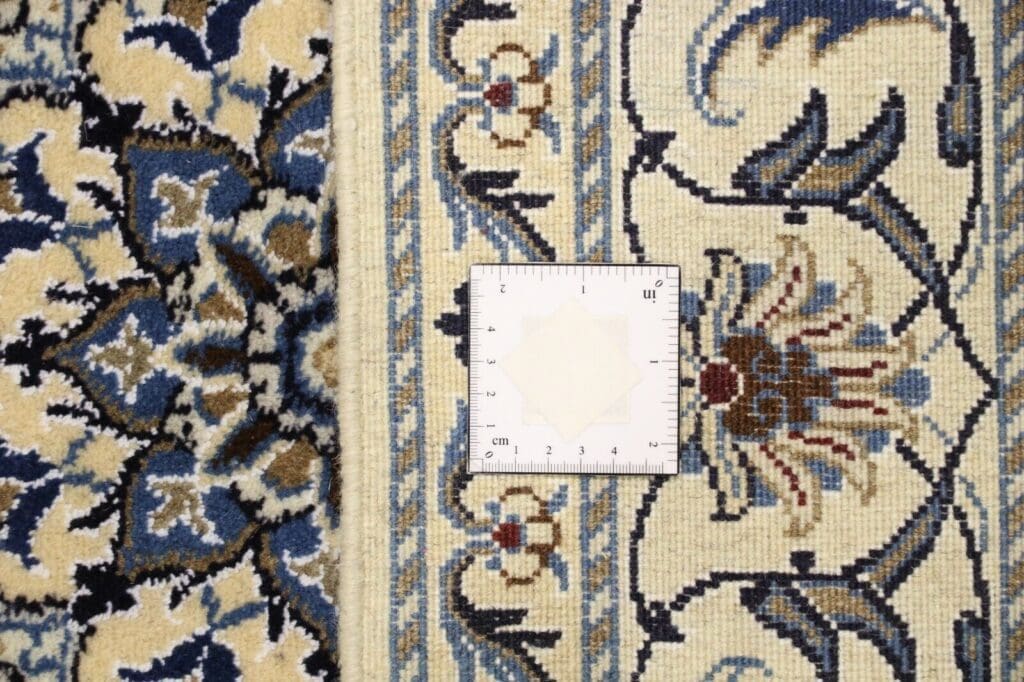
Hand-knotted Nain Persian Rug | Knot density: approx. 300,000 knots/m² | Material: pile 90% virgin wool, 10% silk, warp 100% cotton | Size: 206 x 147 cm | Pattern: traditional Oriental and Persian, floral and geometric | Condition: new and unused
1 available
- ✓Free Shipping in EU
- ✓2-5 Business Days Delivery
- ✓14-Day Return Policy
- ✓Worldwide Shipping on request
 SECURE PAYMENT
 SHIPPING PARTNERS
Inventory number: 0C191B34
Description
Nain Persian Rug
Material and Craftsmanship
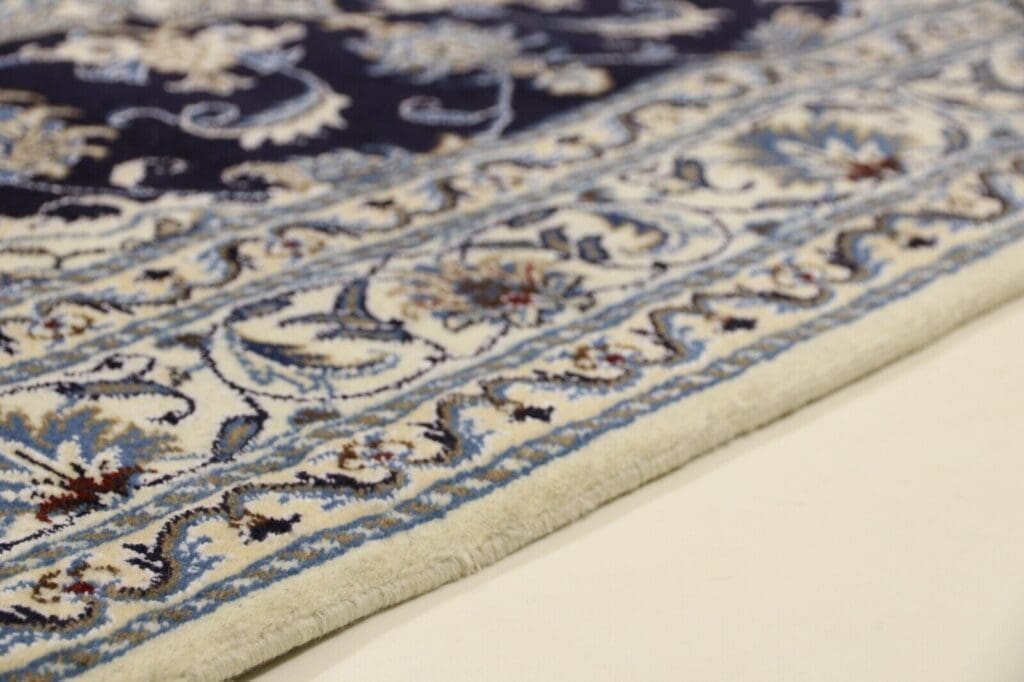
This Nain Persian rug is hand-knotted. The pile contains 90% virgin wool and 10% silk, while the warp is made from 100% cotton. These fibres contribute different qualities to the finished surface. Wool is traditionally used in rug making for its soft feel and durability. Wool fibre is also naturally resistant to soiling. Silk has a smooth, fine structure and can support the precise depiction of narrow outlines, ornamental details and small changes within a design.
Hand-knotting is performed one knot at a time. Each knot is tied into the warp and becomes part of the visible pile. Row by row, this creates both the structure and the pattern. The technique permits careful work on small flowers, scrolling forms, borders and geometric elements. It also means that the rug is made as an individual piece rather than as an industrially identical product. The surface records the particular execution of the knotting process.
The cotton warp provides the lengthwise framework of the rug. Knots are secured within this framework and the rows are held together by weft passages. Once the knotting is complete, the pile is finished so that the surface is even and the design can be seen clearly. Construction and ornament are therefore closely connected. This rug is described as new and unused, and its stated fibre composition and hand-knotted manufacture are among its defining characteristics.
Origin and Tradition
The rug is identified as a Nain Persian rug from Persia. Nain is a city in Iran with a distinct carpet-weaving tradition. It is located in Isfahan Province, a region that has been associated with Persian carpet craftsmanship for centuries. Nain rugs are generally known for fine knotting, careful workmanship and clearly organised ornament. Within Persian carpet culture, the Nain tradition brings together technical precision, controlled drawing and a balanced relationship between the central field and its surrounding borders.
Traditional Persian rugs are built from warp, weft and pile. The warp forms the longitudinal foundation. Knots are tied around its threads, while weft passages secure the rows and help compact the textile structure. The visible pile is formed by the ends of the fibres held by the knots. After the weaving and knotting stages, the surface is finished to reveal the drawing. This process requires consistent tension and careful coordination between the structure and the planned pattern.
Nain weaving developed from regional Persian craft practices and was shaped by contact with other artistic traditions. The city belongs to a wider textile culture in which skills, tools and design principles have been transmitted through generations. Nain rugs are therefore understood not merely as decorated floor coverings, but as products of an established method of working. The arrangement of motifs, the fineness of the outlines and the relationship between colours are treated as connected parts of the weaving tradition.
Fine knotting allows small forms to be represented with considerable control. Leaves, blossoms, branches and geometric boundaries can be placed close together while remaining visually distinct. This helps explain the ordered appearance often associated with Nain compositions. A design is commonly organised through a relationship between the field, secondary motifs and enclosing borders. Each area contributes to the legibility of the whole, so that the surface reads as a connected textile composition rather than as a random collection of ornaments.
The history of Persian rugs also includes the development of coordinated colour systems. Colours are traditionally selected and combined so that outlines and motifs remain clear while the overall surface retains unity. Nain designs are frequently associated with light, restrained colour areas, floral ornament and controlled geometric lines. The source text also refers to natural plant dyes as part of the regional background. Such dyes have traditionally been valued for their warm appearance and resistance to light. This is historical context for the craft tradition, not an additional unrecorded specification for this particular rug.
Persian rugs have served both practical and artistic purposes. Their production combines the preparation of the warp, the choice of fibres, knotting, securing the rows and finishing the pile. In the Nain tradition, refined technical work is closely linked to measured ornament. The name Nain consequently refers to a place as well as to a long-established approach in which construction, pattern and colour are developed together.
Design and Pattern
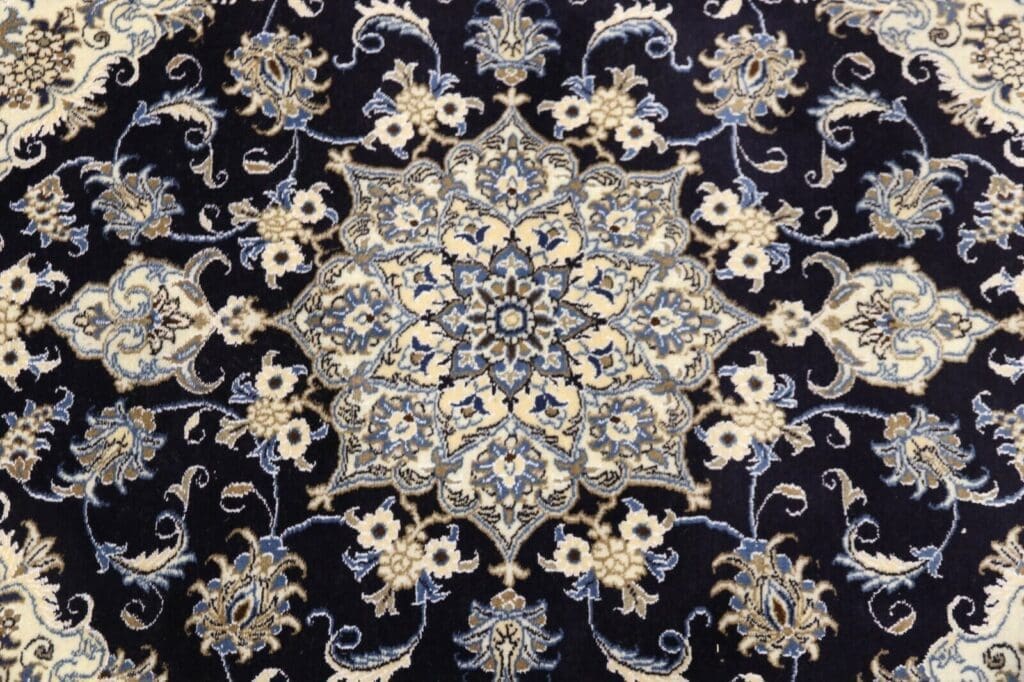
The design of this Oriental rug is described as traditional Oriental and Persian. It contains floral and geometric forms. Floral elements may represent blossoms, leaves, vines and stylised botanical shapes. Geometric elements provide axes, boundaries, repetition and orderly transitions. Combining these two visual languages is a recurring feature of classical Persian rug design. Natural forms are adapted to the requirements of a woven and knotted surface rather than copied as literal botanical images.
Nain compositions often place floral ornament within a balanced field. A central design can establish the main focus, while smaller forms and lines organise the surrounding area. Borders frame the field and create a visual passage towards the outer edge. These are general principles of Nain and Persian design. The precise placement and execution of the motifs remain individual to each hand-knotted piece, so the tradition provides the framework without making the design of every rug identical.
The high knot density supports detailed pattern work. Closely placed knots can reproduce small petals, narrow leaves, fine outlines and compact geometric features. Viewed closely, such a surface can be read as a sequence of individual details; viewed from farther away, the same details combine into a unified field. The technique is therefore part of the visual language. Accurate knot placement makes it possible to control the boundaries between colours and to maintain the clarity of small forms.
The designs are described as using soft colours. Compared with strong contrasts, soft colour relationships create more gradual transitions and can lend a calm, warm appearance to a room. In Persian rug design, a colour is traditionally considered in relation to the field around it, its outlines, neighbouring motifs and the border. A flower or geometric element gains much of its effect from this surrounding relationship. Pattern and colour consequently work together rather than operating as separate decorative features.
The combination of floral and geometric forms gives the rug a traditional Persian character while allowing it to be used in different interior settings. In living or sleeping areas, the subdued colouring can complement furnishings without removing the historical character of the design. The rug is described as both a practical floor covering and a piece of Persian textile art. Its regional pattern language supplies the broader context, while the individual hand-knotting gives this one rug its particular surface.
Special Features
A defining feature is the knot density of approximately 300,000 knots per square metre. Dense knotting permits small floral and geometric details to be rendered with precision. The rug is hand-knotted and is therefore an individual piece. Its pile consists of 90% virgin wool and 10% silk, and its warp is made from 100% cotton. It is described as new and unused.
The rug is suitable for use over underfloor heating. It is not intended for outdoor placement. Weather exposure, moisture and direct sunlight can affect fibres and colours. Its principal practical and craft characteristics are the traditional design, hand-knotted construction and stated combination of wool, silk and cotton.
FAQ
How should I care for the Nain Persian rug?
Vacuum the rug regularly and carefully to remove dust. Fresh marks can be wiped with a soft, slightly damp cloth. Direct sunlight should be avoided to reduce the risk of colour fading. Intensive cleaning should be entrusted to a professional cleaner. The rug should be protected from moisture and is intended for indoor use. Harsh cleaning agents and vigorous rubbing are not appropriate for a hand-knotted surface.
Is this rug suitable for underfloor heating?
Yes. The Nain Persian rug is suitable for use over underfloor heating. The temperature should not be set too high, so that the fibres and textile structure are treated carefully. A moderate setting supports appropriate indoor use of the hand-knotted rug. Its suitability for underfloor heating does not remove the need to protect it from moisture and unnecessary direct sunlight.
Can I use the rug outdoors?
No. The rug is designed for indoor areas and should not be used outdoors. Weather conditions and moisture can damage the fibres. Direct sunlight may also cause the colours to fade. It should therefore be kept in a protected interior space and safeguarded from dampness, changing weather conditions and strong exposure to the sun.
Additional information
| Design Style | |
|---|---|
| Color | |
| Size | |
| Shape | |
| Origin | |
| Knot Density | |
| Material |
Related products
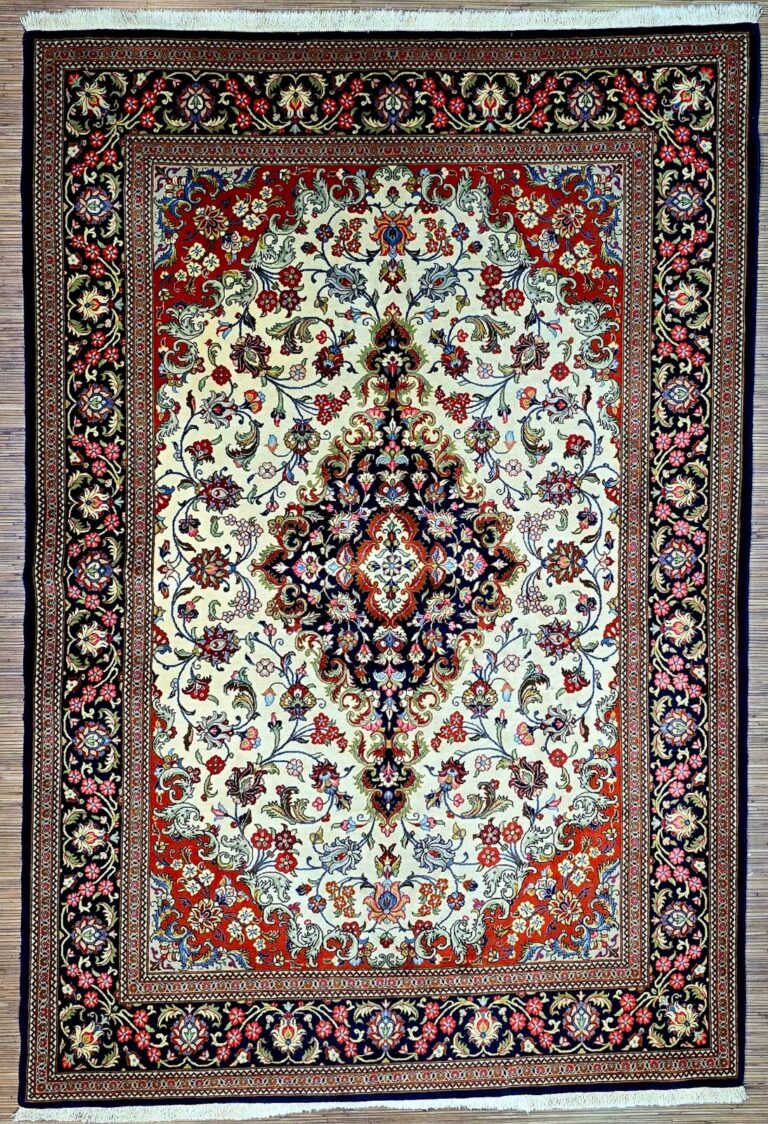
Persian Rug Qom 216 x 142 cm Wool Hand-knotted
€ 990
Persian Rug Kashan 198 x 128 cm Silk Hand-knotted Antique
€ 7249
Persian Rug Kashan 345 x 253 cm Wool Hand-knotted
€ 2910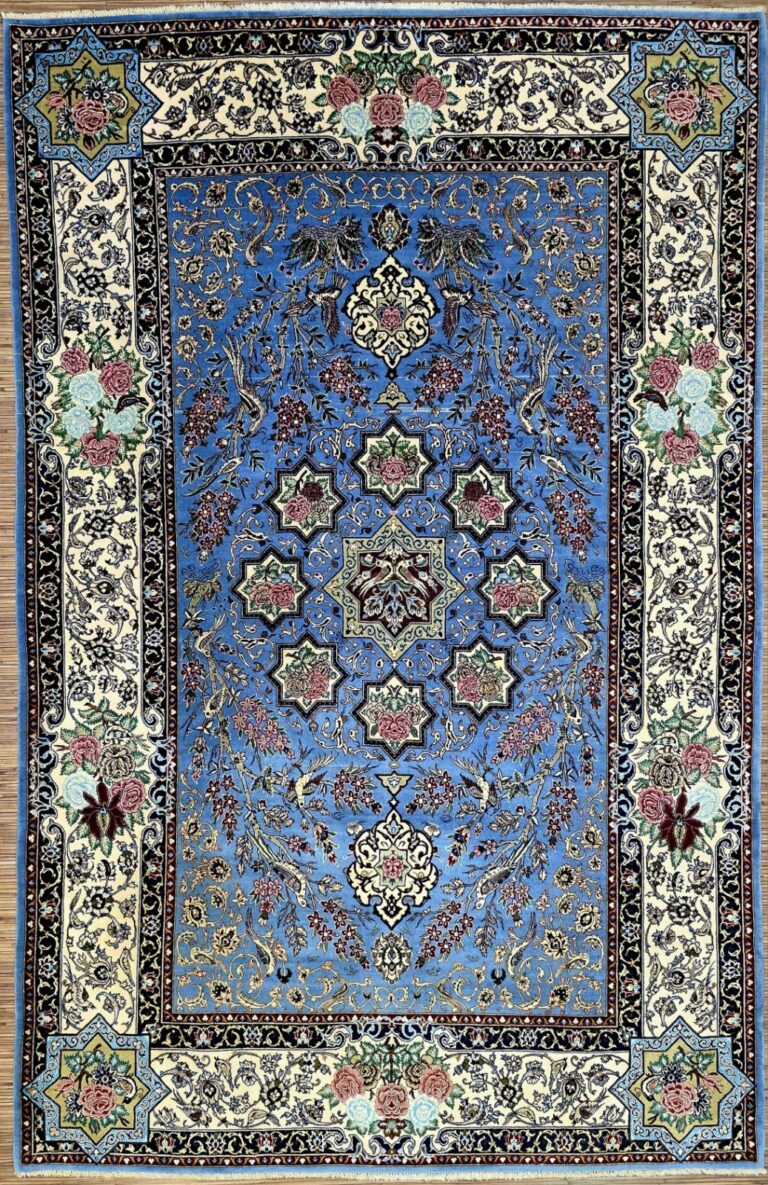
Persian Rug Isfahan 222 x 146 cm Silk Hand-knotted
€ 3905
Persian Rug Farahan 235 x 154 cm Wool Hand-knotted
€ 990
Persian Rug Nain 330 x 215 cm Wool Hand-knotted
€ 3600
Persian Rug Nain 355 x 252 cm Wool Hand-knotted
€ 4200
Persian Rug Kashan 211 x 140 cm Wool Hand-knotted
€ 900