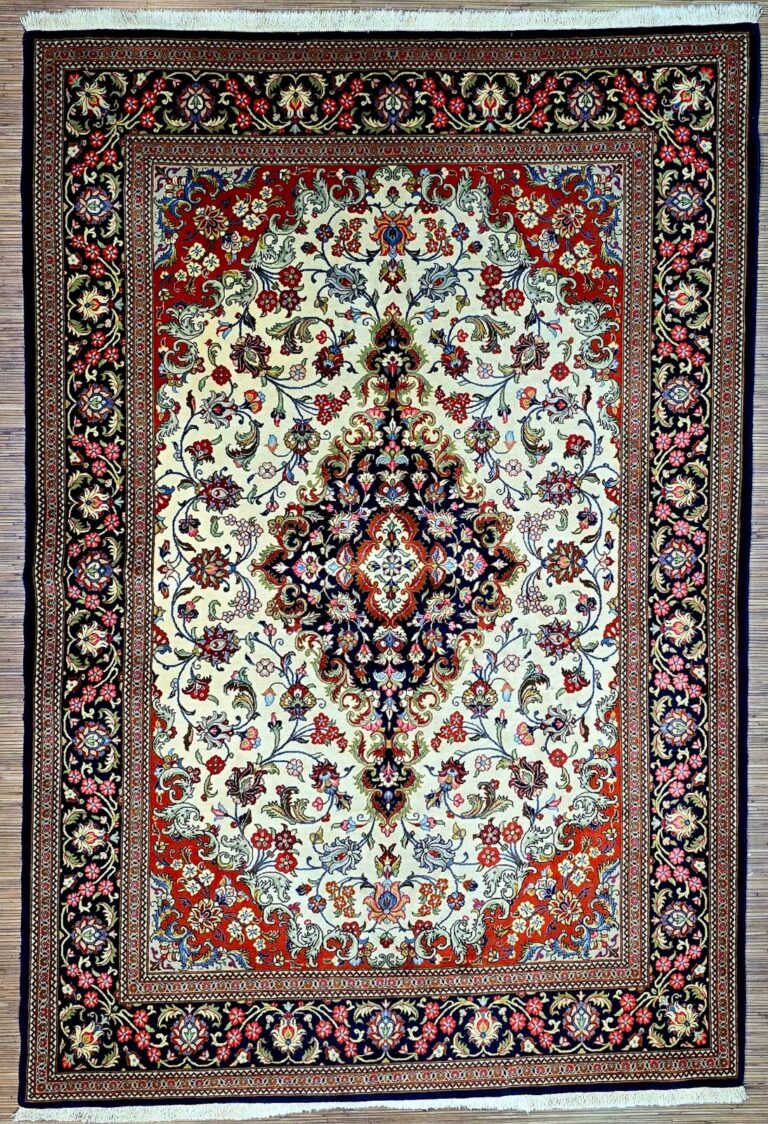
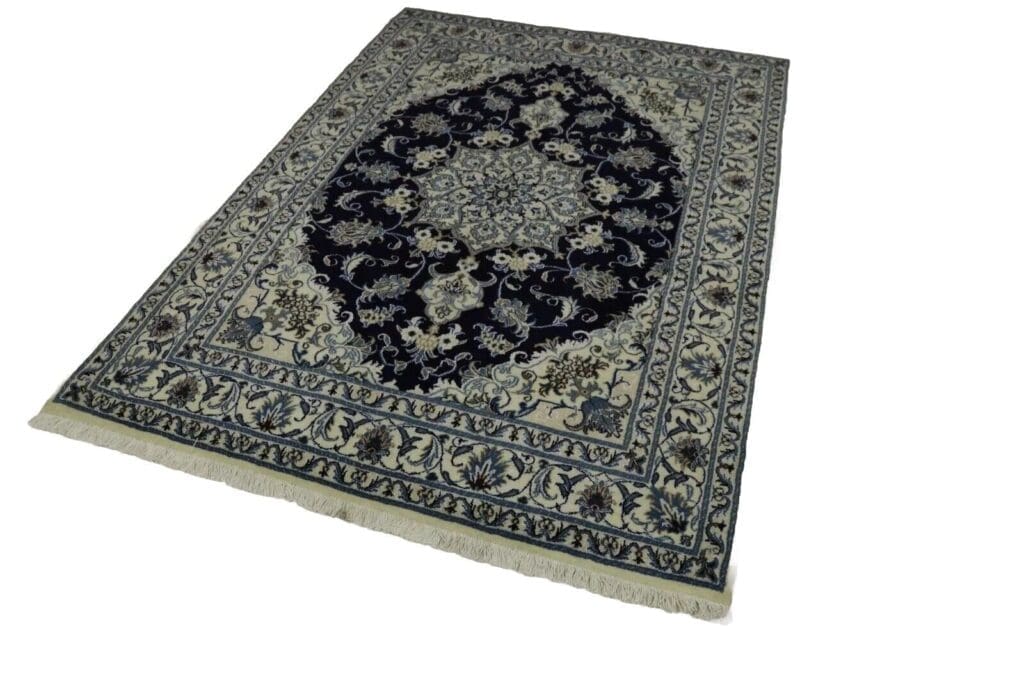
This Nain Persian rug is made from virgin wool and silk. The wool provides the pile with a resilient, pleasantly soft character, while the silk adds a smoother touch and a subtle reflection of light. Together, the fibres create a textile surface that combines practical strength with a refined appearance. Virgin wool has long been valued in hand-knotted rugs because it is naturally warm to the touch, structurally durable and able to contribute to a balanced room climate.
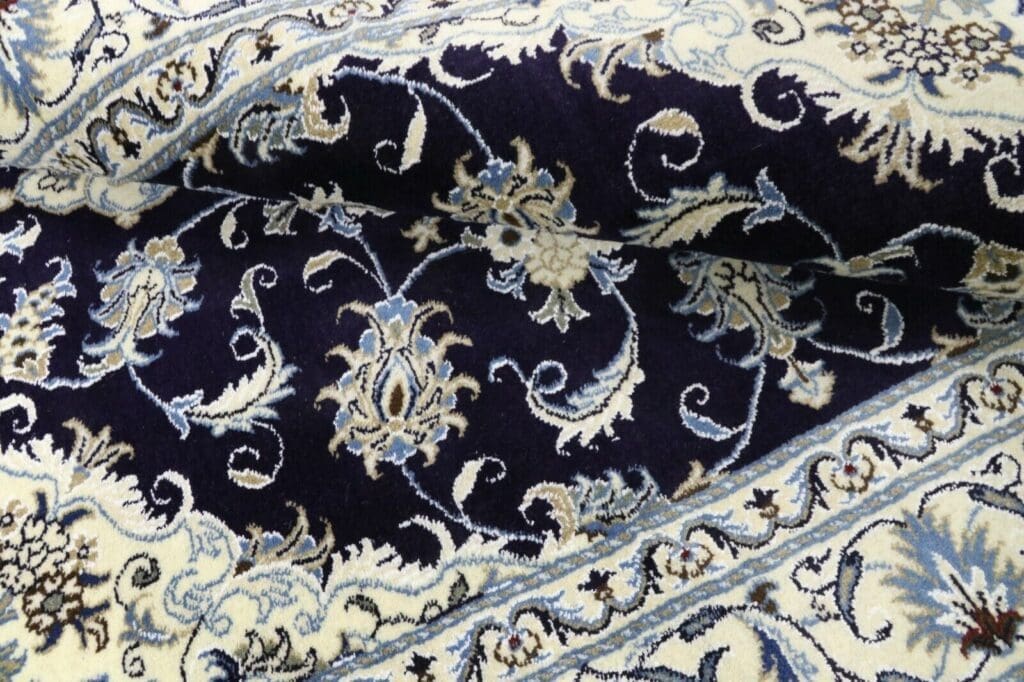
Silk changes the way the surface responds to light. Depending on the viewing angle, selected areas may appear brighter or more finely lustrous than the wool. It can also help colours look distinct and give the design additional visual depth. The rug is hand-knotted, meaning that individual knots are inserted into the foundation one by one. The pattern is built progressively by the knotters rather than applied as a printed or mechanically reproduced surface.
The high knot density named for this rug reflects a detailed and labour-intensive construction. A dense structure allows small ornamental elements, fine curves and carefully defined transitions to be worked into the design. Hand-knotting also means that every rug is an individual piece. Minor variations in surface, tension and light response are part of the character of a handmade textile and distinguish it from a uniform industrial product.
Virgin wool and silk therefore contribute different qualities to the same pile. Wool supplies a firm and comfortable foundation for use, while silk brings a finer feel and a restrained sheen. The rug is new and is supplied with a certificate of authenticity. Its workmanship is intended for lasting use while retaining the visible connection to the hands and methods involved in its production.
Care should respect both fibres. Regular vacuuming helps remove loose dust and dirt. Prolonged direct sunlight should be avoided so that the colours remain fresh. If more intensive cleaning is required, professional treatment is recommended because the materials and the knotted construction should be handled appropriately.
Origin and Tradition
This Nain Persian rug belongs to the Persian carpet tradition and comes from Nain in Iran’s Isfahan province. Nain lies in central Iran and is known as an important centre of carpet production. Its weaving and knotting culture developed from an established regional textile tradition and became particularly associated with finely executed rugs. In this context, Nain describes more than a place of origin: it also refers to a recognised approach to drawing, structure and craftsmanship.
The carpet traditions of Isfahan are closely connected with ordered ornament and careful design. Motifs have been passed on, adapted and refined over generations. Nain rugs are often associated with balanced compositions, precise scrolling foliage and a clearly organised field. These qualities show how origin, design and technique work together in Persian carpet making. A regional style is expressed through the way the pattern is planned as well as through the way it is knotted.
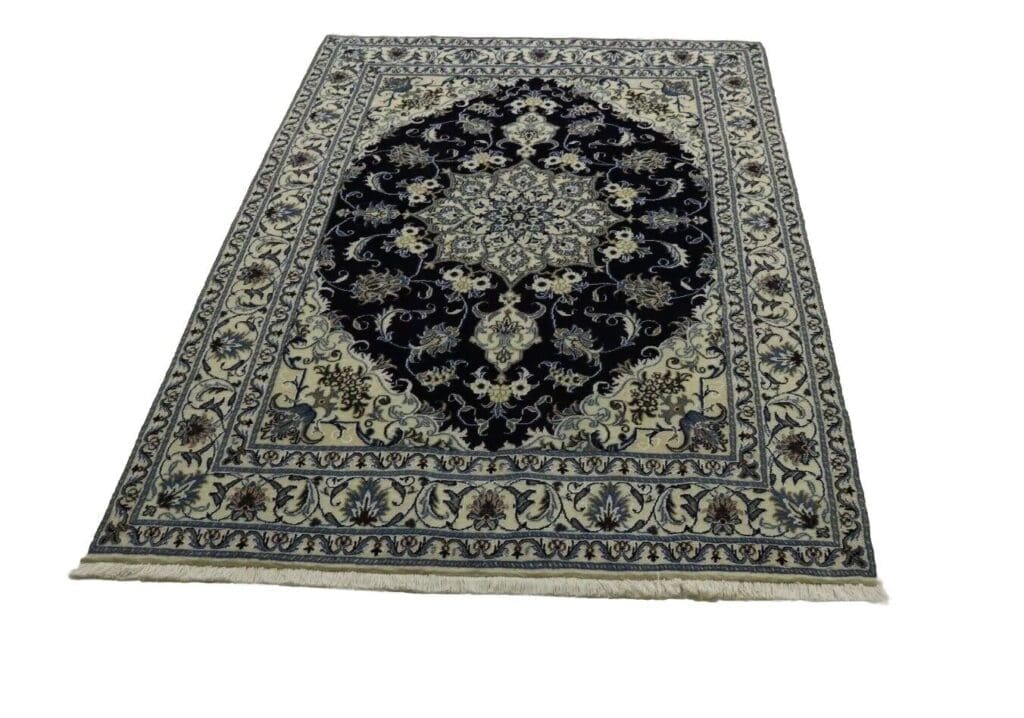
Traditional Nain designs frequently draw on floral forms and geometrically arranged details. Leaves, blossoms, vines and medallion-like structures may be combined within a coherent composition. The arrangement usually aims to balance the central field, supporting ornaments and borders. As a result, the pattern reads as an interconnected whole rather than as a collection of unrelated decorative marks.
Fine drawing is an important part of the Nain tradition. A dense knotting structure gives the maker the means to render small flowers, curling lines and nuanced changes with care. Precision does not come from knot density alone. It also depends on the design, the selection of colours, knowledge of the fibres and the experience of the person doing the knotting. The reputation of Nain rugs rests on this combination of planning and skilled manual work.
Persian rugs from Isfahan and Nain are appreciated in international markets for their disciplined compositions and detailed execution. They can be placed in traditionally furnished interiors or used in more restrained contemporary settings. Their regional identity remains legible through the ornament and the hand-knotted technique. In this sense, provenance refers to a developed cultural and technical tradition, not simply to a decorative label.
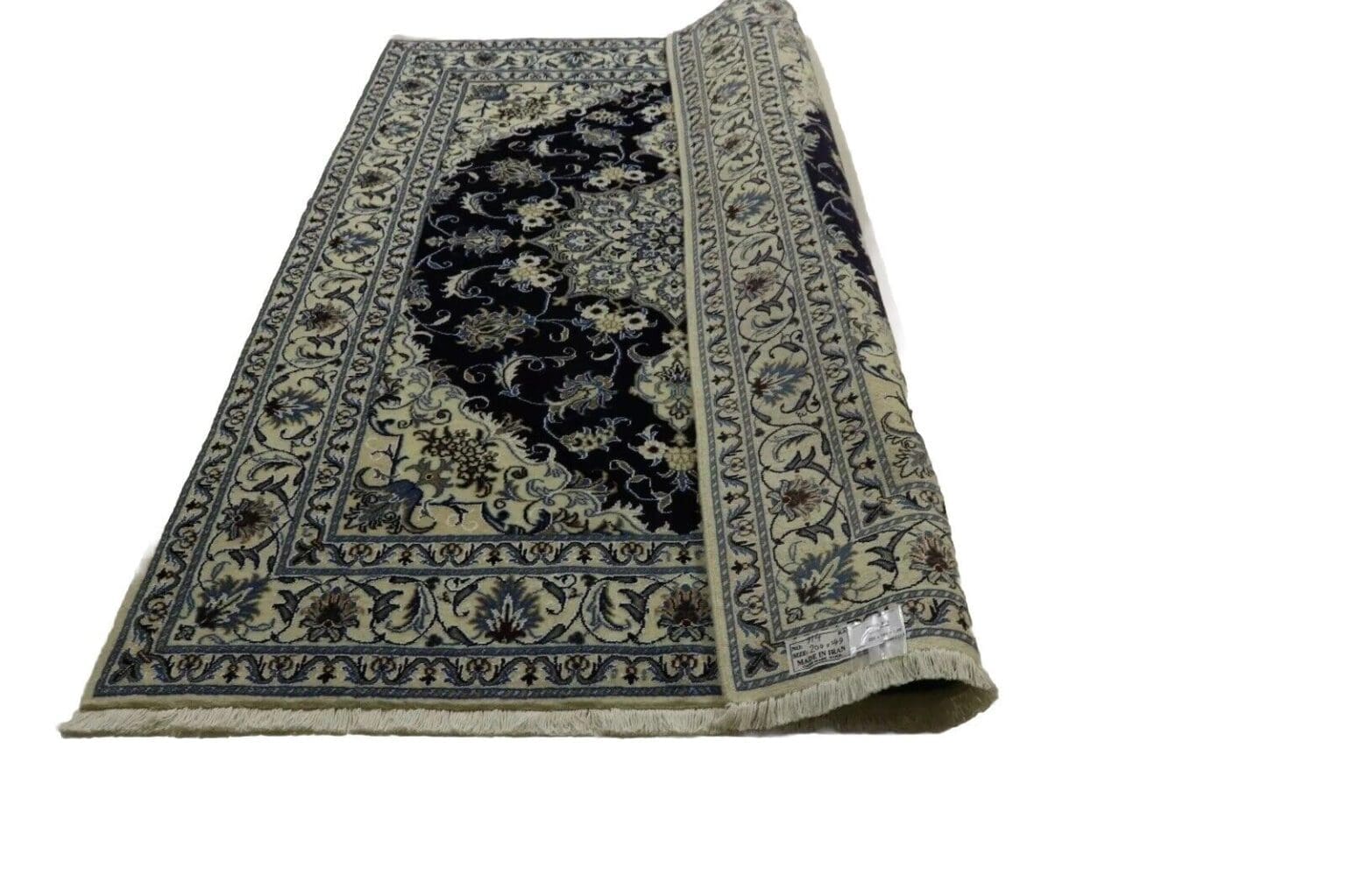
Making a hand-knotted Nain rug requires sustained attention. The design is transferred to the foundation, and knots are placed row after row before the pile is finished and trimmed to clarify the drawing. The finished textile brings together an inherited Persian vocabulary and the individual work of its makers. This process gives the rug both a practical function and the presence of a textile object shaped by regional craft knowledge.
Design and Pattern
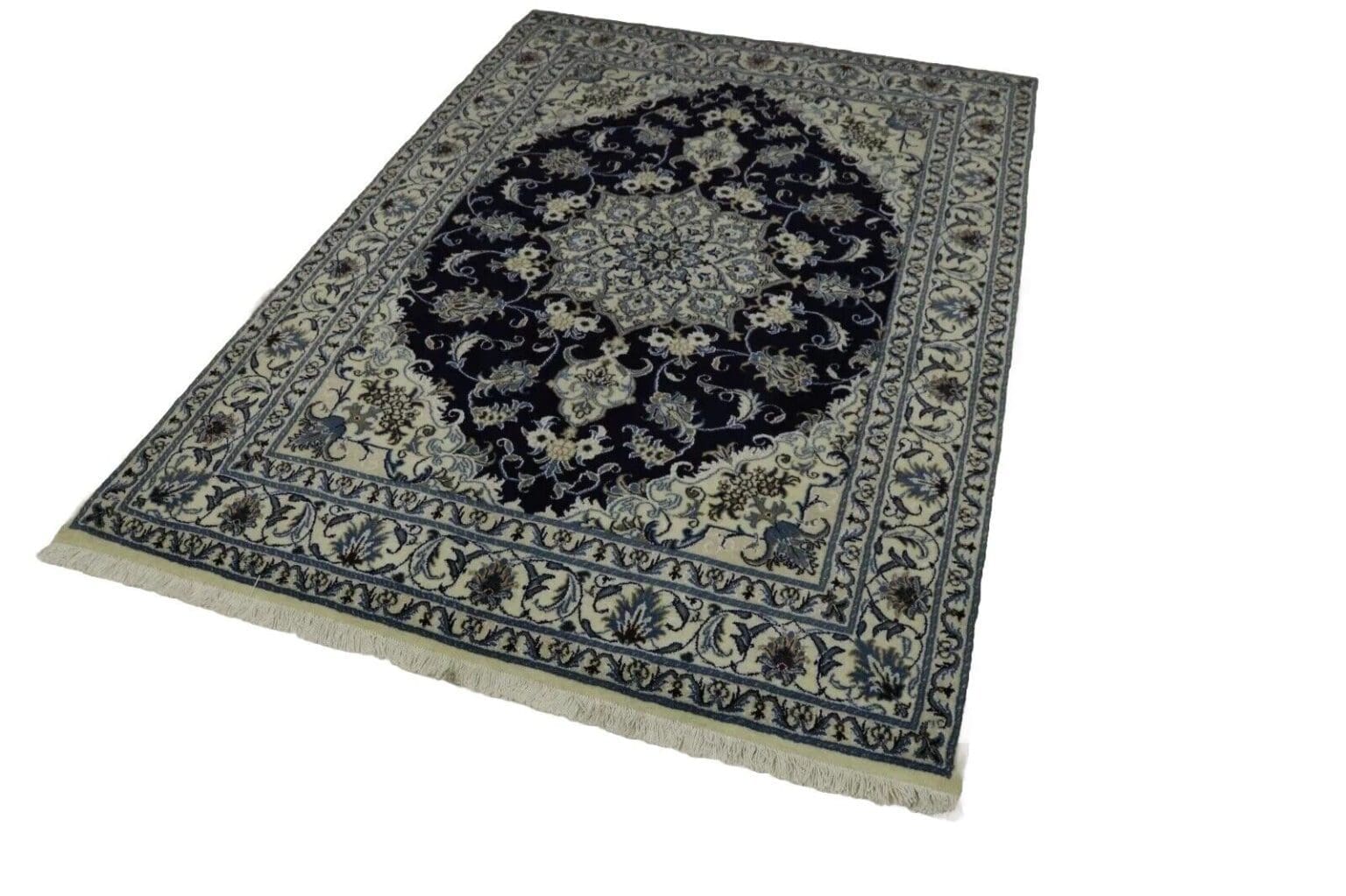
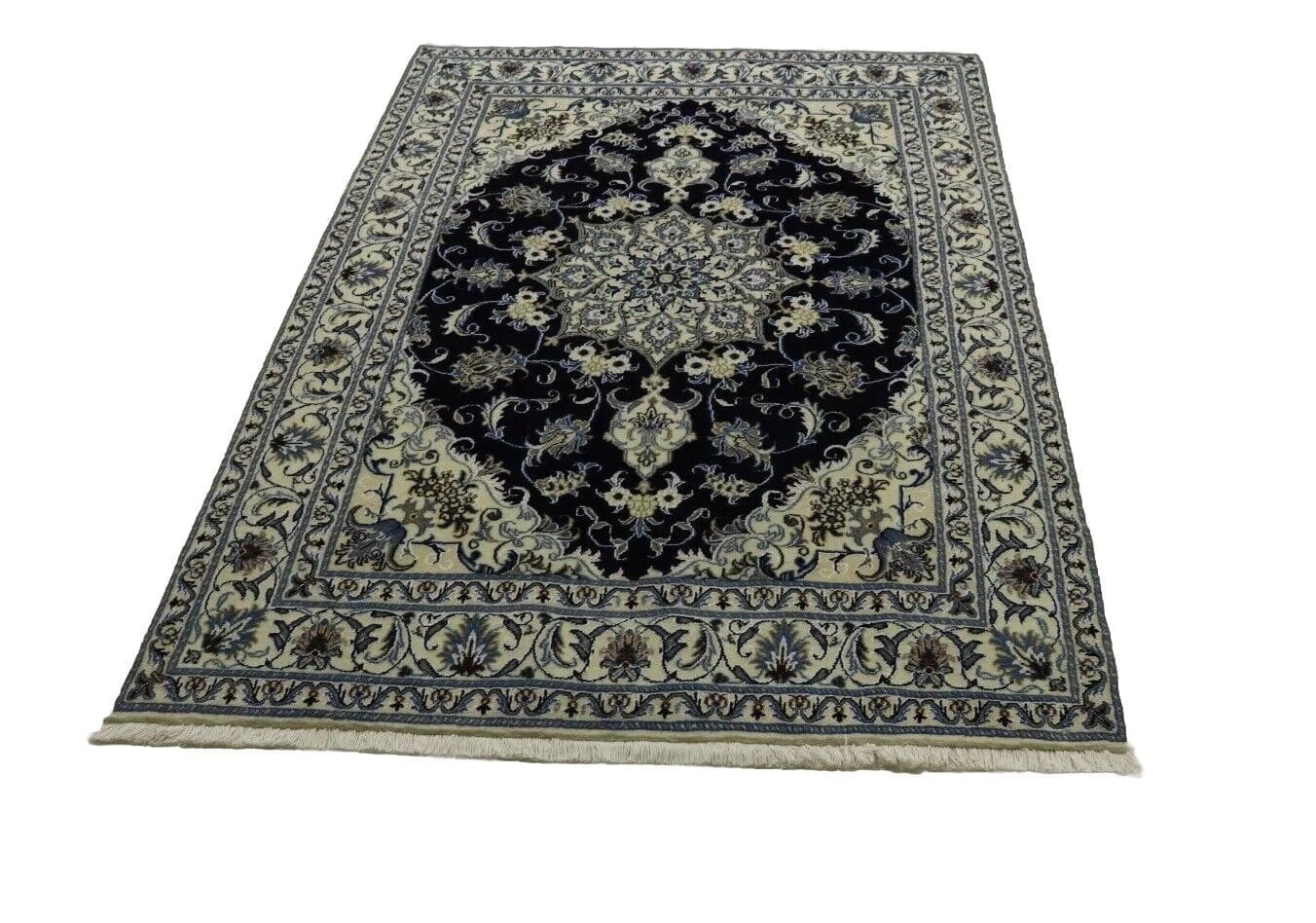
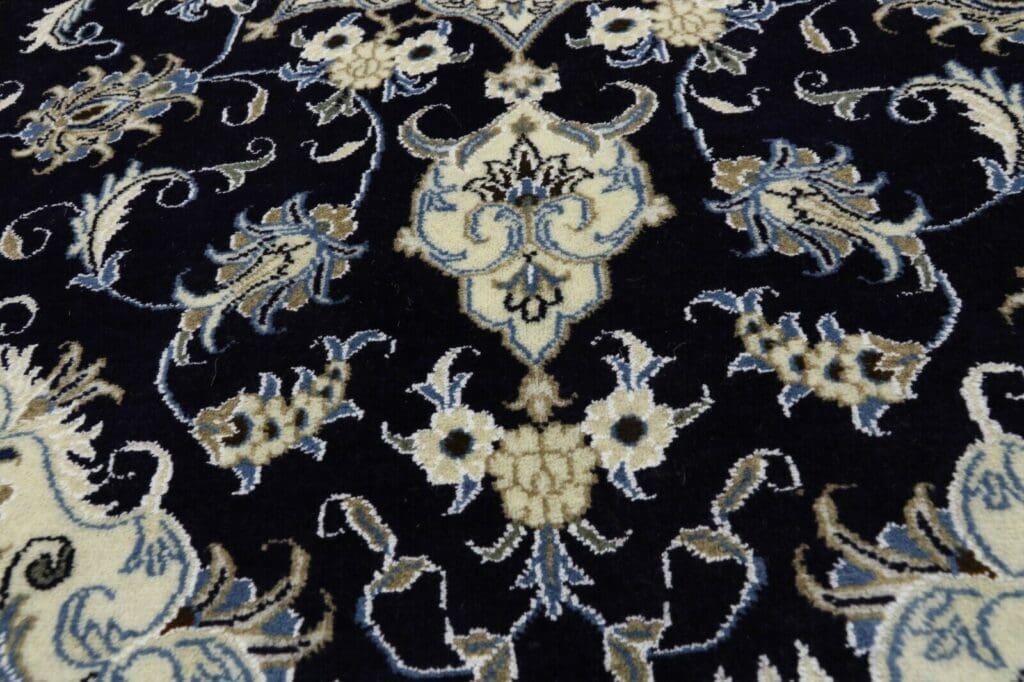
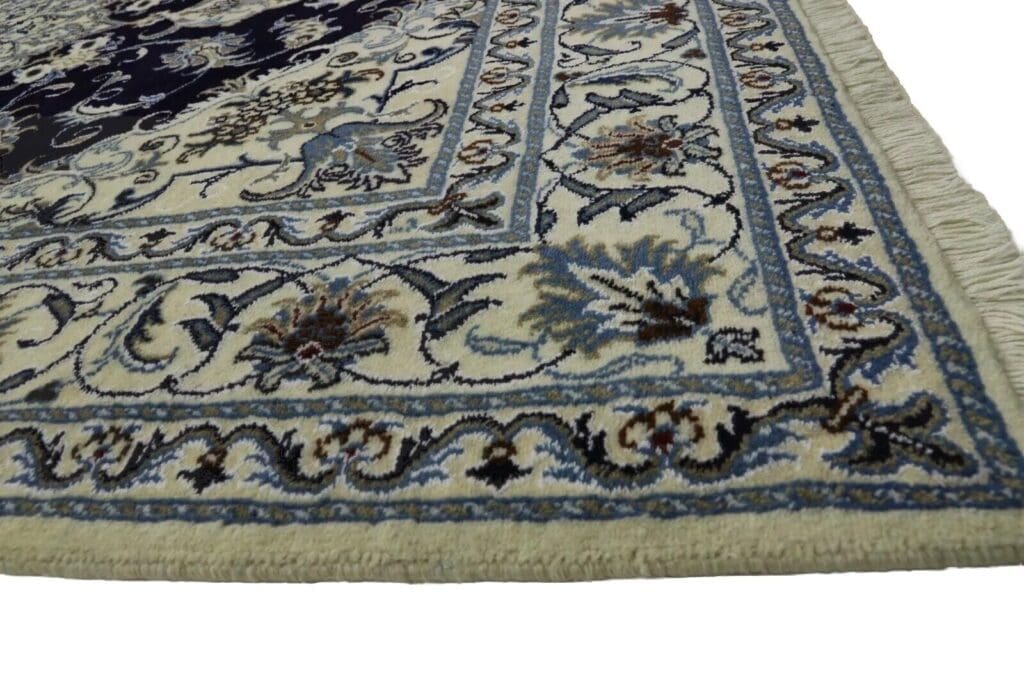
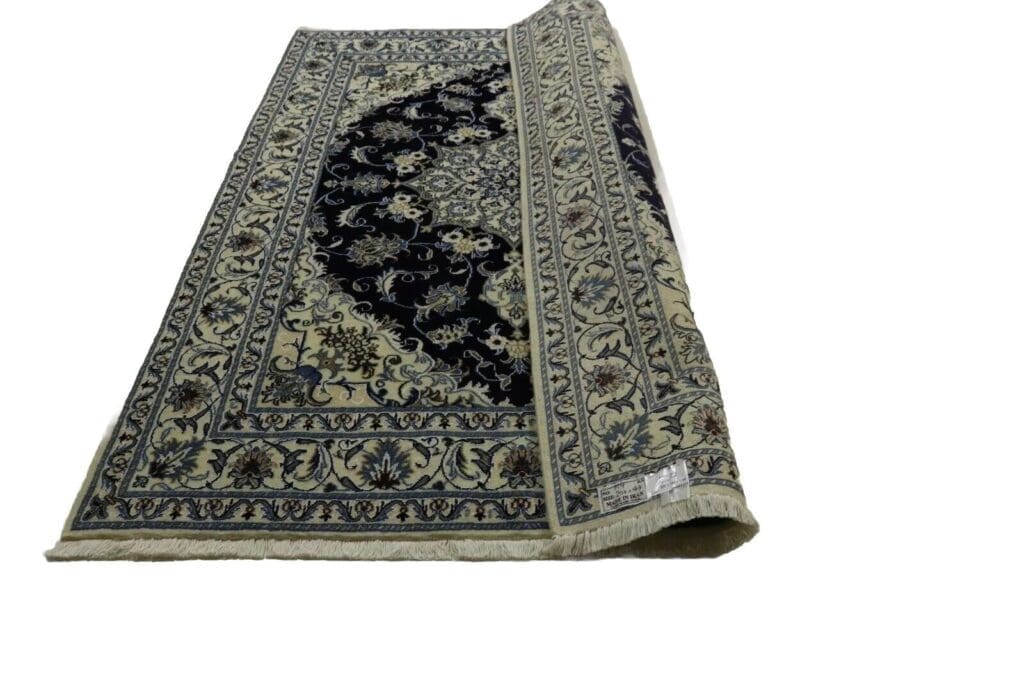
The design of this Nain rug includes floral and geometric motifs. Floral forms introduce organic movement through leaves, blossoms and scrolling lines. These elements can guide the eye across the field and connect separate ornamental groups. Geometric forms add structure through repeated contours, ordered spacing and measured relationships. Persian carpet design often brings both approaches together, allowing a composed surface to remain detailed without becoming visually disjointed.
Nain compositions are frequently organised around harmony and proportion. A central motif may be surrounded by smaller ornaments, while borders frame the outer edge and establish a transition between the field and the surrounding space. Even when the colour contrasts are restrained, the drawing can remain distinct because of its line work and carefully placed details. The dense hand-knotted execution supports the clarity of these elements.
Soft, balanced colour families are often associated with Nain rugs. Such tones allow floral drawing to remain legible and give the overall composition a calm character. Silk may catch the light in particular passages, whereas wool contributes a gentler and more muted ground effect. The way the colours are perceived changes with illumination, direction of the pile and viewing distance. These changes are part of the interaction between material and pattern.
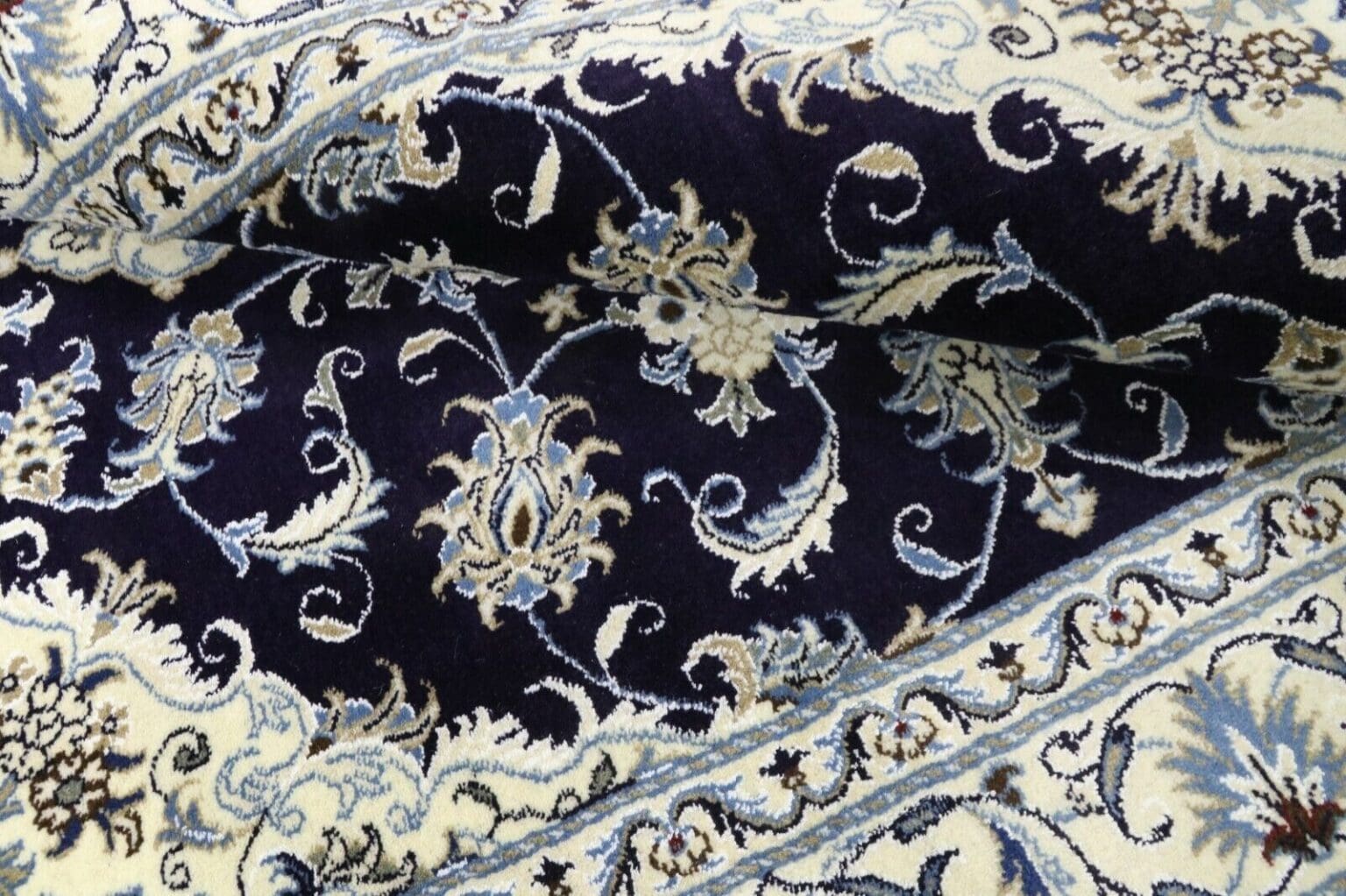
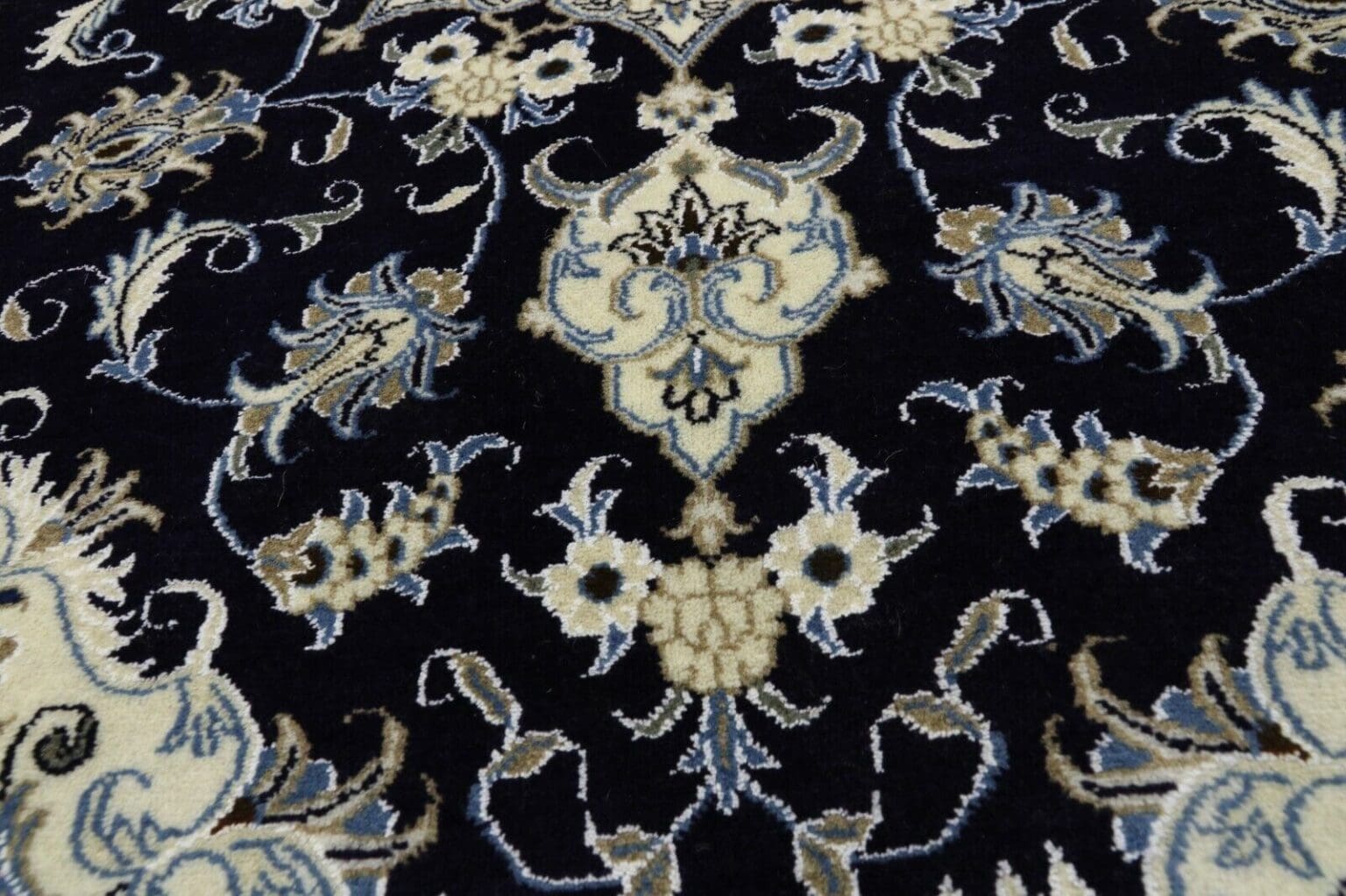
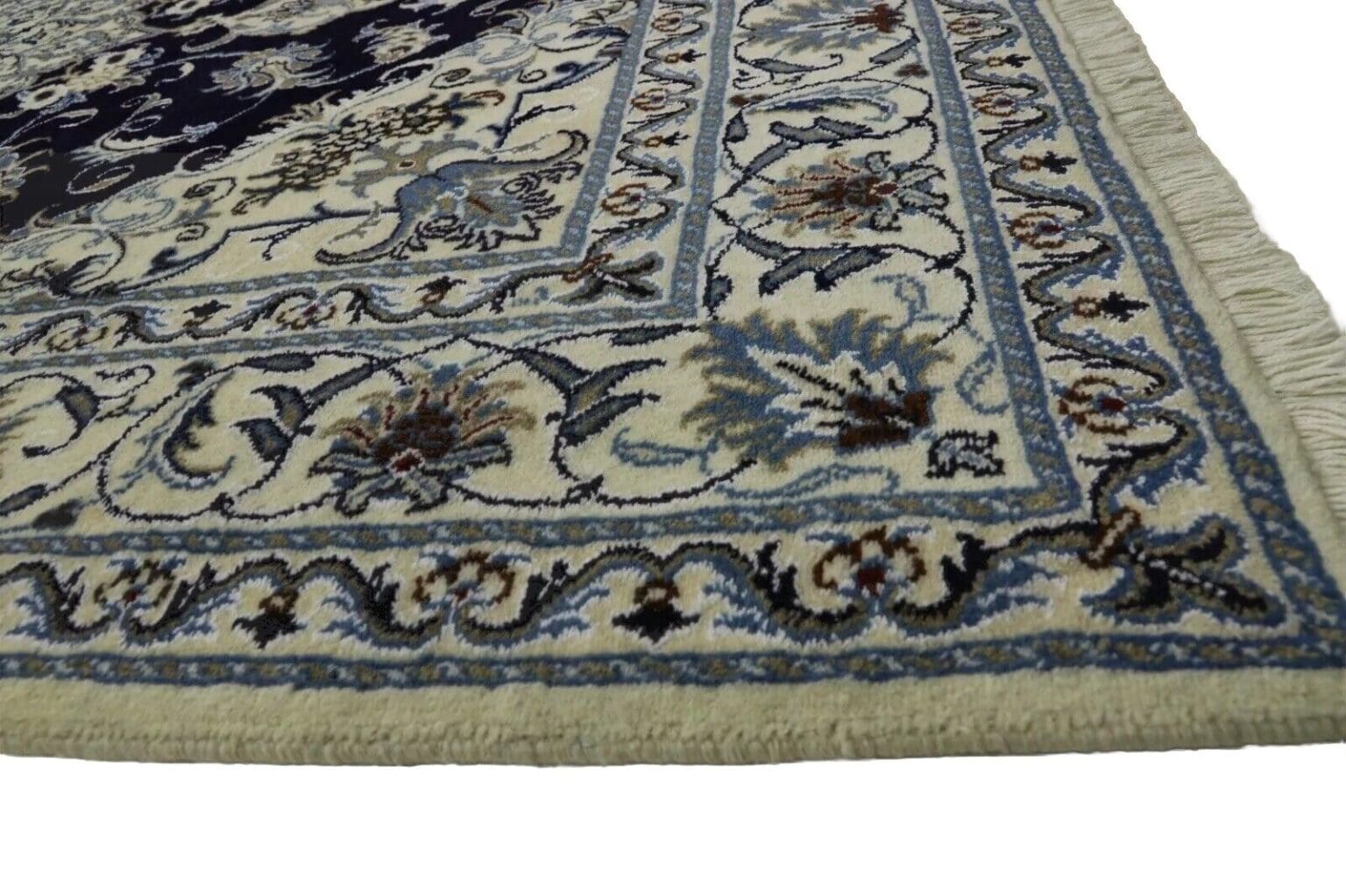
Detailed ornament depends on small transitions. A flower may be defined by several lines, a vine may branch into leaves, and geometric outlines may create rhythm through repetition. In a hand-knotted rug, these features belong to the structure of the pile rather than sitting on top as a printed image. The pattern is therefore inseparable from the construction. Its visual effect comes from the relationship between knots, fibres, colour and the underlying drawing.
The floral and geometric vocabulary makes the Nain style adaptable to different interiors. In a classical room, the ornament can relate to other traditional furnishings. In a modern setting, the same ordered pattern can provide a textile focal point without relying on excessive decoration. This versatility comes from the clarity of the composition. The design carries a historical reference while retaining a disciplined visual language.
Viewing distance also changes the reading of the rug. Close inspection reveals individual knots, fine lines and differences between wool and silk. From farther away, the many details merge into a coherent field. The silk contributes selected reflections, while the wool establishes a softer overall surface. The resulting depth is created by the material, technique and ornament together rather than by a superficial printed effect.
Special Features
This rug is new and in very good condition. It is described as a unique one-off piece and comes with a certificate of authenticity. These characteristics accompany its classification as a Nain Persian rug. The hand-knotted construction, the high knot density and the combination of virgin wool with silk are further stated features of this particular piece.
The material blend places the resilience of wool alongside the finer handle and sheen of silk. This gives the surface distinct textile responses that may be noticed as the light or viewing angle changes. The description identifies the rug as suitable for private living areas and also for public spaces where style and quality are required. Its use should nevertheless be matched with appropriate care for the fibres and the handmade structure.
Routine vacuuming is recommended for everyday maintenance. Direct sunlight should be limited to help preserve the freshness of the colours. For stains or more substantial soiling, a professional cleaner should be used so that the wool, silk and knotted foundation are treated correctly. Careful maintenance supports the long-term use of the rug without changing the qualities that come from its materials and craftsmanship.
FAQ
What is the best way to clean this Nain Persian rug?
Vacuum the rug regularly to remove loose dust and dirt from the pile. If a stain occurs, avoid testing unsuitable household products, since virgin wool and silk can respond differently to moisture and cleaning agents. Use a cleaner intended for suitable carpet fibres or consult a professional service. Professional treatment is especially appropriate when the stain is persistent or extensive because it protects both the high-quality materials and the hand-knotted structure. Limiting direct sunlight also helps the colours remain fresh.
Is the rug suitable for underfloor heating?
Yes. The description states that the rug made from virgin wool and silk is suitable for rooms with underfloor heating. Wool has natural temperature-regulating properties and can contribute to a comfortably warm feel underfoot. The instructions provided by the heating and rug manufacturers should also be followed for the specific installation. The rug should lie flat, and any underlay should be chosen so that it does not unnecessarily restrict the heat output of the floor system.
How can I recognise an authentic Nain rug?
Several characteristics should be considered together: origin from Nain in Persia or Iran, fine pattern drawing, the quality of the fibres and genuine hand-knotting. The description identifies high knot density as a characteristic associated with authentic Nain rugs. This particular piece is additionally supplied with a certificate of authenticity. A reliable assessment should still consider the complete construction, including the back, pattern, knot work and material handling, rather than relying on one feature in isolation. The place name alone is not a substitute for examining the rug as a whole.
To provide the best experiences, we use technologies like cookies to store and/or access device information. Consenting to these technologies will allow us to process data such as browsing behavior or unique IDs on this site. Not consenting or withdrawing consent, may adversely affect certain features and functions.
Functional Always active
The technical storage or access is strictly necessary for the legitimate purpose of enabling the use of a specific service explicitly requested by the subscriber or user, or for the sole purpose of carrying out the transmission of a communication over an electronic communications network.
Preferences
The technical storage or access is necessary for the legitimate purpose of storing preferences that are not requested by the subscriber or user.
Statistics
The technical storage or access that is used exclusively for statistical purposes.The technical storage or access that is used exclusively for anonymous statistical purposes. Without a subpoena, voluntary compliance on the part of your Internet Service Provider, or additional records from a third party, information stored or retrieved for this purpose alone cannot usually be used to identify you.
Marketing
The technical storage or access is required to create user profiles to send advertising, or to track the user on a website or across several websites for similar marketing purposes.

 SECURE PAYMENT
 SHIPPING PARTNERS