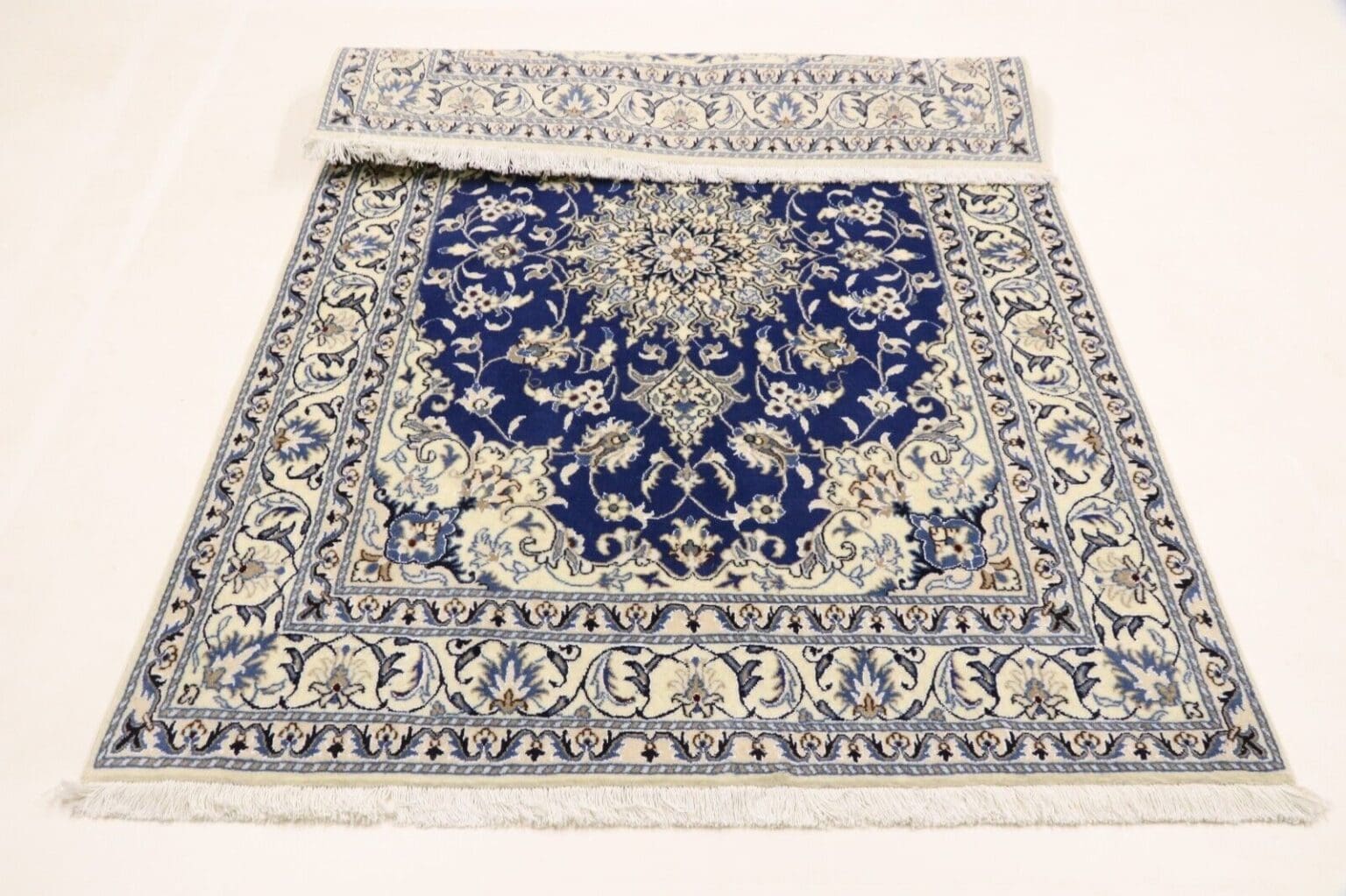
This Nain Persian rug is made from 90% virgin wool and 10% silk. The two fibres bring different qualities to the textile. Virgin wool forms the principal part of the pile and is valued for its resilience, warmth and practical ease of care. Wool also has a naturally hard-wearing character and can contribute to a comfortable indoor atmosphere.
Silk adds a smooth surface and a subtle sheen to the wool pile. In a rug, it may be used to give selected areas of the design a finer definition and a more polished appearance. The combination is traditional in Nain weaving, where the dependable body of wool is brought together with the delicate visual effect associated with silk.
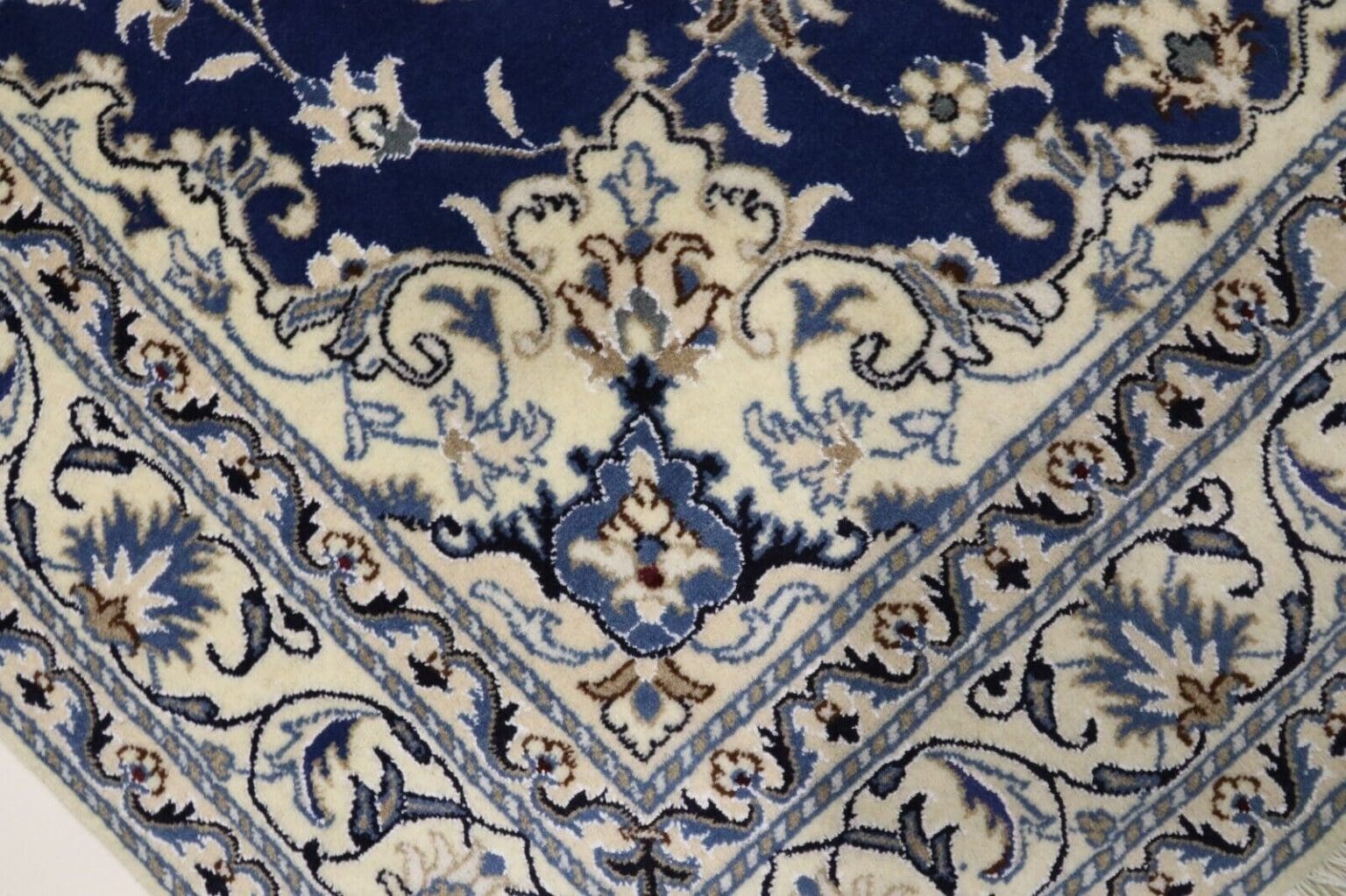
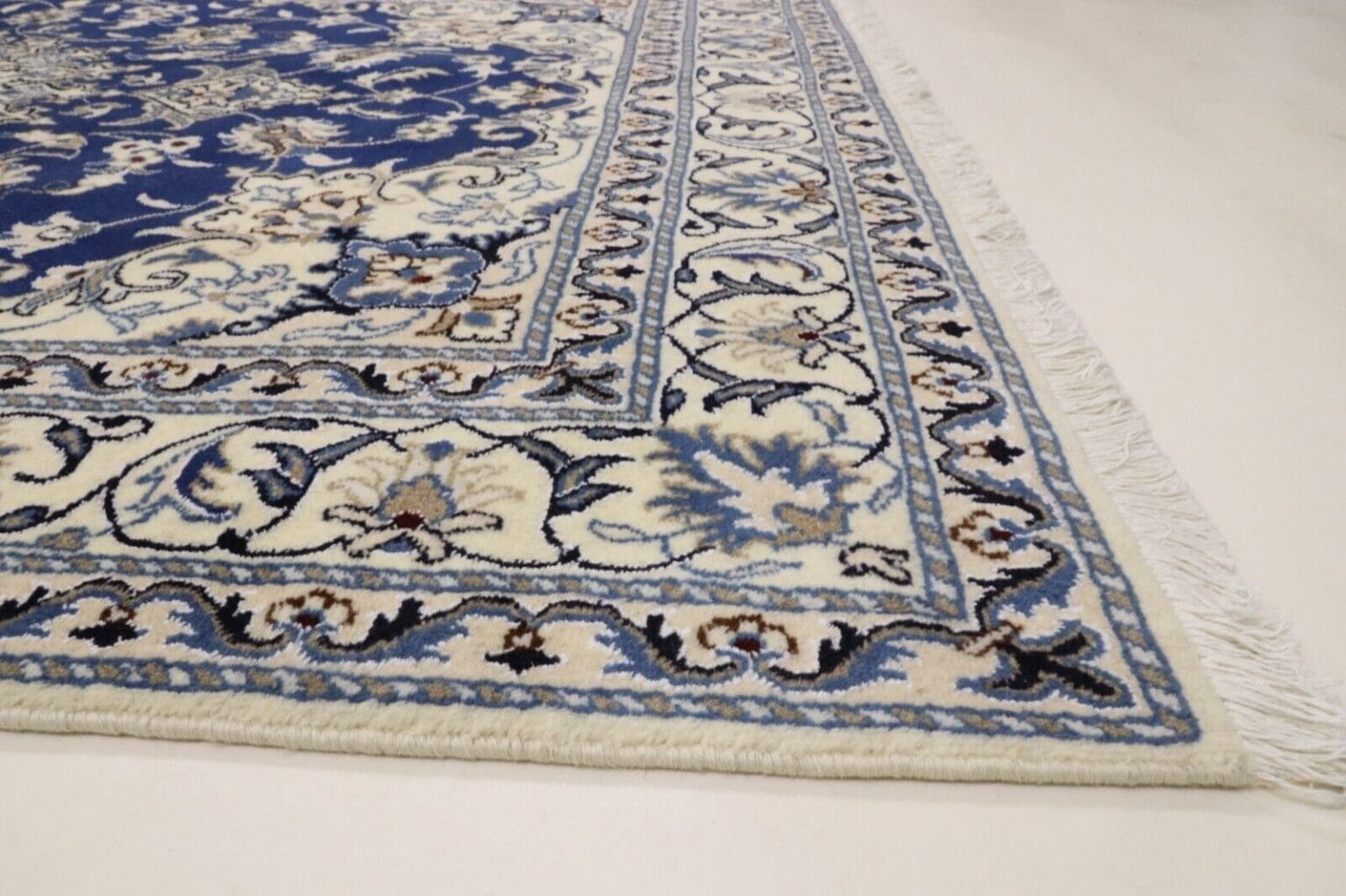
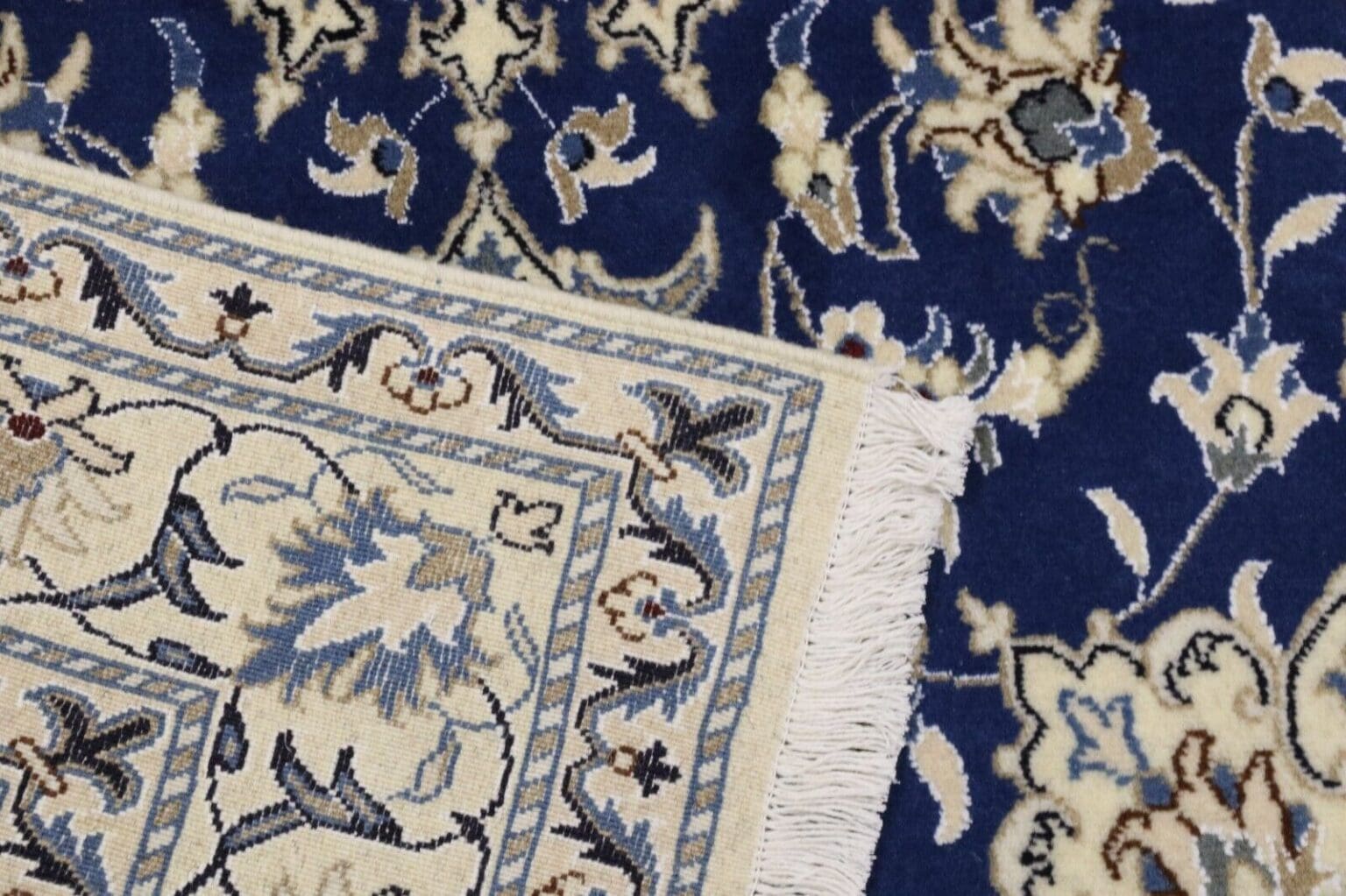
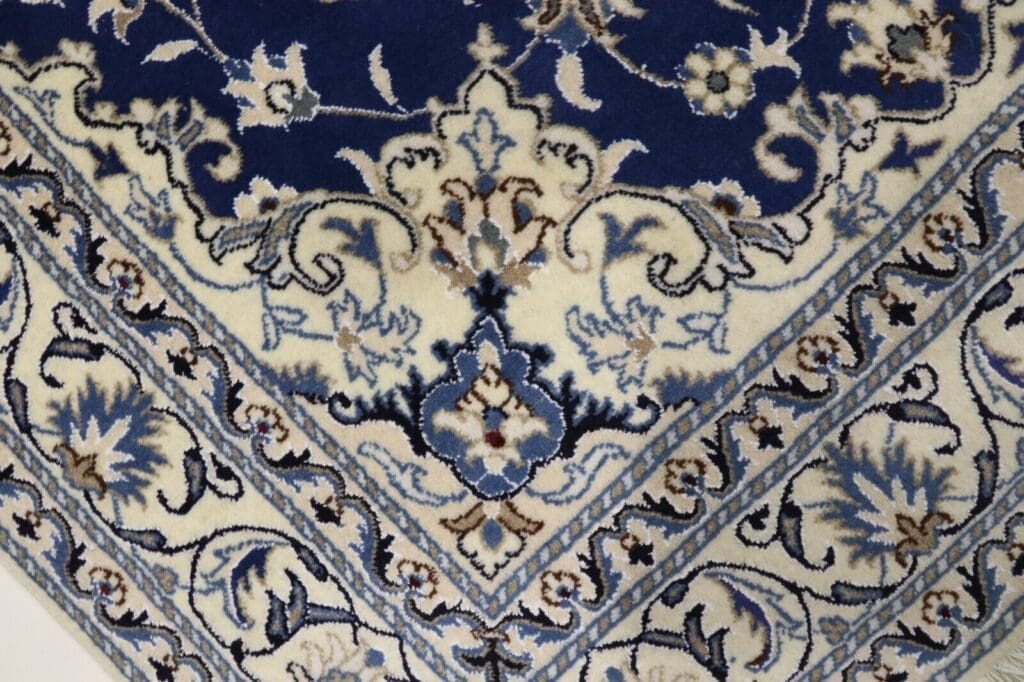
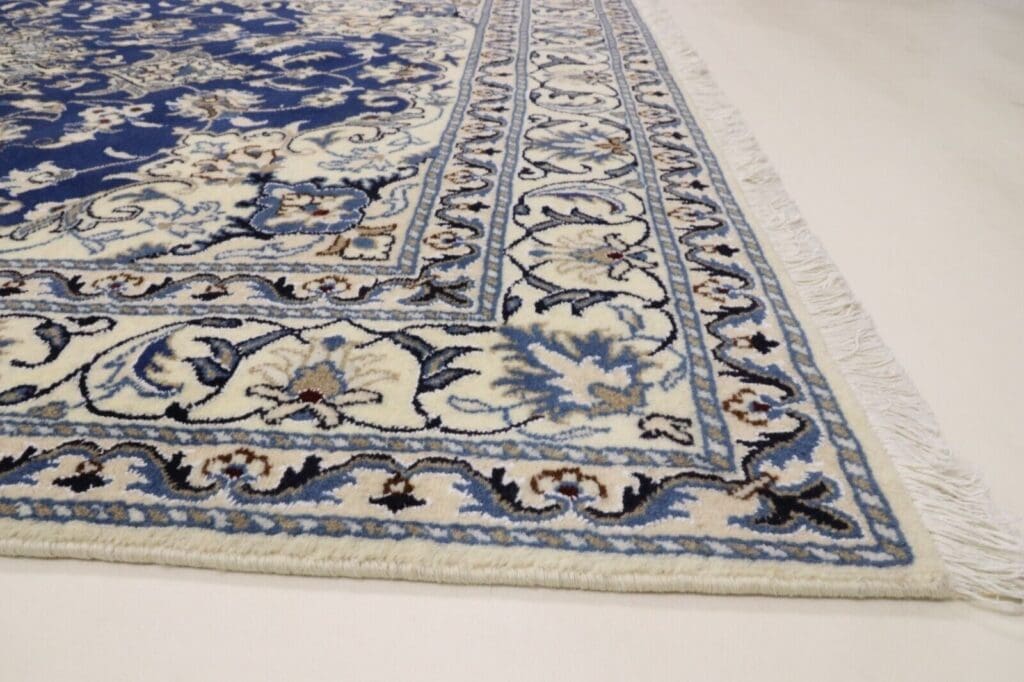
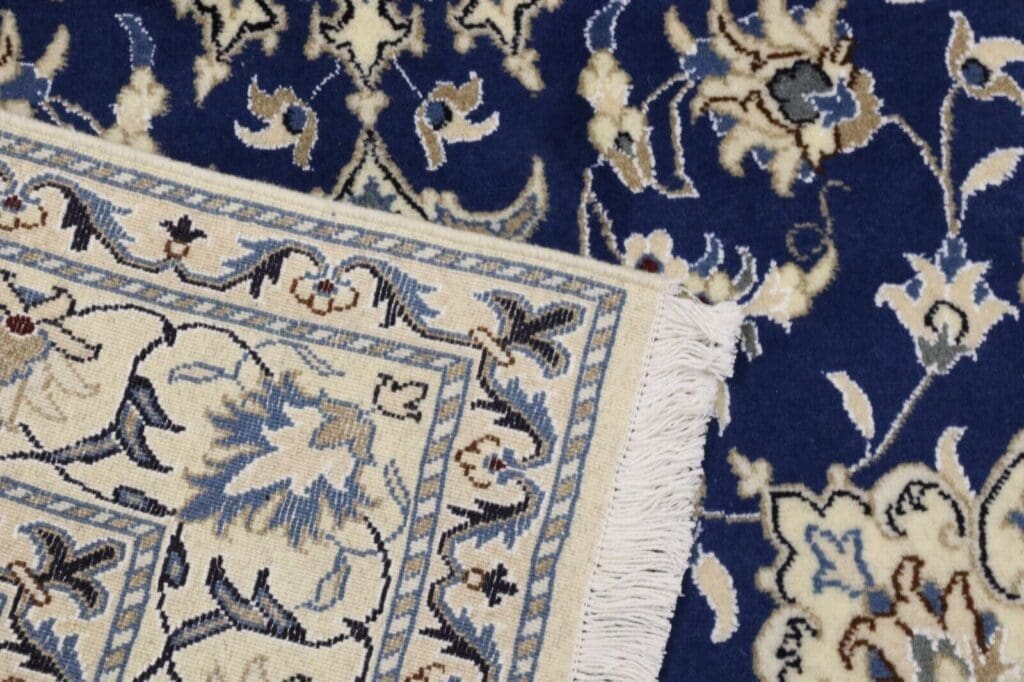
The rug is hand-knotted. In this process, individual knots are tied into the foundation and compacted through successive stages of weaving and finishing. Every part of the surface is therefore built up by hand rather than printed onto a finished textile. The high knot density of this piece allows narrow outlines, small ornamental details and carefully differentiated areas to be rendered in the pile.
Hand-knotting requires time, concentration and practical knowledge of yarn, tension and pattern structure. As a result, a hand-knotted rug differs from a machine-made floor covering in the way its surface is formed. The condition of this rug is described as new and very good. It is also suitable for use in rooms with underfloor heating and is listed as pet-friendly.
Origin and Tradition
Nain is a city in Iran and the name of an established Persian weaving tradition. Located in central Iran, Nain developed a distinctive approach to rug making that is associated with precise drawing and carefully organized compositions. Nain rugs are part of the broader Persian textile heritage, in which weaving knowledge has been preserved and transmitted through workshops and generations of makers.
The Nain tradition is particularly associated with rugs using fine wool and silk. Fibre selection, yarn preparation and the relationship between foundation and pile all influence the finished textile. Wool supplies a durable base for everyday use, while silk can be introduced where a finer line or a more reflective surface is required. These material choices are connected with the visual language of the region as well as with the technical demands of detailed hand-knotting.
Persian rugs are identified through a combination of place, construction and design. Nain is the place-based designation and Persian tradition represented by this rug. The fact that its pattern is described as Oriental concerns the decorative language, not a different place of manufacture. Motifs such as flowers, scrolling foliage and geometric forms can appear in several weaving areas; their presence alone does not change the rug’s Nain origin.
The history of Persian rug making encompasses household textiles, furnishings for formal interiors and works valued for their drawn ornament. A rug can serve a practical purpose on the floor while also carrying regional knowledge through its design. In Nain, the careful planning of the composition and the controlled execution of small details are central to the character associated with the tradition.
Traditional weaving does not mean that every Nain rug is identical. The underlying principles may be shared, but the precise arrangement of motifs, the handling of colour and the execution of the knots belong to the individual piece. The weaver translates a design into rows of knots, maintaining the relationship between the central field, surrounding ornament and borders as the work progresses.
Nain rugs are commonly discussed in connection with refined floral drawing and an orderly visual structure. Their designs may combine natural forms with geometric organization, creating a surface that is decorative without losing clarity. The use of wool and silk supports this approach: wool gives the pile substance, while silk can help fine passages of the drawing stand out. This rug belongs to that Persian Nain context and is identified as originating from Persia.
The cultural importance of Persian carpets lies partly in this continuity between practical craft and visual tradition. Techniques are learned through observation and repeated work, while patterns are adapted within established regional conventions. The result is a textile object whose origin is expressed through both its designation and its method of production. Here, the Nain name, Persian origin and hand-knotted construction describe the same regional framework.
Design and Pattern
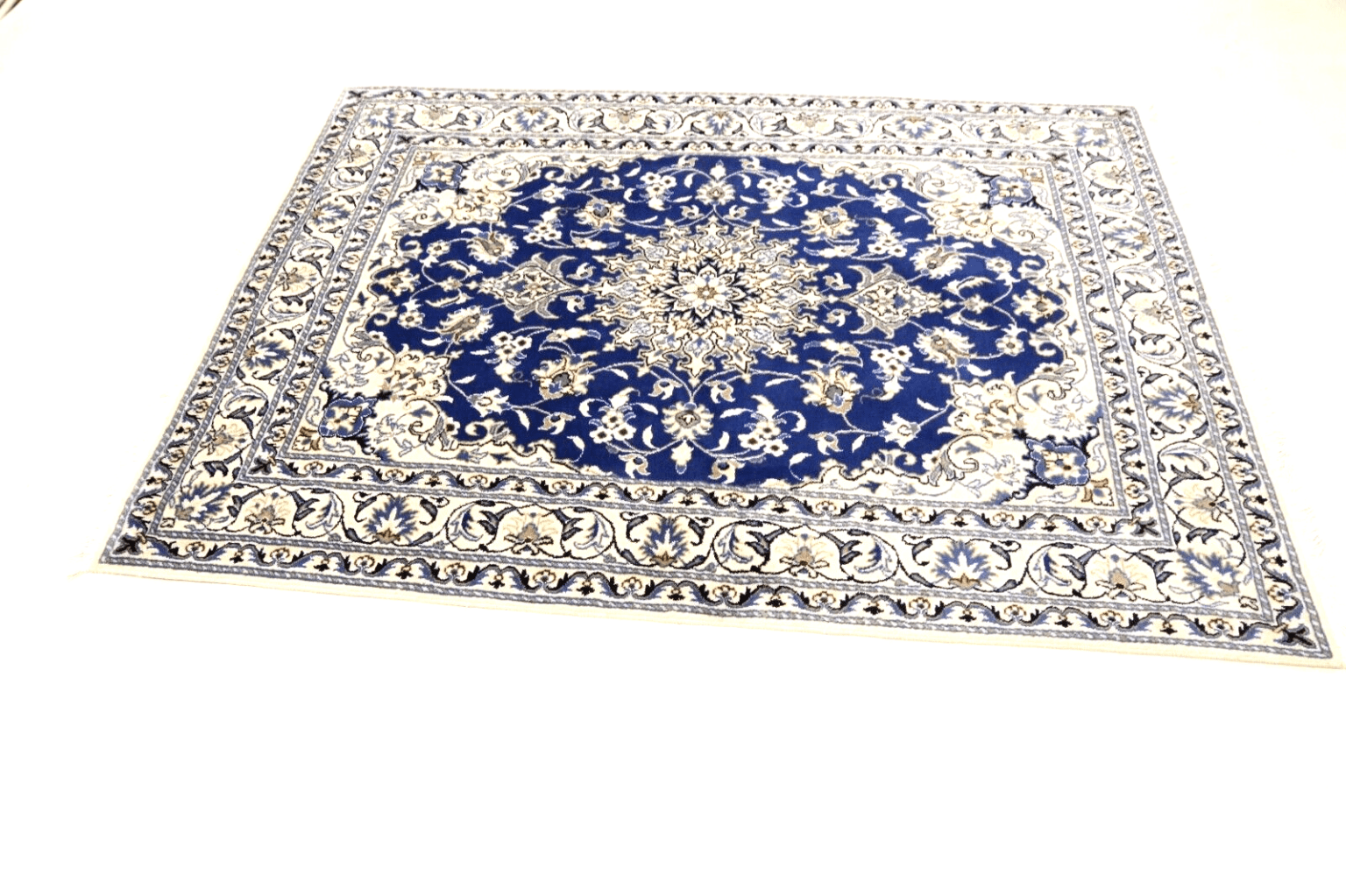
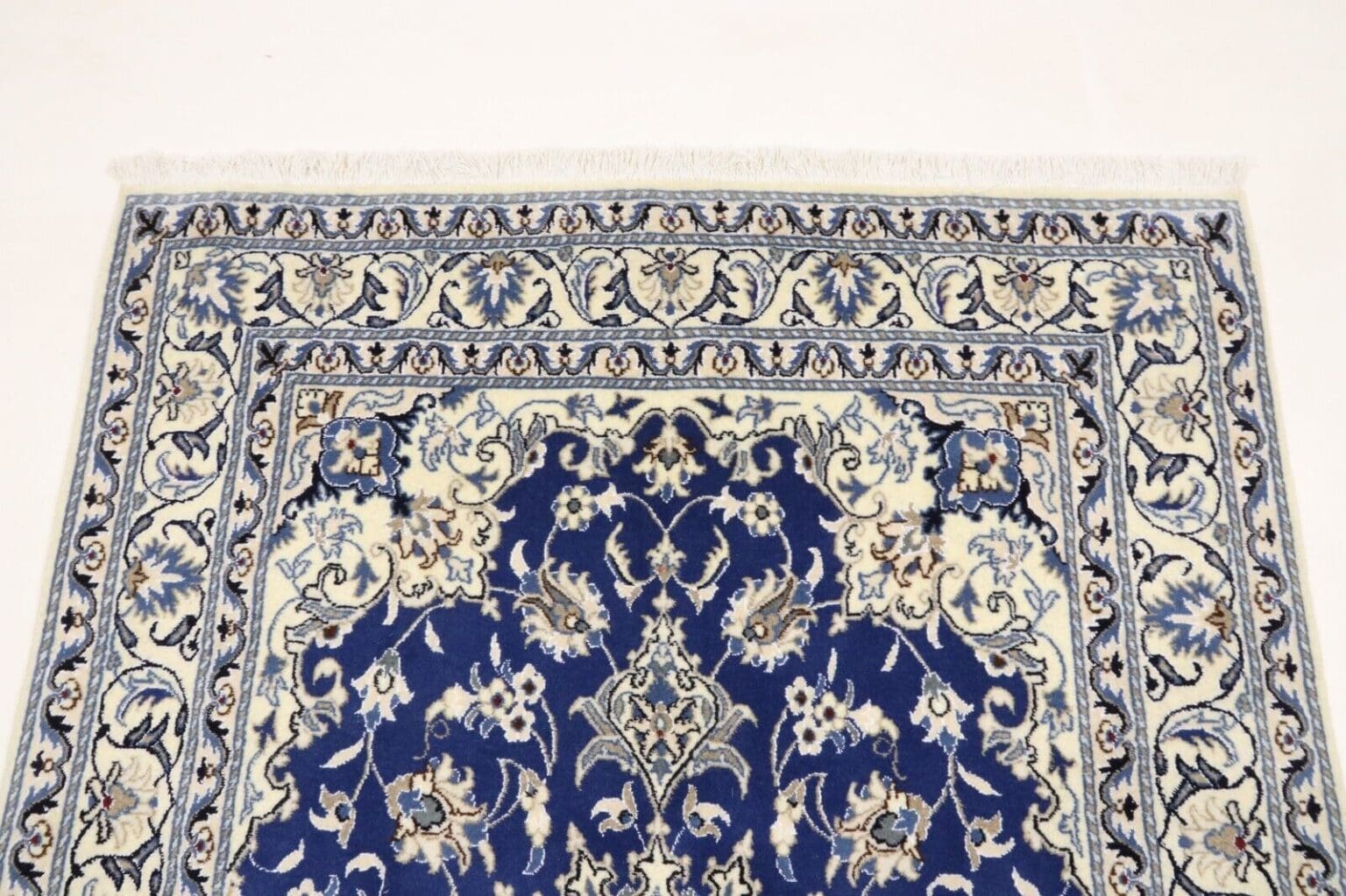
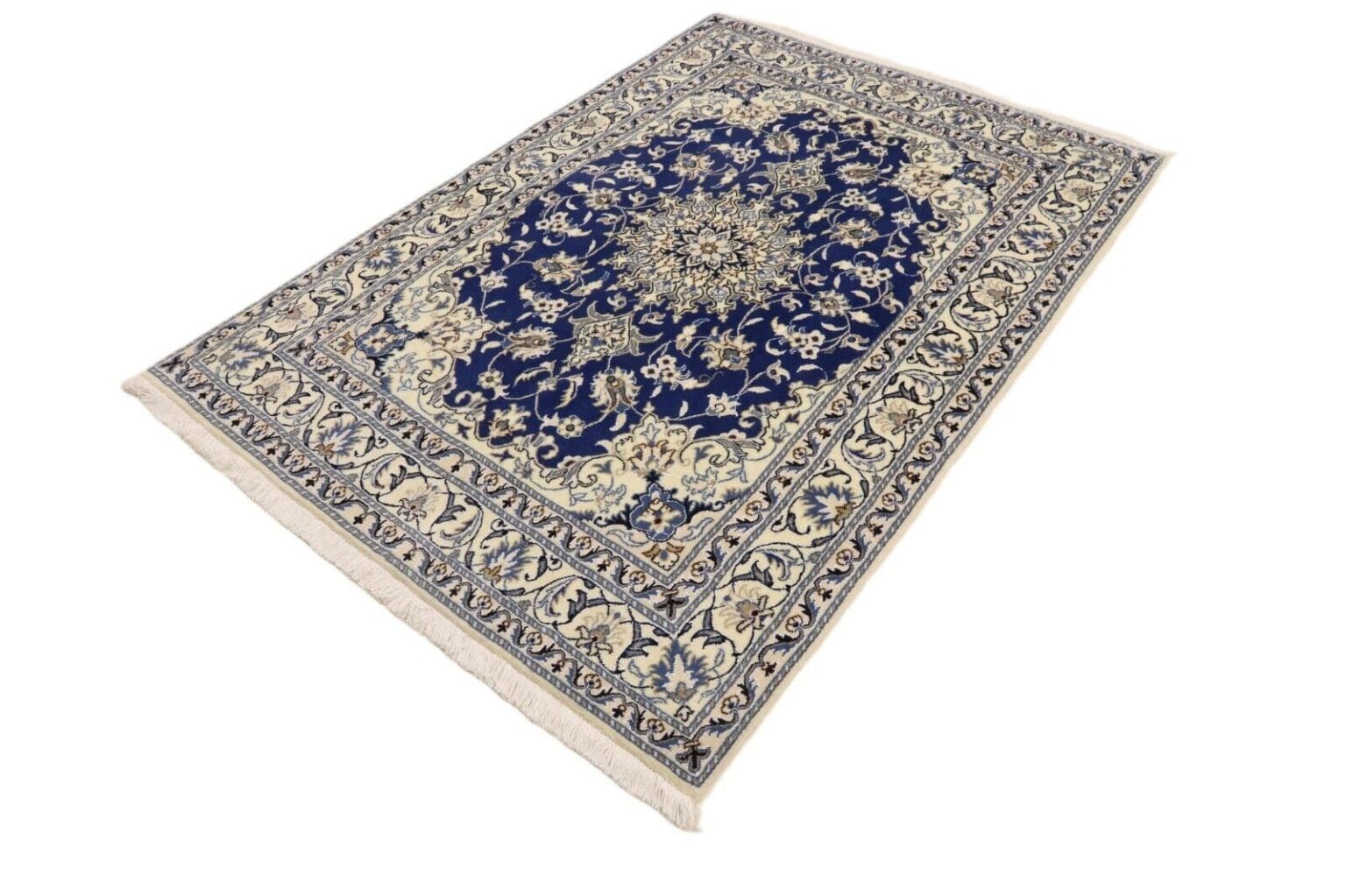
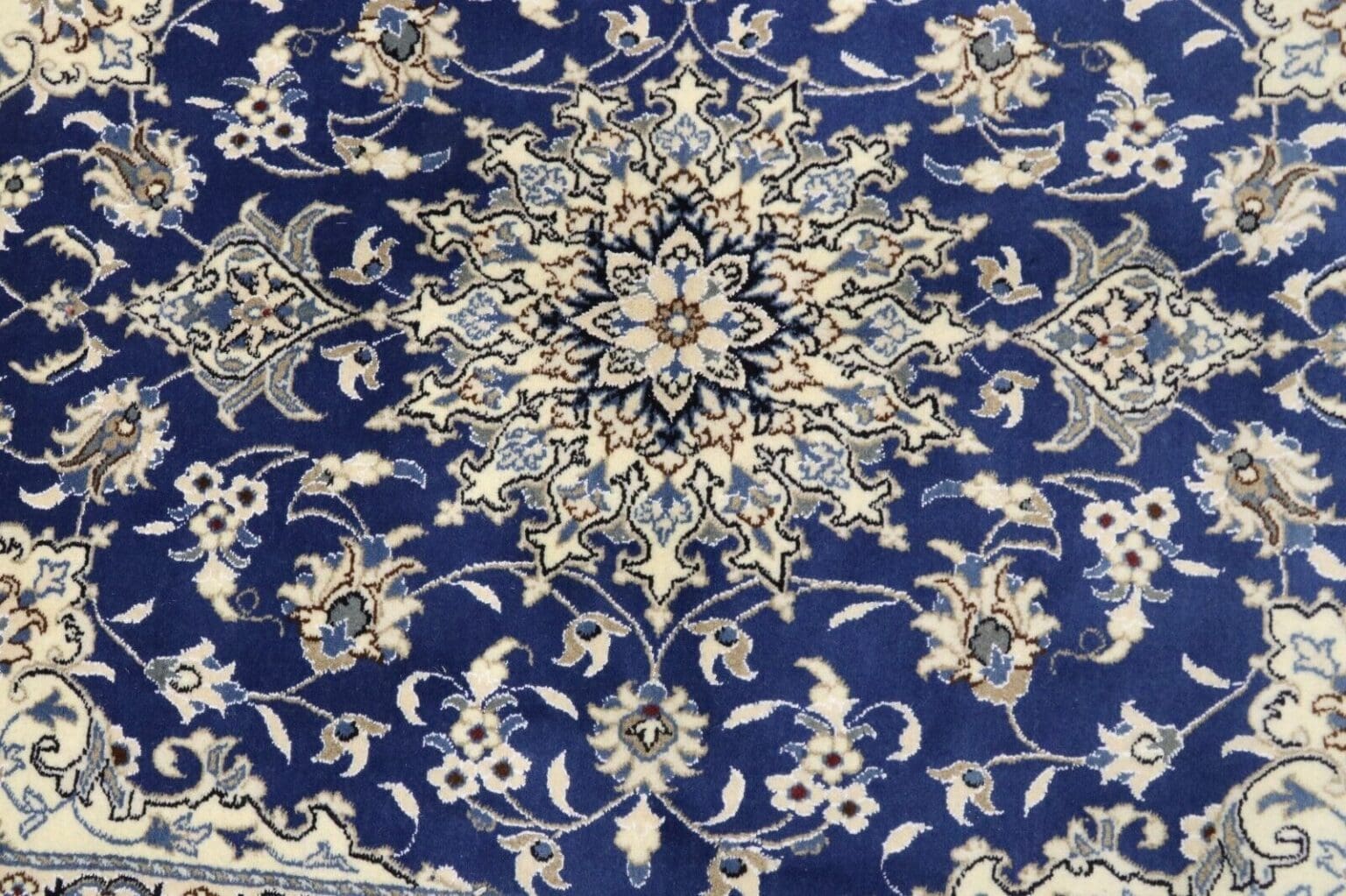
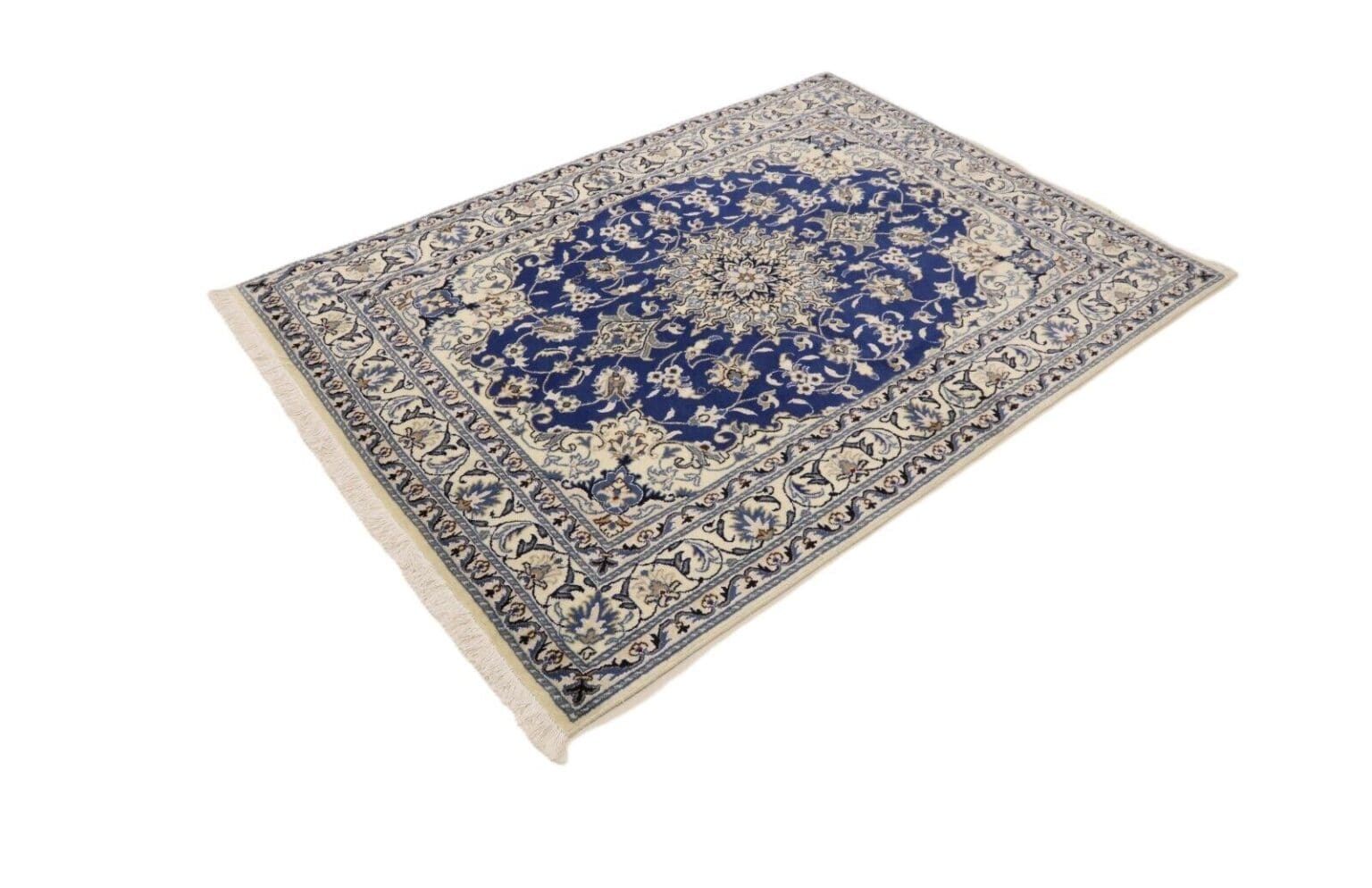
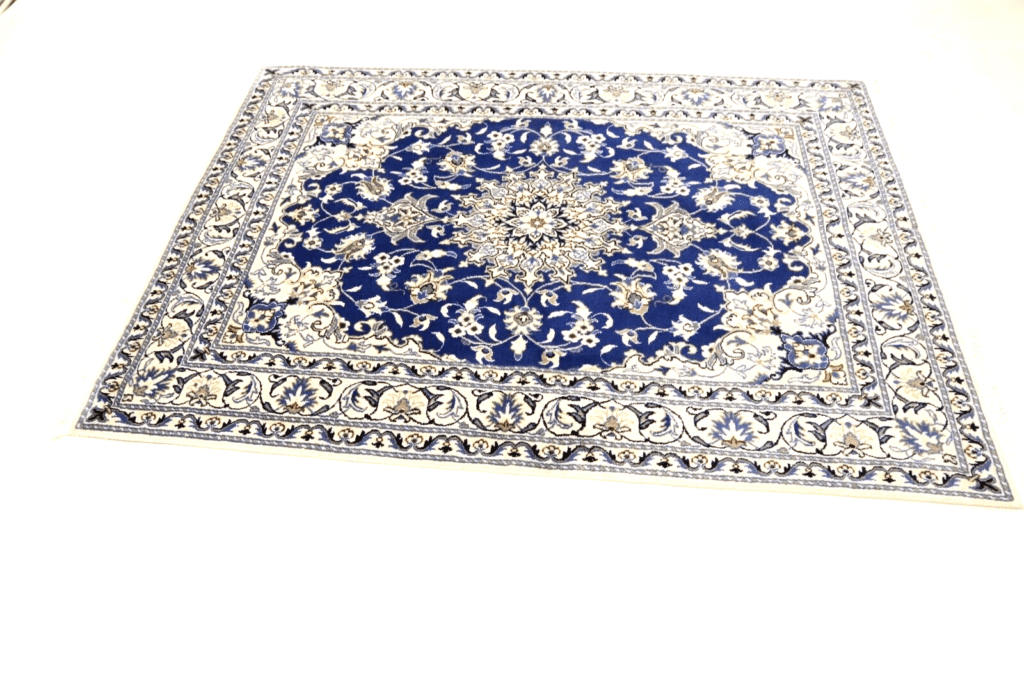
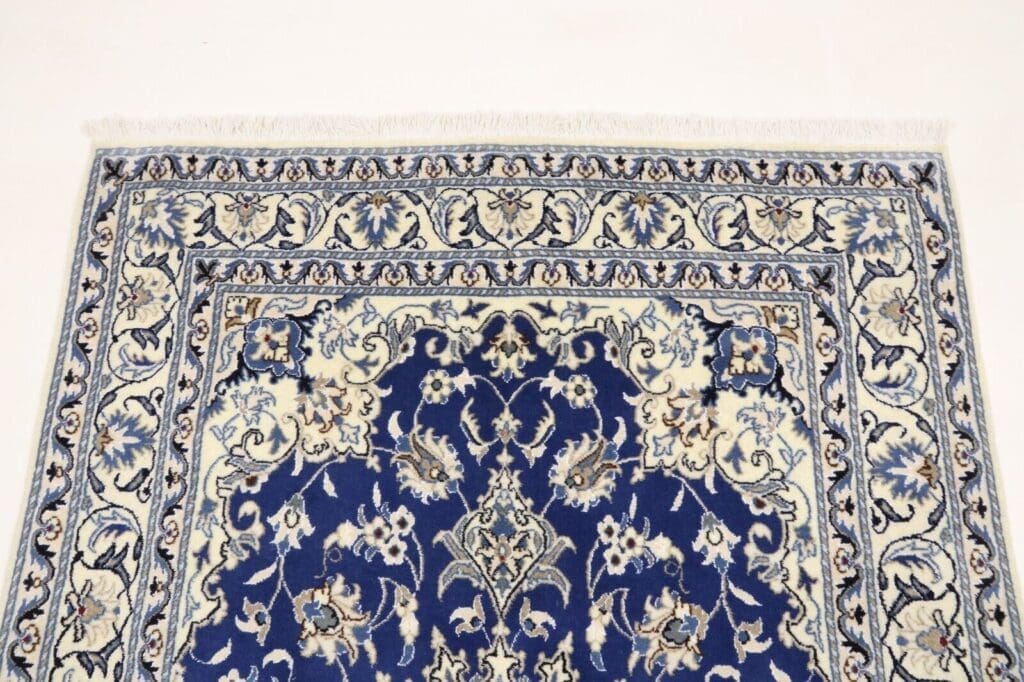
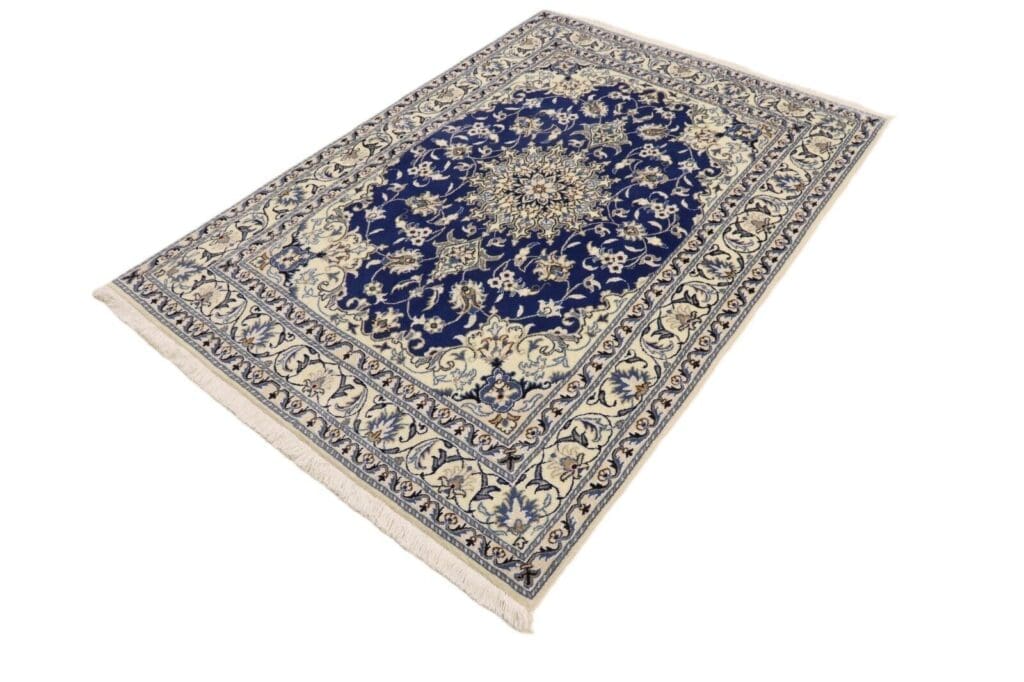
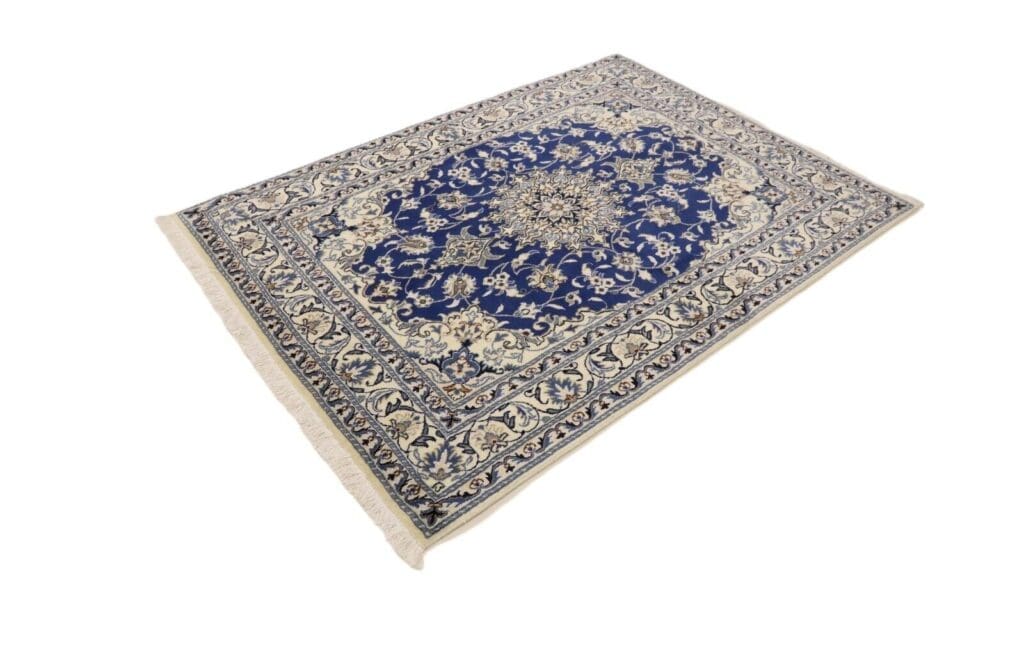
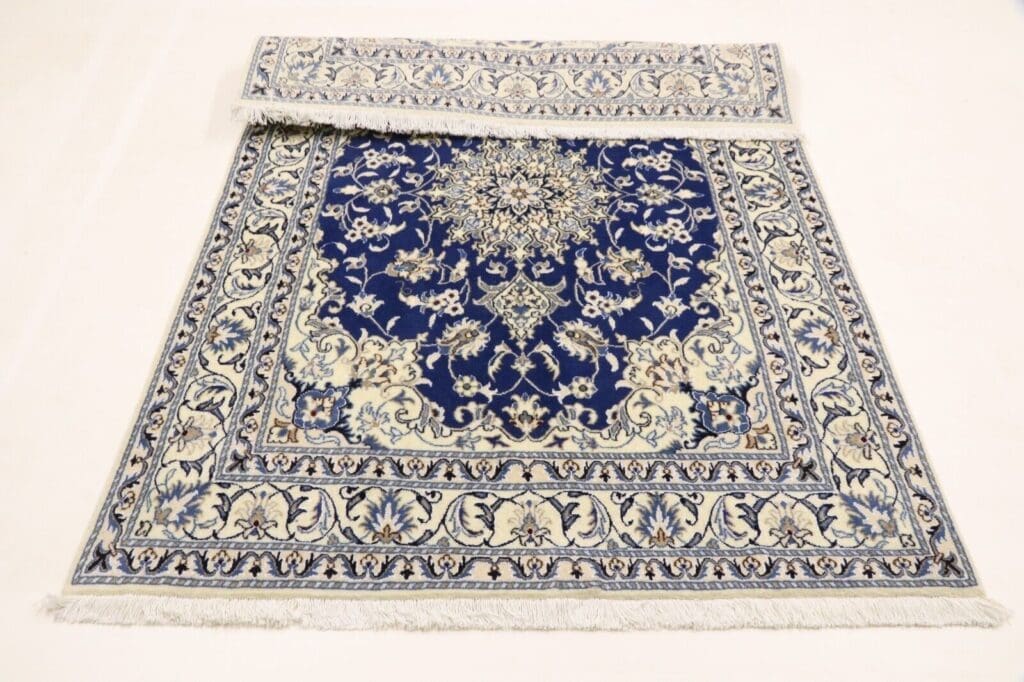
The pattern of this rug is described as Oriental. It belongs to a decorative vocabulary in which the field is organized through floral motifs, geometric symbols and repeated ornamental relationships. Nain designs are known for finely drawn flowers, leaves and scrolling branches, often arranged with a clear sense of balance. The individual composition remains specific to the rug, while the general language connects it with Nain and Persian pattern traditions.
Floral elements introduce flowing lines and organic movement. Branches can guide the eye across the field, with leaves and blossoms providing changes in scale and direction. Geometric symbols add structure, rhythm and visual definition. When these two kinds of form are used together, the design can appear both naturalistic and carefully ordered. The resulting ornament reflects the way Persian rug design often combines botanical imagery with symmetry and measured repetition.
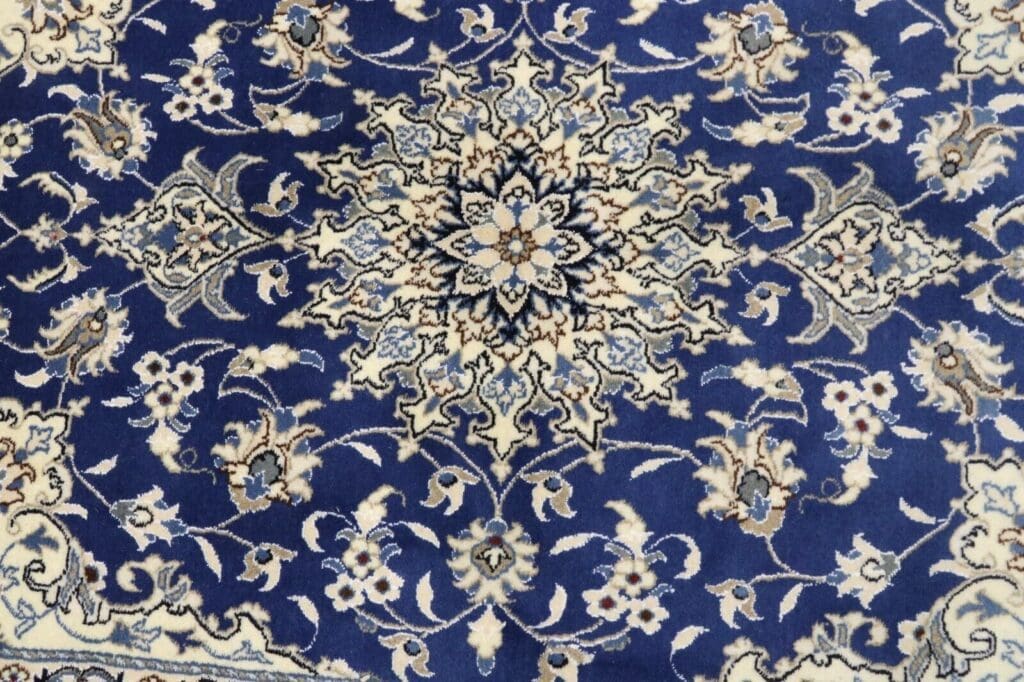
The clarity of a Nain pattern depends on the relationship between drawing and knotting. Fine outlines must be translated into individual knots, and small areas have to remain distinct as the surface grows. A high knot density supports this kind of detailed rendering. It is therefore relevant not only as a technical description but also as part of the way the floral and geometric pattern can be read on the finished rug.
The described design has a harmonious colour effect and a detailed execution. A rug’s colour impression is created by the interaction of its ground, outlines and ornaments rather than by isolated shades alone. Repetition helps connect separate motifs, while symmetry or near-symmetry can give the composition a stable visual centre. These principles allow an Oriental pattern to work with both traditional and contemporary interiors.
The presence of silk can contribute to the visibility of selected details through its smooth texture and gentle reflection. Wool, by contrast, gives the pile a softer, more substantial ground. Together, the fibres can create differences between highlighted motifs and quieter surrounding areas. This does not replace the drawing; it reinforces the distinction between pattern sections already established by the knot arrangement.
A Nain rug can be used in living rooms, bedrooms and other interiors where a patterned textile helps organize the space. The floral and geometric vocabulary provides a connection to Persian tradition, while the clear arrangement makes the rug adaptable to different furnishing styles. Its decorative identity remains Oriental and Persian rather than purely neutral, so it functions as both a floor covering and a visible textile pattern.
Hand-knotting also gives the design a physical dimension. Each knot contributes to colour placement, contour and texture. The finished surface records the work of building the pattern row by row, making the construction inseparable from the appearance. In this Nain rug, the Oriental pattern, the wool-and-silk pile and the dense knotting are the main elements that define the design.
Special Features
This rug has a knot density of approximately 300,000 knots per square metre. Such a dense construction supports a detailed pattern and represents a considerable amount of individual handwork. Unlike a printed design, the ornament is created through the placement of coloured knots within the pile, so the visual result is directly connected with the weaving process.
The 90% virgin wool and 10% silk composition is another defining feature. Wool supplies a practical and resilient pile, while silk contributes a finer surface character and sheen. The rug is new and in very good condition. It is suitable for rooms with underfloor heating and is described as pet-friendly.
As a hand-knotted Nain rug from Persia, this piece brings together a regional tradition, a wool-and-silk material combination and an Oriental floral and geometric design language. Its high knot density allows the pattern to be executed with considerable detail. The result is a single textile work rather than a repeated industrial floor covering.
FAQ
How should I care for my Nain Persian rug?
Regular vacuuming without a brush attachment is recommended for routine care. This removes loose dust while avoiding unnecessary mechanical action on the pile. Direct sunlight should be avoided so that the colours remain as even as possible. If the rug becomes heavily soiled, a professional carpet cleaner should handle the treatment. The combination of virgin wool and silk, together with the hand-knotted construction, calls for cleaning methods suited to delicate Oriental rugs. Unchecked home remedies or unsuitable detergents may affect fibres, colours or the surface.
Can the rug be used over underfloor heating?
Yes. This Nain Persian rug is suitable for rooms with underfloor heating. Its wool-and-silk construction can be used over a heated floor, but the temperature should not be set excessively high. Avoiding excessive heat helps protect the fibres from unnecessary stress. The heating should operate evenly, and the rug should lie flat without unsuitable additional layers that prevent the heat from circulating properly. Following the heating system’s normal operating guidance provides a sensible basis for everyday use.
Where can I buy a Nain Persian rug?
Nain Persian rugs can be found in specialist carpet shops, through selected online retailers and at antique markets. Buyers should pay attention to the rug’s authenticity and look for clear information about origin and quality. A reputable dealer should be able to explain the Persian Nain classification, hand-knotted construction and stated materials. It is also useful to review the particular rug’s condition, knot density and suitability for underfloor heating rather than relying on the name alone. Since each hand-knotted rug is an individual piece, the actual construction and pattern should be checked as part of the purchase.
To provide the best experiences, we use technologies like cookies to store and/or access device information. Consenting to these technologies will allow us to process data such as browsing behavior or unique IDs on this site. Not consenting or withdrawing consent, may adversely affect certain features and functions.
Functional Always active
The technical storage or access is strictly necessary for the legitimate purpose of enabling the use of a specific service explicitly requested by the subscriber or user, or for the sole purpose of carrying out the transmission of a communication over an electronic communications network.
Preferences
The technical storage or access is necessary for the legitimate purpose of storing preferences that are not requested by the subscriber or user.
Statistics
The technical storage or access that is used exclusively for statistical purposes.The technical storage or access that is used exclusively for anonymous statistical purposes. Without a subpoena, voluntary compliance on the part of your Internet Service Provider, or additional records from a third party, information stored or retrieved for this purpose alone cannot usually be used to identify you.
Marketing
The technical storage or access is required to create user profiles to send advertising, or to track the user on a website or across several websites for similar marketing purposes.

 SECURE PAYMENT
 SHIPPING PARTNERS


