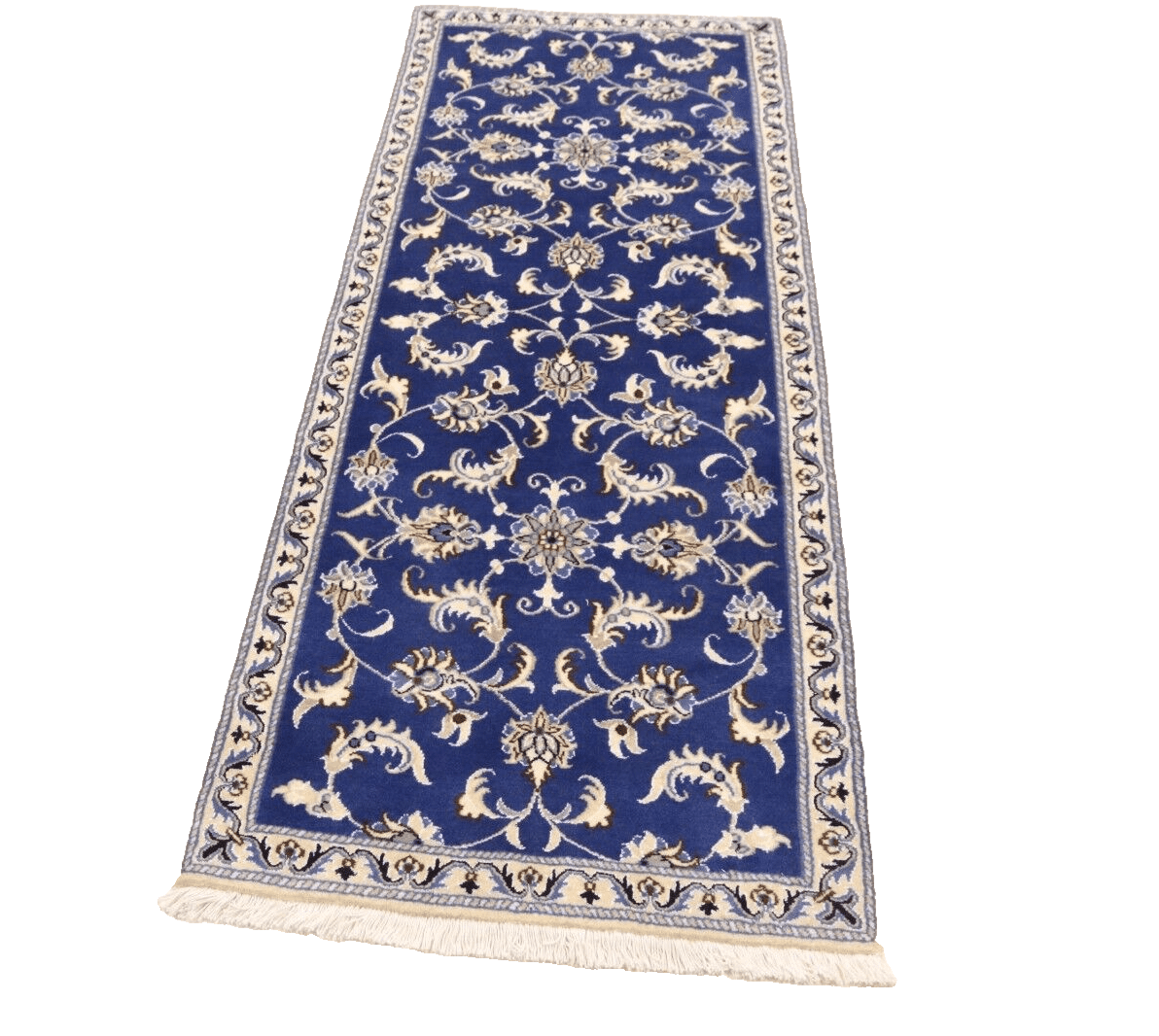
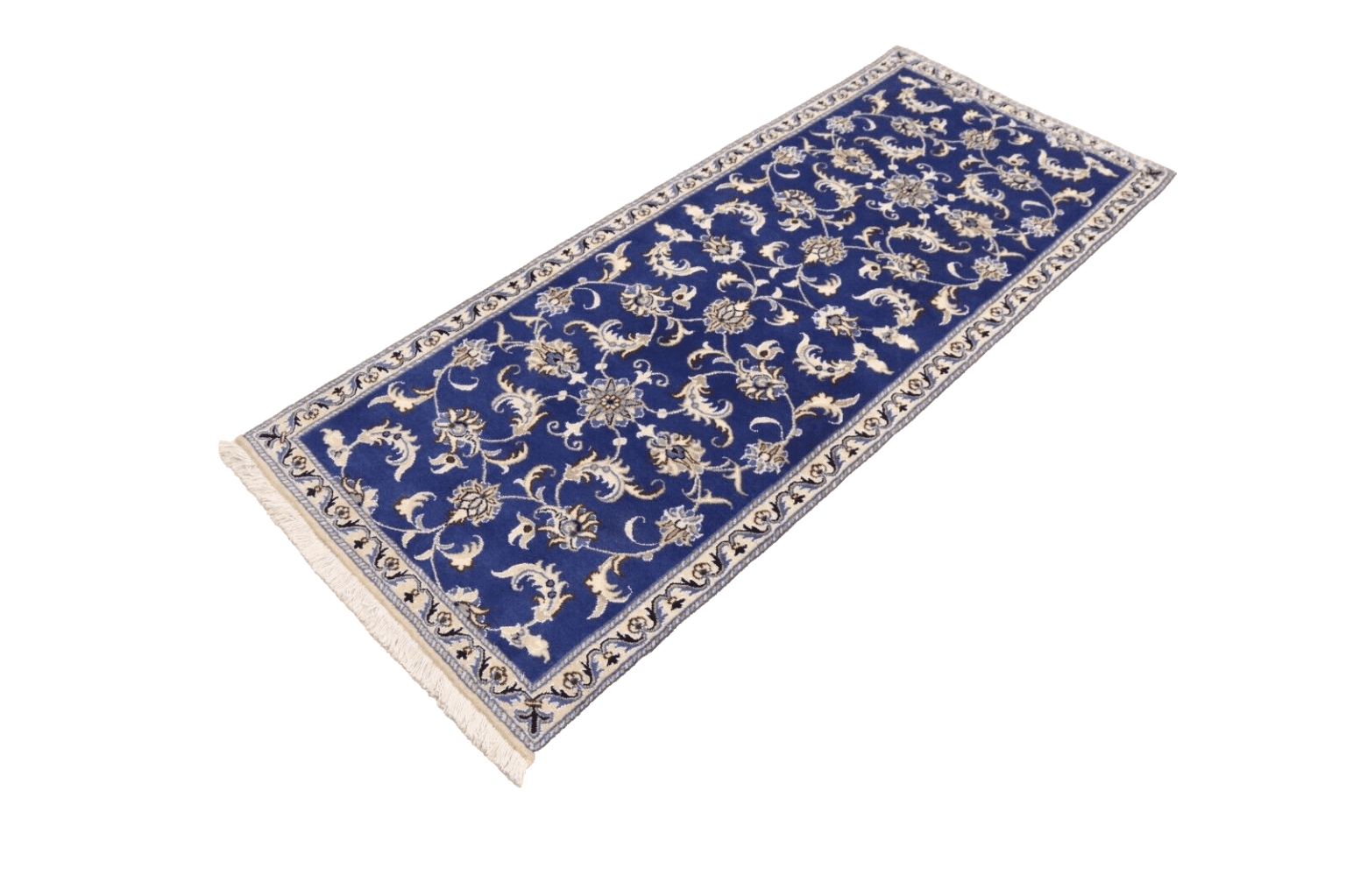
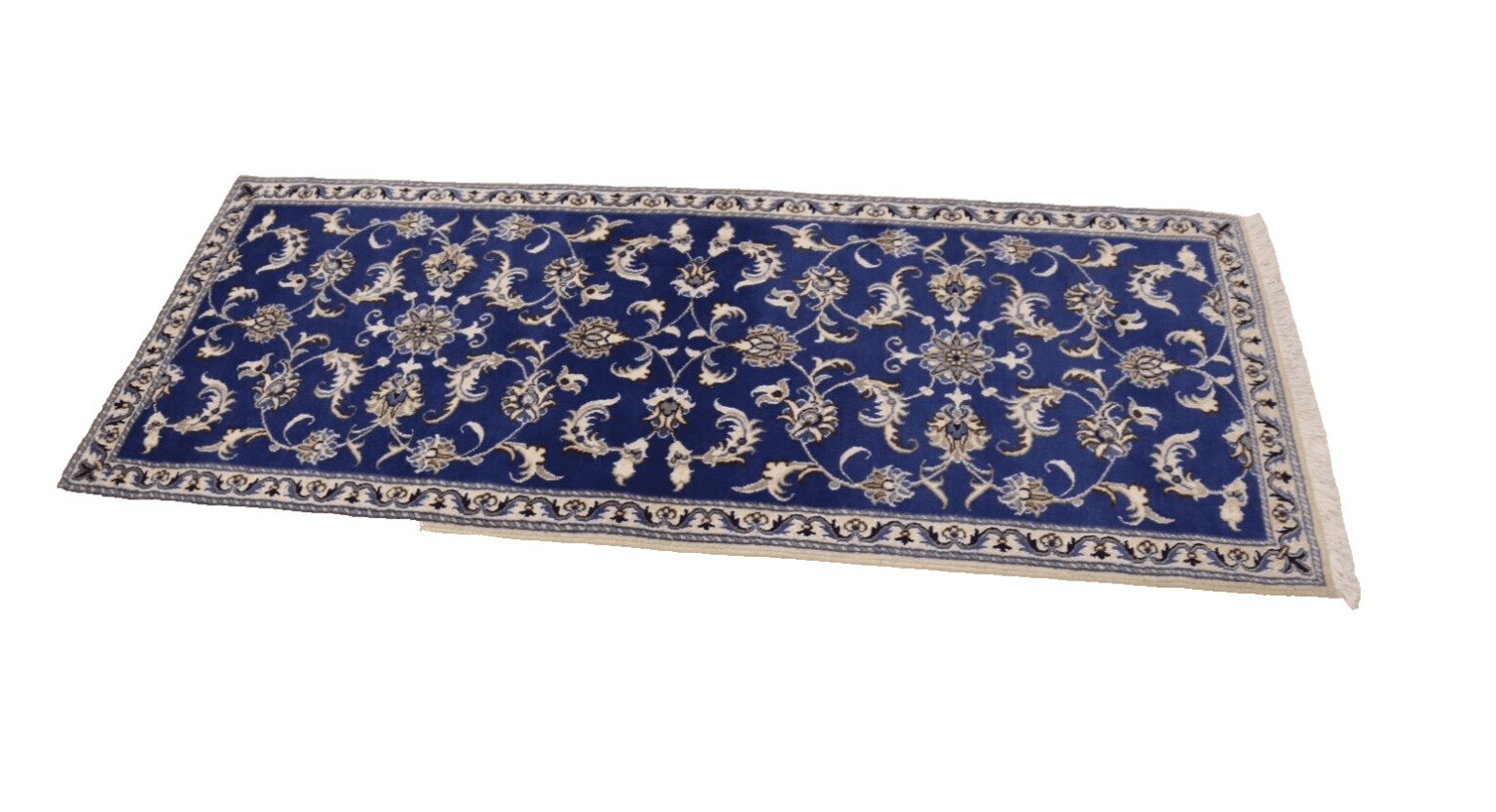
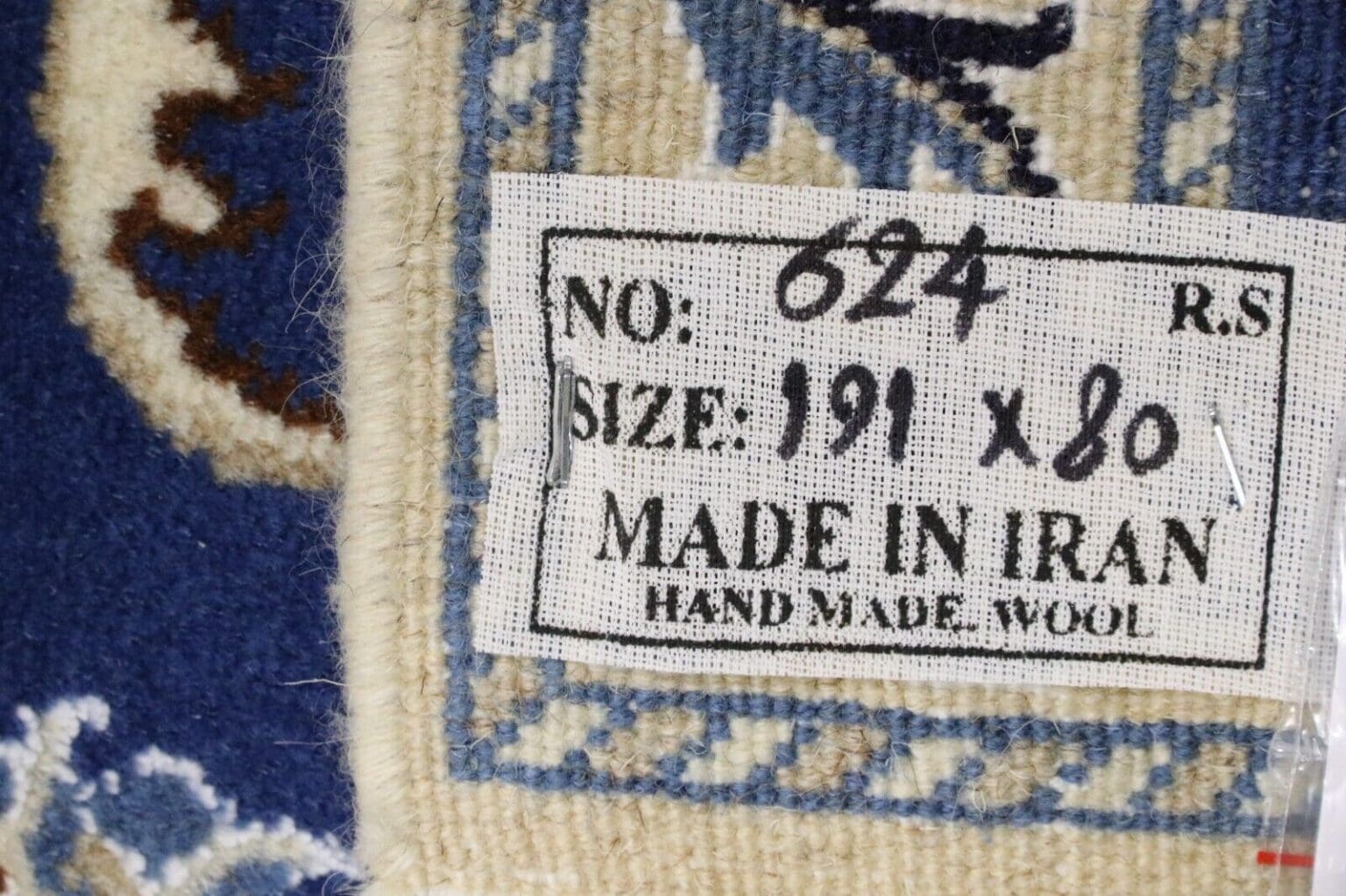
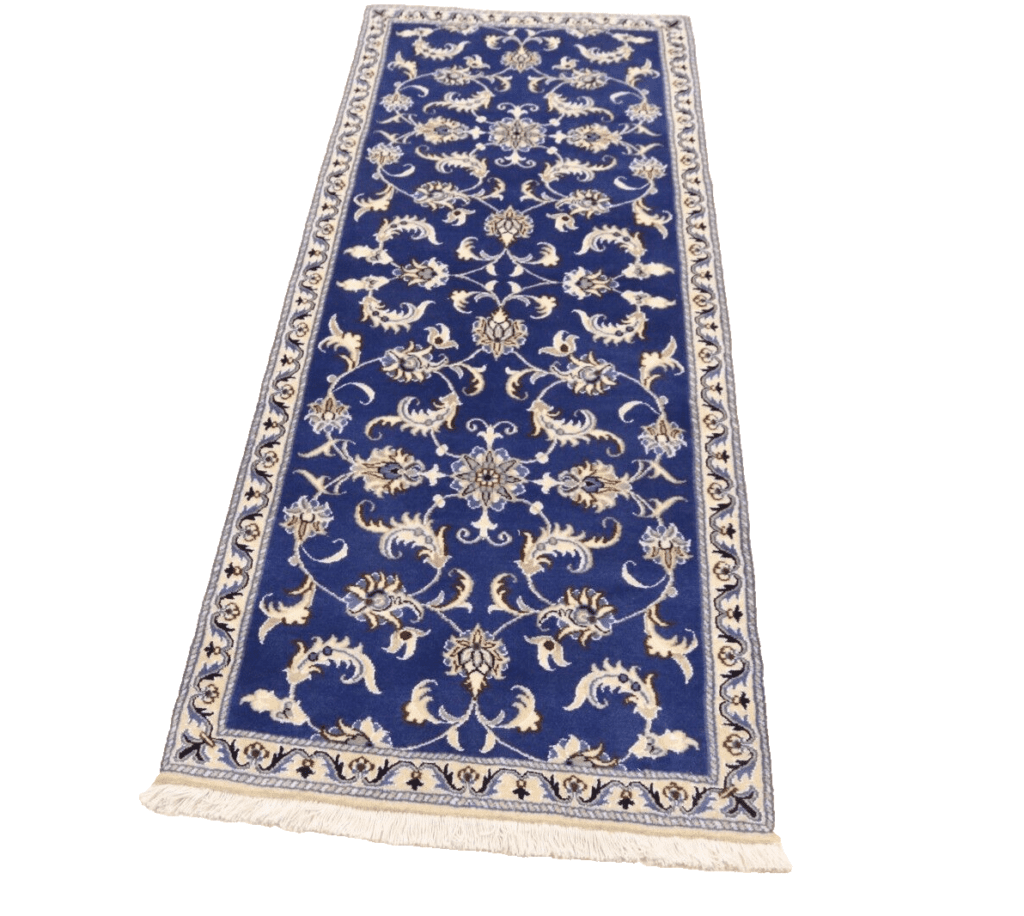
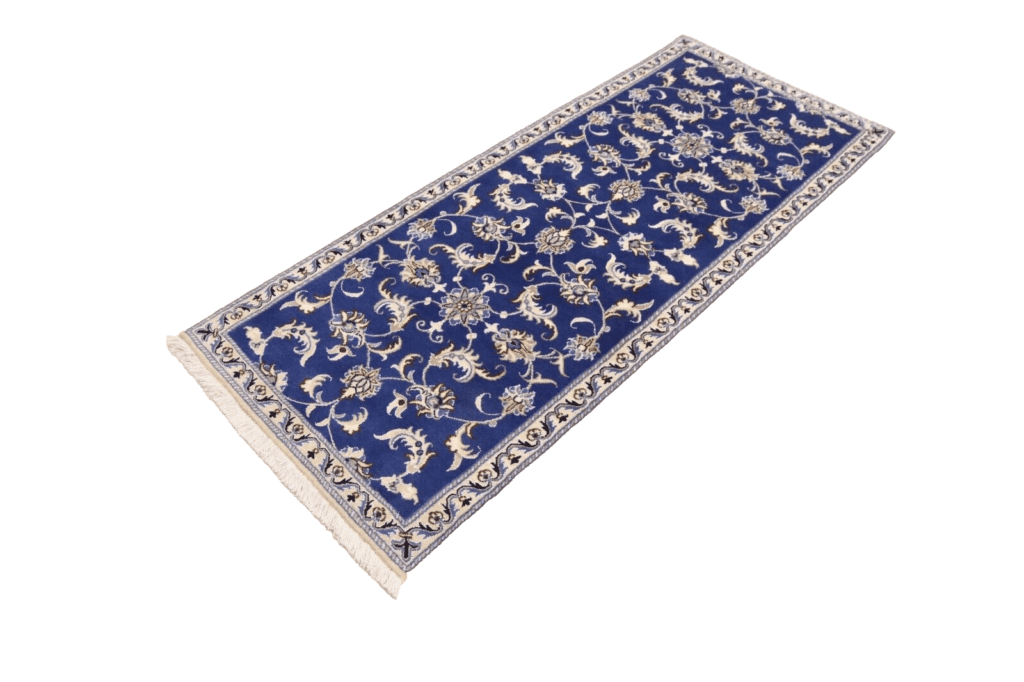
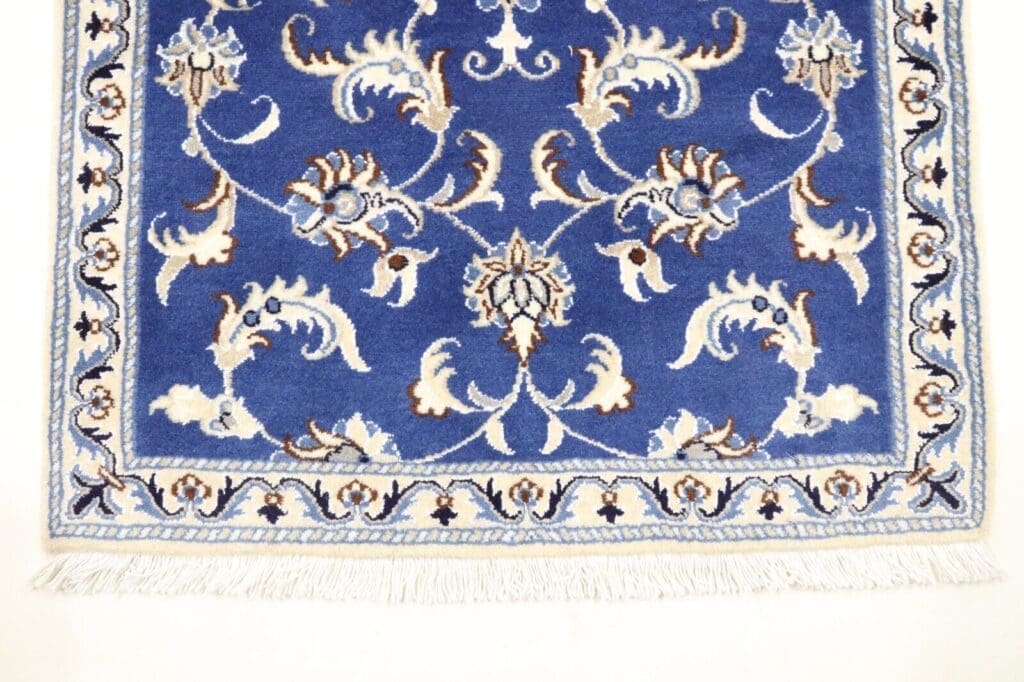
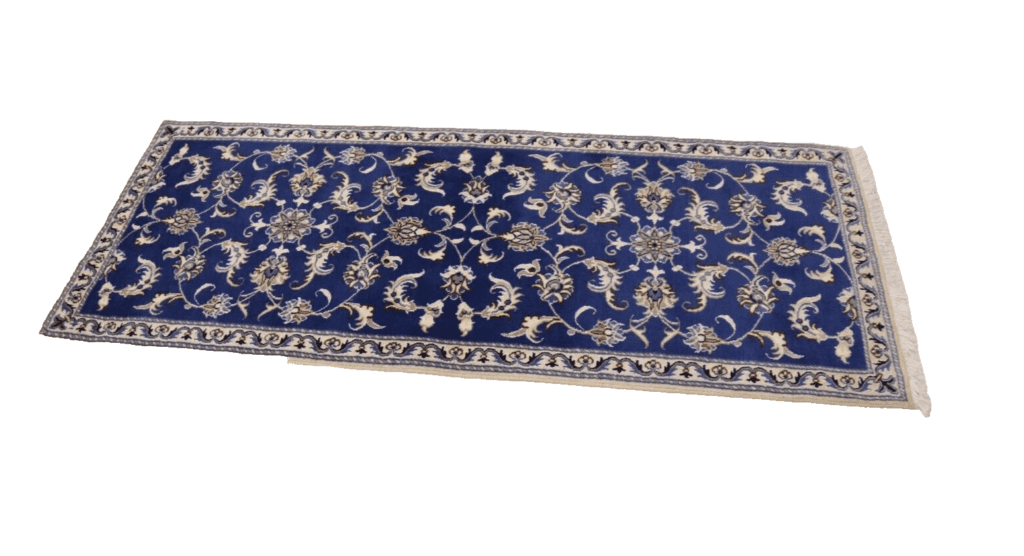
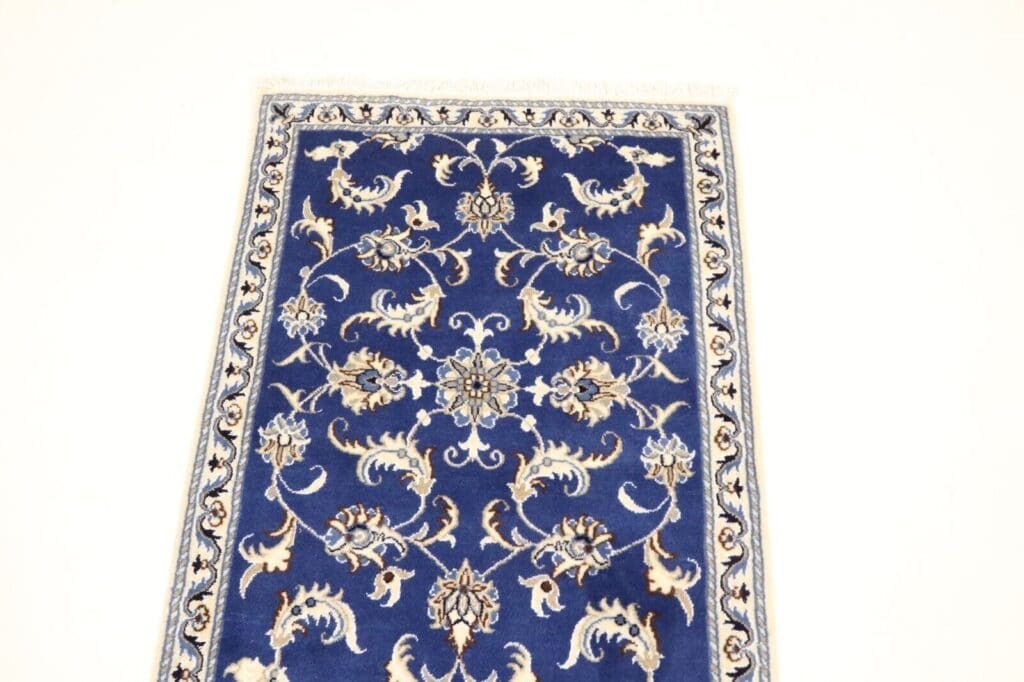
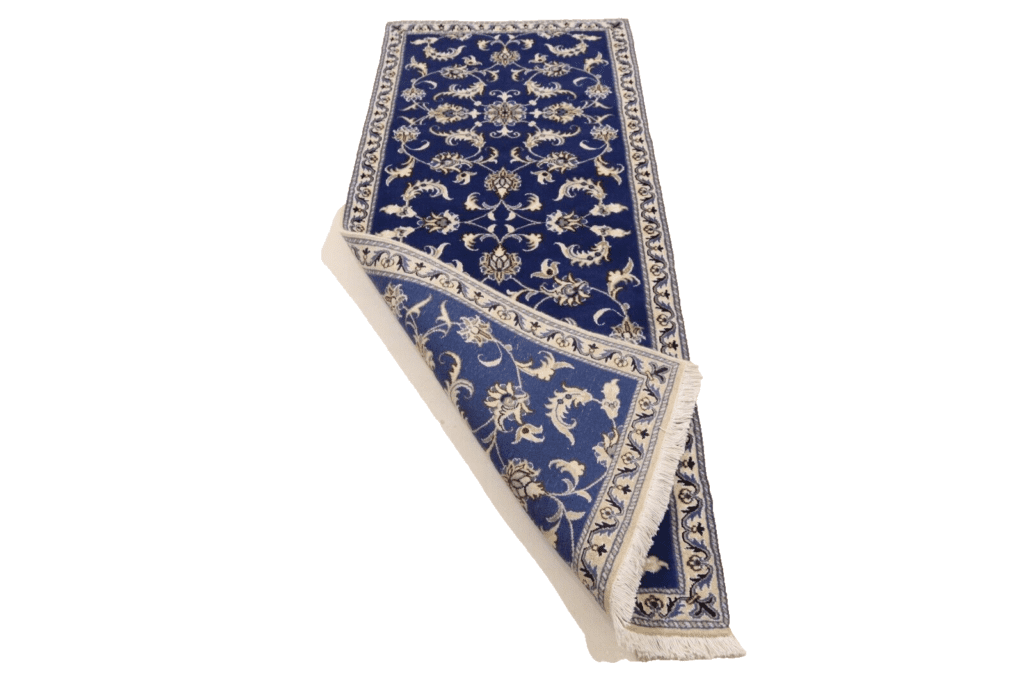
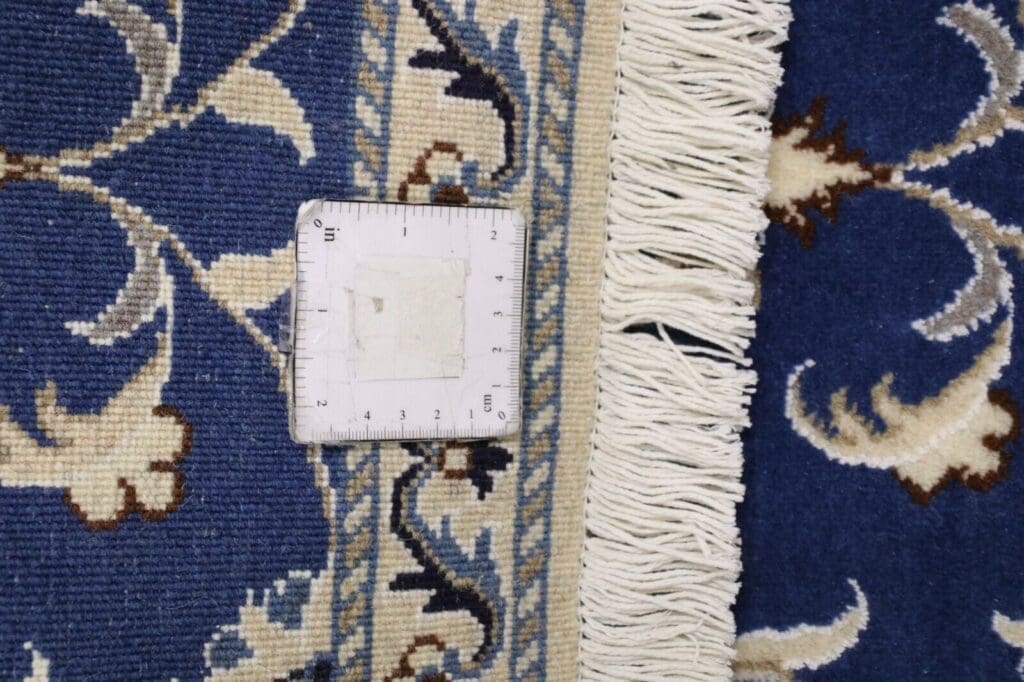
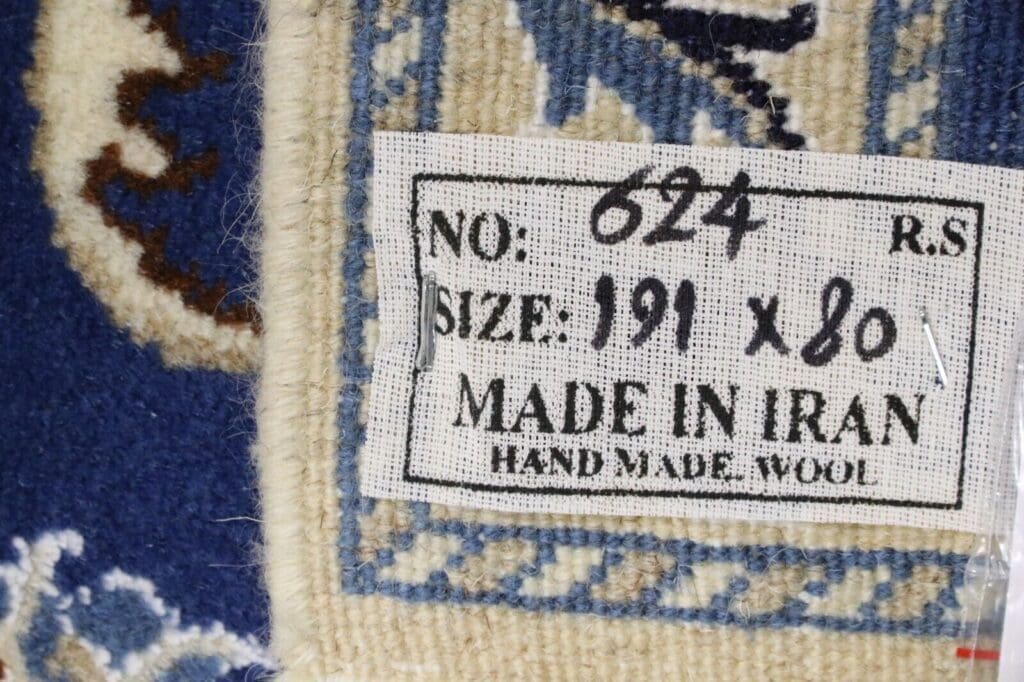
Hand-knotted Nain Persian Rug | Knot density: 300,000 knots/m² | Material: pile 90% new wool, 10% silk, warp 100% cotton | Size: 191 x 80 cm | Pattern: varied patterns and colors | Condition: new and in excellent condition
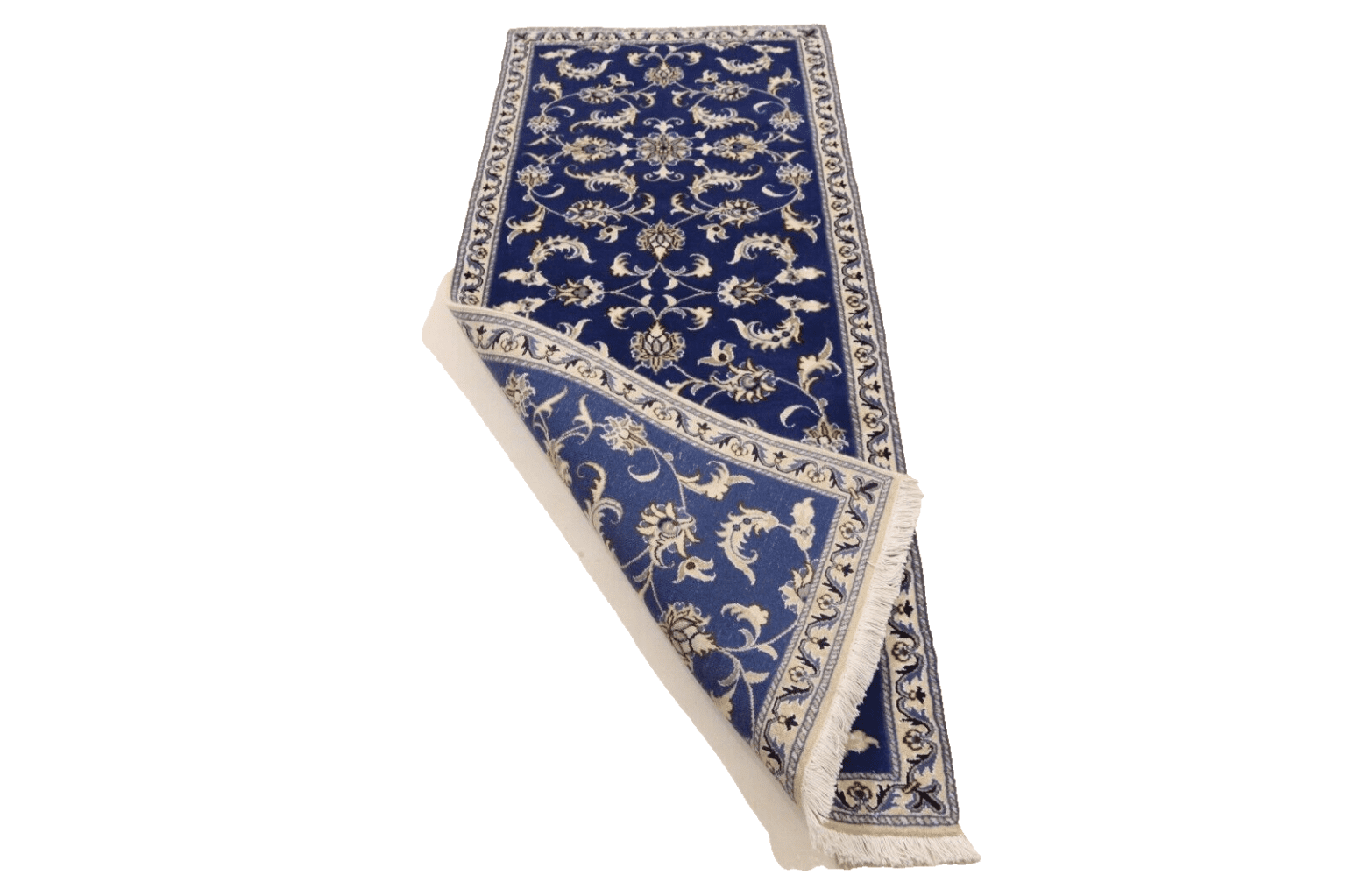
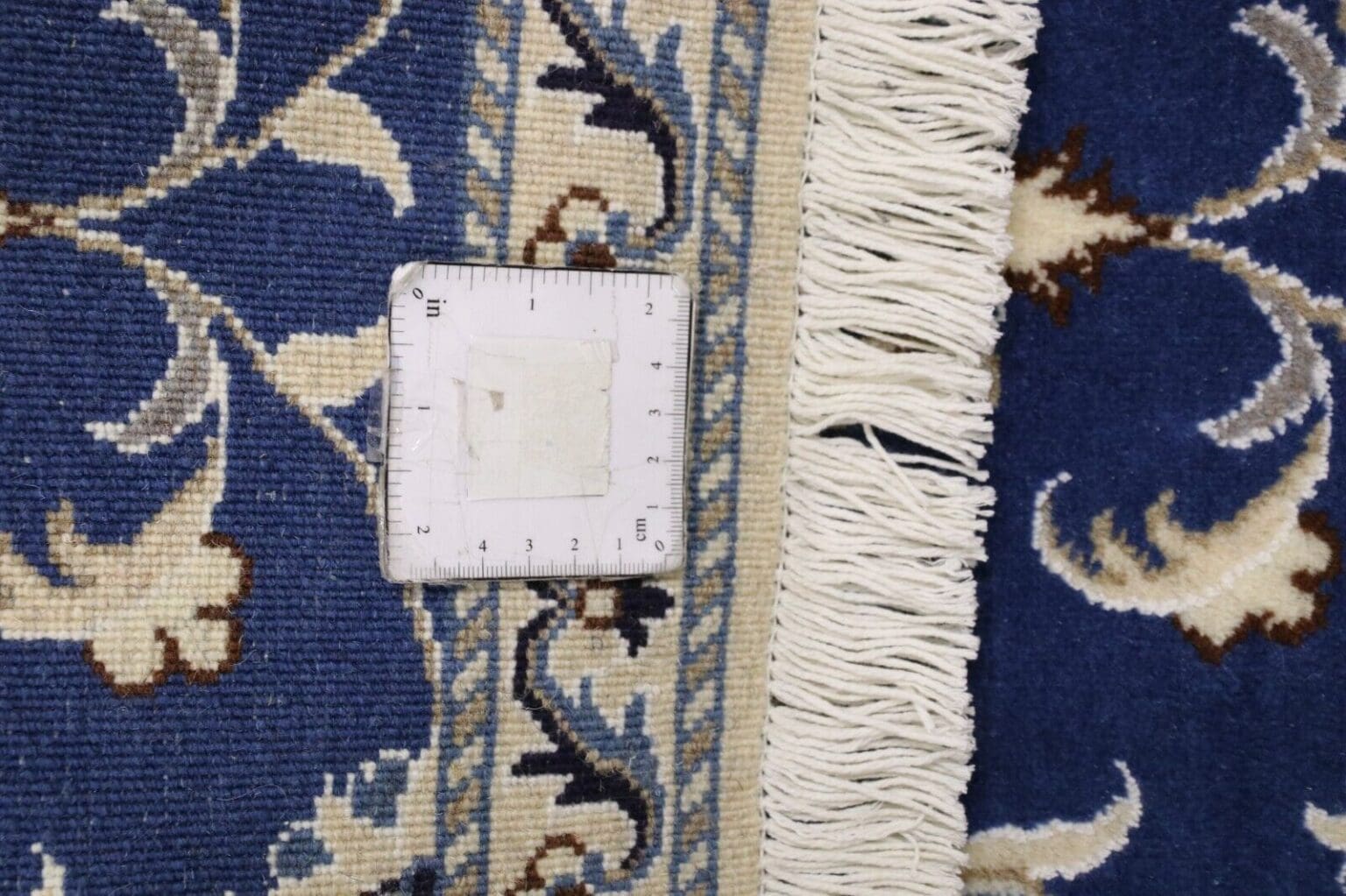
This Nain Persian rug is hand-knotted from a pile combining 90% pure new wool with 10% silk. The wool provides the principal material of the pile, while the silk contributes a distinct sheen and a soft hand. This combination is characteristic of a rug made to show both a tactile surface and fine visual detail. The warp is made entirely of cotton. As the supporting foundation of the rug, the cotton warp gives the hand-knotted structure stability and a firm basis for the rows of knots.
Hand knotting is a method in which individual knots are tied by hand around the foundation threads. Each knot becomes part of the pile, and successive rows build the surface gradually. The technique allows the weaver to render small changes in line, floral detail and ornamental rhythm rather than relying on a mechanically repeated surface. In this rug, the dense construction is recorded at 300,000 knots per square metre. That density is associated with a closely worked surface in which detailed design elements can be defined clearly.
Wool and silk serve different functions within the pile. Wool is valued in Persian rug making for its resilient character and its ability to hold colour, while silk is used for its smooth appearance and light-reflecting quality. Their combination gives this rug a surface with both a soft feel and a visible lustre. The source also describes the rug as approximately 8 mm thick, a specification that places the pile within a relatively moderate profile for everyday interior use while retaining the crafted character of a hand-knotted piece.
The rug is described as new and perfectly preserved. An individual rug certificate confirms the uniqueness and quality of this one-off piece. These details concern this particular rug: its hand-knotted construction, its wool and silk pile, its cotton foundation, its dense knotting and its new condition. They provide a clear description of how the rug was made and how it is presented for sale.
Origin and Tradition
The rug comes from Nain, a renowned weaving region in Persia. Nain rugs are associated with a refined Persian tradition in which careful drawing, restrained workmanship and finely articulated ornament are important. The town lies within the historic landscape of central Iran, where rug production developed in close connection with established Persian textile and decorative arts. A Nain rug therefore belongs to a regional tradition rather than being defined only by its colours or by the materials used in its pile.
Persian rug making developed through many local centres, each with its own vocabulary of composition, colour and construction. Nain is known for rugs with delicate patterning and a finely controlled surface. The emphasis is often placed on clarity: borders are carefully organised, central arrangements are balanced, and small motifs are distributed so that the composition remains legible. These qualities are part of the broader Nain tradition and explain why the region is associated with finely detailed rugs.
The Persian rug is not the product of a single uniform style. Regional workshops have always adapted established forms to local taste, available fibres and the skill of individual weavers. In Nain, the use of wool together with silk is connected with a tradition that seeks a precise drawing and a subtle contrast between matte and reflective surfaces. Cotton foundations are also common in the construction of many finely made Persian rugs because they provide a regular framework for tightly arranged knot rows.
Hand knotting gives the regional tradition a direct connection to the work of the weaver. The design is translated into a field of individual knots, with the density of the knotting influencing how closely the drawing can be rendered. The process is slow and requires consistency from one row to the next. It also means that each finished rug is an individual object, even when it follows patterns shared by a wider regional tradition. This Nain rug is presented as a unique piece with its own certificate.
Nain is one of several important Persian weaving centres. Isfahan is recognised for finely detailed rugs and a high level of knotting, while Tabriz is associated with elegant hand-knotted designs and a broad range of formal compositions. Kerman is known for distinctive designs and strong colour arrangements. These places belong to the history of Persian rug making, but they are separate regional traditions. The origin of this rug is Nain, and the references to other centres describe the wider context of Persian weaving rather than changing its provenance.
The continued importance of Nain lies in the combination of regional identity and technical control. A Nain rug can be understood through its origin, its hand-knotted construction and its use of decorative language developed over generations. At the same time, the exact arrangement of motifs, the balance of colours and the handling of the pile make every individual rug distinct. This relationship between shared tradition and individual execution is central to the character of Persian rugs.
Design and Pattern
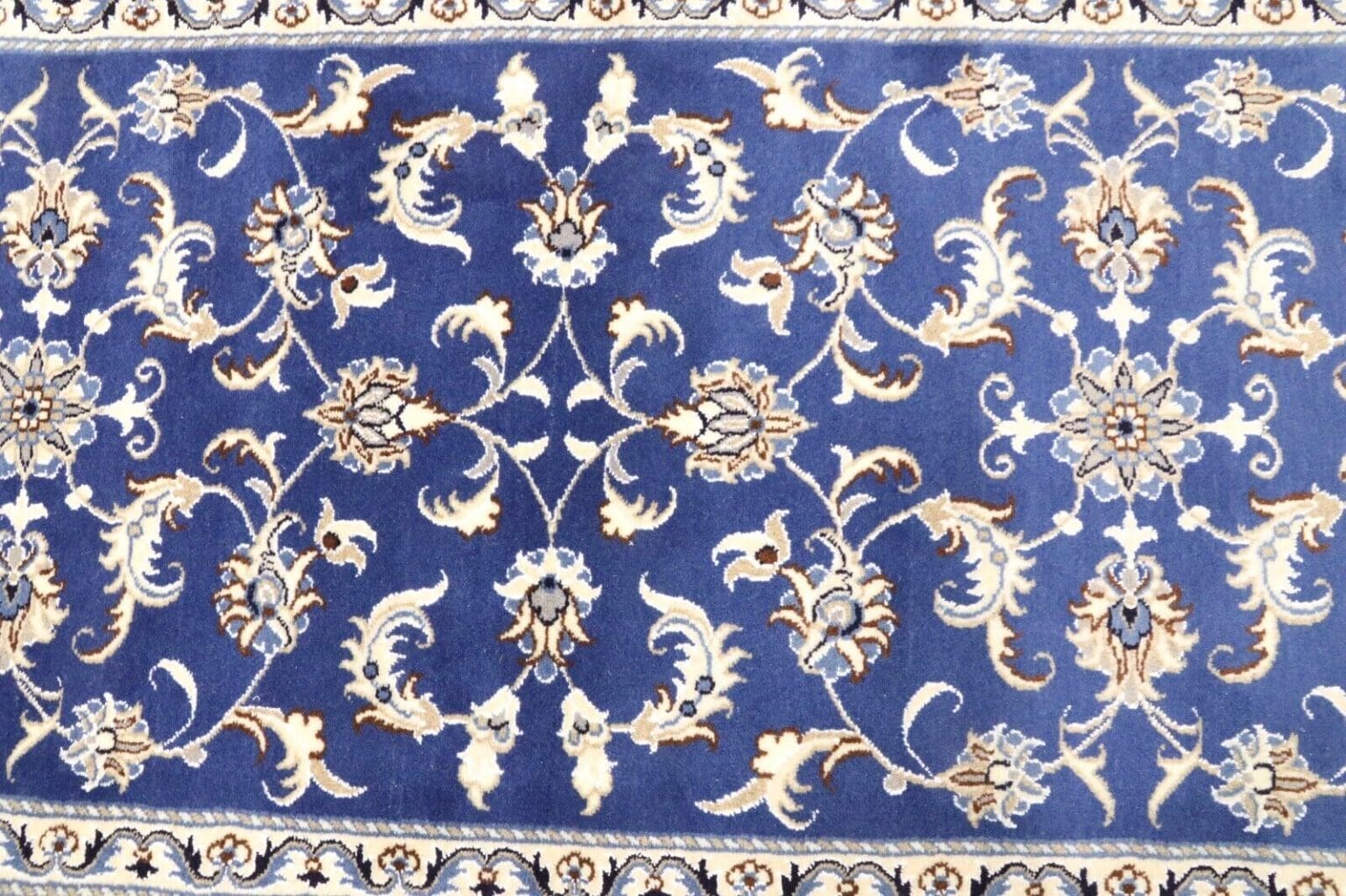
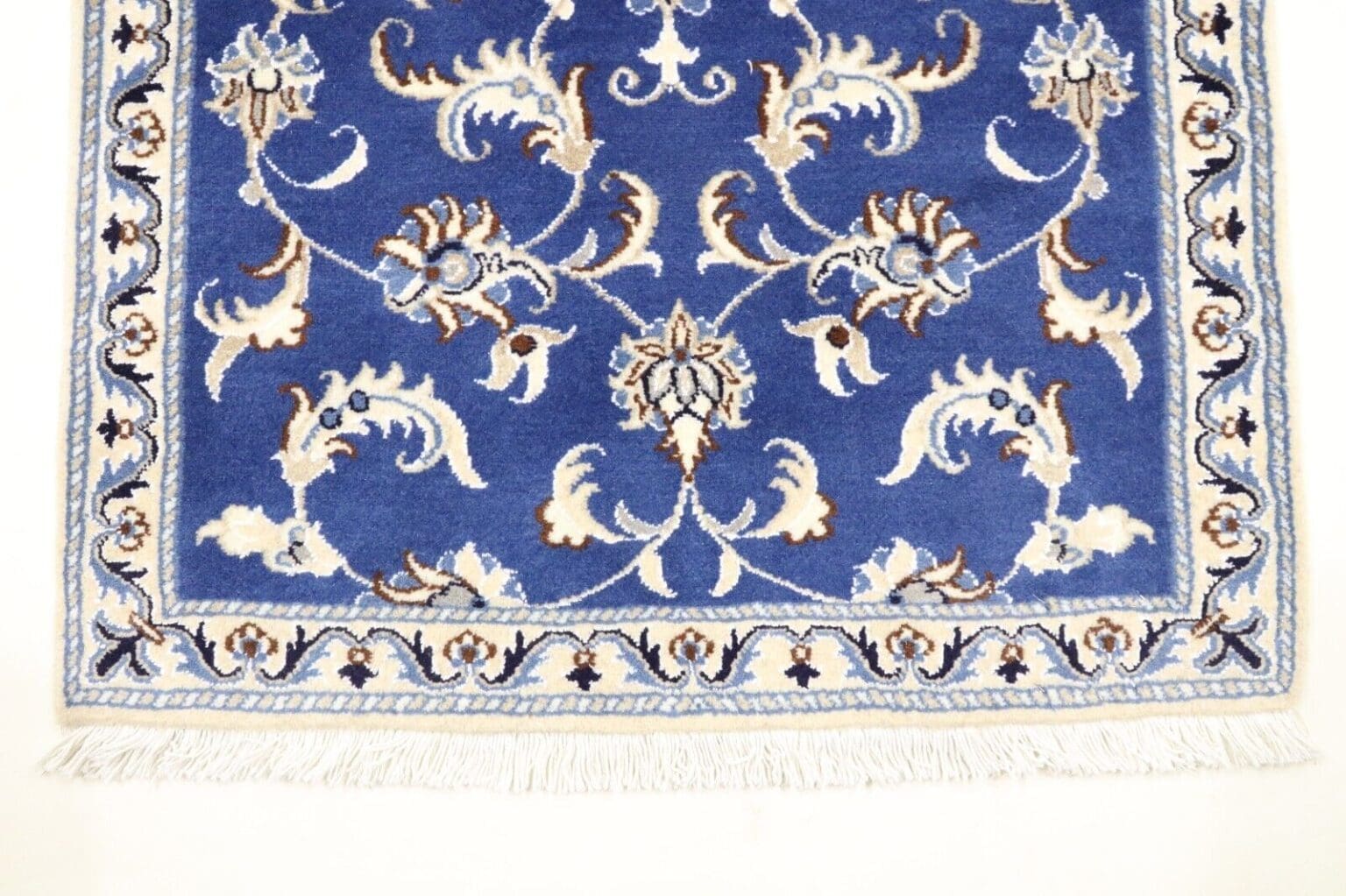
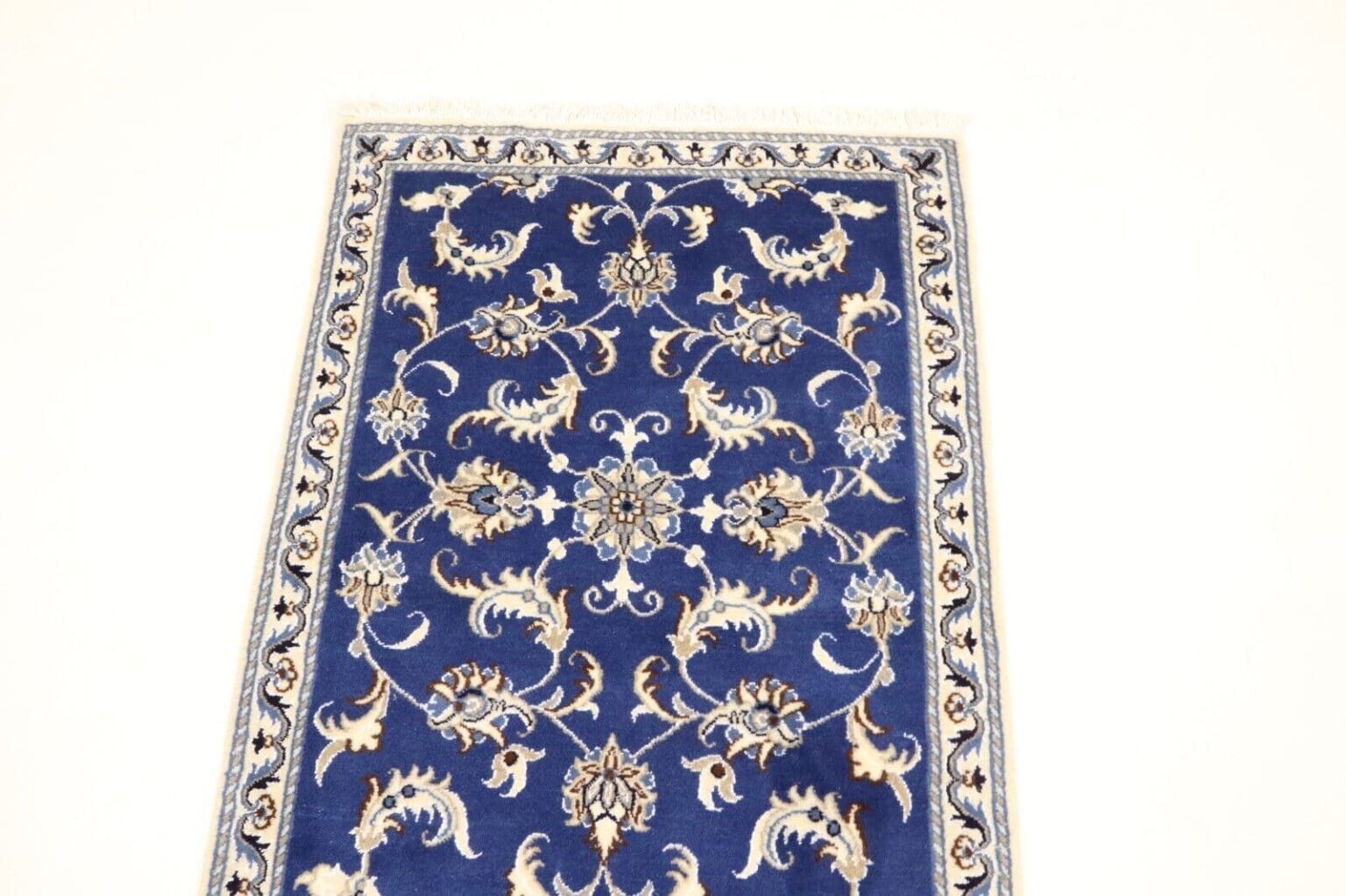
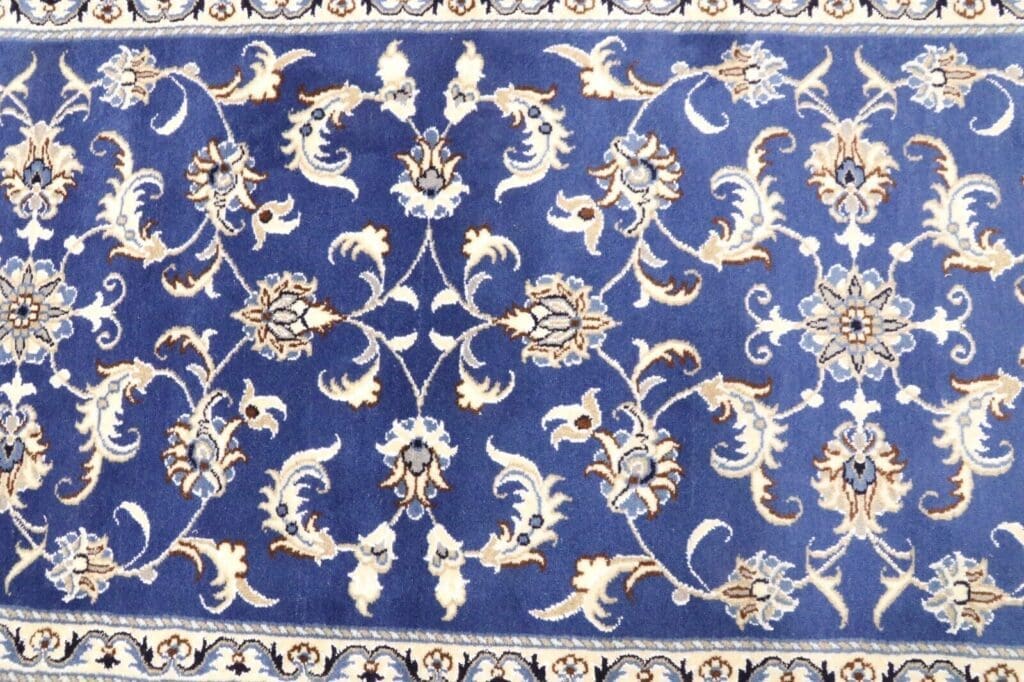
This rug is described as having varied patterns and colours. The source does not assign a more specific named pattern to this individual piece, so its design is best presented through the broader visual language associated with Nain rugs. That language commonly includes delicate floral designs, geometric forms and traditional Persian ornaments. Such elements may be arranged in a central field, framed by borders or distributed through a balanced all-over composition, depending on the particular design.
Floral ornament is a long-standing part of Persian decorative art. Leaves, blossoms, vines and stylised plant forms can be reduced into precise lines and repeated at different scales. In a finely worked rug, these motifs create movement without losing the order of the composition. The hand-knotted technique allows the weaver to make small adjustments to curves and contours, so a floral design can appear controlled while still retaining the irregularity associated with work made by hand.
Geometric forms provide another important part of the Persian design vocabulary. Medallions, angular outlines, stepped shapes and repeated border units can organise the surface and establish a visual rhythm. Geometry can be used strictly or combined with flowing botanical forms. The balance between these two approaches gives Persian rugs a wide range of appearances, from highly structured compositions to more open designs in which ornament spreads across the field.
Traditional Persian ornaments often carry a decorative function rather than a single fixed interpretation. They can mark the edge of a border, connect separate areas of a field or provide a repeated accent between larger motifs. Their value lies in the way they create proportion, rhythm and continuity. In Nain weaving, fine ornament is generally associated with a carefully drawn appearance, allowing even small details to contribute to the overall structure.
Colour is equally important to the reading of a rug. The source describes this piece as having varied colours, while the wider Nain tradition is known for lively yet carefully coordinated colour relationships. Colour can distinguish the central field from the border, bring forward a floral motif or create depth between overlapping lines. A mixture of wool and silk can reinforce this effect because silk catches light differently from wool, making selected details appear more luminous without changing the underlying design.
The versatility of the design language explains why Persian rugs are used in a variety of interior settings. A composition with floral ornament can support a classic room, while a clearly organised geometric structure can sit within a more contemporary setting. This does not mean that the rug belongs to a particular interior style; it means that Persian pattern traditions offer several ways to relate decoration to furniture, flooring and surrounding architecture. The rug can be placed in a living room, dining room or hallway as a decorative textile with a defined regional identity.
Comparable Nain rugs may be made with different fibres, including cotton or pure wool, and those materials influence surface, sheen and price category. Other Persian regions also have their own approaches to pattern. Isfahan often offers detailed compositions, Tabriz provides a broad field of elegant hand-knotted designs, and Kerman is associated with distinctive patterns and stronger colour statements. Those comparisons help place Nain within Persian design history, but the pattern and colour description of this rug remains the one given here: varied patterns and colours from the Nain tradition.
Special Features
This one-off rug combines a hand-knotted construction with a pile of pure new wool and silk, supported by a cotton warp. Its recorded knot density reflects a closely worked surface, while the silk content gives the pile a visible sheen and soft feel. The rug is new and in excellent condition, and an individual rug certificate confirms its uniqueness and quality. Its origin in Nain identifies it with one of Persia’s recognised weaving regions.
The certificate is an individual document for this rug rather than a general description of a group of similar pieces. Together with the new condition, it records the way this particular item is offered. The combination of regional origin, hand craftsmanship, mixed pile materials and varied patterning makes the rug a distinct textile within the wider category of Persian rugs. No separate claim about a named motif is made beyond the stated description of varied patterns and colours.
FAQ
What makes a Persian rug distinctive?
A Persian rug is distinguished by the relationship between regional tradition, hand craftsmanship, materials and design. Persian weaving centres developed their own approaches to drawing, colour and construction, so a rug from Nain belongs to a different regional tradition from one made in Isfahan, Tabriz or Kerman. Hand knotting is important because the pile is built from individual knots tied around the foundation. This allows detailed ornament and gives every finished rug an individual character. In this case, the pile combines new wool and silk, the warp is cotton, and the design is described through varied patterns and colours. The certificate and new condition further identify this particular rug as a unique, carefully preserved piece.
How should this Persian rug be cared for?
Regular vacuuming helps remove loose surface dust before it works deeper into the pile. The rug should be protected from direct sunlight, since prolonged exposure can affect the appearance of coloured fibres over time. If a spill occurs, it is advisable to address it immediately with a damp cloth and a mild cleaning agent rather than allowing the mark to dry into the pile. Rubbing should be avoided, especially on areas containing silk, because vigorous friction can disturb the surface. For more serious staining or for a comprehensive cleaning, professional rug care is appropriate. Care should be carried out gently and in a way that respects the hand-knotted construction, the wool and silk pile, and the cotton foundation.
Where do the best Persian rugs come from?
Persian rugs come from several important regions in Iran, and each region has its own design vocabulary and technical tradition. Nain is known for finely drawn patterns and carefully worked rugs. Isfahan is associated with high knotting density and detailed compositions, while Tabriz is recognised for elegant hand-knotted rugs in many different arrangements. Kerman is valued for distinctive designs and strong colours. It is not accurate to treat one place as the source of every outstanding Persian rug, because regional identity is part of the character of the craft. This rug comes from Nain, so its origin, pattern tradition and hand-knotted workmanship should be understood within that regional context.
To provide the best experiences, we use technologies like cookies to store and/or access device information. Consenting to these technologies will allow us to process data such as browsing behavior or unique IDs on this site. Not consenting or withdrawing consent, may adversely affect certain features and functions.
Functional Always active
The technical storage or access is strictly necessary for the legitimate purpose of enabling the use of a specific service explicitly requested by the subscriber or user, or for the sole purpose of carrying out the transmission of a communication over an electronic communications network.
Preferences
The technical storage or access is necessary for the legitimate purpose of storing preferences that are not requested by the subscriber or user.
Statistics
The technical storage or access that is used exclusively for statistical purposes.The technical storage or access that is used exclusively for anonymous statistical purposes. Without a subpoena, voluntary compliance on the part of your Internet Service Provider, or additional records from a third party, information stored or retrieved for this purpose alone cannot usually be used to identify you.
Marketing
The technical storage or access is required to create user profiles to send advertising, or to track the user on a website or across several websites for similar marketing purposes.

 SECURE PAYMENT
 SHIPPING PARTNERS


